MENU
Close





One body, two codes, and a century-old performer who refused to choose between them. Erdem SS27 returns to the stage with identity held deliberately in midair.
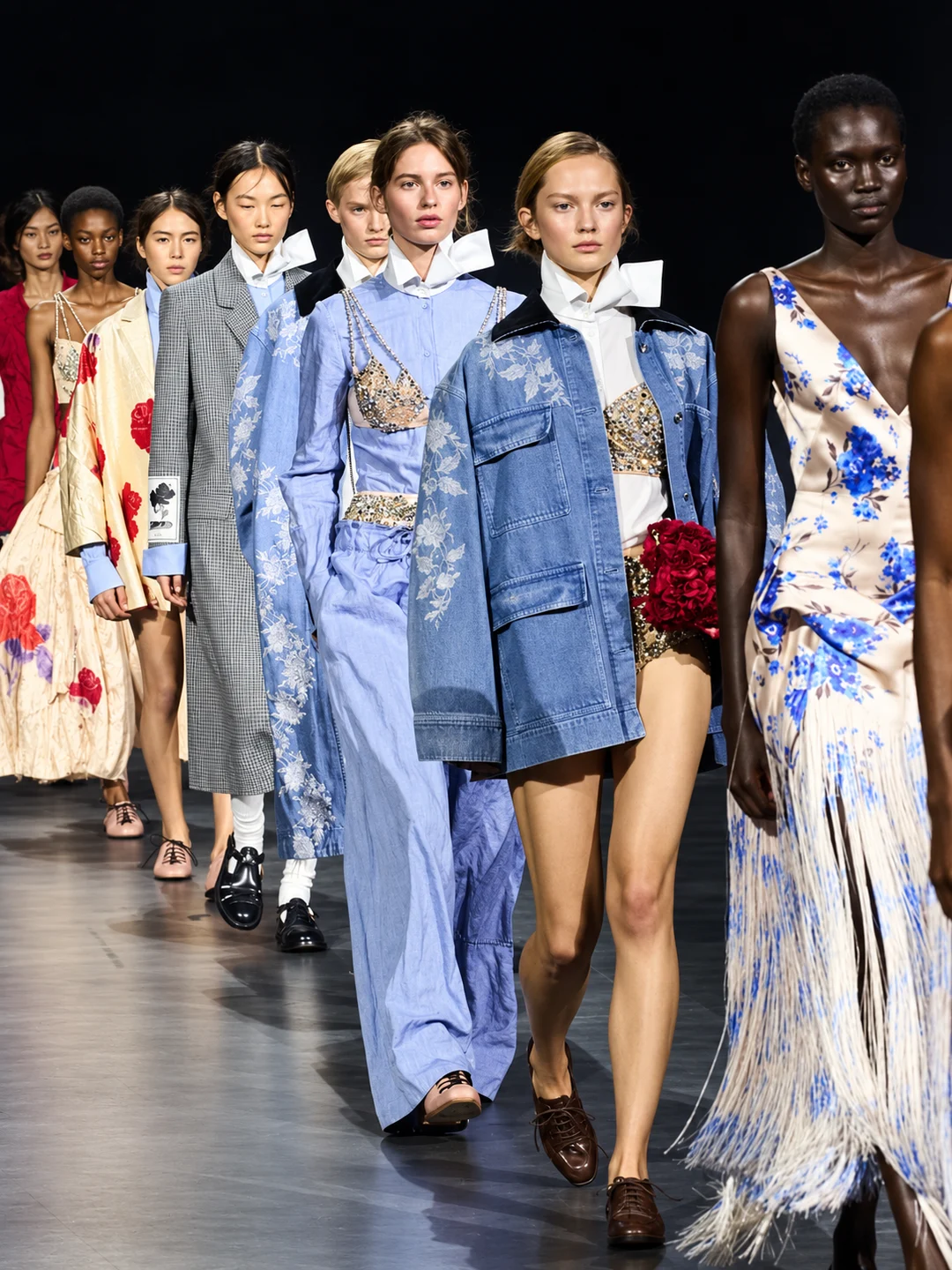
One body, two codes, and a century-old performer who refused to choose between them. Erdem SS27 returns to the stage with identity held deliberately in midair.
September 20, 2026
Advertisement

Advertisement


Suspension is a fitting place to begin. Barbette spent the 1920s and 1930s above audiences as a celebrated trapeze performer, moving through an act built on glamour, transformation and the instability of what people thought they were seeing. Born Vander Clyde Broadway in Texas, he became famous in Europe performing as Barbette, attracting figures including Jean Cocteau and Man Ray. Erdem Moralioglu had already started exploring his story for Resort 2027; Spring takes that fascination further, translating the tension of performance into the architecture of an entire wardrobe.
“It was always about a duality; Barbette wasn’t trying to be a woman or man. It was truly about this androgyny in its purest sense.”
Onstage, Barbette made certainty difficult to hold onto. The performer the audience thought they understood could shift before their eyes, moving between glamour, illusion and identity without ever settling neatly into one reading. Erdem is drawn to that instability, treating androgyny as something suspended and unresolved, where transformation matters more than arriving at a fixed destination.
Beyond the stage, that freedom carried a different weight. Queer lives in Barbette’s era existed under legal and social pressures that the theatre could only temporarily suspend, making the stage both refuge and illusion. Revisiting his story allows Erdem to bring some of that complexity back into view, adding another figure to the designer’s growing archive of lives that resisted the categories history tried to impose on them.
Lingerie has no intention of remaining underneath.
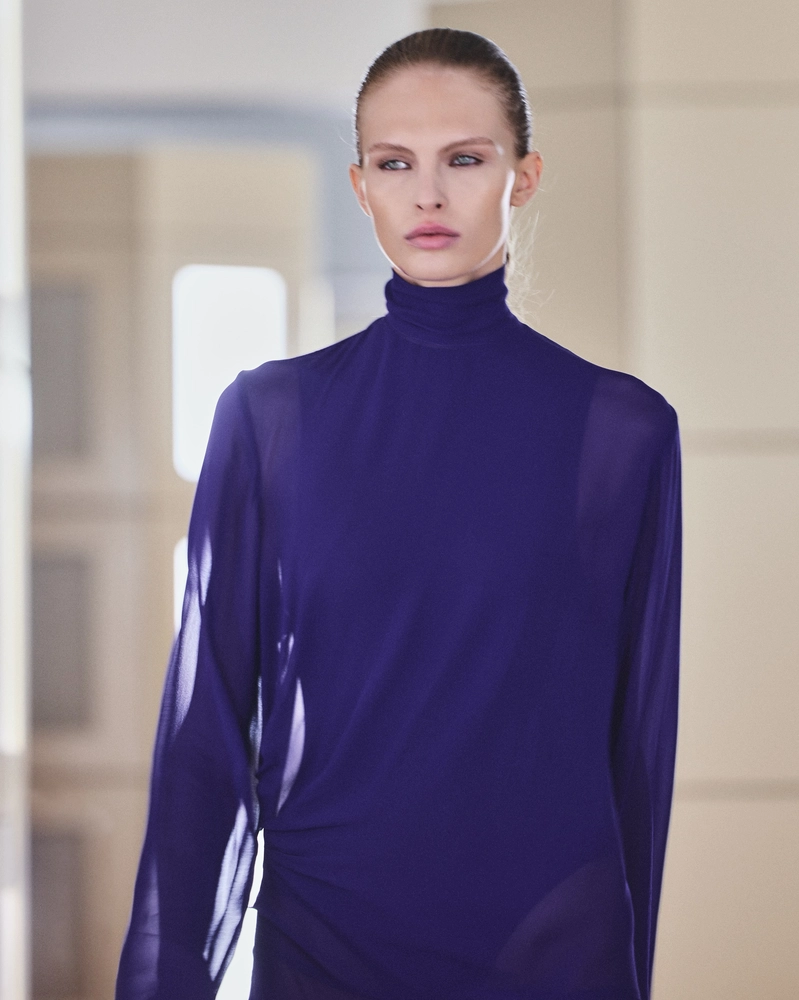
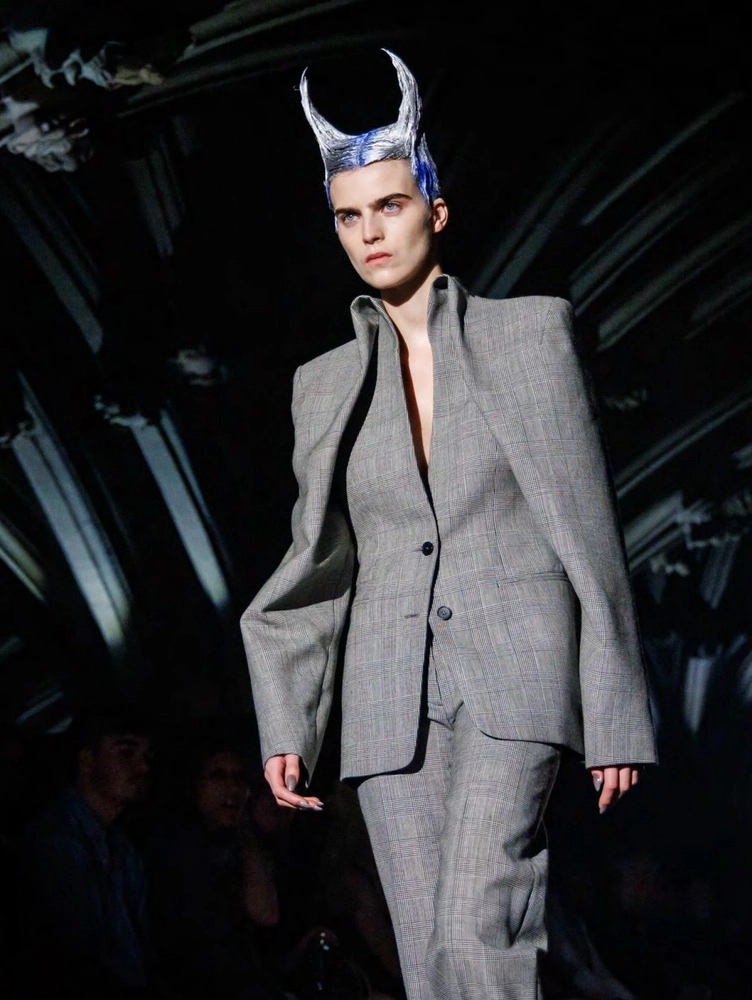
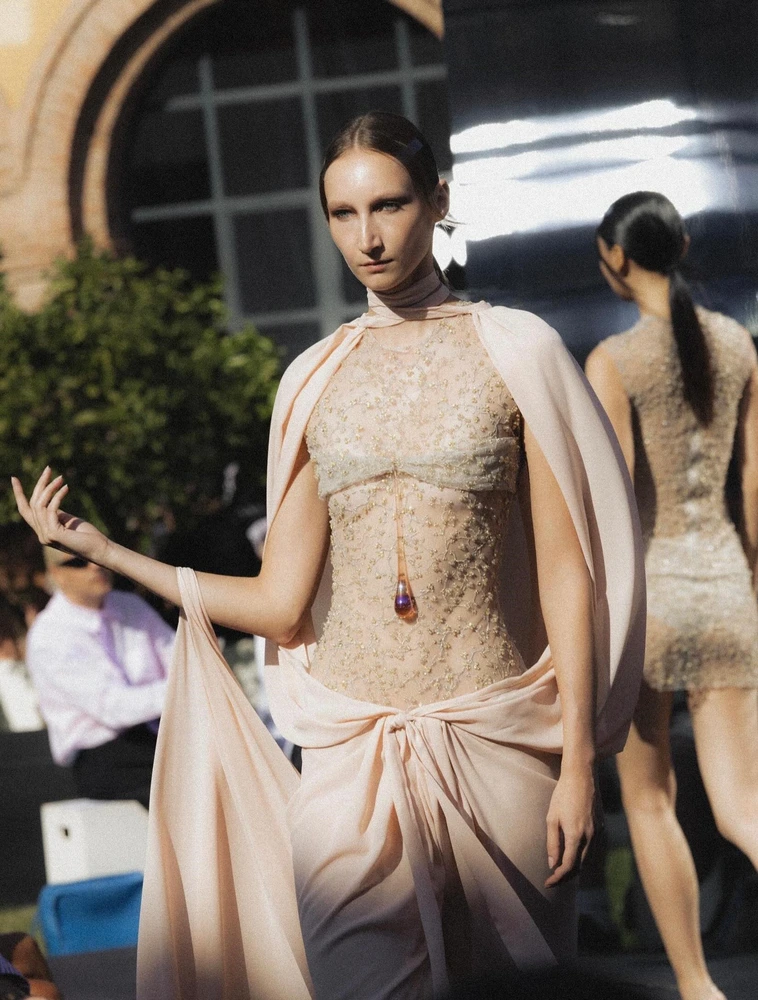
Crystal-covered briefs, embellished bodices and exposed bra structures occupy the same visual territory as elongated jackets, crisp shirts and tailoring borrowed from a gentleman’s wardrobe. Erdem Moralioglu allows boudoir dressing to become outerwear without surrendering its intimacy, then places enough structure around it to keep the silhouette poised somewhere between dressing room and formal entrance.
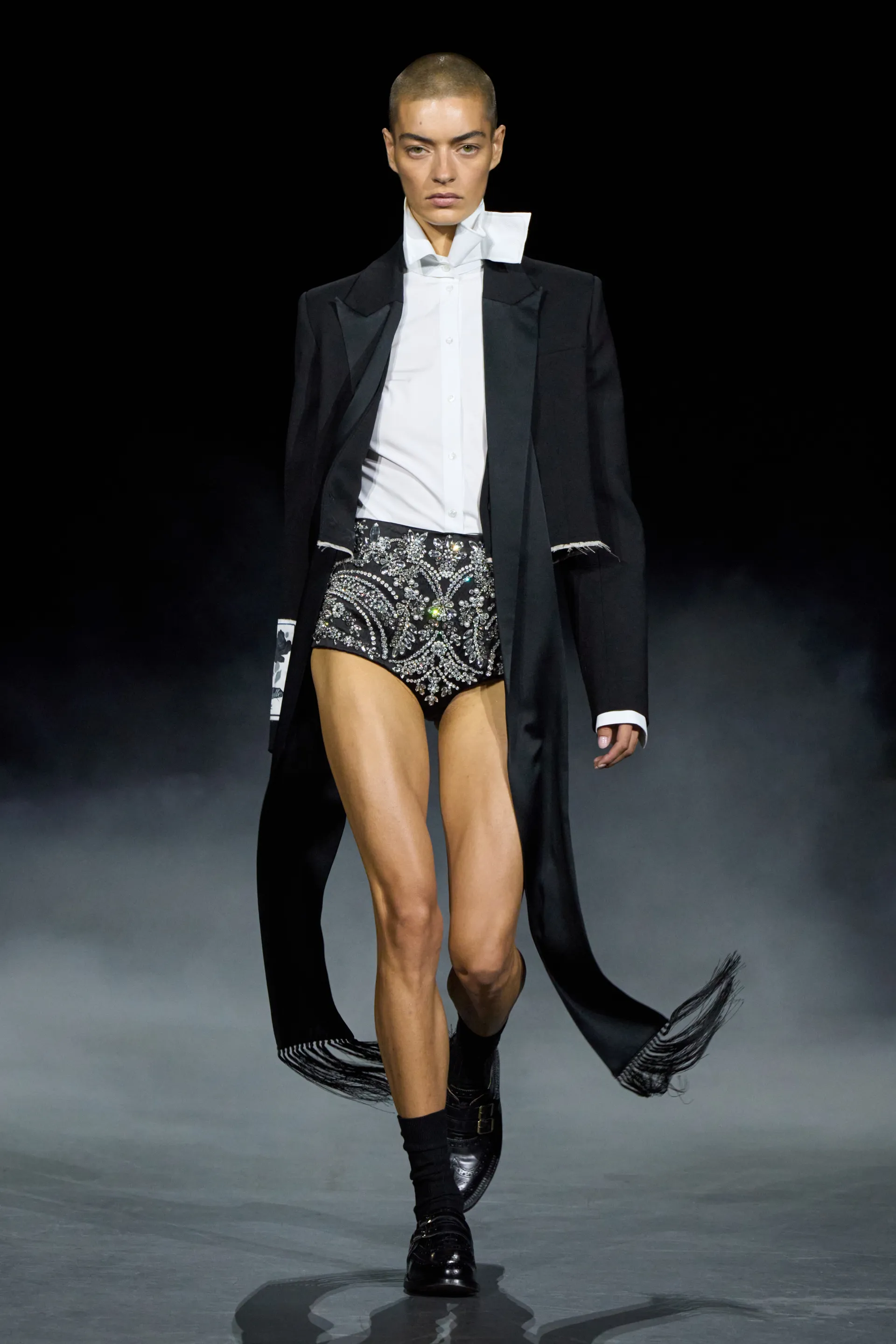
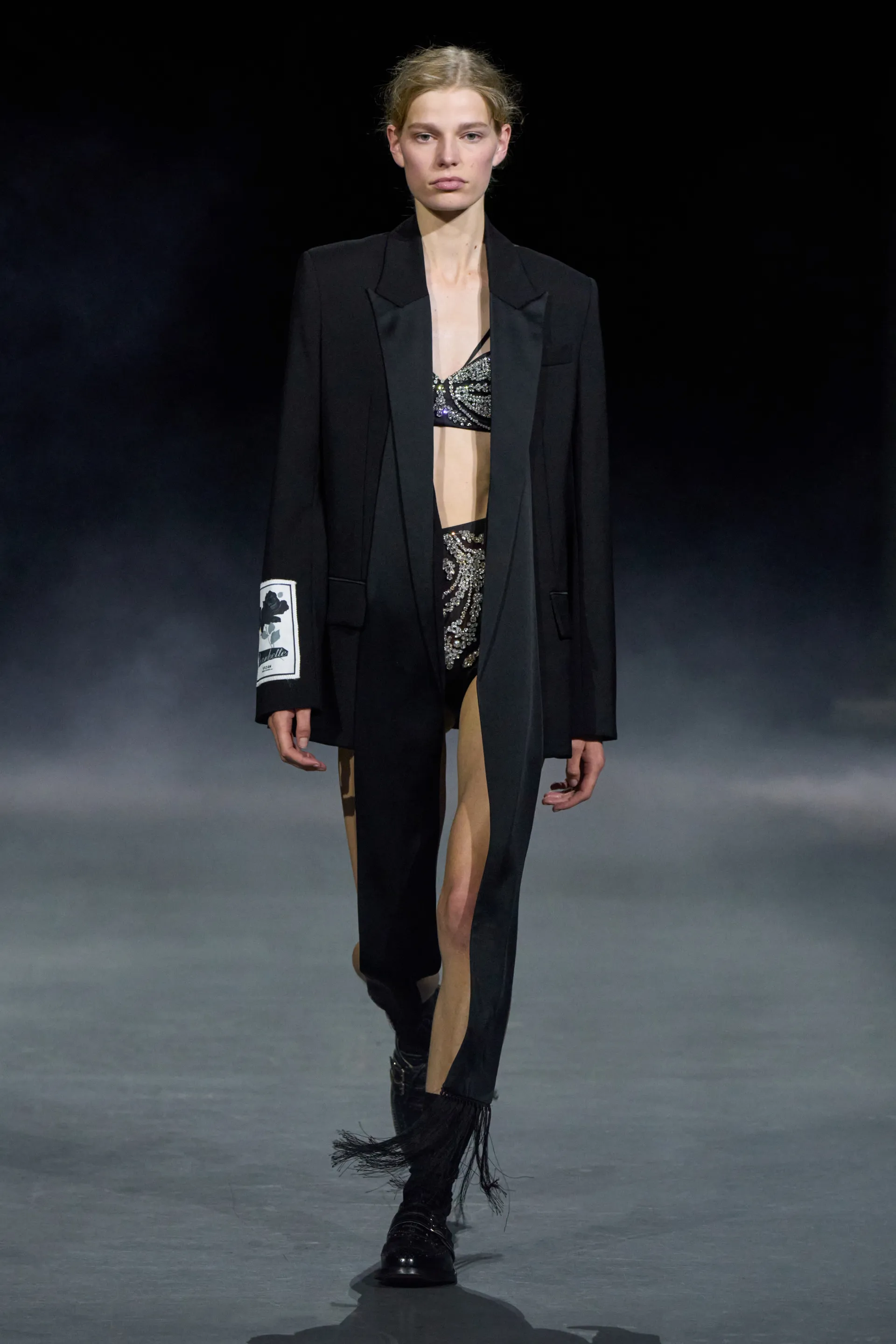
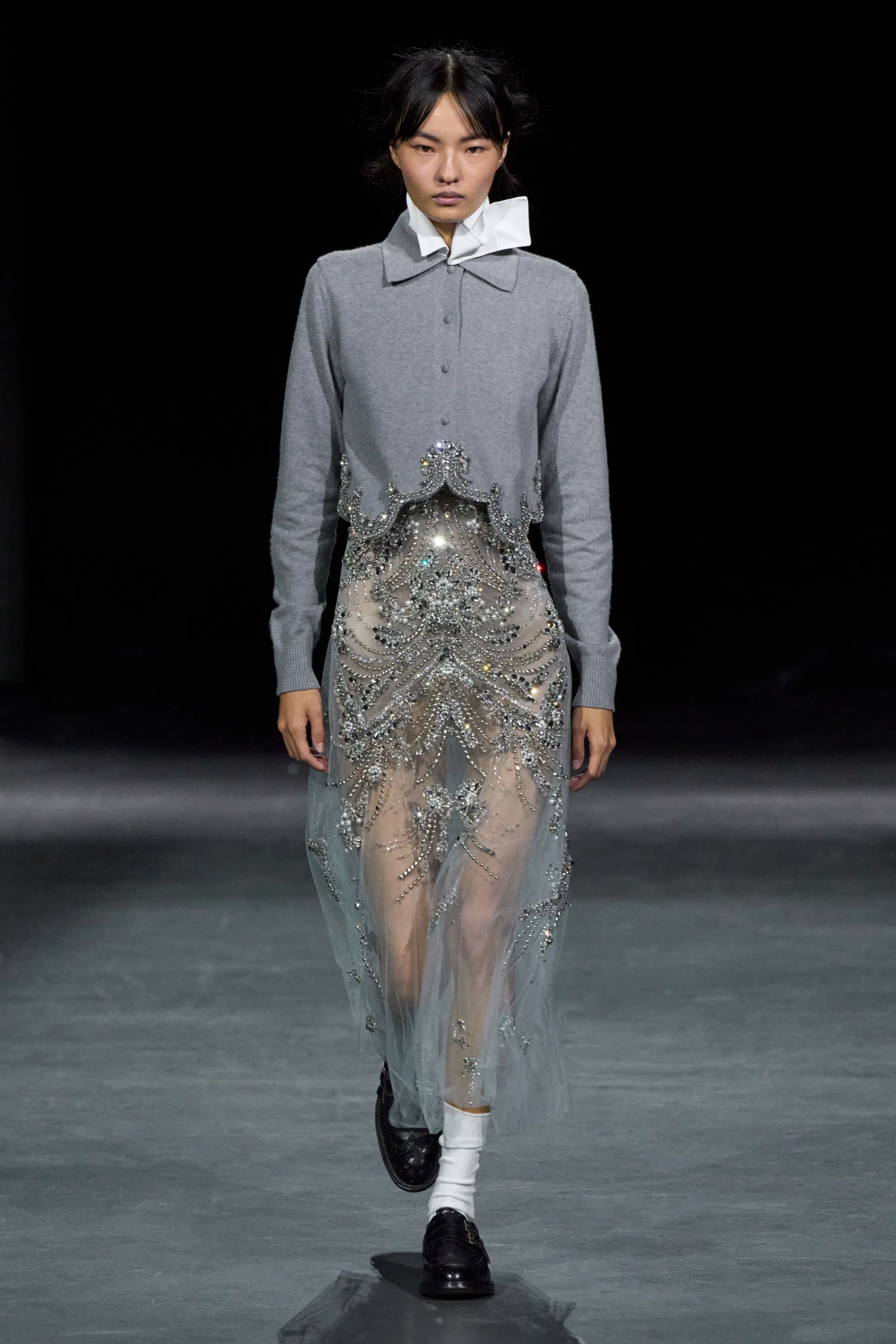
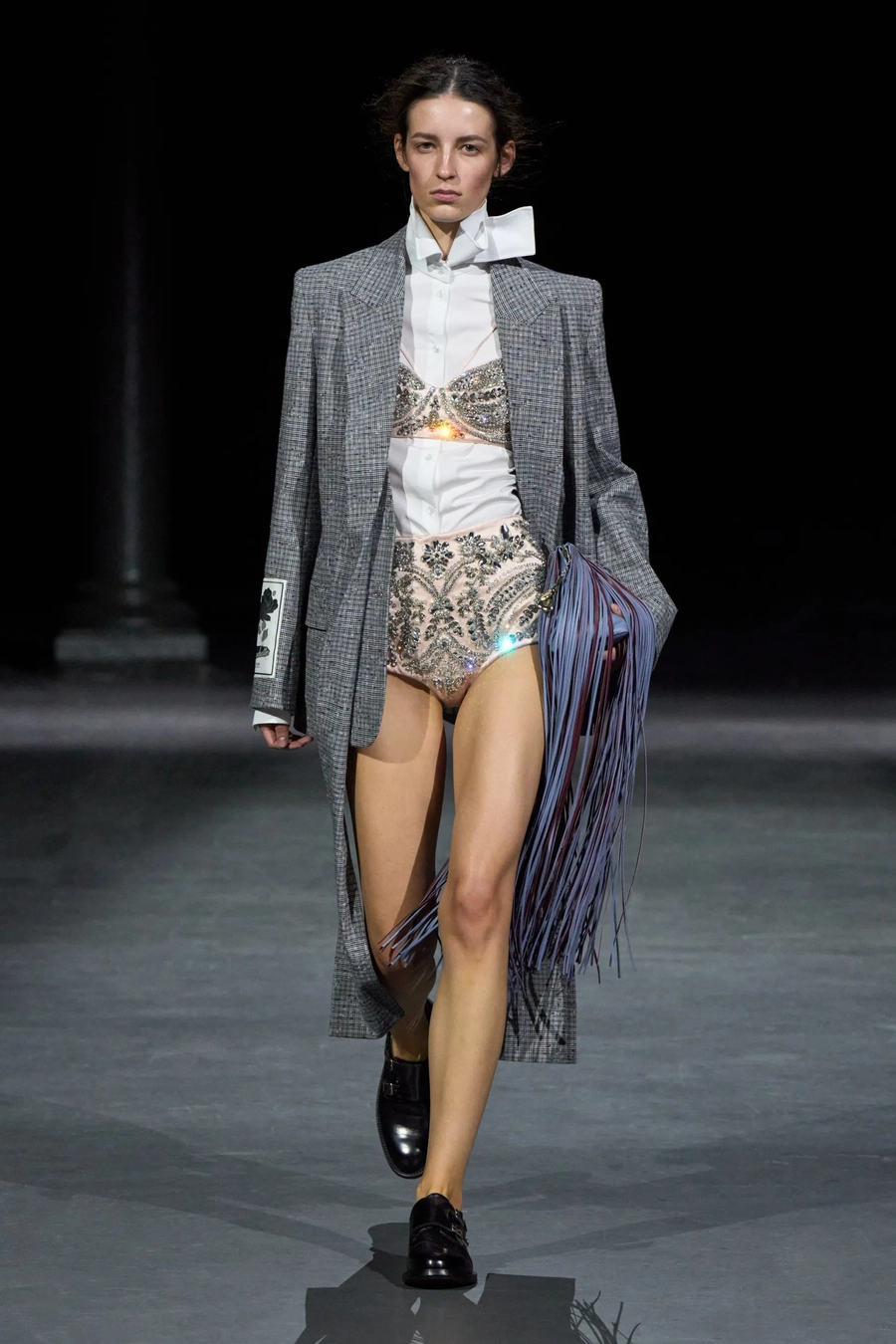
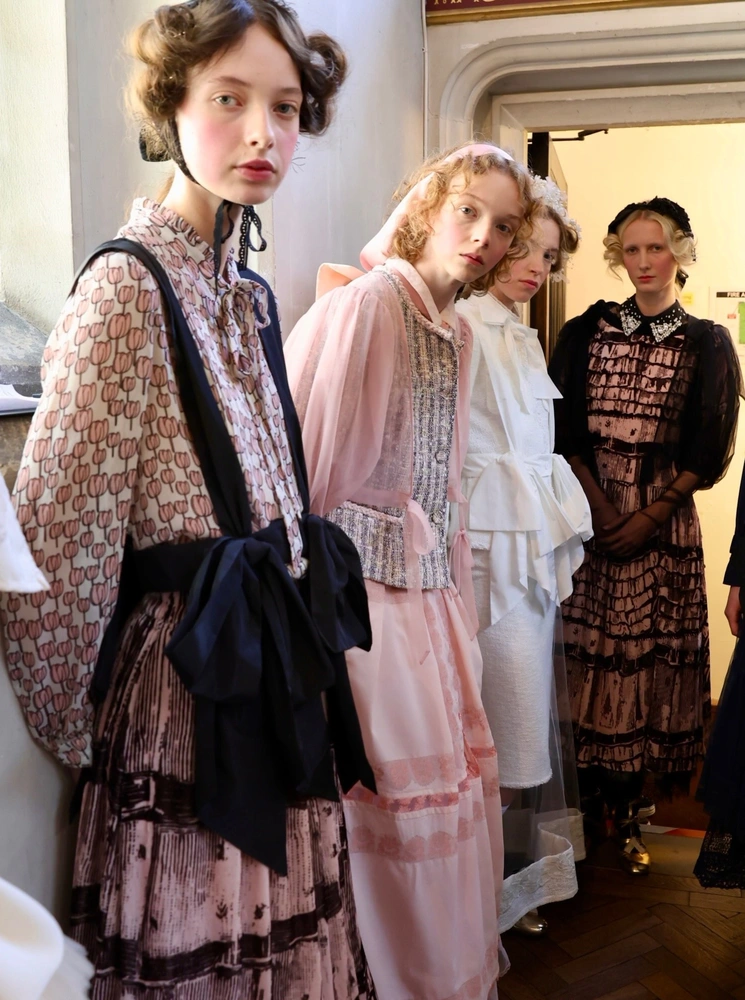
The sparkle carries the logic of performance. Under stage light, embellishment gives the body an immediate presence, echoing the costumes Barbette wore in photographs by Man Ray. Yet the shine gains another character once paired with a high Edwardian collar or severe coat. Sensuality and authority stop belonging to separate wardrobes.
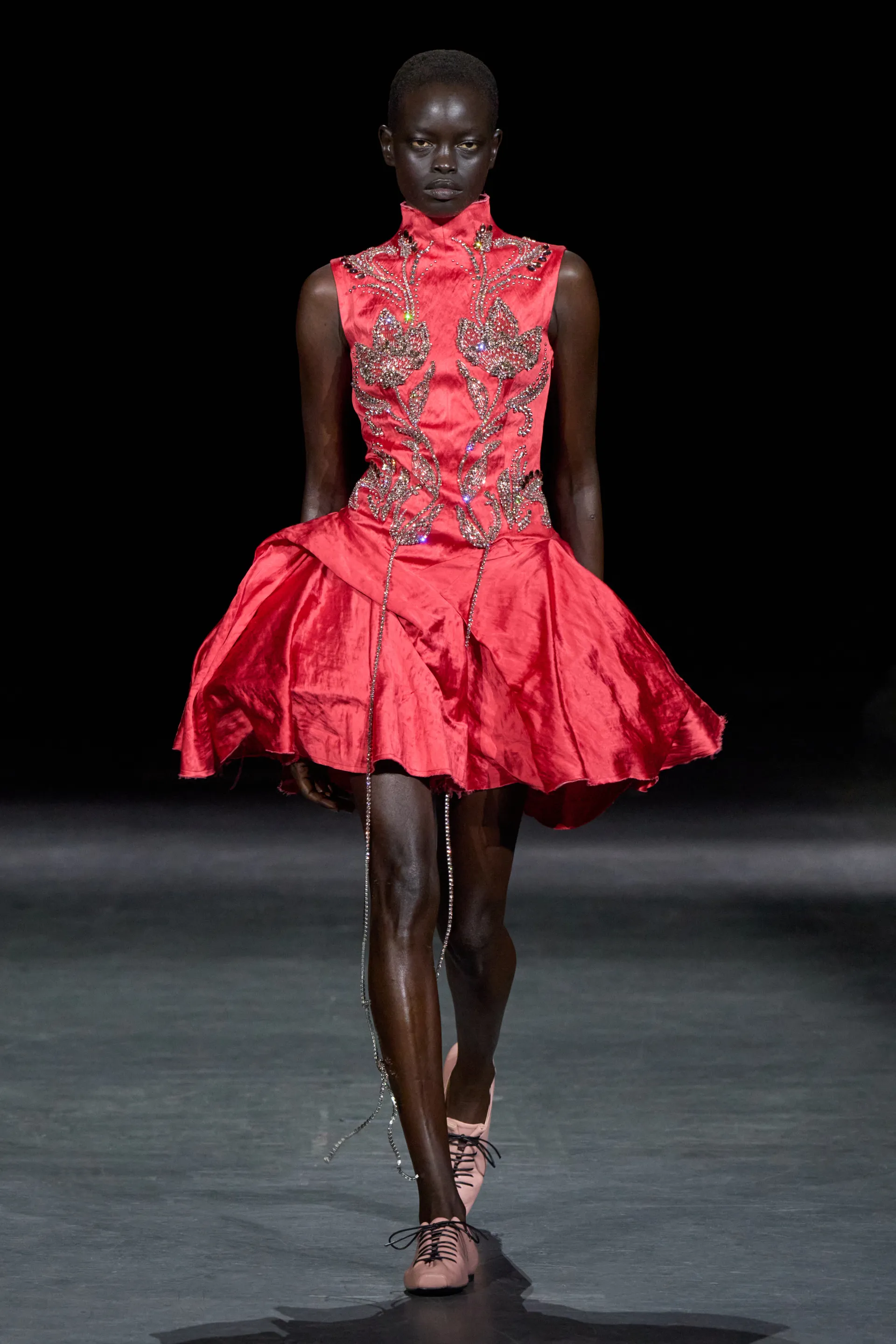
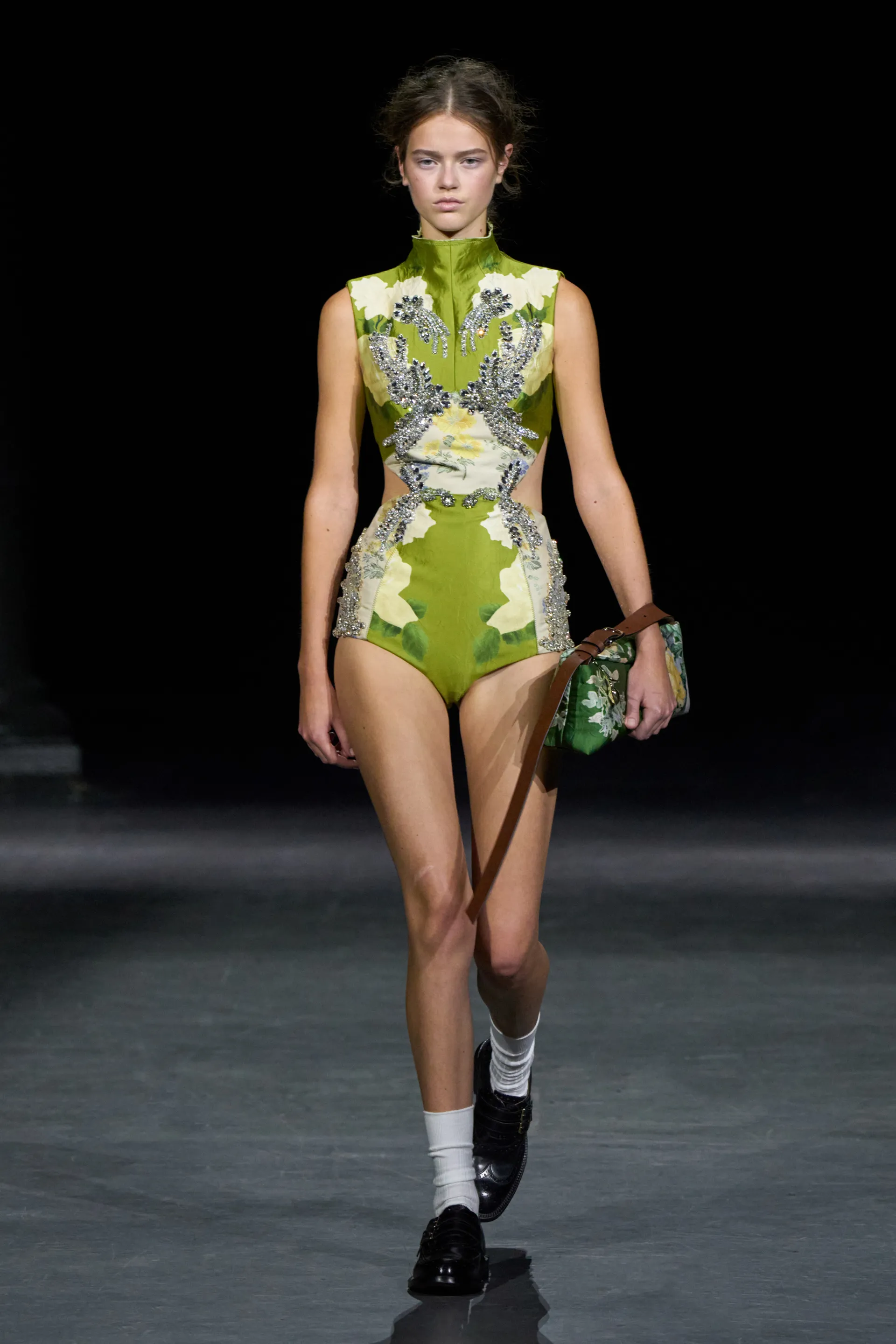
That duality becomes especially persuasive through proportion. Bare legs and exposed torsos create openness through the centre of the body, while shoulders and collars remain controlled. Tailoring frames lingerie instead of covering it, allowing each to sharpen the other. The masculine pieces gain theatricality; the feminine ones acquire discipline.
Androgyny here is not created by neutralising the body. Erdem keeps every contradiction visible.
The ball gown seems to have migrated upward.
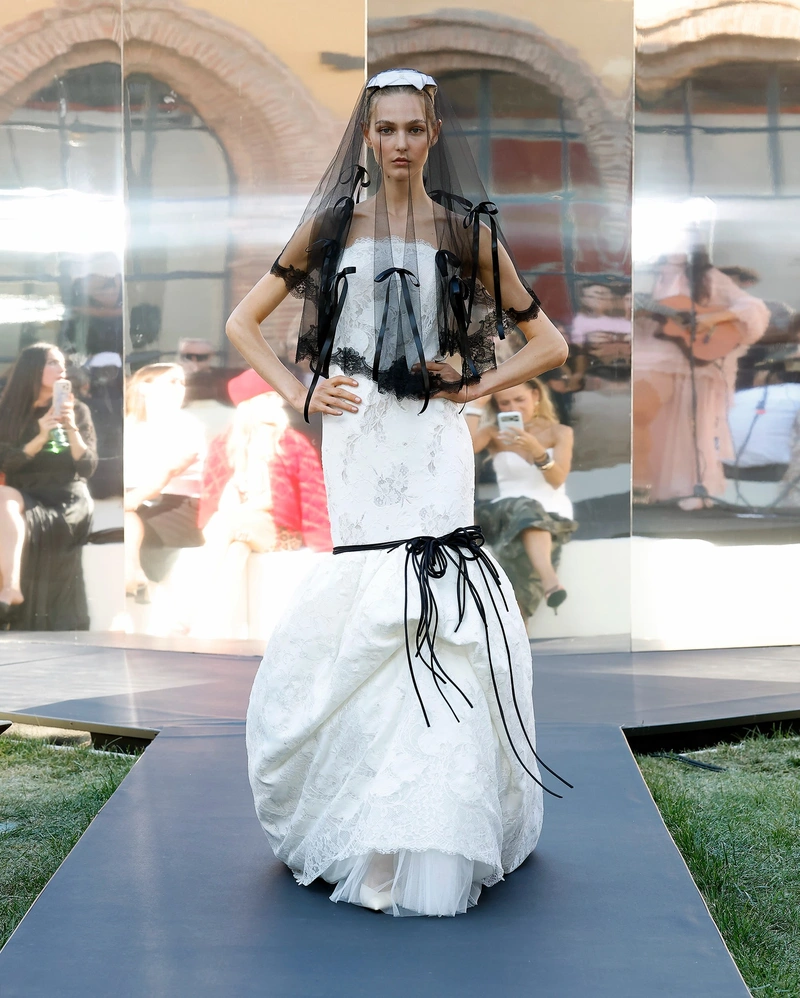
Volume gathers around the hips in pannier-like swells, widening the body dramatically before the silhouette falls back toward the leg. Historical court dress is present in the architecture of the look, though Erdem chooses to loosen the form rather than reproduce a literal period silhouette. Beneath layers of sheer fabric, the crinoline is left deliberately exposed, revealing the structure responsible for the exaggerated width. The upper body can remain comparatively narrow or exposed while the lower half blooms outward, making the hip itself the central event.
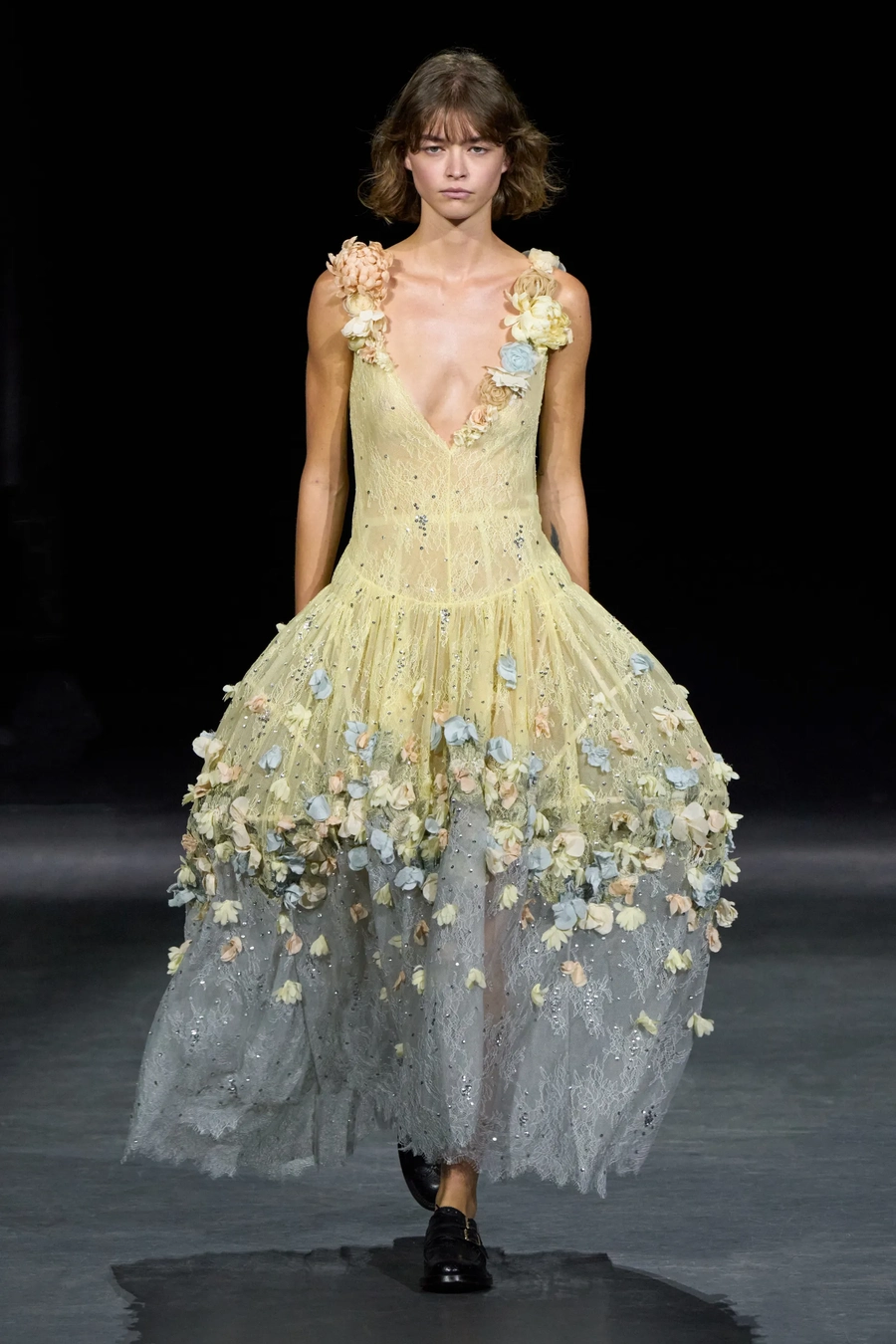
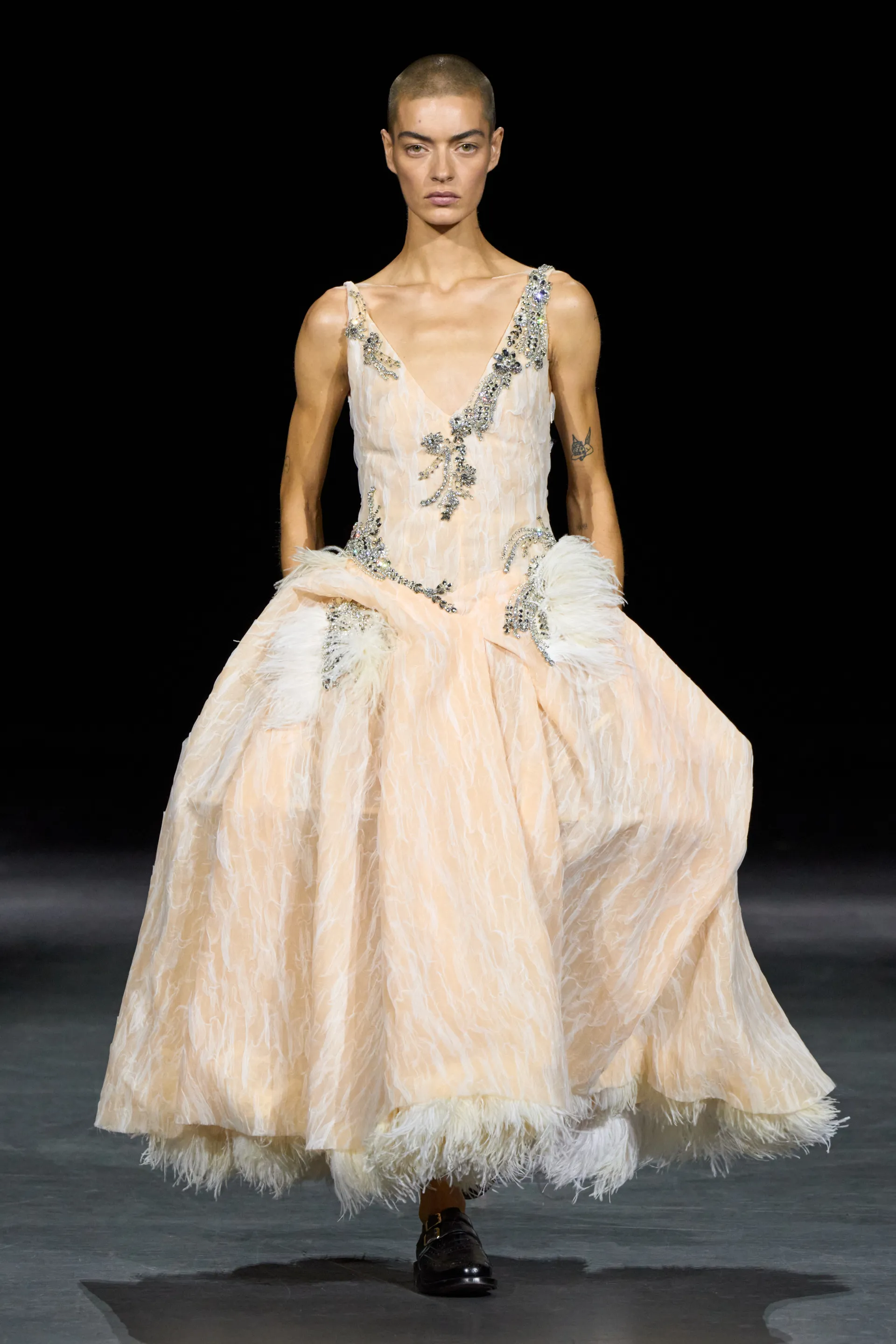
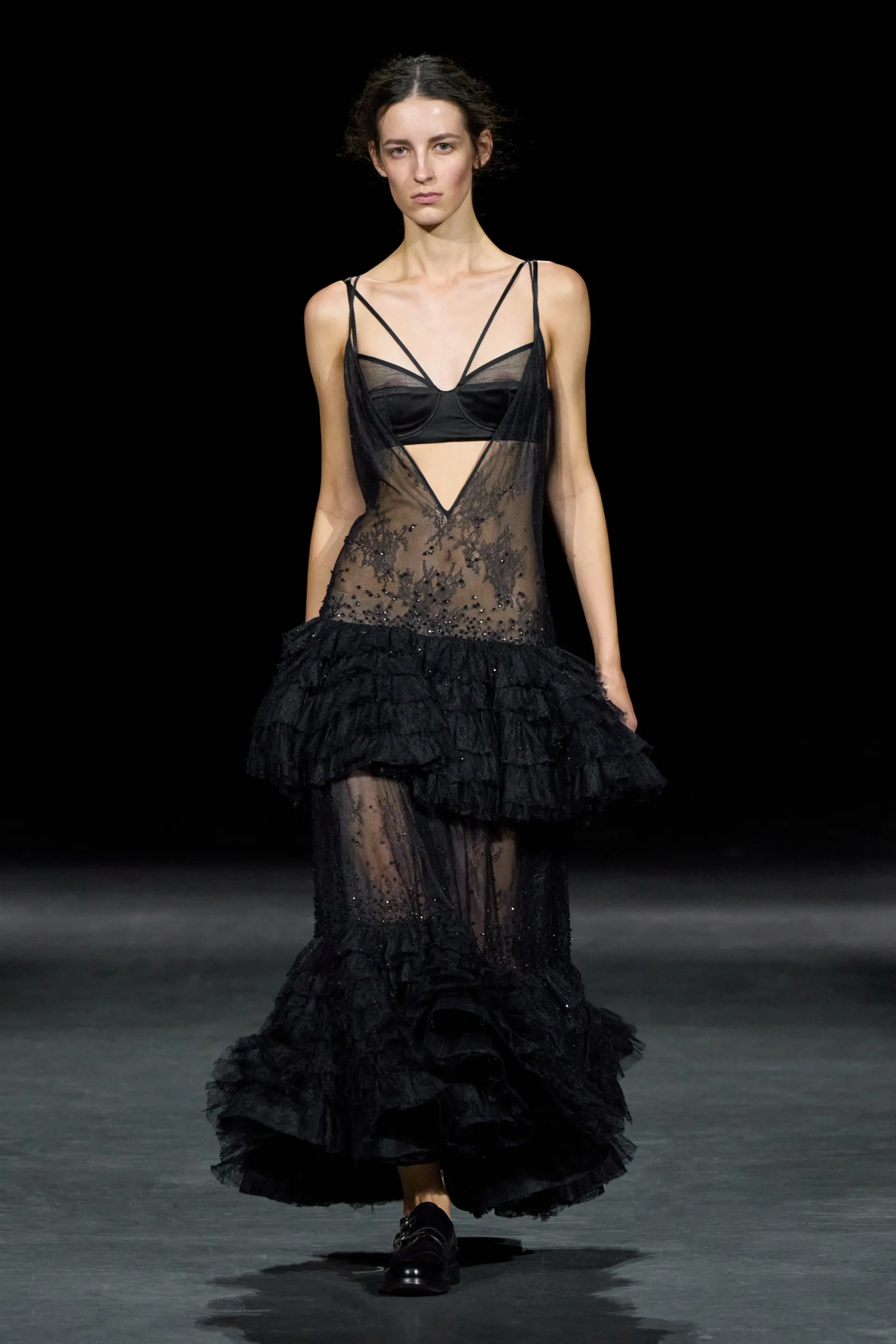
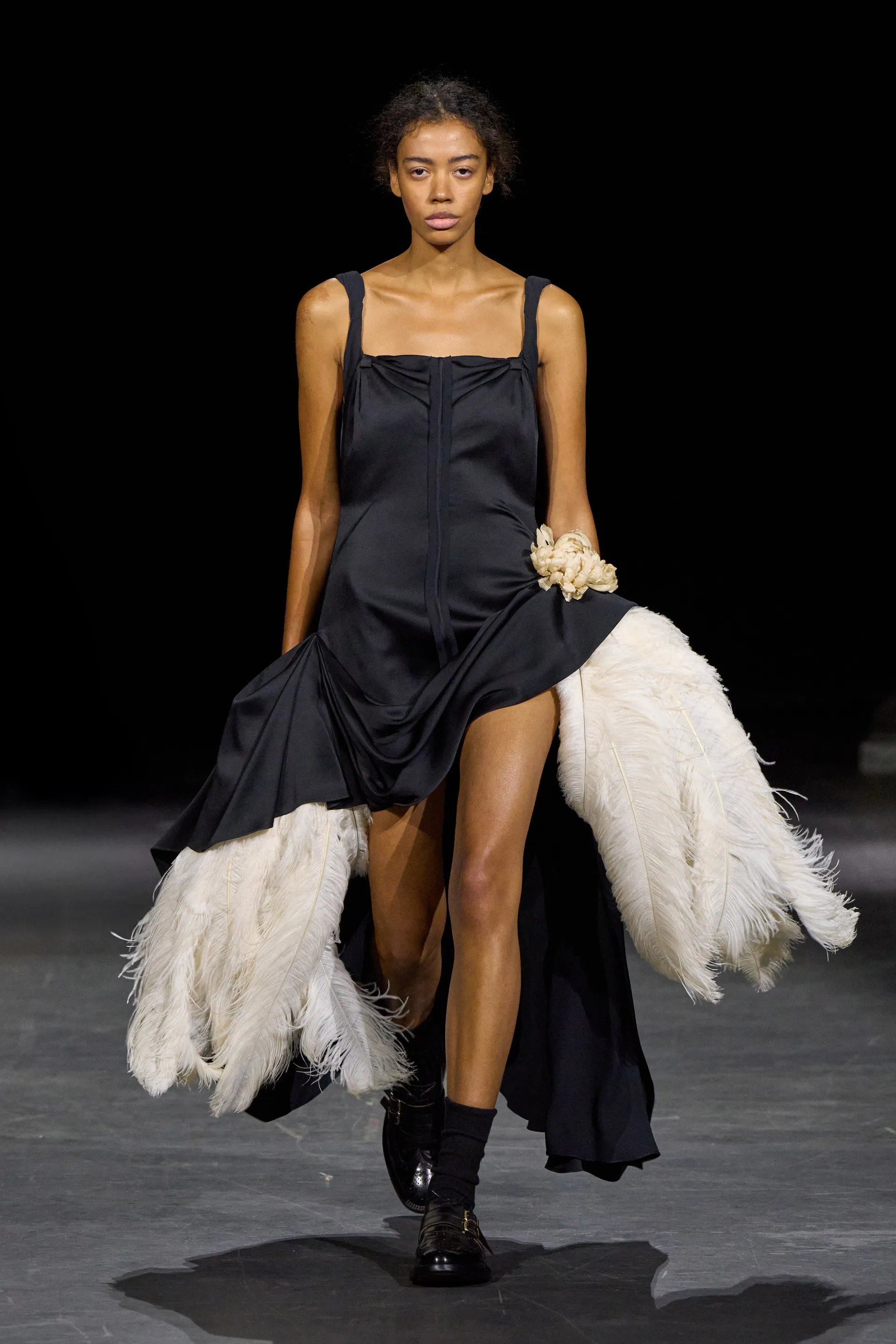
Instead of a conventional ball gown whose fullness drops from the waist to the floor, these shapes hold volume higher, almost as if the skirt has been caught during a turn and frozen mid-flight. Feathery surfaces exaggerate that sense of motion, allowing the pannier to appear buoyant where a rigid historical framework would once have imposed weight.
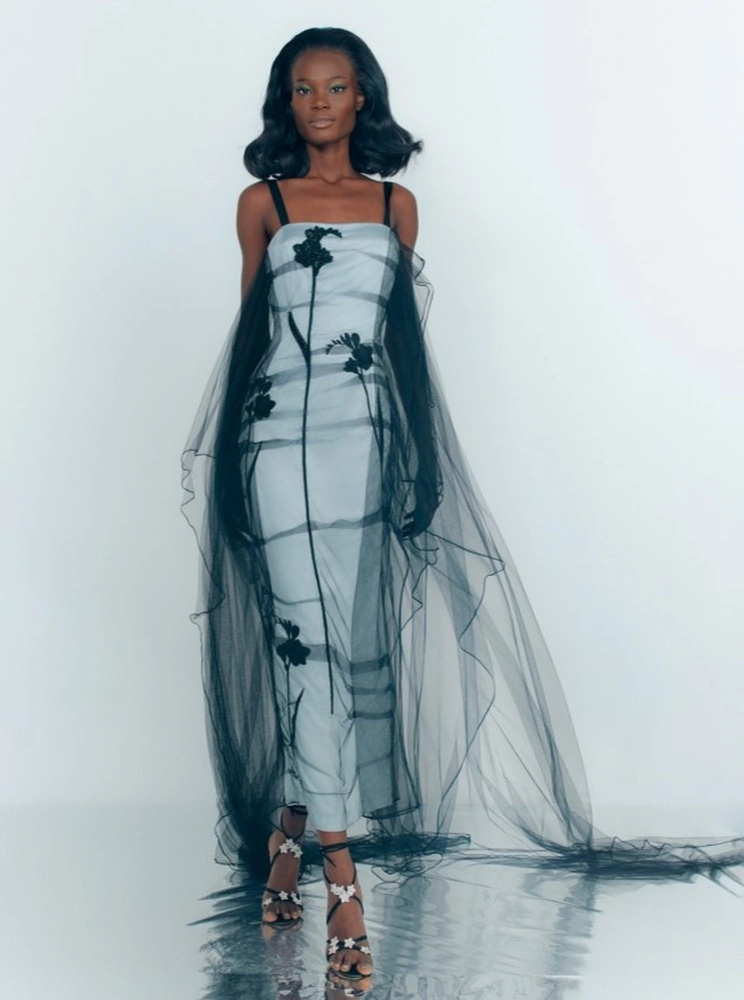
Erdem Moralioglu builds formal volume, then lets movement disturb it. Tulle and feathered surfaces soften the edges of the architecture, while sheer sections allow the outline to remain grand without becoming visually dense. The silhouette retains its ceremony, but it also carries the momentum of someone accustomed to working above the ground.
For a collection inspired by an aerialist, the hips occasionally appear to have learned levitation too.
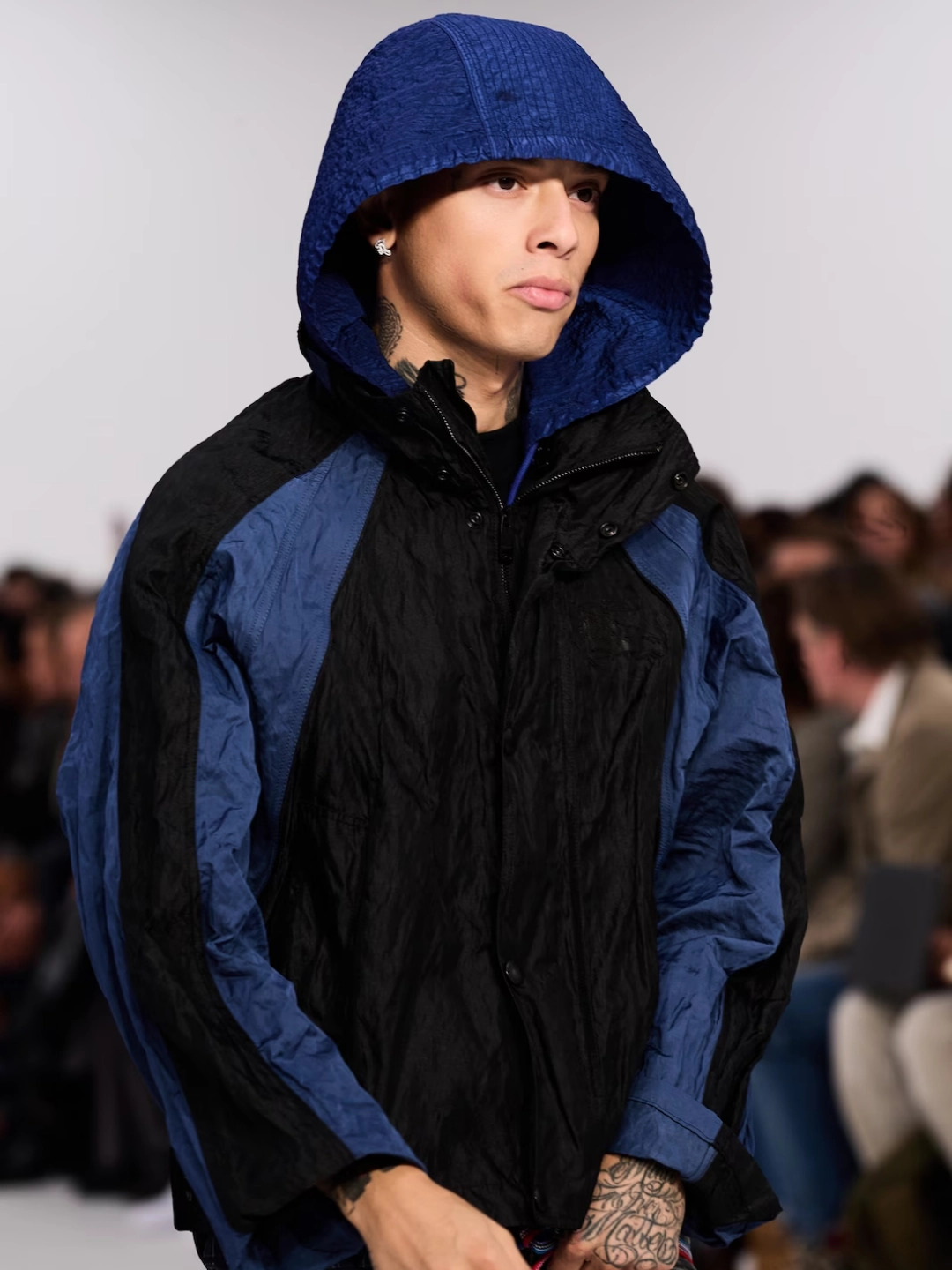
A pair of oversized Barbour jackets briefly sends the collection outdoors, though practicality quickly acquires its own theatrical ambitions.
Waxed cotton preserves the familiar language of country utility, while hints of military discipline linger in the structured collars, imposing shoulders, and utilitarian attitude. Erdem then inflates the proportion until the jackets approach cape territory. Shoulders push outward, collars stand away from the neck, and the body nearly disappears inside the volume. The original function remains readable, but the silhouette has been pulled into the same performance language as the rest of the show.
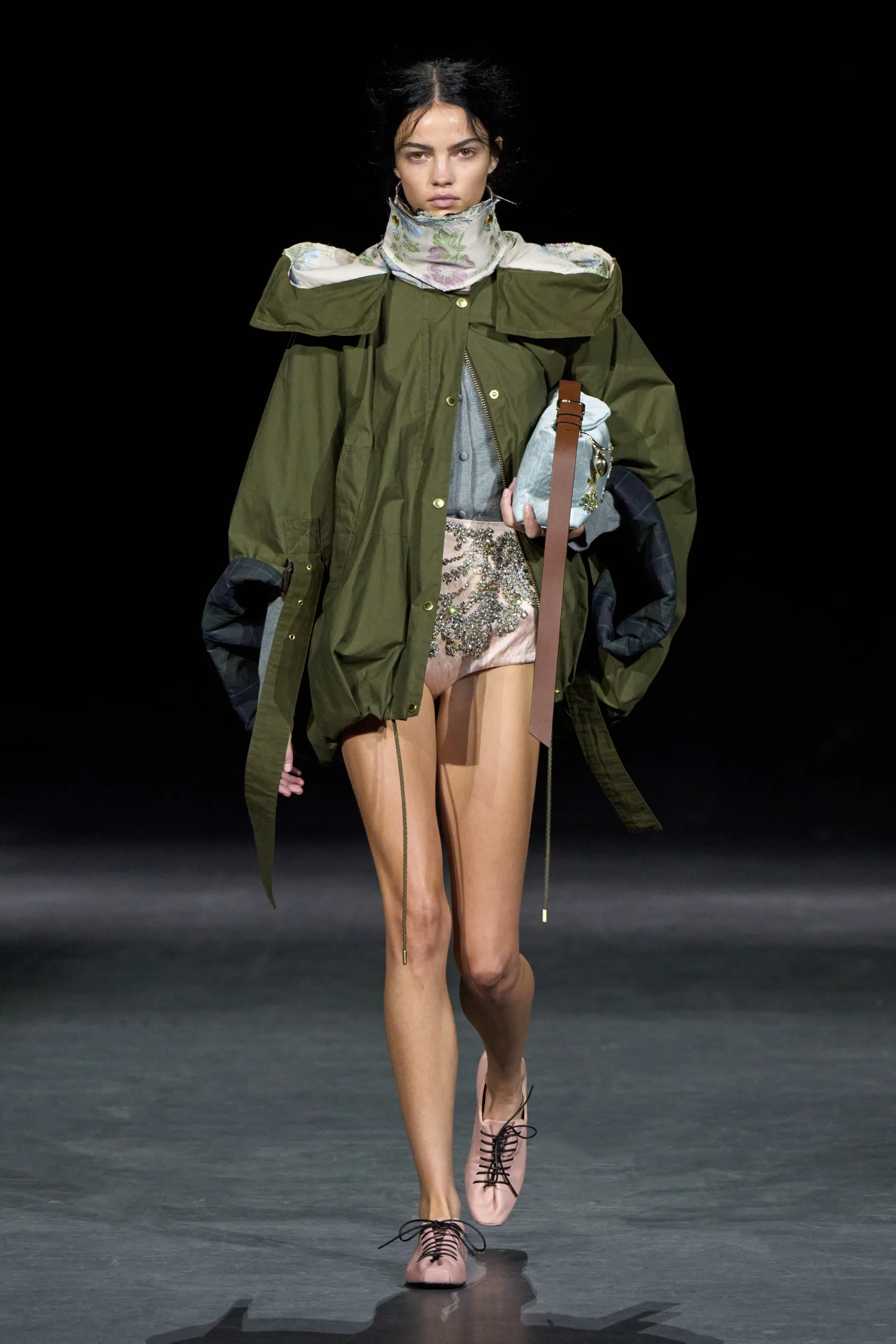
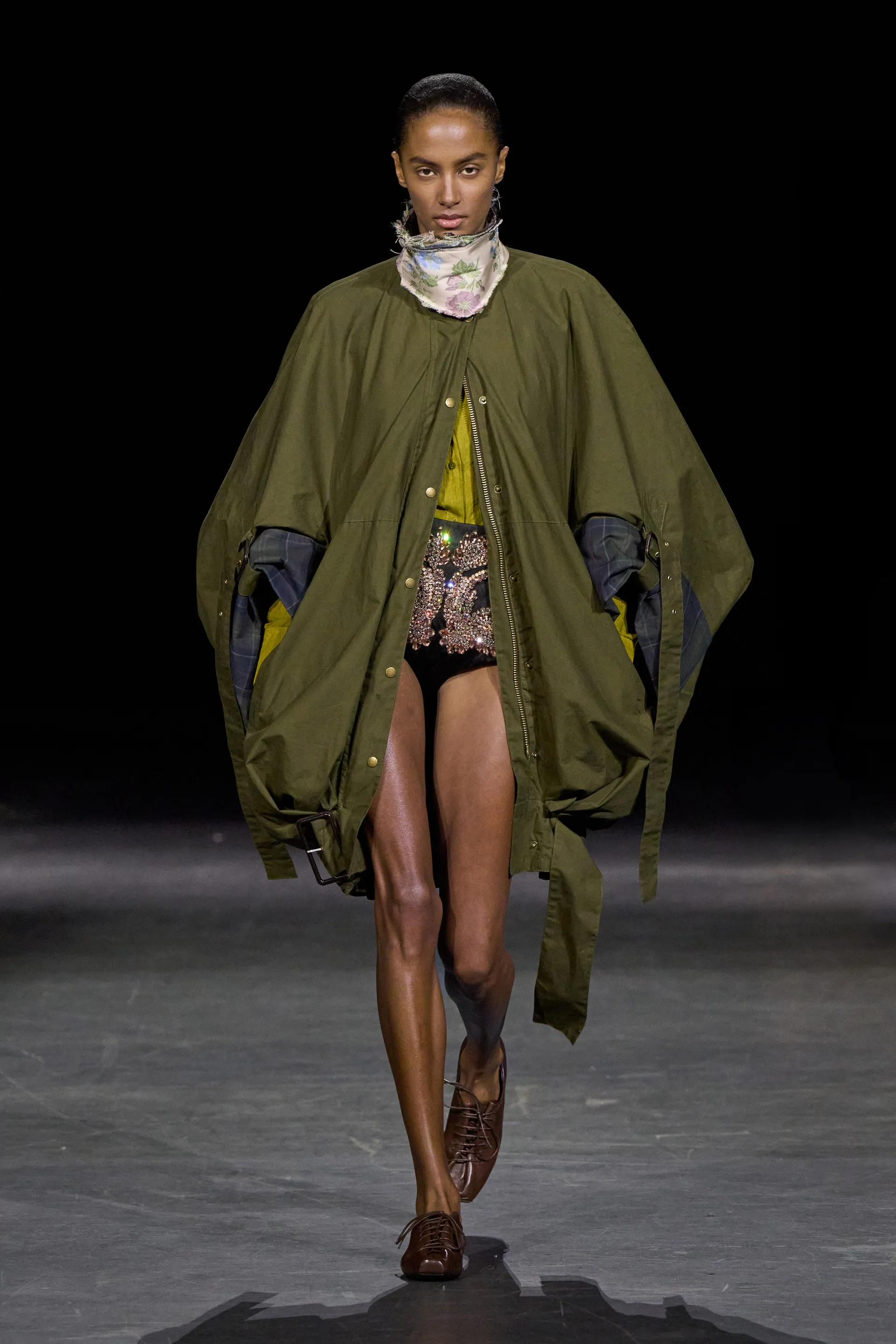
It is a concise interruption, and an effective one. Even the most pragmatic garment in the wardrobe can be made ambiguous once proportion stops behaving politely.
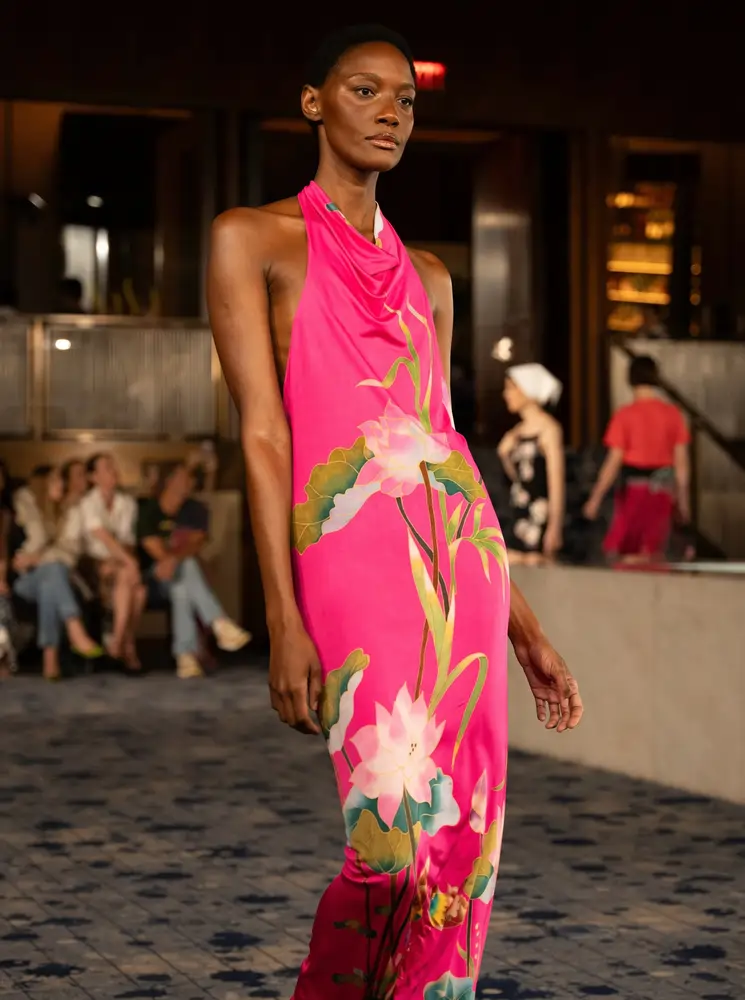
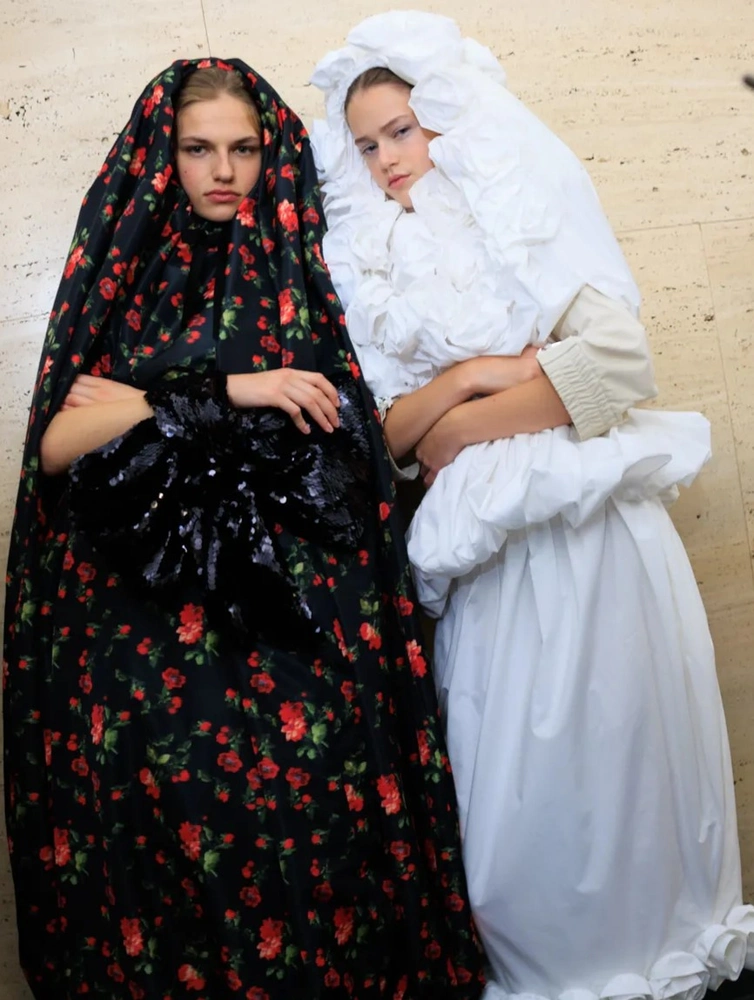
Erdem’s florals have rarely been content to remain decorative, and here they begin physically escaping the cloth.
Jacquard gives the surface a woven density, allowing botanical motifs to sit inside the structure of the garment instead of simply resting on top. As that pattern travels downward, it loosens into a long dégradé fringe, turning a fixed image into movement. The flower stops being something the eye reads and becomes something the body activates.
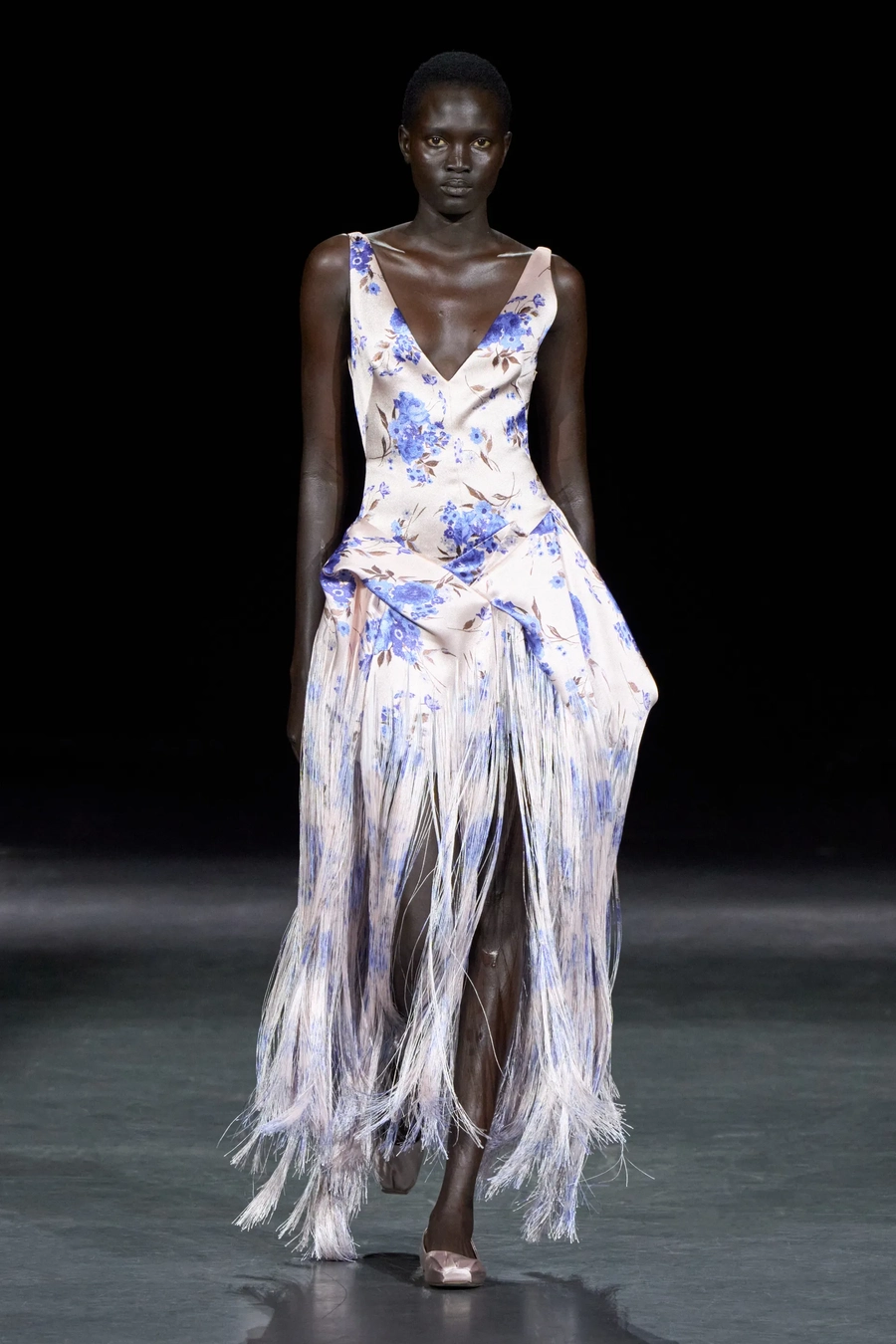
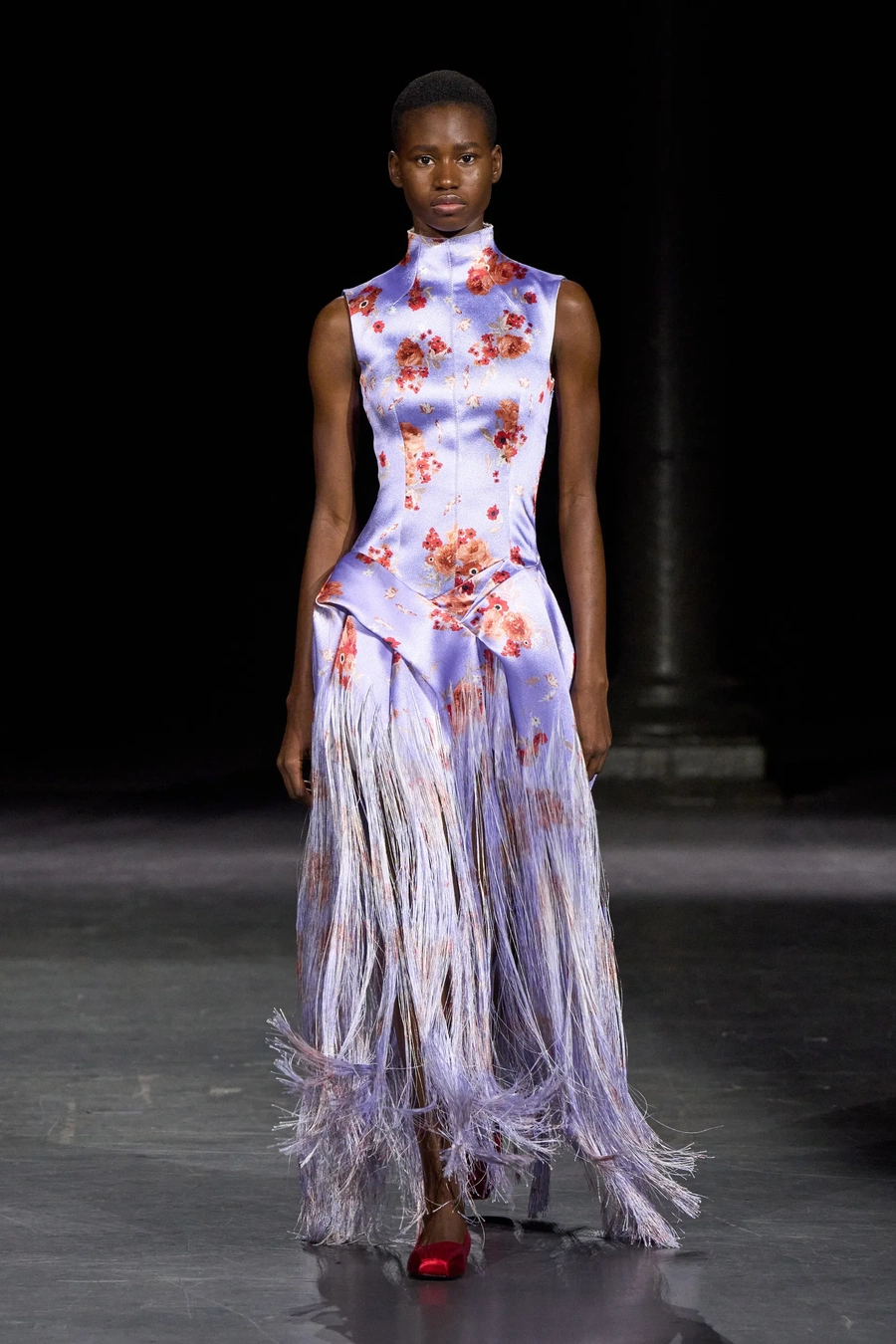
That transition makes material part of the silhouette. A still garment can appear highly controlled, yet every step sends the lower surface scattering in another direction. The woven pattern provides definition through the torso, while fringe dissolves that precision closer to the floor.
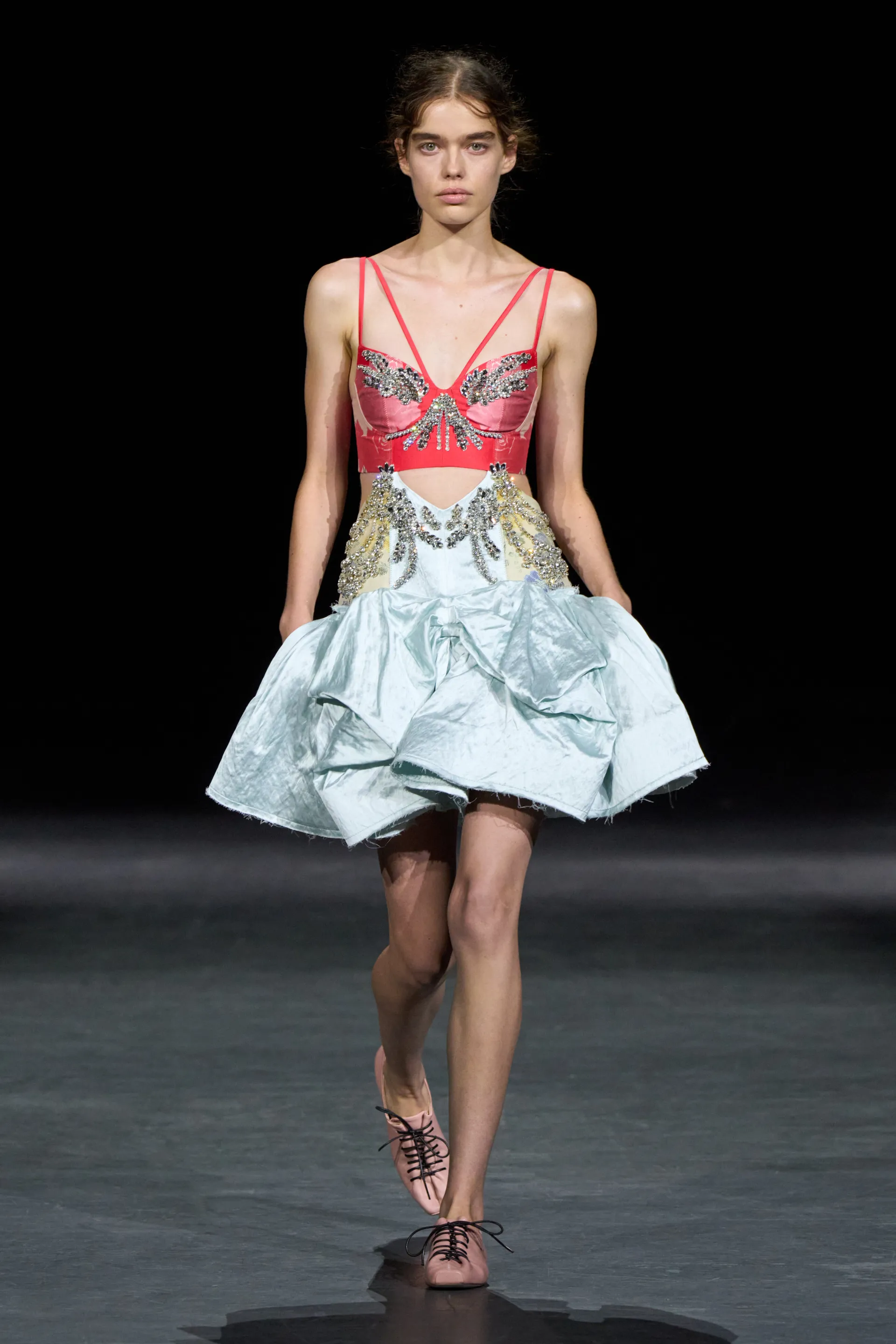
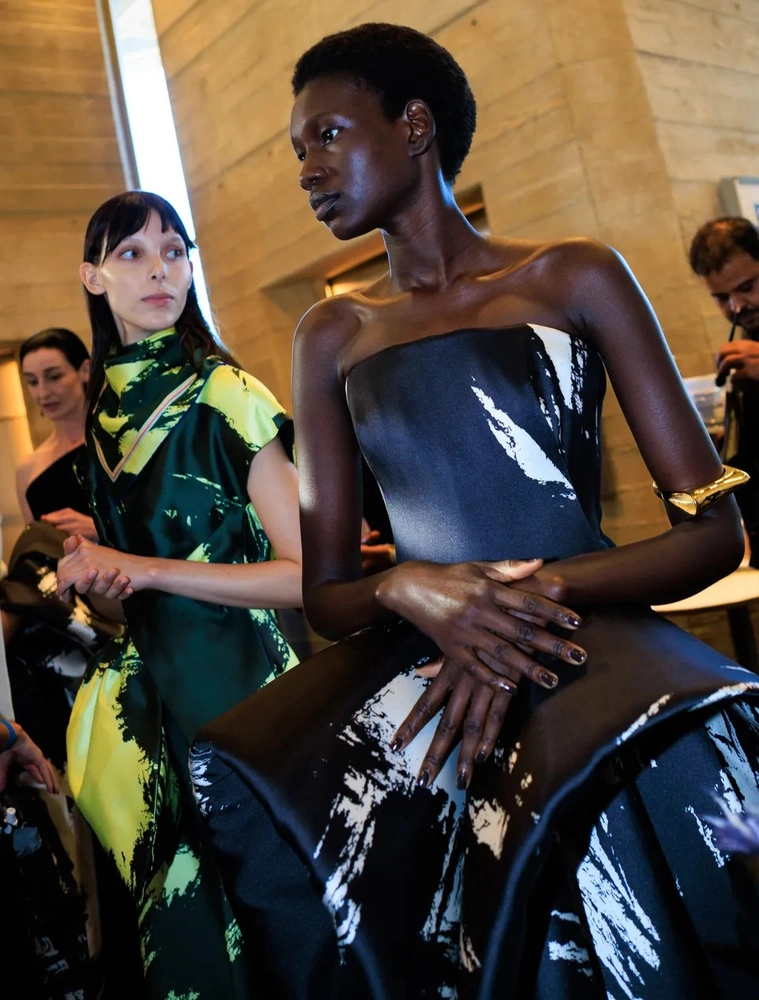
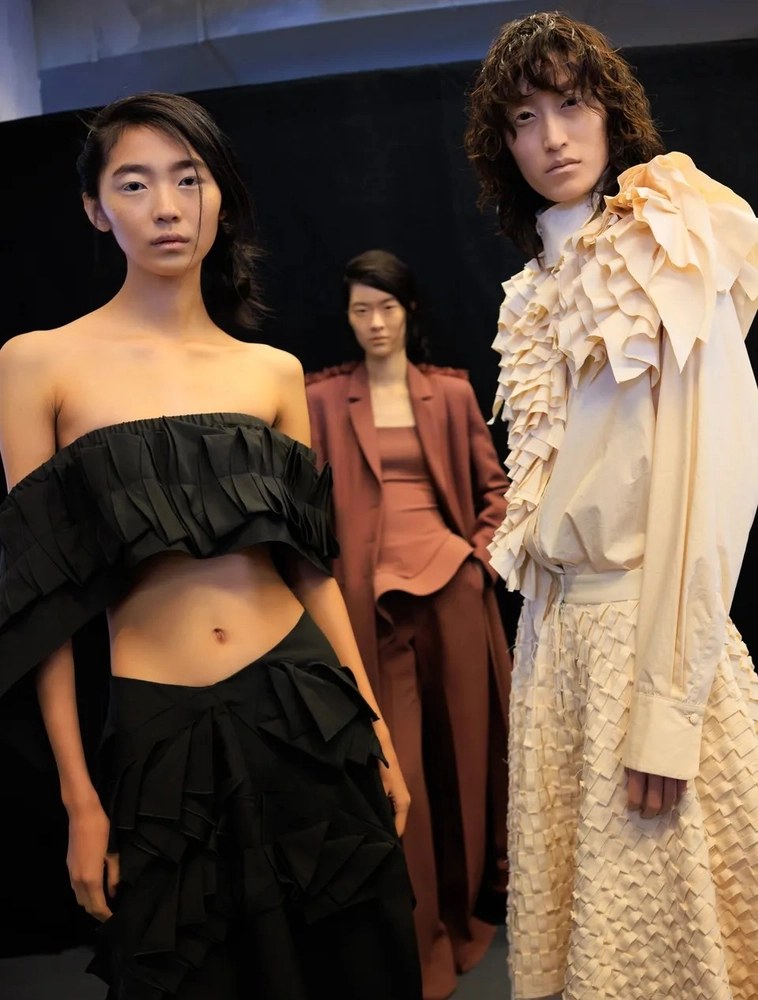
Fluid surfaces create a second rhythm beside it. Crushed satin folds around the body with a softer, more liquid response, catching light unevenly as it moves. Against the intricacy of jacquard, that fluidity gives the collection breathing room, especially when draping begins to loosen the waist or pull fabric away from the body.
Erdem is effectively allowing textile technique to perform its own transformation. Weave becomes fringe; pattern becomes motion; structure gives way to something far harder to hold still.
By the finale, the showgirl has acquired the authority of a grand dame.
Sweeping robe-like volumes envelop the body, their scale closer to an opera coat or salon dressing gown than the exposed lingerie of the opening looks. Feathery collars and cuffs turn softness into ceremony, while the generous folds suggest clothes intended for someone who has already performed, already been seen, and can now afford the luxury of taking up as much space as she pleases.
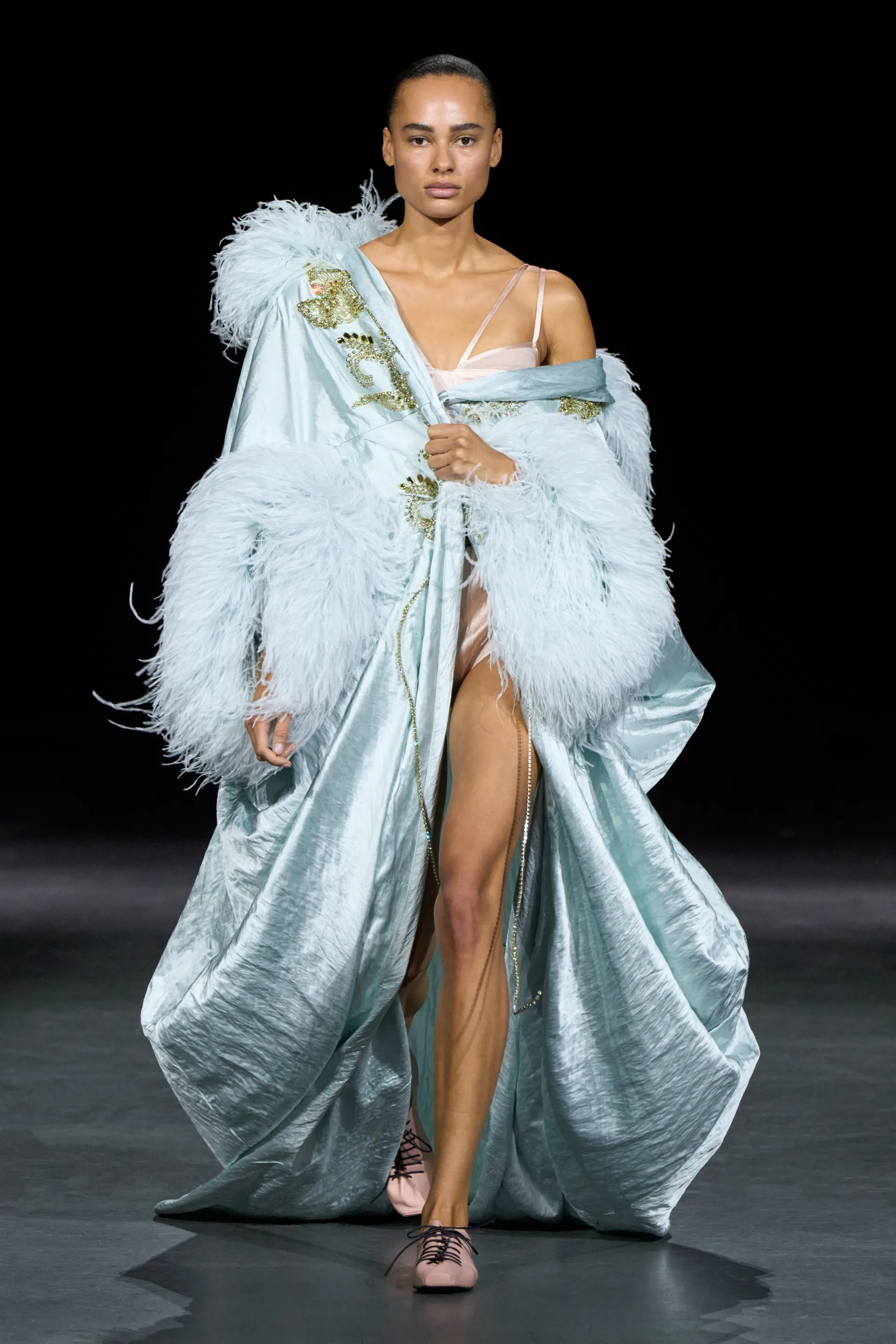
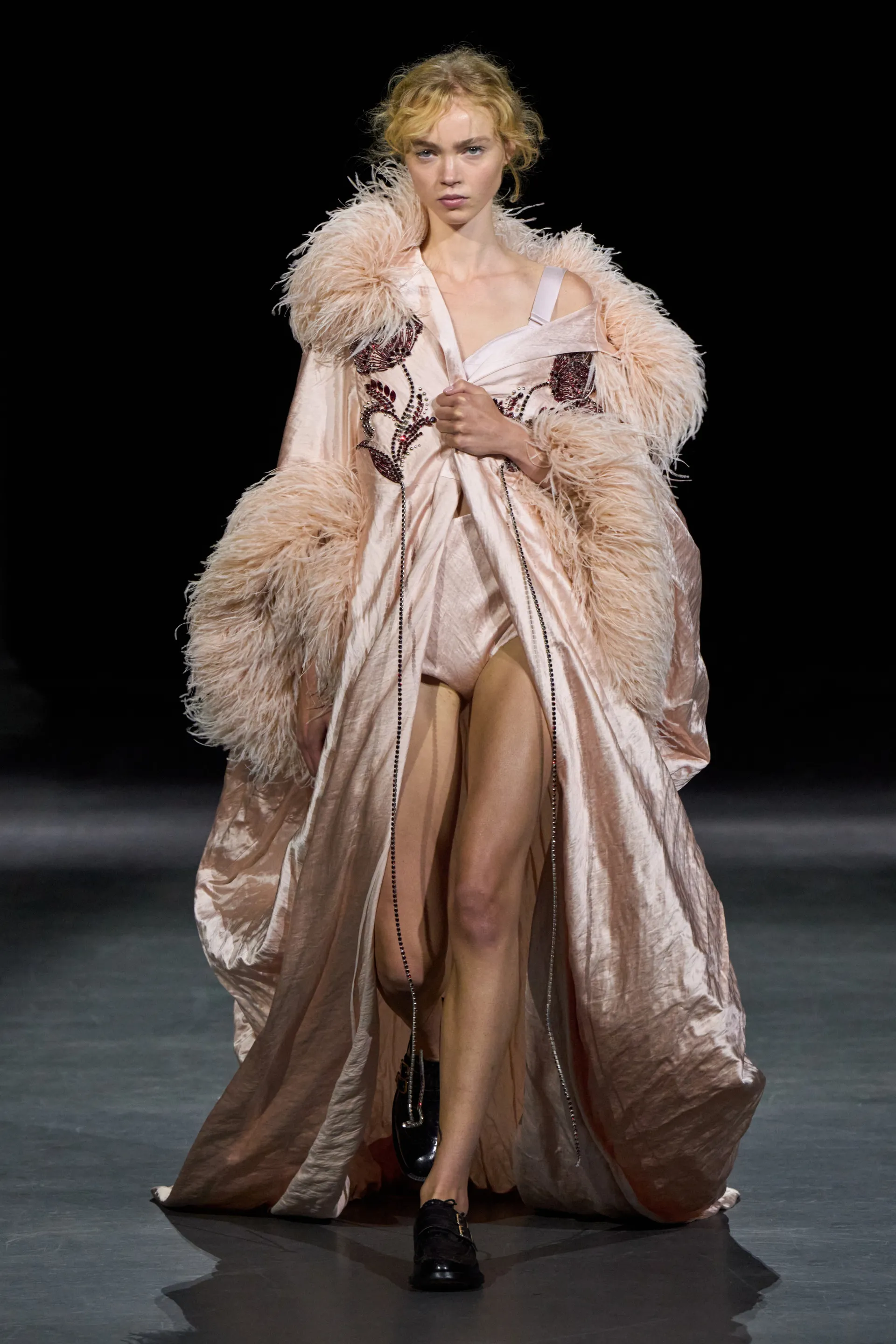
With earlier looks place the body on display; these final coats allow it to retreat inside volume. What began with the exposure of the performer ends with the assurance of someone who controls when the audience gets to look.
There is still theatricality, only now it belongs to the exit.
History often leaves behind photographs but loses the complexity of the person inside them. Erdem has built much of his work around refusing that flattening, returning to figures whose lives resisted the categories available to them and letting those contradictions remain unresolved.
Barbette’s stage was built around suspension, not only above the ground, but between identities, appearances and the expectations of an audience. Nearly a century later, Erdem does not try to pin him down.
Instead, Erdem SS27 lets him remain exactly where he was most powerful: somewhere in midair.
Advertisement