MENU
Close





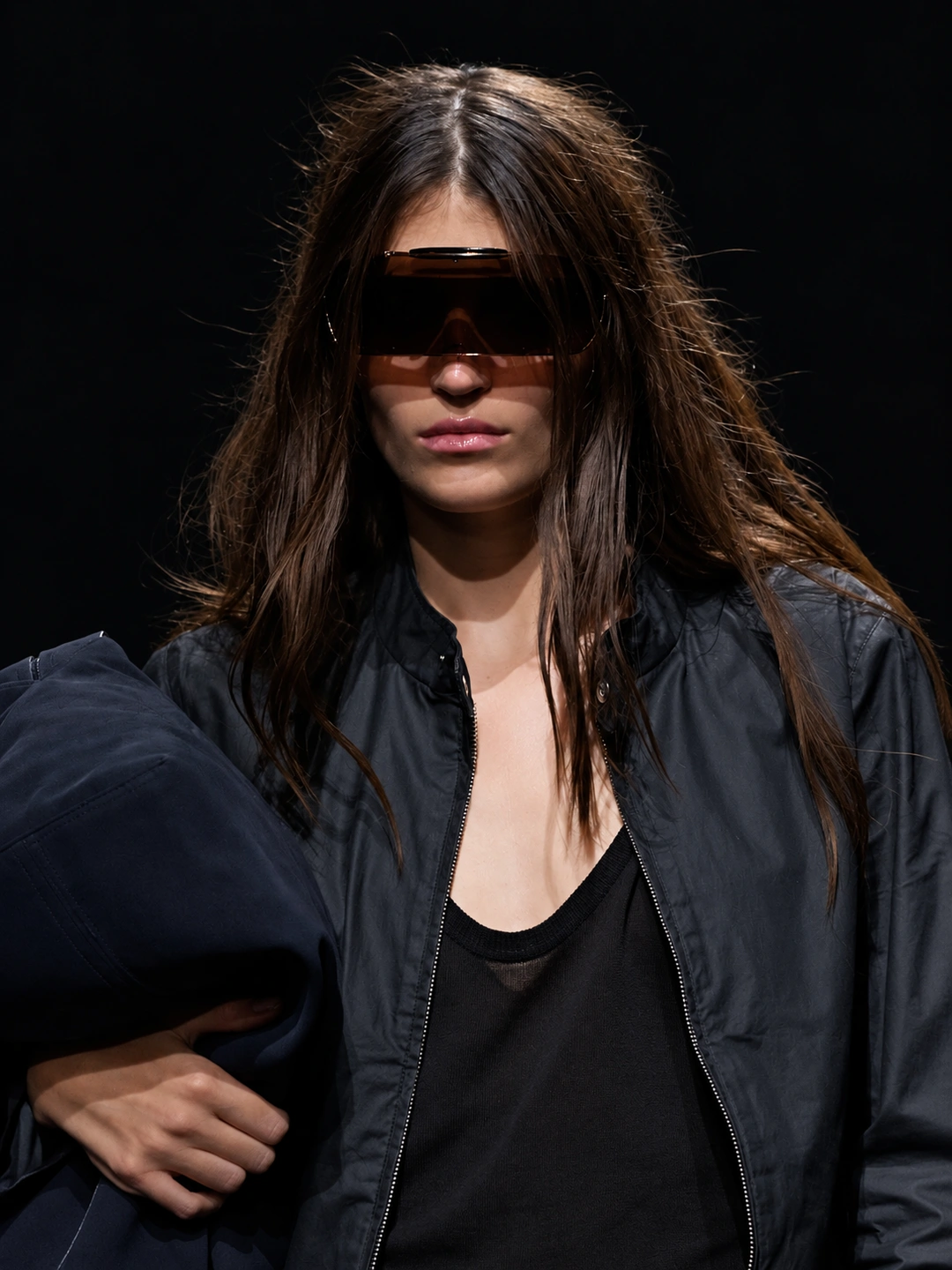
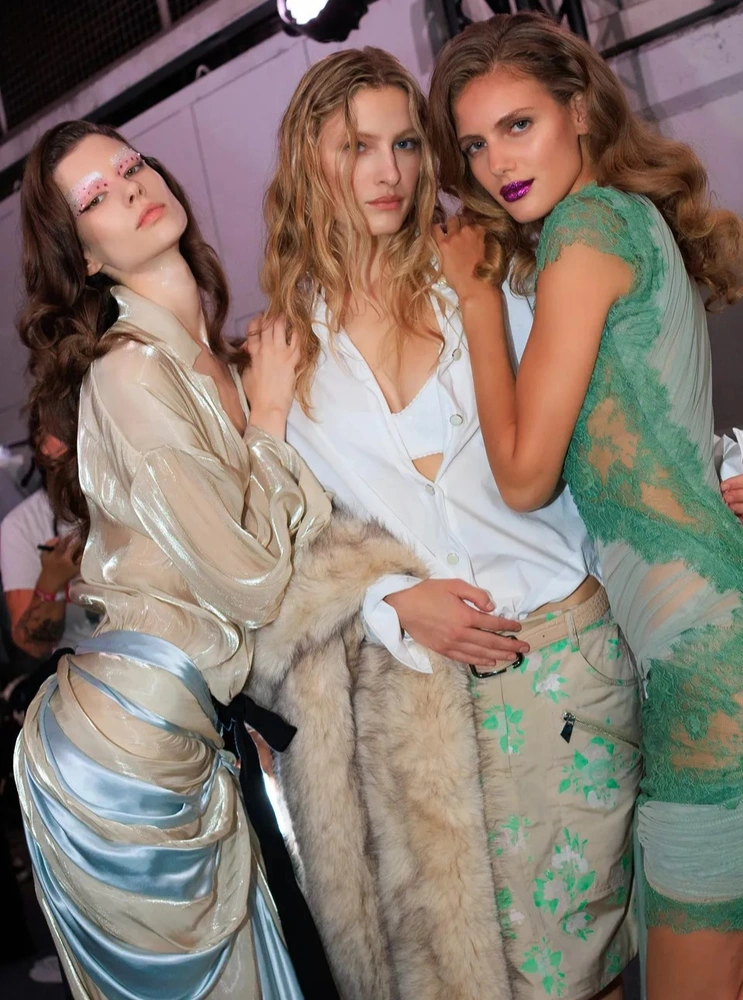
At the edge of sleep, the rules around femininity begin to blur. Yuhan Wang SS27 slips into that private hour when the bedroom door closes and getting dressed becomes nobody else’s business.
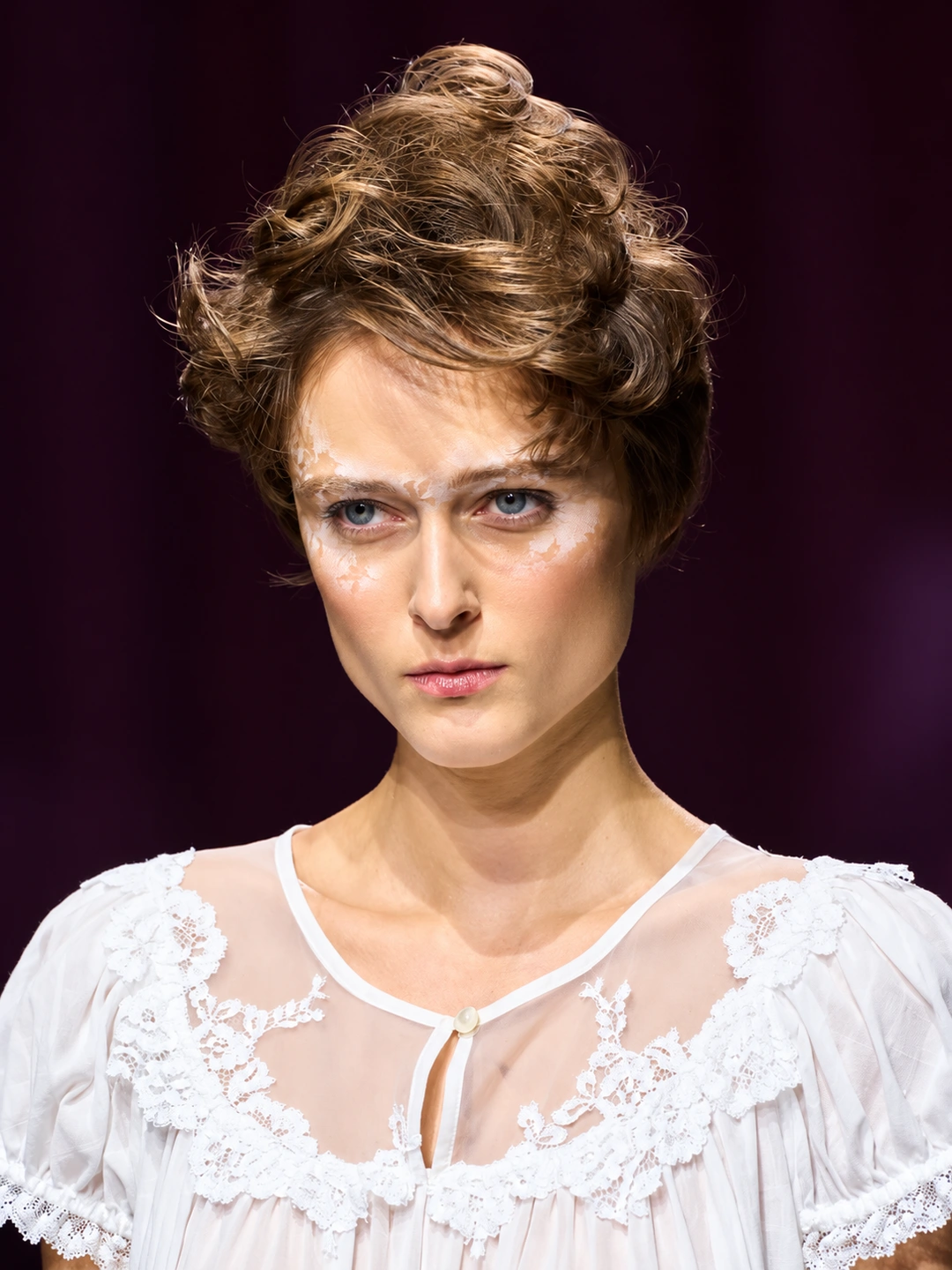
At the edge of sleep, the rules around femininity begin to blur. Yuhan Wang SS27 slips into that private hour when the bedroom door closes and getting dressed becomes nobody else’s business.
September 19, 2026
Advertisement
Advertisement
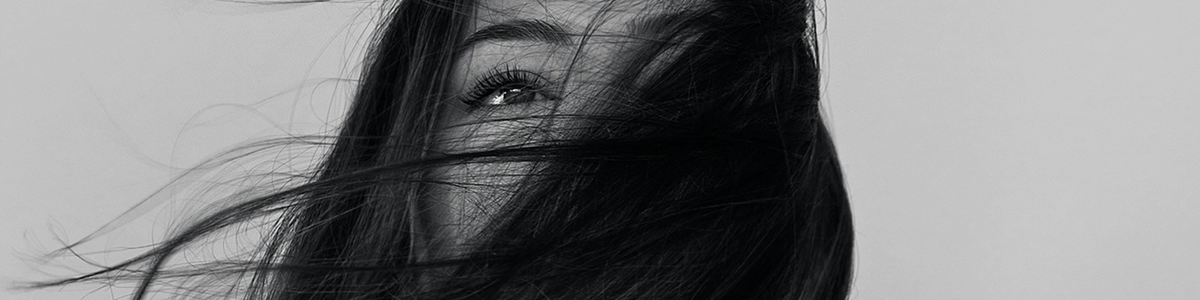


The bedroom is one of the few places where clothes can stop performing for the outside world. A blouse is left half-buttoned, lingerie remains visible, yesterday’s shirt becomes something to wrap around the body, and whatever was meant to stay underneath may end up being the only thing worn at all.
Yuhan Wang SS27 is titled Sweet Nightmare, locating it in the strange hypnagogic state just before sleep, when familiar objects loosen from reality and memory starts behaving strangely. Four mattresses stacked on the runway established that world before the first look had fully appeared. From there, the collection drifts between dressed and undressed, intimacy and exposure, comfort and the slight unease of being awake inside a dream.
That private setting also opens a more provocative question. What might femininity look like when nobody is watching, judging, desiring or asking it to perform correctly? Wang’s answer leaves plenty of room for contradiction. Women can be sensual and awkward, cutesy and grown, glamorous and half asleep. Different bodies occupy that intimacy in different ways, without being pulled toward one ideal proportion. In Sweet Nightmare, the bedroom belongs to whoever is inside it.
Getting comfortable at Yuhan Wang SS27 still requires a certain amount of romance.
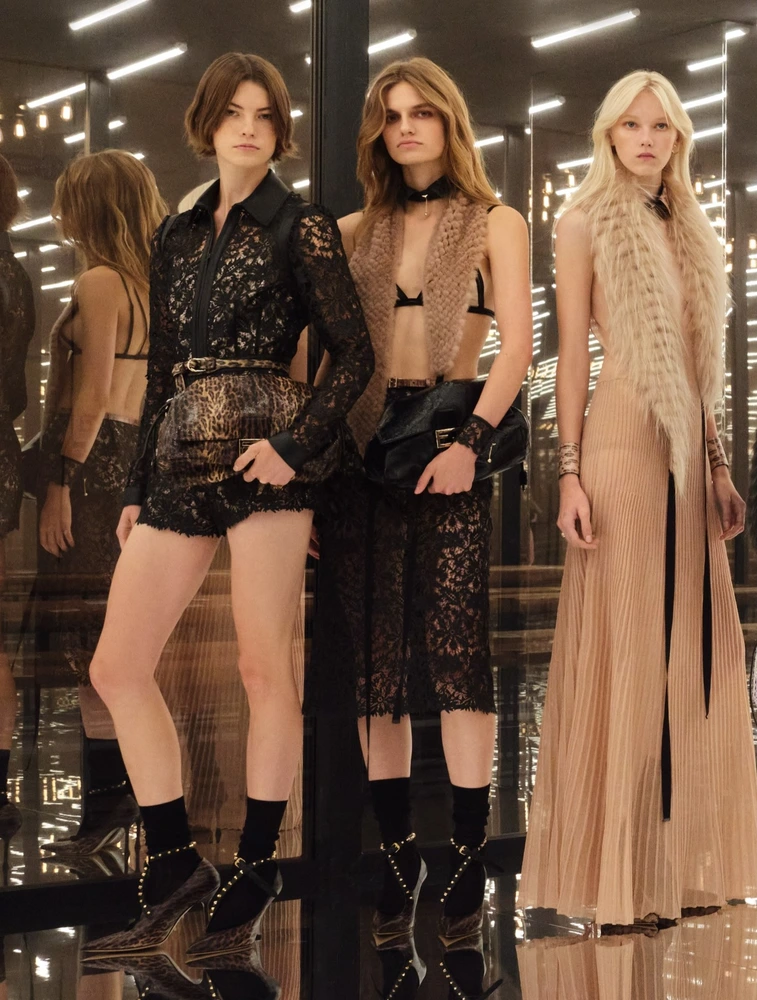
French-knicker proportions, tiny shorts and softly fitted tops make the opening looks immediately readable as bedroom dressing, but they carry none of the perfection usually attached to lingerie campaigns. Layers appear slightly improvised, stockings remain visible, hems peek out where they might ordinarily be concealed. The silhouette looks assembled according to what the wearer wants against her skin, not according to what another person expects to see.
Silk satin gives that intimacy its familiar glow. It moves close to the body without becoming rigid, catching light across softly gathered surfaces and letting a simple nightwear shape appear quietly luxurious. Elsewhere, cotton and checks interrupt that polish with something more domestic, bringing the clothes closer to pyjamas pulled from a drawer than a fantasy constructed for seduction.
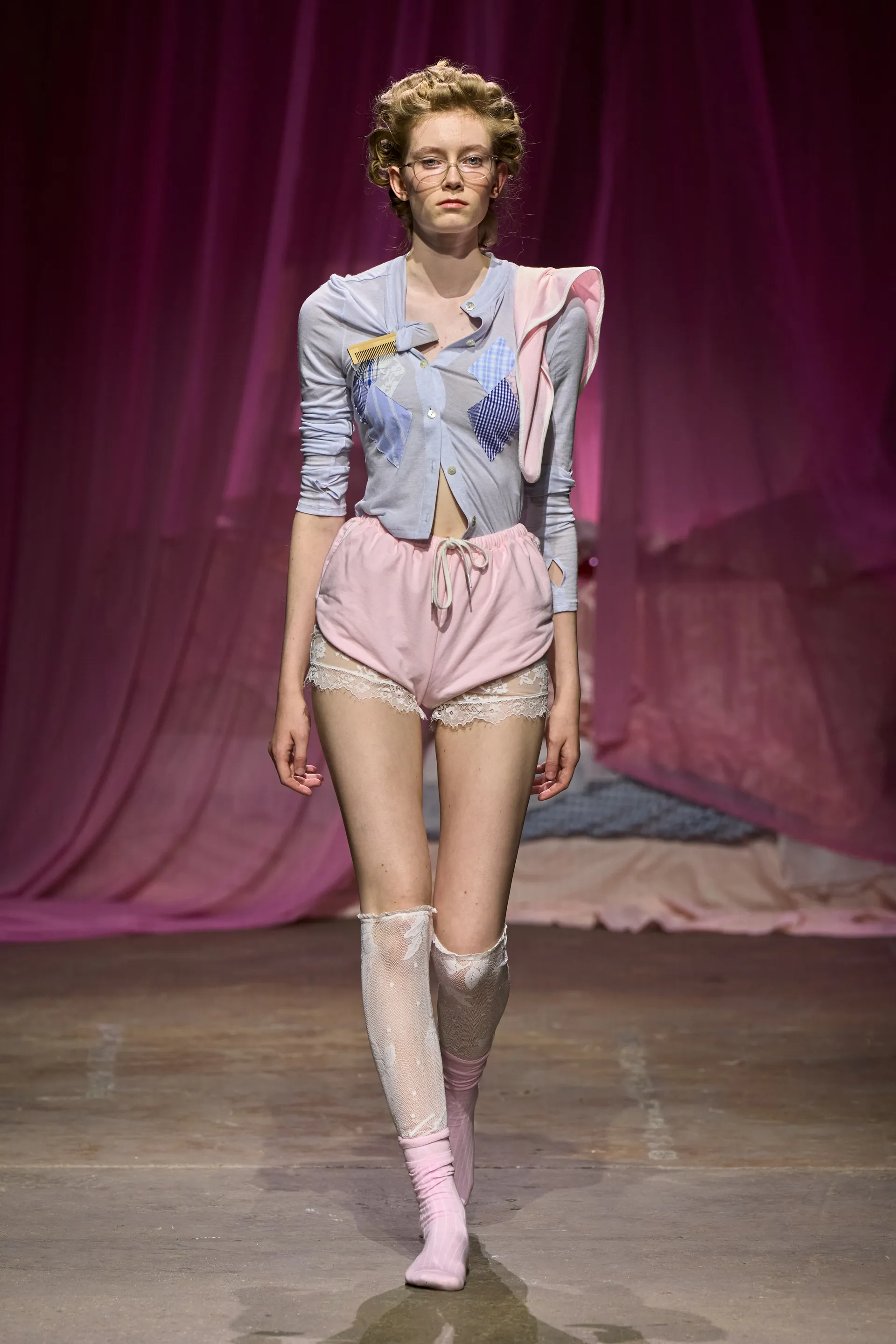
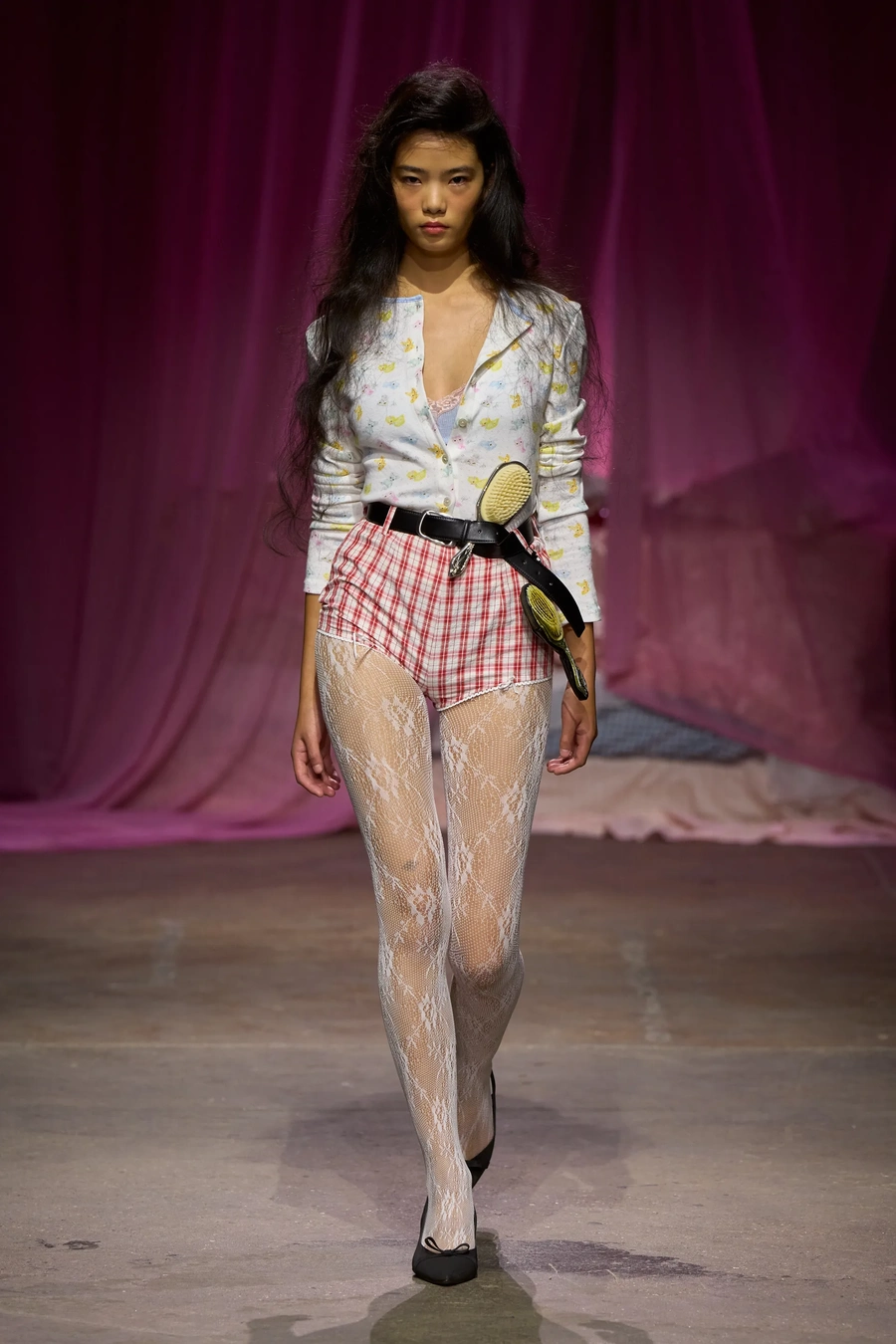
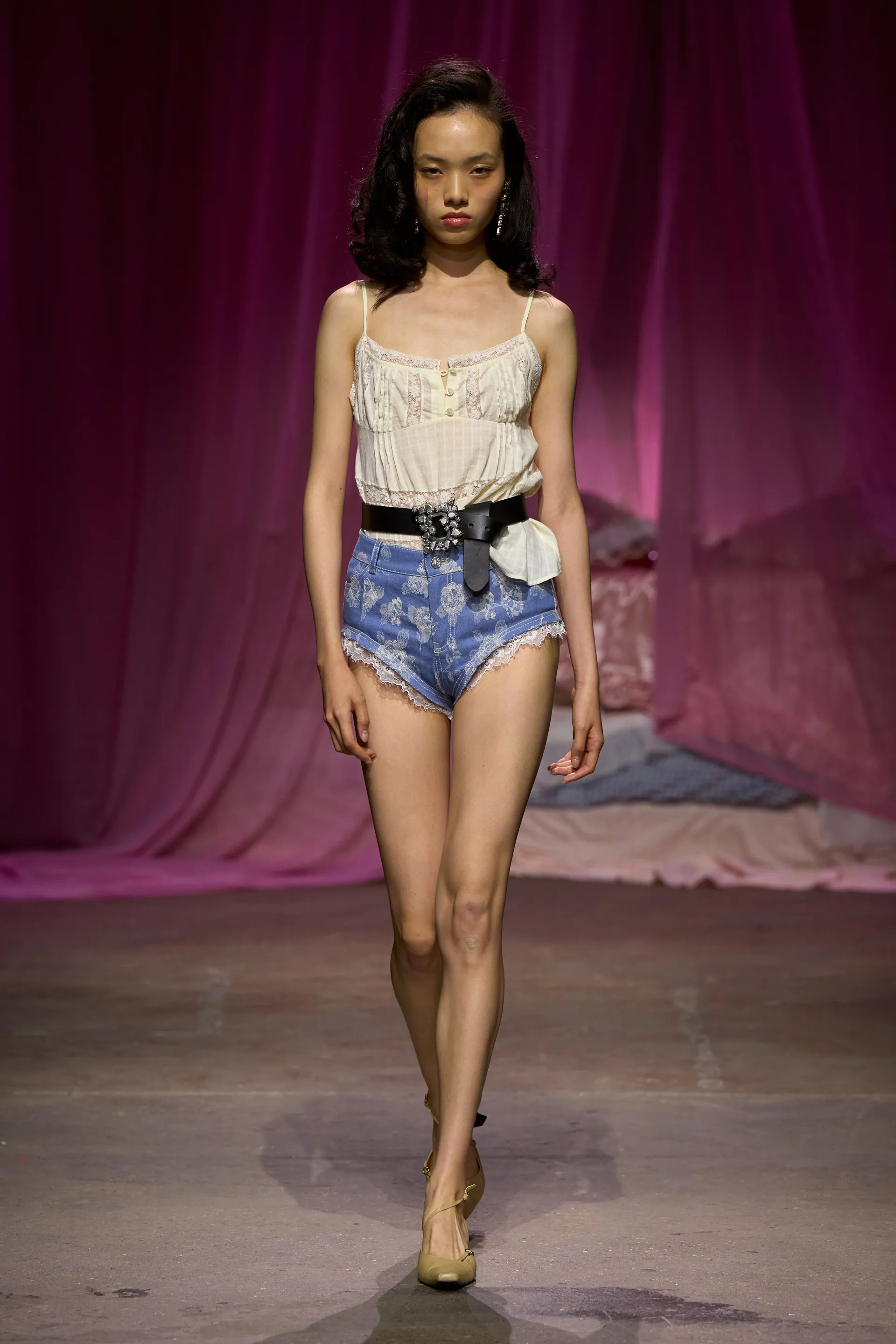
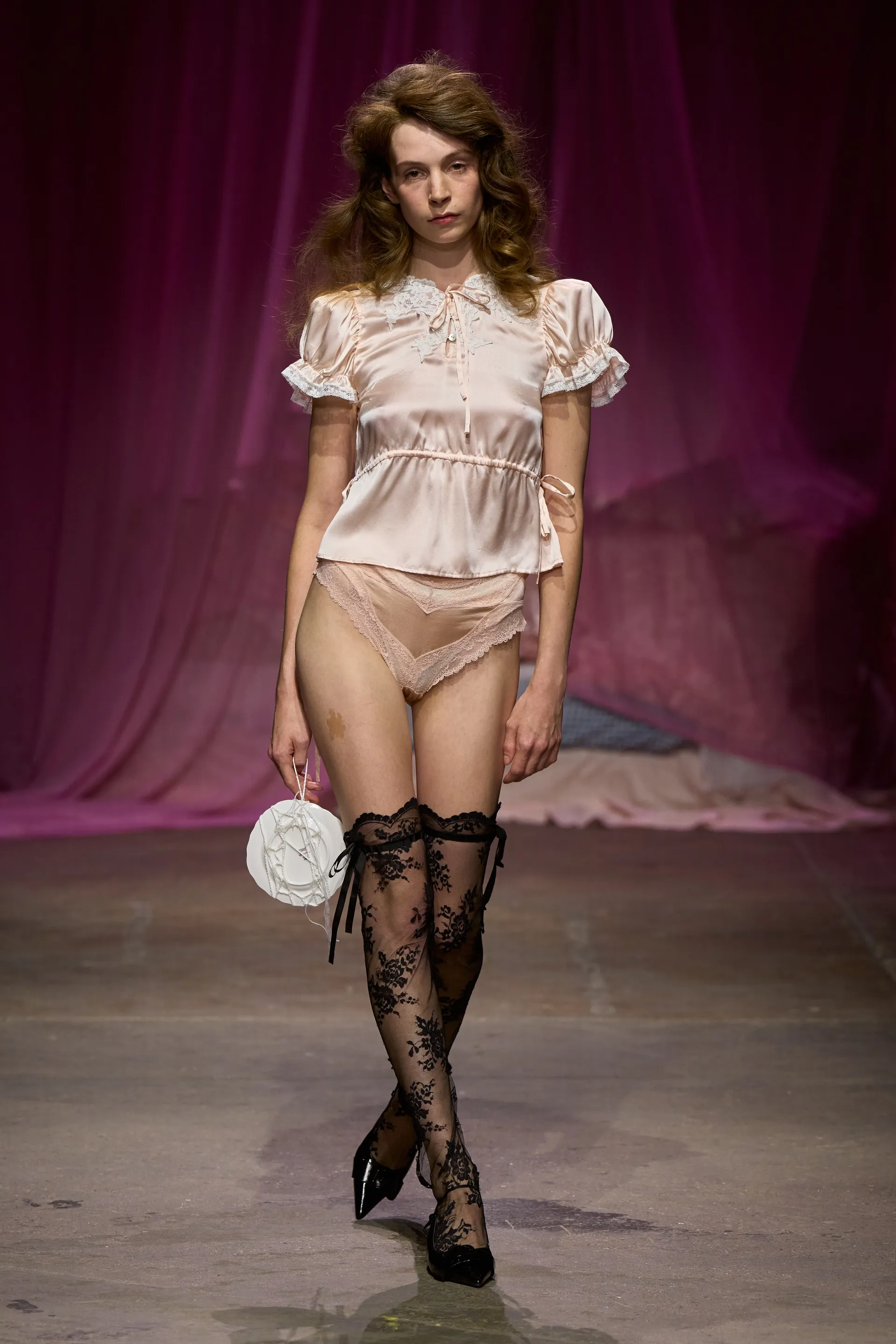
Print adds another layer of mischief, following some motifs that carry the coy sweetness associated with mid-century pin-up imagery, especially when placed across high-waisted underwear shapes and tiny bedroom separates. The reference never hardens into retro costume. Wang keeps the proportions slightly off, mixes them with lace stockings or stronger belts, and lets the woman wearing them appear fully aware that sweetness can be played with.
Briefs sit differently on fuller hips, camisoles change character across different busts, and exposed legs refuse the uniformity fashion so often imposes on intimate clothing. Wang lets lingerie respond to the body already there. Therefore, privacy has no sample size.
Dreams rarely respect chronology. Childhood can return without warning, carrying all the things adulthood was supposed to have packed away.
Coquette has grown differently here. While Sandy Liang and Shushu/Tong tend to treat girlhood as a legible fantasy of femininity, whether it is nostalgic, playful or impeccably polished, Yuhan Wang lets that fantasy lose its neat edges. In Yuhan Wang SS27, girlhood slips into the boudoir, where childhood memories coexist with lingerie, bare skin and nightwear, turning coquette into something more private, adult and slightly undone.
Cats, cherries and tiny objects from the bedside table drift through the collection with the logic of half-remembered possessions. Little socks, girlish prints and miniature accessories bring back the visual language of childhood, yet they now sit alongside lingerie, bare skin and clothes that belong unmistakably to an adult woman. The combination has a faintly uncanny edge. Innocence returns, but it has grown up too.
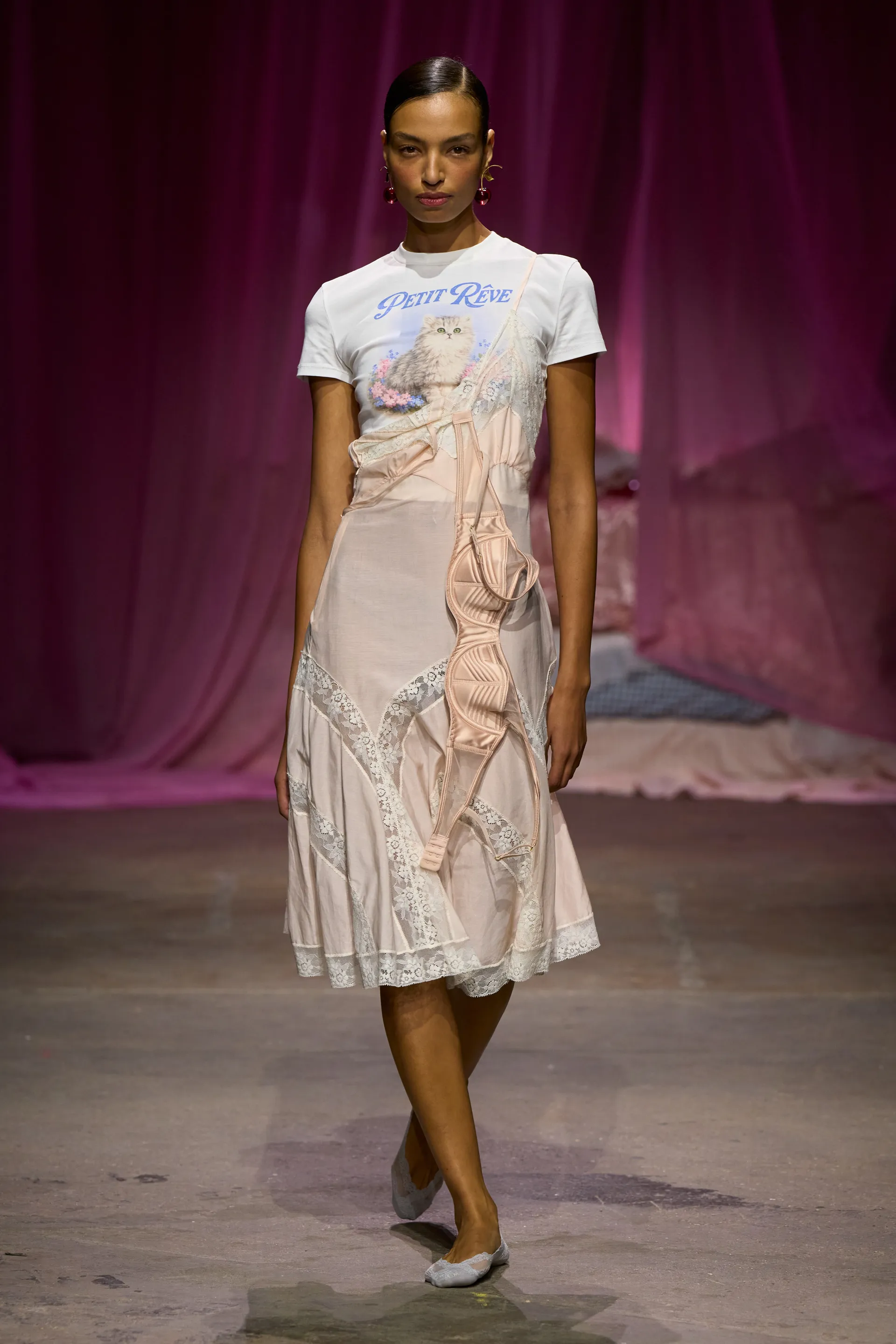
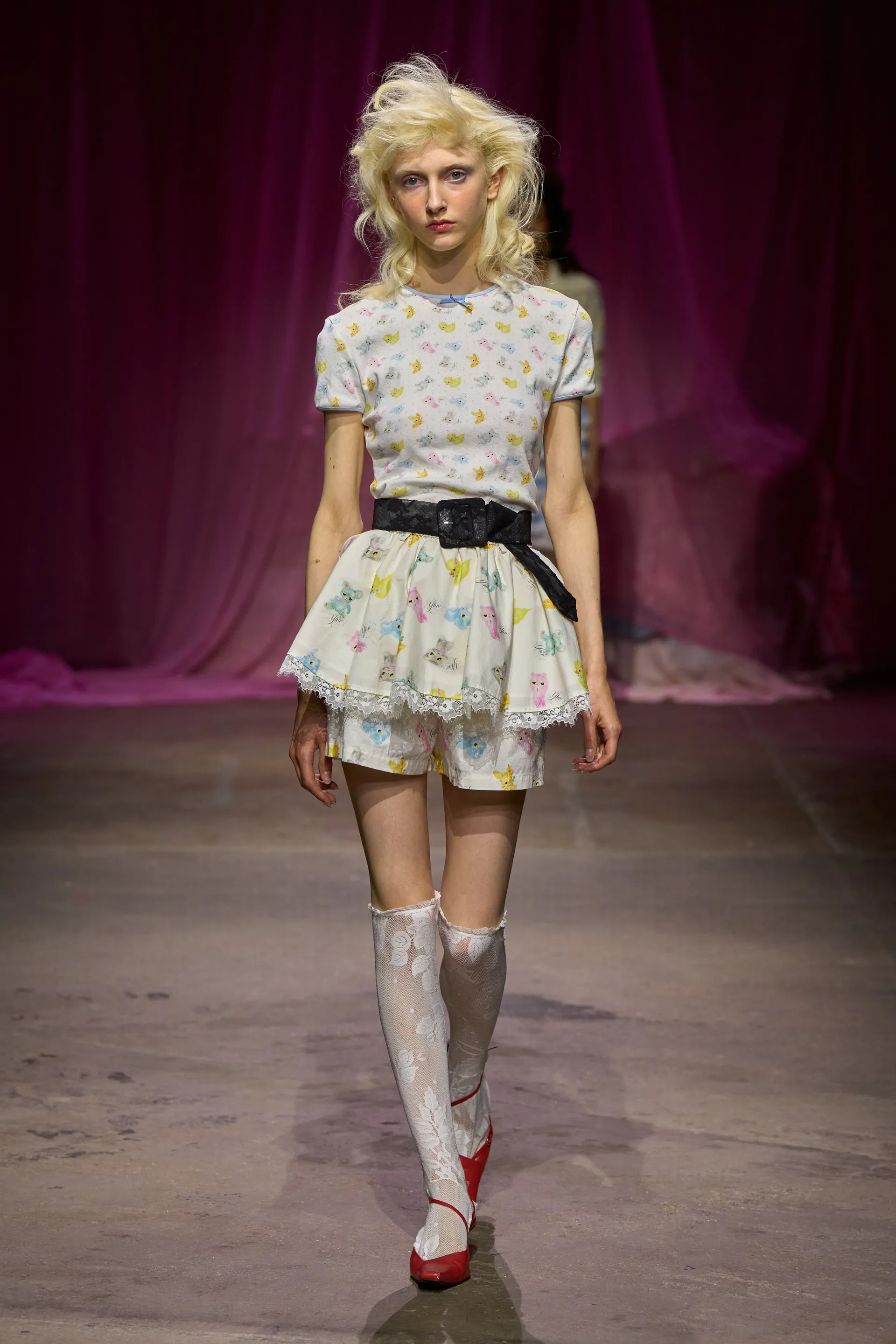
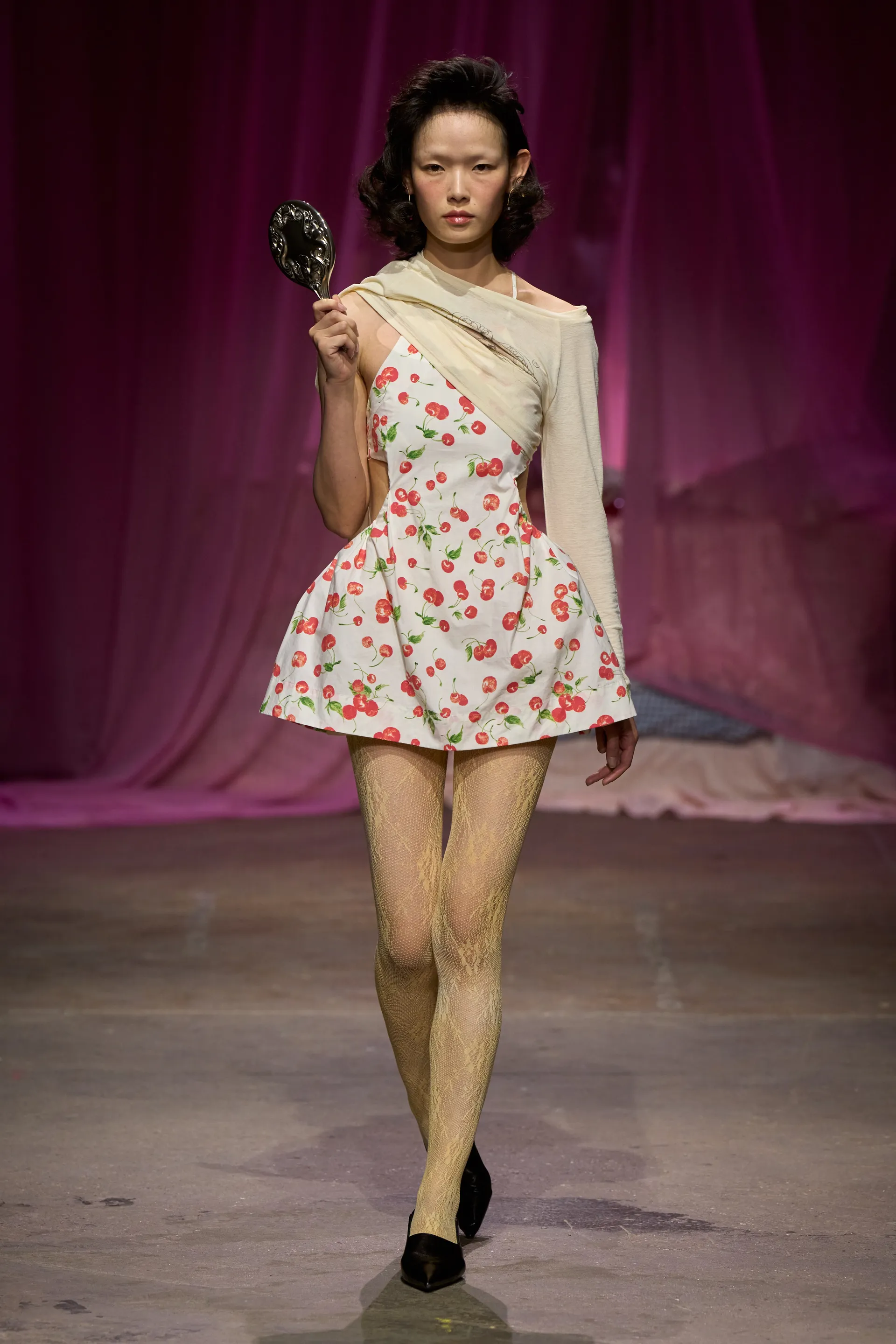
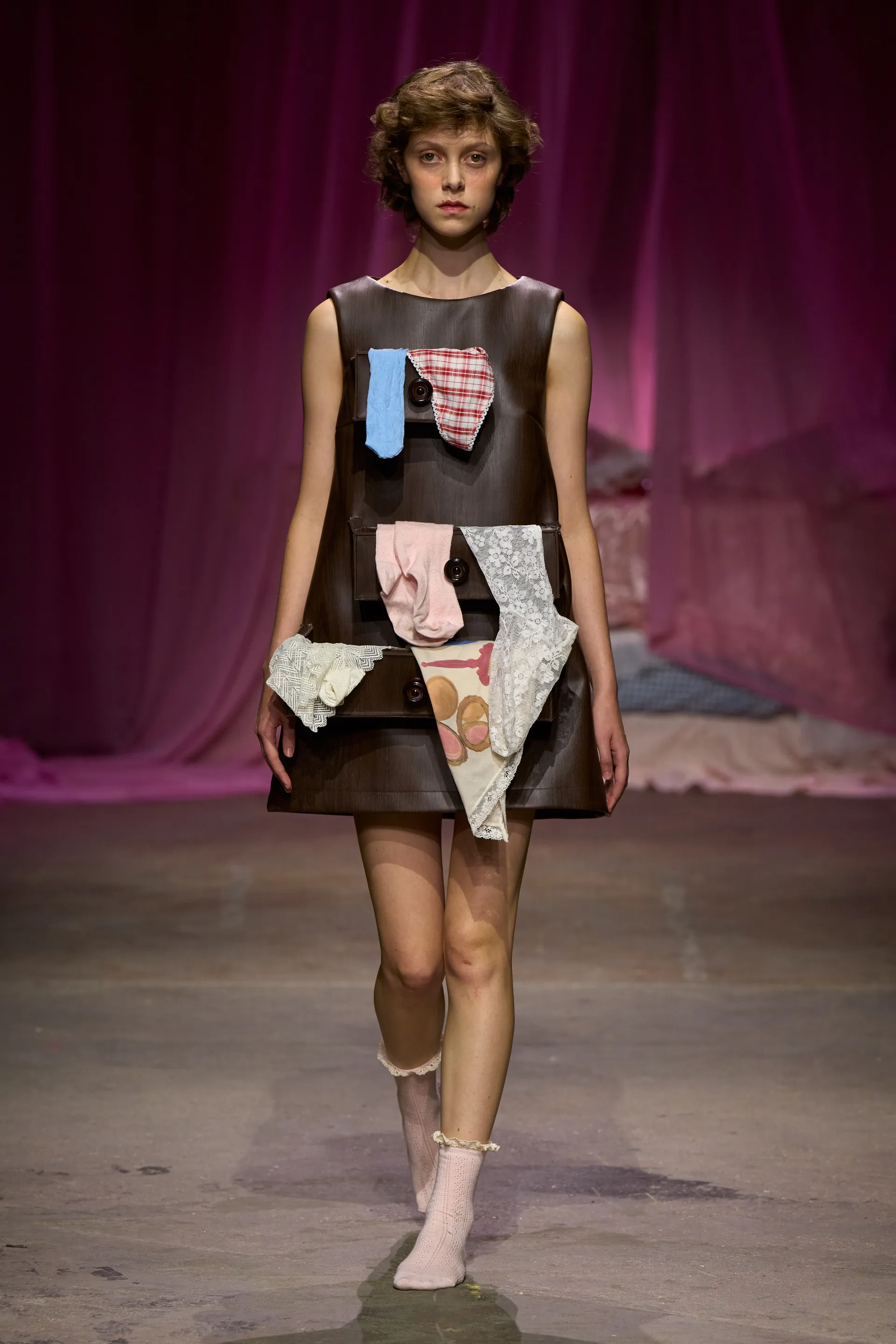
Teddy-bear sweetness brushes against exposed underwear, giving the memory of girlhood a more complicated adult charge. Wang lets both registers coexist without forcing them into a tidy opposition between innocence and sexuality. Girlhood becomes residue, something carried into adulthood in fragments rather than a place one simply leaves behind.
Long sleeves intervened in childhood by stop behaving like sleeves and begin wrapping around the torso, knotting and gathering as though the wearer reached for the nearest thing after waking in the middle of the night. Familiar pieces become scarves, sashes or makeshift layers, blurring the distinction between clothing worn correctly and clothing worn simply because it is nearby.
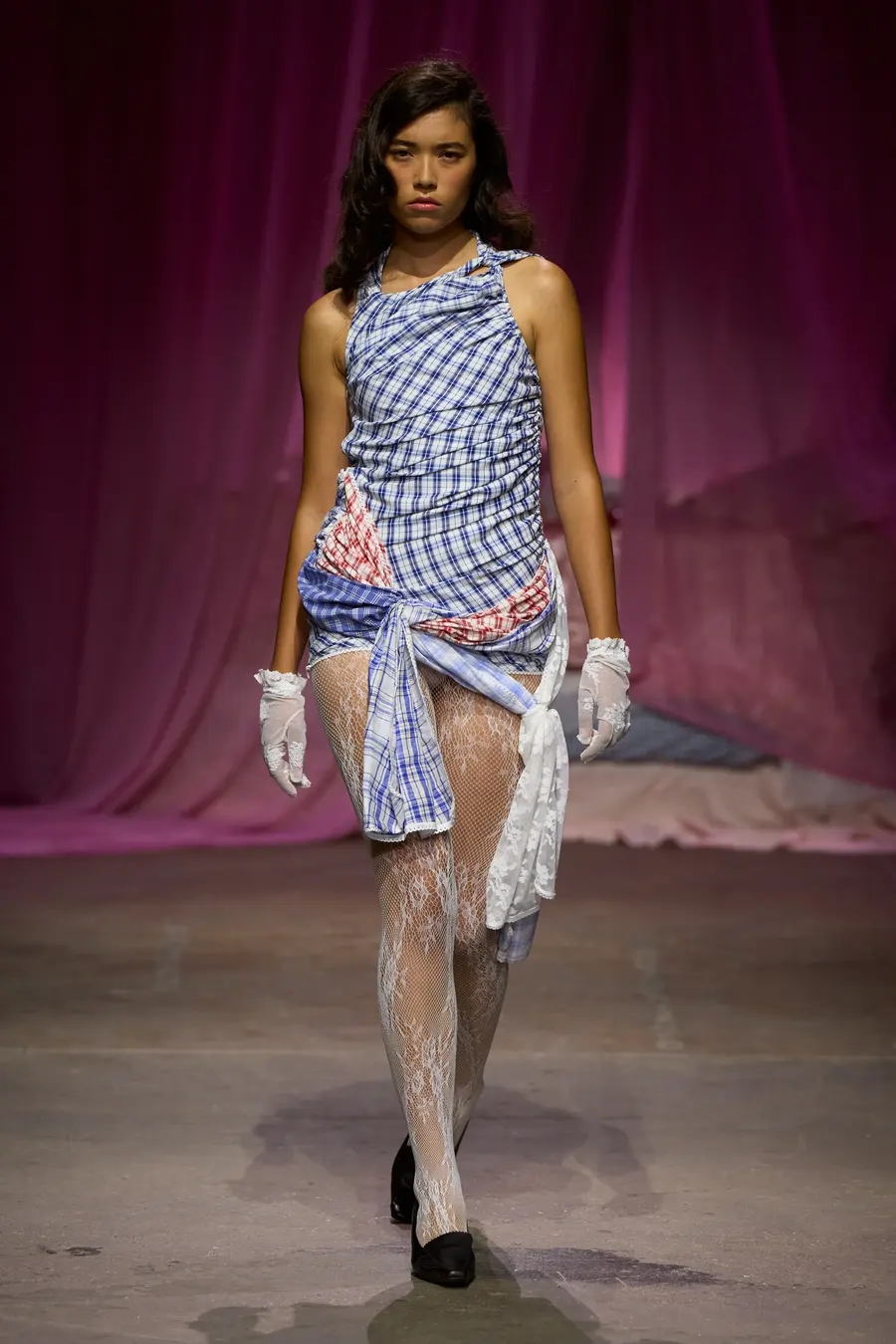
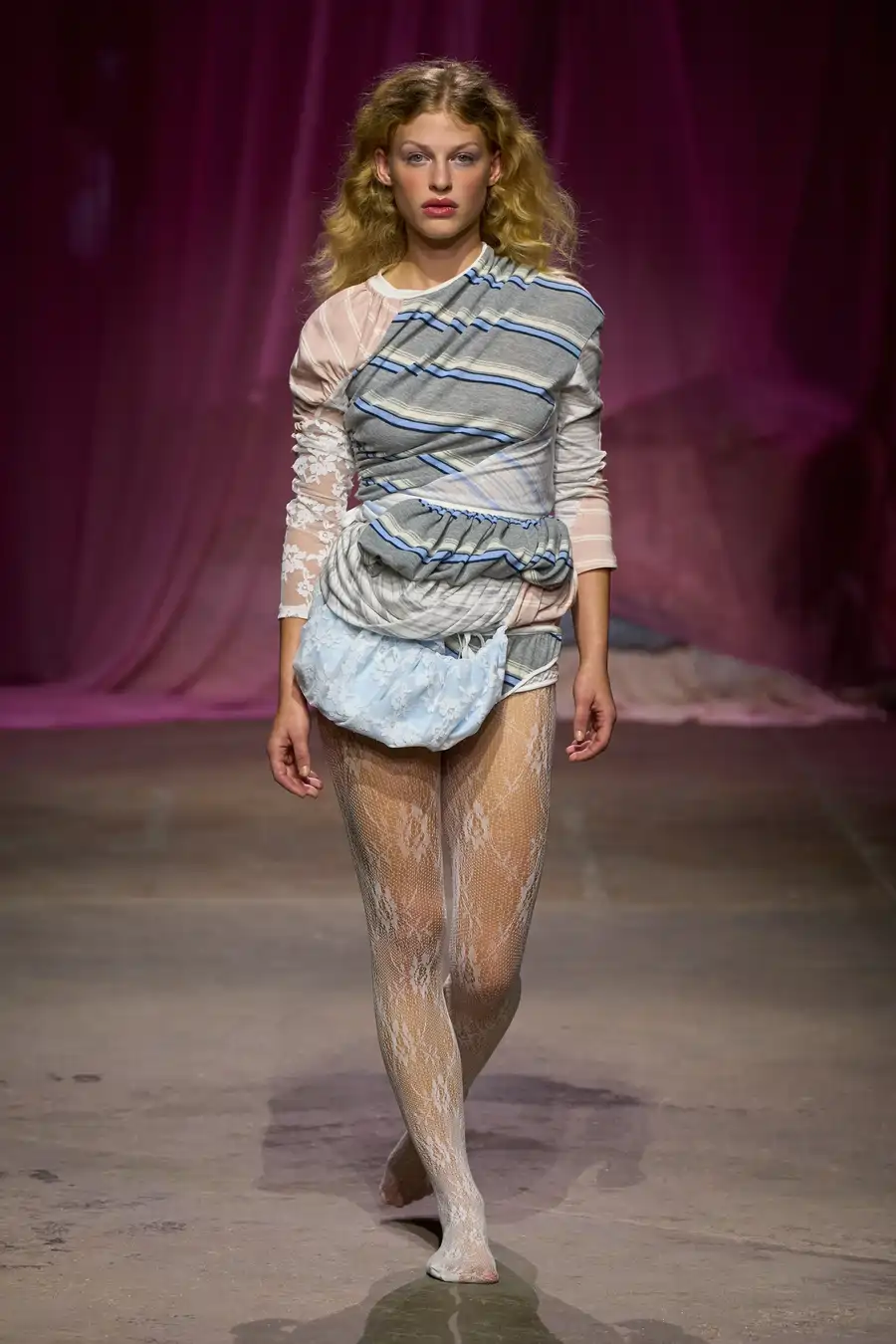
Sports jersey enters that same private logic. Its casual practicality sits unexpectedly comfortably beside lace and underwear shapes, giving the collection the slightly mismatched intimacy of real bedroom dressing. Pulled close, twisted around the torso or layered against something more delicate, sports jersey captures that half-finished moment between getting ready and getting undressed.
That state of incompletion is where Wang’s dream becomes most persuasive. Nothing has to settle into a final outfit. Clothes can remain in transition.
After all, dreams rarely bother finishing the sentence.
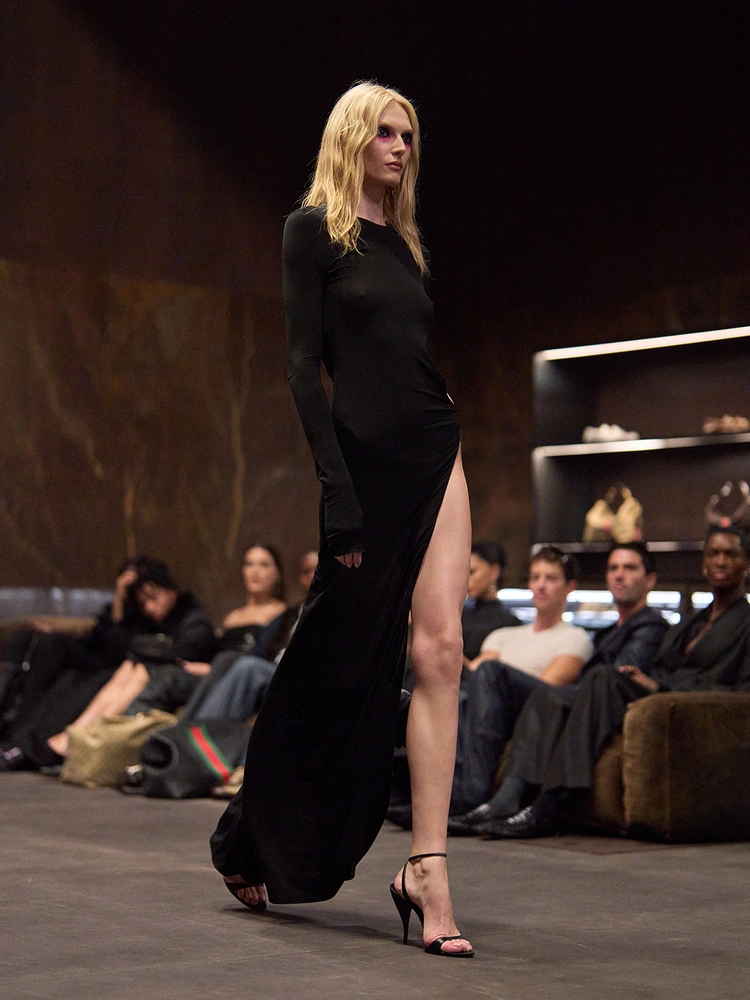
By the time the collection reaches its nightgowns, the body has almost nowhere left to hide.
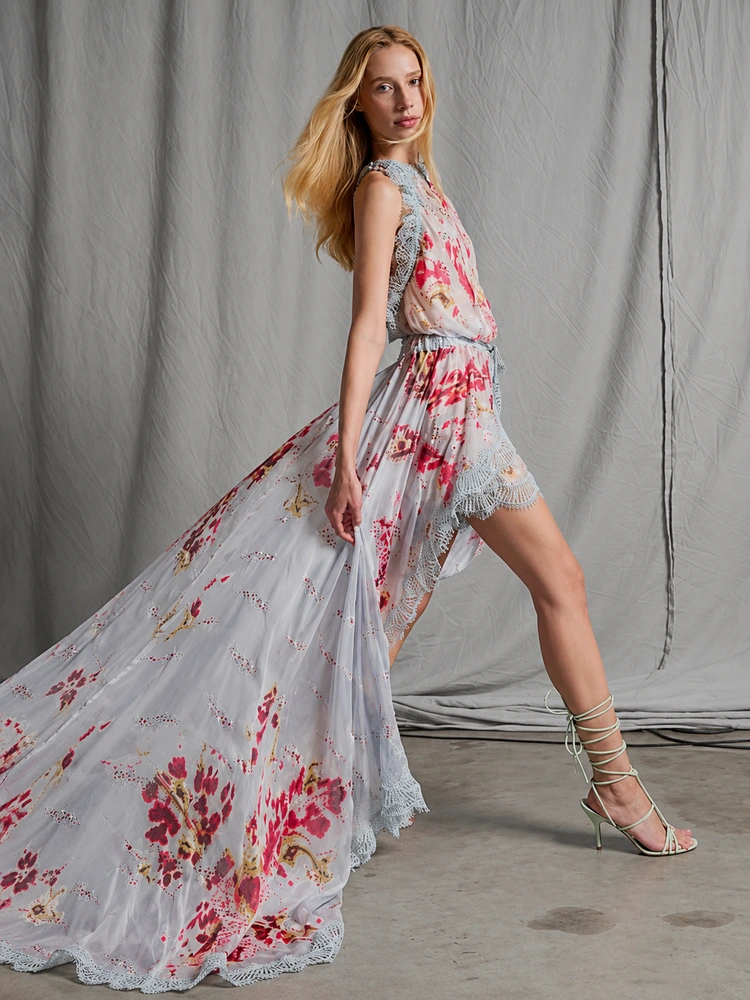
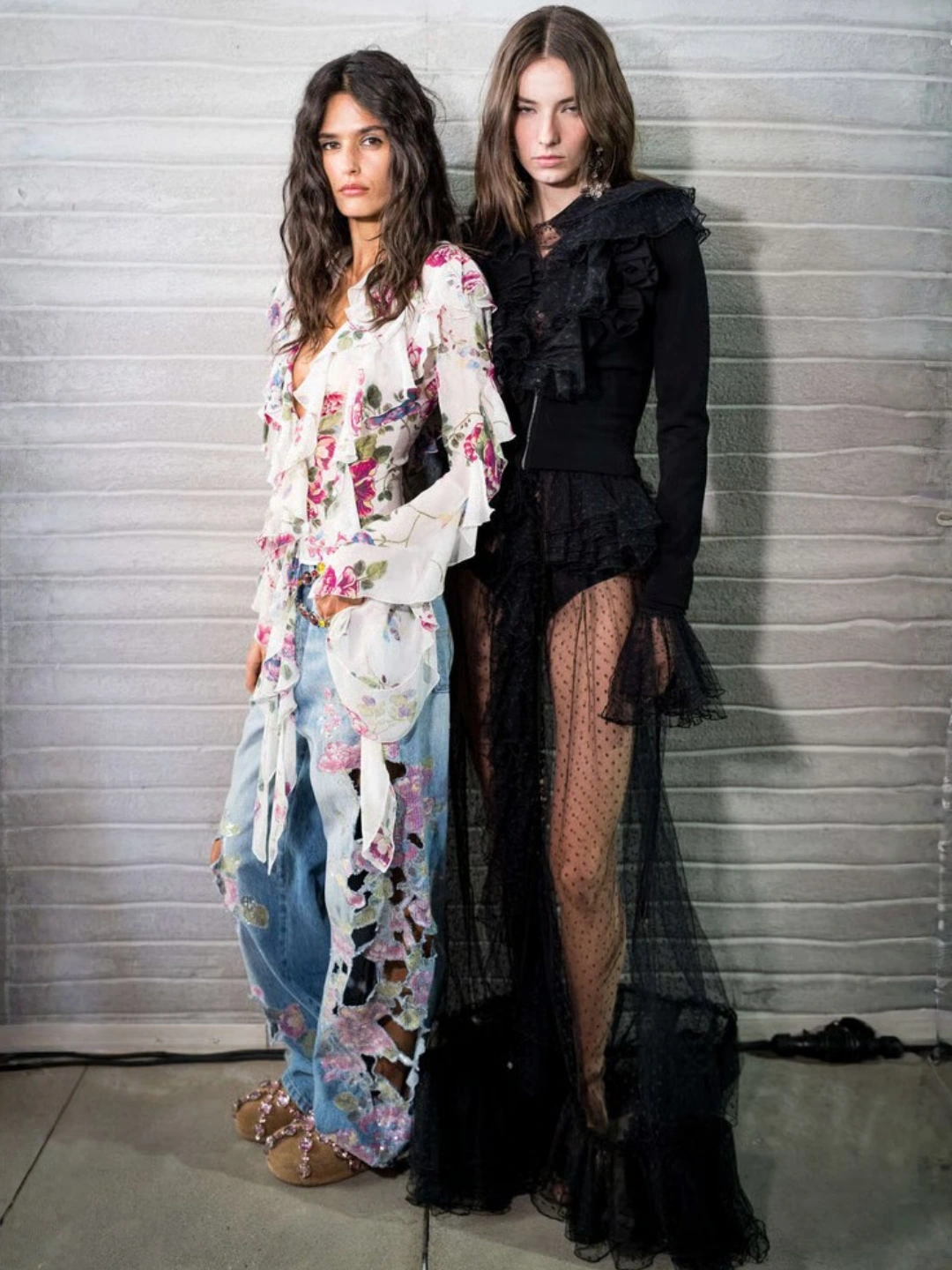
Lace becomes the dominant language, though Yuhan Wang uses its transparency with a gentleness that resists turning the wearer into spectacle. Skin remains visible through the garment, floral openings drift across the body, and hems soften into transparency instead of drawing a hard boundary between dressed and bare.
The silhouettes have the looseness of clothes chosen for sleep. Some fall almost straight from the shoulders, allowing the body to exist freely underneath. Others gather closer through the bust before opening below, while asymmetric volume shifts the familiar nightgown into something slightly unstable. Wang even distorts certain forms around the hip and shoulder, giving a domestic garment the warped anatomy of something remembered incorrectly inside a dream.
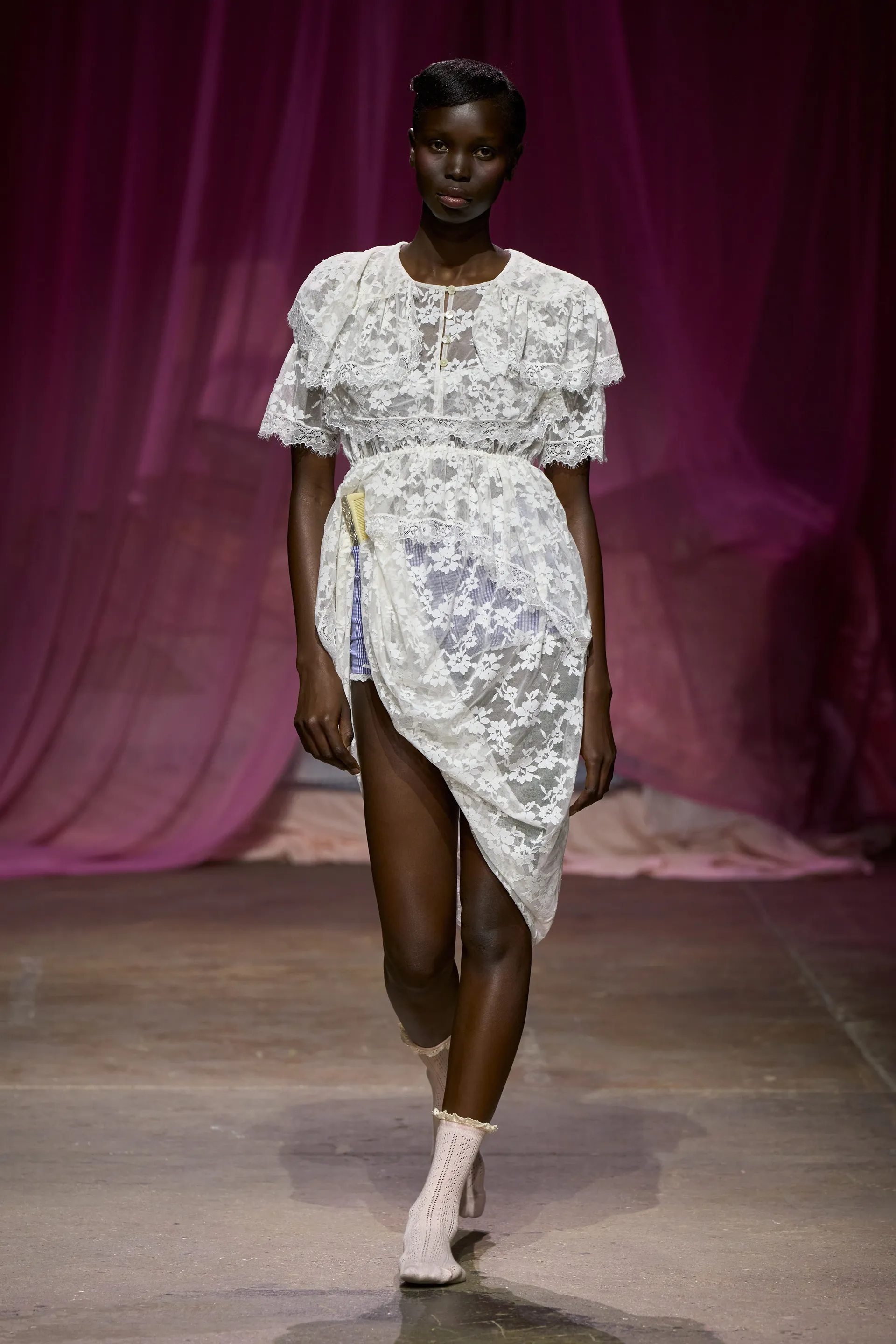
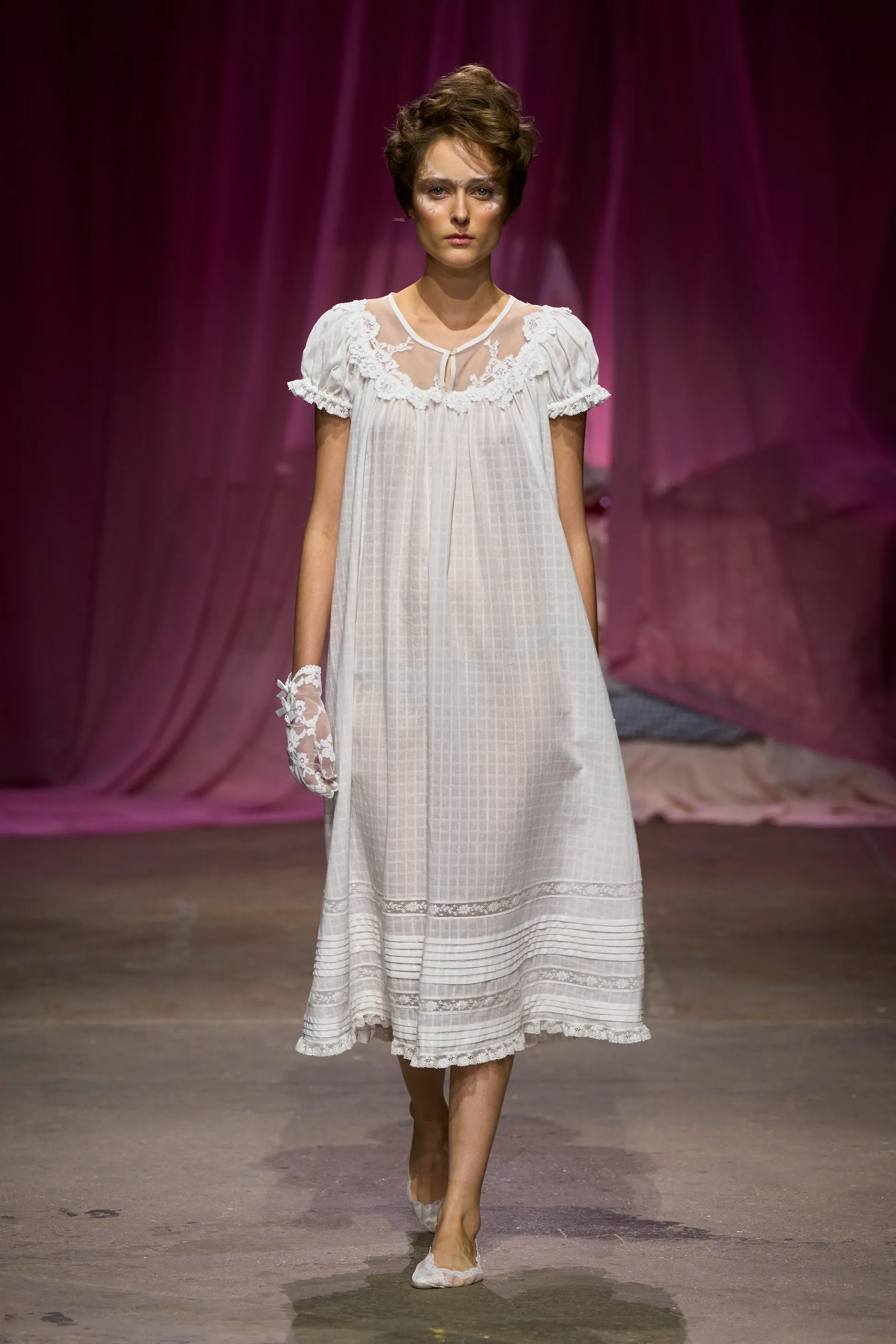
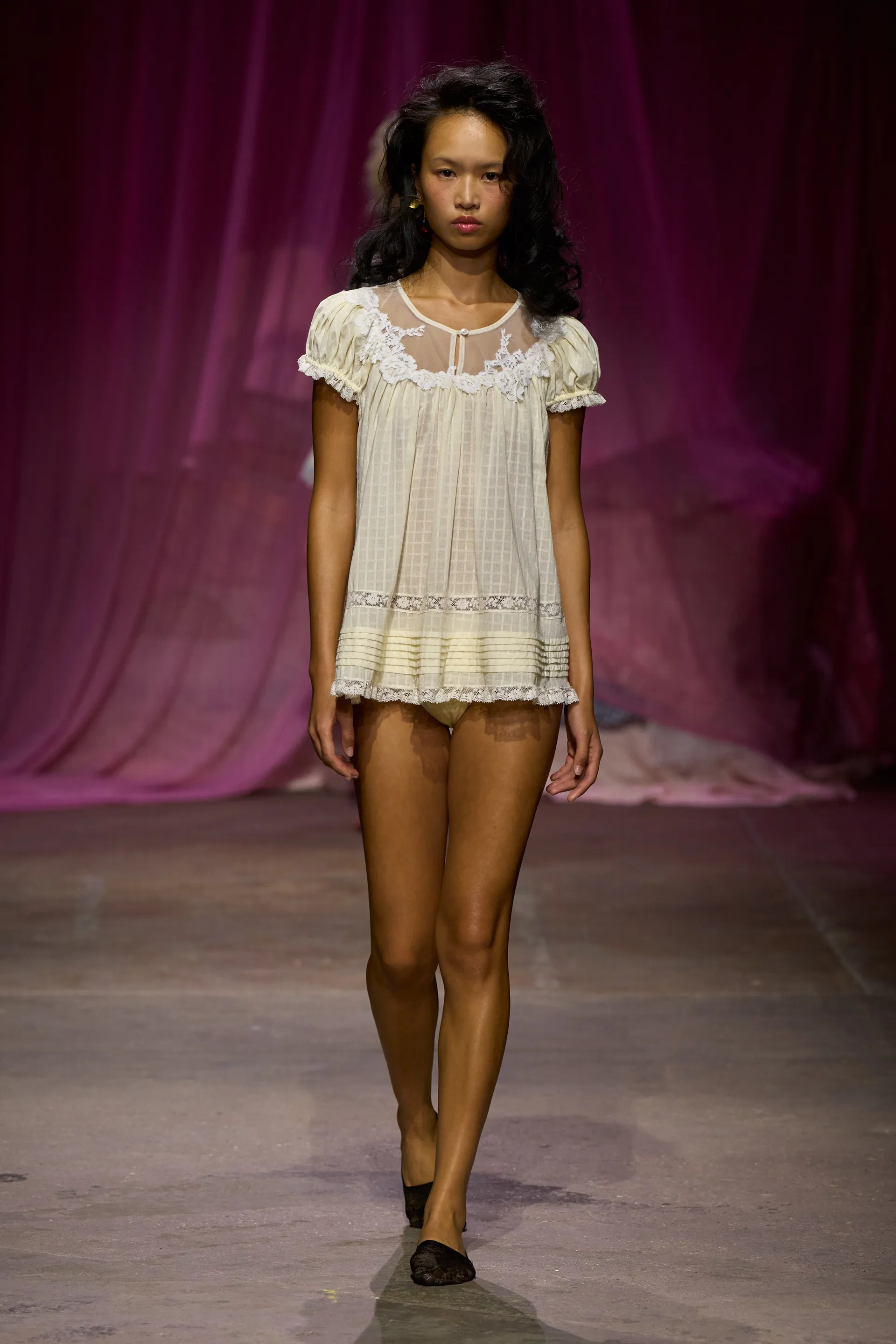
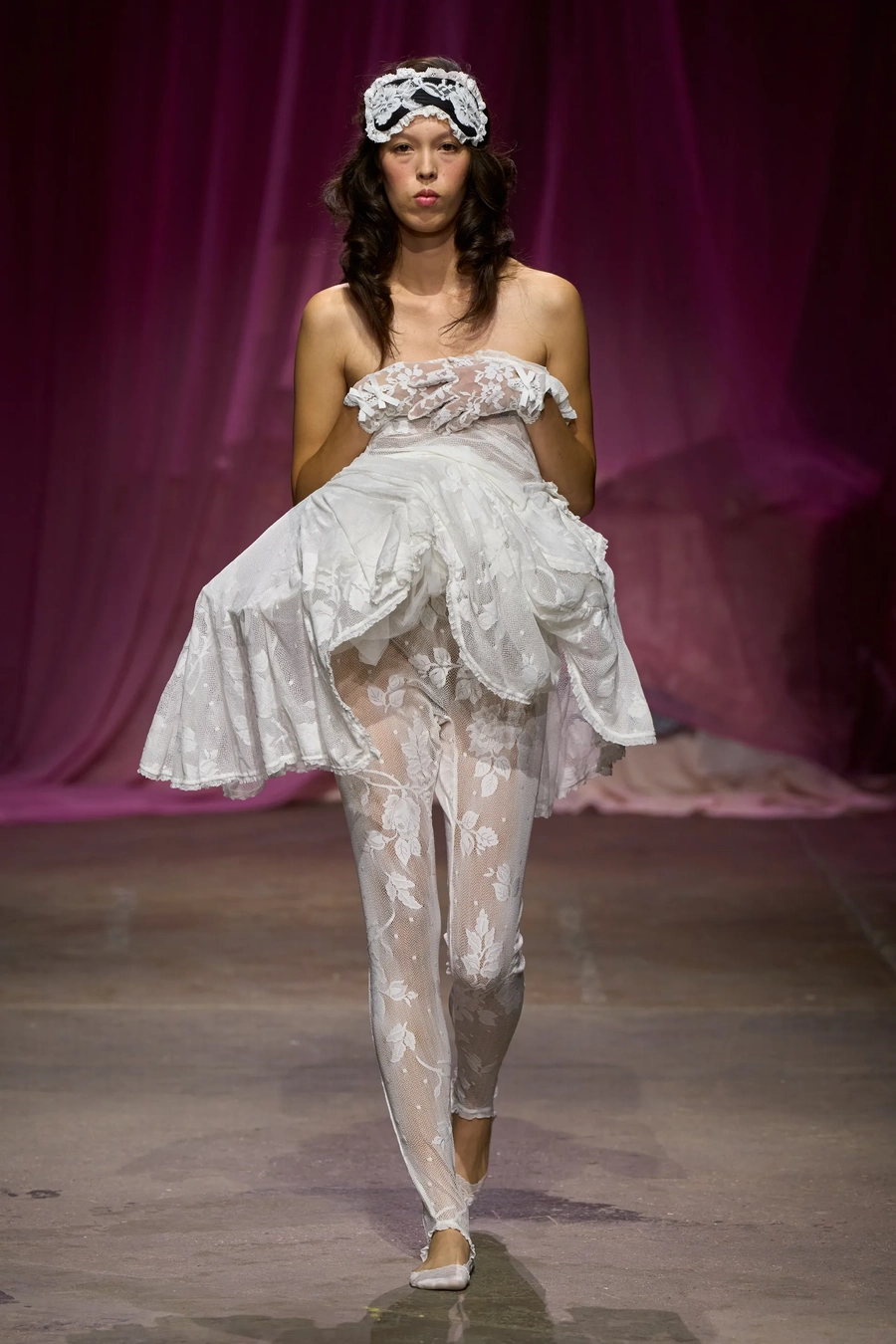
That looseness also allows body diversity to become integral to the image. Across different bodies, the nightgown changes character, with Wang allowing those variations to remain visible instead of smoothing the cast toward one ideal. Curves alter how lace stretches across the body; straighter silhouettes give the same transparency another rhythm. Femininity expands with the cast instead of narrowing them toward a single outline.
The bedroom premise makes that choice especially resonant. In a collection concerned with the woman who existed before she had dressed for public consumption, insisting upon one idealised body would collapse the fantasy. Privacy becomes meaningful precisely because each woman can occupy it differently.
Nightwear always belongs to sleep, yet it is also where fashion has historically placed some of its most coded ideas about femininity and desire. Yuhan Wang's nightgowns remain beautiful, delicate and occasionally seductive, but they belong first to the person sleeping in them.
Femininity has often been designed around visibility. Someone sees the dress, reads the body inside it and assigns meaning to what has been revealed or concealed.
The bedroom offers another possibility. Behind a closed door, a woman can look beautiful without presenting beauty, wear lingerie without performing seduction, return to childhood without becoming childish, or leave herself halfway dressed because nobody requires a finished image.
Yuhan Wang has always approached femininity through romance, fragility and the body. Sweet Nightmare makes those ideas more private, stranger and somehow freer. The dream can be glamorous, uncomfortable, ridiculous or sensual without choosing a single version of womanhood to wake up with.
Perhaps the sweetest freedom in Yuhan Wang SS27 is simply getting dressed for a world that has stopped looking.
Advertisement