MENU
Close





Like an active volcano capable of absolute destruction yet destined to birth life, Mongolia’s Orkhon Valley was both a fierce crucible of imperial conquest and a sanctuary for creation. Out of this volatile landscape, where world-shaping empires erupted and faded, rose a surprisingly sophisticated civilization. It proves that the steppe’s most destructive forces were also the engines that cultivated an enduring philosophy of life and art.
Like an active volcano capable of absolute destruction yet destined to birth life, Mongolia’s Orkhon Valley was both a fierce crucible of imperial conquest and a sanctuary for creation. Out of this volatile landscape, where world-shaping empires erupted and faded, rose a surprisingly sophisticated civilization. It proves that the steppe’s most destructive forces were also the engines that cultivated an enduring philosophy of life and art.
June 24, 2026


To stand on the ridges overlooking the Orkhon River in central Mongolia is to look upon a landscape that appears defyingly untouched by time. The river loops in gleaming, silvery ribbons through wide glacial plains; volcanic basalt ridges break up the rolling green pastures, and distant peaks of the Khangai massif frame an immense, uninterrupted vault of blue sky. To the untrained eye, it is the classic picture of pastoral isolation.
Yet, this valley is arguably one of the most significant epicenters of imperial power in human history.
Recognized as a UNESCO World Heritage site, the Orkhon Valley Cultural Landscape is the structural and spiritual blueprint of the great nomadic empires of Eurasia. For more than two thousand years, it acted as a fixed anchor for societies defined by perpetual movement. In the steppe world, empires did not measure their sovereignty merely by lines drawn on a map, but by their custody of this specific valley. To control the Orkhon was to hold the mandate of heaven to rule the nomadic world.
The strategic value of the Orkhon Valley was dictated by an exquisite geographical anomaly. While the surrounding Eurasian steppe is prone to extreme, punishing droughts and bitter winters, the Orkhon basin is a sheltered oasis. Fed by alpine runoff and enriched by ancient volcanic soil, it offered reliable year-round water, rich grazing pastures, and natural defensive barriers. It was a natural sanctuary that allowed scattered clans to coalesce into powerful confederations.
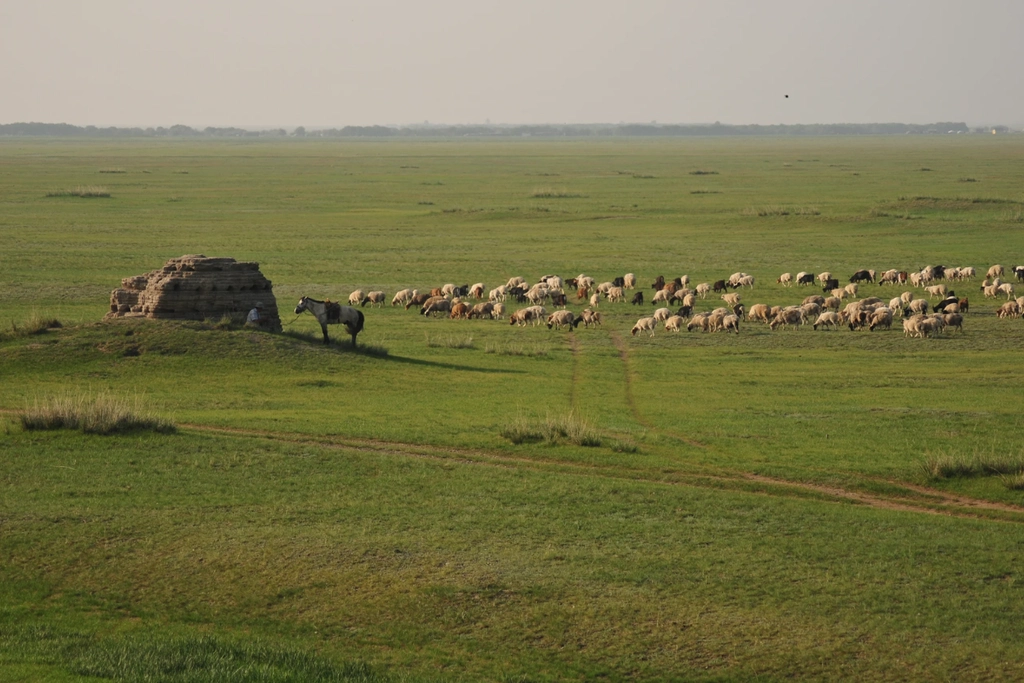
The valley functions as a monumental open-air archive, where successive empires layered their history directly onto the earth. The earliest state formation to claim the valley was the Hunnu (Xiongnu) Empire, which dominated the region from the 3rd century BCE to the 1st century CE. The Hunnu treated the valley as an ancestral burial ground and ceremonial center, erecting massive stone burial mounds, or khirigsuurs, that permanently marked the landscape with the stamp of their elite lineages.
Following the Hunnu, the valley became the sacred home of the Göktürk Khaganates in the 6th through 8th centuries. The Turks left behind some of the most literate treasures of the steppe: the Orkhon Inscriptions. These massive stone steles, carved with an elegant runic script, recount the triumphs, anxieties, and political philosophies of Prince Kul Tigin and Bilge Khagan. Standing as the oldest surviving written records of a Turkic language, these monoliths warn future generations against the seductive, sedentary luxuries of external civilizations, urging them to remain true to the harsh freedom of the Orkhon pastures.
By the 8th century, the Uyghur Khaganate seized the valley and turned nomadic convention on its head. They constructed Khar Balgas (Ordu-Baliq), a sprawling, walled metropolis of mudbrick palaces, towering fortresses, and bustling craft quarters. This was not a temporary camp, but a sophisticated urban center that proved nomadic societies were entirely capable of advanced engineering and permanent architectural expression when the landscape demanded it.
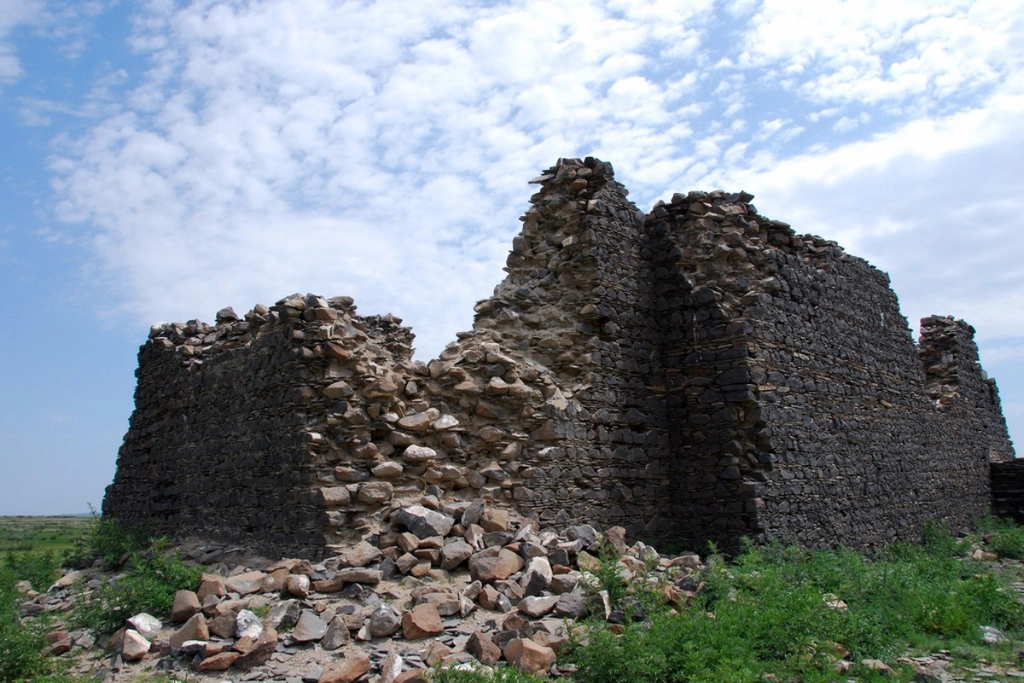
The historical climax of the valley arrived in the 13th century. Genghis Khan, having unified the warring tribes of the steppe, recognized that his burgeoning global empire needed a central administrative axis. He chose the Orkhon Valley, and under his successor, Ögedei Khan, the legendary capital of Karakorum arose.
Karakorum was an architectural and sociological paradox: a static, cosmopolitan metropolis designed to serve a ruling elite that still preferred to live, sleep, and govern from felt tents. It was a city without pretense, enclosed by simple earthen walls, yet its interior beat with the pulse of global trade, intellectual exchange, and unparalleled religious pluralism.
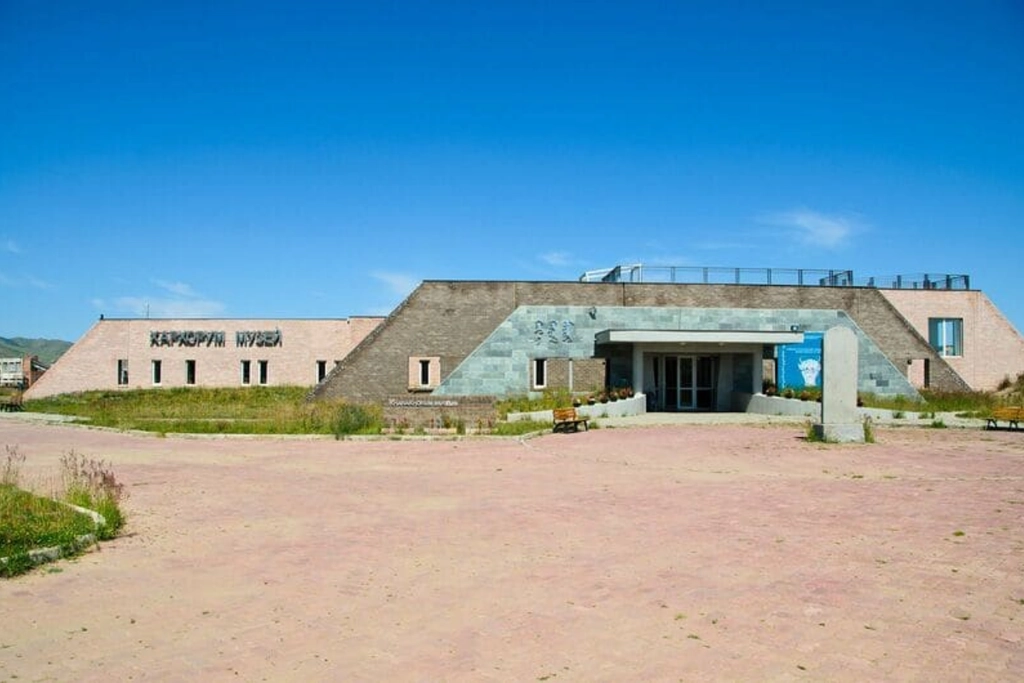
While medieval Europe was tearing itself apart through religious crusades and inquisitions, Karakorum was hosting formal theological debates. The Franciscan friar William of Rubruck recorded that within the city walls, twelve pagan (Buddhist and Taoist) temples, two mosques, and a Nestorian Christian church stood side-by-side. The Khans looked upon these disparate faiths with a cool, pragmatic tolerance, inviting priests, imams, and monks to pray for the longevity of the empire simultaneously.
At the center of this cosmopolitan experiment stood the Tumen Amgalan (the Palace of Myriad Peace). Its crowning glory was the Silver Tree, a mechanical masterpiece engineered by Guillaume Bouchier, a captured Parisian goldsmith. This silver-plated structure featured mechanized angels and serpent heads that dispensed wine, fermented mare’s milk (airag), mead, and rice wine at royal banquets. The fountain was a literal and figurative manifestation of the Mongol worldview: a machine that harvested the talent, technology, and luxury of the entire known world and reassembled it in the middle of the remote Mongolian grasslands.
The enduring power of the Orkhon Valley cannot be understood solely through the lens of military strategy or urban trade; it was, above all, a deeply sacred topography. To the nomadic mindset, the land is not a passive resource to be mined or conquered, but a living, breathing entity populated by master spirits.
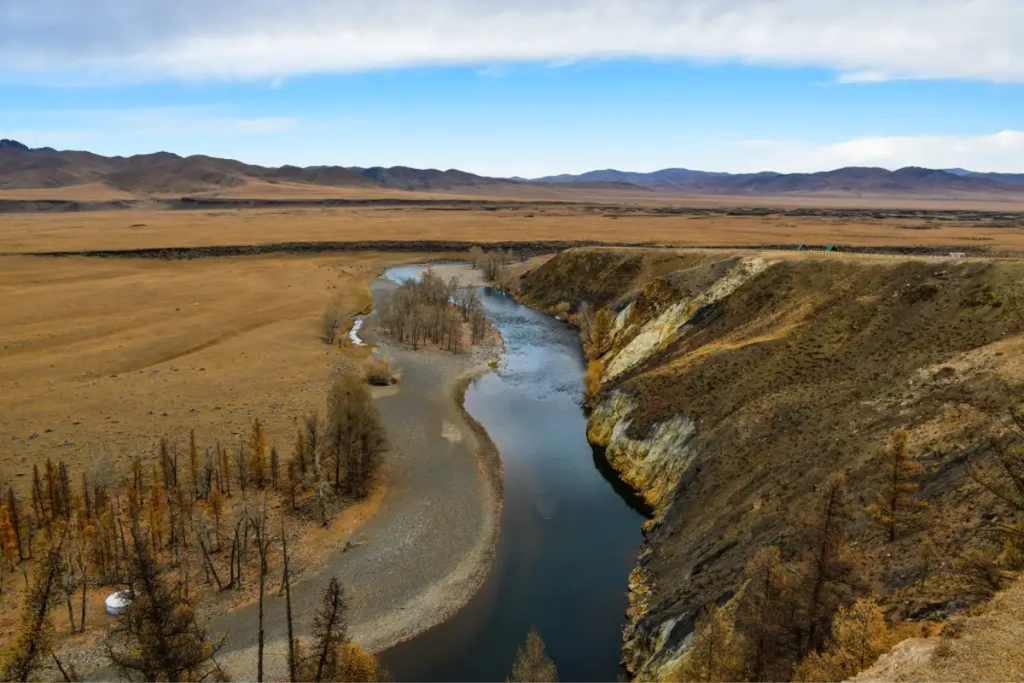
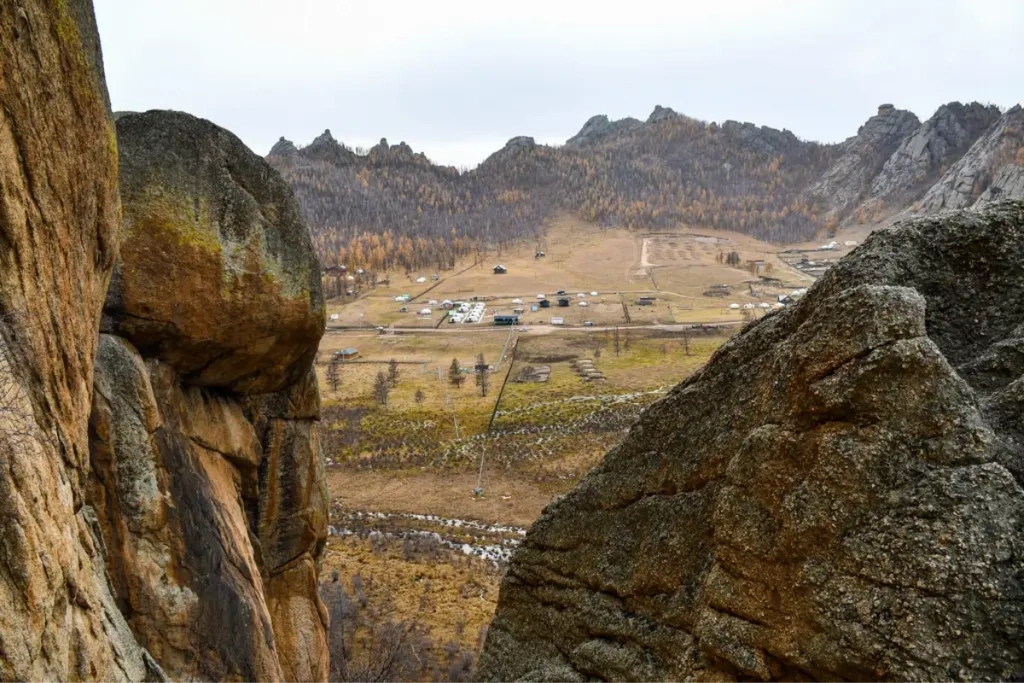
The valley is anchored by the Khangai Khan mountain massif, a geographical entity revered as the spiritual home of the steppe. Traditional spiritual life revolved around Tengrism — the worship of Tngri (the Eternal Blue Sky) and Emeget (the Earth Mother). This animistic worldview dictated that humans must live in absolute equilibrium with nature. The physical remnants of this belief system remain ubiquitous across the valley today in the form of ovoos — sacred cairns of stones wrapped in sky-blue silk scarves (khadag) that sit upon every high pass and ridge line, acting as portals between the human world and the spirits of the land.
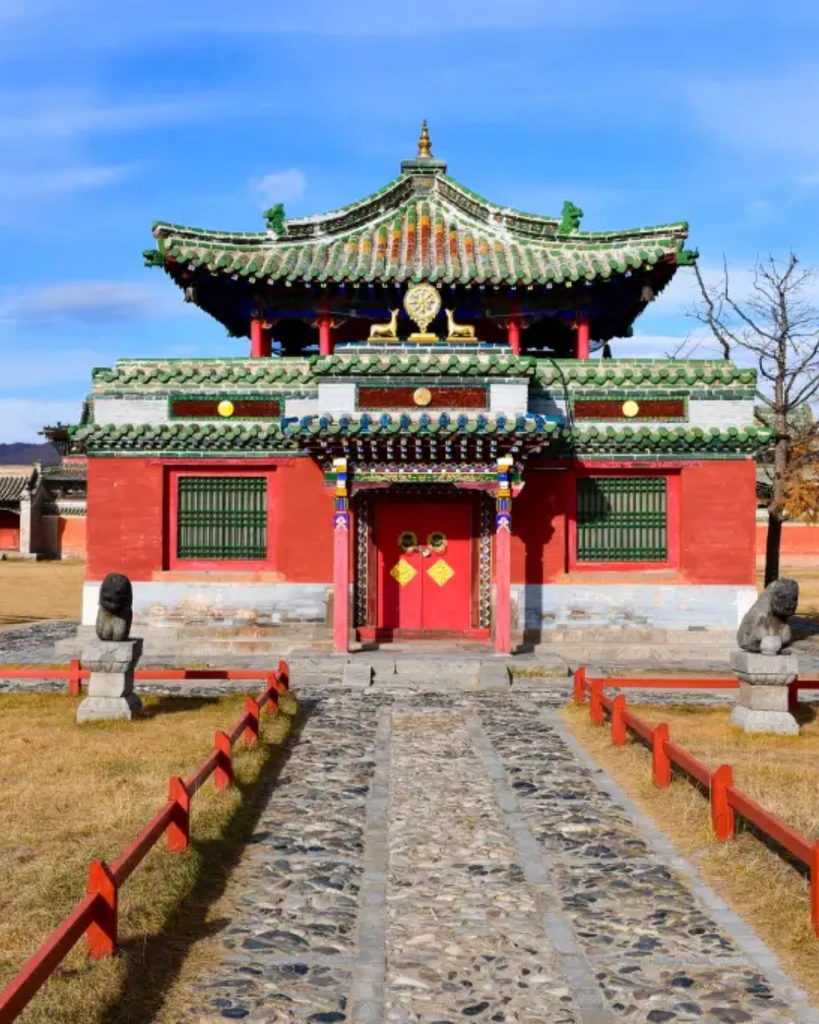
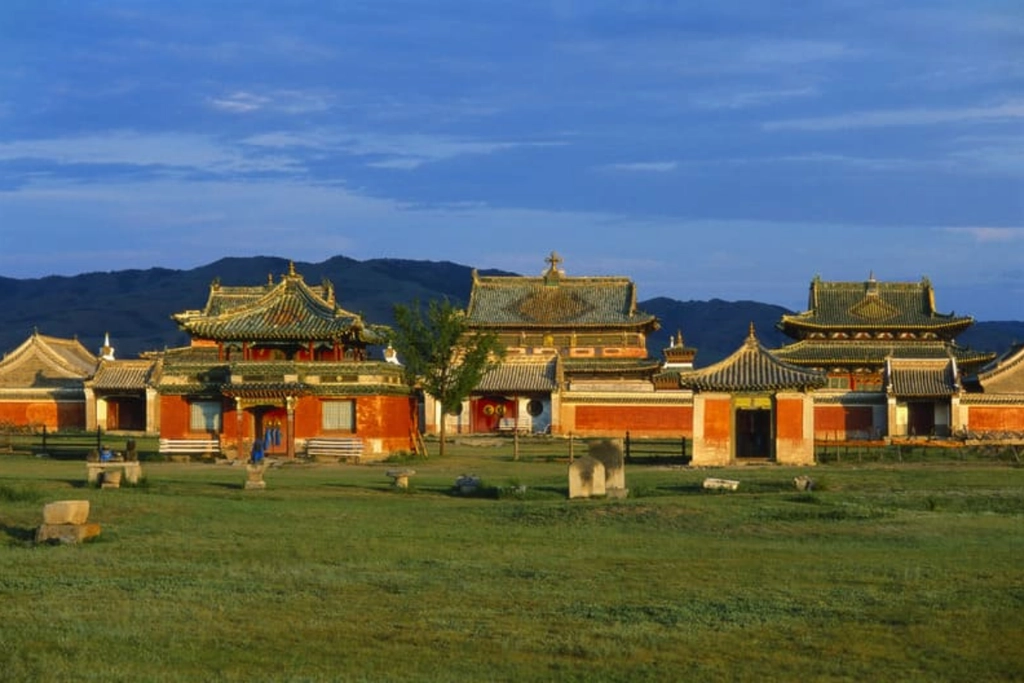
When the Mongol Empire faded and the capital of Karakorum fell into ruin, the sacred nature of the valley did not diminish; it simply evolved. In 1586, Altan Khan initiated the construction of Erdene Zuu, Mongolia’s first permanent Tibetan Buddhist monastery, using the very stones from the abandoned ruins of Karakorum.
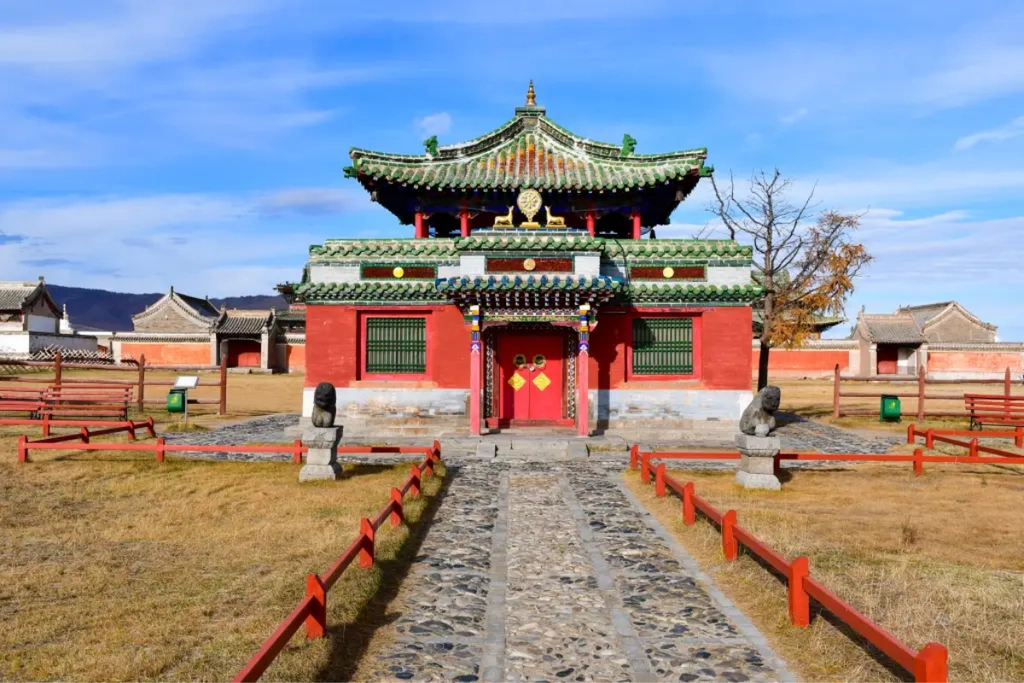
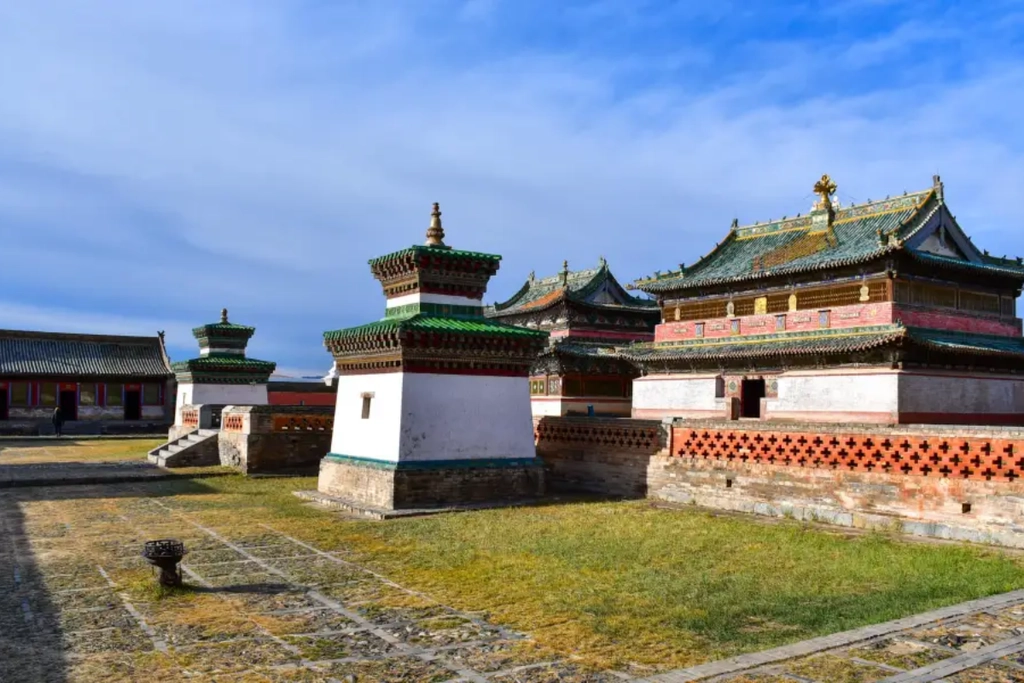
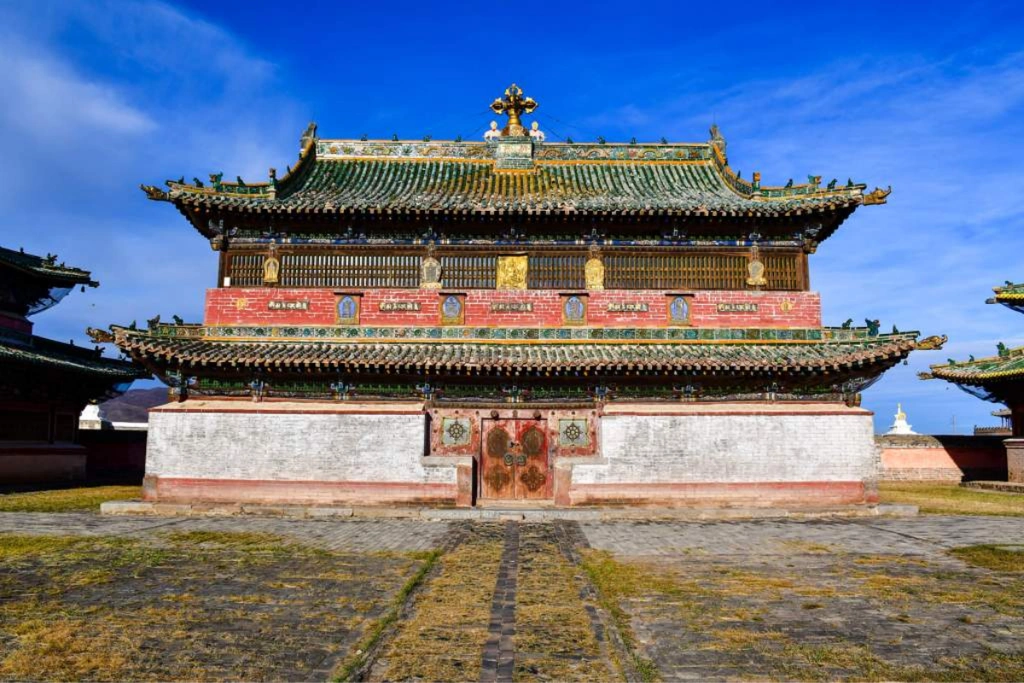
Erdene Zuu is a triumphant example of architectural syncretism. Surrounded by a massive quadrangular wall featuring 108 sacred stupas, the monastery's temples represent a deliberate blend of three architectural languages. The sloping, glazed tile roofs draw directly from imperial Chinese traditions; the whitewashed, block-like foundations reflect Tibetan monastic design; and the internal spatial layout mirrors the circular, open-flow geometry of the traditional Mongolian ger. It stands as a physical testament to how the steppe absorbed external spiritual influences without losing its own core aesthetic identity.
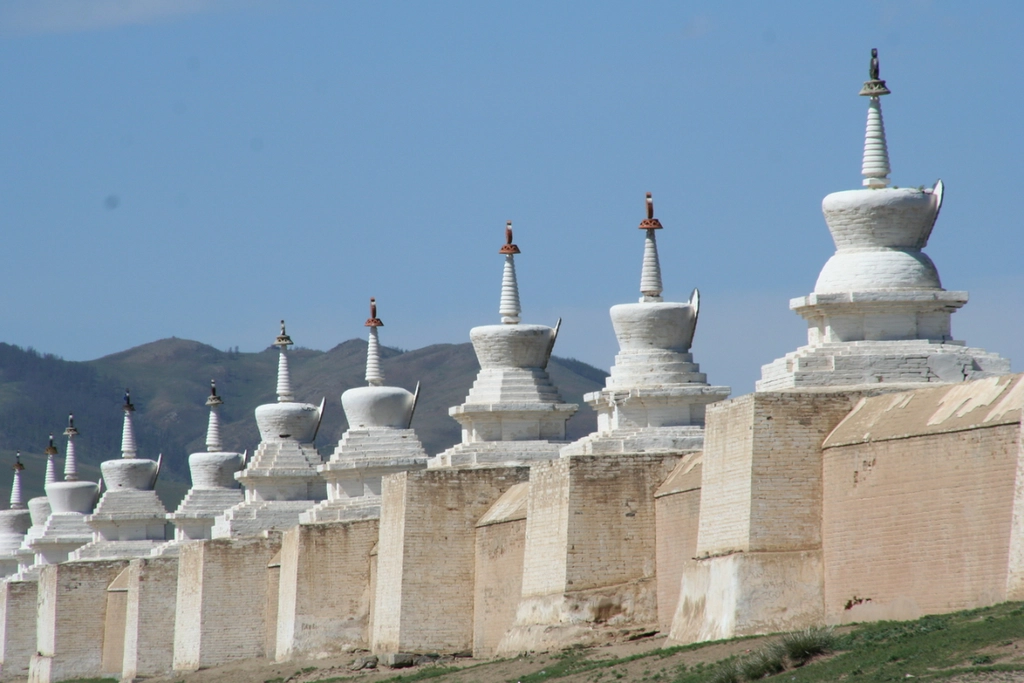
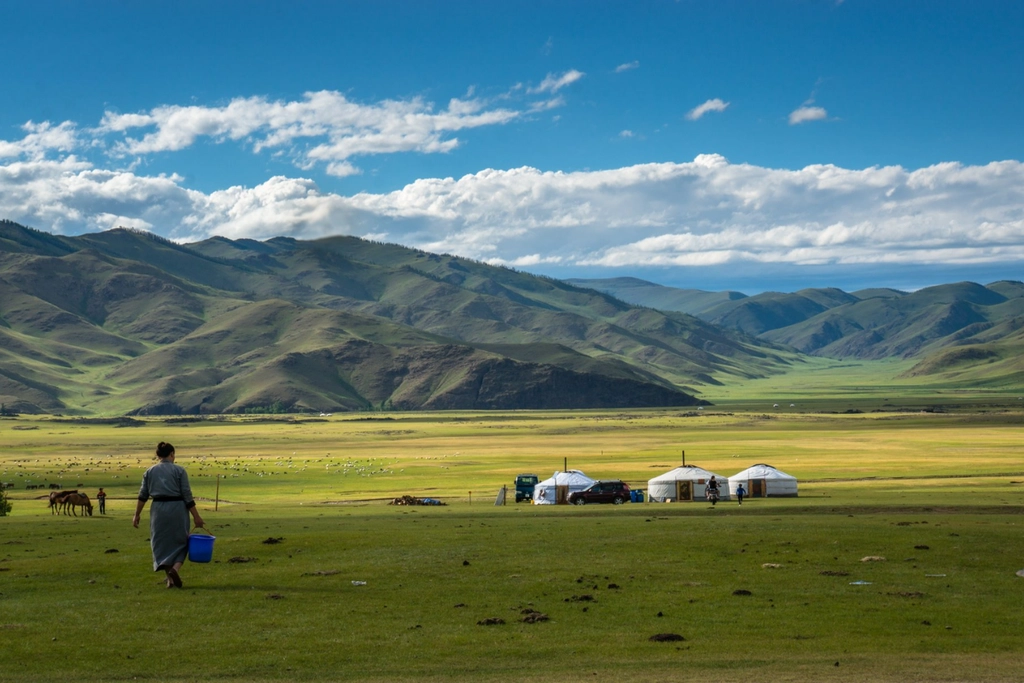
What elevates the Orkhon Valley above almost every other archaeological site on earth is that it is not a dead museum frozen in stone. It is a living, breathing cultural landscape. Today, the direct descendants of the men and women who built Karakorum and carved the Orkhon steles still pasture their animals along the banks of the river. The seasonal migrations of pastoral nomadism continue along the exact same pathways established during the Bronze Age.
This continuity is maintained by an extraordinarily sustainable lifestyle. The traditional Mongolian ger — a circular, lattice-walled structure covered in felt wool, is perhaps the finest piece of vernacular, low-impact architecture ever created. Aerodynamically perfectly suited to withstand the ferocious winds of the steppe, the ger can be assembled or disassembled in less than two hours. It requires no deep foundations, leaves no permanent scars on the earth, and uses a circular floor plan that mimics the horizon.
When a nomadic family packs up their herd to move to winter pastures, the land they leave behind regenerates entirely within weeks. It is an architecture of absolute harmony, contrasting sharply with the destructive, concrete permanence of modern urban planning.
In an era increasingly obsessed with "slow prestige" — the pursuit of authentic, sustainable, and deeply rooted cultural experiences, the Orkhon Valley stands as the ultimate paradigm. It challenges the conventional, Eurocentric narrative that civilization must be measured by the density of its concrete structures or the modification of its natural environment. The Orkhon Valley demonstrates that a civilization can conquer continents, foster global trade, and cultivate deep spiritual and literary philosophies while leaving behind nothing but green grass, clean water, and an unbroken horizon. It is a timeless reminder that true power lies not in changing the world, but in mastering the art of living within it.