MENU
Close





Two major art-crime cases reached unlikely turning points this month as stolen artworks are recovered in Italy and Brazil returned Cézanne, Renoir and Matisse works to investigators.
Two major art-crime cases reached unlikely turning points this month as stolen artworks are recovered in Italy and Brazil returned Cézanne, Renoir and Matisse works to investigators.
August 14, 2026


Some stolen artworks are recovered from a television box in Parma. Another group of looted art surfaced during a police raid outside São Paulo. The recoveries reveal a recurring problem for art thieves: stealing a masterpiece is often far easier than moving it.
In Italy, the heist happened on March 22, when masked burglars broke into the Magnani Rocca Foundation near Parma. The raid lasted less than three minutes.
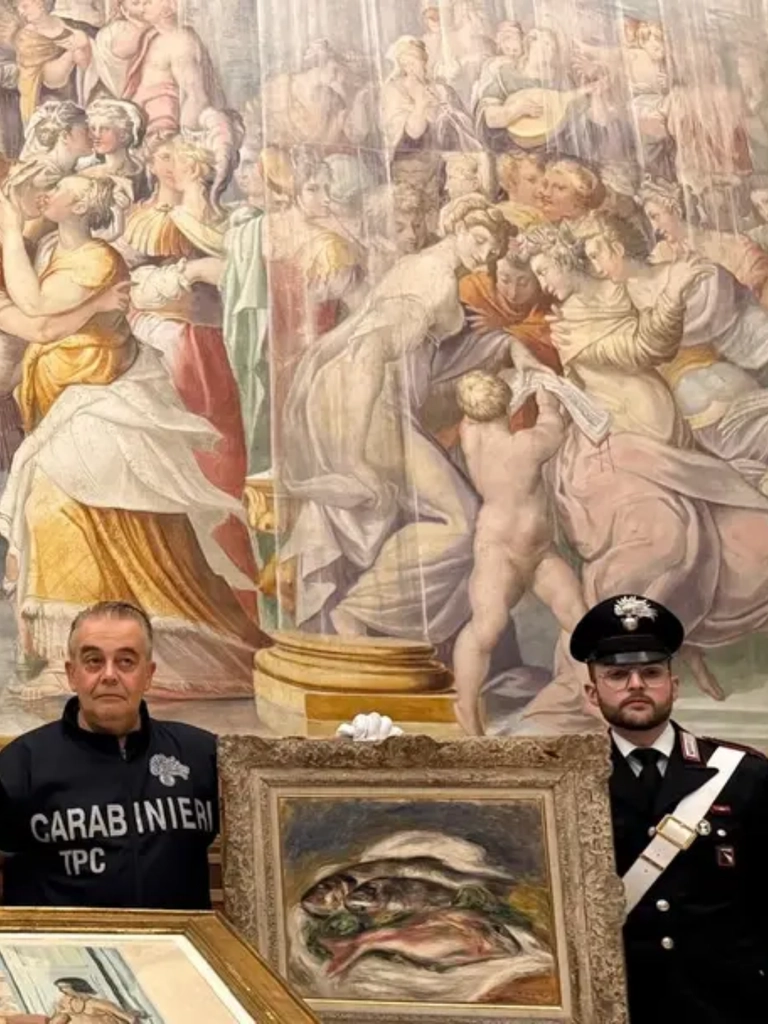
The thieves escaped with three French works: Paul Cézanne’s Tasse et plat de cerises, valued at around €6 million, Pierre-Auguste Renoir’s Les Poissons, worth roughly €3 million, and Henri Matisse’s Odalisque sur la Terrasse, estimated at about €20,000.
Five months later, on Friday, August 14, the story ended in a setting far removed from museum drama.
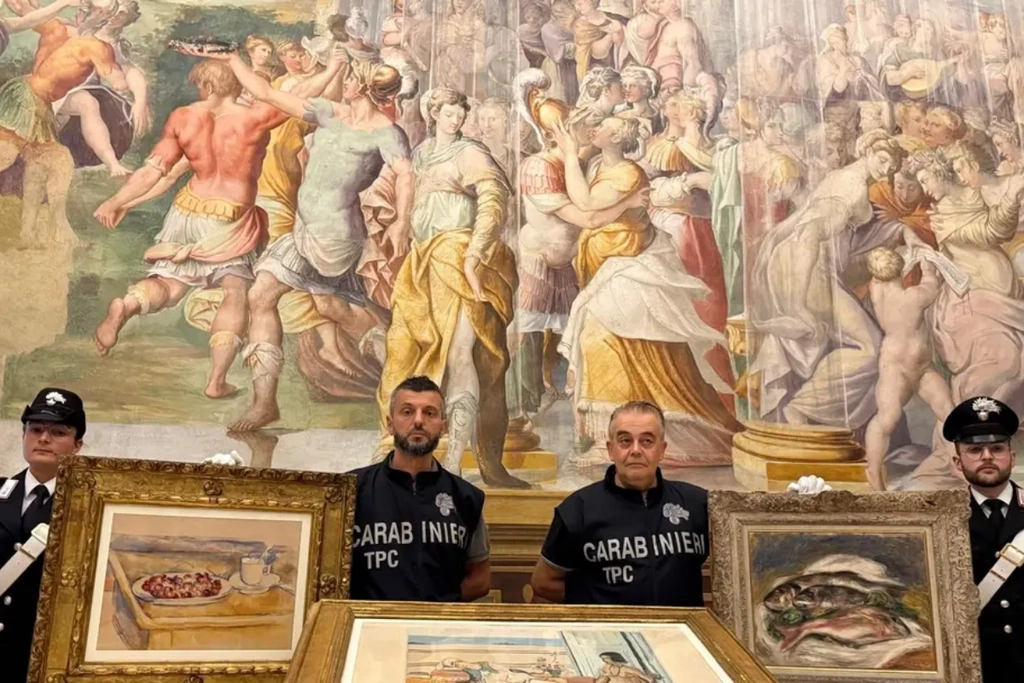
The Carabinieri Cultural Heritage Protection Unit located the works inside a television shipping box hidden in a storage area in northern Parma, only a short distance from the museum itself. Nine Moldovan nationals are under investigation, with five taken into custody.
The recovery is striking because the value hierarchy inside the box was enormous. A Cézanne worth millions was concealed beside an everyday household object, exposing the awkward reality of stolen art. Famous works carry immense market value, yet that fame makes them exceptionally difficult to sell through legitimate channels.
A parallel case in Brazil makes the same point. Police in São Paulo recovered eight Matisse prints from the artist’s 1947 book Jazz. The works had been stolen from the Mário de Andrade Library in December 2025 after thieves overpowered security and visitors during the final day of an exhibition.

Authorities later found the prints during a search in São Bernardo do Campo. Their combined value is estimated at around $200,000. Police have linked the theft to Laéssio Rodrigues de Oliveira, a notorious Brazilian art thief already in custody.
Taken together, the two cases turn stolen artworks recovered into more than a headline about successful policing. They expose the paradox at the heart of high-profile art theft. The very qualities that make a masterpiece worth stealing also make it difficult to monetize. A Cézanne can disappear through a window in minutes. Selling it without the world noticing is another problem entirely.
This paradox also appeared in the Lalique heist, where stolen high-value artisanal glassworks became extraordinarily difficult to sell precisely because their designs were so distinctive and well documented. The same visibility that gives an object cultural and financial value can become its best protection once it disappears. As more stolen artworks are recovered, the hope is that other missing masterpieces will eventually resurface too, perhaps in equally improbable places. Art thieves may be able to remove an object from public view in minutes. Erasing its identity is far harder.