Dolly Parton: The Town Tramp Fantasy
Dolly Parton: The Town Tramp Fantasy
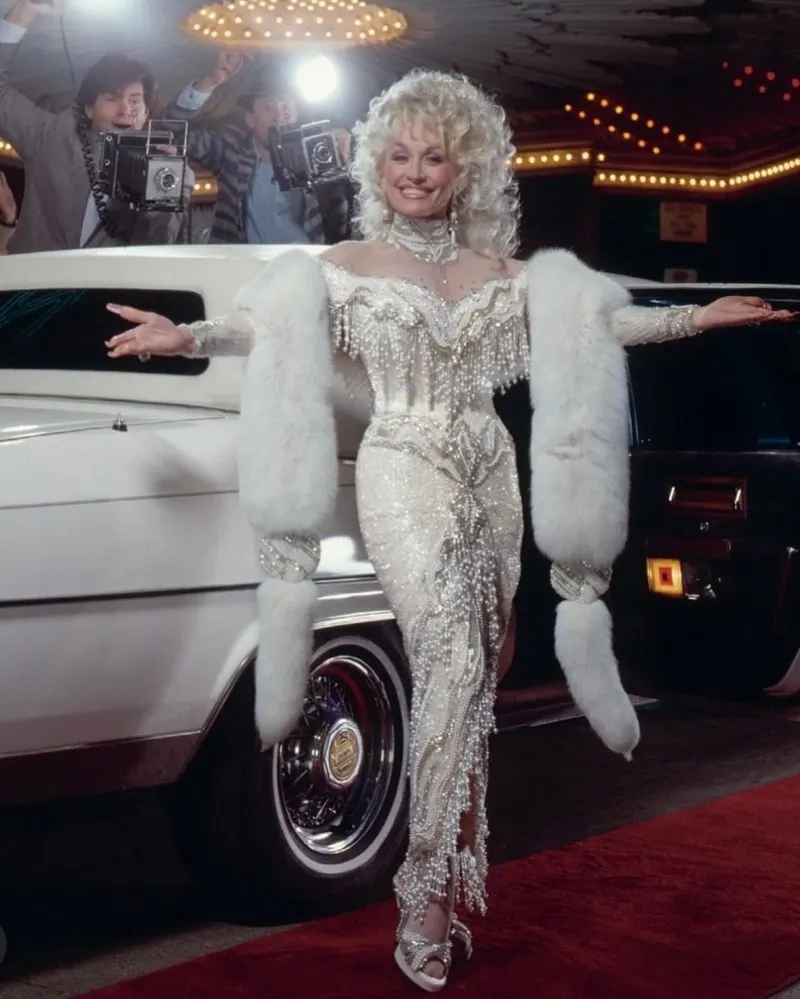
Long before rhinestones covered the stage, Dolly Parton had already found her fashion heroine in rural Tennessee. The woman adults around her called the “town tramp” wore peroxide-blonde hair piled high, painted lips, long red fingernails, tight skirts, and towering heels, including a pair Parton remembered with little plastic goldfish floating inside them. To young Dolly, she looked magnificent.
That childhood fascination explains almost everything that followed. Parton grew up with little money, so glamour first existed through improvisation: burned matchsticks could become eyeliner, honeysuckle could become perfume, and eventually teasing turned her own hair into the enormous blonde shape she had imagined. Success simply allowed the fantasy to expand. Wigs climbed higher, lashes grew thicker, coral and red lips became brighter, and acrylic nails extended into sharp little punctuation marks at the end of every gesture.
The beauty was artificial with complete intention. Parton loved the contradiction of being emotionally sincere while visually manufactured, and her face carried that philosophy beautifully. Nothing whispered.
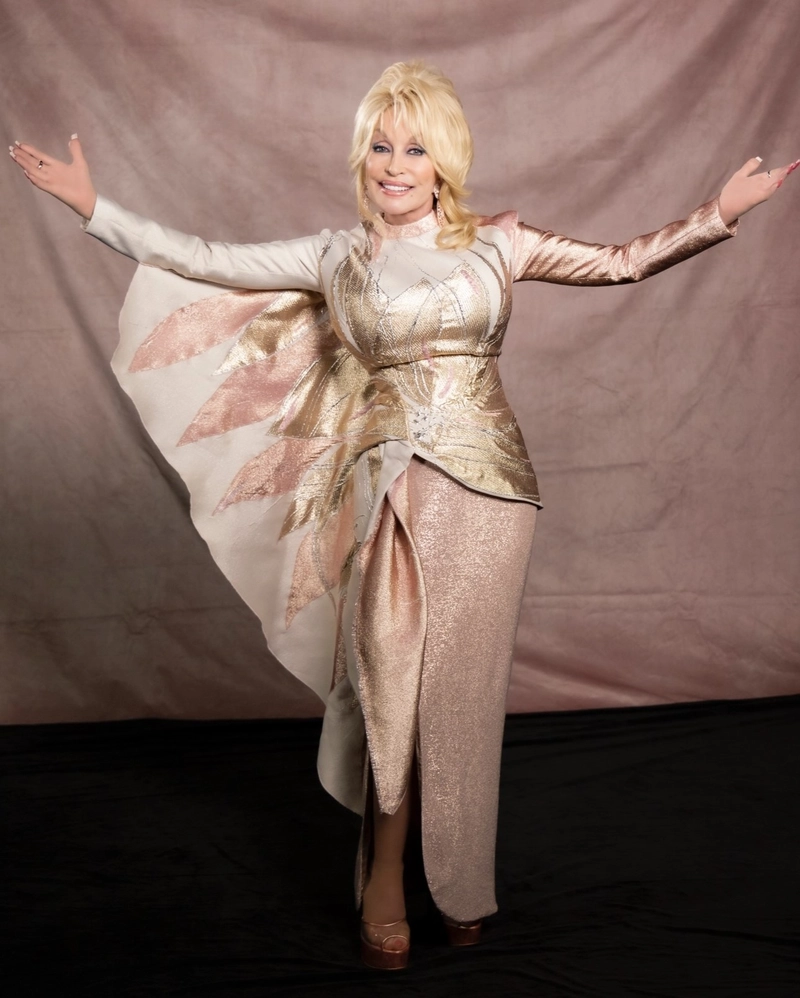
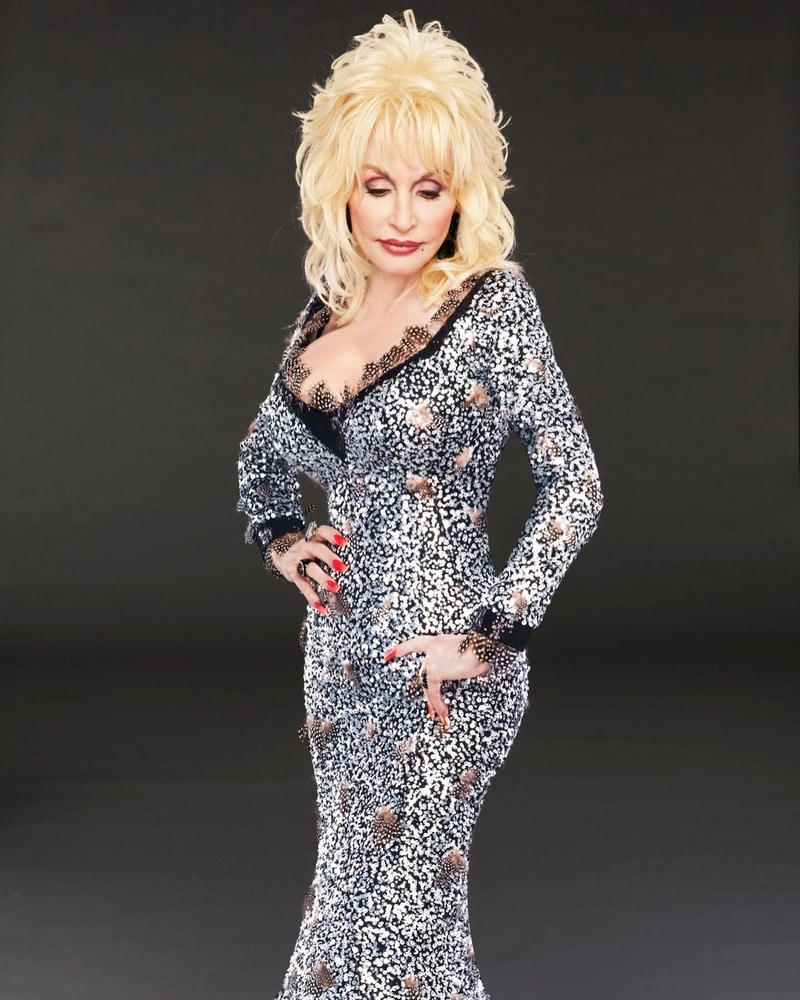
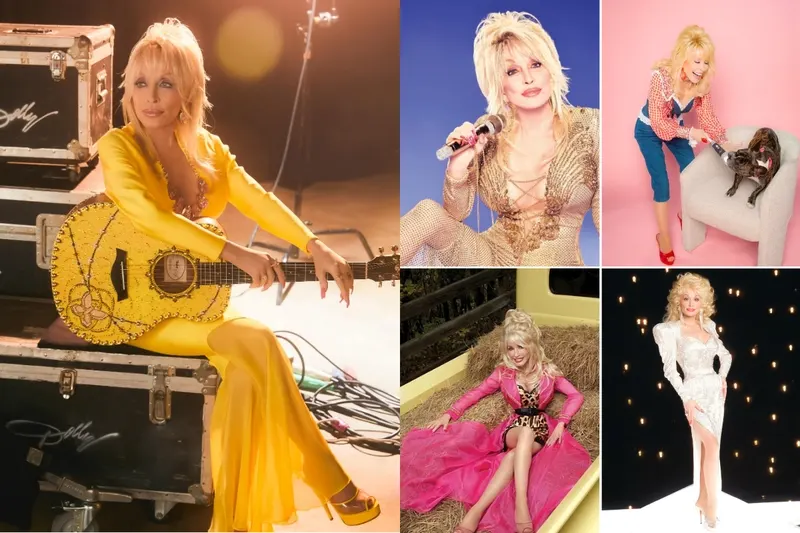
Dolly Parton understood her proportions and dressed them with almost architectural precision: a fiercely cinched waist, fitted bodices, plunging necklines, sculpted hips, and legs raised on high heels. Around that hourglass came the full vocabulary of country glamour. Rhinestones scattered across jumpsuits, cowboy hats, fringe shook under stage lights, lace-edged sleeves, denim carried western familiarity, gingham recalled the rural South, and bright pinks, greens, whites, and yellows refused every possibility of disappearing into a room.
Dolly Parton loved royalty, Cinderella, velvet, and jewelry as a child, so her adult wardrobe often looks like those fantasies collided with a honky-tonk dressing room. That collision is exactly where the charm lives. A fitted green stage suit can bloom into crystal-covered flares. A sugary pink dress can acquire bell sleeves, rhinestone swirls and enough blonde hair to double its visual volume. Even her guitars joined the spectacle. The styling could be gloriously cheesy, yet every flourish belonged to a recognizable emotional world: the girl who came from a large family in the Smoky Mountains imagining what fabulous might look like from far away.
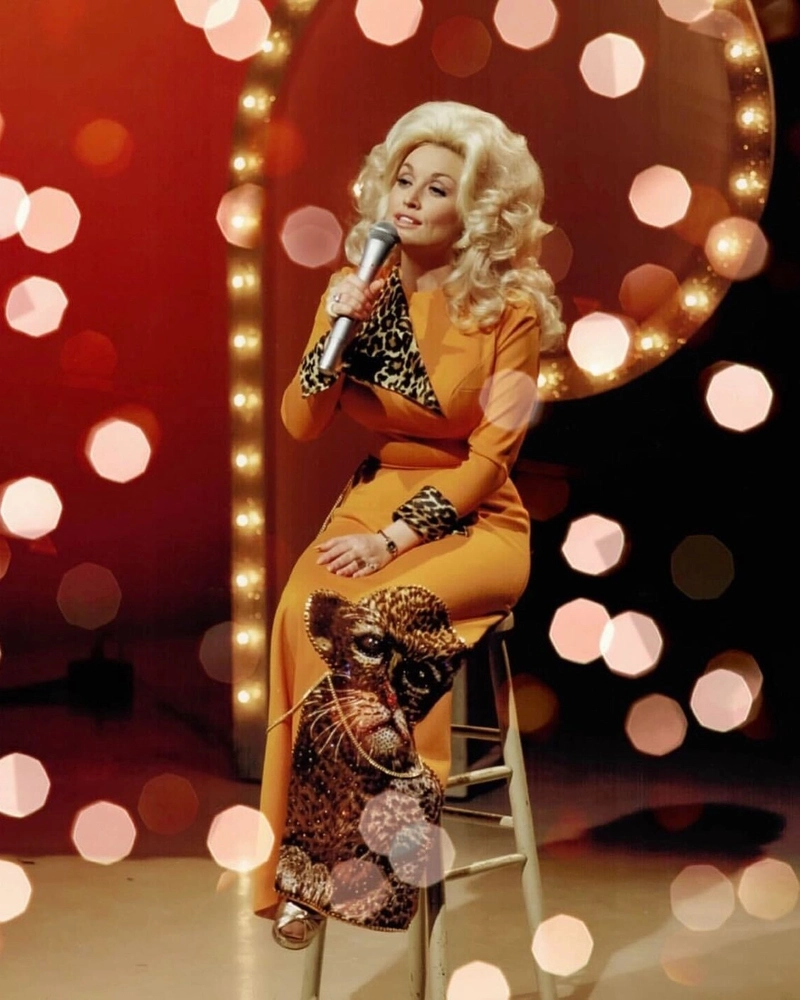
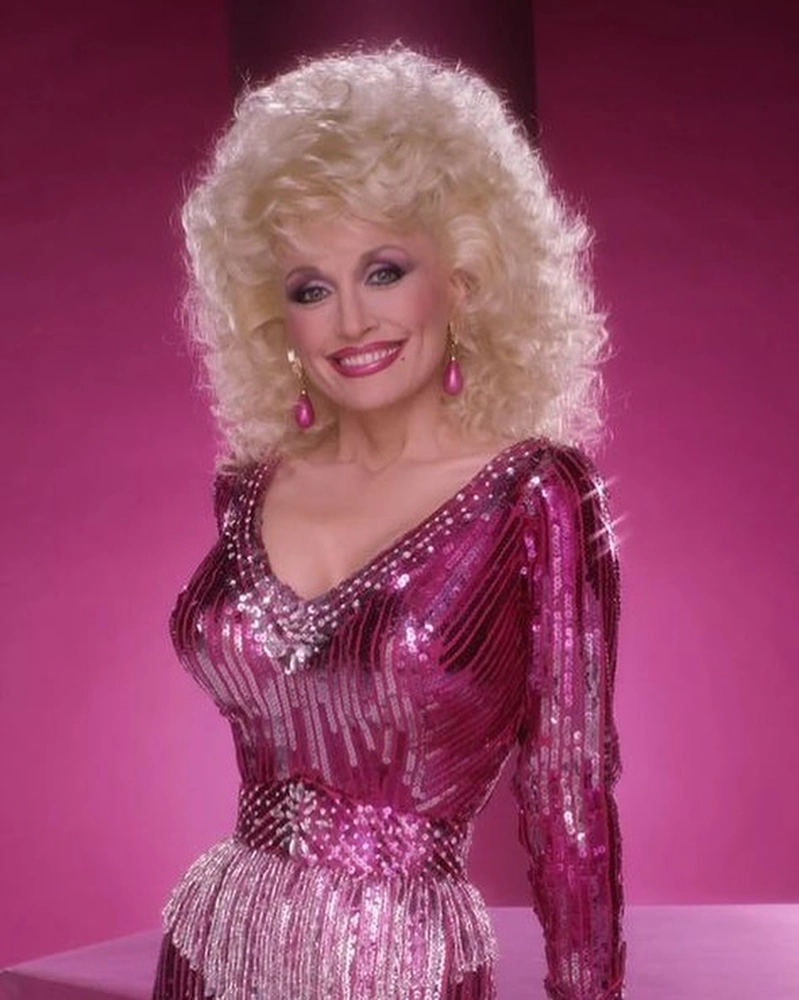
Then comes the part that made Dolly Parton impossible to mistake for anyone simply chasing glamour: she was always in on the joke. “It costs a lot of money to look this cheap” became one of her defining lines because it exposed the intelligence underneath all that sparkle.
Cheapness, in Dolly’s vocabulary, became an aesthetic destination requiring enormous effort. Rhinestones had to catch stage lighting correctly. Clothes had to shape a petite, curvy body while leaving enough freedom to perform. Wigs maintained a silhouette recognizable from the back row. Nails, jewelry and heels completed an image that audiences could identify almost instantly.
Bob Mackie brought his mastery of theatrical sparkle into her orbit, while many custom stage pieces exaggerated the shoulders, bust, waist and surface decoration until Dolly resembled a country music showgirl drawn with a very expensive box of crayons. Even her long acrylic nails became functional mythology. While filming 9 to 5, she used them as percussion while developing the song’s rhythm, later receiving a special “nails by Dolly” credit on the album.
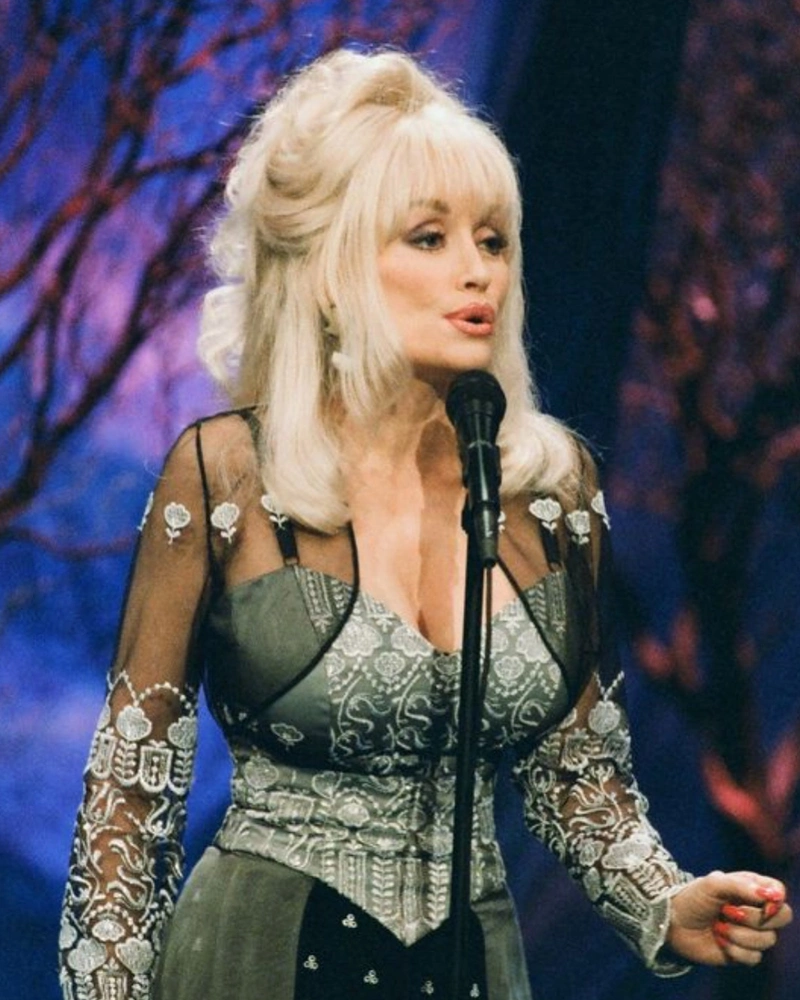
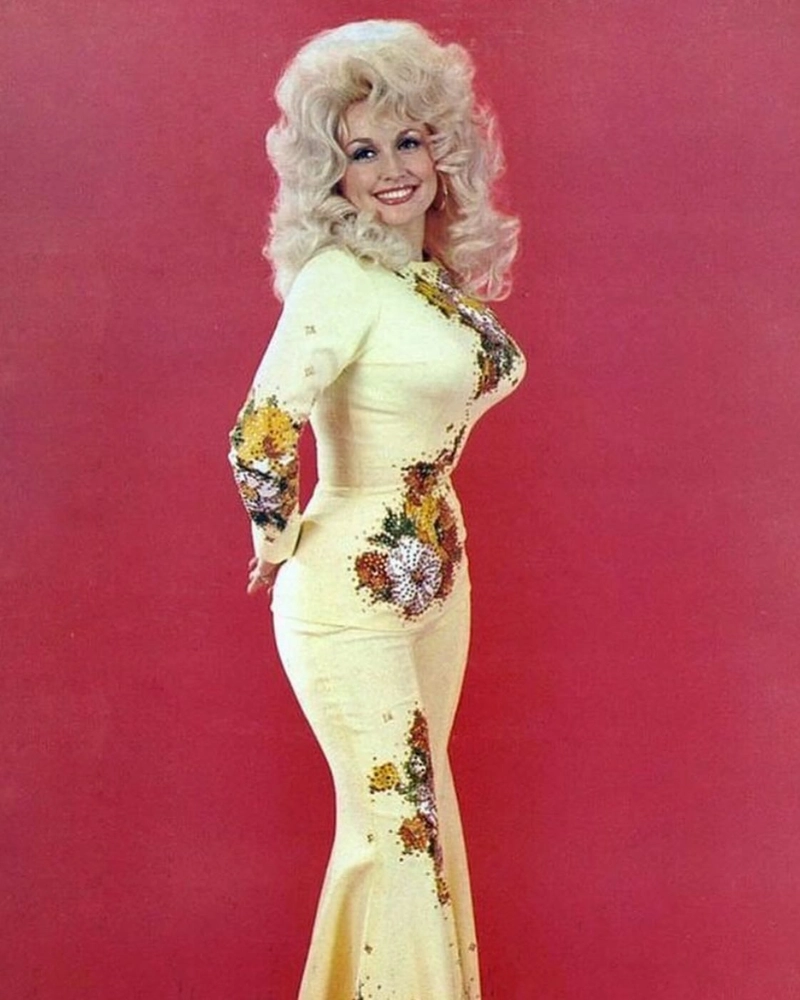
“People have thought I’d be a lot further along in this business if I dressed more stylish and didn’t wear all this gaudy getup. Record companies have tried to change me. I just refused,” she told. She looked expensive and proudly cheap, glamorous and deliciously cheesy, exaggerated enough to become almost cartoonish, then smiled so warmly that the entire construction became human again. Dolly Parton made the town tramp into a Hollywood starlet, the country girl into a showgirl, and excess into something that somehow still felt like home.