Inside Tiffany Blue Book 2026, flowers hesitate before opening, butterflies dissolve into diamond light and birds balance on gemstones large enough to become landscapes.
Inside Tiffany Blue Book 2026, flowers hesitate before opening, butterflies dissolve into diamond light and birds balance on gemstones large enough to become landscapes.
July 27, 2026


In tandem with the launch of Boucheron's 2026 Carte Blanche, Tiffany recently represents its Blue Book 2026 collection revisits Jean Schlumberger’s enchanted natural world through Nathalie Verdeille’s increasingly sculptural language, allowing Tiffany’s history to grow into unfamiliar and brilliantly coloured forms.
A garden usually enters jewellery through recognisable symbols: a completed rose, an open flower or a butterfly resting with its wings perfectly arranged. Tiffany Blue Book 2026: Hidden Garden looks for the more elusive instant surrounding those images. Its subject is nature while becoming something else.
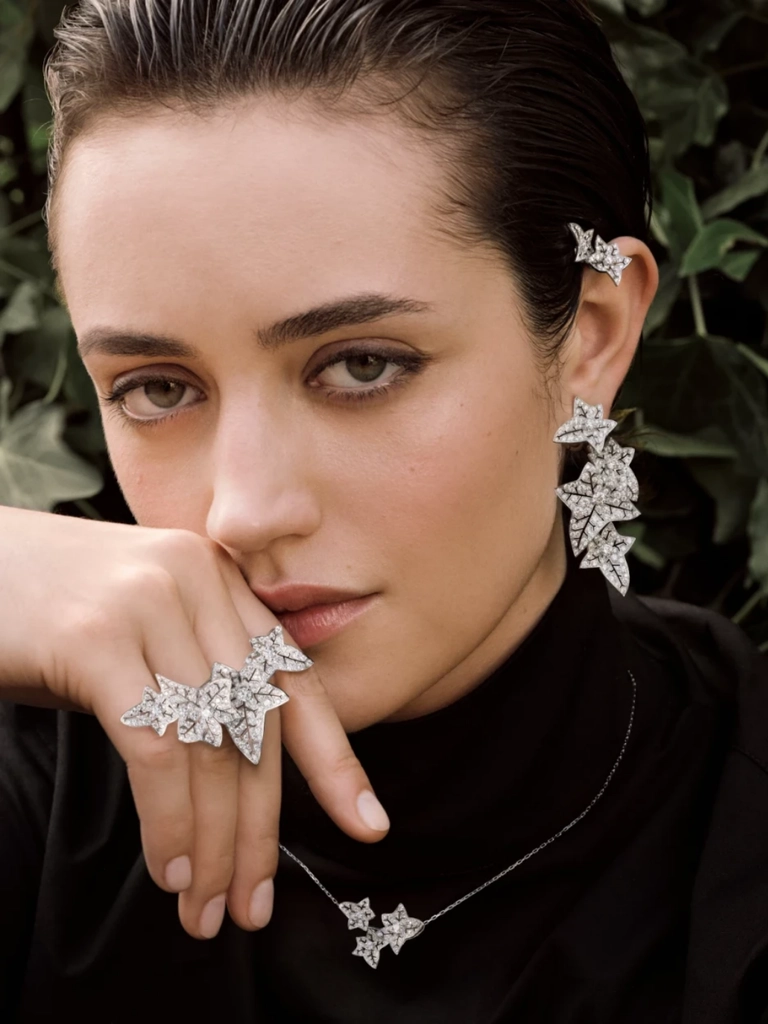
Designed by Nathalie Verdeille, Senior Vice President and Chief Artistic Officer, with the Tiffany Design Studio, the collection explores quiet transformations through twisting vines, emerging buds, fluttering creatures and leaves apparently disturbed by warm air. The pieces translate Jean Schlumberger’s historic flora and fauna into contemporary sculptural constructions rather than literal archival reproductions.
Hidden Garden unfolds through spring, summer and fall presentations. This seasonal rhythm gives the collection its own sense of growth: new species, colours and jewellery stories appear gradually rather than arriving as one complete catalogue. The spring chapter formally introduced the central ecosystem, while pieces from the summer instalment began appearing publicly during the 2026 Met Gala.
The structure also returns the Blue Book to its original purpose as a record of Tiffany’s rarest creations. First published in 1845, the early catalogue introduced American clients to luxury objects and later evolved into the name for the house’s most important high jewellery collection. Hidden Garden therefore enters a tradition extending across more than 180 years, yet its jewels resist the stillness of museum objects.
Jean Schlumberger began his celebrated collaboration with Tiffany in 1956. His birds, marine creatures, flowers and fantastical animals brought wit into high jewellery, often balancing spectacular gemstones with forms that seemed alert, eccentric and slightly unruly. His work treated nature as a source of personality rather than decoration.
Verdeille approaches that legacy with increasing freedom. The relationship between archive and modernity becomes especially visible in the Monarch story. Its starting point was an archival Schlumberger necklace in which a monarch butterfly remained partly concealed among sculpted leaves and twisting vines. Hidden Garden enlarges the surrounding vegetation until the foliage becomes the primary architecture, enclosing diamonds and unenhanced sapphires from Sri Lanka and Madagascar.

One Monarch ring centres an 8.13 carat D colour, internally flawless, Type IIa emerald cut diamond. Another surrounds a 10.83 carat unenhanced cushion cut sapphire. These stones appear to have been discovered inside the metalwork rather than placed on top of it, as though the garden had formed around them over time.
The Butterfly chapter moves between direct representation and abstraction. White oval diamonds stretch into fragmented wings, while Fancy Vivid Yellow diamonds create warmer flashes of movement. Rare padparadscha and Montana sapphires introduce shades between orange, rose, lavender and blue, giving each butterfly the instability of colour seen in real wings under changing light.
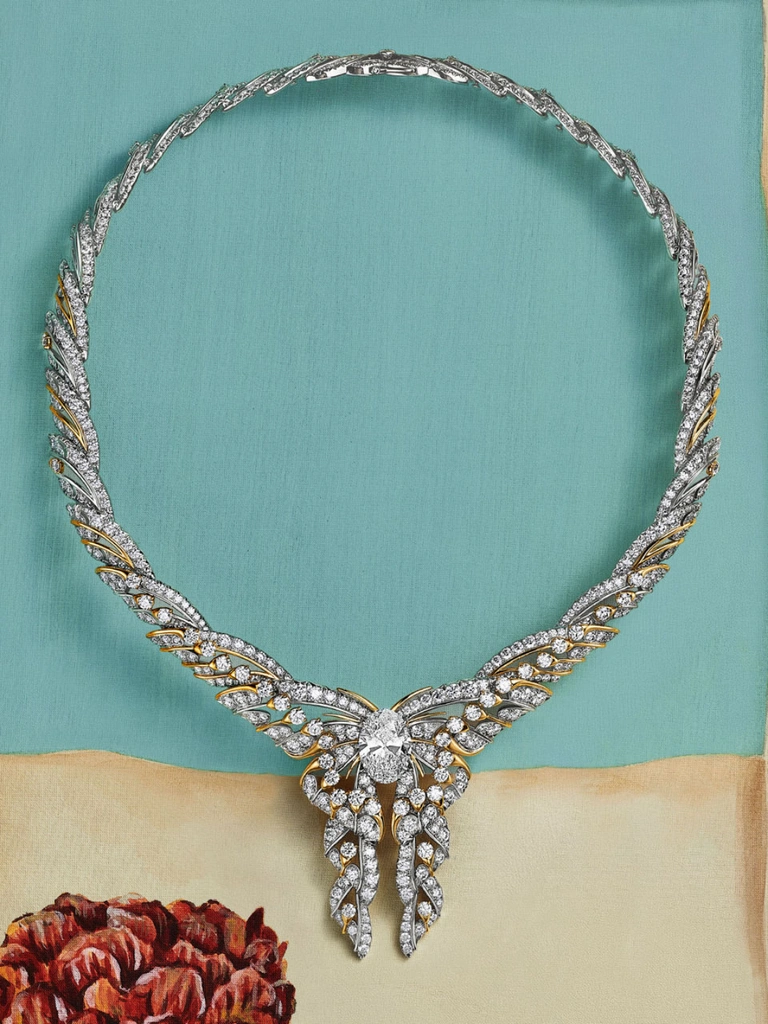
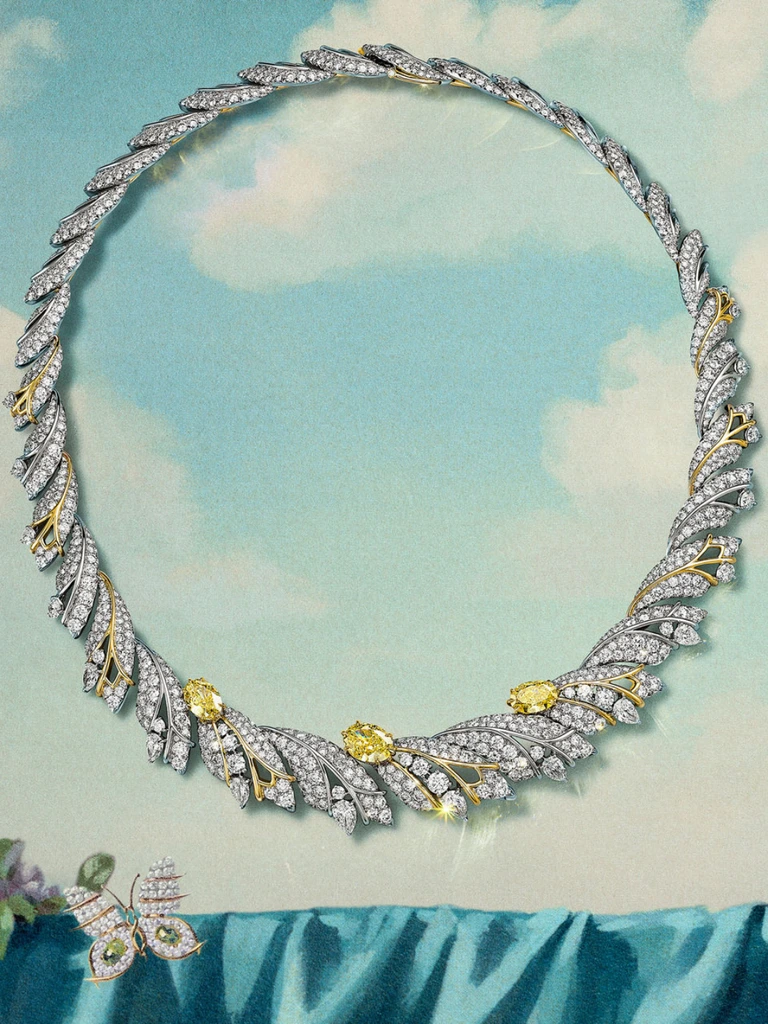
Several designs are transformable. Pendants detach and become brooches, allowing the butterfly to migrate across the body. The mechanism contributes to the narrative rather than functioning as a concealed technical trick. A creature associated with metamorphosis is given more than one physical identity.
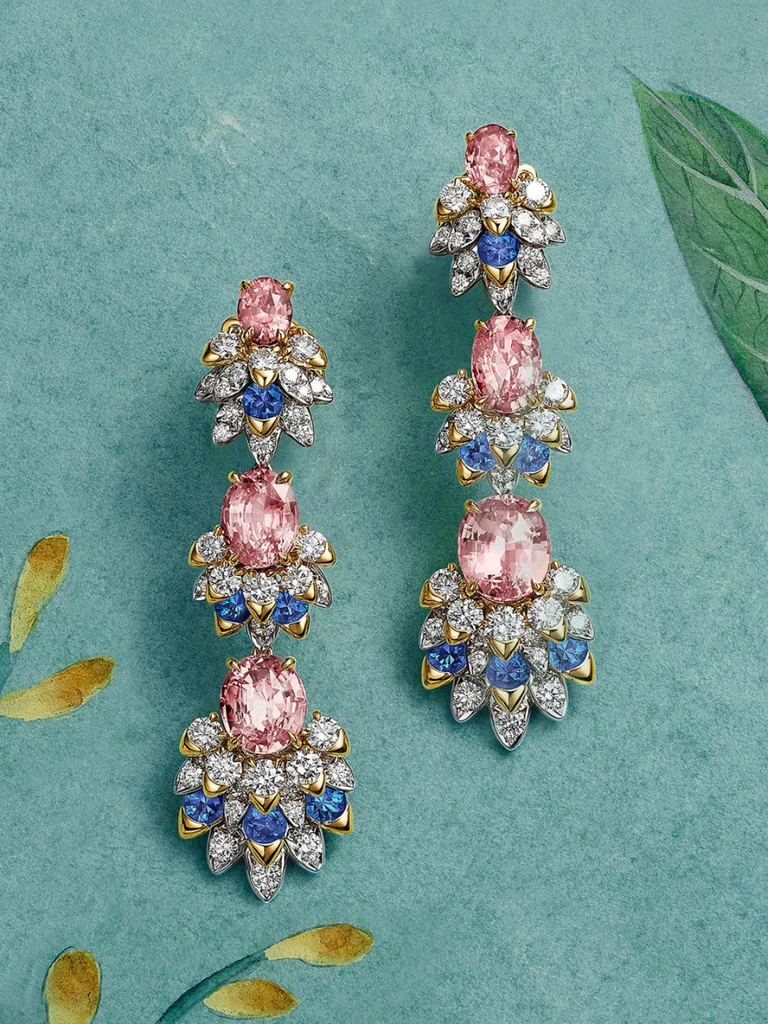
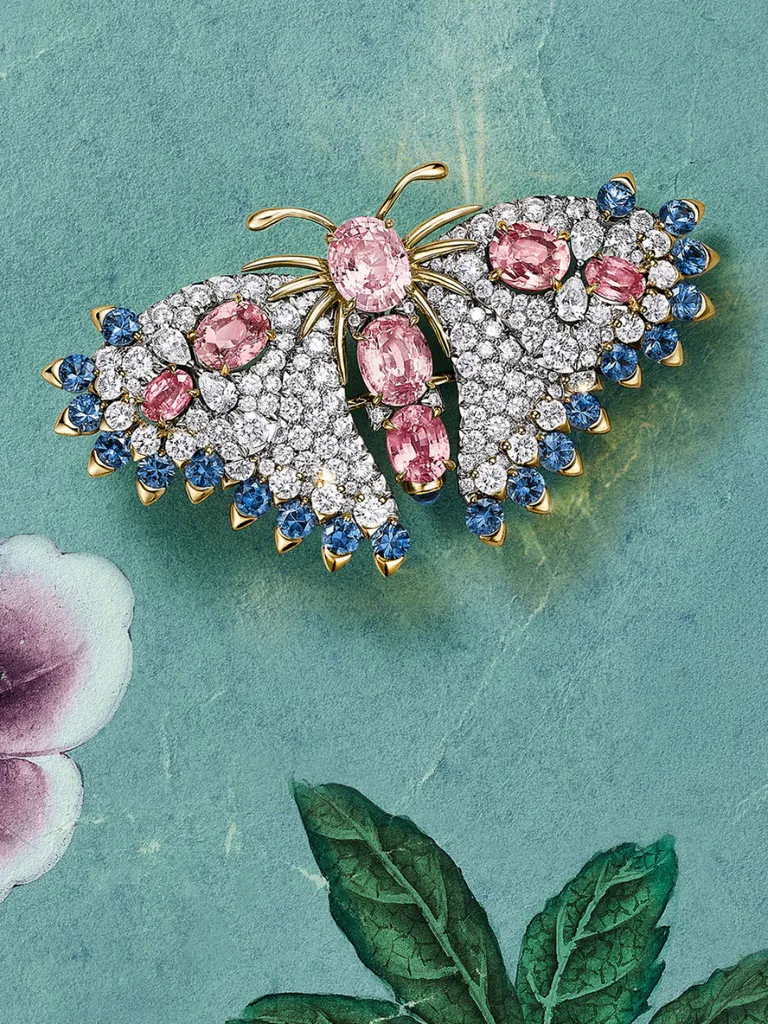
The chapter also reaches back to Schlumberger’s 1956 Butterflies choker, conceived with his close friend and patron Rachel “Bunny” Mellon. The historic jewel combined diamonds, turquoise, amethyst, sapphire and spinel in a composition suggesting butterflies in flight. It received the Heritage Prize at the Grand Prix de la Haute Joaillerie in 2025 and is now held by the Virginia Museum of Fine Arts.
Mellon’s presence extends beyond this single object. A horticulturist and devoted collector, she shared Schlumberger’s fascination with gardens, irregular forms and intimate natural observation. Her Oak Spring estate in Virginia later informed the environment created for the 2026 Blue Book presentation at New York’s Park Avenue Armory, where the exhibition space became a cultivated indoor landscape.
Schlumberger’s Bird on a Rock, introduced in 1965, remains one of Tiffany’s most recognisable designs. The original formula places a diamond set bird on a major gemstone, bringing humour and animation to material usually presented with solemnity.
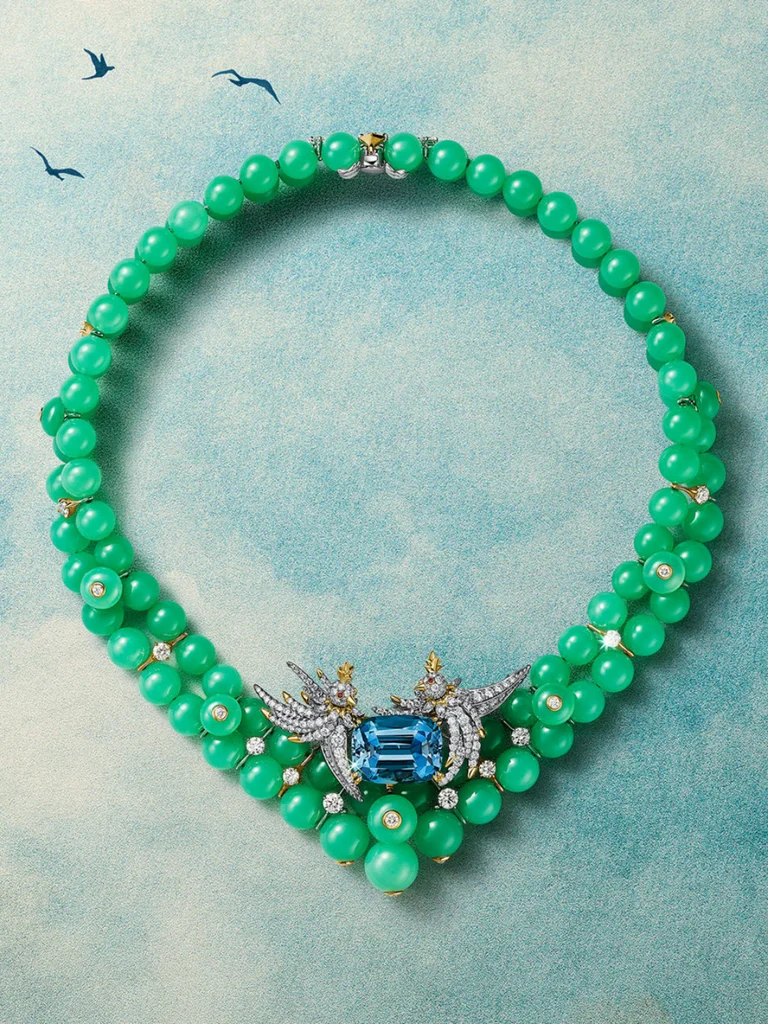
Hidden Garden expands the world beneath the bird. In one transformable necklace, two diamond birds settle around a 22.60 carat Brazilian aquamarine surrounded by rows of apple green chrysoprase beads. The central aquamarine composition can detach and become a brooch, leaving the wearer to decide whether the birds inhabit the neck or the lapel.
The colour arrangement gives the jewel a sense of depth. Chrysoprase forms an almost tropical field of green, the aquamarine becomes a pool of intense blue, and small rubies appear as sudden sparks between them. Instead of perching on an isolated stone, the birds have entered an entire landscape.
The Paradise Bird creations push this fantasy further. Each brooch carries its own combination of plumage and mineral terrain. One bird stands above a 66.60 carat oval cabochon spessartine accompanied by sapphires, fire opal, chrysoprase and diamonds. Another balances on a 60.24 carat rubellite surrounded by rubies, turquoise and sapphires. A third inhabits a free form fire opal weighing 25.14 carats.

These birds bring mosaic colour into the collection. Tiny stones sit close together across wings, heads and tails, replacing painted feathers with sapphires, turquoise, fire opals, emeralds and diamonds. Some can transform from brooches into pendants, extending the collection’s idea that a jewel may change its behaviour without losing its identity.
The floral stories concentrate on transitional states. Bloom captures the instant when colour first becomes visible through a closed bud. Pink and purple sapphires emerge from sculptural yellow gold petals, creating tension between the rigid mineral and the softness the form suggests.
Twin Bud studies growth through paired forms. Platinum vines curve around diamonds and vivid Zambian emeralds, holding each stone as though it has appeared at the end of a stem. Palm introduces wider movement through diamond set leaves and unenhanced Mozambican rubies, arranging the foliage in rhythmic sequences that suggest fronds responding to sunlight and wind.

The metal rarely functions as a quiet support. Hand formed platinum and 18 carat yellow gold build trellises, stems and leaves that direct the eye around the gemstones. The settings become part of the botanical illusion, allowing rigidity to describe movement.
The Jasmine story develops from a Schlumberger necklace associated with the early 1960s. Hidden Garden interprets the motif through two distinct suites. One uses sculptural platinum forms to lift exceptional diamonds, while the other combines platinum, yellow gold and kunzite in warmer floral compositions.
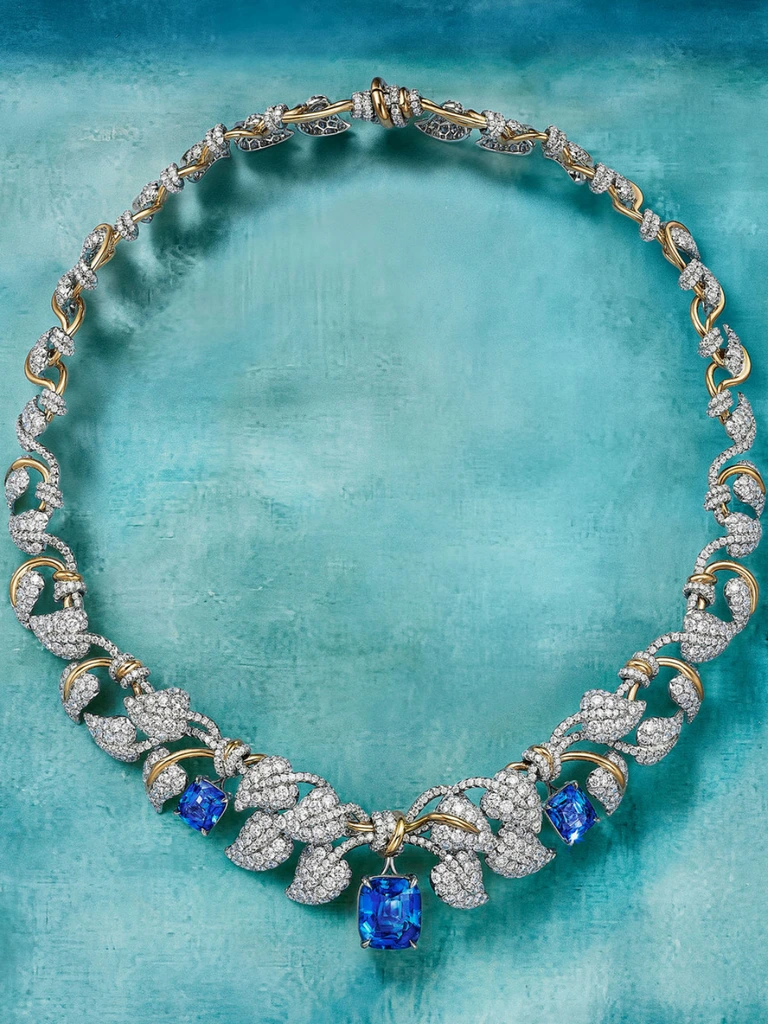
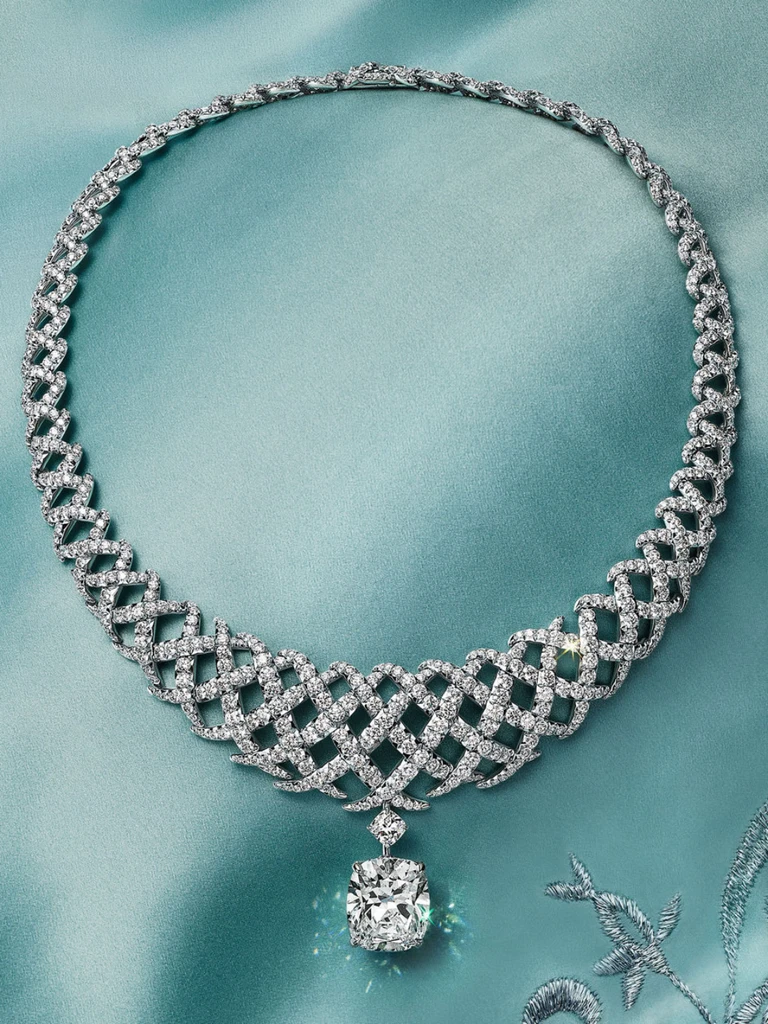
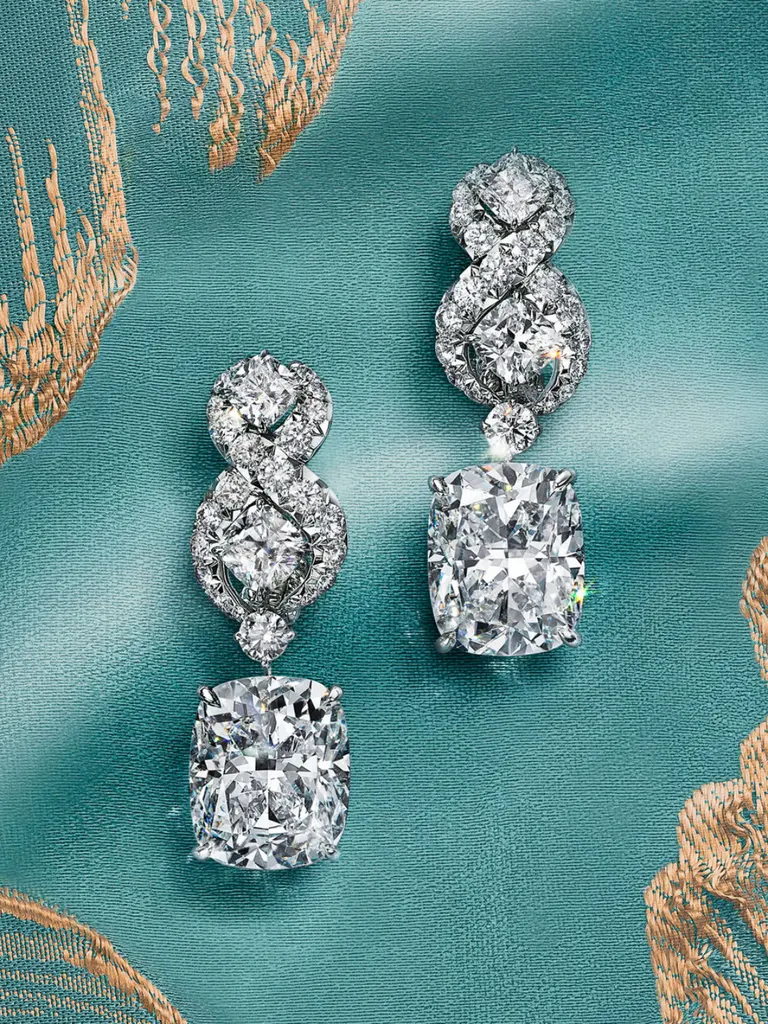
Its most commanding diamond creation contains an 18.80 carat D colour, internally flawless, Type IIa cushion cut diamond. The stone sits within an intricate platinum structure whose interwoven lines resemble a garden trellis closing gently around it.
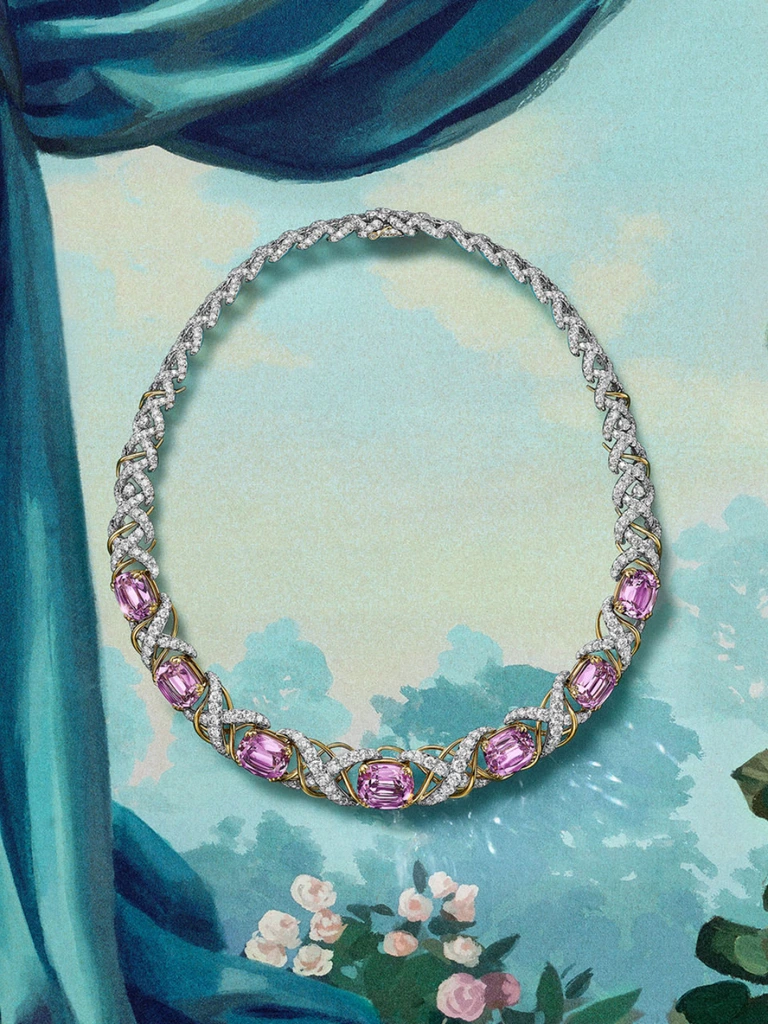
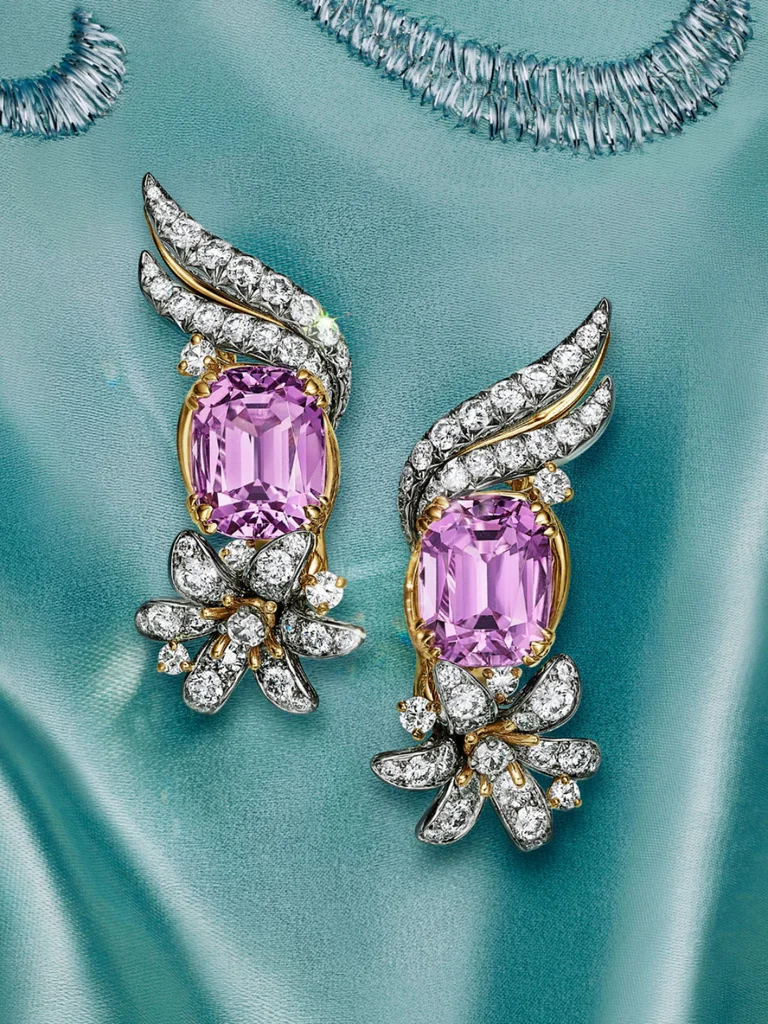
A second Jasmine necklace uses seven cushion cut kunzites weighing more than 70 carats in total. Their lilac pink colour gives the suite a softer atmosphere, yet their scale maintains the grandeur expected from Blue Book jewellery.
Kunzite carries particular significance for Tiffany. The gemstone was named in honour of George Frederick Kunz, the house’s influential chief gemologist, during the early twentieth century. Its appearance in Hidden Garden therefore connects Verdeille’s botanical narrative with Tiffany’s history of discovering, naming and promoting unusual coloured stones.
Transformability runs throughout Tiffany Blue Book 2026. Pendants become brooches, gemstone centres detach from necklaces and birds travel between different ways of wearing. These changes serve both practicality and fantasy.
High jewellery historically responded to formal social rituals, often allowing a major gemstone to move from an elaborate evening necklace into a more restrained setting. Hidden Garden renews that tradition for clients whose jewellery may travel between private dinners, red carpets, exhibitions and personal collections.
Movement also appears without a mechanical transformation. Articulated gold foliage follows the body, diamond wings spread across the collarbone and irregular vines curl around fingers. The wearer completes the composition by introducing motion that the jewel only suggests while displayed.
This creates a significant distinction between botanical jewellery and botanical sculpture. A sculpture captures a finished pose. Hidden Garden remains dependent on the body, allowing light, gesture and changing viewpoints to continue the design.
Blue Book creations are produced as exceptional high jewellery pieces, with prices communicated privately through Tiffany specialists rather than published as a conventional retail list. Public estimates reaching from six figures into several millions may offer general market context, yet they should not be treated as confirmed prices for individual Hidden Garden jewels. Tiffany directs prospective clients towards private consultation with its high jewellery experts.
Valuation depends on far more than total carat weight. Origin, treatment status, clarity, colour saturation, rarity, matching quality, design complexity and transformable engineering all shape the final figure. An unenhanced sapphire carrying exceptional colour may command a different level of attention from a treated stone of similar size. A flawless Type IIa diamond brings its own geological rarity, while a complicated detachable setting increases the amount of design and workshop labour held within the jewel.
Hidden Garden presents those values through emotion rather than arithmetic. A 66.60 carat spessartine becomes the territory of a tiny bird. An 18.80 carat diamond becomes a jasmine bloom. Precious stones retain their gemological importance while acquiring characters, habitats and gestures.
The achievement of Tiffany Blue Book 2026 lies in how confidently it uses heritage without becoming trapped inside it. Schlumberger remains present through butterflies, birds, vines and unexpected colour. Verdeille allows those references to mutate, enlarge and move into forms that belong to the present.
Hidden Garden also reflects a contemporary desire for high jewellery to contain more than visible wealth. The pieces offer mechanisms, gemstone provenance, archival connections and narratives that unfold through close observation. Their luxury is intellectual as well as material.
A garden survives through repetition accompanied by change. Flowers return in new positions. Birds arrive and disappear. Vines follow routes that no drawing can completely control. Hidden Garden treats Tiffany’s archive in the same way: as living ground where earlier ideas can germinate again.
Tiffany Blue Book 2026 ultimately captures the instant before certainty. A blossom remains almost open. A butterfly appears ready to leave. A bird leans towards flight. Within that suspended movement, Tiffany finds a more compelling expression of permanence: jewellery designed to look alive long after the garden that inspired it has changed.