Copper peptides have spent more than half a century hiding inside regenerative science, and beauty’s current obsession with longevity has suddenly made that little blue molecule impossible to ignore.
Copper peptides have spent more than half a century hiding inside regenerative science, and beauty’s current obsession with longevity has suddenly made that little blue molecule impossible to ignore.
September 11, 2026
Advertisement

Advertisement



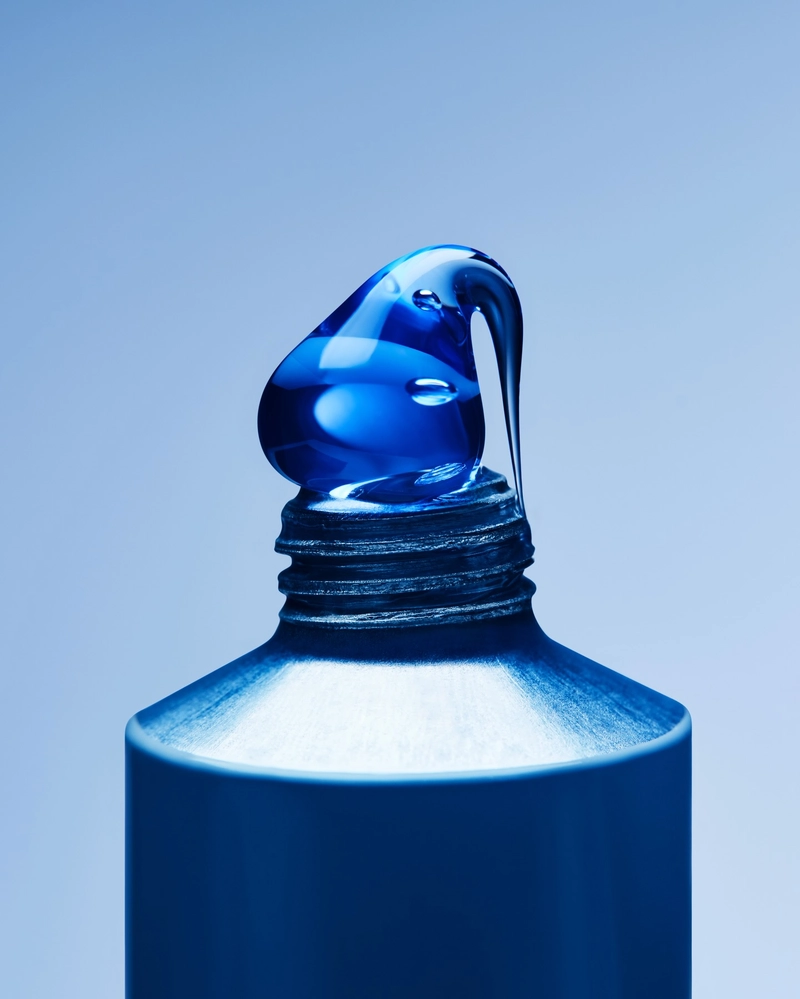
A blue serum once looked futuristic simply because skincare rarely came in that colour. Now the shade carries an ingredient story of its own. Copper peptides, particularly the molecule known as GHK-Cu, have resurfaced across anti-aging serums, regenerative formulas and increasingly expensive compounded creams, fitting neatly beside PDRN, exosomes and growth factors in beauty’s current fascination with helping skin repair itself.
The timing feels remarkably modern for a molecule discovered in 1973.
Dr. Loren Pickart first isolated GHK from human plasma while investigating why younger blood appeared to influence older tissue differently. GHK stands for glycyl-L-histidyl-L-lysine, which simply means a chain built from three amino acids: glycine, histidine and lysine. The molecule has an unusually strong affinity for copper. Once it binds a copper ion, GHK becomes GHK-Cu, the copper peptide usually listed on skincare ingredient labels as Copper Tripeptide-1.
GHK occurs naturally in plasma, saliva and urine, and it can also be released from tissues during injury as part of the repair process. One particularly memorable number helps explain why anti-aging researchers became interested in it: published reviews place plasma GHK levels at roughly 200 ng/mL around age 20 and about 80 ng/mL by age 60. That decline happens alongside the broader slowdown in regenerative capacity associated with aging, although current evidence has yet to prove that falling GHK itself causes visible skin aging.
Copper already participates in the machinery that keeps connective tissue functional. One of its important jobs involves lysyl oxidase, an enzyme needed to create and stabilize cross-links within collagen and elastin. Producing collagen fibres is only part of building resilient skin; those fibres also require organization and structural support.
GHK gives copper a particularly interesting transport partner. Board-certified dermatologist Dr. Jennifer Gordon of Westlake Dermatology describes GHK-Cu as a carrier peptide because the peptide binds copper and participates in biological processes associated with tissue repair and antioxidant defence. Research also connects the complex with signalling involved in fibroblast function, collagen, elastin and glycosaminoglycan synthesis.
Some peptides primarily act as signals telling skin to perform a particular function. GHK-Cu carries a biologically useful mineral while also interacting with processes involved in extracellular-matrix remodelling. It has been studied in wound healing, inflammatory regulation, antioxidant activity and tissue regeneration for decades.
Older cosmetic studies give the ingredient its most seductive anti-aging history. GHK-Cu creams used over approximately 12 weeks have been associated with improvements in skin density, thickness, firmness, elasticity, clarity, photodamage and the appearance of fine and deeper wrinkles. Separate work around the eye area also found improvements in lines and skin density.
One frequently repeated experiment found increased procollagen production in 70% of skin treated with GHK-Cu, compared with 50% using vitamin C and 40% using retinoic acid within that particular study. It is a fantastic beauty fact and a terrible excuse to declare copper peptides superior to retinoids. The study was small and belongs to an older evidence base, while retinoids have decades of extensive clinical data behind them.
Dr. Gordon places the ingredient in a more realistic role: gradual support for skin quality, resilience, collagen-related processes, inflammation and repair. Copper peptides make the most sense as a long-term restorative ingredient, especially for someone interested in firmer-looking skin, fine lines or a stronger-feeling barrier. They lack the instant drama of an acid peel or the visible peeling phase sometimes associated with retinoids. Their appeal sits in quieter biological maintenance.
GHK-Cu is relatively hydrophilic, while the outer stratum corneum is designed to resist penetration by many water-loving molecules.
This is where formulation suddenly becomes as interesting as concentration. Researchers are studying liposomes, encapsulation, chemical modification and other delivery systems to help GHK-Cu cross the skin barrier more effectively. A dedicated review of liposomal GHK-Cu notes that encapsulation may improve its penetration potential, though research on exactly how efficiently these systems transport copper peptides through human skin remains relatively sparse.
Copper peptides suit a surprisingly uncomplicated routine. After cleansing, a copper-peptide serum can sit underneath moisturizer, followed by sunscreen during the daytime. Consistency makes more sense here than aggressive application.
Dr. Gordon suggests once-daily use as a reasonable approach and recommends separating copper peptides from strong exfoliating acids, high-strength vitamin C and retinoids when compatibility or irritation is a concern. An easy arrangement gives copper peptides the morning and a retinoid the evening, or alternates them across different nights.
That separation deserves some nuance. Modern cosmetic formulas vary in pH, stabilization and delivery technology, so internet rules claiming that every copper peptide instantly becomes useless beside vitamin C or retinol oversimplify formulation chemistry. Someone already tolerating several powerful actives can follow the individual product instructions or ask a dermatologist how to arrange them.
For skin recovering from a procedure, copper peptides have an appealing repair story, yet the treatment provider should guide timing. Topical Copper Tripeptide-1 also belongs in a completely separate conversation from injectable GHK-Cu. Injection introduces questions of sterility, dosing, regulation and systemic safety that cosmetic serum research cannot answer.
Beauty in 2026 has become fascinated by ingredients that sound less like surface decoration and more like cellular communication. PDRN promises regeneration, exosomes carry biological messages, growth factors speak to cell behaviour, and suddenly a peptide discovered more than 50 years ago fits comfortably into the future.
The science also leaves enough unanswered questions to keep the story interesting. Copper peptides have a credible biological relationship with repair, collagen, elastin and extracellular-matrix activity, while penetration and robust topical clinical evidence remain important limitations. The molecule itself may be old. The technologies trying to deliver it efficiently are only getting more sophisticated.
Perhaps that is why those blue bottles suddenly look so current. Copper peptides already have history, biological plausibility and a wonderfully strange origin story. Their next chapter depends on whether skincare can get that three-amino-acid copper complex through the door and make all that laboratory promise visible on the face.
Advertisement