MENU
Close





Bryan Johnson is not just a billionaire biohacker. He is the face of a new beauty panic where aging looks like failure, biology looks like a system bug, and death looks like something money should manage.

Bryan Johnson is not just a billionaire biohacker. He is the face of a new beauty panic where aging looks like failure, biology looks like a system bug, and death looks like something money should manage.
July 8, 2026
Advertisement

Advertisement



The modern beauty narrative has evolved far past topical serums, surgical lifts, and surface-level aesthetics. It now aggressively targets the cellular architecture itself. The true shock of Bryan Johnson’s public saga lies far beyond a single wealthy biohacker falling ill. It terrifies because he successfully turned the human bodily form into a hyper-gamified, billion-dollar Tamagotchi, framed mortality as an embarrassing PR crisis, and positioned youth as the ultimate luxury, only for biology to walk in like a reality-TV producer and rewrite his crafted script.
We are witnessing the ultimate commodification of human life, an era where the quest for beauty and youth has metastasized into an obsession with absolute biological supremacy.
Bryan Johnson’s anti-aging journey represents a radical departure from traditional wellness. On his own “Don’t Die” platform, Bryan Johnson proudly proclaims he launched Project Blueprint in 2021 to explore "longevity escape velocity." He then implemented the bleeding-edge science directly into his own flesh, becoming, in his precise words, "the most biologically measured person in history." That specific phrase serves as the perfect entry point into his dystopian philosophy. This transcends the familiar territory of green juice and morning yoga. This is extreme celebrity-manager logic applied directly to human tissue.
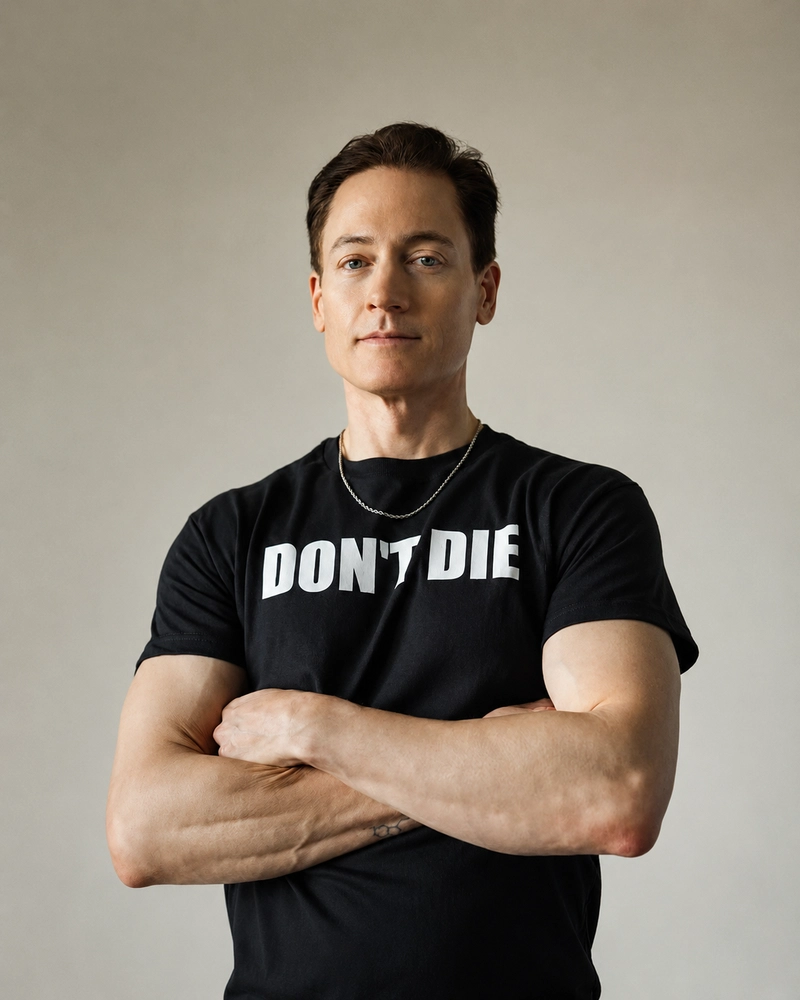
Bryan Johnson treats his physical vessel exactly like an obscenely wealthy man playing a terrifyingly expensive game of The Sims with his own organs. Rather than experiencing the spontaneous joy of living, he obsessively tracks every single calorie, sleep cycle, and blood marker like a frantic gamer desperate to keep his digital avatar from catching fire.
TIME magazine reported his self-anointed title as a "rejuvenation athlete," quoting his ambition to create "a new sport out of health." Under this terrifying framework, the human body morphs into something entirely unfamiliar. It becomes a walking, breathing billboard for his own ego. Johnson is building a bizarre model where his own biology functions simultaneously as clinical evidence, public spectacle, and a highly lucrative sales pitch.

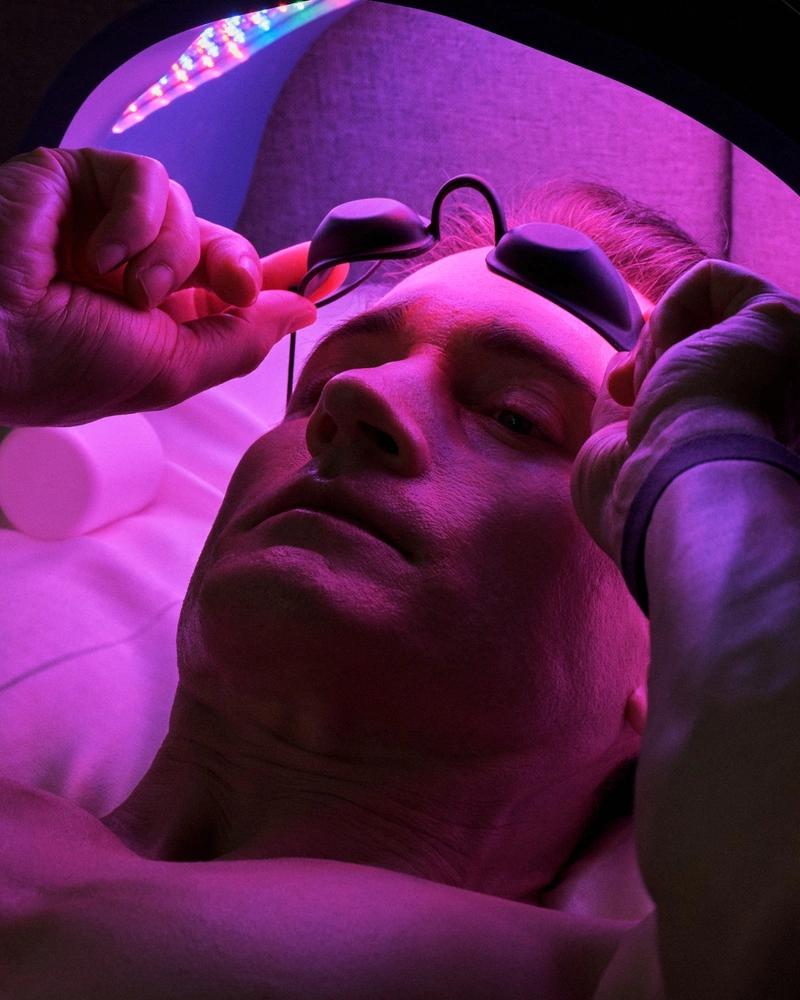
When a man’s flesh serves as his primary product demo, every single blood result inevitably becomes a glossy marketing campaign. We must question whether "rejuvenation athlete" represents a genuine health category, or simply a billionaire’s clever strategy to make his severe health obsession sound culturally heroic. At a certain threshold, innocent self-care mutates into relentless, exhausting self-surveillance backed by superior branding. The human experience is reduced to a series of mechanical adjustments, turning the natural progression of life into a perpetual, high-stress maintenance routine.
The ambition here reaches far past a simple desire to extend life. Bryan Johnson has masterfully transformed the ancient, primal fear of death into a sleek, premium lifestyle package people can follow, quote, financially buy into, and emotionally identify with. His "Don’t Die" site frames the movement in grandiose, civilizational terms, directly connecting continued human life and sheer survival with the rise of artificial intelligence.
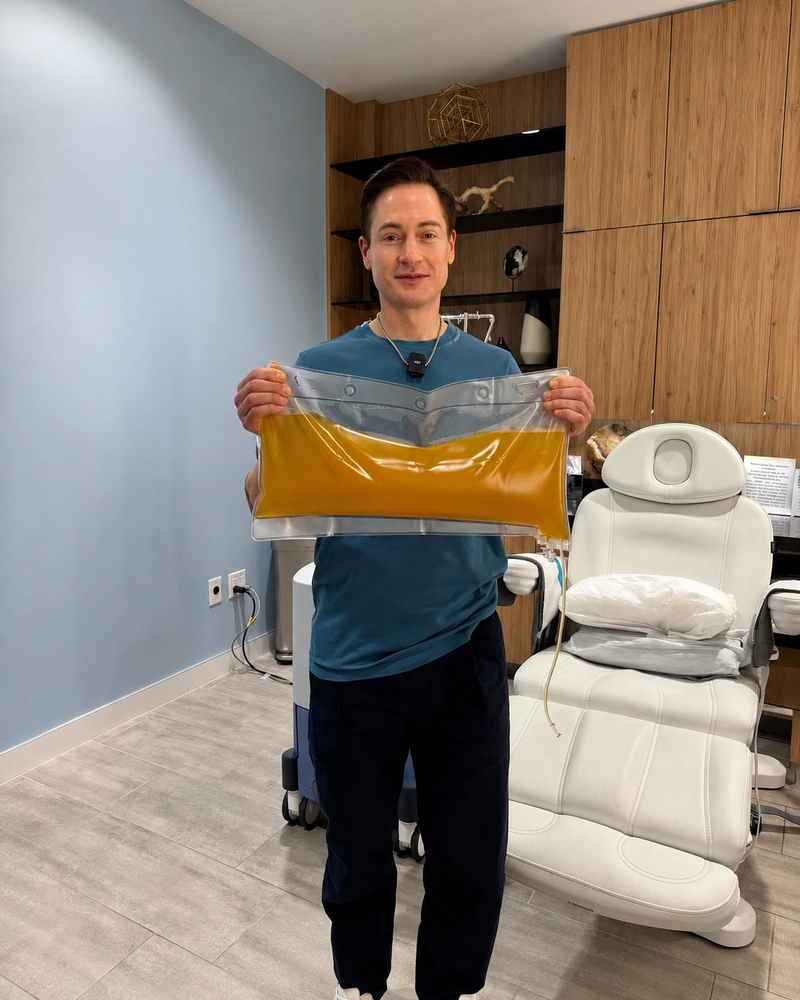

TIME similarly reported that Johnson elevated "Don’t Die" into a "new way of being," comparing it in sheer scale to major global ideologies. This gives the entire phenomenon a much darker, larger frame: we are observing anti-mortality repackaged as a trendy, high-end cult.
The financial layers of this movement are staggering. The global complementary and alternative medicine anti-aging and longevity market was estimated at roughly $99.6 billion in 2025, and Grand View Research projects it will reach an astonishing $397.2 billion by 2033, riding an expected 18.3% compound annual growth rate. Johnson becomes endlessly fascinating because he occupies the exact center of this exploding market.
The truest, most profitable center of modern longevity culture relies entirely on emotional relief. The industry sells the intoxicating belief that death has finally become a negotiable condition for those with enough cash. We must brutally evaluate whether "Don’t Die" operates as a genuine health philosophy, a massive commercial funnel, or a collective spiritual panic attack disguised behind a minimalist website. When aging morphs into a personal failure rather than a universal biological destiny, specific figures profit immensely. Ultimately, longevity culture reveals itself as beauty culture right after it discovered the marketing power of blood tests.
The ethical implications of Bryan Johnson's choices expose how extreme the anti-aging imagination becomes when youth itself starts looking like a fully transferable asset. Fortune reported in 2023 that Bryan Johnson, already famous for spending approximately $2 million annually on anti-aging protocols, exchanged blood and plasma with his teenage son and his older father.

The U.S. Food and Drug Administration specifically warned in 2019 that young-donor plasma marketed for conditions including normal aging lacked any proven clinical benefit. The agency stressed that these unproven infusions cost thousands of dollars and bypassed the rigorous guidance of adequate controlled trials.
The FDA repeated its firm stance in 2024, emphasizing that young plasma lacked approval for such uses and highlighting the complete absence of evidence proving its effectiveness. Following these severe federal warnings, Ambrosia, a startup famously associated with "young blood" anti-aging treatments, abruptly halted patient treatments. Stanford Health Care’s news page summarized NBC’s reporting, confirming the FDA’s warnings that young plasma lacked evidence for slowing aging or memory loss and posed genuine physical dangers.
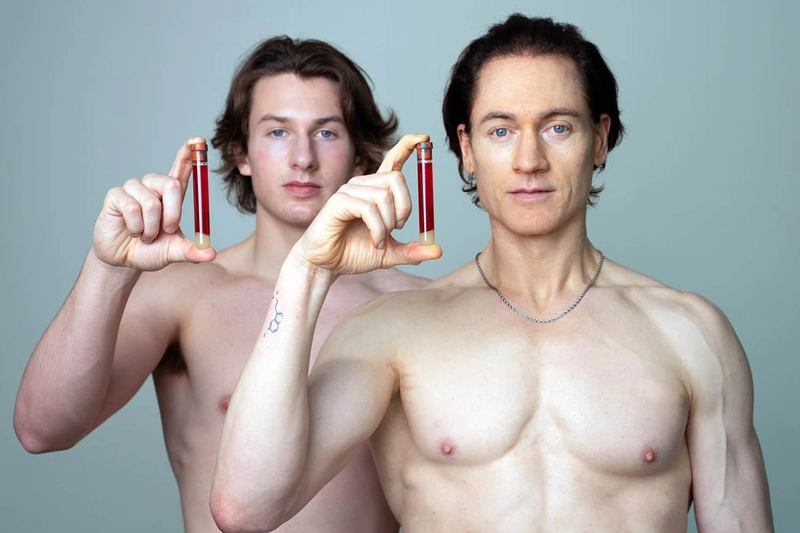
The son-plasma story carries immense symbolic weight because it actively turns youth into a consumable resource. It twists the sacred bonds of family intimacy into a sterile biological infrastructure. It forcefully exposes the ugly, vampiric fantasy lurking beneath the polished veneer of longevity culture: the aging body glaring at the young body and asking, "What exactly can I extract from you?"
We are forced to wonder why a medical practice mimicking dystopian cinema seamlessly transitioned into public wellness content. When youth becomes a harvestable resource, the boundaries separating science, family, bodily consent, and public spectacle blur beyond recognition. The law clearly lags behind this theatrical biohacking because regulators failed to anticipate anti-aging culture becoming this profoundly grotesque.
The introduction of autoimmune gastritis into Johnson's perfectly curated timeline acts as a brilliant, horrifying interruption. Entertainment Weekly reported on July 8, 2026, that Bryan Johnson revealed this exact diagnosis amidst his highly publicized journey to conquer aging, stating ominously that his "stomach is eating itself." The same report detailed how a major blood draw led him to sequence one million immune cells in his desperate search for a treatment, highlighting his stated desire to make his findings reproducible for others suffering from autoimmune conditions.
This diagnosis serves as a masterful narrative sabotage. It shatters the supreme arrogance of believing the human body can be made fully legible, completely controlled, and flawlessly optimized. The physical form frequently revolts in absolute silence. It hides, mutates, misfires, and waits patiently in the dark, regardless of how many supplements are ingested or how much data is tracked. Johnson aggressively built a global public image entirely around total biological mastery, only for his own immune system to manifest a condition that turns his illusion of control into a massive, glaring question mark.
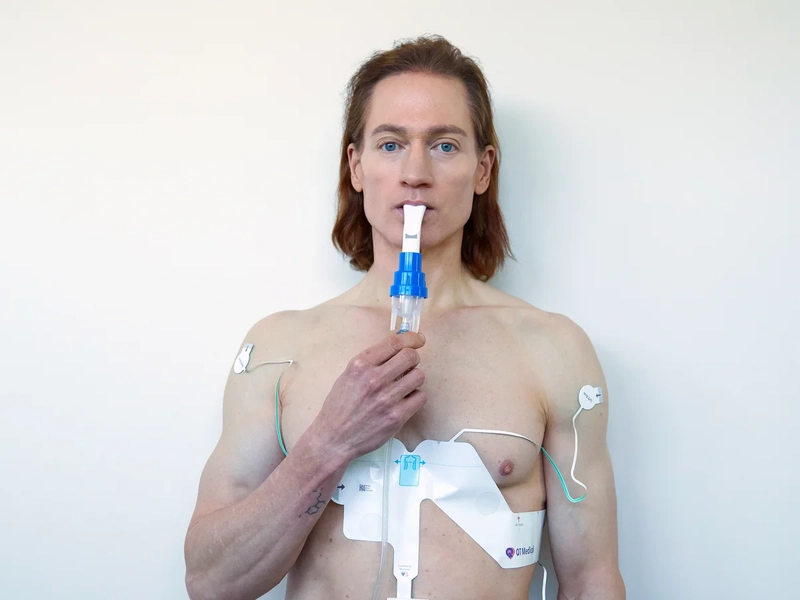
We are left watching the man who sold absolute biological certainty suddenly transforming into the man publicly studying his own terrifying biological mystery. The illness seamlessly transitions into another chapter of the brand, generating another massive data set, and fueling another content arc for his followers. This unexpected diagnosis makes the "Don’t Die" mythology infinitely more addictive for his audience, because the pristine, sterile battle against aging finally possesses a tangible, chaotic villain.
The genuinely frightening aspect of this saga is the profound cultural influence Johnson exerts. People develop illnesses daily. The true horror emerges from how his overarching project frames ordinary human aging as a weak surrender, and aggressively markets extreme bodily control as the ultimate aspirational state. Bryan Johnson’s official protocol famously elevates sleep to "the world’s #1 longevity drug" and dictates that every single calorie "must fight for its life." This philosophy forcefully turns ordinary, joyful life into a rigid system of constant, punishing biological discipline.

While that specific language sounds clean and scientific on the surface, its underlying reality is breathtakingly severe. Food transitions into a battlefield strategy, sleep becomes a heavily monitored medical intervention, the human body operates as a perpetual war zone, and every relaxed, natural human impulse becomes a dire threat to the optimization cycle. The cultural resonance mimics the Final Destination cinematic franchise, serving as profound cultural criticism. His journey feels incredibly cinematic exactly because it stages an ultra-rich man desperately trying to outmaneuver fate armed with endless data, rigid discipline, young plasma, costly supplements, advanced scans, strict protocols, and unimaginable wealth.
Yet, the human body strictly maintains its own secret routes and hidden vulnerabilities. Death routinely enters through unexpected avenues, bypassing the obvious doors entirely. It arrives quietly through complex immune dysfunction, silent cellular confusion, latent genetic risk, or an invisible anomaly that evaded every single million-dollar tracker. Johnson industrialized the fear of death, wrapped it in high-end aesthetics, and sold it as the brilliant future of personal discipline.
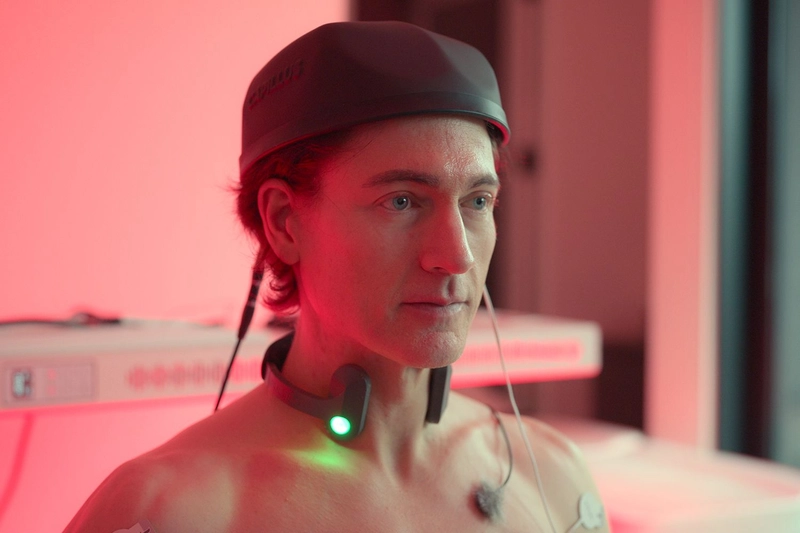
We must critically examine who receives the luxury of fighting aging with millions of dollars, while the rest of society is politely instructed to age gracefully. This movement terrifyingly previews the future of wellness: the ultra-rich testing experimental immortality while the working classes purchase cheaper, watered-down versions of that exact same fear. If an endless fortune fails to guarantee absolute victory over the forces of nature, it remains deeply cruel that ordinary consumers are relentlessly sold the fantasy that purchasing the right routine will save them.
Bryan Johnson’s highly publicized story stands as a brilliant, terrifying preview of a culture losing its collective mind beautifully, clinically, and expensively. He possesses the extreme wealth and sheer audacity to fight biological fate on a public stage, yet his ultimate victory remains perpetually out of reach. The sheer dystopian terror stems from this exact realization. The human body can be endlessly measured, obsessively scanned, ruthlessly optimized, heavily supplemented, constantly filmed, and aggressively monetized, and it will still fiercely refuse to become immortal.
Advertisement