Cartier’s animal kingdom extends far beyond the familiar emerald eyed panther. Across high jewellery, artistic watchmaking and the Maison’s racing heritage, Cartier equine jewellery captures the horse through rhythm, discipline and controlled power.
Cartier’s animal kingdom extends far beyond the familiar emerald eyed panther. Across high jewellery, artistic watchmaking and the Maison’s racing heritage, Cartier equine jewellery captures the horse through rhythm, discipline and controlled power.
July 23, 2026


The panther commands the most visible territory within Cartier’s bestiary, yet the Maison’s relationship with animals has always accommodated a much wider cast. Birds, serpents, crocodiles, flamingos and insects have entered its workshops alongside creatures from the horse family. The imagery of equine jewellery occupies a distinctive position because it offers two visual languages at once: the muscular grace of the living animal and the precise geometry of the equipment surrounding it.
A horse can be translated through the curve of a neck, the tension of a bridle or the impression of speed held inside a lifted head. A zebra introduces another possibility through stripes that already resemble an Art Deco pattern. Cartier therefore approaches equine jewellery as both nature and structure, allowing anatomy to merge with diamonds, black stone, polished metal and architectural line.
This philosophy reached one of its most compelling contemporary expressions in Nature Sauvage, the high jewellery collection unveiled in Vienna in 2024. The collection placed Cartier’s animals inside graphic environments where bodies could hide within necklaces, transform into other jewels or appear gradually through optical illusion.
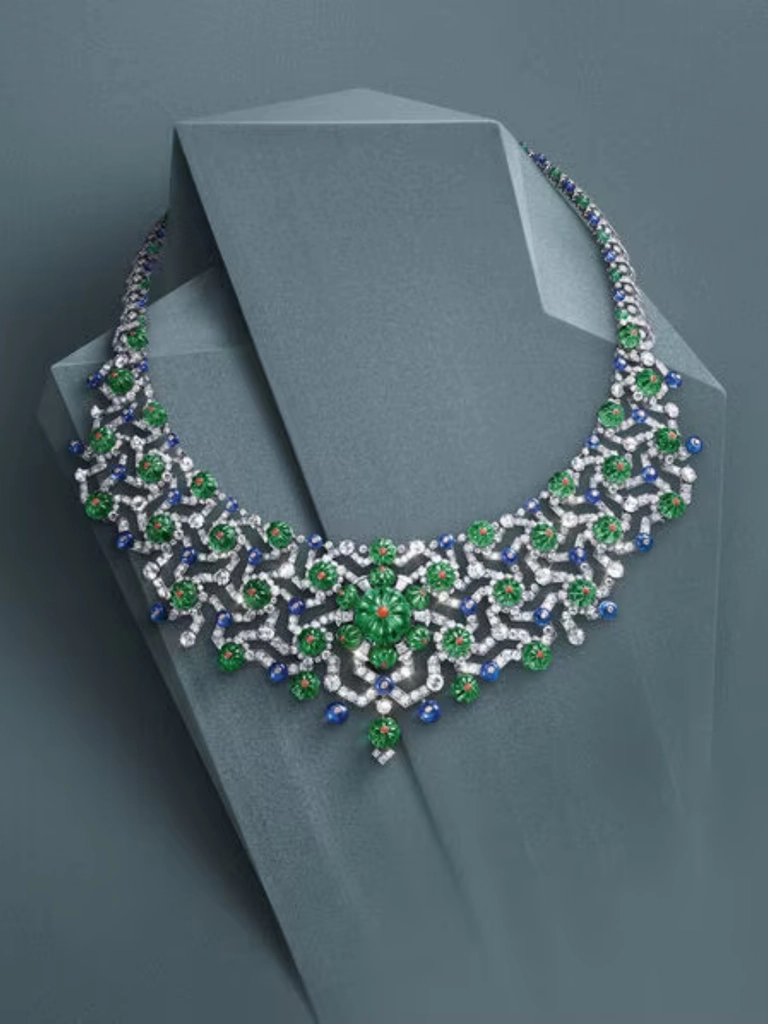
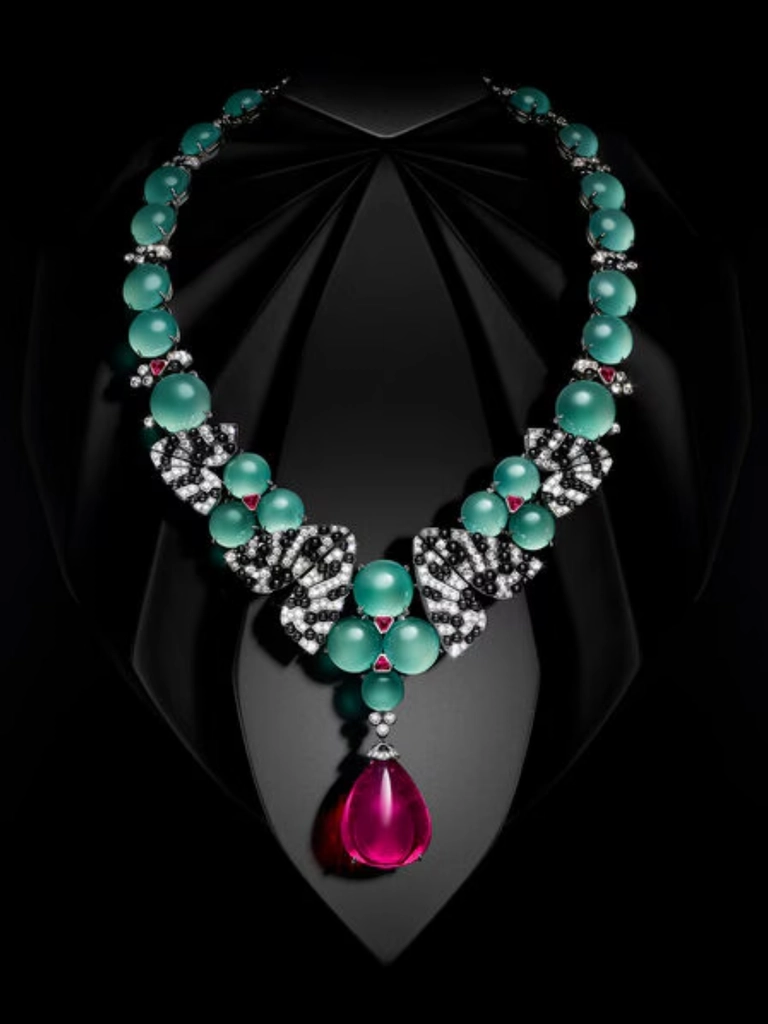
Among its central creations, the Koaga necklace turned the zebra into an almost abstract composition of light and darkness.
Koaga avoids the conventional formula of placing a miniature animal at the centre of a symmetrical necklace. The zebra’s head emerges from the structure itself. Its muzzle, ears and profile form where sharply angled bands converge near the base of the neck, making the creature visible only after the eye has followed the pattern.
An emerald cut diamond and a 6.25 carat pear shaped rubellite hang from the animal’s mouth. The arrangement gives the zebra a strangely ceremonial presence, as though it has carried the two gemstones into view. The diamond creates a cold flash between the graphic head and the rubellite, whose intense pink red colour descends like a suspended drop of fruit, blood or light.
The materials remain deliberately concentrated. White gold supports black onyx and diamonds, while the rubellite introduces the only dominant burst of colour. Alternating onyx stripes and lines paved with brilliant cut and emerald cut diamonds create the coat. Open spaces between them expose the wearer’s skin, turning the body into an additional material within the composition.
Koaga becomes legible through contrast rather than volume. Cartier has shaped the identity of the zebra without building a fully rounded sculptural animal. Black stone provides the immediate recognition of stripes, while the long geometry of emerald cut diamonds echoes their direction. The result carries an Art Deco sharpness, although the necklace maintains the slight irregularity and forward motion of a living creature.
The intelligence of Koaga lies in the transition between pattern and portrait. From a distance, the necklace may first appear as an angular white and black collar. The equine head reveals itself through closer attention, allowing surprise to become part of the wearing experience.
This process reflects a central idea within Nature Sauvage. Cartier described the collection as a meeting of animal character, graphics, volume and optical illusion. The creatures behave like actors moving through imagined landscapes rather than static ornaments placed upon them. Koaga’s landscape is the zebra’s own coat, expanded until the stripes form the architecture of the necklace.
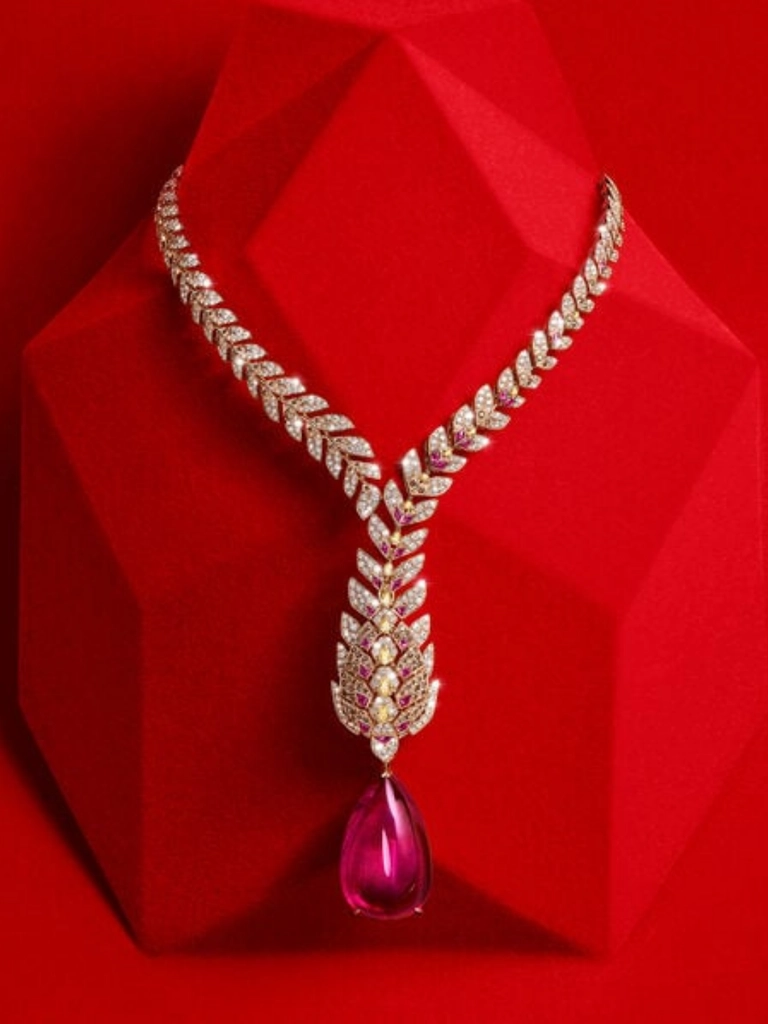
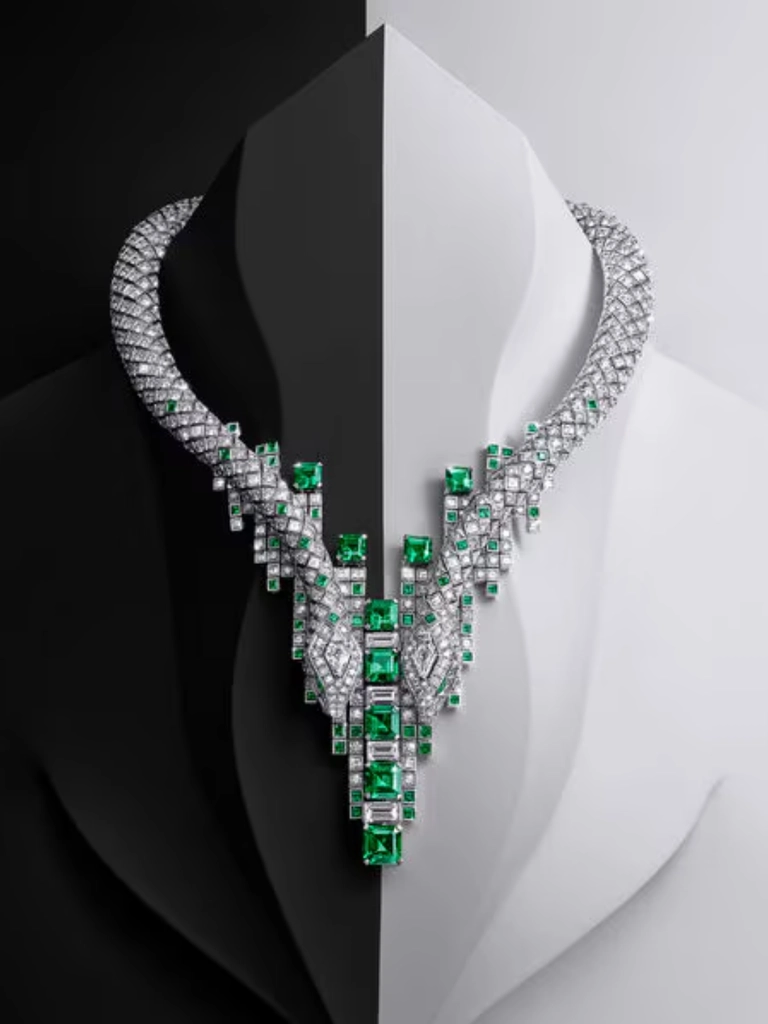
The different diamond cuts reinforce that architectural sensation. Brilliant cuts scatter light in concentrated flashes, while emerald cuts produce broader mirrored planes. Their alternation creates visual rhythm along the collar, resembling the repeated movement of legs during a controlled gallop. Onyx interrupts that luminosity with opaque blackness, giving the diamonds greater definition.
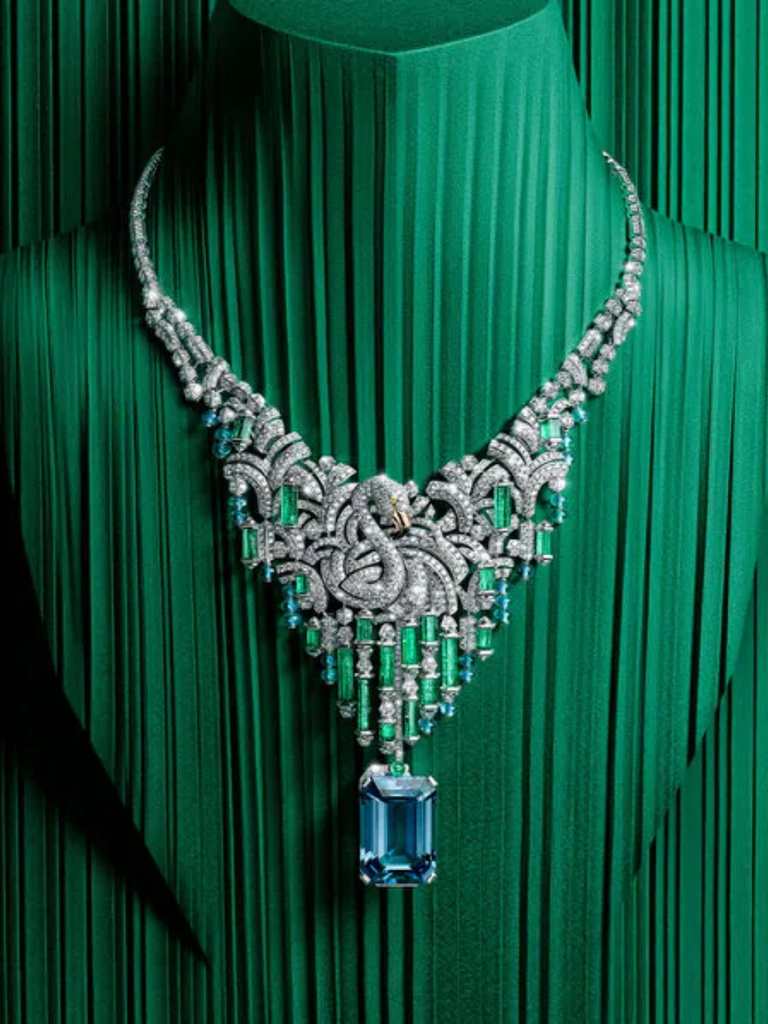
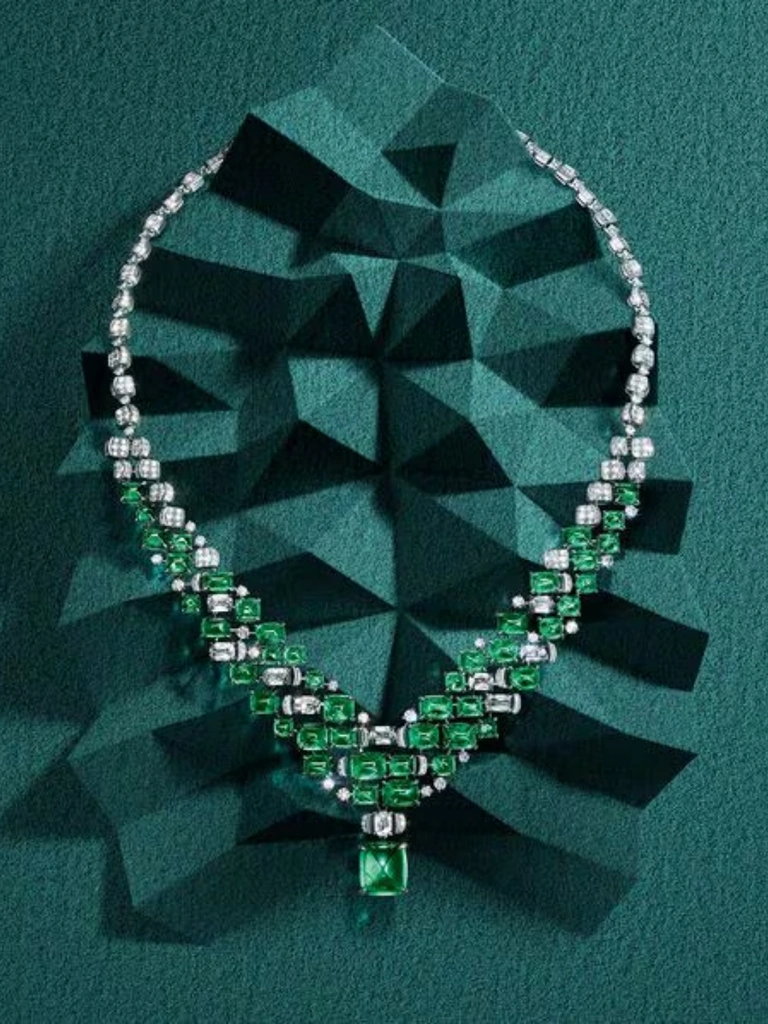
The rubellite serves another structural purpose. Its pear shape extends the central line of the necklace and draws the composition down the sternum. Cartier often gives exceptional coloured stones narrative roles inside its animal jewels. Here, the gem functions simultaneously as treasure, bait and dramatic punctuation, making the zebra appear active within the design.
Where Koaga reduces an equine animal to graphic lines, the Santos Dumont XL Décor Cheval pursues extraordinary realism. Presented through Cartier d’Art in 2012, the limited watch places the profile of a thoroughbred across a white gold dial. Its head appears alert beneath a bridle, with the mane drawn backwards as though air has begun moving through it.
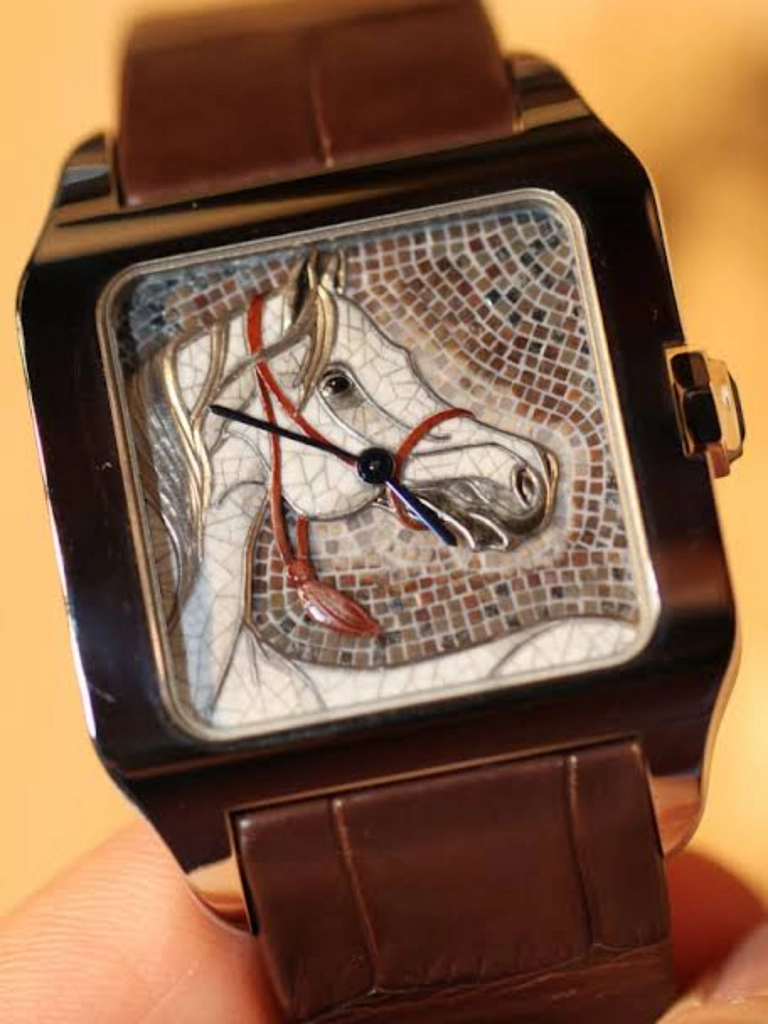
The dial was created through gemstone mosaic, engraving and painted details. More than 400 tiny tesserae form the horse and its surrounding field. Landscape jasper, Kalahari jasper, grey Madagascar jasper, chocolate obsidian and pink opal supply the background palette, while irregular pieces of white cacholong build the horse’s neck and profile in relief.
This mineral vocabulary gives the image a physical warmth unavailable through ordinary paint. Every fragment carries its own grain, opacity and colour variation. Beige, brown, grey and cream move through the dial like dust, earth and stable light. The horse emerges from these differences rather than sitting cleanly above them.
Cartier’s artisans used two mosaic systems together. Tiny square tesserae create the background, while irregularly shaped fragments describe the horse. Hand engraved gold emphasises the neck, mane, nostrils and facial contours. Red paint picks out the harness and tassel, introducing a slender line of colour across the neutral stones.
The Décor Cheval dial required at least 120 hours of work, divided between approximately 50 hours for the horse and 70 hours for the mosaic background. The watch was issued in 40 numbered examples without diamond setting, accompanied by ten additional versions framed with baguette cut diamonds.
Its 18 carat white gold Santos Dumont XL case contains the manually wound calibre 430 MC and offers water resistance to 30 metres. A faceted sapphire appears on the crown, while a brown alligator strap continues the earthy colour story established across the dial.
The choice of the Santos Dumont case adds an unexpected tension. This watch design originated from aviation, yet the dial returns to an animal that once represented the highest form of personal speed. Machine and horse occupy the same object. The square case creates a strict frame around the organic profile, while the blued hands pass over the image with the precision of instruments.
Gemstone mosaic also makes time appear unusually material. A conventional dial provides a surface upon which hours are displayed. The Décor Cheval dial behaves more like a miniature wall or archaeological image assembled from fragments. The horse becomes something excavated from stone, preserved inside a watch and carried through time.
Cartier’s equine jewellery universe also extends beyond objects. The Cartier Racing Awards were established in 1991 to recognise excellence in European thoroughbred racing. Their highest distinction, Cartier Horse of the Year, links the Maison’s name with speed, breeding, endurance and competitive prestige.
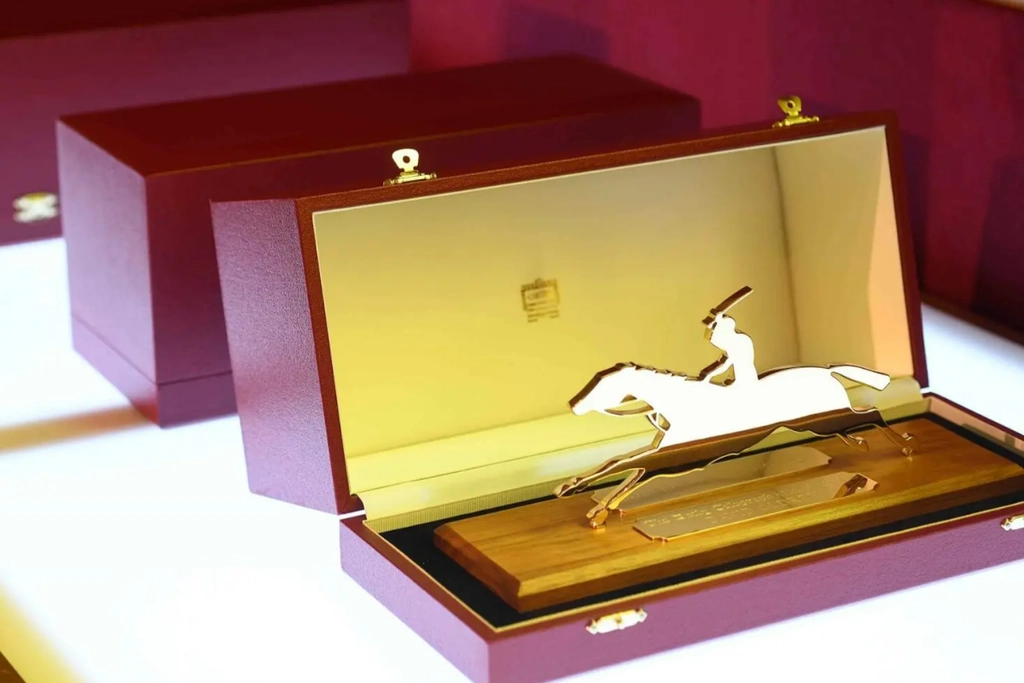
This involvement gives the equine jewellery motif a lived cultural context. The horse represents aristocratic leisure, yet racing also depends upon measurement, timing and precise control, all qualities closely aligned with watchmaking. Jewellery contributes ceremony, while horology supplies the language through which performance is recorded.
Cartier’s association with racing therefore completes a circle visible across its designs. The stirrup becomes a watch case. The bit becomes a necklace link. The thoroughbred becomes a gemstone mosaic dial. The zebra becomes an openwork high jewellery collar. Each interpretation extracts a different quality from the same extended animal family.
Cartier equine jewellery carries a temperament distinct from the Maison’s feline creations. The panther often appears poised to attack, its body articulated around emerald eyes and a diamond coat. The equine world communicates disciplined movement. Its energy has been trained, directed and translated into rhythm.
Koaga offers the clearest modern expression of this distinction. The zebra’s body disappears almost entirely, leaving stripes, profile and the tension of a gemstone held between its jaws. The Décor Cheval watch travels in the opposite direction, assembling hundreds of fragments until the horse appears vividly alive.
Together, the creations reveal Cartier’s ability to move between abstraction and realism without losing the identity of the animal. One horse exists through tiny irregular stones. One zebra exists through gaps, black lines and diamond planes. Bridles and stirrups preserve the equestrian world through the objects humans created to move alongside it.
The equine jewellery motif may occupy less territory than the panther, yet its rarity gives it an unusual force. Inside Cartier’s universe, the horse never arrives merely as a symbol of nobility. It becomes an exercise in line, motion, material and control, caught at the instant before it breaks into a run.