MENU
Close





Harris Reed SS27 looks caught in the breath before impact, when beauty is still intact and the fall has only just become imaginable.
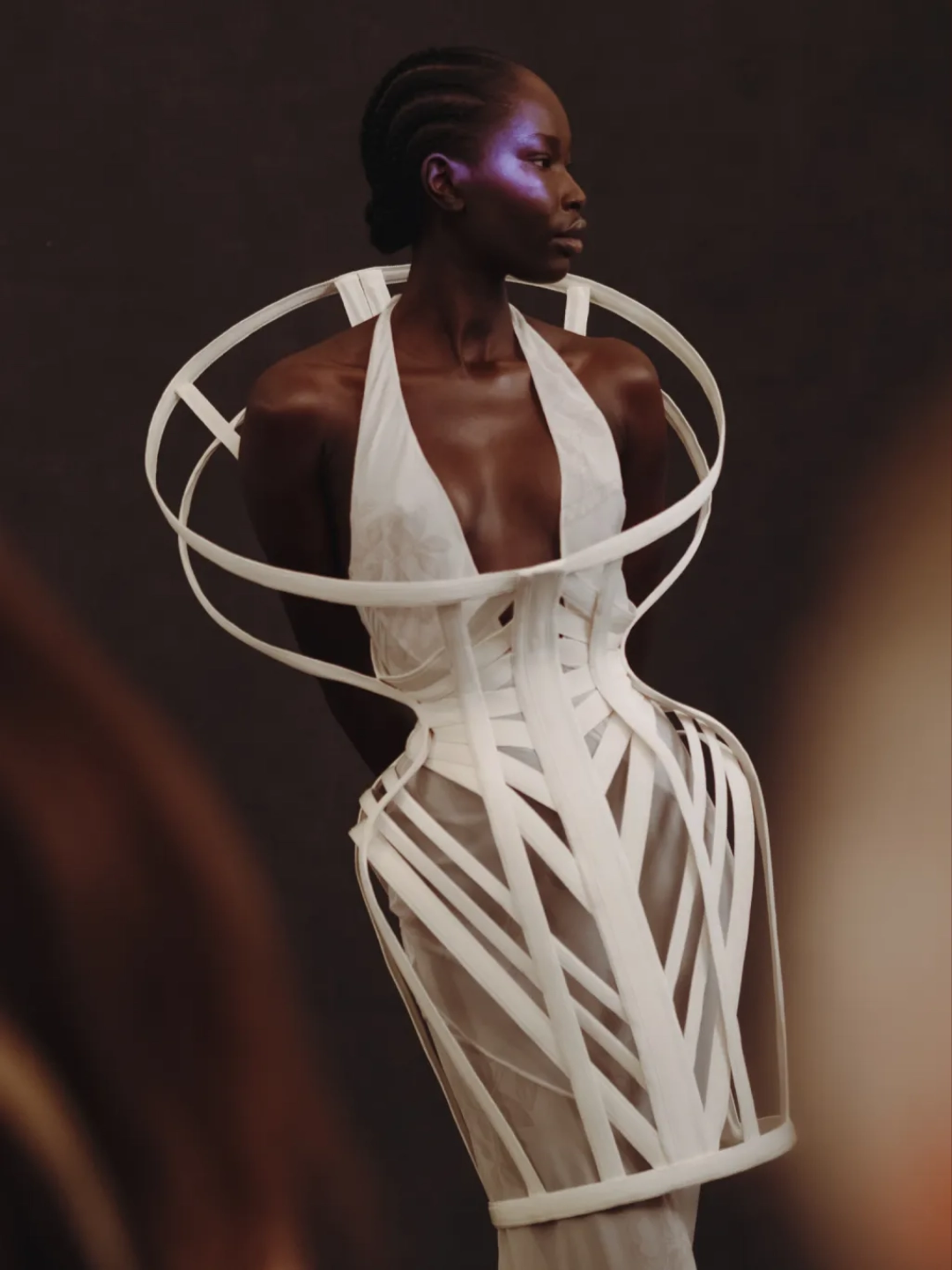
Harris Reed SS27 looks caught in the breath before impact, when beauty is still intact and the fall has only just become imaginable.
September 18, 2026
Advertisement
Advertisement


Harris Reed has spent years teaching clothes how to occupy a room. Corsets became monuments, platforms lifted bodies above ordinary proportion, colour glowed at almost operatic intensity. Fall 2026 revelled in saturated bridal veils and jewel-like surfaces. Spring turns the lights down.
For Harris Reed SS27, almost everything is washed into white and ivory. Reed called the collection Loud Whispers, looking back across seven years of his namesake brand and five years on the London Fashion Week calendar. He also revisited the previous 11 collections to create what he described as an “almost ghostly interpretation,” a kind of phantom version of Harris Reed after the colour and familiar spectacle have been peeled away.
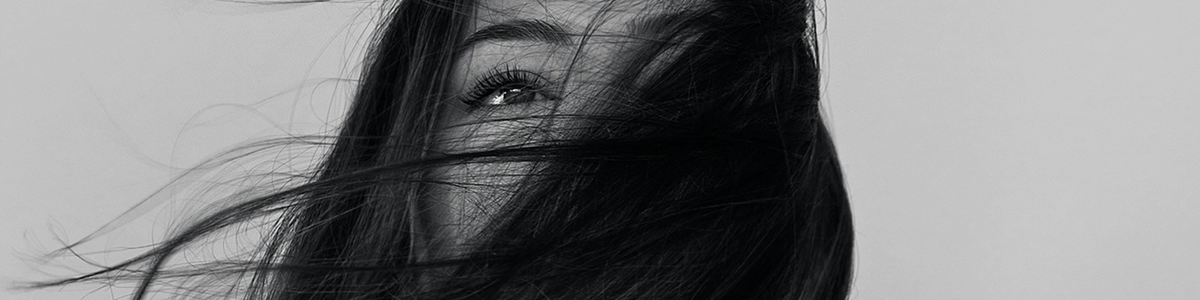
What remains is uncannily angelic, though innocence has already suffered some kind of impact. Corsets swell beyond human anatomy. Wings appear too architectural to fly. Bridal white drifts between purity and mourning. Even the famous 18-centimeter platforms have disappeared, bringing the bodies physically closer to earth while the silhouettes continue reaching toward somewhere else.
Perhaps these are fallen angels. Perhaps they are the ghosts of Harris Reed collections past, returning in white to see which parts of themselves can survive.
The corset starts at the waist and refuses to stay there.
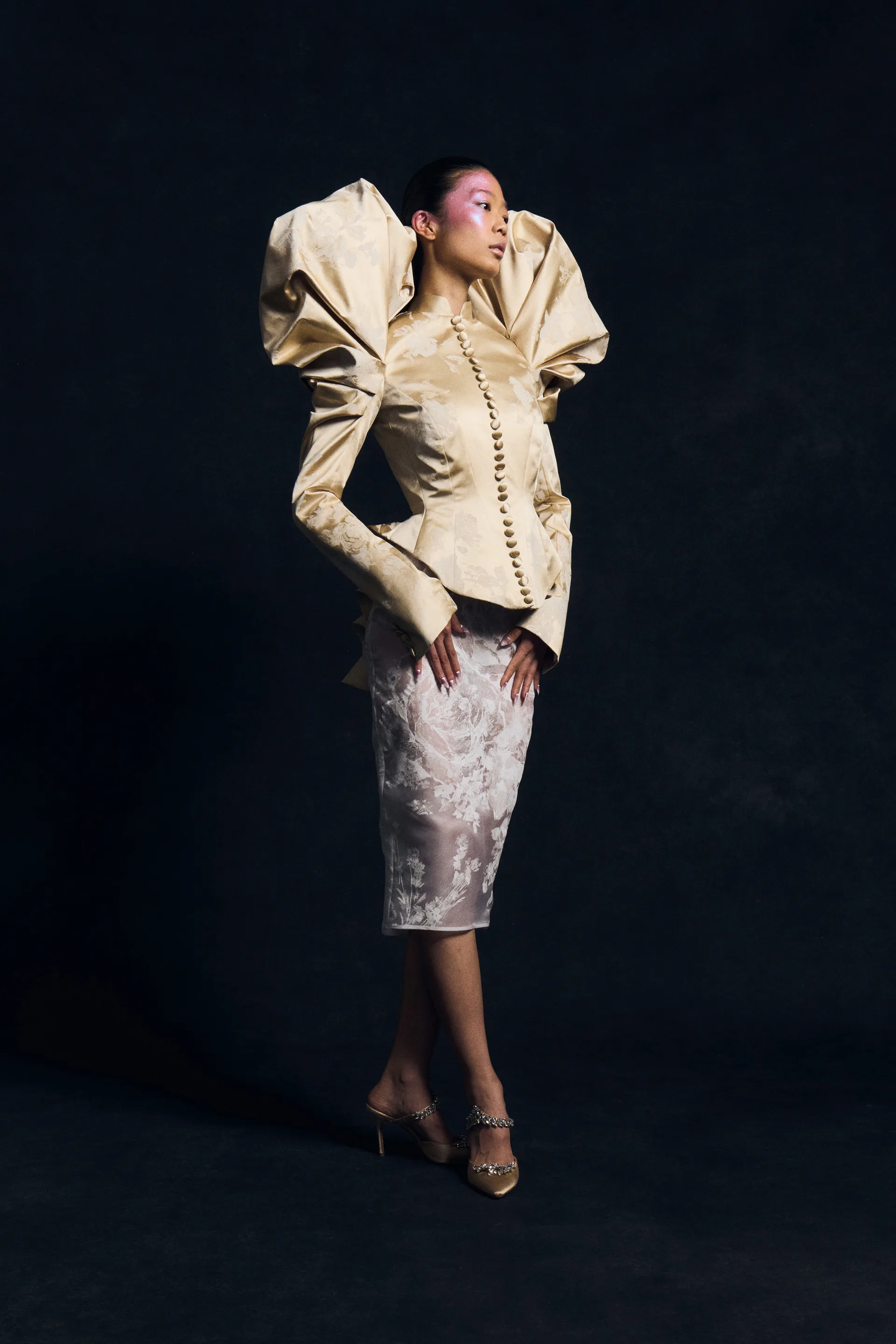
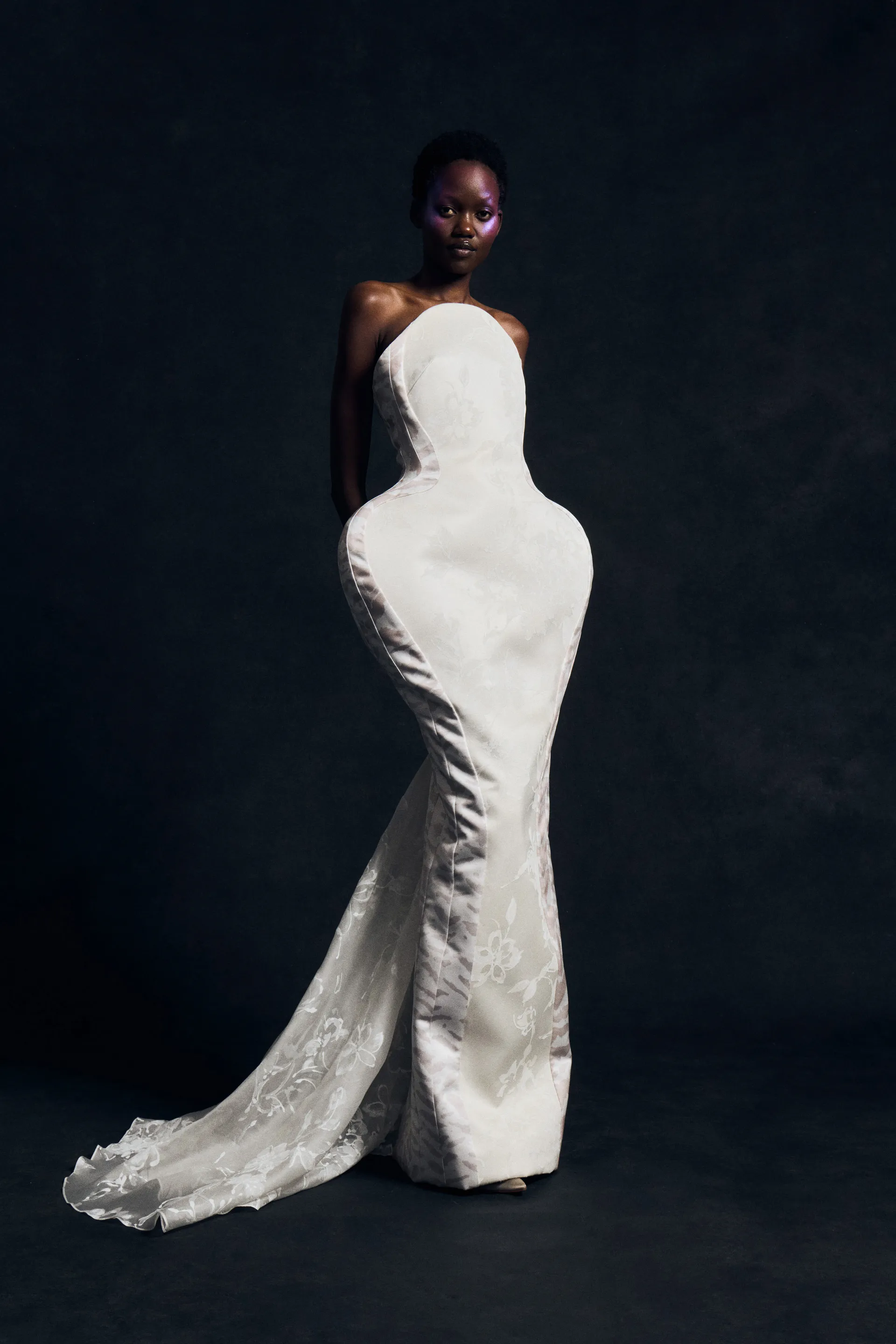
Harris Reed pushes its architecture upward and outward until the torso begins to resemble a ceremonial object. Shoulders rise into sculptural peaks, chests curve forward in exaggerated shields, hips swell before narrowing sharply back toward the body. The familiar hourglass survives, but its proportions have slipped beyond anatomy and into heraldry.
The women appear held upright by clothes, trapped inside a formality so grand that movement itself becomes ceremonial. Buttons travel vertically down the body like a row of insignia, while curved panels make the upper half look carved. The silhouette carries the memory of court dress without reenacting any specific historical period.
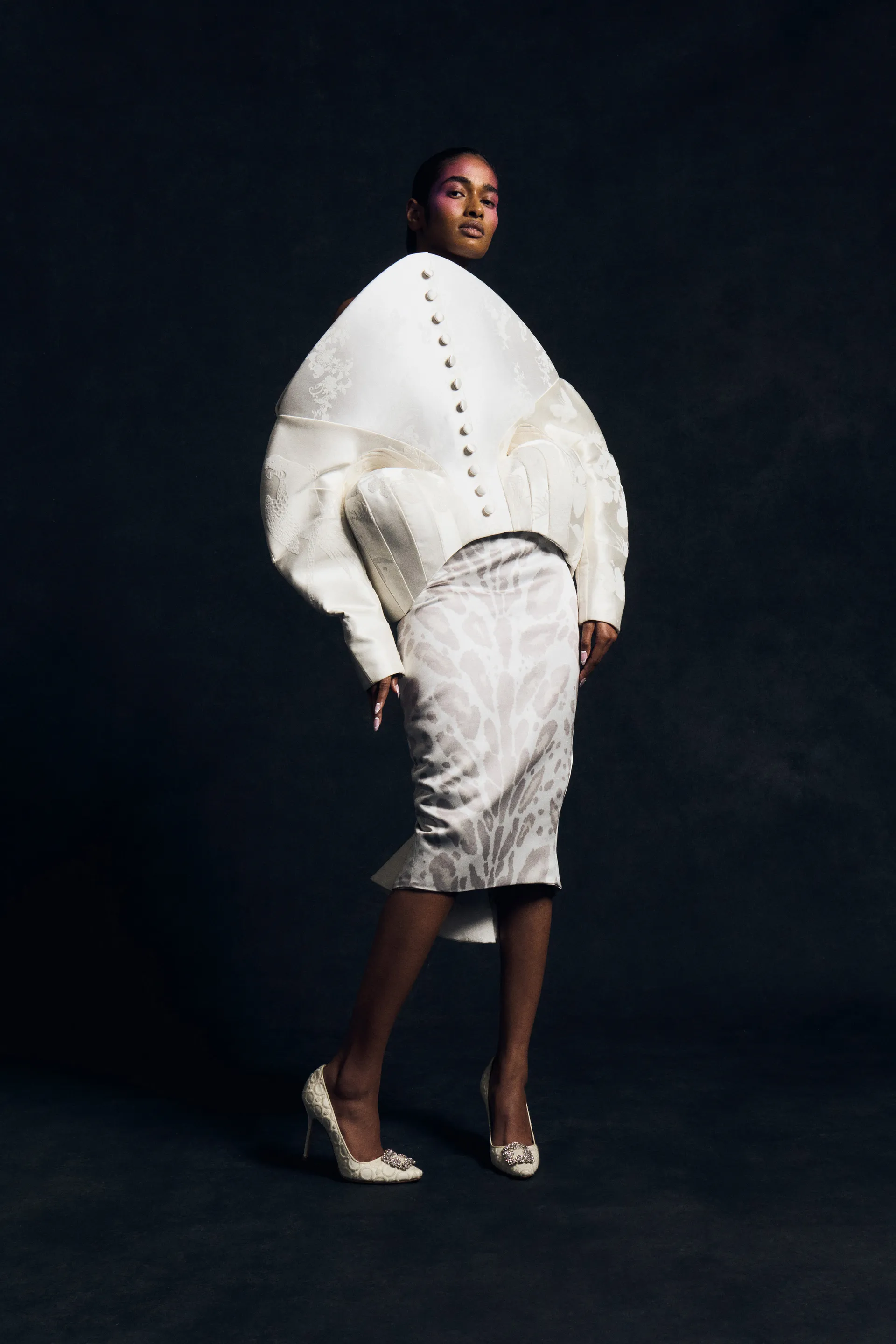
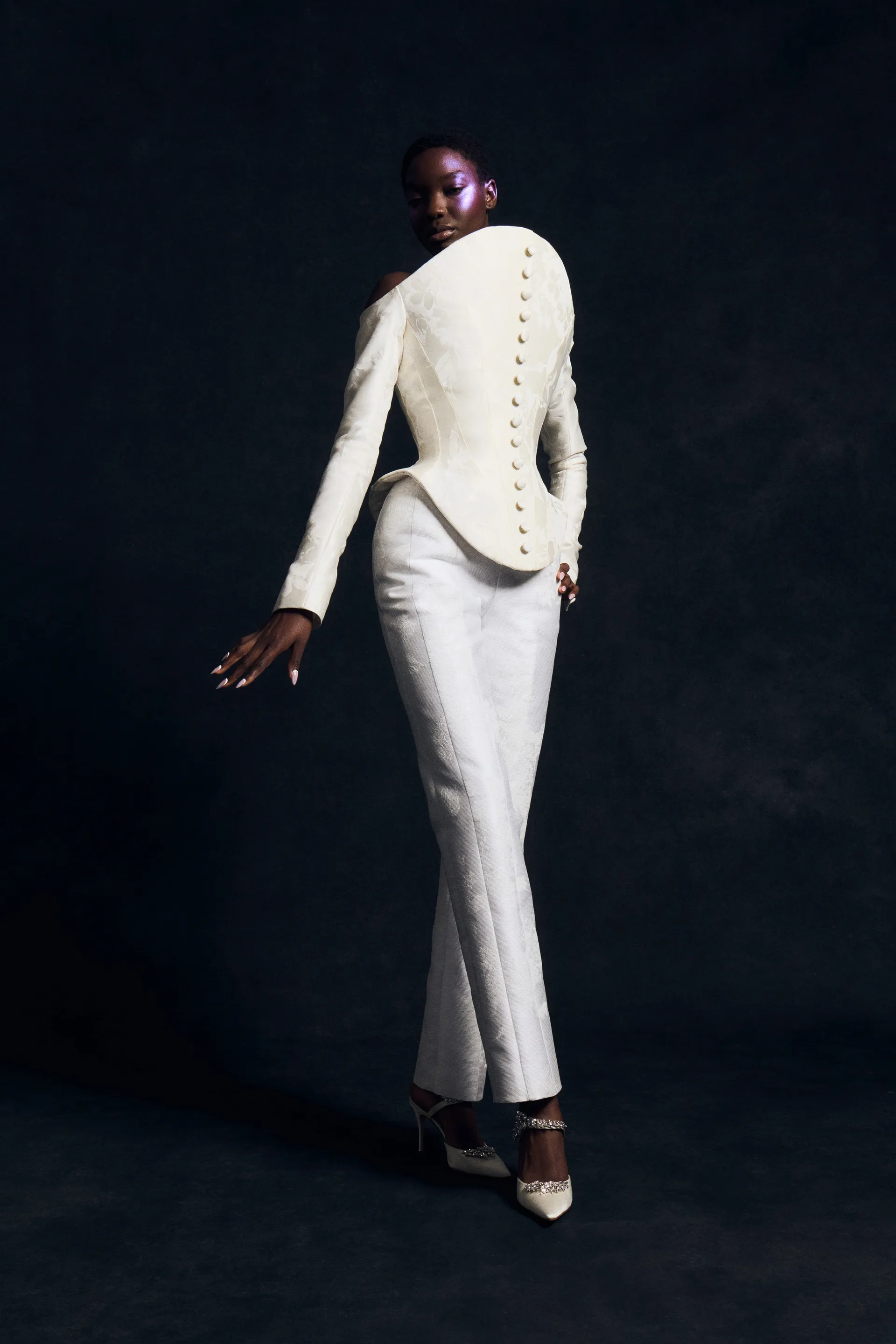
Reed's caging still appears, though it now works inside a much broader vocabulary. The construction supports the fantasy instead of becoming its sole spectacle, allowing the eye to focus on how profoundly the body has been redrawn.
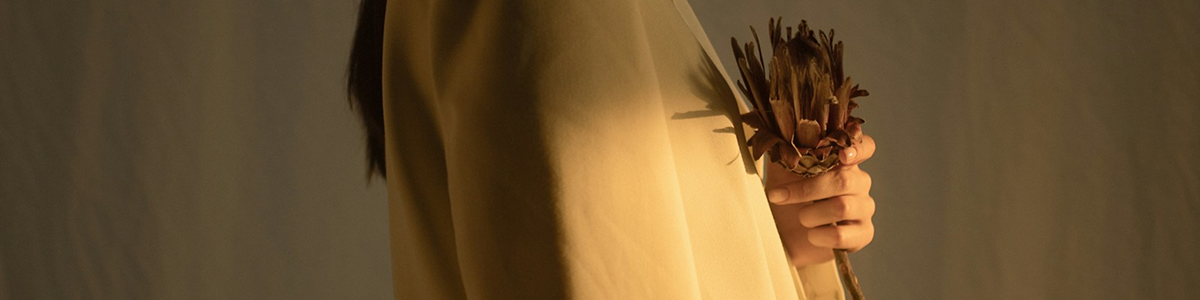
Fabric gives Reed’s architecture its authority. Double duchesse satin has enough body to hold those exaggerated curves almost as if they were moulded into place, while silk brocade brings a denser, more ceremonial richness to the surface, recalling the grandeur of court dress without relying on colour. Around that weight, organza and sheer layers begin to loosen the silhouette, letting light pass through areas that might otherwise read as completely armoured. Even the bridal construction plays with that tension, exposing crinoline and airy understructures beneath the more imposing outer shapes. Structure remains the skeleton of the collection, but transparency keeps it breathing.
It is a familiar Reed equation: fabrics with enough memory to build impossible shapes, interrupted by something translucent enough to reveal the body still living inside them.
Then the silhouettes appear to grow wings.
Reed avoids the familiar fantasy of soft feathers and celestial prettiness. These wings behave like extensions of the garment itself, elongated from the shoulder into rigid curves, sharp arcs and suspended planes. One seems to stretch horizontally from the body as though caught in the moment before flight. Another folds downward into a fringed architectural sweep, part wing, part epaulette, part broken halo.
Against all that structure, bridal white carries a strange tenderness.
Reed launched his Fluid Bridal offering earlier in 2026, and the language of the bride now sits naturally within his namesake world. Long, body-skimming skirts and trailing hems preserve the romance of ceremony, while exaggerated corsetry and winged structures pull the bride toward fantasy. The woman at the altar could just as easily be standing at the edge of heaven.
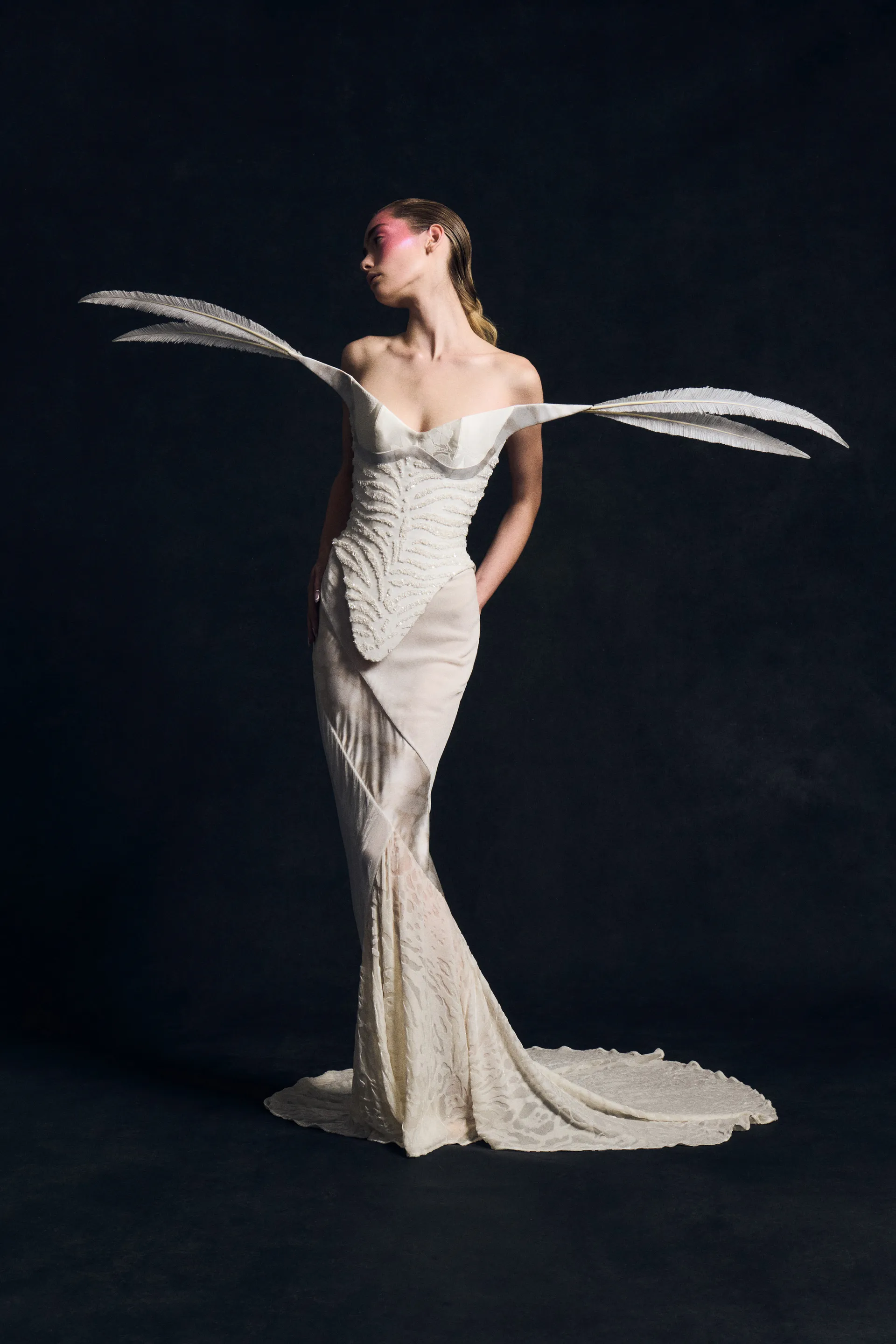
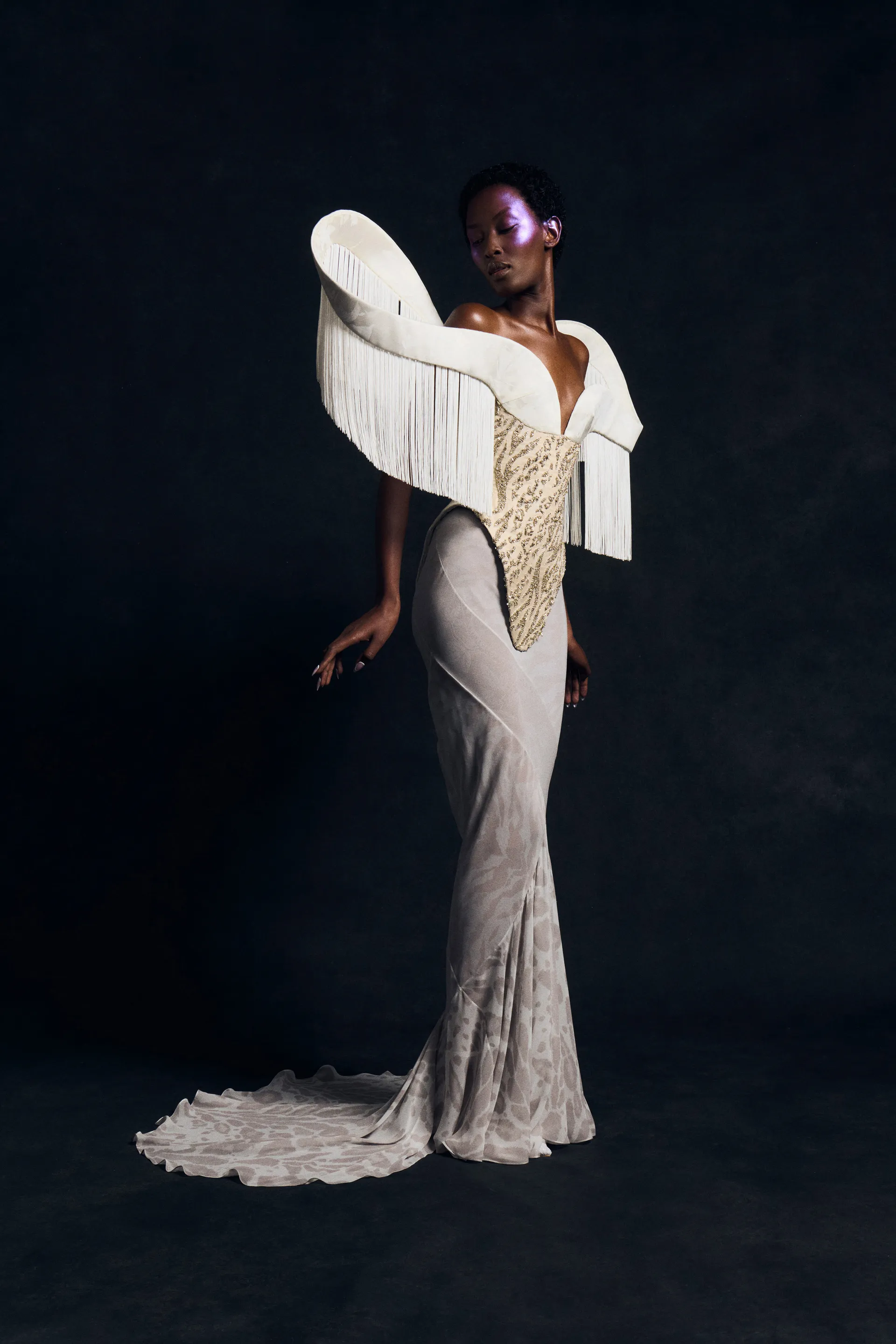
The softness around those structures becomes almost weightless, allowing transparency to pass over the body and loosen the authority of the corset beneath. Devoré-like surfaces appear to fade in and out, while chiffon and lace introduce movement around shapes that otherwise seem frozen in place. Gazar and organza bring another kind of airiness, holding enough body to float away from the skin without collapsing entirely.
These materials never need to announce themselves one after another. Their purpose is emotional as much as technical. They create air around architecture.
By the end, clothes begin exposing their own skeletons.
Support systems that normally disappear beneath fabric are brought into view, with exposed crinoline circling the torso and hips like a second skeleton. Reed’s familiar cage construction becomes part of the surface itself, widening the body before drawing it sharply back in to create a pronounced peg-top silhouette. Volume gathers high around the hips and narrows toward the legs, giving the figure a strange mix of grandeur and confinement. Instead of concealing engineering, Harris Reed lets the framework dictate the entire outline, as though the dress has been stripped back until only its architecture remains.
Bands wrap around the body, defining its boundaries while leaving enormous sections exposed. A woman may stand inside something that resembles armour, yet the gaps between those lines make her look almost unguarded. The body is enclosed and revealed at the same time.
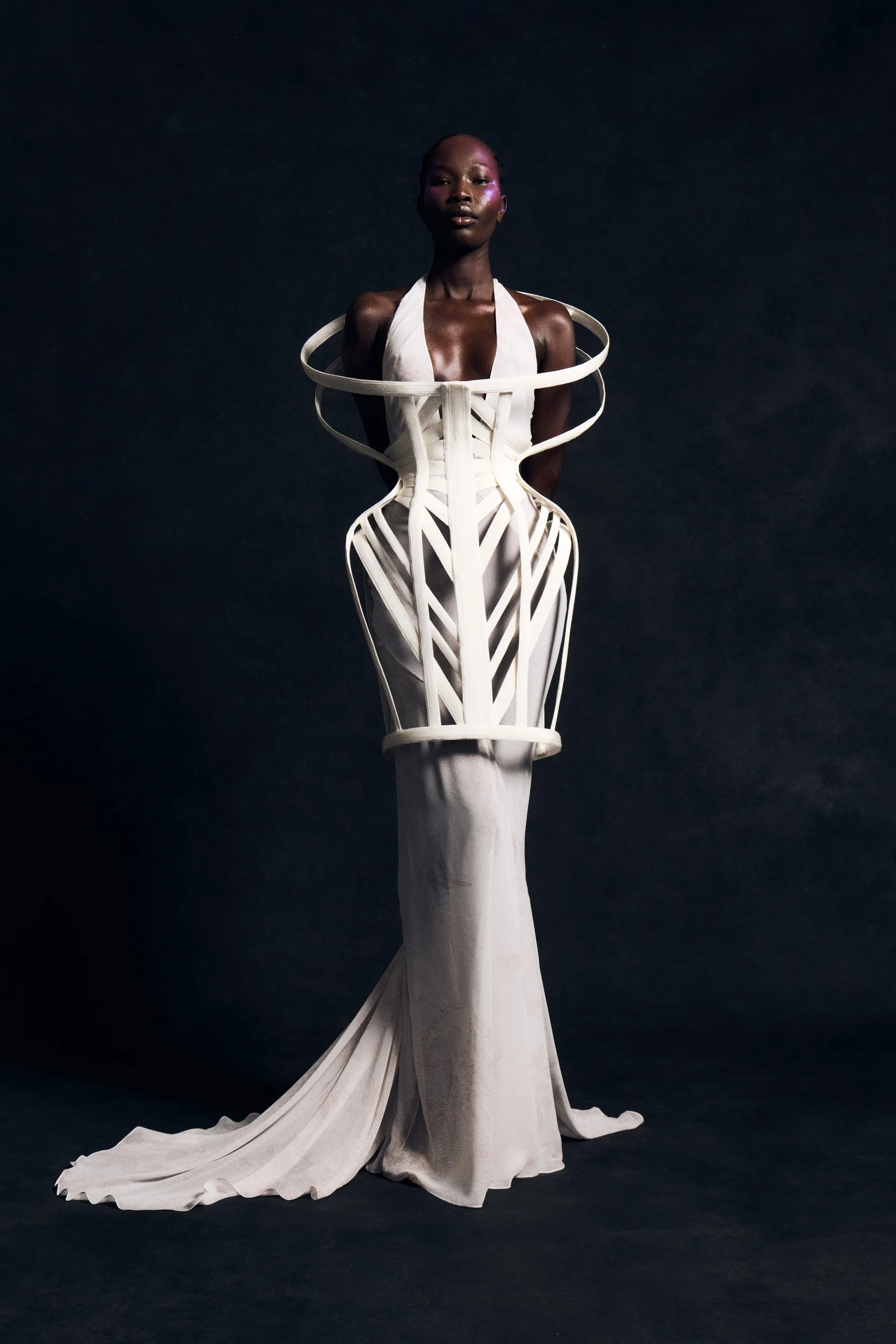
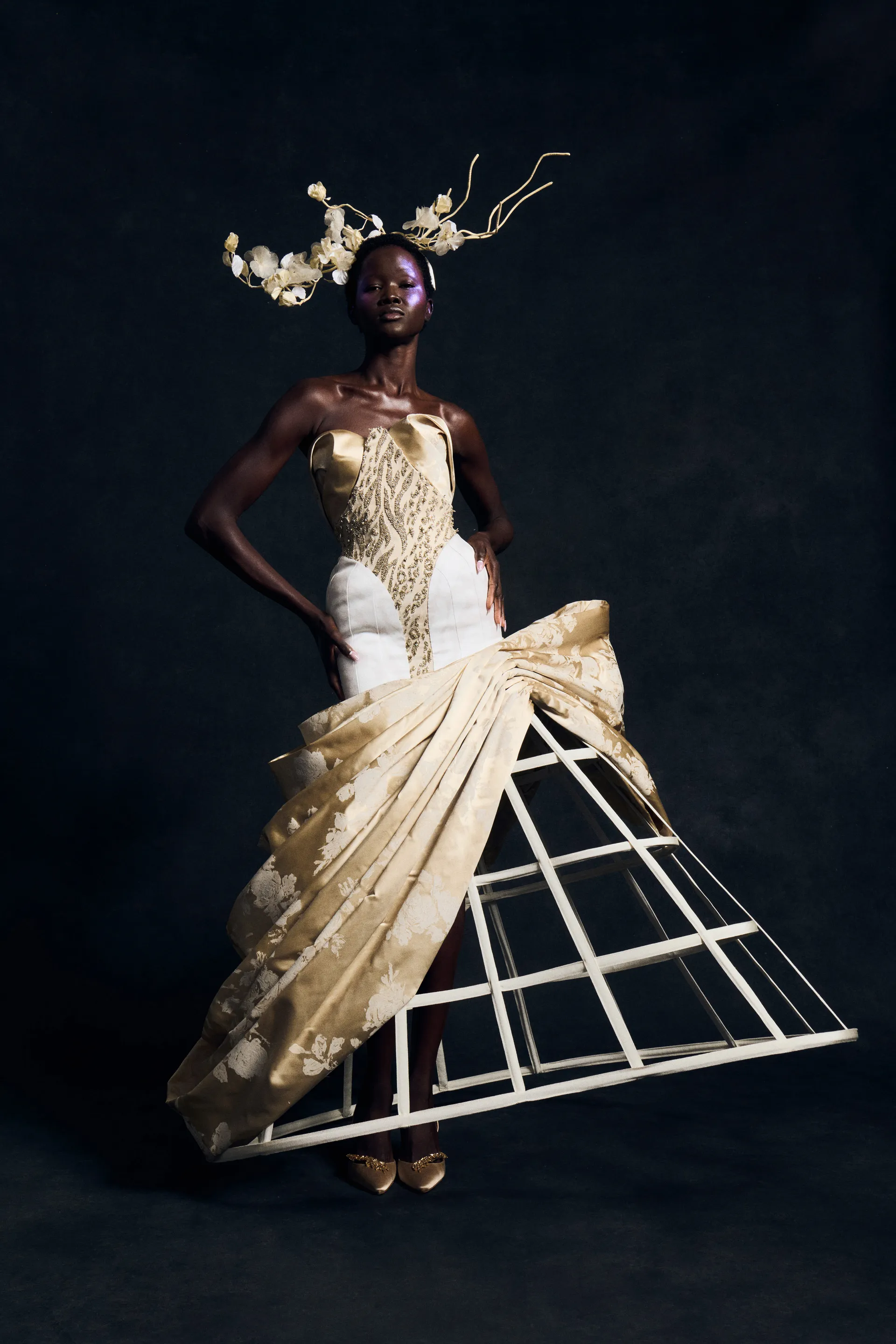
That tension reaches its clearest expression in the bridal finale, where exposed crinoline becomes part of the dress itself. Fabric gathers around the framework without fully concealing it, leaving the structure suspended between finished gown and visible construction. Reed described this season as a phantom collection, and here the idea becomes almost literal: clothing appears to be losing its flesh while the bones remain standing.
Reed developed bespoke fabrics for the collection, including hand-painted surfaces and richly woven silks, yet their colour has been subdued until texture takes over the storytelling. Ornament survives as memory. Shine survives as a faint echo of opulence. Structure survives because it was always the deepest part of the Harris Reed language.
What remains after the fall is the outline of everything that once stood.
Reed is entering a transitional chapter. His tenure at Nina Ricci has ended, attention has returned fully to the namesake label, and a London salon is expected to open for the clientele that now exists far beyond the imaginary customer he once designed for.
Looking backward could easily have produced nostalgia. Instead, Harris Reed has used the past almost like an excavation site, removing colour, height and familiar theatrical devices until the foundations become visible.
Those foundations are strong enough to stand in white.
If Loud Whispers marks the ghost of one chapter passing through the room, Harris Reed SS27 leaves enough of its skeleton behind to wonder what might rise from it next.
Advertisement