Why did flared jeans become so inseparable from 1970s style? The silhouette is instantly familiar, yet its story began somewhere few wardrobes today would suggest. Where did those dramatically widening hems actually come from, and how did they end up defining an entire generation?
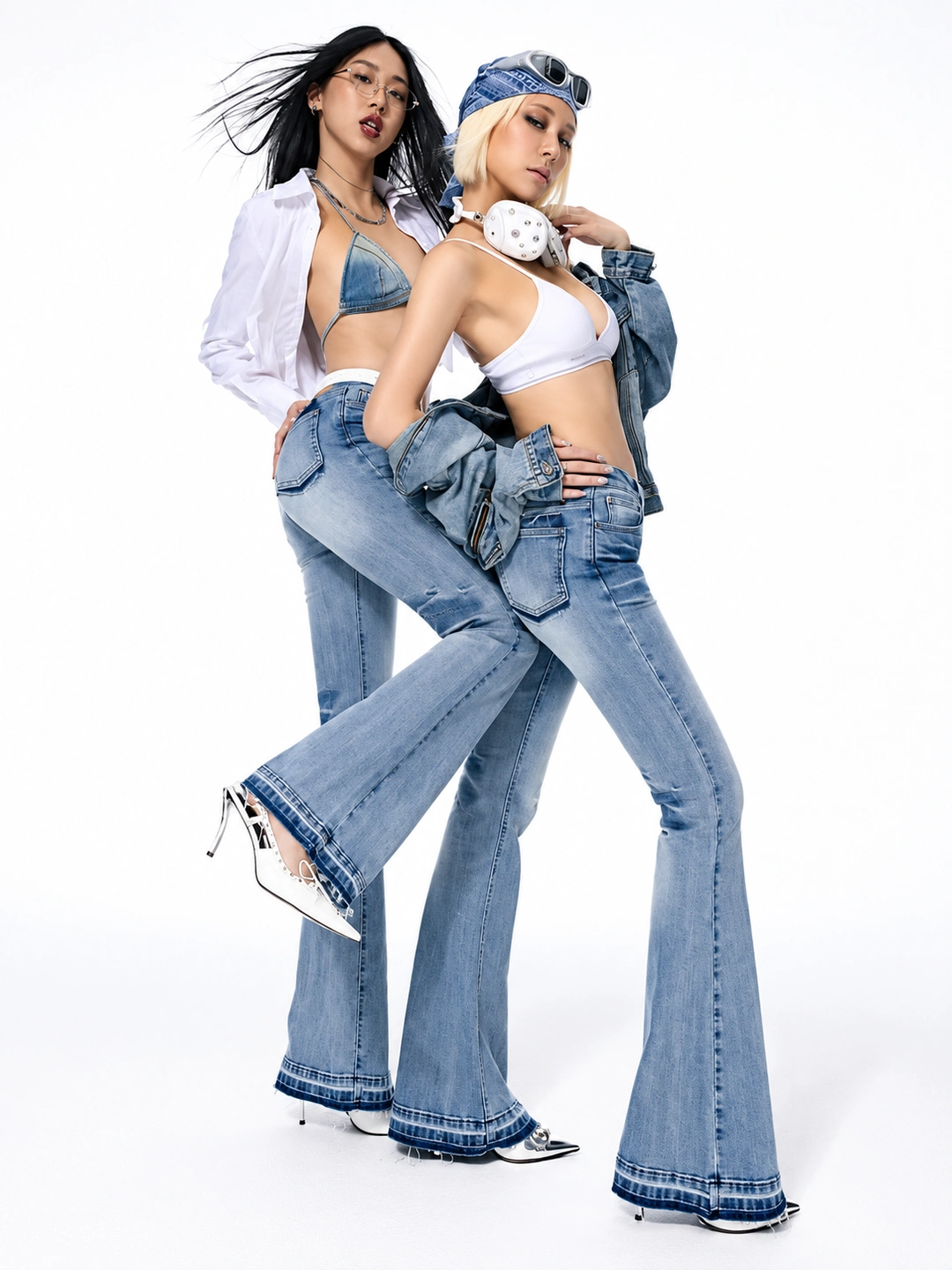
Flared Jeans Gave the 70s Its Swagger
Why did flared jeans become so inseparable from 1970s style? The silhouette is instantly familiar, yet its story began somewhere few wardrobes today would suggest. Where did those dramatically widening hems actually come from, and how did they end up defining an entire generation?
September 4, 2026
Advertisement

Advertisement



By the time the 1970s arrived, denim was already sweeping across music stages, festival fields and city streets with increasingly dramatic proportions. Jeans hugged the hips, followed the thigh and then opened below the knee, sometimes spreading wide enough to nearly cover a pair of platform shoes. The shape moved beautifully with the body, giving even an ordinary step a little theatre.
Yet long before the contemporary fashion landscape ever discovered the flare, that distinctive widening hem belonged to a very different wardrobe.
Before Fashion, There Were Sailors
One of the earliest recorded descriptions of American sailors in bell-bottom trousers dates to 1813, when Commodore Stephen Decatur arrived in New York with crews dressed in blue jackets, waistcoats and blue trousers widening toward the hem. Naval regulations followed in 1817, although the precise reason behind the shape remains surprisingly uncertain.
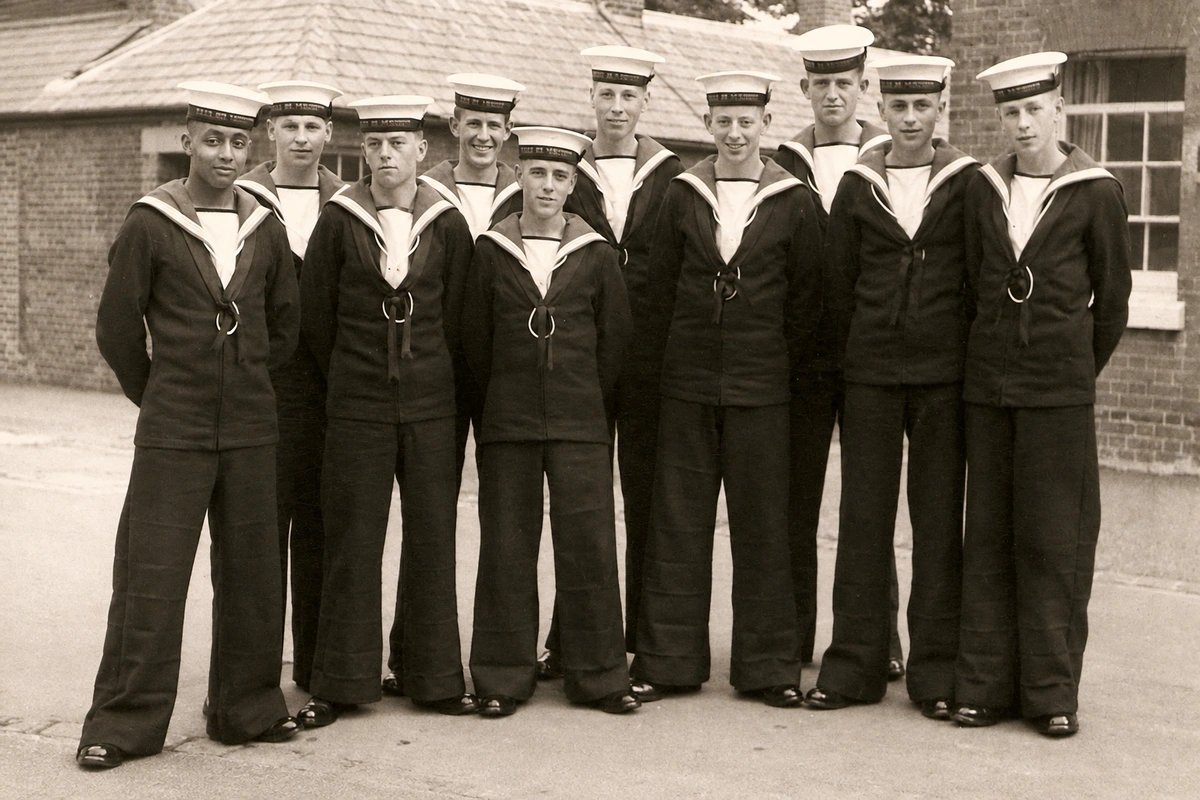
Practical explanations accumulated around it. A wide trouser leg could be rolled above the knee while sailors scrubbed decks, fit easily over boots and, according to another long-standing theory, be removed more easily in the water. The U.S. Naval History and Heritage Command notes that no single explanation can be treated as definitive. One historical account even suggests that the flare may simply have evolved from the pantaloon into a distinctive piece of sailor dress.
Whatever its original purpose, the shape already possessed the feature fashion would later exploit: movement. A narrow upper leg opening suddenly toward the ankle gave an otherwise ordinary pair of trousers an unmistakable outline.
When the Uniform Entered the Counterculture
By the 1960s, clothes carrying histories of labor and authority were finding radically different lives on young bodies. Denim had already travelled from workwear into the wardrobe of rebellious youth. Military surplus circulated through countercultural dressing. Old garments could be patched, embroidered, faded, painted and worn until their previous meanings became almost secondary.

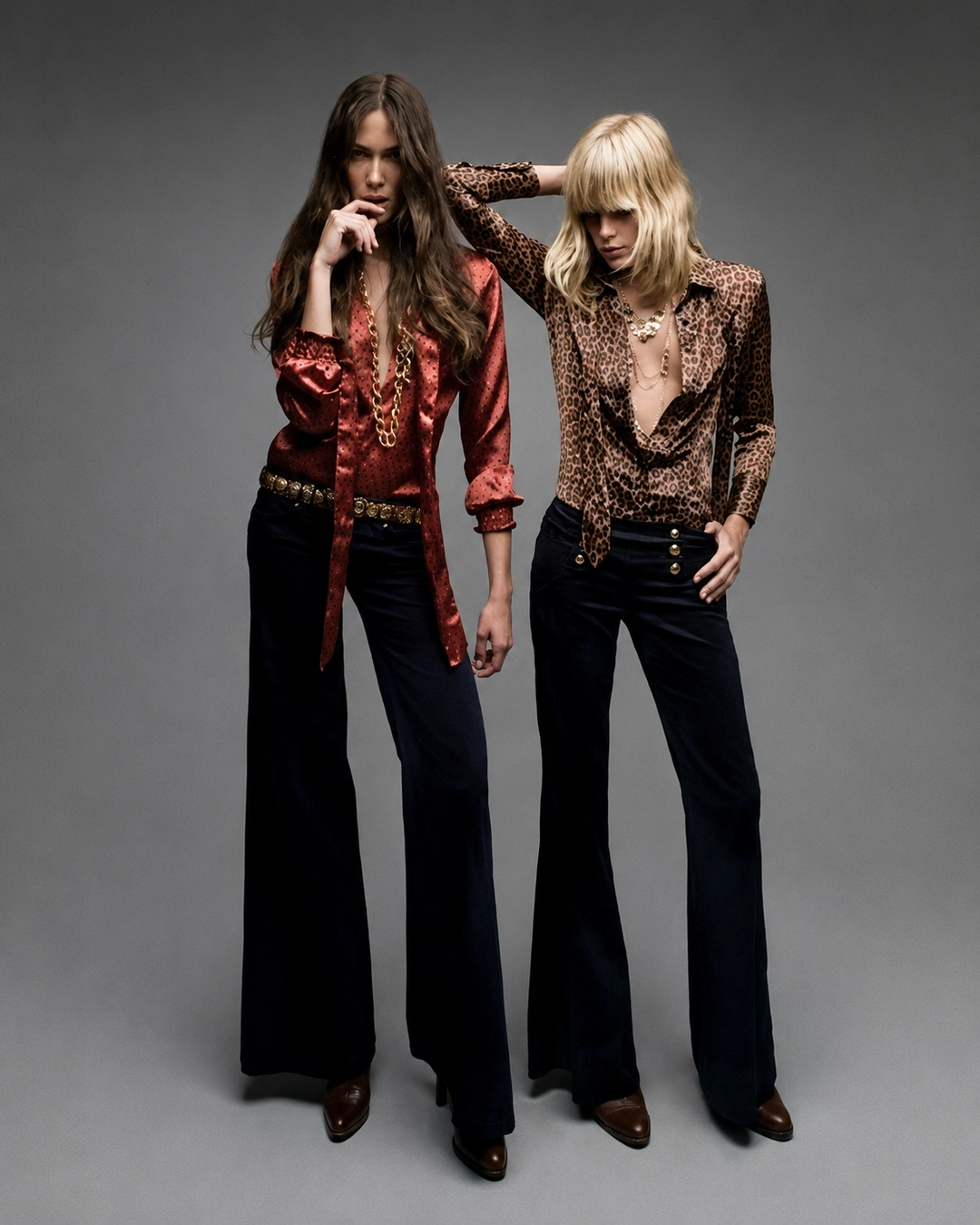
Bell-bottoms entered that visual experiment naturally. Once translated into denim, the sailor's flare became increasingly detached from uniform and associated with individuality. A pair could carry flowers stitched into the leg, hand-painted motifs, frayed hems or patches collected over years. Its expanding silhouette also sat comfortably beside the vocabulary developing around hippie dress: crochet, suede, fringe, peasant blouses, handcrafted jewellery and fabrics brought together with little interest in conventional polish.
Flared jeans consequently absorbed some of the central impulses of late 1960s counterculture. Clothing could record where someone had travelled, what music they listened to and how they wanted to live.
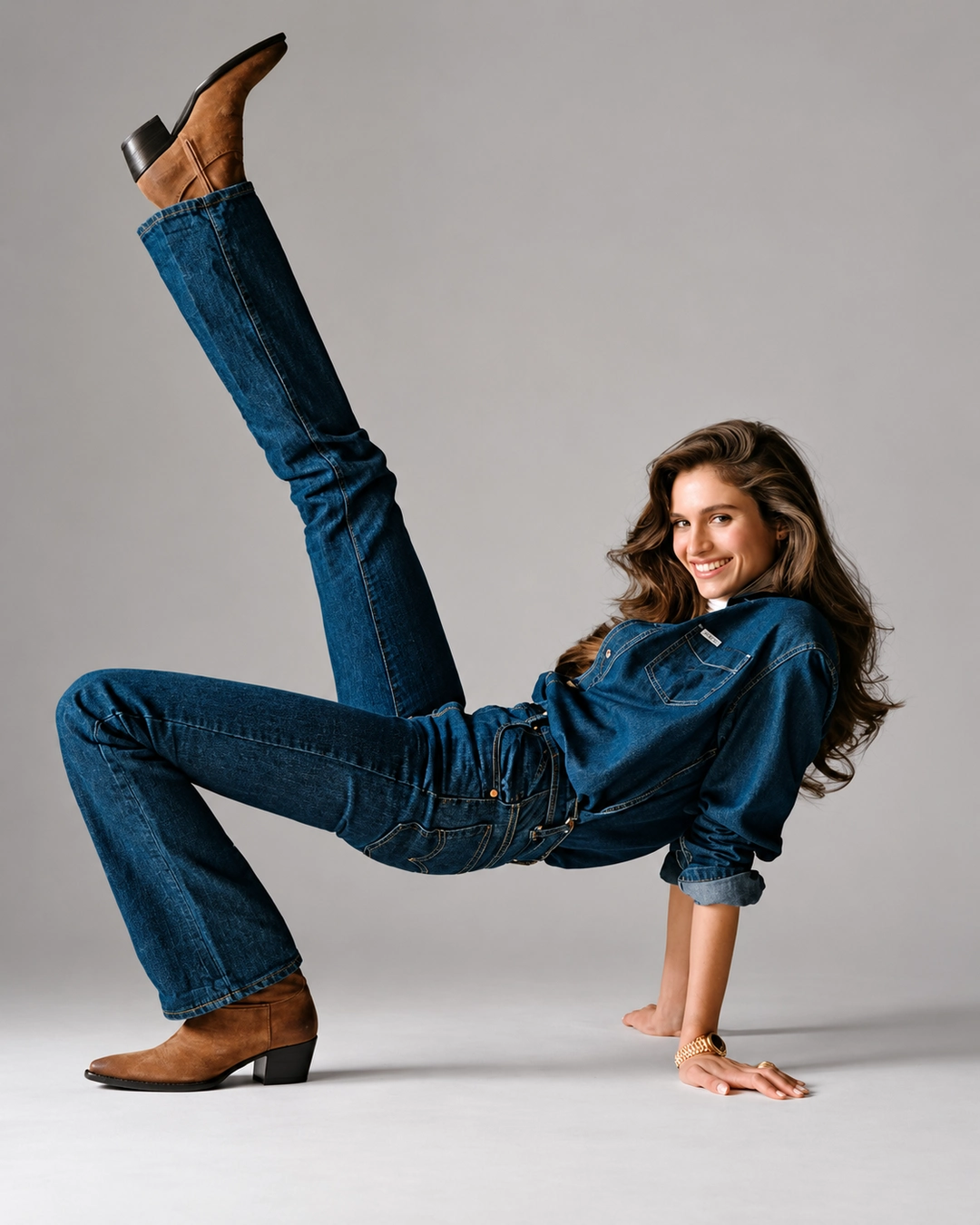
The transformation also happened at exactly the right cultural moment. By the late 1960s, young people were increasingly suspicious of clothes that signaled conformity, polish and inherited social rules. Dress became more personal, more visibly handmade and more willing to borrow from wardrobes previously considered ordinary, utilitarian or even unfashionable. Denim was ideal for that shift because it could be worn hard, altered cheaply and personalized endlessly. A flared leg gave that already rebellious material a silhouette with even greater visual presence.
Boutiques and youth-oriented labels helped push the shape beyond small countercultural circles. Once flare entered commercial fashion, designers began exaggerating the proportions, raising the waist, sharpening the fit through the thigh and widening the hem. What began as a borrowed shape became recognizably fashionable on its own terms.
Rock Made the Flare Move
Then came the stage.
A flare changes dramatically once the wearer starts walking. Denim stays close around the hips and thighs before breaking outward near the knee, so every step sends fabric moving around the feet. Add platform shoes and the proportions become longer, heavier and considerably more theatrical.
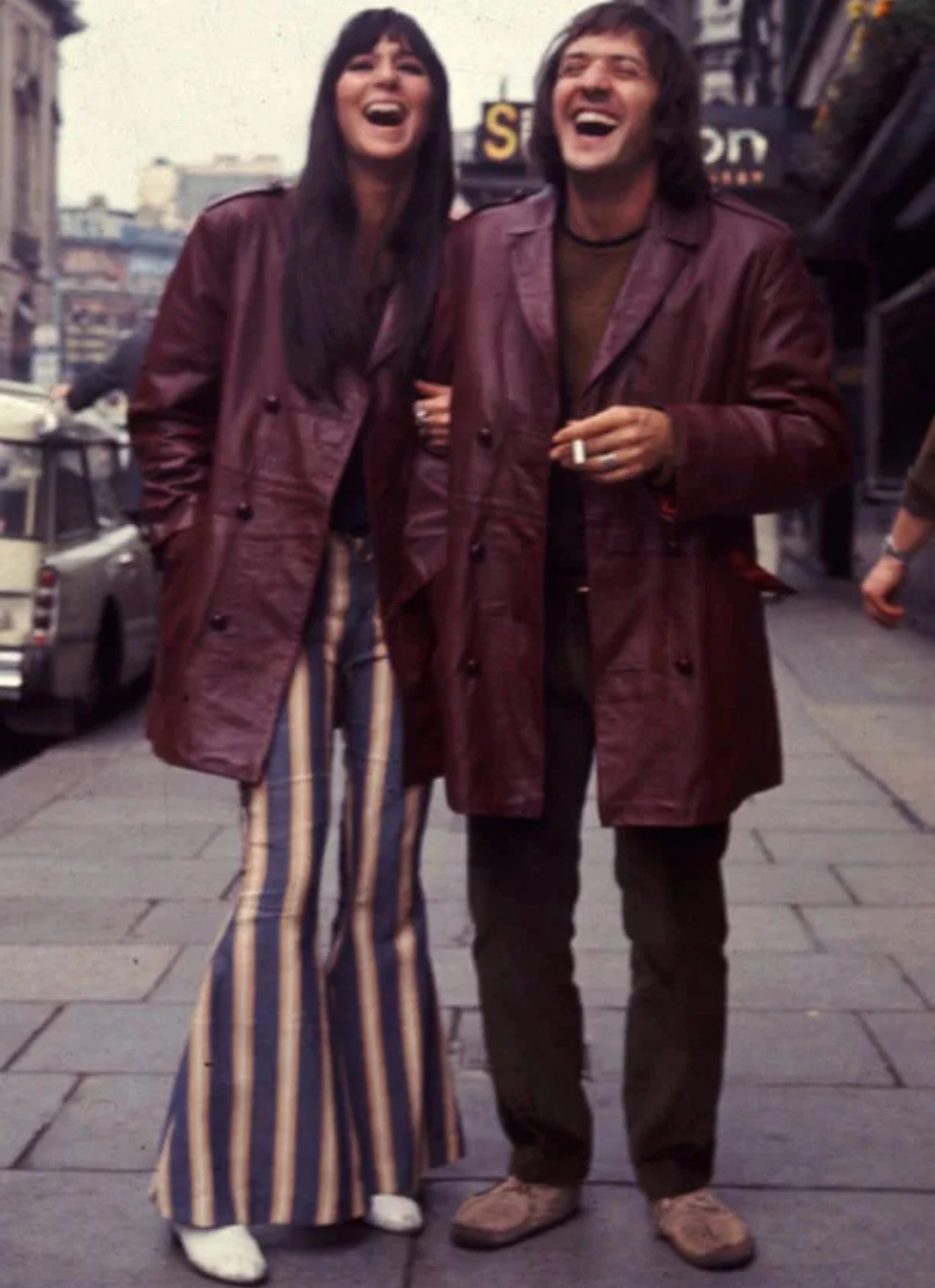
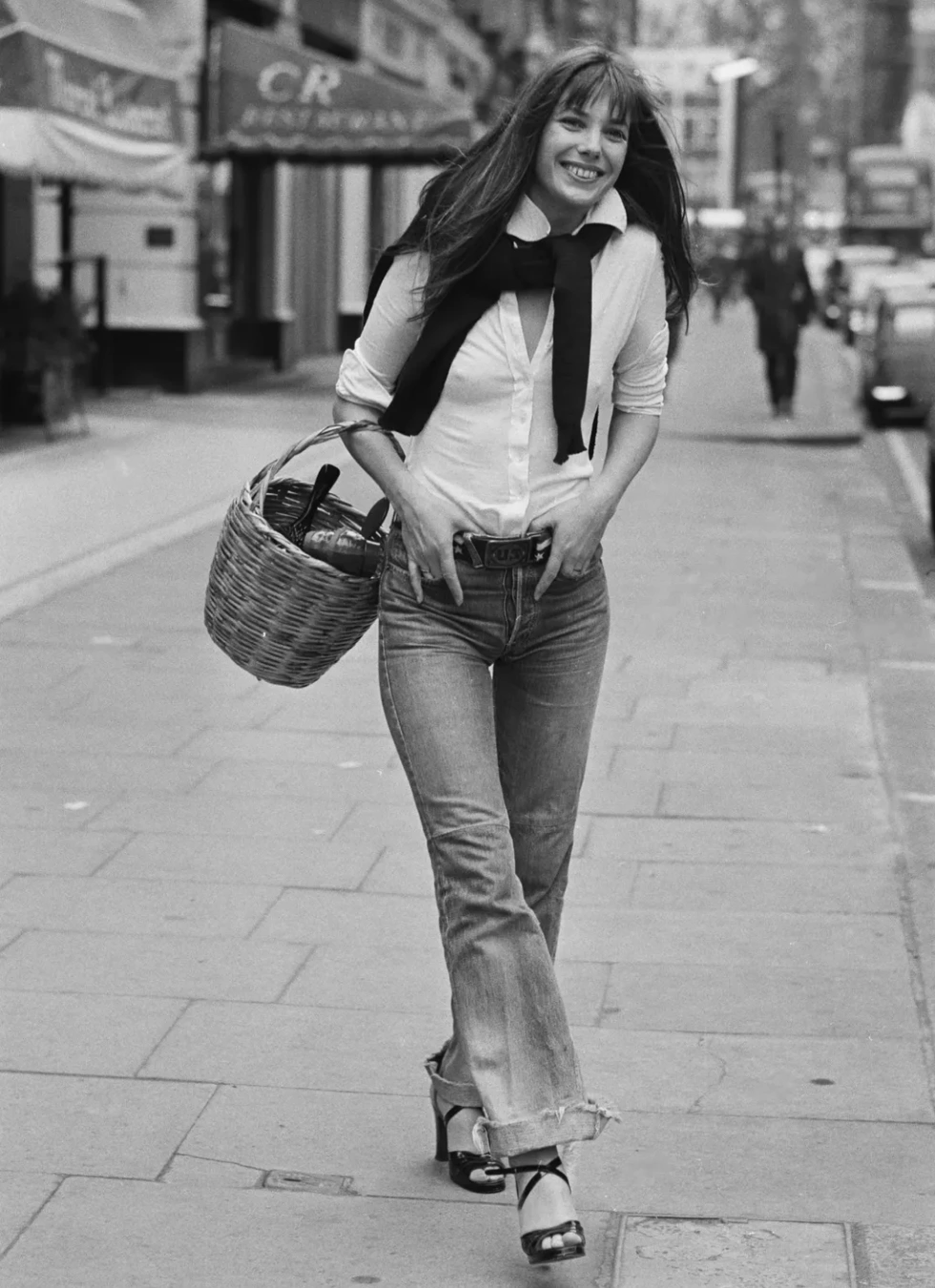
That physical quality made flares extraordinarily compatible with music culture. Rock, glam and the emerging spectacle of 1970s performance gave the silhouette an environment where exaggeration became an advantage. Cher could turn bell-bottoms into television glamour. Musicians could wear them low, tight or wildly wide onstage. Elsewhere, a simpler denim flare slipped effortlessly into the relaxed bohemian wardrobe associated with figures such as Jane Birkin.

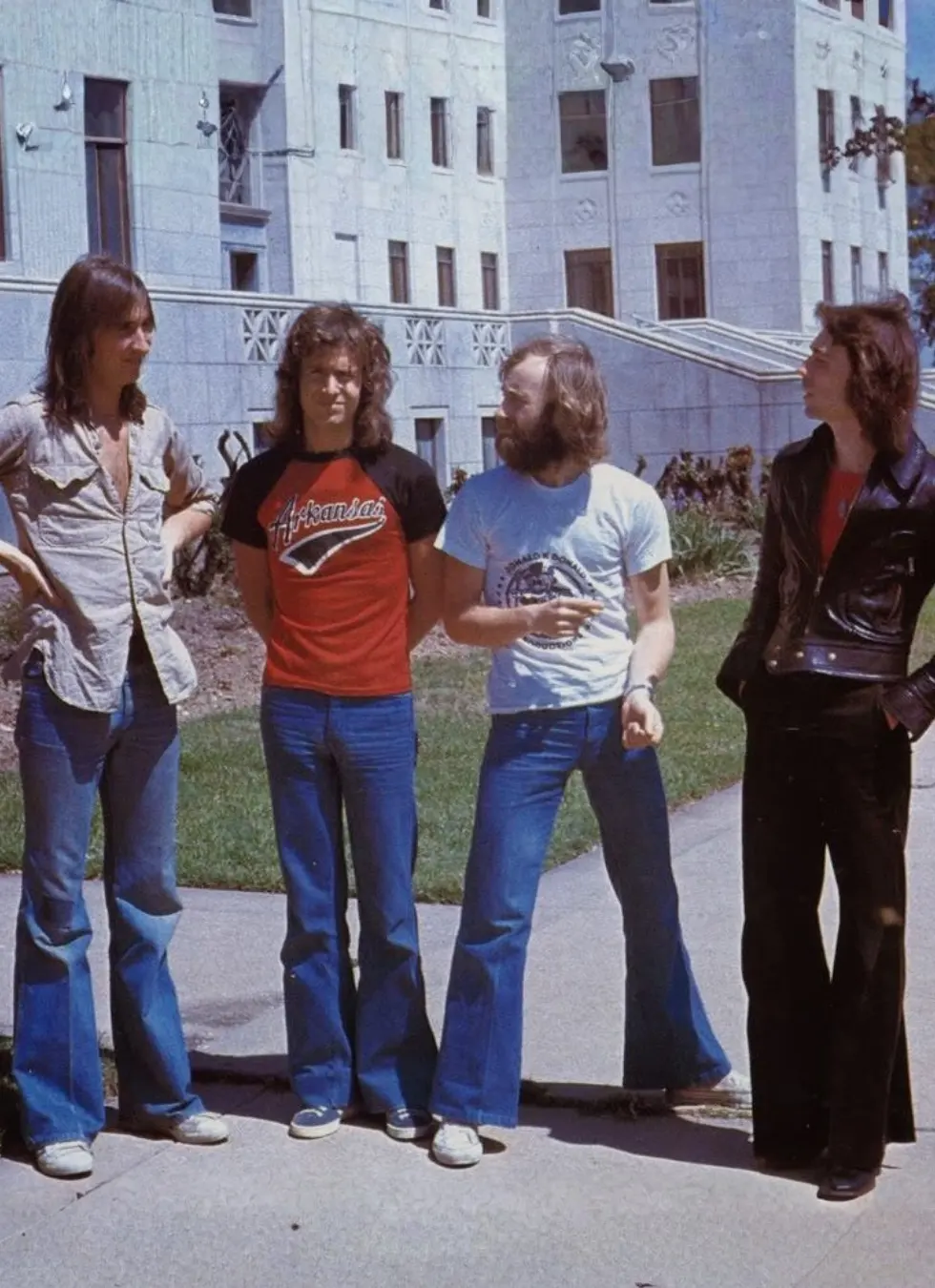
The same basic shape could therefore move between a sunlit folk festival and a dark club without losing its identity.
How Flared Jeans Became the Shape of the 1970s
By the 1970s, fashion was stretching the human figure in almost every direction. Platform shoes lifted it. Long hair extended it. Wide collars framed it. Sleeves ballooned, prints grew louder and trousers expanded toward the floor.
Flared jeans participated in that appetite for scale particularly well. Their proportions created an inverted visual rhythm: fitted at the waist and thigh, increasingly expansive below the knee. Walking made the hem sway. Dancing amplified it. Sitting still almost seemed to waste the design.
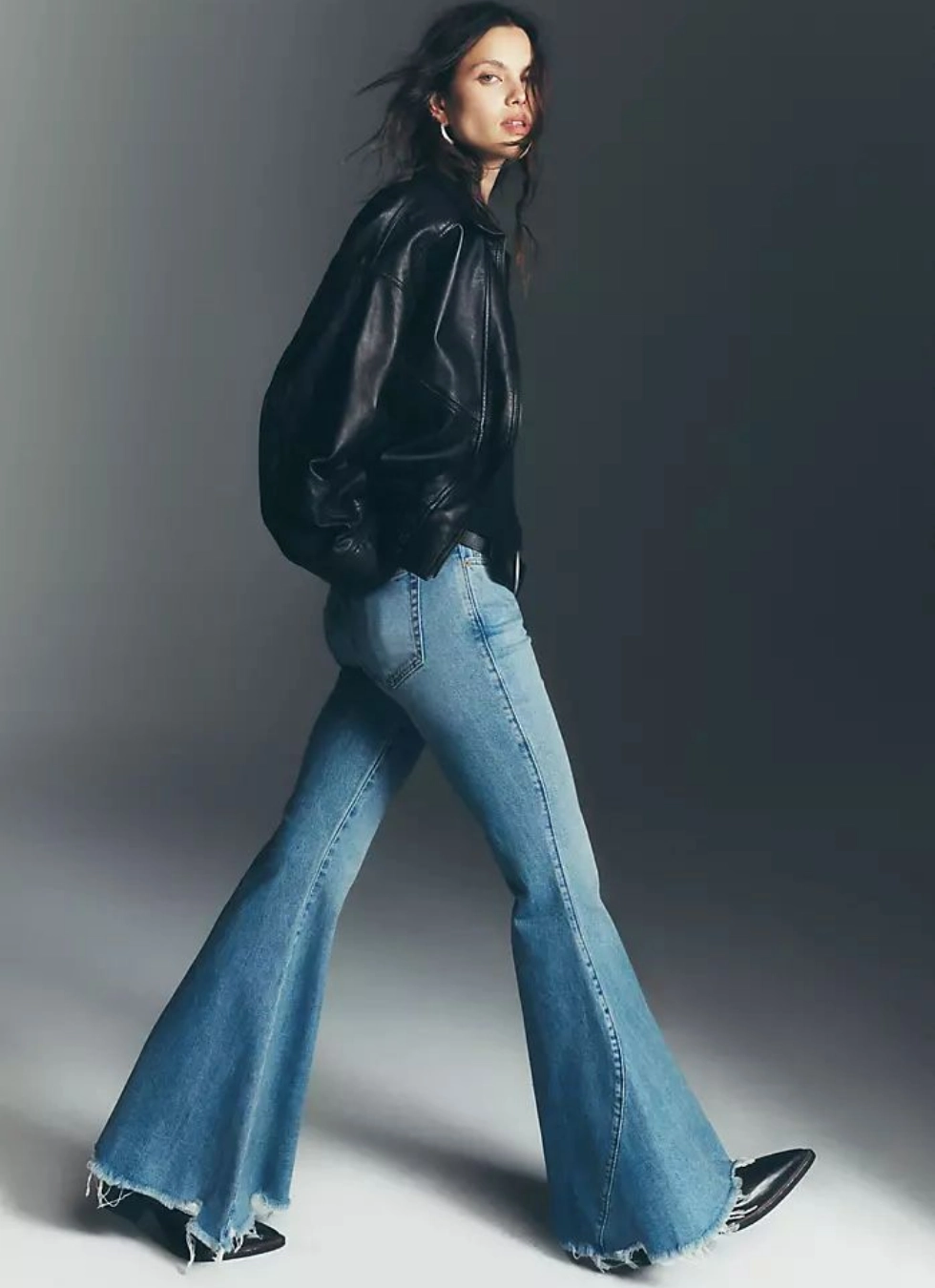
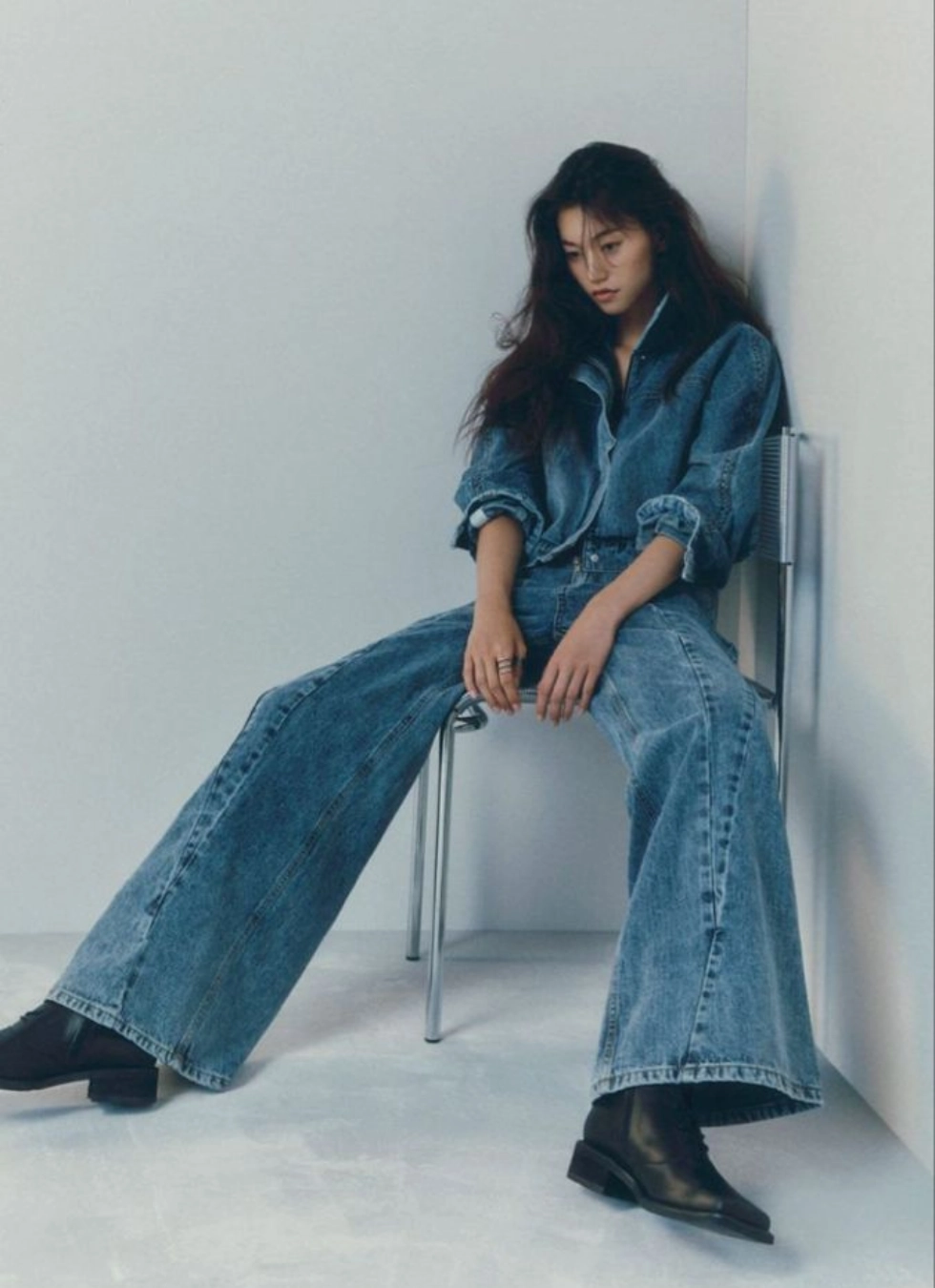
More importantly, the flare belonged comfortably to several cultures shaping the decade at once. Hippies could cover denim with embroidery and patches. Bohemian dress paired it with peasant tops, leather and crochet. Rock musicians gave it swagger. Glam pushed the proportions further. Disco eventually carried widening trousers onto illuminated dance floors in shinier fabrics and even more dramatic cuts.
That adaptability helped turn flared jeans into something larger than a trend. The silhouette became a shared outline through which very different versions of 1970s freedom could be expressed.
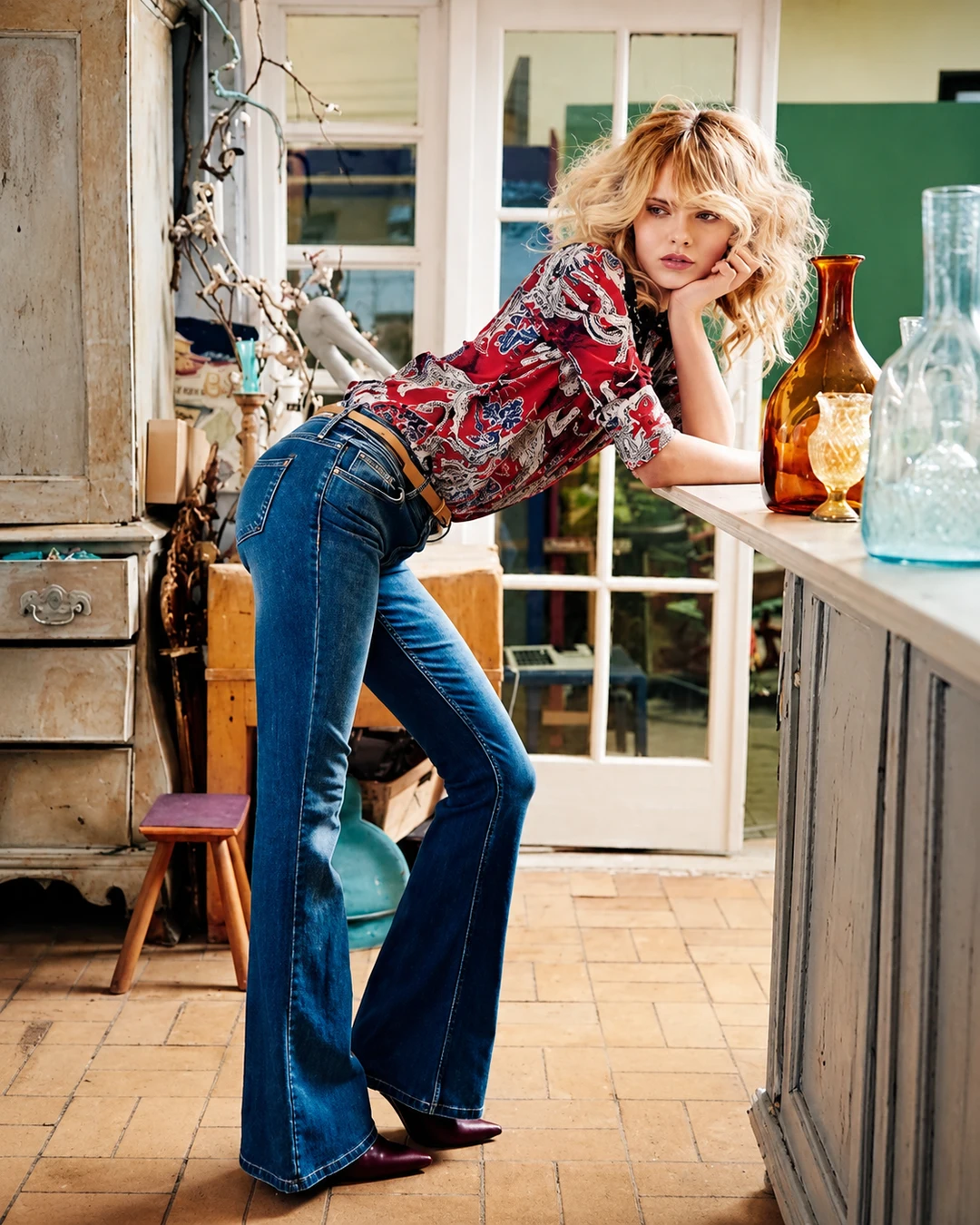
Fashion trends often rely on color, print or styling details that can disappear quickly, but the flare was readable from across a room. Even in silhouette, the decade announced itself through the widening leg. Few garments carried the visual memory of the 1970s so efficiently.
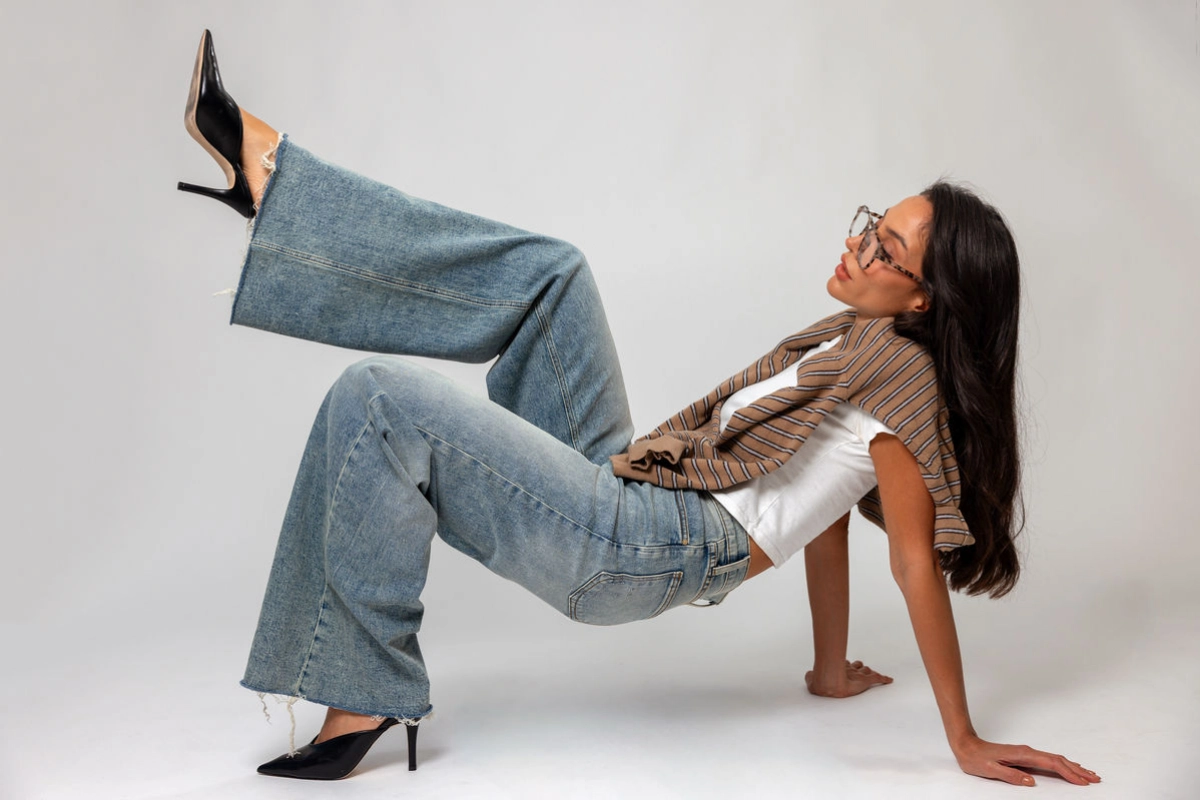
The flare did more than widen a trouser leg. It gave the body somewhere to move, and the 1970s somewhere to project its obsession with freedom, excess and possibility.
Two centuries earlier, sailors had needed trousers capable of moving around a working body at sea, with fashion eventually discovered another possibility hidden inside that widening hem. Somewhere between the ship deck and the concert stage, extra fabric around the ankle became attitude, and flared jeans became one of the clearest shapes through which the 1970s imagined freedom.
Advertisement