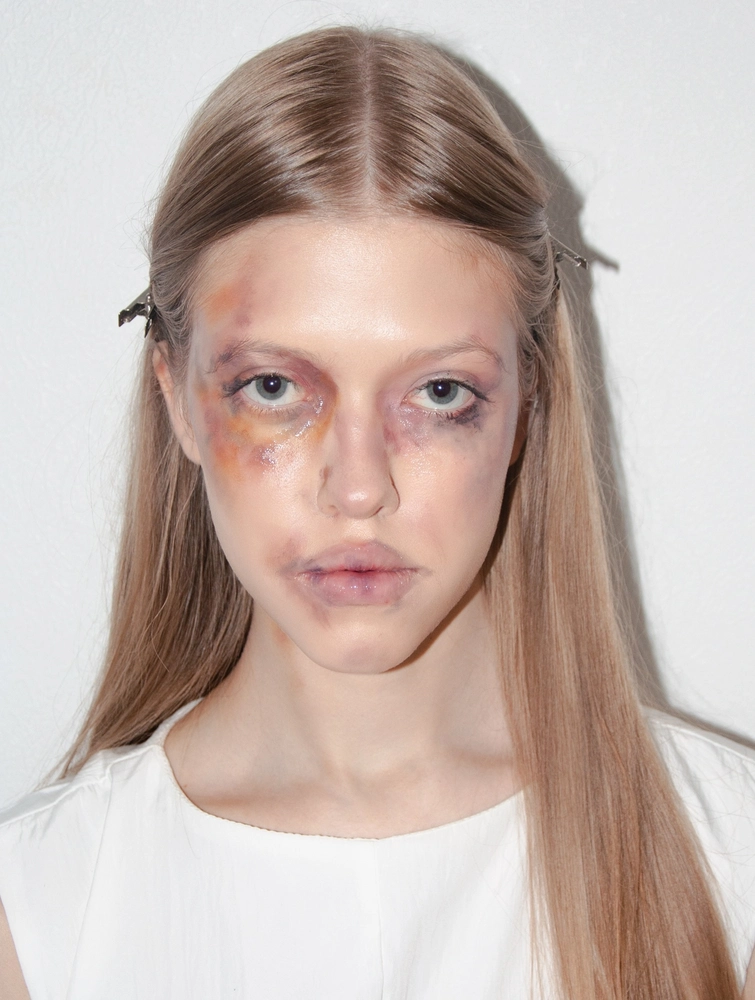
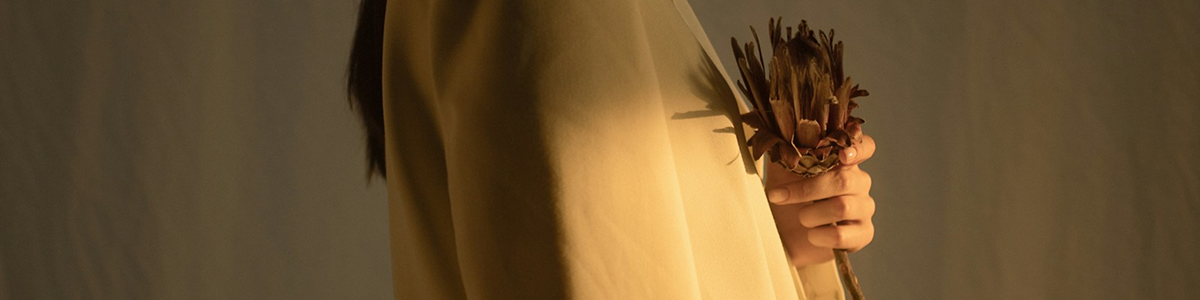
Somewhere between a flower held near the mouth, a sleeve catching the wind, and a road still warm from afternoon light, hippie style finds its pulse. It is not only a way of dressing, but a small refusal to let the world harden everything it touches.

Hippie Style: A Soft Rebellion In Full Color
Somewhere between a flower held near the mouth, a sleeve catching the wind, and a road still warm from afternoon light, hippie style finds its pulse. It is not only a way of dressing, but a small refusal to let the world harden everything it touches.
July 22, 2026
Advertisement
Advertisement
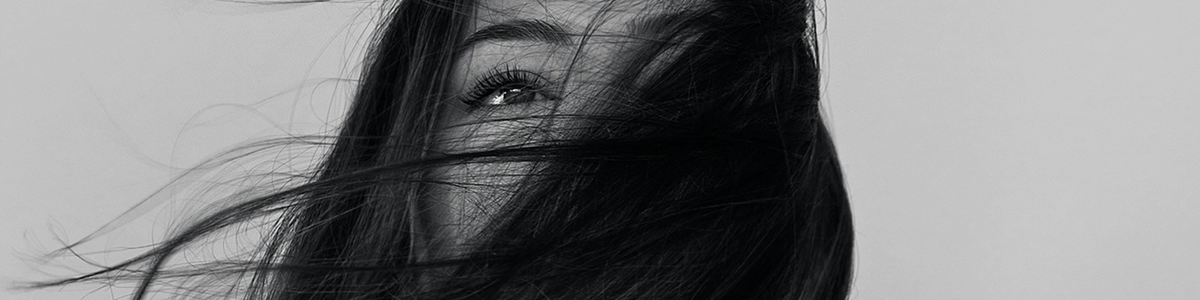


Hippie style moves first through the body, long before it becomes a vocabulary of clothes. Fabric loosens around the skin, hems follow the grass, sleeves catch the air, and color seems to have arrived from a place slightly warmer, freer, less obedient than the world waiting outside. Its charm comes from that lived-in quality, from garments that look as though they have already crossed a few roads, heard a few songs, and gathered a little dust before finding the woman who wears them.
The woman inside hippie style appears dressed for motion, not arrival. A dress may fall in an easy column, denim may carry the trace of repair, a scarf may sit as if tied during a conversation already halfway out the door, yet the image holds together with strange emotional precision. Beauty here rises from openness: clothes giving the body room to breathe while carrying hints of travel, music, touch, and a private search for another way of living.
Looseness becomes intention. Imperfection gathers character. Softness gains a rebellious edge when it refuses to look polished for anyone else’s comfort. A flower in the hair may read as romance at first glance, but under the pressure of the 1960s, even that small gesture can become a quiet sign of refusal.
World Was Heavy, So Clothes Learned To Float
Hippie style grew from a generation tired of looking polished for a world that felt increasingly mechanical. By the late 1960s, young people in America and Europe were questioning the clean, respectable image they had inherited: the neat suburb, the proper suit, the obedient haircut, the idea that adulthood had to arrive in pressed fabric and quiet conformity. A wider anti-establishment mood was already moving through music, youth culture, civil rights conversations, environmental awareness, and antiwar sentiment, but in fashion, the shift appeared most clearly through the body itself.

Instead of dressing to look correct, young people began dressing to look alive in, touched by travel, music, nature, and handwork. The wardrobe moved away from the hard surface of postwar respectability and toward pieces that seemed personal before they seemed fashionable: denim softened by wear, cotton printed with color, suede moving with fringe, embroidery carrying the trace of craft, and jewelry that sounded faintly when the body moved.
By 1967, San Francisco’s Haight-Ashbury had become one of the most visible centers of this new youth image during the Summer of Love, while Woodstock in 1969 turned the hippie fashion into a global visual memory. These moments mattered for fashion not simply as events, but as images: bodies gathered outdoors, hair left loose, fabric moving in the open air, color spreading across a crowd until the crowd itself looked like an alternative wardrobe.
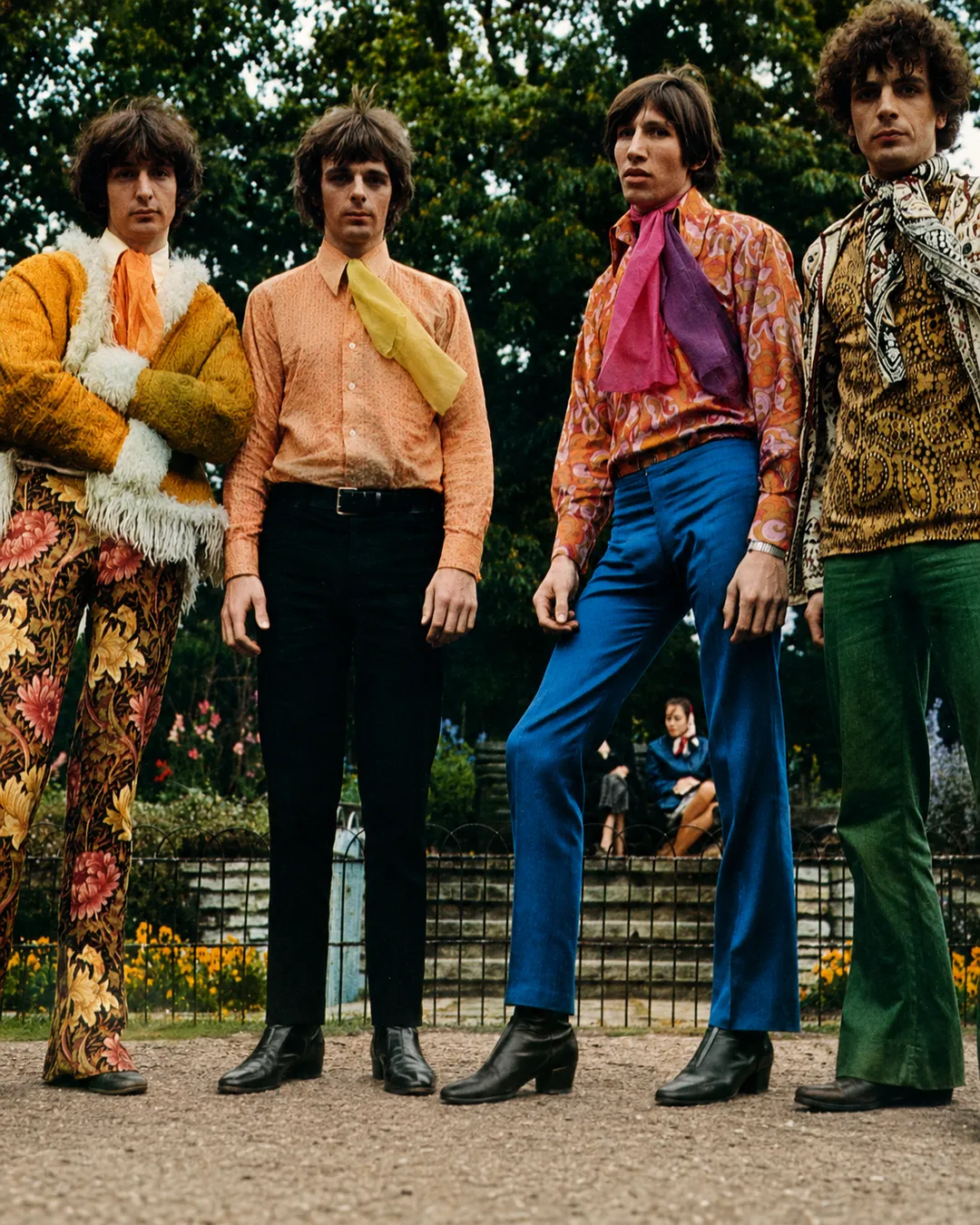
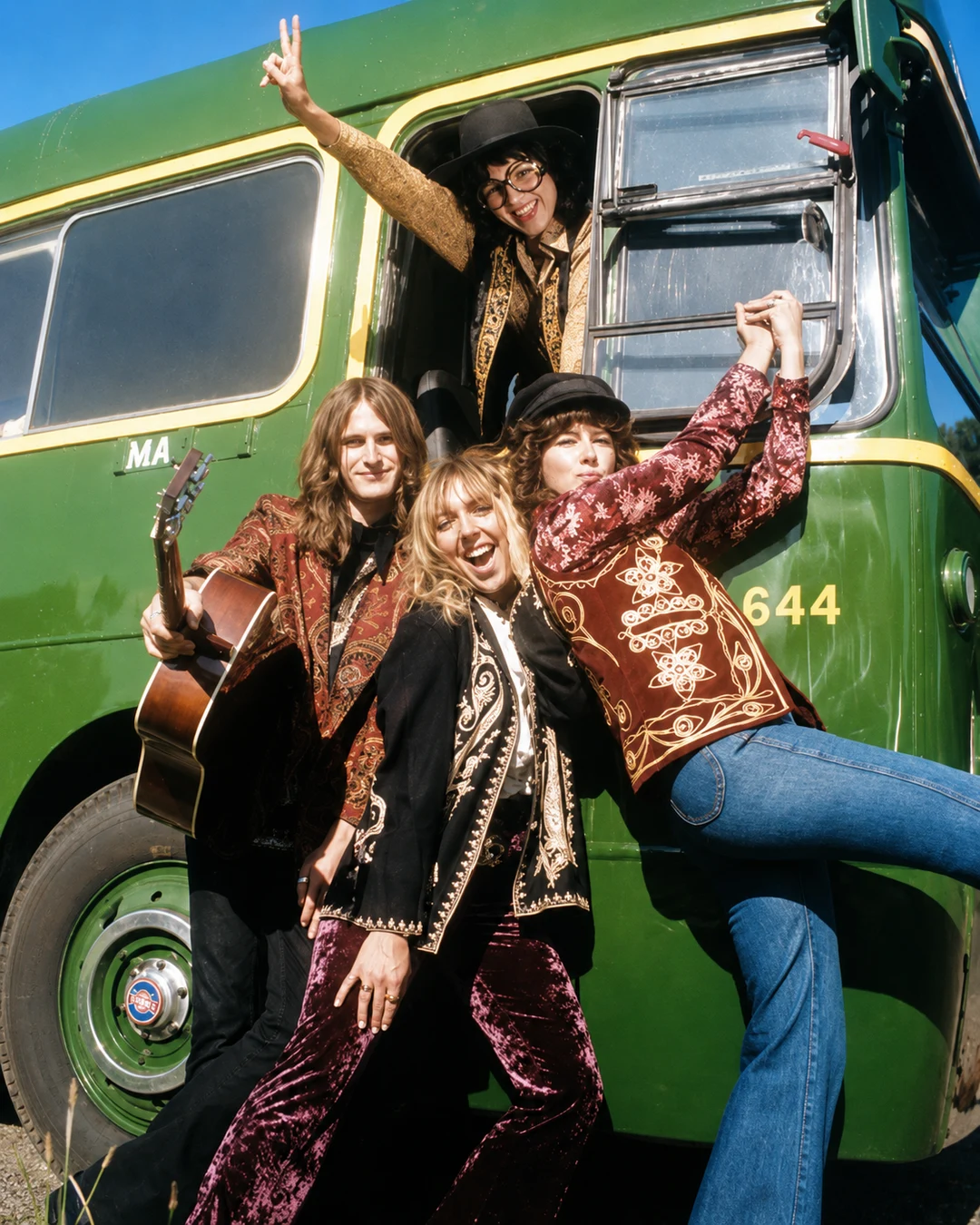
Hippie style turned dressing into a softer form of refusal. A patched jeans suggested a life against waste and sameness; a hand-dyed dress made color feel emotional; a fringed vest gave movement its own rhythm. The style’s freedom came less from one garment than from the impression that clothes could carry a different way of living, one where beauty looked handmade, unguarded, and unwilling to stand too neatly in line.
Loose Cloth, Wild Color: A Body Refusing The Straight Line
Hippie style treats the body as something meant to move, not something waiting to be corrected. The silhouette loosens around the skin, letting fabric fall with a kind of deliberate ease, as if clothing had stopped trying to discipline the figure and started listening to it instead.
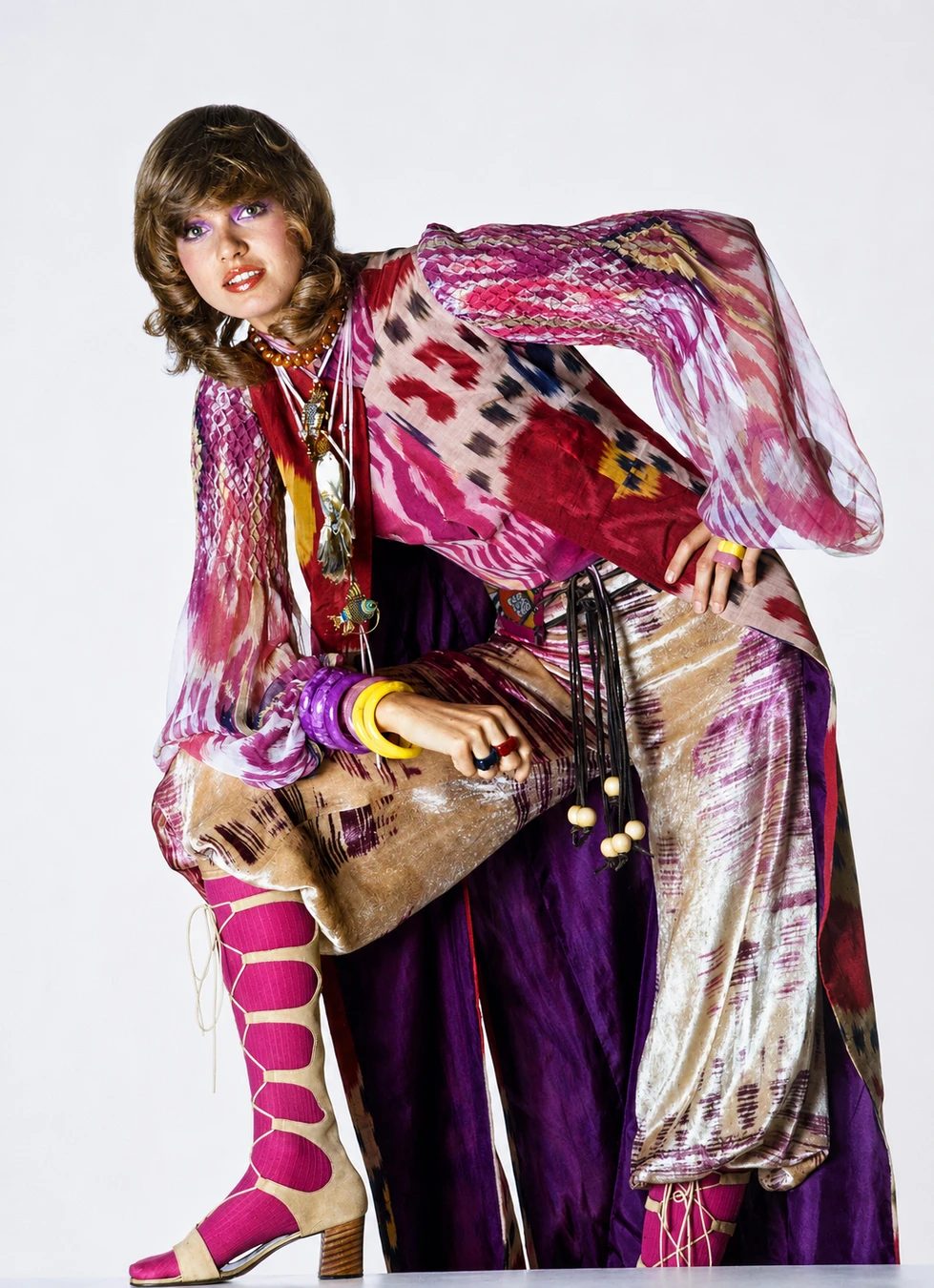
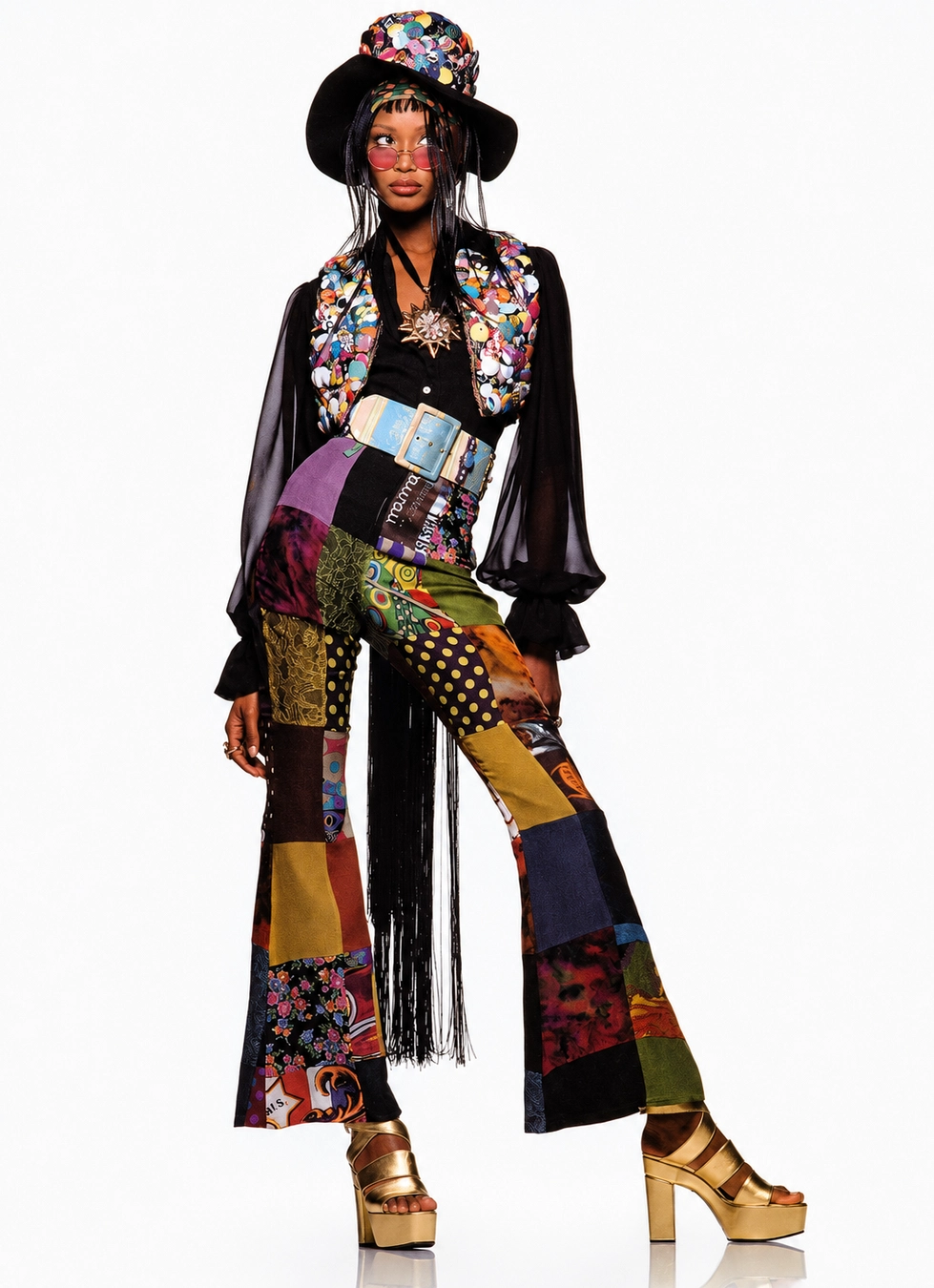
A maxi dress carries this mood through length and motion. It follows the body downward, brushes the ground, catches the air, and turns walking into a slow visual rhythm. Flared denim works differently, pulling the eye toward the feet with a grounded swing that belongs as much to music as to fashion.
The waist in hippie style rarely behaves like a strict border. It may appear through a scarf, a soft belt, or a careless knot, yet it never holds the body too tightly. Shape becomes fluid, shifting with movement, layered cloth, and the private habits of the wearer.
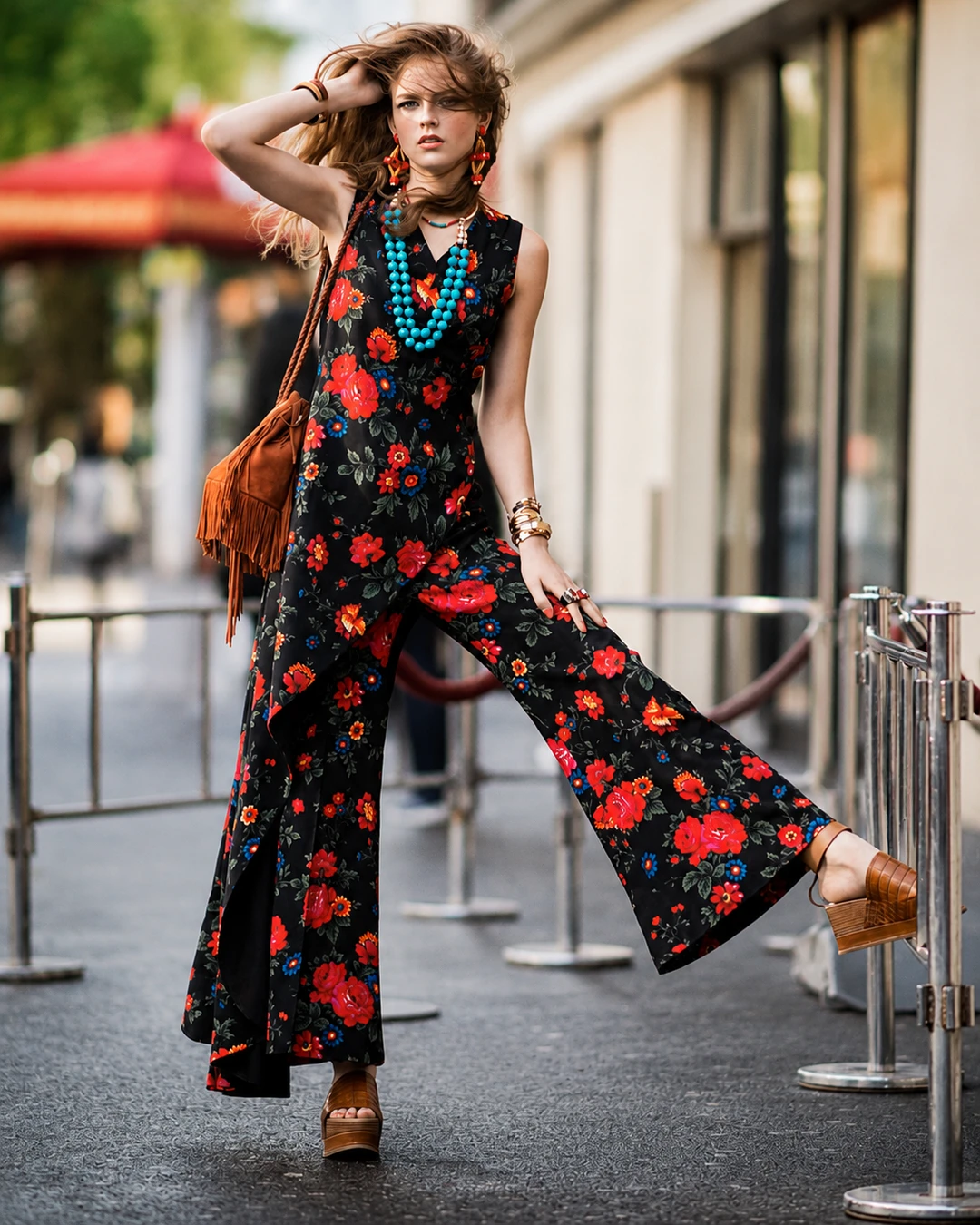
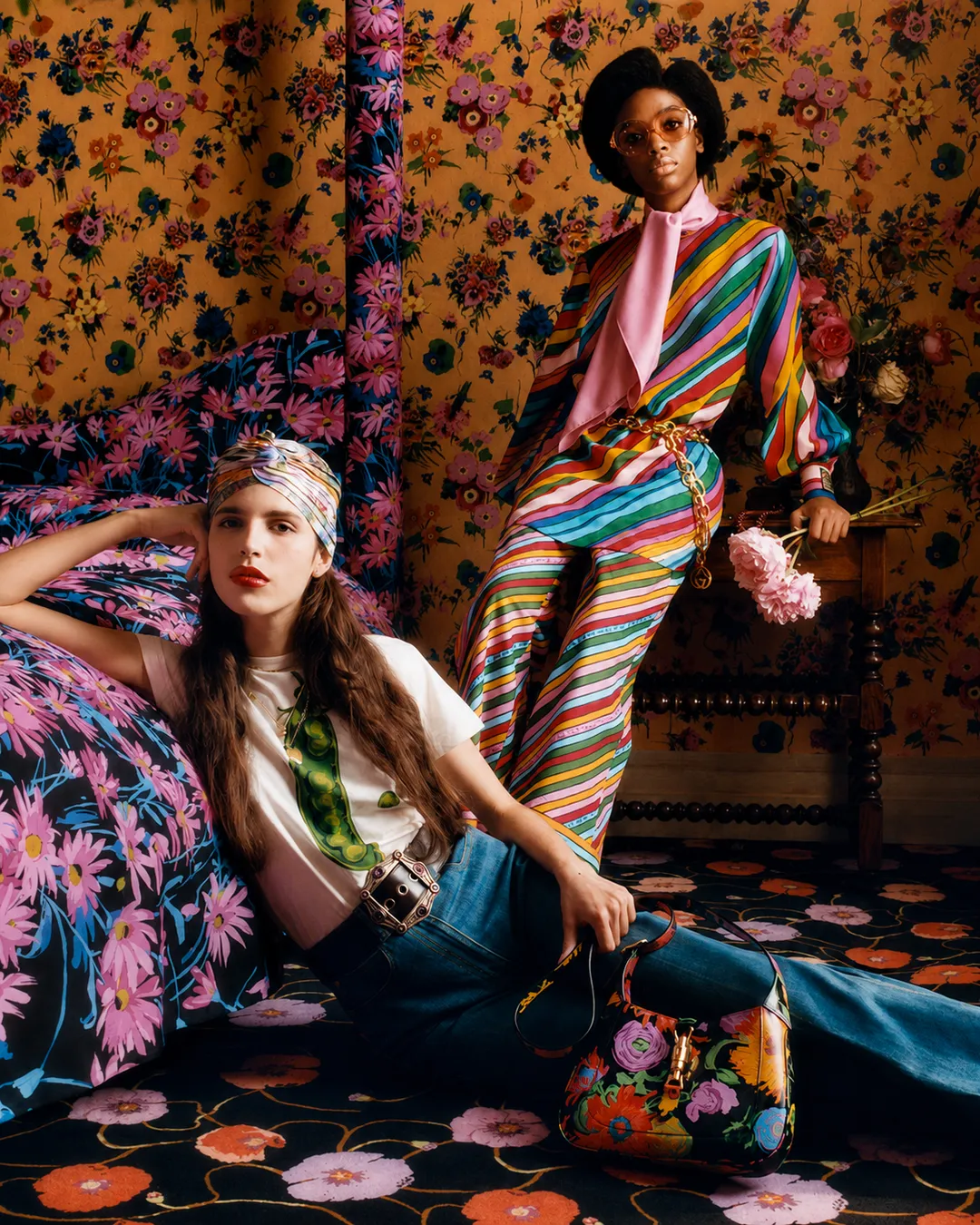
Texture gives the style its human pulse. Crochet lets air pass through the garment, fringe continues moving after the body has paused, and embroidery leaves evidence of handwork close to the skin. These details work best when they look slightly imperfect, as if beauty has arrived through touch instead of polish.
Patchwork and color give hippie style its most vivid surface, turning leftover fabric, repair, hand-dye, paisley, batik, and floral prints into a wardrobe that looks gathered through travel, thrift, accident, and imagination. Earth tones keep clothes close to the dusty sun, while psychedelic shades pull the body toward music, poster art, and a more dreamlike sense of freedom, as though each garment was carrying its own small weather.
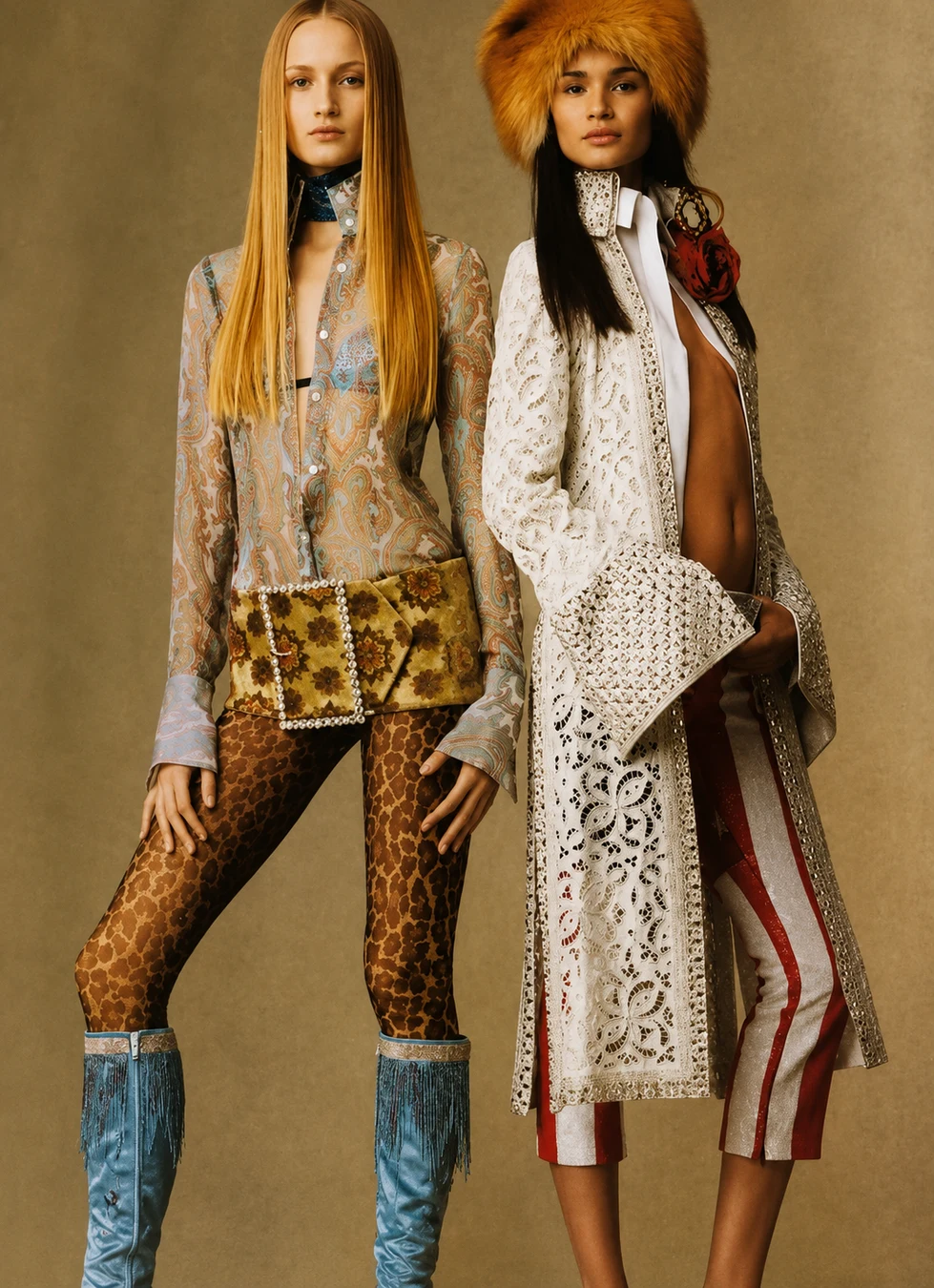
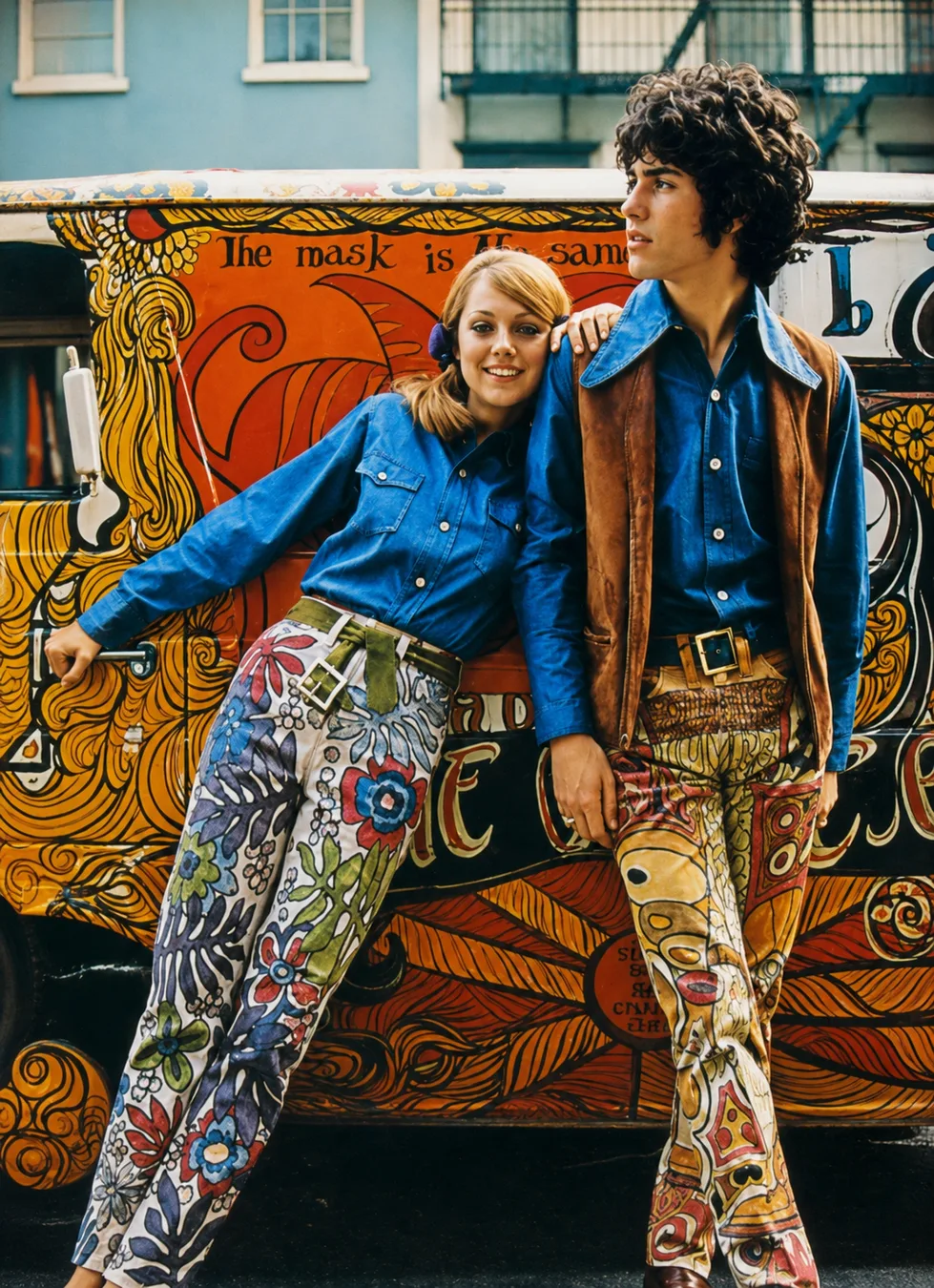
The strongest elements of hippie fashion never appear too cleanly arranged. It needs looseness in the sleeve, life in the fabric, and a trace of the hand somewhere in the finish. Its beauty comes from that half-planned energy: a wardrobe shaped by freedom, craft, and the desire to let clothes breathe with the person wearing them.
Freedom Was Something She Wore Against Her Skin
Hippie style carries the dream of a life loosened from instruction. Under its influence, dressing becomes more about protecting an inner climate, a private rhythm that refuses to be pressed flat by routine.
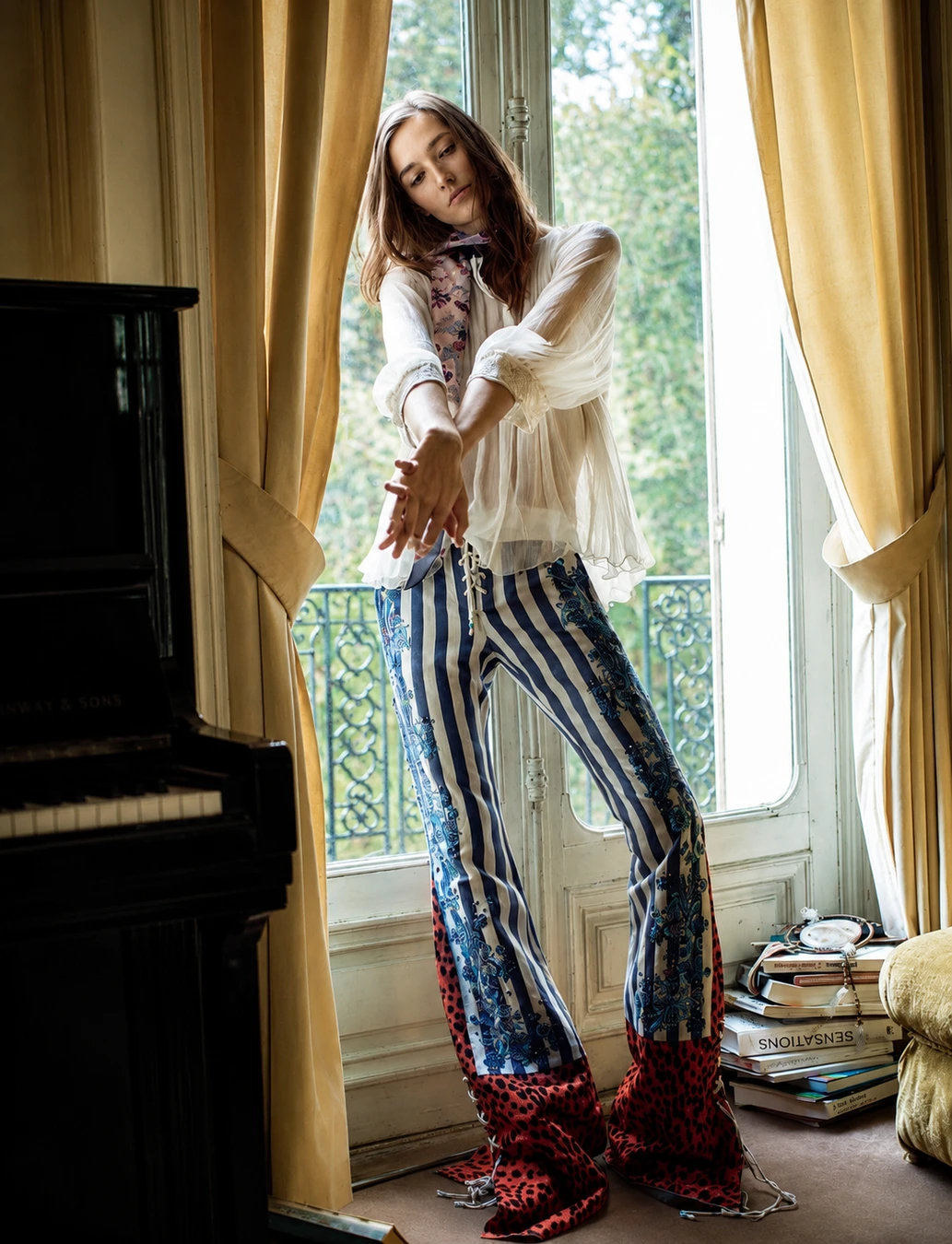
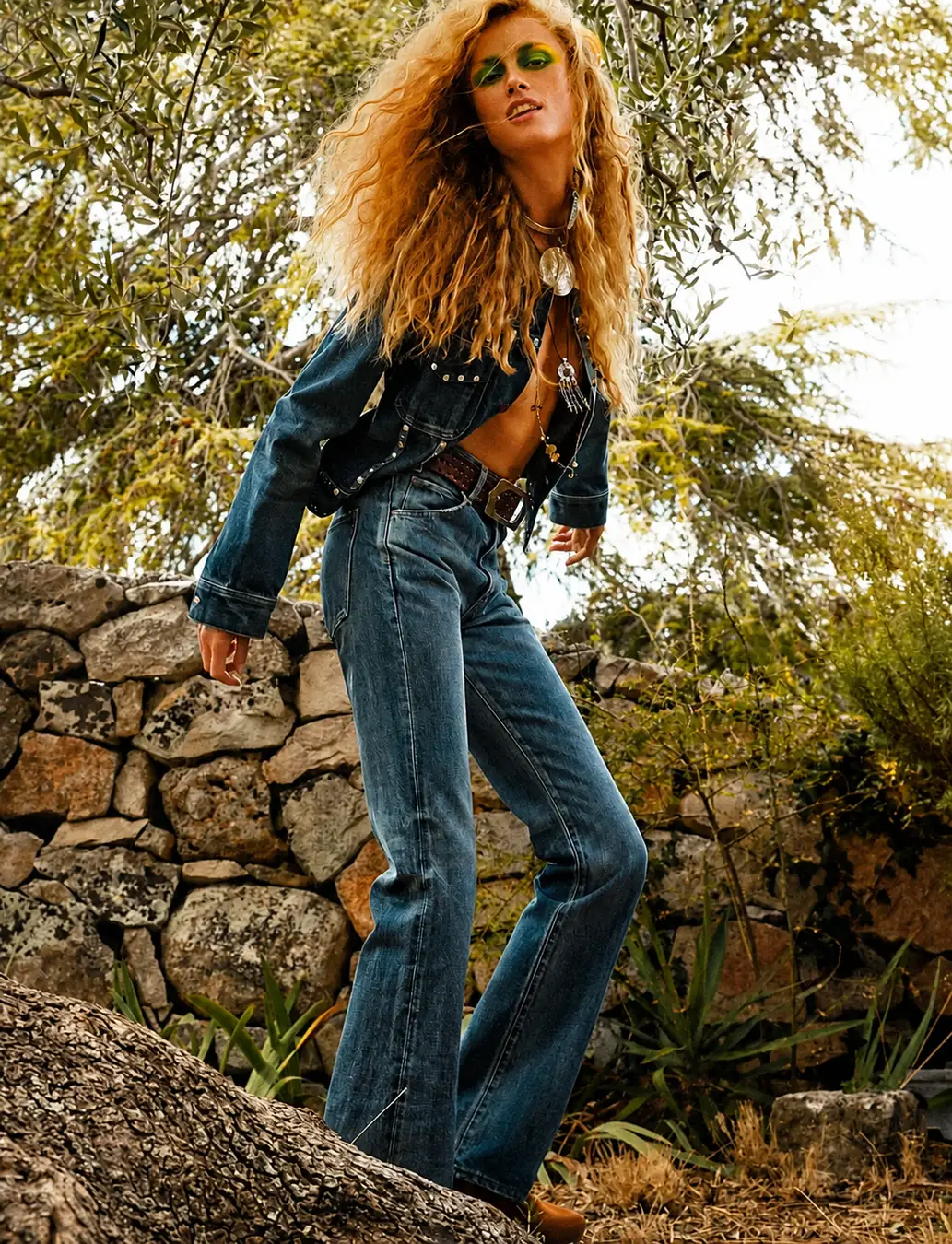
For the women and young people shaped by this movement, style became a daily form of self-permission. A dress could hold the softness of an afternoon spent outside; worn denim could keep the trace of roads, gatherings, and repeated use; a handmade detail could turn clothing into something almost intimate, carrying the presence of the person who made it and the person who chose to wear it. Nothing needed to look untouched. Beauty grew warmer when it looked lived in.
That spirit transcended the relationship between the individual and the world around them. Clothing was no longer only a social signal sent outward; it became a way of staying connected to nature, to music, to craft, to the idea of a life less divided between body and belief. A flower, a loose sleeve, a patched surface, or a strand of beads could seem small on its own, yet together they suggested a person trying to live with more openness than the world had taught them to allow.
At its most poetic, hippie style is the wardrobe of someone searching for a gentler kind of rebellion. It lets softness carry conviction, lets color become a mood of resistance, and lets the body move as though freedom was not a distant idea, but something already brushing against the skin.
Old Festivals Keep Sending Back New Signals
Hippie style enters fashion most powerfully when it arrives as a state of mind, not just merely a costume pulled from a festival archive. Its old dream of freedom keeps changing shape in the hands of different houses: sometimes girlish and musical, sometimes nomadic and cultured, sometimes sensual, sometimes theatrical. The shared pulse is looseness, but each designer gives that looseness a different temperature.
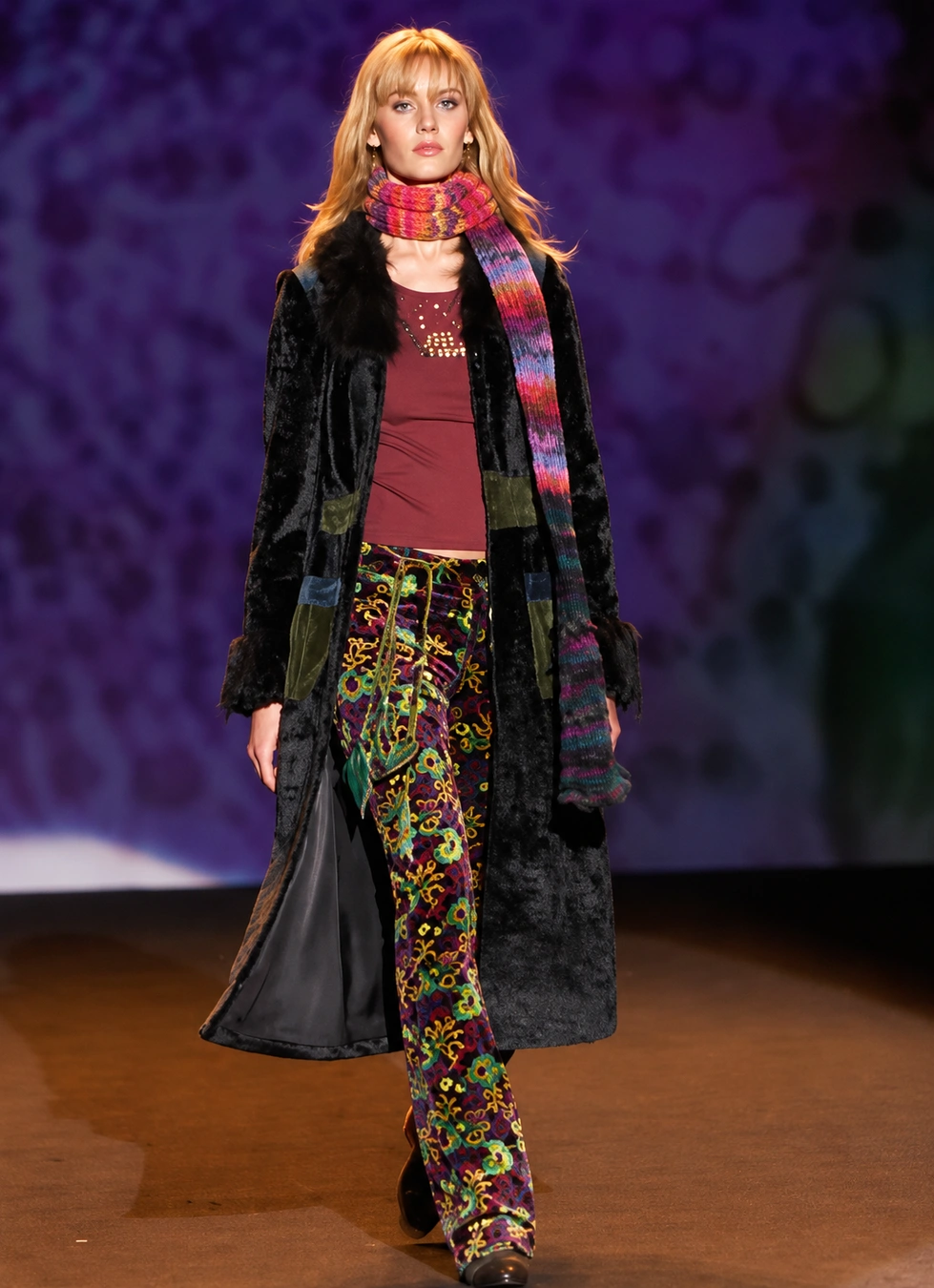
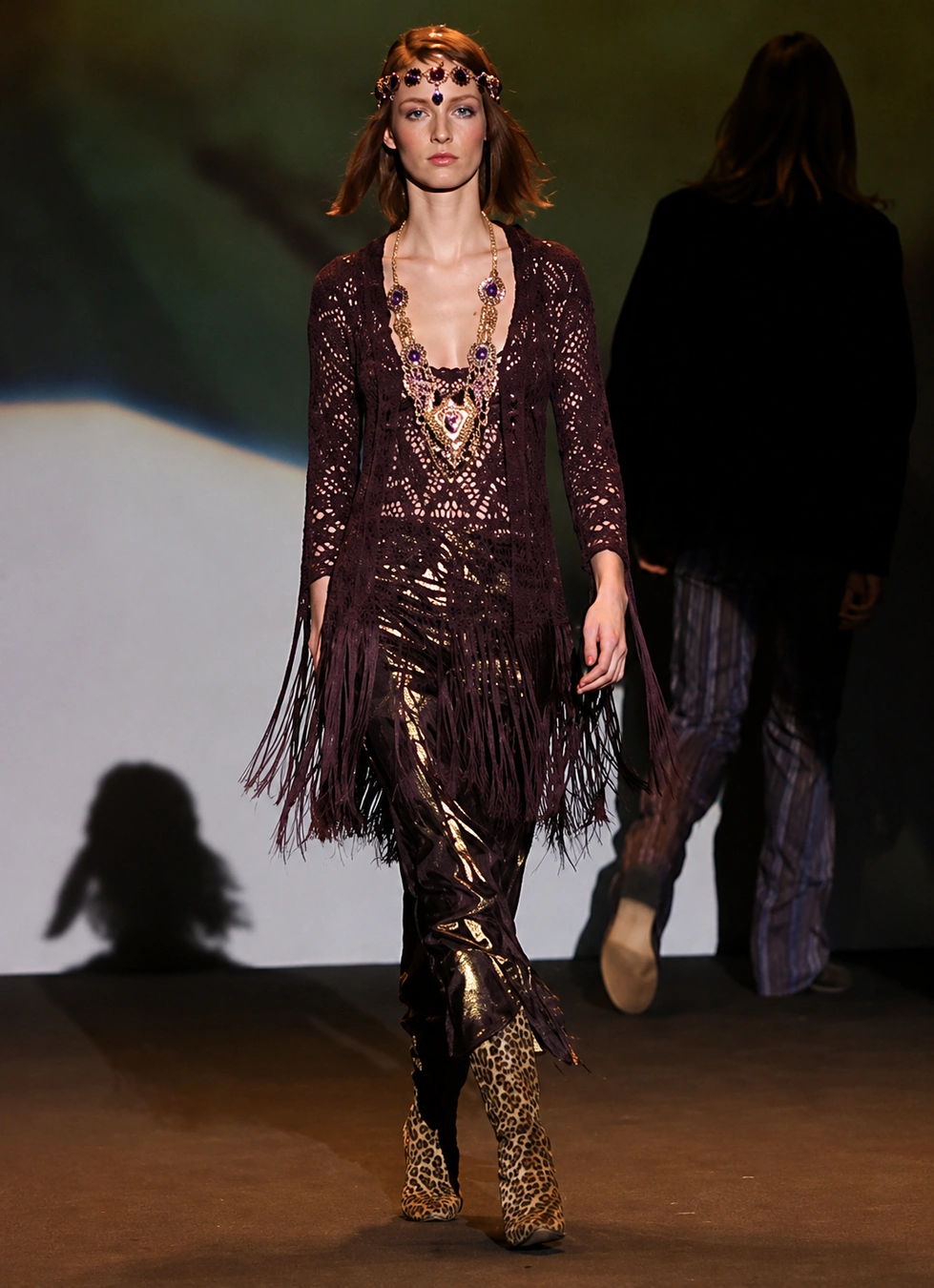
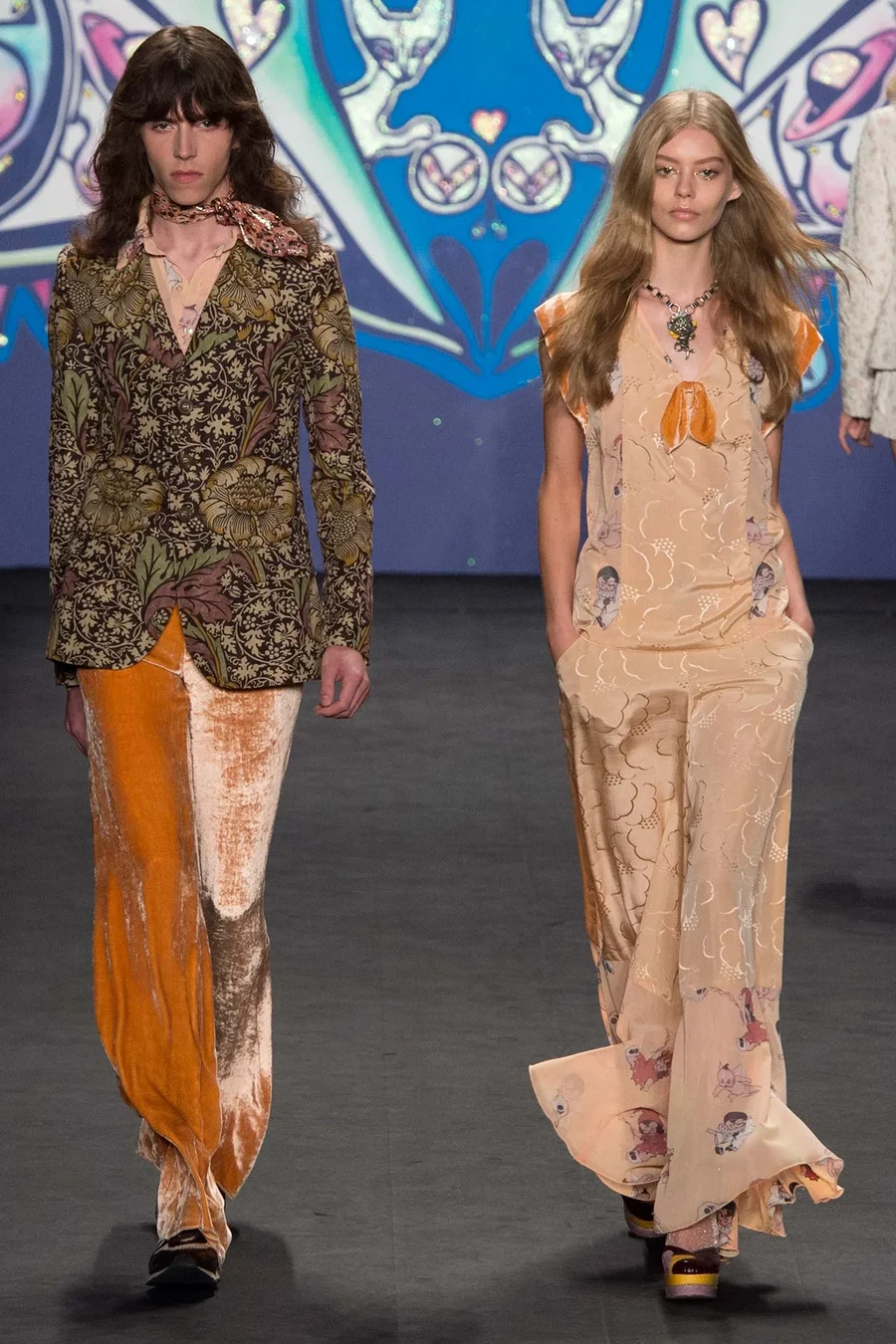
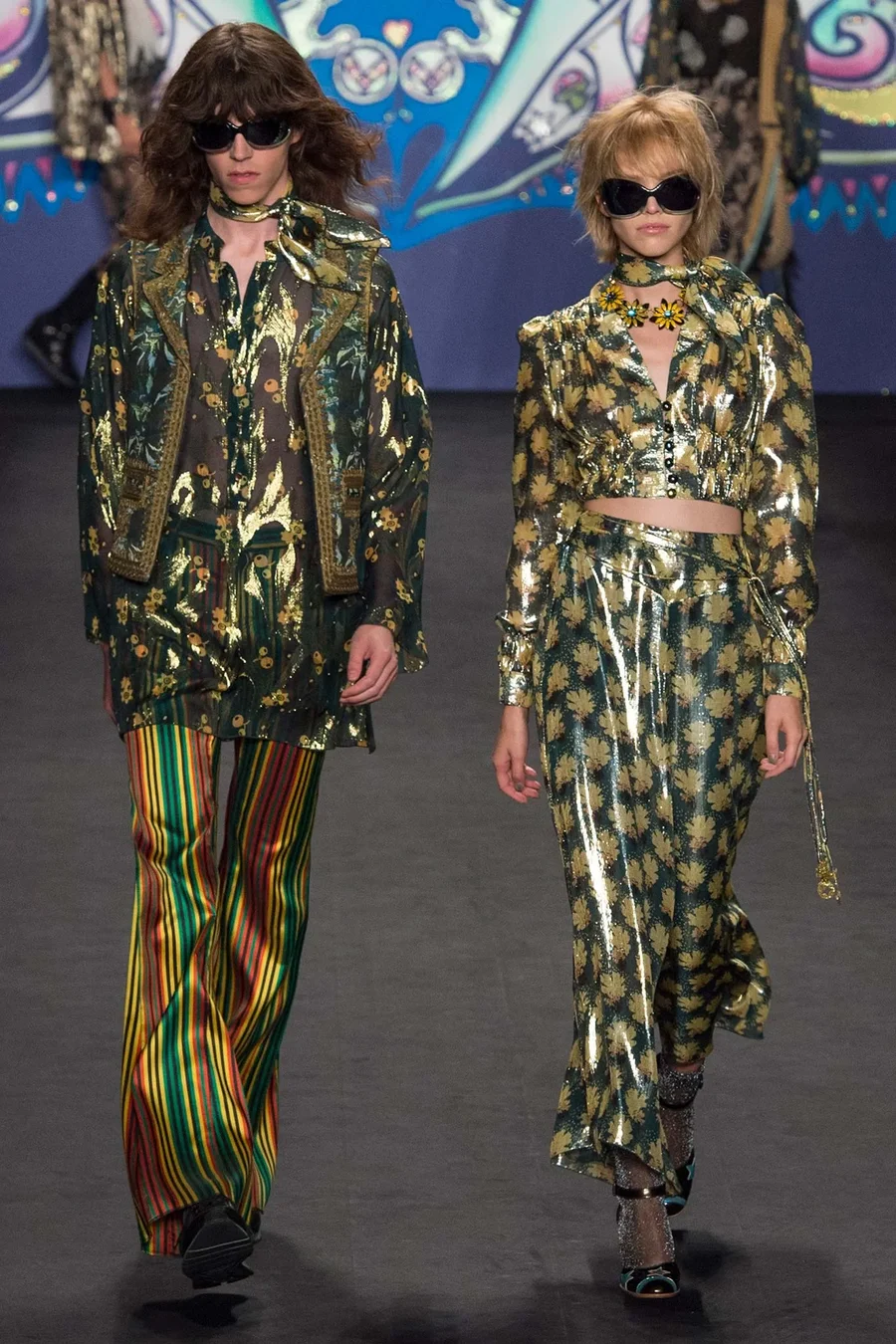
At Anna Sui, hippie style stays close to music, memory, and the myth of girls dressing themselves into a private band. Her version has a playful, nocturnal sweetness, turning counterculture fashion into something intimate, collectible, and emotionally lived in.
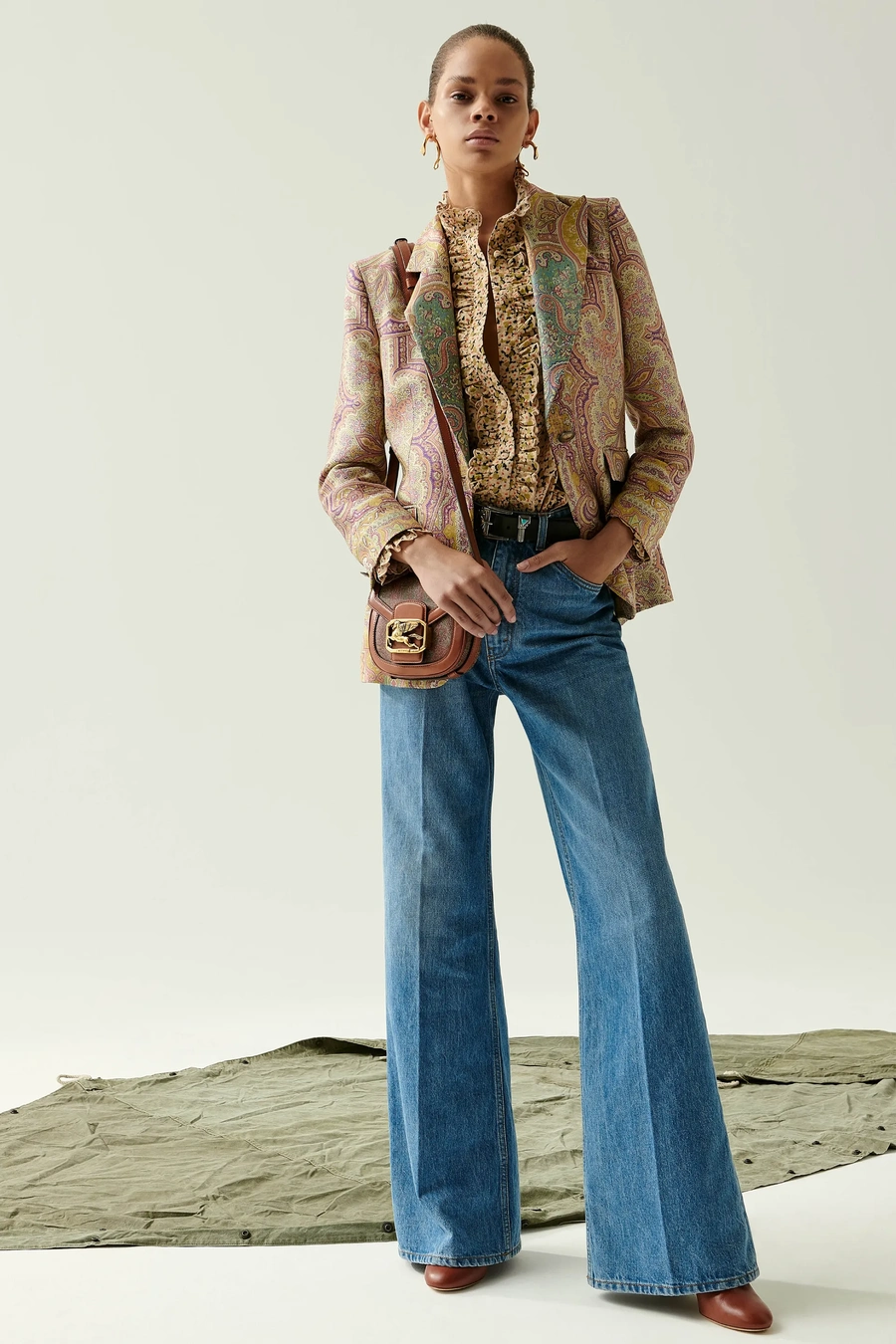

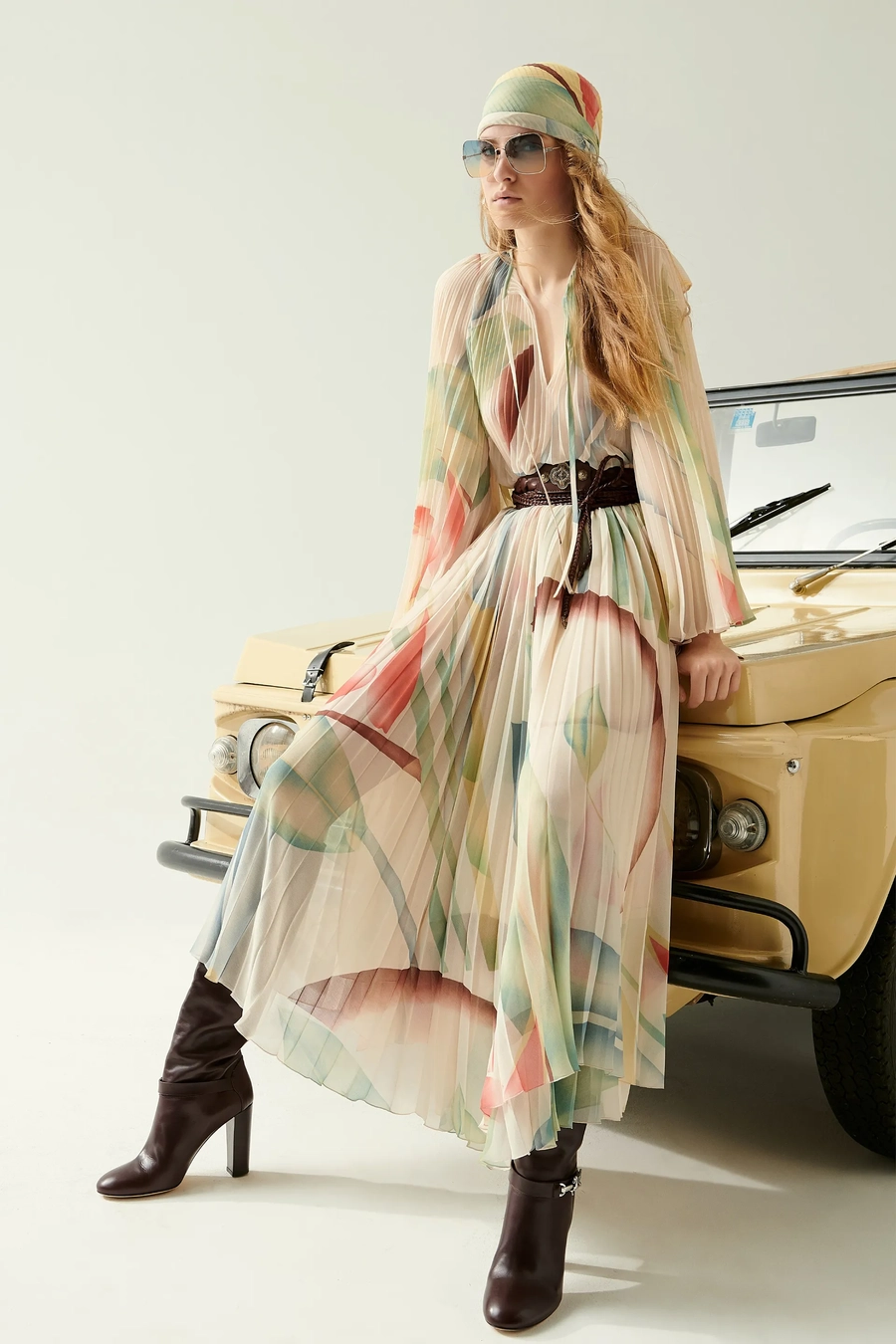
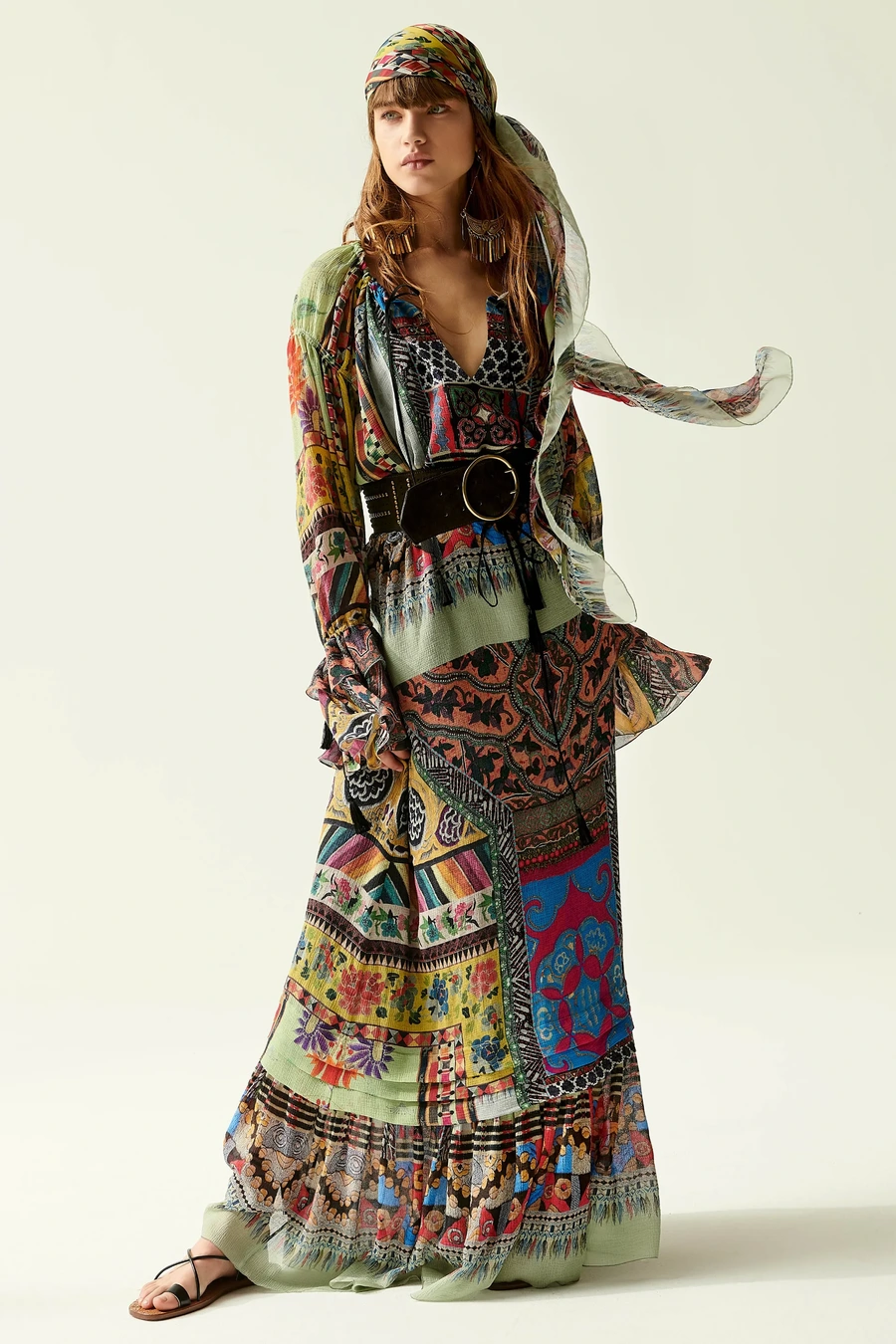
Etro treats hippie style as a journey across pattern, textile, and inherited imagination. Its freedom is more cultivated than rebellious, shaped by the idea of travel as a wardrobe language and by clothes that seem to gather stories from many places at once.
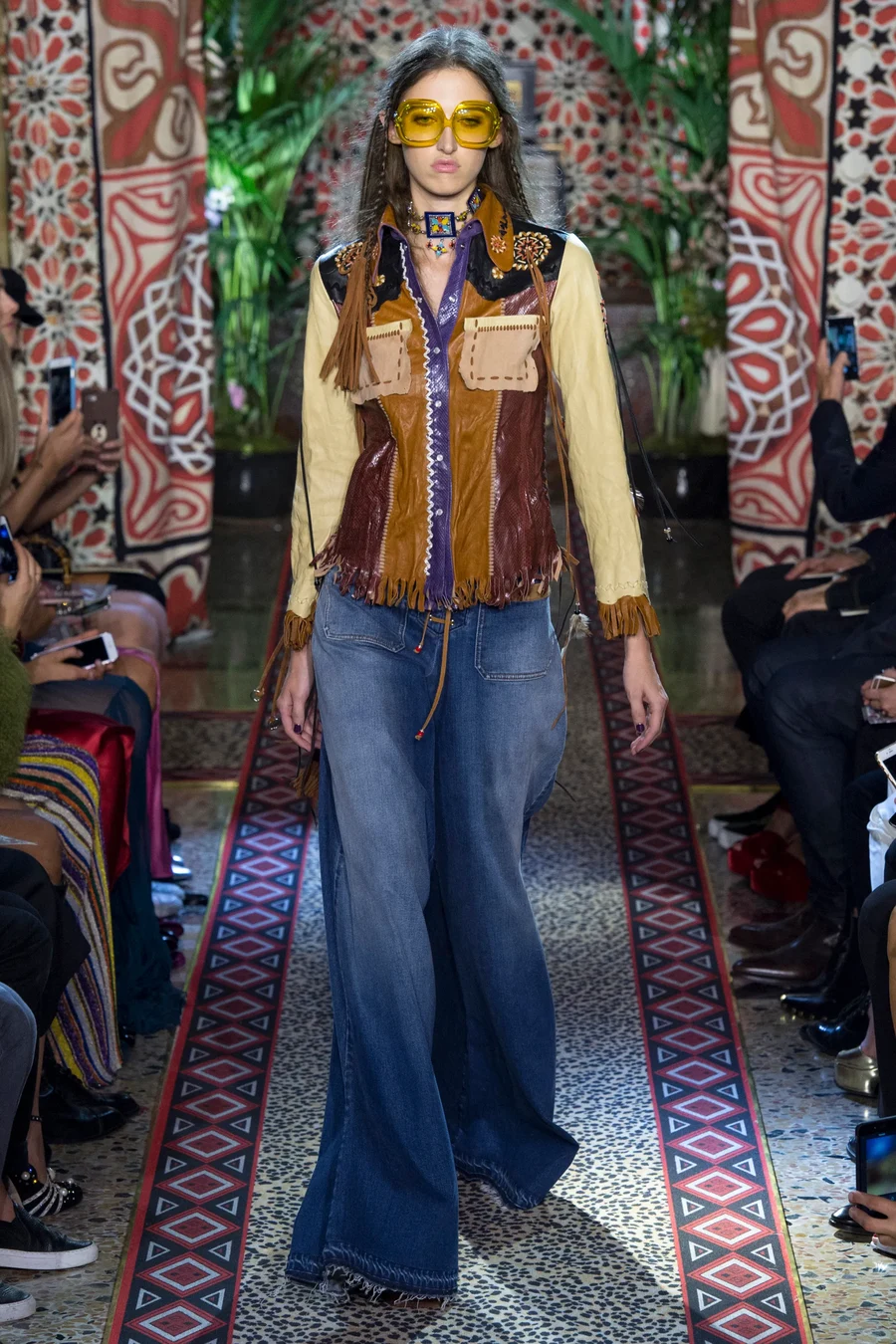
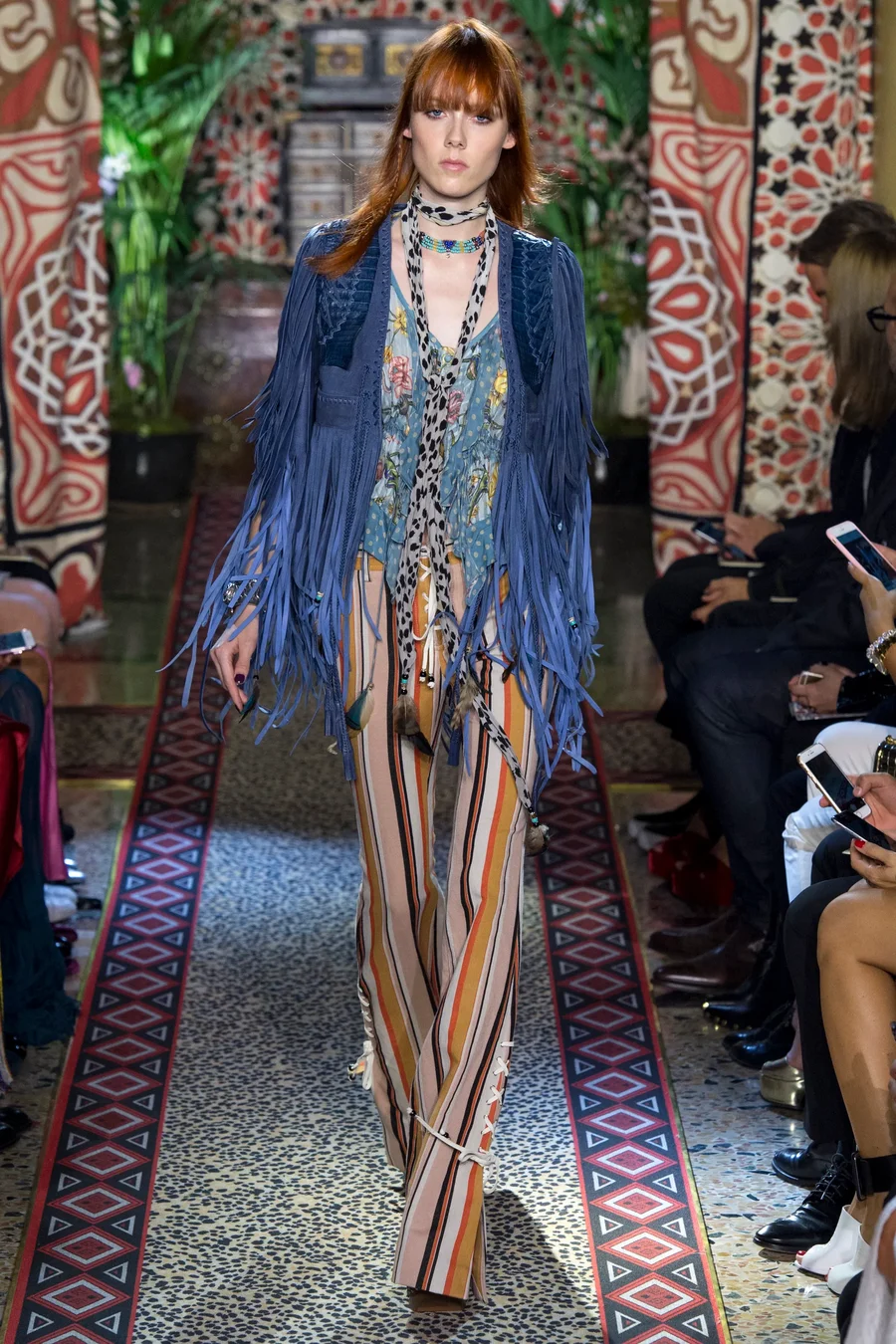
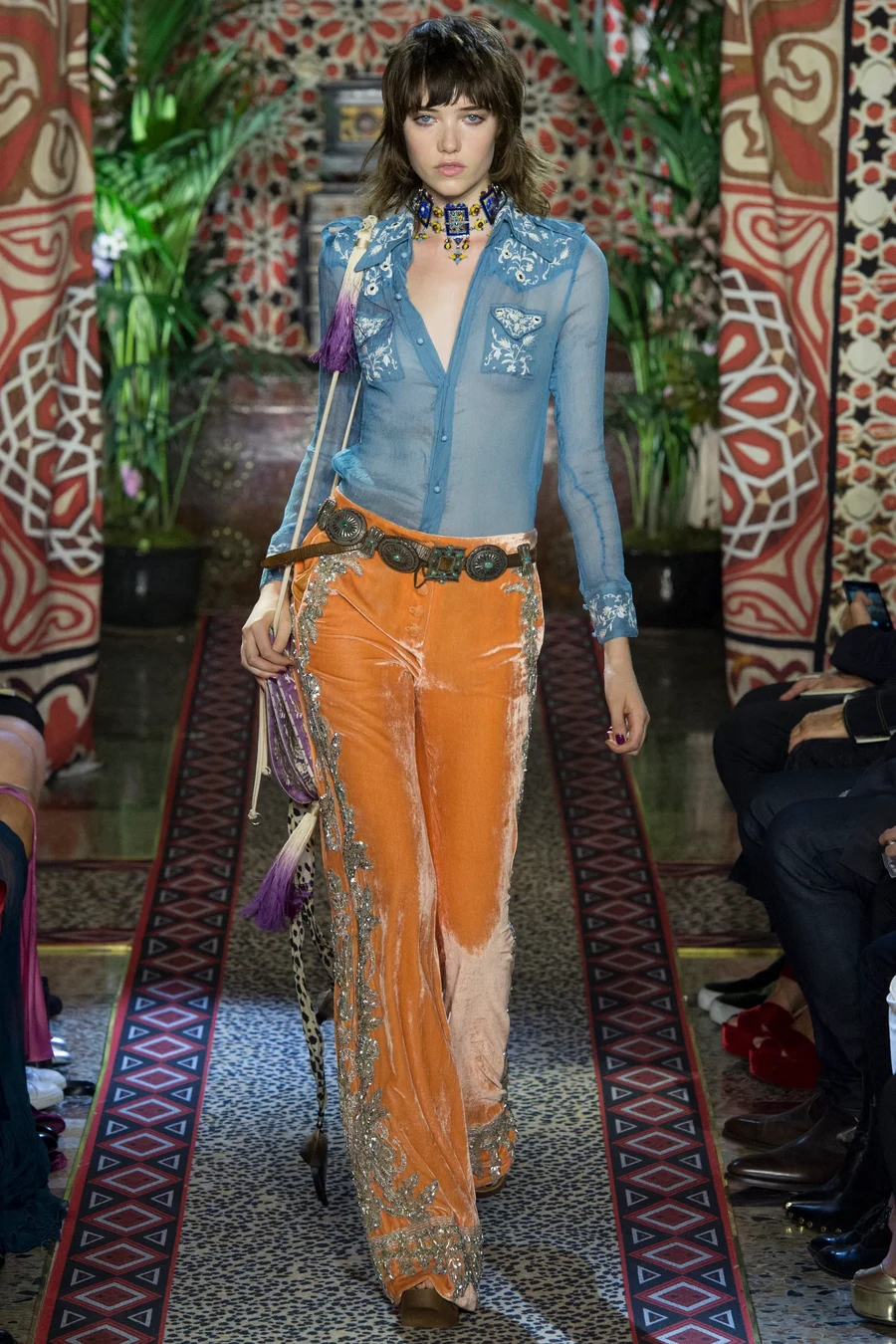
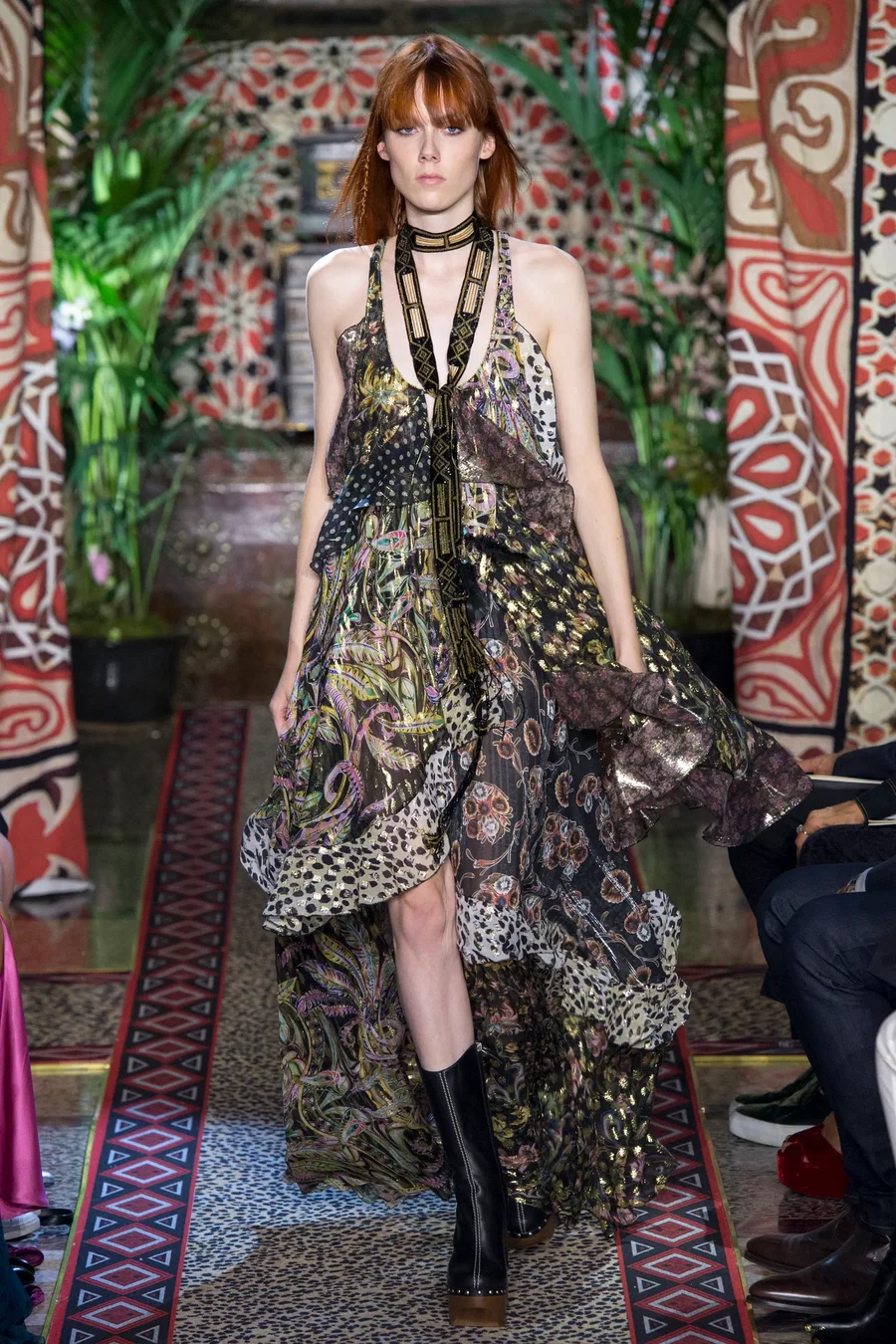
Roberto Cavalli gives hippie style heat. The free body becomes glamorous, sun-warmed, and almost dangerous, as if the barefoot dream of the movement had walked into a room of gold light and decided to stay after dark.
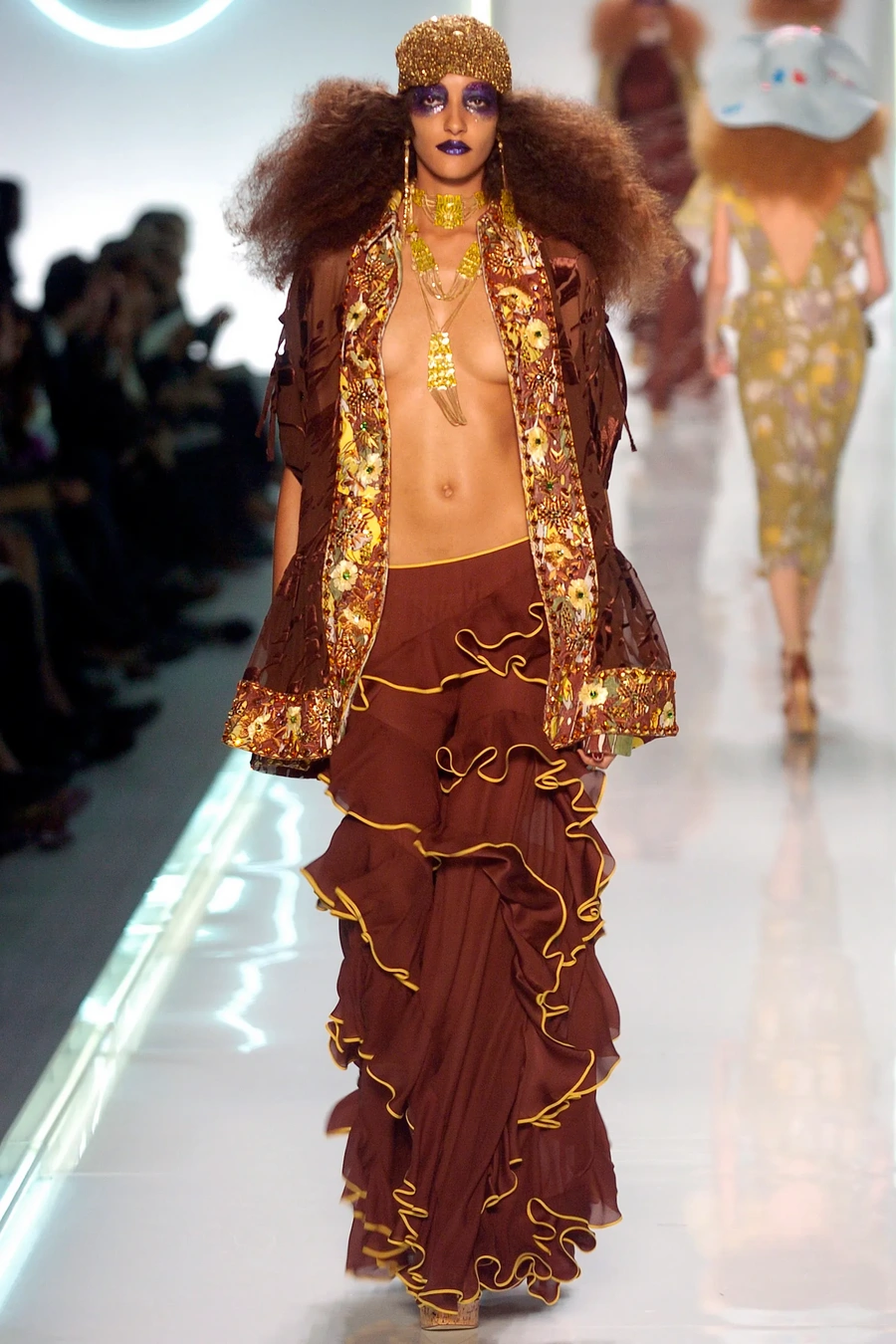
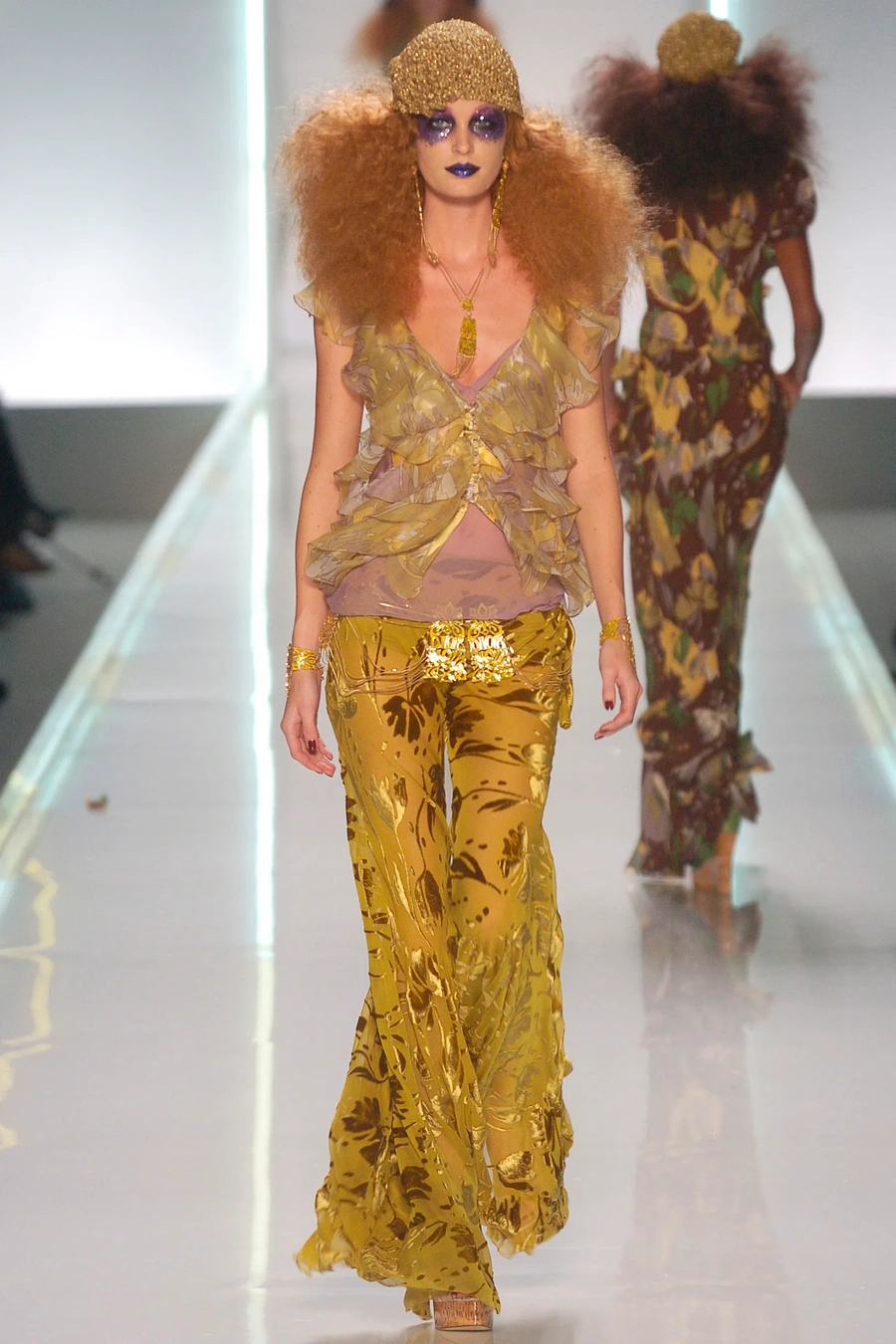
Christian Dior turns the hippie impulse into theatre. Under Galliano’s eye, the style becomes a fantasy of escape, mixing romance, costume, travel, and excess until the countercultural girl becomes a character in a much larger dream.
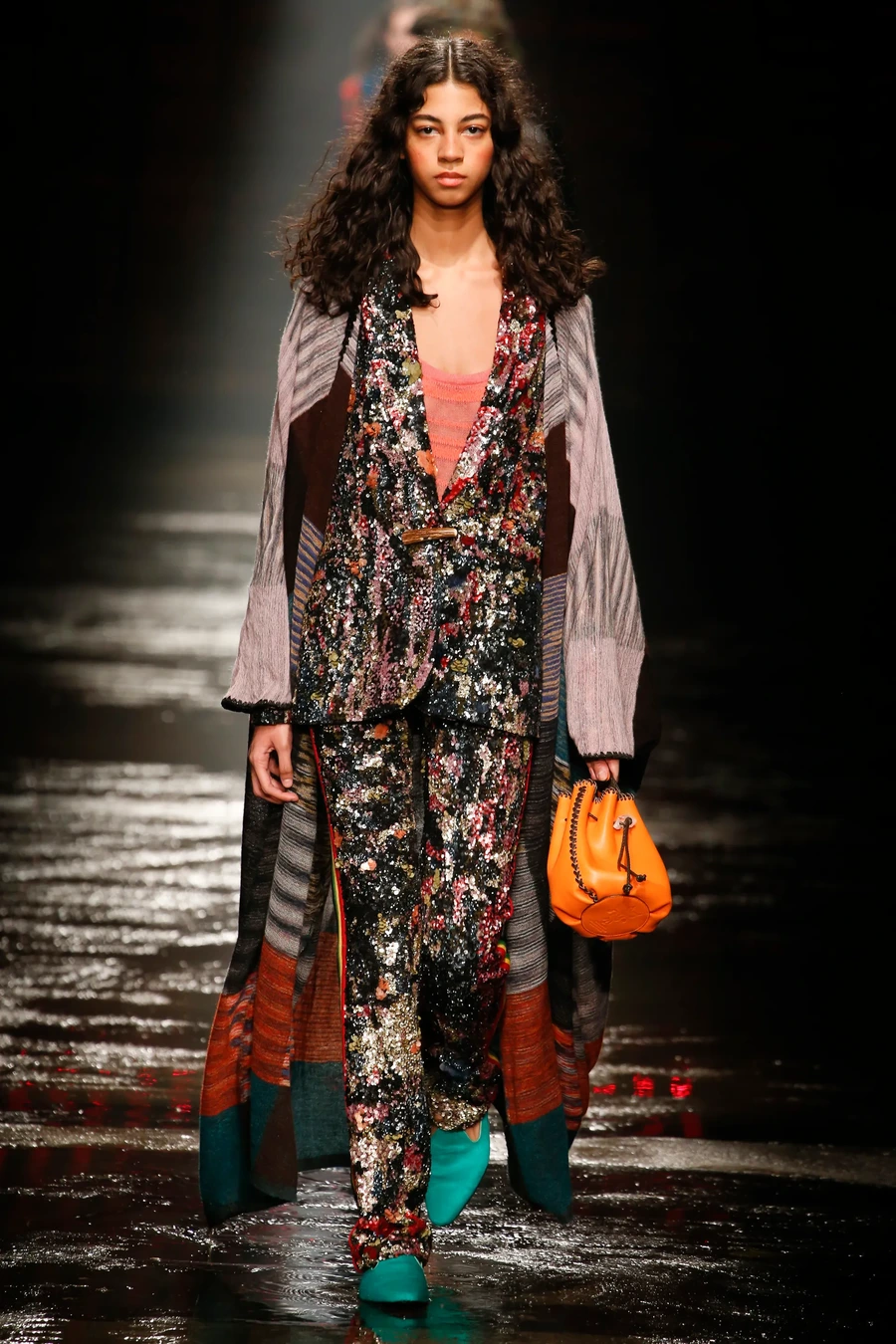
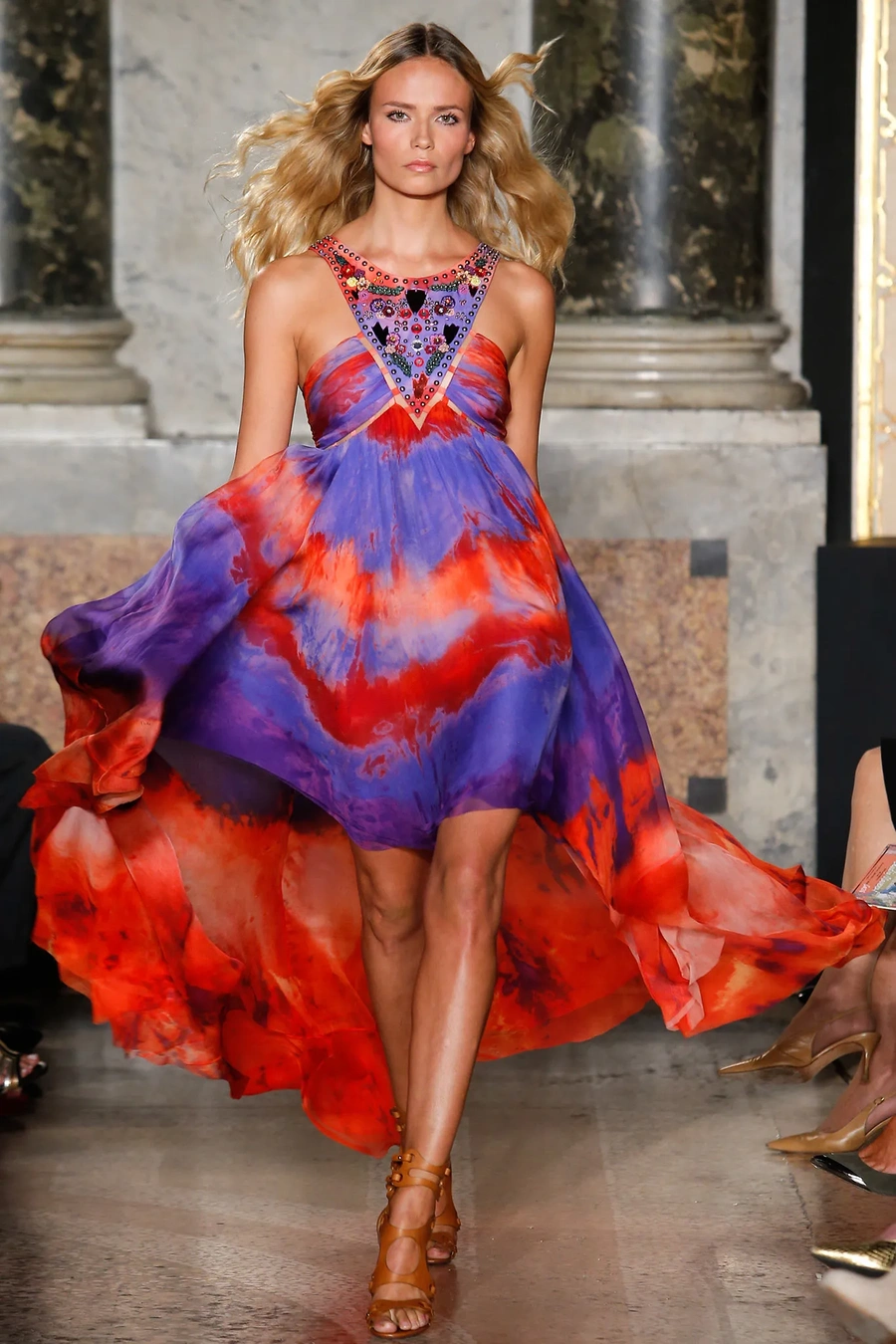
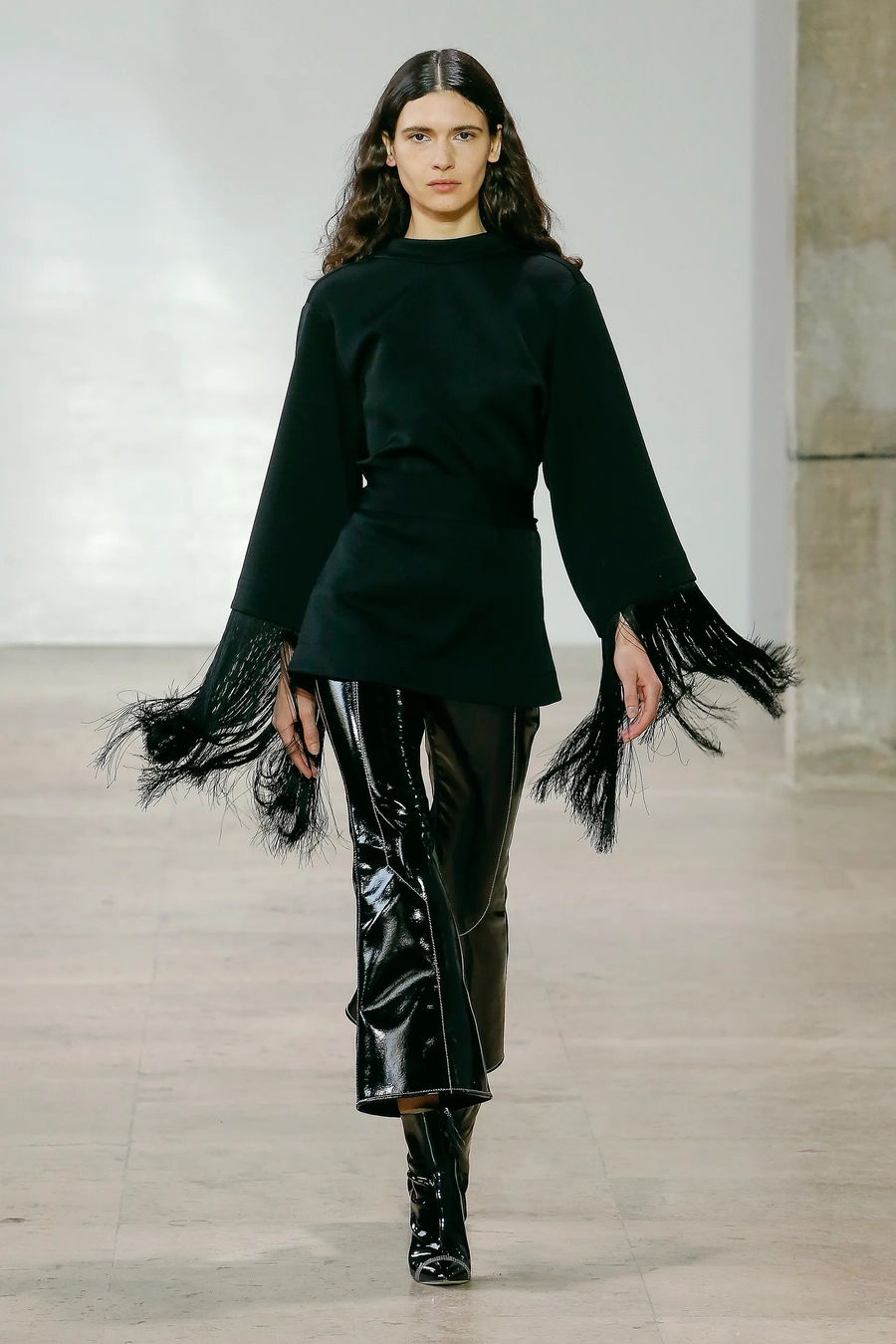
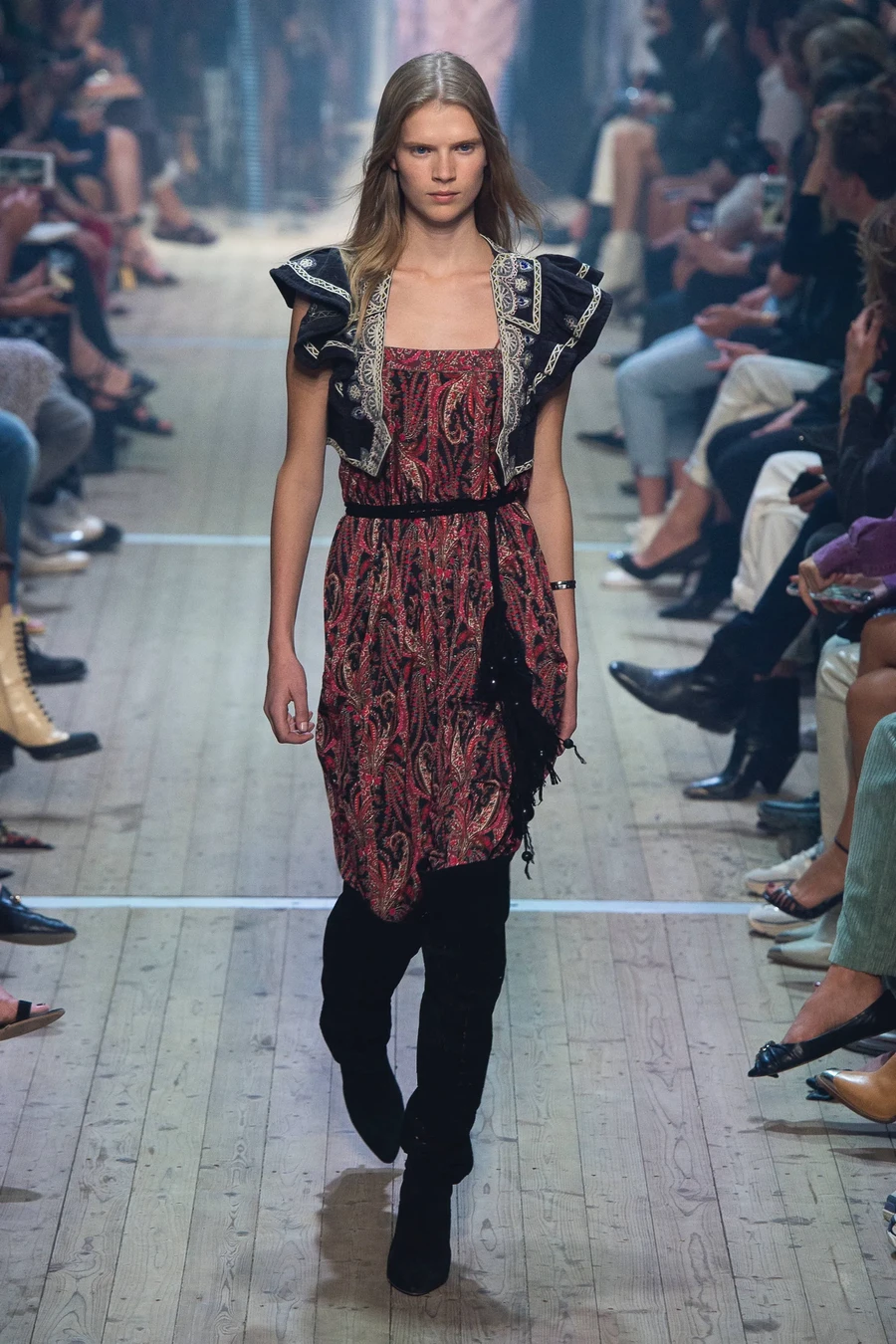
Beyond these houses, the hippie memory often survives in quieter transformations. A garment may carry the suggestion of handwork, movement, music, or open air without naming the decade directly. At its best, contemporary fashion keeps hippie style alive as an atmosphere: personal, restless, sunlit, and still unwilling to stand perfectly in line.
Girls Under Film Light, Chasing A Larger Sky
Cinema gives hippie style a body in motion. Under film light, the clothes stop looking like references and become part of a girl’s private weather, catching the noise of concerts, bedrooms, long roads, unfinished love, and the restless hope of leaving one life for another. The style works best on screen when it seems to follow music before it follows fashion.
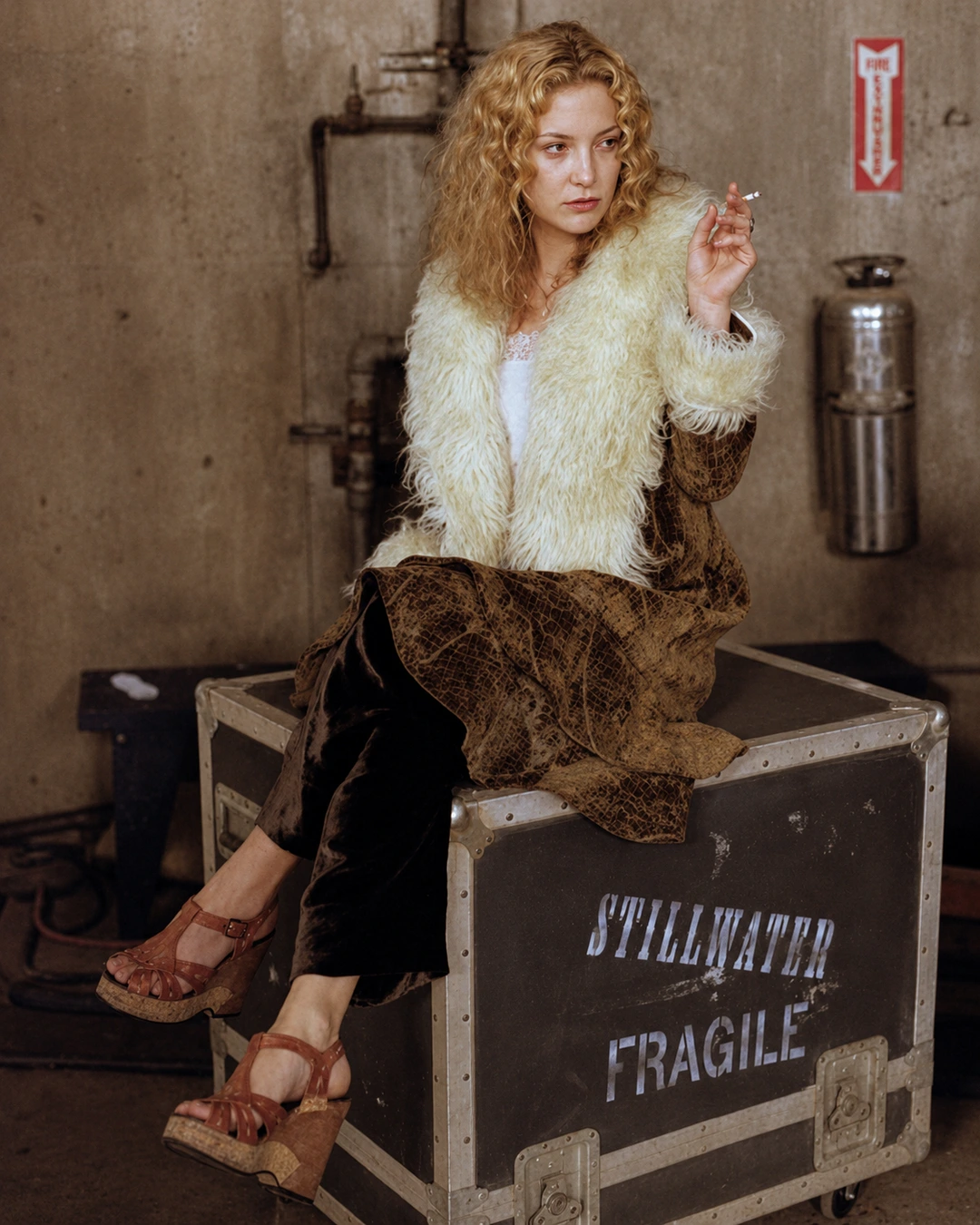
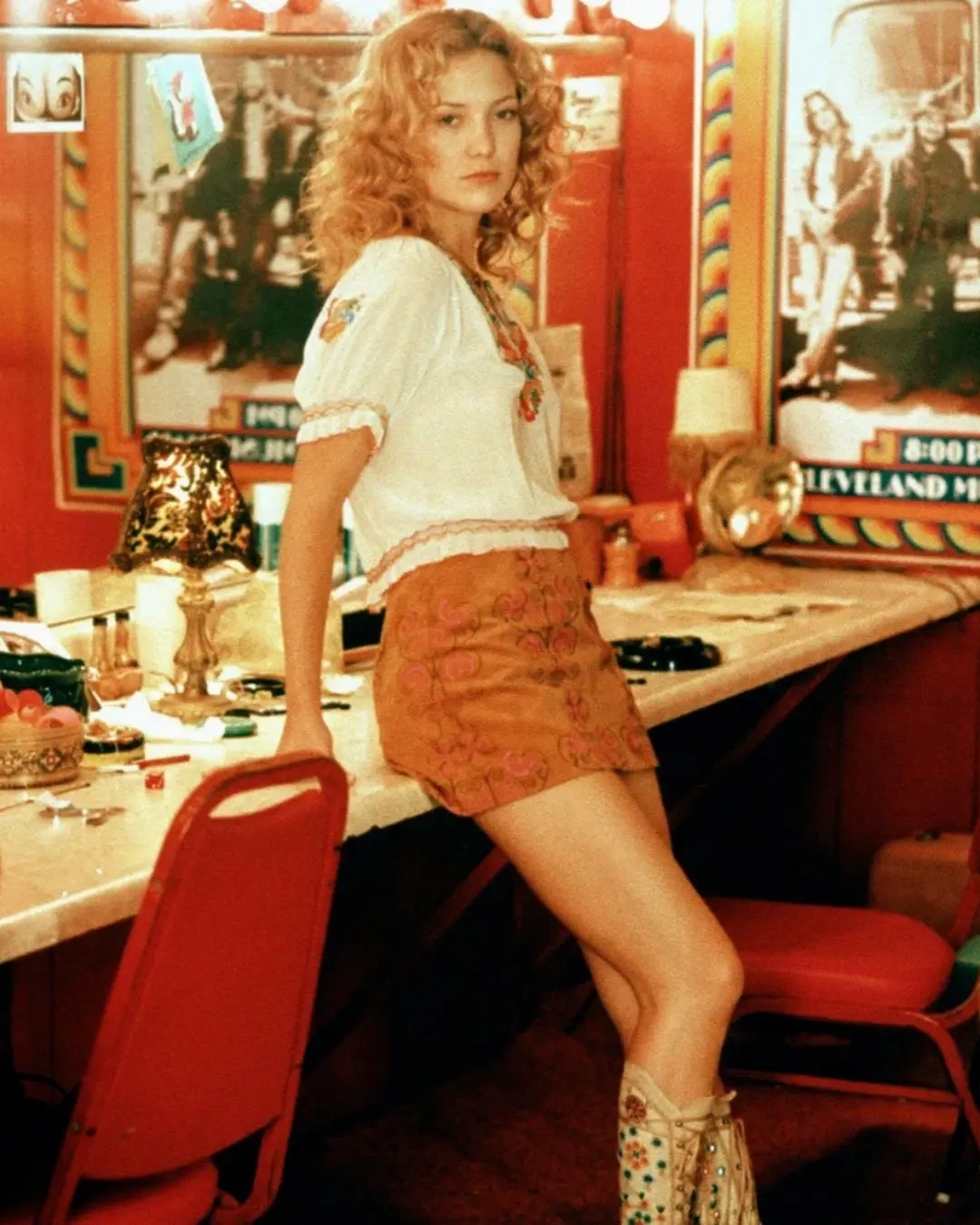
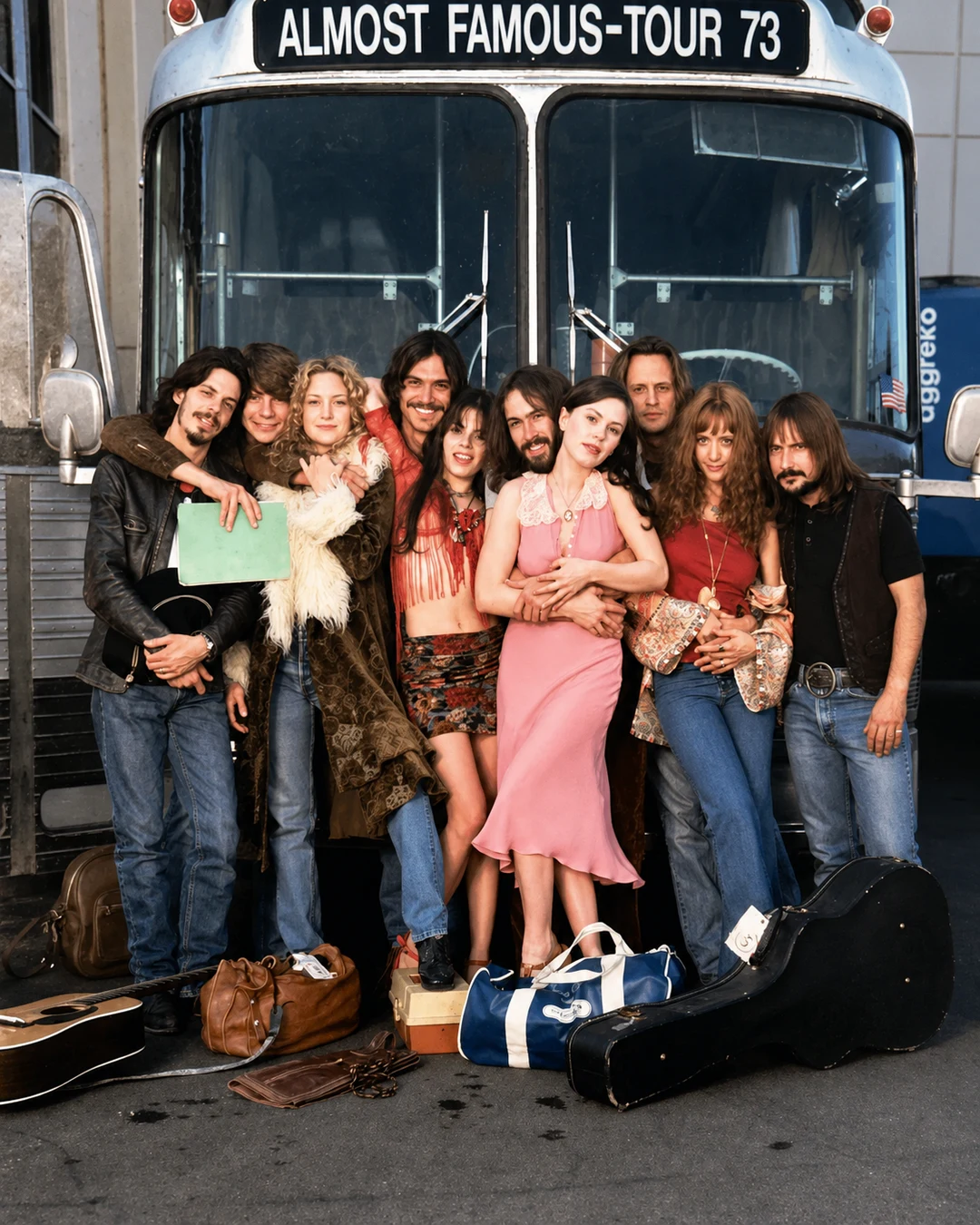
In Almost Famous, Penny Lane turns hippie style into a beautiful kind of self-invention. Her coat, her hair, and the soft glamour around her all suggest a girl wrapped in fantasy, using clothes as both invitation and protection. She belongs to backstage corridors and passing headlights, to the fragile space between being adored and being truly seen, which makes her image so unforgettable. The wardrobe carries the ache of the road: romantic, worn close to the body, and bright enough to hide loneliness for one more song.
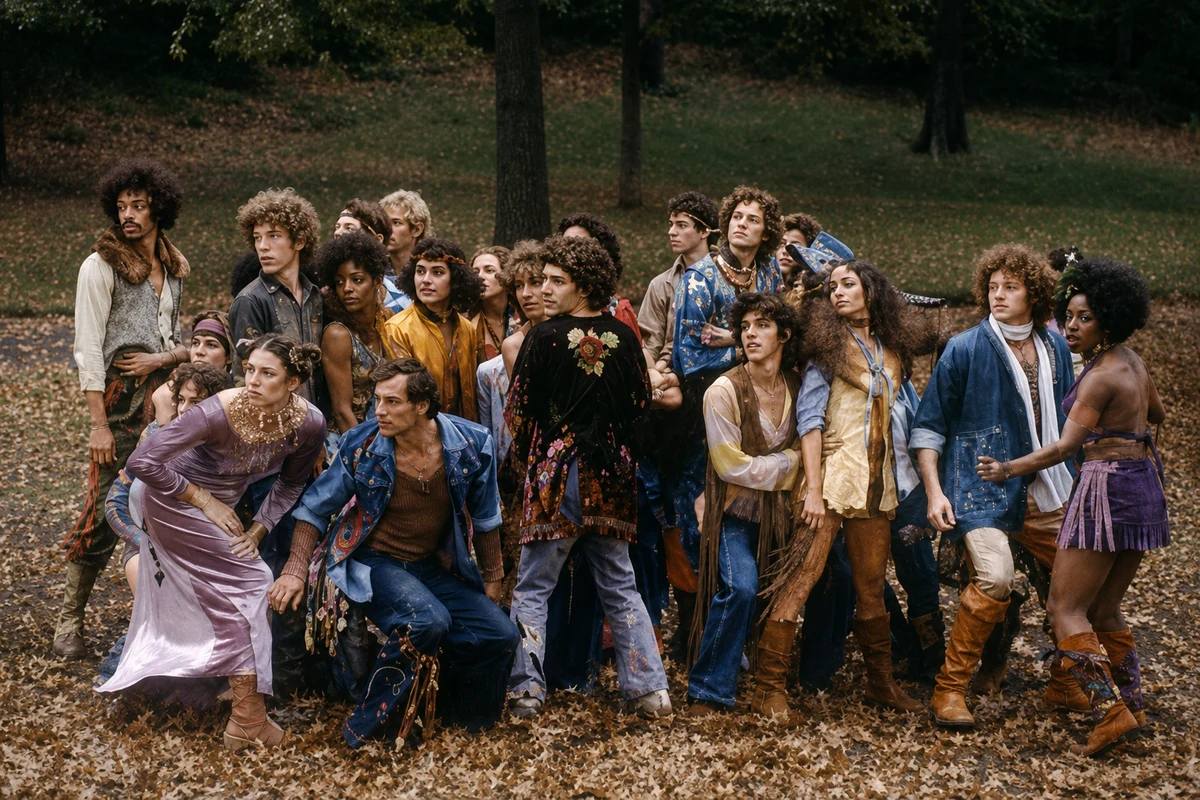
Hair brings the style closer to its collective pulse. Clothes move through bodies gathered by music, friendship, protest, and a hunger for a gentler world, where dressing loose becomes part of living loose. Its hippie spirit feels less curated than cinematic boho, holding onto the rawer dream of a generation trying to answer hardness with color, touch, and freedom.
Together, the two films give hippie style both myth and movement. One follows a girl wrapped in her own legend; the other opens into a crowd still singing the old wish to make love, not war, with clothes that refuse to stand perfectly still.
The Dream Never Learned to Stand Still
Hippie style leaves fashion with something softer than a rule and stronger than a trend. A little looseness. A little sun. A hem that refuses perfect discipline. A color that seems to arrive before language. It asks clothes to remember the body as living, breathing, desiring, wandering.

Its beauty comes in pauses. In fabric touched by hand. In denim worn until it keeps the shape of someone’s days. In flowers that look gentle, then turn strangely brave. Hippie style carries the old whisper of “make love, not war” not as a slogan printed flat across history, but as a way of dressing against hardness, against sameness, against a world too eager to turn people into straight lines.
The spirit survives whenever fashion lets tenderness take up space. Whenever the craft looks more precious than perfection. Whenever a dress moves as if it has somewhere open to go. Whenever color gathers around the body like hope, messy and radiant and impossible to fully contain.
So the flower stays. Still burning quietly at the edge of the sleeve, in the loosened seam, in the fringe that keeps moving after the music fades. Hippie style remains a love letter to freedom, written in cloth, worn close to the skin, and left unfinished on purpose.
Advertisement