MENU
Close





Beneath the Brooklyn Bridge, spring seems to have escaped the clothes entirely. Ulla Johnson SS27 lets it spread into texture, movement and the landscape around them.
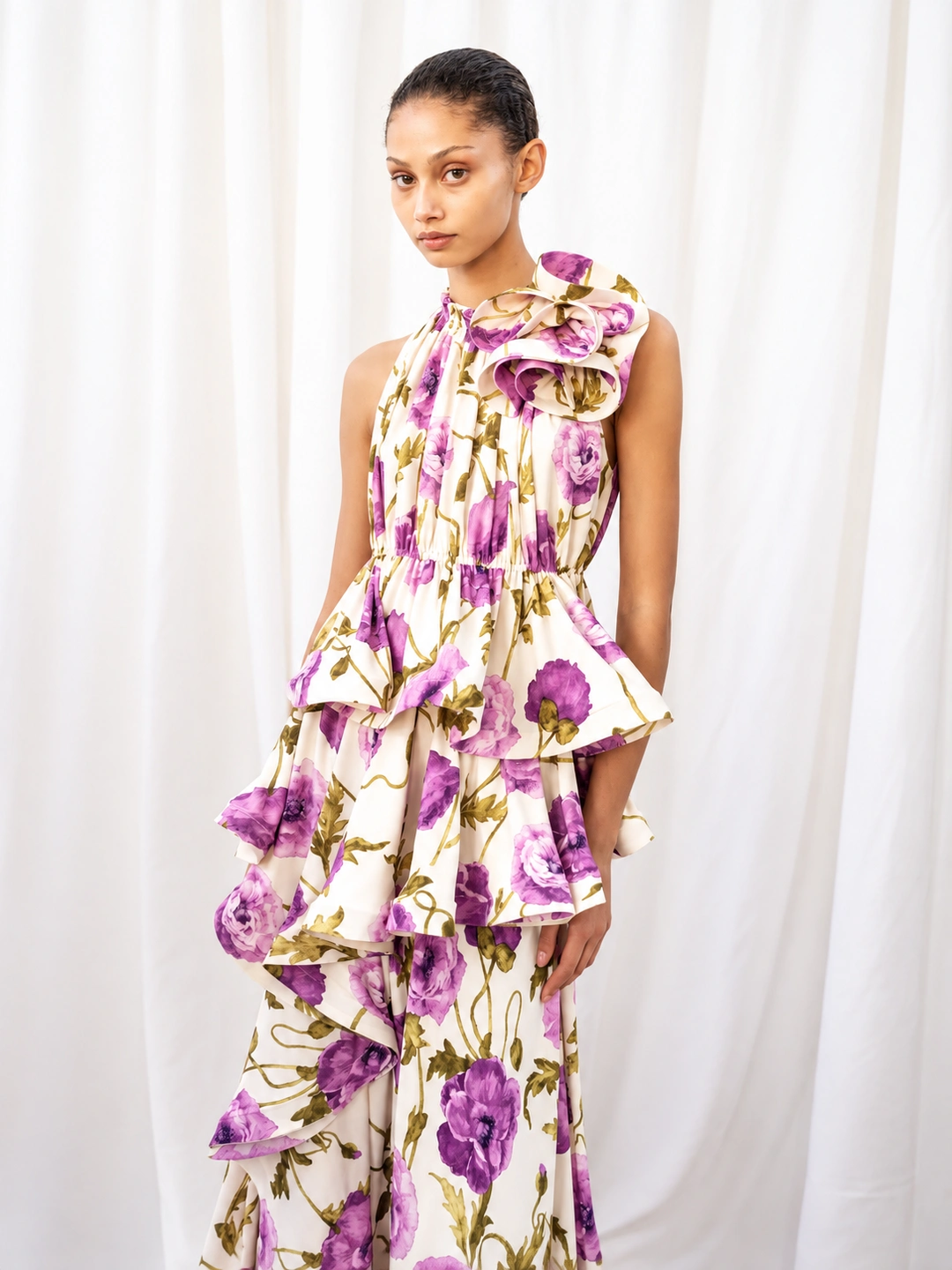
Beneath the Brooklyn Bridge, spring seems to have escaped the clothes entirely. Ulla Johnson SS27 lets it spread into texture, movement and the landscape around them.
September 15, 2026
Advertisement

Advertisement



Spring found an unlikely place to bloom beneath the Brooklyn Bridge. Steel rose overhead, brick stretched underfoot, and through that hard New Yorkgeometry came clothes that seemed intent on softening everything around them. Flowers appeared first as the most obvious clue, yet Ulla Johnson SS27 soon made clear that this was larger than a season of floral dresses. Spring travelled through the collection as atmosphere: on surfaces that fluttered and frayed, in scarves caught against coats, in transparent layers that let sunlight pass through, even in the landscape the show would eventually leave behind.
Johnson described the collection through transparency and movement, and both ideas work best when seen against the city around them. Her romance remains intact, though it has loosened from the bohemian shorthand once attached so firmly to the label. Spring here can still be dreamy, but it also has somewhere to go in the morning.
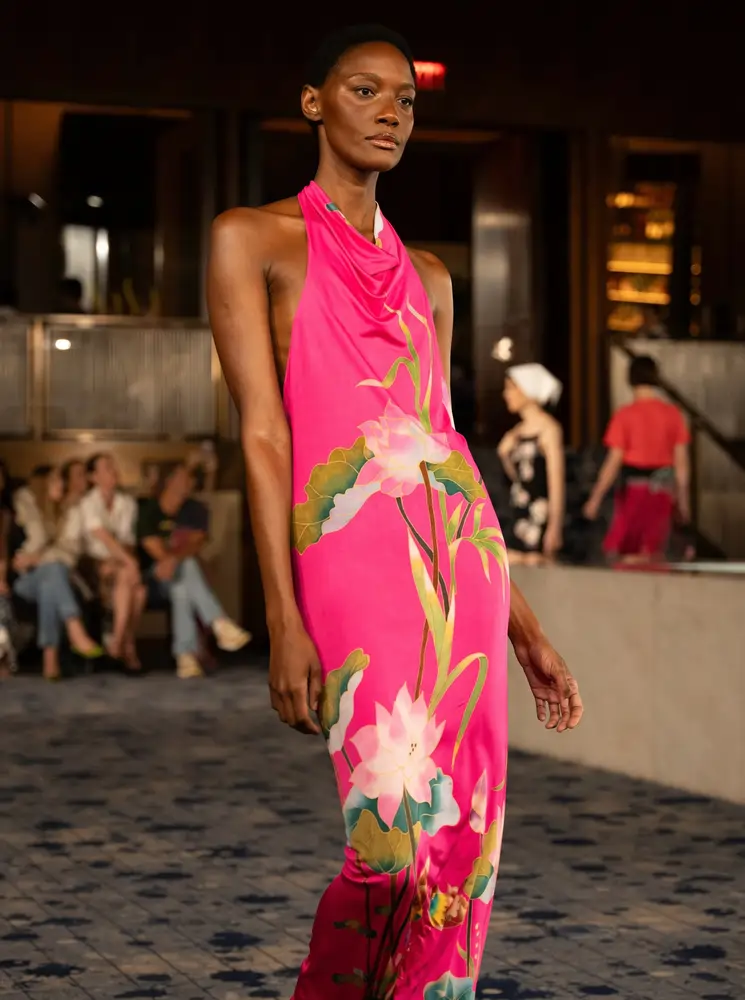
A floral dress can become terribly predictable in spring. Yet Ulla Johnson avoids that fate by refusing to let the flowers settle into one silhouette for very long.
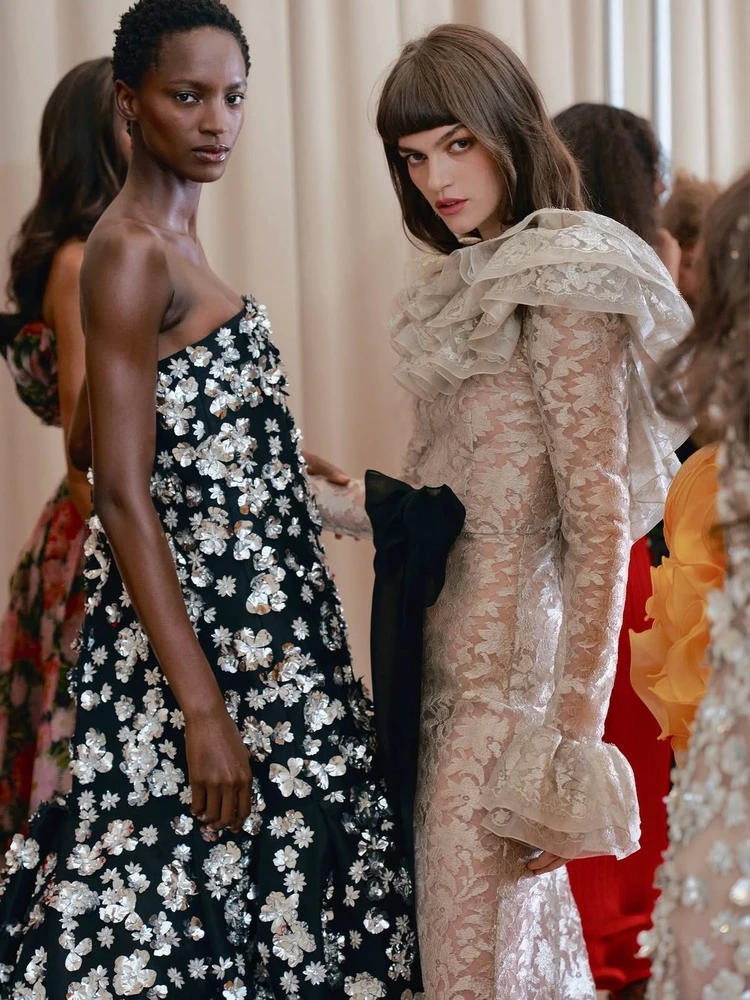
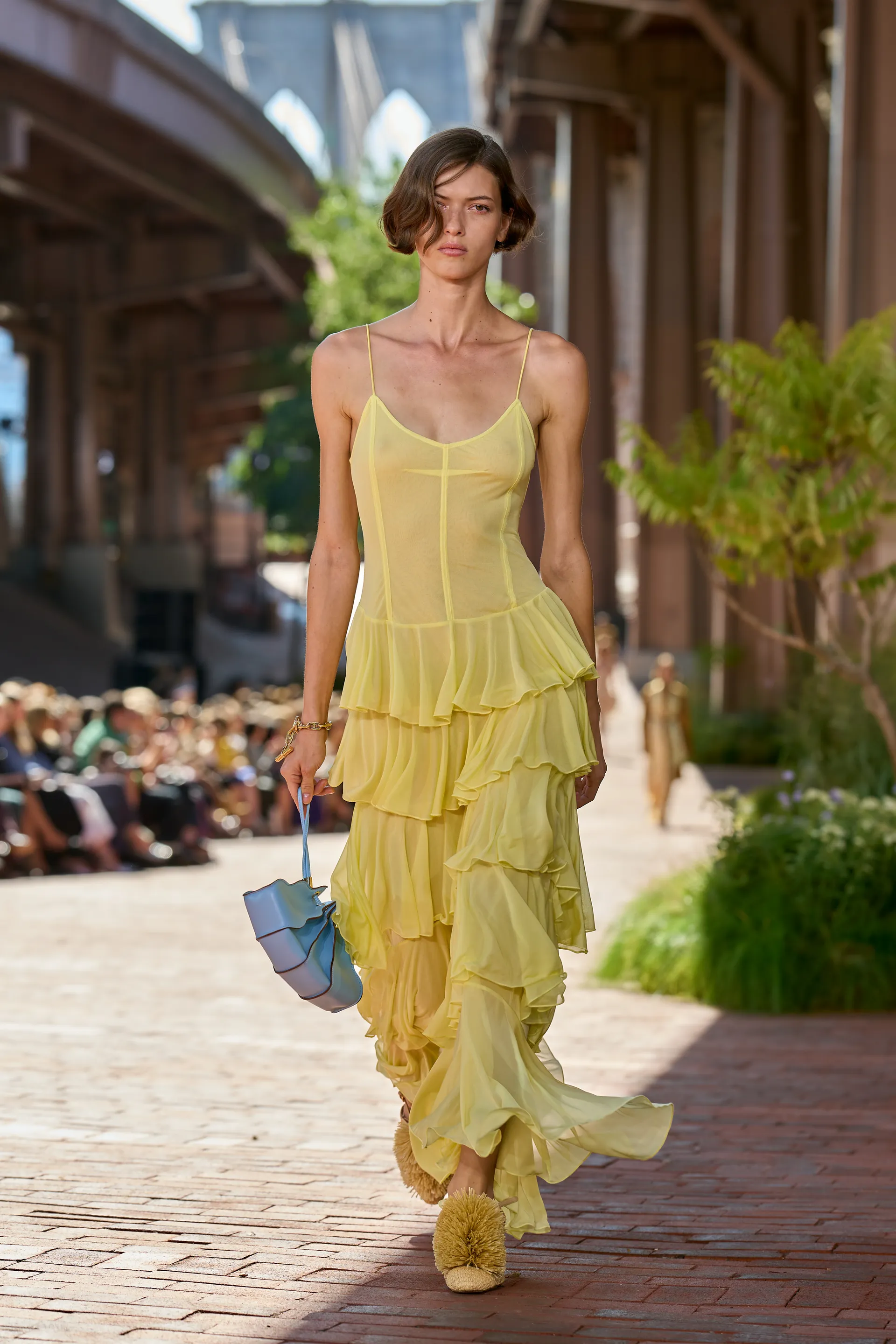
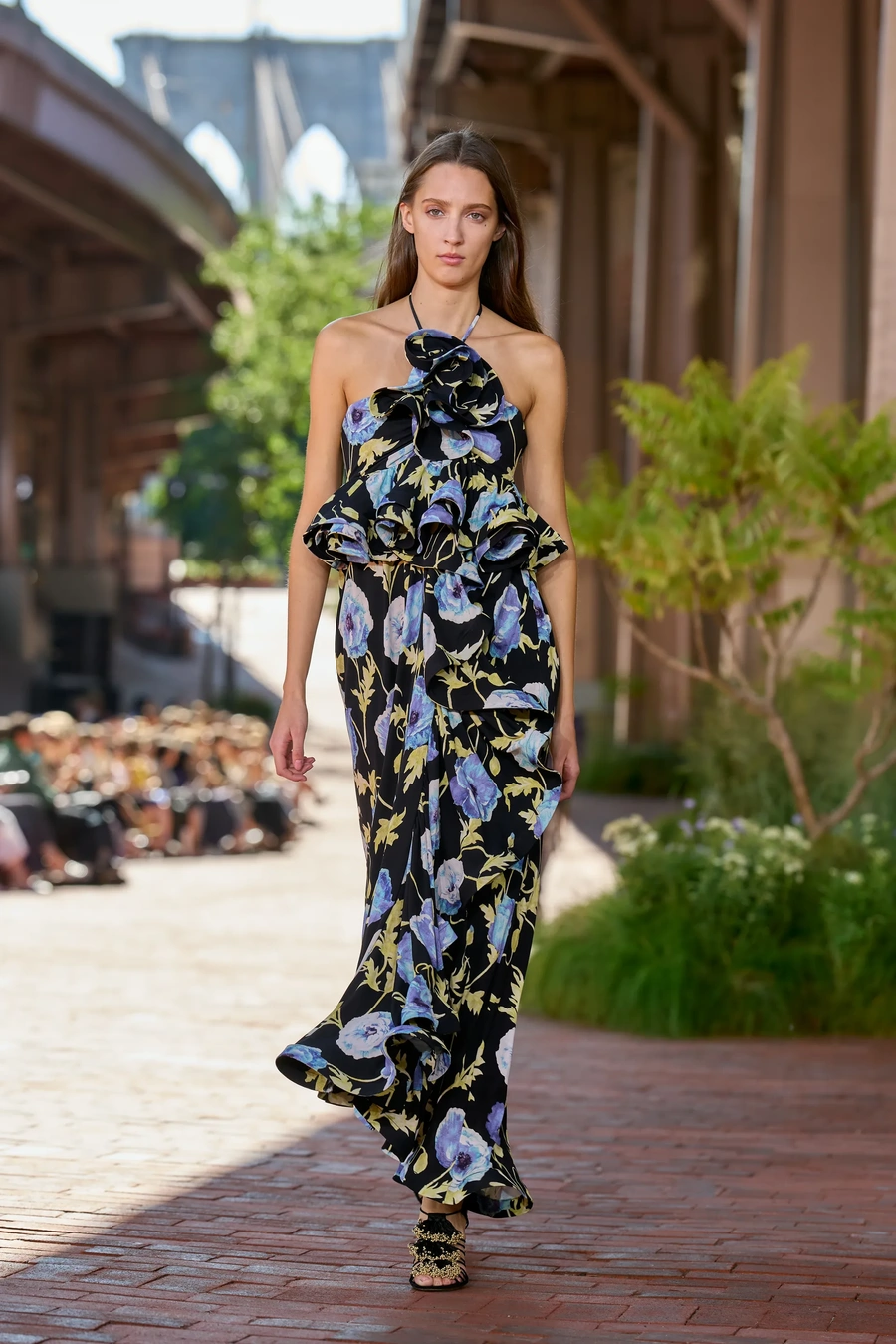
They begin scattered across soft, uneven shapes that move freely around the legs, then slip into something closer to lingerie dressing, where lace interrupts the print and makes the floral surface seem more intimate. Elsewhere, the body disappears beneath lighter volume, flowers enlarging as the dress opens into airy tiers. By the time texture begins to rise from the cloth itself, the garden has almost escaped the flatness of print altogether.
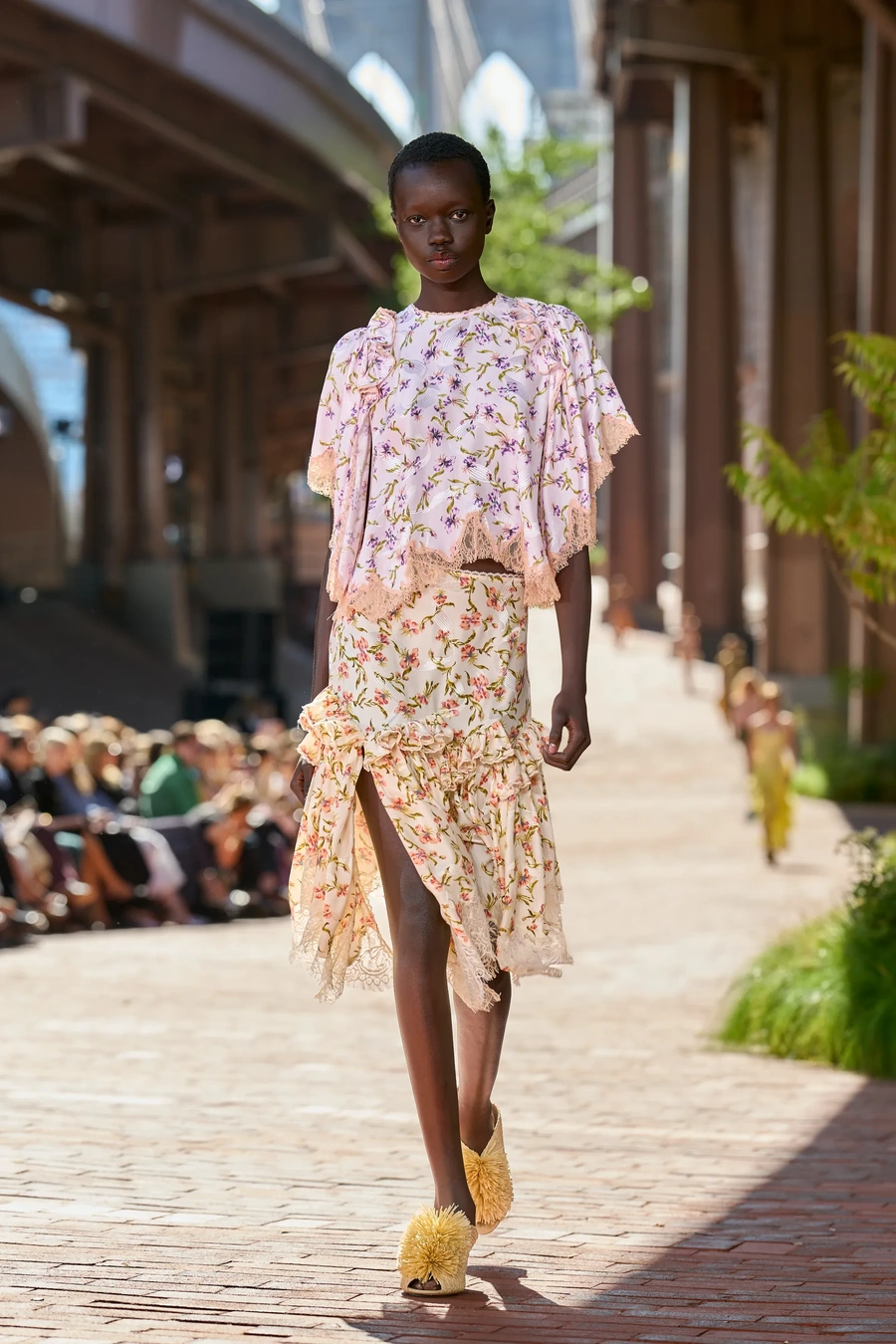
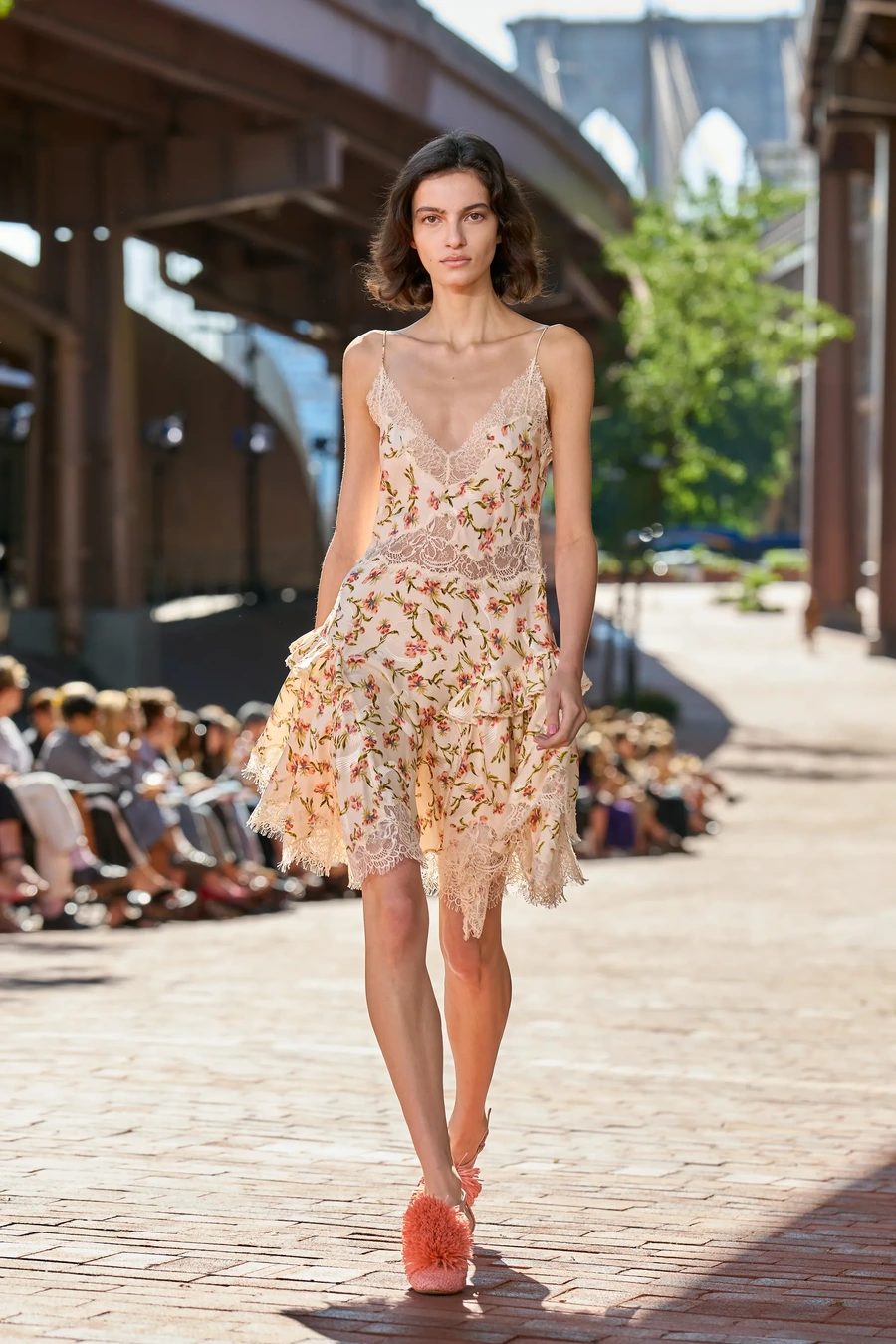
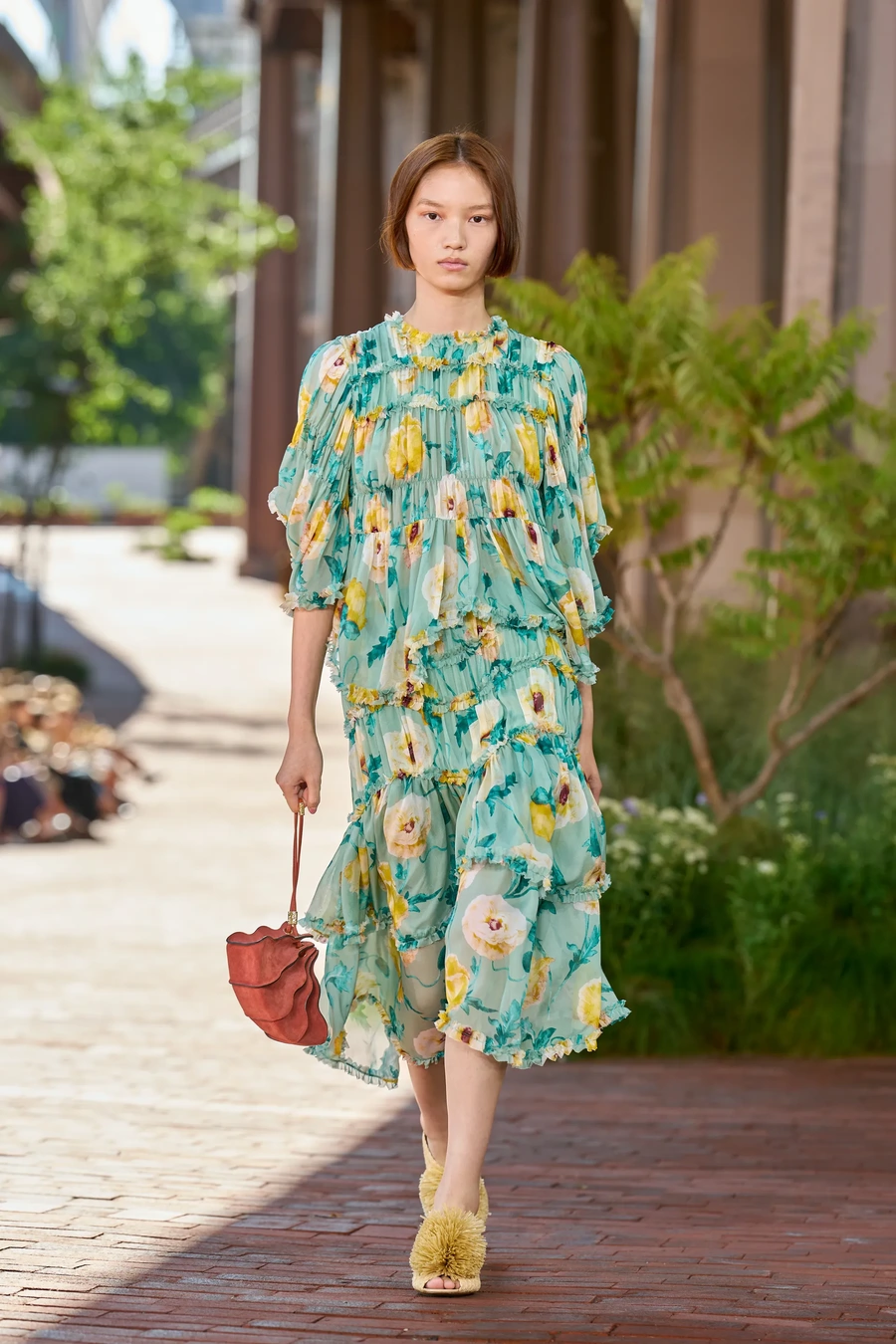
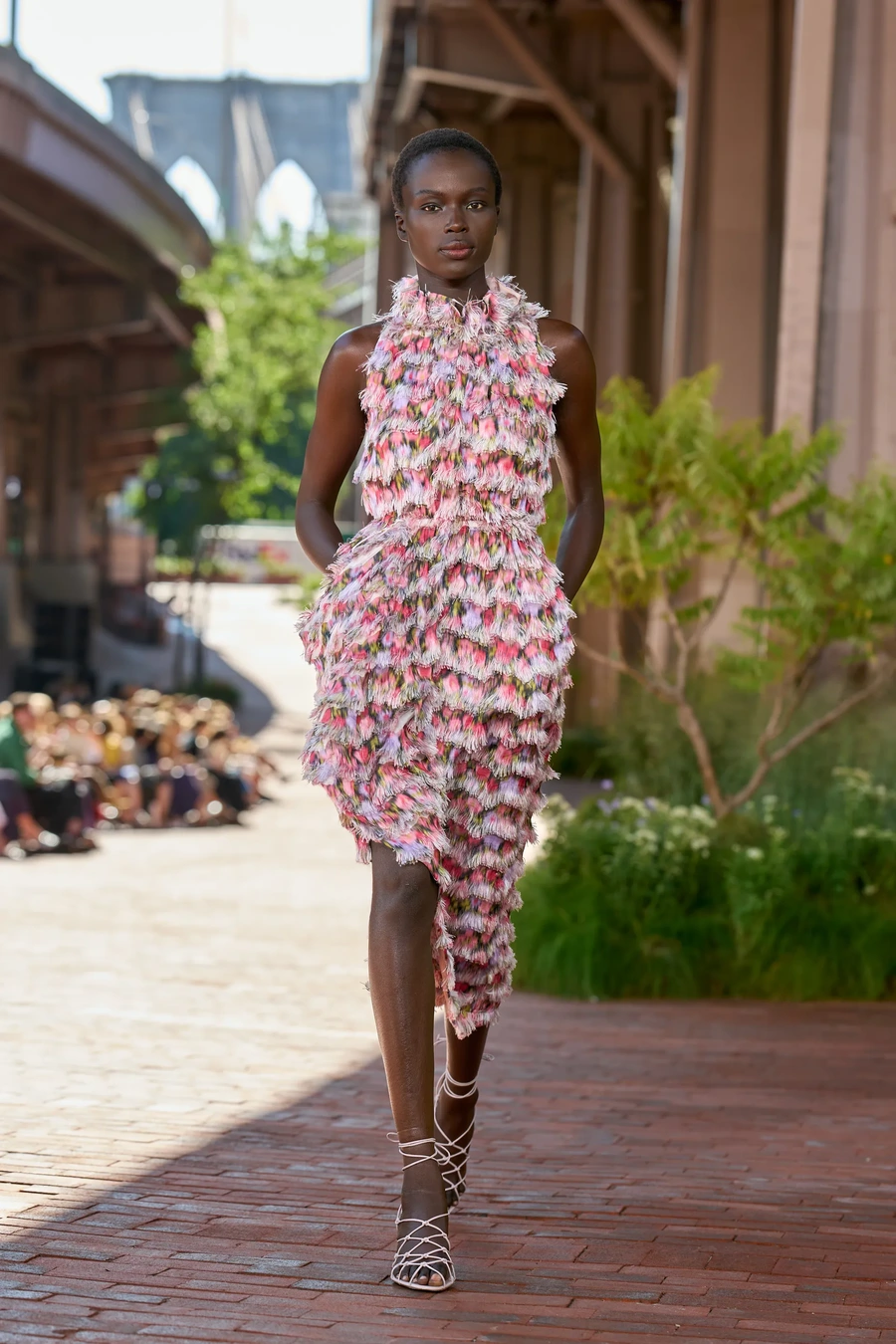
The silhouettes keep changing the mood of the same botanical idea. One can look slightly undone, another closer and more sensual, another so loose that movement becomes its defining line. Johnson lets femininity travel between them without asking every dress to speak in the same voice. Flowers become a vocabulary broad enough to move from delicacy to abundance without losing their place in the collection.
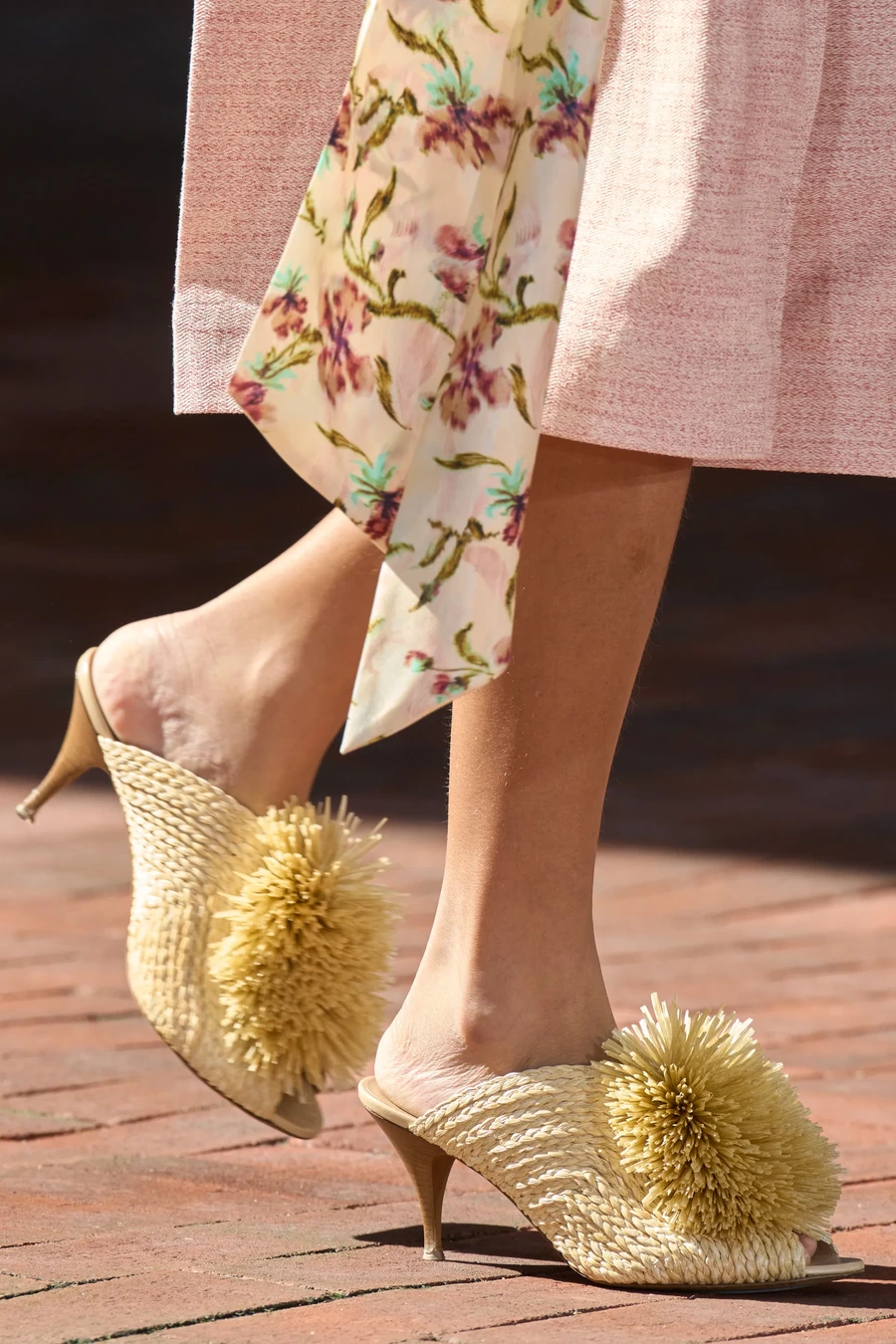
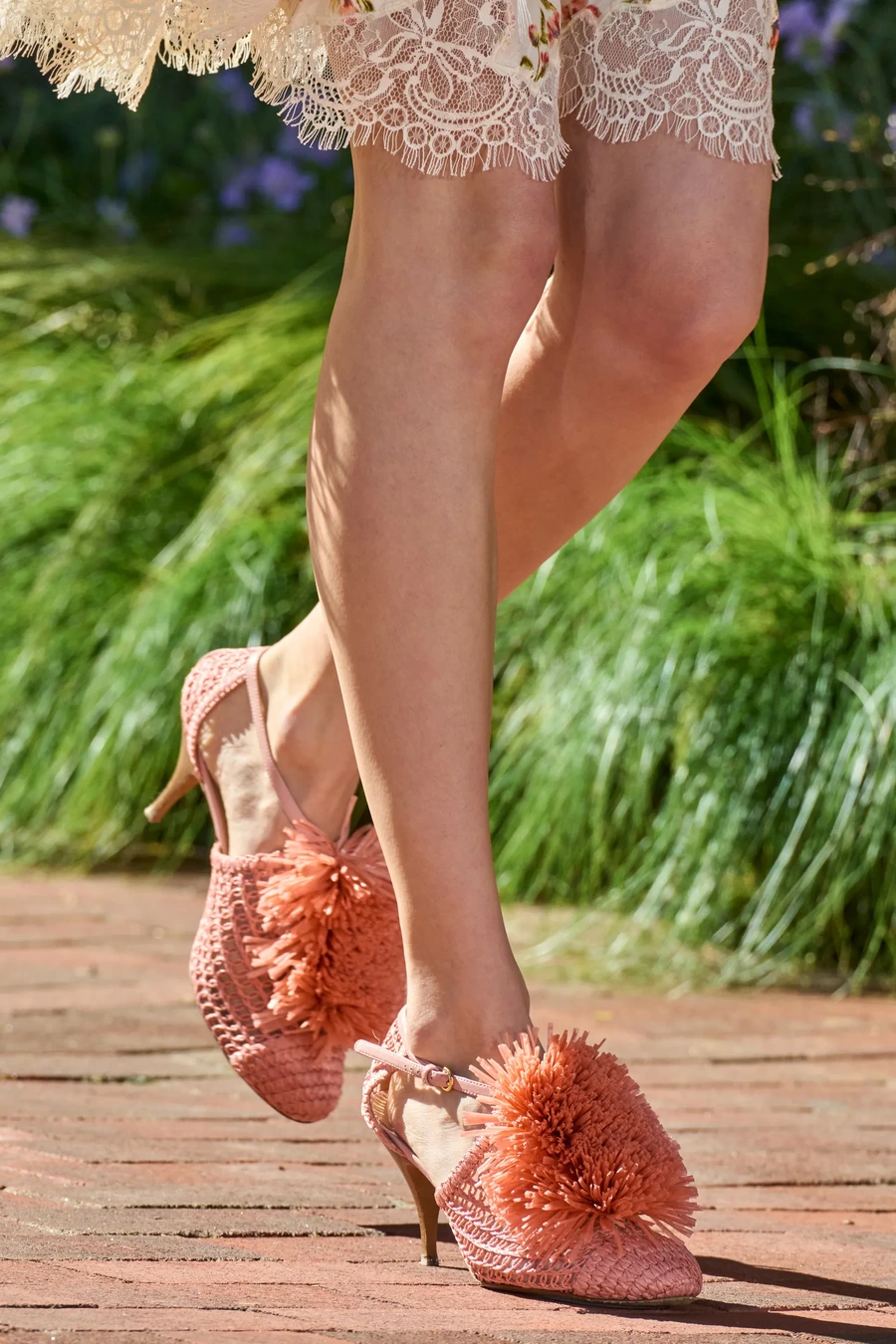
Even the shoes appear to have caught whatever is growing above them. Woven mules are finished with fuzzy, bloom-like pompoms at the toe, a small detail that could easily have tipped into sweetness but instead extends the collection's sense of movement all the way to the pavement. The garden has simply reached its feet.
New York rarely hands spring over cleanly. Warm light can arrive while the coat still refuses to leave the chair, and Ulla Johnson seems perfectly content to dress for that indecision.
Outerwear remains in the picture, though its severity has started to soften. Trench coat is belted over lighter layers; sleeves reveal flashes of something fresher underneath; relaxed trousers replace the heavier logic of cold-weather dressing. The coat stays, but the season inside it has already changed.
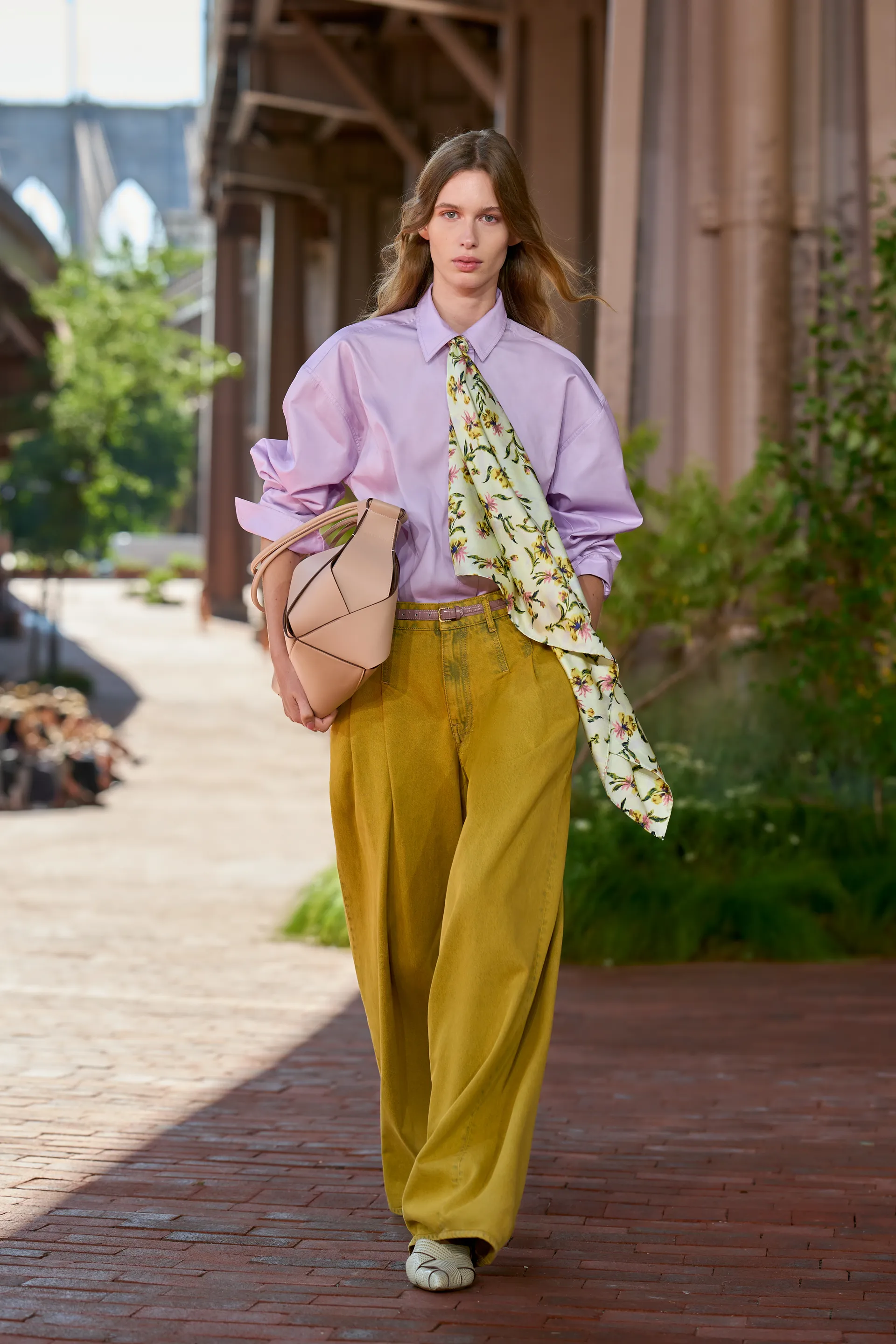
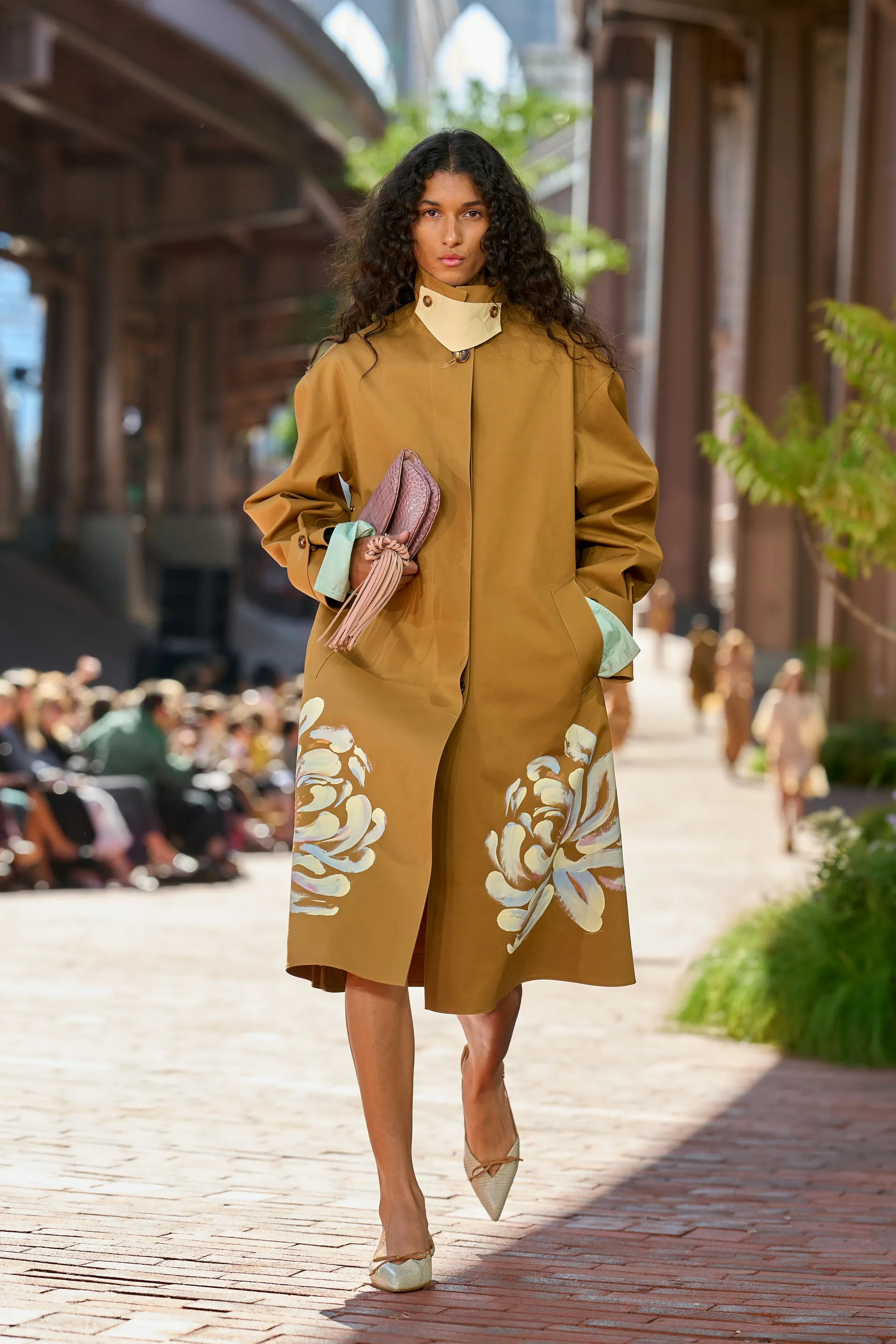
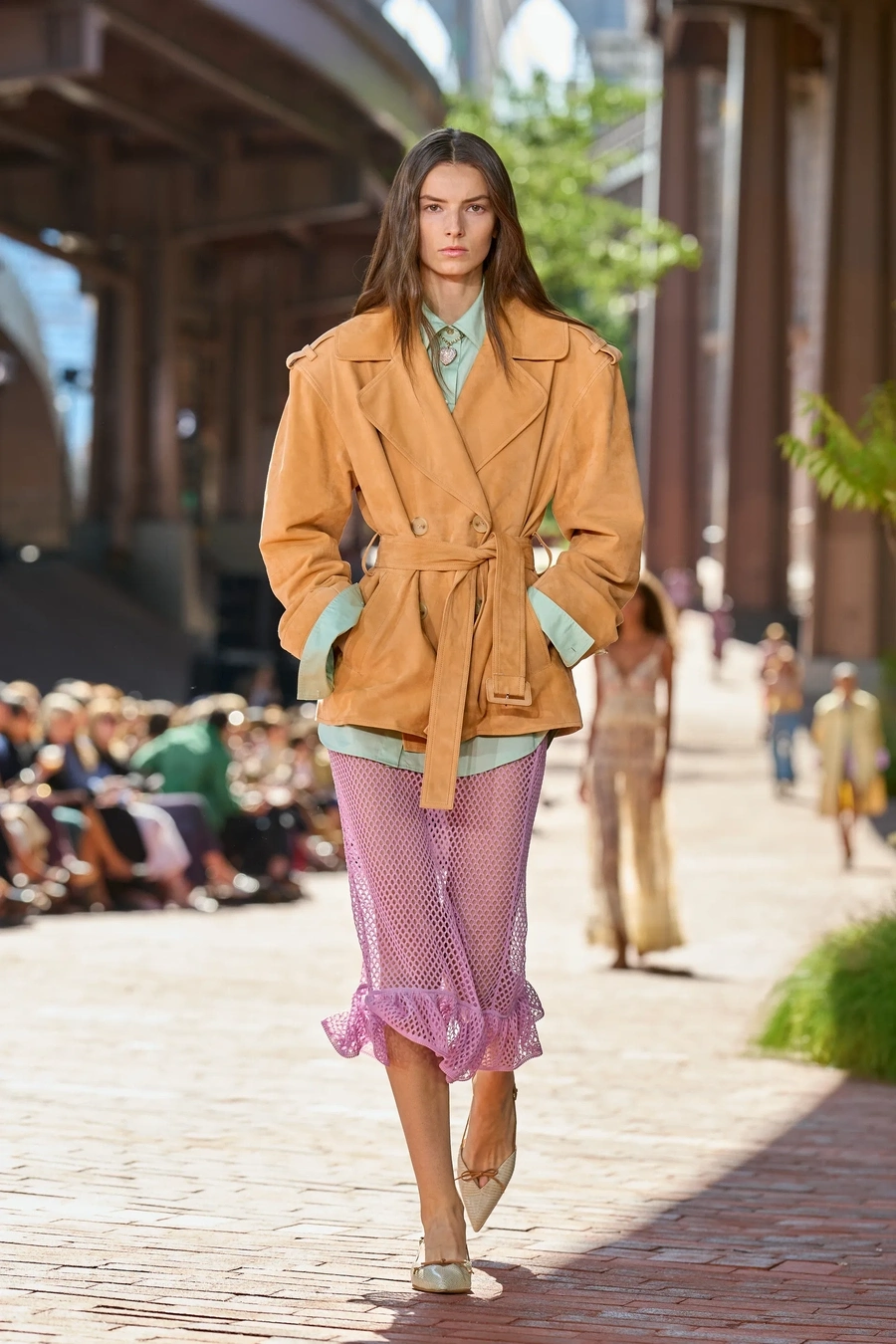
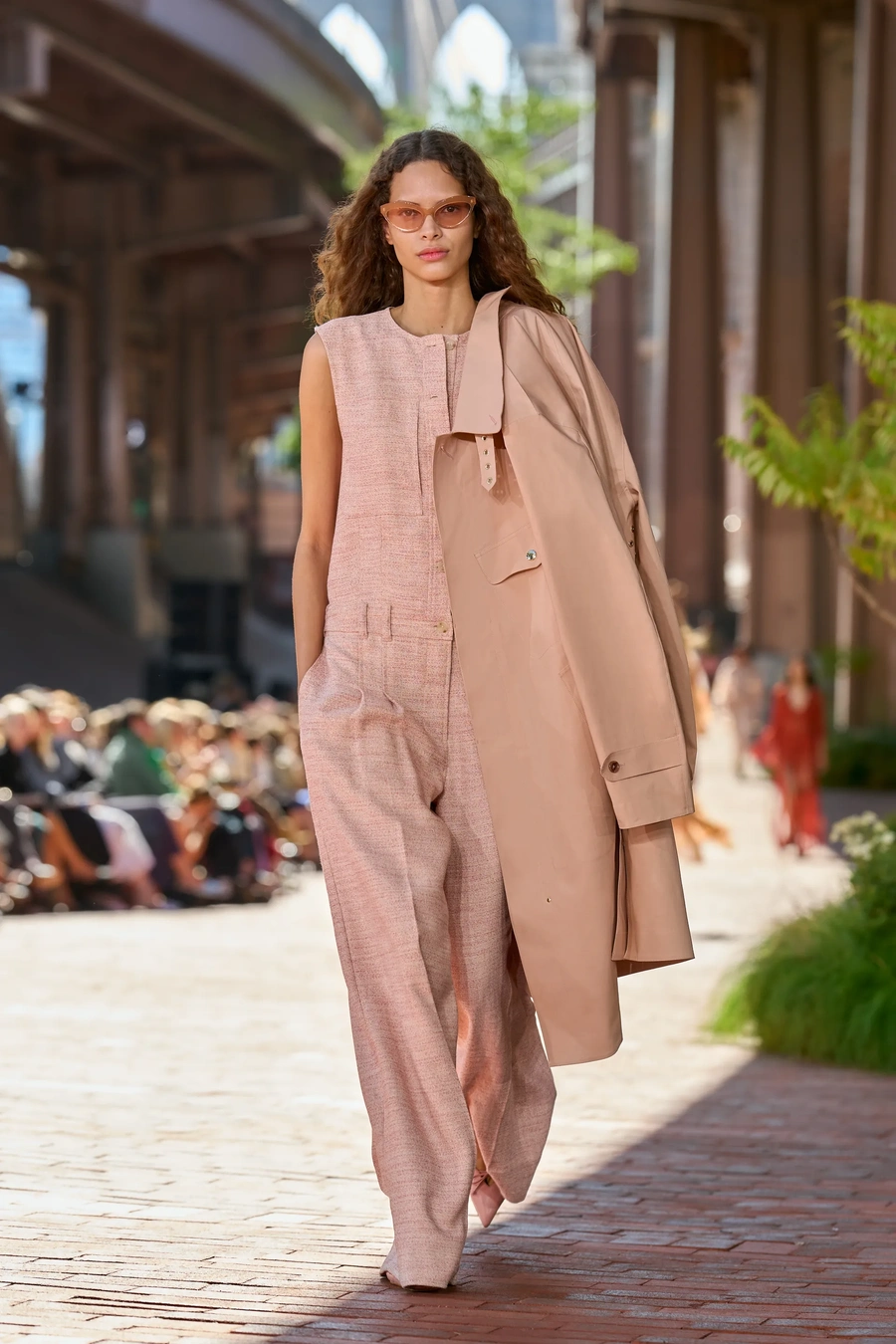
A pale shirt can meet trousers with almost casual looseness, while a transparent skirt underneath a structured jacket makes the whole outfit seem caught between protection and exposure. Spring seeps into winter gradually, first through a cuff, then through colour, then through the way fabric begins to move.
The styling also makes the collection more urban than pastoral. These are clothes that can move through a city morning without losing the romance surrounding them. Soft tailoring and trench coats give the flowers somewhere practical to live, allowing spring to enter daily dressing without turning every outfit into a garden party.
Winter may still be holding the door, but spring has already slipped past it.
When the air remains cool, Ulla Johnson SS27 reaches for lightness instead of weight.
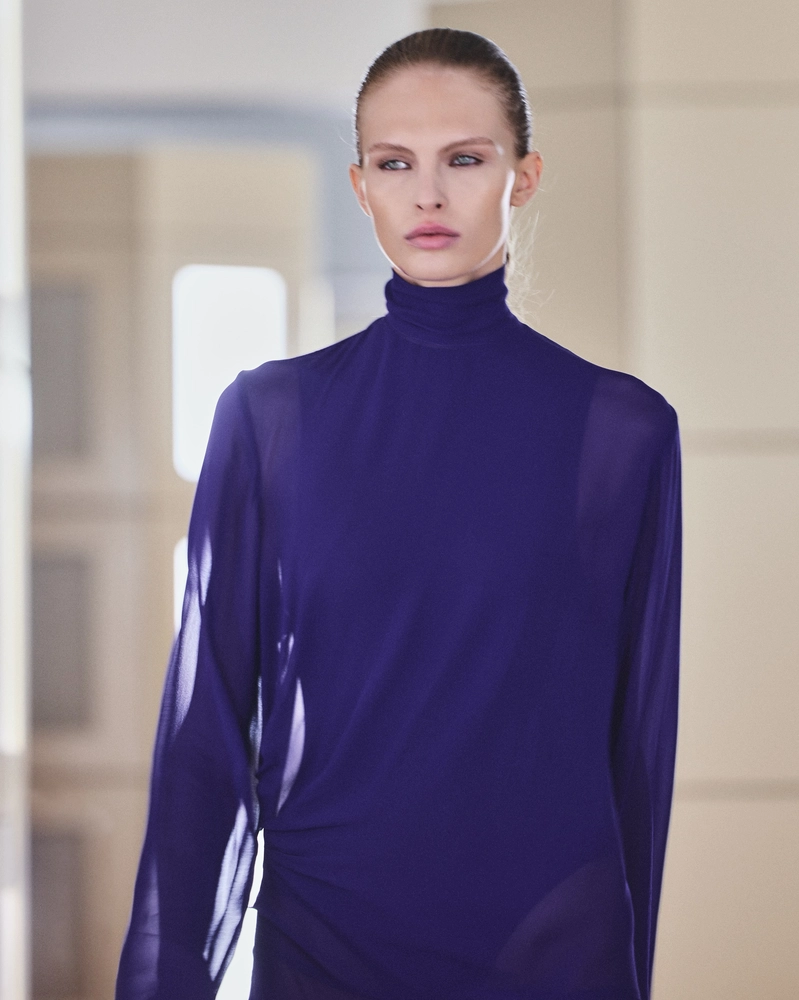
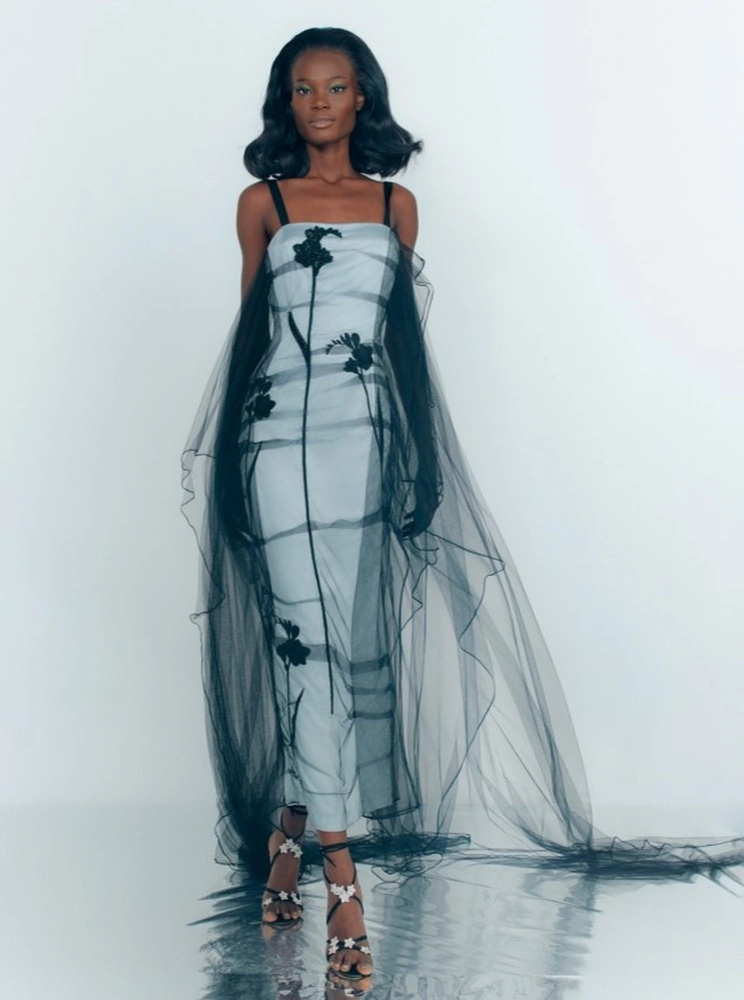
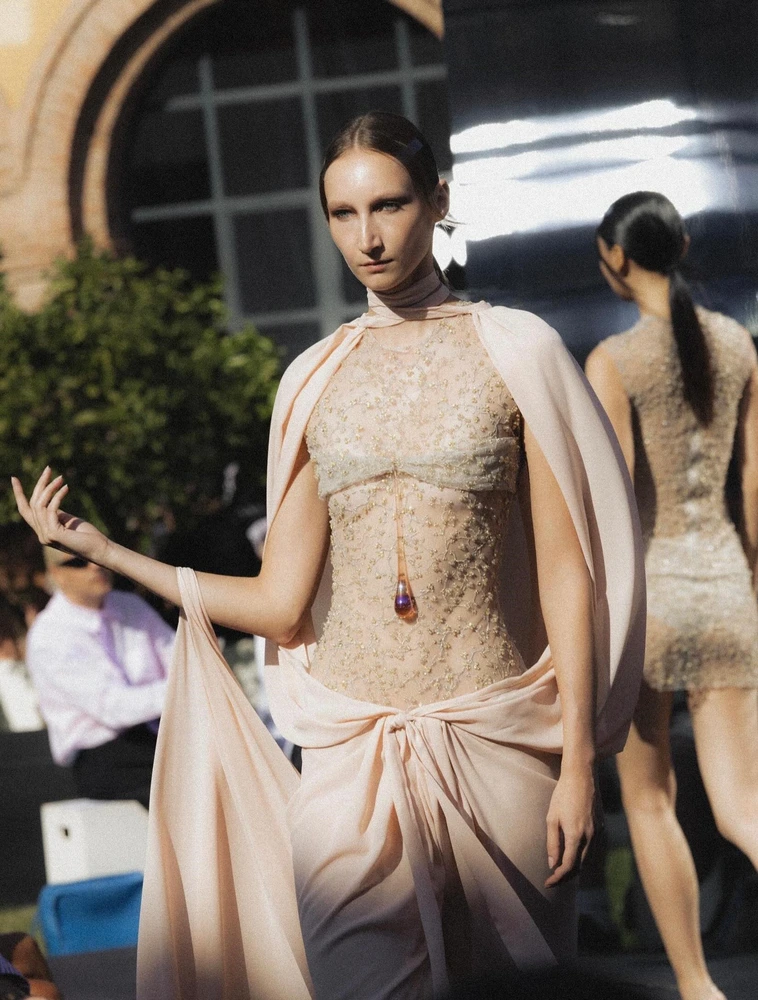
Sheer dresses let skin become part of the surface, lace tracing the body without sealing it away. Translucency is less about exposure than permeability; sunlight passes through, underlayers remain visible, and clothes carry the airy fragility of fabric caught between seasons. On a slightly colder day, that delicacy simply acquires company.
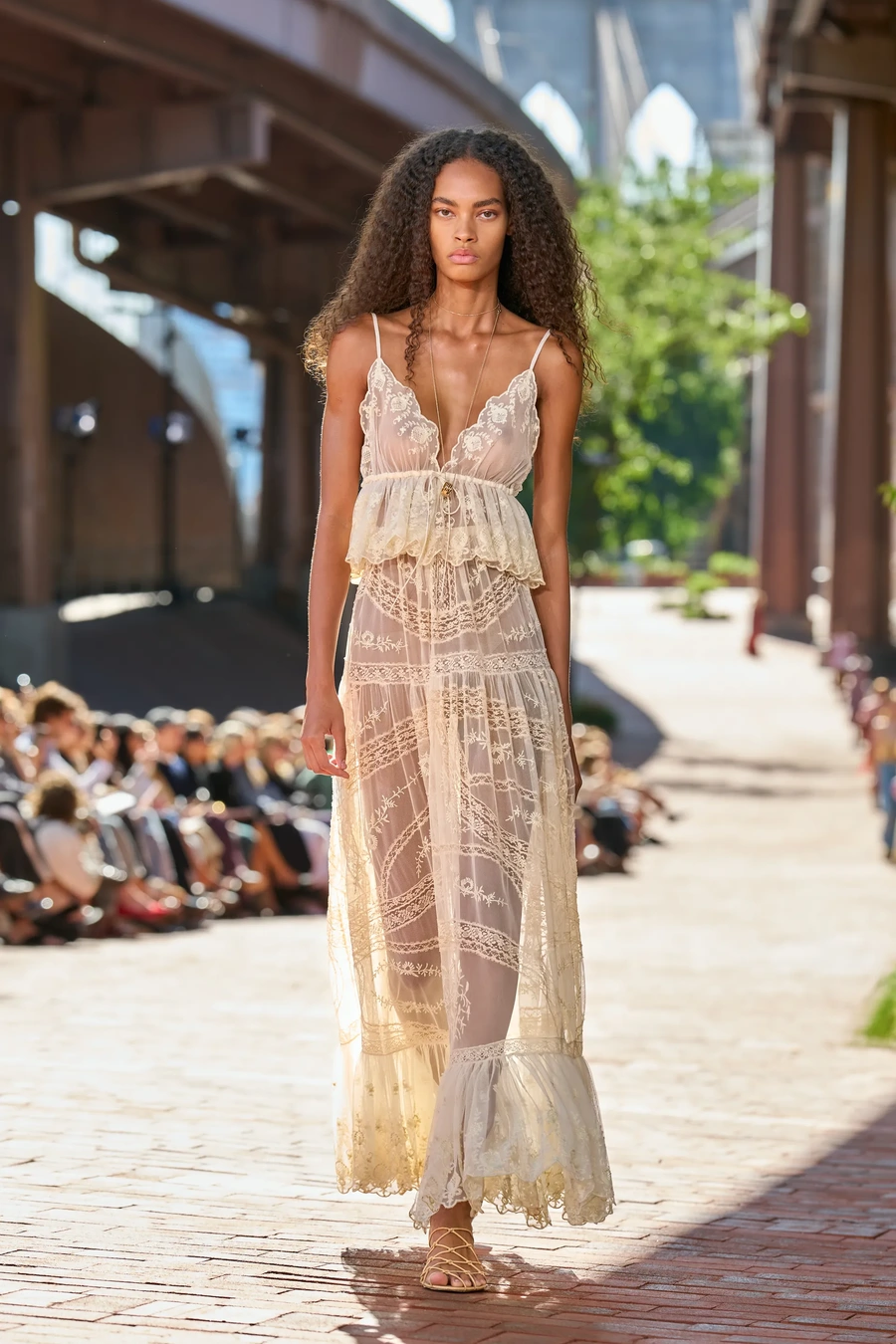
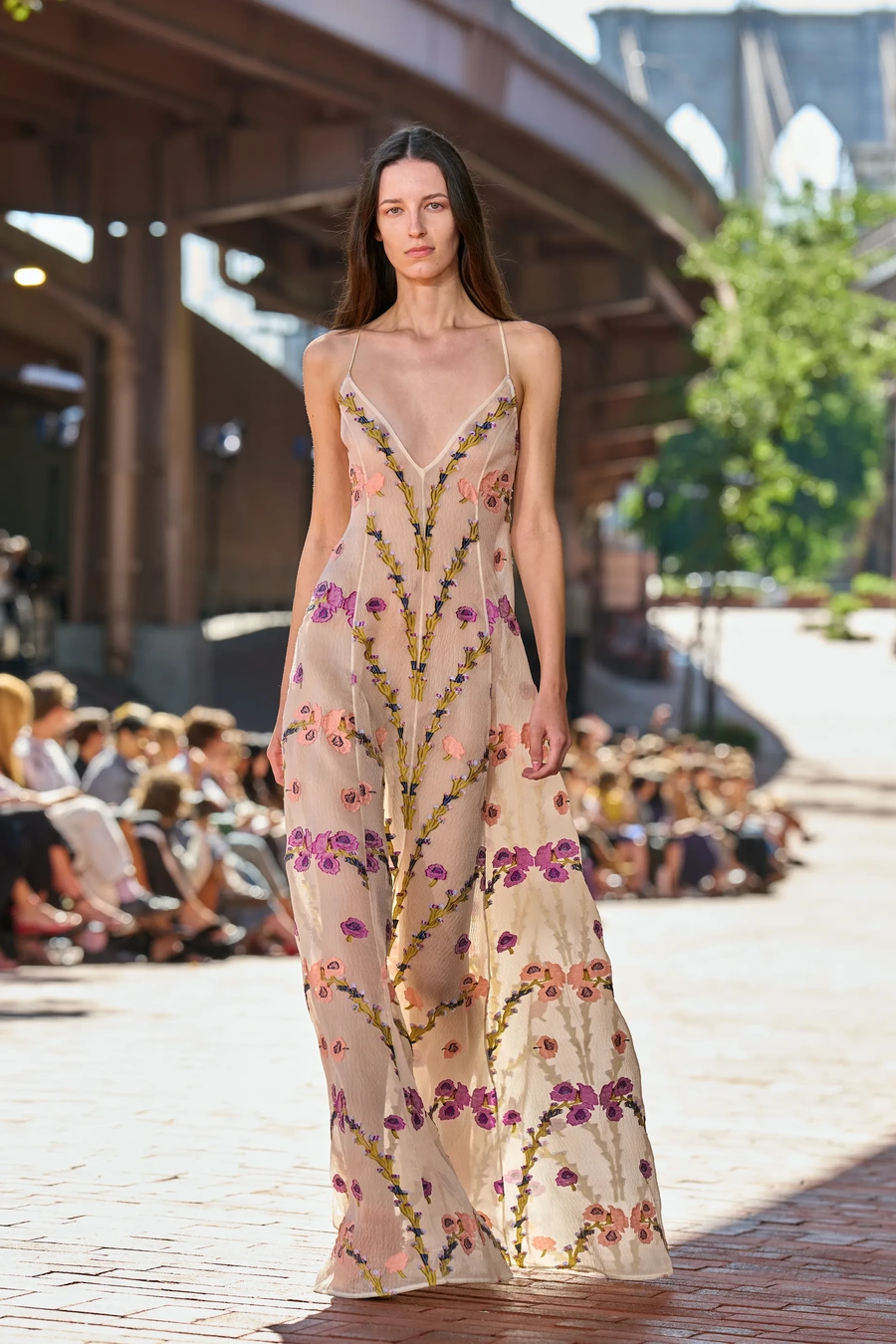
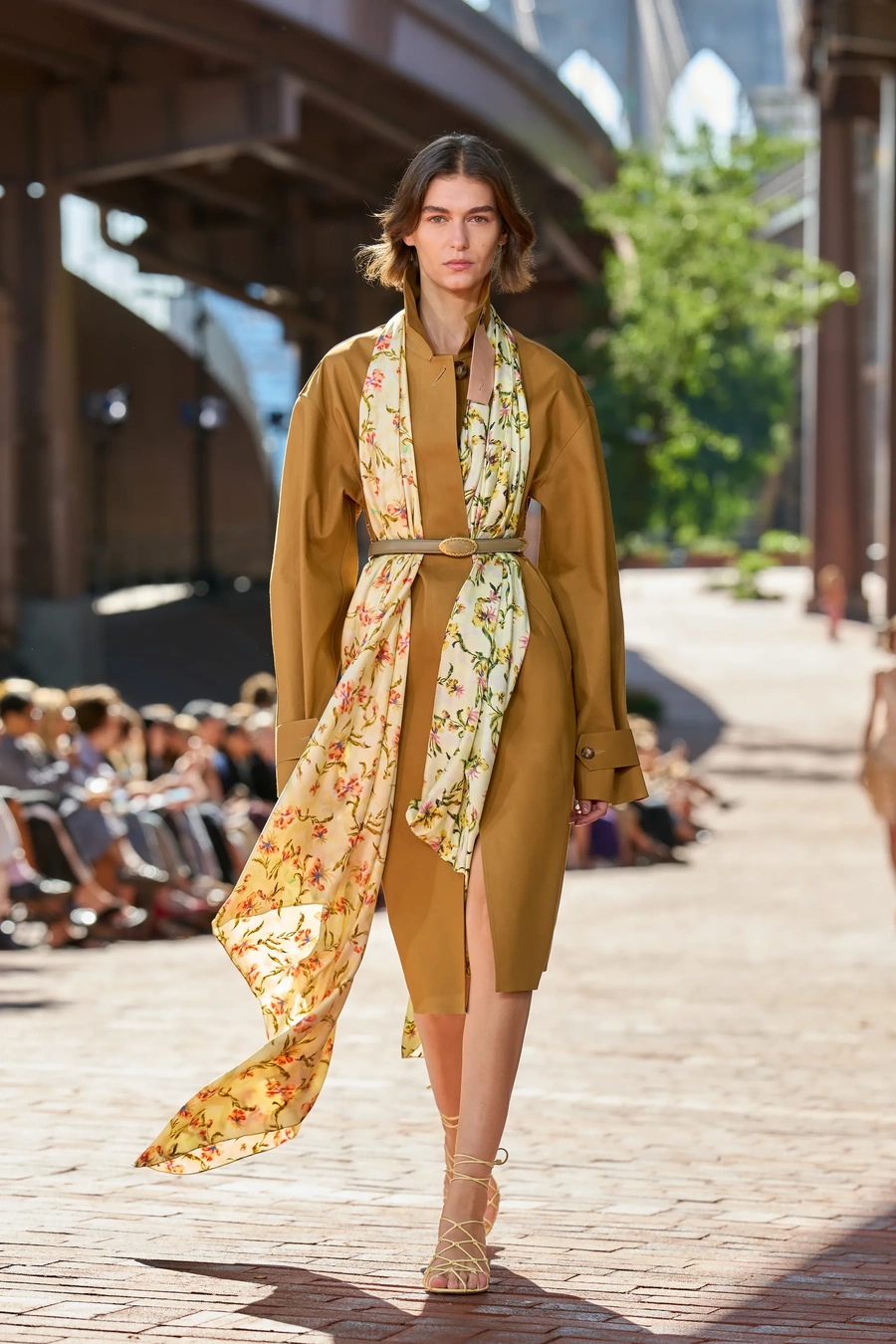
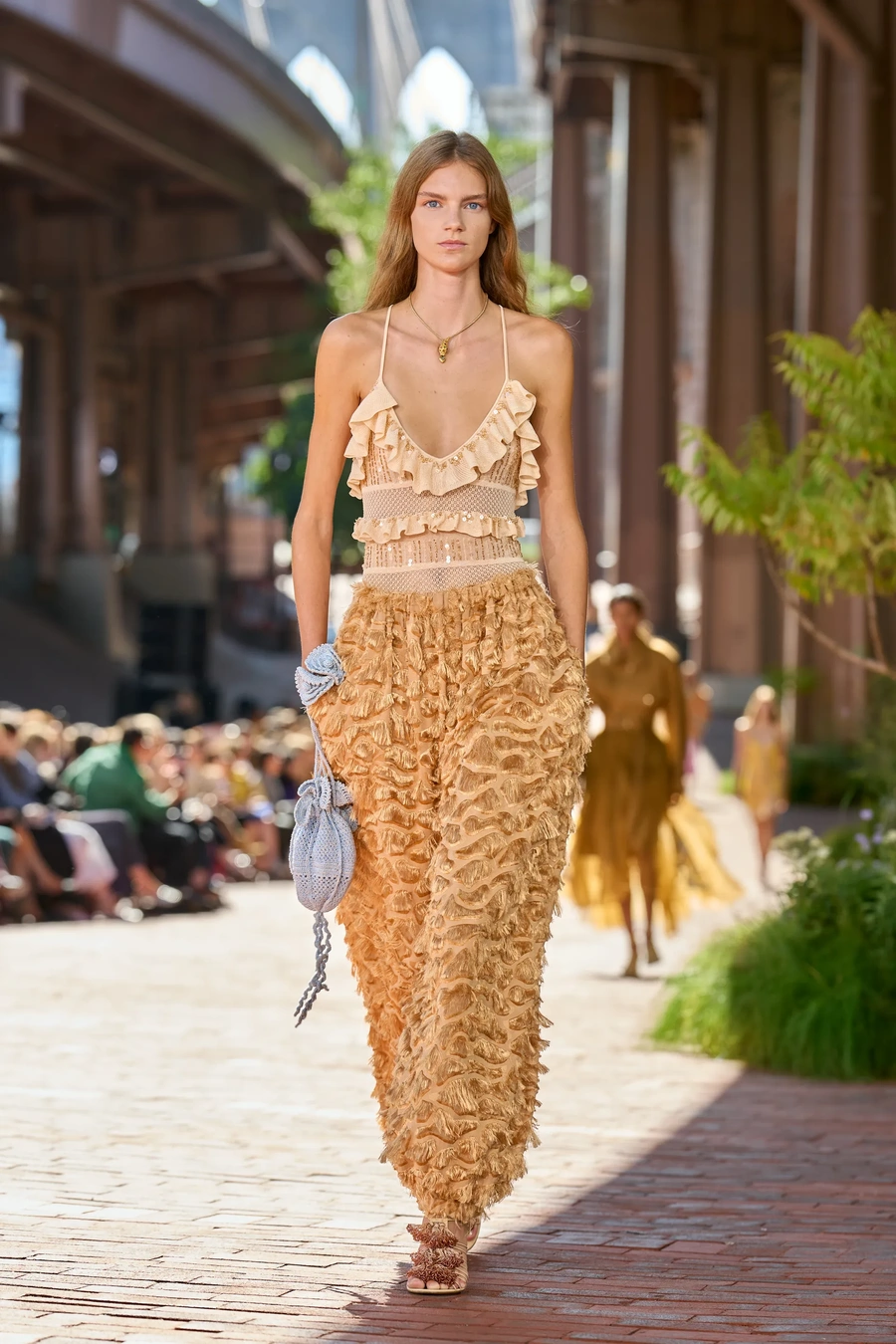
Scarves and fringe bring another layer of softness to the season, adding movement without weighing the clothes down. Ulla Johnson uses both as fluid accents, letting texture loosen the sharper lines of outerwear and give the spring wardrobe a more tactile, slightly undone quality.
She understands that the season still has temperature, uncertainty and texture. Lace can sit beside a coat. Transparency can survive a chilly morning. Fringe can give movement the visual density usually expected from warmer fabric. Spring is allowed to shiver a little.
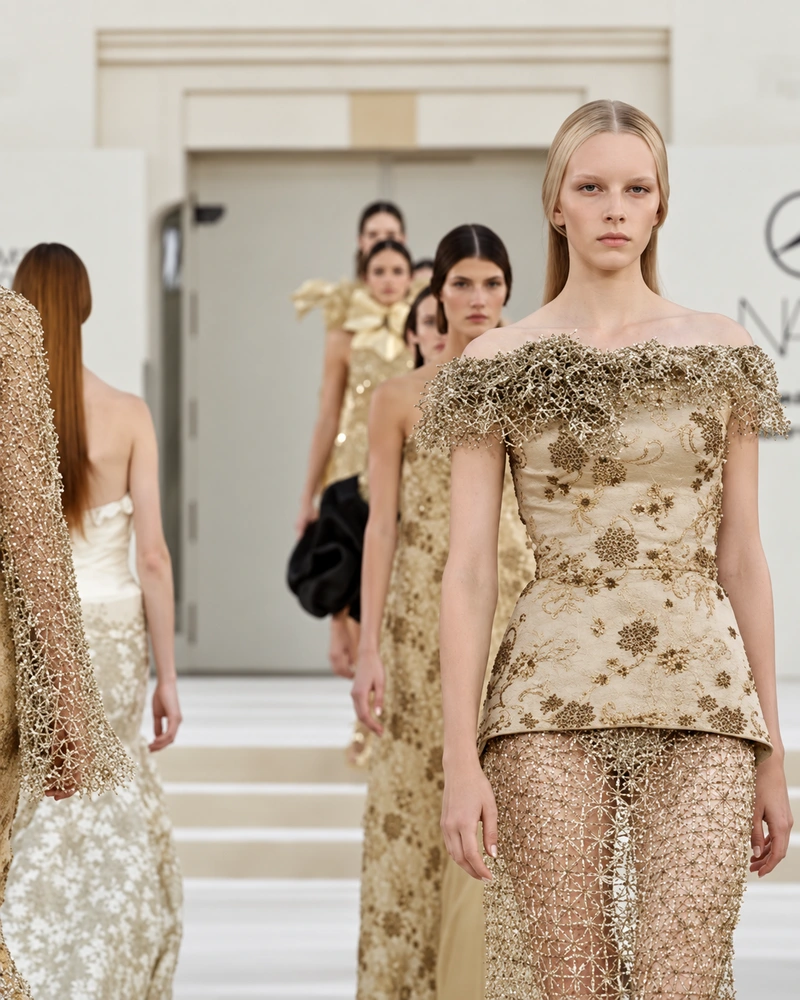
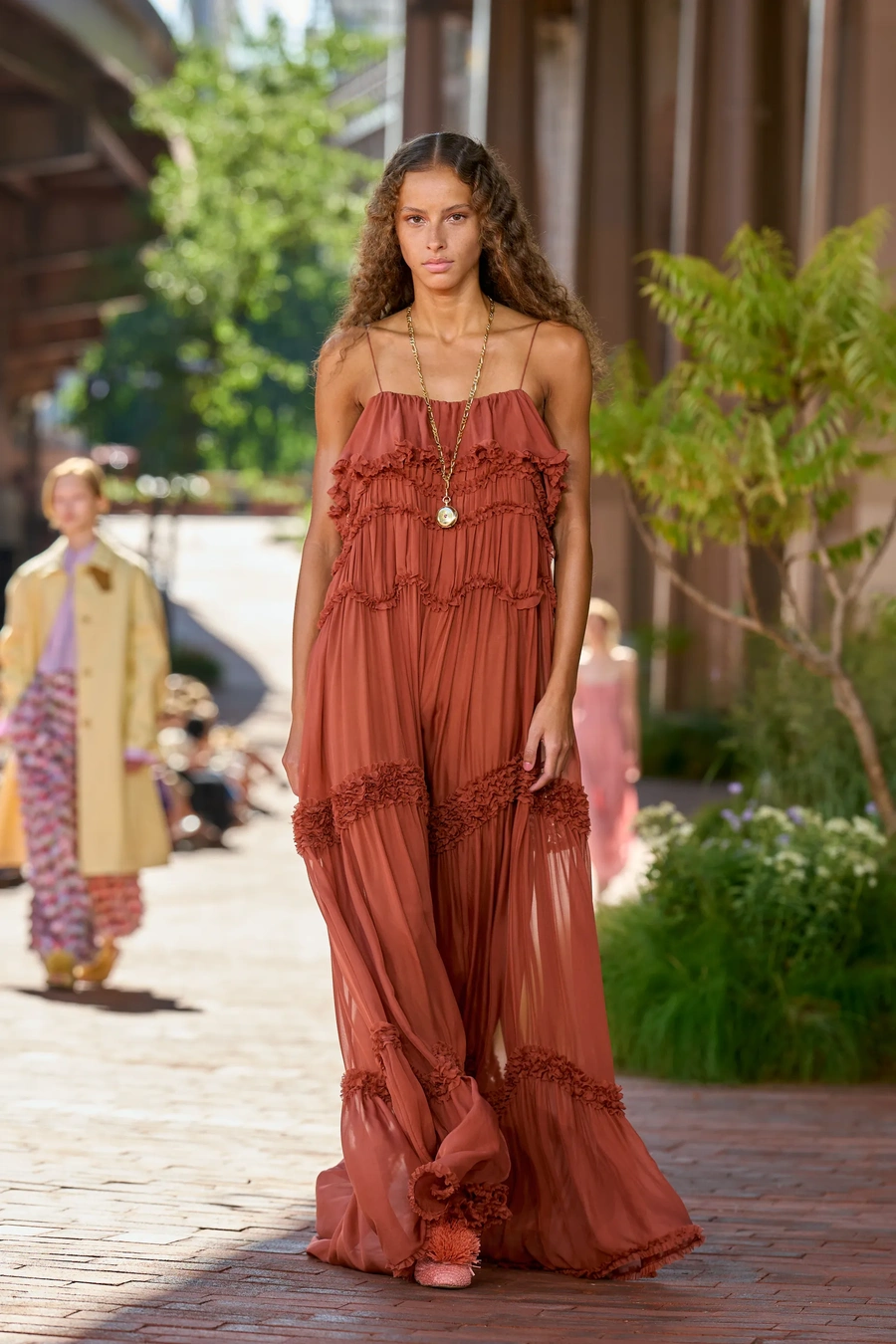
Toward evening, Johnson lets the collection drift into a slower rhythm. Silhouettes lengthen, fabrics move more freely, and the brightness of daytime softens into something more intimate, as though the garden has simply decided to stay out after dark. Their length adds drama without turning rigid; fabric still falls with the same softness that shaped daywear, only now the body has more room to sweep through space.
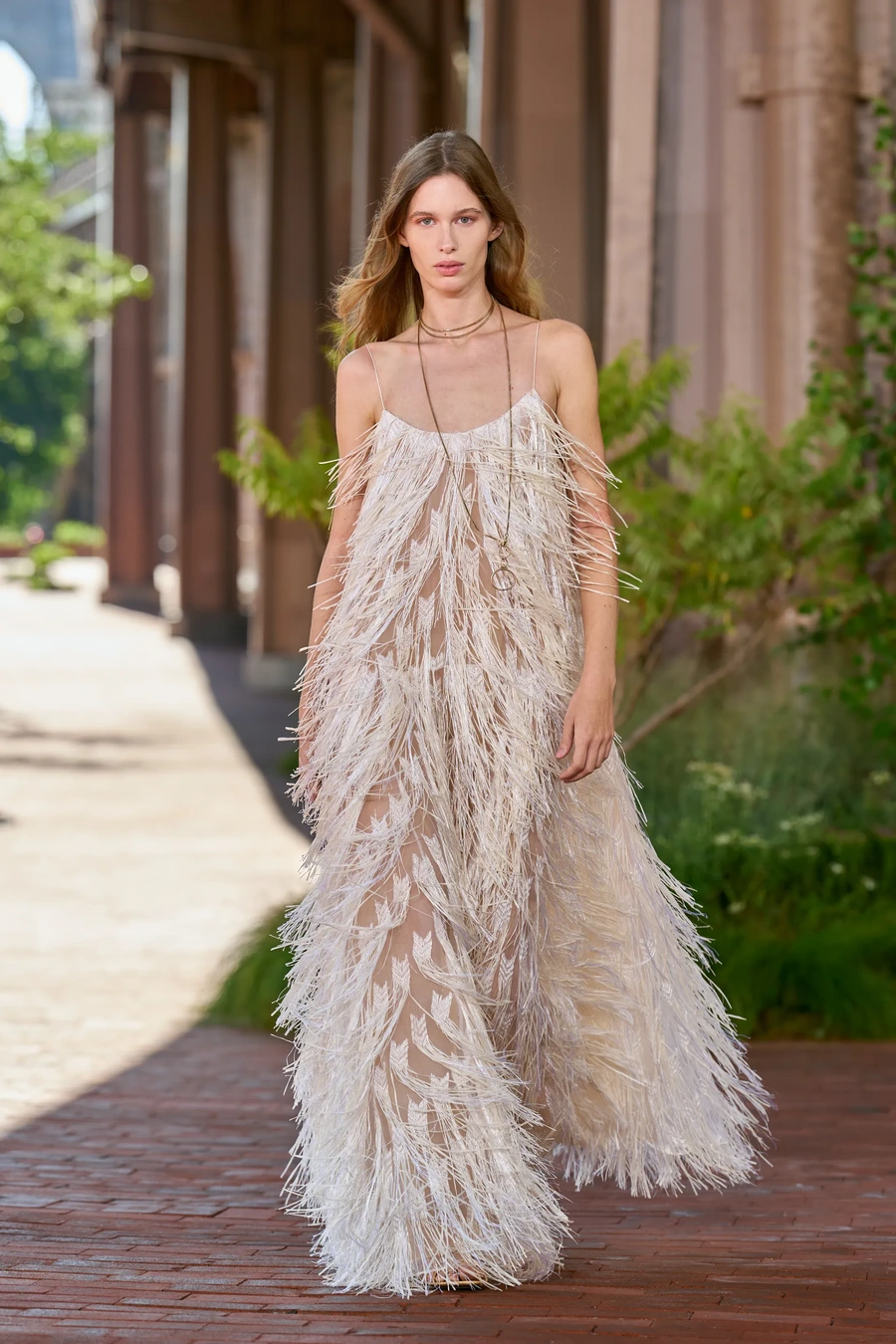
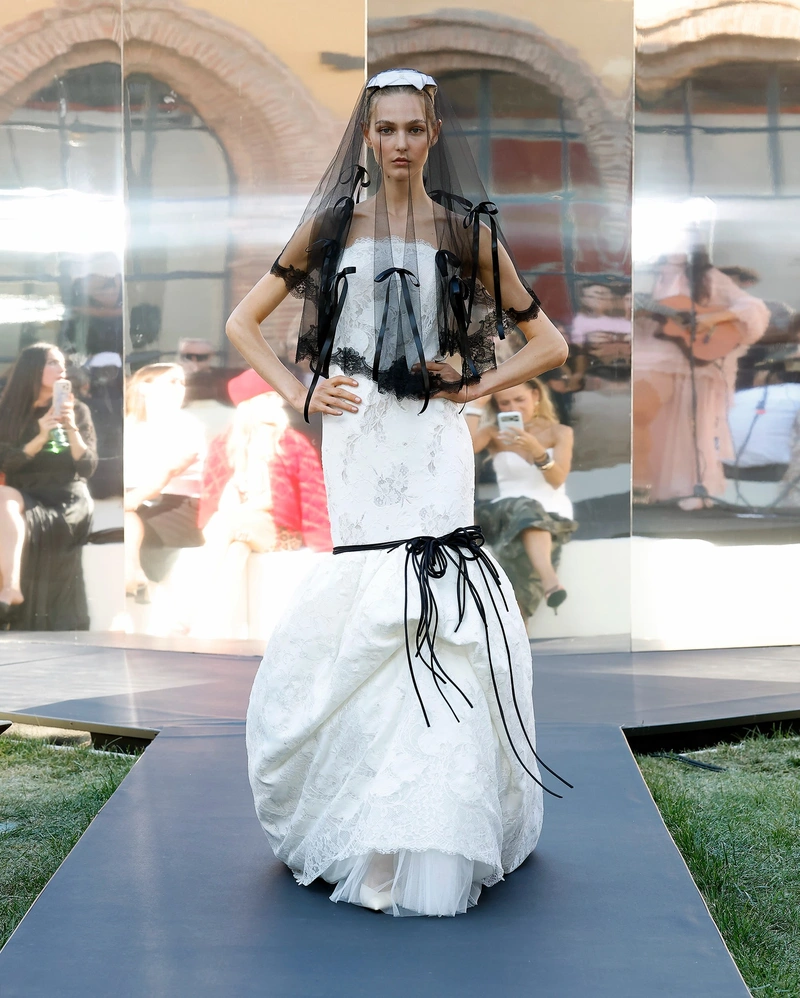
The closing ivory gown pushes movement furthest. Art Deco embroidery dissolves into a long silk fringe, blurring the boundary between the dress and the air surrounding it. Each step sends the surface into motion, giving the silhouette an almost weightless afterimage. From a distance, it can look feathered, though the effect comes from the fringe moving so densely that the body underneath begins to disappear.
It is a fitting final transformation for a collection obsessed with bloom. The flowers no longer need to be drawn or embroidered. By then, movement itself has become enough.
Most runway shows vanish quickly. Guests leave, the clothes move on, and the location returns to whatever it was before fashion briefly occupies it. Ulla Johnson chose to leave something behind.
After the show, plans for Gotham Park included hundreds of native plants and new trees, extending the collection's spring beyond imagery into an actual landscape. That gesture gives the setting a different kind of permanence. The flowers on the clothes may disappear into stores, archives and photographs, but another version of the season will continue taking root beneath the bridge.
Perhaps that is the most convincing expression of Johnson's romanticism now. It no longer needs to remain entirely within the dress. It can move outward, settle into the city and keep growing after everyone has gone home.
Spring had already taken over the runway. With Ulla Johnson SS27, it gets to stay.
Advertisement