MENU
Close





The new Balenciaga Hourglass Avenue may have debuted in 2026, but its defining curve has been travelling through the house for more than eight decades. What started around the human waist under Cristóbal Balenciaga has gone from tailoring to handbag architecture, and Pierpaolo Piccioli has now given it movement again.
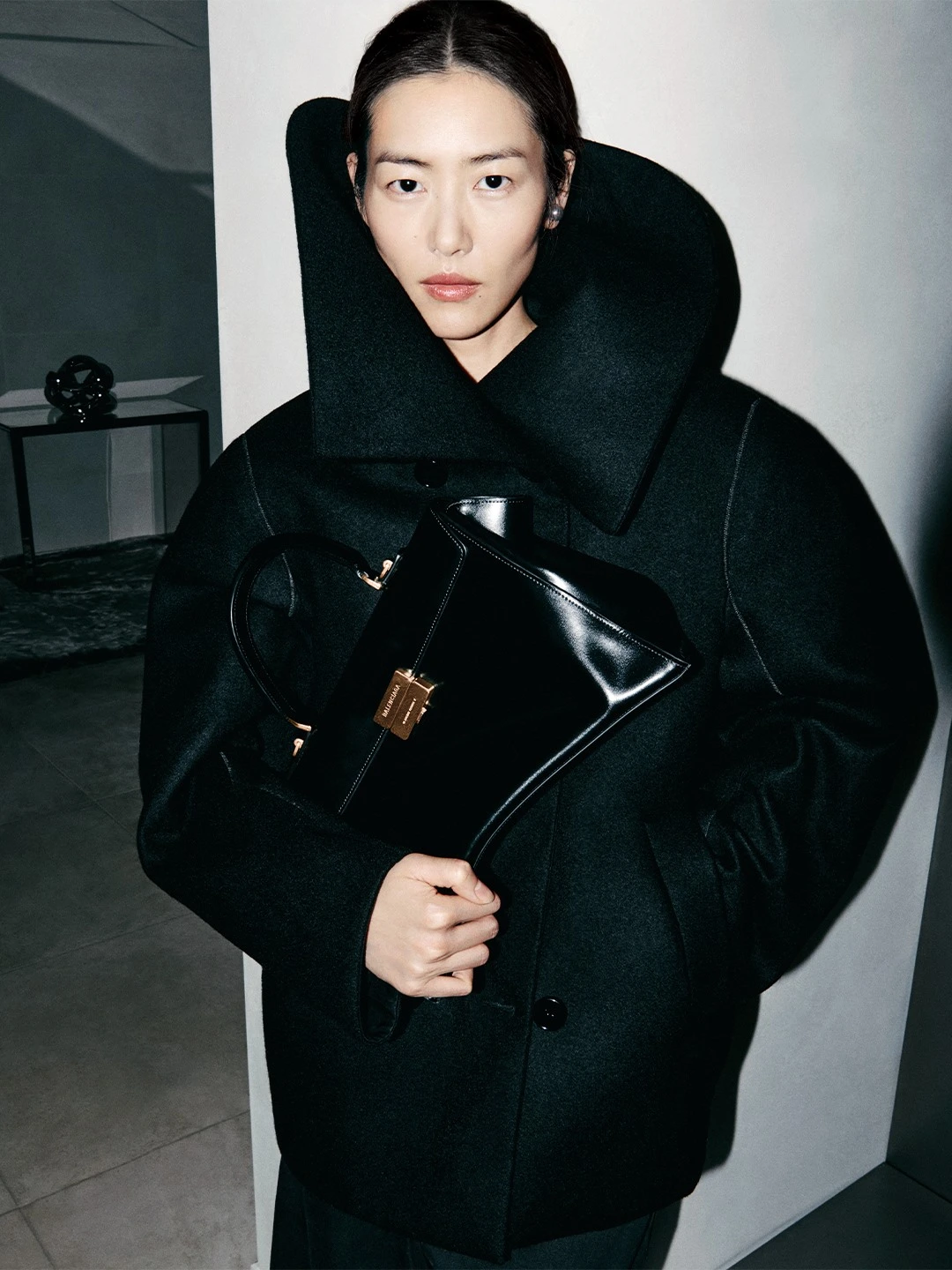
The new Balenciaga Hourglass Avenue may have debuted in 2026, but its defining curve has been travelling through the house for more than eight decades. What started around the human waist under Cristóbal Balenciaga has gone from tailoring to handbag architecture, and Pierpaolo Piccioli has now given it movement again.
September 17, 2026
Advertisement

Advertisement



A peplumed suit from 1943 and a leather handbag from 2026 appear to belong to entirely different chapters of fashion. Look at their outlines, though, and the family resemblance is difficult to miss. Both pull inward before curving outward, creating the sculptural hourglass that has repeatedly resurfaced throughout Balenciaga’s history.
The Balenciaga Hourglass Avenue, introduced with Pierpaolo Piccioli’s Winter 2026 ClairObscur collection, is the newest interpretation of that line. The house describes it as a reinterpretation of Cristóbal Balenciaga’s iconic Basque Waist, built this time as a firm yet relaxed doctor’s bag in reworked box leather. Its significance lies deeper than an archival silhouette placed onto another accessory. The bag reveals how one design principle can survive for decades by changing its relationship with the body.
Cristóbal Balenciaga’s hourglass can be traced to his Basque heritage and his interpretation of the Basque waist. By the 1940s, the cinched waist and sculpted peplum had become one of the decade’s defining tailoring signatures, and Balenciaga pushed that familiar hourglass language through his own precise construction. In the Summer 1943 collection, fitted jackets expanded into pronounced peplums, concentrating volume around the hips while sharpening the waist. Internal construction and carefully positioned seams created a silhouette that looked highly controlled from the outside while retaining space for movement within.
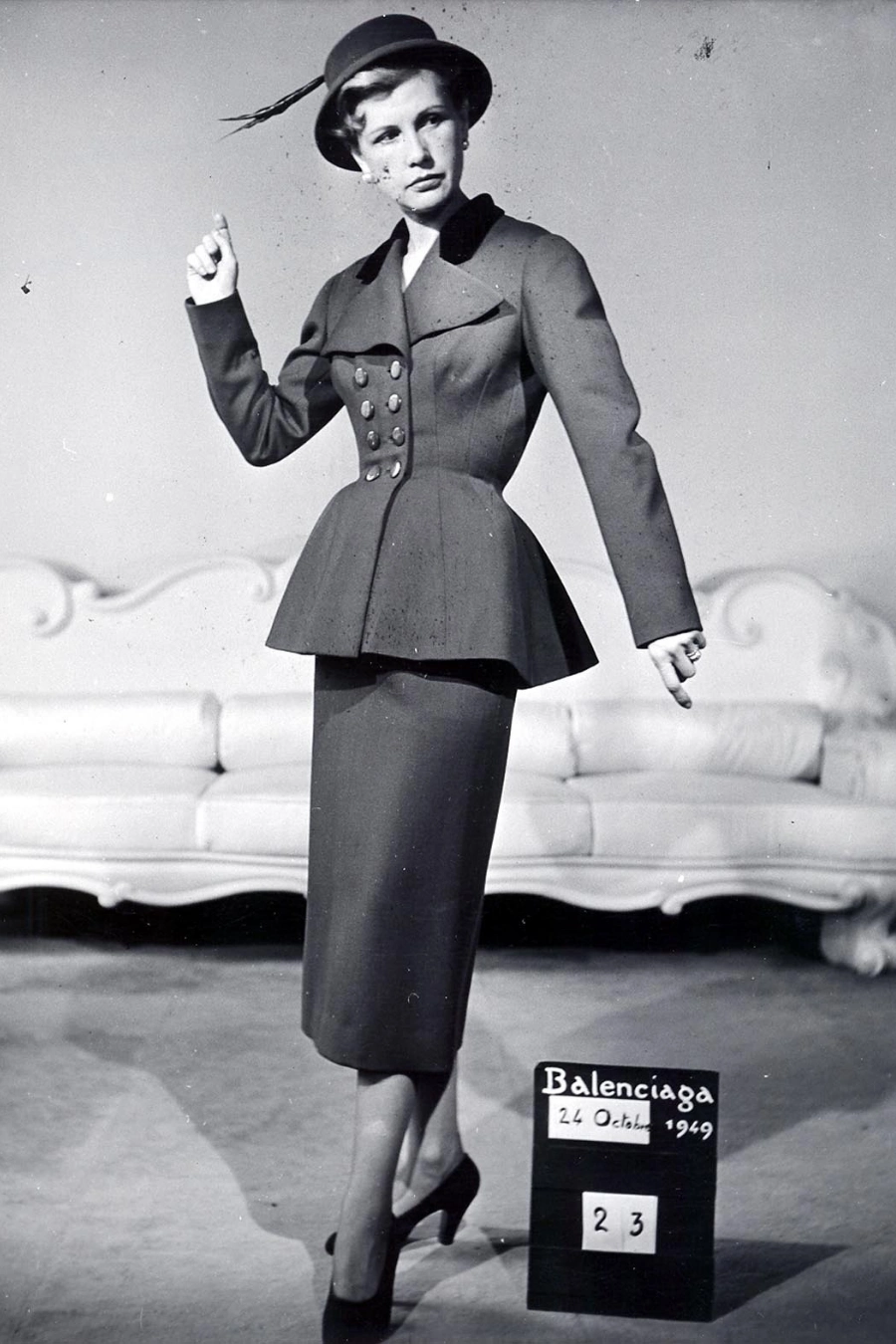
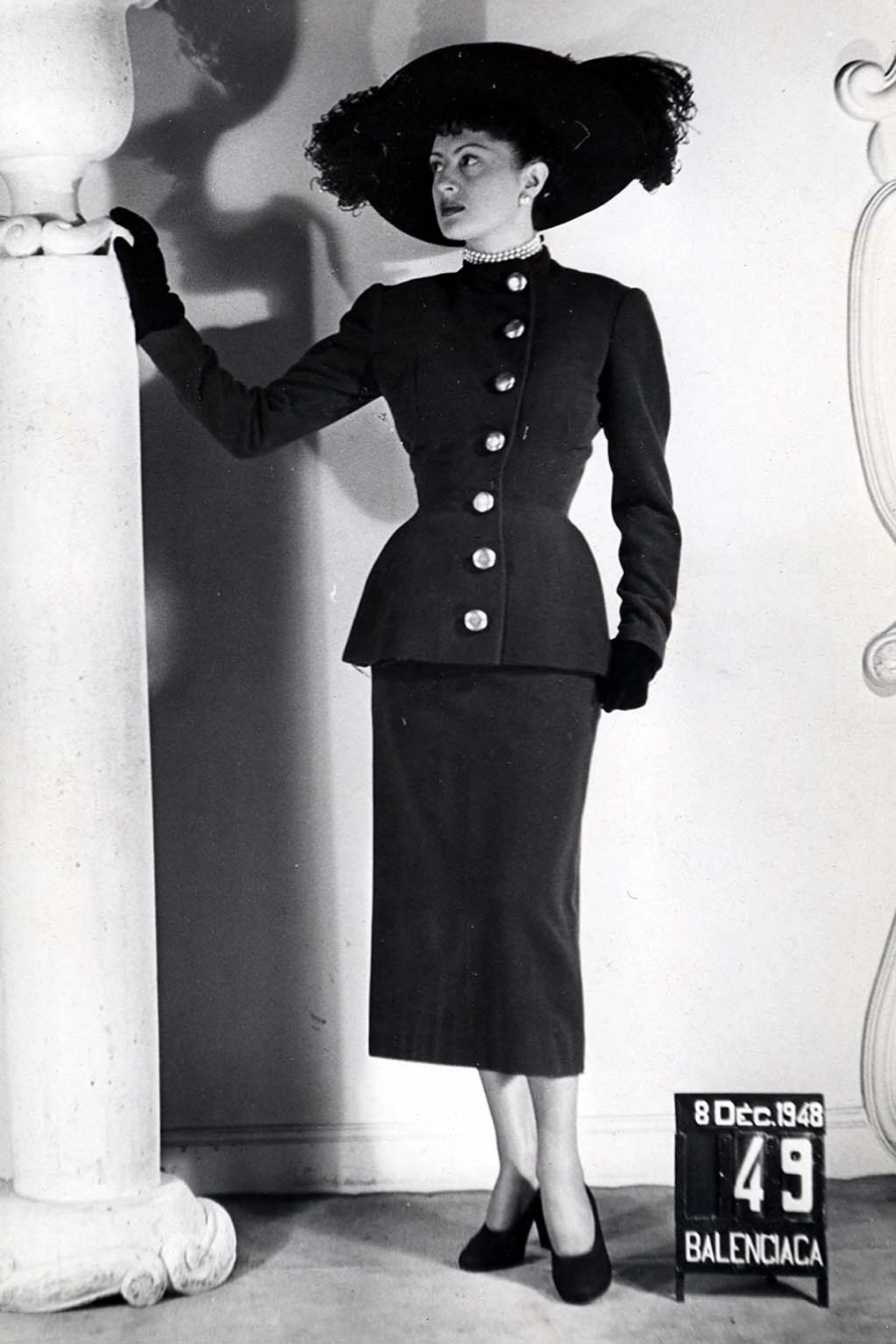
That balance is essential to understanding the shape. Cristóbal’s work was never solely concerned with drawing a beautiful outline around a static body. Structure, volume and comfort were recurring principles of his practice, and his clothes frequently created space between fabric and the wearer. Balenciaga still lists structure, volume and comfort among the founder’s defining design principles.
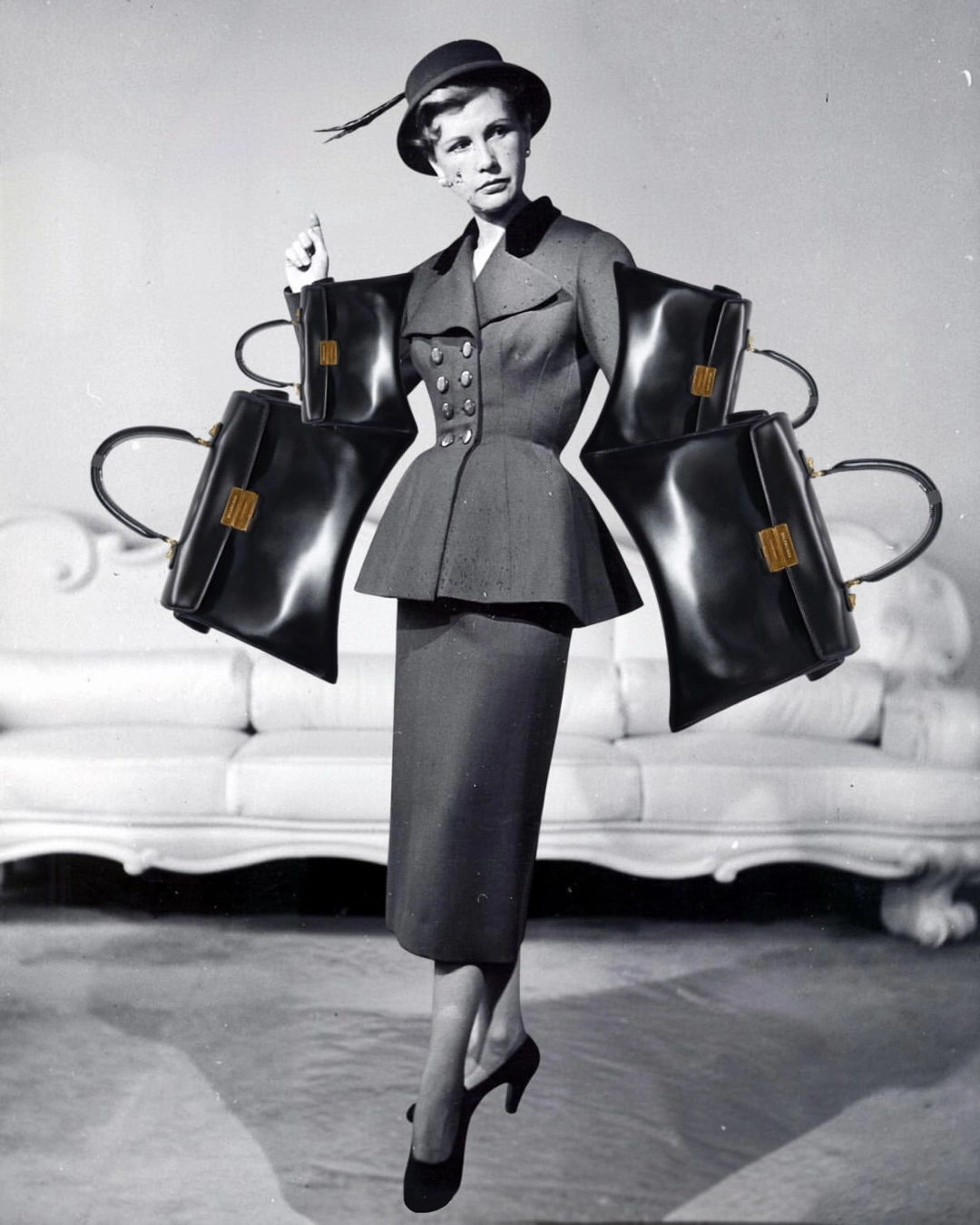
The hourglass therefore carried two ideas at once: sculptural precision and physical freedom. What appeared strict could contain unexpected ease. That tension would eventually make the silhouette remarkably transferable, because the idea could survive even after leaving clothing altogether.
In Winter 2019, under then-creative director Demna Gvasalia, Balenciaga translated that curved vocabulary into the original Hourglass Bag. Demna took the cinched-and-flared outline associated with Cristóbal’s tailoring and transferred it into leather, building the bag around a sharply curvilinear base that rises at the centre instead of sitting flat. The scooped bottom panel effectively turns the waist of a jacket into the architecture of an object: the sides flare outward while the centre pulls upward, allowing the bag to hold its hourglass profile even when removed from the body. Made in Italy in calfskin, the original construction paired that sculpted base with a single top handle, detachable crossbody strap, magnetic closure, lambskin lining and the now-recognisable B hardware. The body was therefore no longer required to complete Cristóbal’s curve; leather construction had been engineered to hold it on its own.
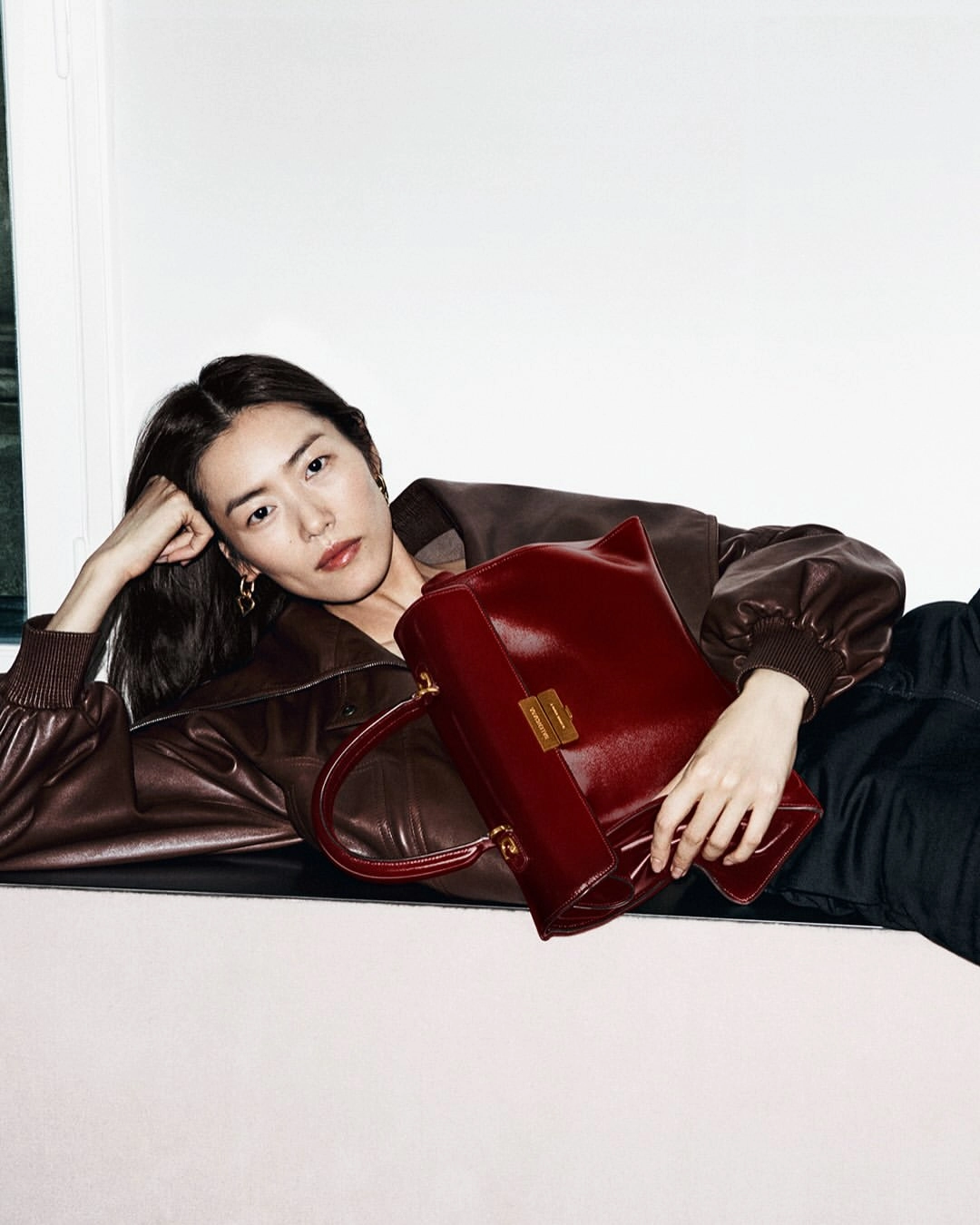
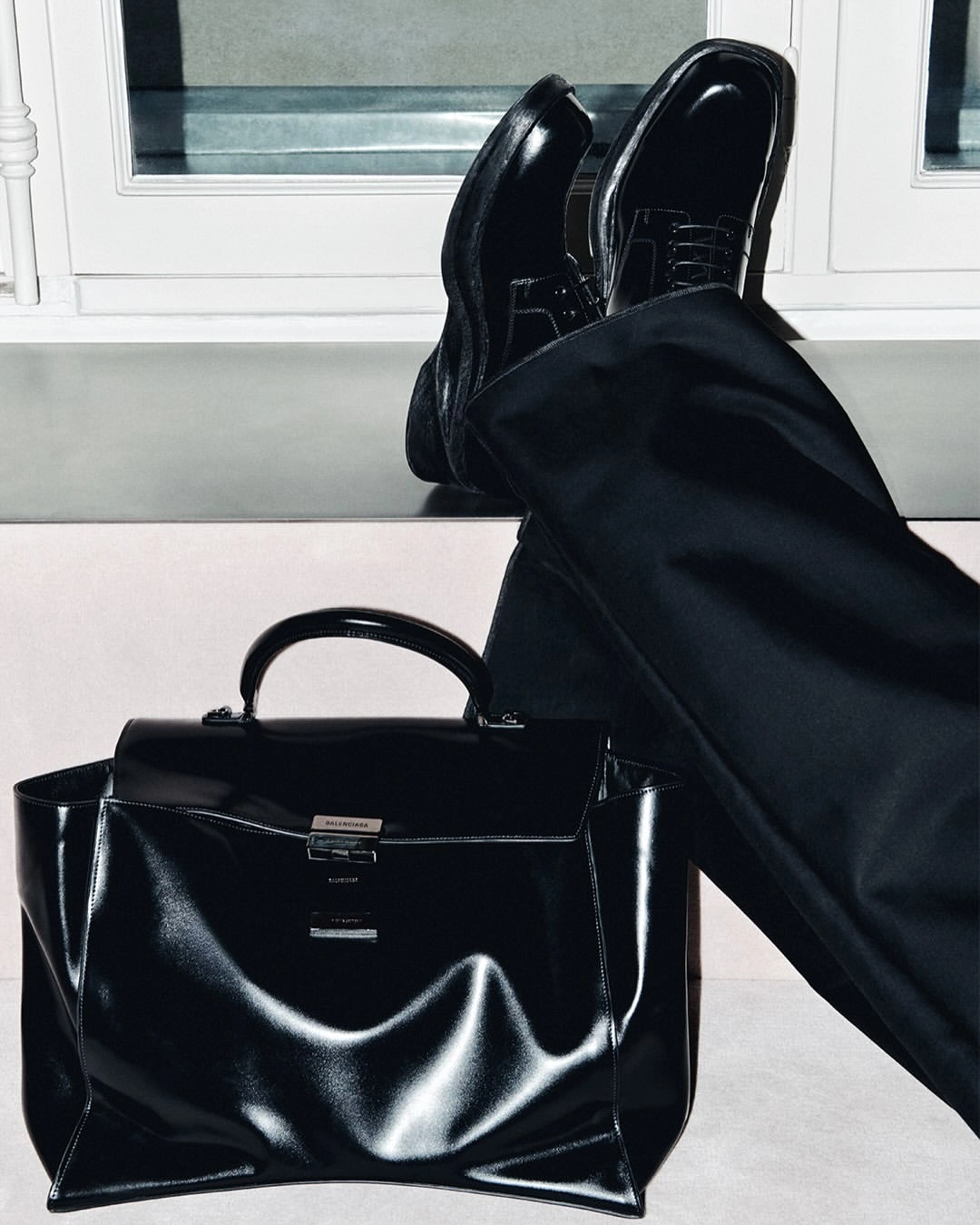
Balenciaga Hourglass Avenue takes that established code somewhere softer. Pierpaolo Piccioli retains the recognizable bowed base, but the bag has a more relaxed construction and is inspired by the archetypal doctor’s bag. A top handle, concealed second handle, and detachable crossbody strap allow it to change according to how it is carried. Its folding top can appear composed and closed, then loosen when the second handle is used. Even the hardware carries history: the lock is engraved with Balenciaga 10 Avenue George V, referencing the Paris address where Cristóbal opened his couture house in 1937.
It creates a neat three-part evolution. In 1943, the curve was constructed around a woman’s body. In 2019, it became a rigid object. In 2026, Pierpaolo Piccioli preserves the object while allowing it to respond more readily to the person carrying it.
That final shift makes Balenciaga Hourglass Avenue more interesting than a straightforward archive revival.
Debuting as part of Balenciaga Fall 2026, the Hourglass Avenue extends Pierpaolo Piccioli’s wider exploration of structure, movement and the human form into accessories. Across the collection, the body remains central to the way fabric and construction are conceived, and the bag follows the same logic through a silhouette that keeps its sculptural identity while allowing greater ease in the way it is carried.
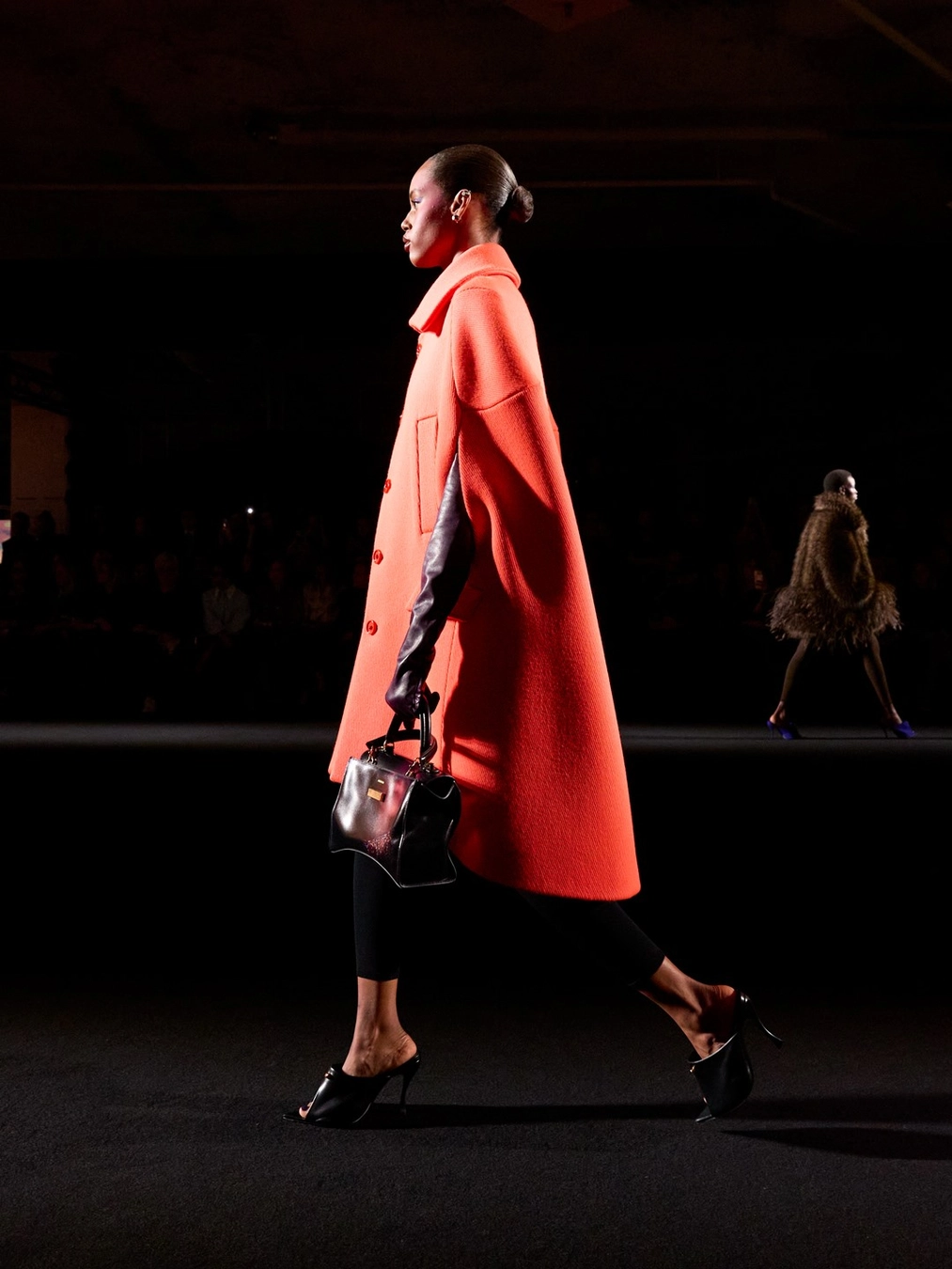
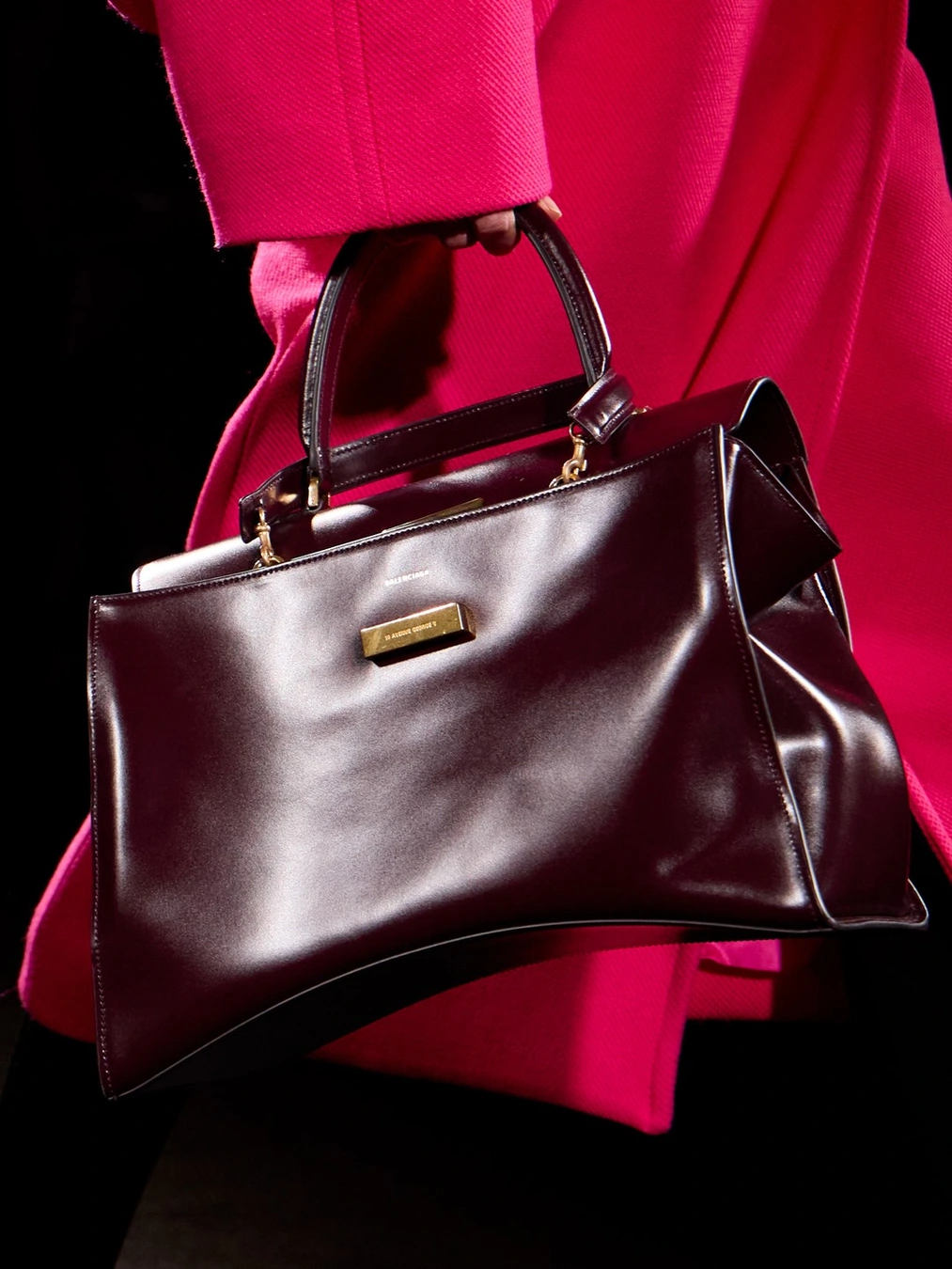
Pierpaolo Piccioli has preserved the curve while changing the experience of living with it. The Avenue can remain sculptural without behaving like a static sculpture. Its softened body, multiple handles and adaptable opening acknowledge that a handbag spends its life against an arm, in a hand, across a shoulder, opened, closed and moved through a day.
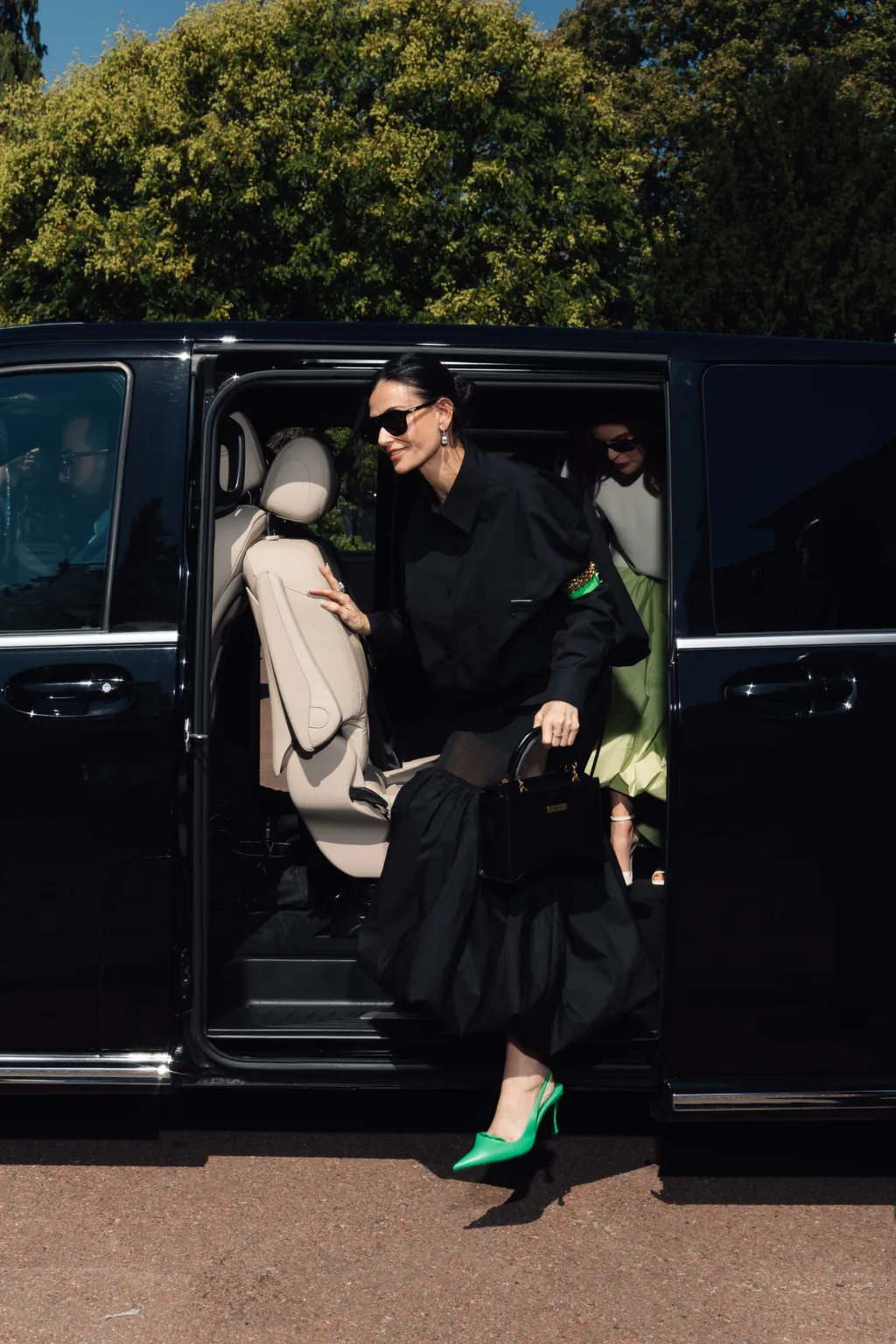
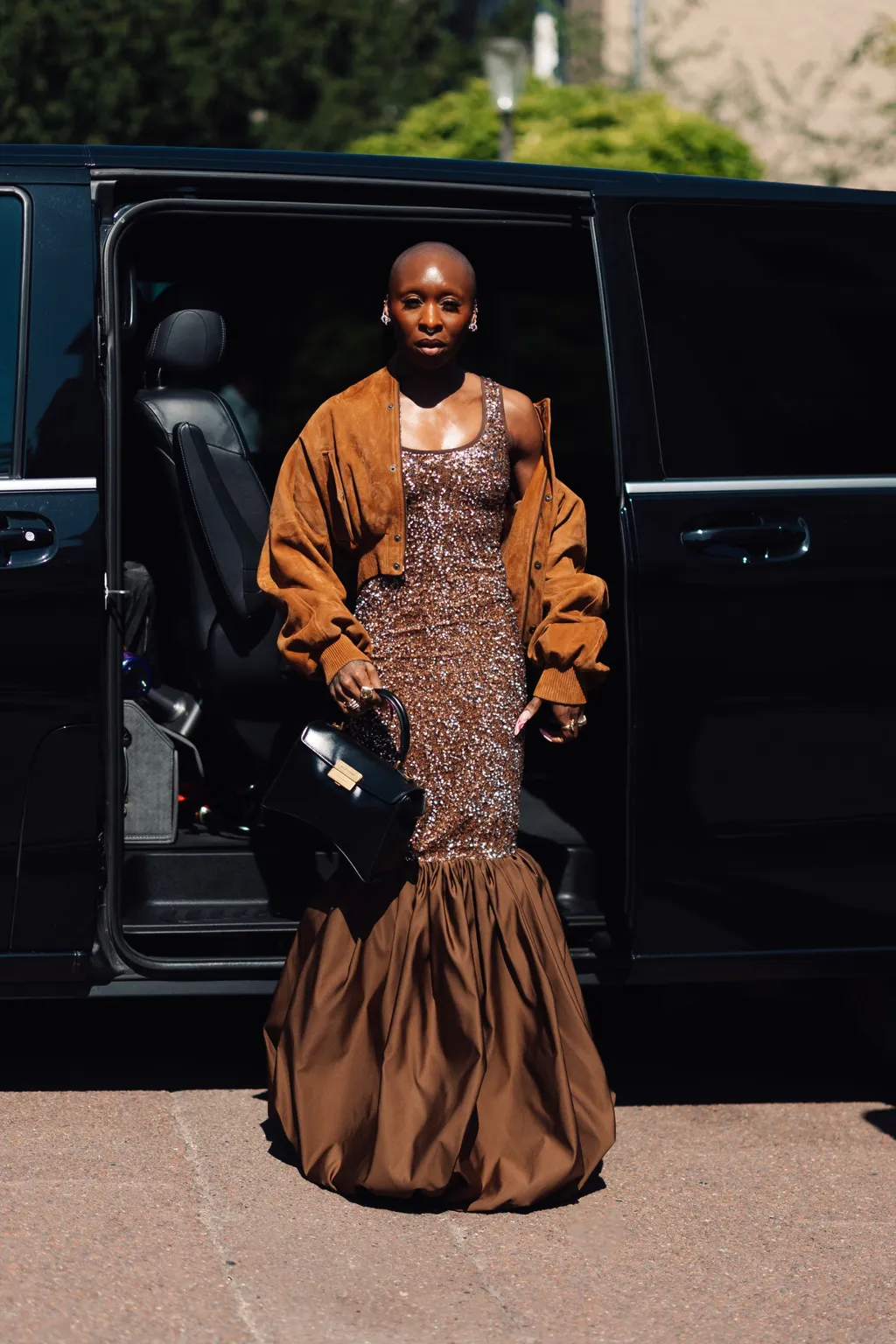
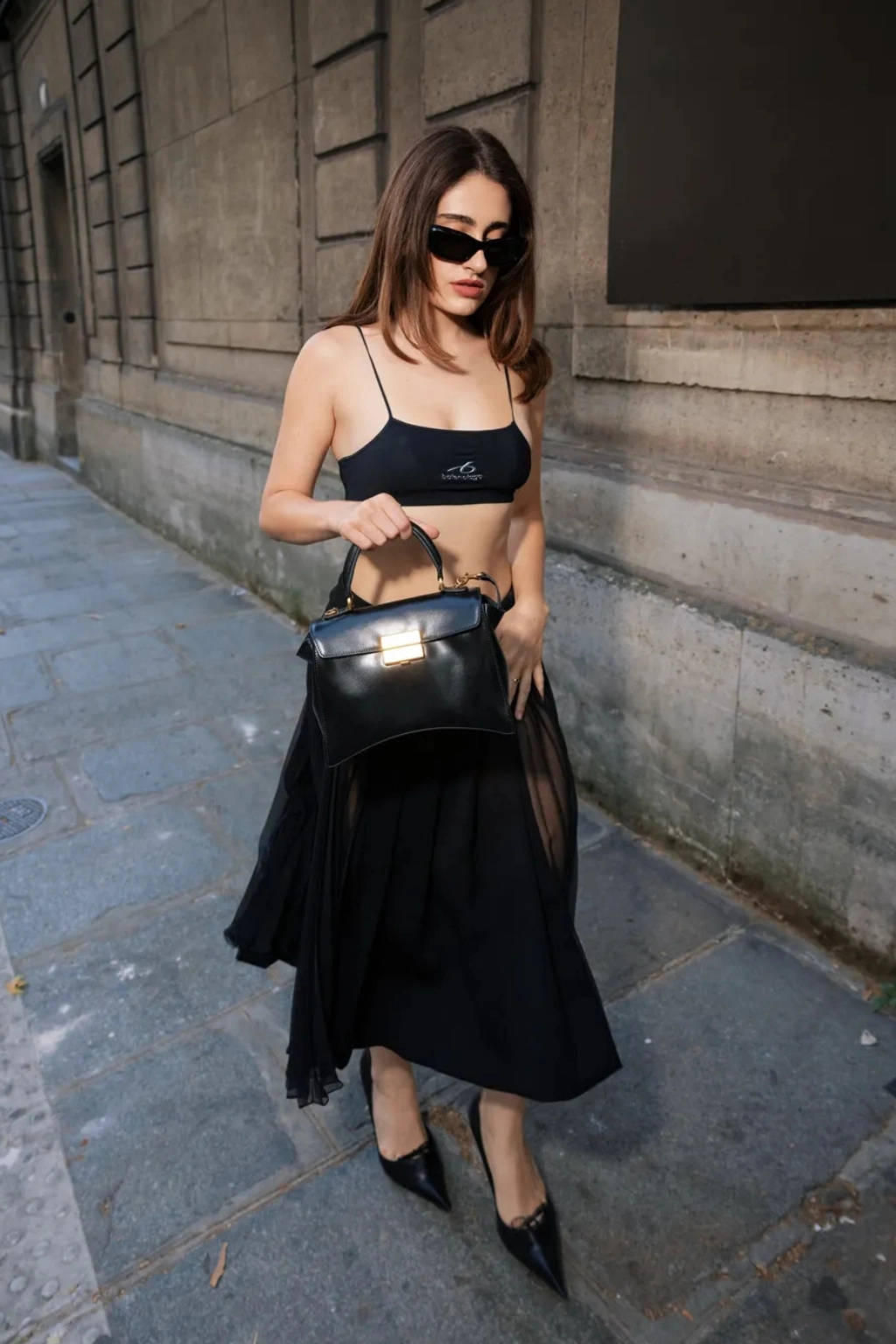
That idea quietly echoes Cristóbal’s tailoring. The old peplumed suits could project discipline while hidden construction preserved mobility inside them. Piccioli applies a related logic to leather: recognizable structure on the outside, greater ease around the human being using it.
The bag has already moved beyond the runway onto Demi Moore, Lily Collins, Charles Melton and Cynthia Erivo, among others, showing how easily that historical curve can detach itself from any single type of wearer.
Cristóbal first sculpted the hourglass around the body. Balenciaga later turned that curve into an object. With the Balenciaga Hourglass Avenue, Pierpaolo Piccioli brings the body’s movement back into the equation. The strongest tribute here is the preservation of the thinking that once made that shape move.
Advertisement