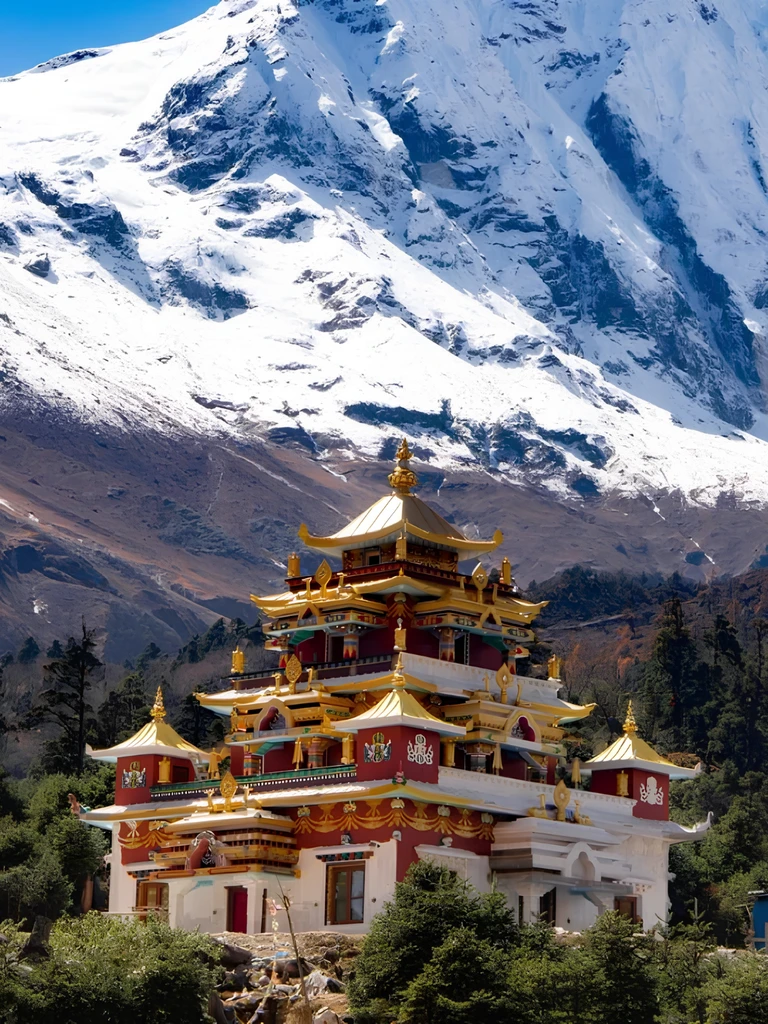
Luxury travel has developed an appetite for absence. High in Nepal, a pine forest, a monastery bell or a stone lodge can make silence and cool air feel less like amenities and more like the architecture of the trip.
Luxury travel has developed an appetite for absence. High in Nepal, a pine forest, a monastery bell or a stone lodge can make silence and cool air feel less like amenities and more like the architecture of the trip.
August 7, 2026
No items found.
SAVE THIS ARTICLE
unsave this ARTICLE
Like
Unlike
Share:
Nepal compresses an extraordinary range of climates into a narrow strip of land, rising from hot southern plains toward temperate hills, alpine valleys and the Himalayas. For travellers trying to escape hotter summers while reducing sensory overload, geography already does much of the work.
Why Nepal Works for Quietcation and Coolcationing?
Use altitude strategically. Temperature falls as elevation increases, allowing travellers to move from warm lowlands toward cooler hill stations and high-altitude valleys within the same journey.
Treat season as seriously as elevation. Mustang sits around 2,800 metres, yet summer afternoons can still become warm. Spring and autumn usually provide a stronger balance of bright skies, crisp mornings and comfortable outdoor exploration.
Choose cool air without chasing extremes. Coolcationing works best when the climate changes the rhythm of the holiday. Hill towns, pine forests and high deserts can provide meaningful relief without turning altitude into a physical challenge.
Think about sound as carefully as temperature. A proper quietcation depends on room count, road exposure, building materials, surrounding landscape and how much unstructured time a hotel allows.
Avoid turning retreat into performance. A mountain lodge can quickly become another busy itinerary if every hour contains meditation, yoga, trekking, tasting and wellness appointments.
Leave space deliberately. The strongest Himalayan trip often has fewer scheduled experiences and more time spent reading, walking, eating slowly or simply watching the light change.
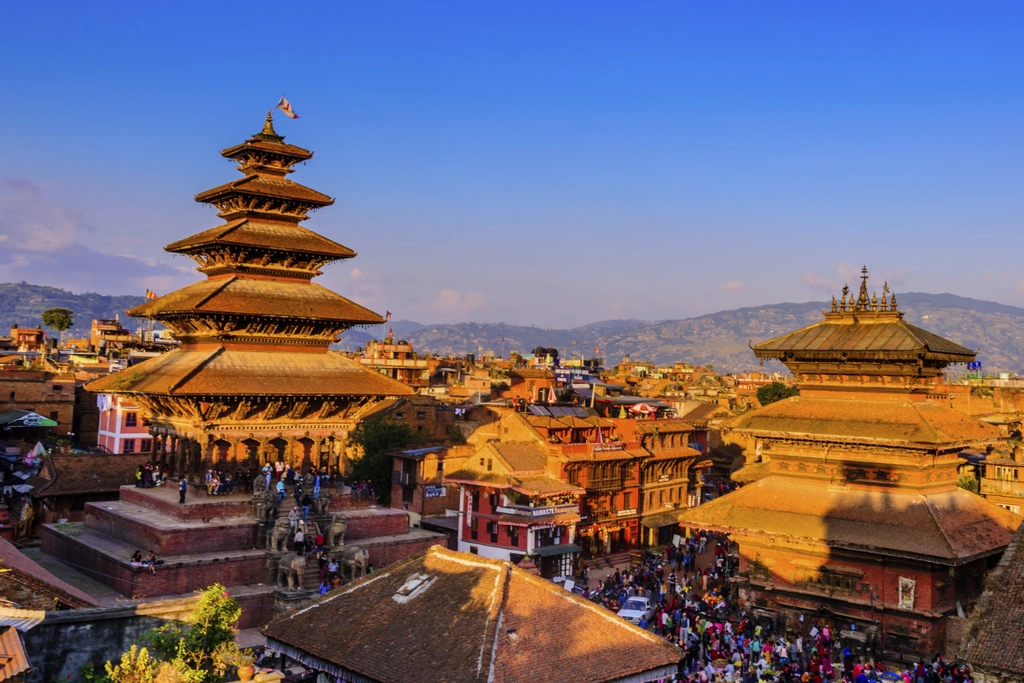
Durbar Bhaktapur
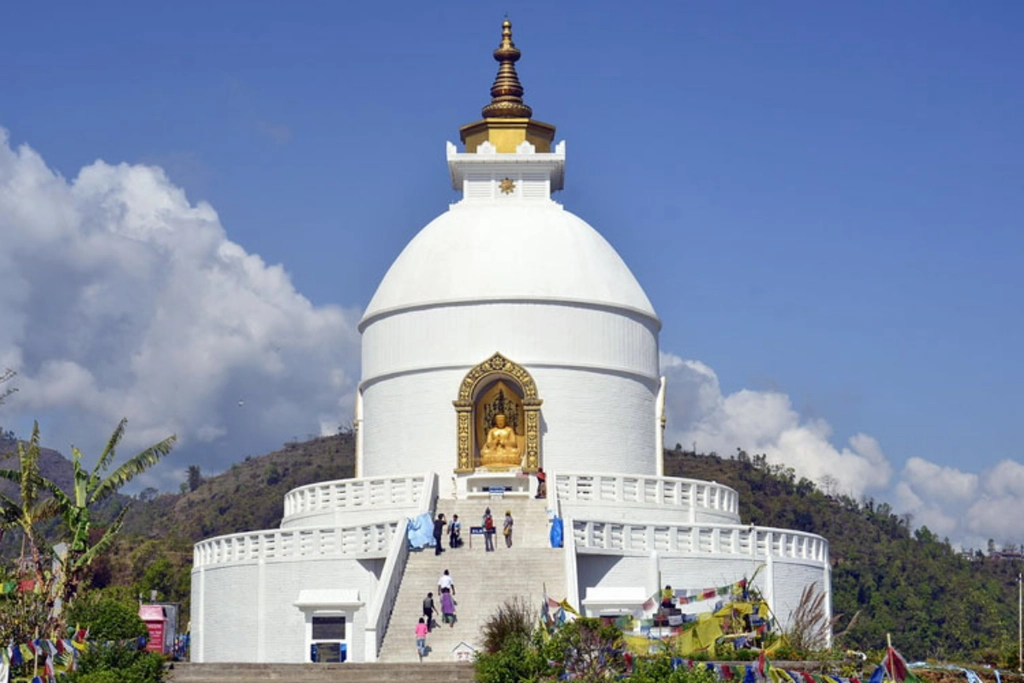
World Peace Pagoda
Nepal works especially well because the two trends overlap. Cool air reduces physical fatigue while remoteness lowers the level of stimulation. The landscape already supplies drama, so the itinerary has less work to do.
Where to Stay for Silence, Altitude and Mountain Air?
The strongest properties for a quietcation or coolcationing trip each offer a different interpretation of Himalayan luxury.
Shinta Mani Mustang, Jomsom
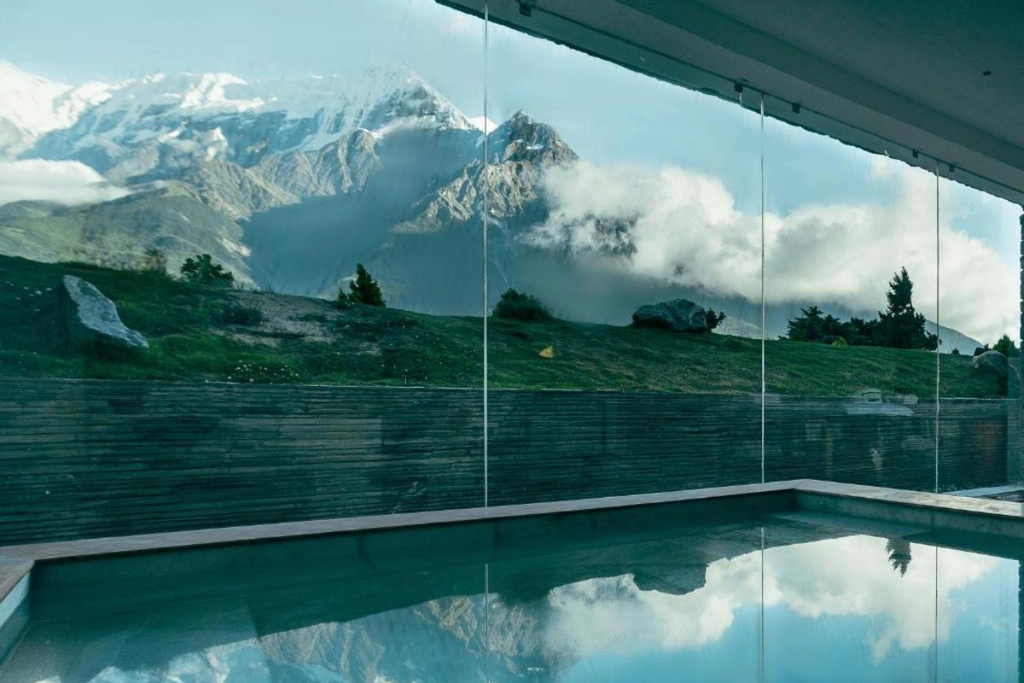
At around 2,800 metres, Shinta Mani Mustang makes one of the world's best remote luxury wellness retreats. It sits inside one of Nepal’s most striking high-altitude landscapes. The former Kingdom of Lo gives the stay an almost geological sense of isolation.
Best for: travellers prioritising coolcationing, dramatic scenery and high-desert culture.
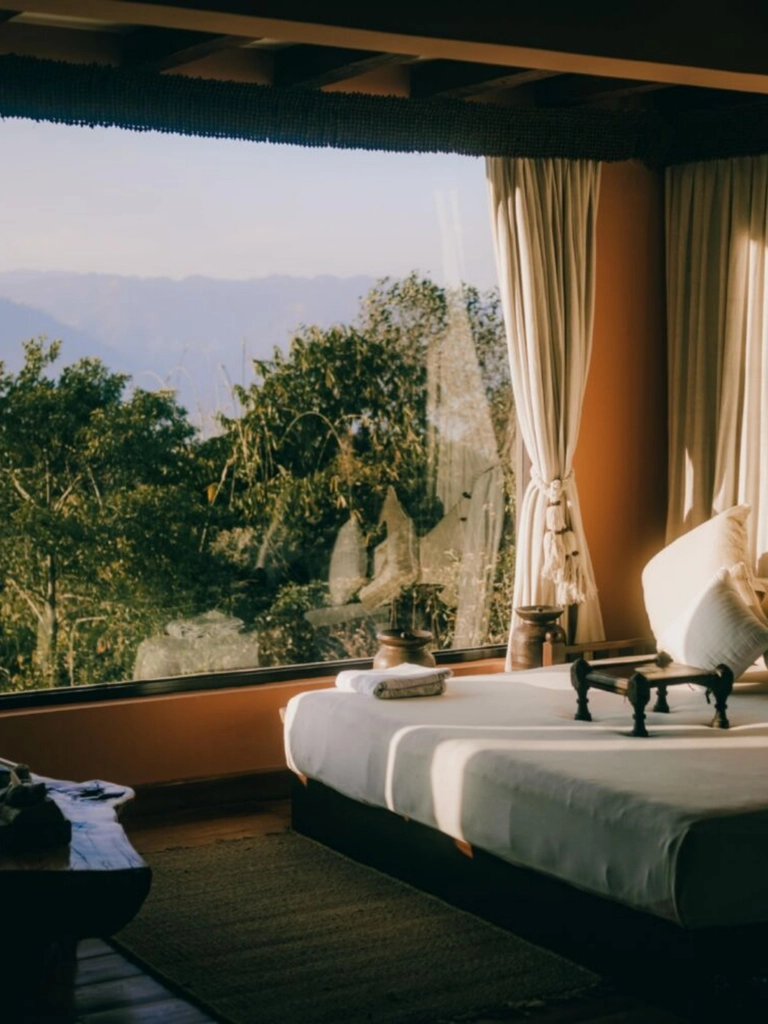
Atmosphere: 29 suites framed by stone, timber, Tibetan-inspired textiles and large windows overlooking Nilgiri.
Why it works: dry mountain air, enormous skies and sparse settlement create an immediate break from humid urban environments.
Wellness angle: consultations with an Amchi practitioner trained in Sowa Rigpa add a local philosophical dimension to the stay.
Experiences worth choosing: monastery visits, horseback exploration, village encounters and slow landscape excursions.
When to go: spring and autumn provide the strongest combination of cooler air, clear conditions and easier movement through the region.
The Happy House, Phaplu
The Happy House offers a softer version of Himalayan seclusion. Its ten rooms sit among pine forests in Solukhumbu, giving travellers access to Everest country without joining the busiest trekking routes.
Best for: a deeply restorative quietcation.
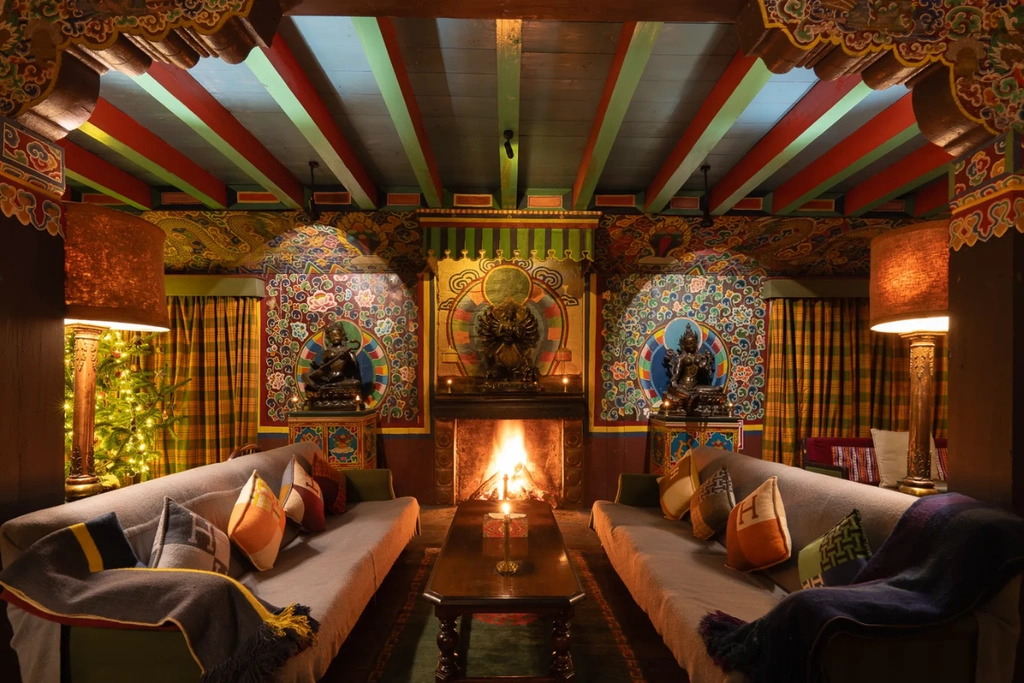
Atmosphere: Sherpa architecture, fireplaces, hand-painted Buddhist imagery, gardens and a residential scale.
Historical connection: Sir Edmund Hillary stayed here repeatedly and regarded the property as a cherished refuge.
Why it works: ten rooms automatically reduce the social intensity of the stay.
Ideal activities: forest walks, meditation, village visits and long afternoons with no programme attached.
Who should choose it: travellers who want Himalayan culture and scenery without treating altitude as an achievement.
Dwarika’s Sanctuary, Dhulikhel
Dhulikhel sits within relatively easy reach of Kathmandu, yet the Himalayan panorama immediately shifts the pace.
Best for: first-time quietcation travellers who prefer some structure.
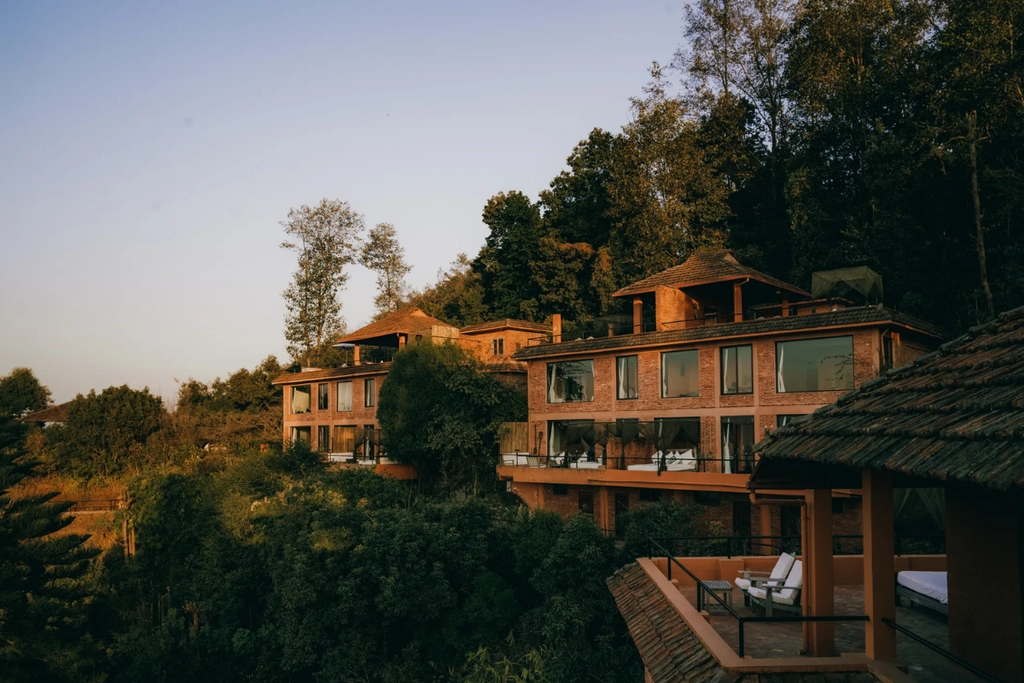
Atmosphere: terraced hills, pine forests, Newari craftsmanship and wellness spaces built around Himalayan and South Asian philosophies.
Signature spaces: meditation rooms, salt-based wellness environments, yoga spaces and the Shiva Linga meditation maze.
Why it works: guests can maintain a daily rhythm without filling the day with high-stimulation activities.
Ideal role in an itinerary: a transitional retreat before travelling deeper into Mustang or Solukhumbu.
The Pavilions Himalayas, Pokhara
The Pavilions Himalayas introduces rice fields, lake air and a softer mountain climate.
Best for: travellers who want silence with easier accessibility.
The Farm: eco-luxury villas surrounded by organic agriculture and countryside.
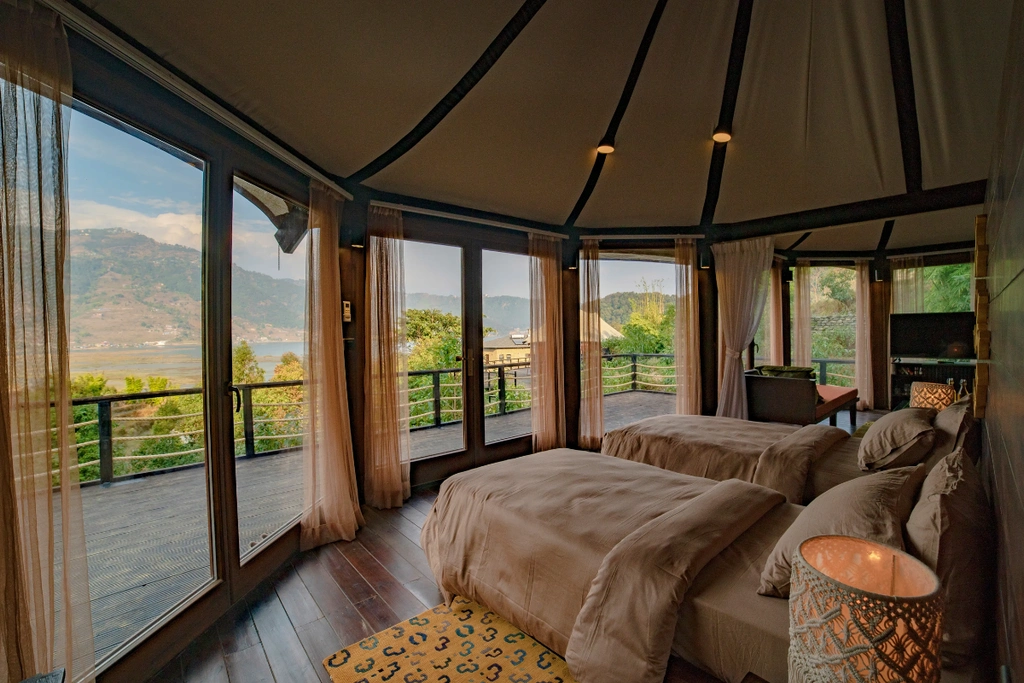
Lakeview: tented villas accessed across Phewa Lake, creating physical separation from road traffic.
Why it works: Pokhara delivers the psychological effect of mountain travel without the intensity of high altitude.
Ideal activities: slow meals, birdwatching, farm visits, gentle walks and long mornings beside the water.
The Dwarika’s Hotel, Kathmandu
Kathmandu does not need to destroy the quietcation mood.
Best for: the first or final night of the trip.
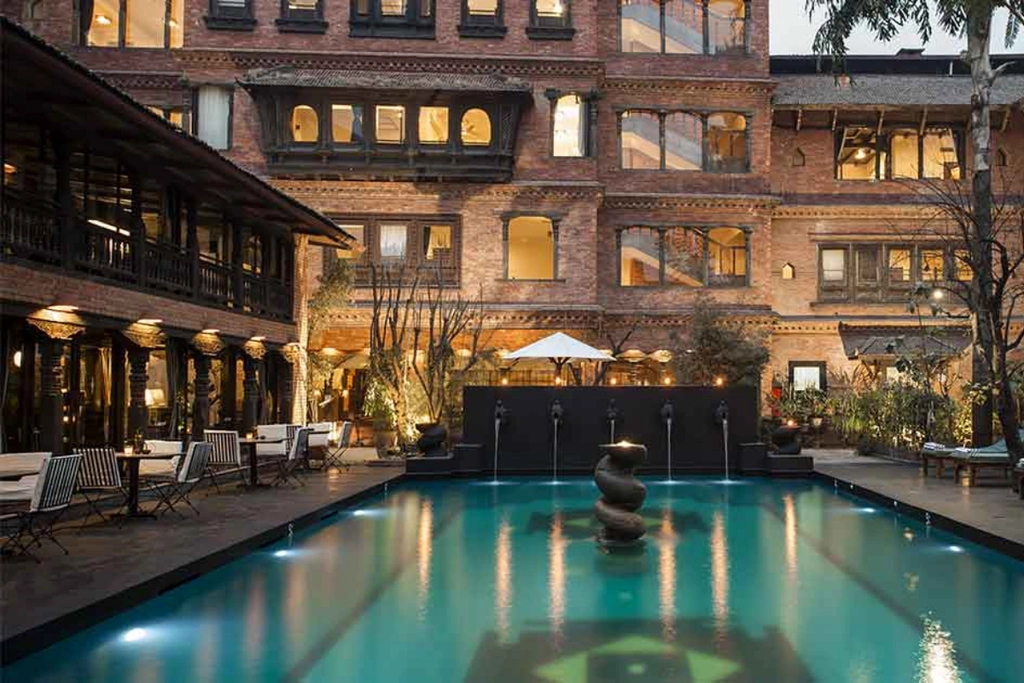
Atmosphere: carved Newari timber, terracotta brick and inward-facing courtyards.
Why it works: the architecture creates a visual and acoustic buffer between the hotel and the capital.
Use it strategically: international flight, one quiet night, then continue toward the mountains.
How to Plan A 3-Day Quietcation + Coolcationing Itinerary?
For only three days, keep the route around Kathmandu and Dhulikhel. Dhulikhel is roughly an hour east of Kathmandu and offers Himalayan views without the complicated transfers required for Mustang or Solukhumbu
Day 1: Kathmandu
heck into The Dwarika’s, Kathmandu, using its enclosed Newari courtyards as a softer introduction to the capital. The heritage property centres on preserved carved timber, brickwork and traditional craftsmanship.
Keep sightseeing intentionally light. Choose one cultural experience, such as a woodcarving demonstration or visit to the hotel’s restoration workshop.
Spend the late afternoon offline in the courtyard.
Finish with a slow Nepali dinner at Krishnarpan or courtyard dining instead of heading back into the city.
Quietcation rule: switch off non-essential notifications after check-in.
Day 2: Kathmandu → Dhulikhel
Check in and leave the first few hours deliberately empty. The retreat sits in the Himalayan foothills and builds its wellness programme around yoga, Ayurveda, meditation, breathwork and landscape.
Take a gentle forest walk or monastery-focused hike instead of packing several excursions into the afternoon.
Try one low-stimulation practice, such as salt-room meditation or mountain breathwork.
Spend sunset looking toward the Himalayas from the property rather than travelling to another viewpoint.
Coolcationing rule: let the foothill climate and mountain air provide the contrast. Higher altitude does not need to become the objective.
Day 3: Dhulikhel
Wake early for Himalayan views. Nepal Tourism Board specifically recommends an overnight stay in Dhulikhel for its sunrise and mountain panoramas.
Join one morning yoga, meditation or breathwork session. These practices form part of the Sanctuary’s current programme.
Keep breakfast long and the phone away.
Choose one final experience: pottery, a forest walk, meditation, or a culturally respectful monastery visit.
Leave the final hours unscheduled before returning to Kathmandu.
The best quietcation and coolcationing itinerary in Nepal rarely contains the most places. It uses climate, altitude, architecture and time to reduce pressure. A stone lodge in Mustang, pine shade in Phaplu, an empty afternoon in Dhulikhel or a boat crossing on Phewa Lake can do more than an overloaded programme ever could.
Welcome to PAVE. The next issue is already on its way to your inbox