




Why does lamé fabric still make every entrance look like an act of deliberate excess?

Lamé Fabric: Too Bright to Be Innocent
Why does lamé fabric still make every entrance look like an act of deliberate excess?
November 24, 2026


Under the lights, a gold dress seems to dissolve into liquid. Its surface changes with the slightest movement, shifting from bright flashes of reflection to darker, almost shadowed folds. There are no sequins scattering light across the garment, no elaborate embroidery demanding attention. The brilliance belongs to the textile itself, following every curve and crease as though the fabric had been fashioned from molten metal.
Such extravagance conceals a surprisingly delicate construction. What appears solid and almost impenetrable is, in reality, a network of threads that can bend, drape, and sometimes break under pressure. Lamé fabric has long occupied this peculiar space between visual excess and physical fragility, allowing fashion to borrow the authority of precious metals while retaining the possibilities of cloth.
What Is Lamé Fabric?
A piece of fabric can resemble polished gold without containing a single gram of precious metal. Its brilliance may come from fine, reflective strips incorporated directly into the textile, creating a surface that responds dramatically to light.
Lamé fabric is a textile traditionally woven with flat metallic threads, often gold or silver, to produce a distinctive reflective appearance. These threads may form much of the fabric's visible surface or be combined with conventional yarns to create a subtler shimmer. Contemporary fashion also uses the term for knitted fabrics incorporating metallic-effect yarns, significantly expanding the material's range of textures and applications.

The name derives from the French lamé, associated with lame, meaning a thin strip or plate of metal. Historically, metallic textiles could incorporate genuine gold or silver, often in the form of delicate strips or metal wrapped around a fibre core. Modern lamé more commonly relies on metallised synthetic materials, allowing manufacturers to reproduce the appearance of precious metals with considerably less weight and expense.
What distinguishes lamé is the source of its brilliance. The reflective quality comes from metallic components within the textile's construction, interacting with light as the material moves. Closely arranged threads can create an almost continuous metallic surface, while more widely spaced strands produce scattered reflections that reveal the underlying fabric. The result can resemble anything from polished silver to weathered bronze, depending on the colour, density, and arrangement of the yarns.
Its physical characteristics vary just as widely. Traditional woven lamé can be crisp and relatively rigid, holding pronounced folds and structured shapes. Lighter constructions incorporating silk, viscose, or polyester may fall more fluidly around the body. Knitted versions introduce elasticity, allowing metallic surfaces to stretch across fitted silhouettes without losing their reflective character.


This variability also explains why lamé is frequently confused with other shimmering textiles. Lurex is a trademark associated with metallic-effect yarns, which can be used to produce lamé alongside numerous other fabrics. Sequinned textiles achieve their sparkle through attached discs, whereas foil-coated fabrics rely on a reflective treatment applied to the surface. Metallic brocade introduces another distinction, using reflective yarns to create woven patterns that may occupy only selected areas of the cloth.
Under close inspection, these differences become important. A dress covered in sequins may sparkle as individual elements move, while a metallic foil finish can present an almost uninterrupted sheen. Lamé's appearance emerges from the relationship between its reflective threads and the structure that holds them together, giving the material a particular sensitivity to folding, draping, and movement.
The Different Faces of Lamé Fabric
The word lamé rarely tells the whole story. Two garments described in the same term may differ considerably in weight, elasticity, surface texture, and drape. Their appearance depends on the choice of metallic yarns and the textile construction used to accommodate them.


Fine metallic threads interlace with conventional warp or weft yarns, forming a reflective textile whose surface can range from softly shimmering to intensely brilliant. Woven lamé often possesses greater dimensional stability than knitted varieties, making it suitable for structured dresses, tailored pieces, and garments with pronounced folds. Depending on the fibre composition and weave density, the material may be lightweight and supple or crisp enough to support architectural silhouettes. Its reflective threads can also make it susceptible to snagging and permanent creases, particularly in delicate constructions.
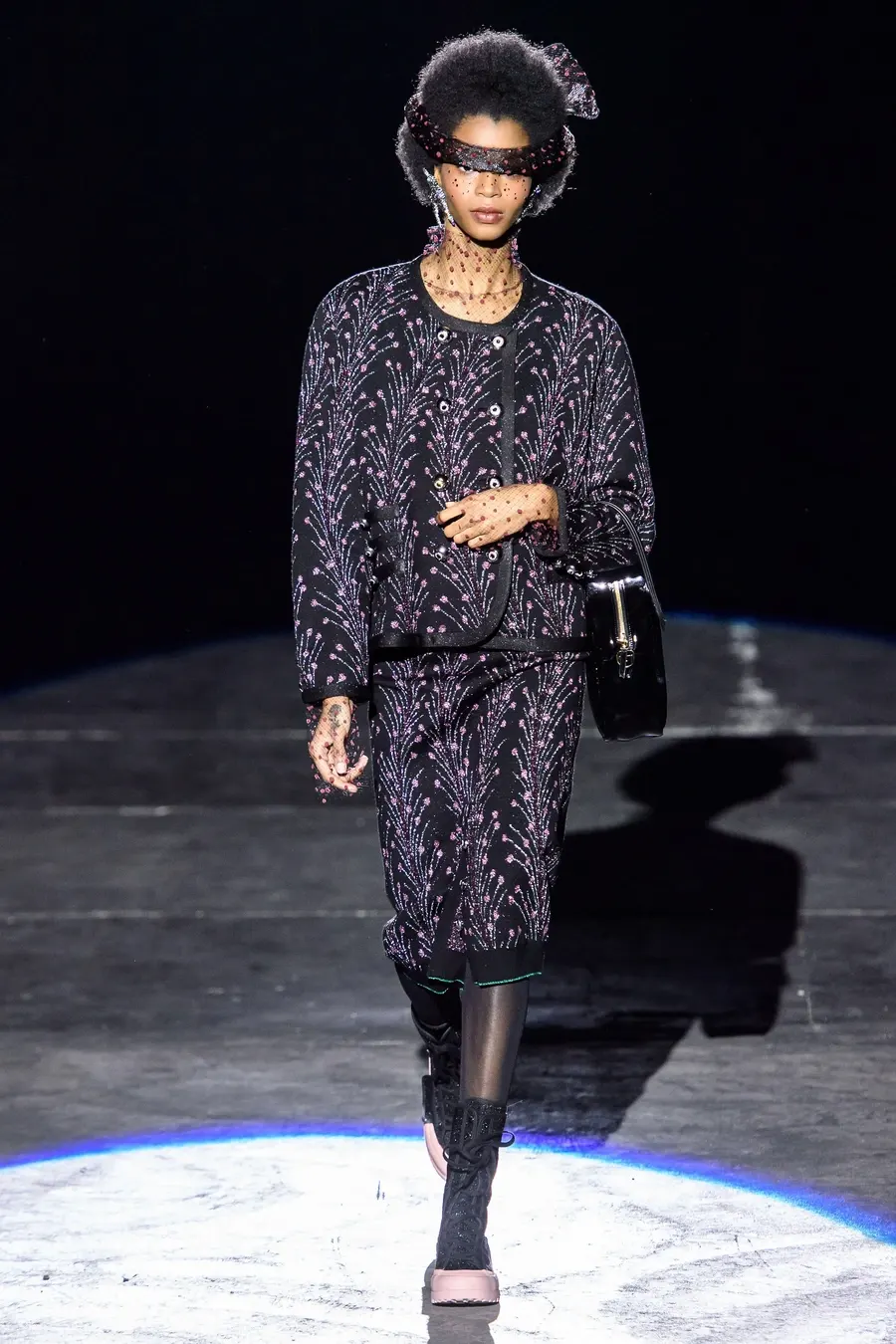
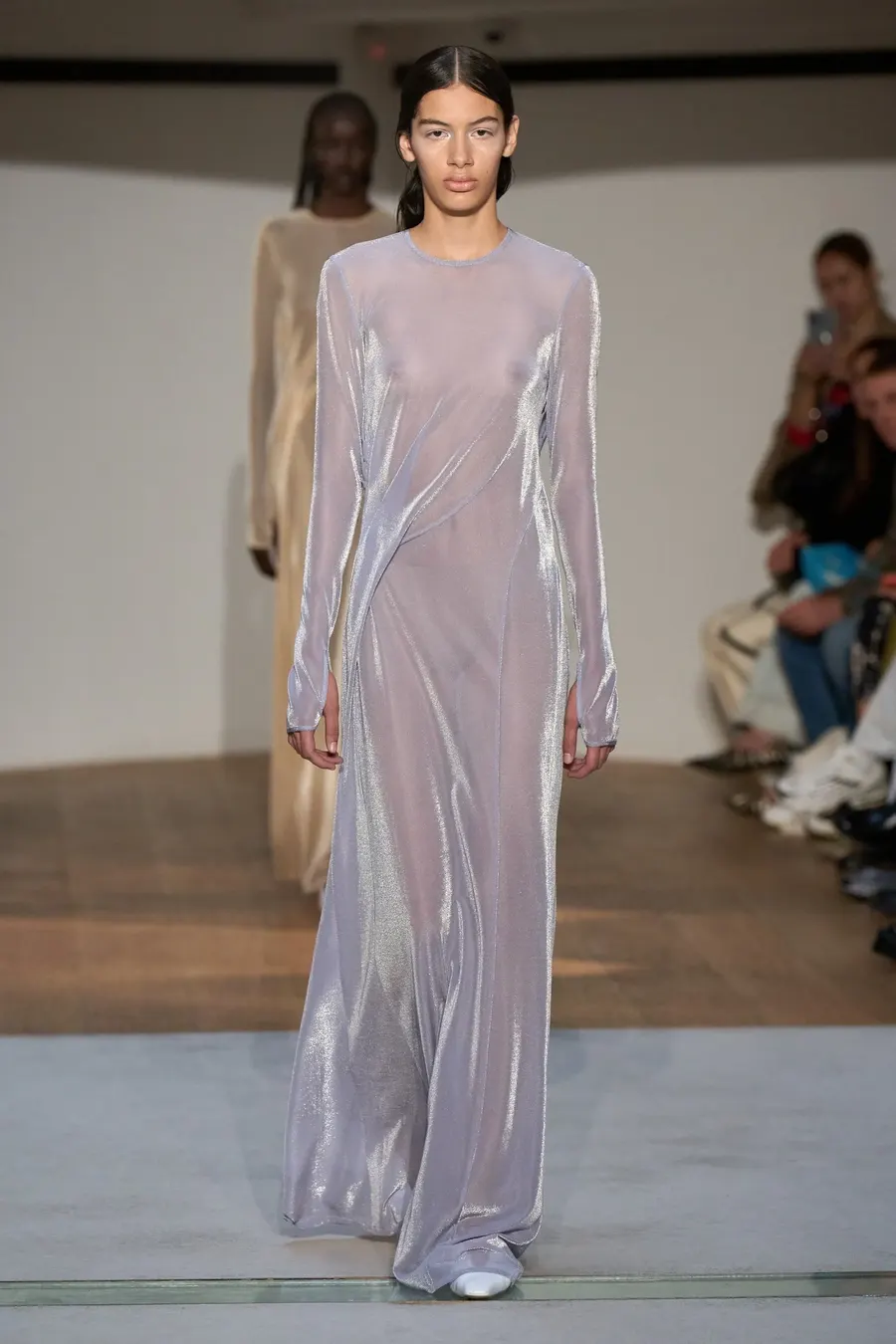
Interconnected loops give knitted lamé a more flexible character, allowing the material to accommodate movement and follow the body's contours. When blended with elastane, metallic-effect yarns can produce fabrics with substantial stretch and recovery, making them particularly suitable for fitted dresses, bodysuits, and performance garments. The texture is often softer and less rigid than traditional woven lamé, although this depends on the yarn composition. Its brilliance changes as the surface stretches, with reflections shifting across the curves and movement of the garment.
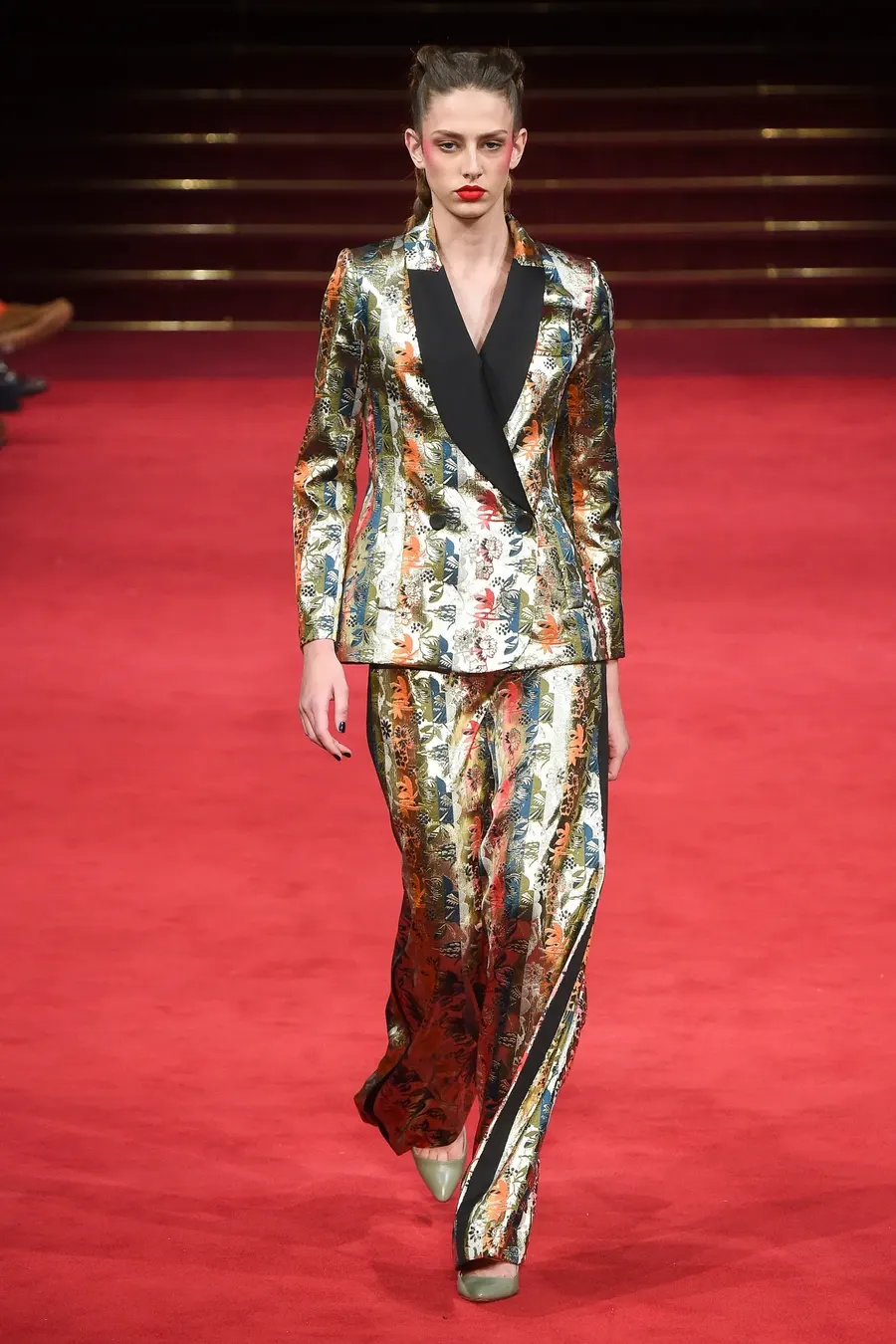
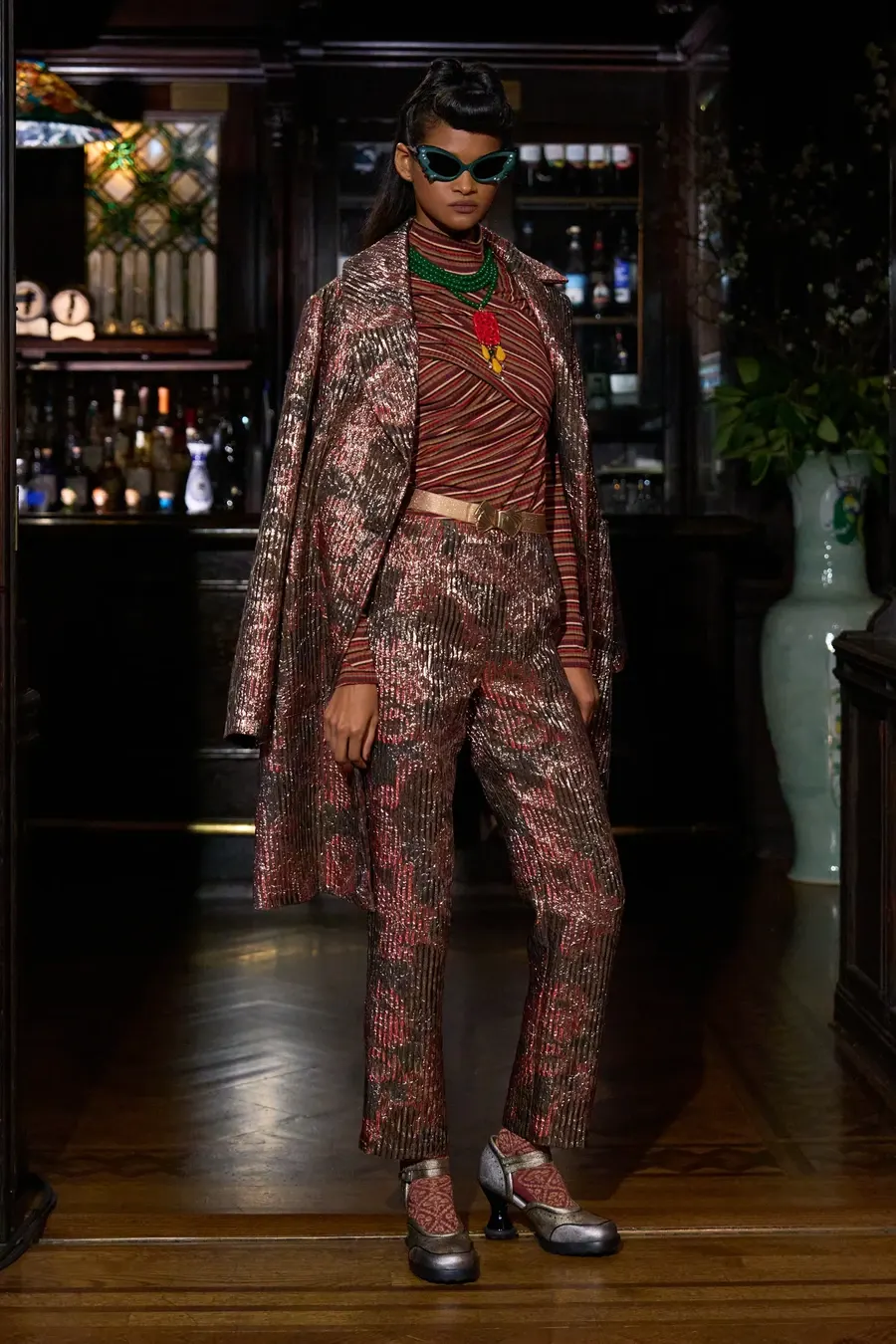
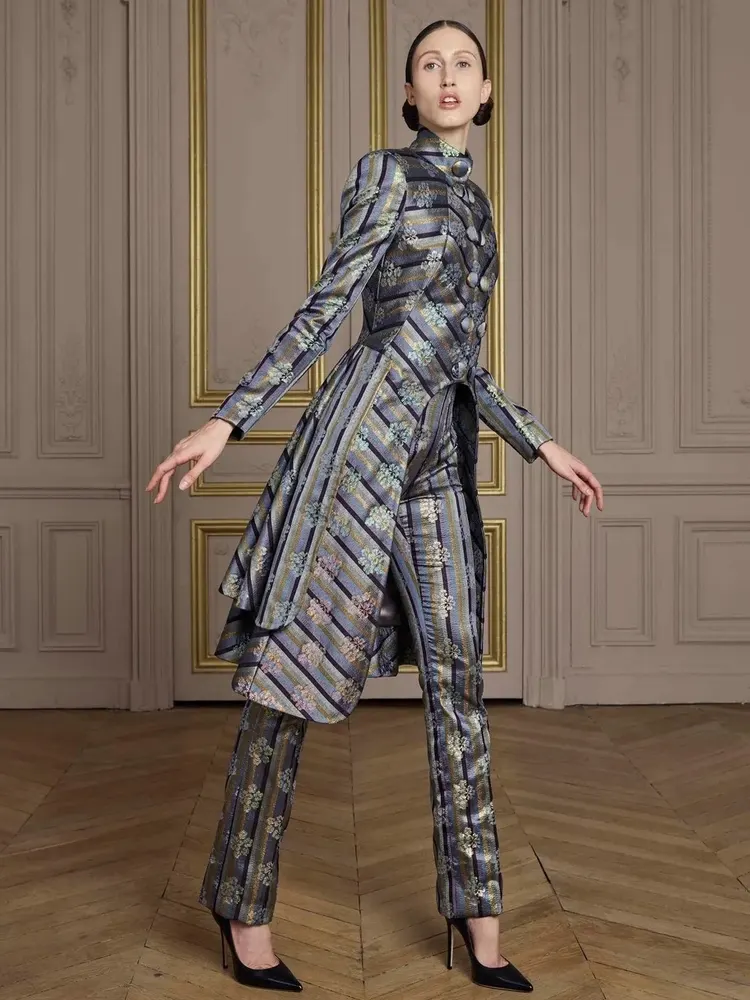
Metallic yarns can also become part of an elaborate woven pattern, creating contrasts between reflective motifs and a comparatively subdued ground. Flowers, geometric arrangements, and ornamental designs acquire an added sense of depth as light moves across their surfaces. These textiles overlap with the broader category of metallic brocade, and brocaded lamé is best treated as a descriptive designation. The technique is particularly suited to formal wear and garments requiring decorative richness without additional surface embellishment.
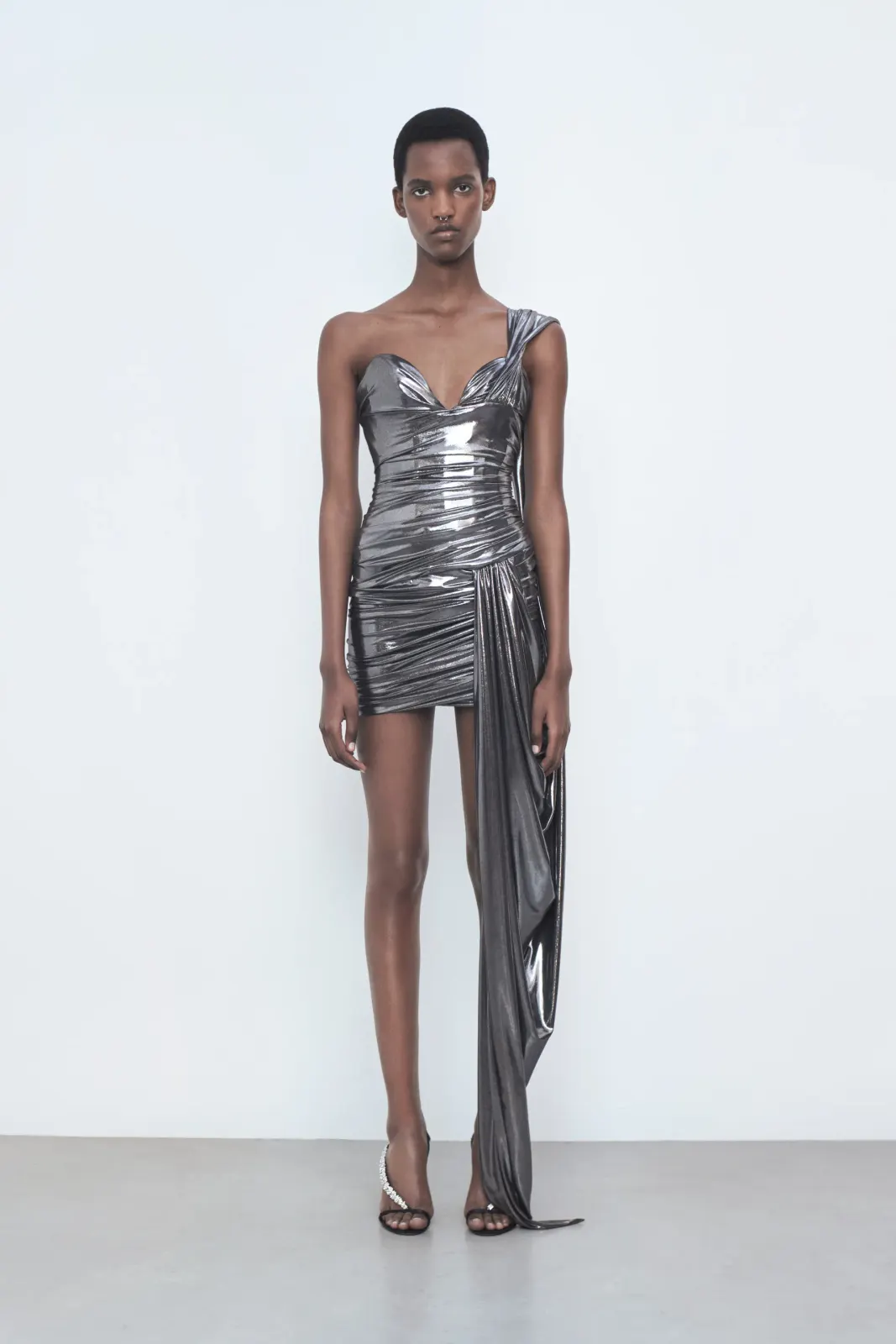
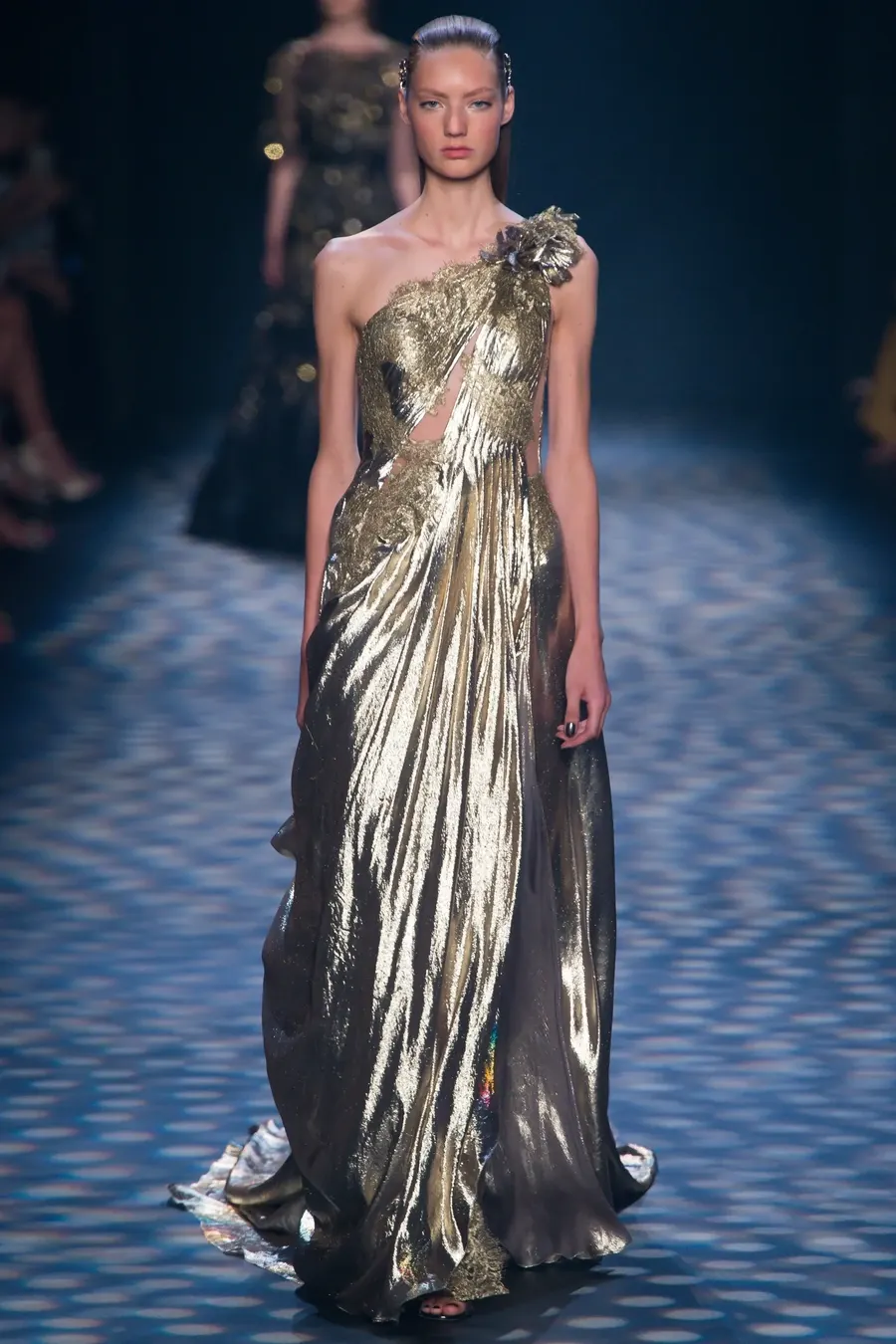
Some metallic textiles possess a fluidity that seems almost incompatible with their appearance. Commonly described as liquid lamé, these fabrics are characterised by a smooth, continuous metallic sheen and a supple drape that follows the body like flowing metal. Lightweight woven and knitted constructions can achieve this effect, although the commercial term is also applied to certain metallic-coated fabrics. Liquid lamé therefore describes a visual and tactile quality, not one exclusive method of manufacture. Its fluid surface lends itself especially well to gathered dresses, elongated gowns, and softly draped silhouettes.
The boundaries between these variations are not always fixed. A knitted lamé can possess the appearance of liquid metal, just as a woven fabric may incorporate metallic threads within a brocaded design. What matters most is the relationship between the yarns, the construction, and the behaviour of the finished cloth.
Lamé Fabric in Fashion
A metallic dress can remain almost motionless and still command attention. Its surface creates tiny variations in light, revealing the folds of a skirt, the angle of a shoulder, or the tension of fabric gathered around the waist. When the wearer begins to move, those reflections multiply, turning the garment into something that appears continually in motion.
Eveningwear offers the most familiar expression of lamé fabric. Long gowns allow metallic surfaces to fall in uninterrupted folds, emphasising the fluidity of the textile and the movement of the body beneath it. Bias-cut constructions can produce particularly dramatic results, allowing light to travel diagonally across the fabric as it drapes. Gold evokes an almost ceremonial extravagance, while silver can appear cooler and more futuristic. Bronze, copper, and coloured metallic finishes introduce subtler variations, sometimes resembling aged metal or industrial surfaces.
Tailoring introduces an entirely different tension. The sharp lines of a blazer or structured dress can make metallic fabric appear surprisingly severe, particularly when its reflective surface is controlled by precise seams and restrained proportions. Exaggerated shoulders, sharply defined waists, and sculptural folds allow the textile to emphasise the architecture of a garment. Against matte materials, even a relatively small area of lamé can become the dominant visual element.

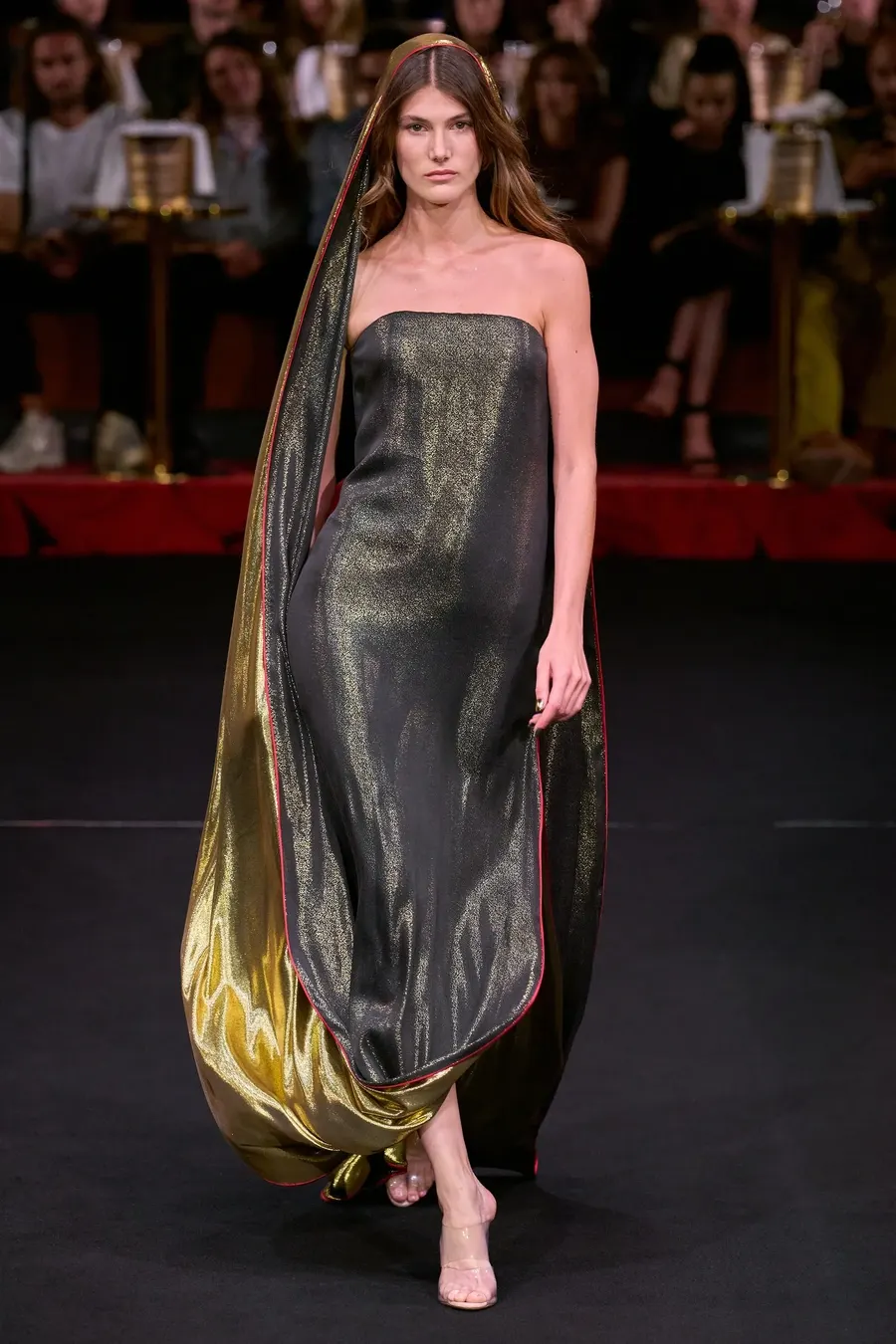

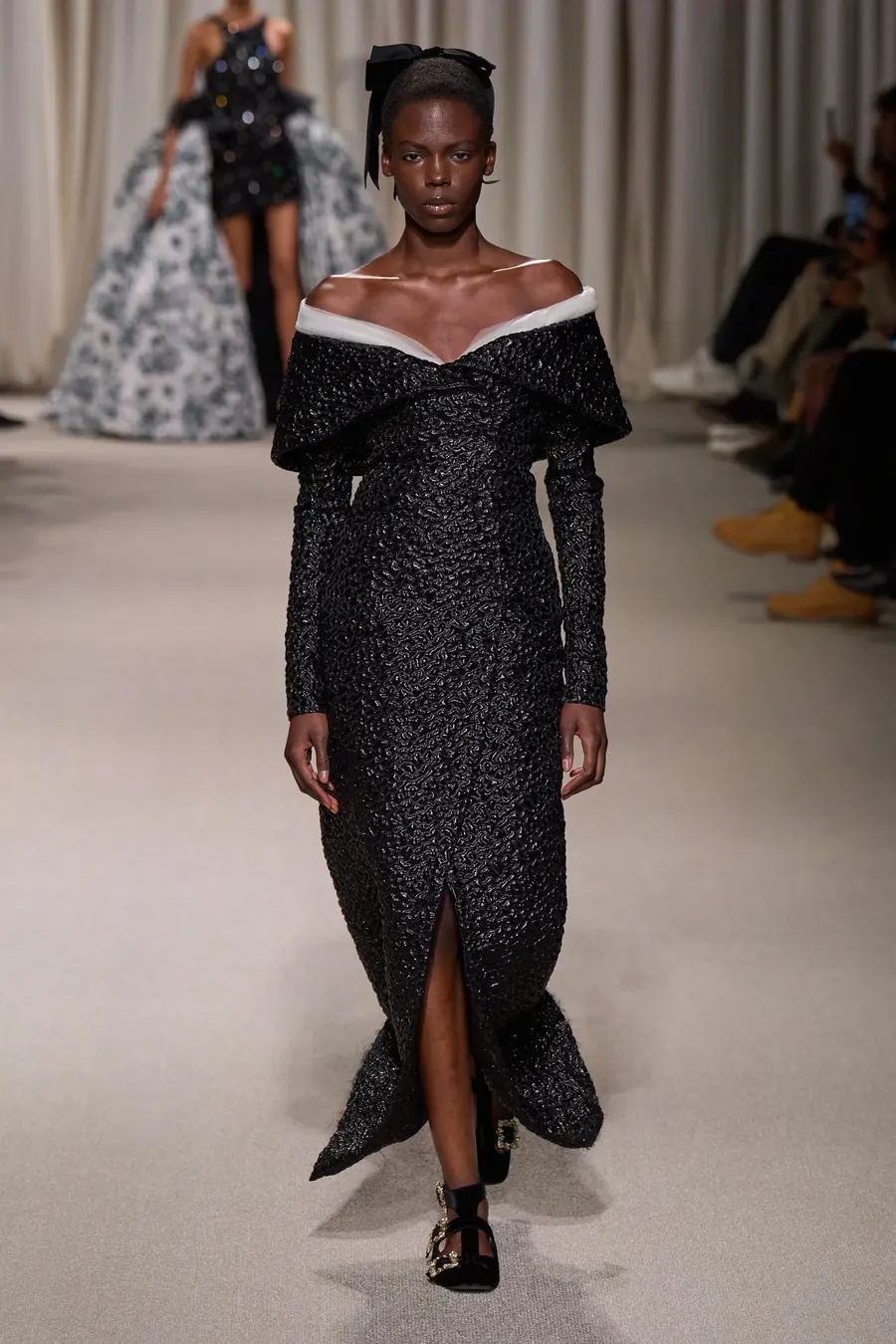
Stretch constructions encourage a closer relationship with the body. Knitted lamé can contour around the torso, hips, and limbs, producing fitted silhouettes that change appearance with every movement. The material's reflective quality intensifies this effect, drawing attention to the contours of the garment while creating an almost futuristic, second-skin appearance. In dancewear and performance fashion, its ability to respond to artificial lighting gives the textile an additional theatrical dimension.
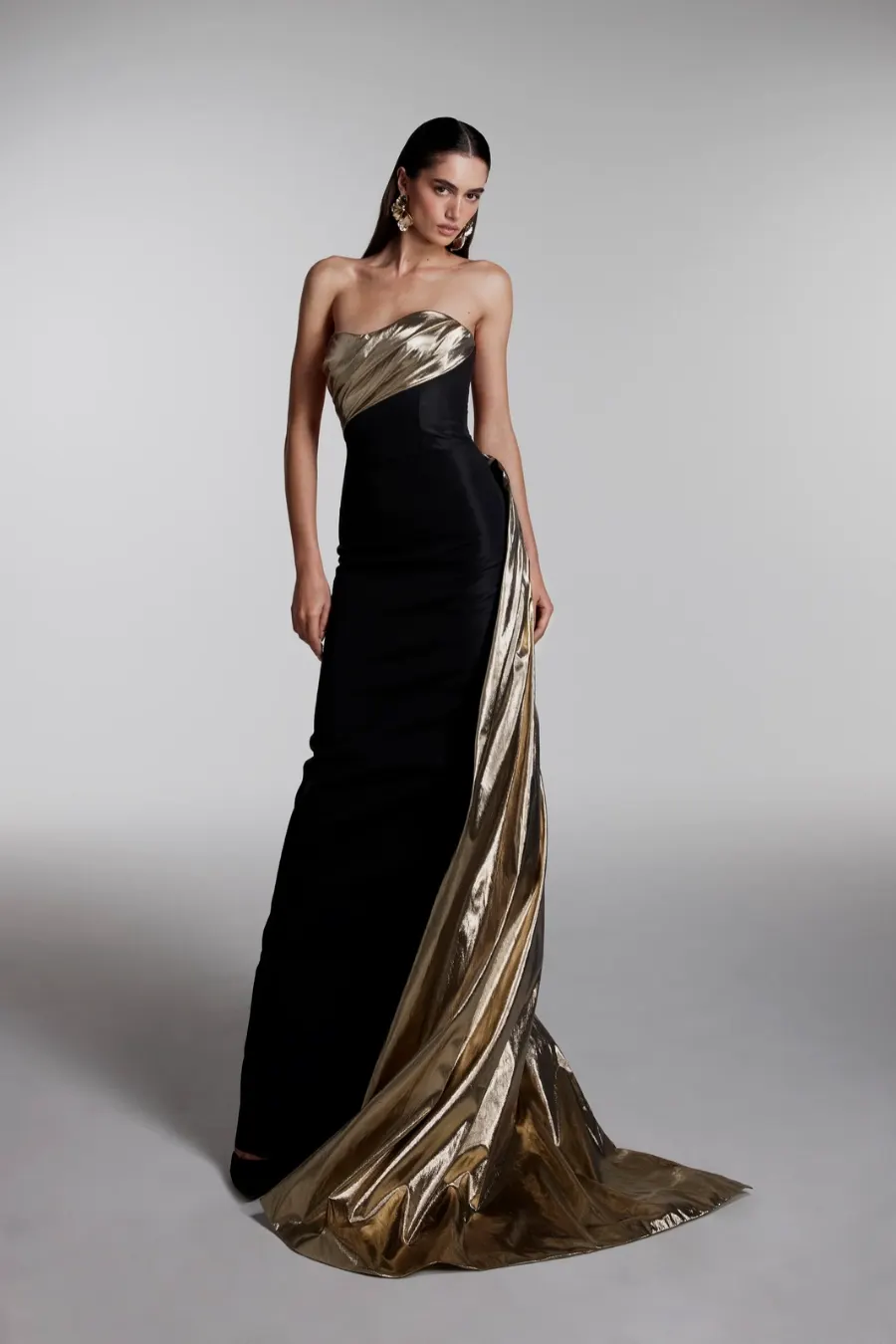

More experimental interpretations exploit lamé's capacity for exaggeration. Dense gathering can fracture its reflections, while irregular pleating introduces alternating passages of brilliance and shadow. Oversized draping transforms a lightweight textile into a seemingly monumental form. When metallic fabric is combined with sheer organza, heavy wool, or supple leather, its artificial brilliance becomes even more pronounced against the contrasting surfaces.
Perhaps its greatest challenge lies in knowing when to stop. Lamé already carries an extraordinary amount of visual information, and additional embellishment can easily compete with the surface itself. Some of the most compelling designs emerge from comparatively simple constructions, where the movement of light provides all the drama a garment requires.
How to Identify, Buy and Care for Lamé Fabric
Under natural light, metallic threads often reveal themselves as fine reflective lines running through the textile. Tilting the fabric can make these strands easier to distinguish from the surrounding yarns. A closer examination of the weave or knit may reveal narrow metallic strips integrated into the construction, whereas an evenly coated surface can indicate a foil treatment. Since commercial terminology is not always consistent, examining both the fabric structure and its composition is more reliable than judging its appearance alone.
Before purchasing lamé fabric, consider how its weight and flexibility correspond to the intended garment. A crisp woven construction may be suitable for sculptural tailoring but resist the soft drape required for a bias-cut gown. Stretch lamé offers greater freedom of movement, although its recovery and transparency should be tested before cutting. Metallic yarns can sometimes feel rough against the skin, making lining an important consideration for fitted garments. Delicate constructions may also fray or snag easily, particularly around cut edges and seams.


Handling requires equal attention. Pins and needles can leave permanent marks on sensitive metallic surfaces, while excessive pressing may flatten textures, distort synthetic fibres, or damage metallic coatings. When sewing, test stitching, seam finishes, and pressing temperatures on a small sample before beginning the garment. A pressing cloth may offer some protection, but not every lamé fabric can safely tolerate direct heat.
Cleaning instructions vary according to fibre composition and finishing techniques. Some modern metallic knits permit gentle hand washing, while others require professional care. Dry cleaning is not universally suitable, since certain solvents can affect metallic coatings or adhesives. Strong detergents, vigorous rubbing, and high temperatures should generally be avoided unless the manufacturer's instructions specifically permit them.

Storage can influence the appearance of lamé over time. Folding may leave persistent creases in delicate woven varieties, while prolonged abrasion can damage reflective threads. Garments should be stored in a dry environment, protected from pressure and excessive friction. Vintage pieces incorporating genuine metal threads may also be vulnerable to tarnishing or corrosion, requiring more specialised conservation.
The appeal of lamé has always contained a curious contradiction. Its metallic surface suggests permanence, wealth, and a certain indifference to ordinary concerns, yet the material itself can be surprisingly vulnerable. A single snag may disturb its brilliance, and a poorly placed fold can permanently alter the way light travels across the cloth.
Fashion has found endless possibilities in that delicate illusion. A dress may look as though it has been cast from solid gold, yet it moves with the body, yielding to its gestures and revealing the softness beneath its metallic appearance. Lamé fabric turns the fantasy of precious metal into something wearable, proving that extravagance can be constructed from the finest threads.