





Mid-market brands have discovered fashion's sweetest opportunity, where beautiful clothes, intelligent pricing and a little manufactured desire can build empires.

How Mid-Market Brands Are Rewriting the Class Code
Mid-market brands have discovered fashion's sweetest opportunity, where beautiful clothes, intelligent pricing and a little manufactured desire can build empires.
November 23, 2026


The fashion industry's most revealing document might currently be a receipt, particularly one from a luxury boutique where the price of an ordinary cashmere sweater has climbed into four figures, accompanied by a charming explanation about exceptional craftsmanship, exclusive materials and the mysterious expense of being associated with a prestigious name, while mid-market brands are quietly turning that increasingly extravagant price tag into one of their greatest commercial opportunities.
Somewhere else in the city, a customer purchases a beautifully considered cardigan from Sézane, perhaps a Reformation dress or an Aritzia trouser, and leaves the store with the peculiar satisfaction of having acquired something desirable without participating in an elaborate ceremony of financial submission.
Somewhere in the executive offices of Europe's most prestigious fashion houses, this development ought to inspire a certain uneasiness.
According to BoF–McKinsey research, average luxury prices increased approximately 61% between 2019 and 2025, while price elevation accounted for much of the sector's recent growth. The consumer who once considered designer ready-to-wear an occasional indulgence has consequently discovered a wardrobe of alternatives, and mid-market brands have become remarkably skilled at making those alternatives desirable.
Luxury Has Made Mid-Market Brands Look Delicious
A Chanel handbag now carries the kind of price that might once have purchased an entire designer wardrobe, while the familiar ritual of annual increases has gradually transformed luxury consumption into an exercise in financial tolerance. For aspirational customers, the irritation extends beyond affordability, since even those capable of purchasing expensive clothing have begun questioning whether the object itself justifies the extraordinary premium demanded by its label.

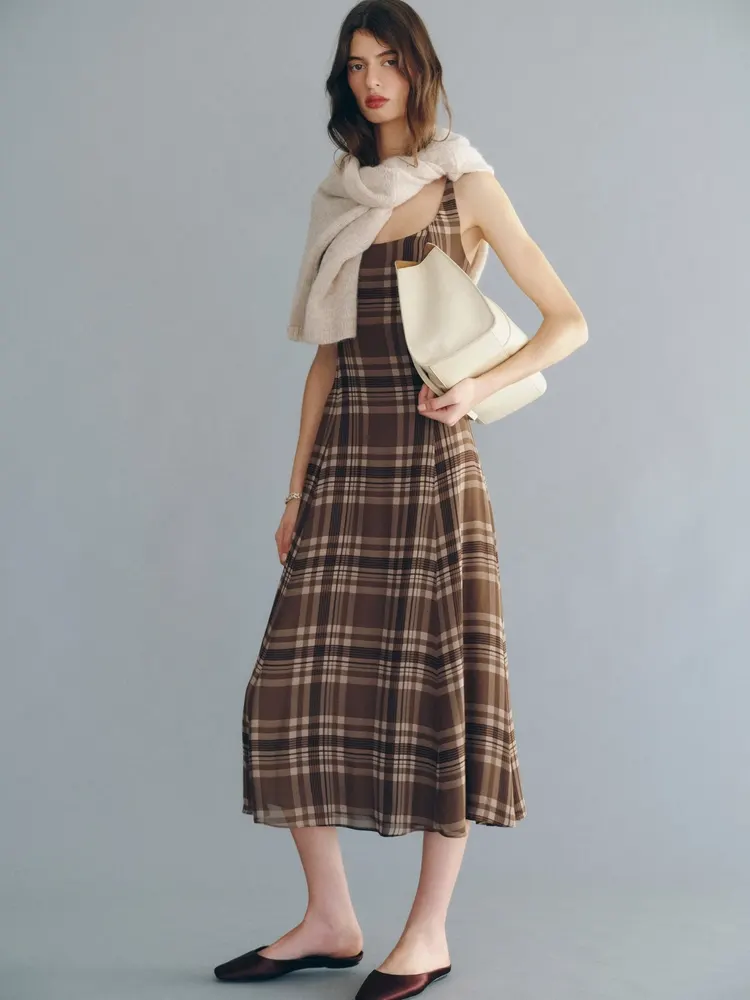
Thorstein Veblen's theory of conspicuous consumption relied upon the social distinction conferred by visible expenditure, yet contemporary luxury appears to have pushed that principle toward an awkward extreme, where the expense of a garment can become its most recognizable feature.
The appeal of mid-market brands emerges from this exhaustion, although they have developed propositions more convincing than simply offering designer-inspired clothing at reduced prices. Their collections frequently possess identifiable silhouettes, consistent styling and enough quality to persuade consumers that they are purchasing something worth keeping, even if the prices remain substantially above conventional mass-market clothing.

Aritzia illustrates the commercial potential of this position particularly clearly, reporting C$2.12 billion in revenue during the first half of fiscal 2027, an increase of 43.7% year on year, while comparable sales grew 34.8%, demonstrating that customer demand extended beyond the contribution of newly opened boutiques.
Reformation generated $507.1 million in net revenue during 2025, although its declining annual net income revealed that popularity and profitability are distinct achievements.
These figures describe businesses operating at different scales, but collectively they expose the commercial opportunity created when fashion's traditional luxury houses begin treating aspiration as an inexhaustible resource.
The Revenge of the Ordinary Dress
When Diane von Furstenberg introduced her wrap dress in the 1970s, she offered women a garment capable of moving through work, social life and changing expectations of femininity with a simplicity that made its commercial success almost inevitable. The dress became recognizable through its relationship with the women wearing it, establishing an identity that could survive changing collections and the endless reinvention demanded by the industry.
Decades later, mid-market brands have rediscovered the extraordinary economic potential of the ordinary garment.

Aritzia has developed considerable recognition around its Effortless trouser, while Sézane's Gaspard cardigan has become an enduring signature, its familiar proportions and styling functioning almost as an introduction to the brand itself. Rixo's printed dresses, Hill House Home's Nap Dress, La Ligne's striped knitwear and Staud's sculptural handbags demonstrate how a recognizable product can support a business without requiring seasonal spectacles or extravagant creative reinventions.
The commercial intelligence lies in repeatability, because a successful silhouette can return in different fabrics, colors and variations while preserving the familiarity that customers already appreciate.
This approach is especially compelling in an industry that has spent years treating novelty as a substitute for originality, encouraging consumers to purchase clothing that announces its relevance to a particular season before quickly surrendering that relevance to the next collection.
A well-cut trouser offers a rather different relationship with time, and the woman returning for another pair may provide a business with considerably more valuable loyalty than the customer briefly fascinated by a viral runway experiment.
Yet familiarity possesses its own dangers, since an independent label can gradually become so dependent on its bestselling dress that every subsequent collection resembles an increasingly elaborate attempt to reproduce the original success.
The Very Profitable Art of Having a Personality
Reformation has developed the personality of a woman who attends weddings, understands vintage references and possesses sufficient confidence to be mildly irreverent about her own attractiveness, while Sézane imagines an equally appealing character whose Parisian existence appears to involve excellent knitwear, carefully arranged flowers and an enviable amount of leisure.
Dôen cultivates nostalgic Californian romance, Ganni established a playful Copenhagen sensibility, Rixo trades in the pleasures of eccentric vintage femininity, and Me+Em appeals to women whose sophistication depends upon looking assured rather than conspicuously fashionable.
These identities are commercially precise, allowing shoppers to recognize a brand through photography, styling, language and product design long before encountering its logo.
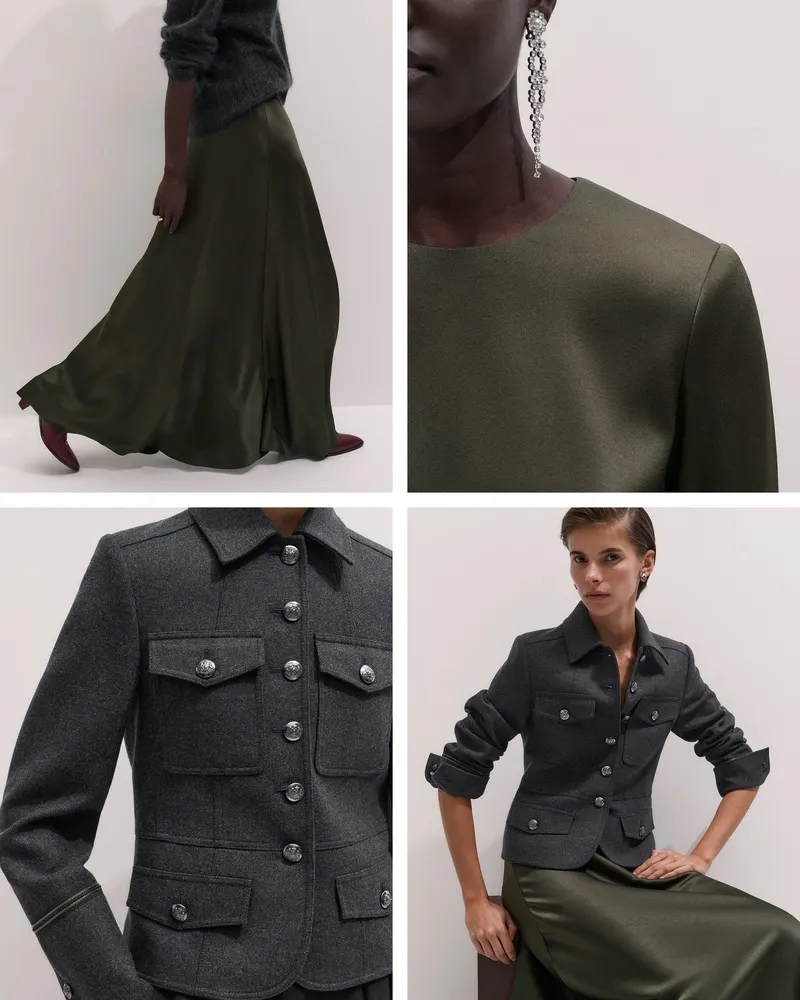
In BoF's 2025 Brand Pulse assessment, published in January 2026, Sézane ranked first overall among contemporary and accessible-luxury brands, reflecting the strength of its digital identity and customer relationships, while Staud and Reformation also demonstrated the importance of recognizable positioning.
The obvious temptation is to describe these businesses as communities, a term beloved by marketing departments because it transforms an ordinary customer relationship into something resembling emotional membership.
There is considerable ingenuity in their approach, although the intimacy remains carefully organized around commercial objectives, with the supposedly effortless personality of a brand constructed through consistent art direction, customer communications, product decisions and an exceptionally disciplined understanding of its intended audience.
The paradox is delicious: mid-market brands have become masters at selling individuality through identities so meticulously defined that thousands of women can immediately recognize themselves within the same aesthetic.
Fashion's New Winners Learned to Say No
The financial history of contemporary fashion makes its present enthusiasm particularly interesting, because the category has already produced celebrated brands whose expansion eventually became their undoing, including businesses weakened by department-store dependence, excessive inventory and the relentless pressure to pursue growth.
During the 2010s, fashion entrepreneurs were encouraged to embrace the direct-to-consumer model with almost religious conviction, supported by the belief that digital acquisition, abundant investment and rapid international expansion would inevitably produce the next retail empire.
Many discovered that customers were expensive to acquire, physical shops remained important and the internet had little sympathy for businesses whose advertising budgets were growing faster than their profits.
Against that background, the relative resilience of mid-market brands offers an instructive alternative, as these companies developed distinctive products while maintaining varying degrees of discipline around inventory, marketing expenditure and distribution.
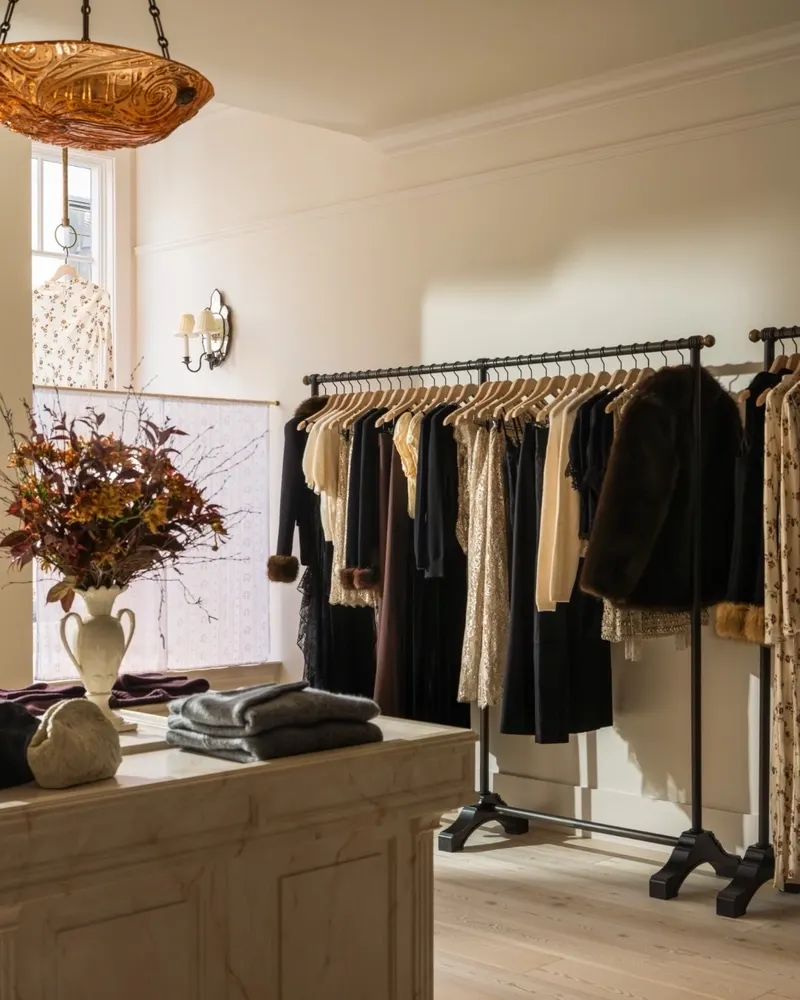
La Ligne initially built its following with minimal advertising spending, while Rixo's founders have emphasized the flexibility afforded by controlled production commitments, demonstrating that commercial restraint can create possibilities unavailable to businesses consumed by the pursuit of scale.
Rixo's approximately £23 million in annual sales for the year ending June 2025 also provides a useful counterpoint to the billion-dollar ambitions of much larger competitors, since a smaller company can possess a coherent identity and healthy customer demand without becoming a global retail institution.
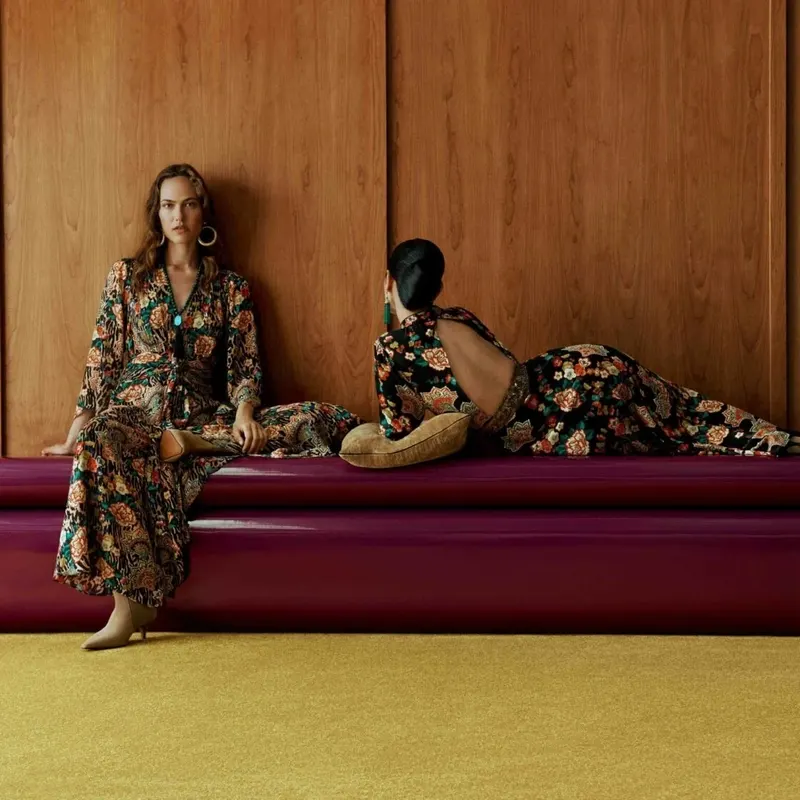
Its 44-piece John Lewis collaboration, launched in October 2026, illustrates the delicate balancing act involved in expanding distribution while preserving the recognizable design language that attracted customers originally.
The unexpected lesson is that some of the most resilient contemporary businesses survived precisely because they lacked the appetite, or the resources, to make the extravagant mistakes that fashionable investment once encouraged.
Growth remains desirable, but the industry has developed an unfortunate habit of mistaking expansion for intelligence, even when the economic evidence suggests that restraint can be the more sophisticated commercial decision.
Everyone Wants to Become a Little More Expensive
The trouble with occupying fashion's middle ground is that nearly every ambitious retailer has begun trying to move into the same attractive territory, creating an increasingly crowded market where the distinction between elevated high street and contemporary design becomes difficult to maintain.
COS has invested in sophisticated presentation and minimalist tailoring, Massimo Dutti has refined its premium positioning, Arket continues to build an identity around considered everyday clothing, and Uniqlo has demonstrated through collaborations with designers such as JW Anderson that accessible retail can offer a compelling degree of creative credibility.

Meanwhile, Quince challenges the premiums attached to mid-market brands by selling its own interpretation of quality essentials at comparatively restrained prices, placing further pressure on businesses whose distinction depends heavily upon image.
The irony is that mid-market brands are now encountering the same temptation that weakened luxury's relationship with aspirational consumers, as successful companies discover that raising prices can produce attractive financial results without requiring an equivalent increase in creative ambition.
Ganni's move toward a more expensive position illustrates the difficulty of persuading an established audience to accept a new pricing identity, while the growing sophistication of COS and Massimo Dutti means that contemporary labels can no longer assume their products occupy an uncontested territory between inexpensive clothing and designer luxury.


There is a particularly absurd quality to an industry in which every brand wants to become slightly more luxurious, as though sophistication were a geographical destination toward which retailers must continually migrate.
Eventually the entire market begins resembling an expensive neighborhood undergoing gentrification, with each new arrival improving the shopfronts, raising the rents and gradually displacing the customers who made the place interesting.
The commercial challenge is therefore about preserving a relationship between price and substance, something mid-market brands currently understand well enough to attract consumers but may find increasingly difficult to defend as their ambitions expand.
Mid-Market Brands Are Building Their Own Kingdoms
The disappearance of the great department store as fashion's unquestioned cultural gatekeeper introduces a more consequential change than any individual brand's revenue growth, because contemporary fashion is gradually reorganizing the machinery through which customers discover, evaluate and purchase clothing.
Barneys New York once provided emerging designers with a prestigious introduction to customers, while Saks Fifth Avenue, Bloomingdale's and independent retail boutiques played important roles in determining which labels deserved commercial attention, effectively functioning as editors of the fashion marketplace.
The closures and financial difficulties affecting major multibrand retailers have weakened parts of that system, while the expansion of Aritzia's boutiques, Reformation's direct retail operations and Sézane's highly controlled shopping environments demonstrates how successful mid-market brands can increasingly perform those editorial functions themselves.
Aritzia operates through a collection of internally developed labels that create the appearance of a curated fashion destination, while retaining substantial control over product development, merchandising and the customer's shopping experience.
This is a remarkable evolution of the department-store idea, replacing a retailer that assembles independent brands with a commercial universe whose apparent diversity is largely designed and managed from within.

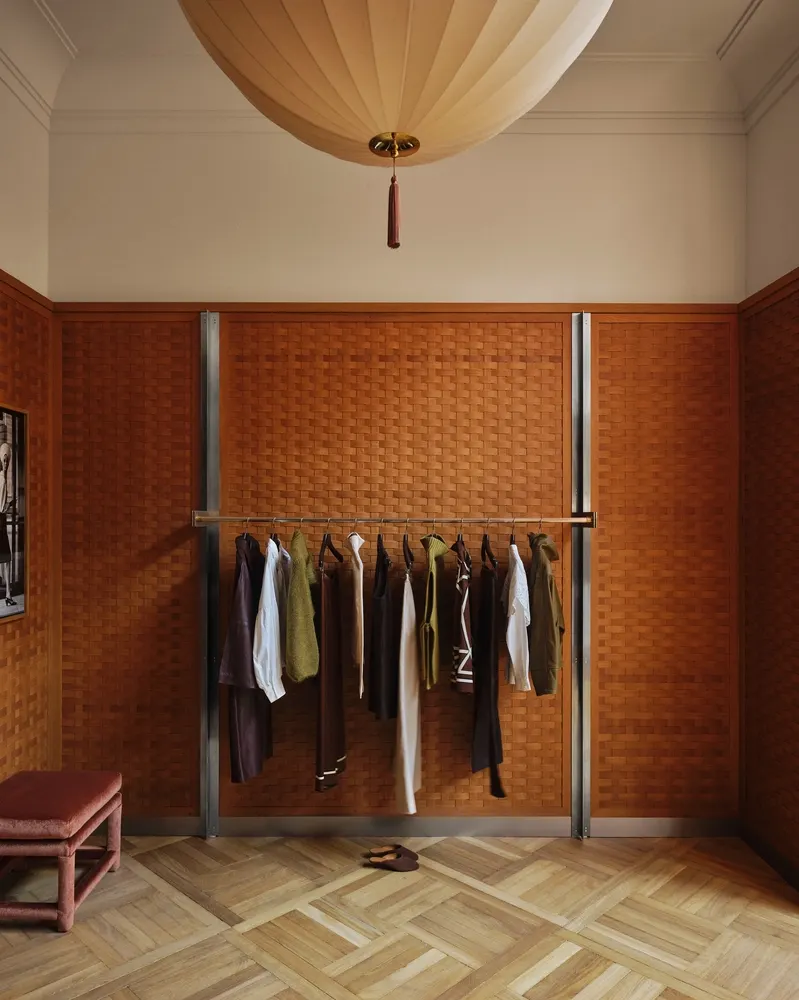
The implications extend beyond profit margins, because a company controlling its own stores, digital platform, customer information and product assortment acquires influence over the kinds of clothing its audience encounters, the styles it learns to desire and the alternatives it may never discover.
For younger independent designers, the development is potentially troubling, since the contemporary businesses celebrated for bringing fashion within reach may also draw attention and retail spending away from the multibrand ecosystem that historically helped emerging creative talent develop.
The counterargument is equally compelling, as independent boutiques have demonstrated renewed cultural importance by offering distinctive selections and the pleasure of discovering unfamiliar designers, suggesting that some consumers still value the unpredictability of retail environments beyond the carefully managed universe of one brand.
What makes the rise of mid-market brands so fascinating is therefore the possibility that fashion is witnessing a transfer of cultural authority disguised as a change in shopping habits, with successful contemporary labels acquiring the power once distributed among department-store buyers, fashion editors and luxury institutions.