On the edge of Jinji Lake, BIG’s first completed art museum opening in China transforms one of Suzhou’s oldest architectural ideas into a 60,000-square-metre landscape of art, gardens and movement.
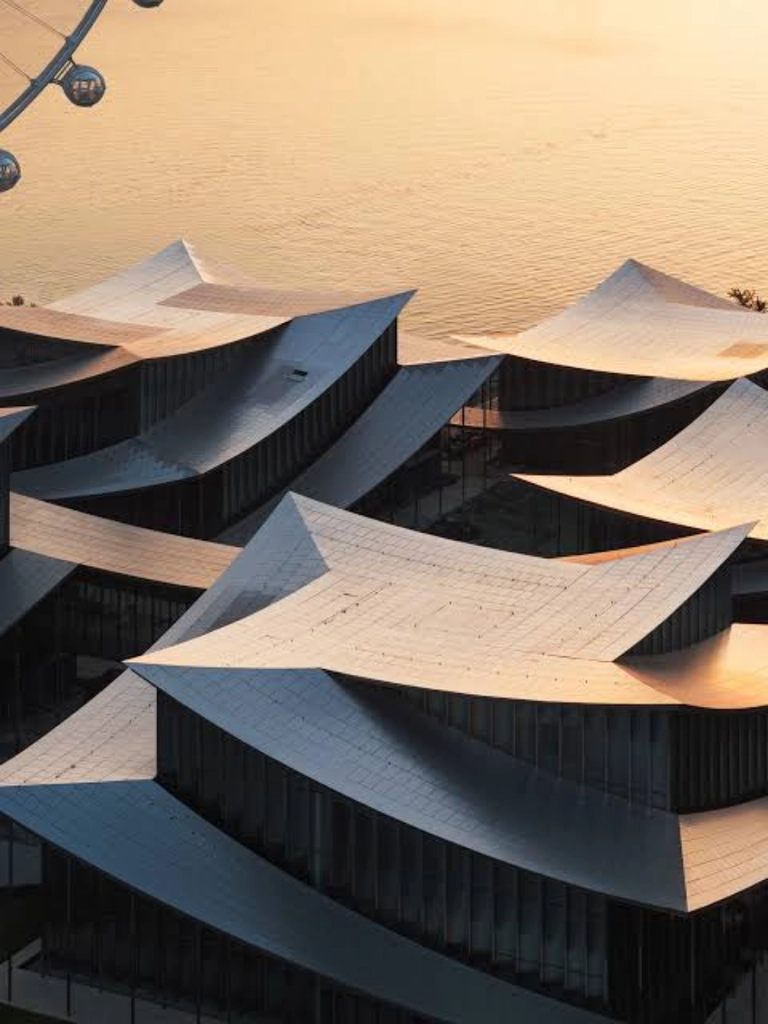
On the edge of Jinji Lake, BIG’s first completed art museum opening in China transforms one of Suzhou’s oldest architectural ideas into a 60,000-square-metre landscape of art, gardens and movement.
August 30, 2026


The Suzhou Museum of Contemporary Art has officially opened on August 30, giving Bjarke Ingels Group its first completed art museum and Suzhou a cultural landmark. Designed with ARTS Group, VIA.inc and SHUISHI, the complex is divided into 12 interconnected pavilions gathered beneath one continuous roof beside Jinji Lake.
Its starting point is surprisingly old. BIG looked to the lang (廊), the covered corridor found throughout Suzhou’s classical gardens, where architecture traditionally guides people through changing combinations of water, plants, courtyards and framed views. Here, that corridor expands until it becomes the museum itself. The roof bends, rises and stretches between pavilions, while galleries are connected by glazed passages, bridges and underground routes.
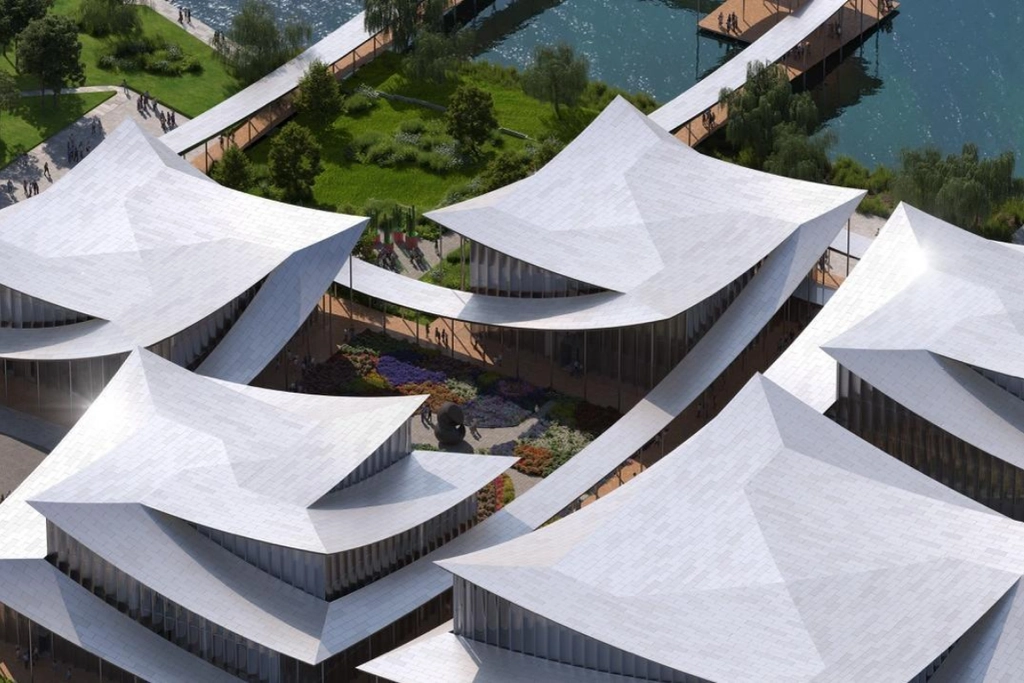
Movement consequently becomes part of the exhibition experience. Visitors can follow the principal museum route or disappear onto smaller paths between galleries and gardens, with circulation adapting to different exhibitions and seasons. Instead of presenting art inside one sealed box, the architecture turns walking between artworks into another layer of discovery.
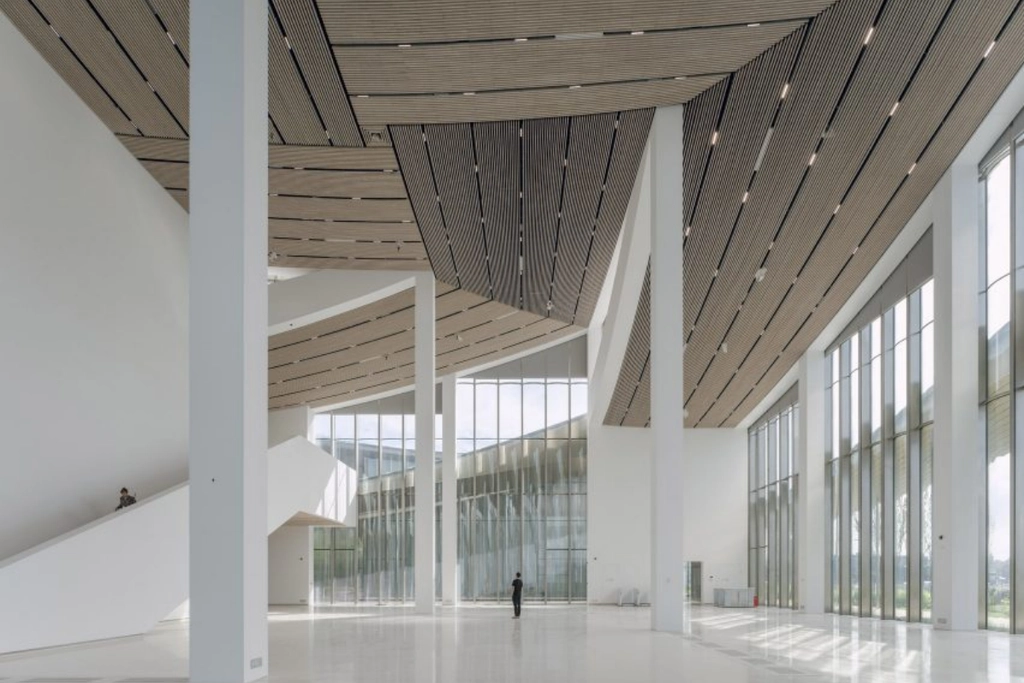
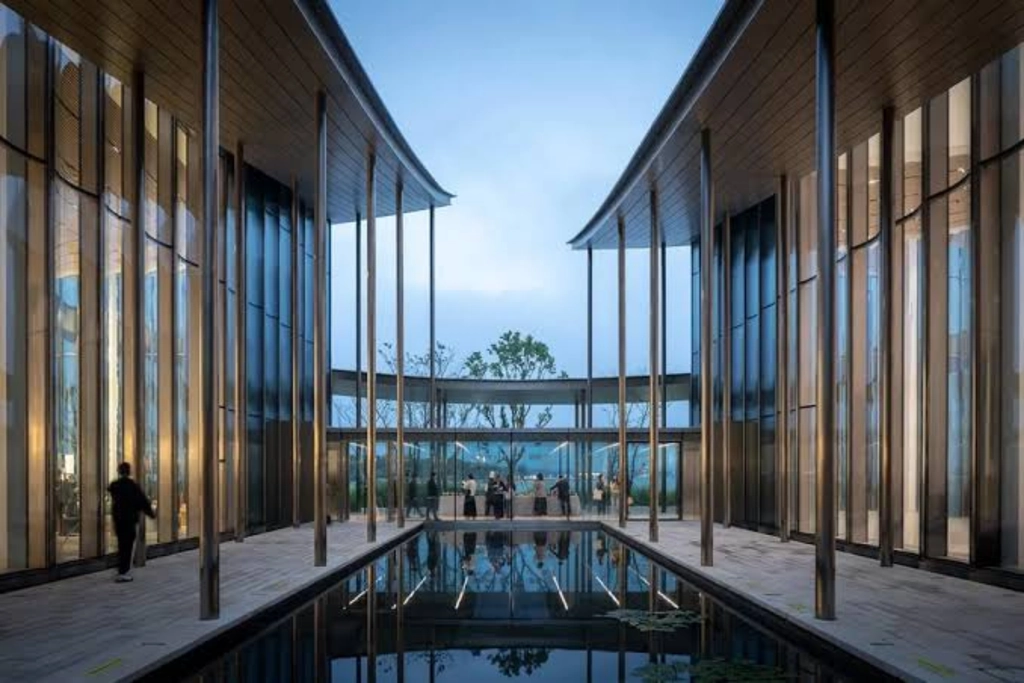
Suzhou MoCA changes completely according to where it is viewed. At ground level, individual buildings, gardens and waterways fragment the enormous 60,000-square-metre project into something closer to a small cultural village.
Go upwards, however, and another composition appears.
The neighbouring Suzhou Eye Ferris wheel gives visitors an unusually elevated view of the museum. From its gondolas, BIG’s looping stainless-steel roof resembles an infinity knot, weaving between the Ferris wheel structures and extending toward Jinji Lake. The roof therefore becomes what Bjarke Ingels calls the building’s “fifth façade”, an architectural surface conceived to be experienced from above as seriously as its walls are from the ground.
The museum opening includes an exhibition by BIG. The Materialism exhibition, first presented during the museum’s preview phase and still on view, organizes the studio’s work through ten materials, moving from stone, earth and concrete through metal, glass and wood to plant matter and recycled material. Large-scale models and prototypes represent 20 BIG projects, including Google Bay View and the firm’s Copenhagen headquarters.
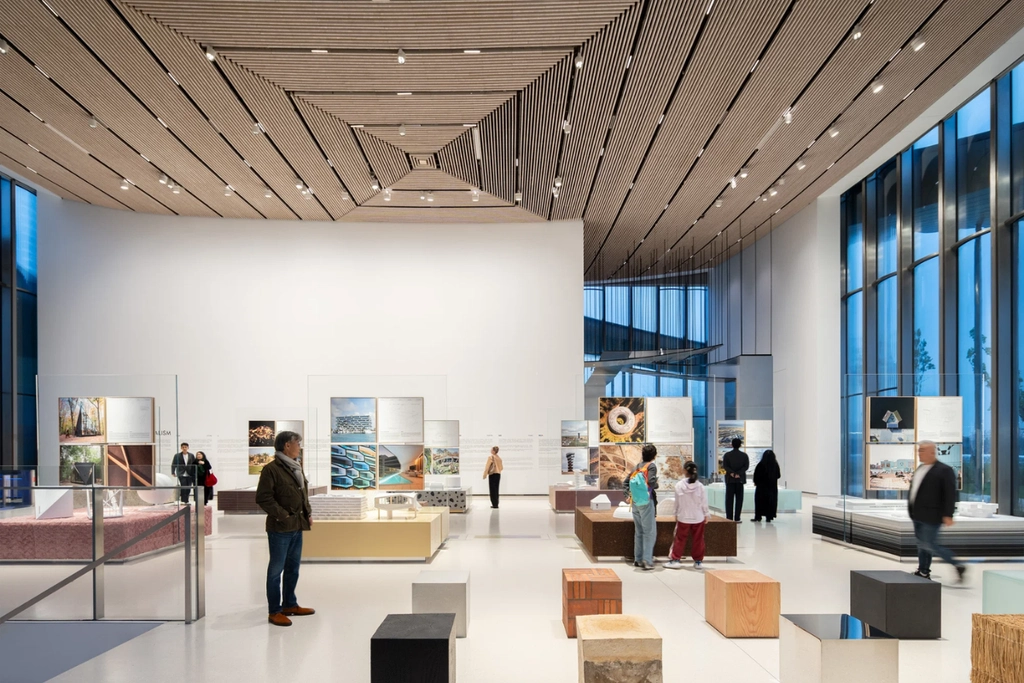
For a city whose historic identity is inseparable from the garden, BIG has avoided simply reproducing its visual symbols. Suzhou Museum of Contemporary Art enlarges the garden's philosophy of wandering, connecting and exploring to the scale of a contemporary cultural institution. The museum may cover 60,000 square metres, yet its most Suzhou-like quality is that it still invites visitors to get a little lost.
Congratulations to BIG for a project well done. Suzhou MoCA is definitely one of the most impressive museum openings of 2026, architecturally, at least. Hopefully, Suzhou MoCA will soon make the Muse Map of Asian Excellence.