MENU
Close





How early is early enough for Seoul? For Seoul clinics, getting the newest machine first has become part of the prestige, part of the competition and increasingly part of the city’s beauty identity.
How early is early enough for Seoul? For Seoul clinics, getting the newest machine first has become part of the prestige, part of the competition and increasingly part of the city’s beauty identity.
August 13, 2026
Advertisement

Advertisement



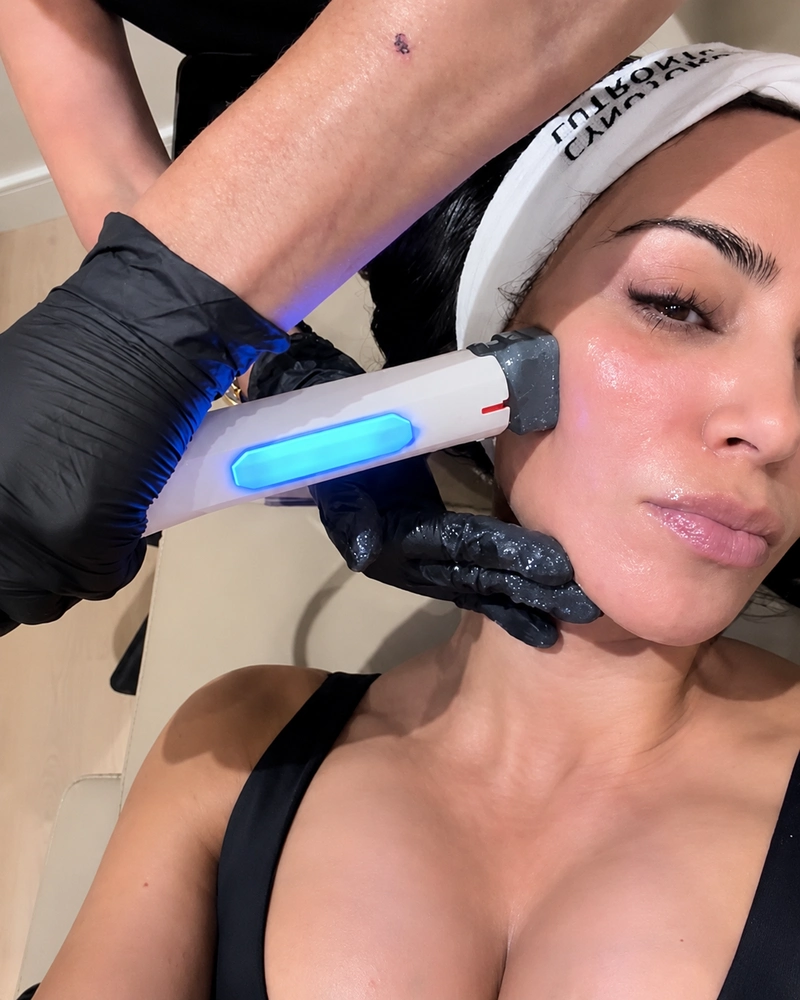
Kim Kardashian was lying beneath a XERF handpiece when a medical device suddenly became celebrity beauty content. In February 2026, she posted the treatment to Instagram Stories, calling XERF her “new fave tightening laser” and praising its comfort. XERF actually delivers radiofrequency energy. That tiny category slip exposes something significant about contemporary aesthetics: a consumer can learn a machine’s trademark before learning the physics entering her skin.
XERF. Oligio. Onda. Device names now travel with the rhythm of skincare launches. Seoul clinics place machines on menus, manufacturers give them personalities, celebrities give them desirability, and patients arrive asking for technologies by name.
Korea has spent years building an ecosystem capable of moving aesthetic technology rapidly. In 2026, its regulator made speed an explicit national ambition.
On May 28, 2026, Korea’s Ministry of Food and Drug Safety announced a regulatory overhaul covering new drugs, biosimilars and innovative medical devices. The new framework took effect June 1 with a target of roughly 240 days for relevant approval processes. MFDS described the policy as an effort to give Korean citizens the world’s fastest access to medical treatments.
That language changes how the endless turnover of machines across Seoul clinics should be interpreted. Speed has become part of health-policy design.
Korea’s medical-device system still operates through risk classes and technical evidence requirements. MFDS generally routes Class I and II products through certification systems, while Class III and IV devices undergo MFDS approval; certain Class II devices also require direct MFDS review when clinical evidence becomes necessary. Technical documents, safety data and manufacturing standards remain part of that architecture.
A faster regulatory system can achieve speed through earlier dialogue with manufacturers, parallel evaluation and reduced administrative dead time. Scientific maturity follows another timetable. Patient recruitment takes time. Collagen remodeling takes time. Six-month follow-up literally requires six months. Manufacturing problems sometimes reveal themselves only after thousands of units circulate.
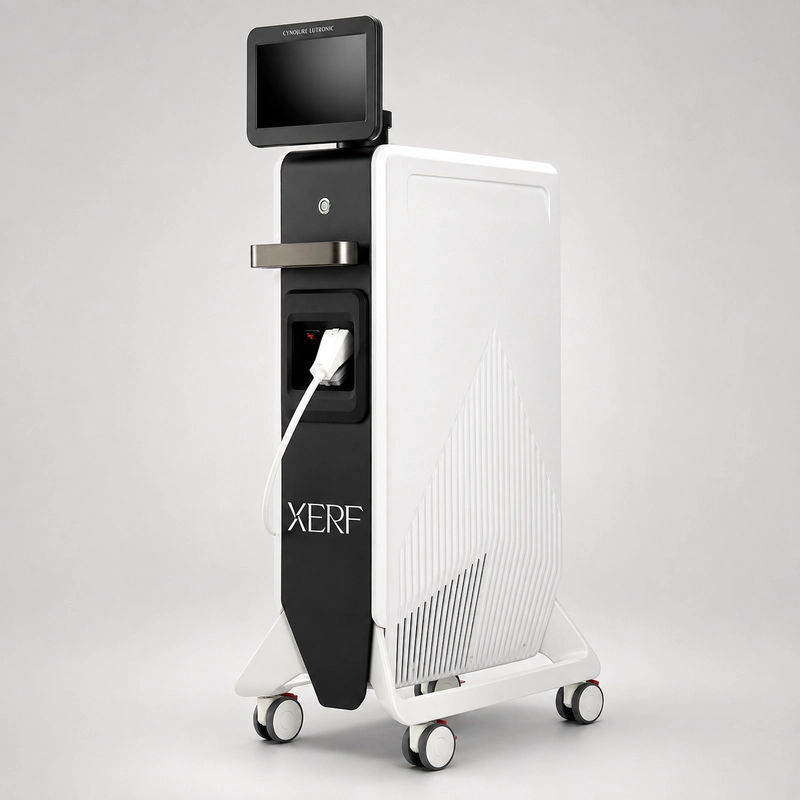
Cynosure Lutronic launched XERF commercially in Korea in 2024, giving Korean practitioners an early clinical runway before U.S. FDA clearance arrived in August 2025. By mid-2026, the platform had reached roughly 2,000 global installations.
XERF combines 6.78 MHz and 2 MHz monopolar radiofrequency. Its settings distribute thermal energy across different tissue depths, while cryogen cooling and temperature monitoring manage heat at the epidermal surface. The intended aesthetic effect centers on controlled heating and subsequent collagen remodeling.
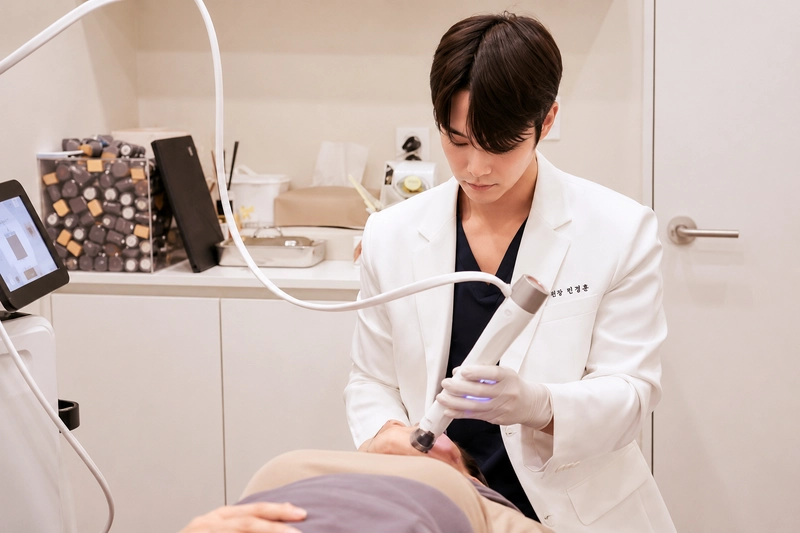
The Korean usage numbers show how quickly experience can accumulate. COCO Clinic in Seoul received official XERF “Heavy User” recognition after sustaining 30-plus cases every month throughout 2025. That criterion represents at least 360 procedures during the year.
A prospective multicenter human study titled Clinical Outcomes Following Dual-Frequency Noninvasive Monopolar Radiofrequency Treatment for Facial Laxity and Lower Face Lifting was published on March 2, 2026. The four principal investigators were Robert A. Weiss at Maryland Laser, Skin and Vein Institute in Baltimore; Jordan Wang at Laser and Skin–Dermatology in Devon, Pennsylvania; plastic surgeon Barry DiBernardo at New Jersey Plastic Surgery in Montclair; and Ashish C. Bhatia at Oak Dermatology in Naperville, Illinois.
Across those four U.S. clinical sites, 39 participants aged 28 to 70 received two XERF sessions four weeks apart. Investigators photographed them at baseline and again 30 and 90 days later. By day 90, 92.3% reached a clinician-rated GAIS score of at least 3, while 84.6% reached the study’s threshold for high patient satisfaction. Persistent adverse events recorded through the 90 days: zero.
Principal investigators scored the GAIS results, the study used a single treatment cohort, follow-up ended at 90 days, and human tissue confirmation of deeper structures such as the SMAS sat outside the protocol. Cynosure Lutronic supplied the investigational device and consumables, provided a modest research grant and supported data management and statistical programming.
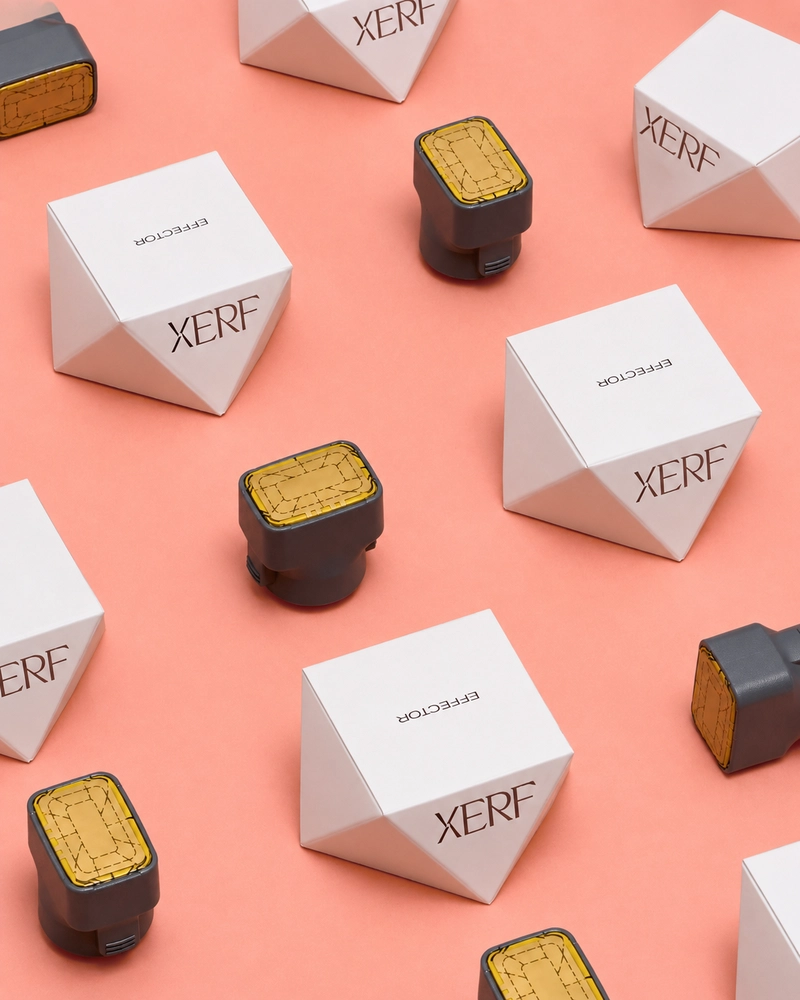
Then real-world surveillance added another chapter. In September 2025, specified XERF EFFECTOR 60 units entered an FDA Class II recall covering 7,490 units in commerce after manufacturing defects were identified in affected tips.
The sequence is revealing: Korean clinical use, international regulatory expansion, growing research, mass adoption, celebrity approval and post-market manufacturing surveillance all overlap.
By the time Kardashian called XERF her favorite, the device’s scientific biography was still being written.
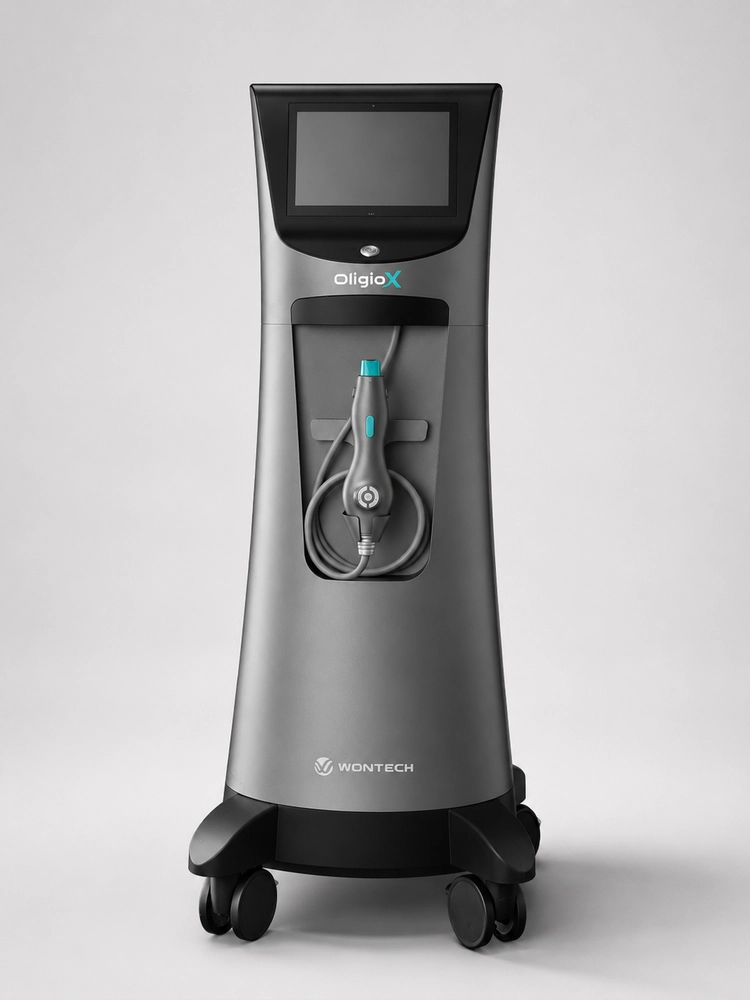
Oligio reveals another piece of the Seoul clinics economy: medical hardware becoming consumer culture.
Developed by Korean manufacturer Wontech, Oligio uses 6.78 MHz monopolar RF to create controlled thermal injury that stimulates collagen contraction and remodeling. In July 2025, singer and actress BIBI became Oligio’s global brand ambassador. Months later, she participated in the commercial song “O O O Oligio.”
A skin-tightening machine had acquired a chorus.

That transformation matters because patients historically booked goals: firmer jawline, softer laxity, tighter neck. Device branding invites them to book intellectual property.
Oligio does have direct human clinical research behind its name, although its strongest clearly identifiable device-specific study predates BIBI’s campaign.
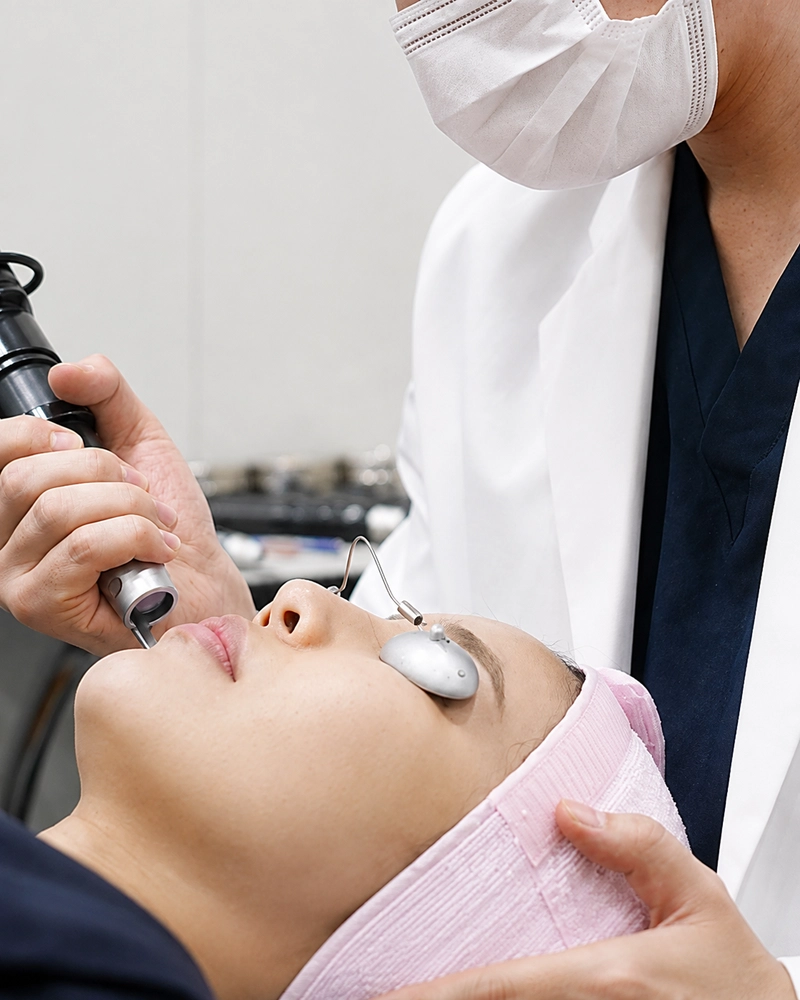
In 2022, dermatologist Rungsima Wanitphakdeedecha and nine colleagues from the Department of Dermatology, Faculty of Medicine Siriraj Hospital, Mahidol University in Bangkok conducted registered trial TCTR20210326002. All 30 participants were treated through the Siriraj Hospital research team. The group consisted primarily of women with Fitzpatrick skin types III to V and mild-to-moderate lower-face laxity.
Each participant received a single treatment using the Wontech monopolar RF platform, averaging 412 shots across three to four passes. Researchers followed the group at one, three and six months. At three months, 90% of participants reported visible improvement; at six months, 76.67% continued to report improvement. Mean procedural pain reached 3.13 out of 10, and serious adverse events recorded during the study: zero. Two blinded dermatologists also graded clinical change.
In March 2025, Los Angeles aesthetic practitioner Vanessa Lee, founder of The Things We Do, traveled to Korea for professional beauty education and tried Onda on her arms. She later described noticing a slimmer appearance roughly a week after treatment. During a subsequent Korean trip, Lee returned with Kim and Khloé Kardashian, and publicly described the three women receiving Onda together. The Kardashians’ wider Seoul beauty itinerary also included Hoan Clinic, while the published account leaves the exact clinic that performed their Onda session unidentified.
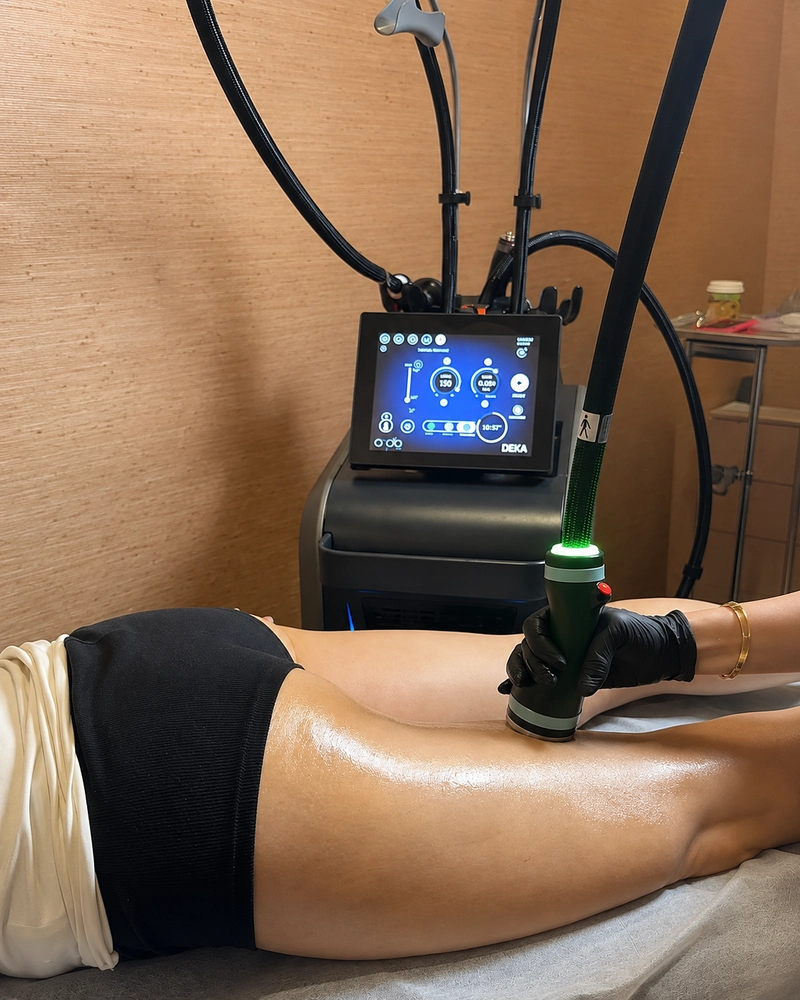
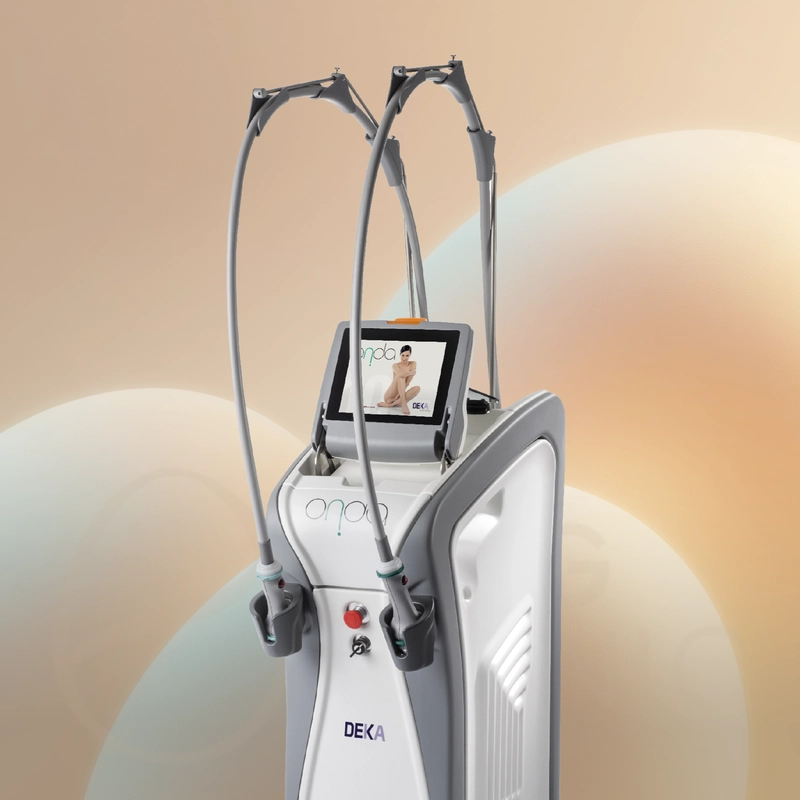
Onda comes from DEKA in Florence, Italy. Its platform delivers 2.45 GHz microwave energy, with specialized handpieces designed to concentrate heating in selected tissue planes while a continuous cooling system maintains the skin surface around 5°C.
So Korea’s power here comes from something subtler than domestic invention.
Seoul clinics can function as discovery engines for technology made somewhere else.
A modern aesthetic machine moves through several systems at once.
A regulator evaluates it. A clinic buys it. Doctors learn its parameters. Researchers follow patients. Manufacturers build awareness. Celebrities make it desirable. Consumers arrive with screenshots.
XERF shows the process in motion: Korean adoption, hundreds of procedures at a single Seoul practice, later U.S. clearance, a 39-person multicenter study, a component recall and Kim Kardashian all living inside the same technology timeline.
Oligio shows a machine crossing into entertainment marketing, while its identifiable human evidence leads back to 30 patients treated by an academic dermatology department in Bangkok.
Onda shows Seoul’s influence reaching beyond Korean manufacturers entirely. An Italian microwave device passed through Korea’s treatment culture, entered Kardashian beauty lore and traveled toward an American clinic, while its recent facial study involved ten women and twelve weeks of follow-up.
Seoul clinics may genuinely introduce consumers to parts of aesthetic medicine’s future early. The smartest patient can be excited by that future while still asking to see its paperwork. The machine may already be on the menu. The evidence deserves a name, an address and a date.
Advertisement