MENU
Close





Graff built its mythology around diamonds so extraordinary that the stone usually needed little introduction and even less decoration. Laurence Graff Signature changes that equation.
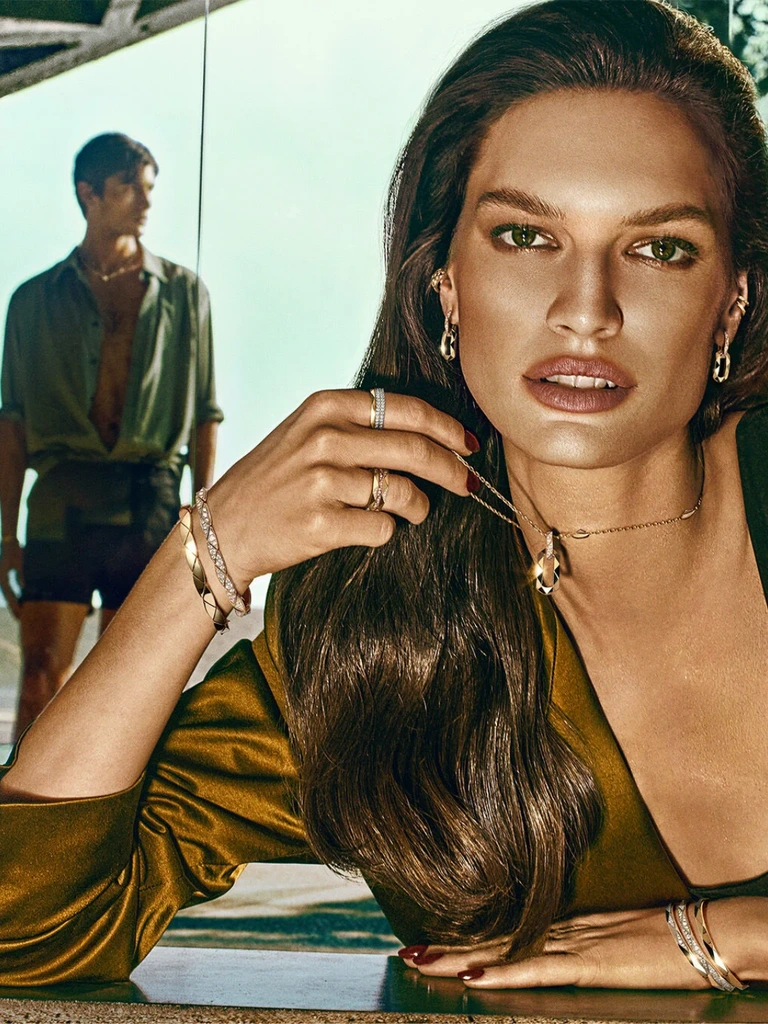
Graff built its mythology around diamonds so extraordinary that the stone usually needed little introduction and even less decoration. Laurence Graff Signature changes that equation.
August 7, 2026


Named after founder, the Laurence Graff Signature collection represents one of the house’s most revealing contemporary moves: taking sixty-five years of diamond authority and turning it into a jewel you can actually imagine wearing on a Tuesday.
To understand why Laurence Graff Signature matters, begin with the type of jewellery Graff taught the world to expect.
Laurence Graff founded the house in London in 1960. Over the following decades, Graff built its reputation around exceptional diamonds and gemstones, elaborate High Jewellery and the pursuit of stones whose rarity could justify an entire design around them. The house’s identity became inseparable from scale, brilliance and gemological prestige.
When a jewellery house becomes famous for spectacular rarity, how does it create something recognizable enough to wear repeatedly? Laurence Graff Signature provides an elegant answer: turn the architecture of the diamond itself into the motif.
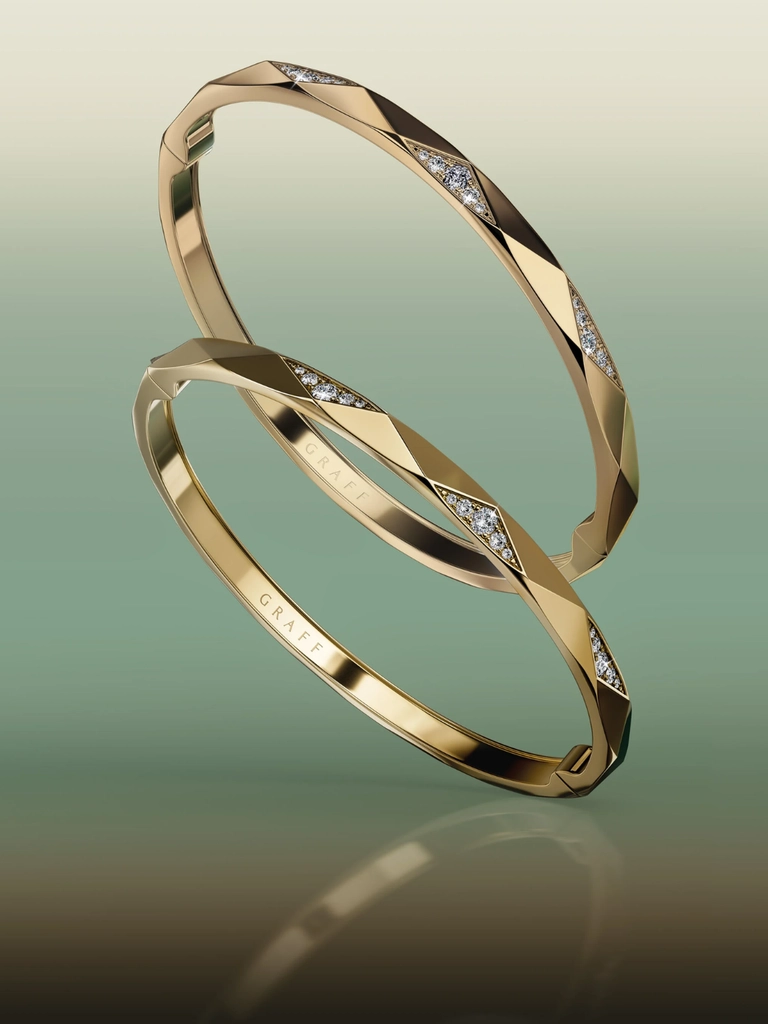
The collection transfers the faceted geometry responsible for a cut diamond’s visual drama onto precious metal. Yellow, white and rose gold surfaces are sculpted into repeating angular planes. Light hits one facet, falls away from another and flashes across the next. On diamond-set versions, pavé sections interrupt polished gold surfaces, allowing actual diamonds and diamond-like gold geometry to perform beside each other. That makes the collection unusually self-referential.
Graff’s heritage is still visible, while the enormous central gemstone becomes optional. A polished gold band can represent the house because the metal has been manipulated according to the optical language Graff knows best.
This shift is exactly what allows Laurence Graff Signature to enter the conversation around the best luxury jewelry for everyday wear. The collection carries enough house DNA to feel recognizably Graff while remaining compact, repeatable and easy to integrate into an existing wardrobe.
A spectacular gemstone belongs to one jewel. A geometric design code can reproduce itself across an entire lifestyle.
The signature appears across rings, bangles, bracelets, earrings, pendants and substantial chain jewellery.
At its most restrained are slim bands measuring around 2.3mm or 3.2mm, offered across polished gold and diamond-set variations. A small pavé section can interrupt a sculpted 18K-gold surface, while wider models exaggerate the angular rhythm. Multi-row designs then multiply the motif into something closer to miniature architecture.
The bangle arguably expresses the concept most clearly.
A circular bracelet usually depends heavily on its outline for recognition. Graff gives the surface its own topography. Facets travel around the wrist, causing a relatively straightforward form to shift character every time the wearer moves. Pavé versions intensify selected planes while polished sections create a second type of brightness through reflection.
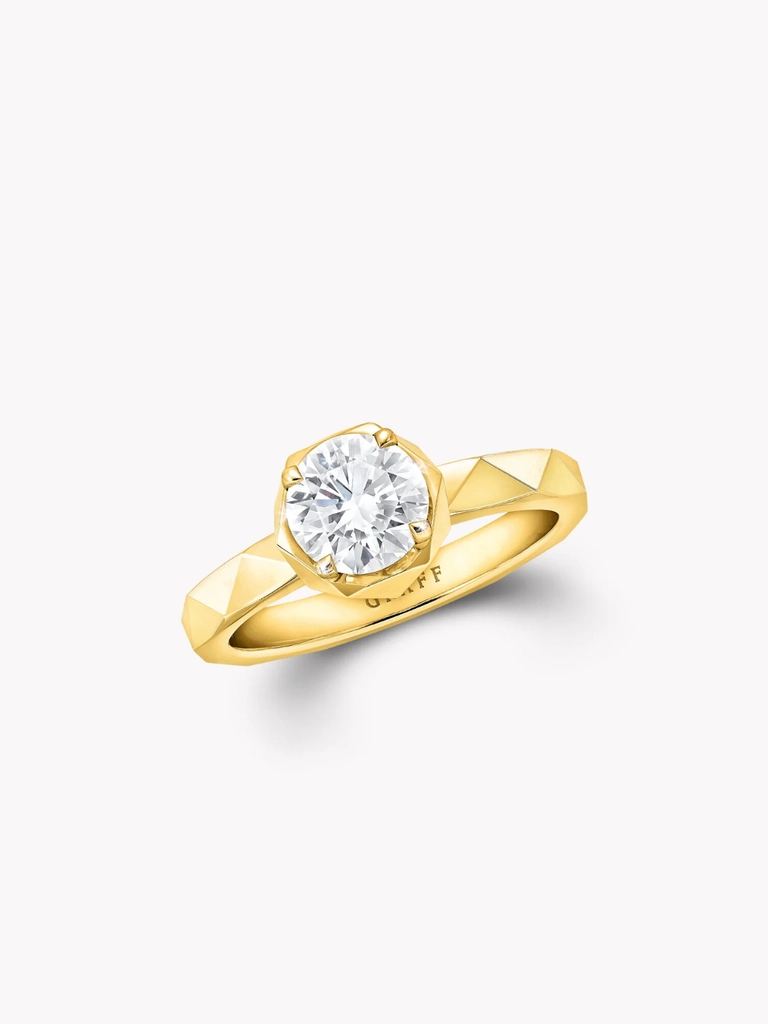
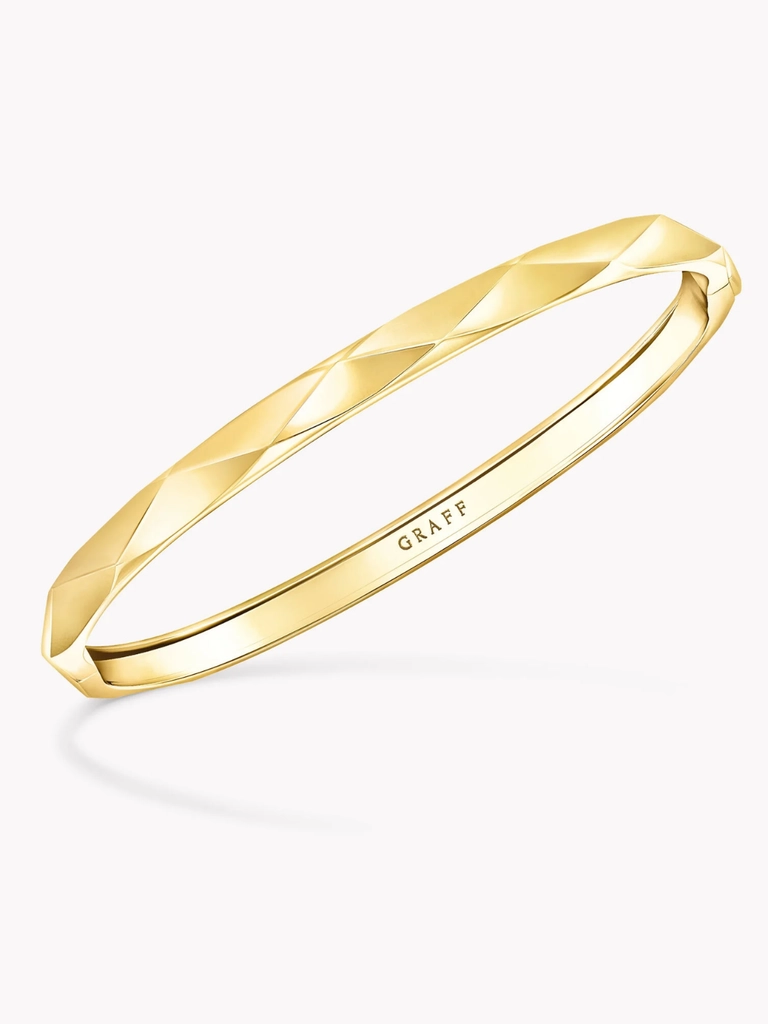
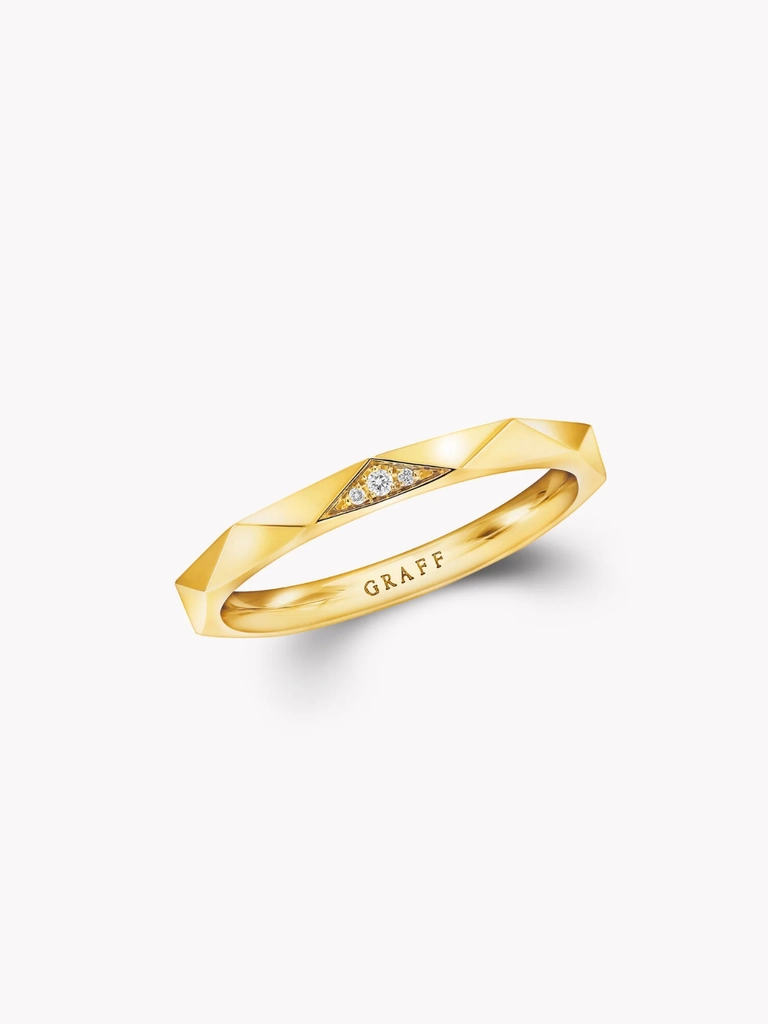
That interaction between structure and wearability is precisely why the collection works as best luxury jewelry for everyday styling. The pieces offer visual identity without requiring ceremonial scale. A narrow band can sit beside a watch. A bangle can layer with another metal. A faceted hoop can accompany tailoring during the day and eveningwear several hours later.
Then the collection begins scaling upward. Chain necklaces and bracelets enlarge the same faceted vocabulary until each link becomes architectural. The language stays consistent while the level of statement changes dramatically.
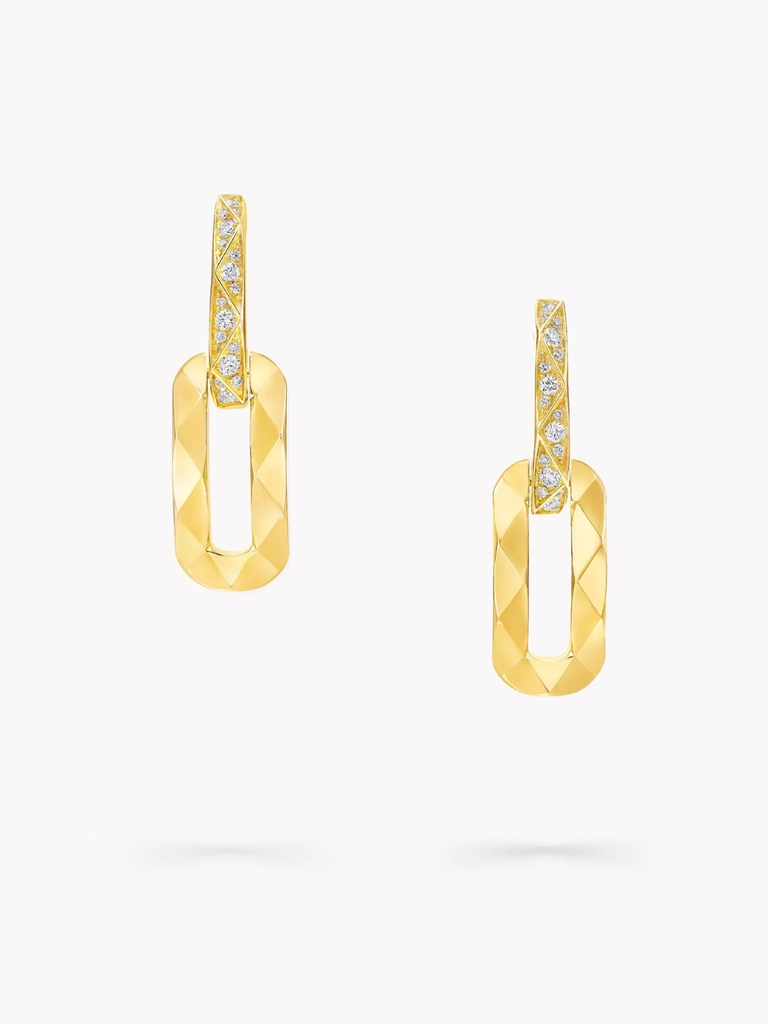
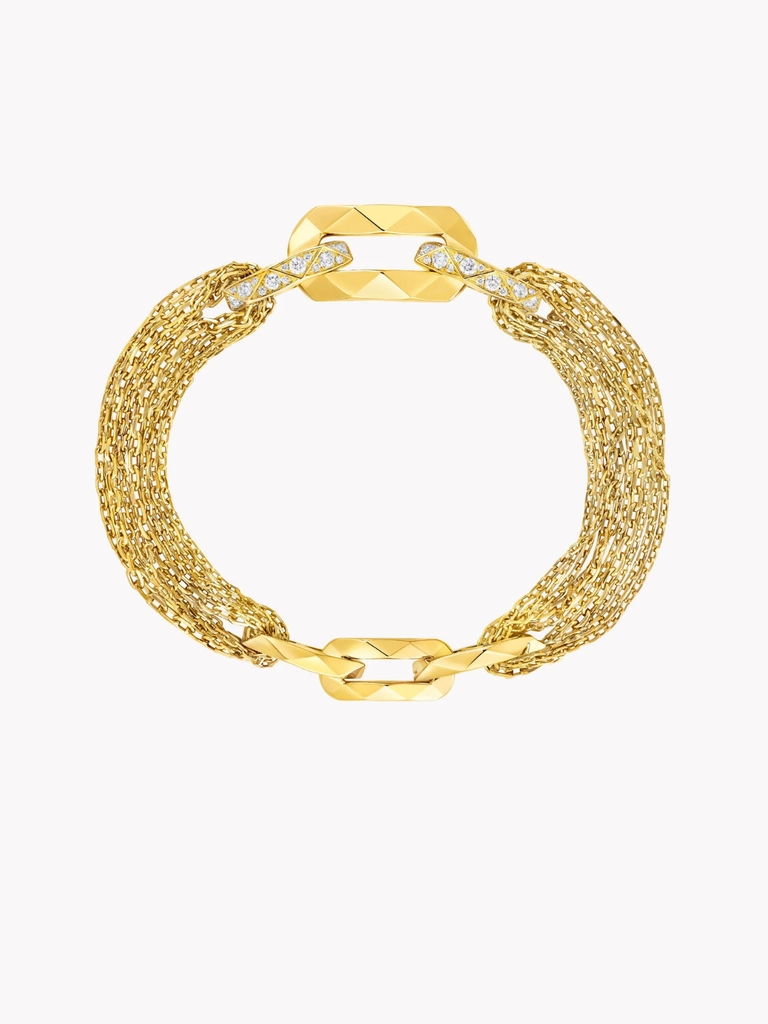
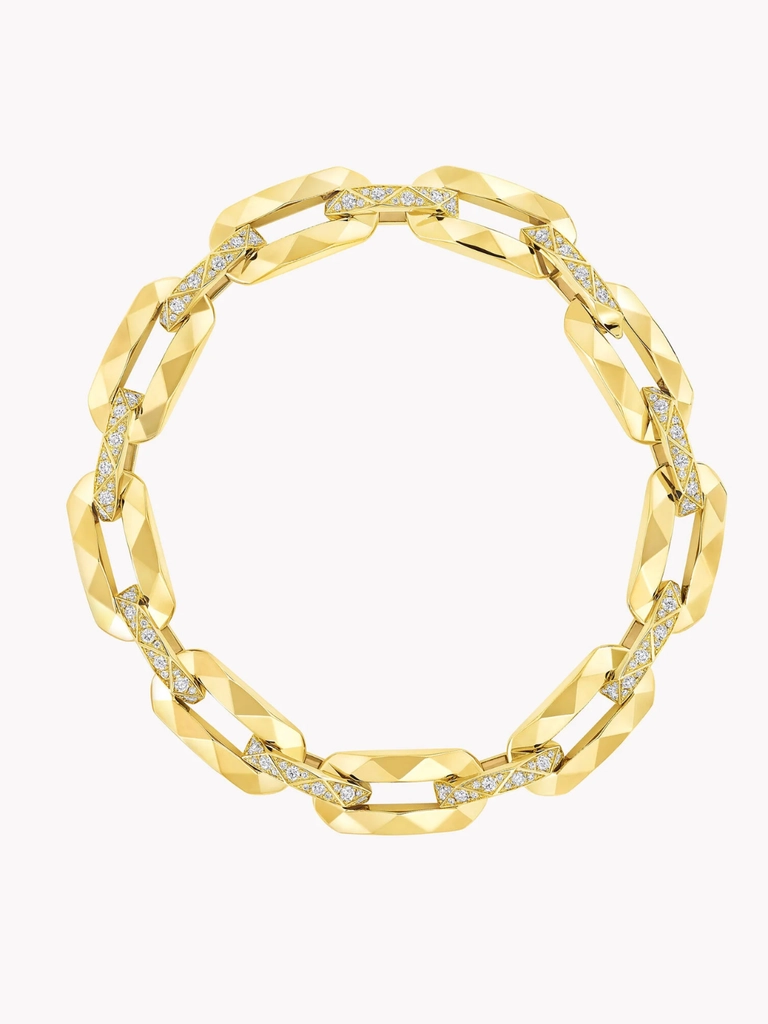
So “everyday” requires some qualification. This is everyday jewellery according to Graff.
The collection remains firmly luxurious, and larger pieces can move deep into five-figure territory. Accessibility here means access to the Graff aesthetic, rather than accessibility through mass-market pricing.
That distinction is central to its purpose.
A younger affluent customer might enter the house through a slim Signature ring. Another collector may begin with one bangle and gradually mix rose, yellow and white gold. An established Graff client can escalate the same code into a major chain necklace.
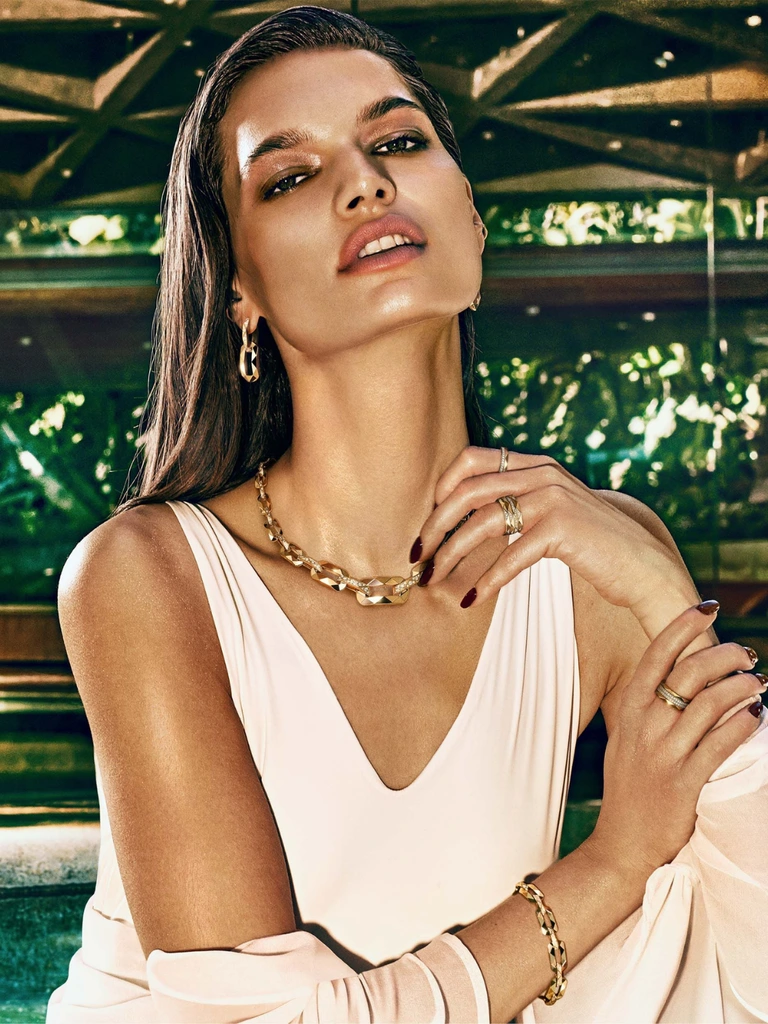
The most successful daily luxury jewellery icons tend to perform a specific trick: they become recognizable while remaining easy to wear repeatedly.
Cartier accomplished it through Love. Bulgari built B.zero1 around architectural repetition. Tiffany turned letters and locks into highly identifiable silhouettes. Van Cleef & Arpels created a tactile language through Perlée.
Graff historically possessed enormous authority in diamonds. What it needed was an equally repeatable piece of design architecture.
Laurence Graff Signature moves directly into that territory.
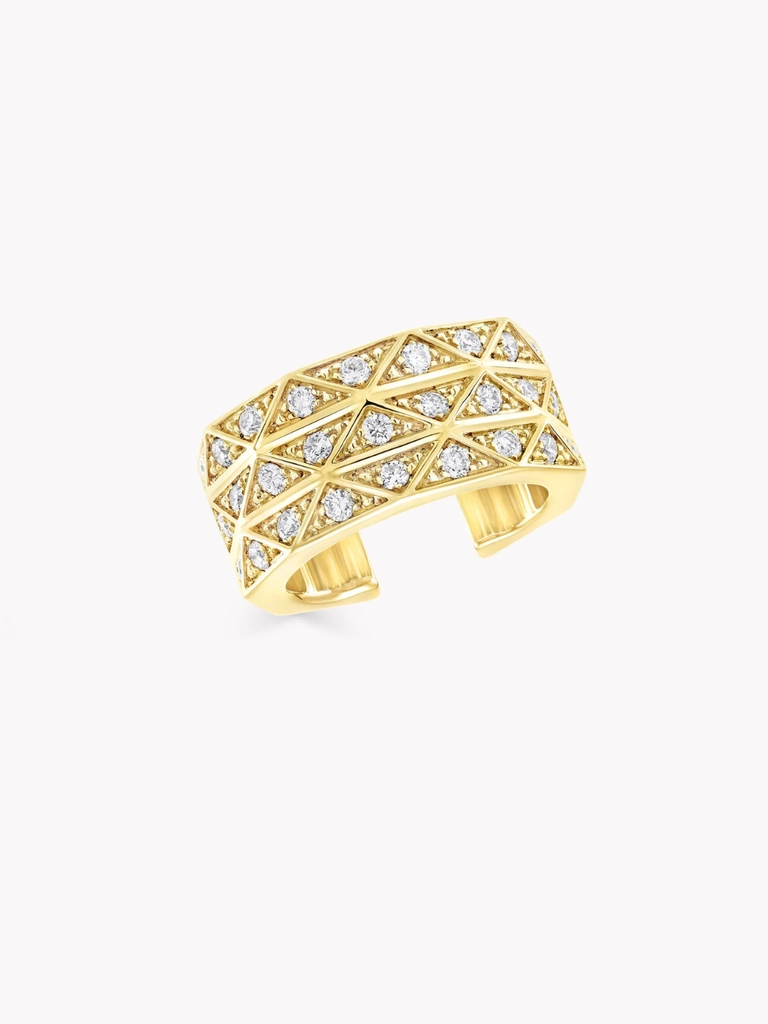
Its angular surfaces are recognizable from close range while staying abstract enough to avoid obvious logo jewellery. The system also works naturally across genders. Scale a band up, remove the diamonds and the piece becomes sharper and more severe. Add pavé and stack multiple rings together and it becomes more glamorous. Combine different gold colors and the same structure changes character again.
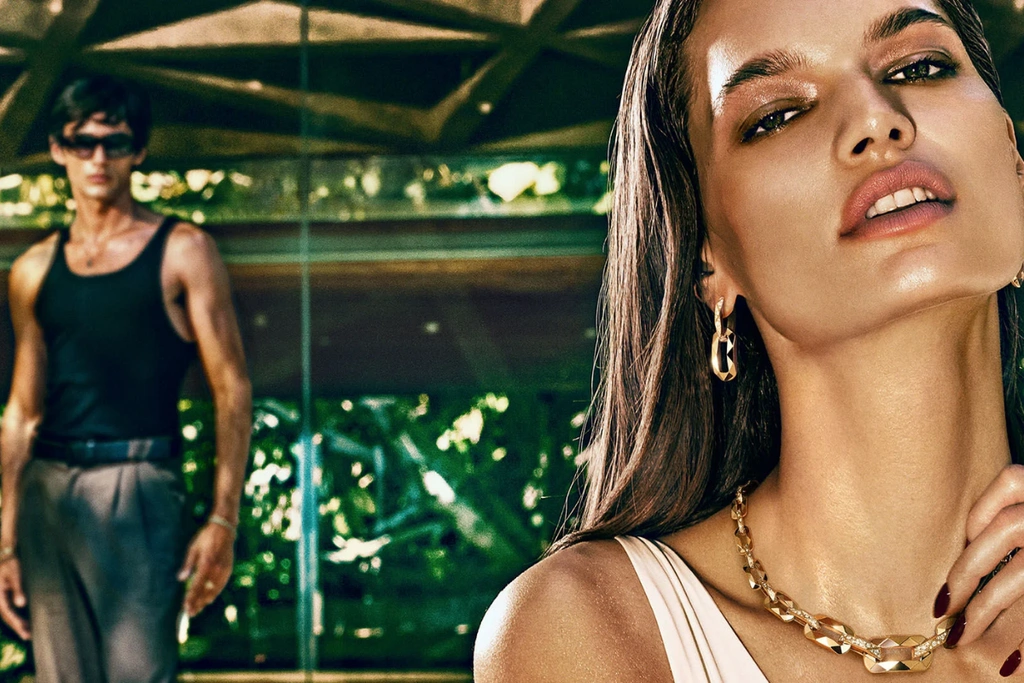
That flexibility gives Laurence Graff Signature a credible claim within the best luxury jewelry for everyday category. Its unisex character comes largely from geometry. This also makes stacking more than a styling suggestion. It becomes commercial architecture.
One ring encourages another. A yellow-gold bangle creates room for white gold. A plain piece establishes the vocabulary; a pavé version increases the level of brilliance. The customer can continue building without abandoning the original design language.
Graff has increasingly emphasized exactly this idea of mixing, layering and individual styling across the Signature collection.
That approach gained even greater visibility in 2026 when Jung Kook of BTS became a global ambassador for Graff, wearing Laurence Graff Signature chains, rings and bracelets in the campaign.
Graff could have introduced one of the world’s most recognizable male pop stars through a colossal solitaire or dramatic High Jewellery piece. Instead, the campaign emphasizes layered gold, repeatable forms and personal styling.
The message is clear: Graff wants to occupy more than the red carpet and the private salon. It wants the wrist, finger and neck on an ordinary day too.
Graff’s most interesting creative decision may ultimately be subtraction.
The house spent decades establishing the diamond as the hero. Laurence Graff Signature asks whether Graff can remain recognizable after dramatically reducing the stone, or even removing it entirely.
The answer increasingly appears to be yes.
On plain pieces, polished gold facets create alternating zones of brightness and shadow. Pavé versions intensify selected surfaces. Diamond bands layer literal brilliance over sculpted imitation. From across a room, the collection reads through shape; close up, the distinction between metal facet and diamond facet becomes part of visual pleasure.
This also makes the collection more interesting than simply calling it minimalist. The outlines can be clean, yet there is little conceptual minimalism in carving precious metal into repeated reflective surfaces purely to manipulate light.
Graff compresses its appetite for brilliance into smaller, more wearable dimensions. That compression is exactly what the best luxury jewelry for everyday needs. Daily jewellery still has to survive close inspection. It needs tactile pleasure, recognizability and enough visual intelligence to feel special after the twentieth year. Laurence Graff Signature achieves that through surface engineering rather than through sheer gemstone size.
High Jewellery demonstrates what an atelier can achieve at its absolute limit. A signature collection demonstrates whether a maison can distill its identity into something repeatable, recognizable and commercially expandable.
Graff already owns rarity. What Laurence Graff Signature is attempting to own is shape.