MENU
Close





Milan rarely asks art to stand alone. To experience Milan as a city as gallery is to discover how naturally it moves between masterpiece, architecture, furniture, fashion and the ritual of an espresso.
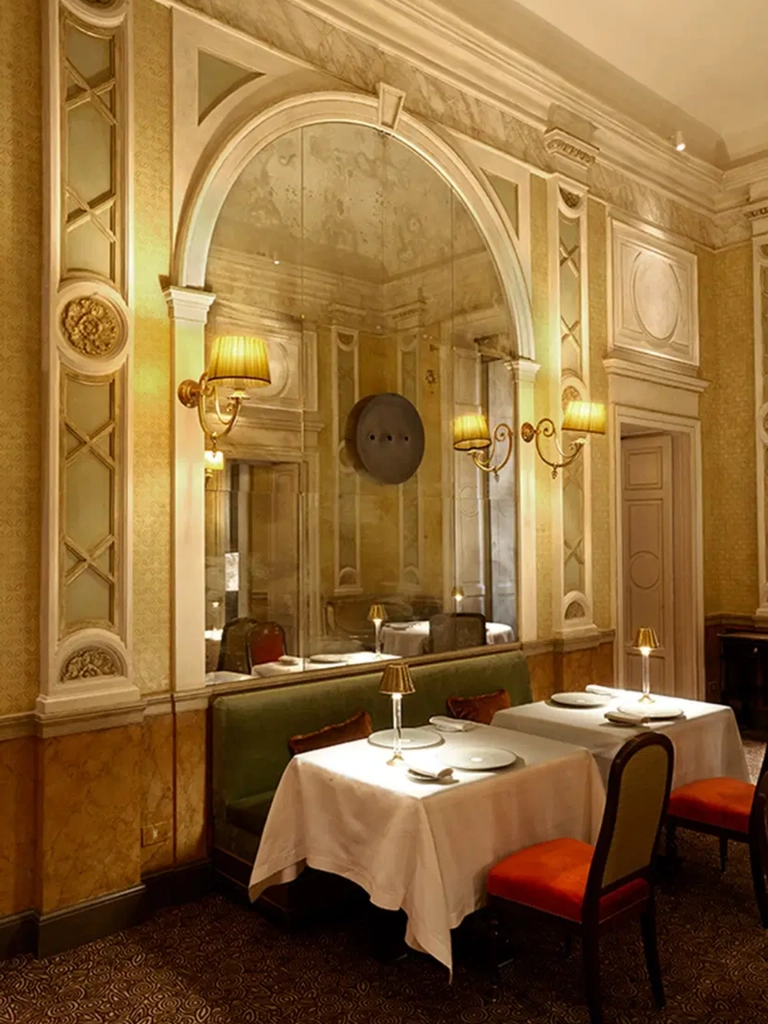
Milan rarely asks art to stand alone. To experience Milan as a city as gallery is to discover how naturally it moves between masterpiece, architecture, furniture, fashion and the ritual of an espresso.
September 11, 2026


Milan has a peculiar relationship with beauty. It rarely needs to announce it.
The city's most compelling interiors can hide behind severe façades and private gates. Renaissance paintings occupy rooms in Brera while restorers work behind glass. A rationalist villa disappears into a quiet residential street. One of Europe's major contemporary art foundations rises from a former industrial complex on the southern edge of town. Elsewhere, a pastry shop, restaurant or hotel can offer as serious a lesson in Milanese visual culture as a museum.
This makes the city unusually rewarding for a traveller interested in the space surrounding the artwork.
Milan's version of the city as gallery unfolds through layers: painting, architecture, industrial design, fashion, hospitality and food. The city has spent generations learning how to place beautiful objects into daily life.
The itinerary should therefore begin with the old masters, but it should never end there.
Begin at the Pinacoteca di Brera. Brera possesses the gravity expected of one of Italy's great collections, yet its appeal lies partly in how alive the institution remains. Raphael's Marriage of the Virgin, Caravaggio's Supper at Emmaus and Francesco Hayez's take on one of the most iconic kisses immortalized in art, provide obvious destinations, but wandering between them reveals a longer history of Northern Italian painting and the artistic culture surrounding the neighbouring Accademia di Belle Arti.
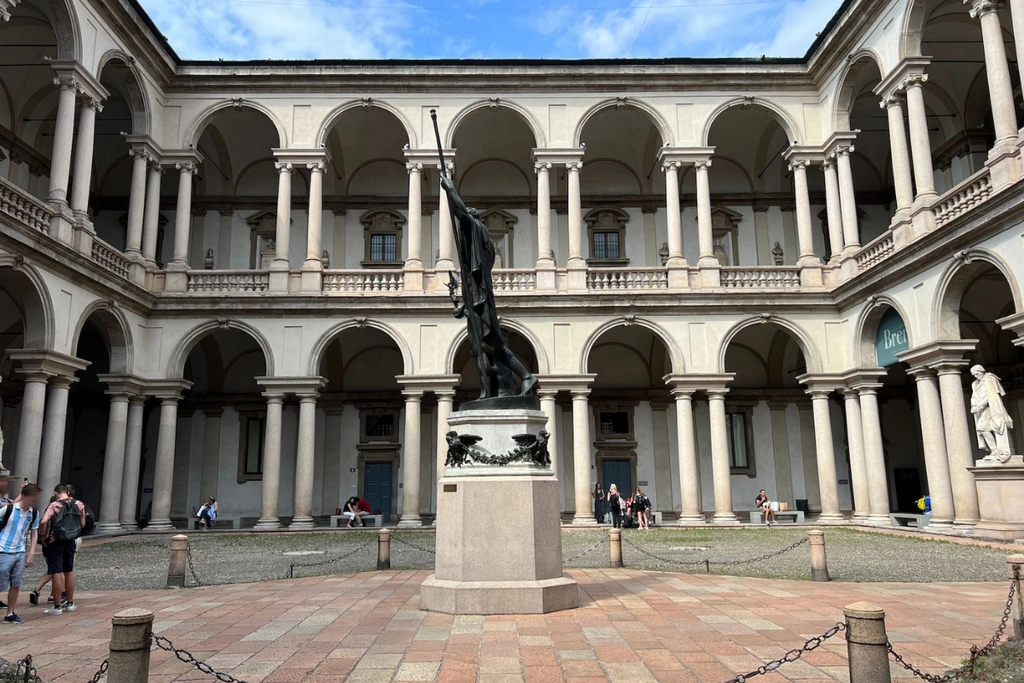
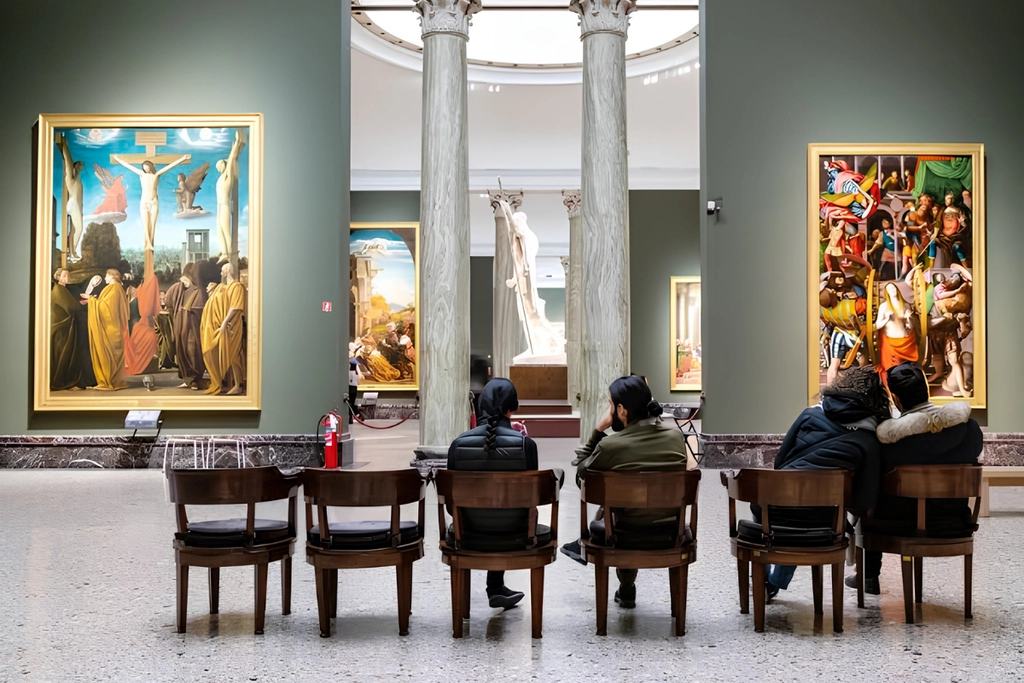
At the centre of the museum route sits Brera's transparent restoration laboratory, designed by Ettore Sottsass in 2001. Visitors can watch conservation work through its glass structure, sometimes seeing the backs of paintings and stages of treatment normally hidden from public view.
It changes the rhythm of the museum. Paintings cease to appear as immaculate objects that somehow survived five centuries untouched. Varnish yellows. Canvas tears. Pigments shift. Conservators examine surfaces under infrared, ultraviolet and microscopic imaging before intervening.
For a city synonymous with manufacturing and craftsmanship, the laboratory feels particularly appropriate. Milan lets you see the masterpiece, then quietly reminds you that beauty also requires work.
From Brera, move east toward the quieter streets around Via Mozart.
Behind walls and greenery stands Villa Necchi Campiglio, designed between 1932 and 1935 by Piero Portaluppi for Angelo Campiglio and sisters Gigina and Nedda Necchi.
If Brera represents art collected by an institution, Villa Necchi presents design as a complete way of living.
Portaluppi's architecture carries the confidence of Milan between the wars: geometry, beautiful stone, polished surfaces, bespoke details and technology folded elegantly into domestic comfort. The villa's swimming pool, tennis court, wardrobes and bathrooms speak as eloquently about its inhabitants as the formal reception spaces.
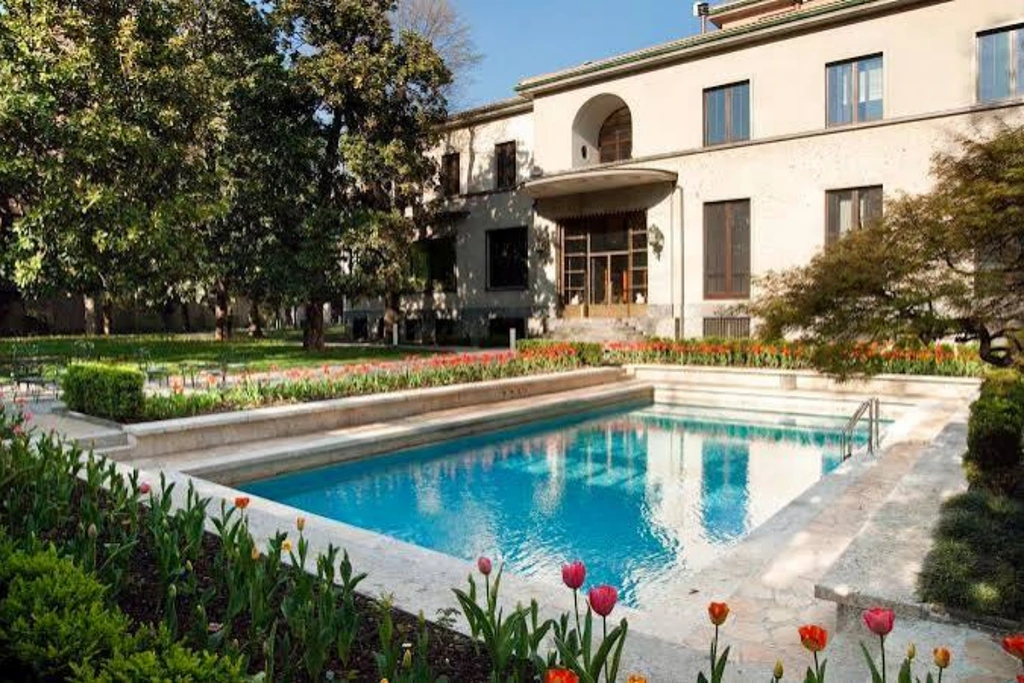
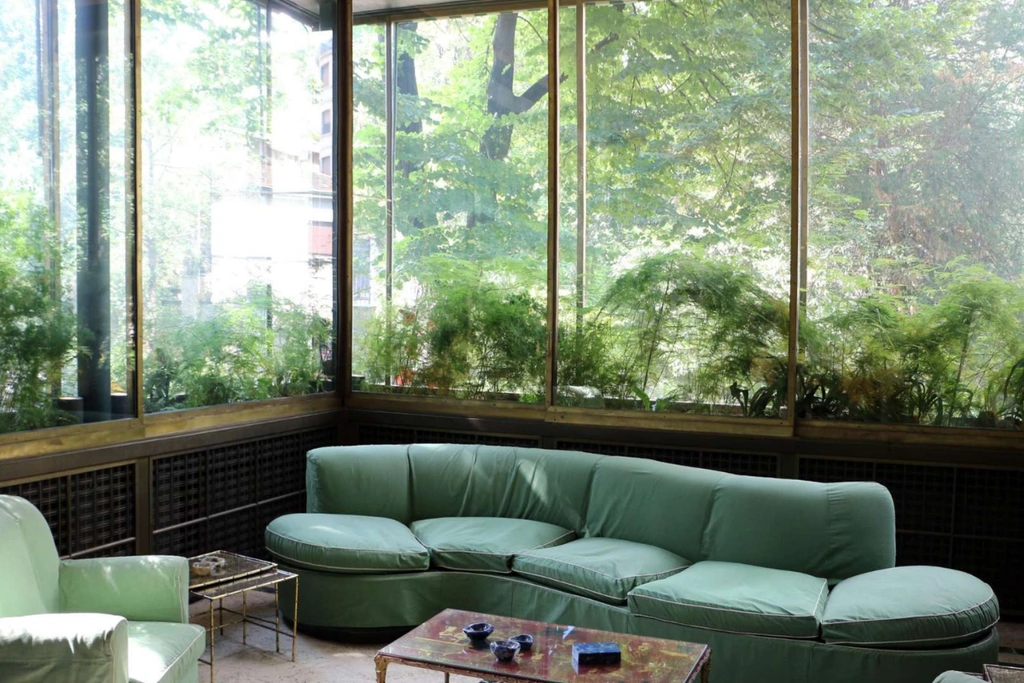
Its atmosphere survives with unusual clarity because architecture, furniture and everyday objects remain closely connected. FAI describes the house as preserving both the structure and furnishings of the Necchi family's world, while subsequent collections brought works by artists including Picasso, Magritte, Fontana, de Chirico, Sironi and Modigliani into the villa.
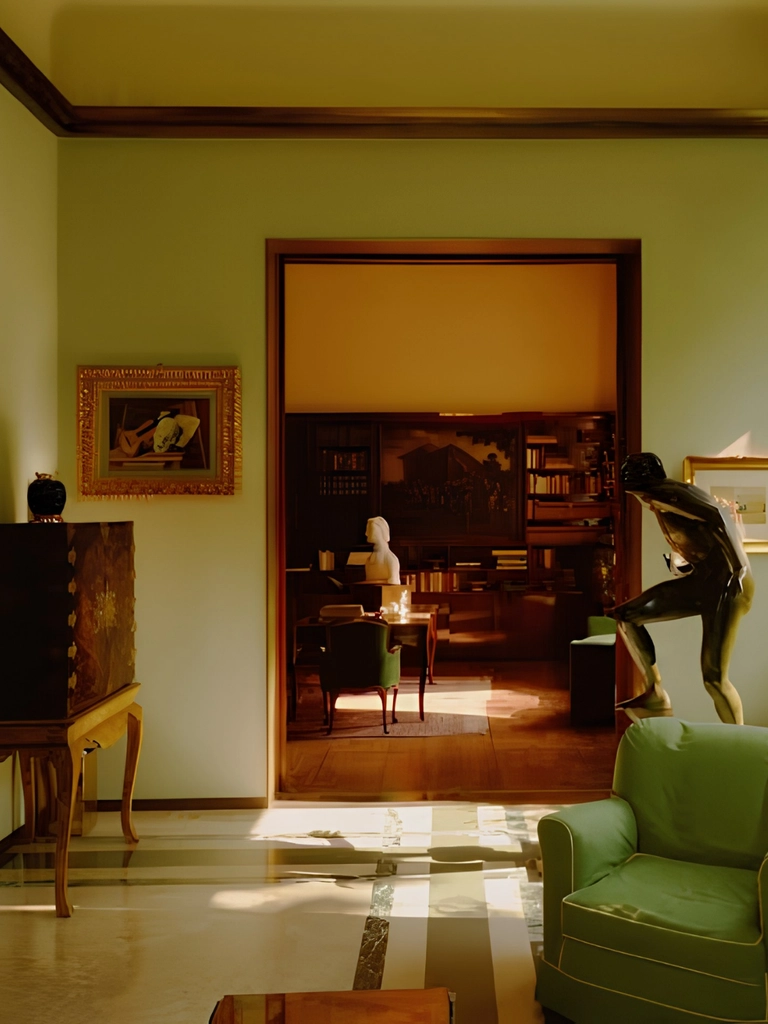
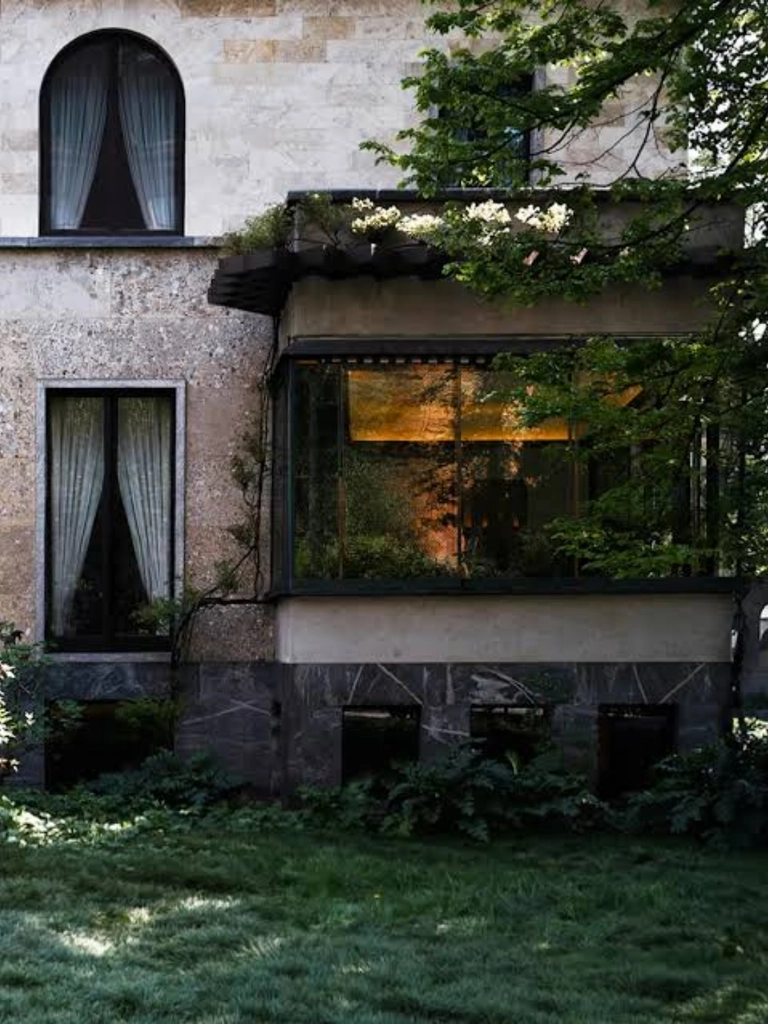
Here the city as gallery becomes domestic. Art sits beside the evidence of dressing, entertaining, swimming and receiving guests. Luxury emerges through proportion and materials, but also through the possibility that someone considered the handle of a cabinet worthy of serious thought.
Then Milan changes century.
At Fondazione Prada, OMA and Rem Koolhaas worked with an industrial complex whose origins reach back to the 1910s. Instead of clearing the site for a pristine cultural monument, the project uses the friction between existing industrial buildings and new architecture.
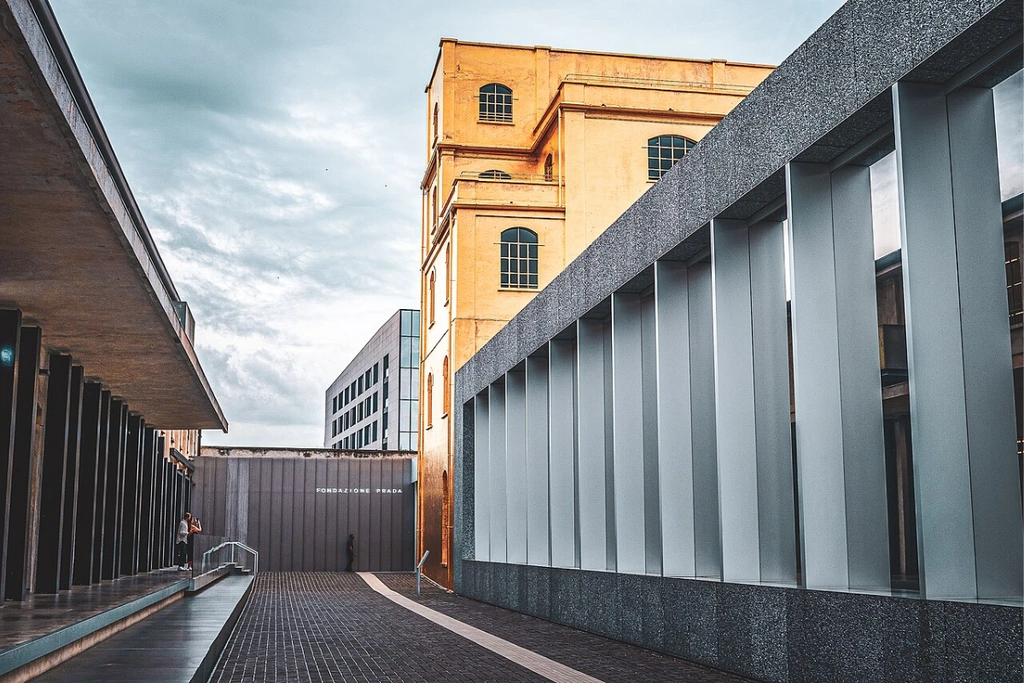
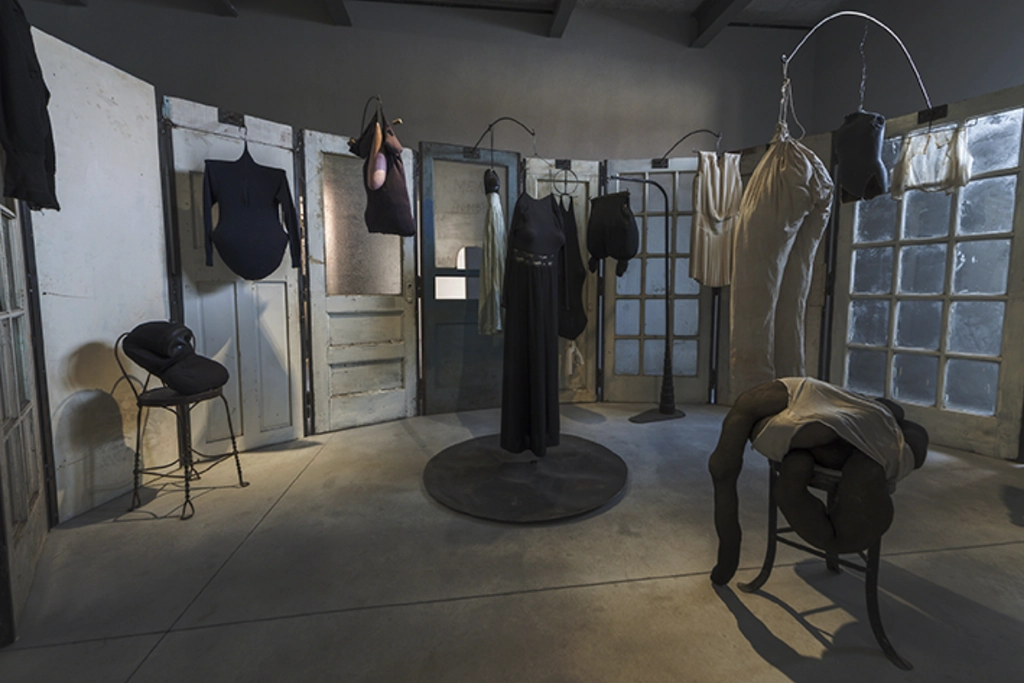
One structure makes understatement impossible. The Haunted House is covered in gold leaf, turning an old industrial building into something simultaneously precious and strange. Inside, a permanent installation by Robert Gober appears in dialogue with works by Louise Bourgeois. Elsewhere, Torre rises nine storeys above the complex, while exhibition spaces repeatedly change the relationship between artwork and architecture.
The contrast explains much about contemporary Milan. Industrial heritage remains visible, but nostalgia never controls the project. Old concrete can sit beside white surfaces, mirrored planes and gold because the tension itself supplies energy.
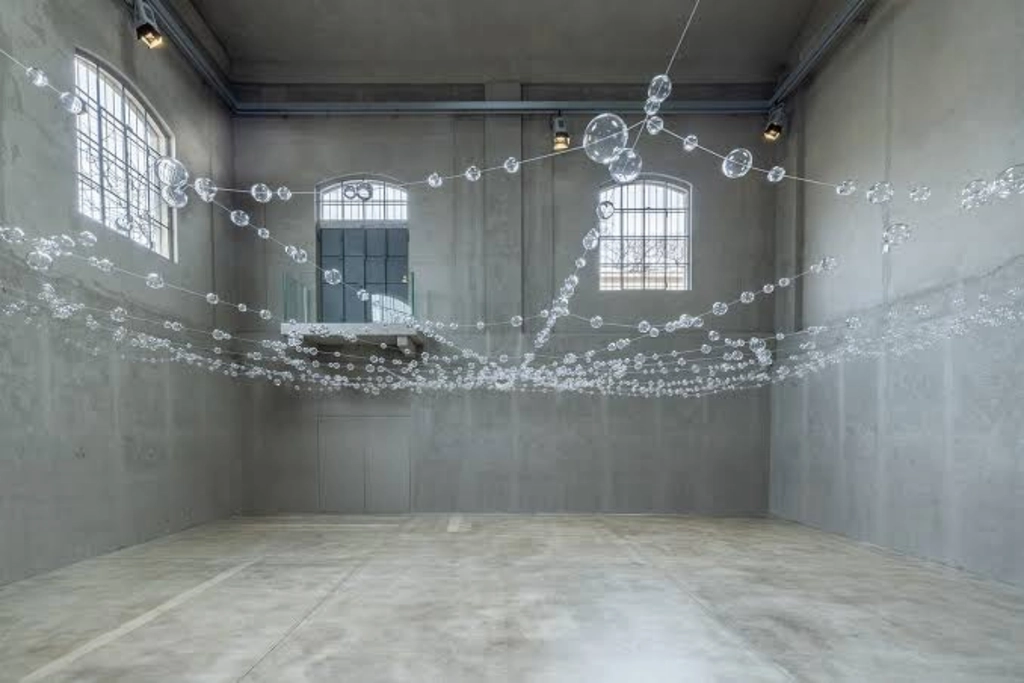
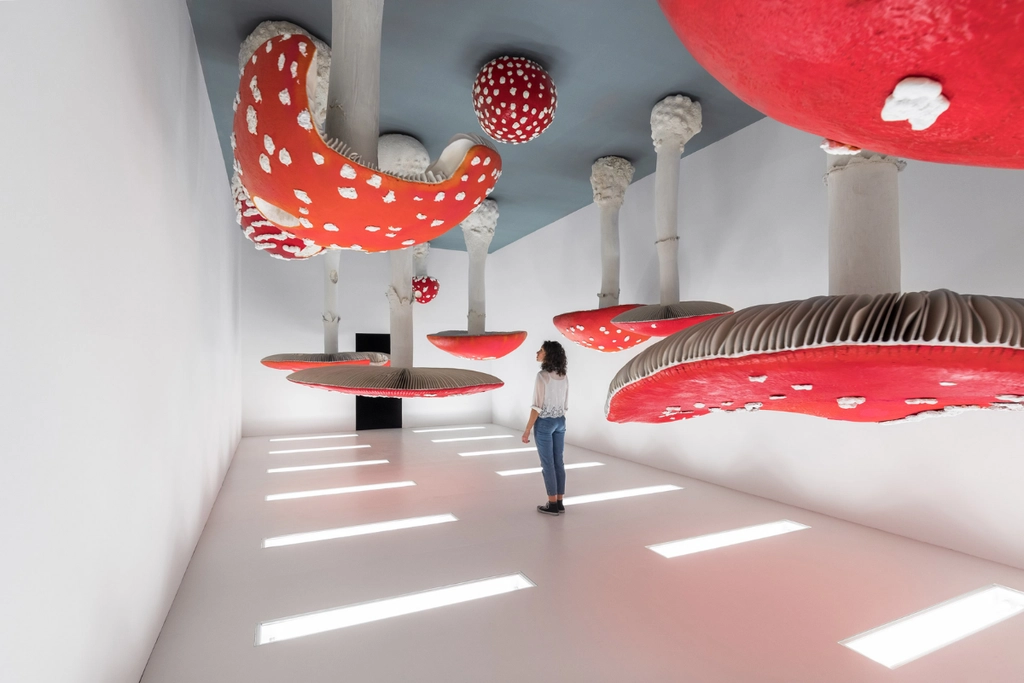
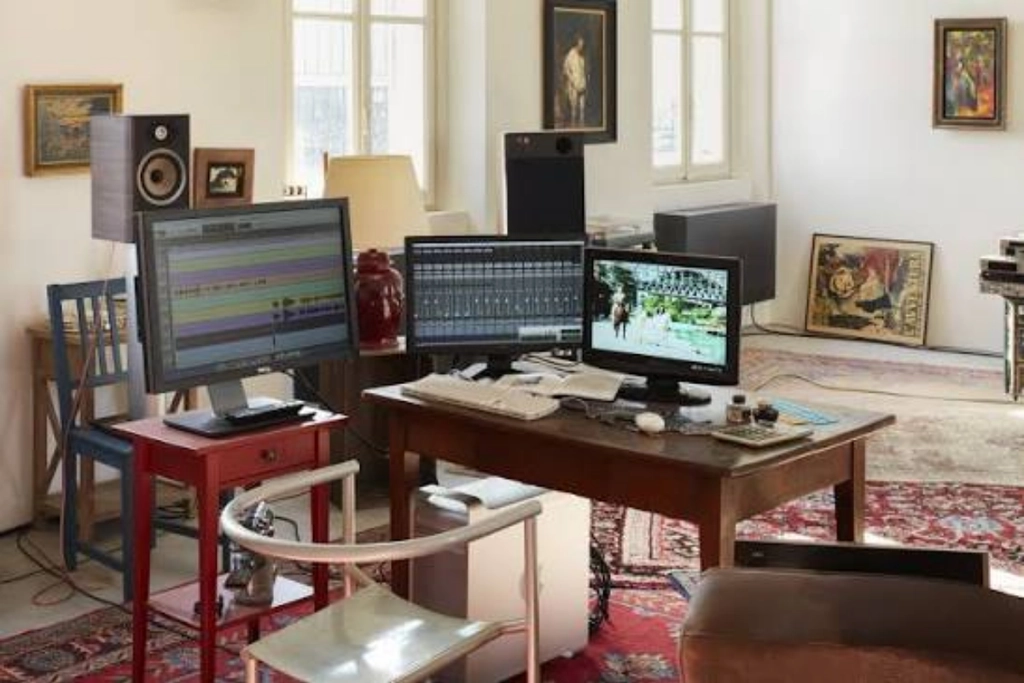
Current programming also keeps the site moving. As of September 2026, Mona Hatoum's site-specific project occupies the Cisterna through November 9, alongside permanent projects including Atlas, the Haunted House and Jean-Luc Godard's Le Studio d'Orphée. Save enough time to stay for dinner.
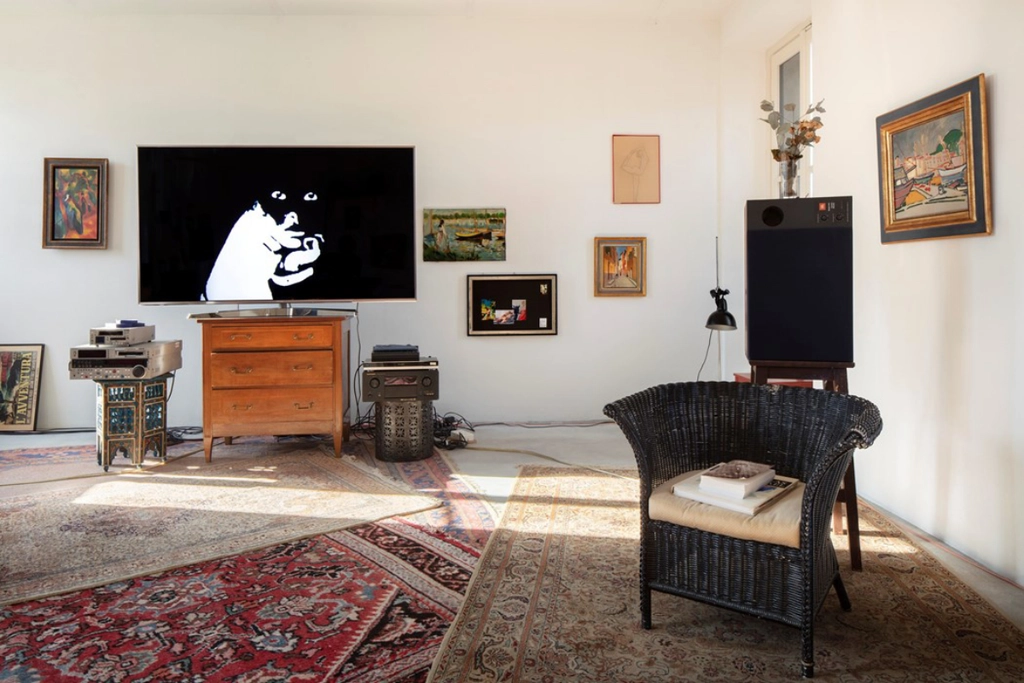
Ristorante Torre sits inside Fondazione Prada's Torre, but describing it simply as the museum restaurant undersells the experience.
Original furnishings from Philip Johnson's legendary Four Seasons Restaurant in New York, designed in 1958, appear alongside elements from Carsten Höller's The Double Club. Works by Lucio Fontana share the space with paintings by artists including William N. Copley, while artist-designed plates extend across the walls.
Dinner therefore arrives inside several overlapping histories of design.
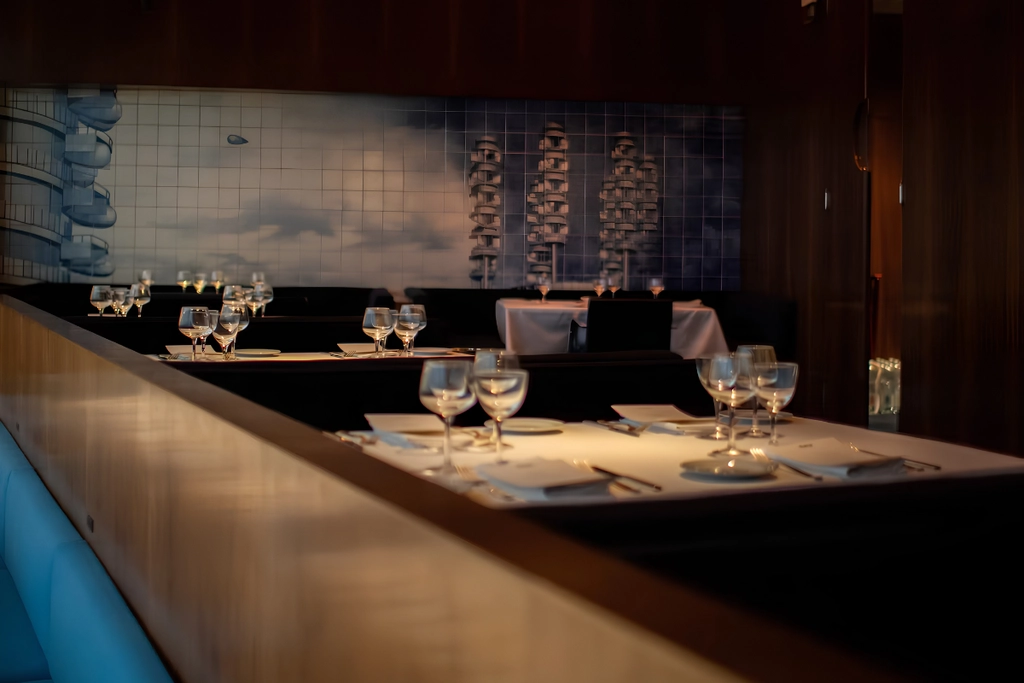
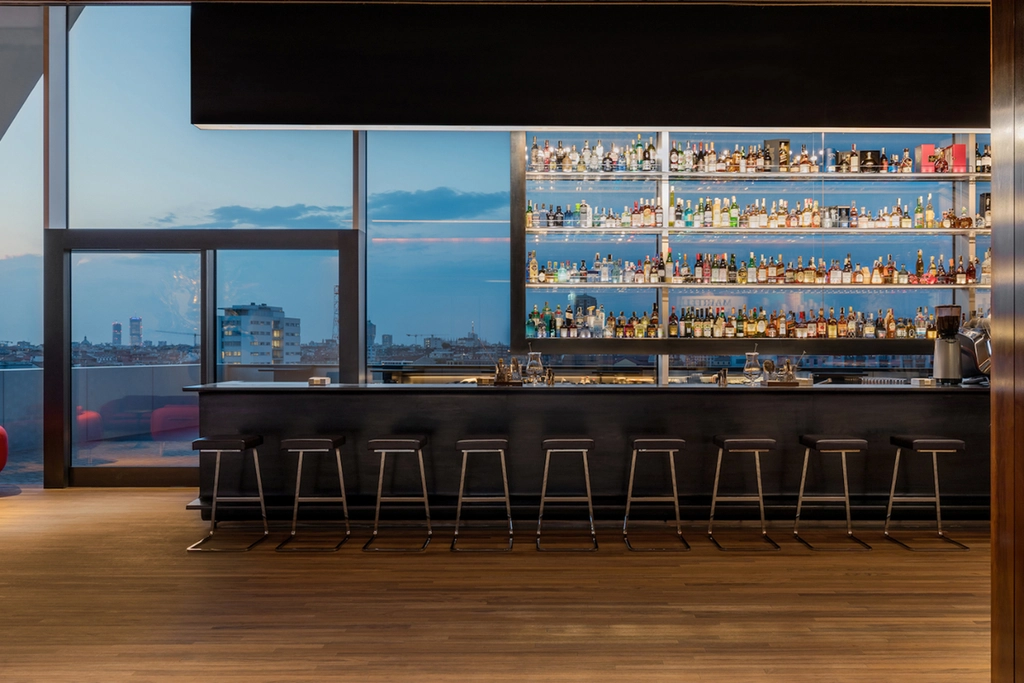
That mixture is quintessentially Milanese. Furniture carries authorship. Tableware can become an artist commission. The terrace frames the city as another visual layer. Fine dining joins architecture and contemporary art without requiring a ceremonial transition between them. The museum visit simply changes courses.
On another afternoon, walk through Parco Sempione toward Triennale Milano.
The Palazzo dell'Arte has spent decades helping define how Italy discusses design, architecture and visual culture. Its Museo del Design Italiano currently presents roughly 400 objects spanning the 1920s to the 2000s, tracing connections between design, industry, technological innovation and society.
Chairs, lamps and household objects acquire an unexpected intensity when assembled chronologically. Familiar forms suddenly reveal how radical they once were.
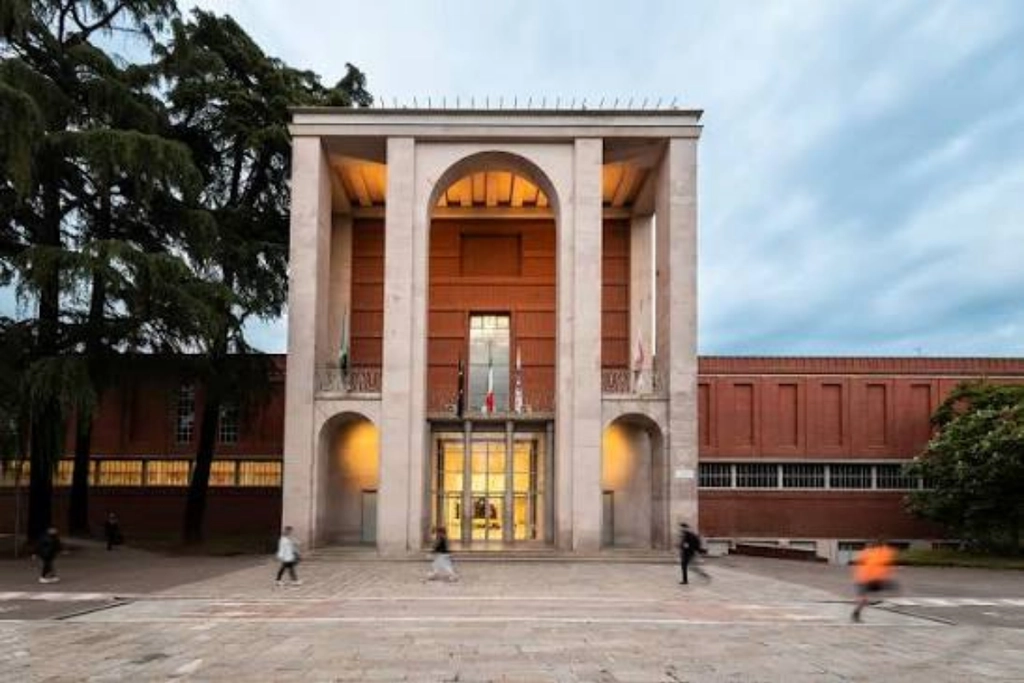
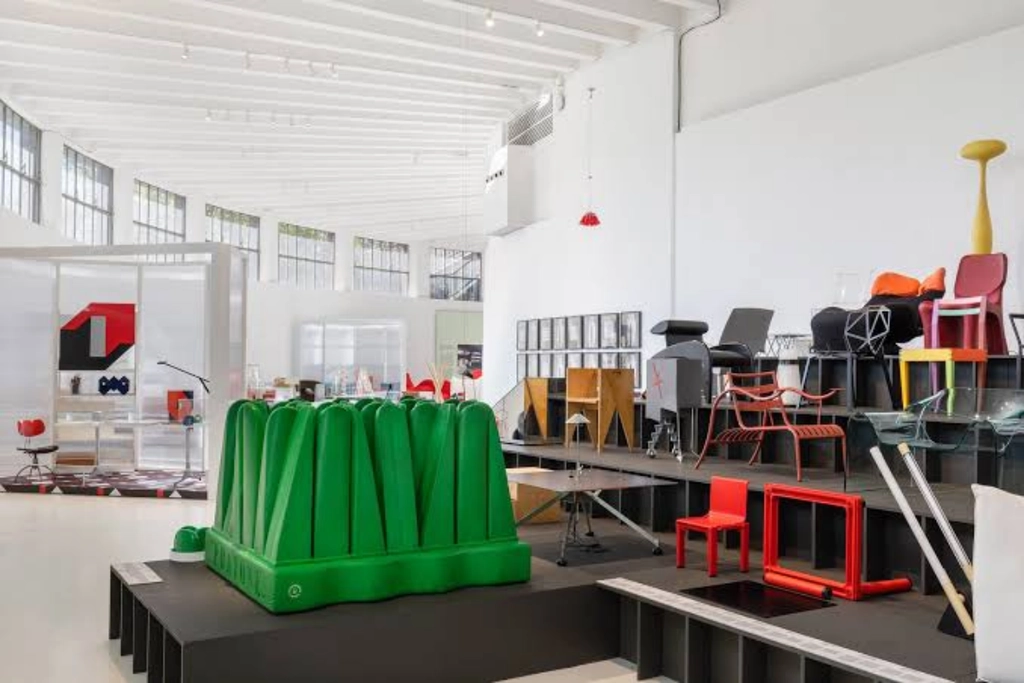
This is essential to understanding Milan because design here has never belonged exclusively to museums. The same intellectual culture travelled into apartments, offices, fashion boutiques, restaurants and factories. At Triennale, an object can explain an era through the angle of a chair leg. The city outside then starts looking different.
Few cities can compete with Milan when dinner requires crossing one of the world's great 19th-century shopping arcades.
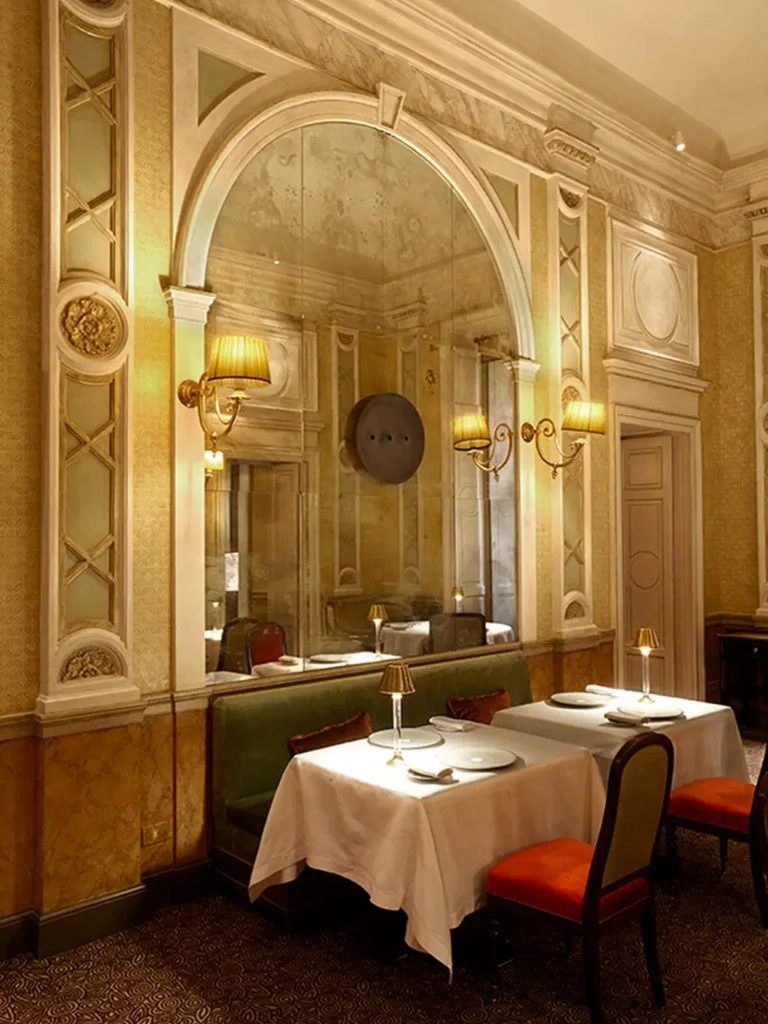
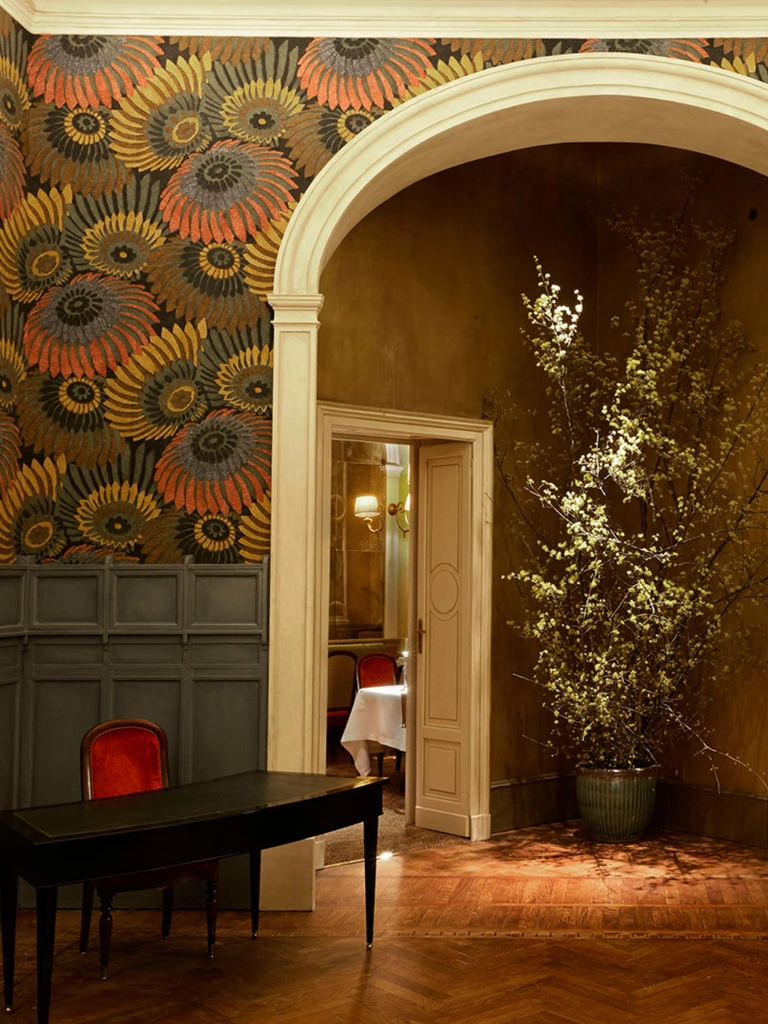
Inside the Galleria Vittorio Emanuele II, Ristorante Cracco turns hospitality into another exercise in staging. Restaurant, café and private spaces occupy different levels, allowing the experience to shift from morning espresso to formal dinner.
Art has also been brought directly onto the Galleria-facing architecture. Galleria Cracco commissions contemporary artists to create site-specific interventions for the lunettes above its mezzanine windows, visible to passers-by day and night. Patrick Tuttofuoco inaugurated the project with Heterochromic, using neon to transform the lunettes into a pair of eyes.
The gesture is almost too perfect for the city as gallery: an artwork presented to thousands of people who never bought a museum ticket.
For a quieter ritual, continue toward Via Montenapoleone and Cova Montenapoleone.
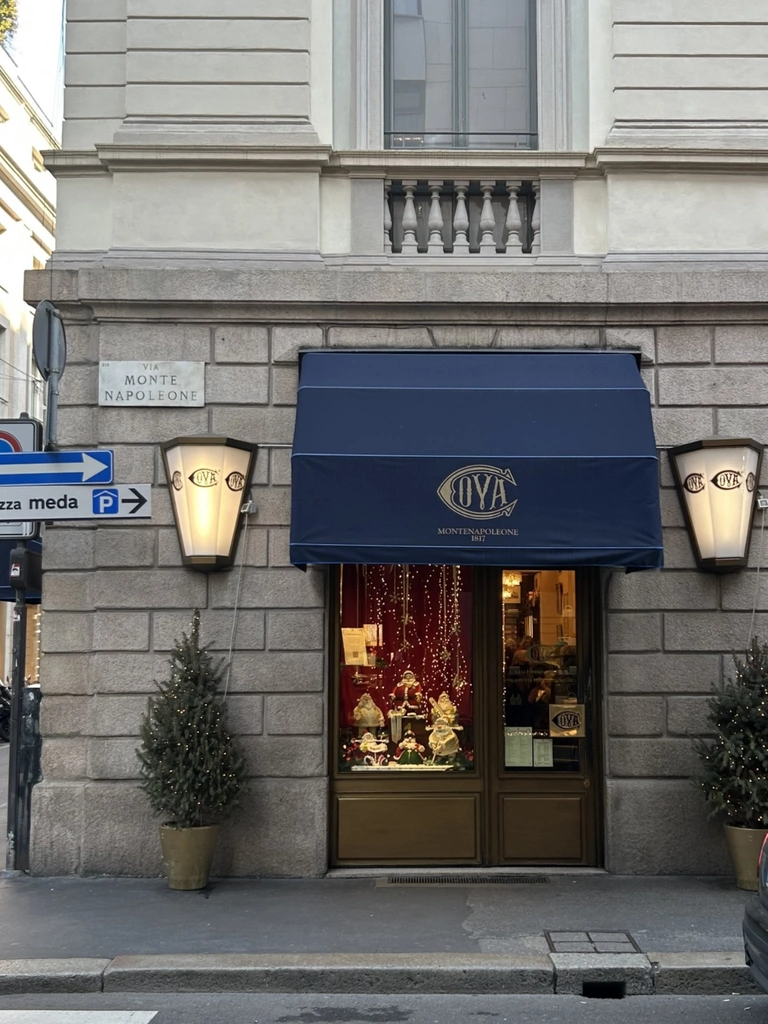
Cova began in 1817 beside Teatro alla Scala as a literary café and post-theatre gathering place. Giuseppe Verdi and Giacomo Puccini were among its famous patrons, while its rooms also became associated with Risorgimento-era political and social life. After the original premises were destroyed during World War II, Cova relocated to Via Montenapoleone in 1950.
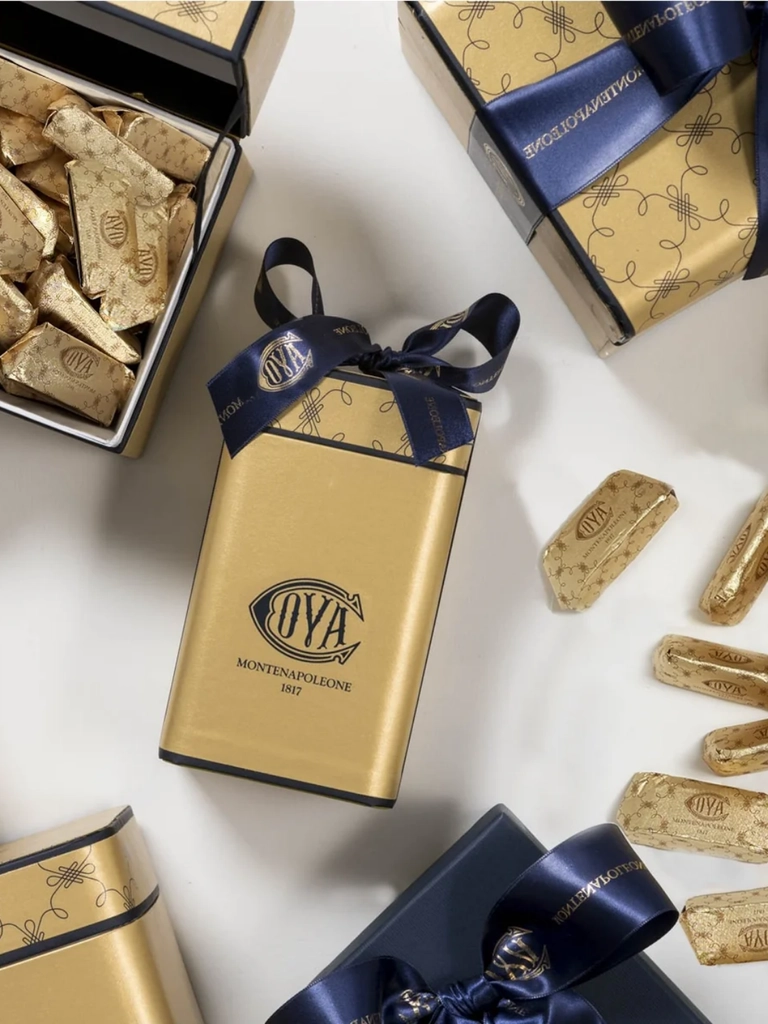
Its significance today extends beyond nostalgia.
Montenapoleone has transformed around it into one of luxury fashion's most concentrated streets, yet the ritual remains recognisable: polished service, espresso, pastry, mirrors and chandeliers. Fashion executives, shoppers and travellers now occupy the tables where Milanese cultural life has been unfolding in different forms for more than two centuries. Sometimes the city's history arrives with a silver spoon.
End in the Galleria itself. Galleria Vik Milano occupies part of the historic Galleria Vittorio Emanuele II and deliberately blurs the categories of boutique hotels and private museums. Contemporary art spreads through five floors, while individual guestrooms have been conceived as site-specific projects.
No two rooms need tell precisely the same visual story. Artists from Italy and abroad have worked across suites and public spaces; hand-painted murals, contemporary works and varied furniture make accommodation part of the encounter. The hotel describes each room and suite as a site-specific installation.
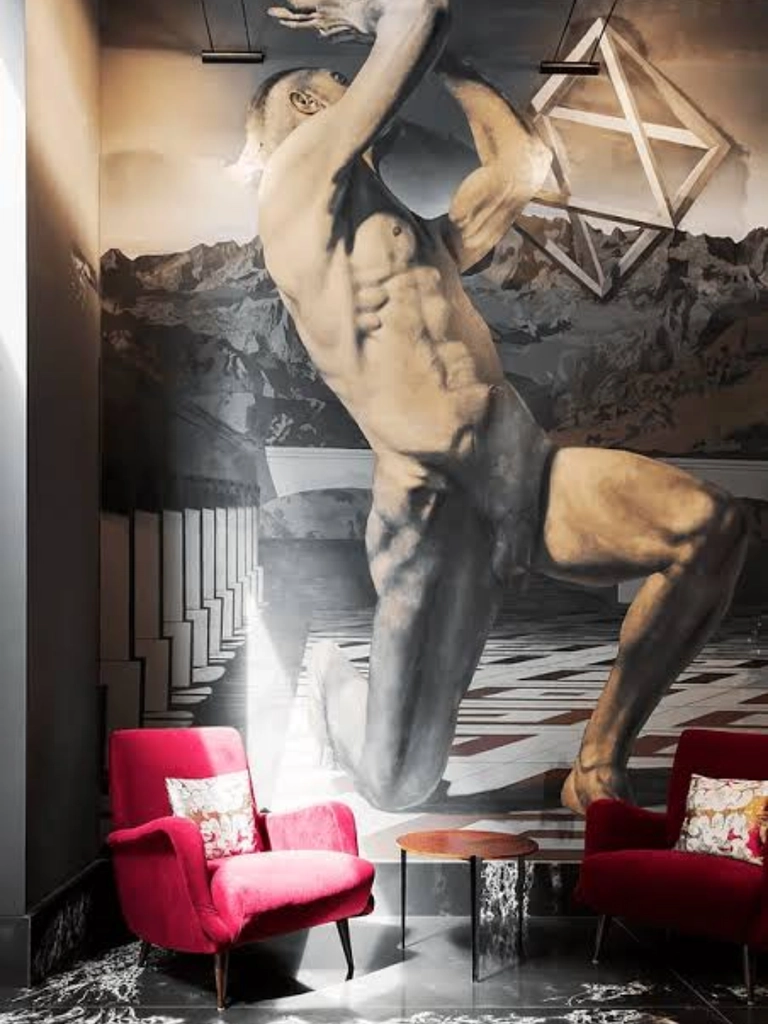
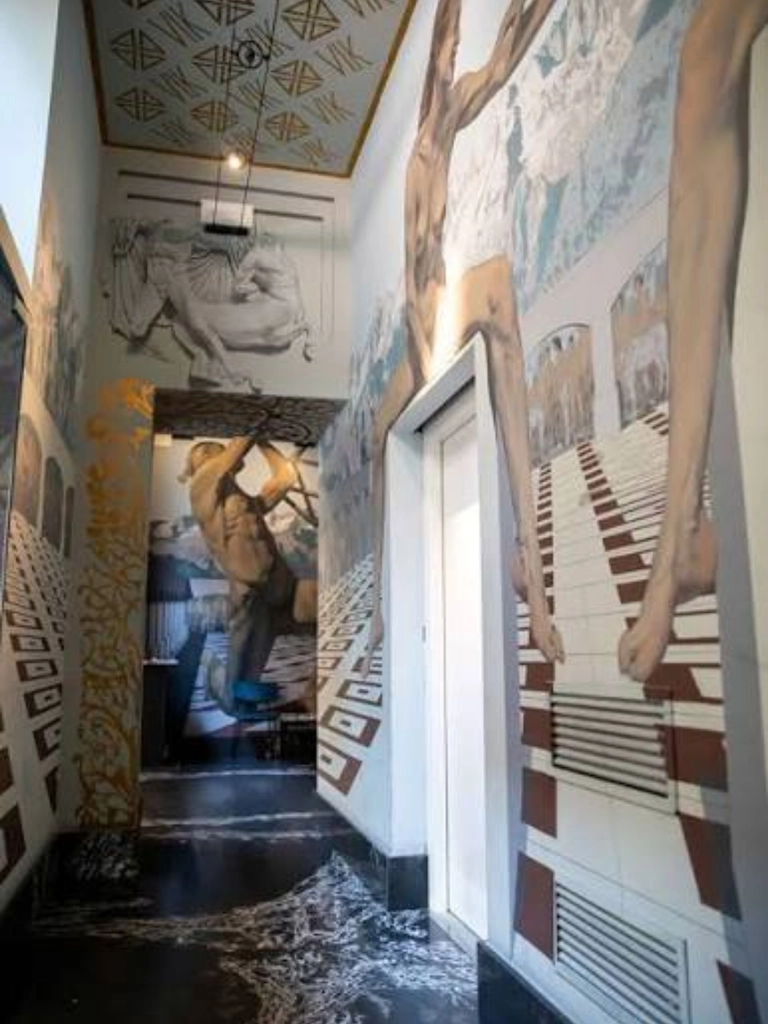
It provides an appropriately Milanese ending.
In other cities, art itineraries often depend on opening hours. Milan keeps finding methods of extending them. A painting leads to a restoration studio; a private residence turns architecture into biography; an industrial distillery becomes a contemporary foundation. Dinner happens beside Fontana, espresso carries memories of opera and the Risorgimento, and eventually the traveller checks into an artwork.
To experience Milan as a city as gallery is therefore to abandon the idea that culture requires a dedicated building.