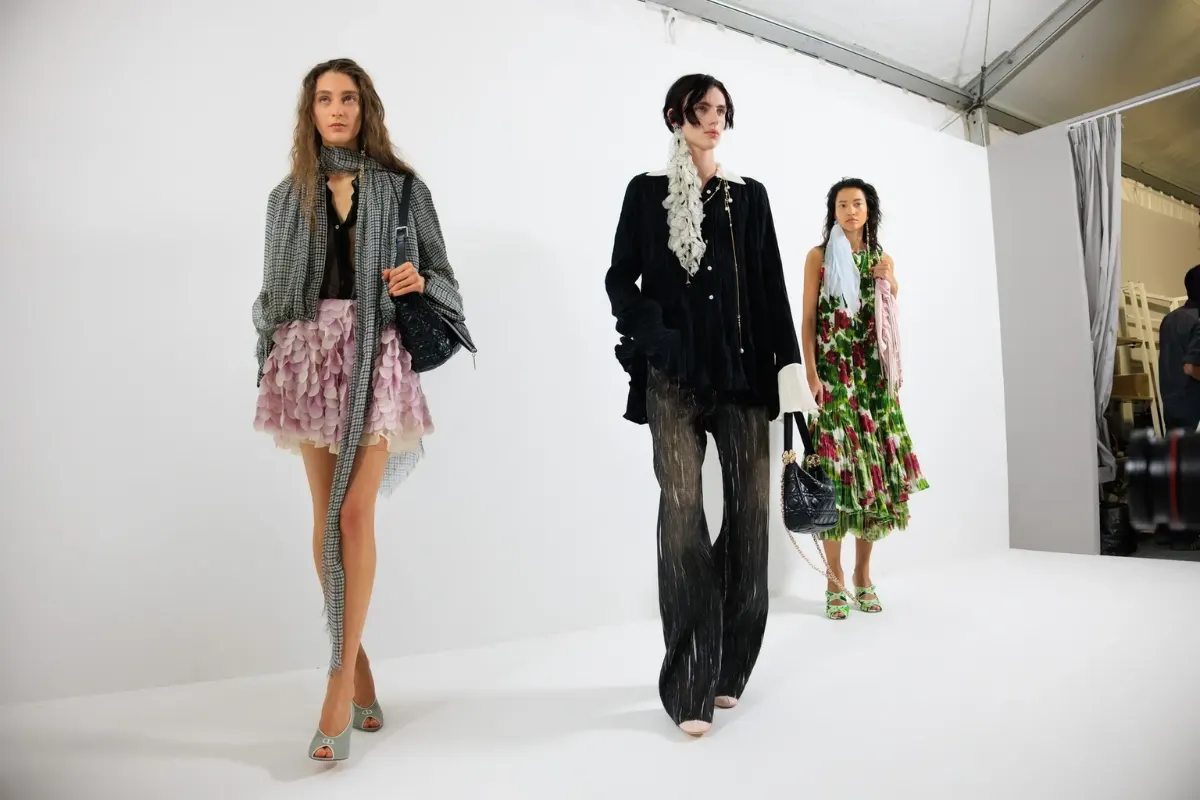





Christian Dior SS27 drifts through the Tuileries like a dream remembered too quickly. The beauty is still there. Surprise takes a little longer to arrive.

Christian Dior SS27: The Garden Knows the Script
Christian Dior SS27 drifts through the Tuileries like a dream remembered too quickly. The beauty is still there. Surprise takes a little longer to arrive.
November 4, 2026


Mist hangs above the water while camphor trees frame the runway, giving Jonathan Anderson’s Dior the atmosphere of a garden caught somewhere between morning and memory. His latest collection is officially built around lightness, with tailleur treated as flou and air imagined almost as another material. Elements introduced in Autumn Winter 2026-27 return too, including flower-like volumes, cropped proportions and iridescence, now loosened for summer.
That continuity gives Chritian Dior SS27 its confidence to also exposes the first real complication of Anderson’s Dior: we are beginning to know what comes next.
When Structure Learns to Float
Dior traditionally gives femininity an architecture. The Bar jacket cinches, curves and controls; the New Look builds its drama through the tension between a narrow waist and an expanding skirt. Anderson keeps the memory of that architecture while removing much of its physical resistance.
Pinstripes and tailoring appear almost weightless in the opening passage. Jackets retain enough shape to register as formal clothing, yet chiffon, delicate layering and abbreviated skirts loosen the authority they once carried. Dior describes the season as an exercise in turning tailleur into flou, shifting continually between transparency and opacity.
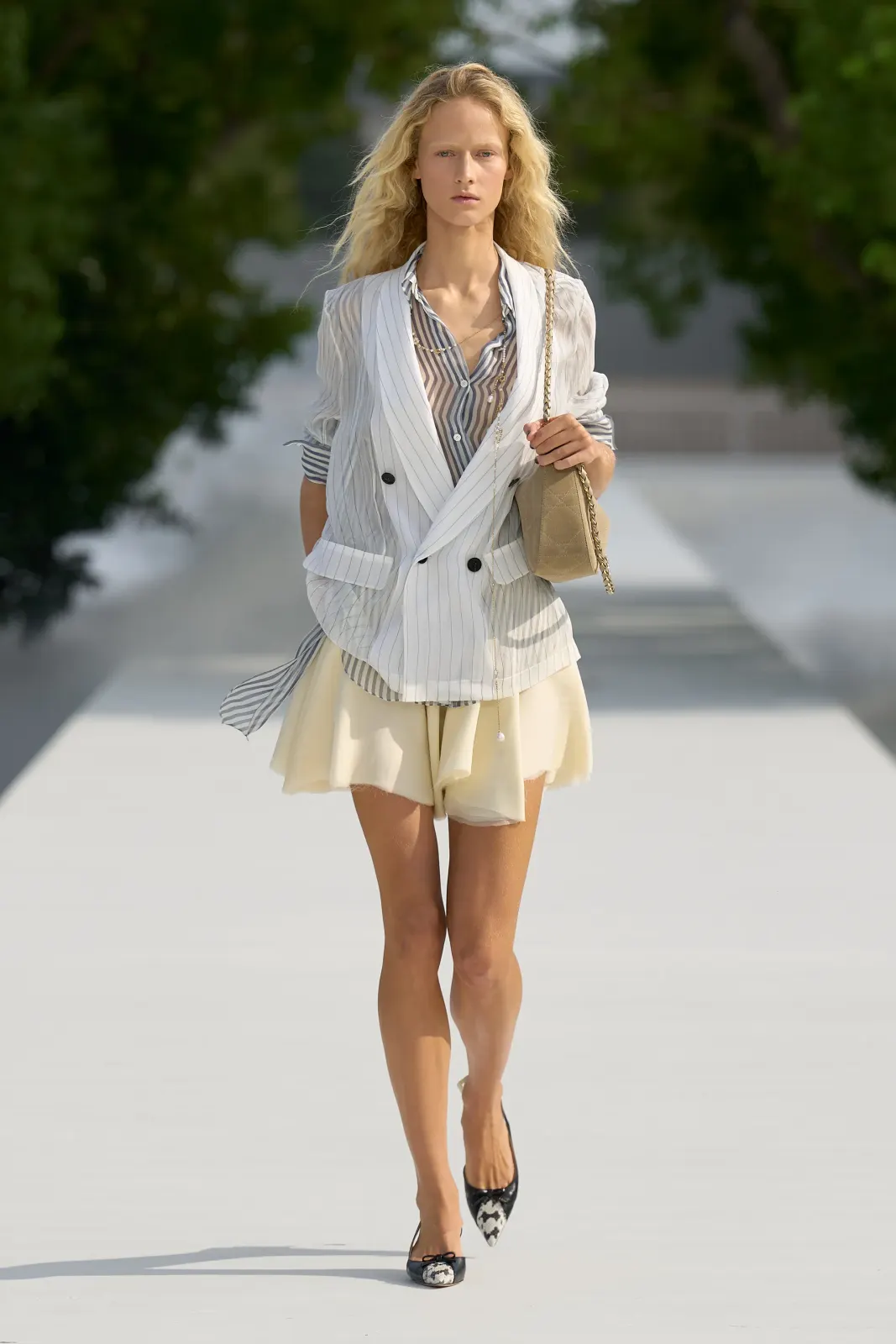
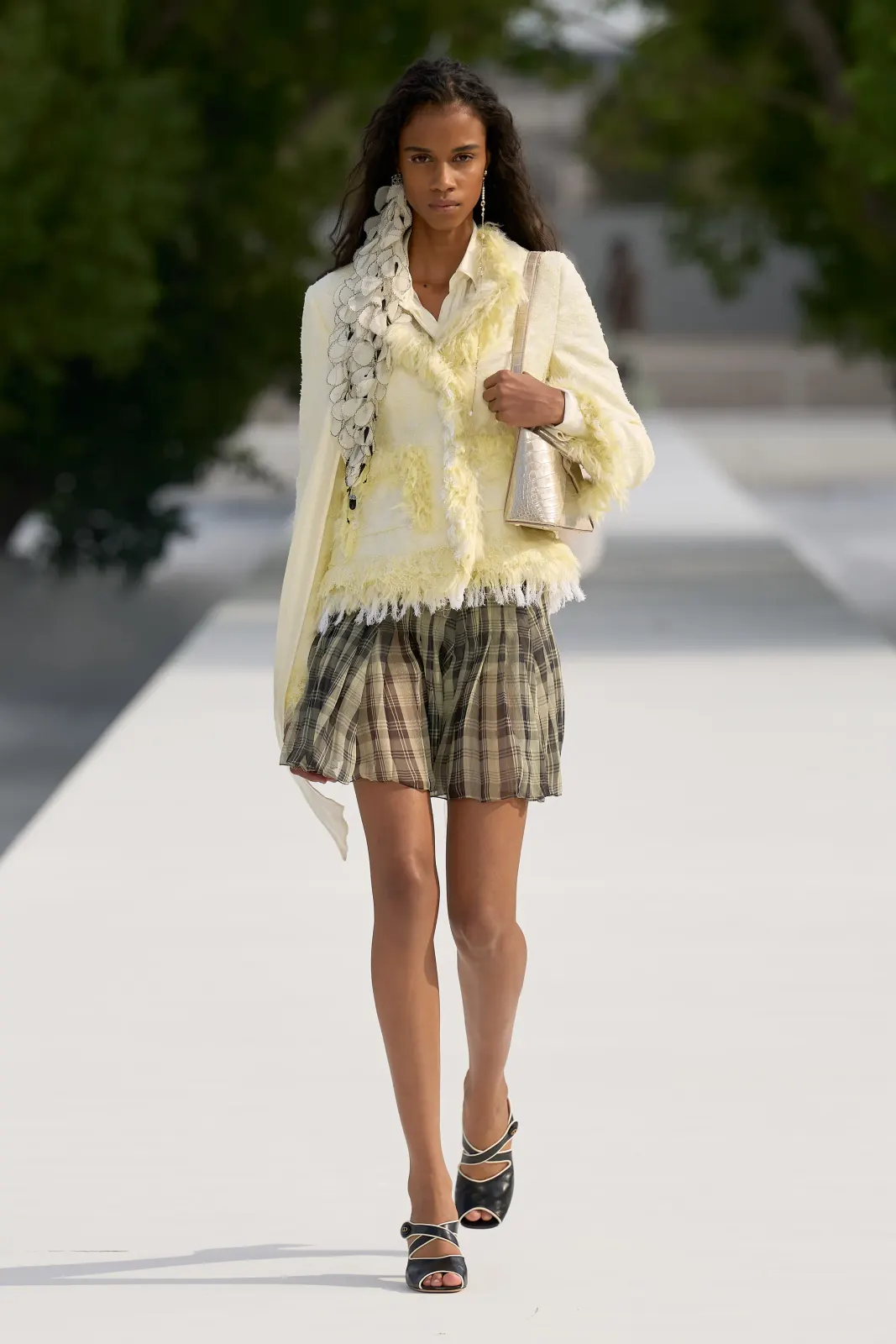
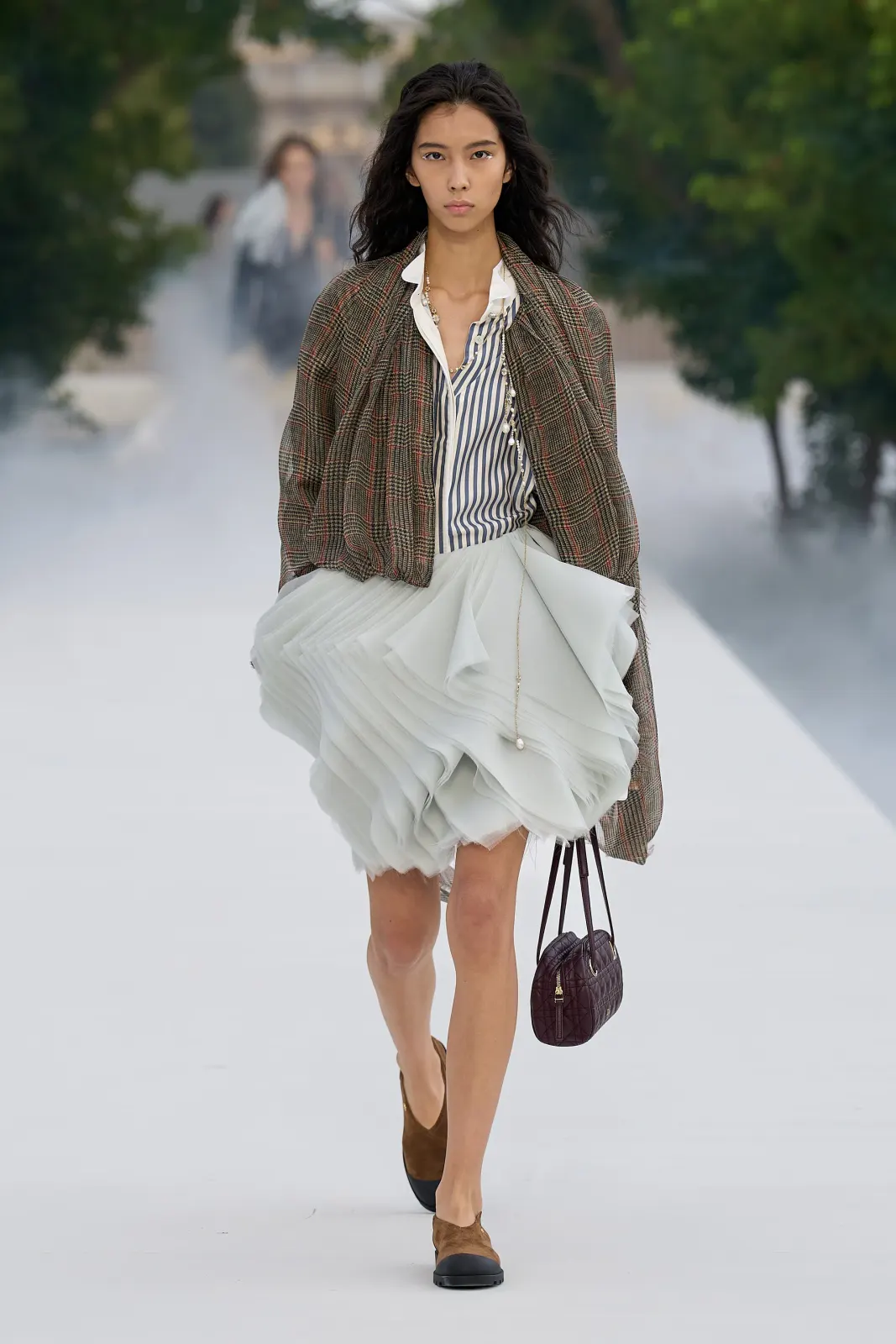
What interests Anderson is not the disappearance of structure but its afterimage. Tailoring still outlines the woman before fabric begins drifting away from that outline. Familiar Dior proportions survive in softened form, as though someone has taken the house’s old geometry and left it outside in warm air until the edges began to curl.
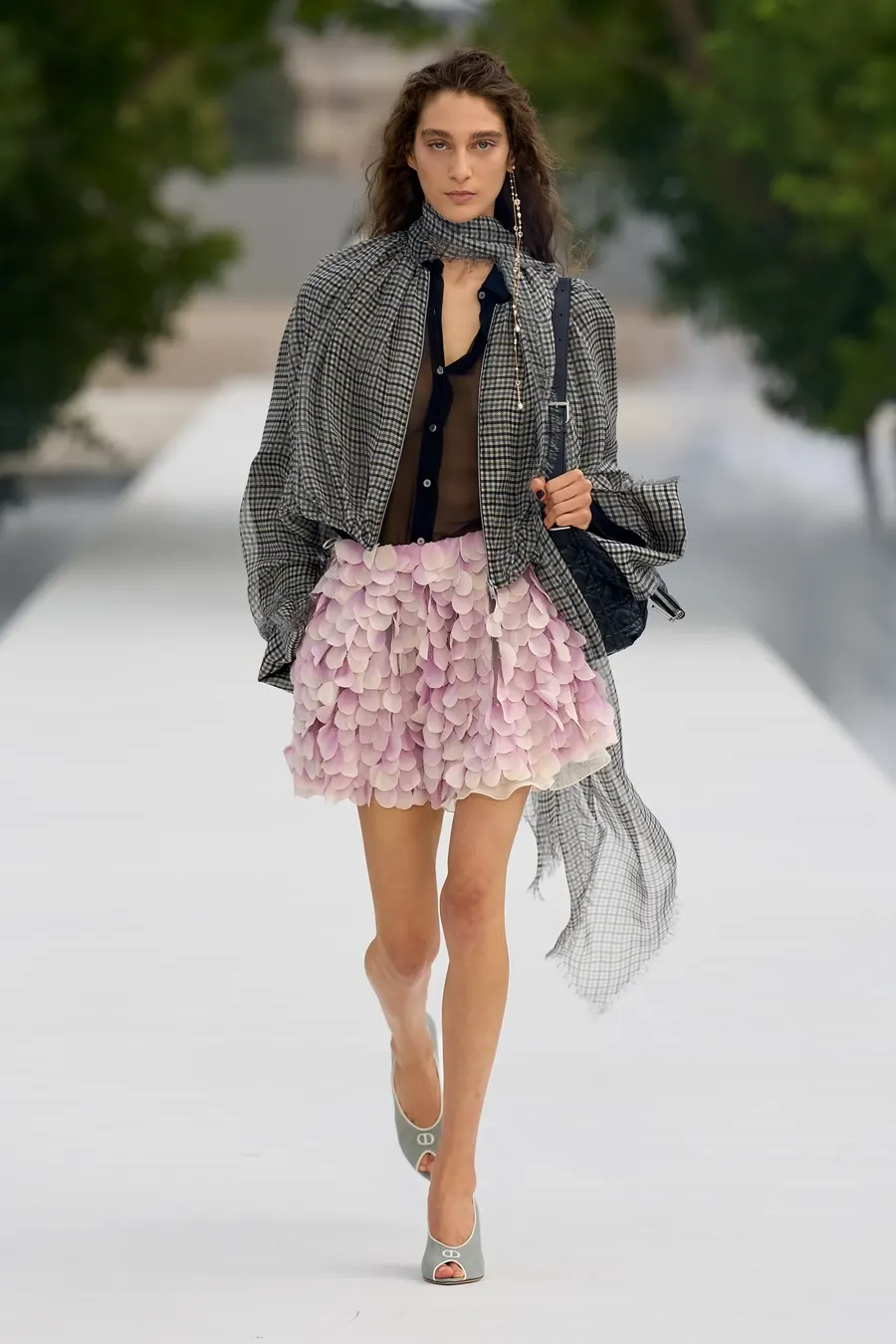
The technique is often beautiful. Several jackets appear to hover over pleated or petalled skirts whose movement makes the upper half seem even more disciplined. Elsewhere, tailoring itself begins to fray into surface decoration, allowing the garment to hold authority without becoming visually heavy.
Lightness, however, has already become one of Anderson’s established Dior strategies. Fall 2026 also softened house structure and converted menswear checks into fluid silk, while SS27 continues that vocabulary in an even airier register. Evolution is coherent, though coherence is starting to make the trick easier to anticipate.
Dior learned to breathe. The harder task now is deciding where that breath should take it.
The Garden Has Become a Habit
Flowers followed Jonathan Anderson through Dior with remarkable persistence.
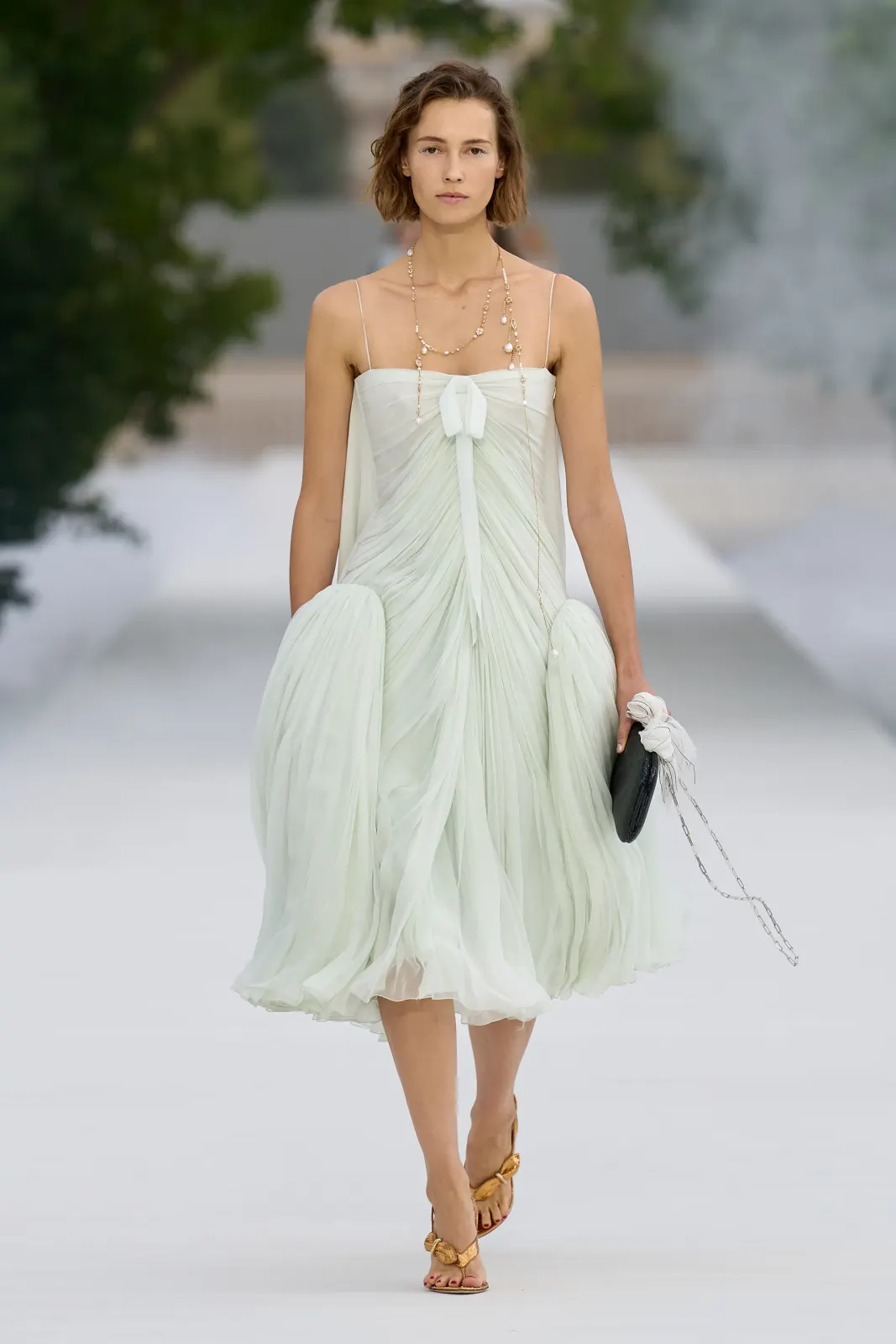
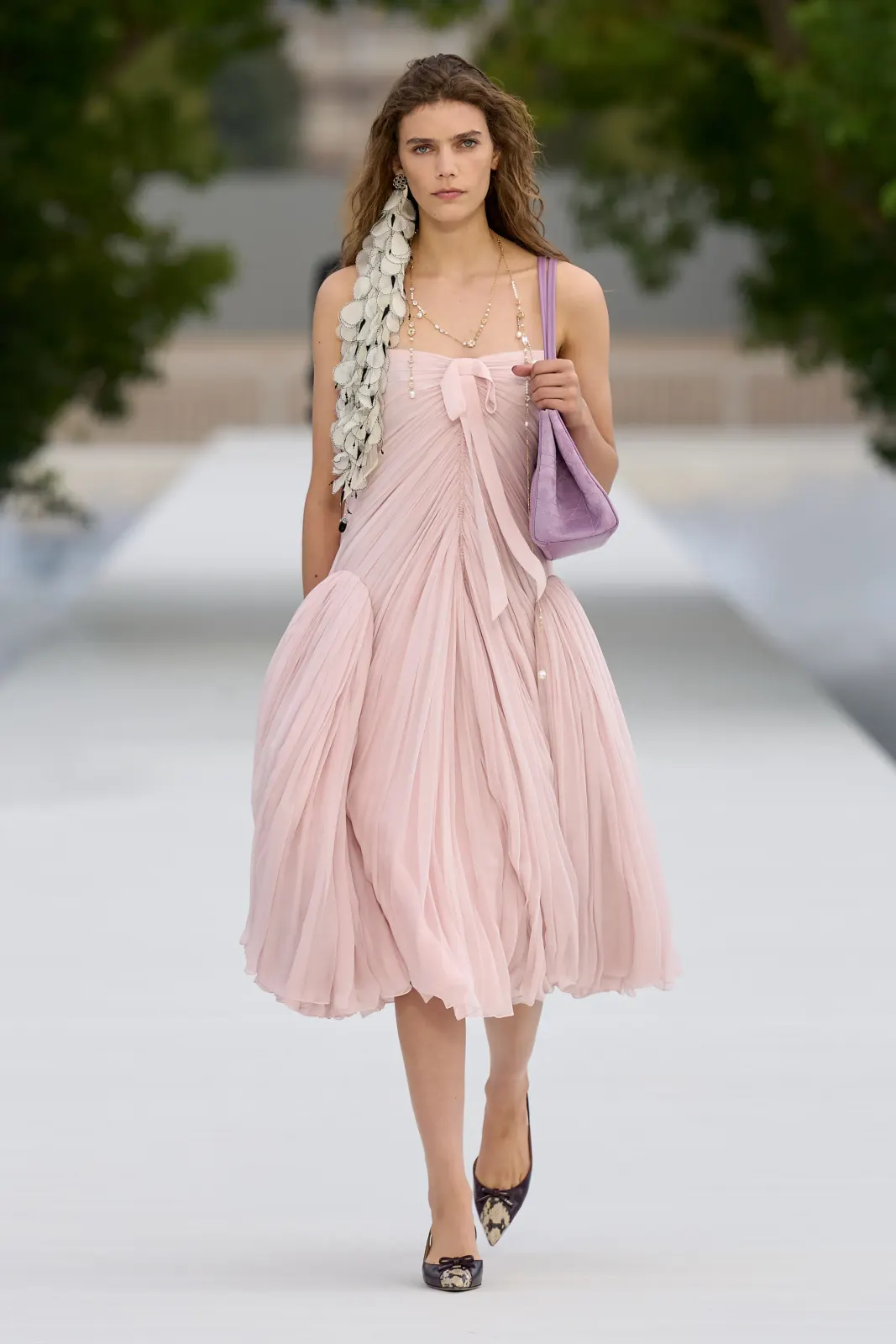
Christian Dior SS27 lets them bloom across surfaces as dangling petals, blurry prints and volumes that gather around the body like corollas disturbed by wind. Christian Dior’s own fascination with gardens gives Anderson plenty of historical ground to occupy, yet his flowers rarely behave with the polished neatness associated with conventional couture florals. Petals droop, cluster unevenly and slip away from symmetry.
Pink surfaces look as though someone has shaken blossoms directly onto clothing, while printed dresses dissolve at their hems into movement. Even houndstooth, one of fashion’s most disciplined patterns, can acquire a floral interruption hanging across the shoulder. The garden keeps infiltrating order. And their looseness is the secret seductive weapon.
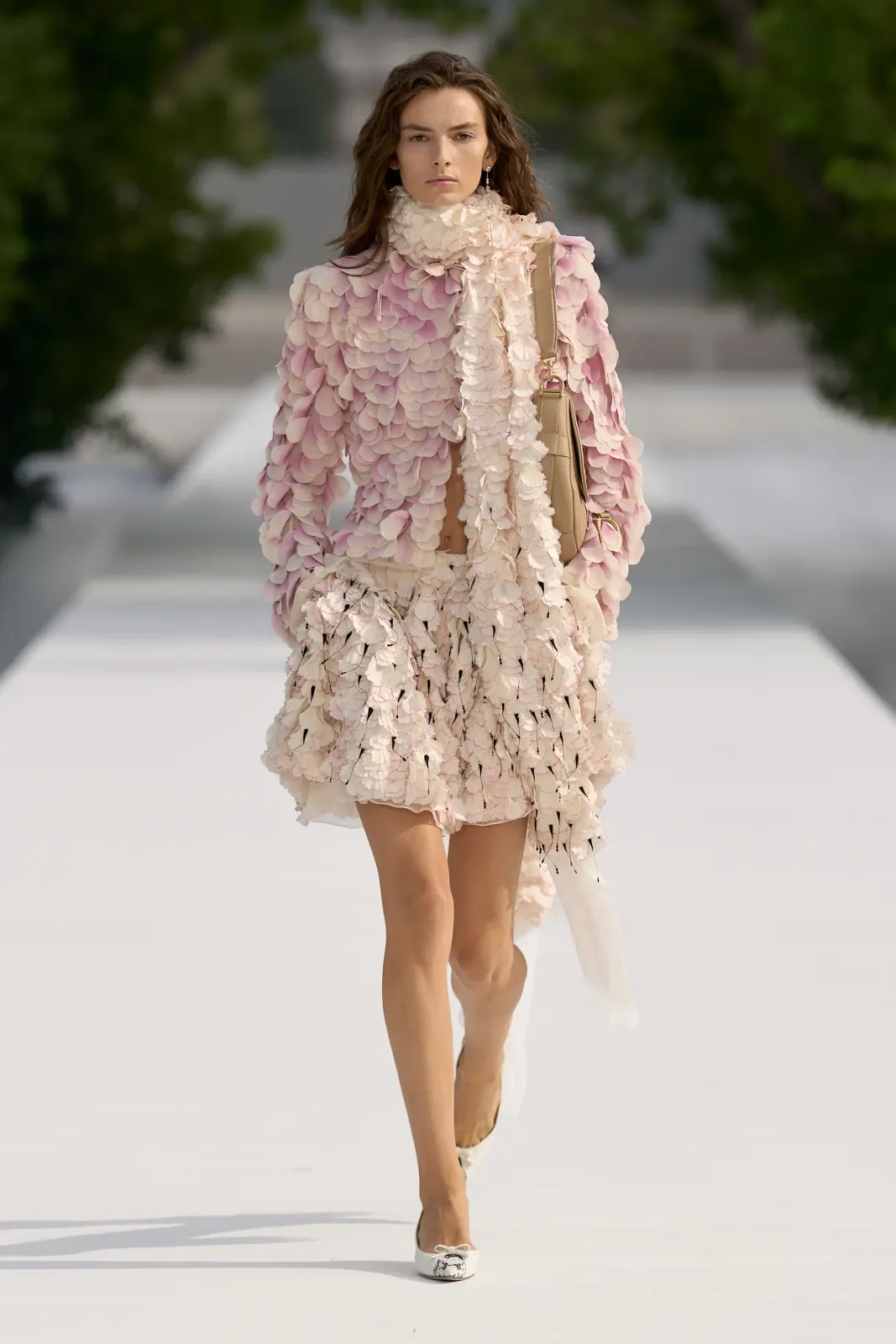
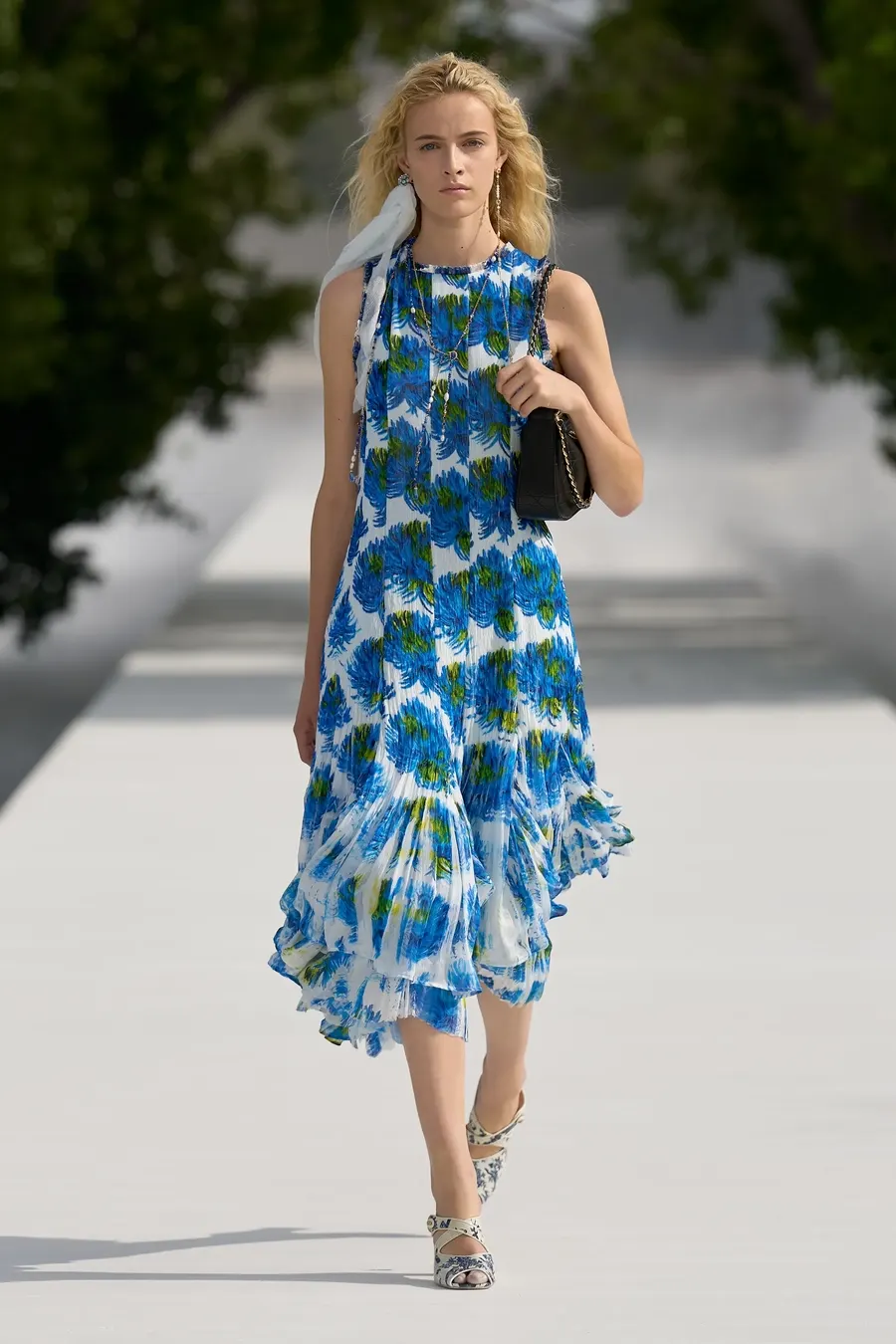
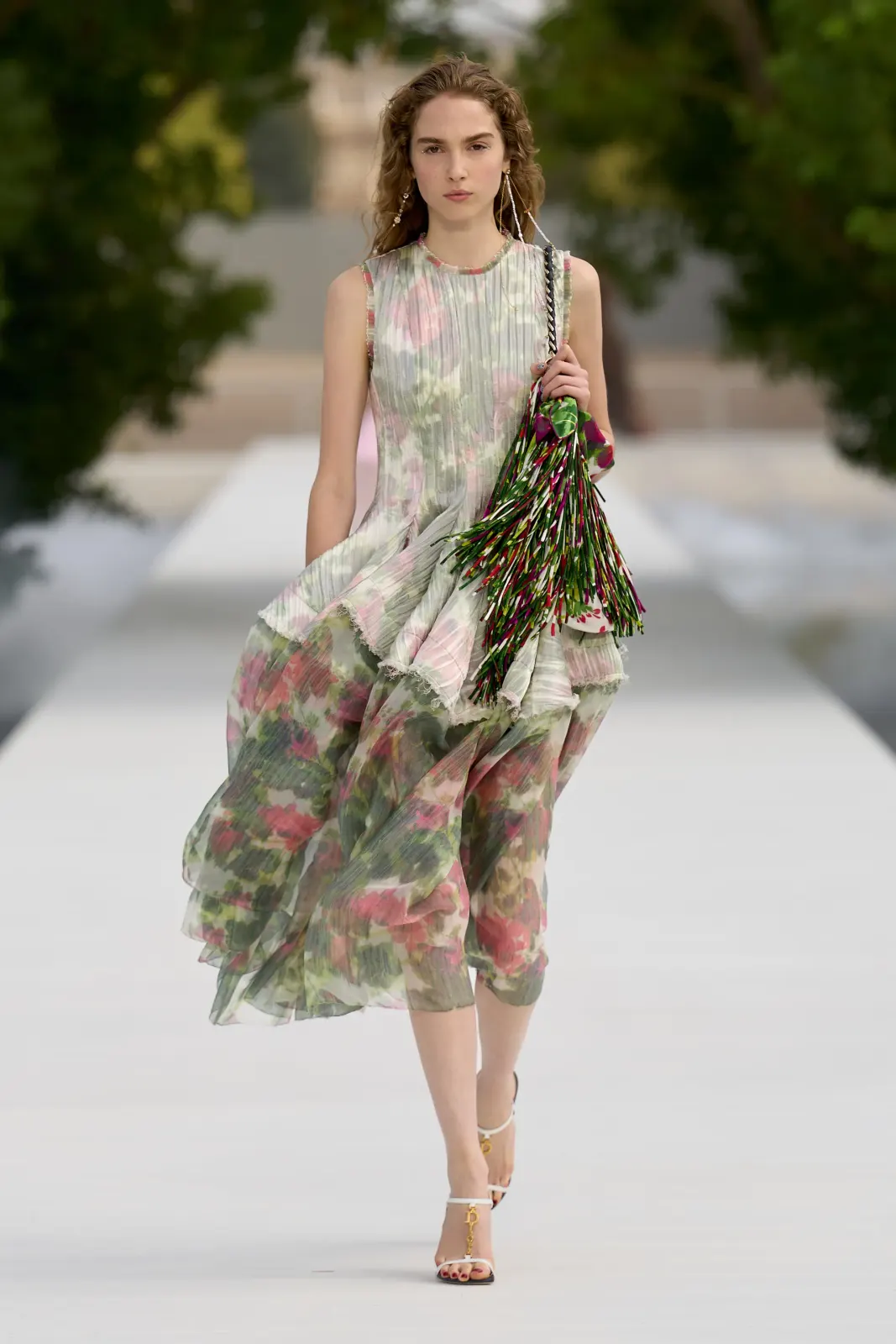
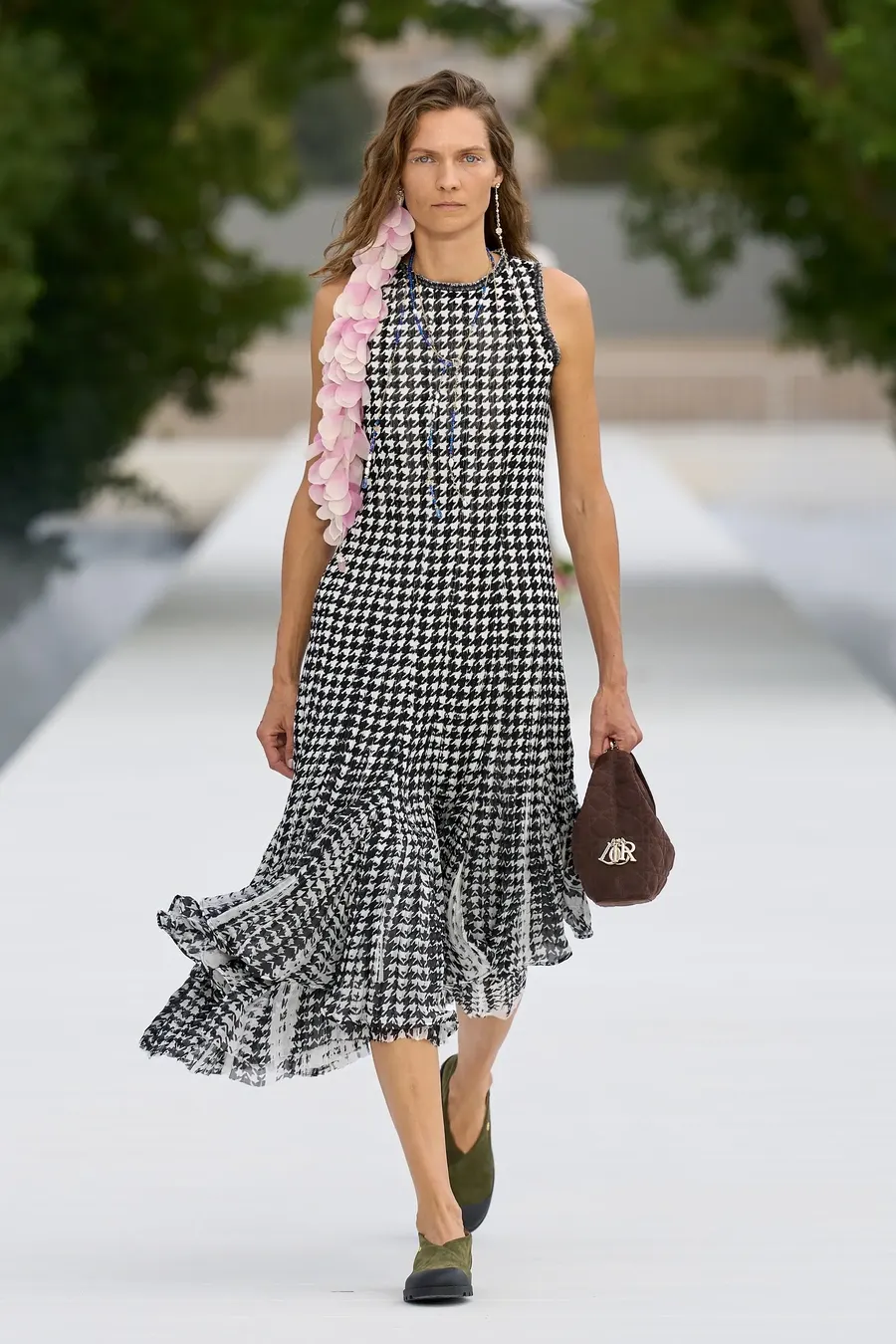
Anderson’s whimsy works best when elegance is allowed one strange interruption. Dior prettiness becomes more alive when a silhouette swells unexpectedly at the hip or a floral element hangs at slightly excessive volume. The wearer remains elegant, but perfection has lost some of its manners.
Yet repetition changes how these gestures land.
Botanical forms have already travelled through Anderson’s couture, ready-to-wear and resort vocabulary. Cruise 2027 featured poppies, rosettes and dresses covered in three-dimensional flowers, while previous Dior collections established the designer’s attraction to plant forms as both decoration and construction. SS27 develops the language rather than abandoning it, which makes artistic sense. Recognition is part of building a house code.
Still, nature is becoming a very reliable place for Anderson to find whimsy.
Once the audience begins expecting another petal, another flower-shaped volume, another slightly peculiar garden object, enchantment risks becoming a formula. The flowers remain beautiful. Their arrival no longer changes the temperature of the room in quite the same way.
When Dior Lets the Day In
Some of the strongest clothes arrive when the fantasy loosens its grip.
Striped shirts hang with ease borrowed from menswear. Pajama references, smoking jackets and relaxed trousers introduce a woman whose elegance survives without continuous ceremony. Anderson has repeatedly allowed ideas to travel between Dior’s menswear and womenswear, and SS27 extends that exchange through shirting, checks and casual tailoring.
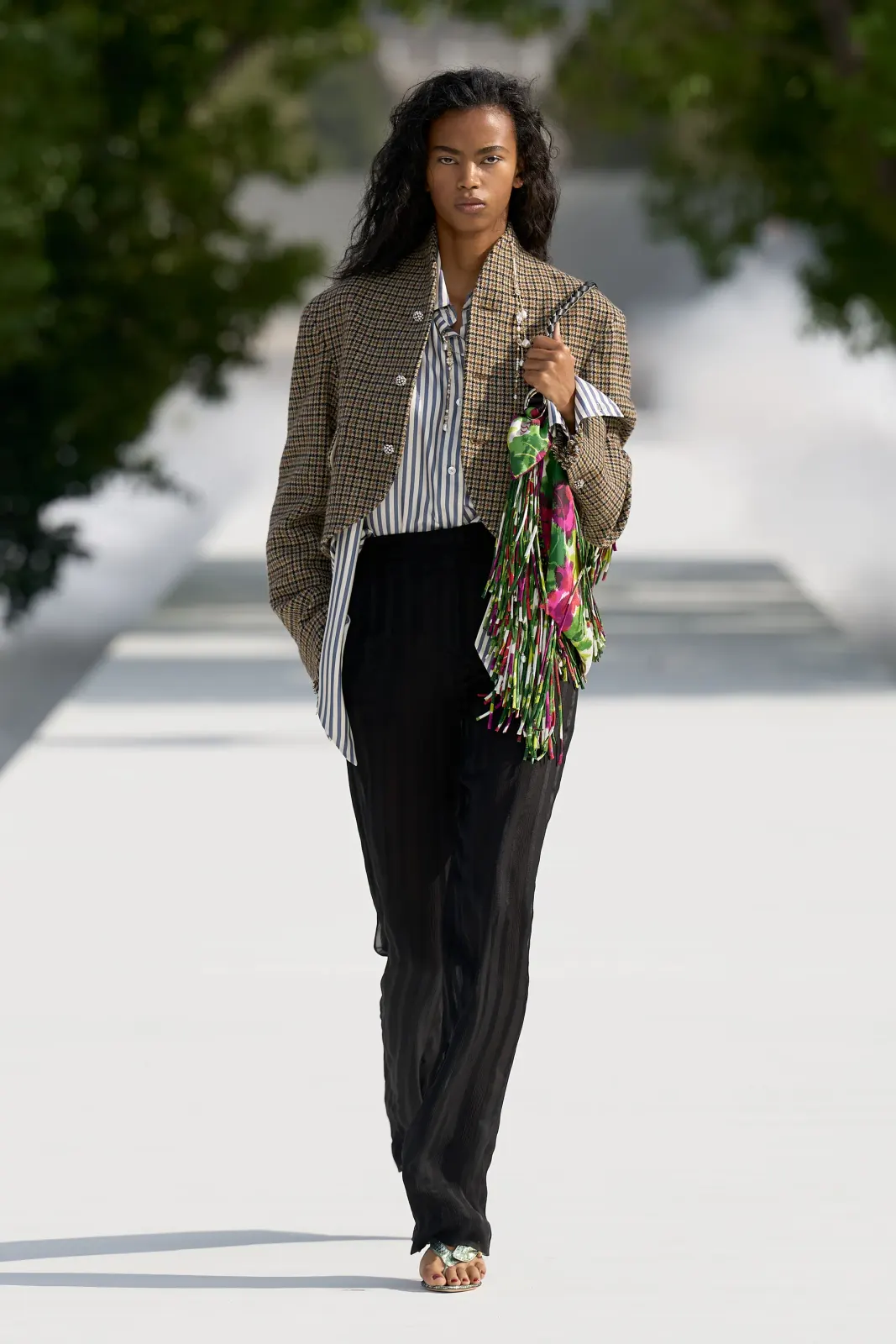
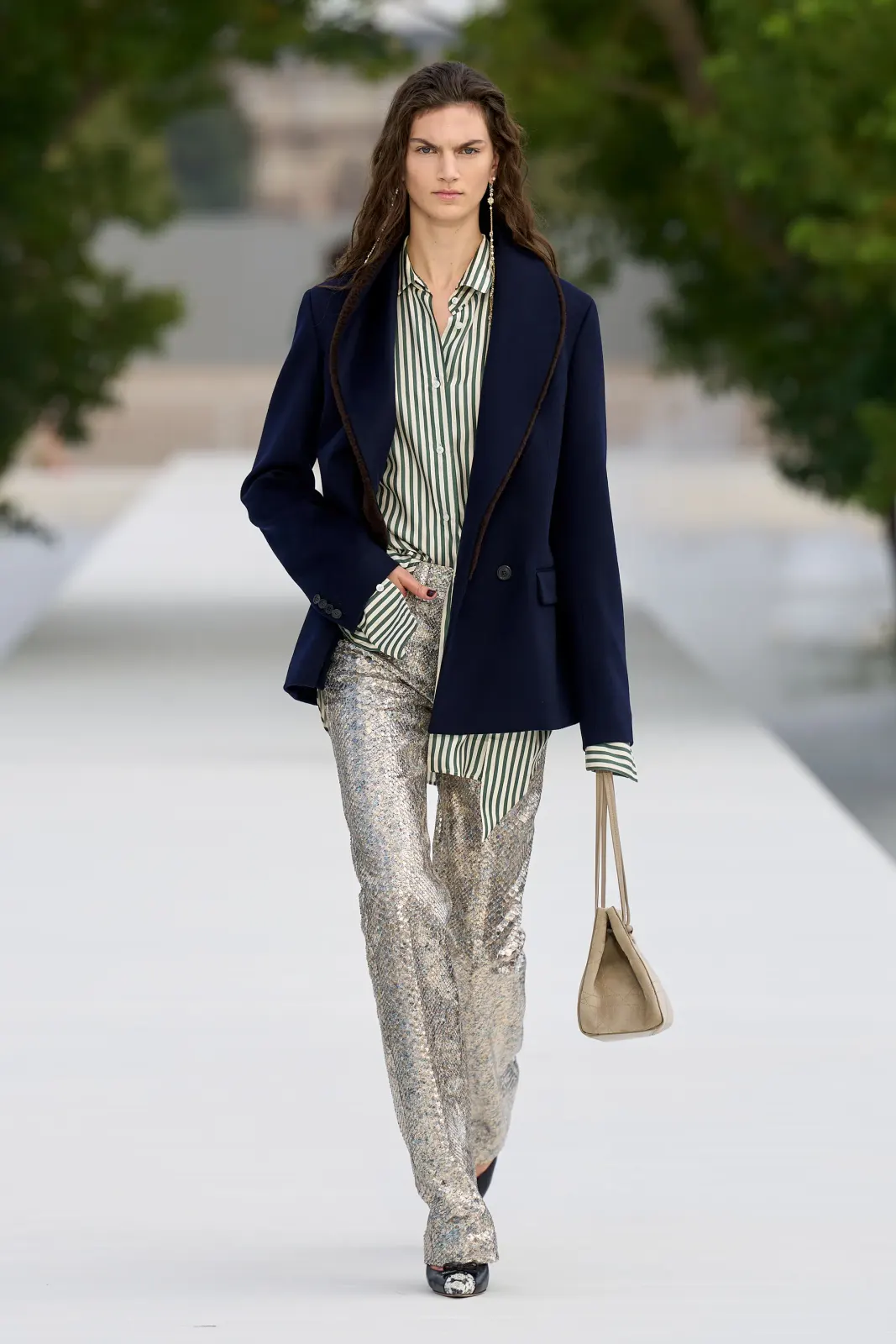
The resulting woman is convincing because she does not appear permanently arranged for an event.
Shirts can sit slightly untucked. Jackets meet low-slung or fluid skirts without forcing the combination into a perfect silhouette. Long dresses move with an almost distracted grace, while cropped tailoring and trousers suggest that Dior’s idea of femininity can survive contact with an ordinary morning.
This relaxed quality has become one of Anderson’s most useful contributions to the house. Dior historically carries enormous ceremonial weight, and the temptation for any creative director is to keep proving that weight through visible craftsmanship and elaborate femininity. Anderson often does something more appealing: he lets expensive clothing behave casually.
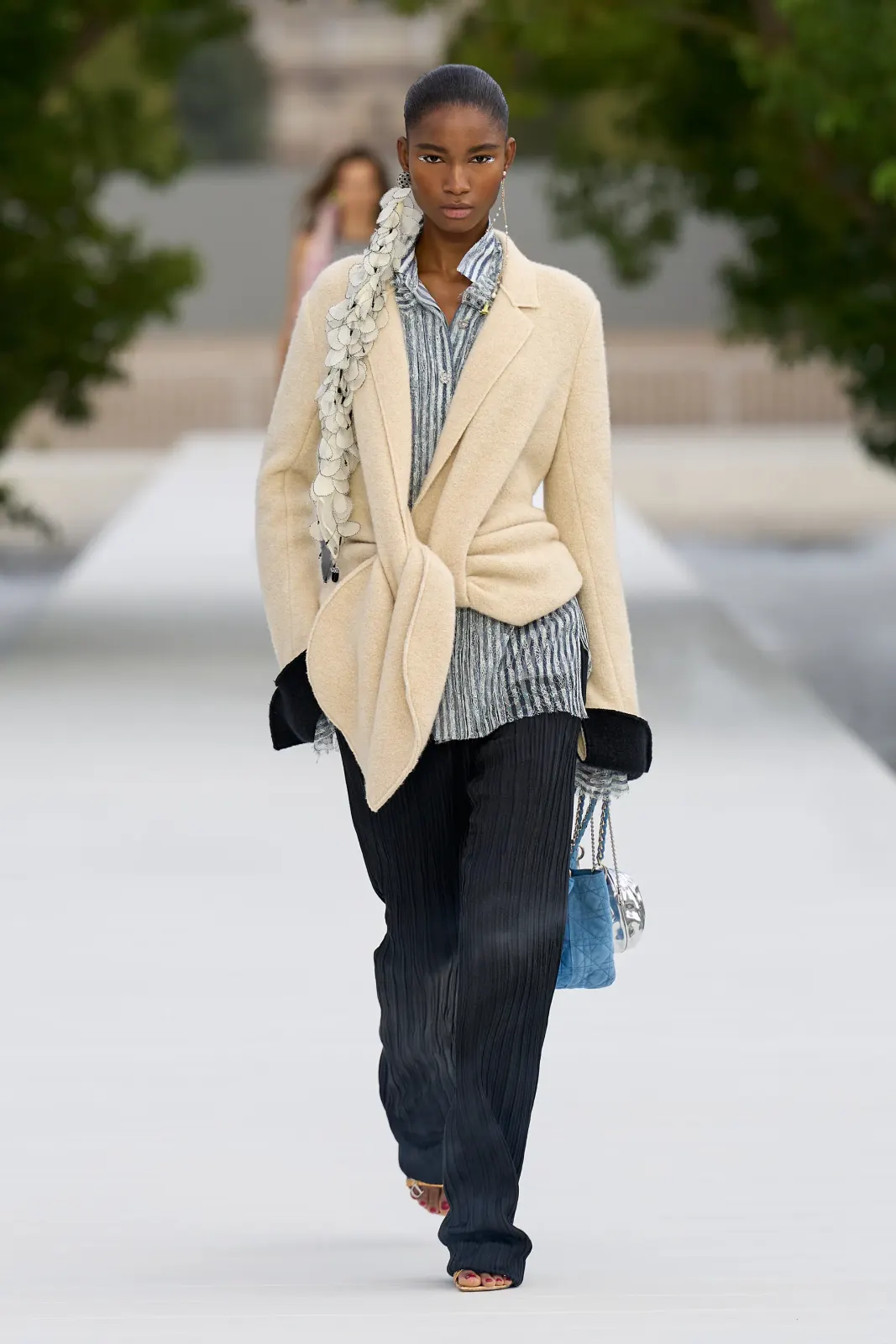
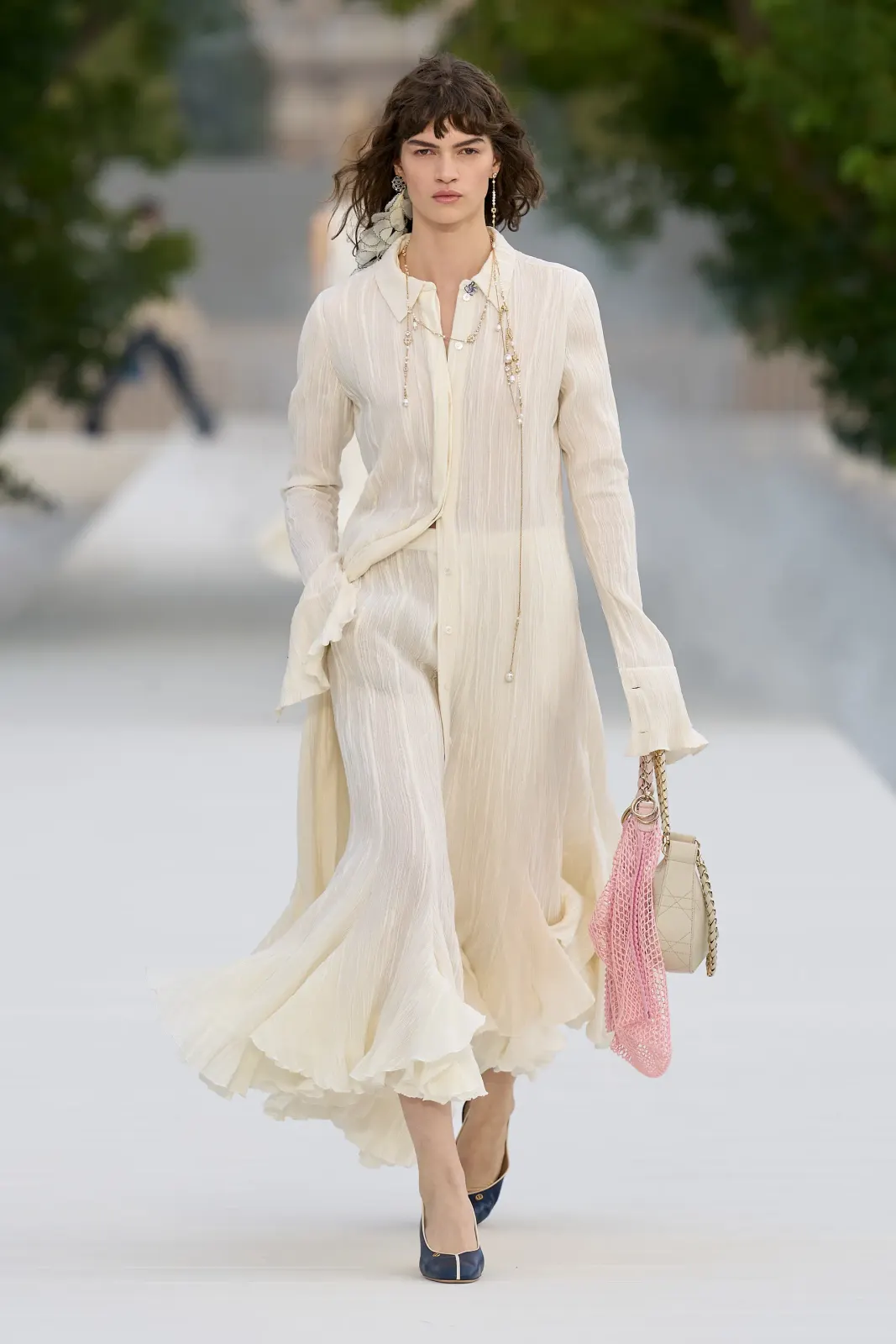
The effect is especially successful when masculine and feminine codes stop acting like opposites. Striped shirting slides into pleats. Tailoring accompanies a skirt whose volume has slipped downward. Metallic trousers acquire the posture of eveningwear without requiring an evening gown.
Elegance begins to look slightly absent-minded.
Anderson’s Dior brings a modern pulse that florals alone cannot provide. His woman does not need to reject prettiness, but she becomes more interesting when prettiness stops being the only thing happening around her.
When Pretty Needs a Pause
Black interrupts the garden with unusual clarity.
One long coat appears almost severe beside the chiffon, florals and powdered colours surrounding it. Its importance comes from restraint. Nothing fluttering is required to prove sophistication; the body is given a narrow, controlled line and allowed to move through the spectacle almost untouched.
Other darker looks achieve a similar reset. Black can compress ballooning shapes into sharper silhouettes, turn transparency more sensual, or return tailoring to a visual discipline that the season frequently dissolves.
The contrast exposes something SS27 occasionally forgets.
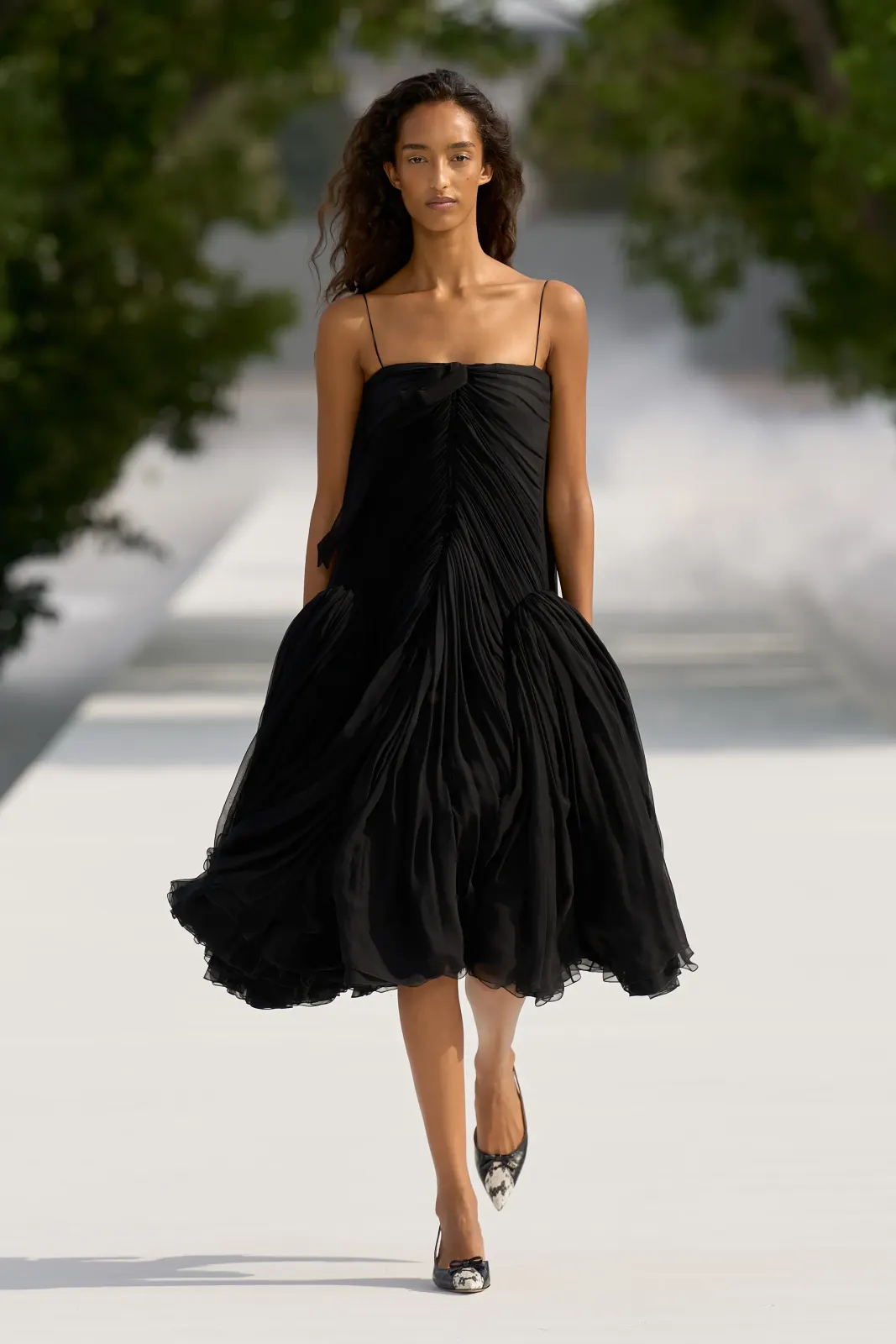
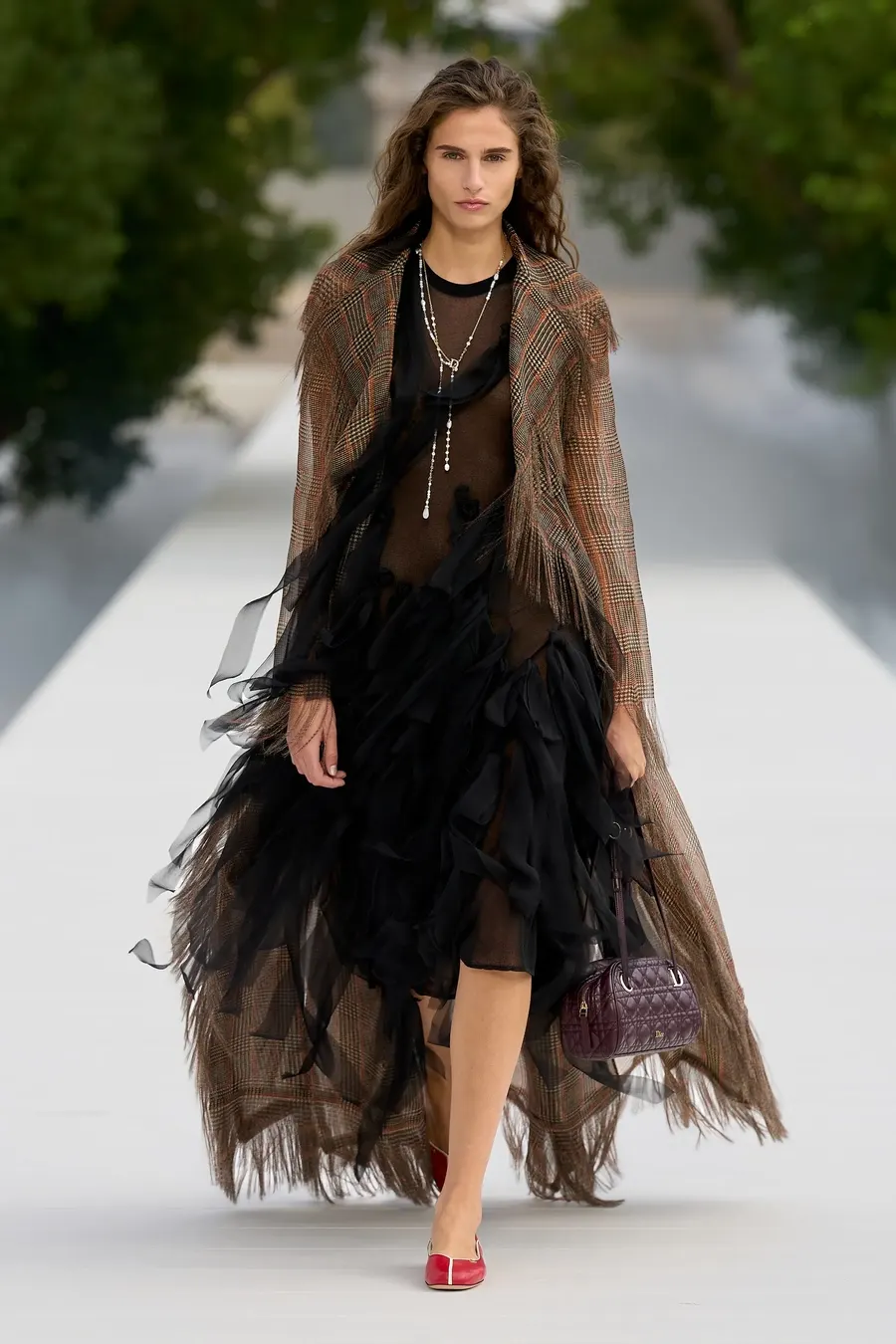
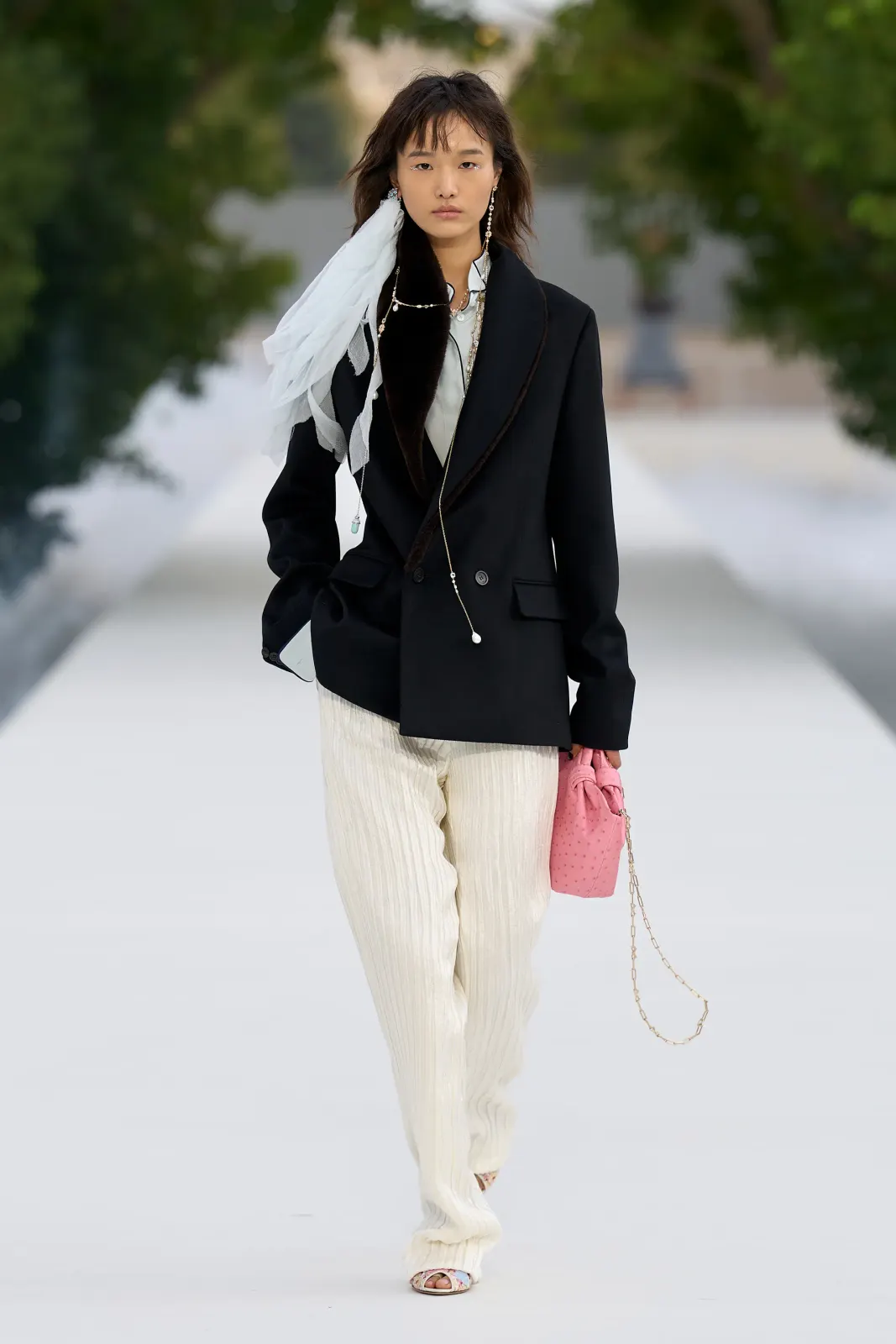
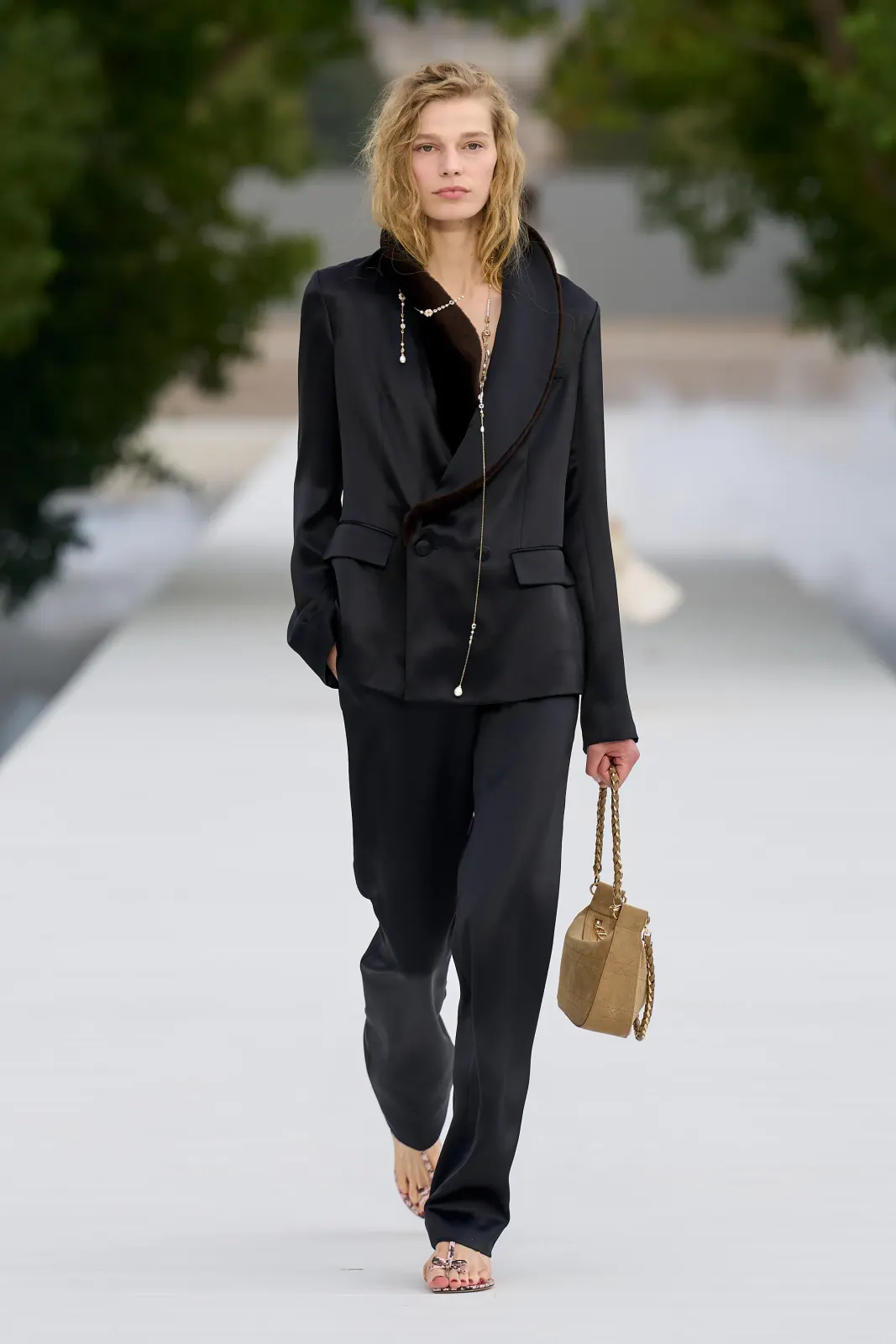
Whimsy works through interruption. If everything becomes whimsical, whimsy loses its ability to interrupt.
Anderson’s Dior has become very skilled at creating beautiful irregularity. Flowers hang strangely, skirts bloom unevenly, jackets soften, fabrics float. These gestures make the house approachable without stripping away its refinement. But accumulation can turn charm into atmosphere, and atmosphere eventually becomes background.
The black passages restore friction.
Suddenly, the flowers around them look stranger. Chiffon appears lighter because something nearby refuses to float. Romance regains definition once severity is permitted to stand beside it.
Dior needs the garden. And it may also need somewhere outside the garden to occasionally disappear.
Christian Dior SS27 Learns the Cost of Recognition
Jonathan Anderson spent his first year at Dior solving an unusually difficult problem. One of fashion’s most historically loaded houses needed to become recognisably his without becoming unrecognisably Dior.
He solved it remarkably quickly. But that success has now created another problem.
Cropping, loosened heritage, botanical forms, odd proportions, menswear interruptions, precious craft handled with deliberate informality: the pattern has become legible. When those ingredients appear again in SS27, the audience no longer spends the entire runway wondering what Anderson might do to Dior. We already know some of his instincts.
Recognition is valuable. Fashion houses spend years trying to build it. But recognition and anticipation are dangerous neighbours.
SS27 contains plenty of beautiful clothes and several extremely intelligent technical solutions. Nothing suggests a designer running out of ideas. What it does suggest is a designer whose ideas have become identifiable quickly enough that refinement alone may no longer produce the same excitement as discovery.
Anderson himself described his current stage at Dior as one of knowing the framework and developing it over time. That confidence is visible everywhere in SS27. The collection moves smoothly because he no longer appears to be fighting the house.
Now a little resistance might be useful.
The next compelling Dior does not need to abandon flowers, lightness or whimsy. House codes only become meaningful through recurrence. Yet repetition has to keep changing the question attached to them.
Jonathan Anderson has already taught us how to recognise his Dior.
The next surprise will come when he makes us doubt that recognition again.