Rejuran turns one of beauty’s oldest clichés into a very modern ritual: endure the needles now, chase the invisible glow later.
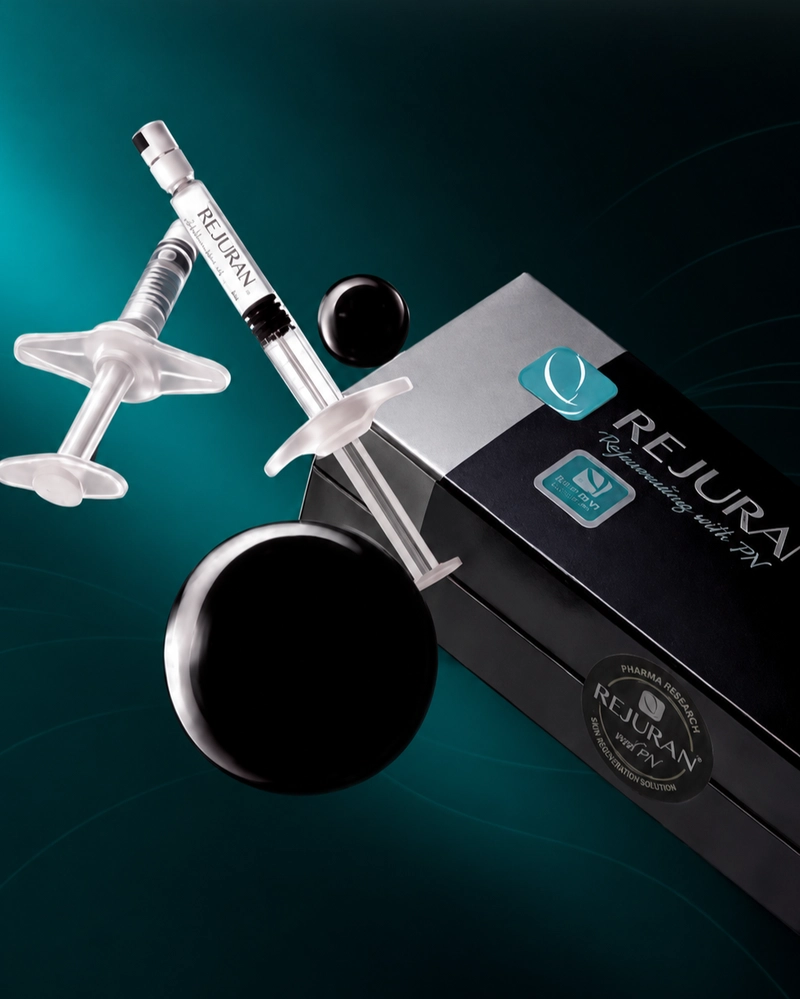
Rejuran turns one of beauty’s oldest clichés into a very modern ritual: endure the needles now, chase the invisible glow later.
September 11, 2026
Advertisement

Advertisement



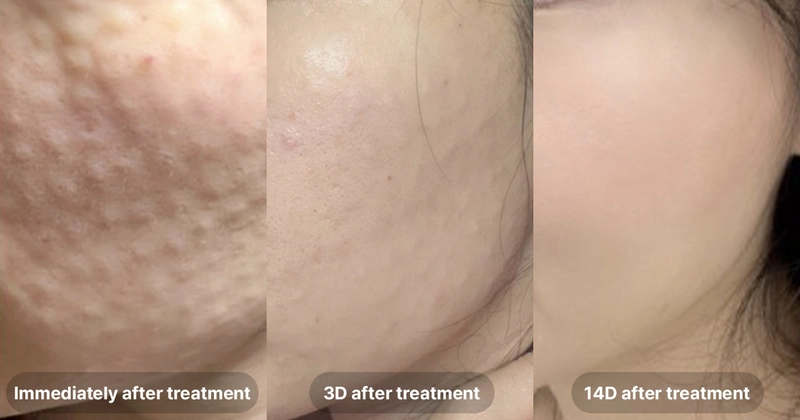
Imagine flying to Seoul for beautiful skin and voluntarily leaving a clinic looking temporarily like bubble wrap. Tiny raised bumps cover the cheeks. Redness sits around dozens of injection points. A little swelling may join the party. Then you return a few weeks later and do it again.
Somehow, this has become aspirational.
At the center is Rejuran, South Korea’s best-known polynucleotide skin booster. It launched in 2014, passed 10 million cc in cumulative sales by June 2024, and PharmaResearch says more than 500,000 people annually had been using it by that milestone. In a country famous for turning beauty treatments into highly technical rituals, one of its most globally coveted procedures now promises something remarkably subtle: better-looking skin without an obvious new face.
The internet loves calling treatments in this family “salmon sperm injections,” mainly because that phrase practically writes its own headline.
Rejuran is based on PN, or polynucleotides, highly purified DNA-derived material processed from salmon germ cells through PharmaResearch’s proprietary technology. PN sits in the same regenerative-aesthetics conversation as PDRN, although the two terms describe different DNA fragment profiles. Rejuran’s longer PN chains also give it physical properties suited to use as an injectable skin booster.
Rejuran entered the market in 2014, meaning the treatment is already more than a decade old. By mid-2024, PharmaResearch said cumulative sales had crossed 10 million cc, exports had been growing at more than 51% annually since 2019, and the product was being sold across more than 30 countries.
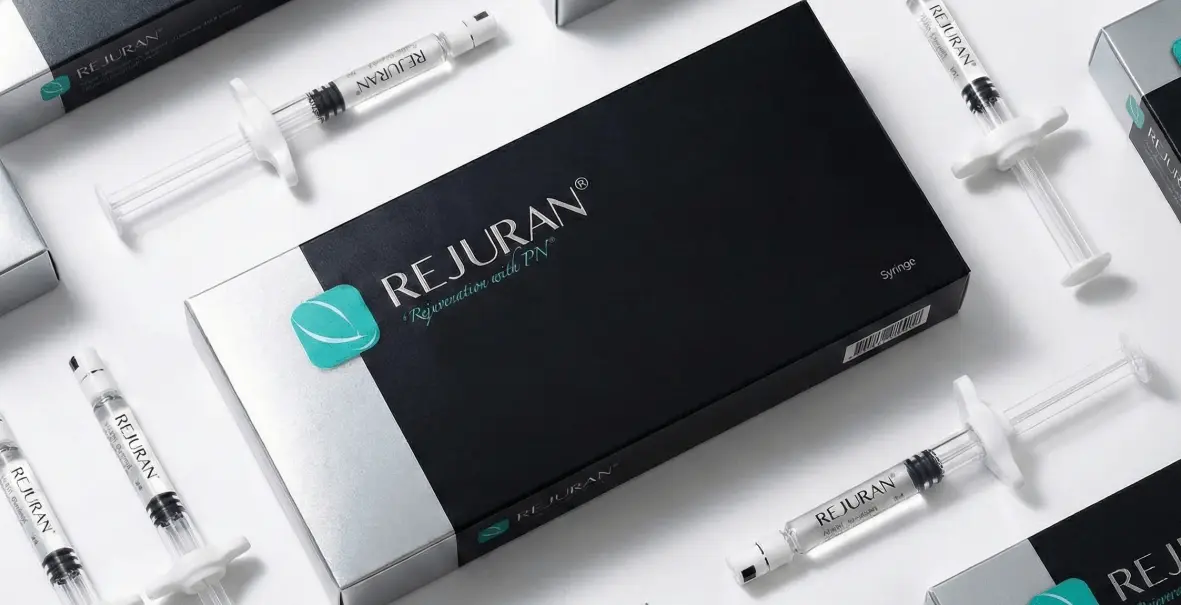
In March 2026, singer and actress Kim Sejeong became global ambassador for Rejuran and Rejuran Cosmetics, followed by a major campaign aimed partly at consumers in their twenties and thirties. PharmaResearch now says the brand has expanded into more than 50 countries.
A beauty treatment becomes far more interesting when the doctors themselves supply the trend data.
Researchers surveyed 235 Korean board-certified dermatologists familiar with skin boosters and found that 88% used PN injections in their practices. Their most common reasons included fine lines on the cheeks, under-eye and periorbital lines, uneven texture, dryness and forehead lines.
The most frequently recommended course in that survey involved three sessions spaced four weeks apart, with a 33-gauge needle and serial puncture into the dermis among the common techniques.
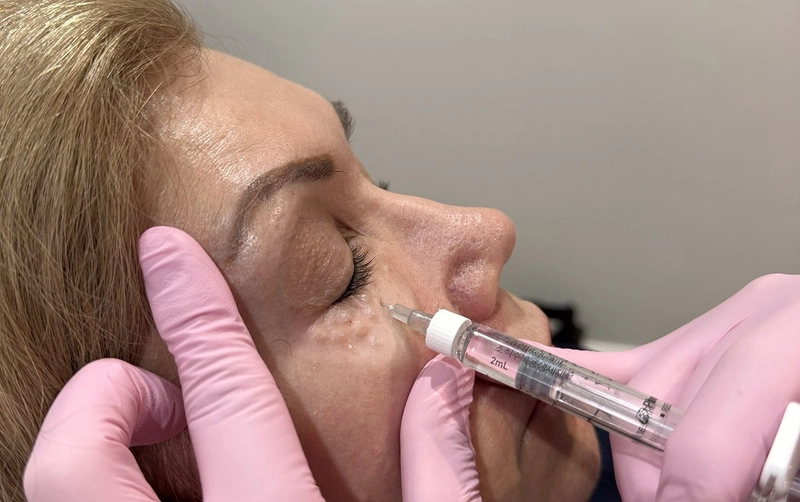
Then comes one of the most revealing K-beauty habits: 79% of dermatologists using PN combined it with lasers, light treatments or energy-based devices, particularly radiofrequency and HIFU.
So the Seoul clinic fantasy rarely stops at finding one heroic syringe. A doctor may think about texture, laxity, pigmentation, pores and facial volume as separate questions, then construct a treatment plan accordingly. PN can occupy one place in that stack while RF, HIFU or lasers handle another.
A nationwide 2026 survey of 501 Korean dermatologists found 73% used PN in scar management, particularly for scar prevention and atrophic scars. Cost and injection discomfort were among the biggest barriers doctors reported.
Apparently even Korea’s skin-booster obsession has an enemy: the needle still hurts.
There is very little mystery once the syringe appears.
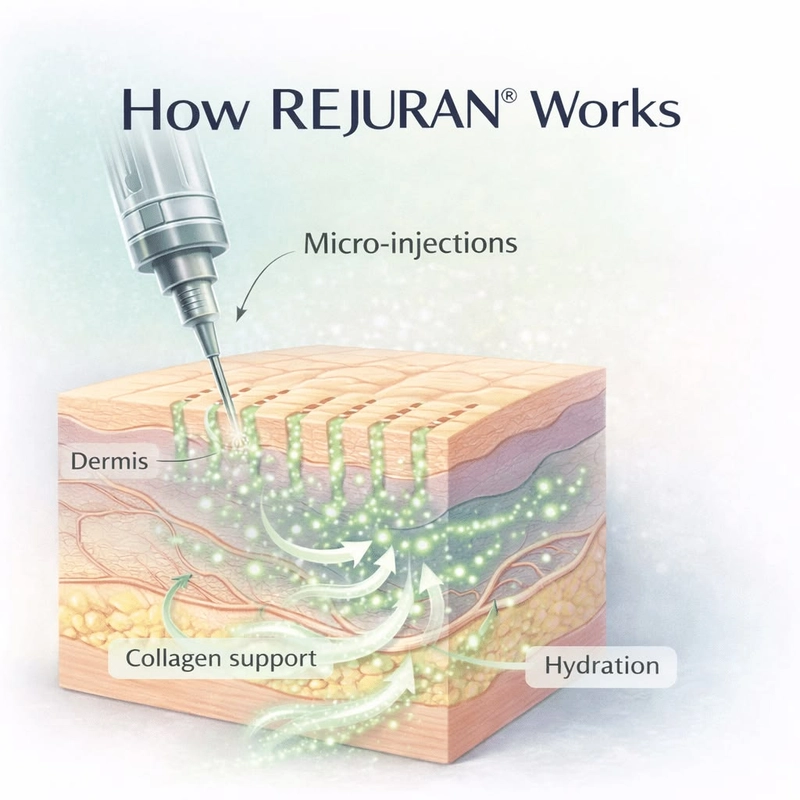
In a 2026 randomized clinical trial using Rejuran Healer, participants received topical anesthetic for 30 minutes before treatment. One side of the face received intradermal PN through a 33-gauge needle in tiny deposits spaced approximately one centimetre apart; the other received product deeper through a cannula. Each session used 2 mL total, followed by two more sessions at four-week intervals.
That orderly medical description sounds much calmer than the treatment can look.
Small deposits placed through the skin may create temporary bumps at the injection sites, alongside redness, tenderness, swelling or bruising. The exact number of punctures varies enormously according to technique, area and practitioner. One beauty editor undergoing a particularly extensive full-face treatment in Seoul famously described receiving hundreds.
In the 2026 split-face trial, needle delivery produced higher pain scores and more minor adverse effects than cannula delivery. Cannula treatment was more tolerable, while the needle method showed a tendency toward earlier visible improvement.
The person travels to a clinic hoping to look untouched, then temporarily leaves looking extremely treated.
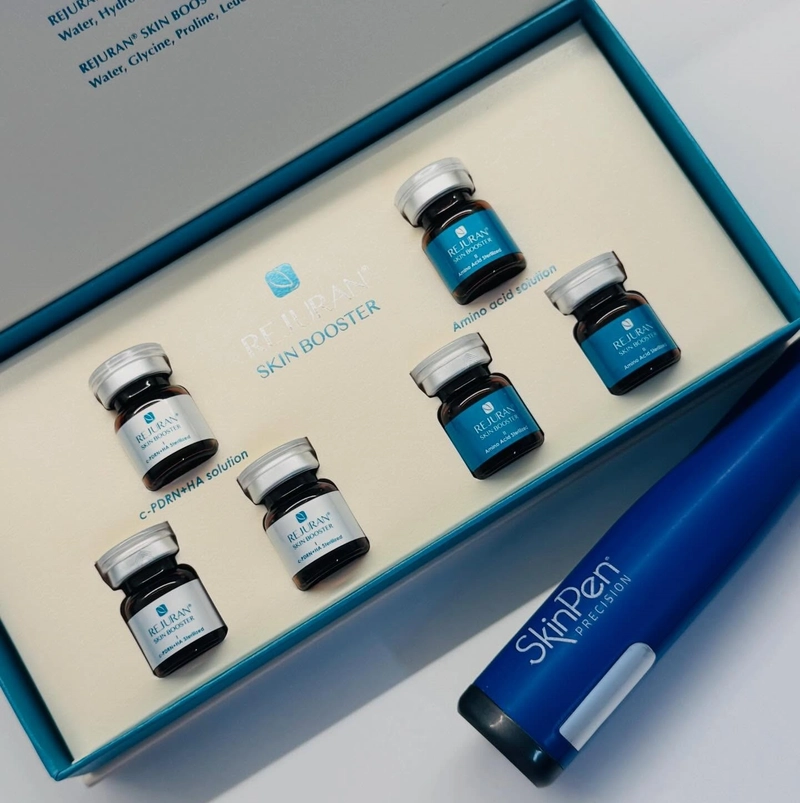
A 2026 systematic review found only seven randomized trials involving 183 participants across PN and PDRN applications in skin rejuvenation, scar prevention and wound healing. The review found encouraging improvements across several outcomes, while the small number of participants and varying protocols leave plenty for larger trials to establish.
That uncertainty makes the cultural desire even more fascinating. People are chasing a procedure whose ideal outcome can be almost impossible to identify as a procedure.
The compliment is simply: your skin looks incredible.
By the second quarter of 2026, domestic medical-device sales had climbed again to ₩64.5 billion, as robust Rejuran procedures coincided with rising dermatology spending by overseas visitors.
That creates a new kind of Seoul itinerary. Coffee in Seongsu. Shopping in Hannam. Sunscreen at Olive Young. Then several dozen injections before dinner becomes remotely appealing.
The attraction goes beyond price. Korean clinics operate inside an ecosystem where injectables, lasers, RF and HIFU are commonly planned together, and that technical abundance gives international beauty travellers access to treatments they may have seen online months before encountering them at home.
It also creates temptation to order procedures like dishes from a menu.
The most useful souvenir from Seoul may currently come in millilitres. It just deserves more research than a sheet mask.
PharmaResearch reported ₩178.7 billion in second-quarter 2026 revenue, up 27% year over year, its highest quarterly sales figure to date. Exports surged 62% to ₩84 billion, while medical-device exports increased 33%. The company specifically credited continued domestic Rejuran demand, foreign visitors spending in Korean dermatology clinics and expansion of the brand in Europe among the contributors.
That is a remarkably large commercial footprint for a treatment whose appeal rests partly on discretion.
Rejuran also fits neatly into a wider rethink of injectable beauty. The past era made aesthetic intervention highly legible through sculpted cheeks, enlarged lips and visibly altered proportions. Skin boosters sell another form of status. Money and effort go into texture, pores and fine lines, while the intervention itself tries to disappear from view.
Korea seems particularly fluent in that philosophy. The face can receive three sessions, a fine needle, carefully measured millilitres of PN, perhaps RF or HIFU beside it, and several days of visible evidence that a clinic appointment definitely happened.
Then the evidence fades.
Rejuran may be one of 2026’s most intriguing beauty obsessions because its ambition is almost paradoxical: more procedure, more technology and more needles in pursuit of an outcome that looks increasingly untouched.
Advertisement