MENU
Close





Jonathan Anderson has only just begun shaping his Dior, so why does one gown already feel like the memory of another? Is a signature emerging, or has the pattern begun repeating too soon?
Jonathan Anderson has only just begun shaping his Dior, so why does one gown already feel like the memory of another? Is a signature emerging, or has the pattern begun repeating too soon?
July 14, 2026
Advertisement
Advertisement


Jonathan Anderson’s Spring 2026 Couture debut introduced its ideas with enough clarity to make them appear instantly his own. Flowers spread across embroidered surfaces, fabric curved and gathered around the body, and oversized blooms interrupted silhouettes like specimens taken from an imaginary garden. Even the collection’s more familiar Dior gestures appeared displaced, loosened or made slightly strange.
Nature was central to the entire proposition. Cyclamen given to Jonathan Anderson by John Galliano became a symbol of creative continuity, while Magdalene Odundo’s ceramics informed the collection’s sculptural volumes. Sinuous lines, displaced draping and botanical handwork gave Anderson’s Dior a new visual grammar, one that made the house’s familiar codes appear more organic and slightly unstable.
That grammar returns almost intact in the green gown from Fall 2026 Couture.
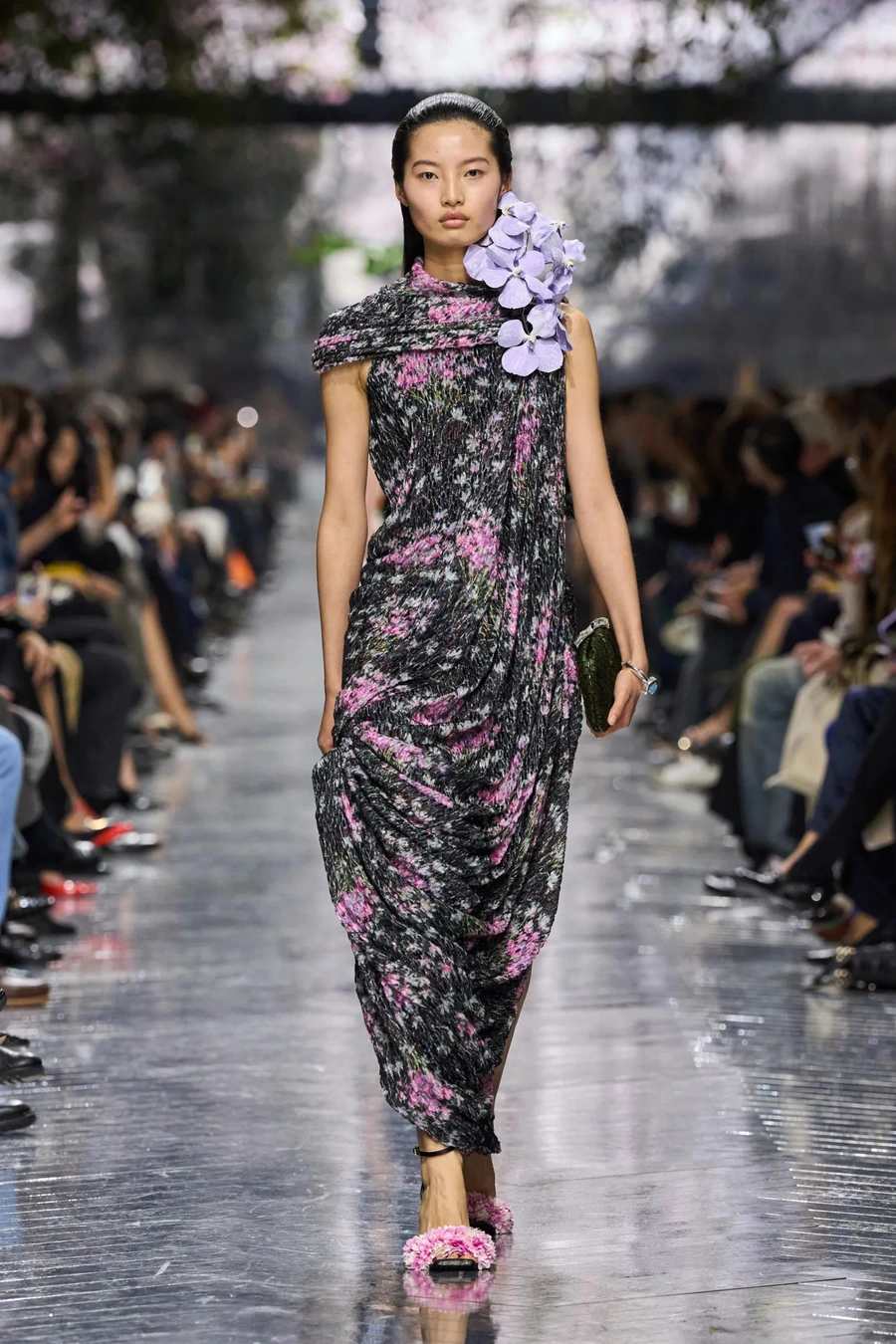
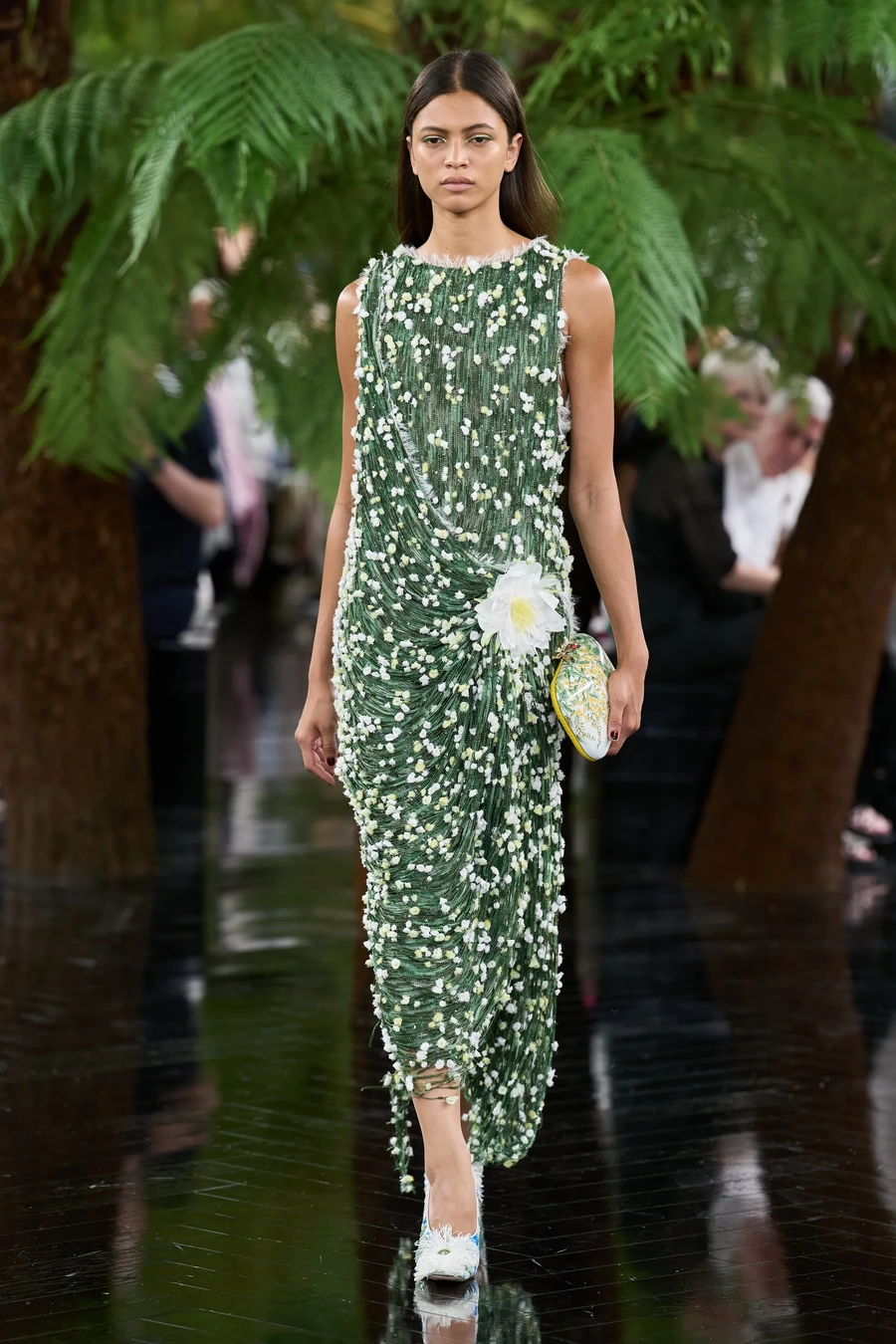
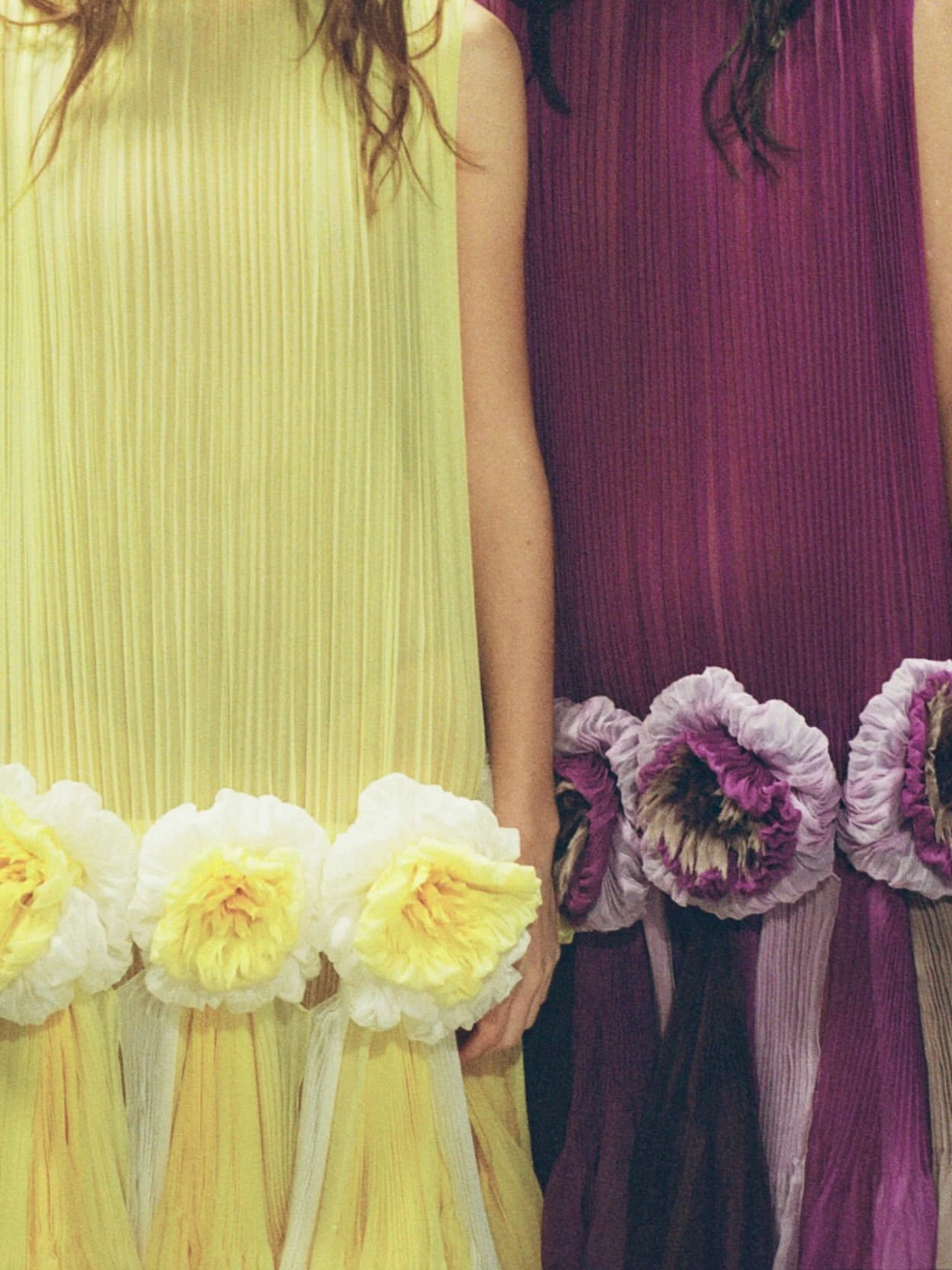
Placed beside its Spring predecessor, the resemblance extends far beyond their shared floral theme. Both dresses begin with a narrow, sleeveless column. Their richly worked surfaces cover the body in organic fragments, while draping travels diagonally towards the hip and interrupts the vertical line. A large flower then anchors the gathering, giving the fabric a visible point from which it appears to grow, collapse or unfurl.
The later gown shifts the palette towards garden green, scatters small white buds across its surface and lowers the dominant flower towards the waist. Those adjustments change its atmosphere, yet the underlying design decision remains remarkably close. Jonathan Anderson has returned to the same method of building the image.
Spring had the electricity of first contact; Fall presents a recognisable variation only one season later. What initially appeared as the beginning of a new Dior language suddenly looked complete enough to be repeated.
Fall 2026 Couture's conceptual world moves away from Galliano’s cyclamen and Odundo’s ceramics towards the work of American sculptor Lynda Benglis. Jonathan Anderson focused on Benglis’s transformation of flat materials through folding, knotting and moulding, translating those physical gestures into hand-plissé, draping and sculptural construction. Her connection to Ahmedabad also led him towards Indian chintz, floral embellishment and the contrasting landscapes of Gujarat and Santa Fe.
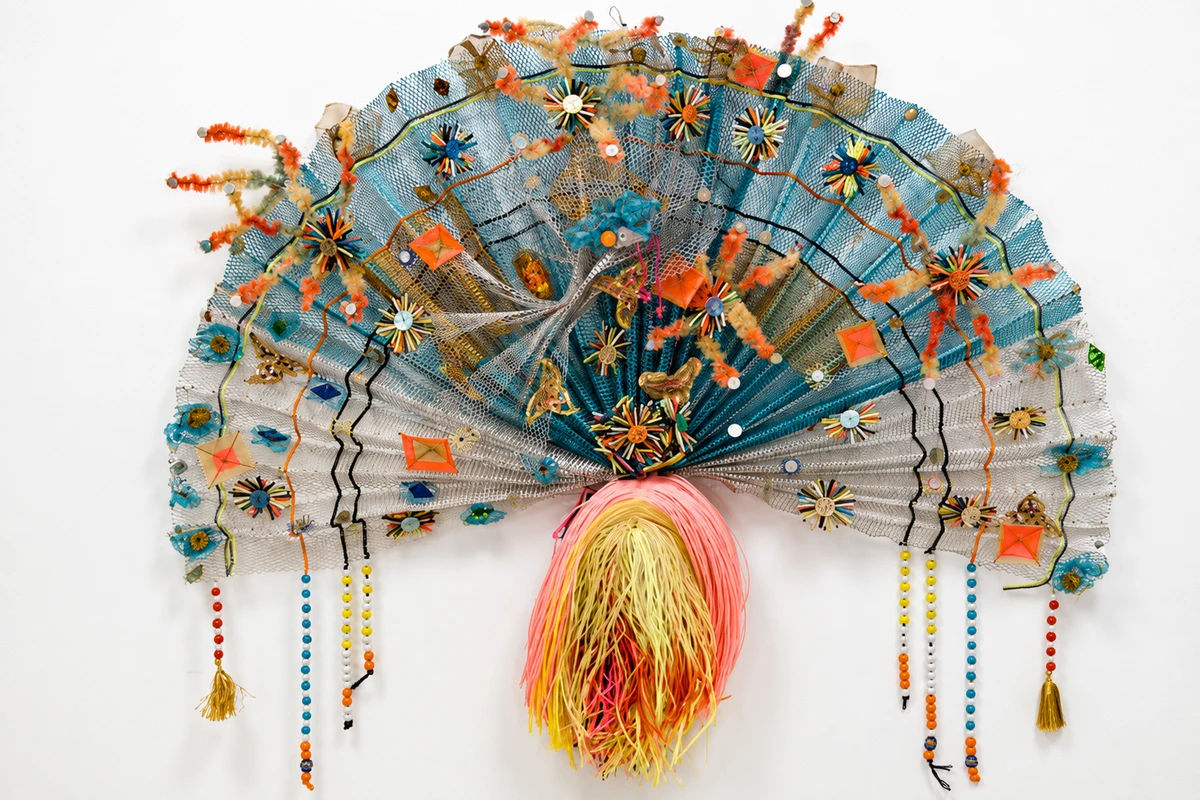
On paper, the distance between the two collections is considerable. One emerges from a personal exchange with a former Dior designer and a cabinet of natural curiosities. The other begins with abstract sculpture, Indian craft and opposing climates.
On the body, that distance becomes much smaller.
The new references repeatedly pass through forms already established in Spring: botanical surfaces, concentrated gathering, asymmetry and fabric pulled into soft organic volume. Benglis may have supplied a different theory of material transformation, but the clothes often arrive at a familiar Anderson image. The research changes more dramatically than the silhouette it produces.
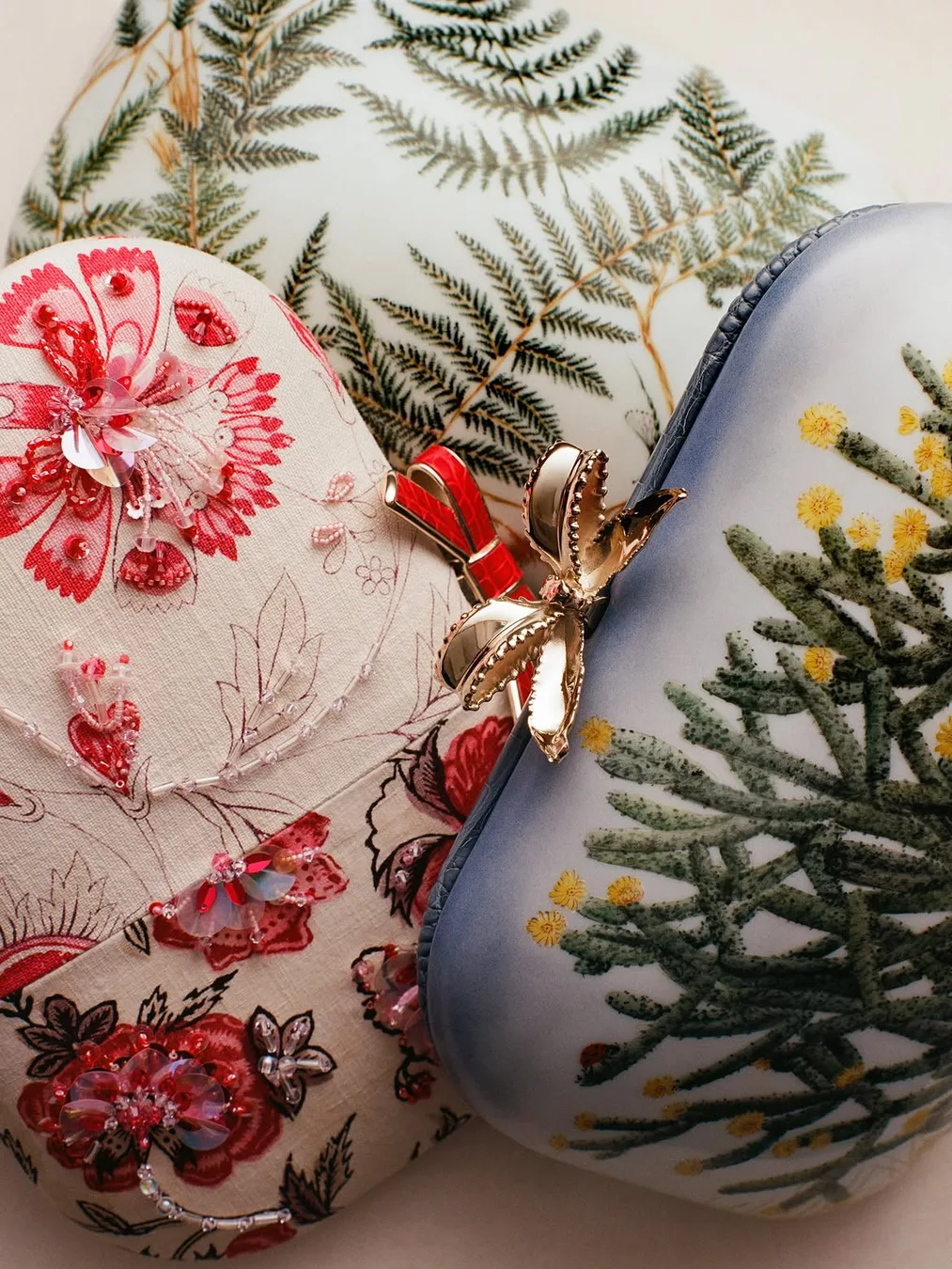
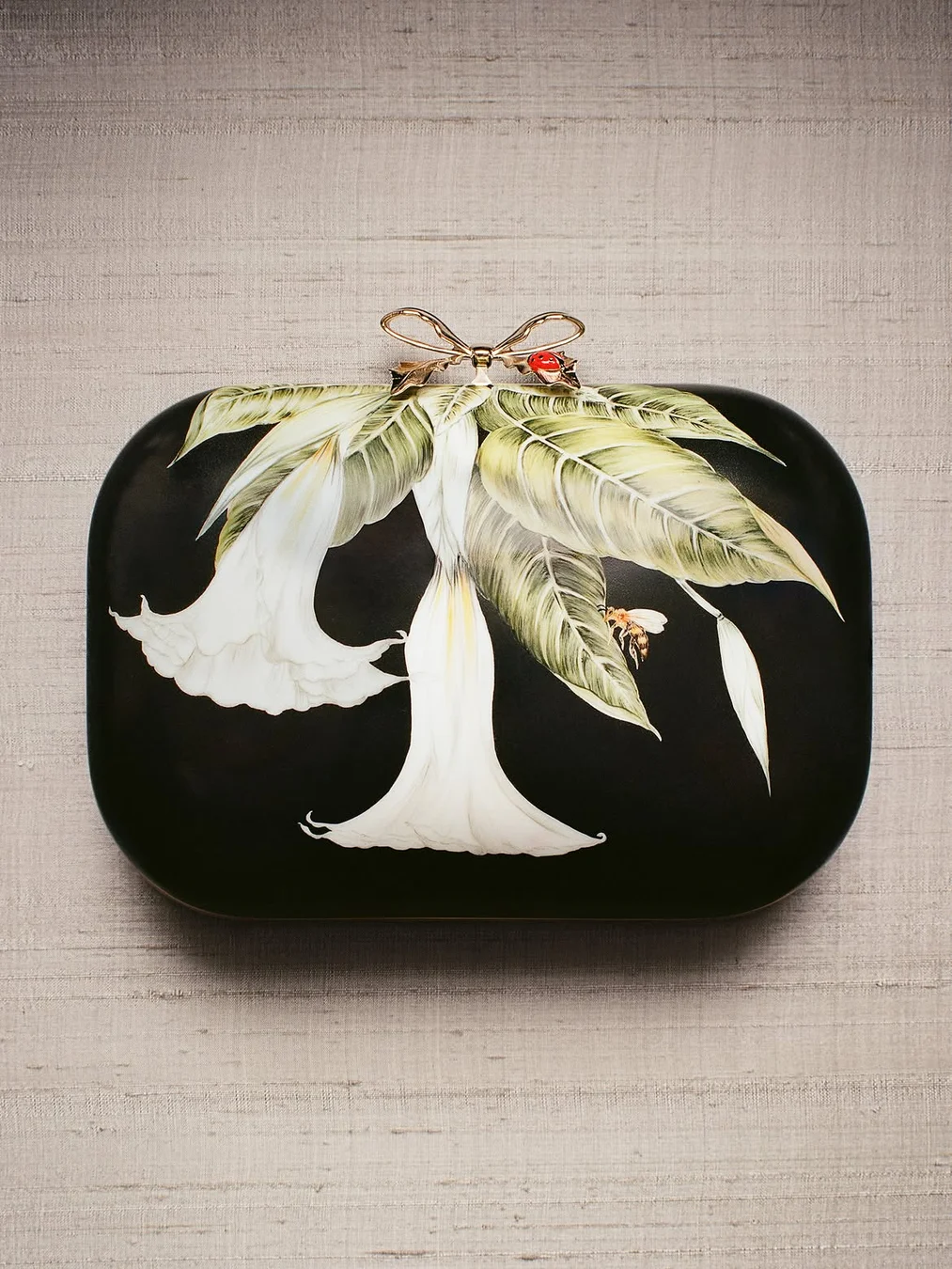
This also explains why Fall 2026 Couture carries less impact than its predecessor. The collection contains sophisticated handwork and a persuasive connection between sculpture and couture technique. Its weakness lies in the limited visual distance it creates from Spring. Once the eye recognises the same gown structure, the new conceptual framework begins to resemble an elaborate justification for an existing preference.
Anderson’s flowers are no longer simply a reference to Monsieur Dior’s famous love of gardens. They have become his quickest route into romance, surface and couture spectacle. Draping has assumed a similar role, repeatedly converting different inspirations into the same softened, off-centre body.
Repetition is how a designer turns preference into authorship. The question is not whether Jonathan Anderson returns to flowers, draping or knots at Dior, but whether each return pushes those devices somewhere new.
Across Spring and Fall 2026 Couture, familiar gestures recur with limited structural change. Fabric is repeatedly pulled off-centre, compressed at the waist or hip, then released into soft volume. Oversized flowers, dense embroidery and changing materials alter the atmosphere, yet the body is often organised through the same points of tension. The resemblance is not always as literal as the two floral gowns, but the underlying reflex remains visible.
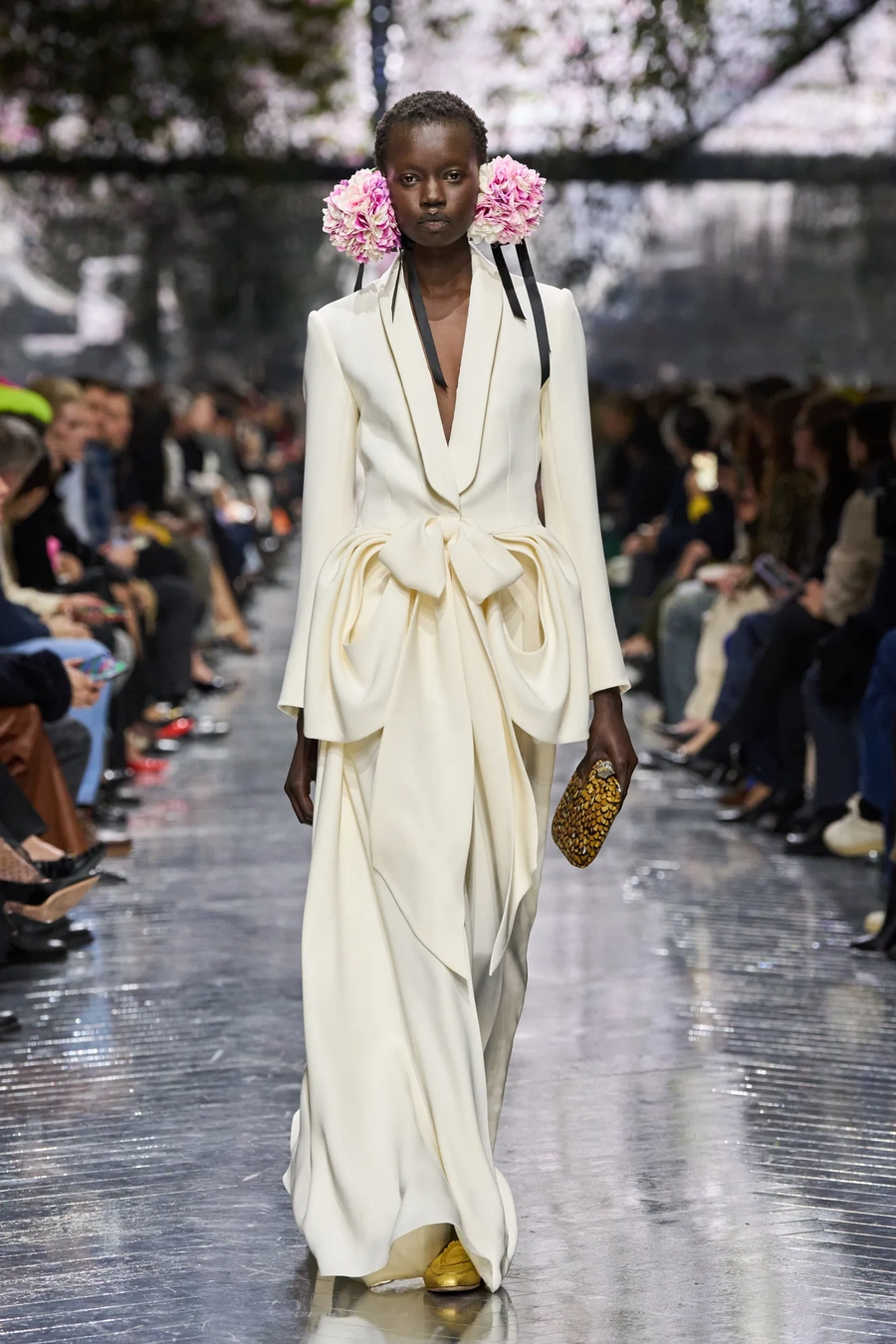
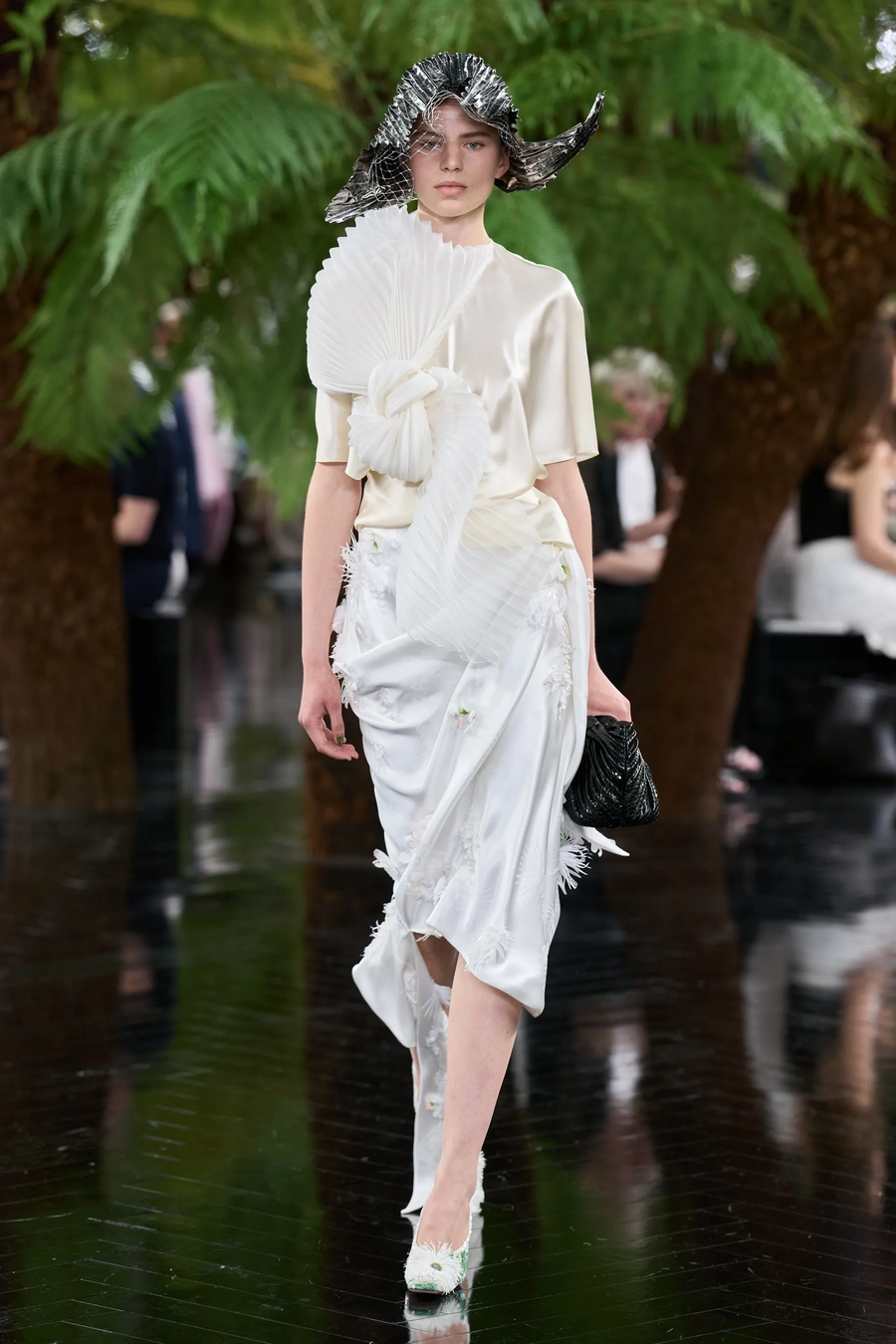
That is where a signature begins to approach a formula. A signature gains range through repetition, revealing a different possibility each time it returns. A formula preserves the recognisable effect while changing its colour, surface or reference. Anderson’s Dior currently sits between the two: coherent enough to identify immediately, but not yet expansive enough to make every recurrence feel necessary.
Such clarity is still an achievement. Jonathan Anderson has made Dior look unmistakably his with remarkable speed, despite entering a house crowded with established codes and former creative identities. Yet that speed has also shortened the distance between recognition and predictability.
The challenge is no longer establishing the language. It is to disturb it before the flower, the knot and the displaced drape become answers that arrive before the collection has finished asking its question.
Spring 2026 Couture announced a new Dior through Jonathan Anderson’s eyes. Yet Fall shows how quickly that vision can turn into an echo.
Advertisement