MENU
Close





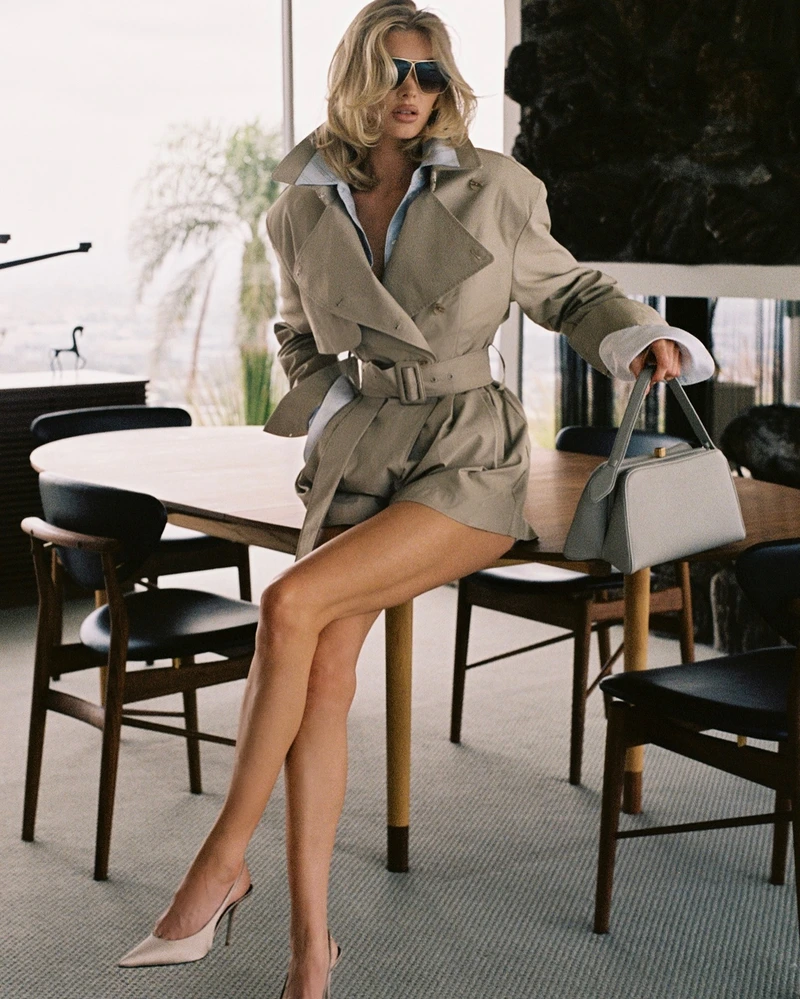
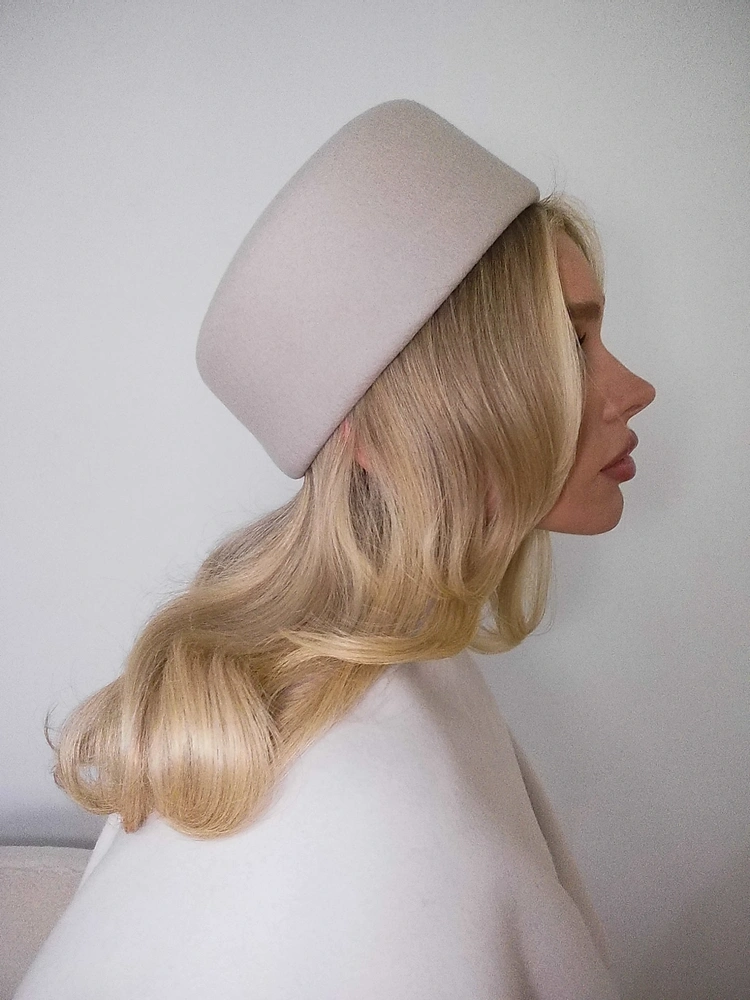
With Elsa Hosk, the face carries the same discipline as the clothes. Her blonde has moved through longer waves, soft shoulder-length cuts and a sculpted bob, yet the finish usually stays clean enough to sharpen the jaw and cheekbones. Even when the hair flips outward or bends around the face, the shape feels intentional. Hosk has spoken about personal style as a form of communication and armor, which makes this controlled beauty language feel especially appropriate.
Makeup follows a similarly economical logic. Fresh skin, groomed brows, softly defined lips and occasional smoky eyes keep the face graphic without burying it beneath technique. Her own description of late-1990s beauty is revealing: bare skin or smoky shadow applied with the slightly imperfect appearance of having done it yourself. That idea sits very naturally on Hosk. The polish is present, yet a strand of hair can escape, shadow can stay a little dirty around the eye, and the whole thing retains enough looseness to avoid looking frozen.
Her beauty works almost like Scandinavian furniture design. The lines are clear, the palette restrained, and one small irregularity keeps everything human.
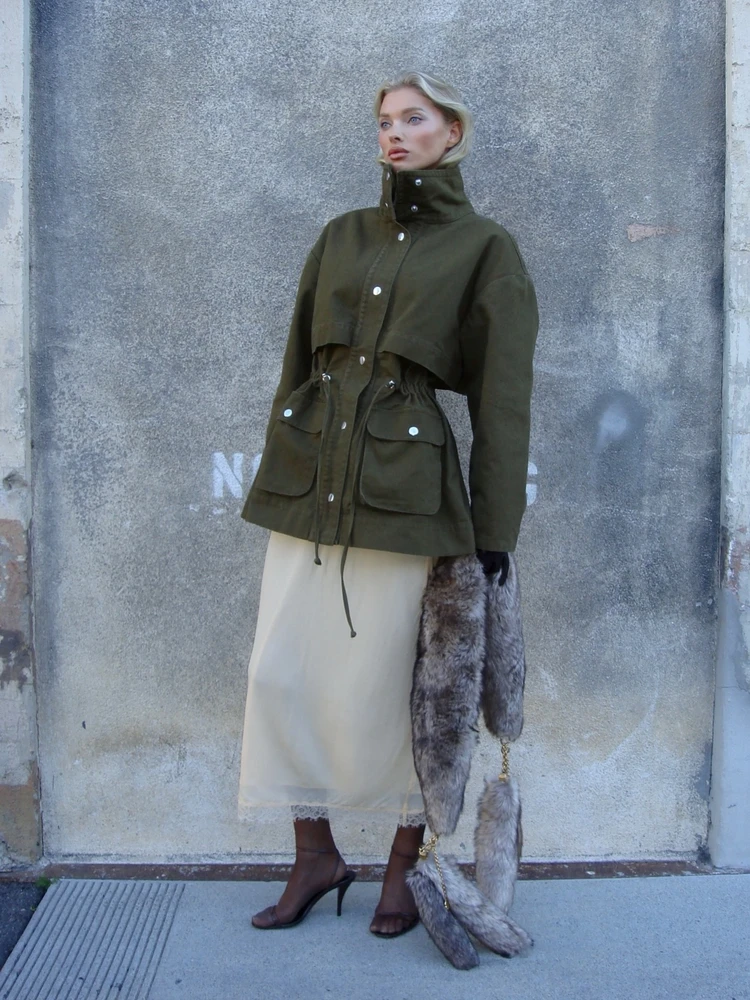
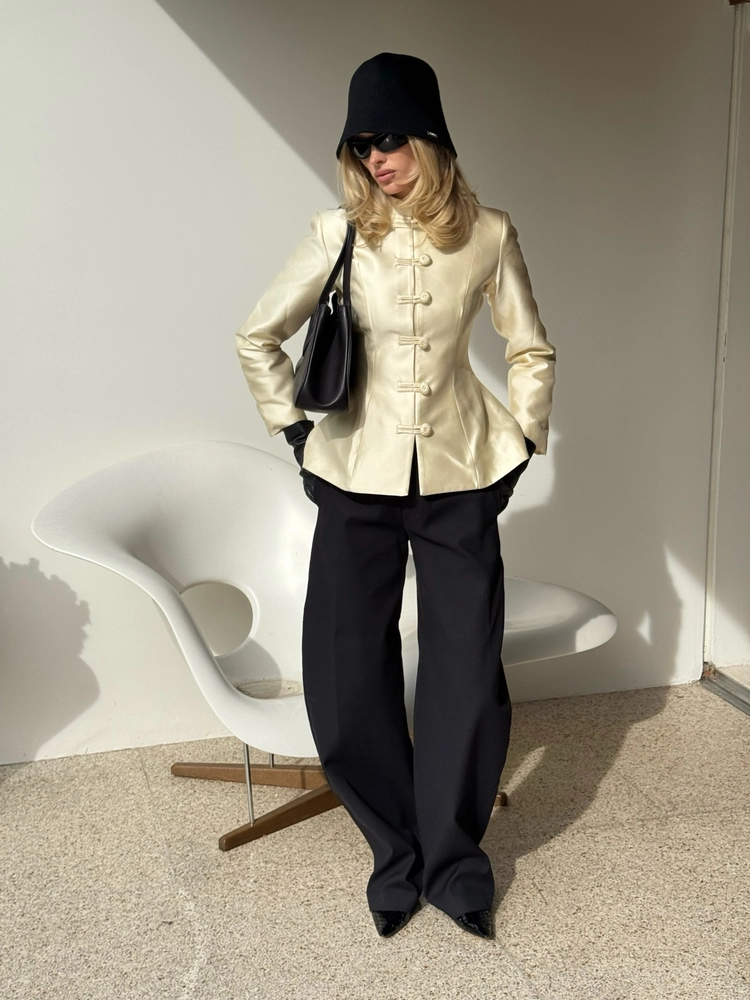
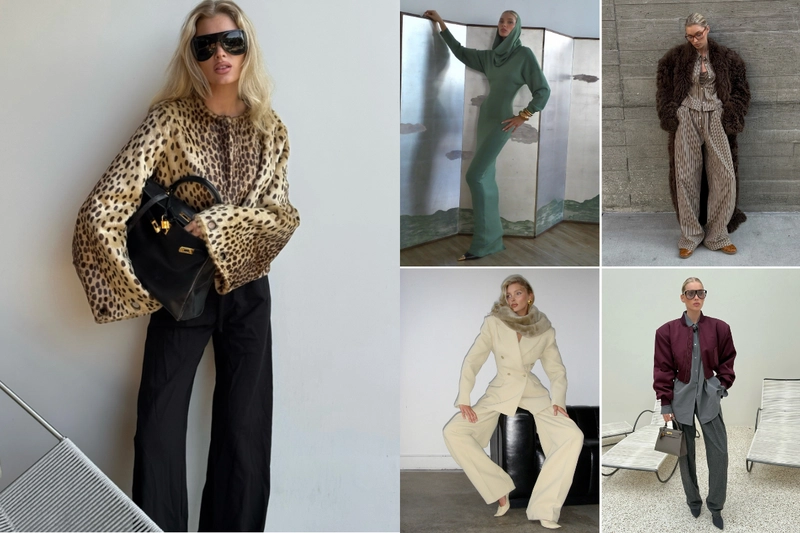
Her blazers often carry masculine shoulders and enough volume to create a frame around the body. Trousers can fall wide and long. Denim stays relaxed. A knit may become short enough to expose the leg almost completely, while an enormous coat takes over the upper half of the silhouette. Even a total-denim look gains definition through a tightly controlled waist and elongated leg. The individual garments are recognizable; their scale creates the personality.
That proportion game reflects her Scandinavian background without reducing it to beige minimalism. Hosk has described Swedish style as heavily grounded in black, grey and white, and her own wardrobe repeatedly starts from those useful neutrals. Yet she enjoys altering the expected silhouette, which gives basic pieces far more visual tension.
Her 2026 street style captures the formula beautifully. One look pairs close black capris with an enormous white technical jacket and tiny heeled sandals. Another uses dark indigo denim from shoulder to ankle, pulled inward at the waist before opening into a long straight leg. A grey pinstripe suit can acquire enormous shoulders and an elongated tie, turning corporate dressing almost cartoonishly sharp.
These outfits explain why Hosk photographs so well in ordinary streets. She understands the camera-facing geometry of clothes after two decades of modeling. A shoulder needs enough width to register. A trouser needs enough length to create movement. A belt can divide a silhouette at precisely the point where the eye needs interruption.
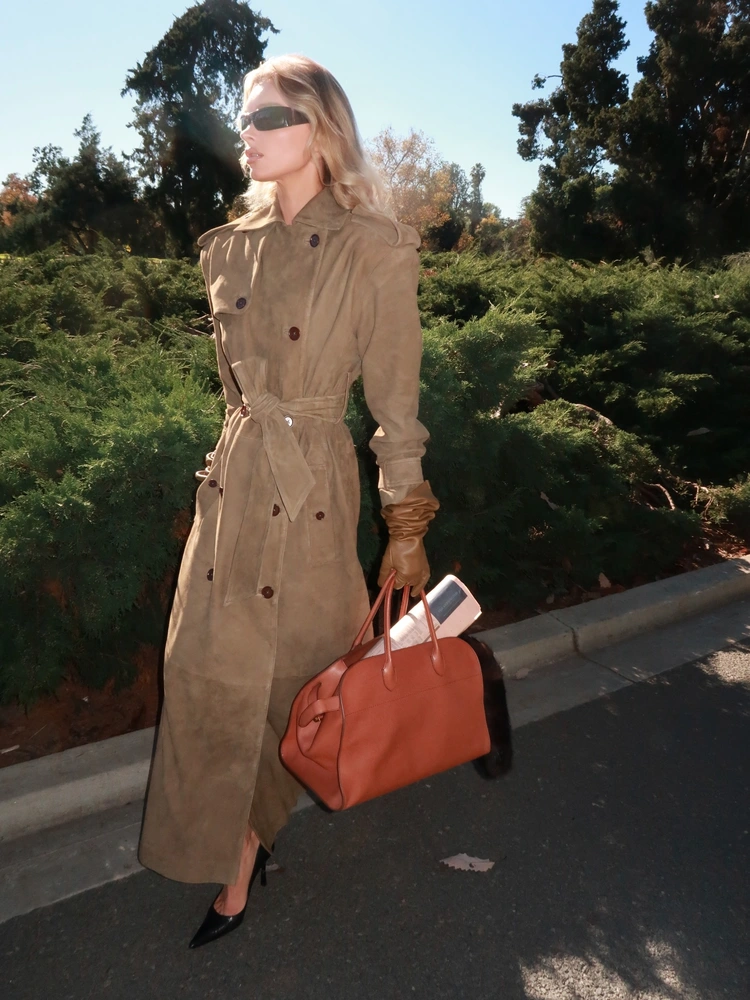

Hosk has a serious relationship with vintage. Among the pieces she has named as wardrobe staples are vintage Levi’s, Saint Laurent denim, vintage Hermès crocodile loafers and a “beat-up” Hermès Kelly. For evening, she has cited a simple black Tom Ford-era Gucci dress with Elsa Peretti bangles.
That phrase, beat-up Hermès Kelly, says a lot.
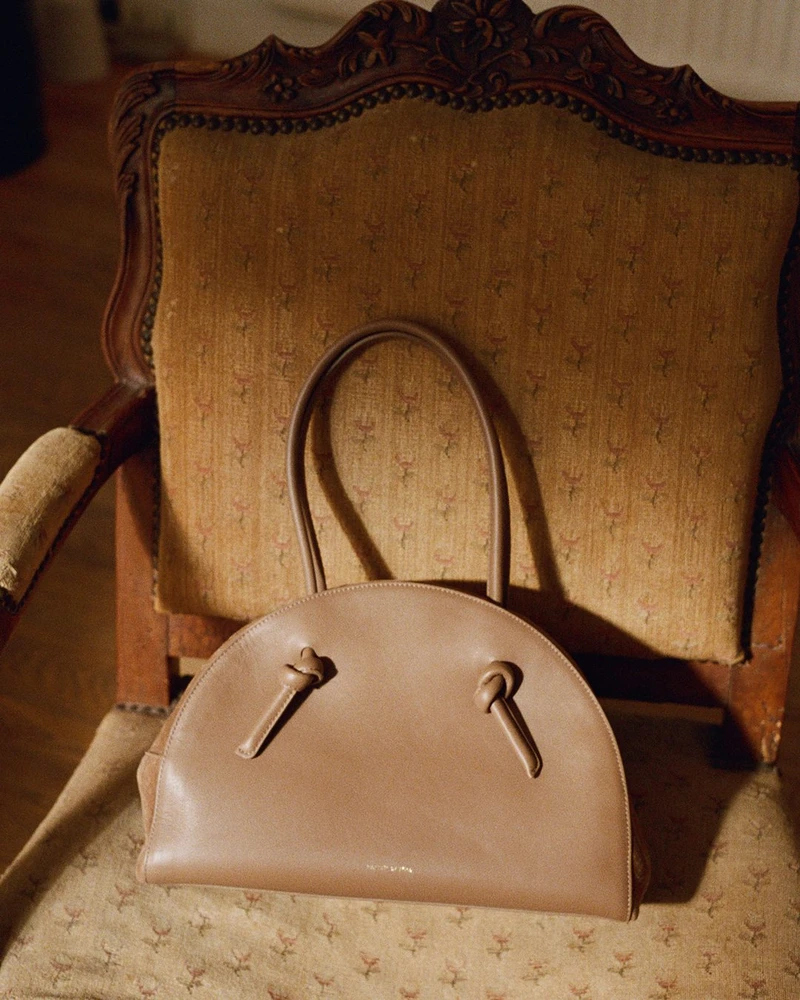
Luxury in Hosk’s world gains character through use. A precious bag can soften at the corners. Vintage denim carries its own fading. An old Dior jacket can be worn with washed jeans and red Alaïa shoes. The combination removes museum stiffness from archival fashion and returns expensive objects to everyday circulation. In December 2025, she paired a vintage Dior fur-collar blazer with light-wash Levi’s and vintage Alaïa heels, turning three very different fashion histories into something that looked almost casually assembled.
Color often enters through one deliberate disturbance. Hosk has said she likes classic pieces in slightly strange “off” colors, and the principle appears repeatedly in her styling: red heels under faded denim, a bright cap, an emerald leather jacket, a cherry handbag or an unexpectedly warm brown against grey tailoring.
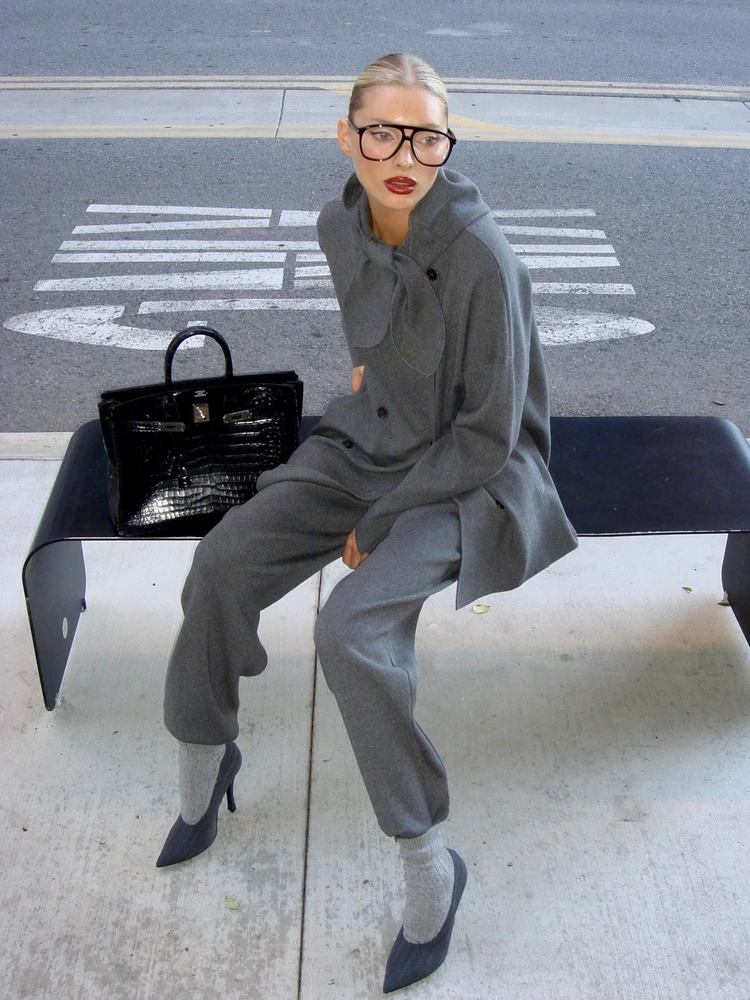
Her accessories also tend to carry personality without becoming precious little finishing touches. Giant glasses can dominate the face. A belt can sit heavily over a knit. A scarf can be tied over blonde hair with almost old-Hollywood neatness. Bags frequently appear oversized, structured or visibly vintage.

The most revealing Elsa Hosk style story may come from long before the street-style photographs. As a schoolgirl in Sweden, she remembers classmates making one garment in sewing class while she tried to produce an entire collection. She also altered vintage clothes with her mother, and once wore a pair of trousers she had made while shopping in Stockholm. A stylist stopped her to ask where they came from. Hosk became too shy to admit she had designed them herself and invented another answer.
Perhaps that is why her influence travels so efficiently through social media. An Elsa Hosk outfit rarely requires an impossible runway piece to become recognizable. Someone can understand the code through a wide trouser, a huge blazer, an old bag and one slightly strange shoe. Then Hosk changes the proportions again before the imitation fully catches up.