MENU
Close





What if toy-like fashion sees the human body as one more object in the playroom? It stretches, molds and inflates our silhouettes while giving desire the shiny, slightly uncanny surface of a favorite childhood toy.
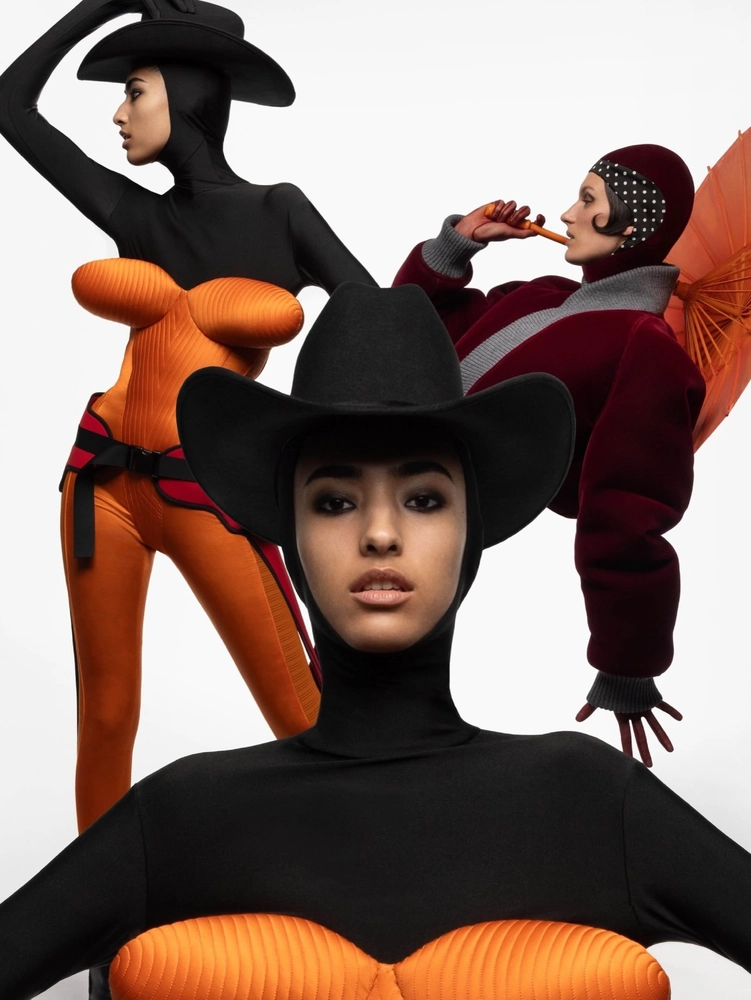
What if toy-like fashion sees the human body as one more object in the playroom? It stretches, molds and inflates our silhouettes while giving desire the shiny, slightly uncanny surface of a favorite childhood toy.
August 22, 2026
Advertisement
Advertisement


Open the toy box carefully. Toy-like fashion has developed a pulse, and fashion seems delighted to let it run loose.
Something peculiar happens when luxury clothes begin reminding us of objects we once chewed, squeezed, dressed onto dolls or scattered across a bedroom floor. Recognition arrives almost physically.
At Loewe Fall 2026, Jack McCollough and Lazaro Hernandez made the runway feel as though someone had turned a child's playroom dial several sizes upward. Cosima von Bonin's giant textile animals occupied the show space: floppy dogs, dolphins, clams, whales and an octopus became oversized spectators. Around them came slip dresses created through 3D-printing processes and cast in latex, with bows, lace edges and pointelle-like details pressed into their surfaces. Latex hooded coats moved with the buoyant behavior of water balloons.
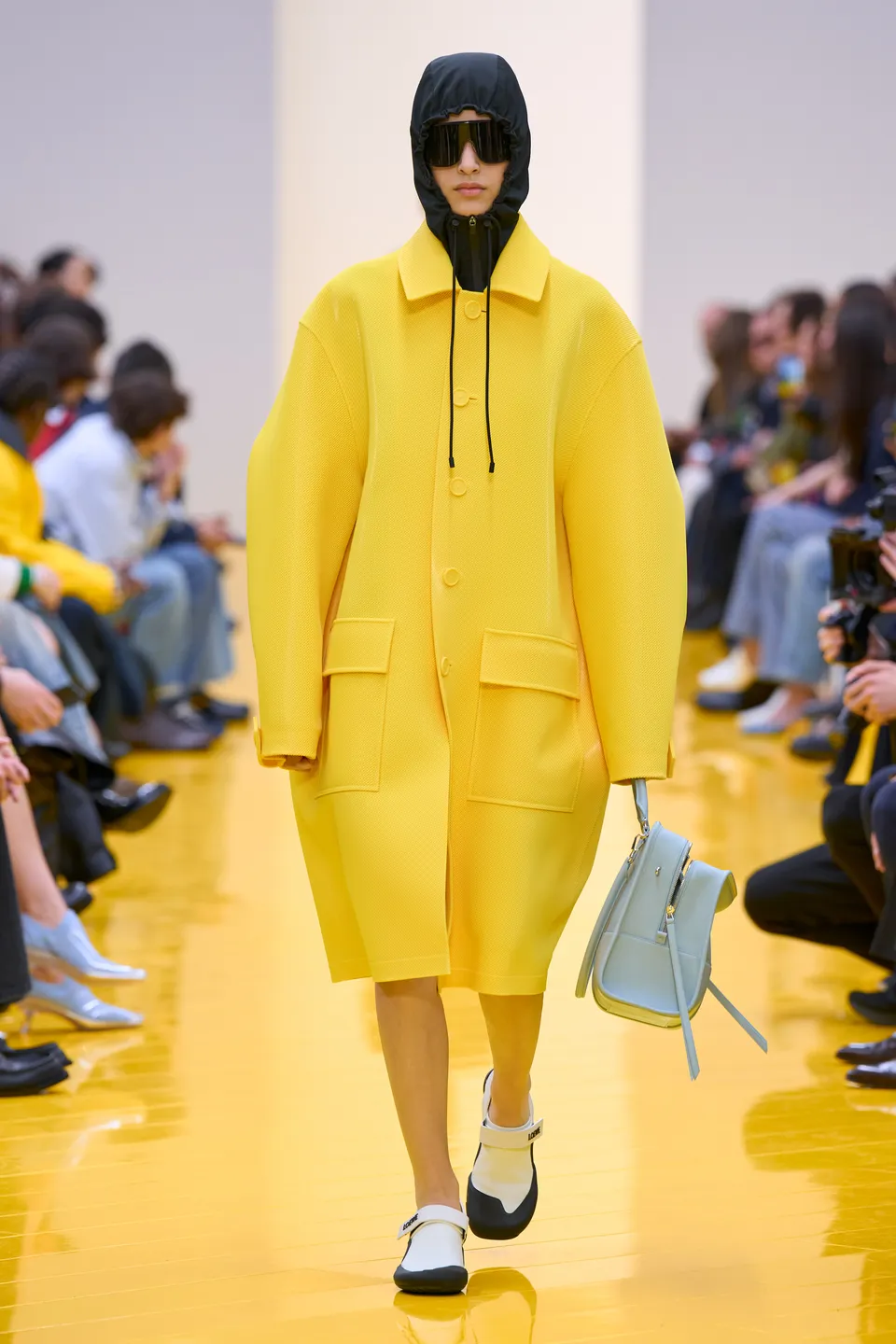
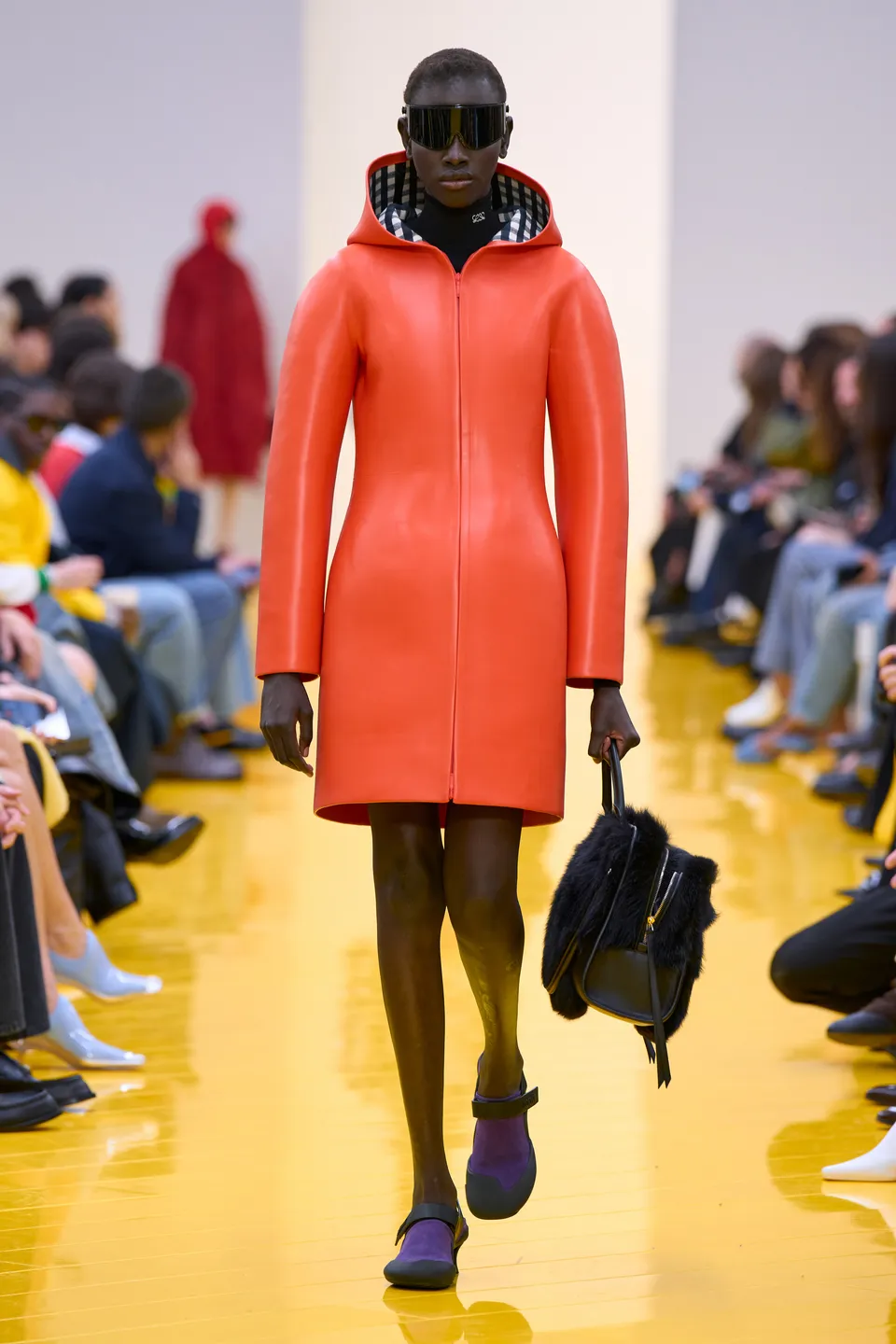
Lingerie usually suggests softness and intimacy; here, its delicate vocabulary becomes frozen into a smooth synthetic shell. The dress starts feeling like something designed for a tiny doll and magically enlarged overnight.
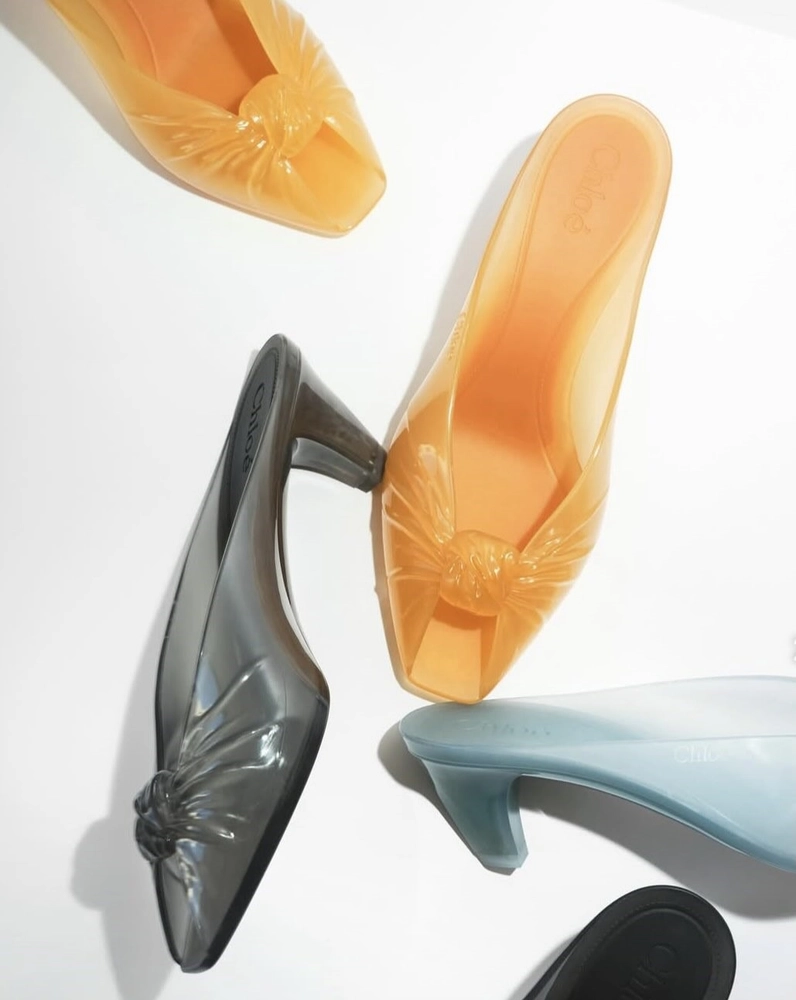
Then Chloé Spring 2026 sends that fantasy straight to the feet. Chemena Kamali's ruched TPU jelly heels arrived in powder blue, raspberry, butter yellow, gray and leopard, reviving the tactile memory of jelly sandals through an adult heel. Their transparent, gummy appearance led directly to Barbie and Polly Pocket associations, yet the joke carried genuine commercial force. By August 2026, Chloé's jelly footwear had reached fifth place among the season's most-searched products in Lyst's latest ranking.
Moschino Fall 2026 pushes the game toward objects themselves. Adrian Appiolaza transformed recognizable everyday things into accessories, including a piggy-bank purse, cactus clutch and a bag overflowing with fake churros. The humor belongs to Moschino's long history of collapsing the border between fashion and visual joke, yet these pieces also reveal something central to the current toy mood: adulthood suddenly becomes available for play.
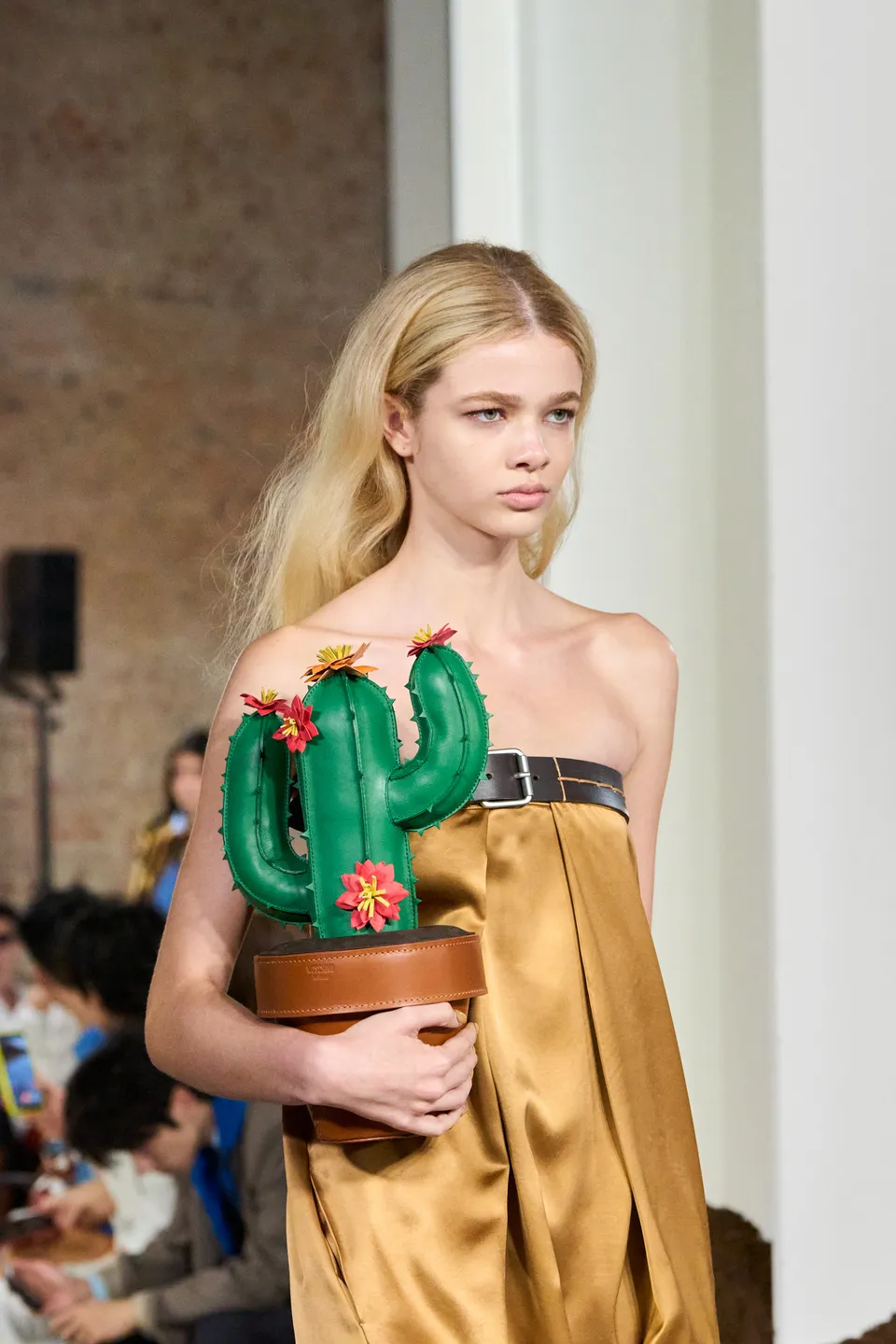
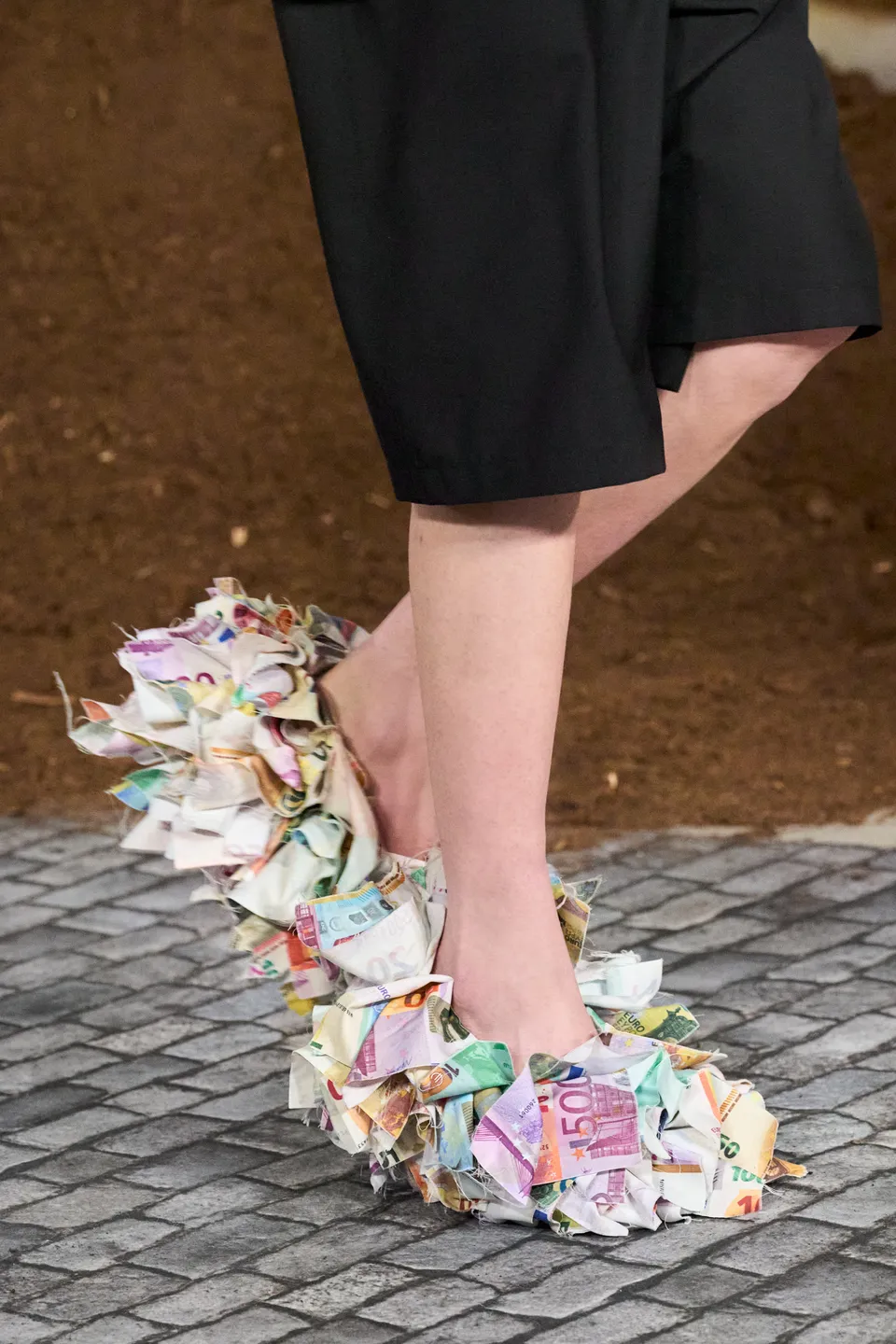
Toy-like fashion keeps asking a child's favorite design question: What else could this become?
The strangest toys rarely obey realistic anatomy. Dolls possess impossible waists. Action figures have heroic shoulders. Cartoon characters can swell, flatten, stretch and return to shape by the next frame.
At Jean Paul Gaultier Fall 2026 Couture, Duran Lantink treated the body like editable material. He 3D-scanned model Leon Dame's torso and constructed a new internally corseted body carapace that appeared glitched sideways. Another distorted torso used thermoplastic polyurethane, or TPU, coated in latex, creating a glossy artificial skin around a body already pushed into unfamiliar geometry.
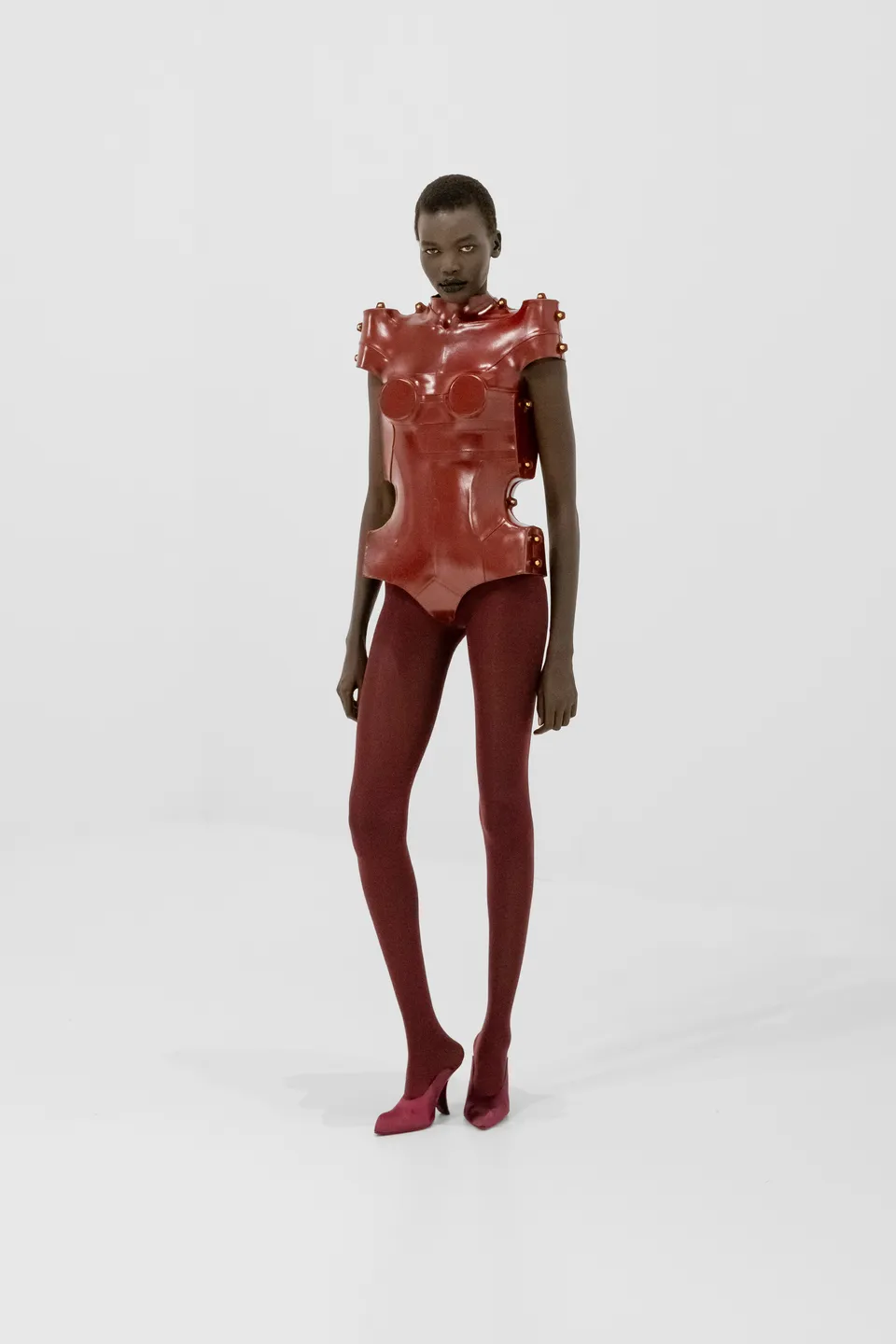
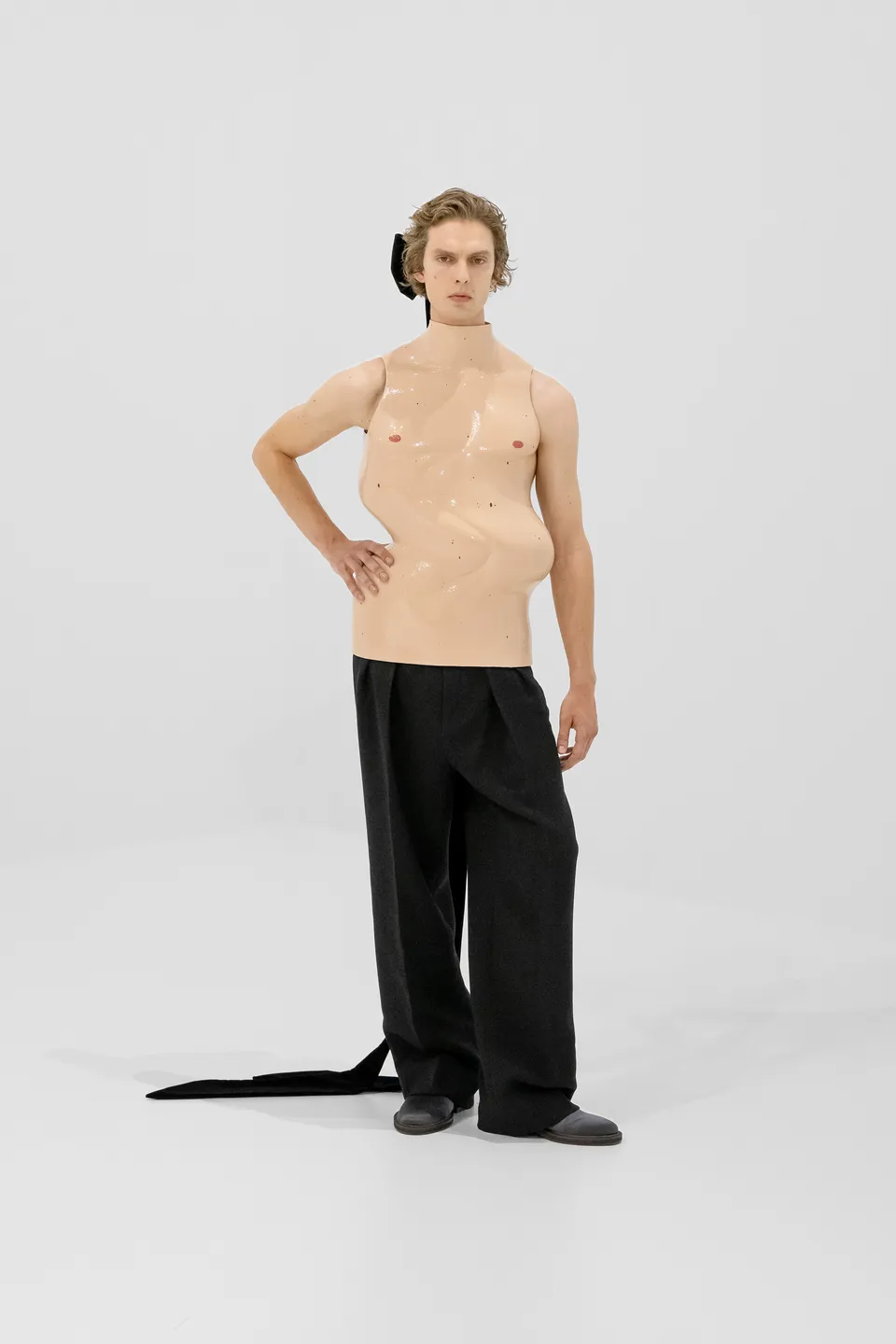
This is toy-like fashion at its uncanniest because the living person begins to resemble the manufactured object.
Lantink's work thrives on displaced anatomy, bulges and body forms that feel dragged out of digital space and forced into physical reality. At Jean Paul Gaultier, that instinct also finds a historical accomplice. Jean Paul Gaultier built his own mythology through cone bras, trompe l'oeil bodies, corsetry and playful attacks on supposedly fixed ideas of gender and anatomy. Lantink inherits a house already fluent in pretending that the human body can become whatever fashion imagines next.
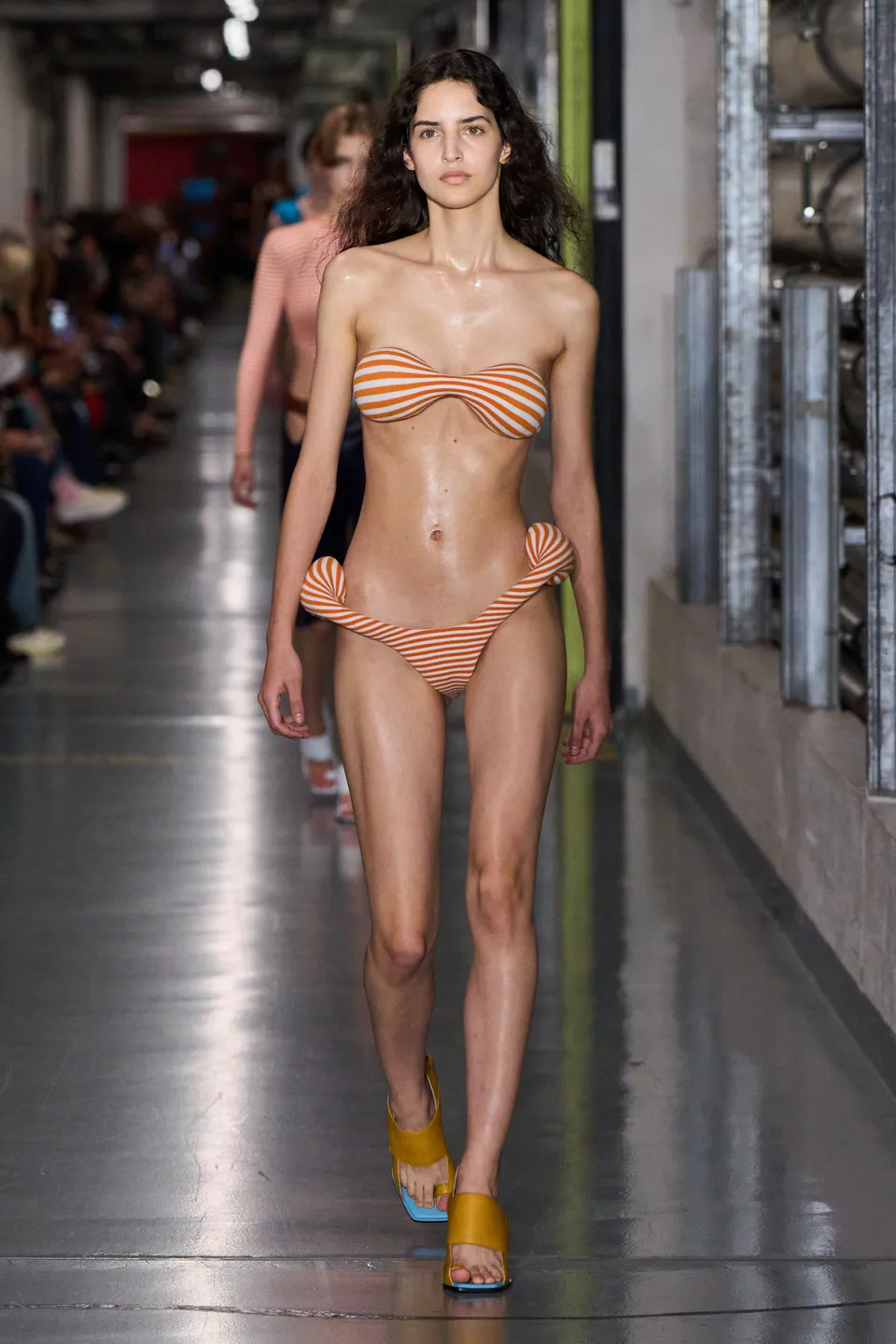
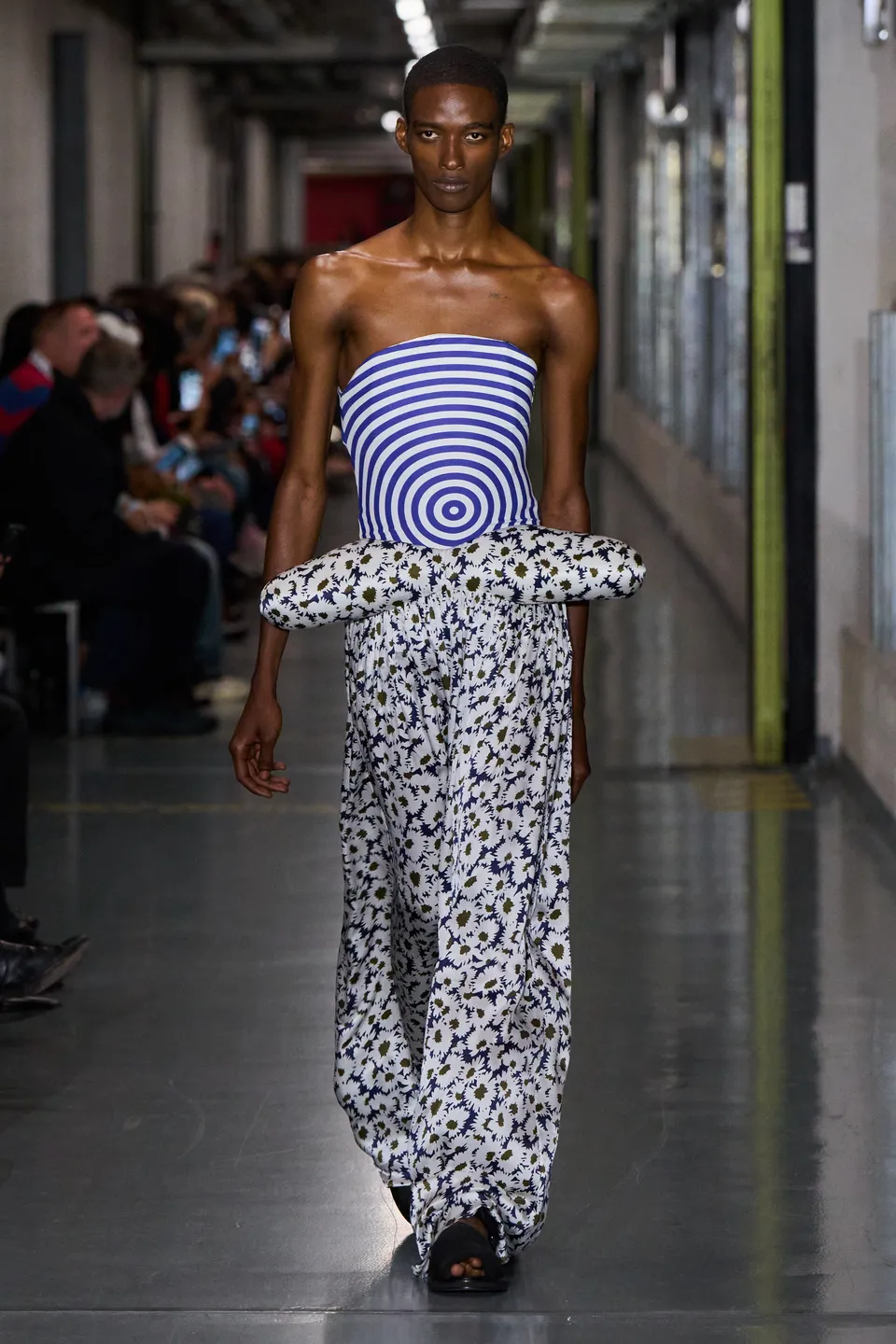
Schiaparelli Fall 2026 Couture pushes artificiality into creature territory. Daniel Roseberry explored latex and silicone across the collection, bringing slick surfaces, molded bodies and inflated forms into couture. Half of the collection incorporated latex or silicone, with specialist techniques connected to the language of cinematic prosthetics and special-effects fabrication.
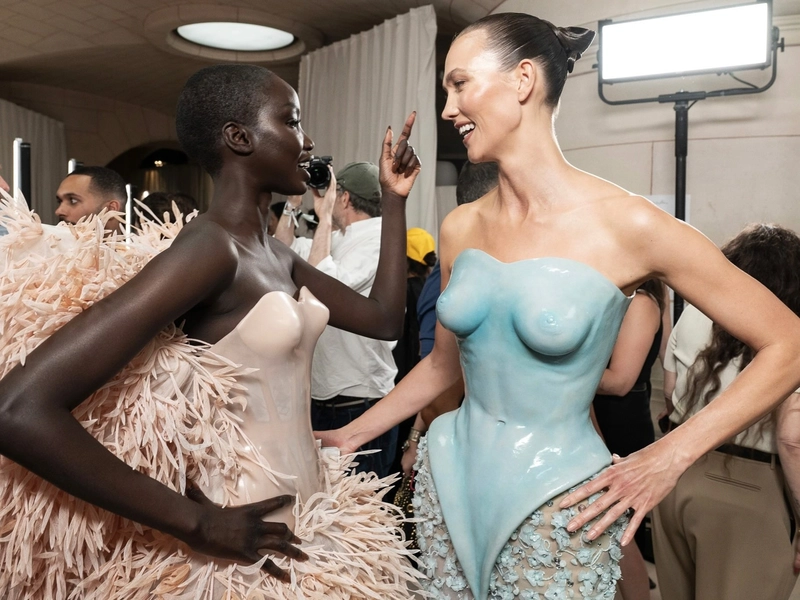
A peculiar reversal happens here. Toys fascinate us because lifeless materials appear to possess personalities. Schiaparelli and Jean Paul Gaultier give living bodies the polish, exaggeration and synthetic perfection of manufactured creatures.
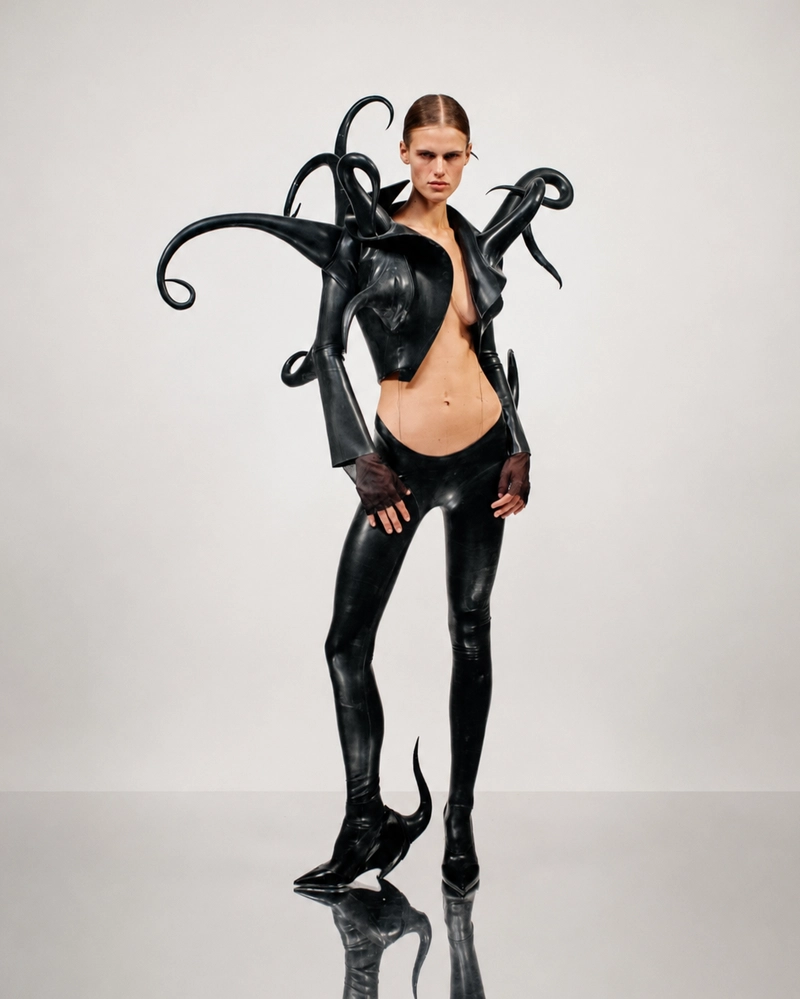
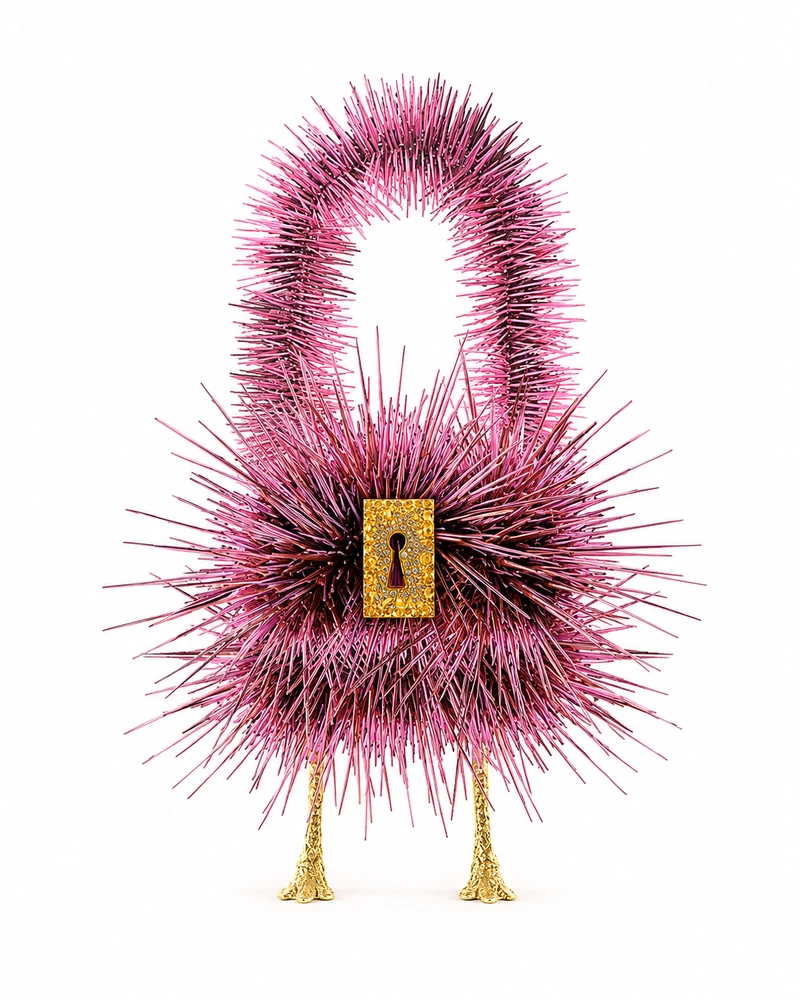
That uncanniness gives toy-like fashion substance beneath all the fun.
Plastic carries memories of mass production, inflatable pools, children's accessories, packaging and disposable objects. Couture carries memories of handwork, rarity and extraordinary labor. Put those worlds inside the same garment and material hierarchy starts wobbling.
The result also speaks to a cultural moment saturated with digitally perfected imagery. Artificiality surrounds fashion through filters, generative imagery, avatars and bodies edited into frictionless shapes. Toy-like fashion responds by making artificiality physical. Its plastic shine announces itself. Its inflated body admits the distortion.
There is something refreshingly shameless and kitsch about that honesty.
This also explains why the aesthetic carries life beyond one season. Dolls, cartoons, Surrealism and synthetic materials have circulated through fashion for generations because play gives designers permission to break scale, anatomy and function. Yet the instinct behind toy-like fashion survives because fashion repeatedly needs make-believe. Someone left the toy box open, and everything inside has finally learned how to walk.
Advertisement