The abyss looked back through Schiaparelli Fall 2026 Couture, wearing artificial flesh so luminous that horror and desire became impossible to separate.
Alien Flesh Haunted Schiaparelli Fall 2026 Couture
The abyss looked back through Schiaparelli Fall 2026 Couture, wearing artificial flesh so luminous that horror and desire became impossible to separate.
July 25, 2026
Advertisement

Advertisement


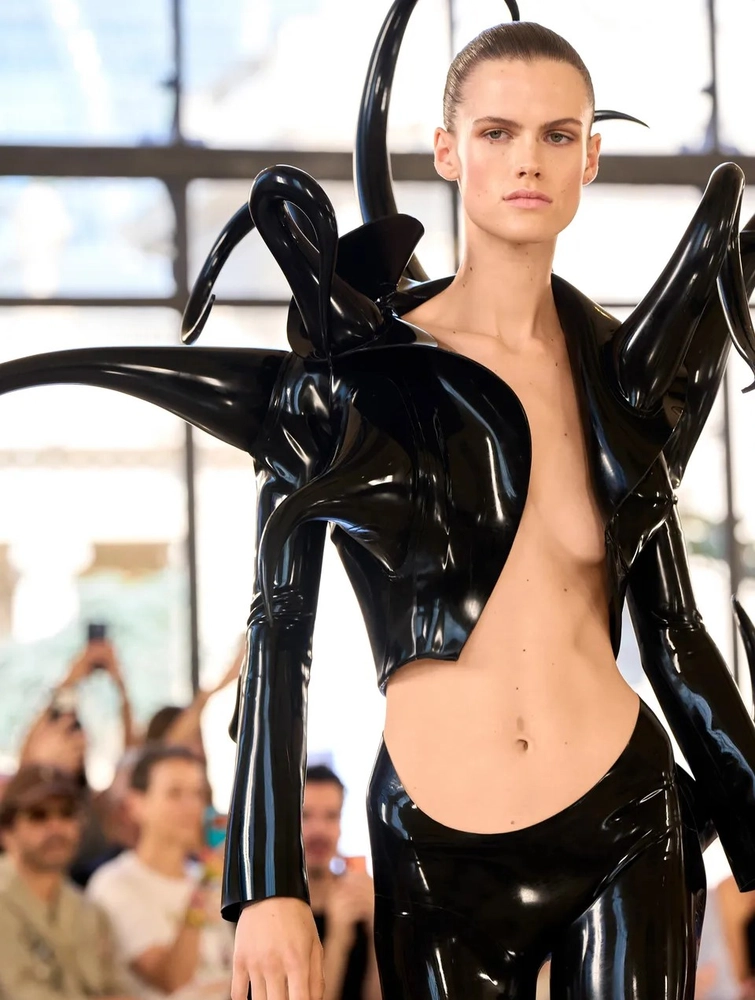
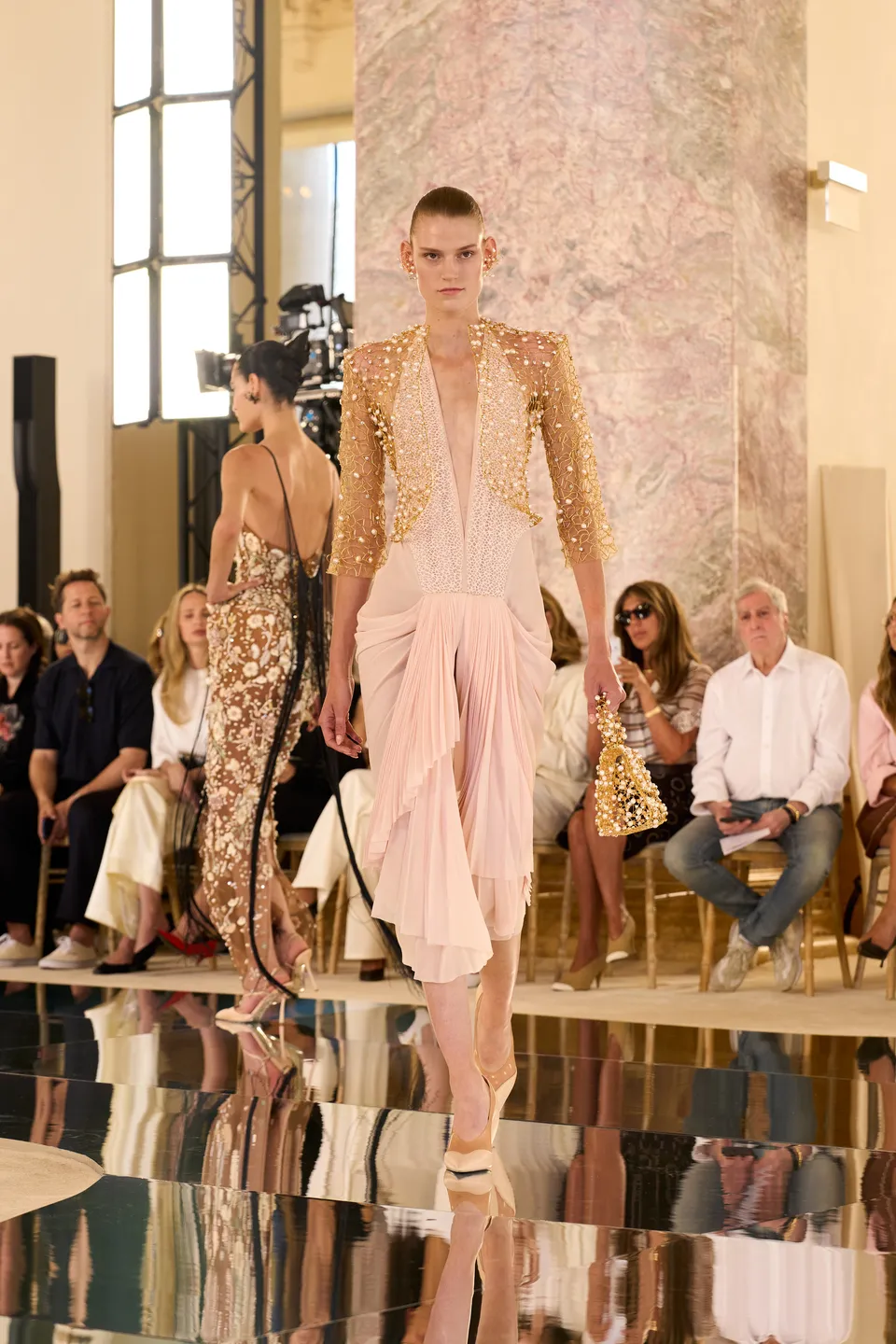
Open inside the Petit Palais under natural daylight. The light initially feels painfully honest for fantasy. Then a woman appears wearing skin belonging entirely to another species. Her torso glows from within. Black tentacles inflate behind a tailored jacket. A silicone corset resembles an evolving body preserved inside glass. Flowers grow from wire, pearls, and hosiery. The ocean appears to have learned anatomy, jewellery, and appetite.
Schiaparelli Fall 2026 Couture, titled The Call of the Void, answers Roseberry’s creative paralysis. He had attempted to reproduce the conditions behind a previous success. A vast emptiness answered instead. That void becomes the origin of the show. The collection surrenders to ambiguity.

The ocean represents a world outside ordinary human dominion, highly pressurized and biologically strange. Roseberry uses the abyss to imagine what the human body might become when familiar creative rules collapse. Roseberry entered the water searching for inspiration and surfaced carrying an artificial body that seemed to breathe autonomously.
Creative Block Became the First Monster in Schiaparelli Fall 2026 Couture
Success became a formula, then a prison. Roseberry admitted his previous season’s triumph became creatively suffocating. He attempted to recreate its route toward inspiration, believing travel and architecture would produce another revelation. This realization remains essential because Schiaparelli Fall 2026 Couture emerges from the terrifying truth that inspiration eludes industrial reproduction.
The void became highly productive. Roseberry uses l’appel du vide as a metaphor for relinquishing control. The void offers an erased canvas and complete exposure outside a proven formula. This leads naturally to the abyss. The deep ocean becomes an ideal imaginative world because it exists outside ordinary visibility. Its organisms appear surreal independent of human intervention, challenging the assumption that anatomy should remain stable.
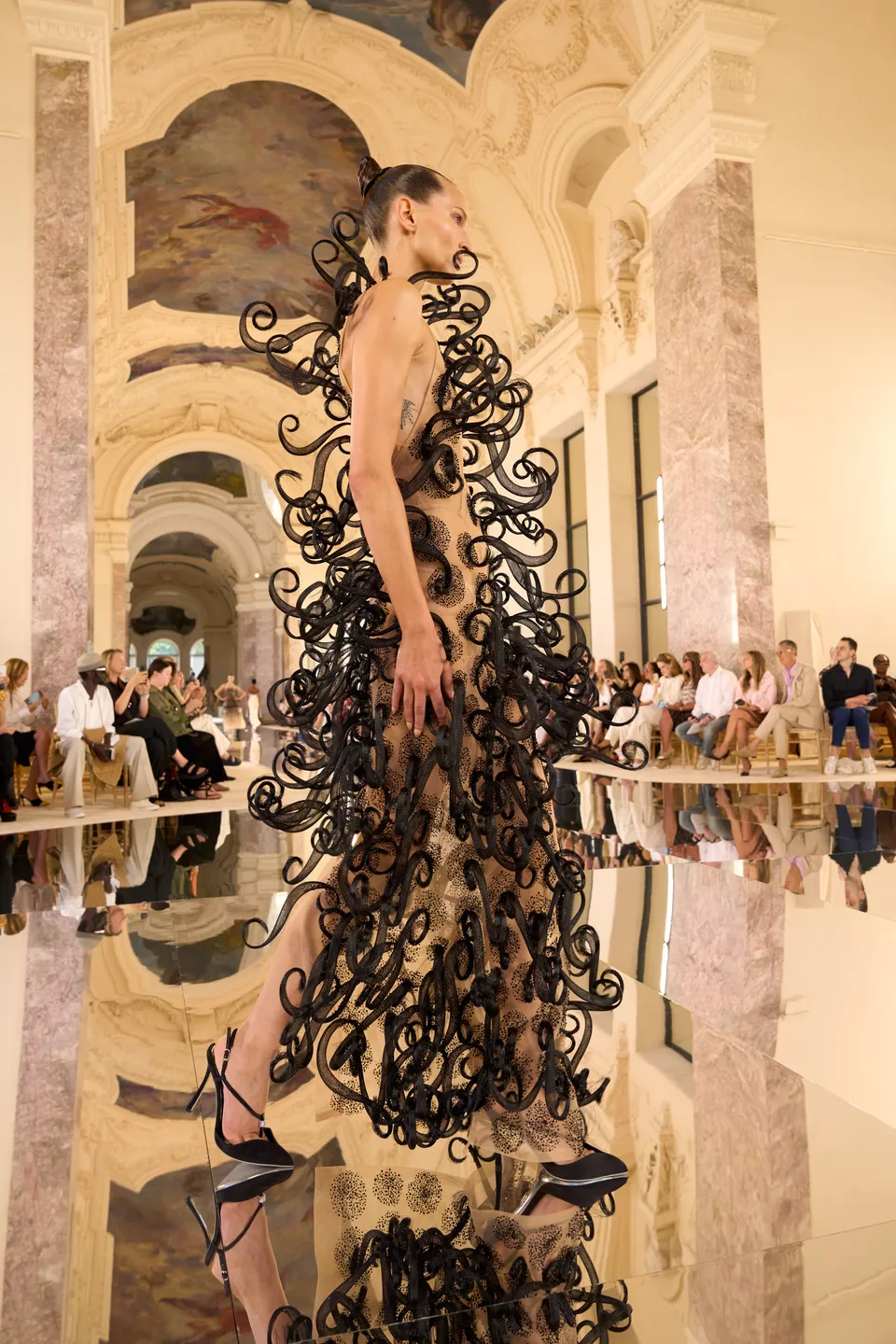
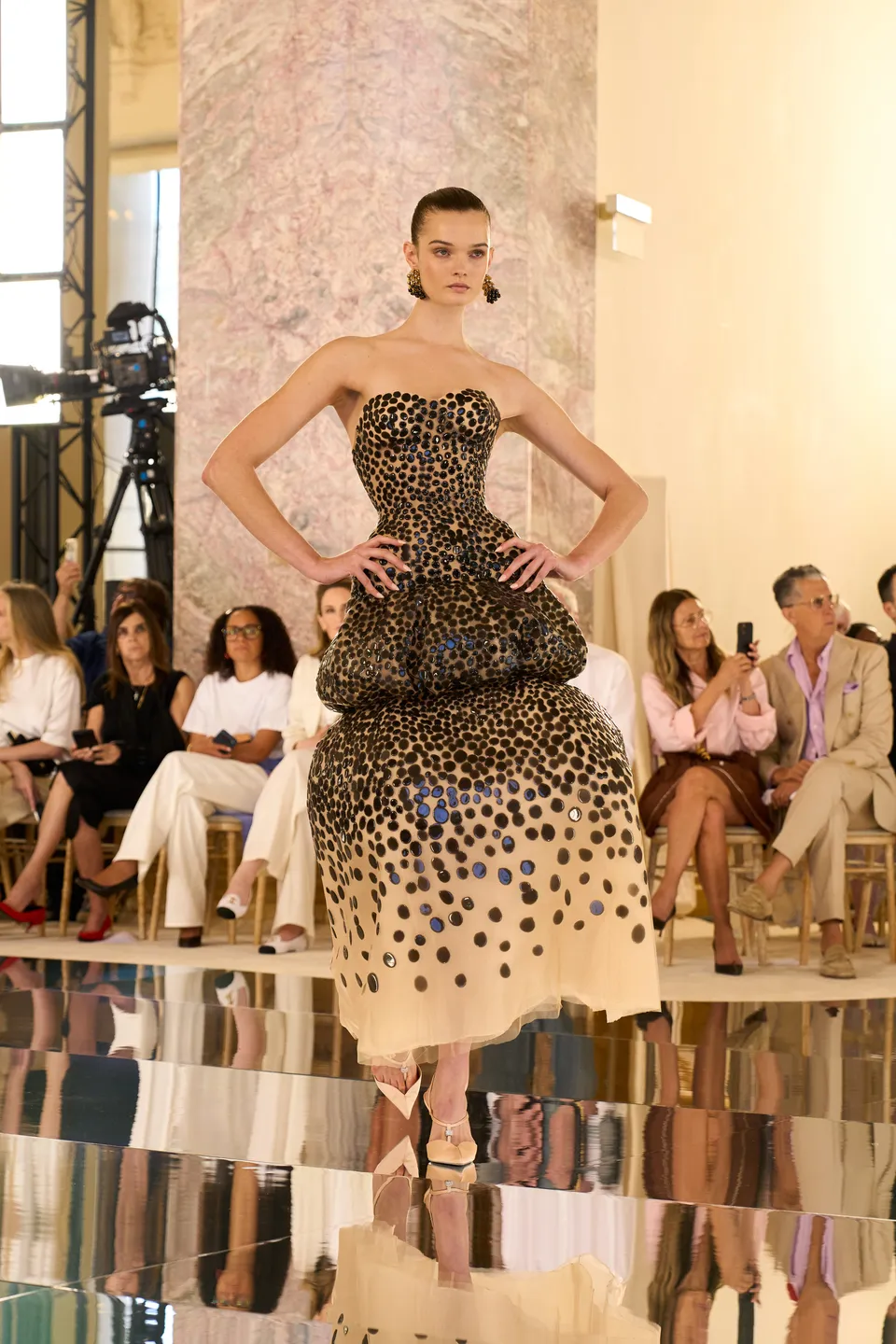
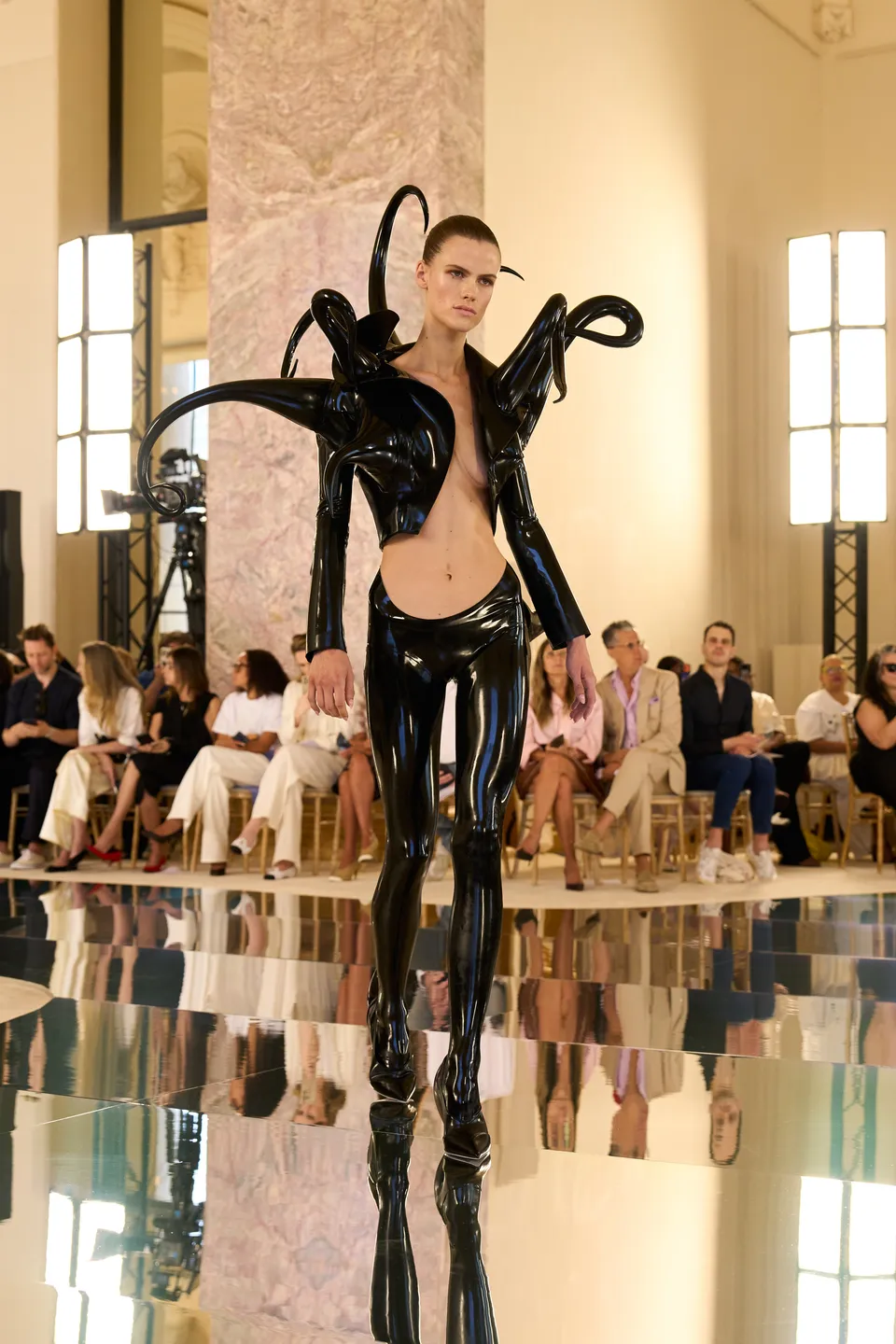
Surrealism functions here as a method rather than an archive. Roseberry stands strongest when he inherits Elsa Schiaparelli’s Surrealism as a way of thinking, bypassing her familiar motifs. The goal shifts toward the transformation of ordinary reality through contradiction and improbable material combinations. Tailoring behaves like marine life. Torsos glow as though biologically active. Silicone resembles skin while remaining visibly artificial. The creative block opens the void, and the silhouettes of Schiaparelli Fall 2026 Couture begin moving like alien organisms.
The Abyss Grew Corsets, Tentacles and a Taste for Diamonds
Before analysing the extreme pieces of Schiaparelli Fall 2026 Couture, we must acknowledge the conventional architecture holding the collection together. The show includes severe black dresses, plunging necklines, cinched waists, and controlled evening column dresses. A severe black dress carries profound confidence, proving Roseberry commands attention free from theatrical gimmicks. These silhouettes frame the recognizable human body just before mutation begins.

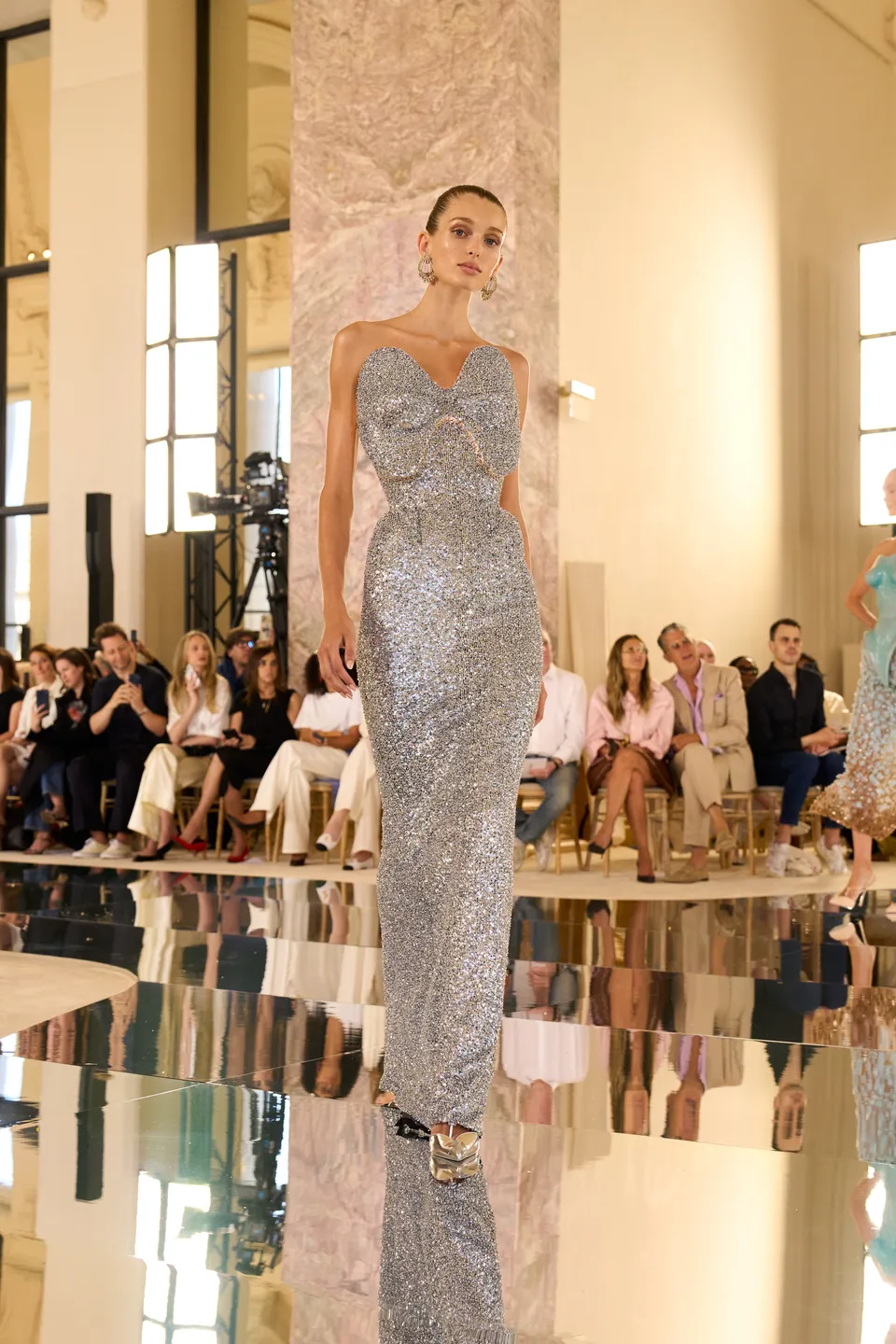
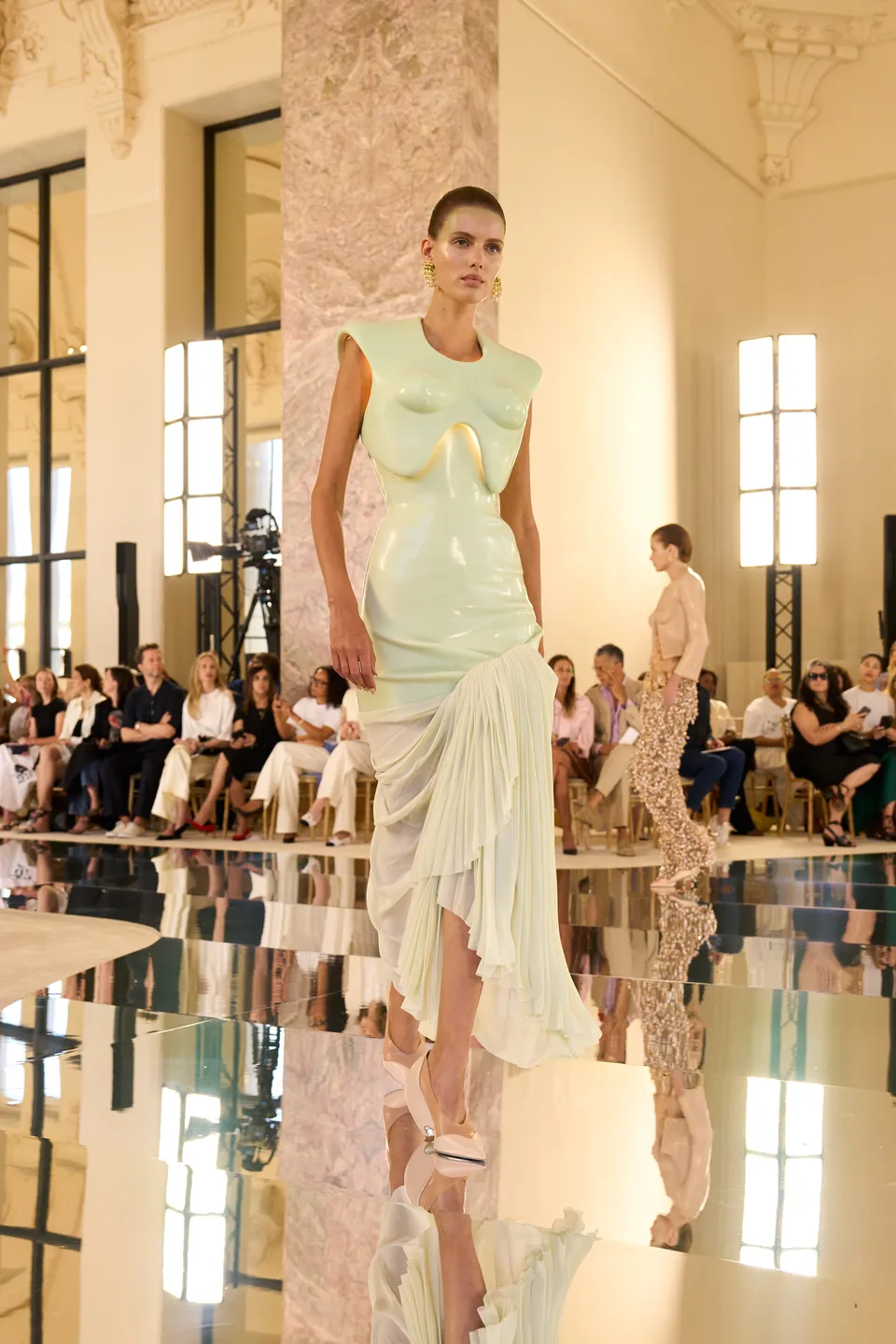
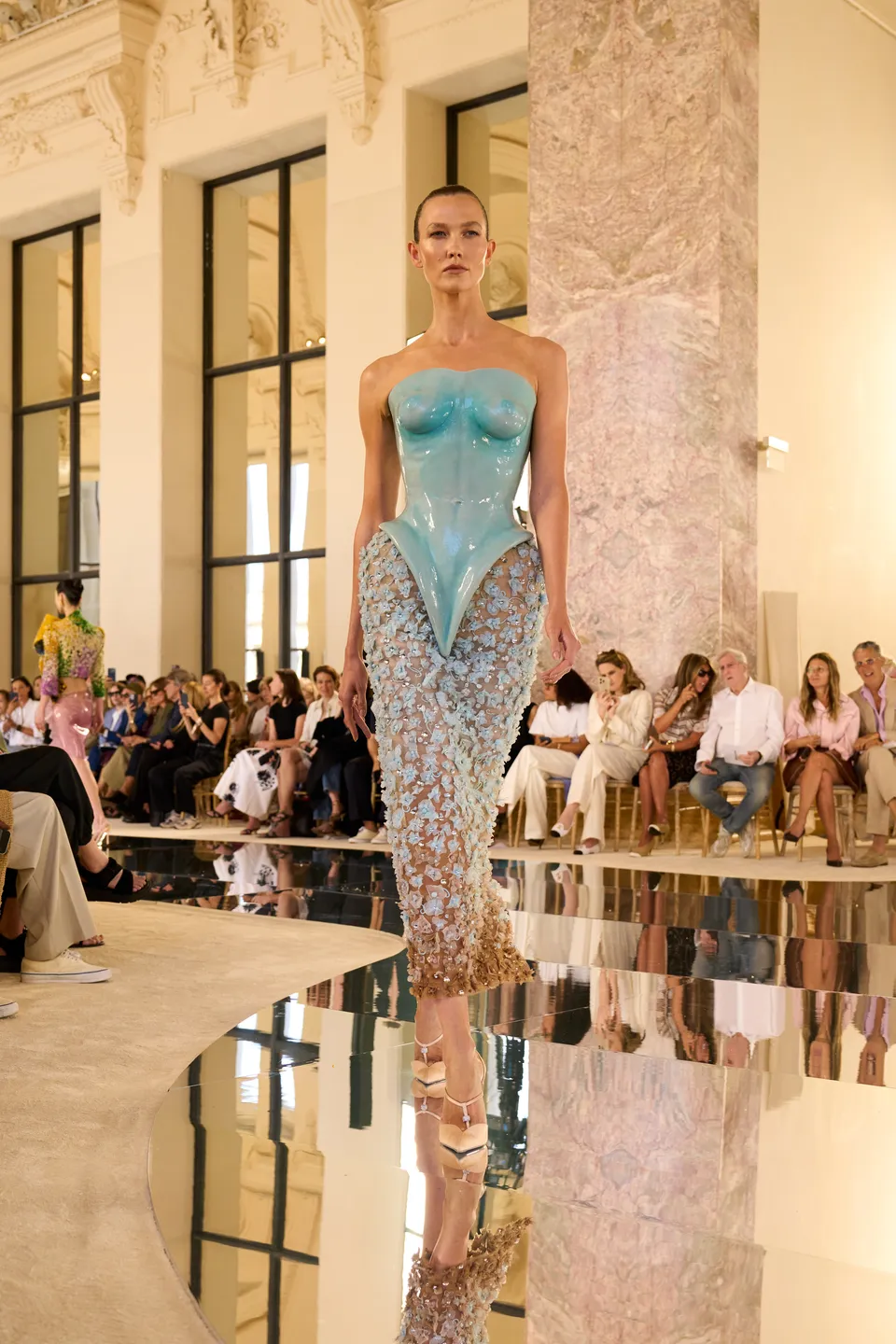
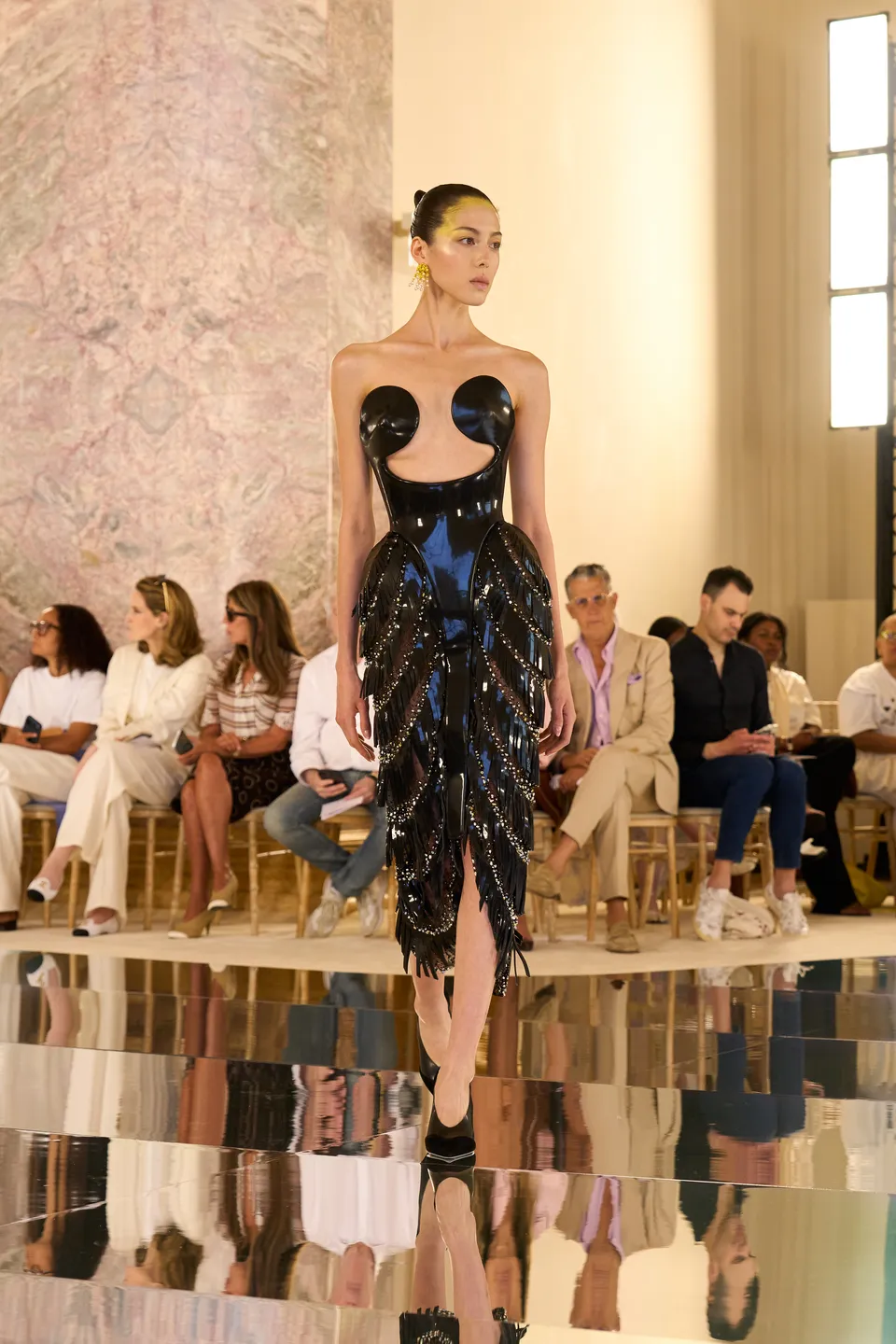
Corsetry evolves into prosthetic anatomy. The corset becomes an alternative body placed on top of the wearer. We witness hyperreal silicone breastplates, jelly-like transparent surfaces, and rigid shells shaped around ribs. Conventional lacing attaches to futuristic material, anchoring the synthetic torso deeply in couture history. The strange surface appears posthuman, yet the method of tightening remains recognizable.
The inflatable black tentacle jacket becomes the theatrical centre. Its tailored foundation suggests discipline, while the tentacles belong to biological survival. Tailoring fixes the torso, inflation makes the silhouette volatile, and black keeps the spectacle severe. The reported twenty-minute dressing process reveals the careful engineering behind the apparent chaos.

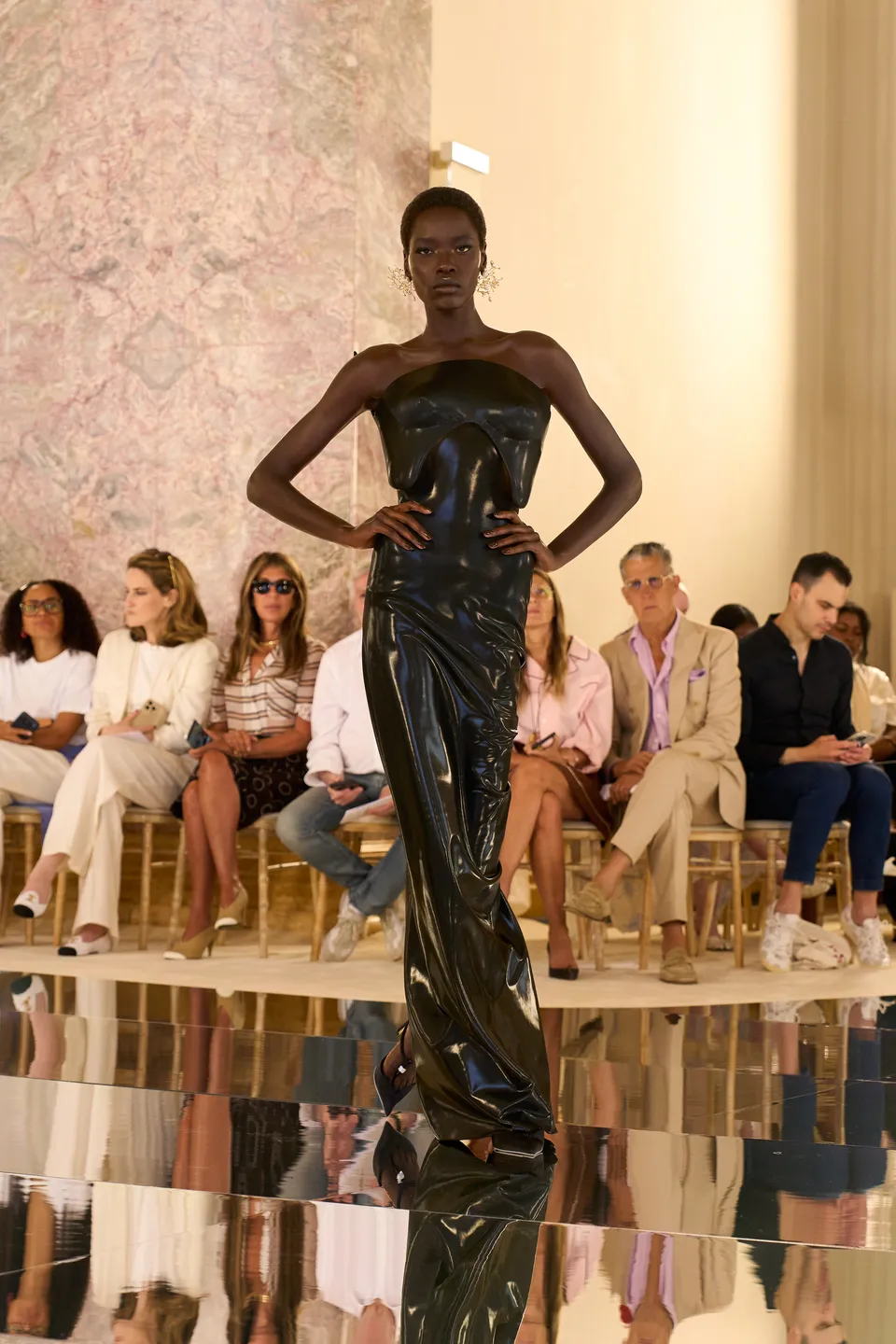

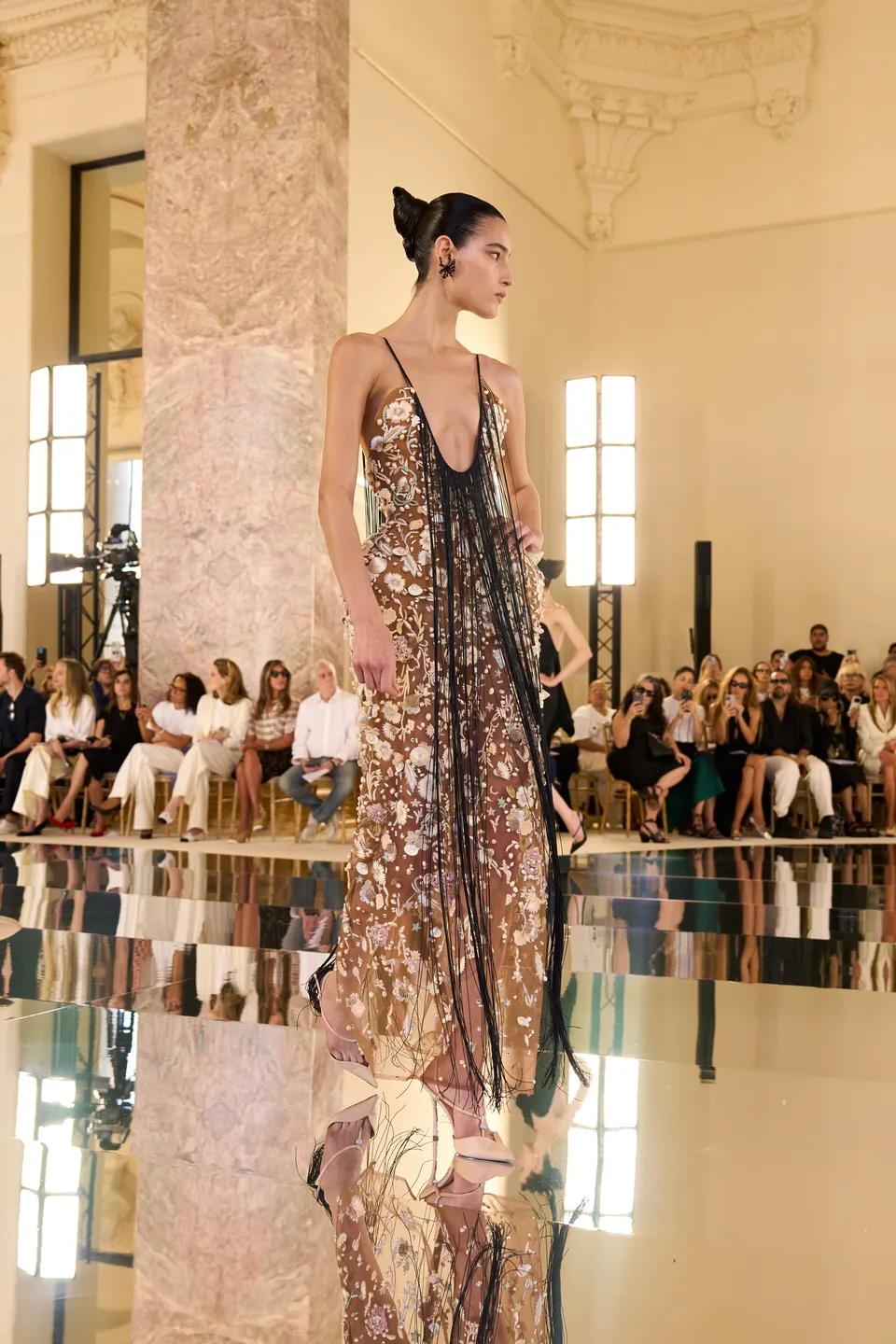
Illuminated breastplates reverse the usual relationship between clothing and spectacle. The wearer appears biologically illuminated, generating her own signal. This internal glow reads as artificial consciousness and the fantasy of a body powered from within. In Schiaparelli Fall 2026 Couture, restraint makes mutation shocking, while mutation makes the quiet tailoring appear newly severe.
Silicone Became Skin, Latex Became Tailoring and Paint Learned Couture
Synthetic materials enter the couture hierarchy, challenging traditional ideas of preciousness. Schiaparelli Fall 2026 Couture introduces silicone, latex, and baked paint, materials associated with film prosthetics or special effects. Raw material alone ceases to determine couture value. Latex and silicone become couture through specialist knowledge, moulding, repeated fittings, and adaptation to body heat. Latex resists traditional seams, making its difficulty a form of luxury.
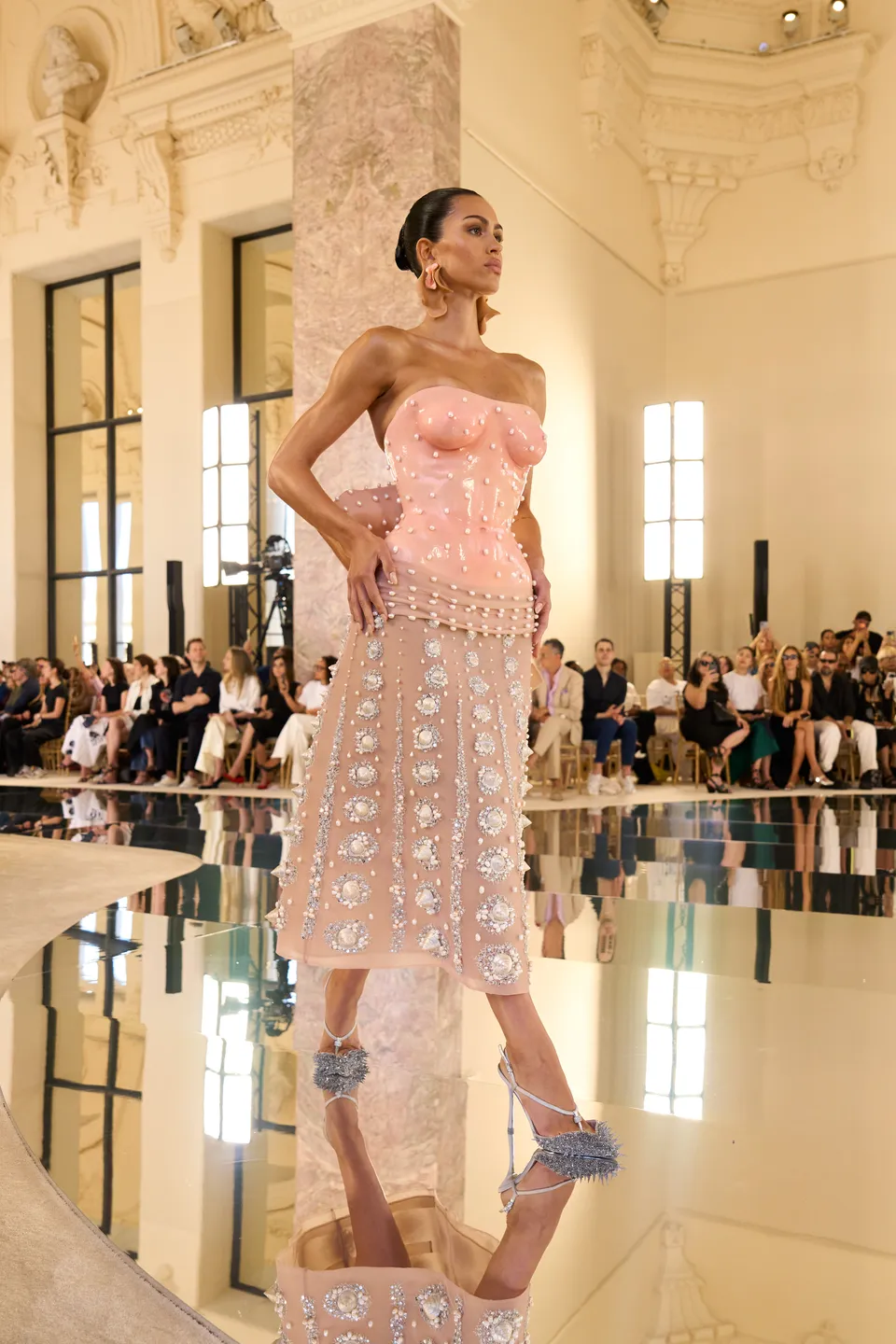
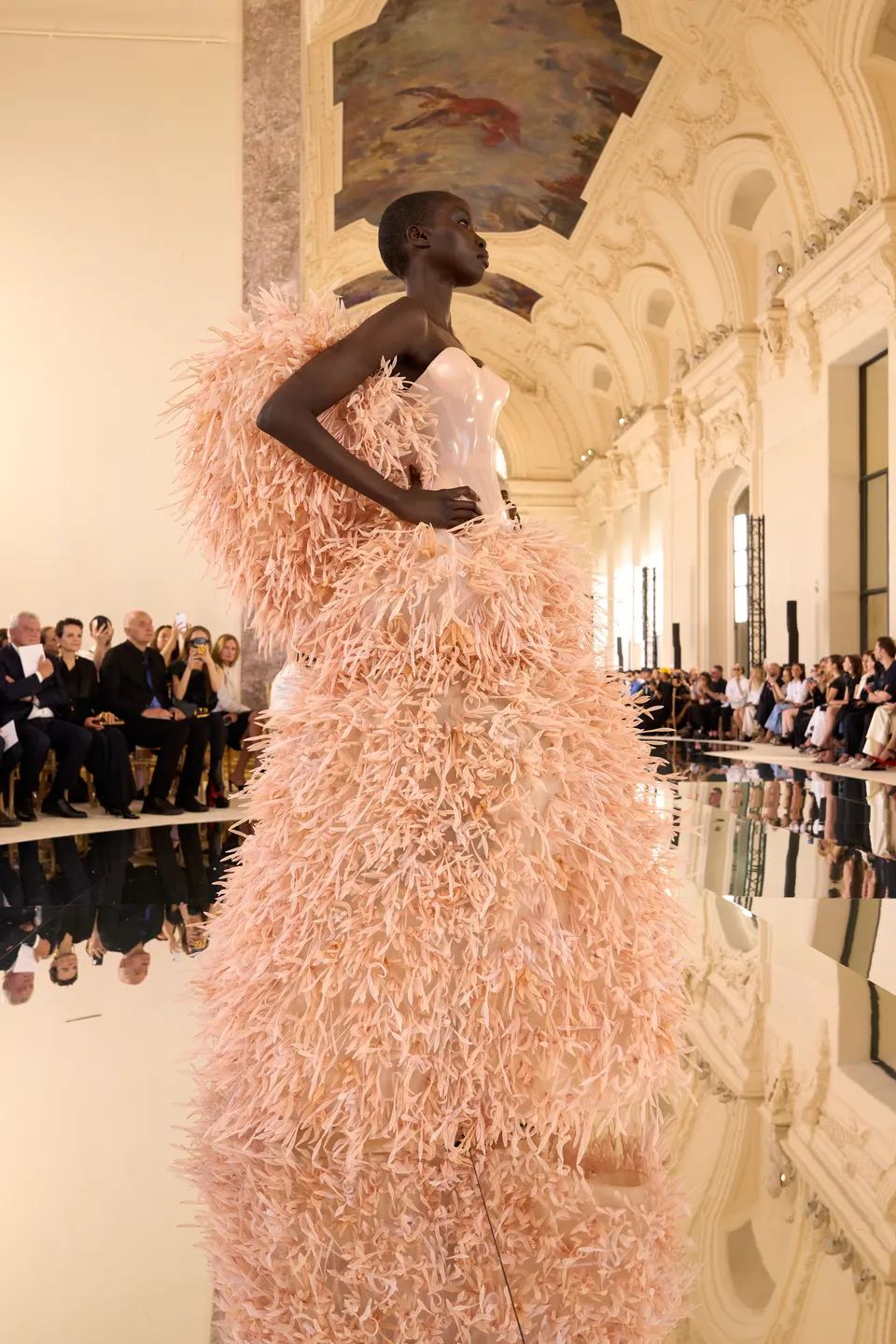
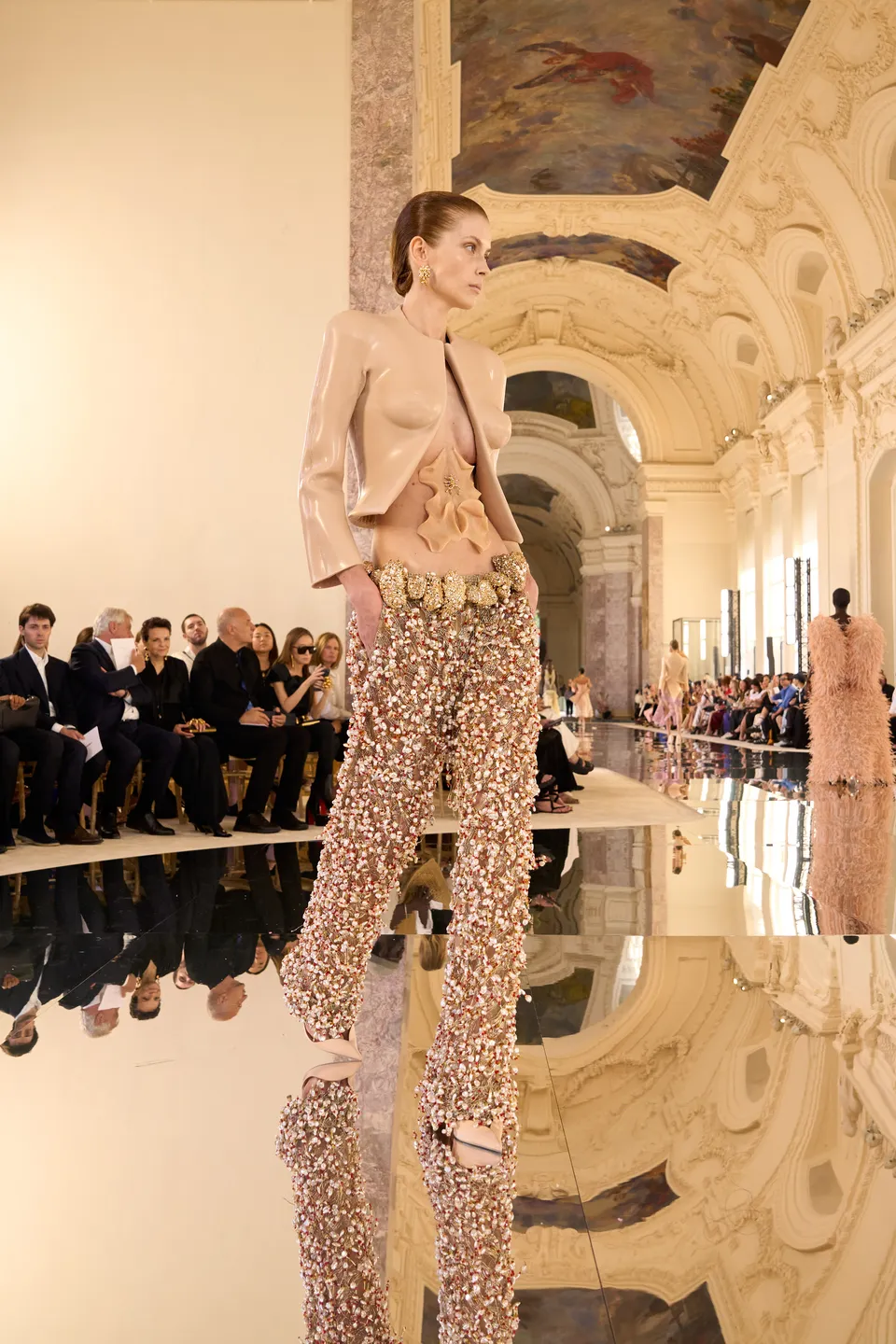
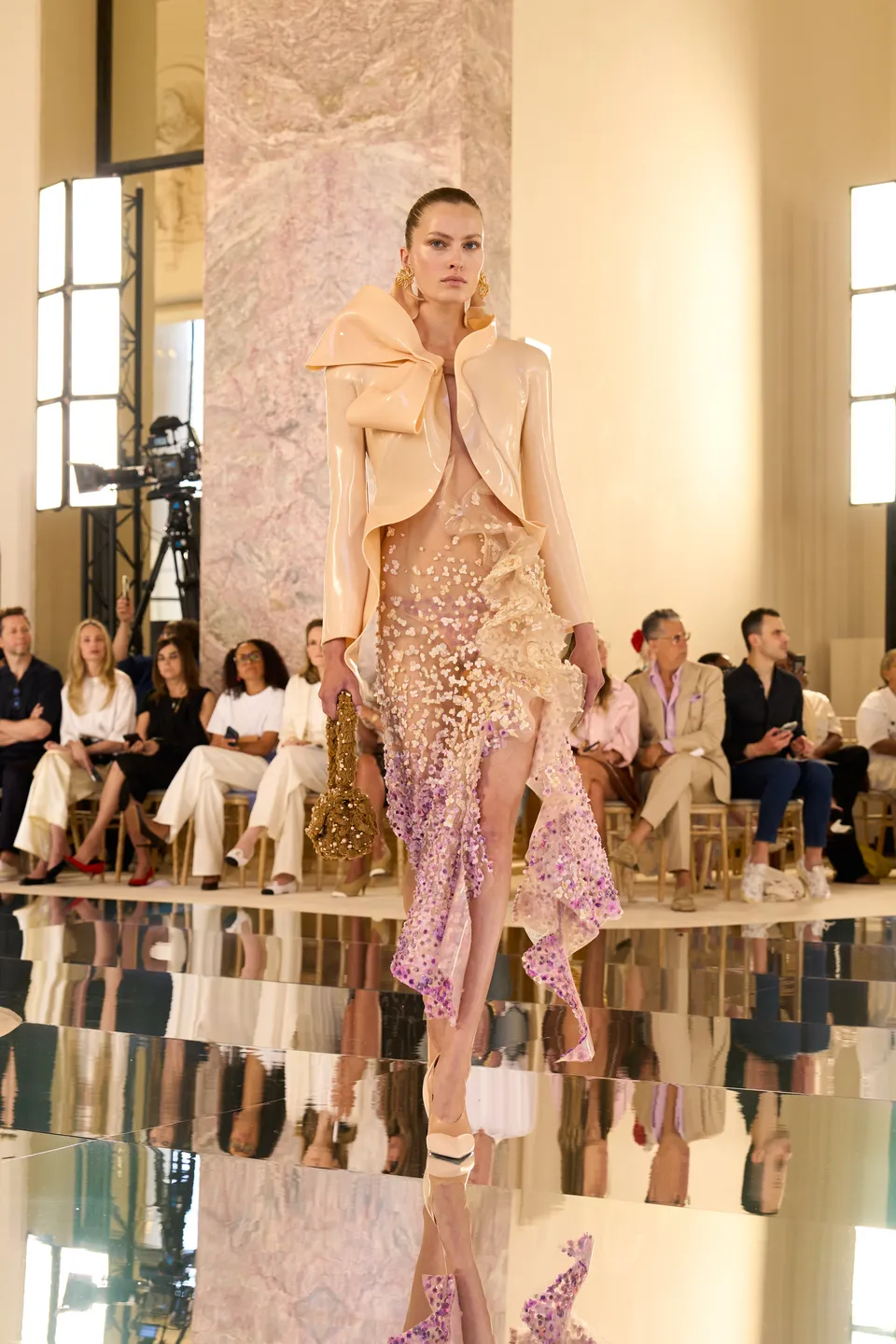
The silicone corsets were reportedly developed with specialists experienced in creating realistic film infants. The surface appears soft but remains sculpted. Colour variation makes it resemble living tissue, transparency produces the illusion of bodily depth, and irregular folds prevent the form from appearing mechanically perfect. The surfaces look almost human, stopping just short of complete humanity.
Paint baked into flexible sculptural sheets is conceptually brilliant. Paint traditionally creates an image on a surface, but here, paint becomes the surface itself. Colour acquires thickness, painting becomes construction, and the boundary between garment and artwork collapses.
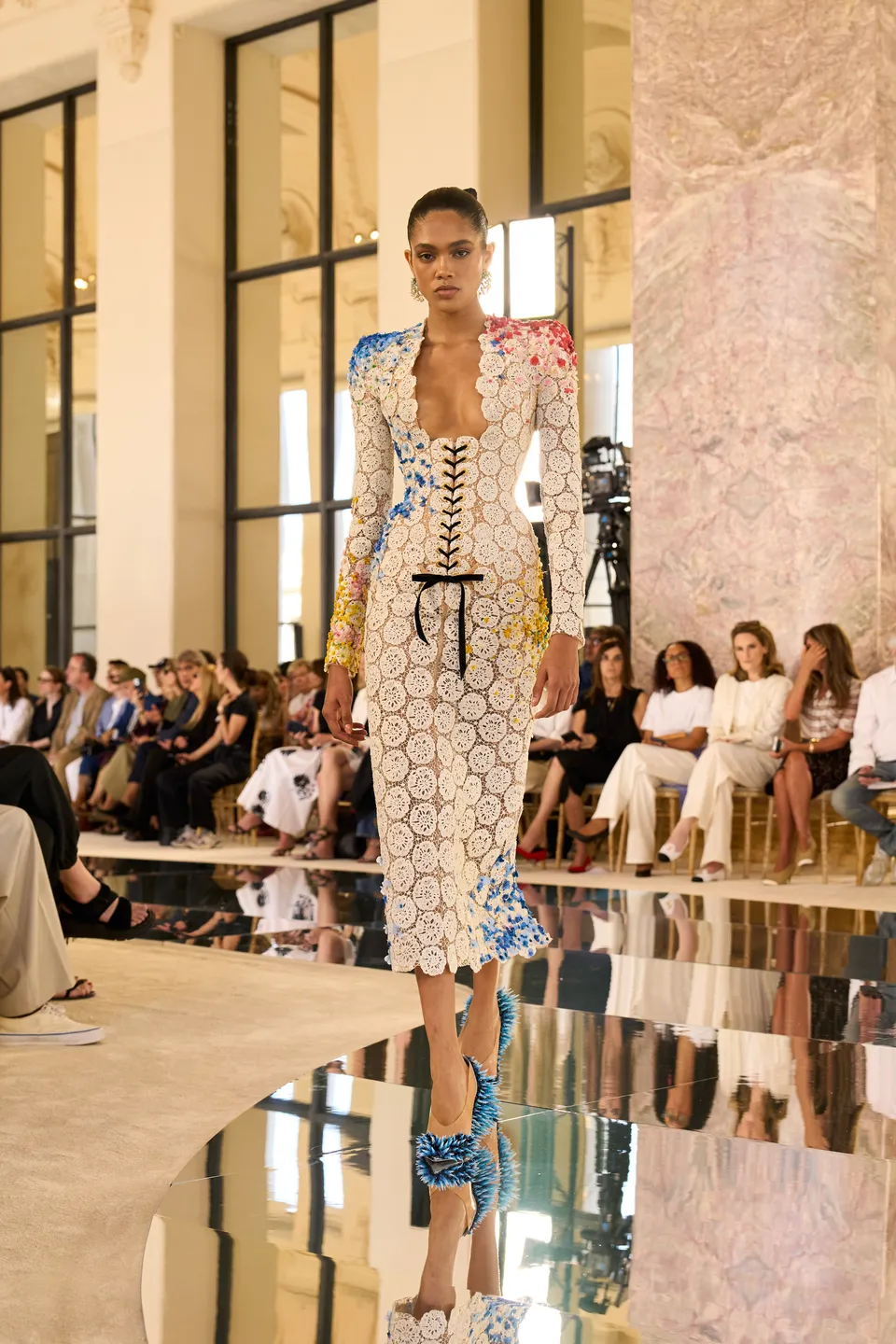
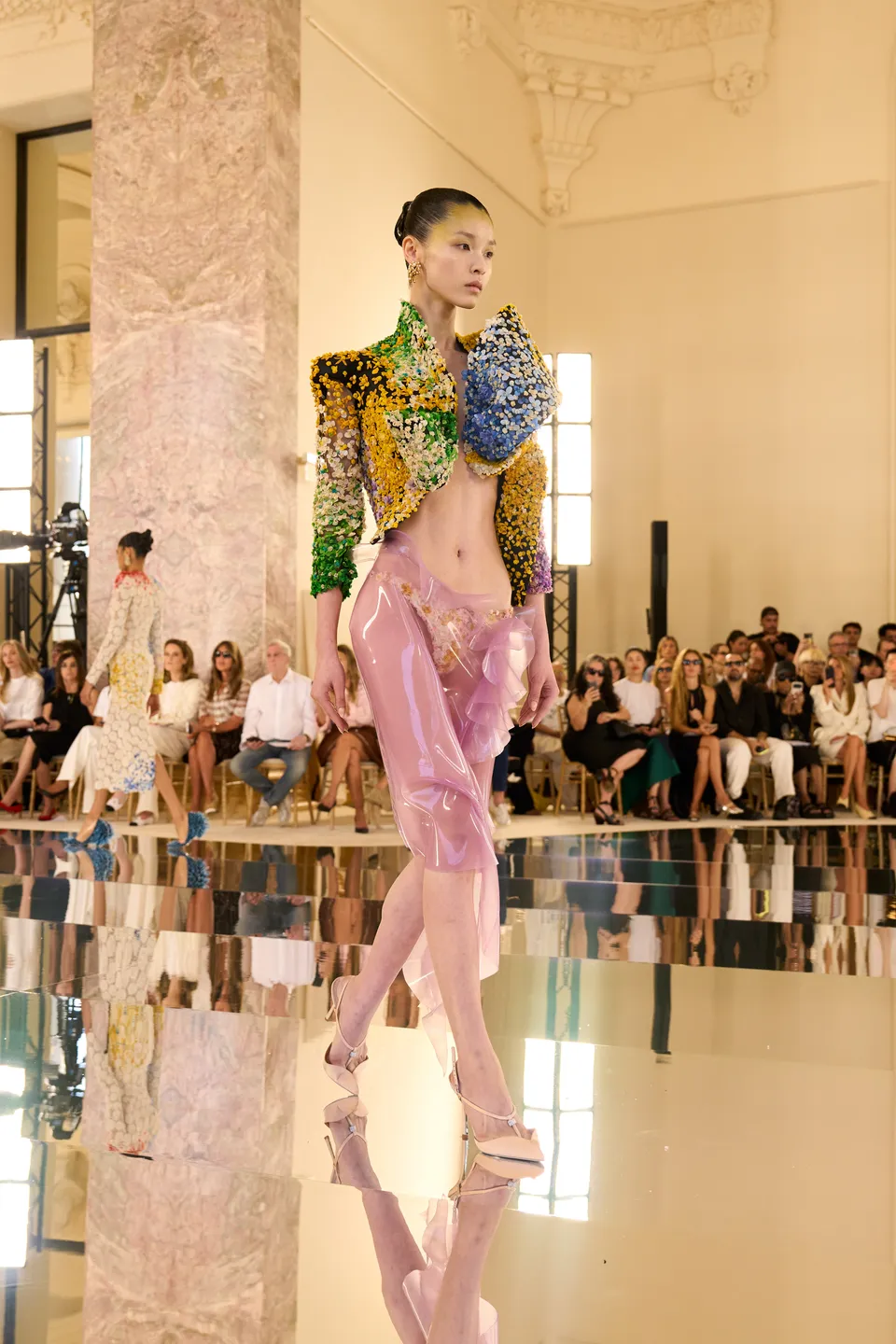
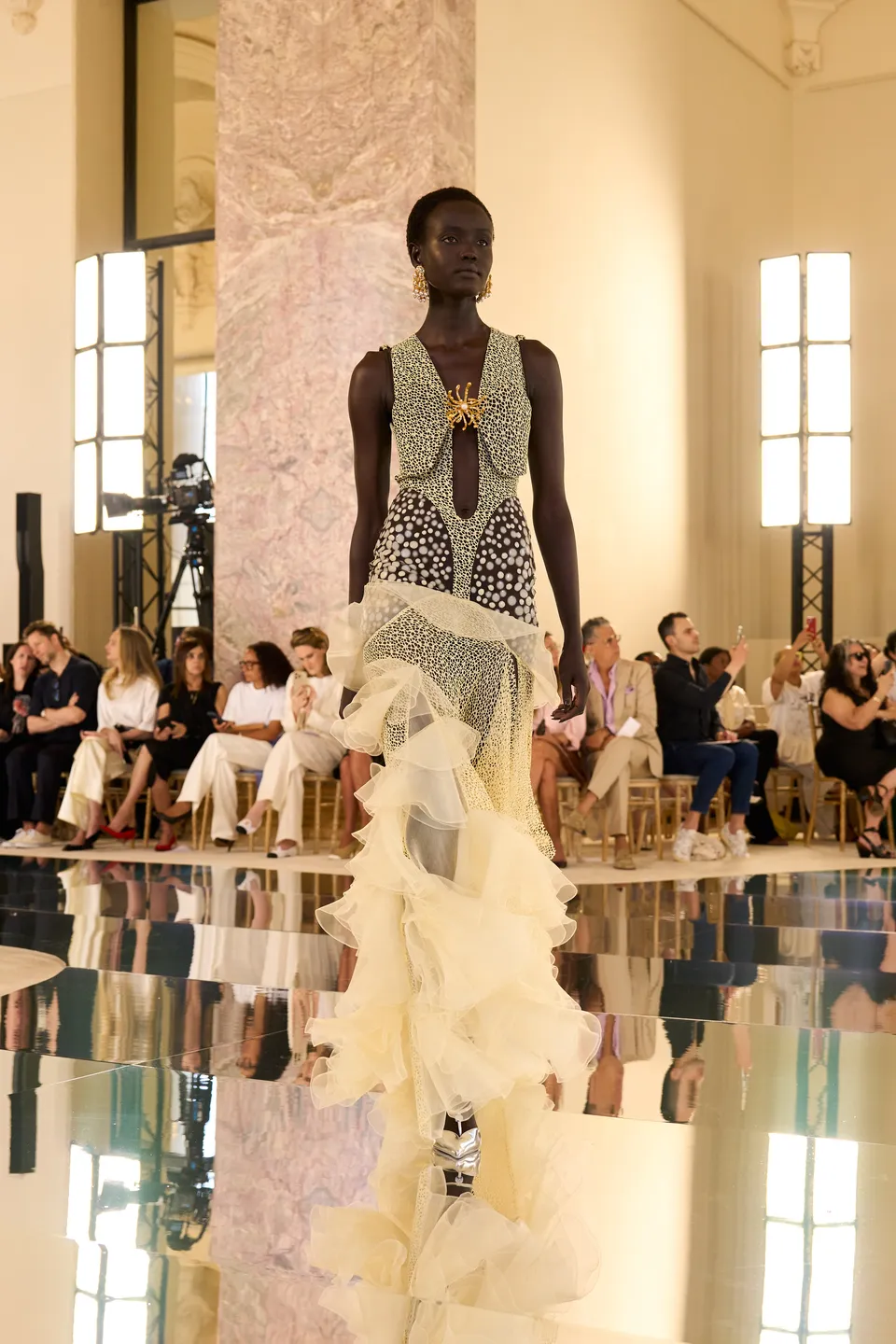
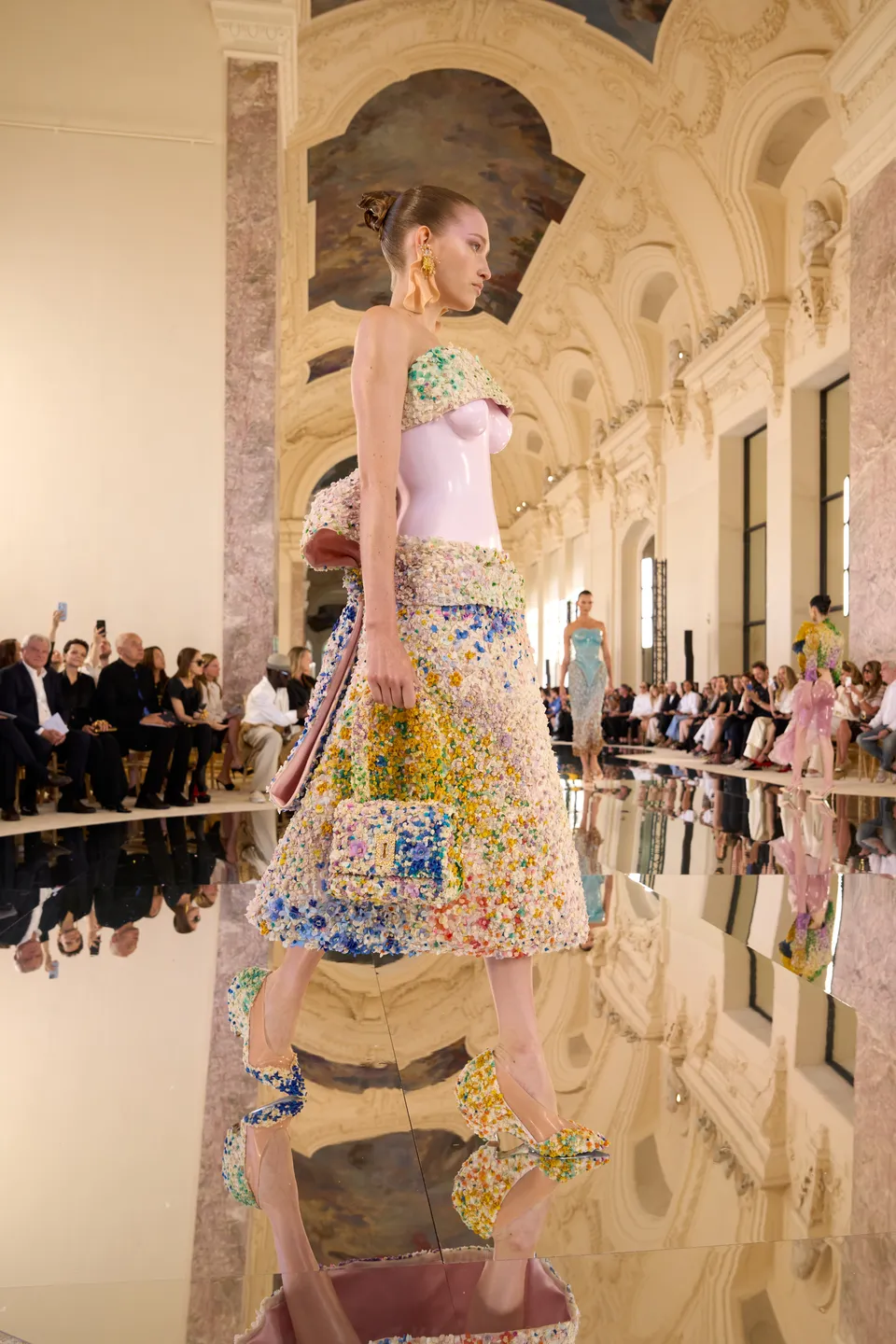
Despite the futuristic materials, the garments depend heavily on familiar couture disciplines: corsetry, tailoring, draping, and exact weight distribution. The spectacle succeeds entirely due to these foundations. The most radical proposition of Schiaparelli Fall 2026 Couture is that couture can absorb rubber, prosthetics, and electricity while maintaining the human hand at its centre.
Schiaparelli Returned From the Abyss With Beauty and a Few Monsters
Schiaparelli Fall 2026 Couture succeeds beautifully when contradiction remains active. The strongest moments combine natural daylight and artificial flesh, severe black tailoring and moving tentacles, historical couture discipline and posthuman fantasy. These garments provoke attraction and discomfort simultaneously, bringing Roseberry closer to authentic Surrealist disturbance.
Roseberry has built Schiaparelli into one of couture’s most visible spectacle machines. Tentacles, artificial organs, and glowing torsos satisfy the demand for viral imagery immediately. Some pieces risk becoming expensive special effects, demanding we ask whether the silhouette changes meaningfully beneath the material experiment.

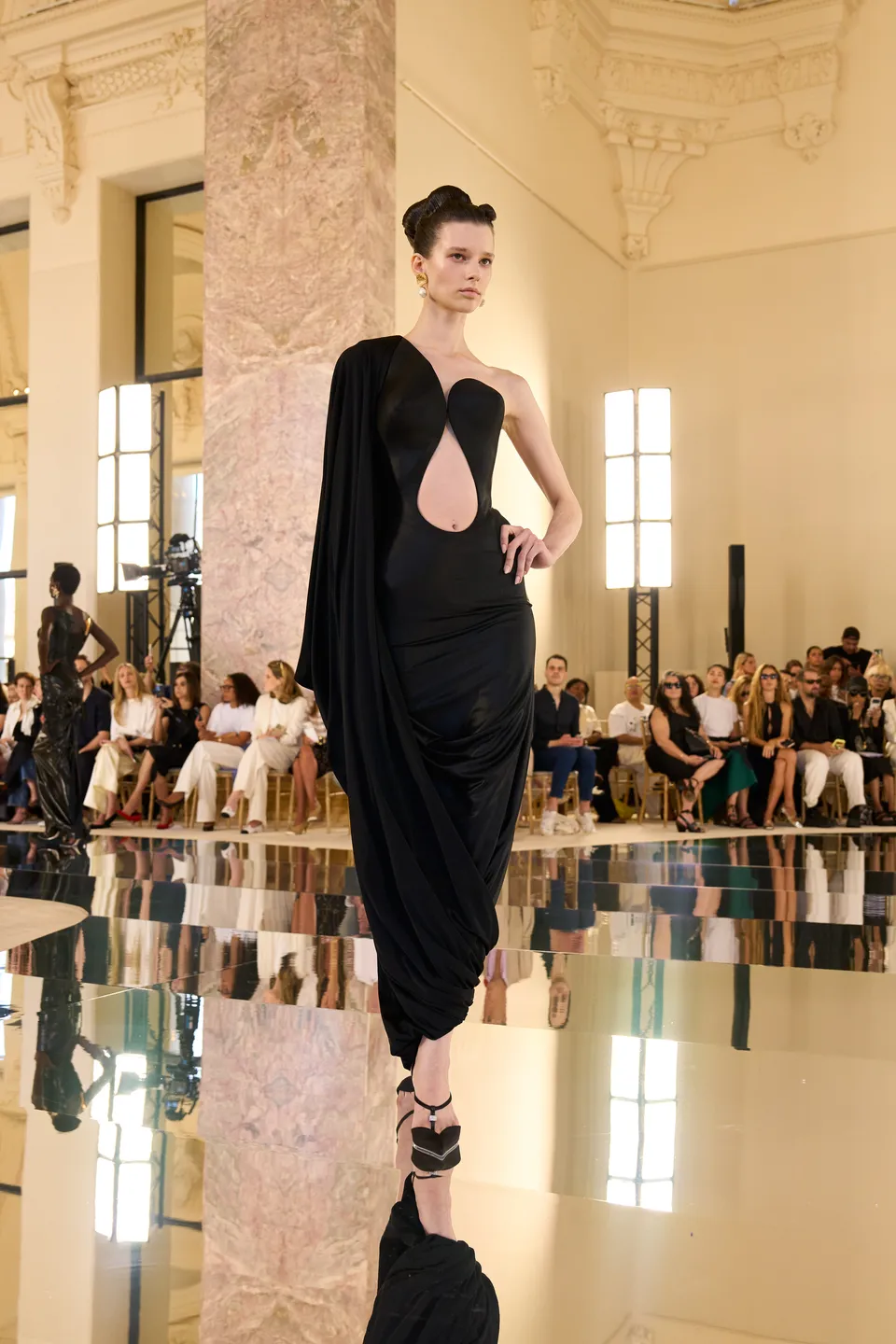
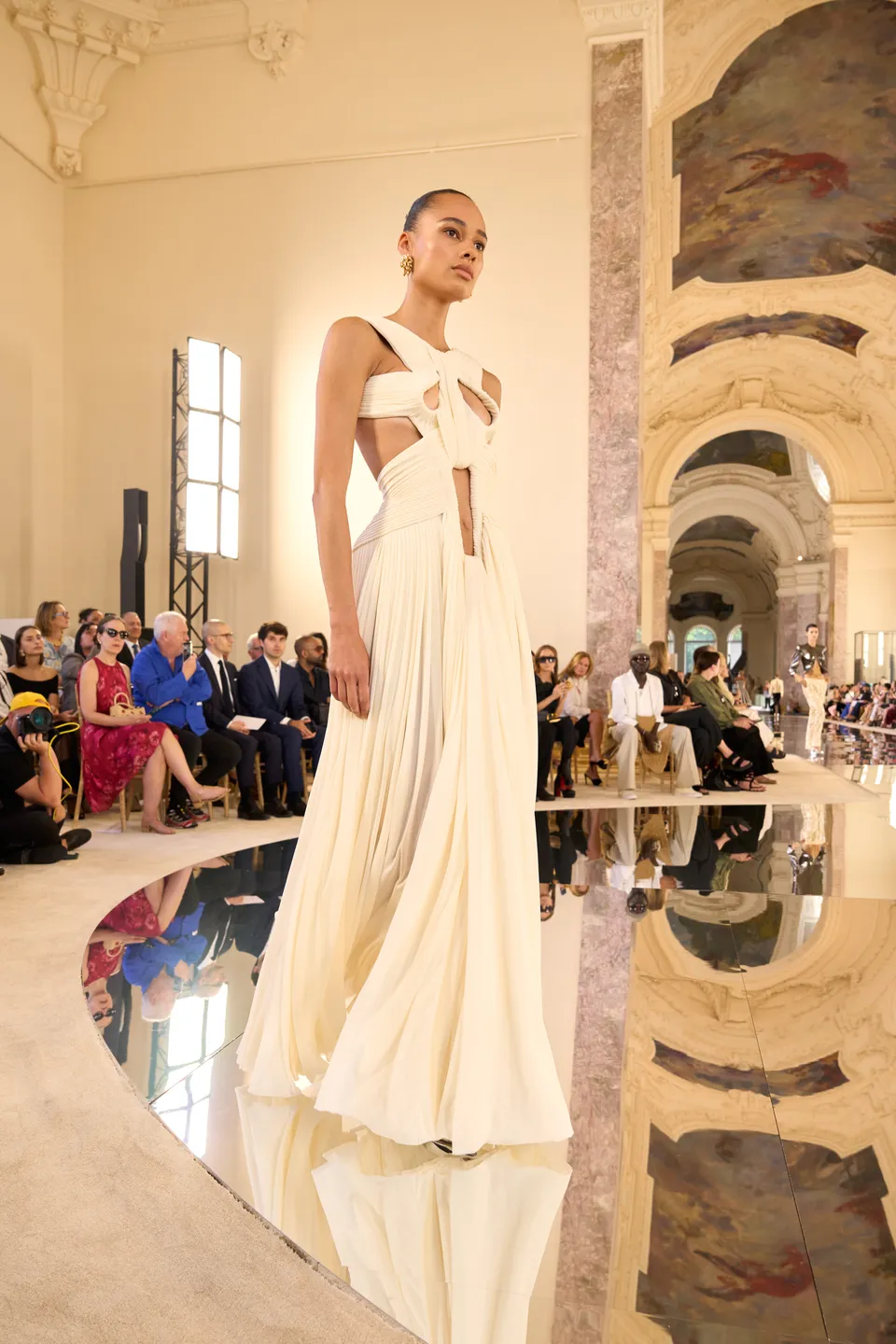

The sharp black dresses save the extreme pieces. Their discipline gives the monsters context. Schiaparelli Fall 2026 Couture is most sophisticated when he allows one improbable idea to invade a highly controlled garment. A glowing torso becomes stranger when the surrounding silhouette remains calm.
The Call of the Void represents a genuine creative shift because Roseberry allowed setbacks to alter his process. He expanded Schiaparelli’s vocabulary beyond familiar gold anatomy into synthetic flesh and marine mutation. The task ahead avoids producing a larger monster, ensuring instead that the monster retains something psychologically dangerous to say.
Return to the Petit Palais after the final look. The tentacles have deflated. The silicone torso hangs abandoned by its human host. The internally illuminated dress has gone dark, leaving only its extraordinary construction visible in daylight.
Schiaparelli Fall 2026 Couture entered the void searching for freedom and returned with a body made from rubber, light, flowers, scales, and fear. Its finest monsters were seductive because they remained partial, decidedly human alongside their machine qualities, fiercely artificial despite mimicking flesh, and meticulously handmade while pointing squarely toward the future.
Advertisement