MENU
Close





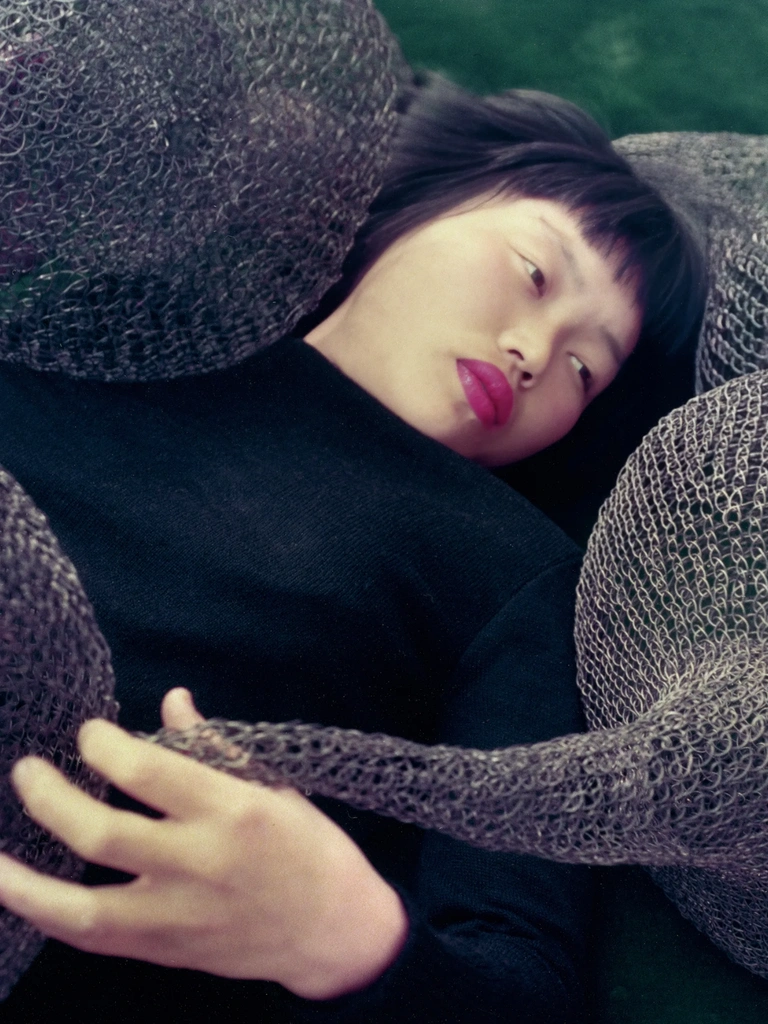
How did Ruth Asawa turn wire into solid?
How did Ruth Asawa turn wire into solid?
July 9, 2026


Sculpture is no longer relying on mass, monumentality, or expensive materials. Forms occupy a room while leaving the room visible. Air and light pass through transparent volumes whose interiors remain open to the surrounding architecture.
Ruth Asawa's hanging sculpture drew from modernist abstraction, Mexican basket making, domestic handwork, industrial manufacturing, and botanical observation. Mid-century critics frequently reduced this range to decoration, femininity, and household craft. Such readings exposed the poverty of the categories more clearly than any limitation in Ruth Asawa’s work. The sculptures were formally rigorous; the critical system lacked the vocabulary to recognise modernism developed through looping, repetition, care, and permeability.
Born in Norwalk, California, in 1926, Ruth Asawa grew up among Japanese immigrant farmers and learned discipline through agricultural labour. In 1942, the United States government forcibly removed her family from their home. Her father was arrested separately, while Asawa, her mother, and siblings were sent first to Santa Anita Racetrack, where families lived in converted horse stalls, and later to the Rohwer incarceration camp in Arkansas.
At Santa Anita, she studied drawing with three detained animators who had worked for Walt Disney Studios. At Rohwer, she continued painting and producing portraits for school publications. Art entered her life inside a system designed to erase individual freedom.
She planned to become an art teacher, completed three years of training, and then met another institutional barrier. The college refused to place her in the student-teaching position required for graduation because schools were considered unlikely to hire a Japanese American woman. She left without the degree and entered Black Mountain College in North Carolina in 1946.
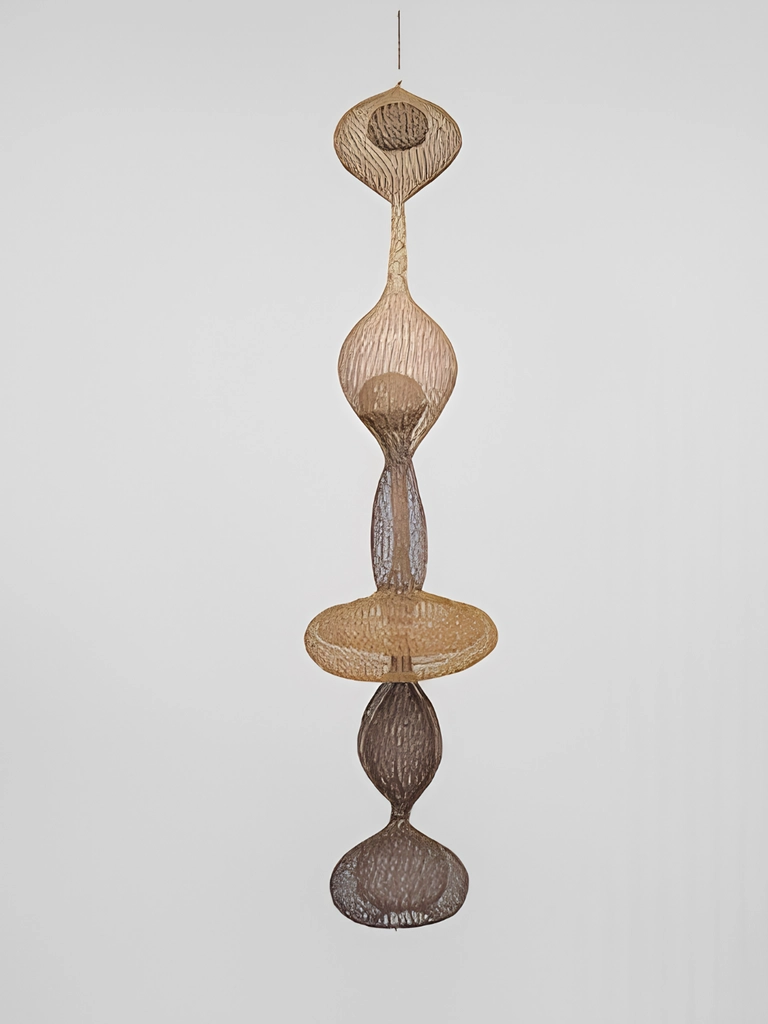
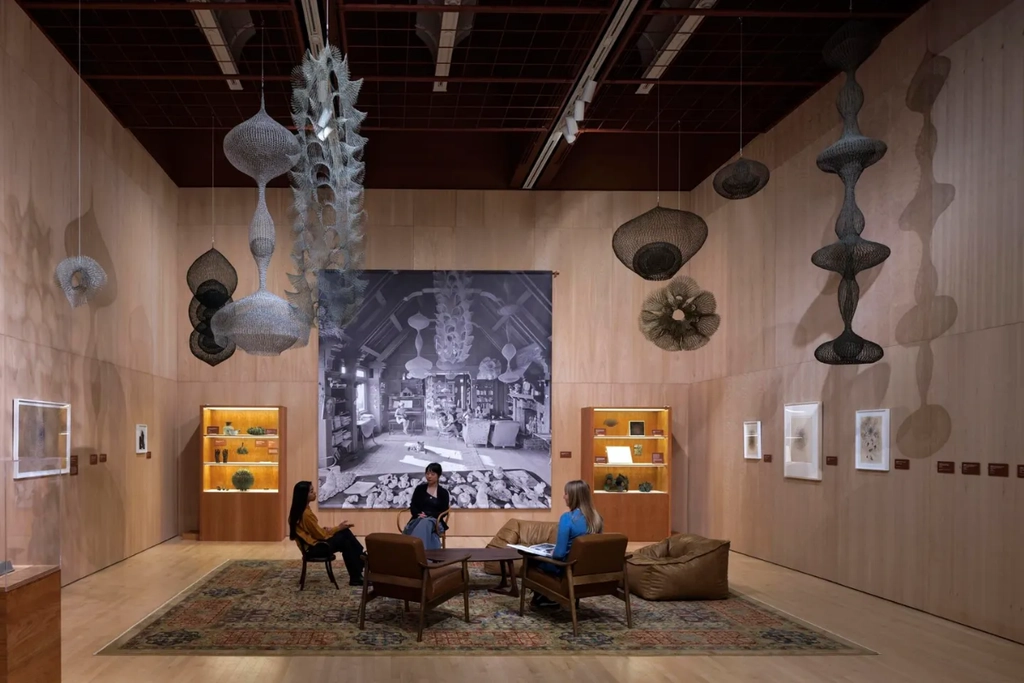
The decisive encounter occurred during a 1947 trip to Toluca, Mexico, where local makers showed Asawa a looping method used for wire baskets. She recognised that a single strand could behave like a drawn line moving through real space. With repetition, that line became a skin; with expansion and contraction, the skin became a lobe, sphere, cone, vessel, or form held inside another form. ulptures turned inside and outside into dependent conditions. Viewers see an interior volume through the exterior membrane, then see the room through both. Their forms may suggest seedpods, jellyfish, organs, nests, or drops of water, yet they remain exact investigations into line, gravity, volume, and transparency.
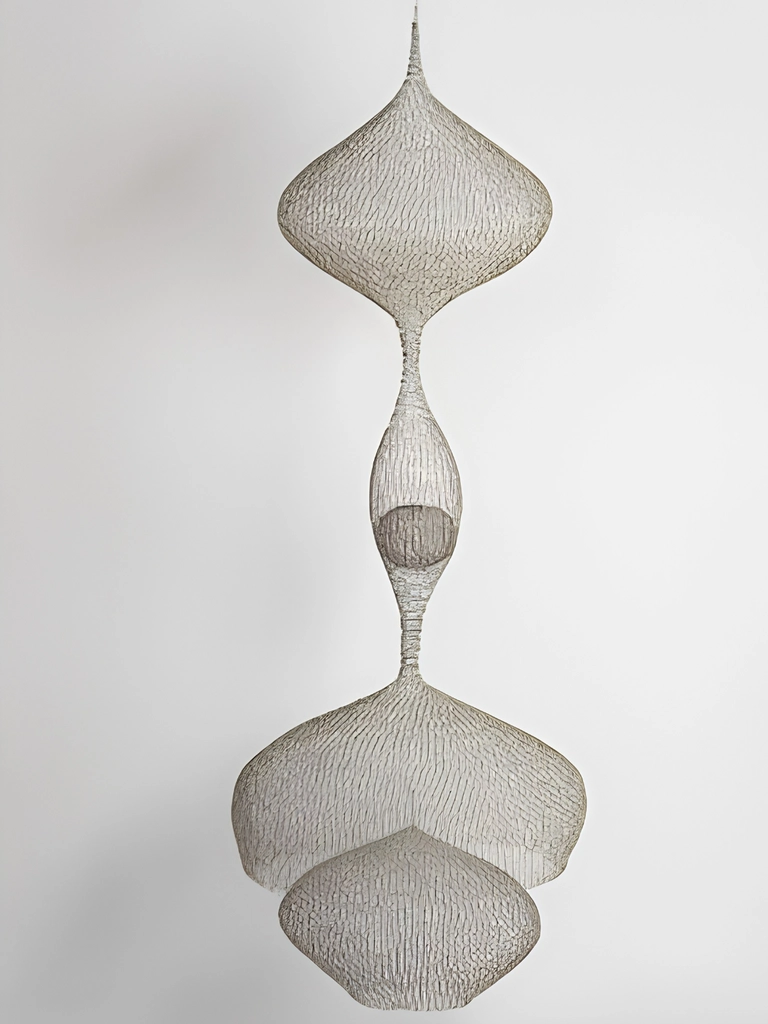
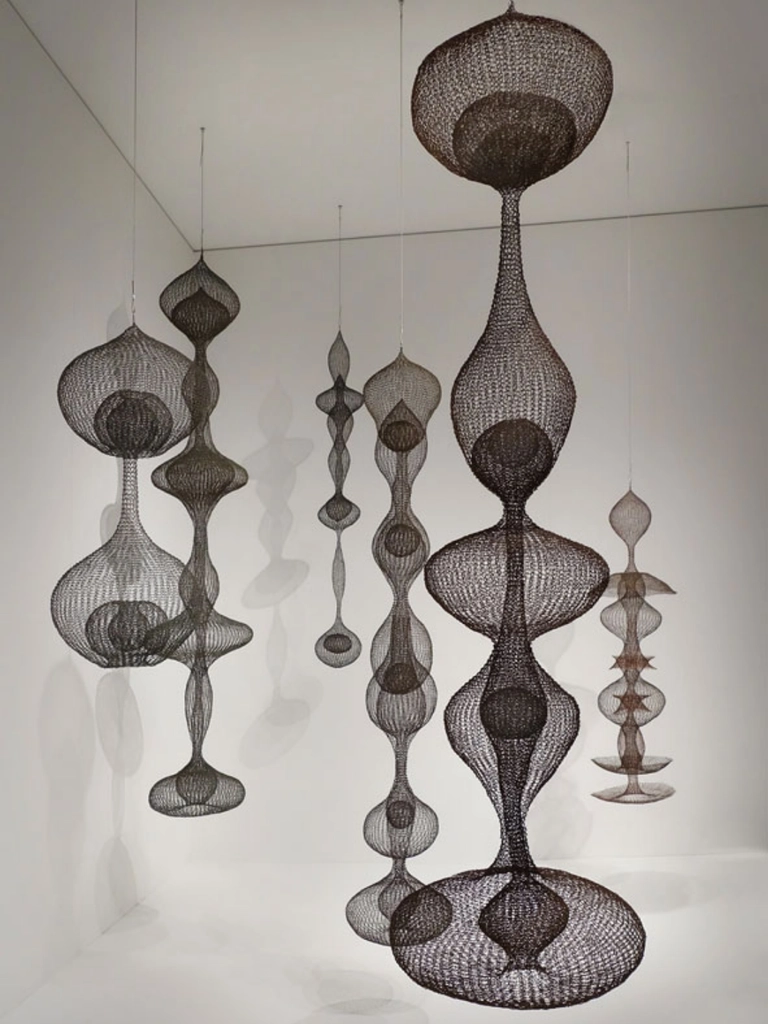
The cast shadow completes the work. Every loop produces another line on the wall, enlarging the object into a second, unstable drawing. A slight movement rearranges this shadow field, making the sculpture appear to breathe. What hangs in front of the viewer represents only half of the experience. The remaining half appears behind it, enlarged, blurred, and continually rewritten by light.
Brass, steel, copper, and galvanised wire achieve the delicacy usually assigned to fibre or ink. The physical weight of metal survives, though its visual heaviness disappears. Asawa accomplished this transformation through structure, controlling the density and rhythm of each loop until solidity gave way to transparency.
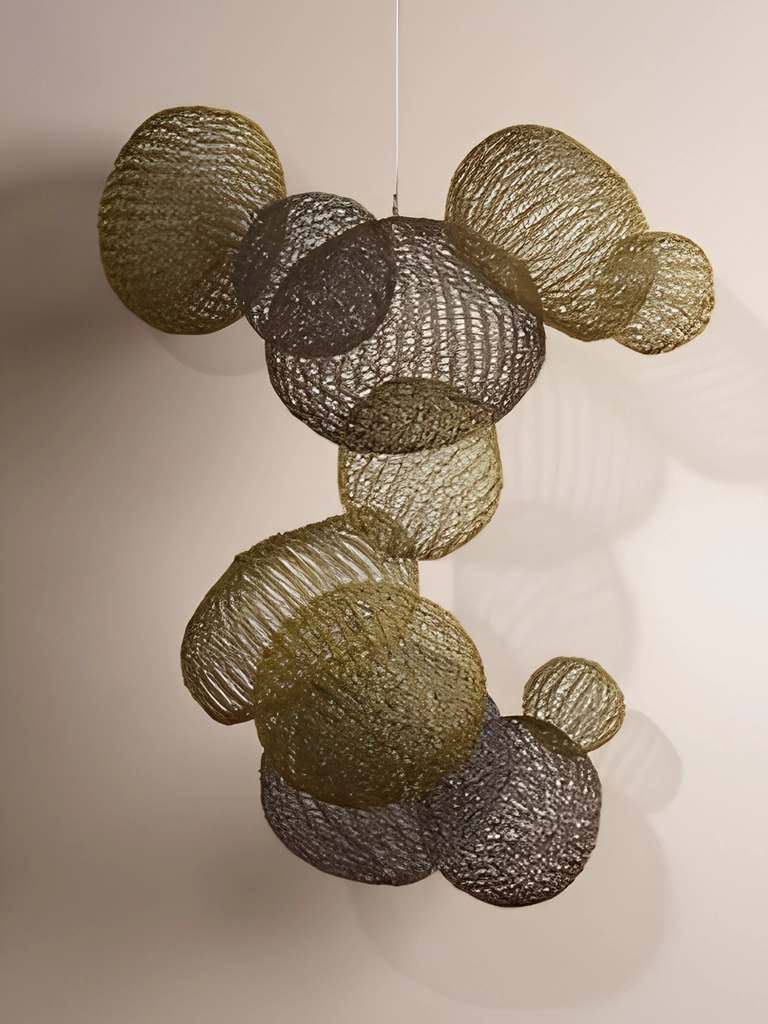
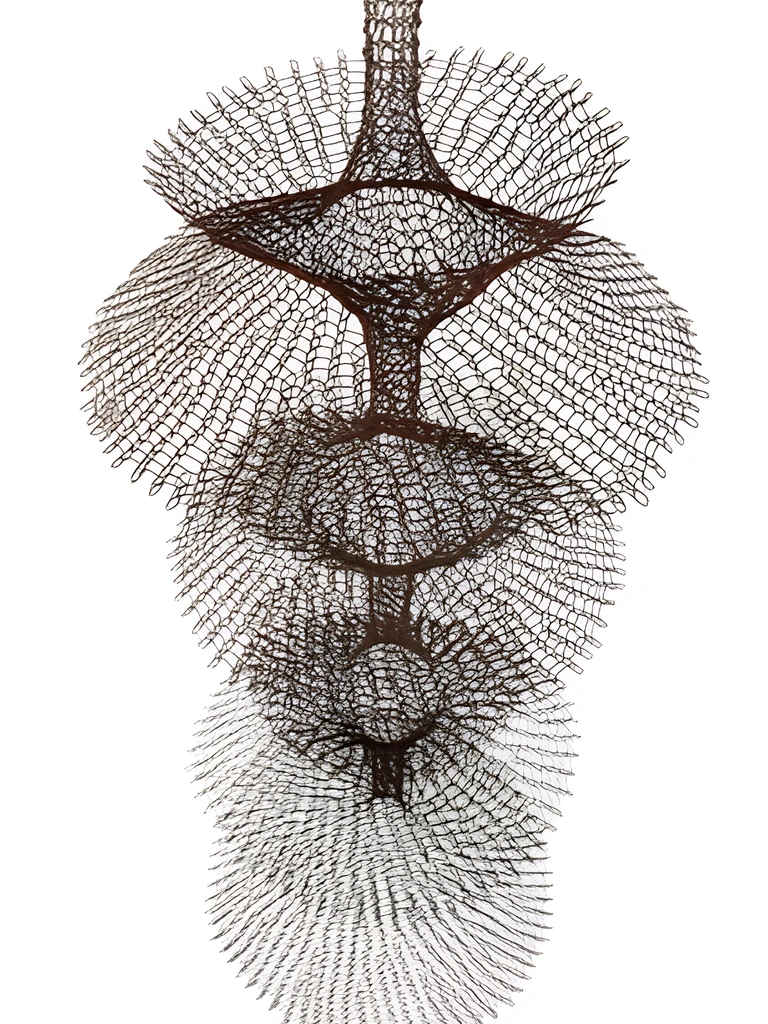
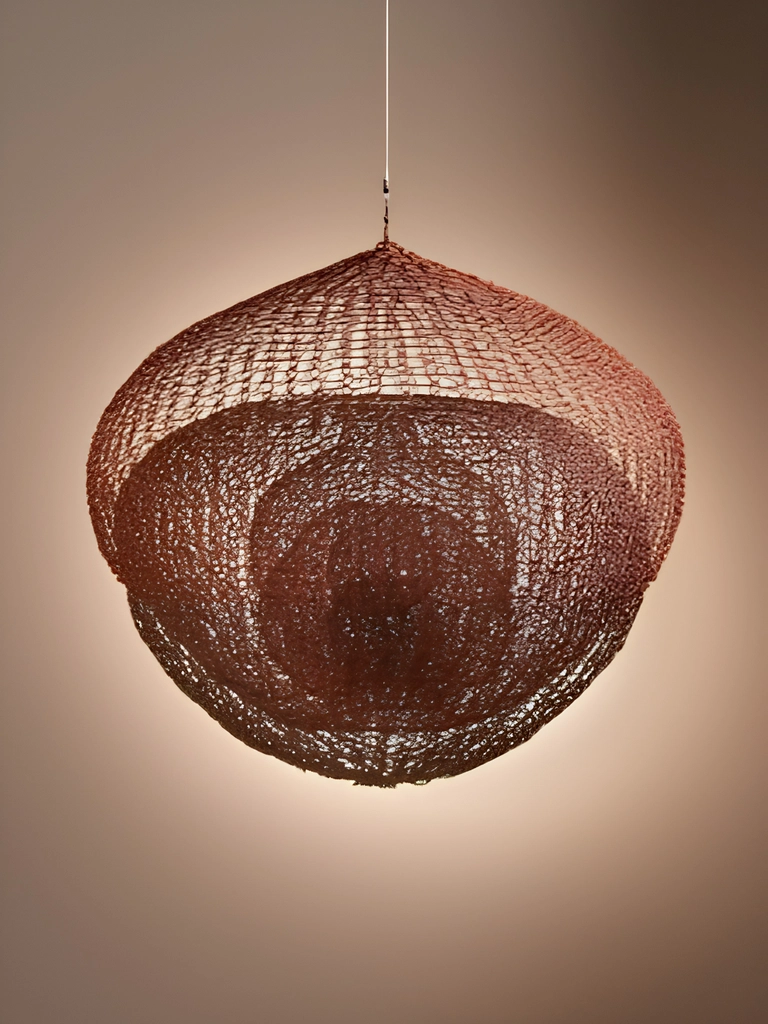
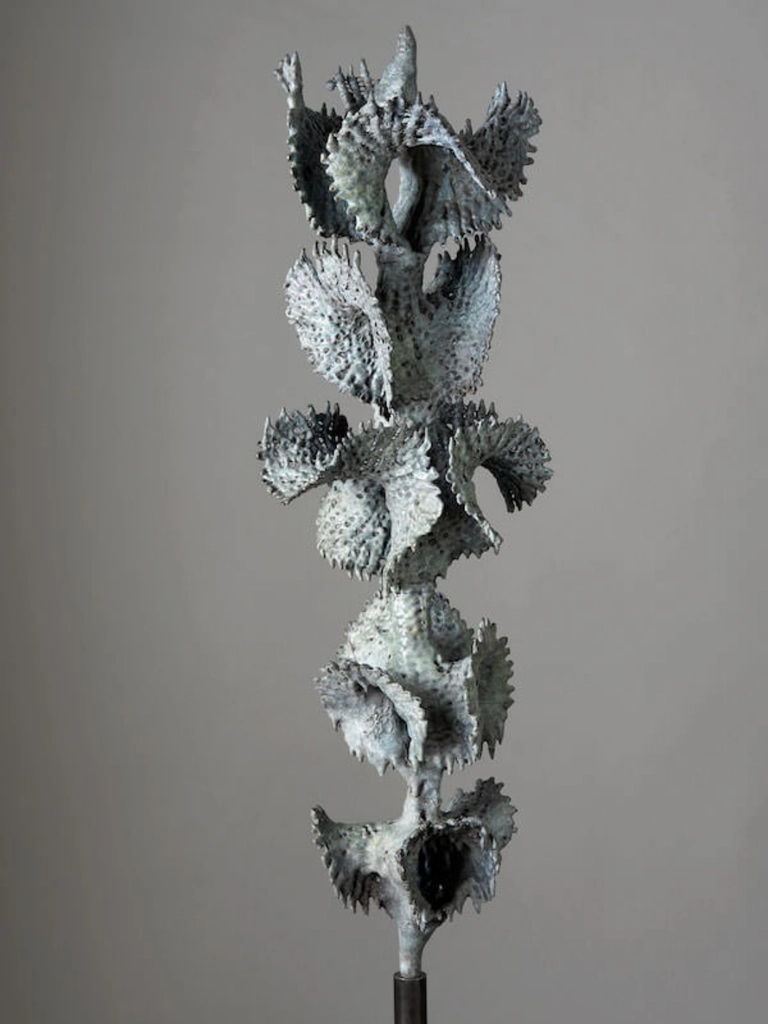
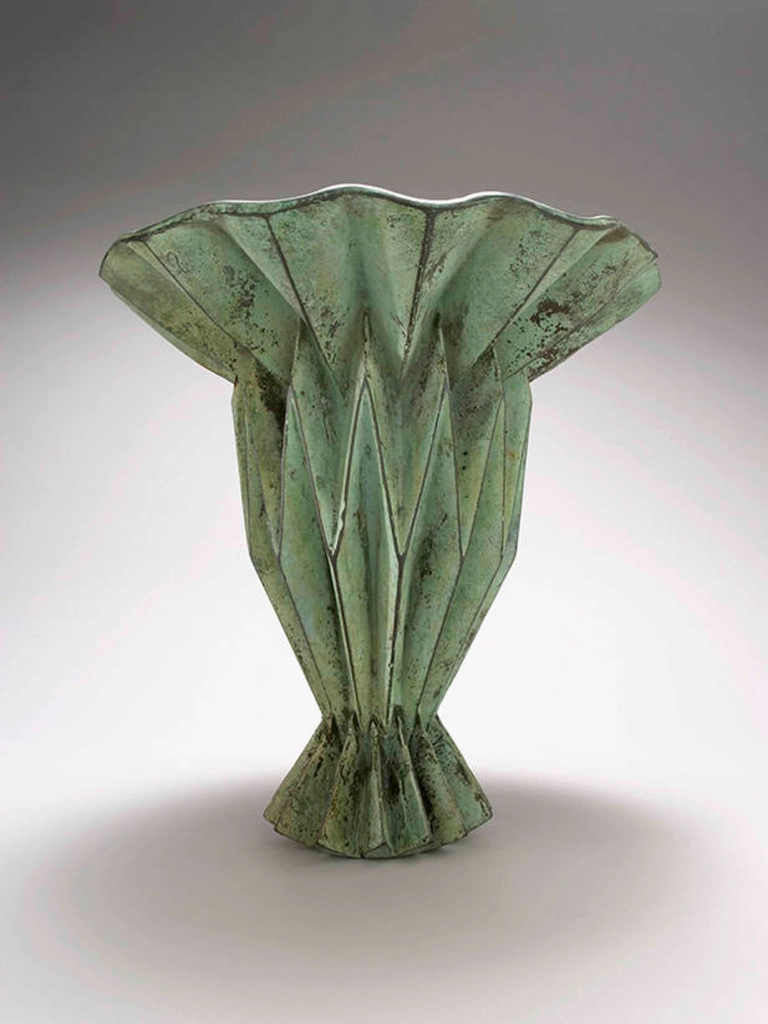
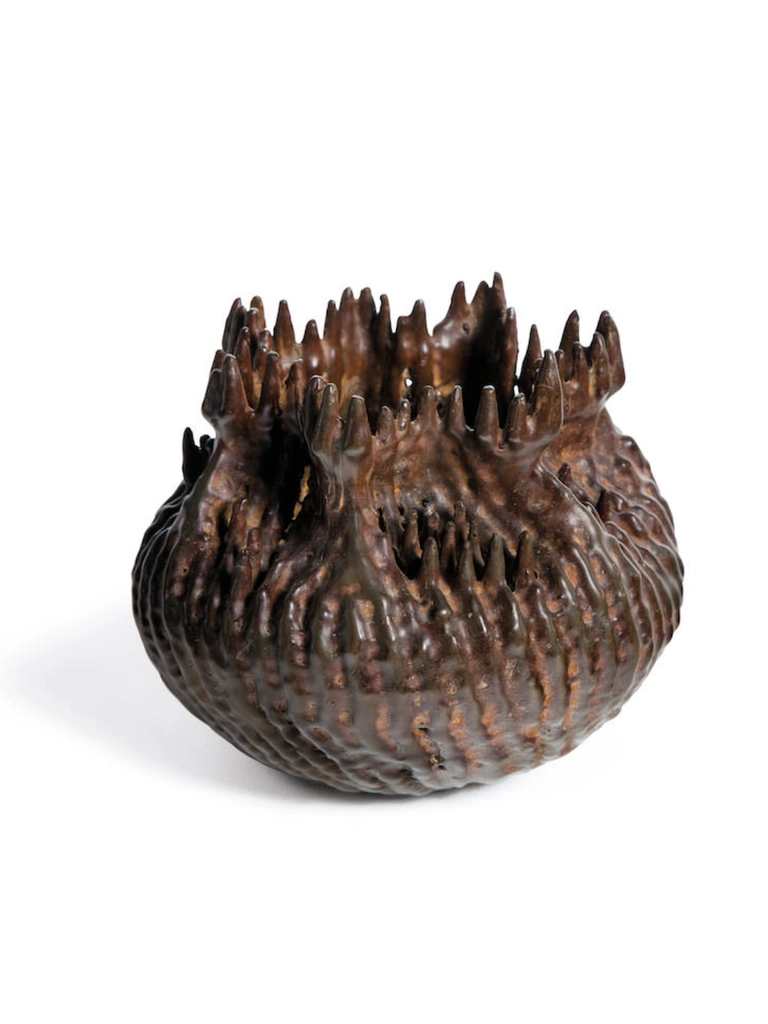
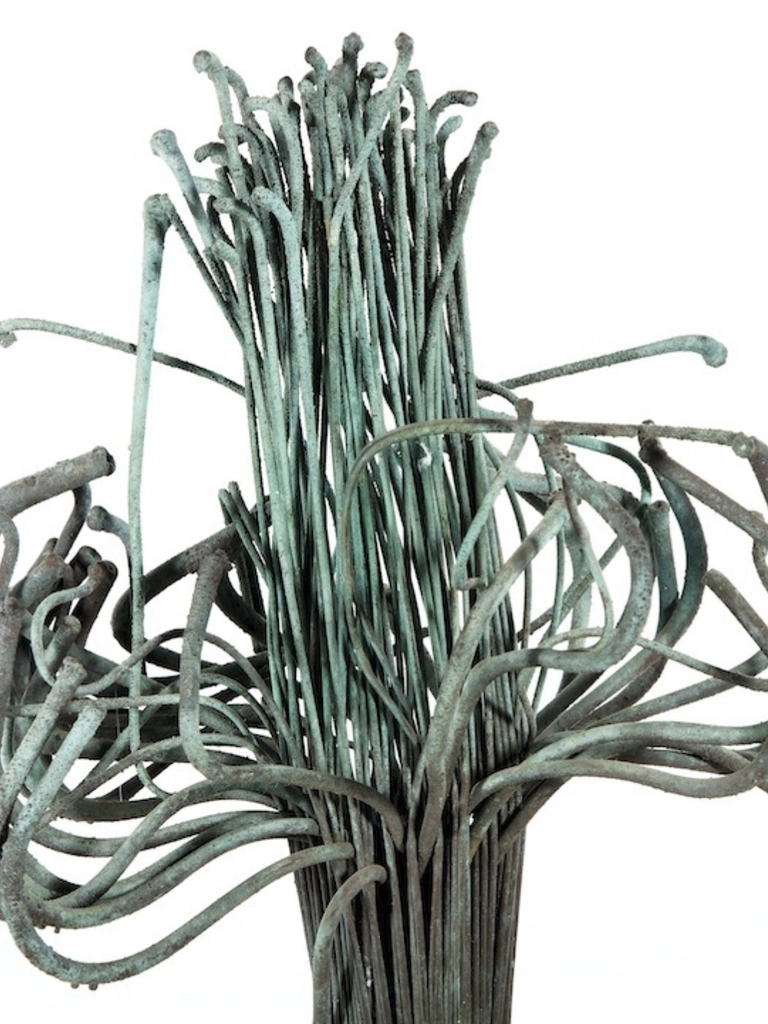
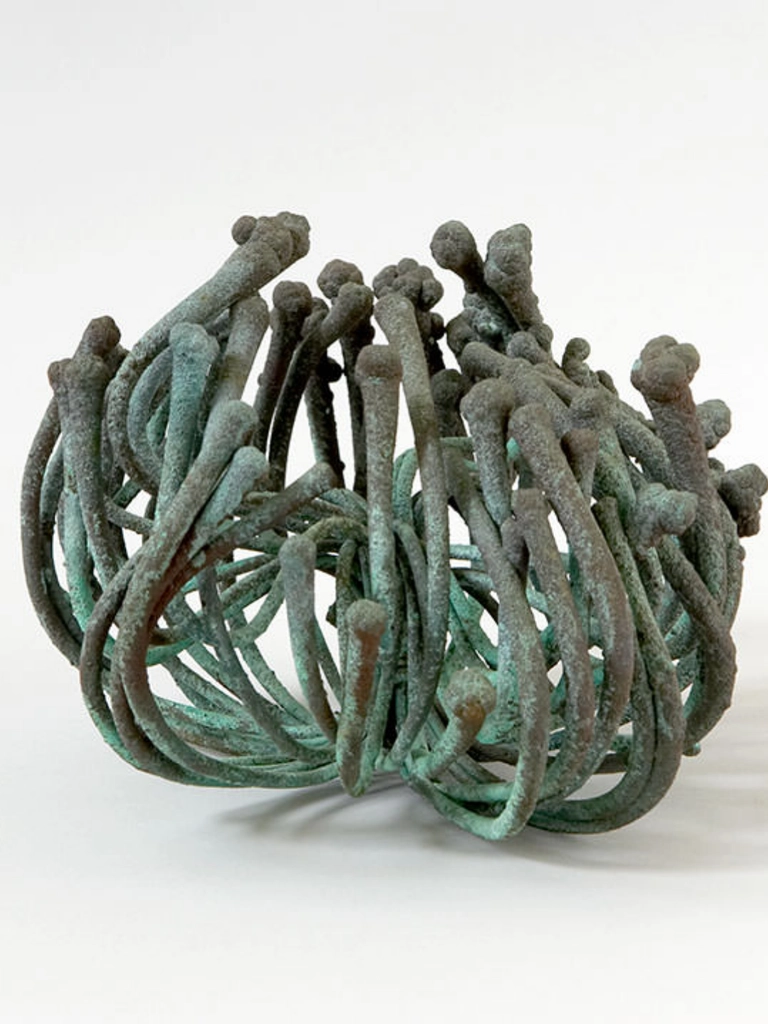
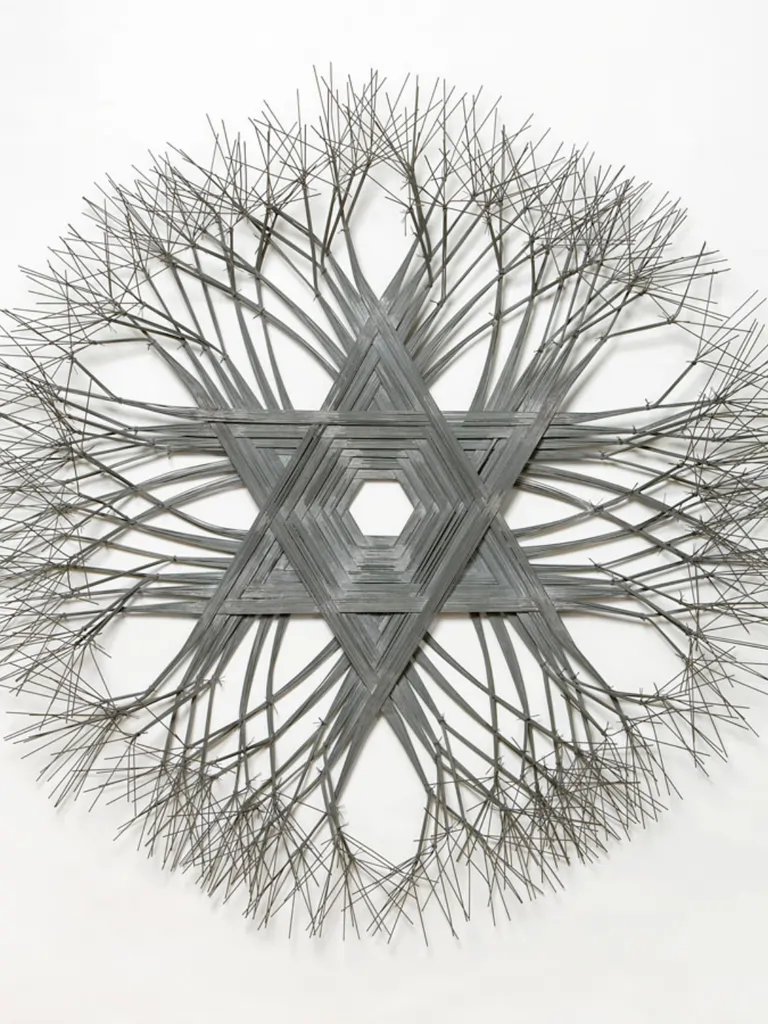
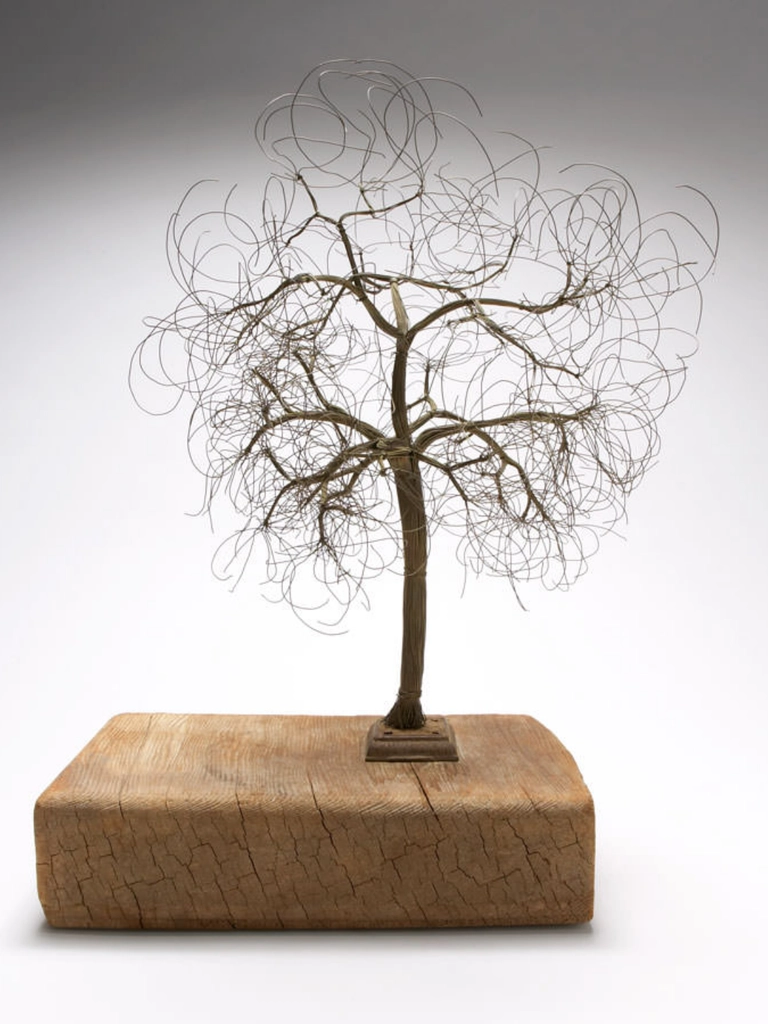
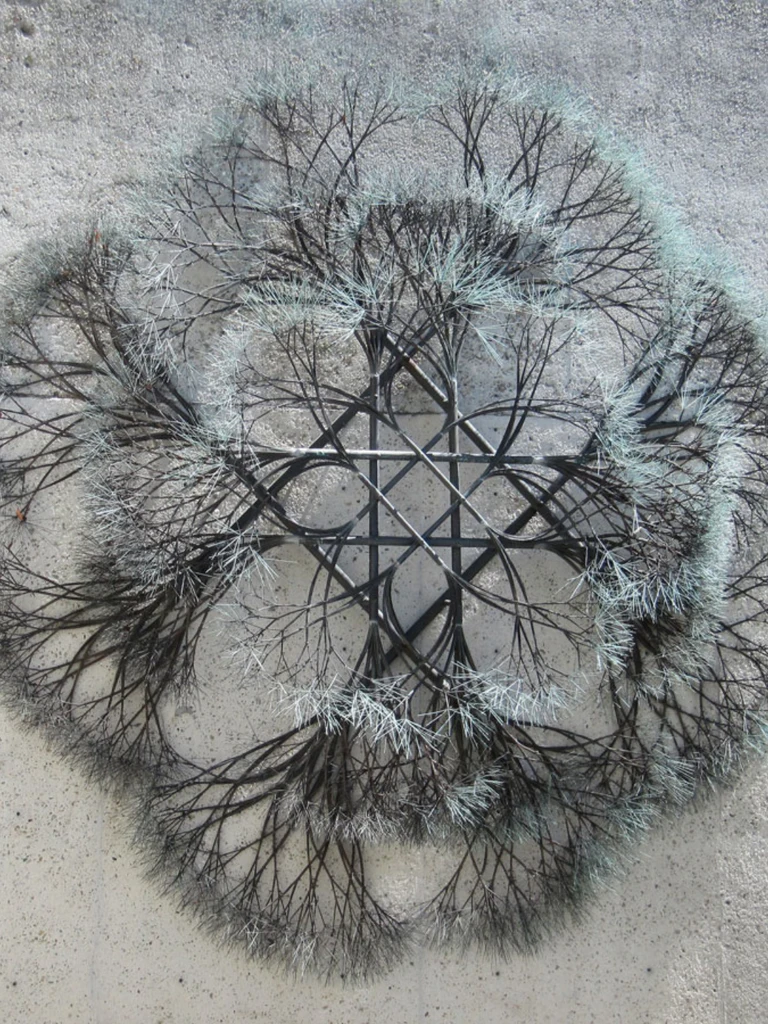
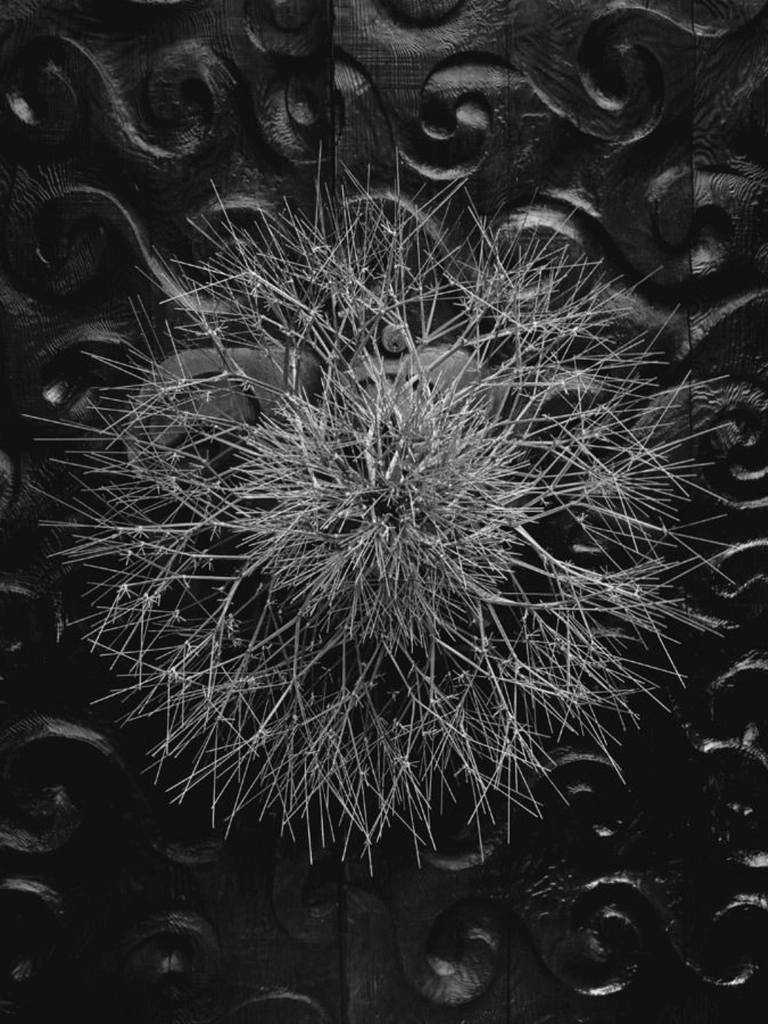
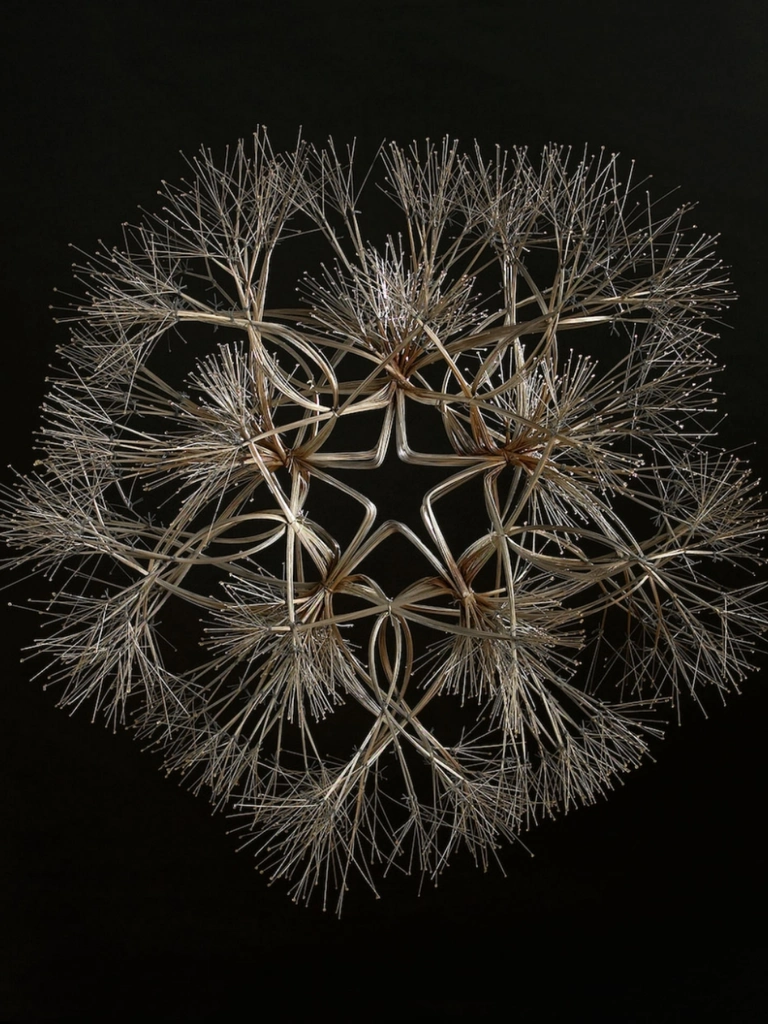
Her later tied-wire works branched like trees, roots, flowers, and microscopic organisms. Bundles of wire divided outward into radial forms that appeared simultaneously botanical and anatomical. Electroplating, clay, casting, and bronze extended the same inquiry into mineral, mossy, encrusted, and weathered surfaces. Her materials changed, while the central question remained consistent: how much complexity could grow from one repeated action?
Asawa married architect Albert Lanier in 1949 and settled in San Francisco, where the couple raised six children. Their Noe Valley house became an integrated creative environment. Wire sculptures hung from living-room rafters; drawings, masks, plants, children, visitors, and works by friends occupied the same field. Her studio remained inside the home, making artistic labour visible as part of family life.
This arrangement is often sentimentalised as proof that Asawa “balanced” motherhood and art, a phrase that treats domestic labour as her private obstacle and professional art as the achievement beyond it. Her practice proposed something more radical. The household became a production system, classroom, meeting place, garden, archive, and testing ground. Repetition, patience, touch, and continuity linked care to artistic methods.
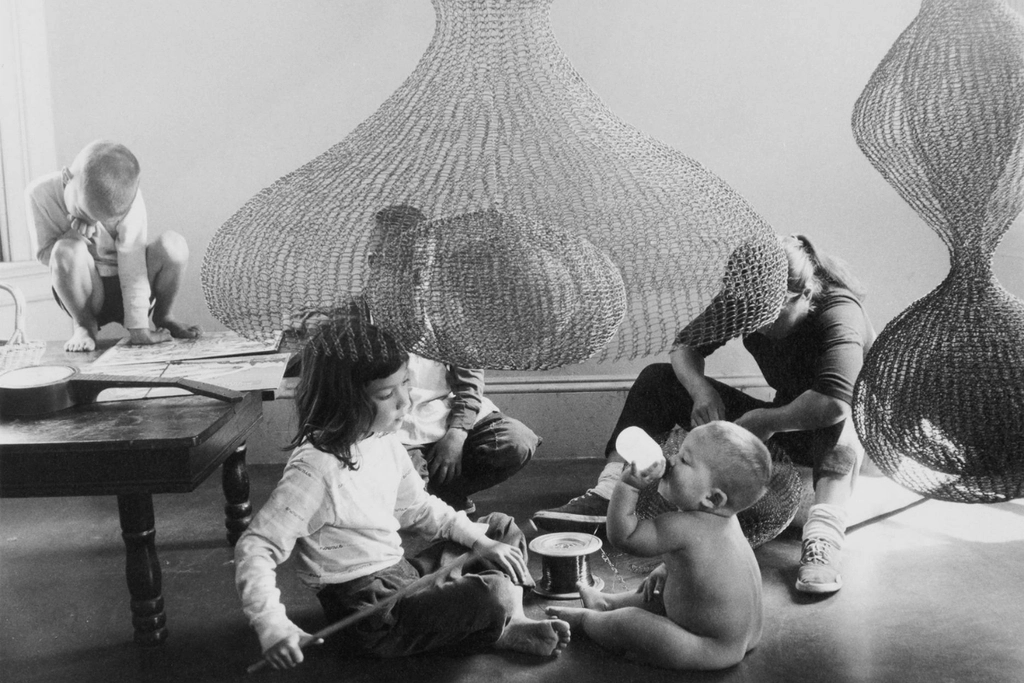
Her children grew up beneath sculptures whose longest forms descended from the ceiling while leaving enough room to run underneath them. Art retained no ceremonial distance. Wire needed untangling, clay needed mixing, models needed to sit still, and ordinary household objects could become tools for experiments. Creation existed beside meals, homework, visitors, gardening, and conversation.
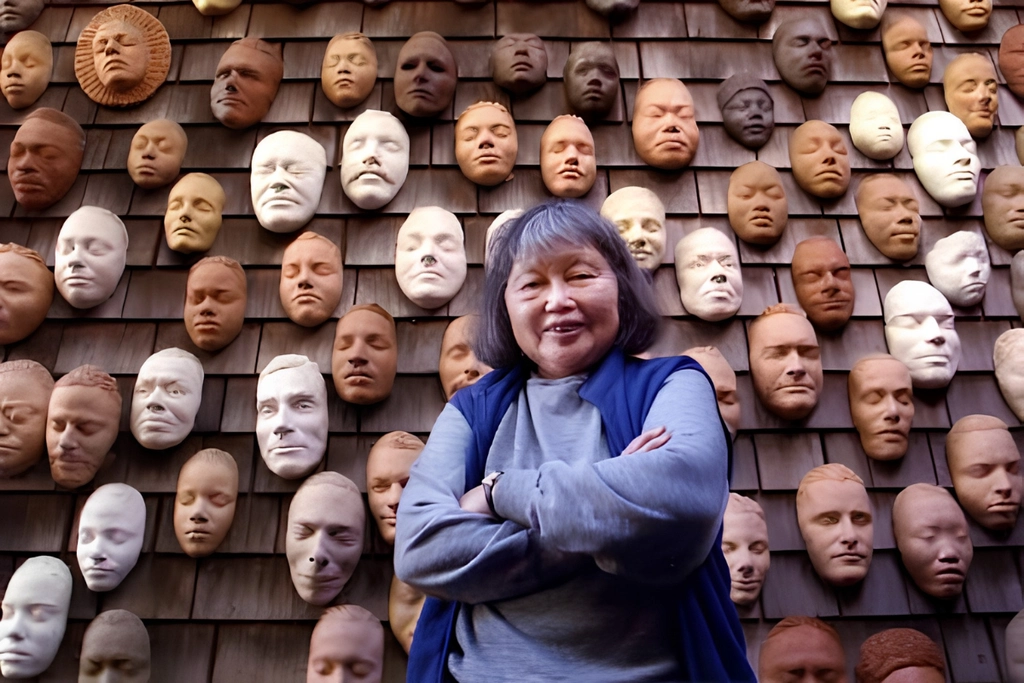
The Wall of Masks records this social world. From the mid-1960s through 2000, Asawa cast hundreds of faces belonging to relatives, friends, artists, students, and visitors. A group of 233 masks entered the Cantor Arts Center’s collection and went on long-term display in 2022. Together, they form a portrait without rank. Celebrity, neighbour, child, and family members receive the same direct attention.
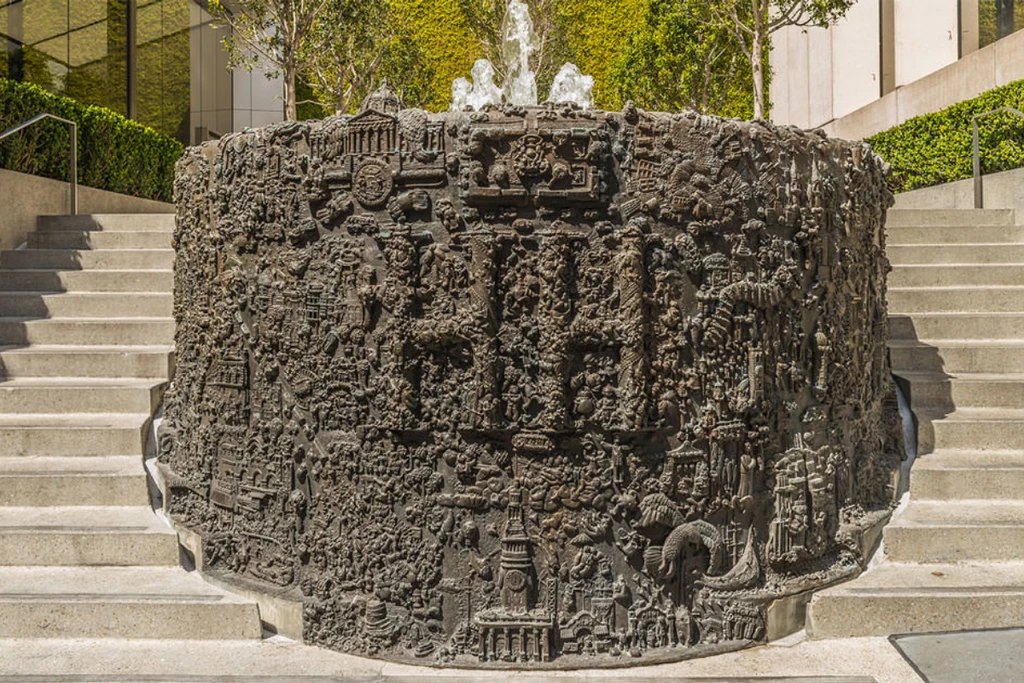
The San Francisco Fountain, completed near Union Square in 1973, gathered clay scenes modelled by Asawa, schoolchildren, friends, and community participants before they were cast in bronze. San Francisco appears through landmarks, neighbourhood stories, shared memory, and handmade marks. Ruth Asawa treated participation as part of authorship and touch as a legitimate form of access. Fifteen wire sculptures that she selected and gifted remain on view in the de Young Museum’s tower lobby, interacting with architecture, daylight, visitors, and movement.
In 1968, she co-founded the Alvarado School Arts Workshop, bringing artists, parents, musicians, and gardeners into public schools using inexpensive materials. At its height, the programme reached 50 San Francisco schools.
Her advocacy helped establish the city’s public arts high school in 1982; it was renamed the Ruth Asawa San Francisco School of the Arts in 2010. Art education, in her vision, functioned as public infrastructure, training observation, independence, material intelligence, and cooperation. Creativity belonged inside the basic structure of civic life, accessible long before museums, markets, and professional gatekeepers could decide who qualified as an artist.
Asawa appeared in Whitney annual exhibitions in 1955, 1956, and 1958 and entered important museum collections. Yet her position in postwar abstraction remained unstable because its dominant history privileged heroic scale, masculine gesture, industrial fabrication, and divisions between fine art and craft.
Asawa worked at home, raised children, collaborated with communities, and used industrial wire through a technique associated with basketry and crochet. The old canon read these facts as peripheral. They were the architecture of her modernism. xhibitions have corrected the scale of that error. The 2022 Venice Biennale placed her suspended sculptures inside a historical inquiry into vessels, bodies, and interdependence. Ruth Asawa Through Line, shown at the Whitney Museum from September 2023 to January 2024 and co-organised with the Menil Collection, established drawing as a foundational practice instead of a minor activity supporting her sculpture.
The joint SFMOMA and MoMA retrospective presented about 300 works across sculpture, painting, drawing, printmaking, bronze, and public art. It opened in San Francisco in April 2025 and concluded in New York on February 7, 2026, becoming the first posthumous survey to address the full breadth of her six-decade career. A 2020 pane of USPS Forever stamps had already carried ten of her sculptures into everyday circulation, a fitting honour for an artist who rejected the separation of art from daily life. ection arrives late, though it changes more than one artist’s reputation.
Ruth Asawa forces modern art to admit that innovation can emerge from weaving, parenting, teaching, gardening, collective labour, and the patient repetition of one line.