Beneath jewellery’s polished surfaces, a geological power shift is quietly redrawing the map of rarity. The next legendary gemstones might emerge from these new mines. Look out, discerning jewellery lovers!
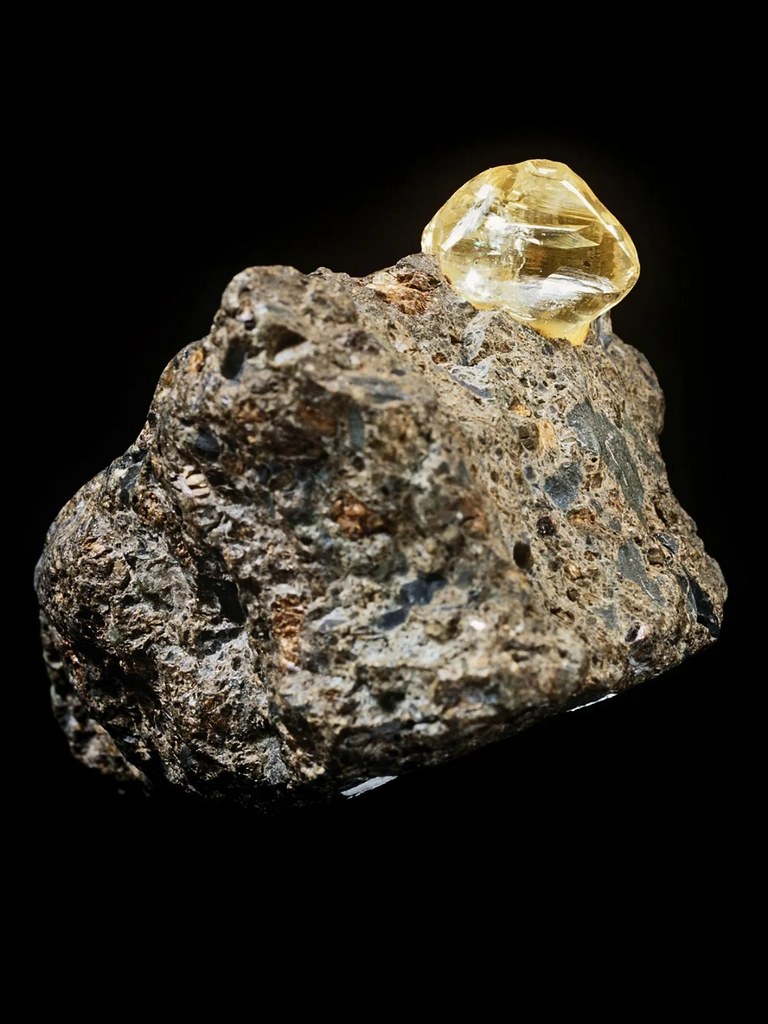


The gemstone industry has always depended upon geological accidents. Volcanic eruptions carried diamonds towards the earth’s surface. Hydrothermal fluids deposited emeralds inside fractured rock. Rare combinations of copper and manganese gave certain tourmalines their electric colour. For centuries, the trade’s most important locations appeared almost mythological: Golconda, Muzo, Kashmir, Mogok and Paraíba.
The next chapter is markedly less romantic in its methods. New deposits are being targeted through airborne surveys, geochemical modelling and machine-assisted analysis. Existing mines are descending underground as their accessible open pits reach their limits. Laboratories, meanwhile, are racing to distinguish stones from emerging sources whose chemical signatures challenge conventional origin testing.
These new mines are the new geological frontier, they are changing not only where important stones are found, but how rarity, provenance and value are understood.
A Gemstone Market Divided by Origin
The development of new mines remains an exceptionally slow business. S&P Global’s study of 127 mines found an average of 15.7 years between discovery and commercial production, with individual projects taking between six and 32 years. Almost 12 years of that average were consumed by exploration, feasibility studies and permitting before construction could properly begin. The figure applies across mineral mining rather than gemstones alone, but it illustrates why a promising kimberlite intersection cannot immediately be translated into jewellery supply.
Technology may improve targeting and processing, yet it cannot eliminate geology, financing, environmental approvals or negotiations with host governments. A deposit must first prove that it contains enough recoverable material of sufficient quality to justify the infrastructure built around it.
At the same time, the natural-diamond market is becoming structurally divided. Russia historically accounted for roughly 30% of global diamond output by volume, but G7 countries began prohibiting Russian diamond imports in 2024 and have extended restrictions to certain stones processed in third countries. Alrosa, already sanctioned by the United States and European Union, produced 29.8 million carats in 2025 and forecast a further reduction to between 25 million and 26 million carats in 2026.
This does not automatically mean that the world is running out of diamonds. The wider natural-diamond market has been weakened by subdued demand, inventories and competition from laboratory-grown stones. Instead, the sanctions have produced a split between globally available diamonds and stones acceptable within closely monitored Western luxury supply chains. Fully documented, non-Russian premium rough may therefore gain strategic value even while ordinary diamond prices remain under pressure.
Angola has recognised the opportunity. Its 2026 national production target was reported at 16.2 million carats, supported by established operations such as Catoca and new mines, such as the Luele mine, while international companies return to explore the country’s underexamined kimberlite terrain.
Angola Reopens the Diamond Map
In August 2025, De Beers announced that drilling conducted with Angola’s state-owned Endiama had intersected a previously unknown kimberlite field—the company’s first such field discovery in more than 30 years. The target emerged from a broader exploration programme after De Beers returned to Angola in 2022, following an absence of approximately a decade.
The announcement was deliberately cautious. Kimberlite is the volcanic rock most commonly associated with primary diamond deposits, but its presence does not guarantee an economically viable mine. Samples must still establish the pipe’s geometry, diamond grade, size distribution and potential value per carat. Further drilling and laboratory analysis will determine whether the discovery becomes a producing asset or another geological curiosity.
Nevertheless, its importance extends beyond immediate production. De Beers’ mature mines are ageing, while major new diamond discoveries have become rare. A viable Angolan field would give the company a new source of rough and strengthen Angola’s attempt to reposition itself from a historically difficult jurisdiction into a serious destination for global mining capital.
Rio Tinto is making a parallel wager through Chiri in Lunda Sul. The company began evaluating the Chiri kimberlite with Endiama under a 2021 agreement and later formalised Sociedade Mineira do Chiri, in which Rio Tinto holds 75% and Endiama 25%. The project lies approximately 12 kilometres east of Catoca, inside one of Angola’s most prospective diamond districts.
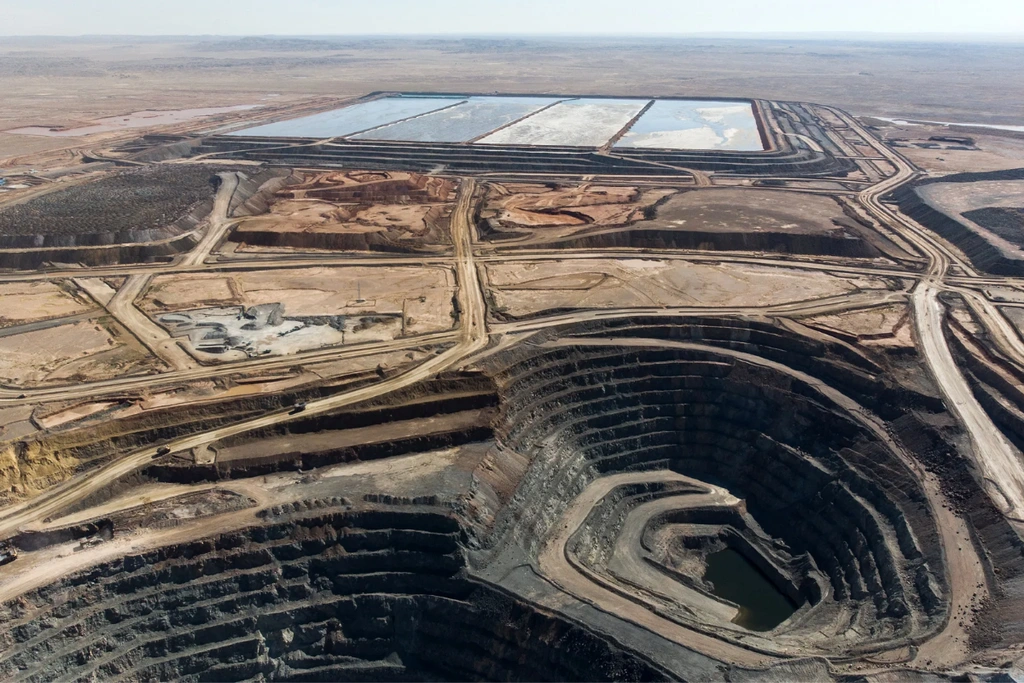
Chiri has sometimes been presented as a future major producer, but it remains an evaluation project rather than a scheduled mine. Rio Tinto has not announced final capital expenditure or a firm production date. That distinction matters. Its strategic significance lies in the possibility that Rio Tinto, which is approaching the end of production at Canada’s Diavik mine, could retain a position in natural diamonds through a completely different geological and political geography.
Together, Chiri and the De Beers-Endiama discovery reveal Angola’s larger ambition: to make unexplored land, state participation and foreign technical expertise work as a single mining strategy.
Karowe Takes the Search Underground
While Angola represents discovery, Botswana’s new mines, namely the Karowe mine represents geological continuation. Its most valuable future does not lie across a new surface concession but below the bottom of its existing pit.
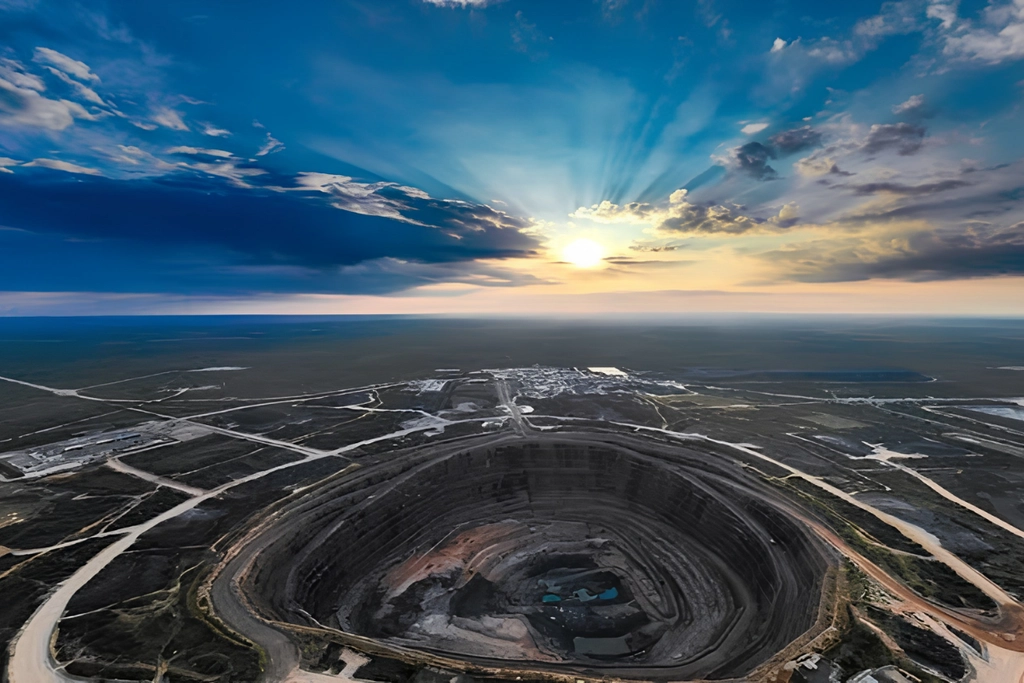
Operated by Lucara Diamond, Karowe has become famous for producing exceptionally large, high-quality Type IIa diamonds. Its underground expansion is designed to reach the deeper, high-value portion of the South Lobe through two shafts descending roughly 750 metres. Full-scale underground production is scheduled for the first half of 2028, with development ore expected to begin supplementing stockpiles in 2027. The revised project cost stands at approximately $683.4 million, and underground mining is expected to extend Karowe’s life beyond 2040.
Karowe also demonstrates how processing technology can change the capability of preserving new mines. Conventional crushing can damage unusually large diamonds before anyone knows they are present. Lucara’s Mega Diamond Recovery system uses X-ray Transmission technology to identify high-density material within ore at an earlier stage, allowing exceptional crystals to be separated before destructive processing.
In August 2024, that system recovered a diamond initially weighed at 2,492 carats. After cleaning, Lucara recorded it at 2,488 carats and named it Motswedi. It remains one of the largest rough diamonds ever recovered, second in historical scale only to the 3,106-carat Cullinan found in 1905.
The stone is more than a spectacular anomaly. It validates the relationship between the underground project and the recovery plant because Motswedi came from the same valuable kimberlite unit that will dominate Karowe’s early underground production. New mines therefore not descending simply to maintain volume; it is following the geological zone responsible for its identity.
Mir Deep and the Sanctioned Parallel Market
Russia’s Mir deposit offers a darker version of the underground transition. The original Mir mine in Yakutia was one of the Soviet Union’s defining diamond operations. Underground mining was suspended after a disastrous flooding event in 2017, leaving Alrosa to reconsider how the remaining deposit could be accessed without reconnecting to compromised workings.
The new mines should now be underground. Hence, Project Mir-Gluboky, or Mir Deep, is being designed to be an underground mine rather than a straightforward reopening. Alrosa has cited reserves of approximately 173.5 million carats, planned annual production near three million carats and a possible production start in 2032. The company’s own project history confirms that design work began in 2023, although the investment schedule remains subject to formal decisions and Russia’s wider economic environment.
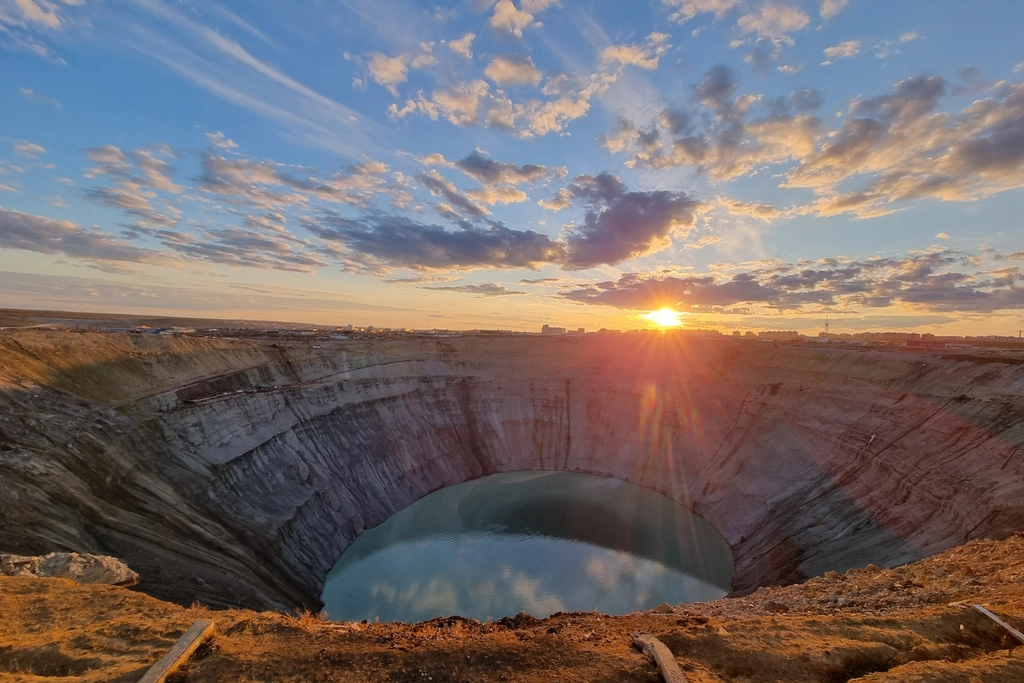
Geologically, Mir Deep could become one of the most important new sources of the 2030s. Commercially, it belongs to a parallel system. Sanctions mean that its output cannot move easily through the traditional G7 luxury circuit, particularly as traceability requirements expand. The stones may instead be directed towards domestic Russian manufacturing or markets outside the sanctioning coalition.
Mir Deep therefore exposes a new kind of rarity. A stone may be abundant underground yet scarce within a particular legal, ethical or commercial network. In contemporary high jewellery, availability is increasingly defined not only by geology but by whether origin can be documented and accepted.
Colored Gemstones Enter Their Industrial Era
Diamonds are not alone in moving towards deeper, more organised extraction. Colombia’s Coscuez emerald mine, located in Boyacá’s historic emerald region, is being transformed from a site associated with fragmented traditional workings into a larger, technically managed underground operation.
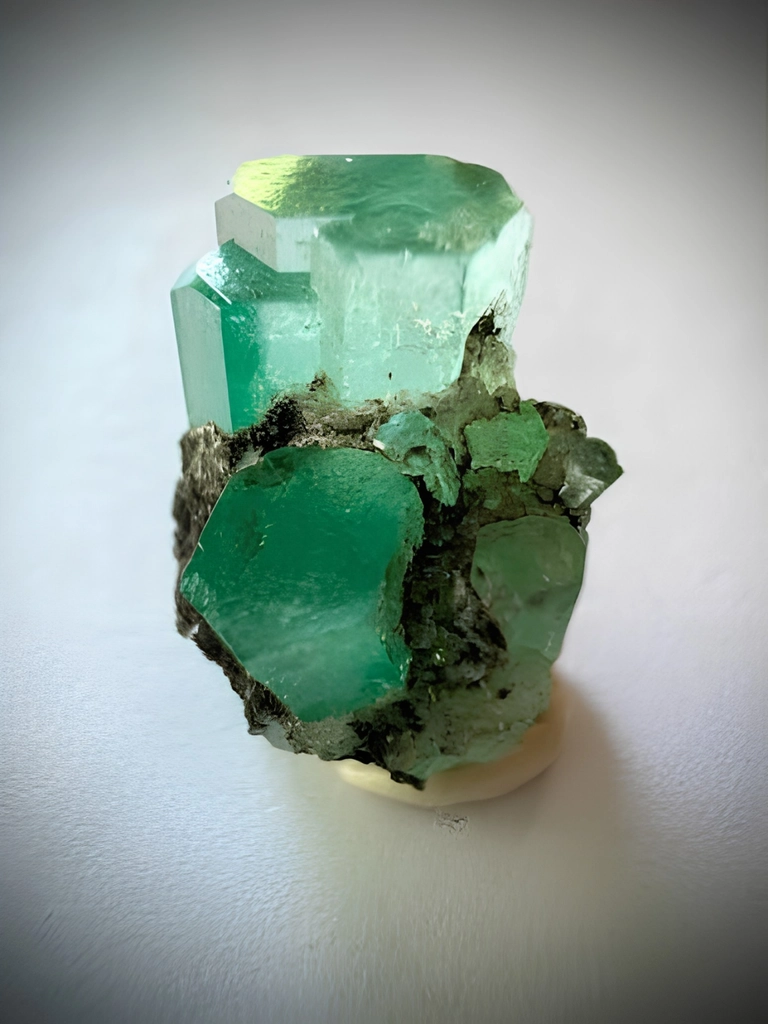
Fura Gems received a 30-year extension to the Coscuez mining licence in 2020 and a large-scale environmental permit in December 2021. The company subsequently expanded its processing plant and introduced optical sorting designed to identify emerald-bearing material with less manual intervention.
The modernisation is significant because coloured gemstones have traditionally lacked the production regularity and standardised distribution systems of diamonds. A mechanised Coscuez could supply documented Colombian emeralds in more consistent quantities while preserving the origin premium associated with the Muzo belt. Yet scale must be handled carefully: emerald value depends upon exceptional individual crystals, not simply tonnes of ore processed.
Ethiopia represents the opposite condition-a young source whose finest material still arrives unpredictably. Emeralds were discovered in the Seba Boru district in 2016. GIA testing found that much of the production was commercial quality, but it also documented fine crystals with notable size, colour and clarity, including stones that could be cut without clarity enhancement.
Then came an even more disruptive possibility. In June 2026, the Swiss Gemmological Institute SSEF reported credible indications of a new Ethiopian source of copper-bearing tourmaline, known in the trade as Paraíba tourmaline. Until then, recognised deposits had been associated with Brazil, Nigeria and Mozambique.
SSEF did not present the Ethiopian origin as fully resolved. Several submitted stones proved difficult or impossible to classify geographically because their trace-element compositions overlapped substantially with material from established sources. The laboratory had already been developing machine-learning methods for Paraíba origin determination, but Ethiopia introduces another chemical population into an already complicated problem.
This uncertainty may initially increase, rather than diminish, the premium attached to Brazilian Paraíba. Collectors do not pay for copper alone; they pay for documented geological history. As new sources appear, reports from laboratories such as SSEF, GIA and Gübelin become part of the gemstone’s commercial architecture.
New Mines In The Era Of Slow Gem
The new mines will not necessarily produce more discoveries at greater speed. Instead, it will produce more information around each discovery. Ore bodies will be modelled before they are opened. Diamonds will be scanned before they are crushed. Chemical signatures will be compared through increasingly sophisticated datasets, and every exceptional stone will be expected to carry a defensible chain of origin.
That process creates what might be called the slow gem: a stone whose journey from geological formation to mine, laboratory, auction and atelier is carefully documented rather than obscured.
Angola’s new kimberlites, Karowe’s deep shafts, Coscuez’s mechanisation and Ethiopia’s laboratory puzzle appear to be separate stories. Together, they reveal a single structural shift. Rarity is no longer determined solely by how little material exists. It is determined by how difficult that material is to reach, preserve, identify and prove.
The great new mines of tomorrow will consequently be judged by more than carat production. Their true luxury will lie in delivering stones whose geological identity survives every stage of the journey to the jewel.