




From the historic routes of the Indian Ocean to the evolving languages of contemporary art, Frieze Abu Dhabi 2026 marks a new chapter in the emirate’s cultural ambitions. Bringing together 84 galleries from across the world, the inaugural edition positions Abu Dhabi as a meeting ground for artistic histories, emerging voices and international collecting.

Frieze Abu Dhabi 2026 And the Geography of Artistic Exchange
From the historic routes of the Indian Ocean to the evolving languages of contemporary art, Frieze Abu Dhabi 2026 marks a new chapter in the emirate’s cultural ambitions. Bringing together 84 galleries from across the world, the inaugural edition positions Abu Dhabi as a meeting ground for artistic histories, emerging voices and international collecting.
November 20, 2026


The arrival of Frieze Abu Dhabi 2026 signals more than the expansion of an international art fair into a new territory. It represents an evolving relationship between global art institutions and the cultural ecosystems of West Asia, North Africa and South Asia (WANASA), where artistic practices, historical narratives and contemporary ideas have increasingly entered international discourse. Held from 19 to 22 November at Manarat Al Saadiyat, the inaugural edition brought together 84 galleries from 64 cities across 37 countries and regions, transforming the Saadiyat Cultural District into a meeting point for collectors, artists, curators and cultural institutions.
Presented in partnership with the Department of Culture and Tourism – Abu Dhabi, Frieze Abu Dhabi 2026 builds upon the legacy of Abu Dhabi Art, which spent 17 years cultivating a network of artists, galleries, collectors and institutions. Rather than establishing an entirely unfamiliar platform, the new fair inherits an existing cultural infrastructure and expands its international connections under the Frieze name. The transition reflects Abu Dhabi's sustained investment in cultural development, positioning the emirate within an increasingly interconnected international art market.
The arrival of Frieze Abu Dhabi 2026 also marks a significant expansion of Frieze's global network, joining Frieze London, Frieze Los Angeles, Frieze New York and Frieze Seoul. Yet its inaugural programme was not conceived simply as another international marketplace. Its curatorial framework emphasised the artistic histories and cultural connections of the wider region, allowing international galleries to participate in a dialogue shaped by the particular geography, historical memory and contemporary aspirations of Abu Dhabi.
At Manarat Al Saadiyat, the resulting exhibition landscape brought together works spanning antiquity, the early twentieth century and contemporary practice. The breadth of this chronology offered visitors an opportunity to encounter art not as a succession of isolated periods, but as a continuum of materials, ideas and cultural exchange.
Frieze Abu Dhabi 2026 Brings Galleries Across Borders and Generations
The main Galleries section established the international character of Frieze Abu Dhabi through a carefully assembled constellation of galleries from the UAE, wider West Asia, North Africa, South Asia, Europe, East Asia, the Americas and Africa. The regional presence was particularly notable, with galleries such as Carbon 12, Lawrie Shabibi, The Third Line, Tabari Artspace and Iris Projects representing the UAE's established gallery ecosystem.
Beyond the Emirates, participants included Athr and Hafez Gallery from Saudi Arabia, Dastan from Tehran, Galerie Tanit and Mark Hachem from Lebanon, and Galerist and BüroSarıgedik from Istanbul. North Africa was represented by galleries including Selma Feriani, Elmarsa Gallery, A.Gorgi Gallery and Le Violon Bleu Gallery from Tunisia, alongside Gypsum and ArtTalks | Kanafani Gallery from Cairo and Loft Art Gallery from Casablanca. Indian galleries such as Experimenter, Galerie Isa, Jhaveri Contemporary, Nature Morte and Project 88 further broadened the regional dialogue.
The international roster complemented these regional perspectives with established names from the global art market. Gagosian, Pace Gallery, Thaddaeus Ropac, Timothy Taylor, Victoria Miro, Perrotin, Galleria Continua, Waddington Custot and Vito Schnabel Gallery were among the participating galleries, alongside a diverse representation from East and Southeast Asia, Europe and the Americas.
Such an arrangement was significant beyond its geographical breadth. By bringing galleries from multiple cultural and commercial environments into the same exhibition framework, Frieze Abu Dhabi created opportunities for audiences to encounter artists whose work may not routinely occupy the same institutional or market spaces. The fair's internationalism was therefore expressed not merely through the number of participating countries, but through the potential for new relationships between artistic practices, collectors and cultural institutions.
The presentations also highlighted the visibility of women artists across generations. Galleries including Richard Saltoun Gallery, Pi Artworks, Lawrie Shabibi and Waddington Custot showcased artists such as Rina Banerjee, Bertina Lopes, Susan Hefuna, Nancy Atakan, Hamra Abbas, Shaikha Al Mazrou, Etel Adnan and Fabienne Verdier. Their inclusion contributed to a wider examination of artistic voices that have shaped and continue to reshape modern and contemporary art across multiple cultural contexts.
Curatorial Encounters With History and New Artistic Voices
Beyond its principal gallery presentations, Frieze Abu Dhabi 2026 distinguished itself through three curated sections: Focus, Frieze Masters Abu Dhabi and Global Futures. Each offered a different interpretative framework, shifting the fair's emphasis from commercial presentation toward artistic experimentation, historical inquiry and cultural storytelling.
Focus, Frieze's established platform for younger galleries, was designed to support emerging practices through experimental solo and dual presentations. In Abu Dhabi, the section received additional attention through bursaries offered to participating galleries, reinforcing the fair's commitment to developing the next generation of artists and cultural intermediaries.
Among its presentations, Management showcased new textile and installation works by Kenyan-born, New York-based artist Tahir Karmali, exploring migration and systems of exploitation. Solo presented sculptural works by Thuy Tien Nguyen, whose automated music-box sculptures draw references from the furnishings of the Republic of Vietnam's Independence Palace. Other presentations included Chonon Bensho with W-galería, Marigold Santos with Patel Brown, Jawad Al Malhi with Iyad Qanazea Gallery and Dala Nasser with Commonwealth and Council.
The inclusion of Thuy Tien Nguyen was particularly notable within the fair's broader cultural context, bringing a Vietnamese artist's sculptural practice into a conversation shaped by historical references, material experimentation and the movement of cultural ideas. Across Focus, the works demonstrated how emerging artists and galleries can approach history not as a fixed inheritance, but as a living material for artistic reinterpretation.
Meanwhile, Frieze Masters Abu Dhabi, curated by Marika Sardar, extended the fair's temporal reach through objects and artefacts spanning antiquity to the early twentieth century. Its inaugural thematic focus was the Indian Ocean, a historical network through which objects, people, ideas and artistic traditions travelled across continents. Through the lens of trade, collecting and cultural exchange, the section examined how material culture has been shaped by movement and interconnected histories.


The presence of specialists in rare books, manuscripts and antiquities, including ArtAncient, David Aaron, Daniel Crouch Rare Books, Peter Finer, Eqtna Rare Books and Peter Harrington, further broadened the section's scope. Rather than presenting historical objects as detached relics, the curatorial framework encouraged visitors to consider their journeys, the communities that produced them and the networks through which they acquired new meanings.

Global Futures, curated by Tarini Malik, approached the contemporary moment through solo presentations by artists whose practices engage with histories and ideas resonating across the UAE and the wider region. Participating galleries included Taymour Grahne Projects with Ala Younis, Aisha Alabbar Gallery with Abdullah Al Saadi, Vermelho with Tania Candiani, Zawyeh Gallery with Mohammed Joha, Chatterjee & Lal with Arshi Irshad Ahmadzai and Marfa' with Seta Manoukian.


Together, the three sections created a layered exhibition experience. Focus looked toward the future of artistic practice, Frieze Masters Abu Dhabi explored the historical movement of culture, while Global Futures examined the ways memory, geography and contemporary experience intersect.
Beyond The Fairgrounds and Into The City
Frieze Abu Dhabi 2026 extended beyond the exhibition halls through a wider programme designed to engage visitors with artistic production, public space and cultural dialogue. Among its initiatives was the debut of the Frieze Abu Dhabi Artist Award, with artist Dala Nasser commissioned to transform the fair's Atrium through a new work curated by Nabila Abdel Nabi. The commission introduced a site-responsive dimension to the fair, allowing artistic experimentation to engage with the architecture and spatial experience of Manarat Al Saadiyat.


In Dialogue, curated by Dirwaza Curatorial Lab, brought an established and emerging UAE artist into an experimental pairing, encouraging an exchange between different generations of artistic practice. The format offered a more intimate curatorial proposition, placing individual works in direct conversation rather than relying exclusively on the broad presentation of multiple galleries.
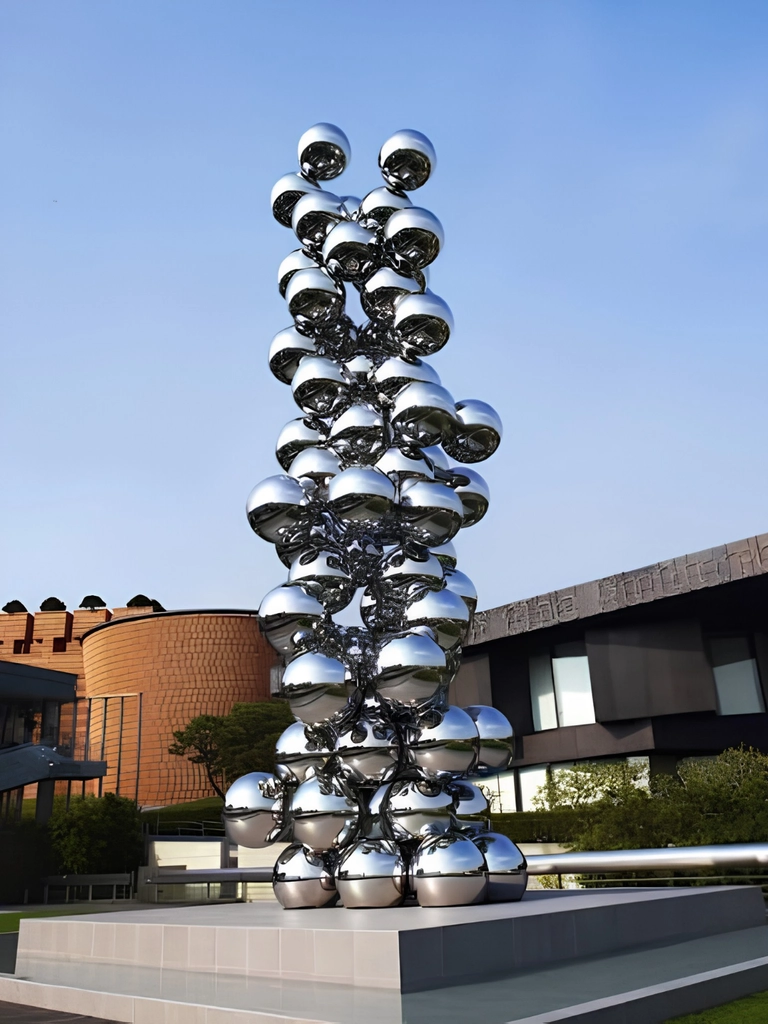
Frieze Sculpture Abu Dhabi, presented by Aldar, further expanded the fair's presence across Saadiyat Island, bringing five large-scale artworks to Mamsha Beach from 16 November. By placing sculpture within a public coastal environment, the programme invited visitors to encounter contemporary art outside the conventional boundaries of a gallery or exhibition hall. The landscape became an active component of the viewing experience, connecting the materiality of sculpture with the open environment and public life.


A three-day talks programme also brought together artists, gallerists, collectors and art-world leaders to discuss collecting, institutional development and artistic practice. These conversations complemented the fair's commercial activity with an intellectual dimension, addressing the conditions through which art is produced, exhibited, acquired and interpreted.
The wider setting of Saadiyat Cultural District contributed to this atmosphere of cultural exchange. Surrounded by institutions including Louvre Abu Dhabi, Zayed National Museum and the developing Guggenheim Abu Dhabi project, Manarat Al Saadiyat occupies a landscape in which museums, exhibitions, public programmes and cultural infrastructure increasingly converge. Frieze Abu Dhabi therefore arrived within an already expanding cultural environment, rather than operating as an isolated event.
A New Platform For the International Art Market
Frieze Abu Dhabi 2026 concluded on 22 November, with galleries reporting sales to private collectors and institutions both within the region and internationally. The fair welcomed visitors from more than 75 countries, alongside representatives of major cultural institutions, including Louvre Abu Dhabi, Zayed National Museum, the British Museum, Solomon R. Guggenheim Museum, Los Angeles County Museum of Art, Museu d'Art Contemporani de Barcelona, Sharjah Art Foundation and Qatar Museums' Art Mill Museum.
The reported sales and institutional participation indicate that the fair's inaugural edition was not only a cultural gathering but also a commercial platform connecting regional artists and galleries with international collectors. Its market significance, however, lies in the potential to strengthen relationships beyond a single event: supporting gallery visibility, encouraging institutional engagement and creating opportunities for artists to reach new audiences.
For Abu Dhabi, the fair's arrival builds upon a long-term cultural strategy in which artistic production, international exchange and institutional development operate in tandem. For Frieze, it represents an opportunity to engage with a region whose artistic histories, contemporary practices and collector networks offer distinct perspectives on the global art landscape.
Frieze Abu Dhabi 2026 ultimately established a platform where historical objects, contemporary experimentation and international gallery networks could coexist within a framework shaped by regional cultural narratives. Its ambition was not simply to bring the global art market to Abu Dhabi, but to create a space in which the region could contribute more actively to defining the conversations that shape contemporary art. In this sense, the fair's first edition marks the beginning of a broader dialogue, one that will evolve through the artists it presents, the institutions it engages in and the cultural connections it continues to cultivate.