MENU
Close





Our toothbrush buzzes, our facial device pulses, and the bedside drawer already has its own vibrating department. Now vibrating hair tools want a place in the routine too.
Our toothbrush buzzes, our facial device pulses, and the bedside drawer already has its own vibrating department. Now vibrating hair tools want a place in the routine too.
August 24, 2026
Advertisement

Advertisement



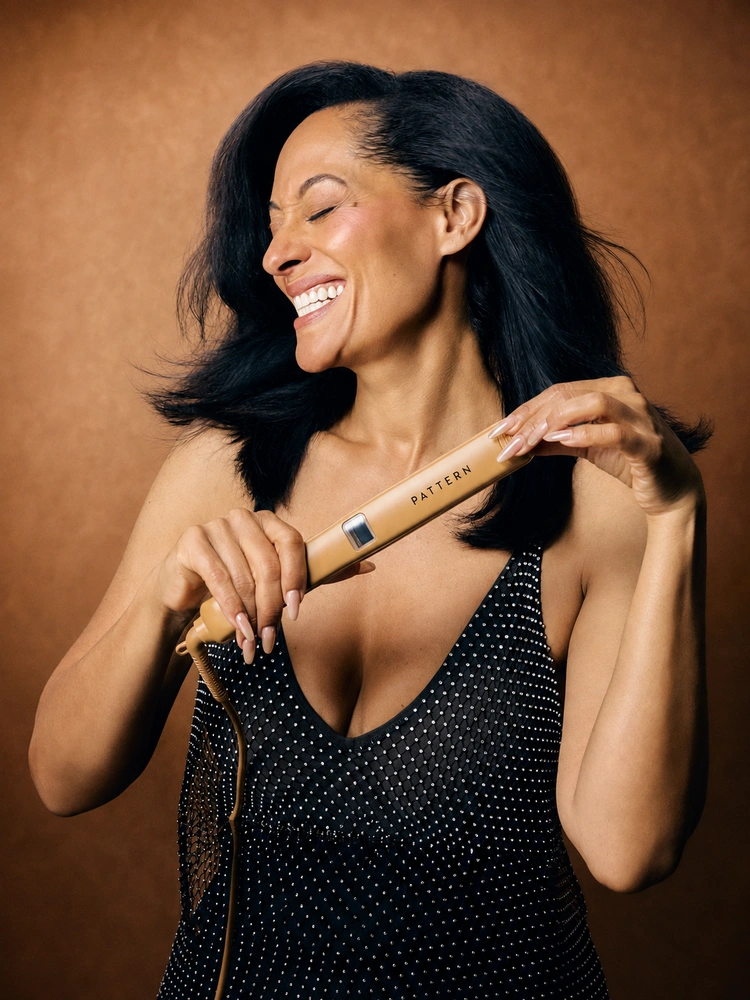
On August 14, 2026, Tracee Ellis Ross’s Pattern Beauty launched a $119 Vibrating Flat Iron designed around curls, coils and tight textures. Its ceramic-coated plates deliver up to 12,000 vibrations per minute, with Pattern positioning that movement as a way to minimize pulling and help strands travel smoothly through the plates. Brand testing reports an 11% reduction in friction.
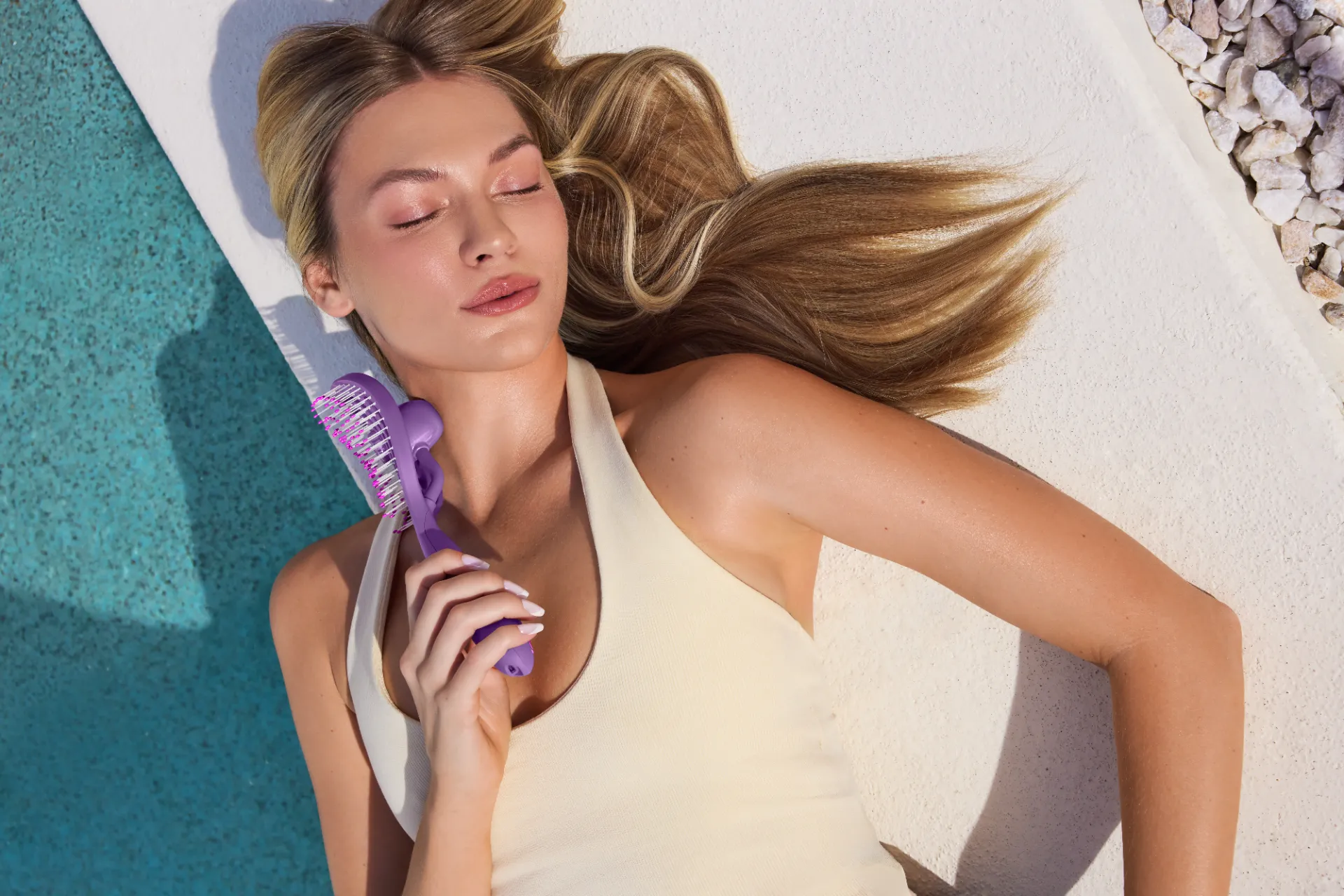
Then came the OO!brush, created by Dave Richmond, the inventor associated with the early-2000s InStyler. Its motor produces over 6,000 “micro-strokes” per second while the brand pitches those movements as a route to easier detangling, scalp massage and reduced mechanical stress.
Apparently, even the hairbrush has acquired a motor.
The joke lands because beauty has spent years electrifying objects that once relied entirely on our hands. Yet vibrating hair tools arrive at an interesting moment. Haircare has become intensely concerned with breakage, scalp health, heat exposure, and fiber preservation.
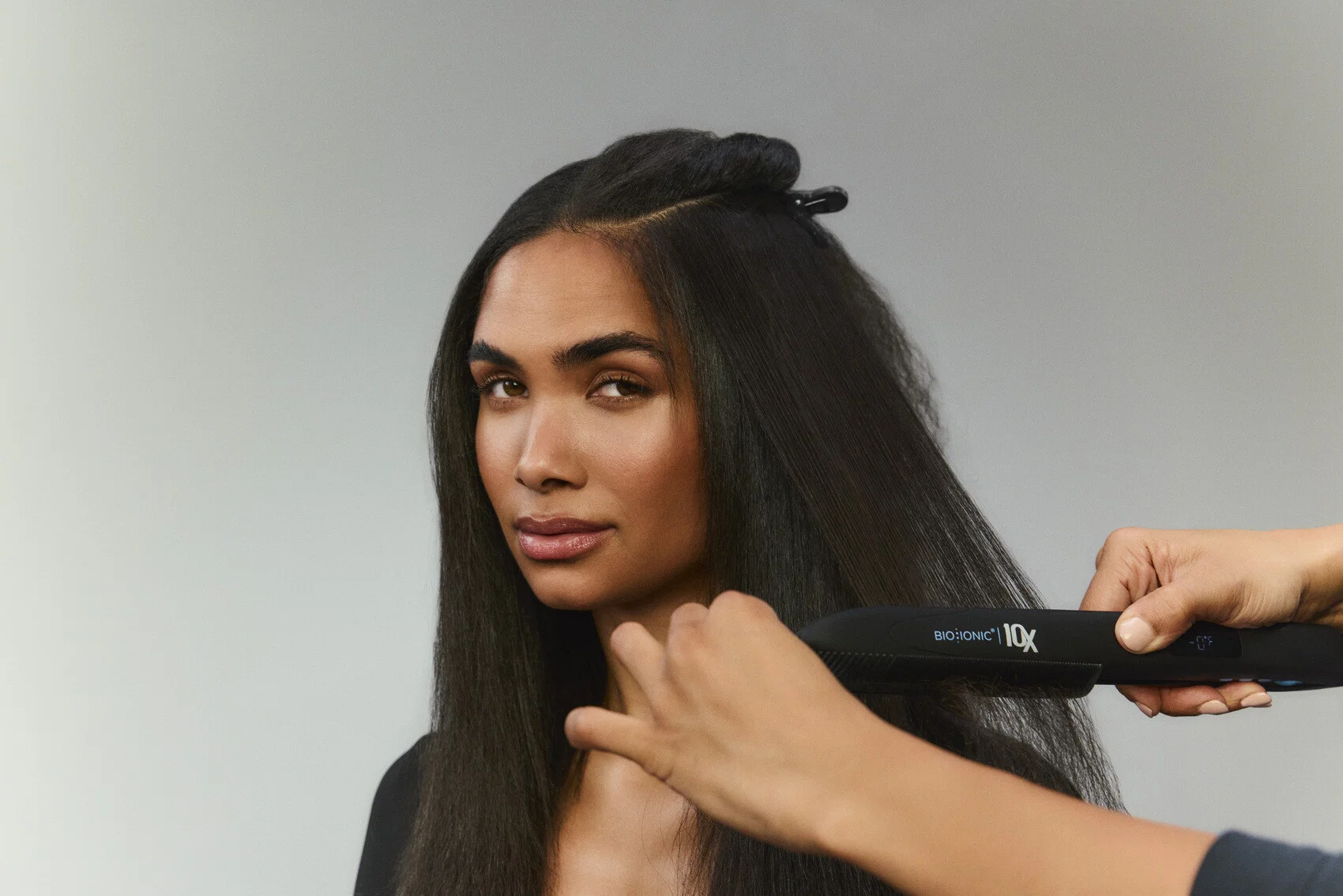
The buzz itself has history. Conair and José Eber explored vibrating flat irons during earlier beauty-tech cycles, while Bio Ionic continues to sell oscillating styling tools. The technology therefore belongs to a comeback story. What changed is the surrounding culture: consumers now expect hair tools to demonstrate engineering, hair-health intelligence and measurable performance alongside styling.
BEAUTYSTREAMS’ CosmoTrends 2026 report created an entire category called “Hair Ware: Hair Devices Get an Upgrade” and projects the global hair-styling-tools market rising from $39.8 billion in 2026 to $66 billion by 2035, with a 5.8% compound annual growth rate. The report highlights high-speed motors, microcurrent scalp devices and connected salon systems as signs that hardware itself is becoming one of haircare’s growth engines.
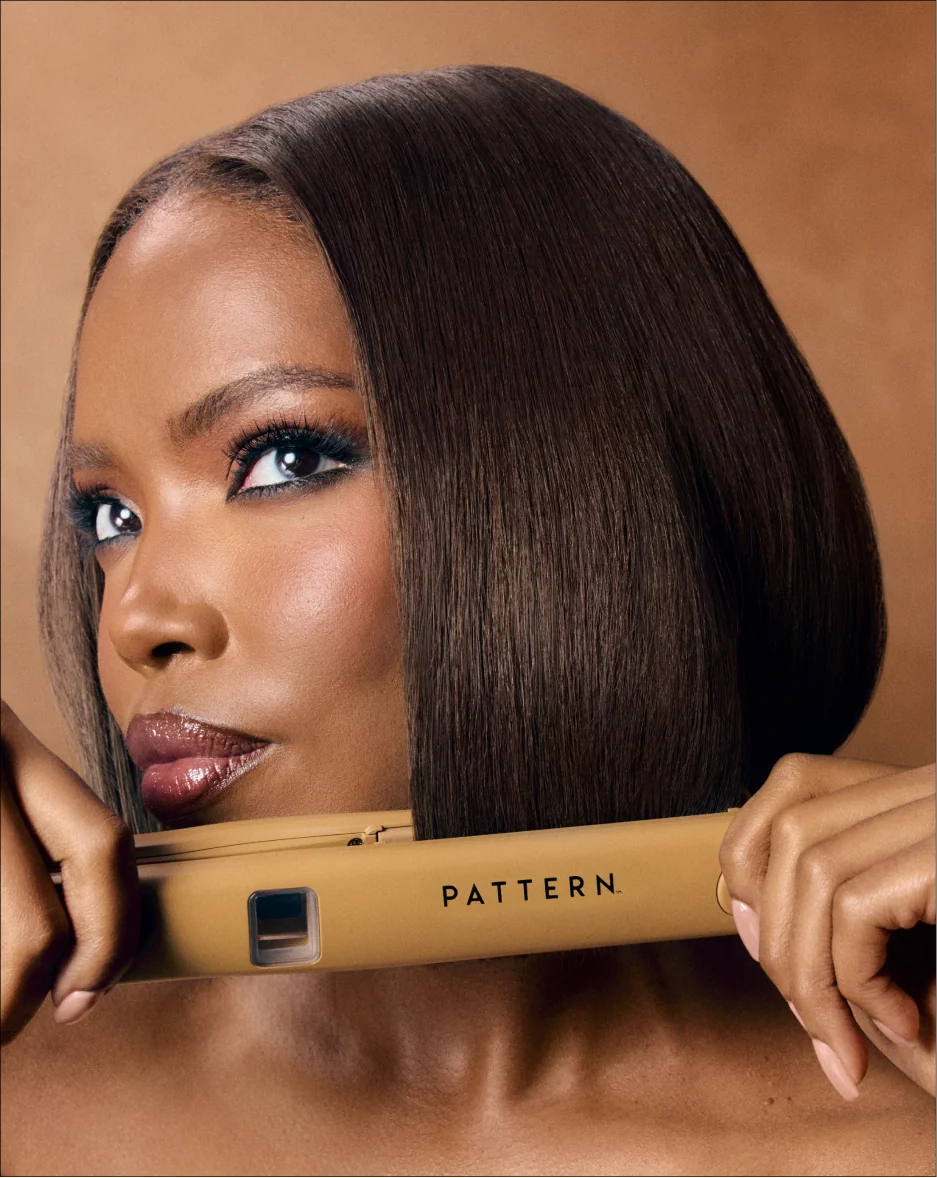
Pattern Beauty gives vibration a particularly convincing context because curls and coils can experience considerable mechanical tension during straightening. Every snag places force on the fiber. Every repeated pass adds another encounter with heat. A tool that changes the physical relationship between plate and strand therefore addresses a genuine styling problem.
OO!brush pushes the same logic into detangling. Richmond describes conventional brushing as a process where rigid bristles meet knots and tension accumulates. His design makes the bristles move rapidly, allowing strands to shift around those contact points.
New York board-certified dermatologist Dr. Toral Vaidya gives vibrating hair tools their strongest scientific argument.
She explained that oscillation can theoretically change friction between a tool and the strand, creating a potential route toward reducing physical trauma during styling. She views both vibrating irons and brushes as innovations with potential to reduce mechanical stress. At the same time, she says robust studies directly examining vibration-based hair tools and long-term hair health remain scarce.
A mechanism sounds scientifically reasonable. A device successfully produces that mechanism. Then the marketing language begins speaking as though the desired biological outcome has already arrived.
Does a vibrating iron create measurable changes in cuticle integrity after months of styling? Does a vibrating brush produce a meaningful reduction in broken fibers across different textures? How does vibration interact with heat, pressure, styling speed and repeated passes? The current evidence gives vibrating hair tools a credible engineering hypothesis. Product-specific proof still has room to mature.
Vibration feels like massage. Massage evokes circulation. Circulation quickly walks into the hair-growth conversation wearing a lab coat.
Board-certified trichologist Shab Caspara told Allure that mechanical stimulation can influence signaling in dermal cells involved in the hair-growth cycle. She explains that stimulation reaching the dermal papilla, the structure at the base of the follicle involved in hair cycling, creates a biologically interesting pathway. She positions scalp vibration most comfortably as sensory stimulation and massage for a healthy scalp.
A frequently cited study makes the story even juicier.
Researchers followed nine healthy men who performed standardized scalp massage for four minutes daily across 24 weeks. Average hair thickness increased from 0.085 mm to 0.092 mm at week 24. Laboratory experiments from the same research also found that stretching forces altered gene expression in human dermal papilla cells.
Fascinating? Absolutely.
A direct endorsement of every vibrating brush on the market? That leap requires additional research.
The experiment studied standardized scalp massage and mechanical stretching. Pattern’s iron uses vibration while heat-styling lengths of hair. OO!brush combines detangling with a separate scalp-massage component. Each device creates a different physical interaction.
For a flat iron, oscillation may change how plates move along strands, potentially reducing snagging and helping the tool travel efficiently through a section. For a brush, rapid movement may redistribute tension as bristles meet tangles. For a scalp device, vibration creates massage and sensory stimulation.
Those functions share one remarkably useful commercial quality: you can feel them happening.
That may be vibration’s hidden superpower. Beauty devices thrive on sensory proof. Heat announces itself immediately. Microcurrent tingles. Vibration buzzes through the hand and scalp. The consumer receives physical feedback before any long-term biological outcome can be measured.
A regular brush quietly performs its job. A vibrating brush practically sends a progress notification.
That sensory theater can coexist with intelligent engineering, and vibrating hair tools make the distinction especially important: consumers need to separate what the vibration demonstrably changes from everything the marketing story attaches to that movement.
Advertisement