MENU
Close





On the secluded volcanic cliffs on the Canary Islands, El Elevador takes quietcation to a whole new level.
On the secluded volcanic cliffs on the Canary Islands, El Elevador takes quietcation to a whole new level.
August 7, 2026


Google Maps has flattened a remarkable amount of mystery.
A traveller can locate a private island, inspect its bathrooms, compare rates, read hundreds of reviews and reserve a suite before learning how to pronounce the destination. Even ultra-luxury hospitality increasingly operates through visibility. Scarcity may concern room inventory or price, while the information itself remains abundant.
El Elevador complicates that formula.
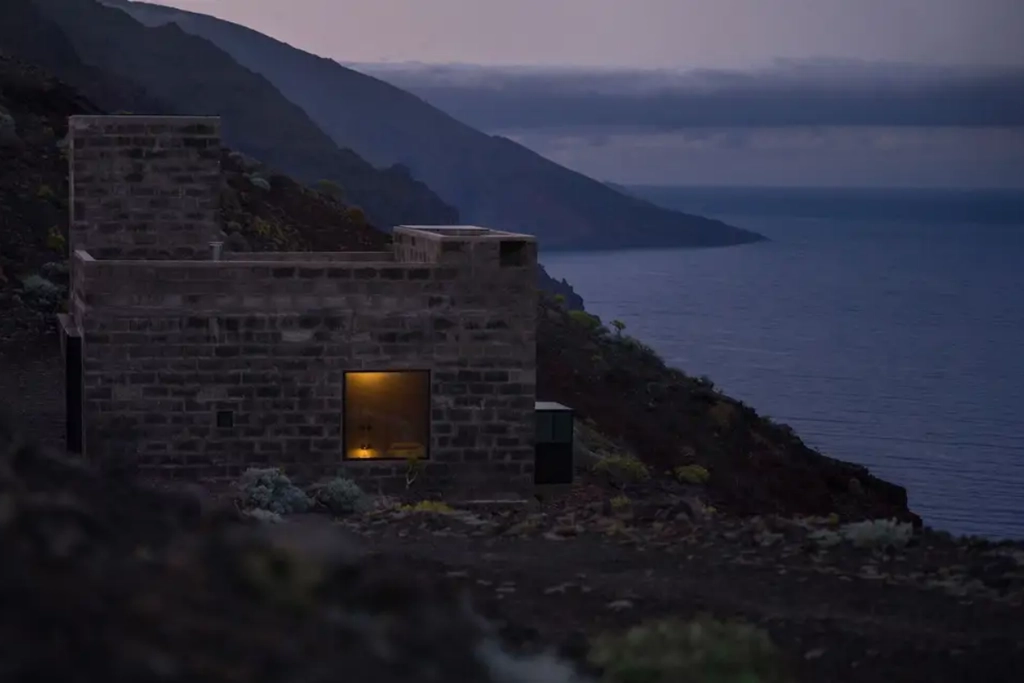
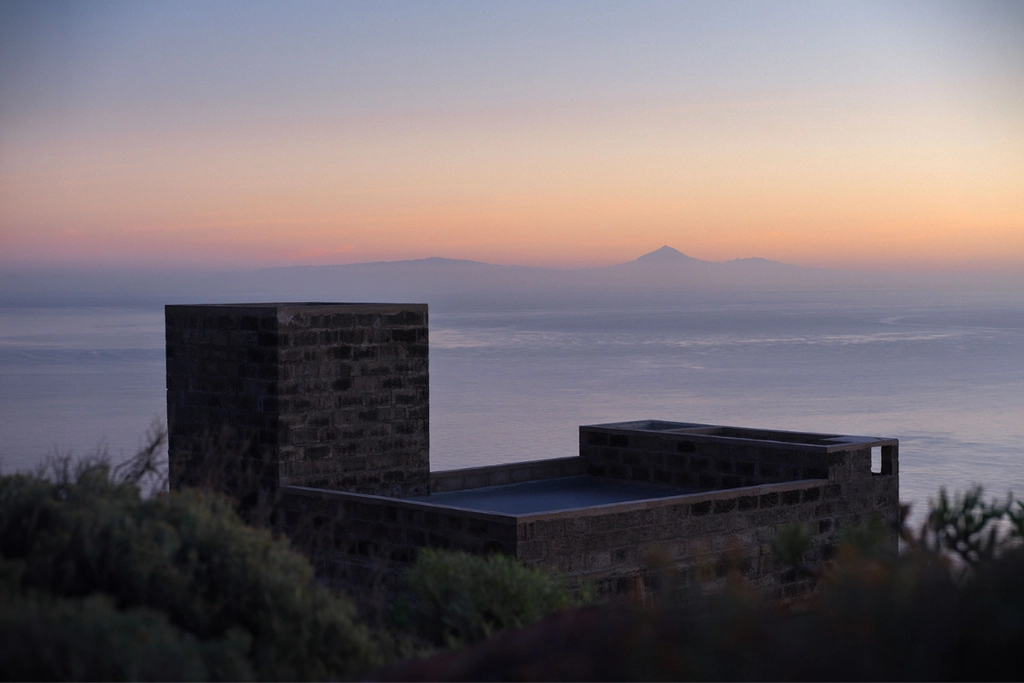
Perched against the volcanic cliffs of El Hierro, the smallest and southwesternmost of Spain's Canary Islands, the approximately 60-square-metre retreat accommodates just one or two adults. There is no conventional reservation portal waiting for a credit card. No inventory grid reveals which weekend remains free. A prospective guest first needs to know the property exists, then understand how to approach it.
Among the most exclusive hotels in the world, that informational barrier may be El Elevador's greatest luxury.
Its exclusivity functions almost like old knowledge passed between travellers. Access starts with curiosity. Curiosity leads to research. Research eventually produces a postal address.
Then you have to write.
Long before anyone came here seeking a quietcation, Juan Casañas descended the cliff because his community needed water.
More than seven decades ago, severe drought affected El Hierro. Casañas carved a precarious route by hand down the roughly 250-metre Iramas cliffs towards a freshwater spring near sea level. The concrete structure that eventually became El Elevador formed part of the infrastructure used to pump that water upwards.
Its origins give the building an unusually direct relationship with necessity.
This was architecture created to solve a problem. Water had to travel against gravity, and human effort made that ascent possible.
Decades of abandonment followed.
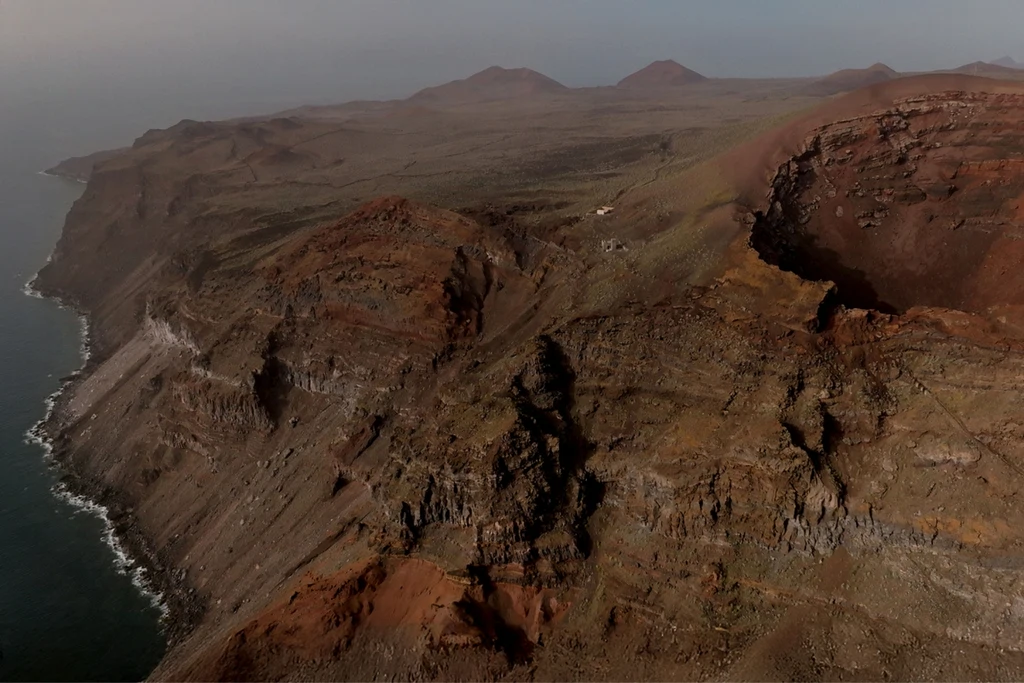
In 2021, Alberto del Hoyo Mora and Silvia Rodríguez, the creators behind BeTenerife, encountered the ruin and imagined another purpose for it. Canarian architect Alejandro Beautell joined the project, allowing the original structure to shape the new architecture instead of wiping away its industrial past.
That decision places El Elevador naturally within the conversation around regenerative travel.
The project does not depend on building an entirely new luxury object on an untouched landscape. Its value comes from reviving infrastructure that had already lived one life, preserving its material memory and allowing a forgotten structure to serve the island again in another form.
The Spanish verb elevar means to raise or lift.
Once, the building lifted water. Today, that same vertical idea is redirected towards attention, awareness and consciousness.
Few hospitality concepts inherit a story this structurally complete. Name, landscape, architecture and history all lead back to the same gesture.
A sheet of paper stands between desire and reservation.
Anyone hoping to stay at El Elevador must handwrite a letter introducing themselves, explaining what draws them to the property and what they hope to discover during their time there. The letter travels through ordinary postal mail to a post-office box in Villa de Valverde on El Hierro.
The ritual turns reservation into participation.
Luxury hospitality has spent years engineering friction out of travel. Instant confirmation, digital concierges, stored payment details and real-time availability collapse desire into a few taps.
El Elevador deliberately restores friction.
Handwriting requires attention. Postal mail creates an interval that cannot be refreshed into submission. For several days, perhaps longer, the traveller simply does not know.
Acceptance arrives through the same medium.
If the request is approved, a handwritten response is mailed back containing a private, single-use link. Only then can the guest enter an otherwise unindexed calendar and select dates.
Technology appears at the very end of the conversation.
For a quietcation, this matters before the guest has even packed a bag. The stay begins by interrupting habitual immediacy. Waiting becomes part of the architecture of the experience.
Money cannot shorten that process.
A wealthy traveller who never discovers the protocol remains outside. Someone who knows El Elevador exists still has to understand its philosophy enough to approach it correctly.
Access passes through knowledge, intention and patience.
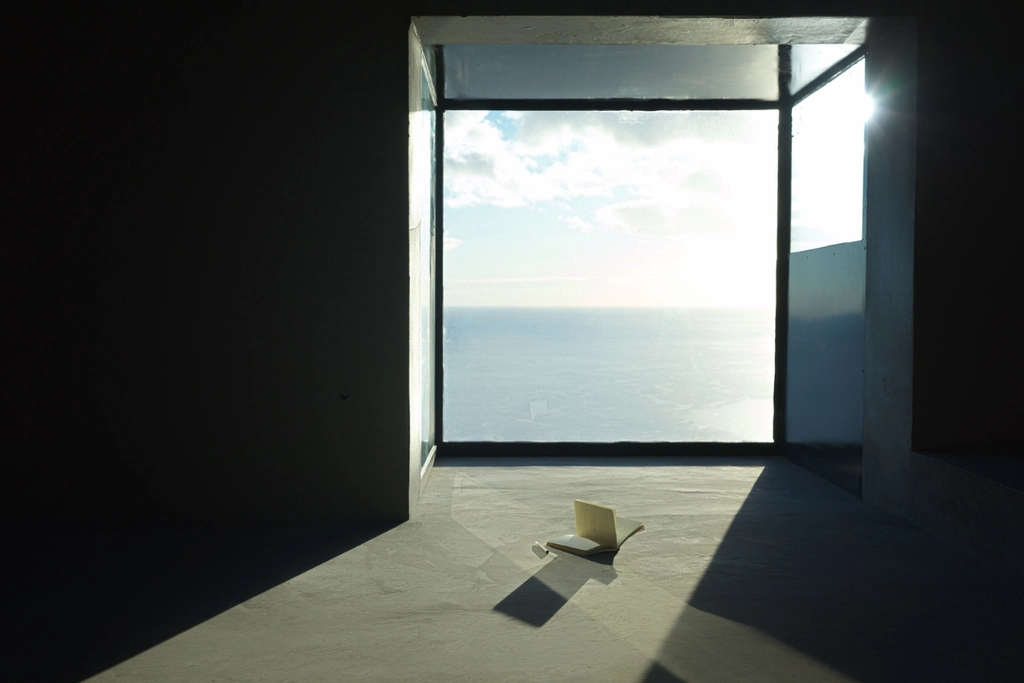
The Atlantic dominates almost everything once the door closes behind you.
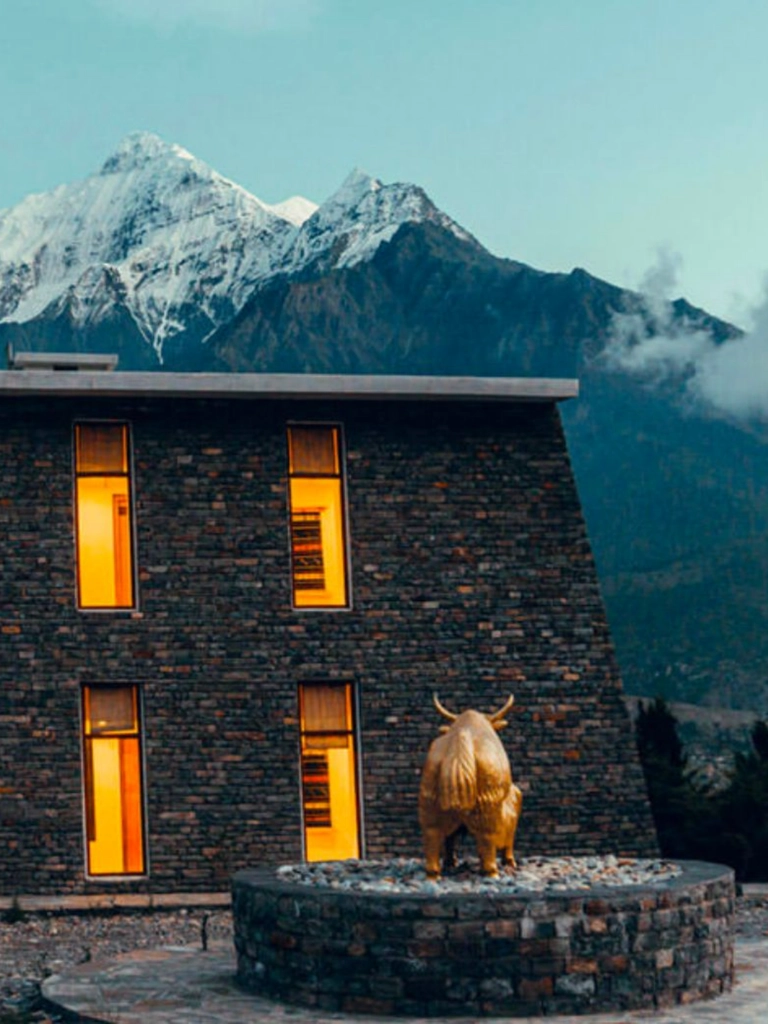
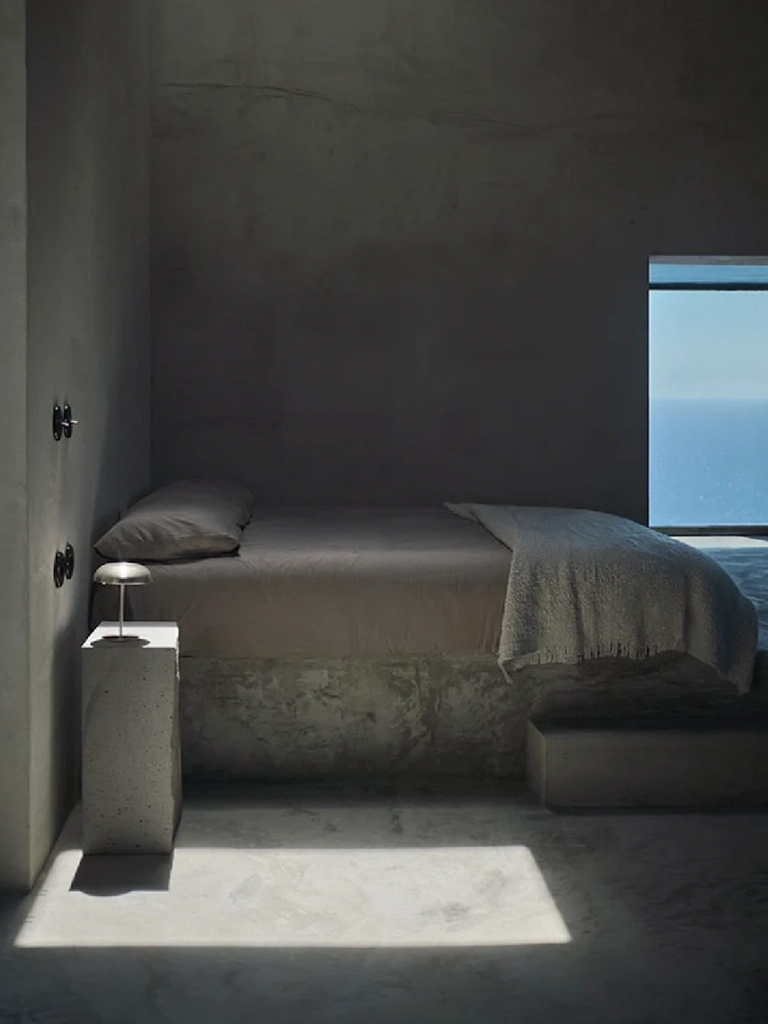
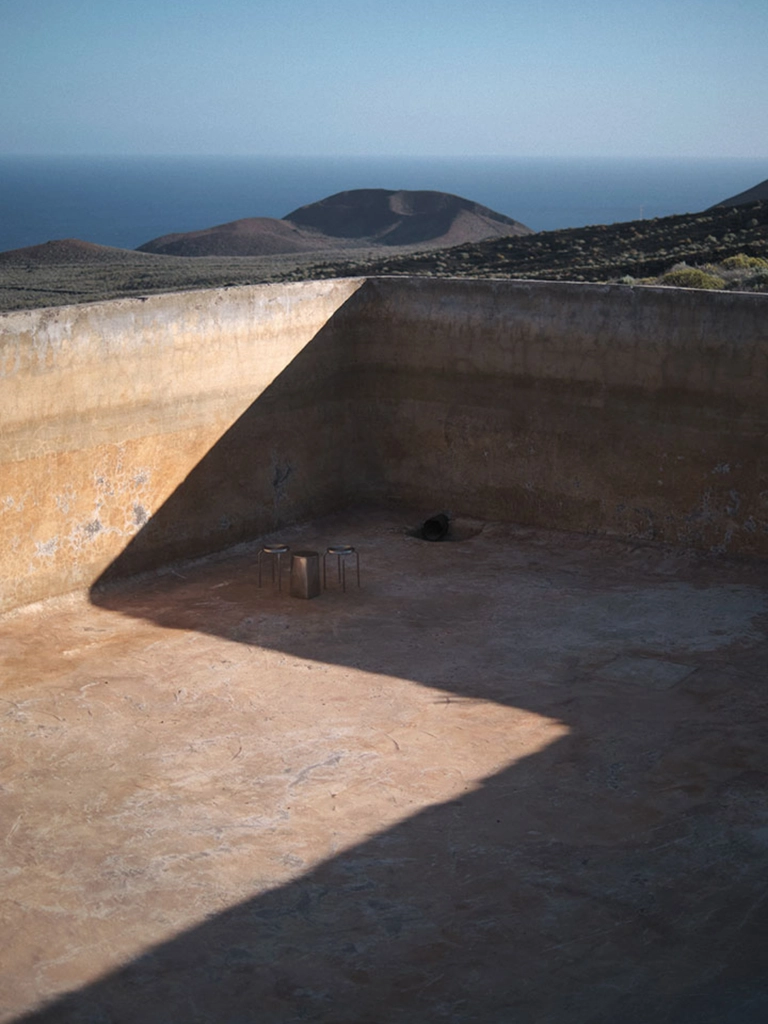
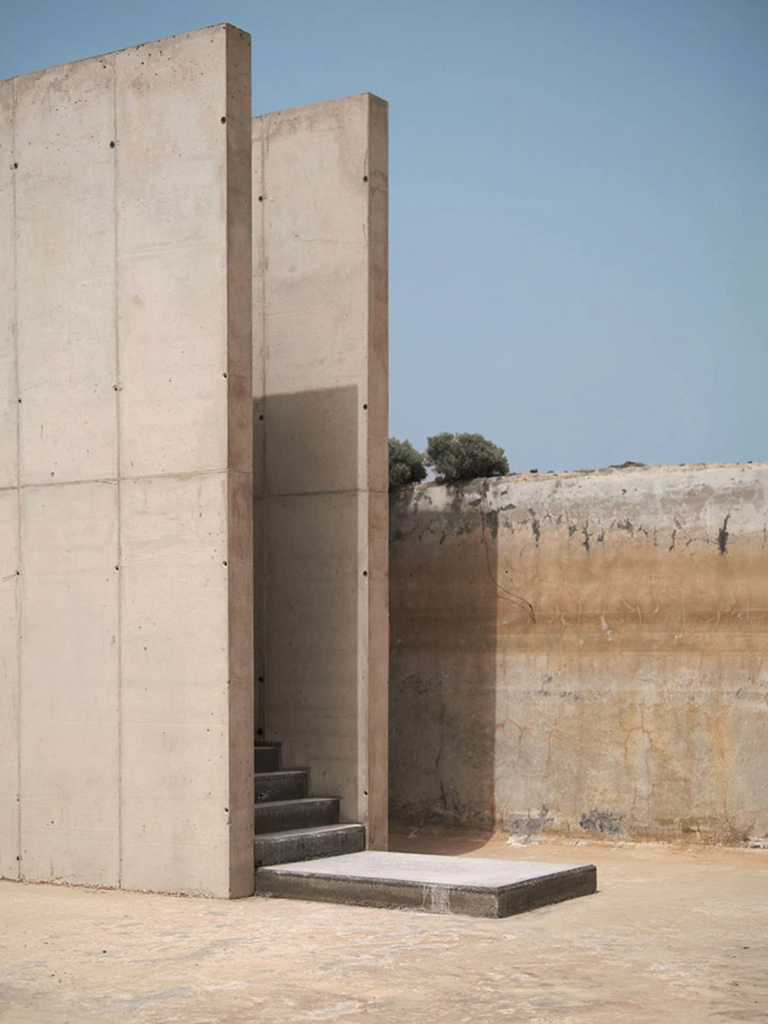
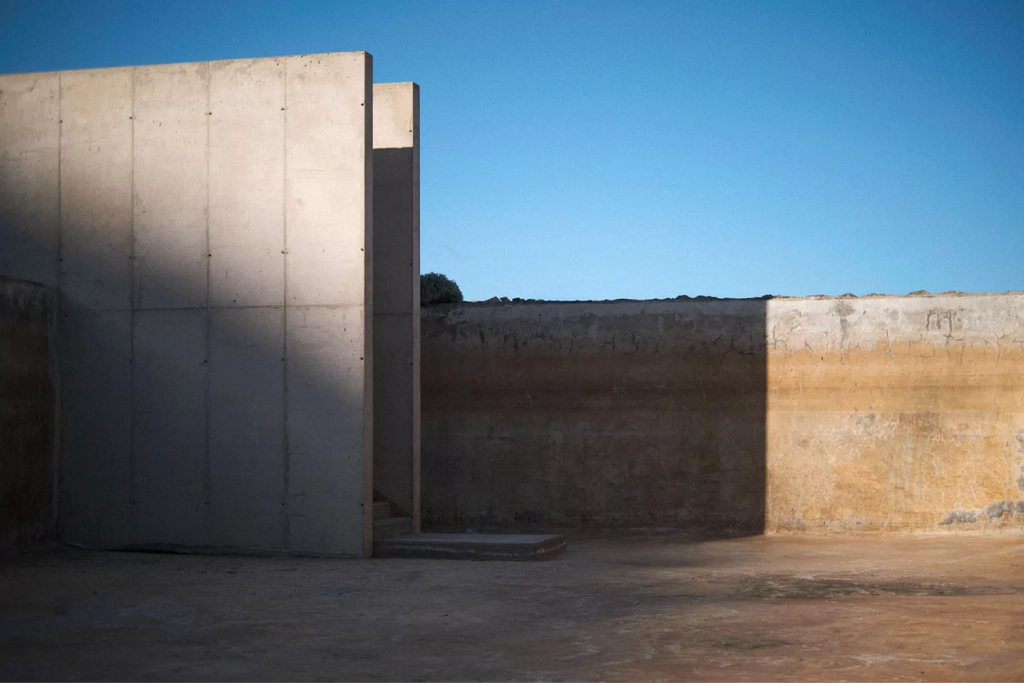
El Elevador sits among ancient pahoehoe basalt formations created by volcanic activity thousands of years ago. Against that geological complexity, its architecture appears almost severe: raw grey concrete, sharp geometry and very little decorative interference.
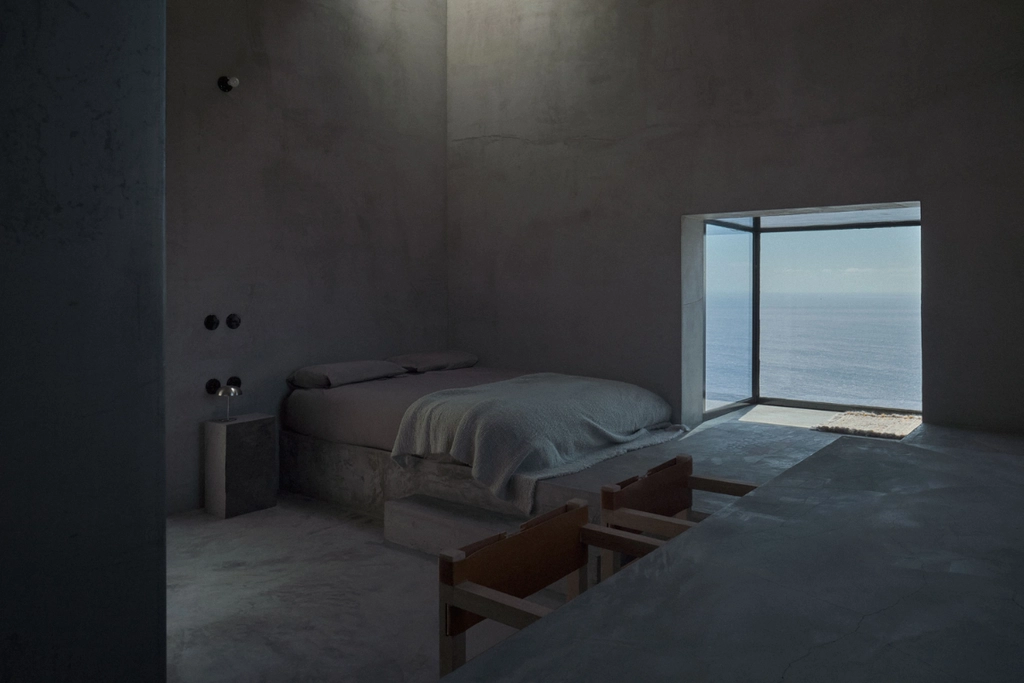
The tiny scale is part of the point.
At approximately 60 square metres, El Elevador avoids the acreage competition that drives much of ultra-luxury hospitality. Exclusivity comes through singular occupation. There are no neighbouring villas, breakfast tables or strangers moving through a lobby. At full capacity, the guest list contains two names.
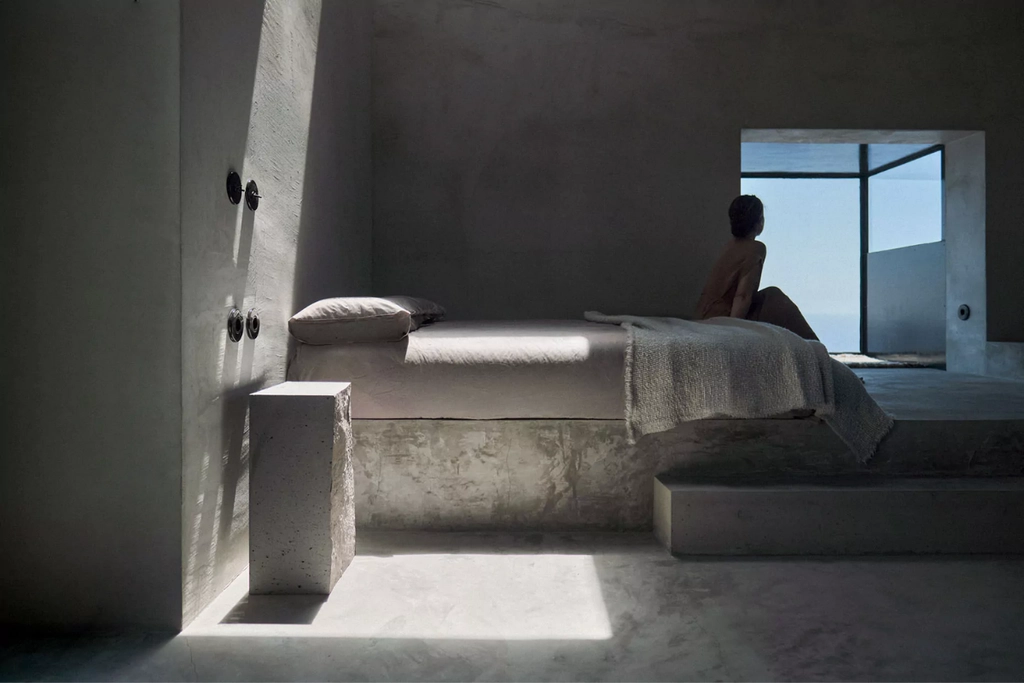
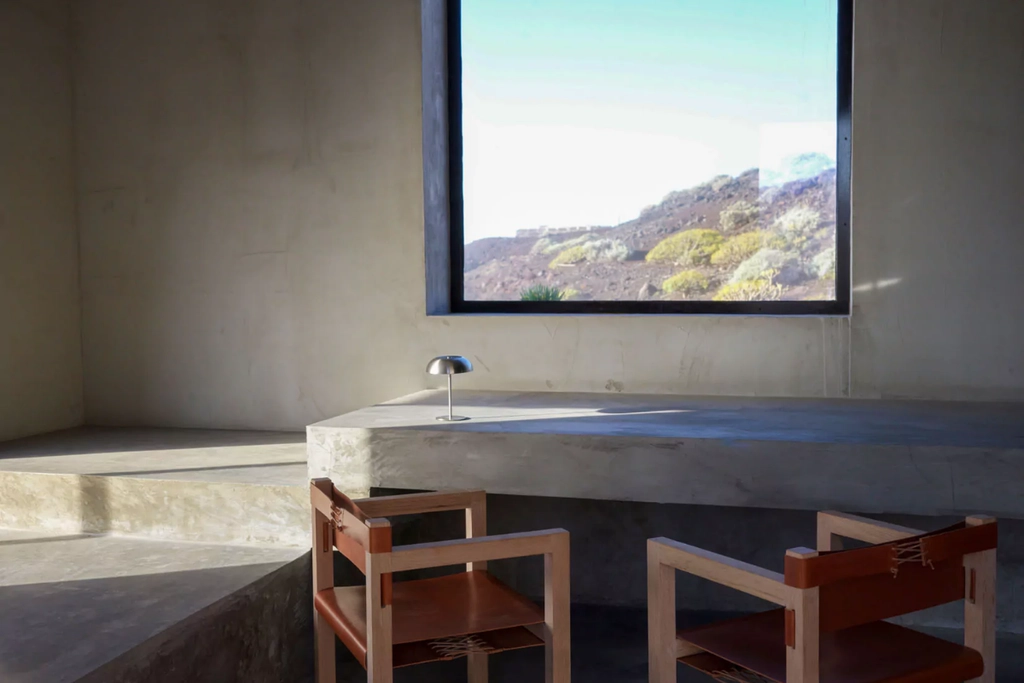
Inside, a black-lacquered steel volume appears to float through the central living space and contains the kitchen. Materials and objects have been selected with an almost obsessive tactile specificity.
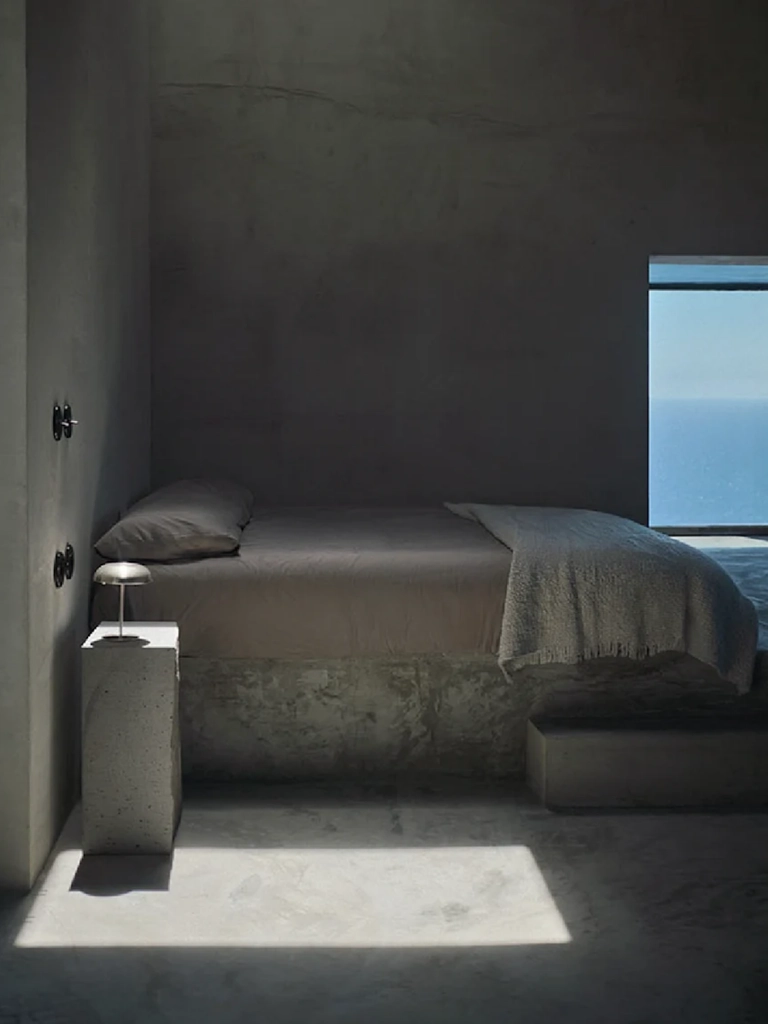
Egyptian cotton linens come from Bassols. Cooking takes place with copper and steel pieces by Mauviel. Handblown crystal glassware from Josephinenhütte turns the act of drinking into something noticeably physical.
Yet the most memorable room looks upward.
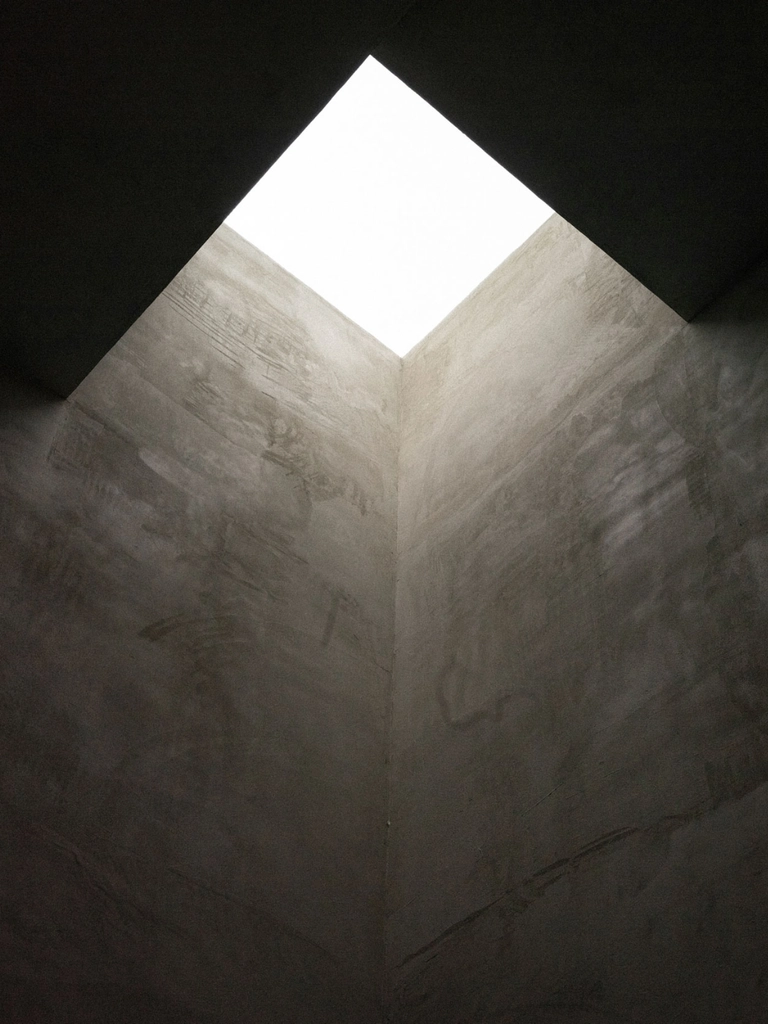
The original vertical shaft once involved in lifting water has been transformed into an open-air bathroom. Beneath the shower, the guest looks directly through the shaft towards the sky. Daylight falls through the old industrial opening. At night, stars occupy the ceiling.
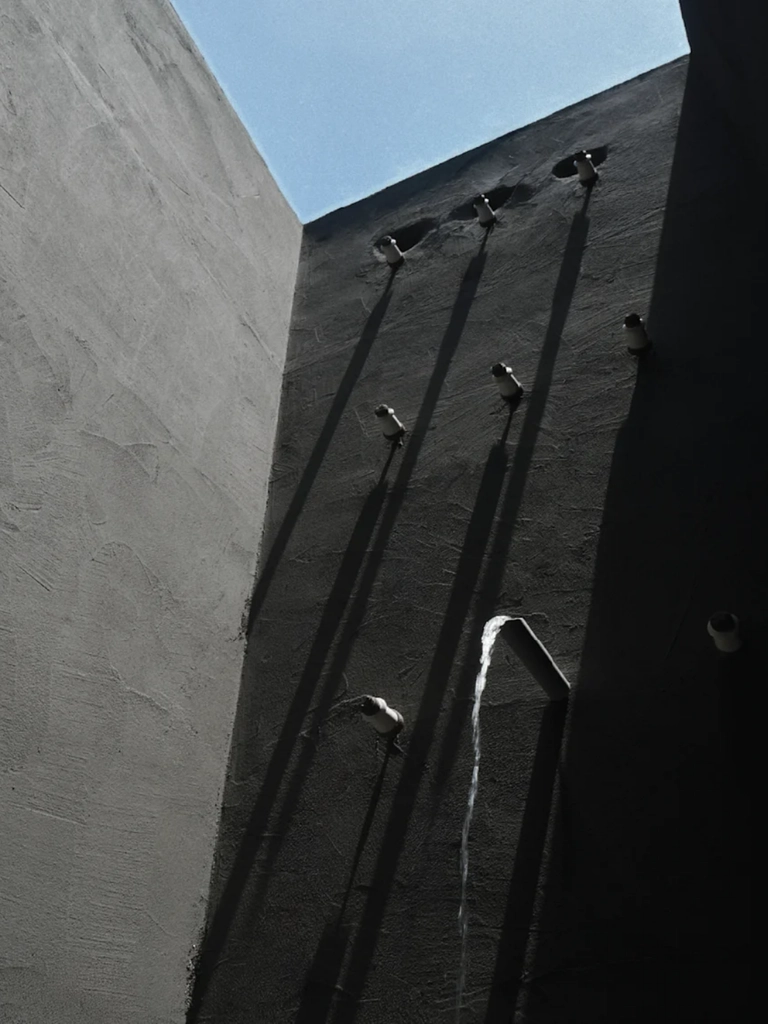
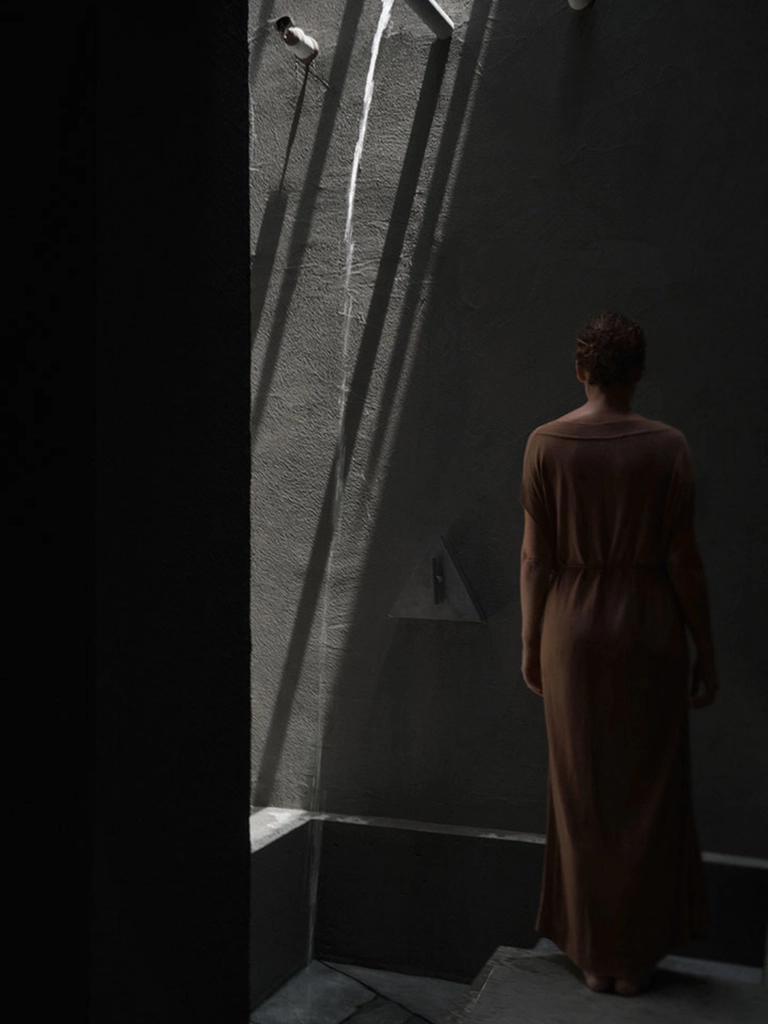
Adaptive reuse here reaches beyond preserving an attractive ruin. A piece of obsolete engineering becomes the property's most intimate experience.
Silence becomes strange when technology stops filling it.
El Elevador offers no television and no Wi-Fi, while cellular reception around its isolated cliffside location can be extremely limited. The absence of connectivity has been answered with objects that ask for a slower form of attention.
A restored Remington typewriter from the 1930s sits with handmade paper.
Nearby, guests find a vintage Hasselblad camera loaded with a roll of Ilford black-and-white film. Twelve exposures are available.
Twelve.
In a culture where a phone can produce several hundred holiday photographs before lunch, twelve frames radically change the psychology of looking. Each click consumes something finite. Composition acquires consequence.
The typewriter operates through the same logic. A sentence cannot disappear beneath an effortless delete key. Thought leaves a physical mark.
These details reveal why El Elevador belongs in conversations about the most exclusive hotels in the world. Exclusivity here grows through controlled scarcity of information, guests, connectivity and even images. The property continually asks the traveller to know less about what happens next and pay more attention to what is happening now.
This is where quietcation moves beyond acoustic silence.
Most luxury hotels establish hierarchy through numbers that can be compared immediately.
El Elevador keeps even pricing relatively private. Rates are communicated through the reservation process, with estimates placing the experience around €600 to €1,000 or more per night.
Square metres offer little help in evaluating that figure.
A guest effectively occupies an entire architectural project.
There is one historical structure, one dramatic landscape and one booking at a time. Privacy requires no suite upgrade because there is no lower category sitting down the corridor.
The adult-only capacity of one or two guests pushes the idea further.
Groups disappear. Resort social life disappears. So does the awareness that another guest might be having an almost identical experience beside you.
For a genuine quietcation, that absence can be more valuable than another bedroom, a larger swimming pool or a longer amenity list.
Scarcity concerns people as much as property.
The next generation of luxury could acquire value by disappearing from search.
El Elevador exposes an interesting contradiction inside contemporary hospitality. Brands spend enormous resources becoming visible, searchable and instantly bookable, yet an abundance of information can weaken the sensation of discovery that luxury once depended upon.
Knowledge restores that distinction.
You need to hear about El Elevador. You need to discover its history. You need to find the correct postal route. You need to write the letter. Then somebody on an island in the Atlantic decides whether to send another letter back.
Many of the most exclusive hotels in the world can still be accessed through the familiar equation of wealth plus availability. El Elevador introduces another variable: knowing.