MENU
Close





Di Petsa SS27 asks what happens when a woman outgrows the version of herself she already knows. Somewhere in the answer, the mother is waiting.
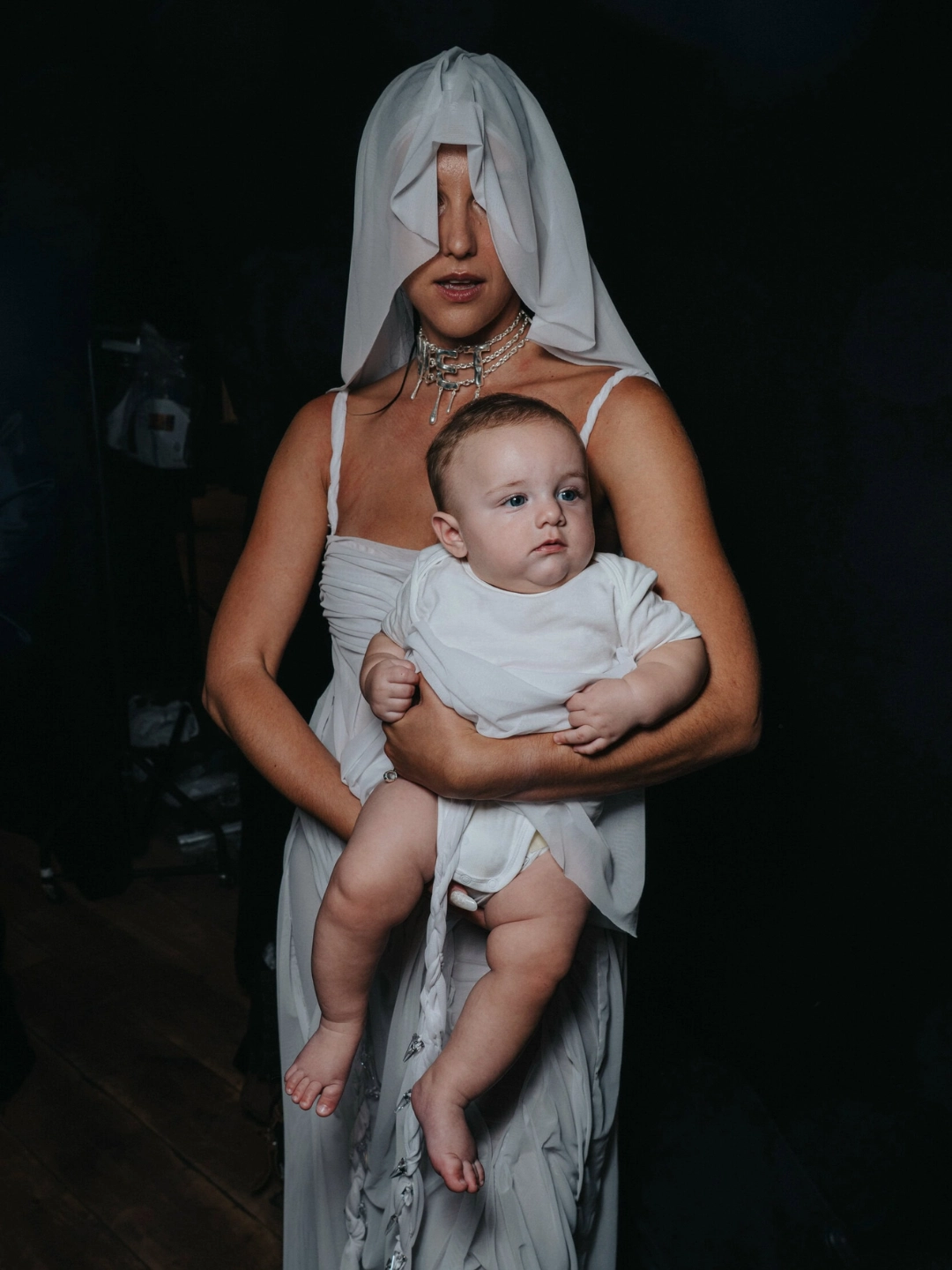
Di Petsa SS27 asks what happens when a woman outgrows the version of herself she already knows. Somewhere in the answer, the mother is waiting.
September 22, 2026
Advertisement

Advertisement



Water has always given Dimitra Petsa a language for the female body. Wetness could stand for sweat, tears, desire, birth, shame, release, or the fluids women are taught to conceal. For Di Petsa Spring 2027, another liquid enters that mythology. The collection is called HOLY MILK, and its origin came from watching pregnant friends move through the strange threshold between one identity and another. “When you give birth to a child, you also give birth to yourself as a mother,” Petsa explained.
Her definition of mothering stretches beyond childbirth. It includes the instinct to mother ourselves, our friends and our lovers, while pregnancy becomes one physical expression of a wider process of self-creation. Petsa describes us as carrying different versions of ourselves until they become too large to remain hidden. Growth eventually demands another birth.
That idea gives her familiar mythology somewhere new to travel. Petsa called Spring 2027 “a new era” and spoke backstage about wanting to give birth to herself again. Her new era grows directly from the body of work she has already created, carrying water, sensuality and goddess imagery toward a more maternal form of divinity.
White fabric catches around the body as though it has only just emerged from water. Then blue rushes in, winding itself around hips and breasts with the looseness of fabric tied instinctively against bare skin. The opening stretch carries something youthful in its freedom: exposed stomachs, low waists and asymmetrical draping give the silhouettes room to twist instead of holding the body inside a rigid outline.
Petsa’s wet-look language remains close to the skin, but Spring 2027 gives that closeness a playful rhythm. Long draped lengths move against narrow trousers; cropped corsetry interrupts fluid bottoms; wraps gather around the hip and release again below it. The body stays visible as the central line through every shape. Her signature wet-look technique, originally developed while she was studying at Central Saint Martins, continues to create the illusion of cloth permanently soaked against the wearer.
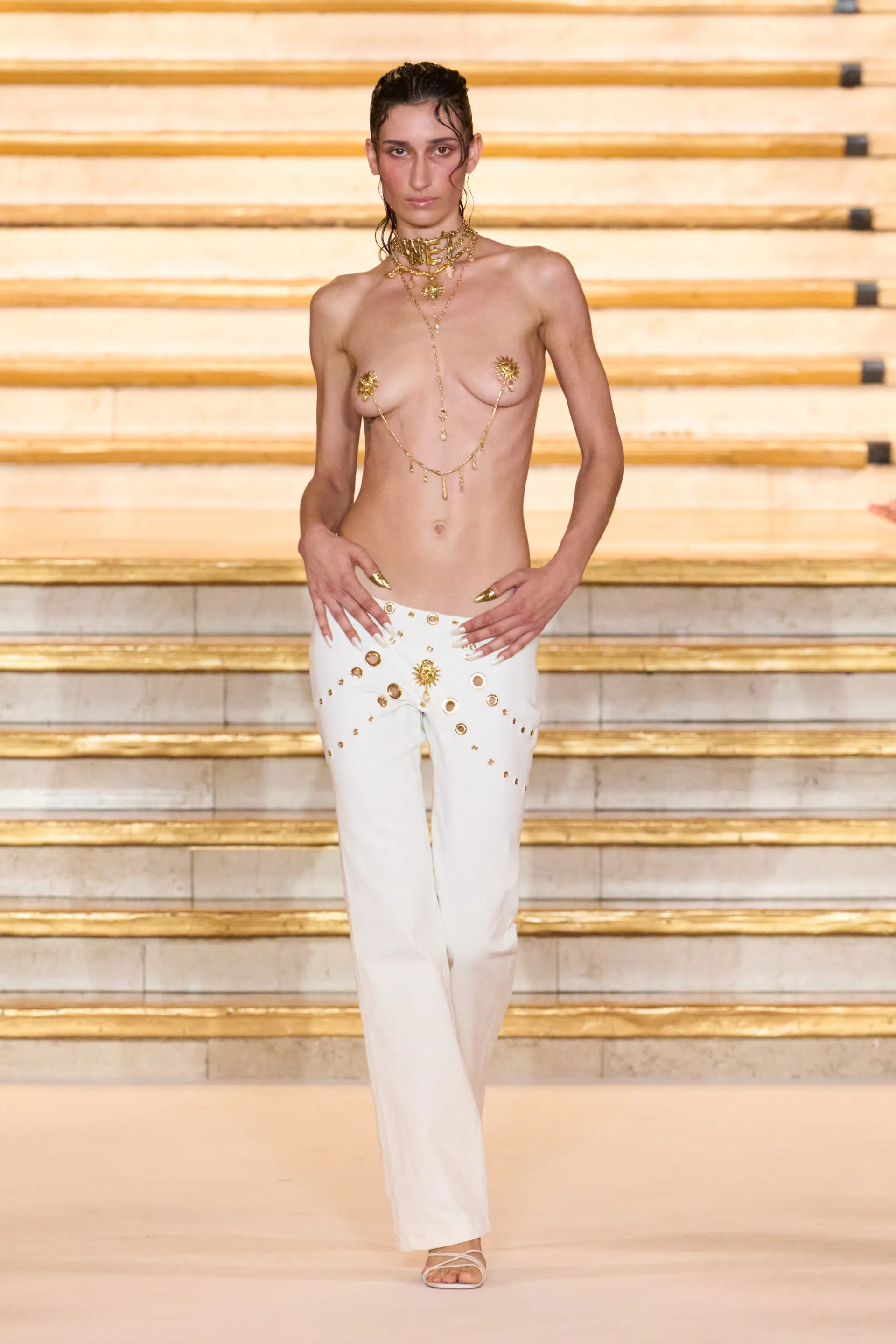
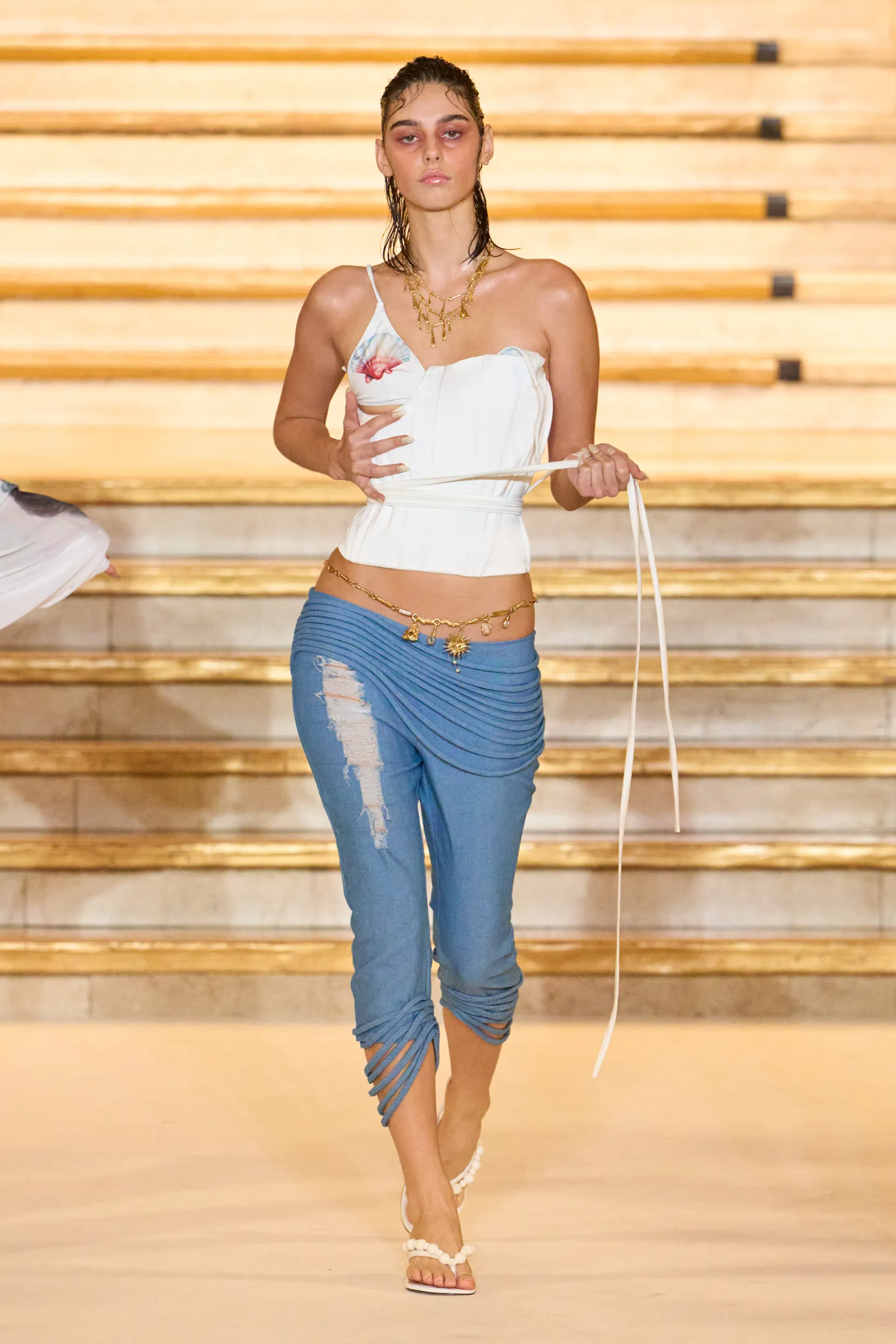
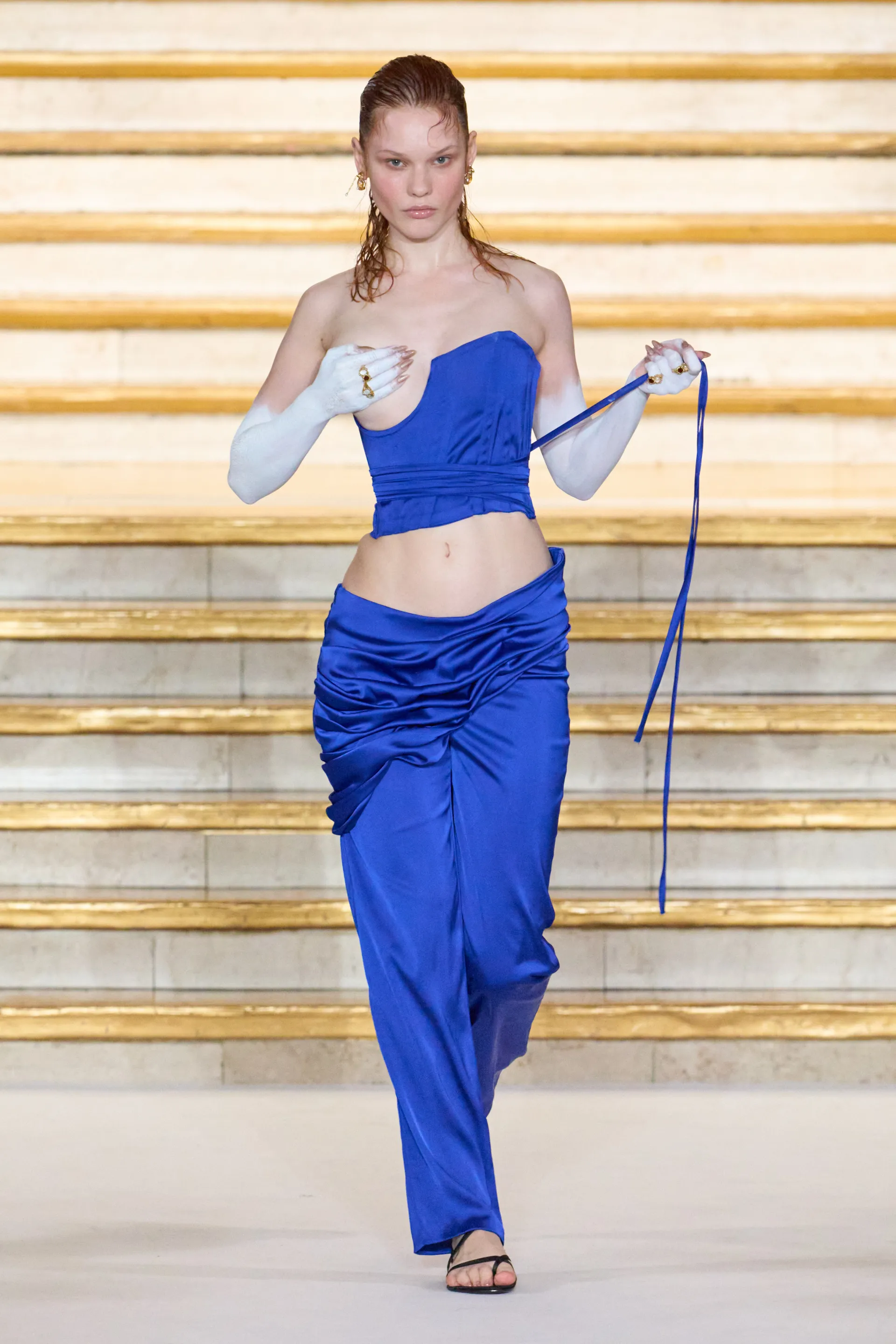
Di Petsa SS27 has returned to the exposed breast often enough for it to read as part of the house language. In HOLY MILK, gold sun-like jewellery rests directly on the chest while asymmetrical corsetry covers only part of it, making nudity feel woven into the silhouette itself.
Exposure, therefore, carries a little sense of fragility. Before bride, mother or maternal goddess enters the narrative, Petsa gives the woman possession of her own body first.
White changes its meaning once the silhouettes lengthen.
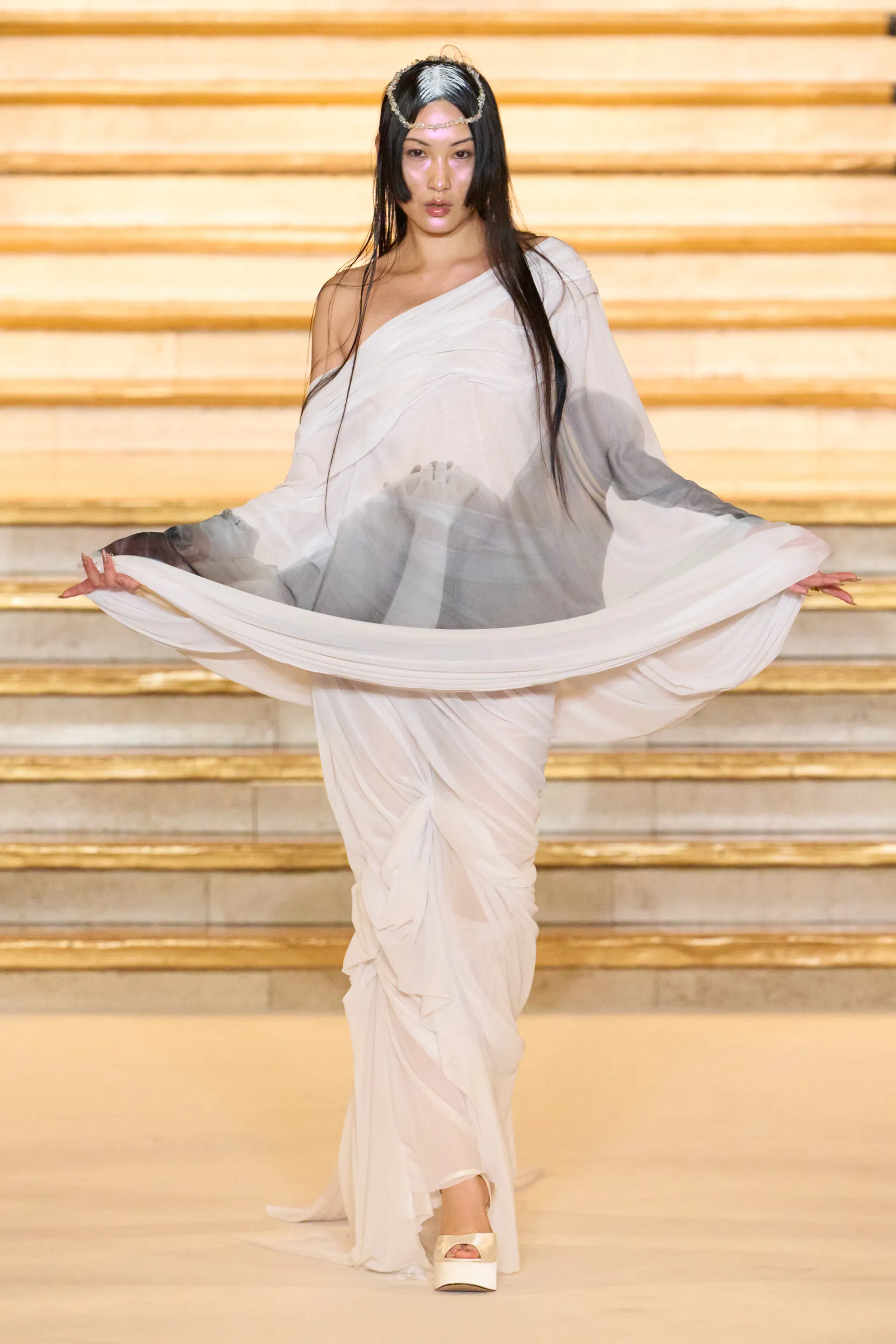
A fuller bridal shape swells outward from the torso, while nearby columns fall closer to the body with the liquid ease associated with Di Petsa’s ceremonial dressing. Petsa said she wanted to experiment with greater volume after thinking about the physicality of motherhood and women taking up space. One draped taffeta gown was developed from pregnant bodies and Ancient Greek drapery, allowing the fabric to grow outward while keeping its folds tied closely to the human form.
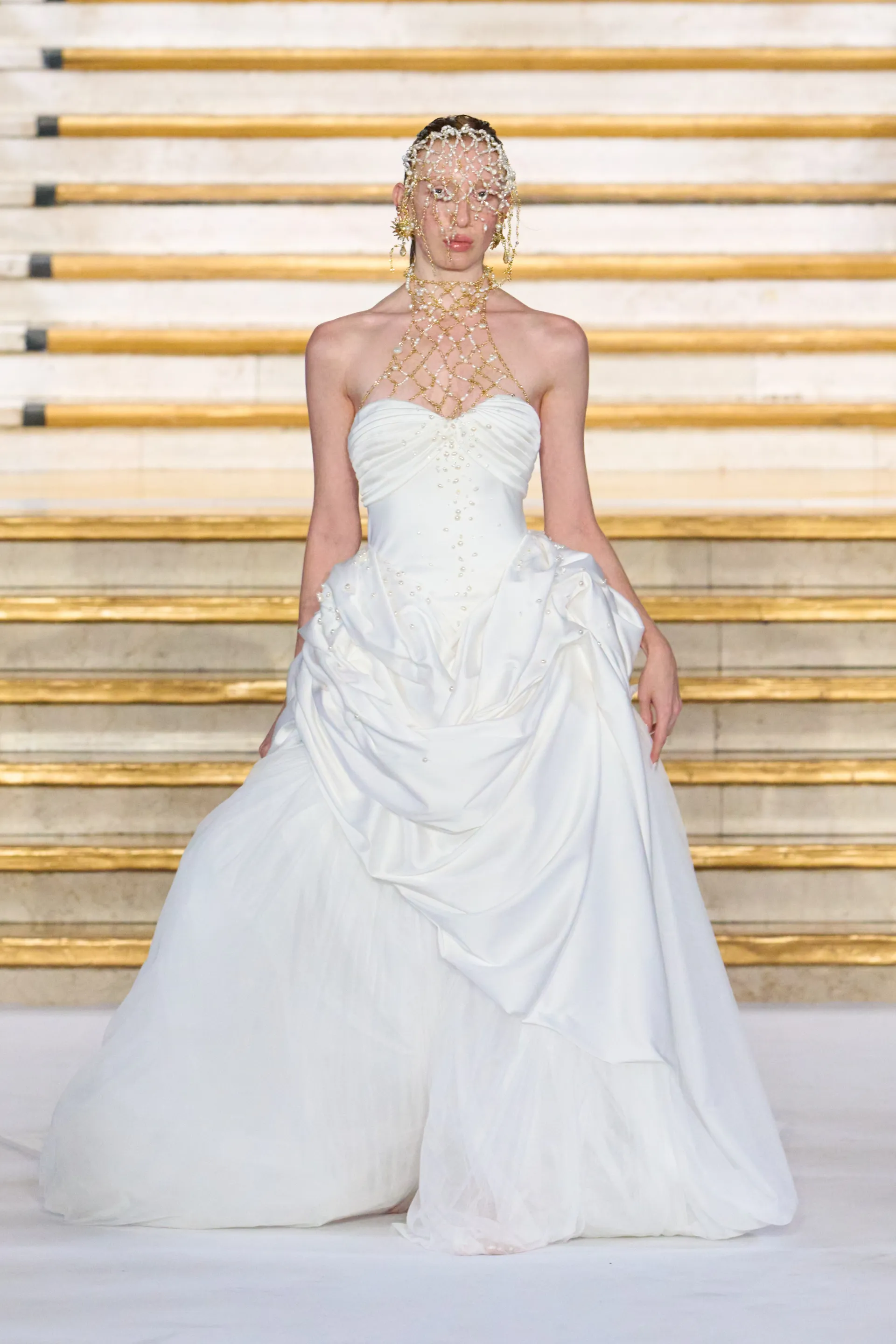
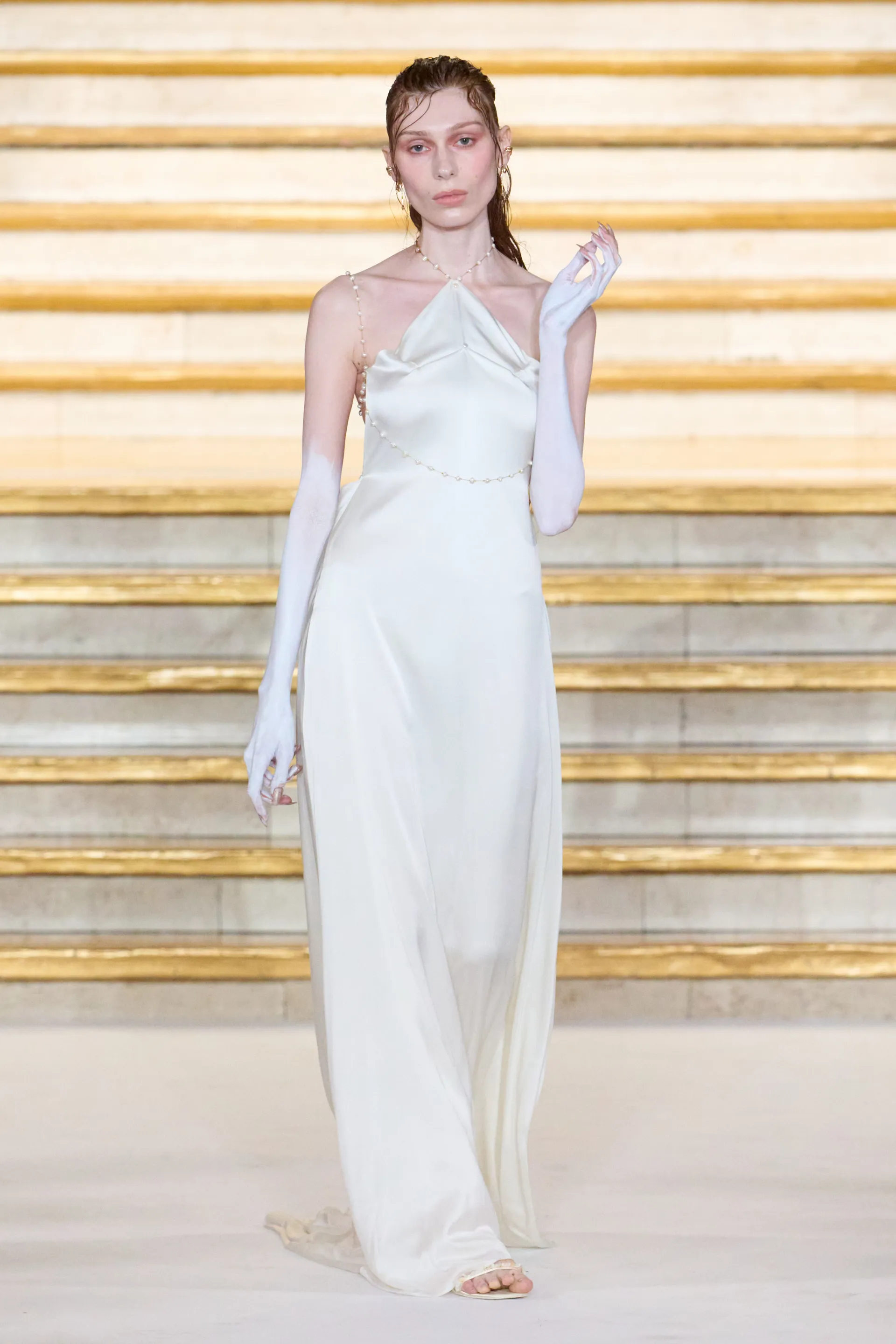
Bridal imagery has long occupied Di Petsa’s world, but HOLY MILK pushes the white dress beyond romance between two people. Mothers carry children down the runway. Generations walk beside one another. The image of coupling gradually opens into a larger idea of family, as if marriage is one doorway into a network that existed long before the ceremony and will continue long after it.
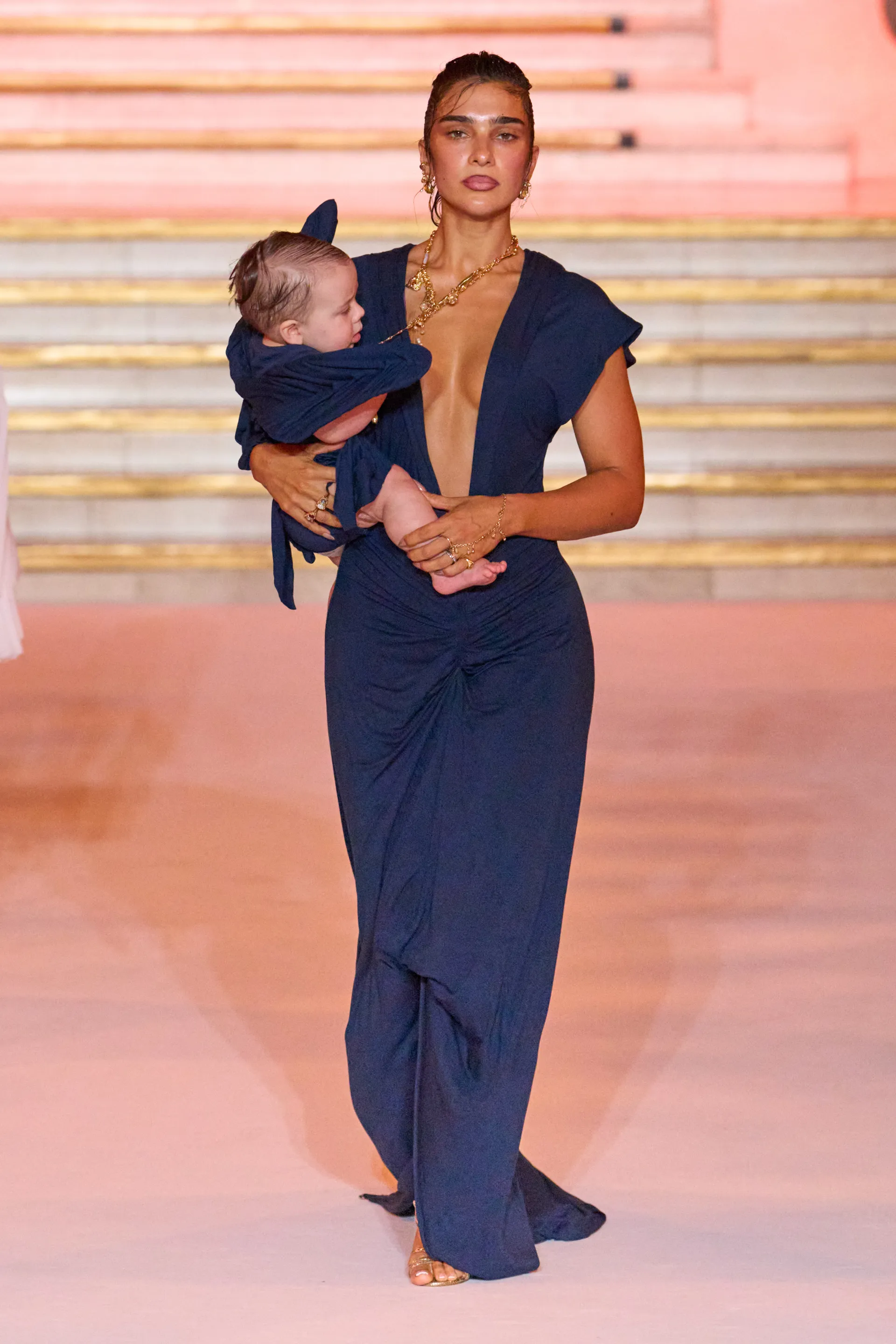
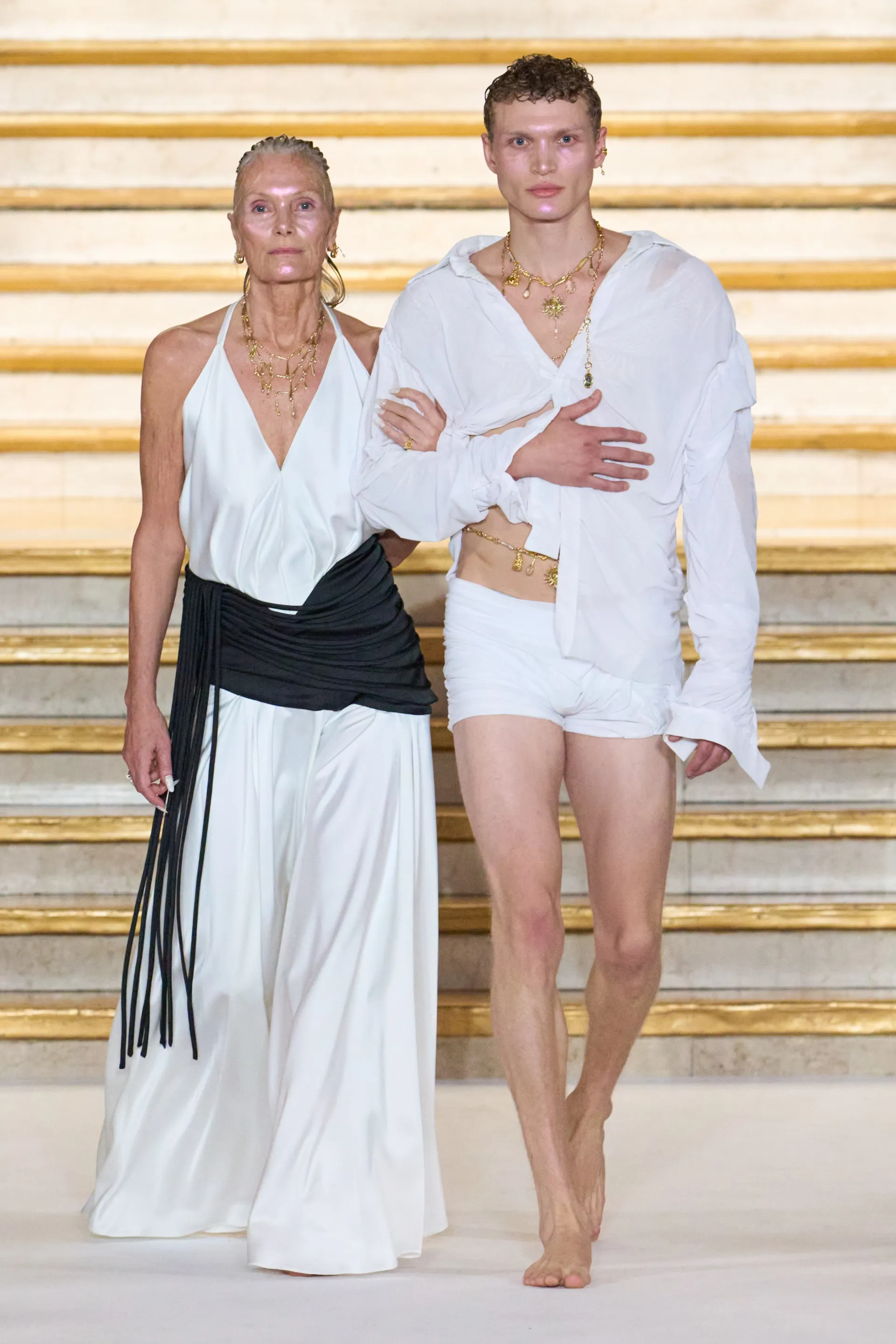
Motherhood gradually expands beyond the individual body and into the way the runway is populated. Babies, younger adults and older generations appear within the same visual world, turning the collection into a broader image of family carried across time. Petsa’s wet-look language takes on a new emotional register here, moving naturally from sensuality toward birth, care and continuity. The silhouettes remain fluid and close to the body, but the meaning around them grows wider, suggesting that womanhood keeps changing while the bonds formed around it continue from one stage of life to the next.
Family becomes choreography: side by side in infancy, adulthood and age, bodies entering and leaving different stages while the relationship between them keeps moving forward.
Gold begins to fall vertically from the body like liquid caught in sunlight.
Strings trace the bust, cross the waist and continue toward the floor, turning corsetry into something unusually fluid. Petsa described this development as “soft corsetry,” with boning transformed into golden ribbons that flow down the legs. Structure remains present, though its lines extend beyond the conventional edge of a bodice and become part of the movement of the dress itself.
Deep necklines open across soft draped gowns, sheer layers gather at the waist before falling freely, and long white fabric follows the body with the ease of a robe worn after emerging from the sea. Skin remains visible between folds, cords and translucent surfaces, turning concealment into something temporary and shifting.
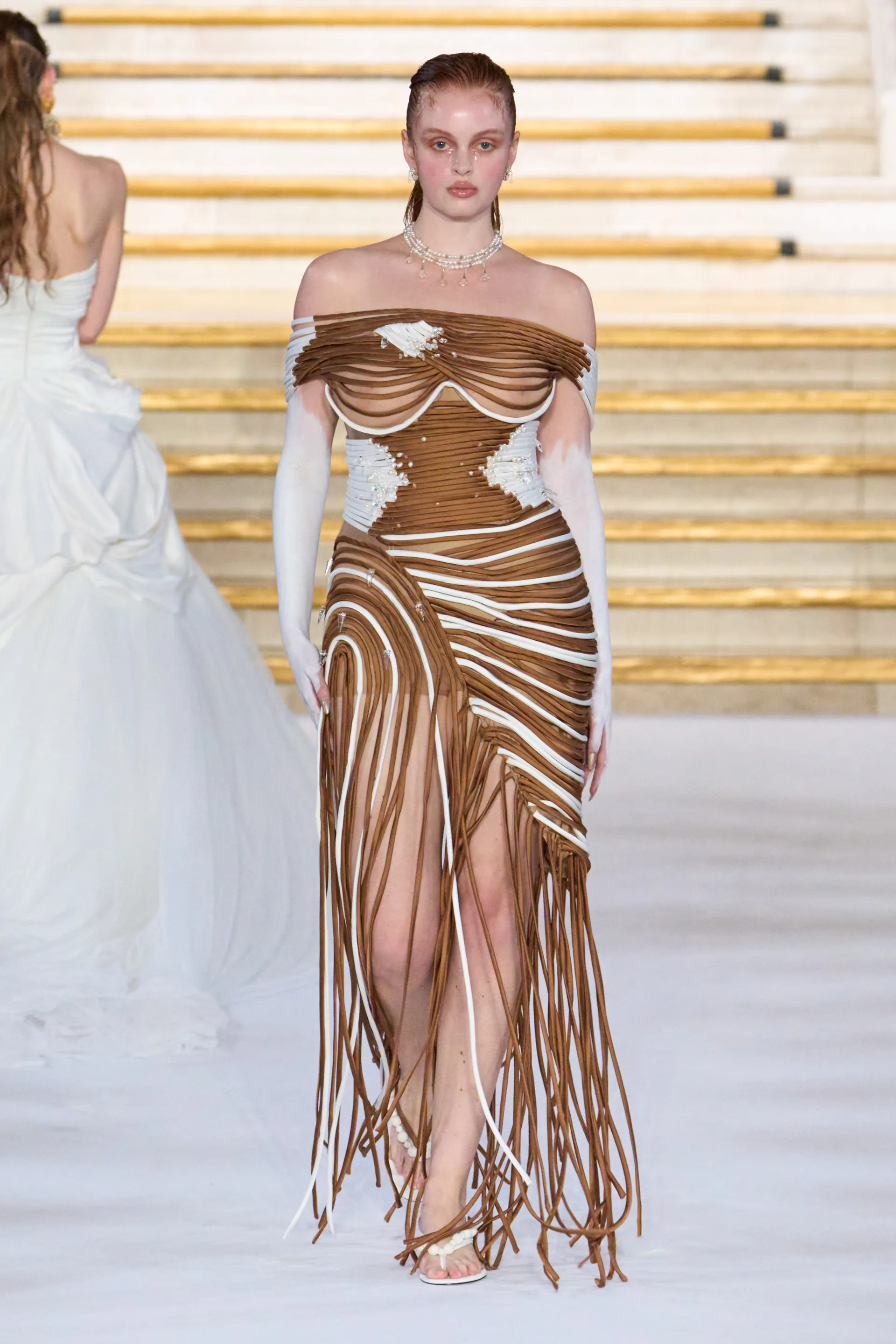
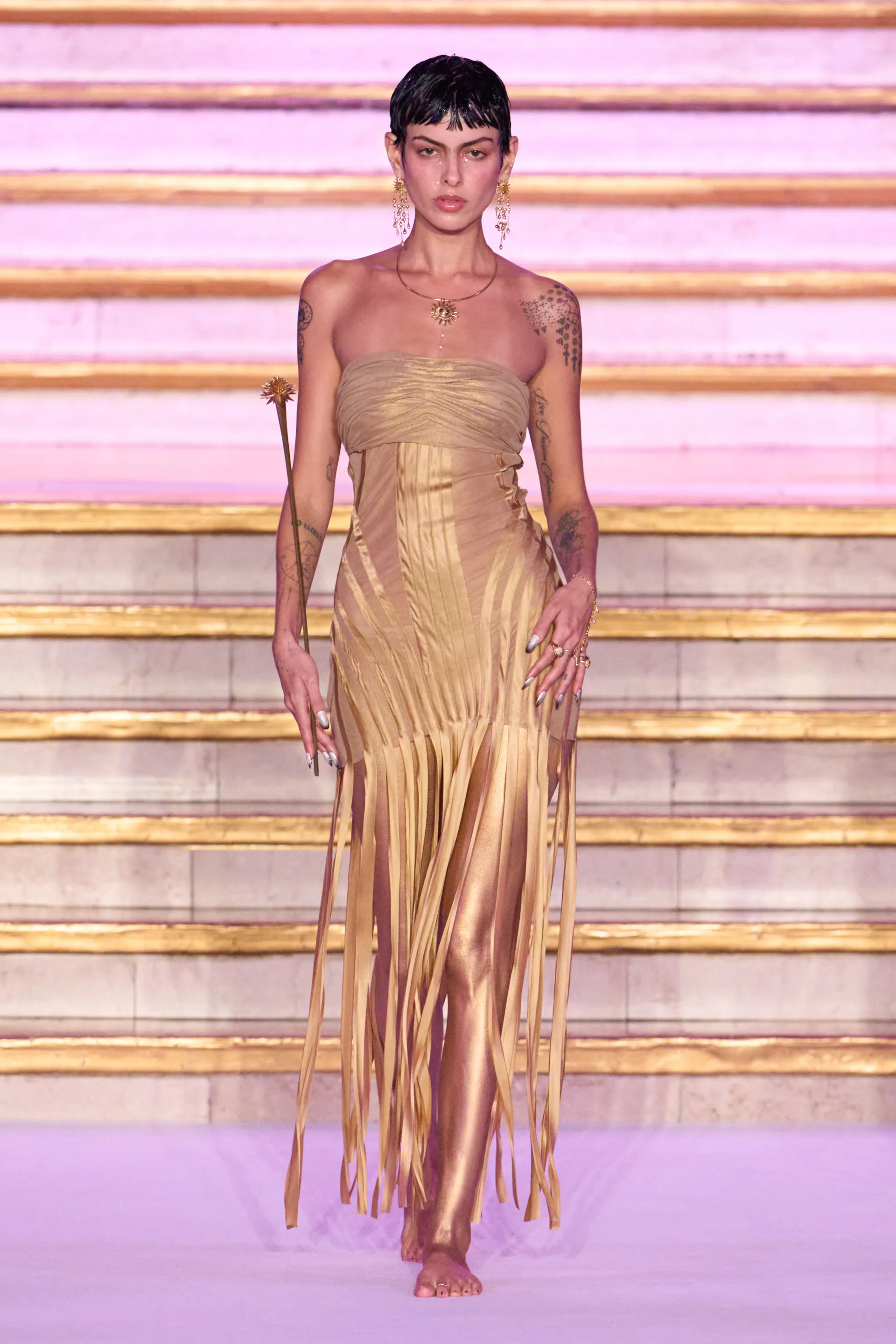
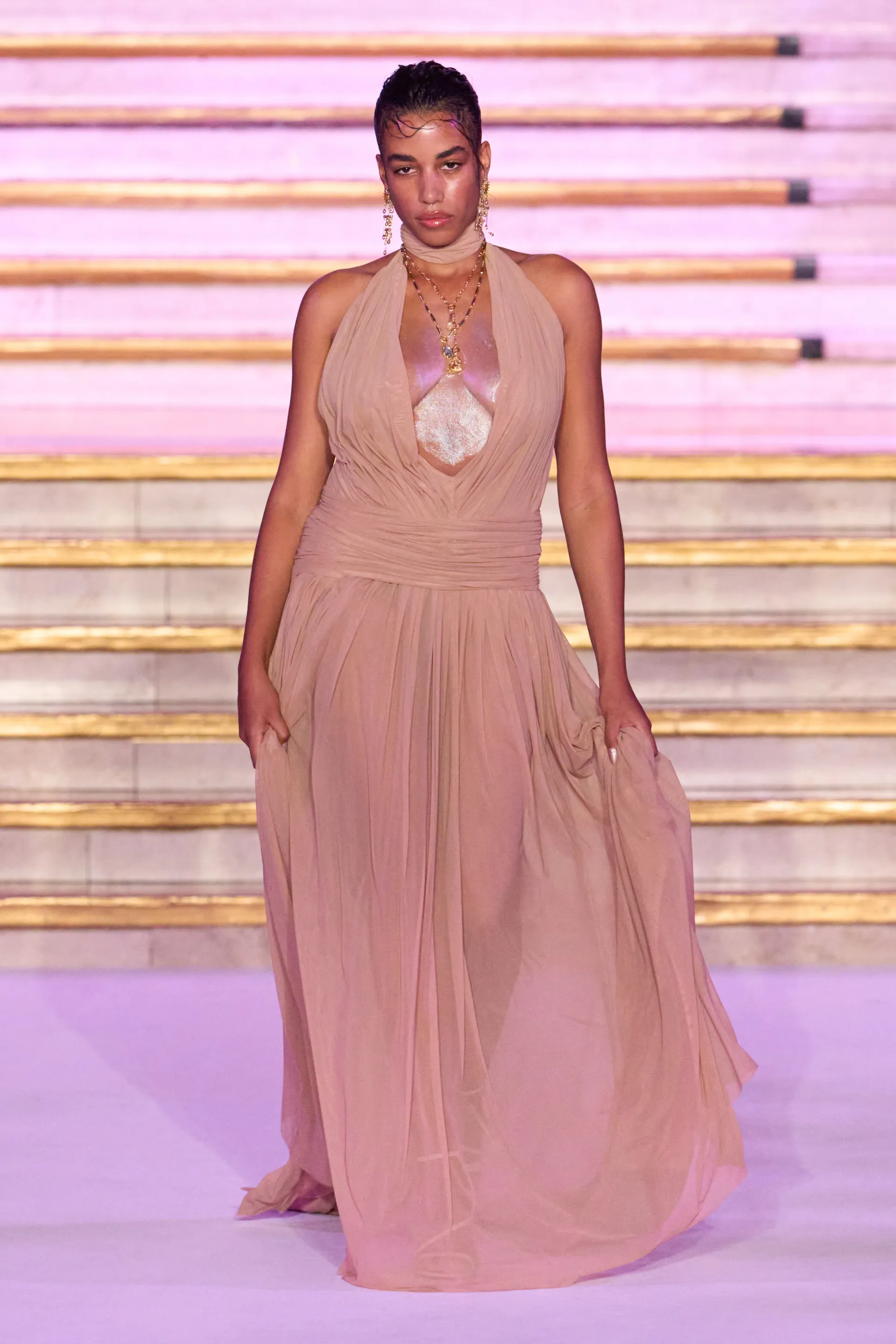
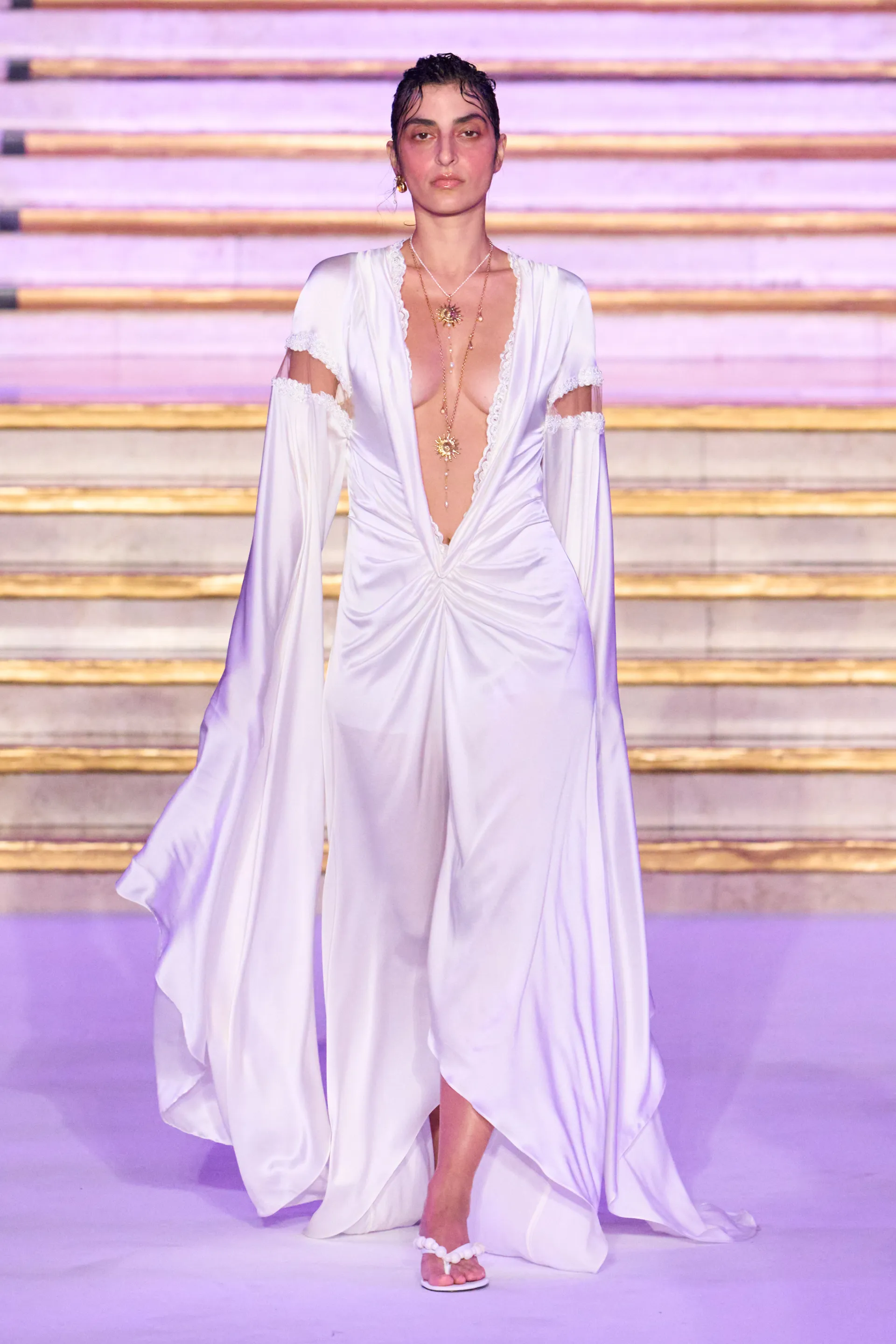
Aphrodite has hovered around Di Petsa for years. Her Spring 2024 presentation staged the birth of Venus, while wet-look garments, shells, oceans and Greek mythology have repeatedly connected the house to women imagined as creatures of water. HOLY MILK extends that mythology from erotic goddess toward mother archetype.
Petsa's women have rarely occupied one fixed category. A lover, bride, goddess and mother can live inside the same body, sometimes at the same time. Here, soft corsetry and open draping give that multiplicity physical form. The silhouette holds enough shape to suggest ritual dress, then leaves enough movement for the woman inside it to keep changing.
Three women appear carrying the same flower across their bodies.
The images are drawn from Minoan floral frescoes, digitally printed over mesh and held around the bust with quartz stones. Sheer openings cut through the hips, allowing the body to remain visible beneath an image that looks almost excavated from another age. These floral triptychs are one of the collection’s clearest departures from Petsa’s familiar wet-look vocabulary.
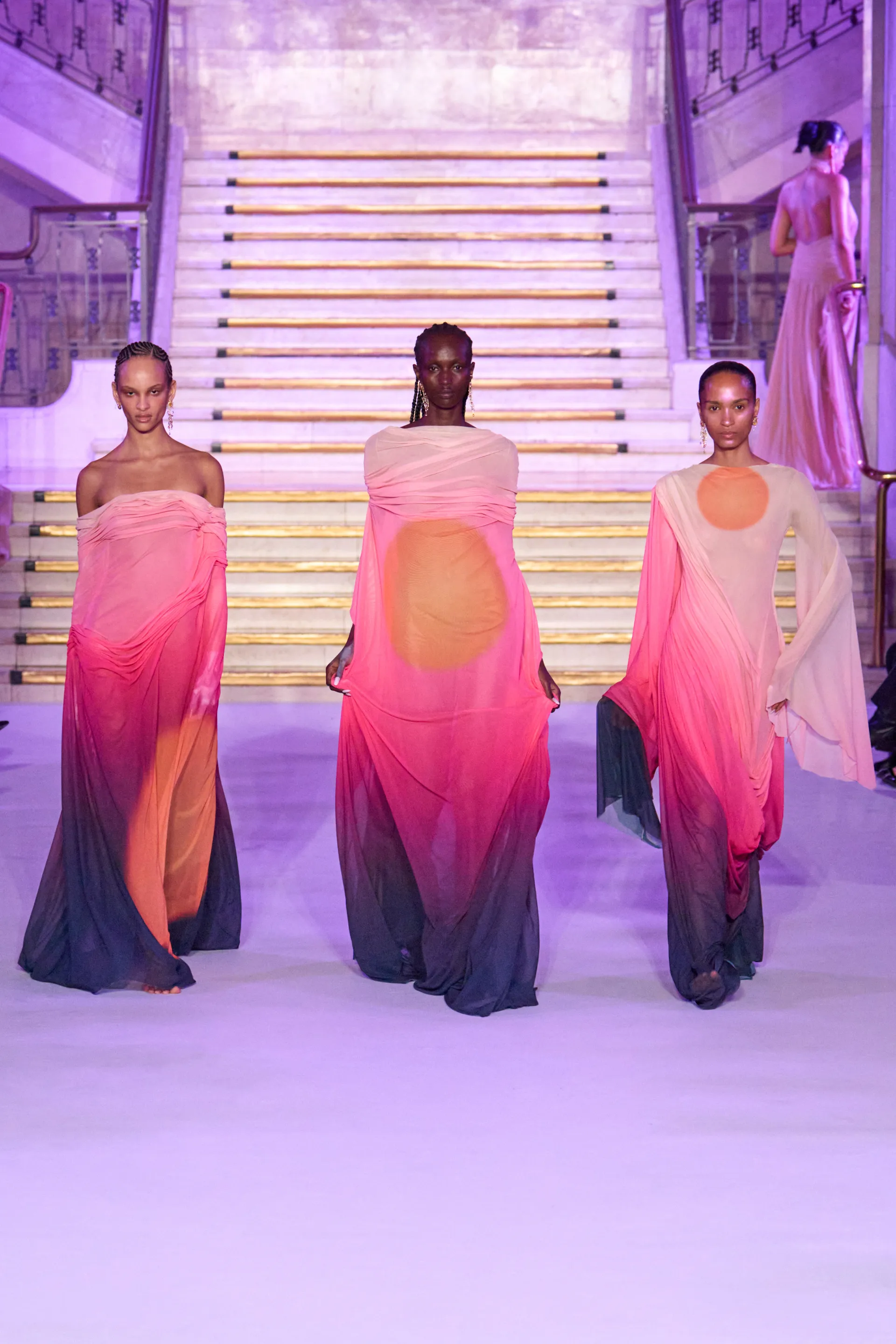
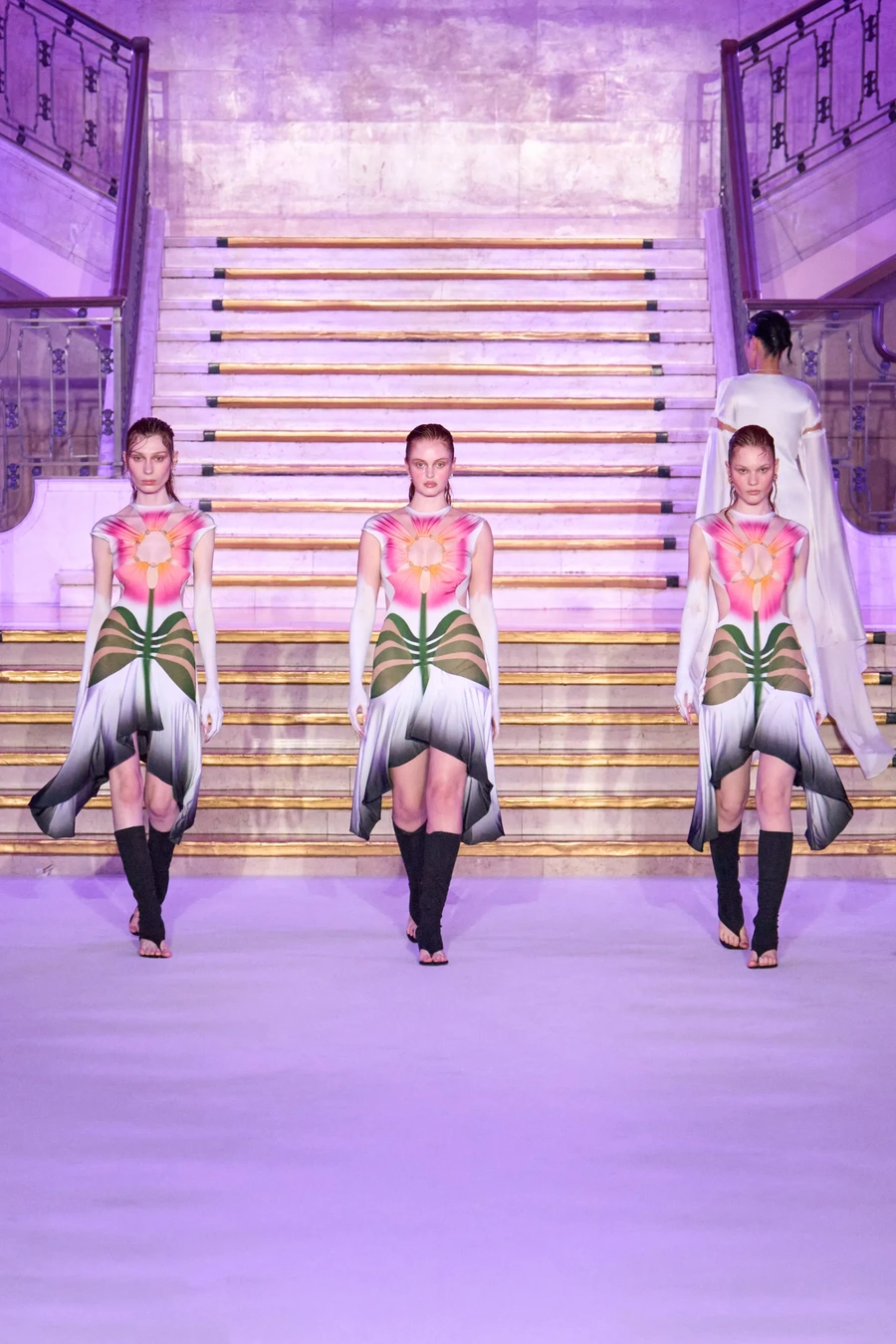
Their power comes from repetition. One silhouette becomes three; one woman becomes a small chorus. Soon another trio follows in long ombré draped gowns, colour deepening and dissolving vertically across their bodies. The individual figure remains important, though the runway increasingly starts to operate through groups, touch and proximity. Womanhood expands into sisterhood.
Then the source of the collection walks out visibly carrying a new life.
Pregnant singer Leigh-Anne Pinnock closed the show barefoot, her stomach fully exposed beneath a white sculptural bra and flowing wet-look trousers. A mechanism inside the bra released streams of milk-like liquid as other models gathered around her. The brand described the piece as placing an intimate act of maternal care inside fashion’s highly constructed public spectacle.
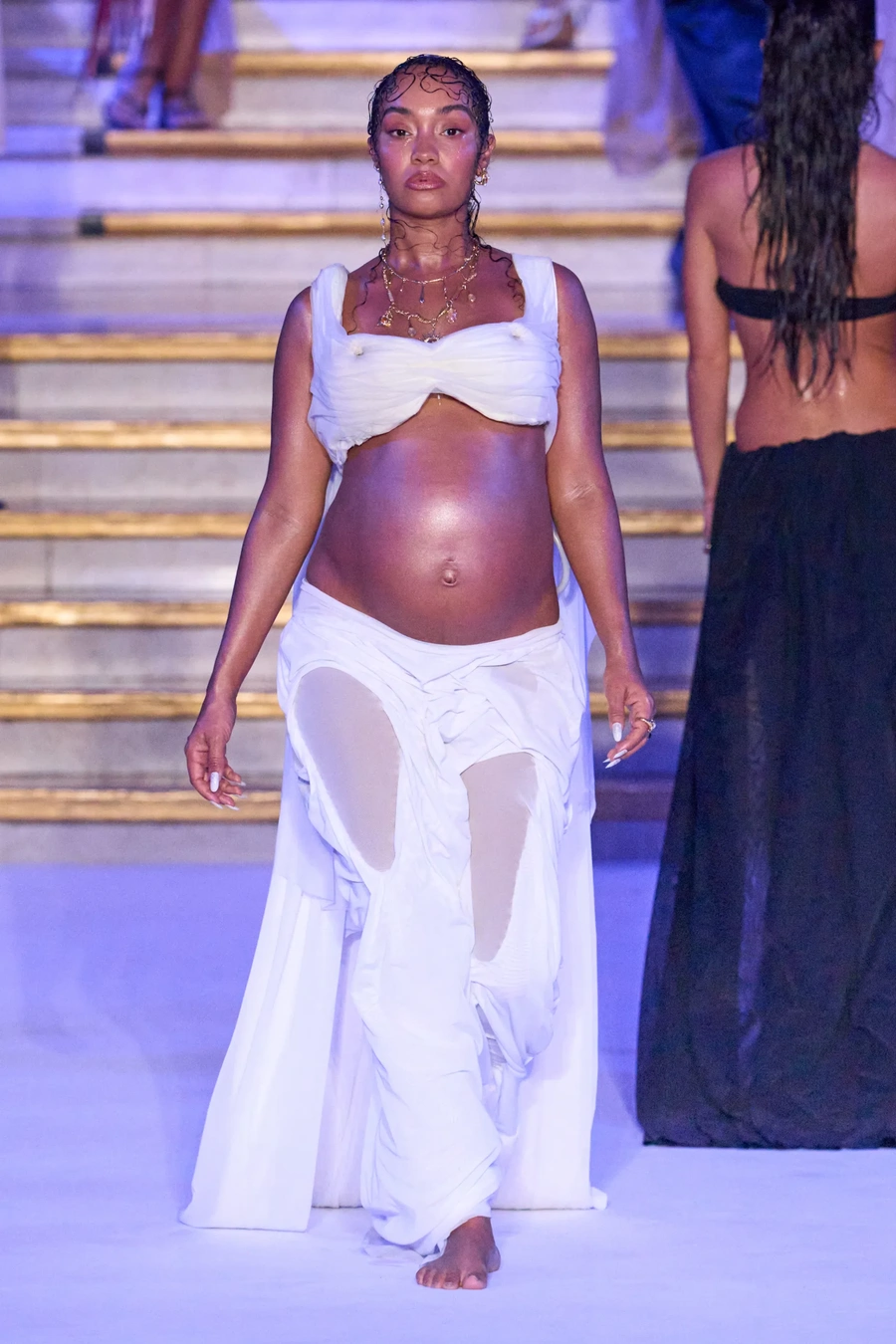
The gesture is theatrical, strange and completely compatible with Petsa’s long fascination with bodily fluid. Water had already allowed her to make sweat, tears and desire visible. Milk brings care, nourishment and biological creation into the same universe. Pinnock later said that walking pregnant allowed her changing body to occupy the centre of the story, embracing a stage of womanhood frequently styled around or concealed elsewhere.
Around her, the gathered women make the finale read almost like an ancient rite reconstructed inside a fashion show. Sisterhood circles motherhood. Milk moves from private substance to public symbol. The pregnant body stands at the centre with no attempt to disguise its scale or soften its physical reality.
Materially, HOLY MILK moves between transparency and structure: digitally printed mesh, sheer layers, fluid draping, taffeta and Di Petsa’s signature wet-look surfaces are set against harder accents such as quartz and sculptural corsetry. The contrast keeps the collection from becoming purely ethereal. Softness, weight and exposure constantly negotiate with one another, giving its vision of sisterhood and motherhood a physical presence.
HOLY MILK is unmistakably Di Petsa because motherhood gives the house’s oldest obsessions a new reason to exist.
The wet-look technique already carried the idea that women should make visible the fluids culture encourages them to hide. The body had always been allowed to change beneath stretch, drape and translucency. Greek mythology had already offered Petsa a vocabulary of goddesses, oceans and rituals. Motherhood pulls those threads into a subject that was waiting inside the brand from the start.
Petsa may call this season a new era, but the transformation carries the memory of every previous one.
That continuity makes the collection’s central metaphor unusually convincing. Women give birth to new versions of themselves while carrying traces of who they were before. Fashion houses can do the same.
Di Petsa SS27 grows without abandoning the water it came from.
Advertisement