MENU
Close





There are many ways to say goodbye. Some choose to announce it in words, while others prefer to convey the message through songs or movies. However, for the renowned automaker Bugatti, the farewell to the W16 engine is delivered through exceptional roadsters, including the W16 Mistral ‘Blanc Éternel’.

There are many ways to say goodbye. Some choose to announce it in words, while others prefer to convey the message through songs or movies. However, for the renowned automaker Bugatti, the farewell to the W16 engine is delivered through exceptional roadsters, including the W16 Mistral ‘Blanc Éternel’.
July 4, 2026


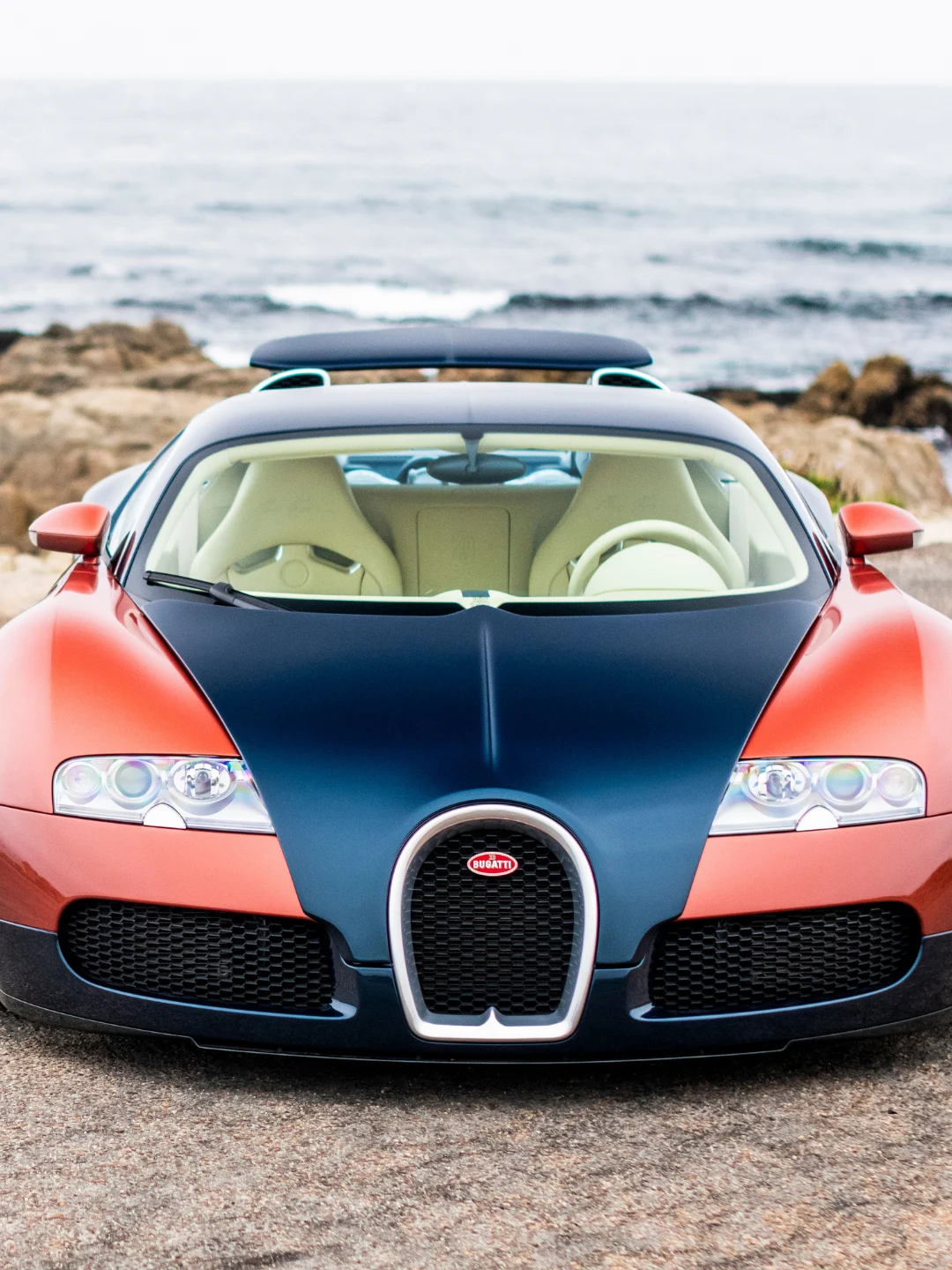
The last day of June 2011 marked a milestone in Bugatti’s history, as the brand unveiled the L’Or Blanc - its first partnership with Königliche Porzellan-Manufaktur Berlin (KPM Berlin). Created from the fusion of cutting-edge engineering and centuries-old porcelain expertise, it was the first car to feature porcelain components, embracing Bugatti’s new approach to automotive design. Fifteen years later, on the first day of July 2026, Bugatti and KPM Berlin announce their second collaboration: the W16 Mistral Blanc Éternel. Much like a continuation of the journey, this hypercar not only inherits defining characteristics of the L’Or Blanc but also features design details that shape an one-of-a-kind identity.
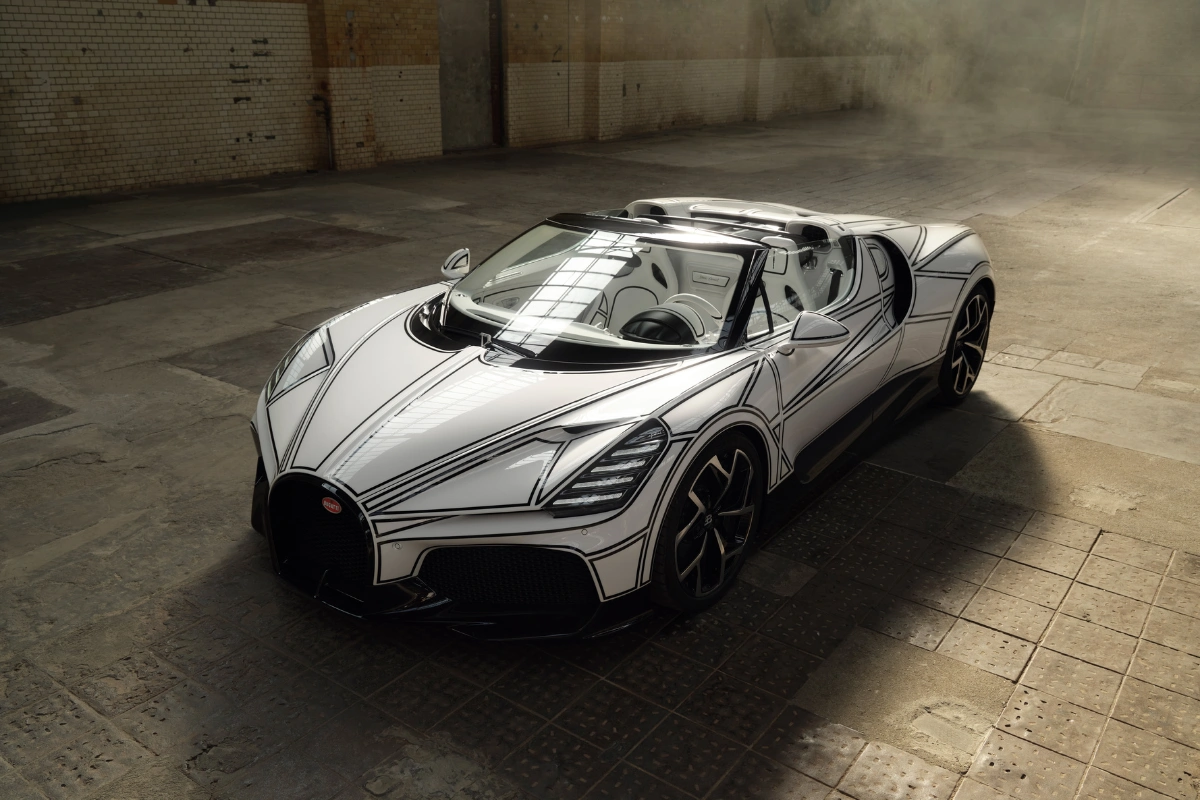
The W16 Mistral ‘Blanc Éternel’ was created through an entirely digital design process. Its sculptural form was manufactured by a network of precisely controlled surfaces named NURBS (Non-Uniform Rational B-Splines). Volumes made from these digital elements then came together to form the finished roadster. The hypercar’s body was initially painted pure white, yet anyone familiar with the L’Or Blanc knew that craftspeople at Bugatti and KPM Berlin would not let their creations stop at such a simple color.
Fifteen years ago, Bugatti’s designers drew inspiration from royal-blue strocks on porcelain vases made by Enzo Mari to sketch the L’Or Blanc’s exterior. The result were graceful thin blue lines flowing over the car’s bright white body, transforming a vehicle’s surface into an artwork. Building upon that creativity, yet the W16 Mistral ‘Blanc Éternel’ aimed to demonstrate another facet: the evolution of Bugatti’s design process. Running along its exterior are sharp black lines that bring lineworks on technical drawings to reality, revealing the underlying geometric logic of this hypercar.
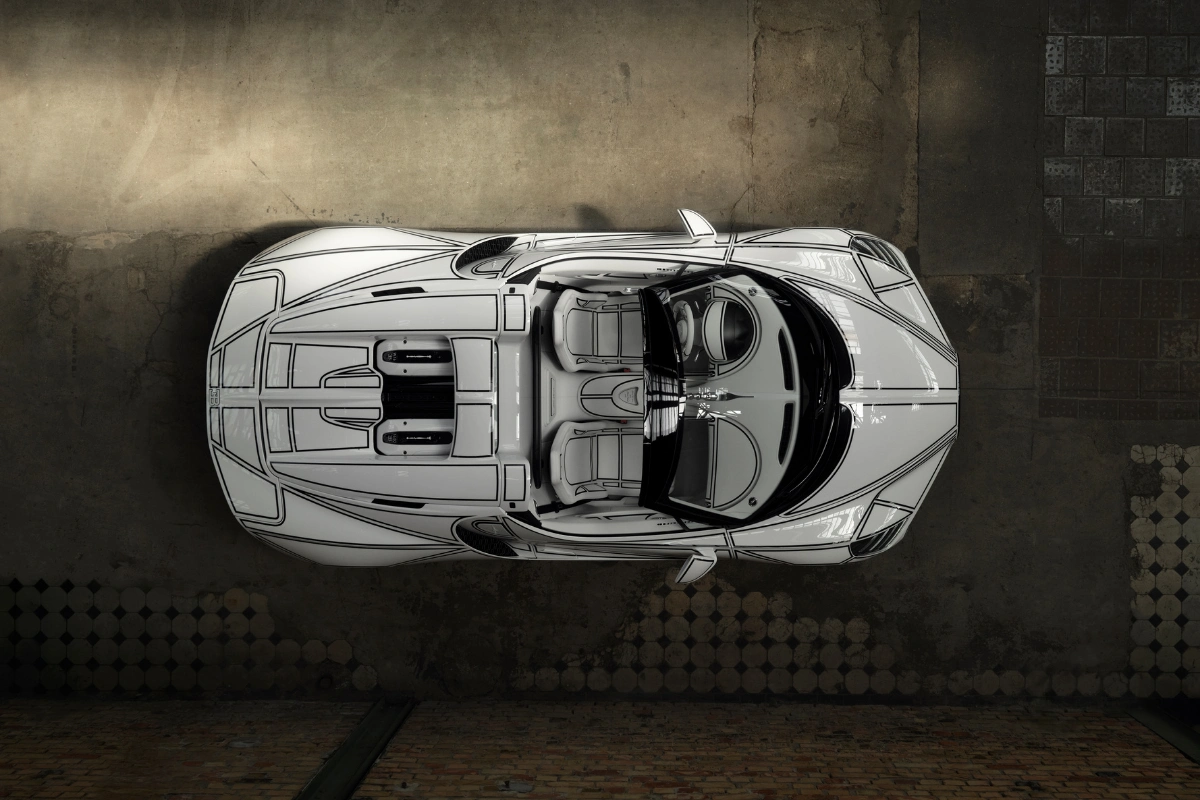
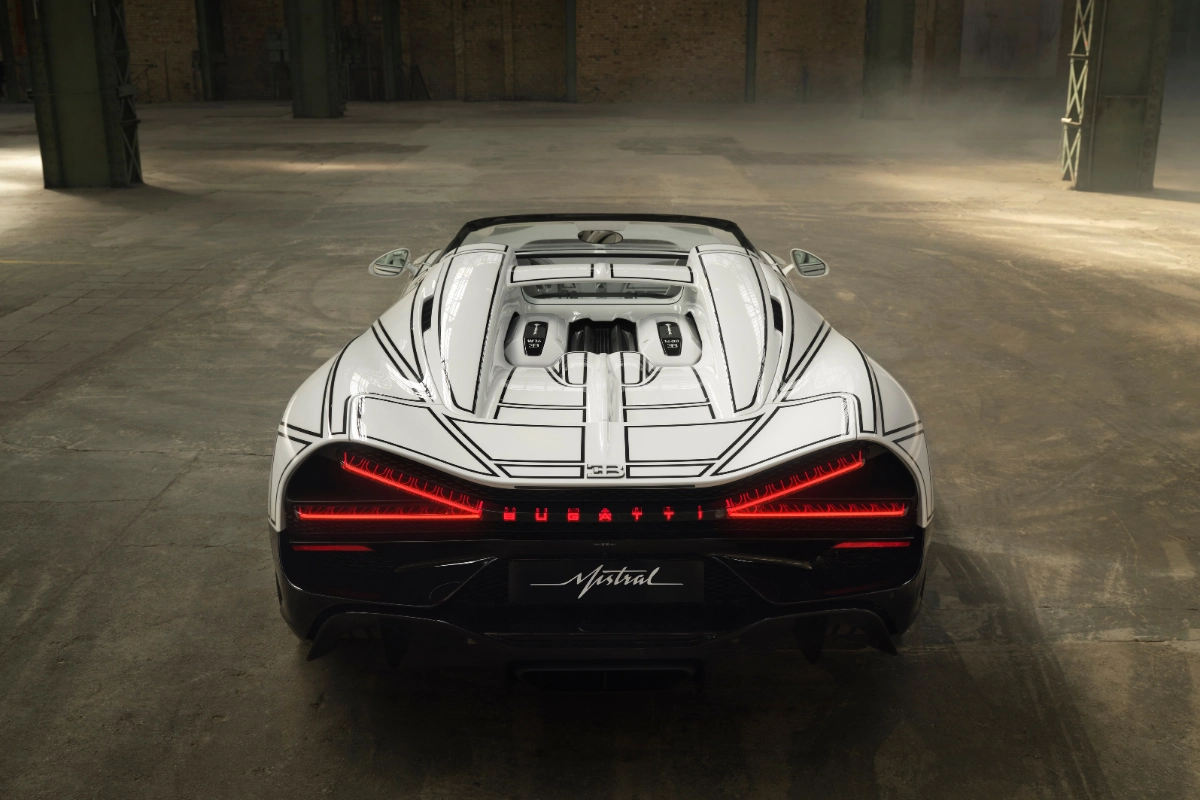
Though the W16 Mistral ‘Blanc Éternel’ was developed digitally, the painting process still required the meticulous human craftsmanship. Firstly, those black lines were located by hand using precisely applied tape. After masking the surrounding areas, craftspeople opened the tape channels to expose the desired design, then sprayed black paint onto the exposed paths. Finished lines created a striking black-and-white contrast, drawing the eye to the hypercar’s defining features, including its hood, doors, C-line, air intakes and X-shaped rear lights.

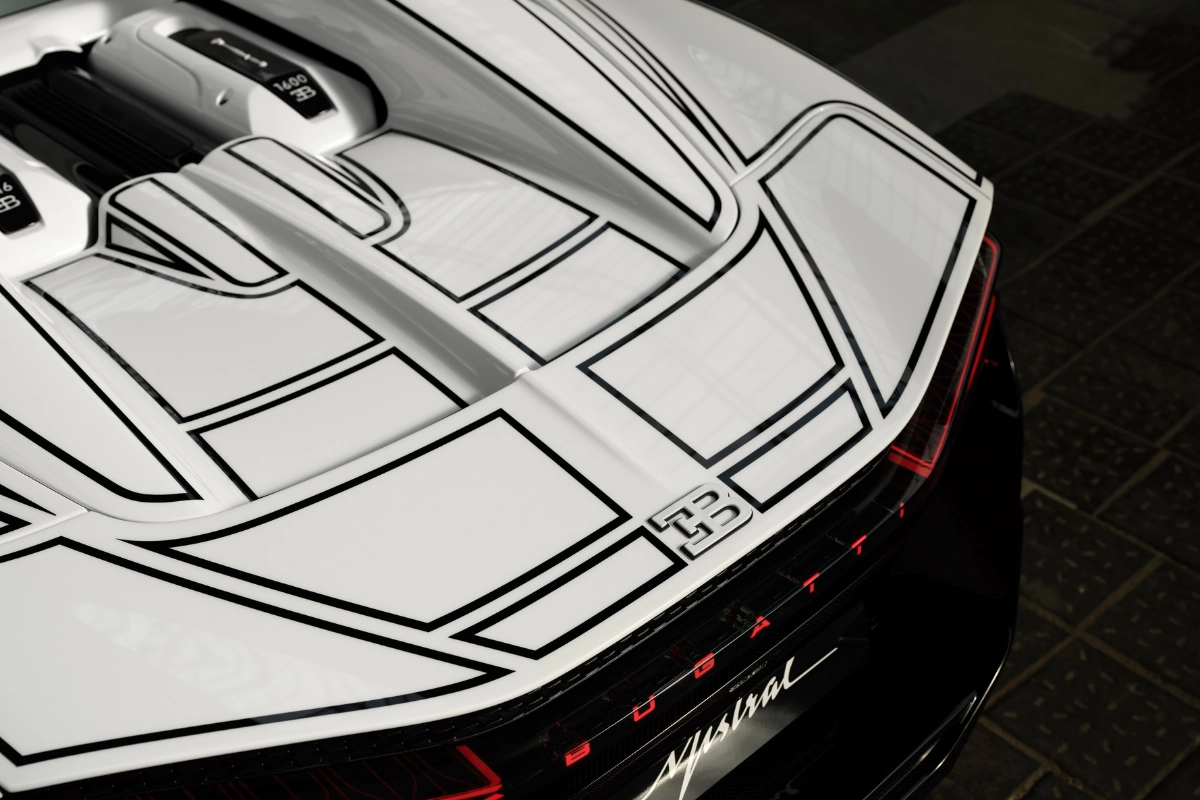
More than an aesthetic inspiration, porcelain served as an indispensable material in the W16 Mistral ‘Blanc Éternel’. The pristine white of the porcelain adorned exterior elements, including the EB emblem, the fuel and oil caps and two engine-cover inlays featuring KPM Berlin's royal scepter logo. Yet, behind this beautiful material lied a technical challenge: the firing caused the porcelain to contract slightly, resulting in the post-firing dimensions approximately 17% different from the original ones. The inclusion of porcelain on this hypercar, therefore, demonstrated how Bugatti and KPM Berlin meticulously calculated to ensure that every finished component fit perfectly into its designated position.
Echoing the exterior, the black-and-white contrast remained a highlight of the W16 Mistral ‘Blanc Éternel’ interior, as sharp black lines were painted directly onto the white leather seat upholstery. Porcelain was also incorporated into the cockpit, featuring on components that drivers directly encouter, such as speaker cover plate, two kneepad inlays, gear-shifter shells, center-console armrest inlay and the window-lifter buttons. On the W16 Mistral ‘Blanc Éternel’, porcelain evolved from a purely aesthetic material into an engineering challenge and an element that enhances the vehicle's functionality.
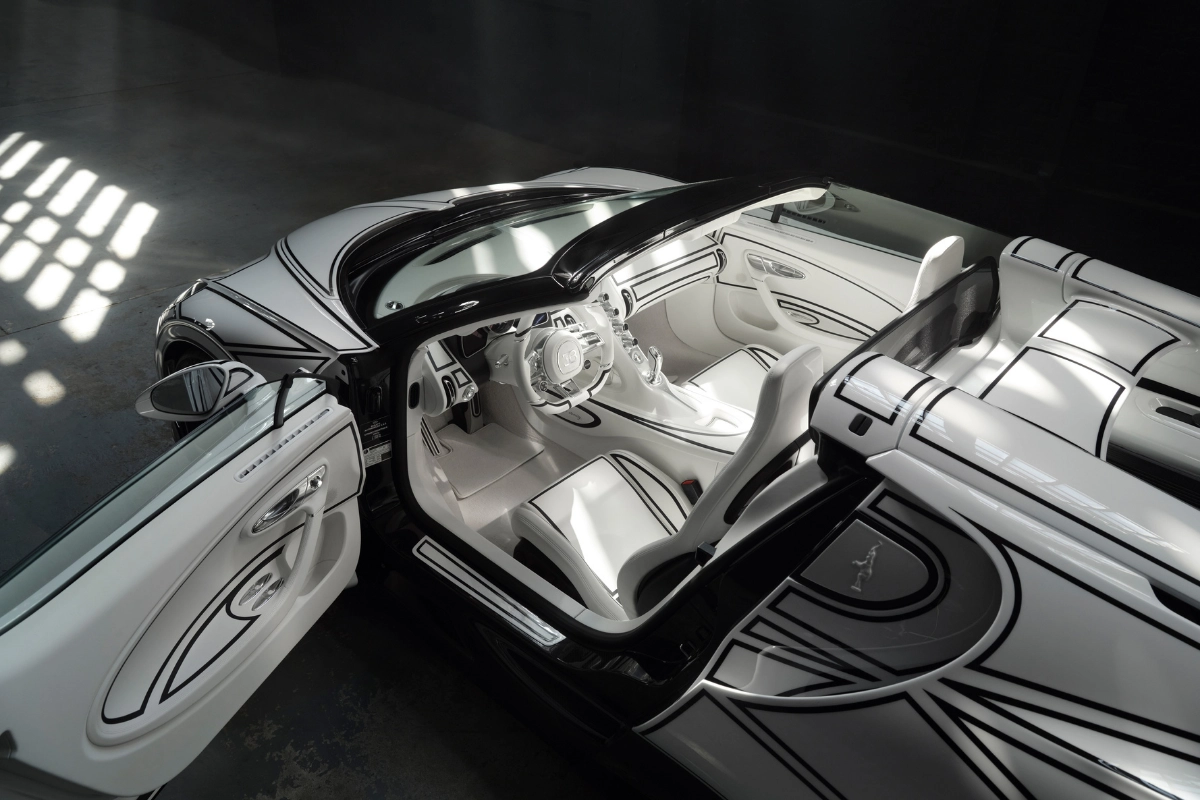
As the era of the W16 engine is coming to an end, the W16 Mistral ‘Blanc Éternel’ stands as one of most beautiful farewells that Bugatti and KPM Berlin could deliver. Born in the digital environment yet embodying the fruits of artisanal craftsmanship, this hypercar serves as both a tribute to the legacy of the past and a step toward the future.