Wimbledon begins with a queue, but another version of the tournament starts behind an almost invisible gate.
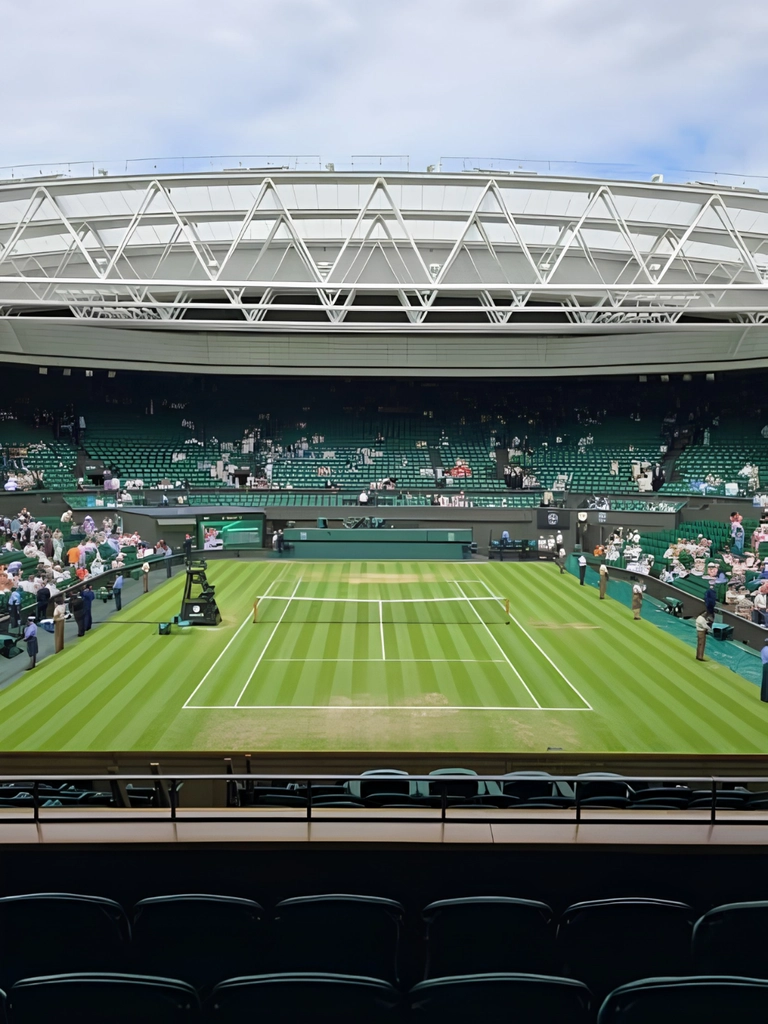
The Guide To A Tasteful Wimbledon Season
Wimbledon begins with a queue, but another version of the tournament starts behind an almost invisible gate.
July 9, 2026


Every summer, Wimbledon stages one of luxury culture’s most elegant contradictions. Outside the All England Lawn Tennis Club, spectators camp in Wimbledon Park, wake before dawn and wait through the celebrated Queue for a chance to purchase a grounds pass or one of the limited show-court tickets released that morning. The inconvenience is part of the romance: patience, luck and devotion are rewarded with entry.
A few hundred metres away, another Wimbledon experience is being choreographed around the removal of uncertainty.
Wimbledon Has Two Entrances
Cars move through designated drop-off routes. Guests cross a private arrival hub, enter through the gate recommended for debenture holders and collect wristbands giving access to areas most spectators never see. Their Centre Court seats have been secured not for an afternoon, but for every day of the tournament across five consecutive years. Wimbledon’s public traditions remain visible around them, yet friction has been edited out of the day.
This is the essential character of the Wimbledon luxury experience. It is less concerned with adding obvious extravagance than with controlling time, movement and access. The ultimate privilege is knowing exactly where one will sit before the draw is announced, entering without gambling on a ballot and dining without competing for space in the busiest public concourses.
Wimbledon may resemble an English garden party, but its highest tier operates with the precision of private banking.
The £116,000 Ticket That Behaves Like an Asset
At the centre of this world is the Wimbledon debenture, the only type of Championships ticket that may legally be transferred or sold on the open market. The All England Club issues new series every five years, using the capital raised to fund improvements to its grounds and facilities.
The 2026–2030 Centre Court series was issued at £116,000 for one debenture. Since a debenture provides one reserved seat for all 14 days of the tournament during each of the five years, a pair required an initial commitment of £232,000. There are only 2,520 Centre Court debentures, representing approximately one-sixth of the stadium’s seating capacity.

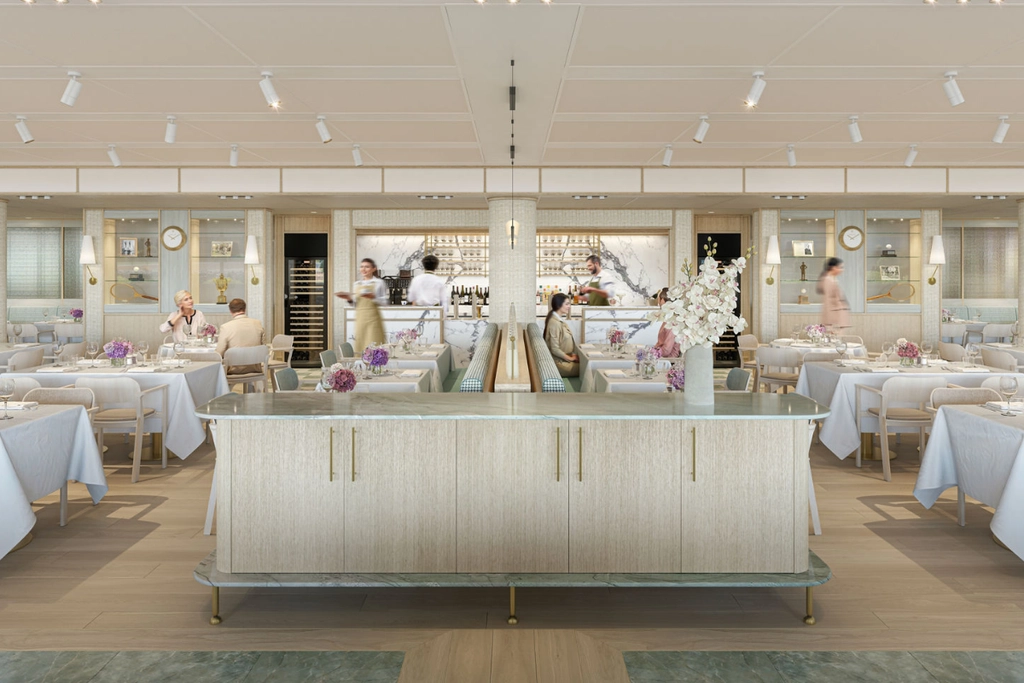
The price grants more than admission. Centre Court debenture seats occupy rows A to N, placing holders in the lower and middle sections close to the court. Tickets also provide access to private debenture bars, restaurants and lounges, including areas within Centre Court and, by reservation, The Renshaw in No.1 Court.
Yet their most remarkable feature is transferability. While ordinary ballot and hospitality tickets remain tightly controlled, debenture owners may sell their entitlement or release individual tournament days they do not intend to use. This transforms access into a scarce secondary-market commodity whose value responds to finals, players, demand and the number of years remaining in a series.
The 2026 market demonstrated just how far that value can move. A pair of Centre Court debentures changed hands for £586,000 shortly before the Championships, while an individual debenture reportedly reached £325,000 earlier in the year. Tickets for the 2026 gentlemen’s final were advertised at £29,079 each on secondary platforms.
A debenture should not be mistaken for a guaranteed financial investment. Its resale value can fluctuate, and its primary purpose remains access to tennis. Nevertheless, it occupies a fascinating space between season tickets, social credentials and tradable security. Its owner possesses something far more psychologically powerful than an expensive seat: immunity from Wimbledon’s annual scarcity ritual.
Luxury Begins by Recovering the Day
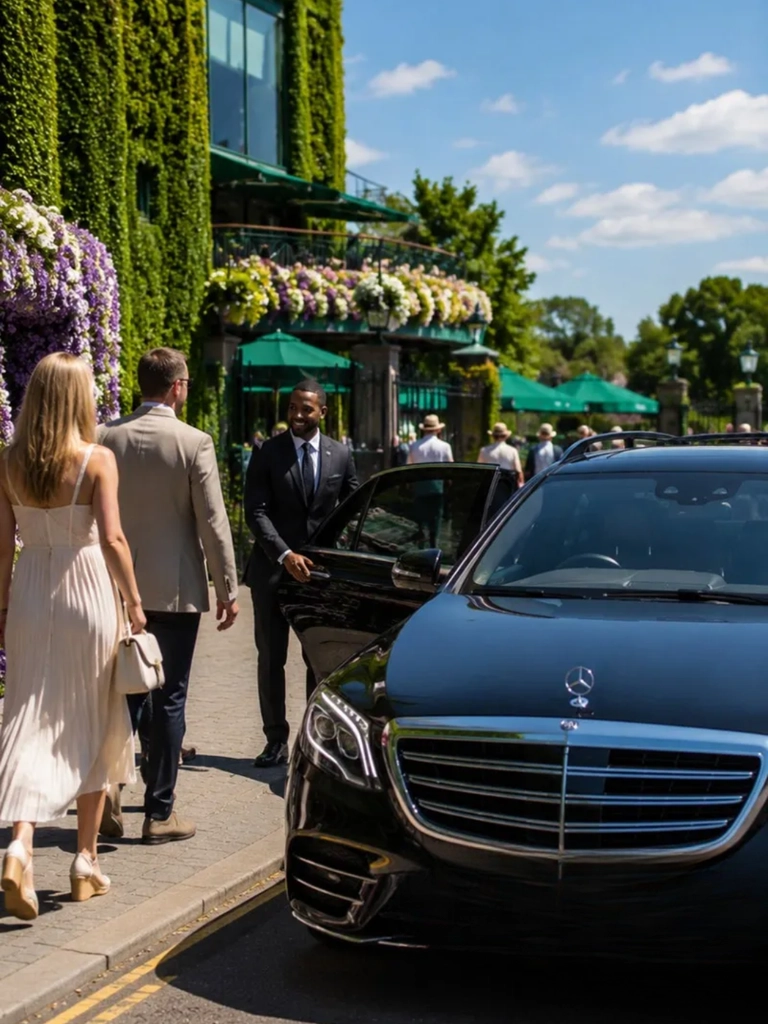
The traditional journey to Wimbledon involves crowded trains, long walks from Southfields or Wimbledon station and the possibility of substantial waiting. For elite guests, transportation becomes the opening act of the experience.
Debenture holders can arrange a dedicated car service recognised by Wimbledon, while registered owners may request access to designated drop-off and pick-up routes near the Guest Arrival Hub. Private hospitality companies also build chauffeur-driven transfers into wider London packages, using executive saloons or chauffeured vehicles to connect hotels, residences and the grounds. The car itself matters less than the continuity: no navigation, no search for parking and no uncertainty about where to enter.
Wimbledon encourages debenture guests to use Gate 4 on Church Road. After crossing from the arrival hub, they enter an environment staffed by dedicated debenture hosts, who assist with access, reservations and directions throughout the day. Their uniforms, discreet information points and controlled entrances give the process the atmosphere of a private members’ club temporarily expanded around a global sporting event.
The distinction is important. Debenture ownership does not automatically include a limousine, unlimited Champagne or a private concierge. Those elements are usually arranged separately or incorporated into premium hospitality packages. What the debenture provides is the infrastructure upon which a completely seamless day can be built.
This is contemporary luxury at its most effective. Rather than placing more objects in front of the guest, it removes decisions. The owner does not wonder whether a ticket will appear, whether the seat will have a clear view or whether entry will consume the morning. Money purchases back the hours normally surrendered to logistics.

Behind Centre Court, Lunch Becomes a Parallel Match
The public-facing Wimbledon menu is inseparable from strawberries and cream, Pimm’s, sandwiches and Champagne. Debenture dining retains those rituals but places them inside a private ecosystem extending across Centre Court and No.1 Court.
The Champions’ Room and Courtside Restaurant serve Centre Court debenture guests, while The Renshaw is available to both Centre Court and No.1 Court holders. These fine-dining rooms require advance reservations and sit alongside more relaxed spaces such as The Terrace, The Gallery, The Roof Top, the Courtside Brasserie, The Veranda and the No.1 Lounge.
The experience is deliberately paced around play. Guests may arrive for coffee and pastries, sit down to lunch before Centre Court begins, return for afternoon tea during a break and remain for a light supper if a match continues into the evening. Champagne and strawberries can be collected before guests return to their seats, allowing Wimbledon’s most recognisable culinary symbol to survive inside a more controlled setting.
There is an important difference between debenture access and fully inclusive hospitality. Debenture ownership opens the doors, but restaurant meals and premium drinks are generally purchased separately. Official hospitality packages bundle the day more comprehensively, combining a guaranteed show-court ticket with reception drinks, multicourse dining, afternoon tea, complimentary bars and private garden or lounge environments.

Keith Prowse is Wimbledon’s exclusive official hospitality partner, operating experiences including Rosewater Pavilion, The Lawn and The Treehouse. The setting may be a landscaped garden restaurant, a contemporary social space or a more private suite, but the commercial idea remains consistent: the guest purchases a finished day rather than assembling one component at a time.
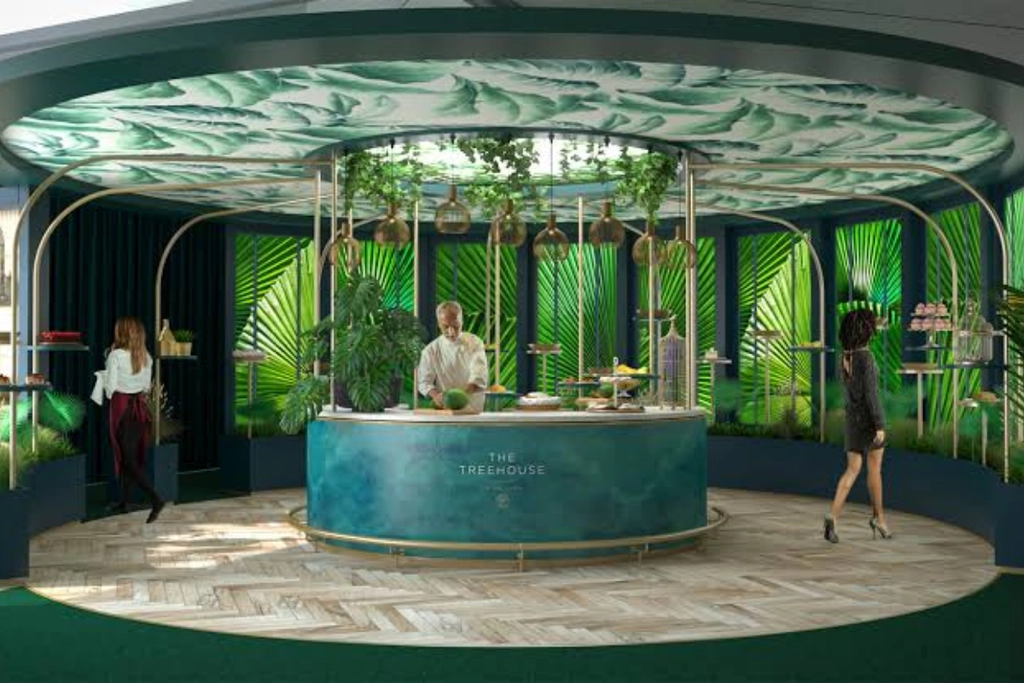
Packages during the early rounds of 2026 were already listed in the four-figure range per person, with Centre Court and final-weekend access commanding considerably greater premiums. Hospitality therefore offers a practical alternative for someone seeking one exceptional day without committing six figures to a five-year debenture.
The two systems serve different forms of wealth. Hospitality is consumption: expensive, immediate and complete. A debenture is continuity. It allows Wimbledon to become an annual fixture in a family, corporate or social calendar.
The Royal Box Is Where Purchasing Power Ends
Then there is the Royal Box, the one level of Wimbledon prestige that cannot be secured through a broker, hospitality company or sufficiently determined bank transfer.
Situated at the southern end of Centre Court, the Royal Box contains 74 dark-green Lloyd Loom chairs. Its guests are selected by invitation and may include members of British and overseas royal families, heads of government, former champions, figures from the armed forces, cultural leaders, commercial partners and individuals recognised for their contribution to public life or tennis. Invitations are issued through the leadership of the All England Club rather than sold.
The protocol remains precise. Men are expected to wear a suit or jacket with a tie. Women are asked to dress smartly and avoid hats that could obscure the view of those behind them. Guests may receive lunch, afternoon tea and post-match refreshments in the Clubhouse, but the true privilege is symbolic rather than gastronomic.
A billionaire may buy a debenture, charter an aircraft, occupy a private suite and hire a car to wait outside the grounds. None of those arrangements creates a Royal Box invitation.
That boundary protects Wimbledon from becoming a straightforward hierarchy of expenditure. The Box represents something more archaic and socially potent: recognition. Its seat implies that an institution has chosen the guest, placing status above purchasing power.
This is also why the Royal Box remains one of the tournament’s most scrutinised fashion stages. Clothing must communicate ease inside a rigid code. A jacket should appear natural rather than obligatory; a day dress must register as distinguished without turning the wearer into an obstruction. At a tournament where competitors are disciplined by white, the audience’s most prestigious enclave is disciplined by manners.
The Real Product Is Controlled Intimacy
Wimbledon attracts more than half a million visitors across its fortnight, yet its luxury economy is designed to make a mass spectacle feel private. The achievement lies in scale management. A guest may hear thousands of spectators roar while remaining seated in a protected row, dine in a room hidden behind the stadium and leave through a route already arranged by a driver.
The Wimbledon luxury experience therefore differs from the louder prestige codes of Formula One paddocks or courtside basketball. Its signals are deliberately restrained: a digital ticket, a green wristband, an unmarked entrance and a restaurant reservation known mainly to those permitted to make it.
Even the debenture disguises extravagance beneath institutional language. It is called neither a VIP pass nor a luxury membership. It is a financial instrument issued to fund the future of the grounds. The terminology transforms privilege into stewardship and consumption into participation in Wimbledon’s continuity.
Yet the contrast with the Queue remains impossible to ignore. One spectator earns access through endurance and uncertainty; another acquires certainty through capital. Both may watch the same rally and experience the same silence before a serve, but they have entered entirely different versions of the tournament.
Wimbledon’s true allure lies in this delicate contradiction: it masterfully markets heritage to the masses while seamlessly shielding its elite guests from its inconveniences. At SW19, the ultimate luxury isn't the free-flowing Champagne or a front-row view; it is the quiet privilege of experiencing a chaotic, world-class sporting event as if it were a private, sun-drenched garden party curated solely for you. This year's tournament heightened its prestige, drawing global attention with a historic, record-breaking £64.2 million prize fund.