MENU
Close





Ammy Drammeh is not breaking Chanel’s beauty codes so much as opening them up. From the imaginary garden of her childhood to the many shades hidden inside Rouge Noir, the British Gambian Spanish makeup artist is bringing colour, memory and a more expansive understanding of beauty into one of fashion’s most recognisable houses.

Ammy Drammeh is not breaking Chanel’s beauty codes so much as opening them up. From the imaginary garden of her childhood to the many shades hidden inside Rouge Noir, the British Gambian Spanish makeup artist is bringing colour, memory and a more expansive understanding of beauty into one of fashion’s most recognisable houses.
July 21, 2026
Advertisement

Advertisement



When Ammy Drammeh remembers the place where she grew up in Sabadell, Spain, she does not begin with a makeup palette. She remembers a patch of land between apartment buildings where trees and bushes grew almost wildly, a space that local residents called “the jungle”. It was an ordinary piece of neighbourhood landscape, but to a young Drammeh, it became something else: a world of colour, texture and imagination. Later, when the vegetation was cleared, the landscape disappeared. What remained was memory, including the flowers that had once grown on her grandmother’s balcony. Years later, that memory would find its way into one of the most recognisable beauty houses in the world.
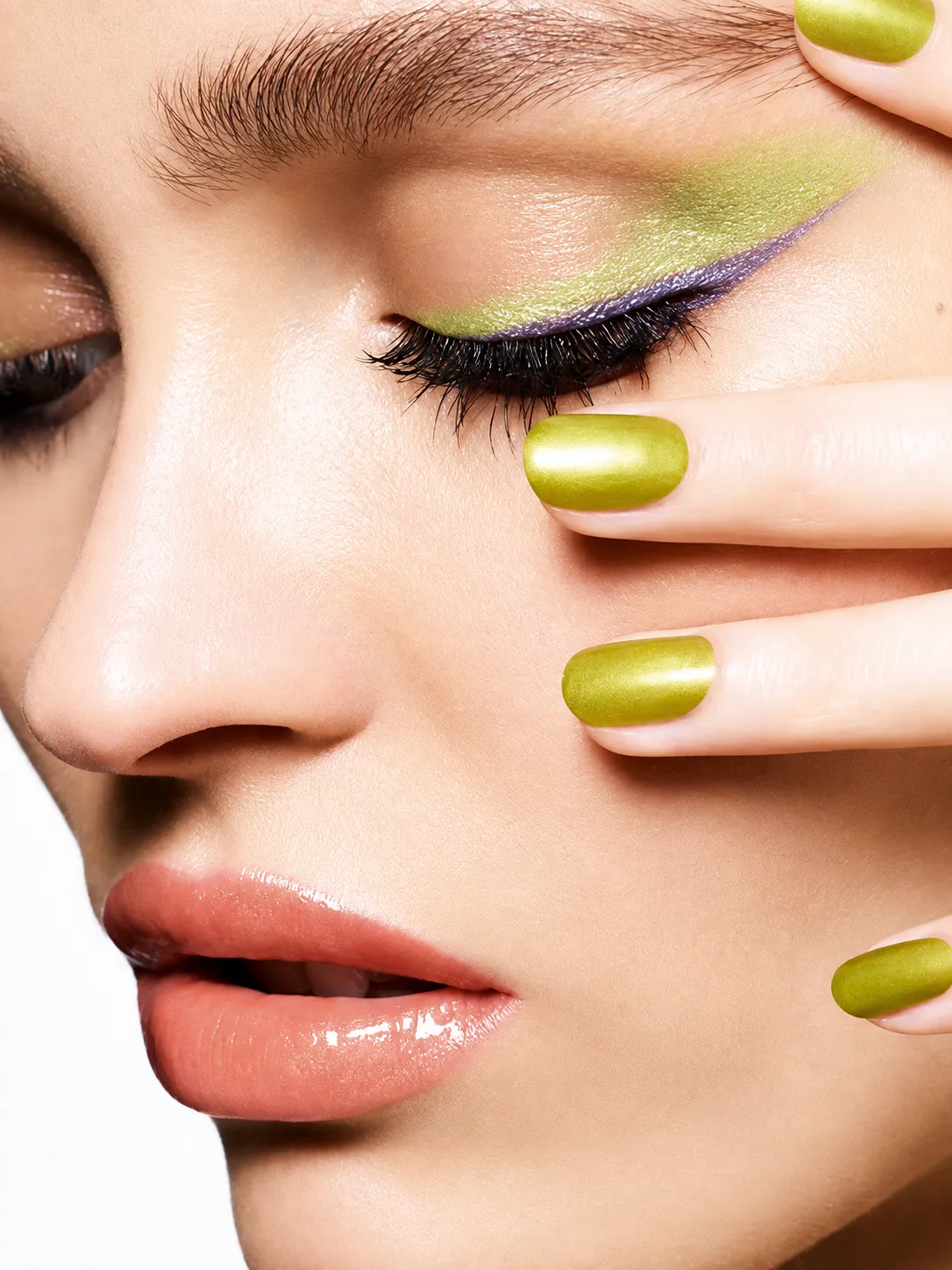
The result was Jardin Imaginaire, Drammeh’s first collection for Chanel. Its story begins not in the Chanel archives, but somewhere much more personal: in the landscape of a childhood that no longer exists. Blue, purple, coral and berry shades transformed the idea of a Chanel makeup collection into something more dreamlike and instinctive. The garden was imaginary precisely because it had become a memory, reconstructed through colour rather than geography.

This is perhaps the most revealing way to understand Drammeh’s place within Chanel. Her work is not about arriving at the Maison with a new aesthetic and replacing what came before. It is about looking at familiar codes through another perspective and discovering that they can contain more possibilities than their history might suggest.
That perspective is shaped by a life lived between cultures. Born in Sabadell to a Gambian family and later building her career in London, Drammeh spoke about the influence of her African heritage, Mediterranean surroundings, music and the visual references that shaped her early relationship with makeup. As a teenager, she experimented with friends, family and even teachers, recreating the looks she encountered in music videos and popular culture. Before makeup became her profession, it had already become a way of translating the world around her.
At Chanel, that instinct has found an unusually rich canvas.
Chanel beauty has always been built on recognisable codes. Black, white, beige, red and gold form part of a visual language that can be identified almost immediately, even without the Chanel name. Its power lies in restraint: a colour does not need to shout to become iconic. Rouge Noir, perhaps more than any other shade, embodies that paradox. Created in the 1990s, the deep red black lacquer became one of Chanel’s most enduring beauty signatures because it occupied the space between two familiar colours without belonging entirely to either.
Drammeh’s work begins from a different question. What if those colours are not endpoints, but starting points?
That question has shaped her contributions to Chanel’s Comètes Collective, the creative trio formed with Cécile Paravina and Valentina Li. Rather than establishing a single artistic authority for Chanel makeup, the collective allows several distinct perspectives to enter the House’s creative process. Drammeh’s voice is perhaps the most immediately recognisable through her relationship with colour. Her work is expressive without being chaotic, often placing unexpected shades beside the neutral tones that have long defined Chanel.
Jardin Imaginaire made that philosophy visible for the first time. The collection did not ask the Chanel woman to abandon sophistication in favour of colour. Instead, it suggested that colour could become another form of sophistication. A vivid blue on the eyelid, a flash of orange in the inner corner or a purple wash across the eyes could coexist with the codes of a house known for understatement.

Distinction is important. Drammeh is not introducing colour to Chanel as though it had never existed there. She is changing the emotional possibilities of colour within Chanel.
And that change begins with identity.
For a Black artist, identity can easily become a reductive narrative in luxury beauty: representation becomes the story, and the work itself becomes secondary. Drammeh’s approach offers something more nuanced. Her Black identity is not treated as a visual motif that needs to be announced. It becomes part of the accumulated experience through which she understands colour, skin, culture and beauty.
After Jardin Imaginaire, that relationship with colour moved closer to the face.
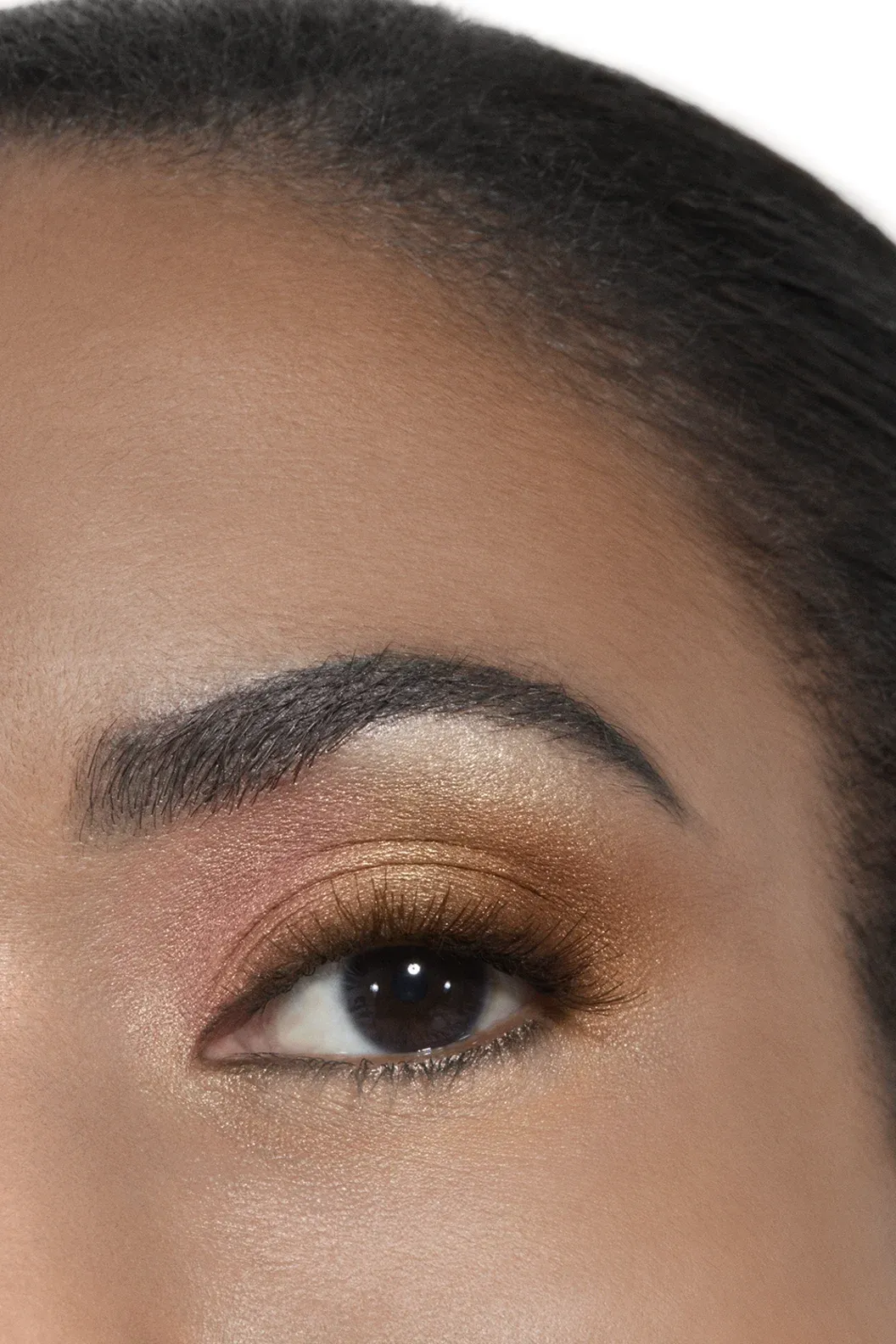
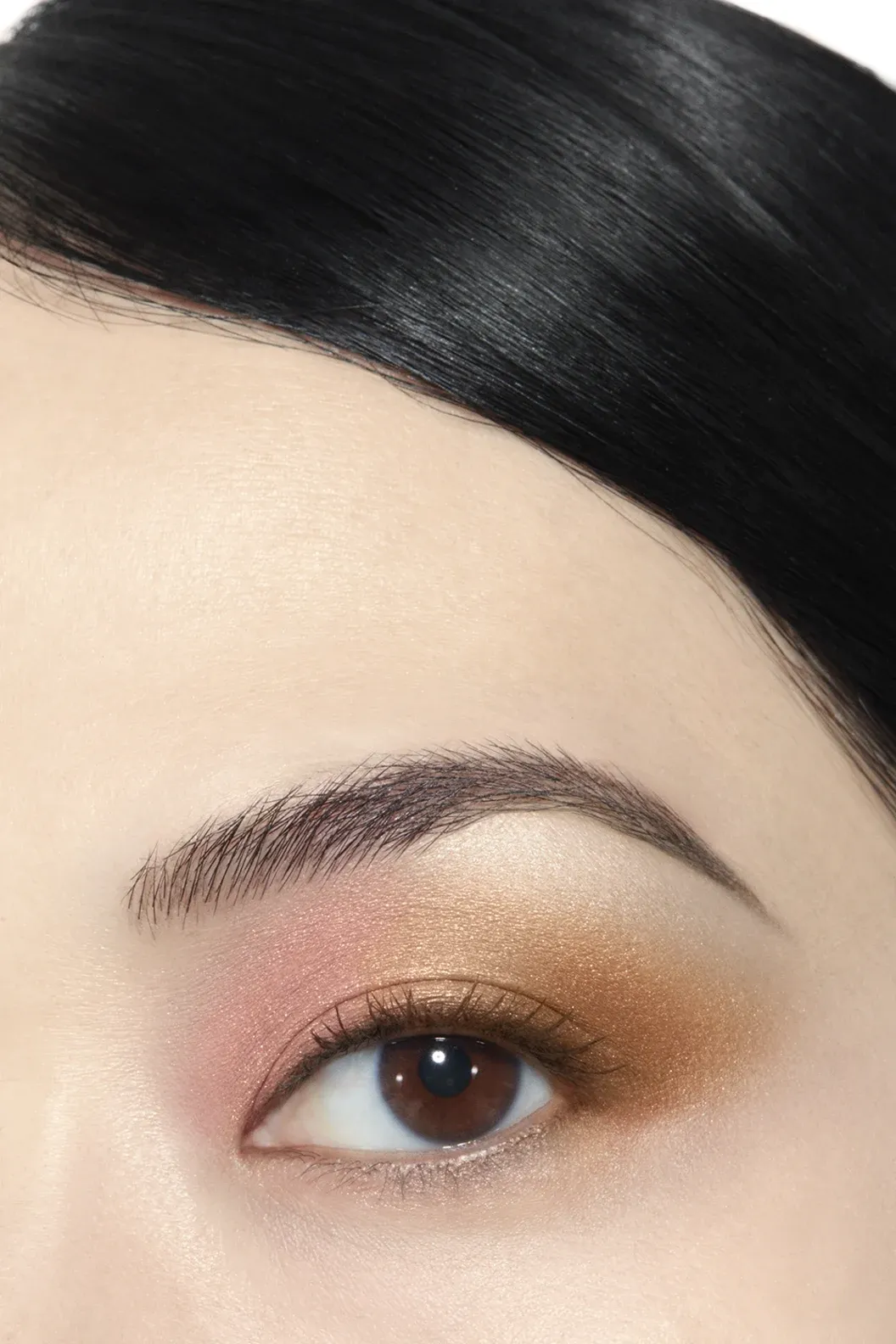
For Spring Summer 2025, Drammeh worked with Chanel’s Makeup Creation Studio on Jeux de Lumières, a collection centred on luminosity. The four shades of the illuminating palette move through pink coral, rosy gold, pinkish silver and copper gold, allowing them to be used across the face, eyes and décolleté. Chanel describes the shades as designed to complement all skin tones, creating a luminous satin effect that can be intensified or softened depending on how they are layered.

The collection may appear quieter than Jardin Imaginaire, but conceptually it continues the same story. If the garden was about remembering colour, Jeux de Lumières is about understanding what colour does once it meets skin.
Light is never completely neutral. It changes according to undertone, texture, depth and movement. The same reflective pigment can appear warm, cool, soft or intense depending on the complexion beneath it. In this sense, luminosity becomes less about imposing a particular finish and more about creating room for individual interpretation.
That idea feels particularly significant when viewed through Drammeh’s own background. Her work has consistently resisted the idea that there is one correct way for makeup to look. Instead, she approaches the face as a surface with its own character, where colour can reveal rather than conceal.
This is also where her contribution to Chanel becomes more than an exercise in aesthetic diversification. The House is not simply adding more colours to its repertoire. It is allowing a different understanding of how those colours behave, and how they can be experienced by different people.
The shift is subtle, but it changes the question from “What does Chanel makeup look like?” to “How many ways can Chanel makeup look?”
By the time Drammeh returned to Rouge Noir, she was no longer looking outward for a new Chanel code. She was looking directly into the archive. Rouge Noir has always been a colour of contradiction. It is red made darker, black made warmer, a shade that carries both restraint and rebellion. Its original appeal came precisely from that uncertainty. It was never quite one thing.
For 2026, Drammeh takes that ambiguity seriously.
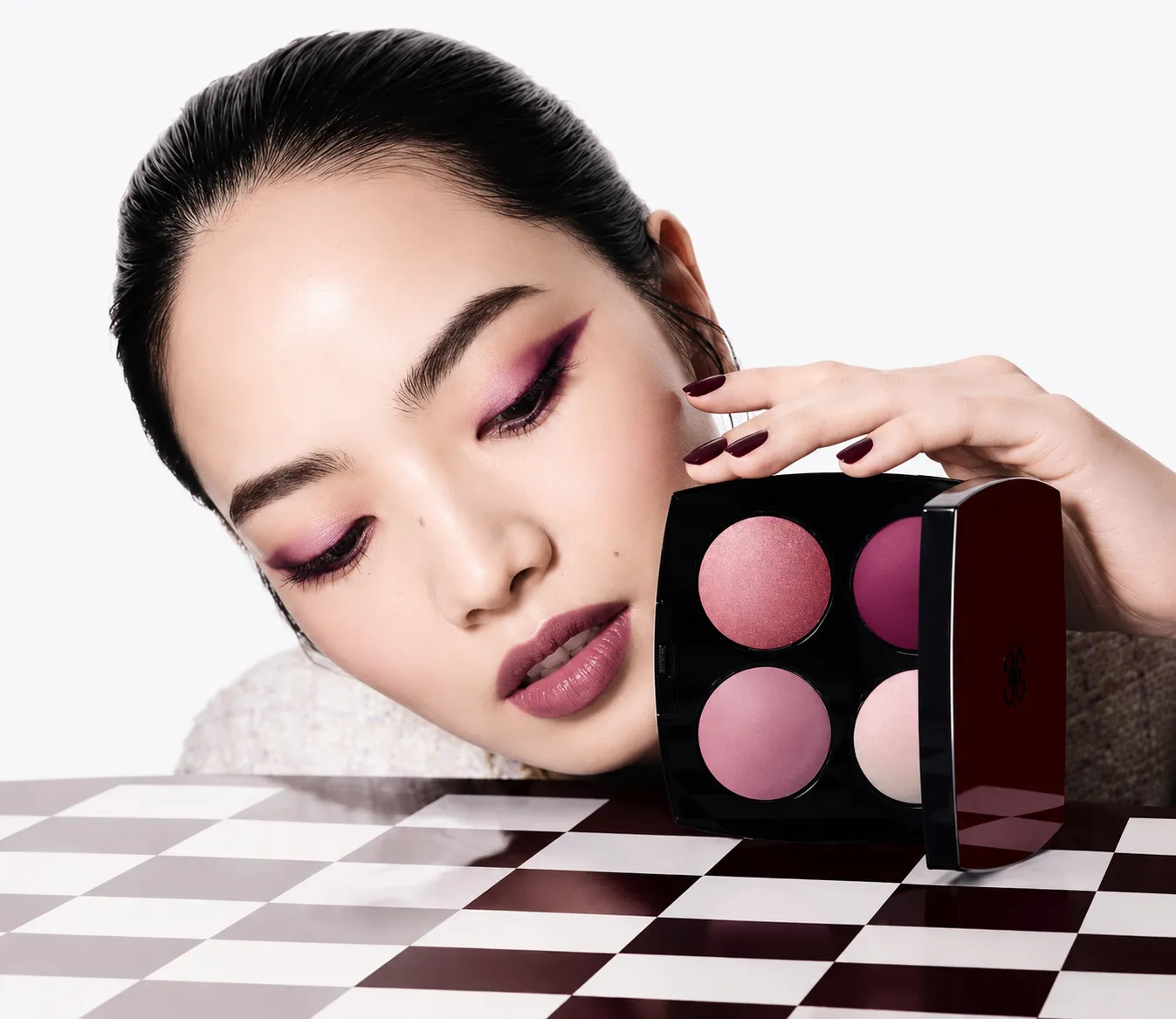
The latest Rouge Noir collection begins with an almost imperceptible discovery: beneath the depth of the iconic shade are traces of pink. Instead of treating those undertones as incidental, Drammeh brings them to the surface. The Rouge Noir Confidence palette moves through magenta, mauve pink, sienna red and luminous rosy tones, while the wider collection introduces complementary shades of grey, brown and vivid magenta.
The effect is not the reinvention of Rouge Noir. It is its revelation.
A colour that once seemed singular becomes plural. A shade associated with darkness begins to reveal warmth, softness and luminosity. Something that appeared fixed turns out to have been full of possibilities all along.

This is where the story of Drammeh and Chanel comes full circle. She began with a garden that existed only in memory, transforming a lost childhood landscape into colour. She moved from colour into light, exploring the relationship between pigment and skin. Now she has arrived at one of Chanel’s most protected visual codes and discovered another story hidden inside it.
Memory. Skin. Heritage. Three different ways of seeing, connected by the same instinct: look again.
There is a temptation to describe Drammeh’s influence at Chanel through the language of diversity. It is true that her presence represents a broader range of identities within a French luxury house. But representation alone does not explain why her work matters.
What makes Drammeh interesting is what happens after representation. She has not been asked simply to appear within Chanel’s history. She has been given space to interpret it.
That distinction allows her Gambian heritage, Spanish upbringing and London career to exist not as separate labels, but as layers of experience informing the way she sees. The colours of her childhood, the Black women and cultural references she once searched for in popular imagery, the landscapes she remembers and the faces she works on today all become part of a visual vocabulary that cannot be reduced to one origin. Perhaps this is why her Chanel feels less like a departure from the House than a widening of it.

The Chanel woman has never been one fixed person. She has always been a collection of contradictions: masculine and feminine, classic and rebellious, restrained and provocative. Drammeh extends that contradiction into beauty. Her work suggests that a Chanel face can be polished without being restrained, colourful without losing sophistication, and rooted in heritage without being imprisoned by it.
The most interesting transformation, then, is not that Chanel has found a new colour. It is that Chanel has found new ways to see the colours it already had. And somewhere between the imaginary garden of a childhood in Sabadell and the deep red black of Rouge Noir, Ammy Drammeh has shown that identity does not have to sit outside a beauty code in order to change it.
Sometimes, it only has to look at it differently.
Advertisement