On July 19, 2026, Shakira returned to football’s biggest stage dressed like the final five minutes of sunset had refused to leave quietly. The hips had choreography; 200,000 crystals had no choice but to keep up.
Shakira Made 200,000 Crystals Dance at the World Cup
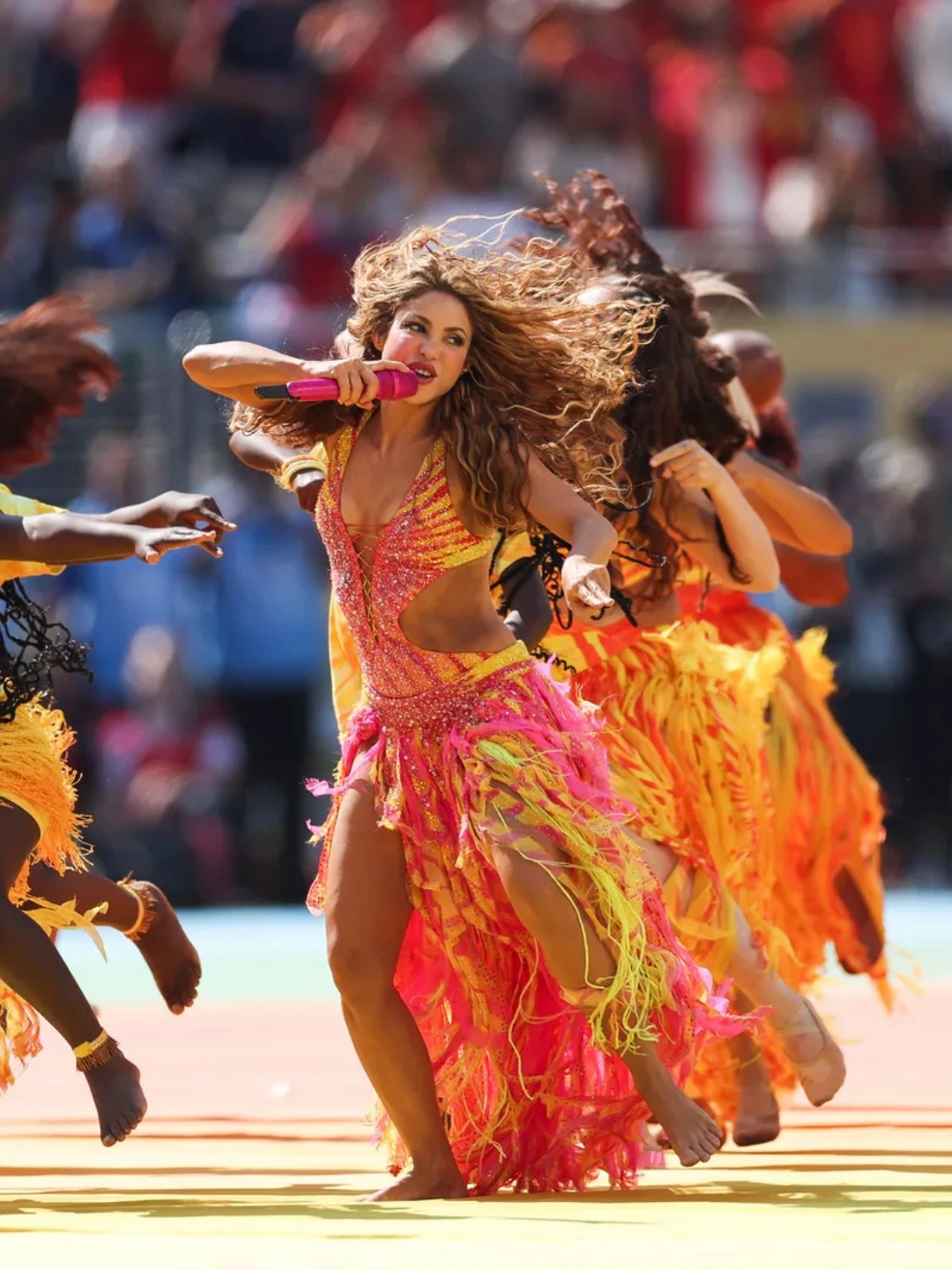
On July 19, 2026, Shakira returned to football’s biggest stage dressed like the final five minutes of sunset had refused to leave quietly. The hips had choreography; 200,000 crystals had no choice but to keep up.
July 19, 2026


For the occasion, Shakira turned to her longtime friend Fausto Puglisi, creative director of Roberto Cavalli. Their conversation began not with a hemline but with a feeling: strength, joy, movement and the scale of a performance intended for one of the world’s largest live audiences. Puglisi already knew how she danced, which meant the clothes needed to follow rather than negotiate with her choreography.
The resulting custom Roberto Cavalli look translated the final glow of a sunset into orange, yellow and bright pink. Its palette drew inspiration from the colorful architecture of La Condesa in Mexico City, particularly a pink house with an orange door and yellow window frames that had remained in Puglisi’s memory. The house later named the exclusive pattern “Ray of Sunset,” a variation on Cavalli’s archival Ray of Gold motif.
The plunging bodice crossed and laced across the body, opening into side cutouts before meeting a skirt assembled from long strips of fabric. Puglisi calls the technique “tagliatelle,” a suitably Italian description for fringe designed to separate, curl and fly with every turn of Shakira’s body.

More than 200,000 Swarovski crystals covered the ensemble. Applying them by hand required approximately 120 hours, while the complete look took over two weeks to produce. The labor was extravagant, but not merely ornamental: under stadium lighting, every crystal amplified movement that spectators in the upper tiers might otherwise have missed.
The visual world extended beyond its central performer. Shakira’s 34 dancers wore coordinating Roberto Cavalli looks in the same sunset print, divided between criss-cross tops with skirts and sleeveless shirts with baggy trousers. Together, they transformed one custom garment into a field-sized composition of color, fringe and synchronized motion.
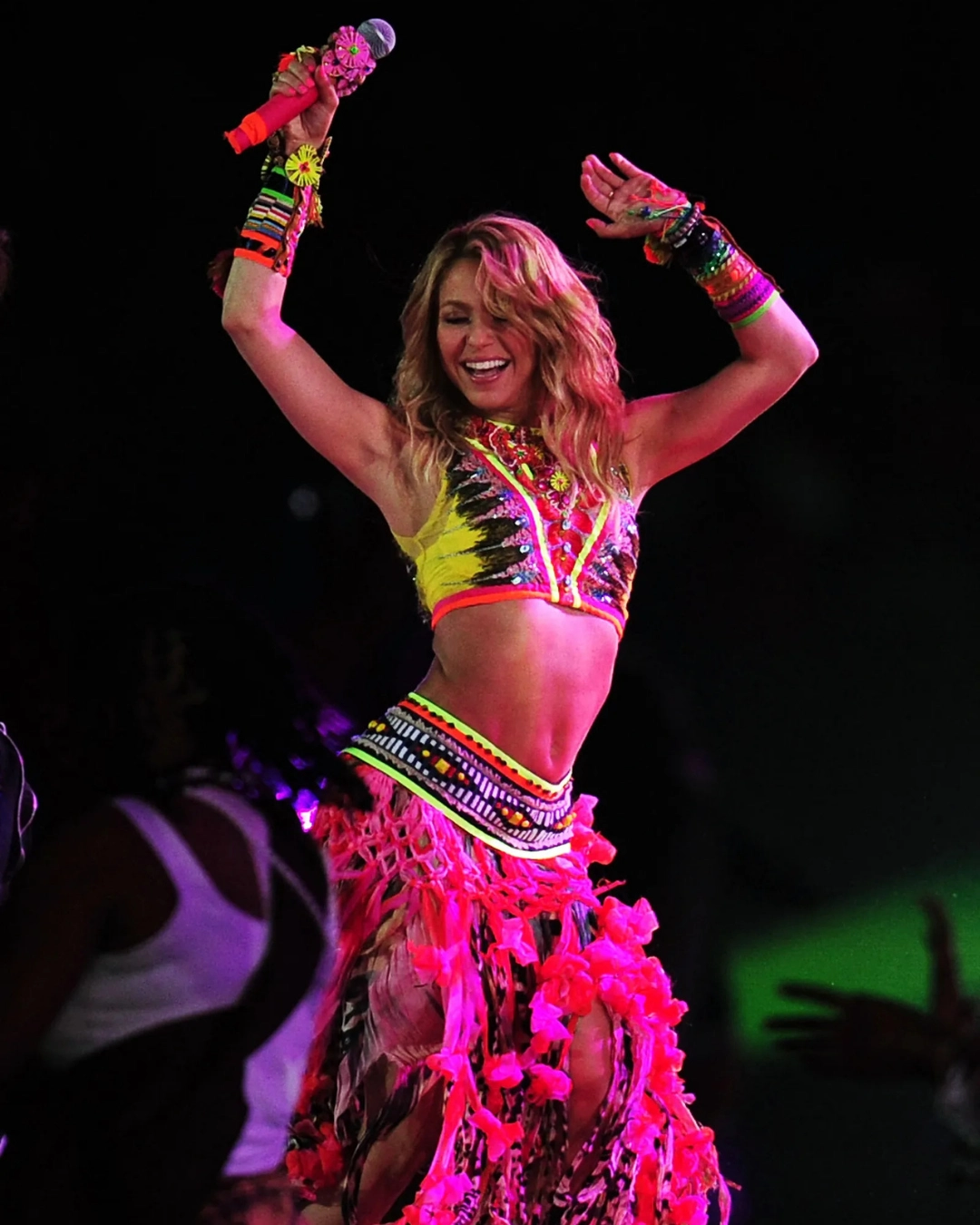
The performance also completed a fashion circle that had begun 16 years earlier. At the 2010 World Cup closing ceremony in South Africa, Shakira performed “Waka Waka” in another neon Cavalli look. Rather than reproduce that outfit literally, the 2026 design returned to its fluorescent palette and movement, allowing a familiar memory to reappear in a more elaborate form.
Shakira’s relationship with the World Cup has never been confined to a single anthem. Her clothes, choreography and music have become part of the tournament’s visual memory, proving that a performance can remain culturally legible long after the final whistle. Shakira did not recreate 2010; she gave Roberto Cavalli 200,000 new reasons to move.