MENU
Close





What if Stockholm Fashion Week 2026 is not trying to compete with Paris or Milan at all, but building something weirder, smaller, rawer, and far more intimate?
What if Stockholm Fashion Week 2026 is not trying to compete with Paris or Milan at all, but building something weirder, smaller, rawer, and far more intimate?
July 3, 2026
Advertisement

Advertisement



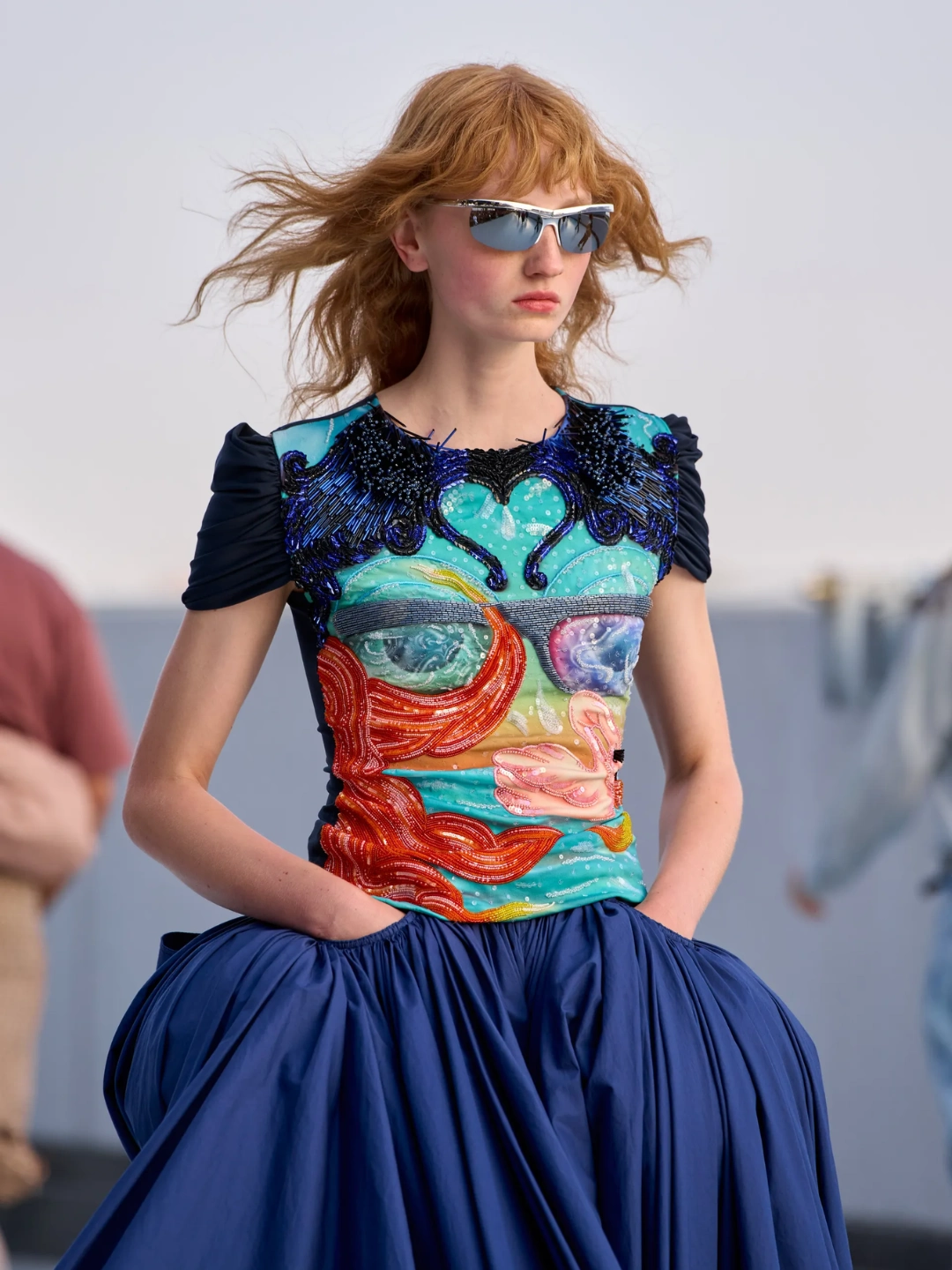
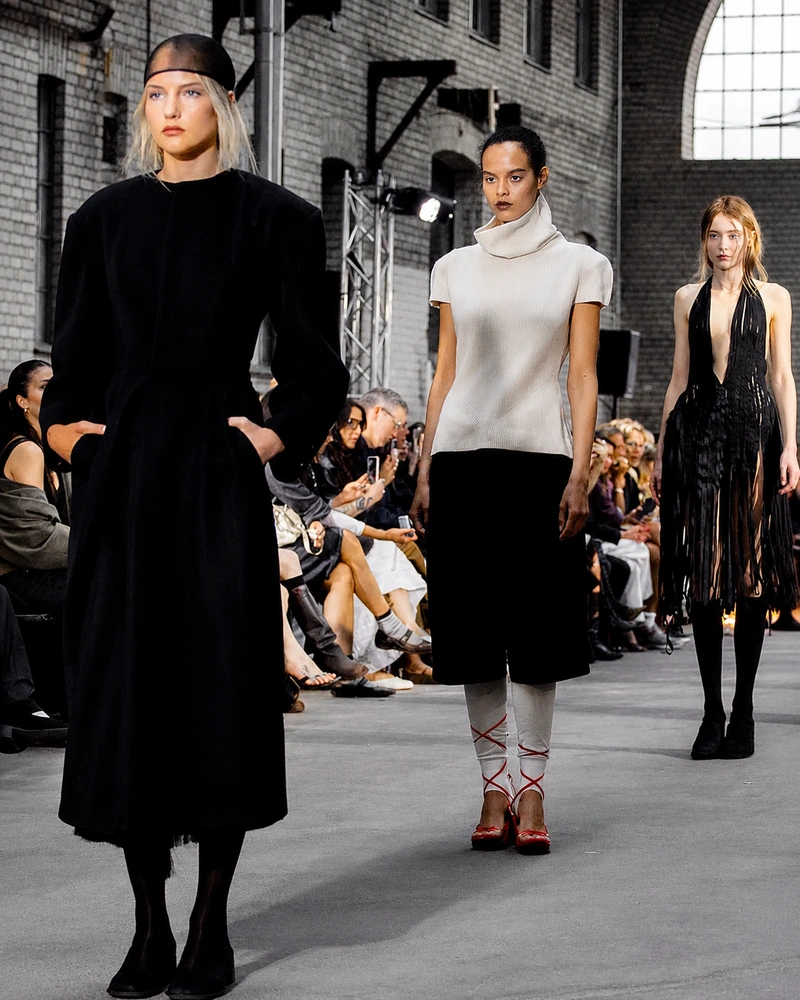
Stockholm Fashion Week 2026 presents a fascinating evolution within the Swedish design landscape, operating as a vital incubator for raw creativity. Two highly distinct showcases bookended this season, illustrating a profound generational transition that vibrates throughout the city. On one end of the aesthetic spectrum, Gullbo delivered provocative, tactile visions, while Leoní offered ruminative minimalism on the contrasting side. Together, these collections signal a massive shift echoing loudly throughout the streets of the capital.
Swedish fashion has historically established deep roots in global metropolises, elevating houses like Acne Studios in Paris, the brilliantly LVMH-backed Our Legacy, and rising stars like Petra Fagerström in London. As these established talents expanded their footprints internationally, Stockholm experienced a quiet period, pausing its official calendar entirely in 2019 to recalibrate its purpose. Today, a vibrant subculture thrives locally, bubbling up from bohemian districts like Södermalm to reclaim the spotlight and redefine Scandinavian style.
Backed by renewed government support, the Association of Swedish Fashion Brands recently revitalized the event under the STHLMFW banner. Director John-Jamal Gille champions this platform as a sacred space dedicated wholly to emerging talents and underground communities. This iteration of Stockholm Fashion Week 2026 prioritizes creators who historically operated beyond the traditional spotlight, bringing a rebellious vitality directly to the forefront. Michael Elembeck, the organization's chairman, envisions a bright future where Stockholm contributes a distinctly Swedish dialogue to the global fashion conversation, wholly distinct compared to other major capitals. This localized energy spills directly onto the urban pavements.
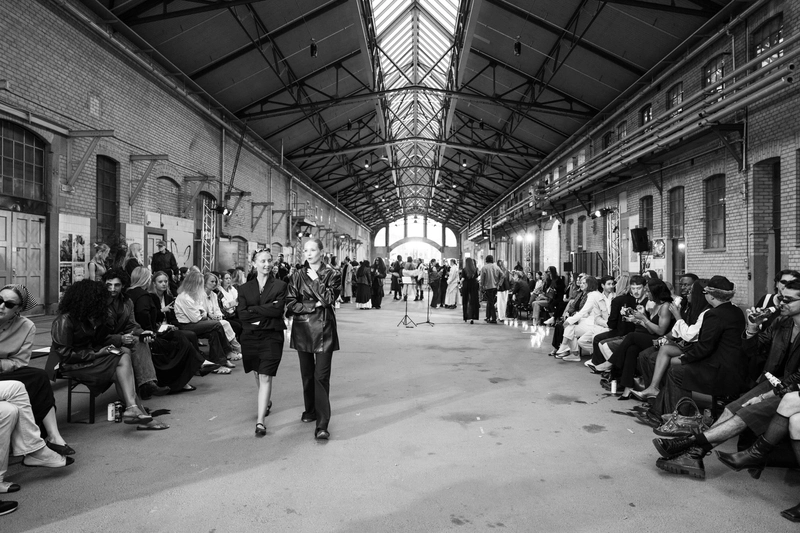
Journalist Emma Frisdell observes a revitalized street style culture mirroring the pure magic of early fashion weeks. Attendees actively knit their own dresses, craft bespoke hats, and proudly wear vintage heirlooms, proving that profound fashion expression lives abundantly among the enthusiasts themselves. They transform the sidewalks into an international stage of their own making.
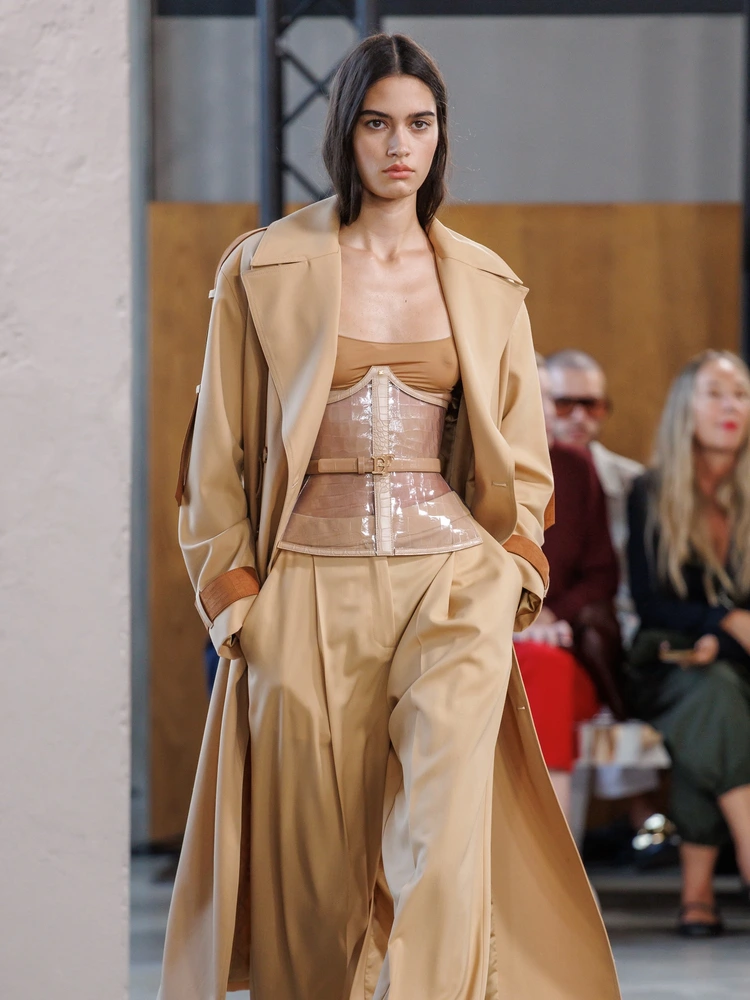
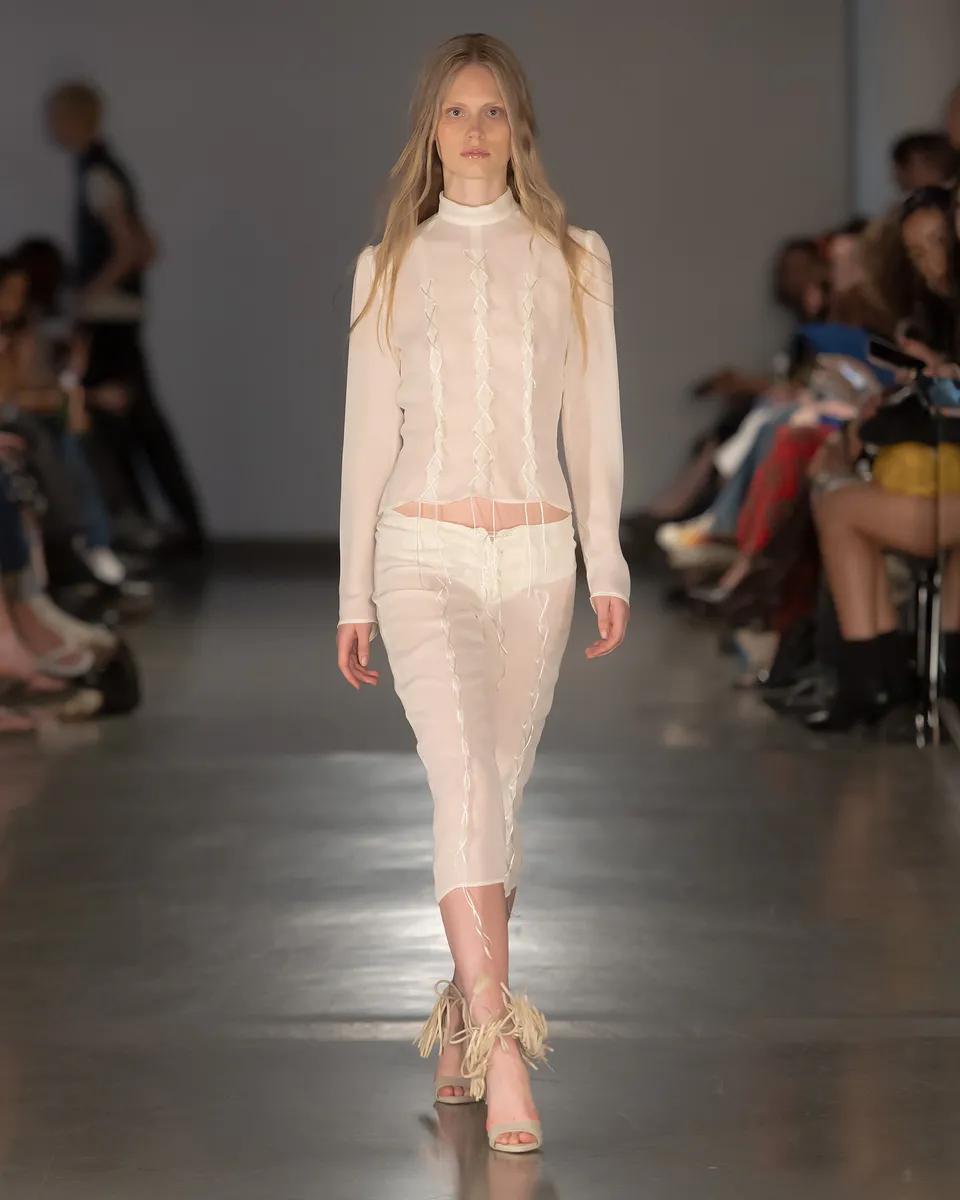
Providing a grounding force of serene minimalism, Leoní debuted an exquisite collection steeped in quiet reflection and historical depth at Stockholm Fashion Week 2026. Founded by Central Saint Martins graduate Filippa Fuxe and retail visionary Nathalie Schuterman, the brand translates historical inheritance into contemporary armor. Fuxe drew deep inspiration from the poetic legacy of her ancestor, Karin Ek, and her grandmother’s carefully preserved vintage wardrobe.
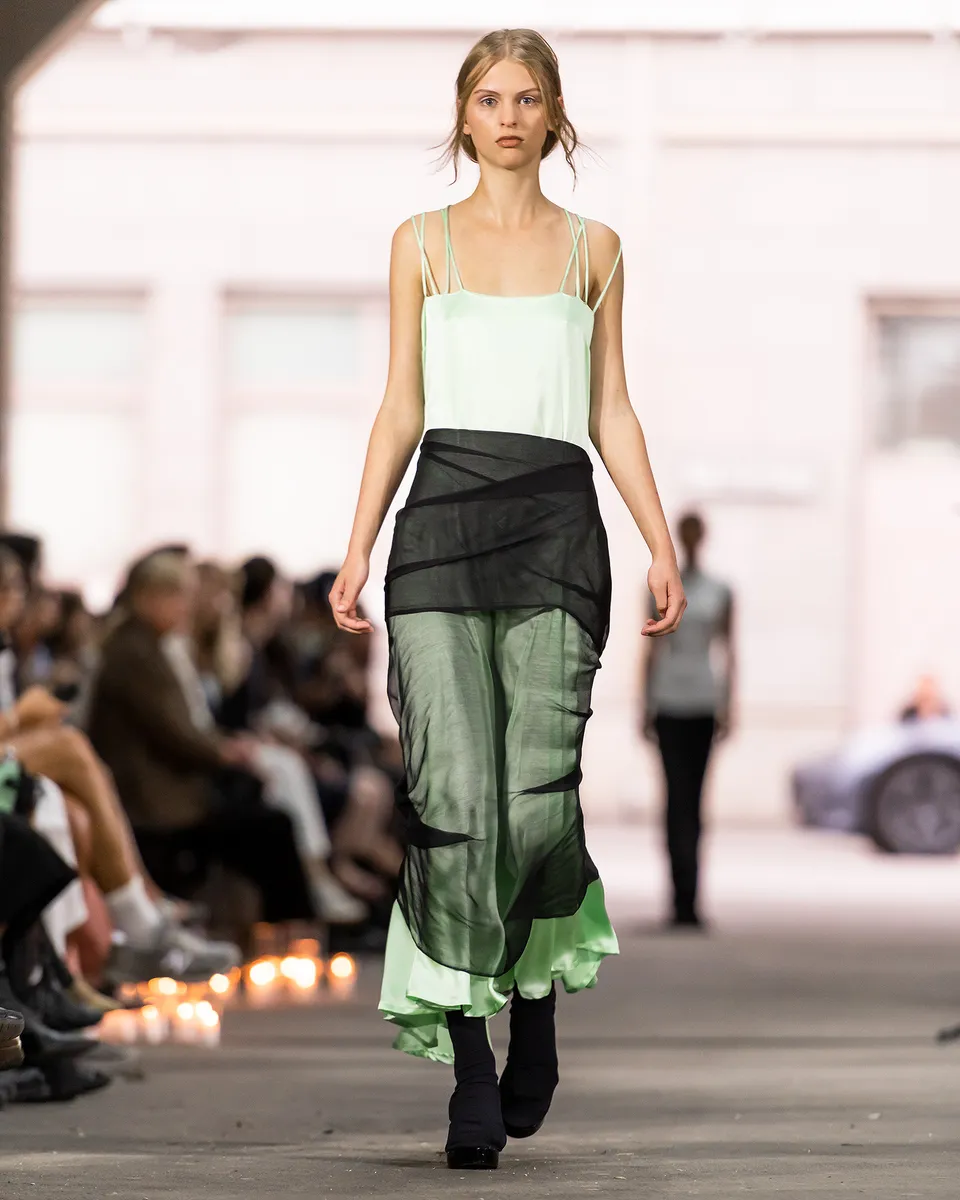
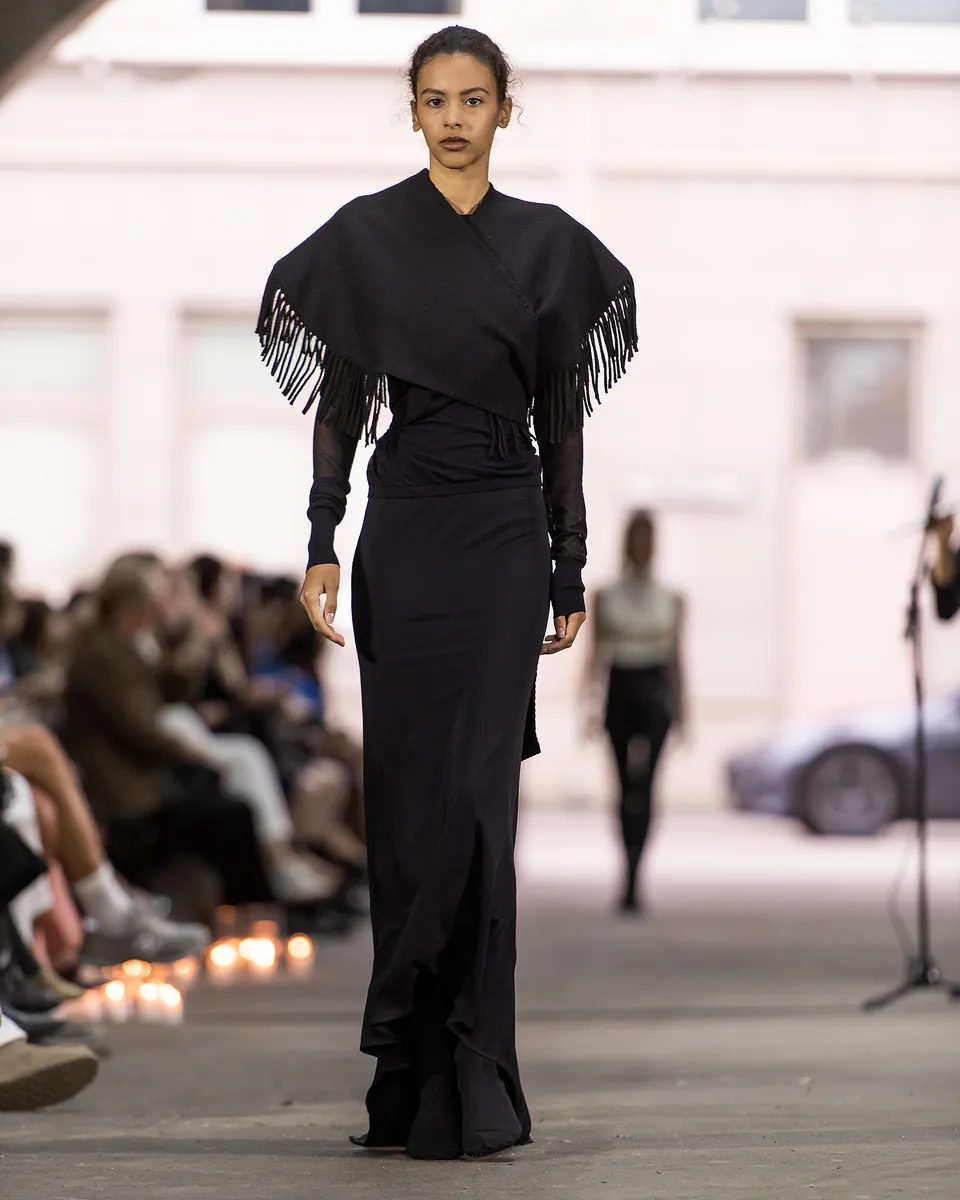
By taking apart 1930s silhouettes, the designer masterfully reconstructs them to serve modern bodies and sensibilities. One standout piece involves a corset top shaped directly from a body cast, literally binding the human form to the garments. Fuxe approaches heritage as a living, breathing entity, continually reinterpreted and passed down through successive generations. Her work proves that minimalism offers infinite room for emotional resonance, structural complexity, and deeply personal storytelling.
Madeleine Woo steps far past classical boundaries with her label Maddwoo, masterfully blending balletcore with heavy grunge and goth undertones. As a celebrated principal dancer with the San Francisco Ballet, Woo understands the strict perfection demanded by traditional dance institutions. Her fashion collections serve as a passionate release from those tight constraints, celebrating a wildly different aesthetic.
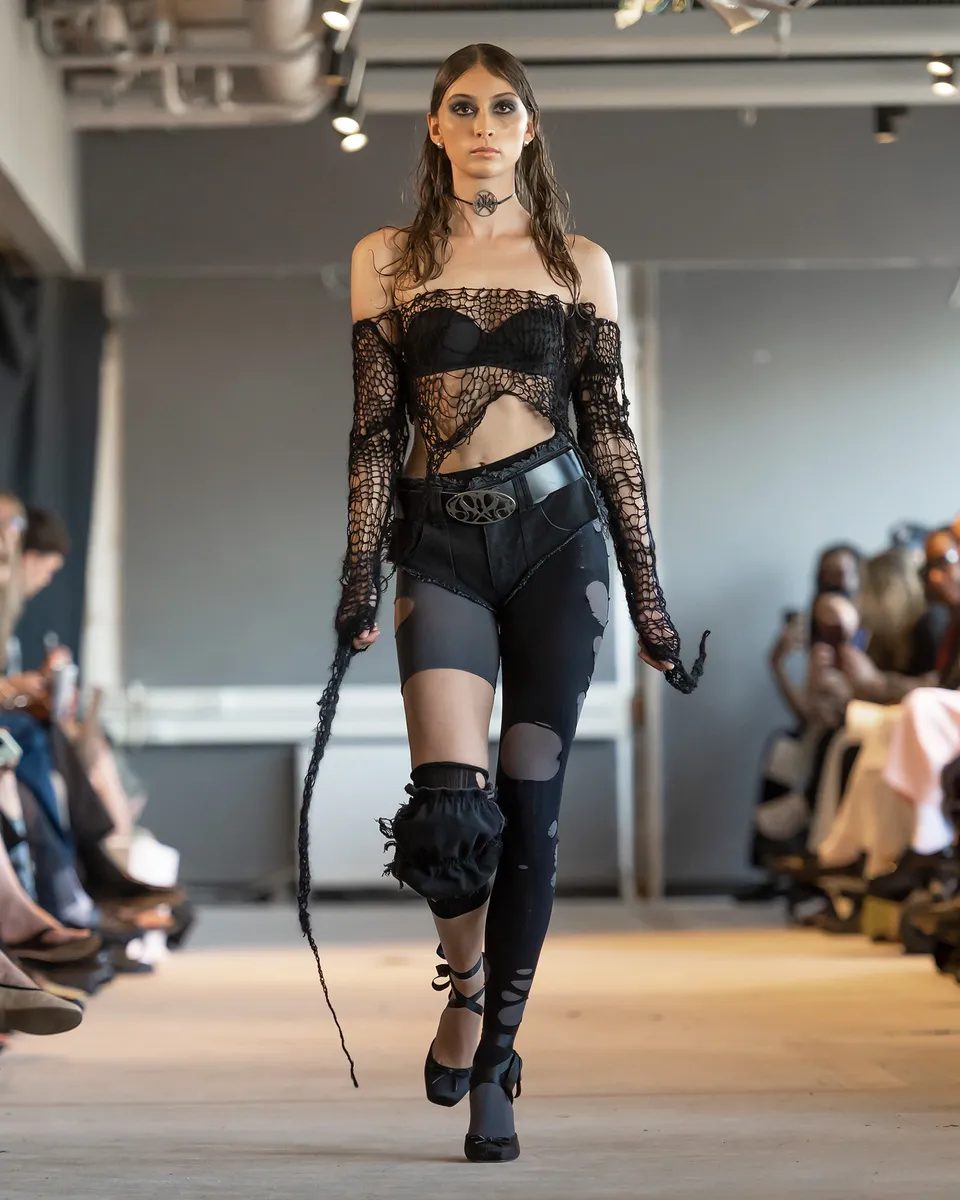
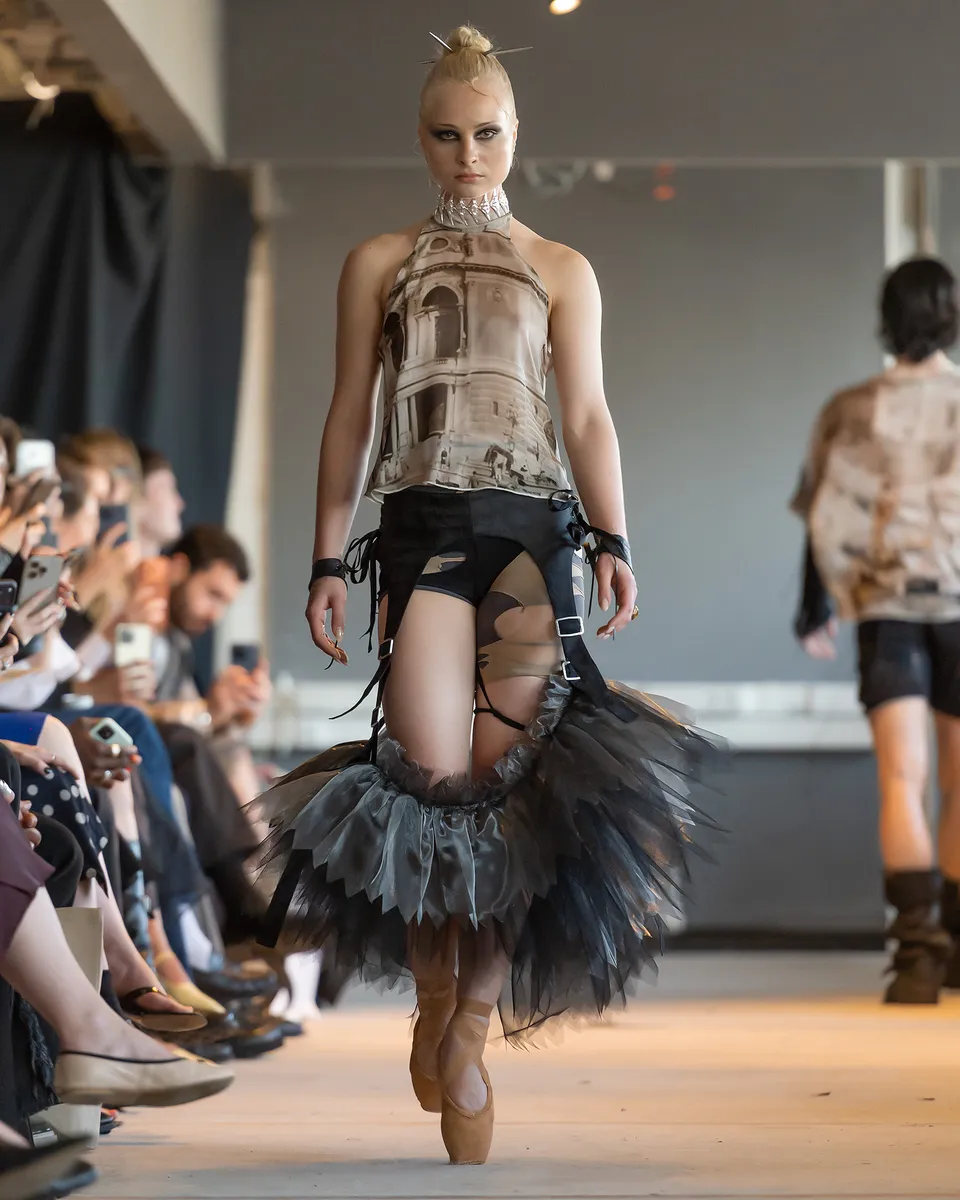
By introducing deconstructed tutus, skin-baring tops, and massively voluminous denim, she champions individuality and raw expression. Her designs embrace the beautiful raw textures of ripped textiles and dark aesthetics, offering a powerful counterpart to classical purity. Fans of the brand radiate confidence, adopting these daring pieces to assert their own fierce identities in a cultural landscape hungry for absolute authenticity. Within Stockholm Fashion Week 2026, Maddwoo offered one of the clearest arguments for movement as rebellion.
Peter Jansson, a seasoned industry veteran, brought the euphoric spirit of the Hacienda nightclub and New Wave 1980s back to vibrant life with Bewider. Jansson possesses a profound understanding of youthful rebellion, having previously propelled the global skinny jean phenomenon decades ago. After a period of personal recovery, he returned to the sewing machine, infusing his latest collection with distressed fabrics, strategic tears, and revealing zippers. His show opened with a dramatic operatic rendition of a New Order classic, setting an immersive, theatrical mood. Jansson observes that current teenagers adopt skinny jeans as a clever form of rebellion, directly contrasting the wide-legged silhouettes favored heavily by their parents.
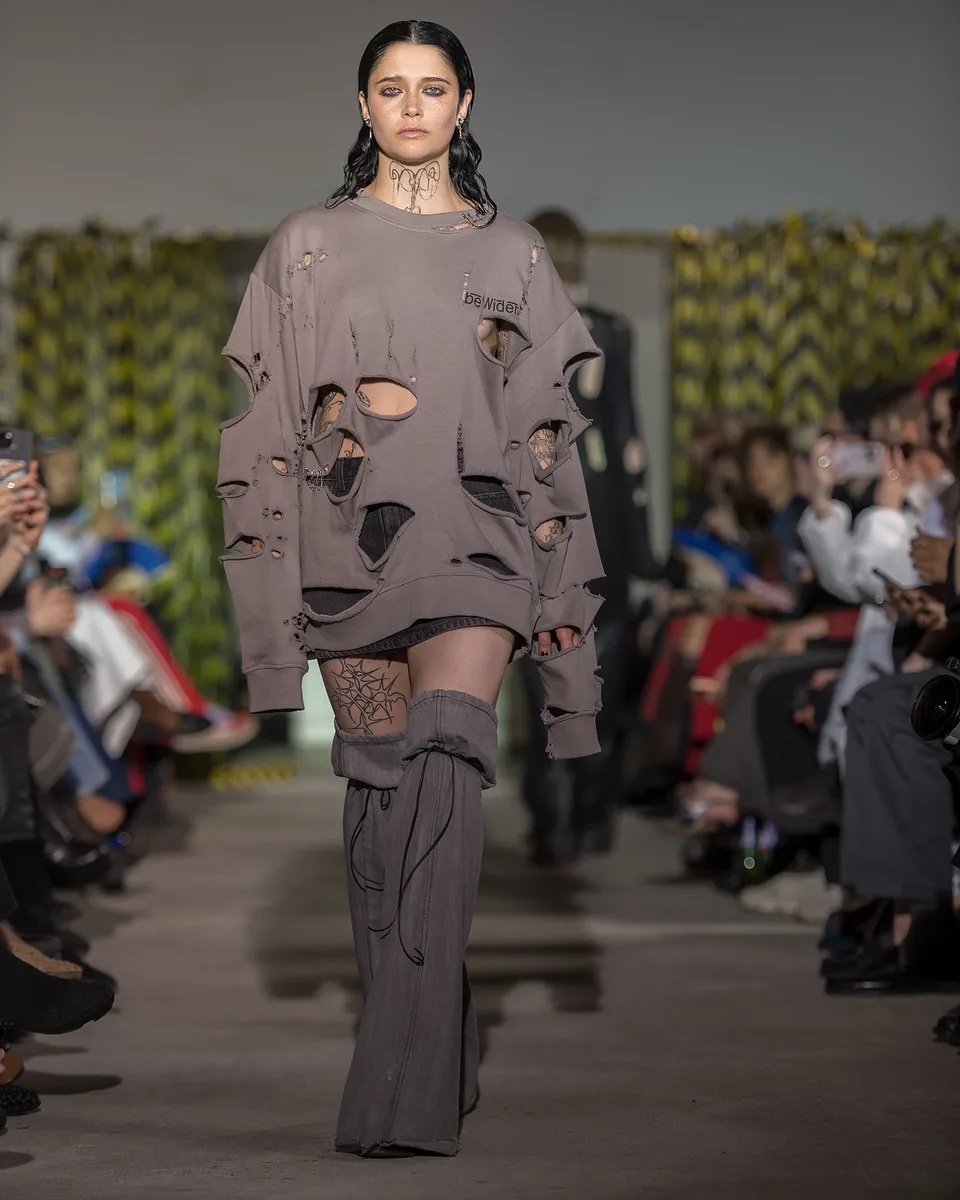
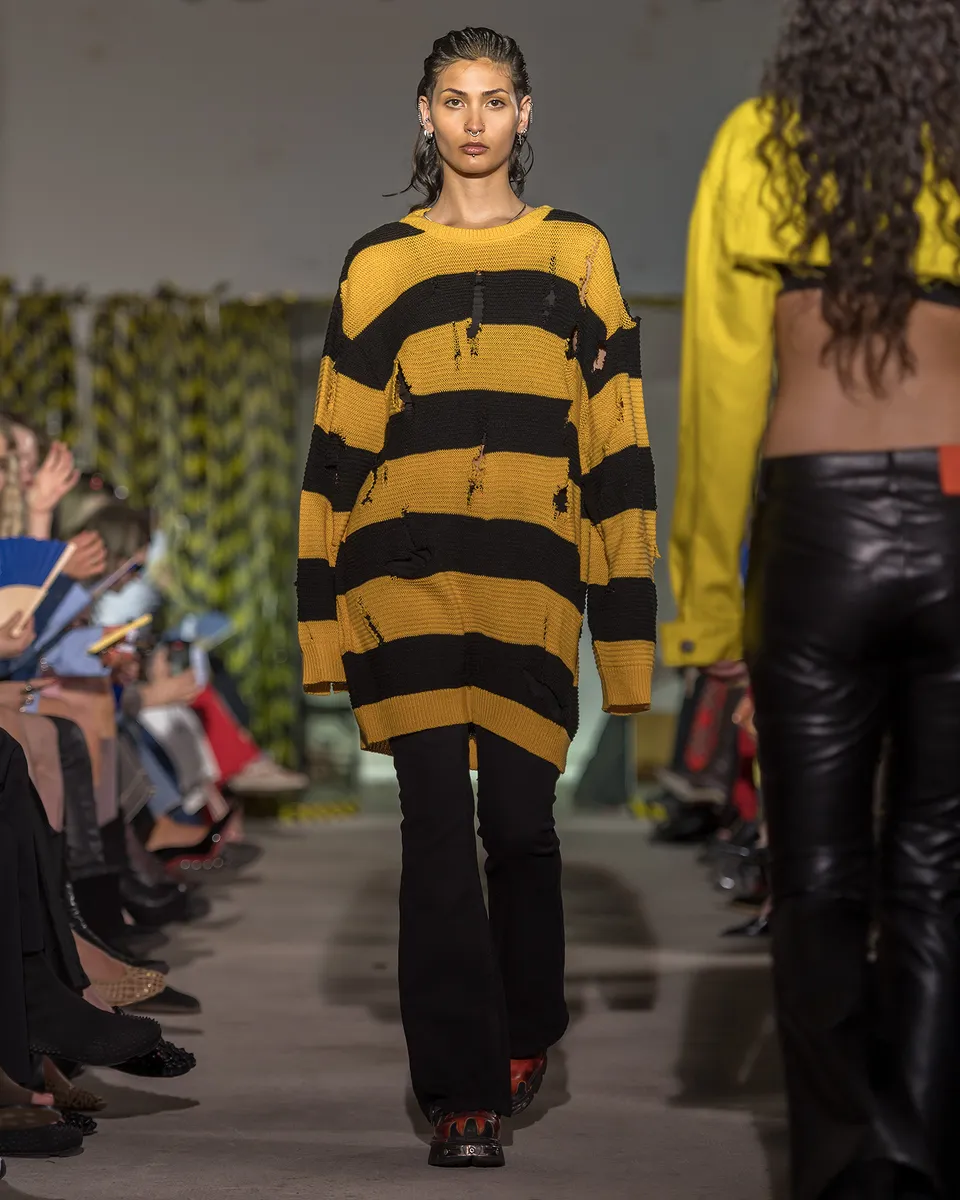
By weaving together elements of the indie sleaze revival and vintage sourcing, he creates a rich meta-narrative about the cyclical nature of trends and the ever-evolving tastes of the youth. At Stockholm Fashion Week 2026, Bewider transformed underground nostalgia into a living generational argument.
Mexican-born designer Steph Orozco staged her inaugural Stockholm presentation with a profound commitment to sustainable craftsmanship and emotional resonance. Utilizing deadstock materials and upcycled fabrics, Orozco employs a meticulous single-needle process, honoring the deep skill of traditional seamstresses and sailors. Her garments feature dramatic, romantic volumes evocative of Renaissance troubadours, complete with intricate button detailing. Orozco views dressing as a sacred ritual, a philosophy she highlights by casting a beautifully multicultural mix of friends, family, and mature models. This intentional casting transforms the runway into a powerful narrative tool, emphasizing community and shared humanity.
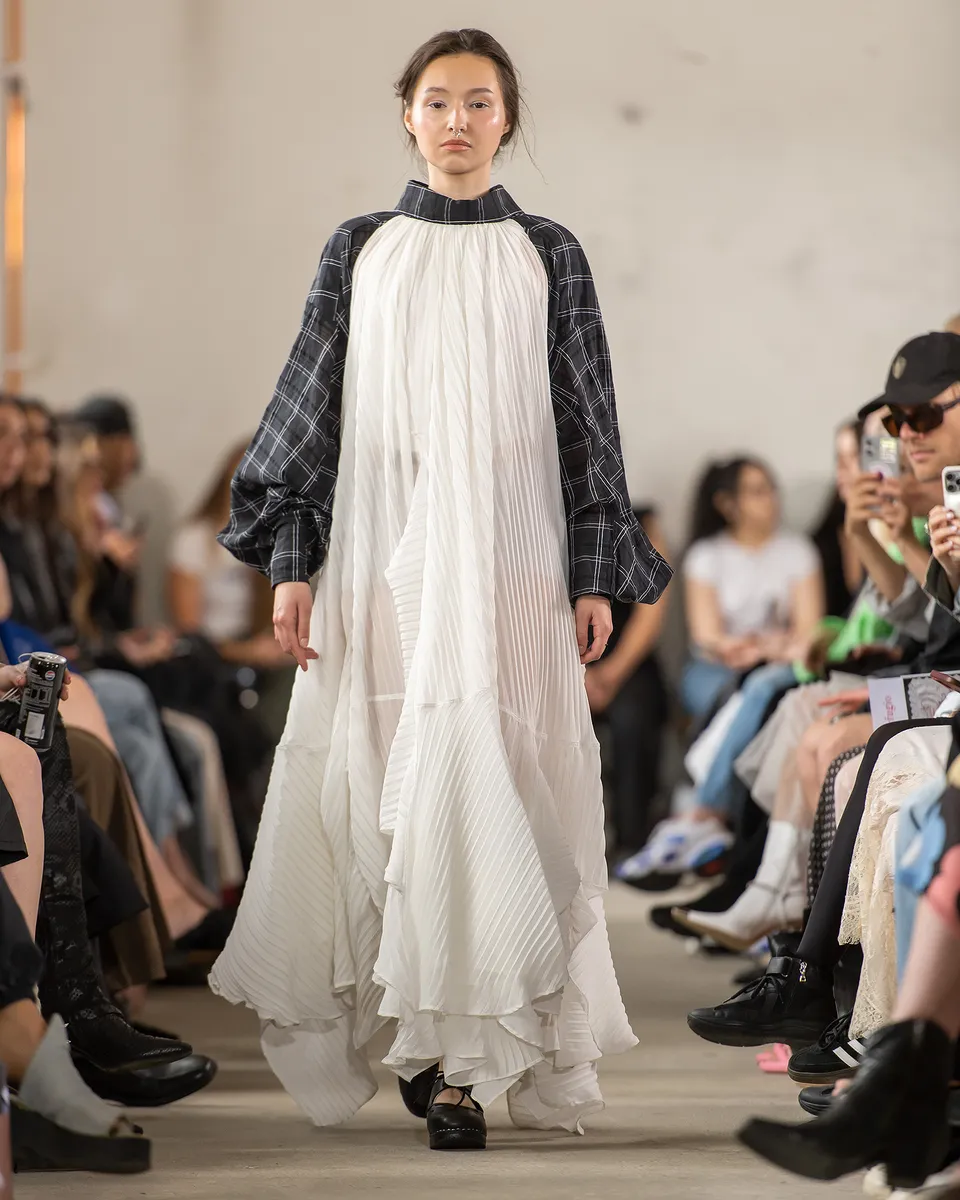
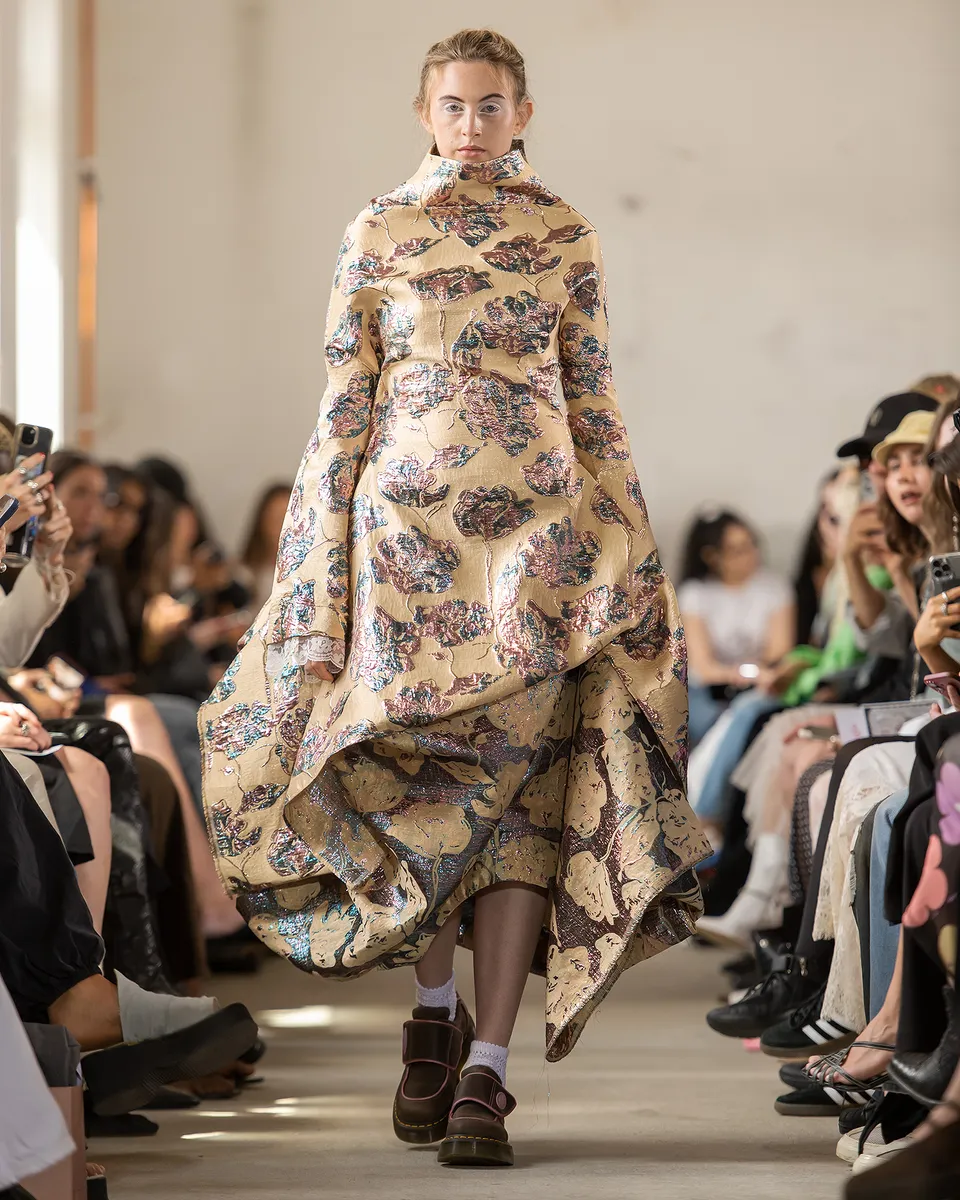
By designing directly on top of the work left by previous hands, she fosters a deep respect for the artisanal process and the enduring, generational life of clothing. Her presence at Stockholm Fashion Week 2026 expanded the season’s conversation around sustainability into something deeply human and ceremonial.
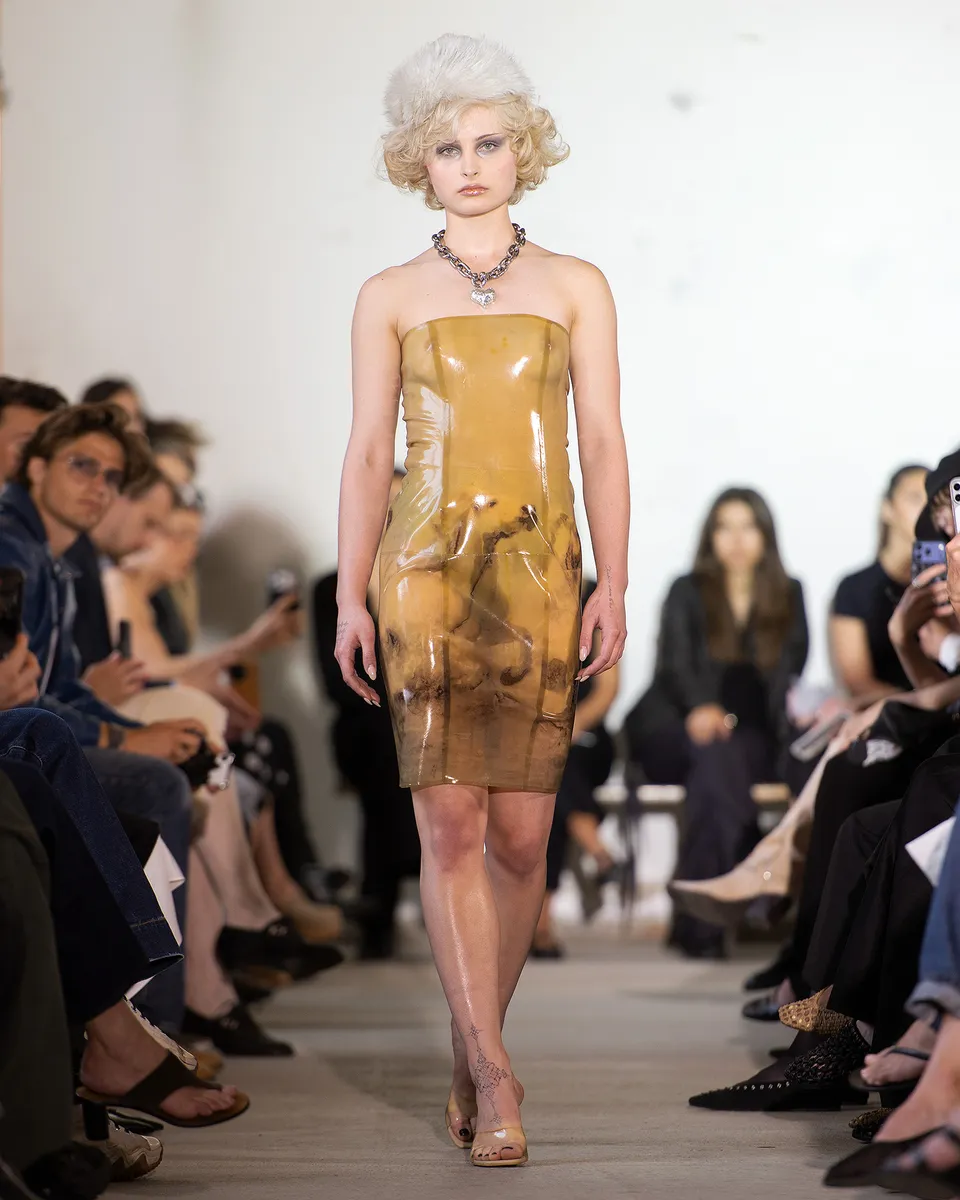
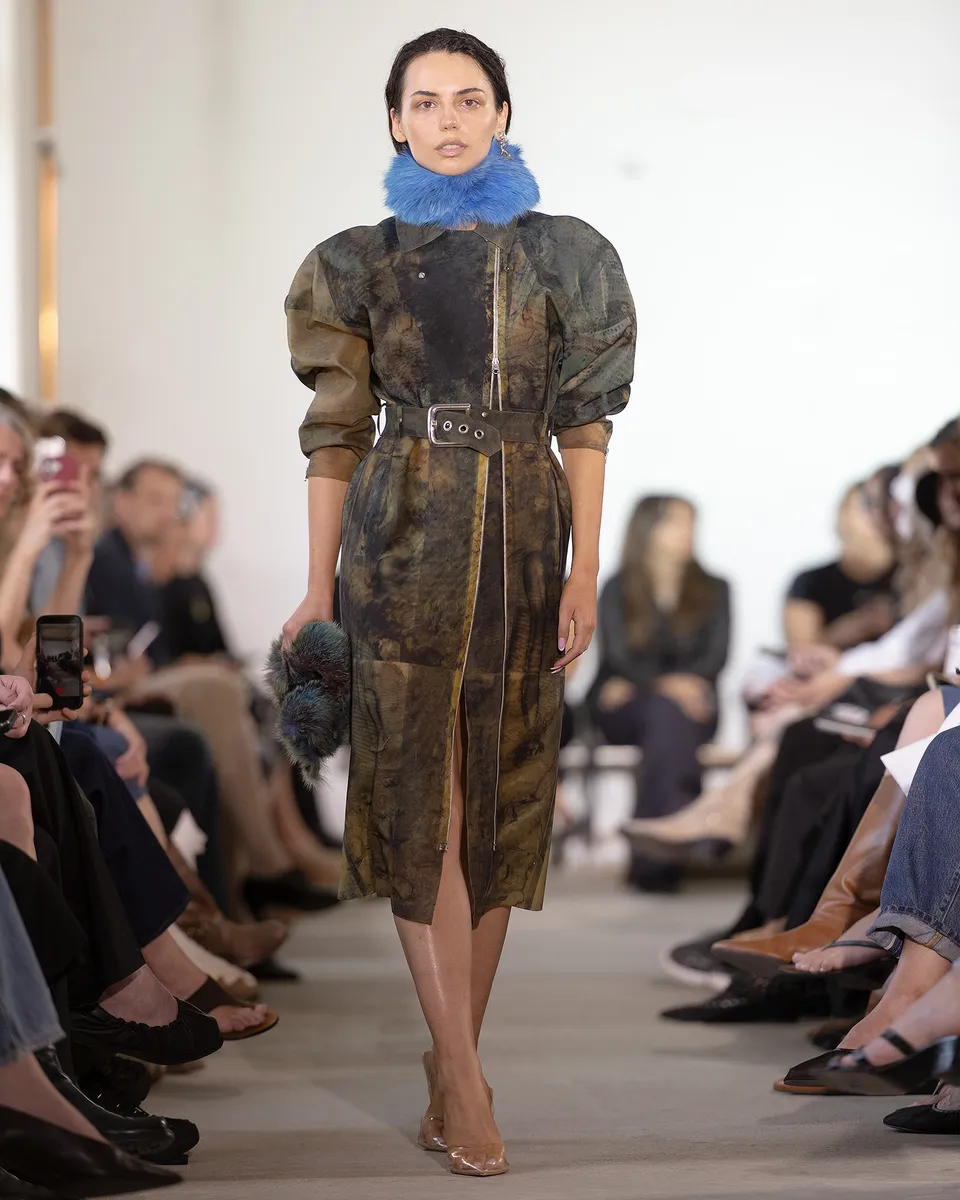
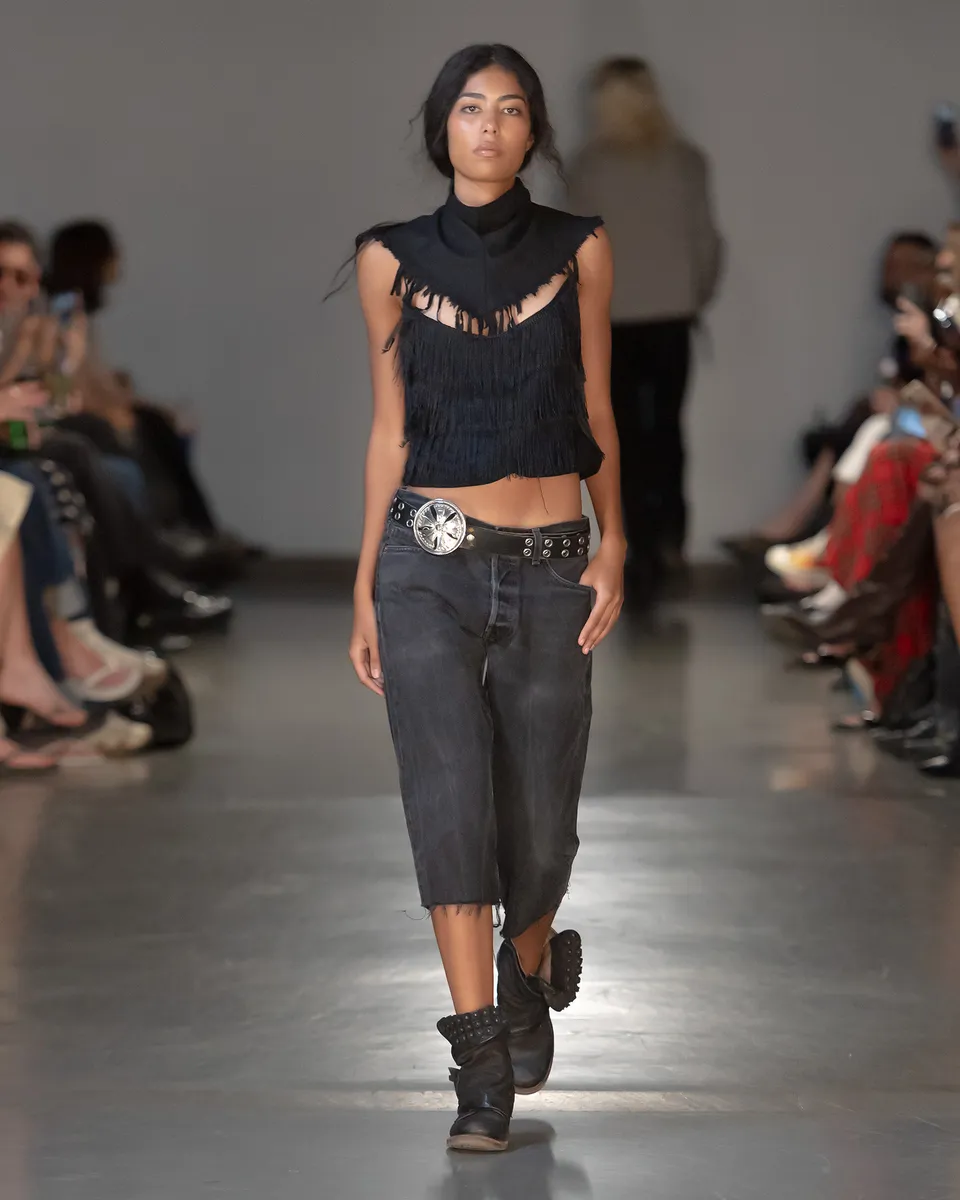
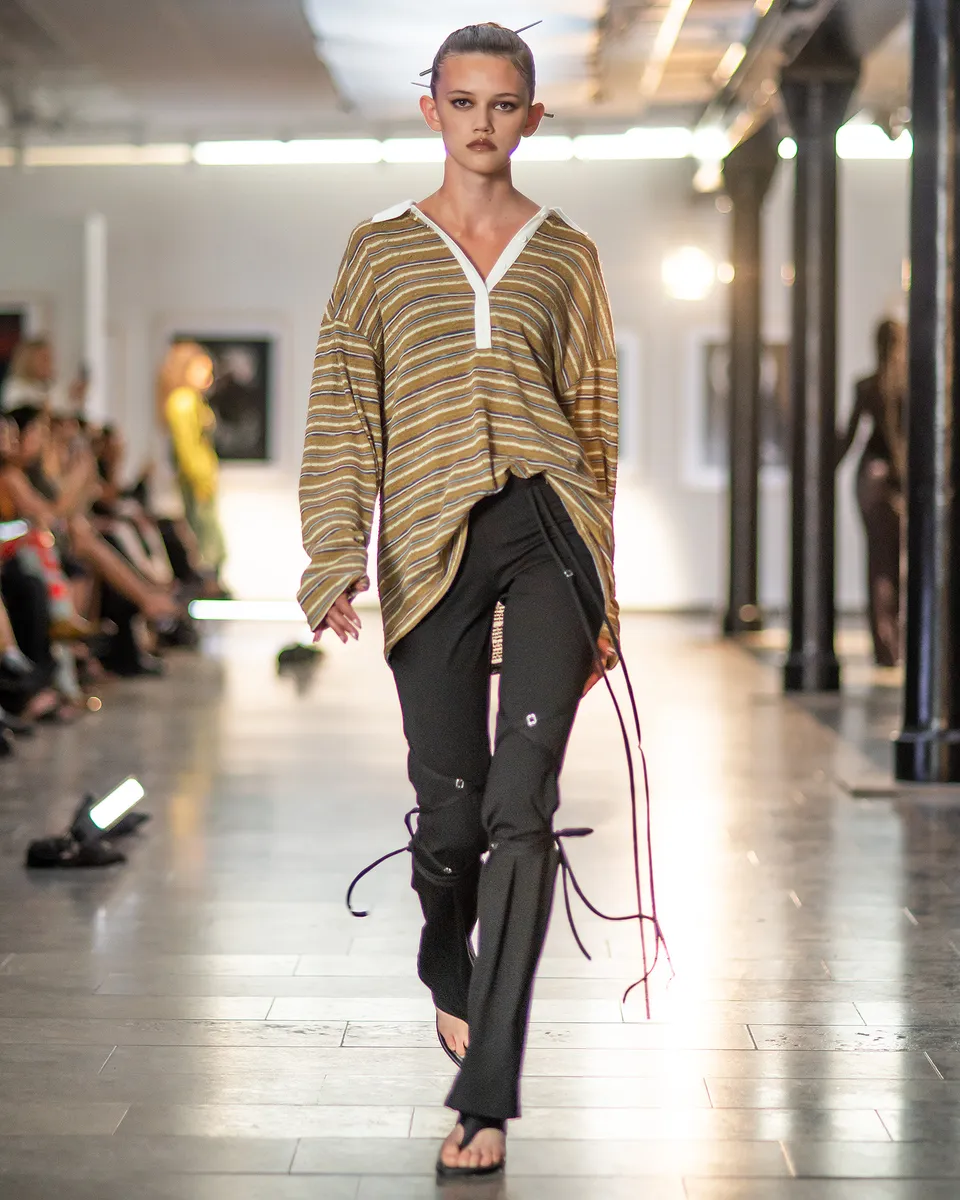
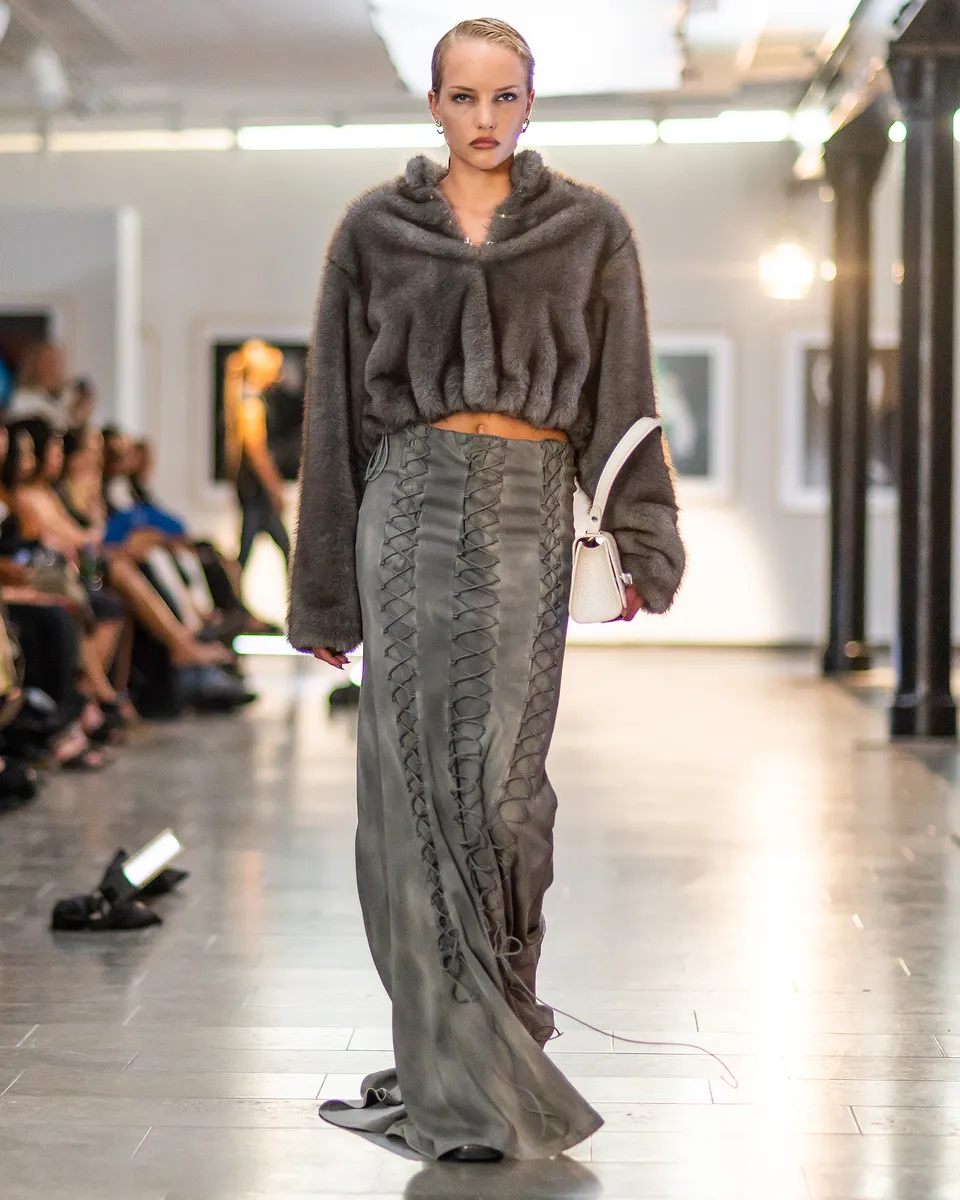
Rounding out the eclectic schedule, several distinct brands pushed the boundaries of conventional taste and thematic exploration to thrilling new heights. Emily Gullbo, proudly declaring herself the mother of latex, explores the fascinating intersection of kitsch and high couture. Her label heavily utilizes custom-printed rubbery materials, yielding striking results like a bold-shouldered coat equipped with an asymmetric zip.
Dustin Glickman introduced DSTN by merging Americana Western tropes with a rugged rock aesthetic. Sourcing vintage jeans from resale platforms, he expertly customizes lived-in pieces, encouraging a culture of personal modification and extended garment lifespans.
Meanwhile, Alice Stenlöf and Saveja Sevéra Awzel delivered a potent dose of the IG Baddie aesthetic through their brand A-DSGN. Their fall collection thrives on ombre denims, heavy hardware, and corset lacing, proudly celebrating a bold, streetwear-infused sensuality. Together, these imaginative designers illustrate the wildly varied, deeply analytical, and exceptionally creative future of Swedish fashion.
In this sense, Stockholm Fashion Week 2026 becomes less a simple calendar revival than a declaration that the city’s next fashion language will be built from underground force, memory, rebellion, and unapologetic local imagination.
Advertisement