MENU
Close





What does the Met Gala 2026 backlash reveal when a $350,000 table, a reported $10 million Bezos-linked sponsorship, and 13,000 boycott posts all meet on the same staircase: philanthropy, reputation laundering, or the price of cultural forgiveness?
What does the Met Gala 2026 backlash reveal when a $350,000 table, a reported $10 million Bezos-linked sponsorship, and 13,000 boycott posts all meet on the same staircase: philanthropy, reputation laundering, or the price of cultural forgiveness?
May 15, 2026
Advertisement
Advertisement



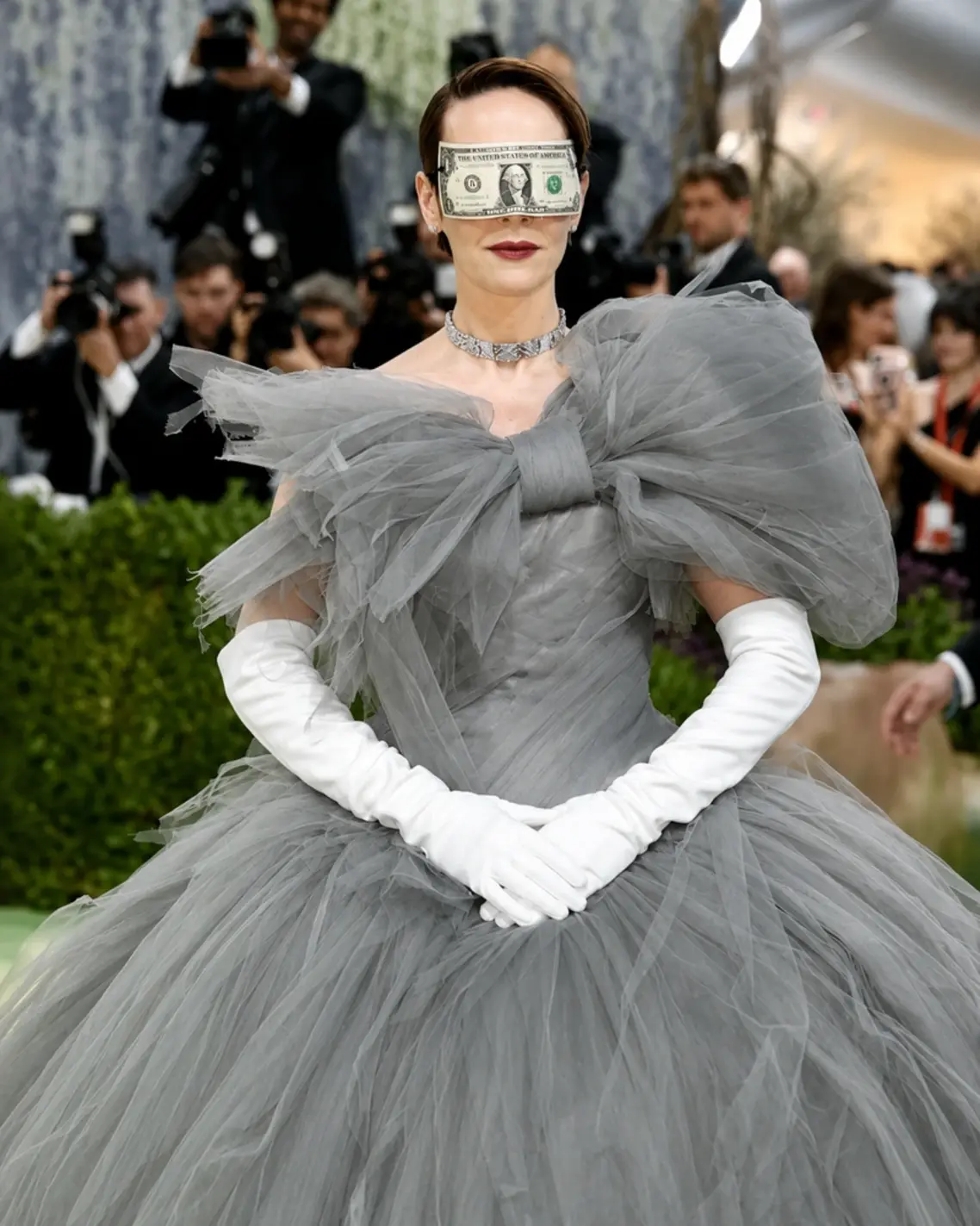
The Met Gala 2026 backlash revealed a brutal truth hiding beneath all that tailoring, sculpture, sparkle, archival drama, and museum-grade fantasy: the most controversial costume in the room belonged to Jeff Bezos. He arrived through the machinery of Met Gala sponsorship, honorary chair status, and billionaire cultural access, and the effect was immediate. The gala, usually sold to the public as fashion’s most extravagant fever dream, suddenly looked colder, sharper, and far more economic. It became a case study in what happens when extreme wealth and culture meet at the exact moment the public has grown exhausted by the people who own too much of everything else. Bezos and Lauren Sánchez Bezos became more than wealthy guests. They became symbols of a larger transaction: money attempting to turn itself into taste.
The Met Gala has always been an event about privilege enjoying its own reflection. Since its 1948 beginning, it has belonged to New York society, museum patronage, fashion hierarchy, celebrity choreography, and the thrilling theater of access. During the past decade, however, the gala has mutated from a society-page ritual into a global cultural fixation. Every look becomes a meme, every arrival becomes a ranking, every staircase gesture becomes a content asset, every celebrity pairing becomes material for the attention economy. That transformation already placed the event under pressure. As inequality widened and everyday life became more expensive for millions, the sight of the richest and most famous people dressing themselves as living artworks began to carry a sharper aftertaste. The Jeff Bezos Met Gala controversy simply gave that discomfort a face, a bank account, and a sponsorship slot.

The run-up to the 2026 Met Gala should have been a glossy parade of speculation about who would attend, who would wear which designer, and how the Costume Art theme would travel from museum wall to celebrity body. Instead, the conversation was swallowed by Bezos. His involvement with Sánchez Bezos as sponsor and honorary co-chair gave activists, fashion insiders, journalists, and online spectators a single target through which to discuss a much larger rage. The event’s expected froth turned into a referendum on billionaire philanthropy, cultural institutions and billionaires, and the moral price of turning museum prestige into elite access.
This is why the Met Gala billionaire backlash carried such force. American cultural history has plenty of precedent for new money seeking respectability through museums, universities, libraries, concert halls, and galleries. Wealth has always tried to wash itself in marble. Yet Bezos arrived with a specific kind of baggage. He is a figure attached to Amazon’s transformation of retail, the decline of countless brick-and-mortar businesses, the bruised condition of the Washington Post under his ownership, the politics of tech power, and the sheer absurdity of a personal fortune so large it becomes difficult to imagine in human terms. A reported net worth around $250 billion turns philanthropy into a strange moral theater. Any donation begins to look generous and microscopic at the same time.
The Anna Wintour Met Gala controversy grew from that symbolic tension. The Met Gala depends on its ability to make money feel elegant. Wintour’s power has long rested on her capacity to gather celebrity, luxury, media, and money into one room and make the arrangement look inevitable. Bezos disrupted that elegance because his wealth carried too much visible machinery. Logistics, labor, platform dominance, newsroom cuts, political optics, Amazon workers, and tech-billionaire image management all seemed to enter the museum with him. The result was a rare public moment when the velvet rope became easier to see than the gowns.
The activists understood this symbolism with brutal clarity. Met Gala 2026 protests used the event’s own visual language against it, turning protest into counter-spectacle. Everyone Hates Elon filled New York with anti-Bezos messaging and staged guerrilla actions that translated labor grievances into images sharp enough for the gala’s own media economy. The stunt involving hundreds of bottles filled with yellow liquid inside the museum drew attention to Amazon workers’ long-running bathroom-break complaints, turning one of the ugliest allegations about warehouse labor into a grotesque counter-decoration. Outside the museum, empty plastic bottles and worker testimony operated like anti-couture: objects with moral texture placed against an event built on luxury surfaces.
The Amazon workers protest became especially powerful because it refused to treat fashion as trivial. The Ball Without Billionaires and Labor Is Art protest gave the backlash a visual system of its own. Amazon workers and allied labor groups staged their own fashion show as counterprogramming, turning the bodies usually hidden behind convenience into the central figures of the day. The phrase “Labor Is Art” worked because it confronted the Met Gala on its own terrain. The official exhibition celebrated bodies, fashion, and art. The counter-event asked which bodies count, which bodies are costumed in glamour, and which bodies are exhausted in warehouses so the billionaire patron can arrive as a benefactor.

This was protest economy at its most sophisticated. The protestors understood that power today lives through images, and they answered the gala with images of their own. Their intervention became part fashion critique, part labor action, part public relations reversal. They created a rival runway where worker testimony competed with celebrity arrival, where plastic bottles became a bitter form of installation art, where the laboring body interrupted the decorated body. In a culture trained to process politics through spectacle, the protestors built a spectacle that exposed the economics behind the spectacle.
The numbers sharpened the story. Social intelligence firm PeakMetrics found that posts around the event and the Bezos couple carried 70% unfavorable sentiment and only 6% favorable sentiment in the month leading up to the gala, with around 13,000 posts on X calling for a Met Gala boycott linked to Bezos’s involvement. These figures matter because they show the criticism had moved beyond vague online irritation. It had become measurable public feeling. In a year when billionaire wealth reached dizzying collective heights and surveys suggested rising hostility toward the ultrawealthy, the gala became a perfect stage for class resentment: famous enough to attract attention, glamorous enough to provoke disgust, and wealthy enough to symbolize everything many people feel has gone rotten.
New York mayor Zohran Mamdani’s decision to skip the gala sharpened the political reading. By saying he wanted to focus on affordability, he gave the refusal a civic frame. The mayor’s empty spot became its own statement. This mattered because mayors traditionally attend the gala as part of the city’s cultural diplomacy. Choosing the city’s cost-of-living crisis over the red carpet placed the event inside a wider economic argument. Who gets to celebrate art when rent, food, labor, and public life feel strained? What does a $100,000 ticket mean in a city where affordability has become a governing emergency? The Met Gala has always been expensive, but 2026 made its expense feel loudly ideological.
This is where the Met Gala 2026 backlash became a study in reputation laundering. Cynthia Nixon used that phrase, and it stuck because it explained the emotional logic of the backlash. Reputation laundering happens when money associated with harm, extraction, or public resentment enters a cultural institution and returns wearing refinement. A museum can give wealth a softer silhouette. Fashion can give capital a more beautiful face. A gala can convert a controversial figure into a patron, a guest of honor, a person smiling beside artists and celebrities instead of standing beside warehouse conditions, newsroom layoffs, monopoly debates, or political anger. The entire ritual asks the public to accept transformation: the billionaire enters as capital and exits as culture.
Yet the laundering metaphor also reveals the risk for fashion. The Met Gala thrives because it offers cachet. It grants a rare blend of aristocratic glamour, celebrity heat, museum legitimacy, and editorial control. If the gala’s cultural aura becomes too available to the highest bidder, its magic begins to curdle. Fashion depends on fantasy, but fantasy collapses when the receipt becomes too visible. A $100,000 ticket can feel thrilling when framed as a Costume Institute fundraiser. It begins to feel grotesque when paired with worker testimony, affordability politics, and billionaire backlash. The same money that funds the institution can stain the atmosphere it pays to enter.

The relationship between the gala theme and the controversy made the whole episode feel even stranger. Costume Art aimed to place fashion at the center of the museum, pairing garments and artworks across body types historically marginalized by fashion and Western visual culture: pregnant, aging, disabled, nude, and other bodies pushed to the edges of aesthetic power. Andrew Bolton’s curatorial frame gave fashion a profound argument: clothes are social, personal, cultural, and political objects. Yet outside that curatorial intelligence stood a donor controversy centered on labor, inequality, and the bodies that make billionaire wealth possible. The exhibition wanted to honor marginal bodies inside the museum. Protesters asked about the working bodies outside the museum’s glamour system. The tension was almost too perfect.
This is the social intelligence of the backlash. It understood that fashion and capitalism have always danced together, but 2026 made the choreography feel too obvious. The Met Gala’s beauty came from its ability to make money appear weightless. Bezos made the money heavy again. He forced the public to see the donor class behind the dream, the labor politics behind the convenience economy, the PR logic behind the patron role, and the billionaire optics behind the museum staircase.

The tech billionaires fashion angle gave the controversy its contemporary edge. Silicon Valley has spent decades building the systems through which people shop, read, post, watch, date, organize, and define themselves. It already controls massive parts of modern attention. What it increasingly wants now is taste. Taste is the last luxury technology. It gives power a human texture. It makes infrastructure look personal. It makes scale feel intimate. It makes domination appear curated.
That is why Bezos’s role felt so provocative. Silicon Valley built fortunes by moving fast, breaking industries, scaling convenience, displacing older forms of labor, and turning human behavior into monetizable systems. Fashion, for all its hierarchy, still sells itself as a world of craft, imagination, touch, memory, and human authorship. Seeing a figure like Bezos buy his way into that celebration created a symbolic clash. The public saw a man associated with the destruction of old retail and the weakening of media standing inside a ritual dedicated to artistic creation. The irony felt almost theatrical. The store where Andy Sachs bought her cerulean sweater belongs to the world Amazon helped erase.
The “Devil Wears Prada” echo gave the whole episode a bitter cultural symmetry. The original story belonged to a media era when fashion journalism still possessed terrifying glamour, and a young writer could imagine a path from magazine assistant to daily newspaper work. In the new film’s world, journalism has been gutted, content has replaced editorial authority, and a billionaire buyer hovers over a fashion-media institution desperate for relevance. That fictional anxiety mirrored the real one surrounding Bezos, Vogue, Condé Nast, and the Met Gala. The villain of the current fashion-media imagination is no longer simply the icy editor. It is the billionaire purchaser, the platform owner, the man with enough capital to enter any room and change the air.
The gala survived, of course. Beautiful people still arrived. The red carpet still produced images. The museum still raised money. The exhibition still opened. The machine kept moving because the Met Gala has become strong enough to absorb critique and turn even outrage into visibility. This is the final, most uncomfortable insight. PR backlash may bruise the aura, but it also feeds attention. Boycott calls still circulate the event’s name. Critical essays still extend the discourse. Social outrage still increases the scale of the spectacle. The Met Gala’s business model is now sophisticated enough to metabolize admiration and disgust at the same time.
That leaves fashion with a difficult question. If the industry welcomes billionaire money in exchange for funding, spectacle, and survival, how much of its cultural authority remains independent? If museums rely on extreme wealth to stage public beauty, how clean can that beauty ever feel? If protest becomes part of the event’s media cycle, how does resistance avoid becoming another asset in the gala’s attention economy? Met Gala 2026 backlash answered these questions with uncomfortable elegance. It showed that power wants beauty, beauty wants funding, media wants conflict, and the public wants both the fantasy and the right to condemn it. Jeff Bezos became the perfect villain because he revealed the system more clearly than anyone intended.
Advertisement