MENU
Close





Donatella Versace transformed glamour into a language of power, sex appeal, and cultural authority, building a fashion legacy that still burns with unmistakable force.
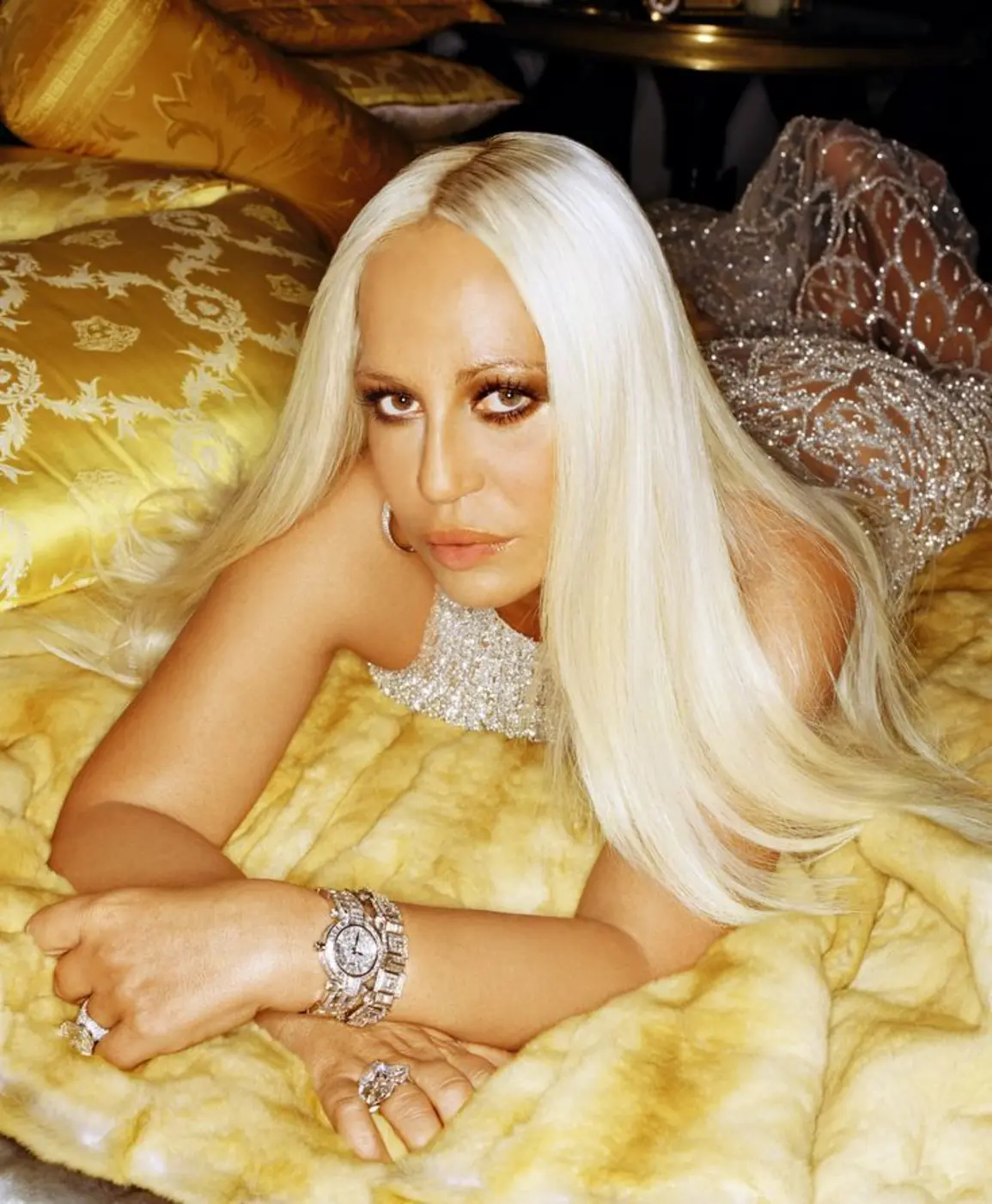
Donatella Versace transformed glamour into a language of power, sex appeal, and cultural authority, building a fashion legacy that still burns with unmistakable force.
April 2, 2026
Advertisement
Advertisement



The transition of power that took place on April 10, 2025 was less a corporate acquisition and more a shifting of the stars over Milan. When Prada Group moved to acquire the house of Versace in a 1.25 billion euro deal it signaled the end of a very specific kind of independence but the beginning of an eternal relevance. By the time the deal reached its final completion on December 2, 2025 Donatella Versace had already begun her ascent into the role of Chief Brand Ambassador a title that feels less like a job description and more like a coronation of her status as the living soul of the Medusa. For nearly half a century the house was defined by the direct hand of a Versace sibling but now as we stand in the dawn of this Prada era we see Donatella Versace performing her most brilliant maneuver yet. She has successfully uncoupled the spirit of the brand from the necessity of her own sketchpad ensuring that the name Donatella Versace is no longer just a reference to a woman but a permanent cultural grammar. It is a masterclass in the architecture of legacy where a survivor transforms into a sovereign and proves that the true power of an empire lies in its ability to outlive its own origins.
To truly feel the weight of this moment we have to return to the flickering heat of the late nineties when the crown was thrust upon her amidst a shattering of the world as she knew it. Long before she was the public face of the empire Donatella Versace was the internal voltage of the house acting as the intimate reader of her brother Gianni’s most daring impulses and his most vital bridge to the electric rebellion of rock culture. Her true authorship however was forged in a furnace of impossible pressure. Her Spring 1998 debut was not a mere fashion show but a sacred liturgy a high-stakes séance where Donatella Versace stepped out from the shadow of a fallen giant to claim her own patch of light since Gianni Versace's brutal death. In that moment of grief she did something miraculous by maintaining the sacred codes of the palazzo while injecting a subversive modernity that felt entirely hers. Donatella Versace did not just keep the fire burning through the night she taught that fire how to speak a language of power and desire that still echoes through the halls of fashion today.
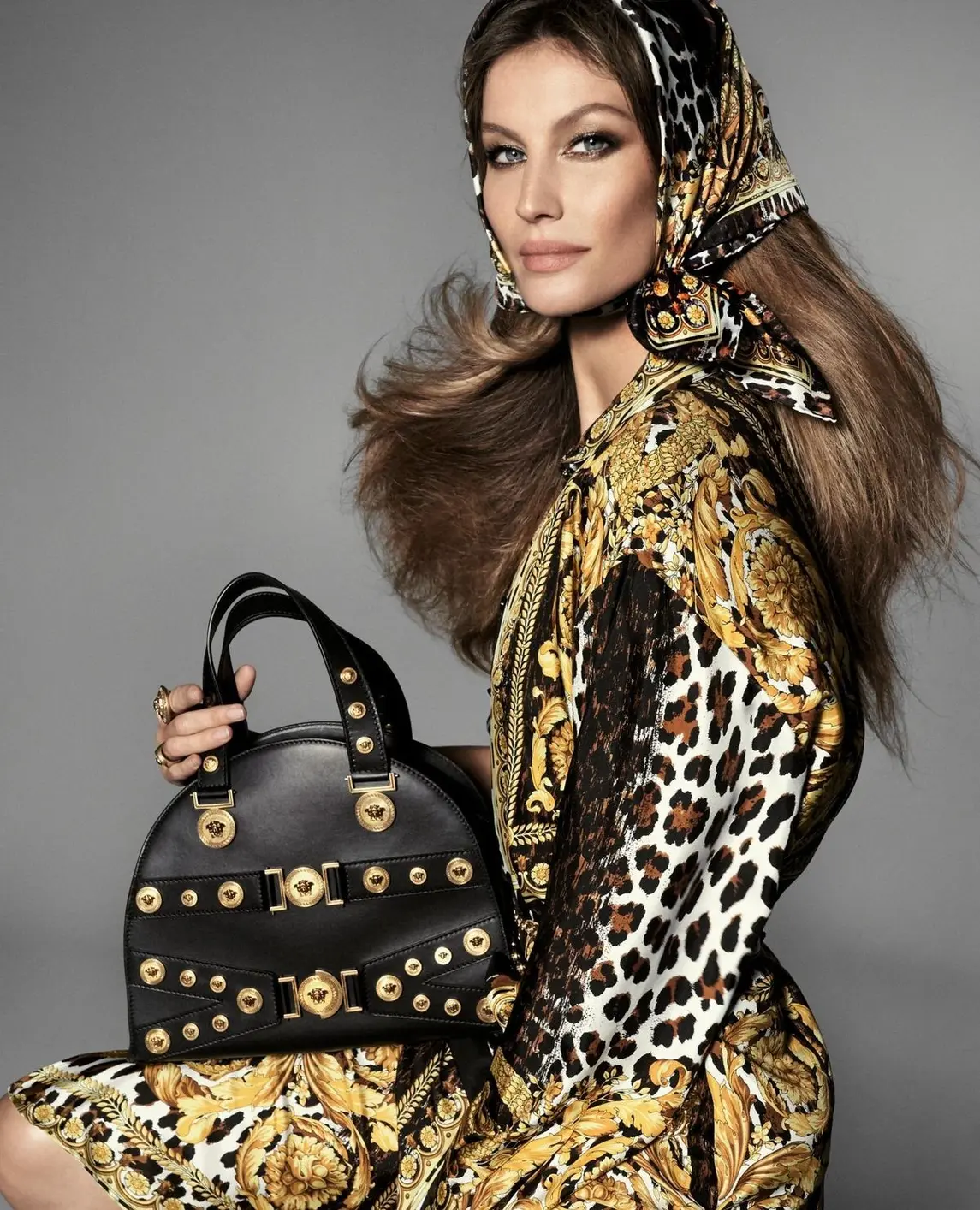
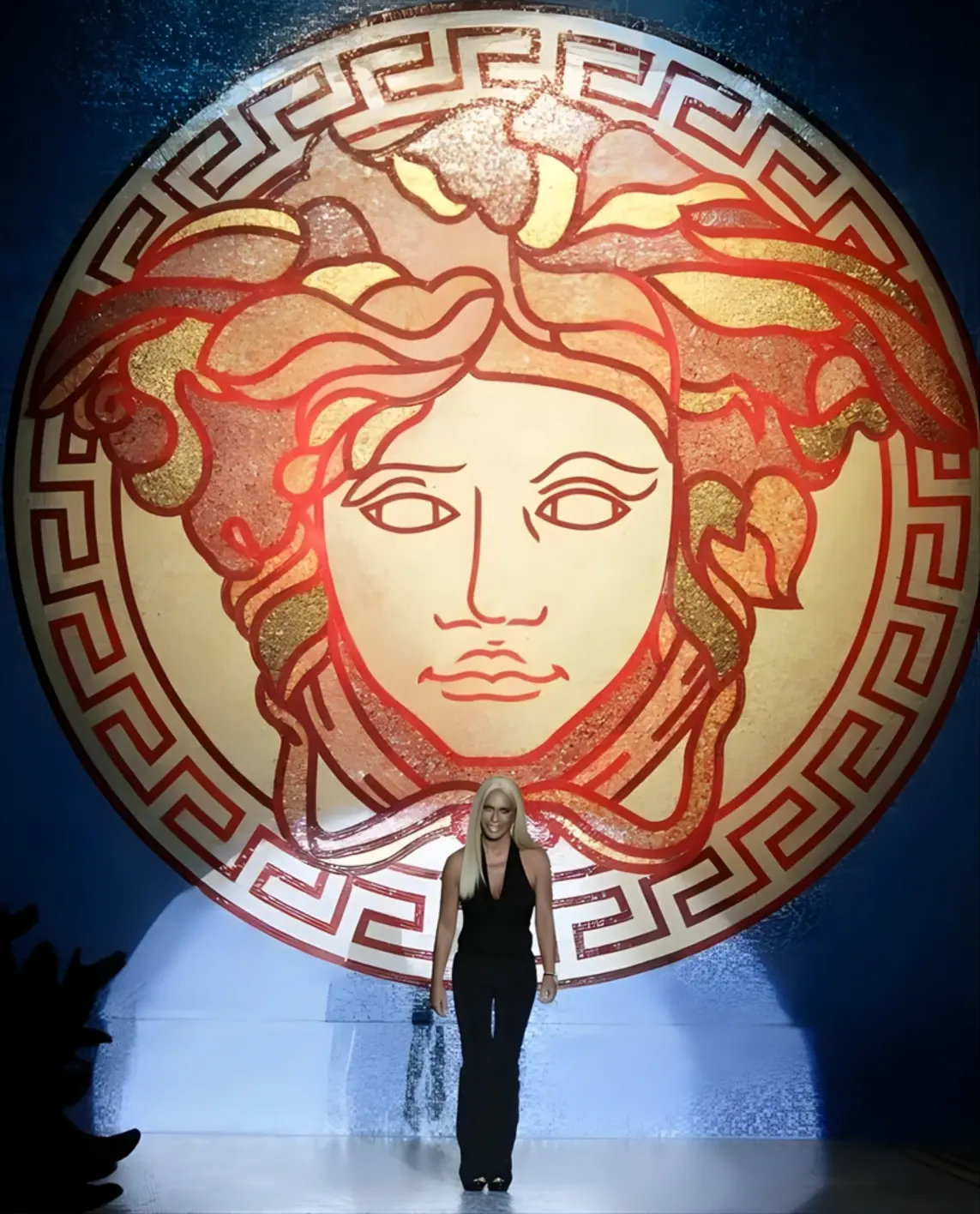
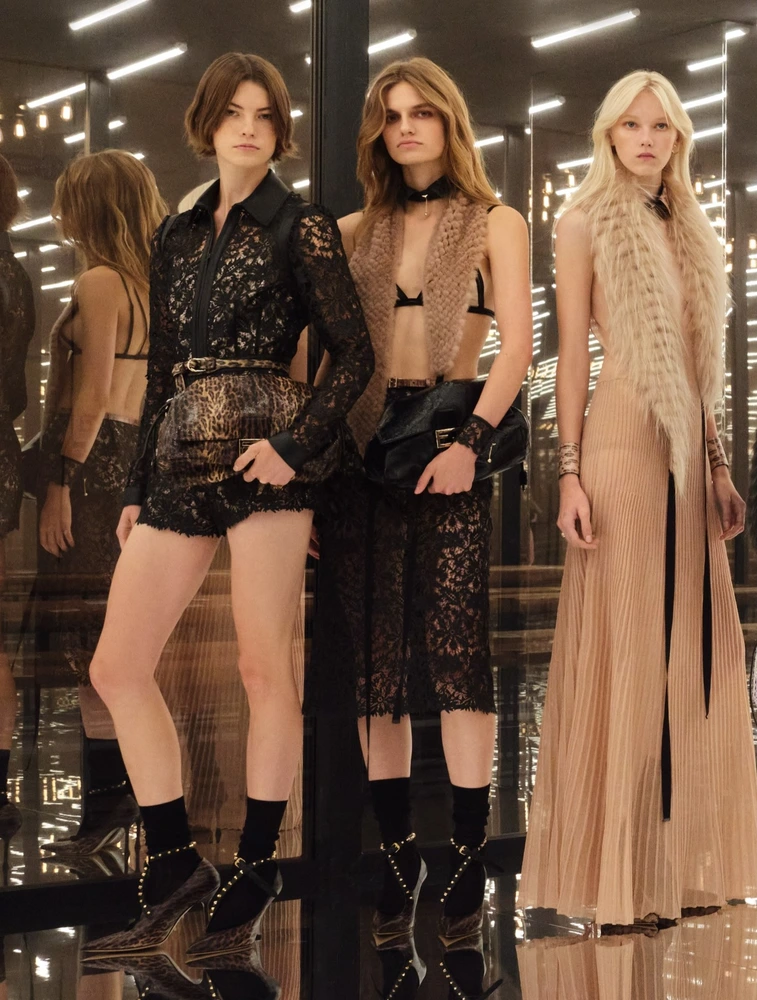
To speak of the signature of Donatella Versace is to speak of a house that can be recognized at an almost indecent speed. Before the eye has even processed the hemline, the immediate signifiers have already done their work: the Medusa, the Barocco, the material charge, and a silhouette cut so close to the skin it makes propriety nervous. Donatella Versace has never been in the business of quiet fashion; she designs for legibility and high-voltage impact. A garment by Donatella Versace announces itself, seduces the room into a trance, and then demands a longer look. As the official house codes suggest, the Barocco and the Medusa 95 are the DNA of a woman who treats visibility as her primary source of power.
Take the Medusa, which under Donatella Versace remains less a logo than a mythological operating system. Rooted in the marble plaque found at the doors of Via Gesù 12, the house’s first Milanese headquarters, the symbol is a permanent talisman. In the hands of Donatella Versace, the Medusa becomes a promise: she is the woman who petrifies with a look, the woman who makes desire dangerous, and the woman who turns beauty into lethal force. She knows that glamour lands harder when it looks like it could bite. Her entire body of work plays with this exact tension, attraction sharpened into authority, wrapped in a silk slip dress that feels like a declaration of war.
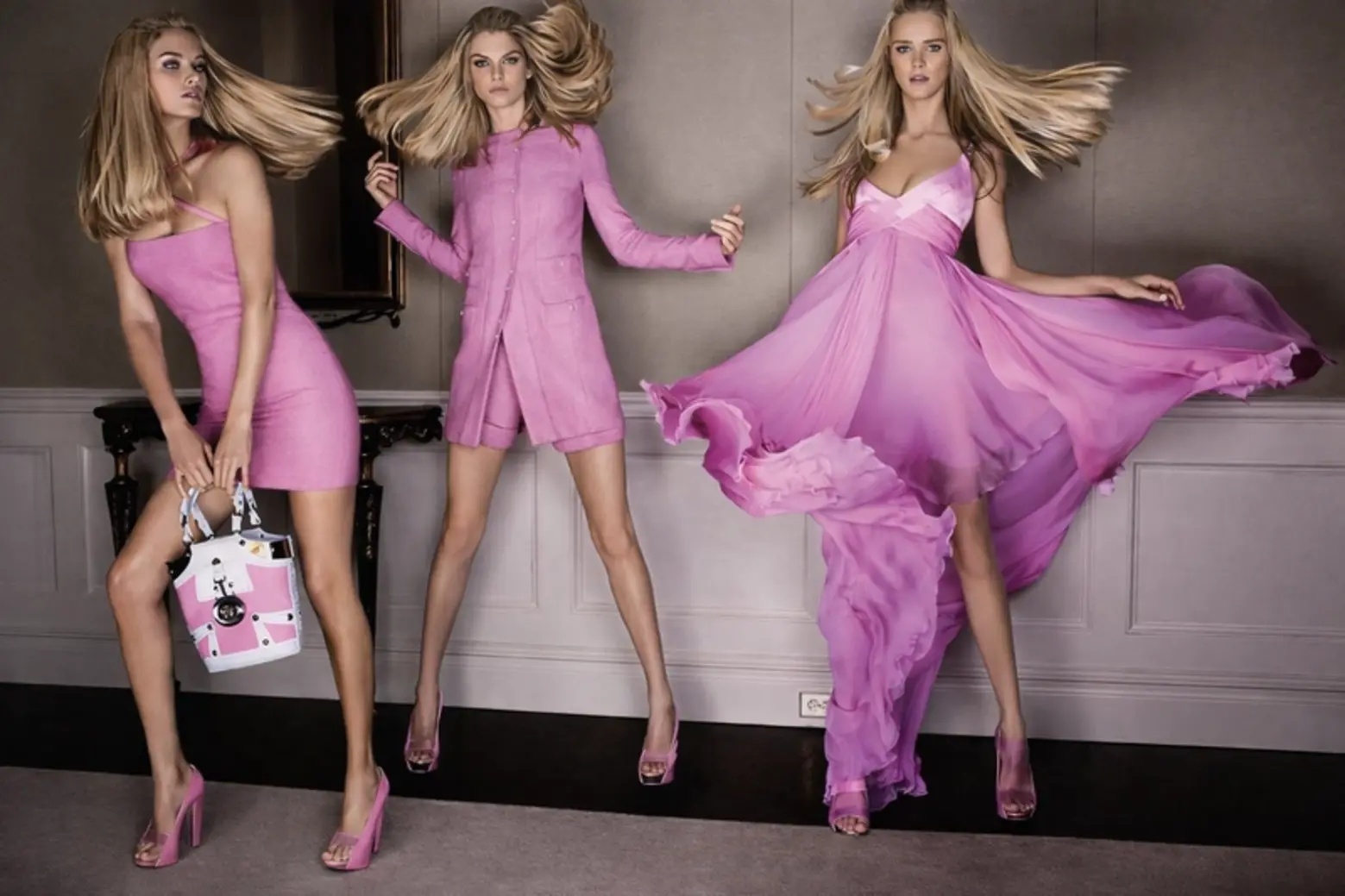
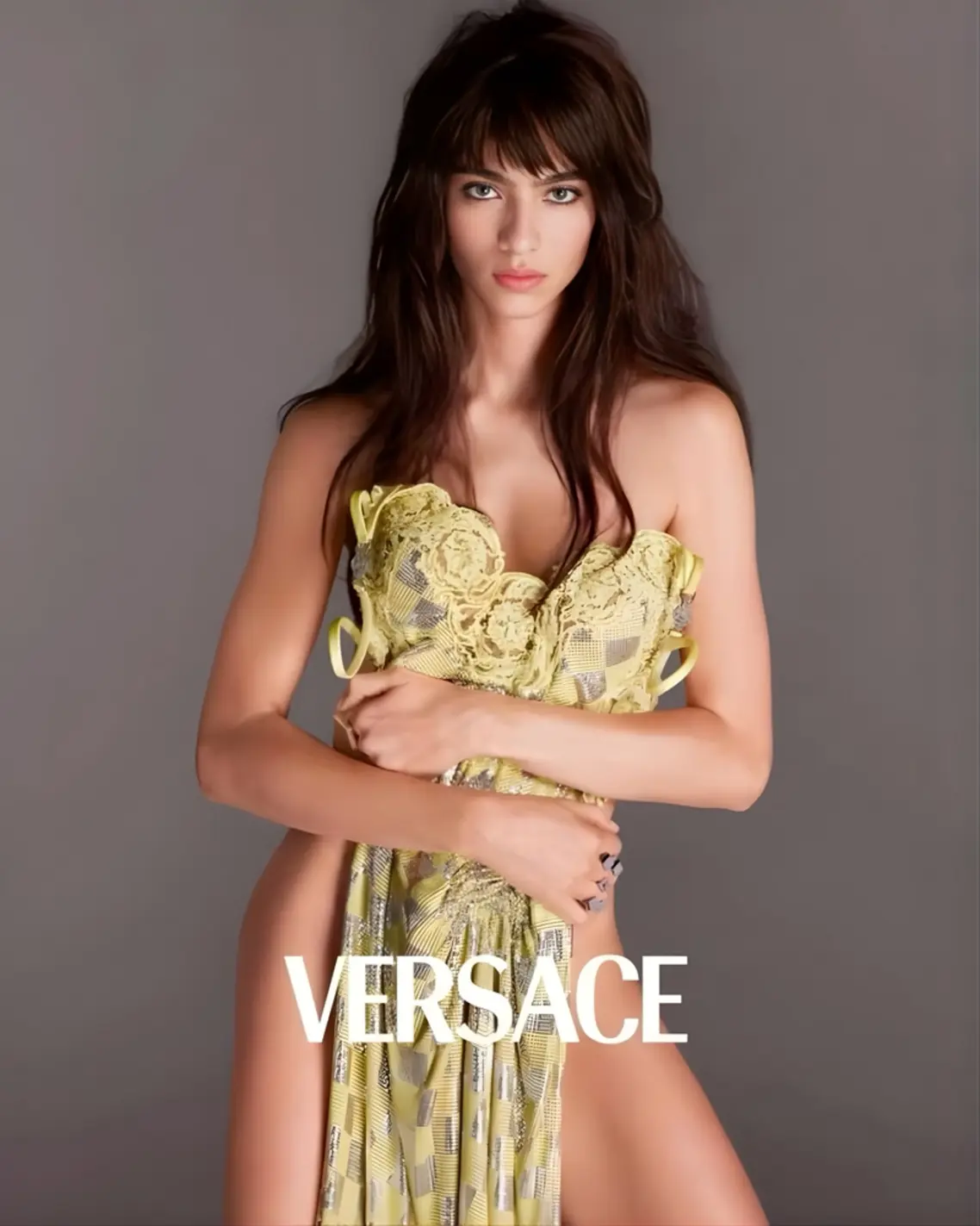
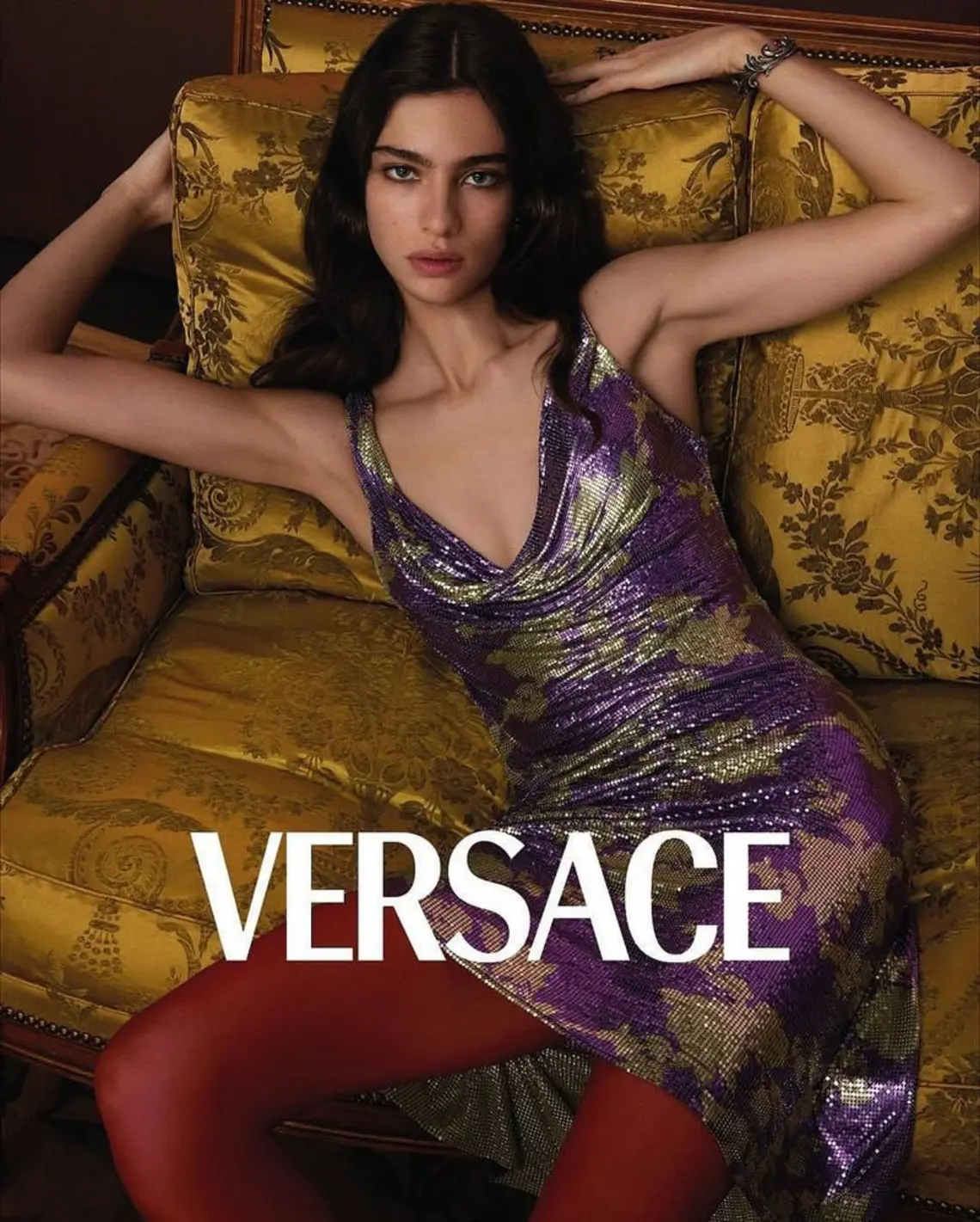
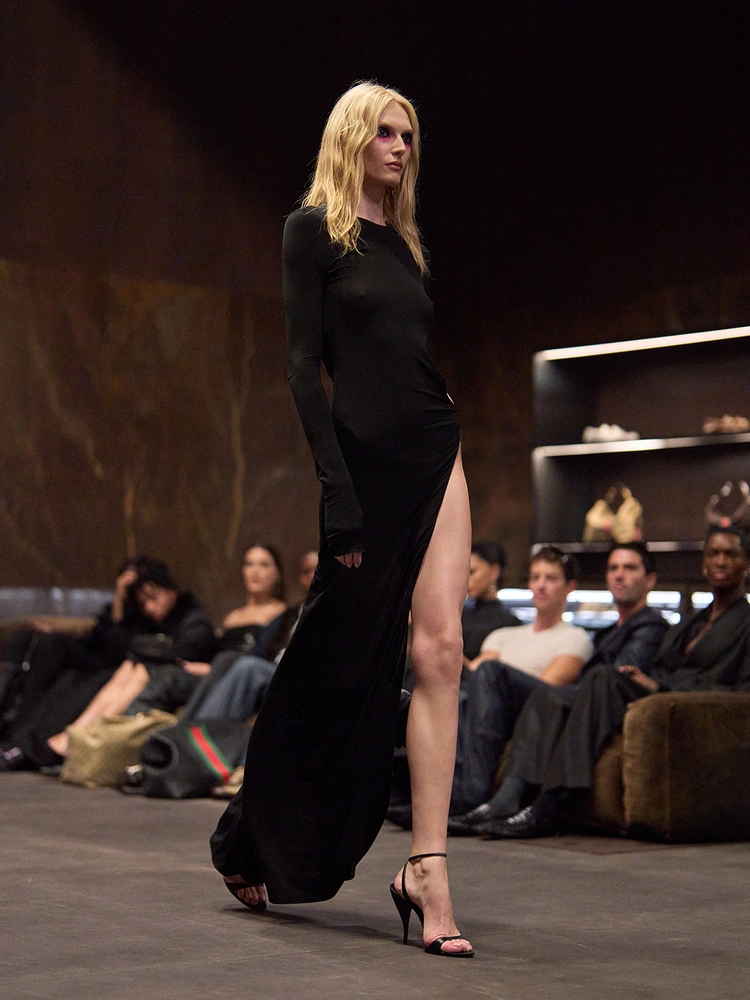
The true authorship of Donatella Versace, however, is found in the engineering of the body. There is a persistent, lazy cliché that she only makes clothes for bombshells, but the best reporting on her work reveals something far more layered and subversive. The nuances of her design language are sporty, smart, suburban, and subversive, all while remaining intoxicatingly sexy. She understands that sexiness on its own is flimsy; it needs architecture, control, and a body that looks like it knows exactly what it is doing. That is why her signature is never just skin, it is skin with strategy. It is never just exposure; it is exposure that feels chosen, staged, and weaponized. On a Donatella Versace runway, whether they are Ready-to-Wear or Atelier Versace Couture, the body is not a problem to be corrected or hidden behind the bleached obedience of good taste. It is a surface of confidence, appetite, and agency. She was never in the business of covering women up with propriety; she was in the business of giving them a silhouette that knows the room will look.
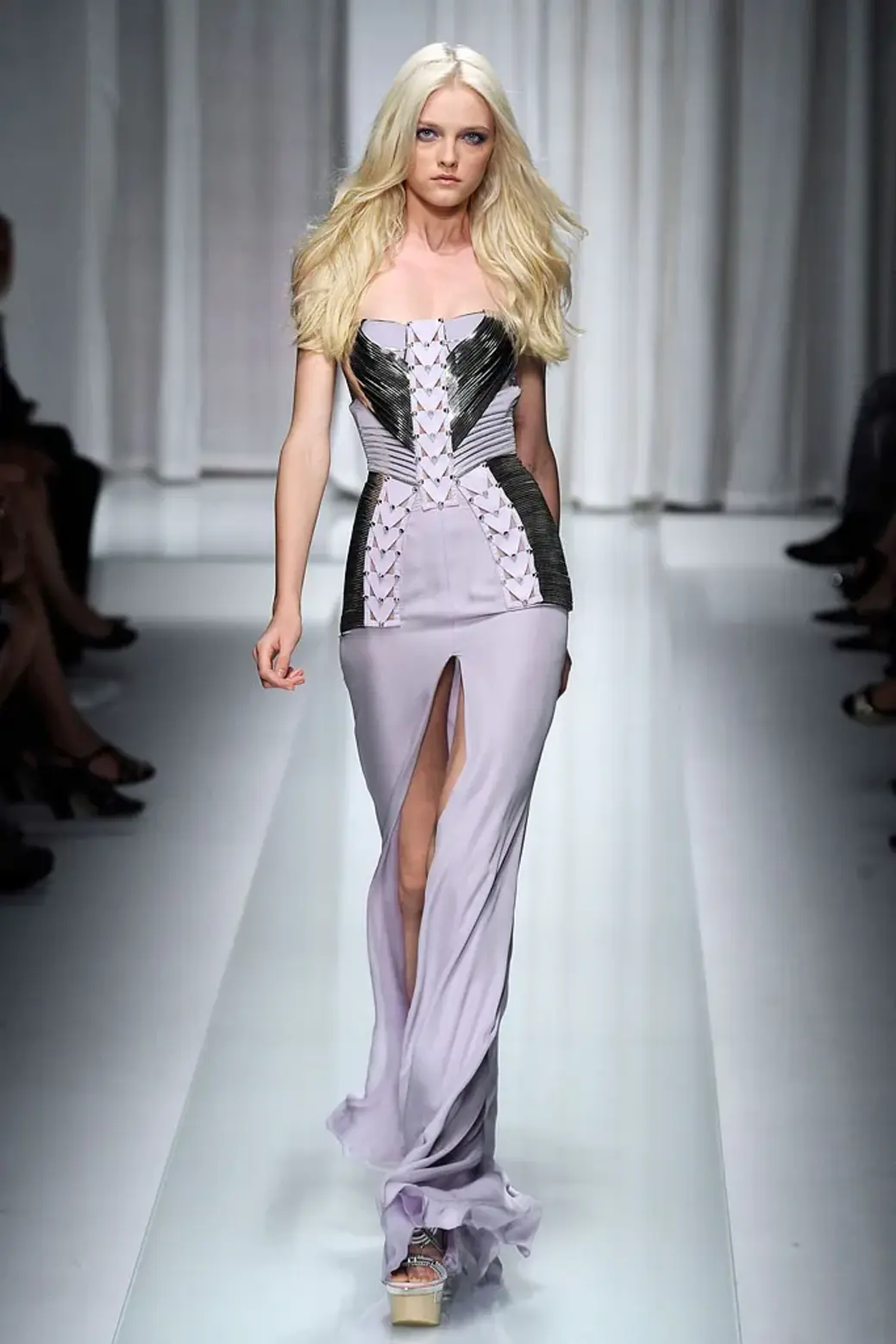
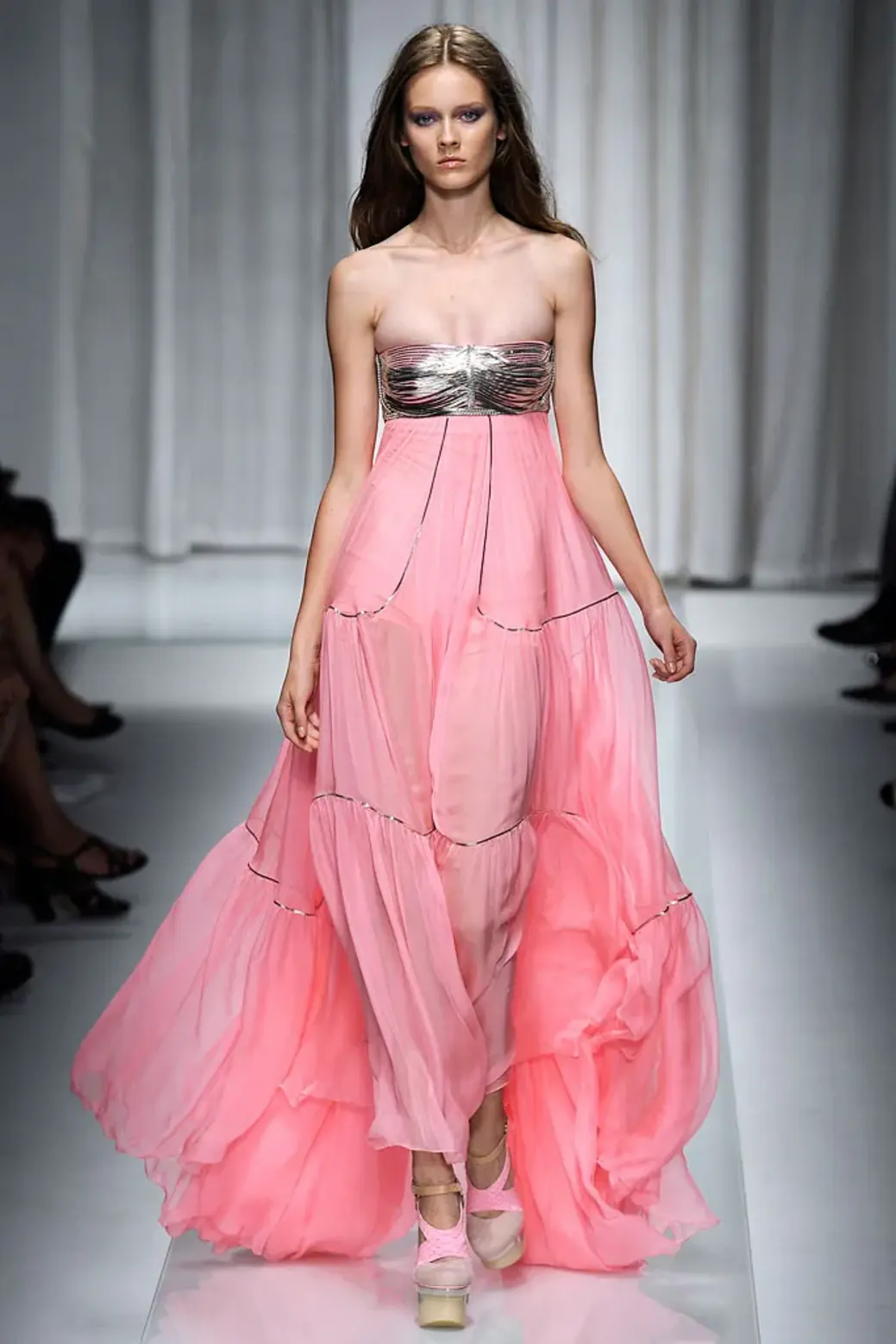
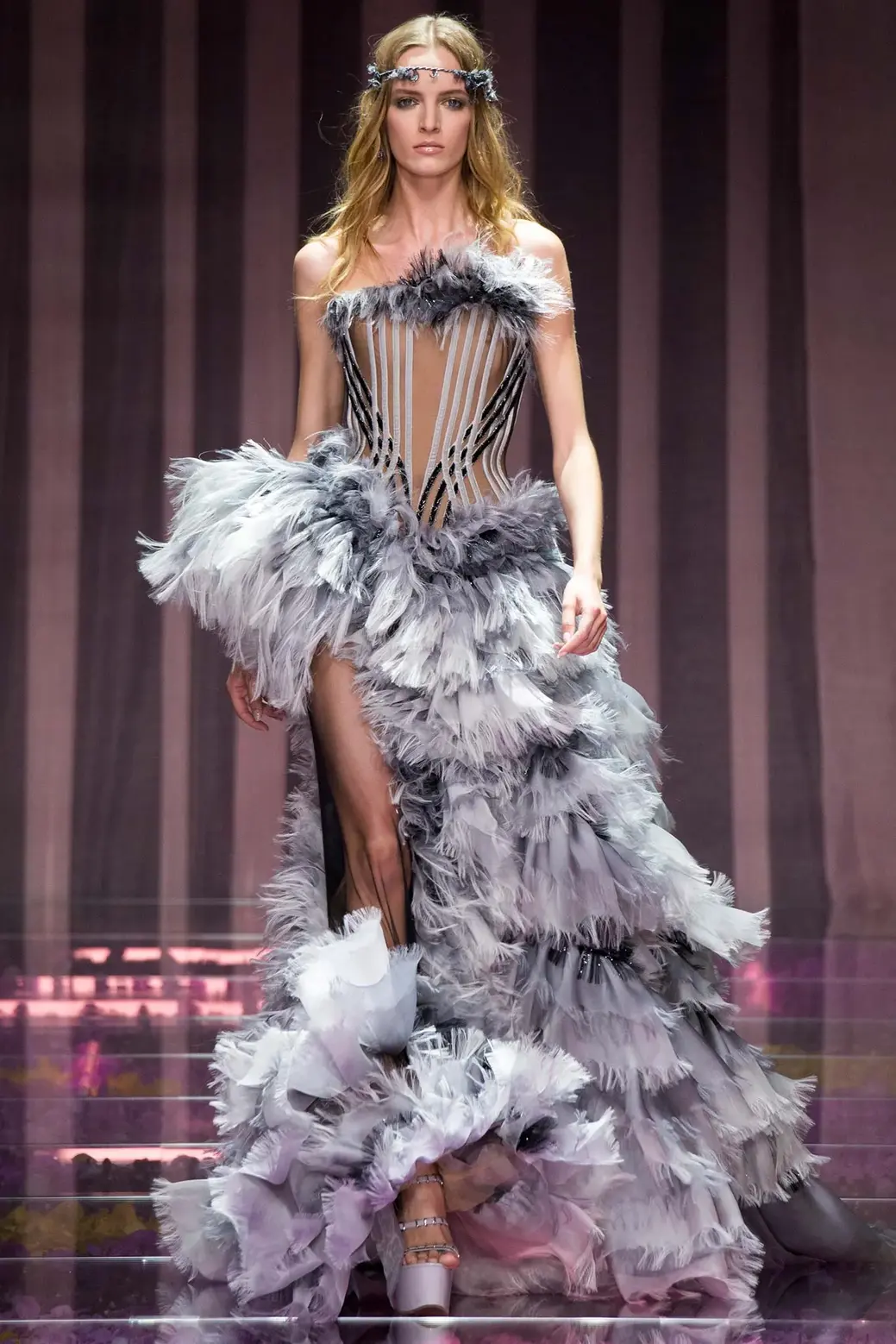
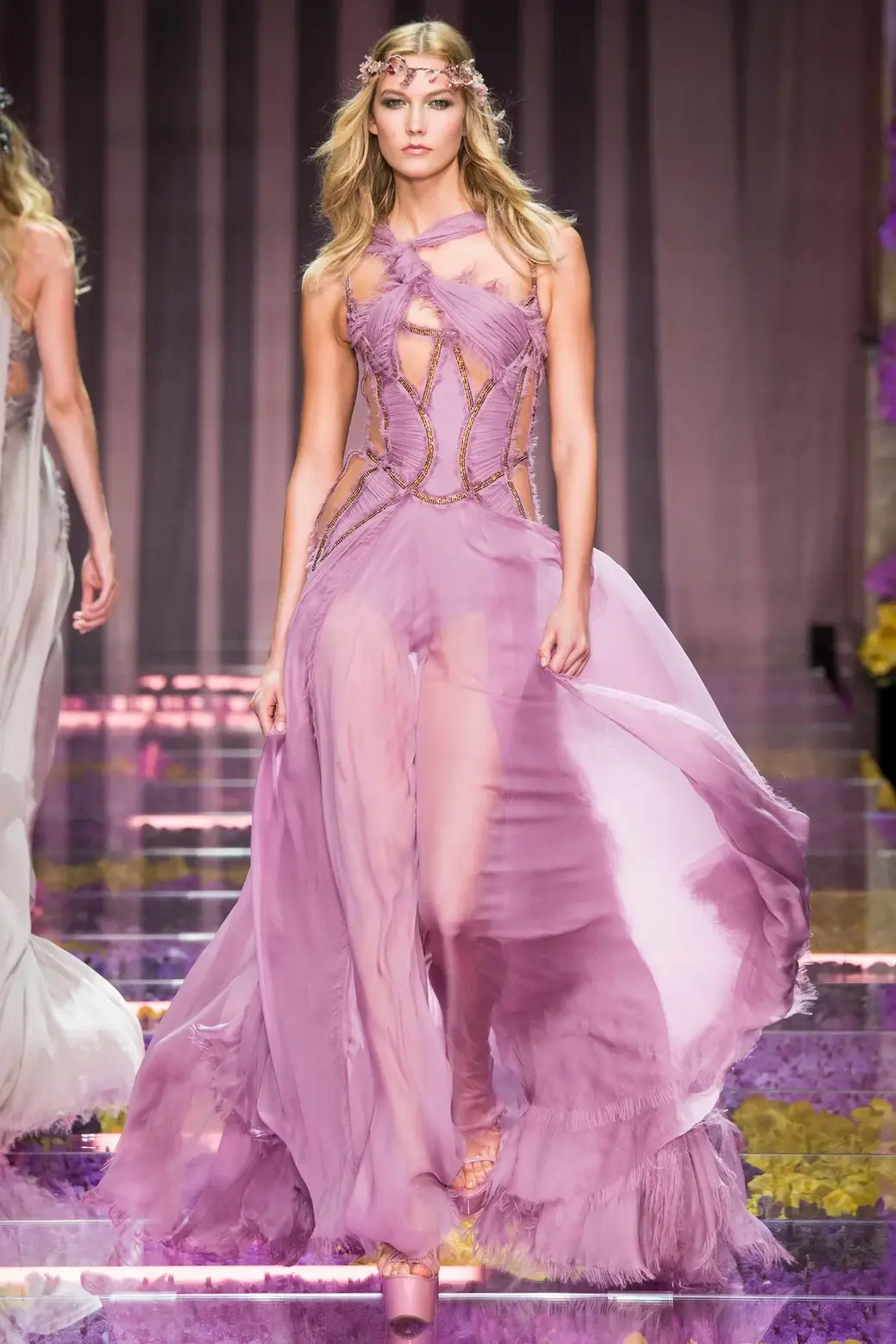
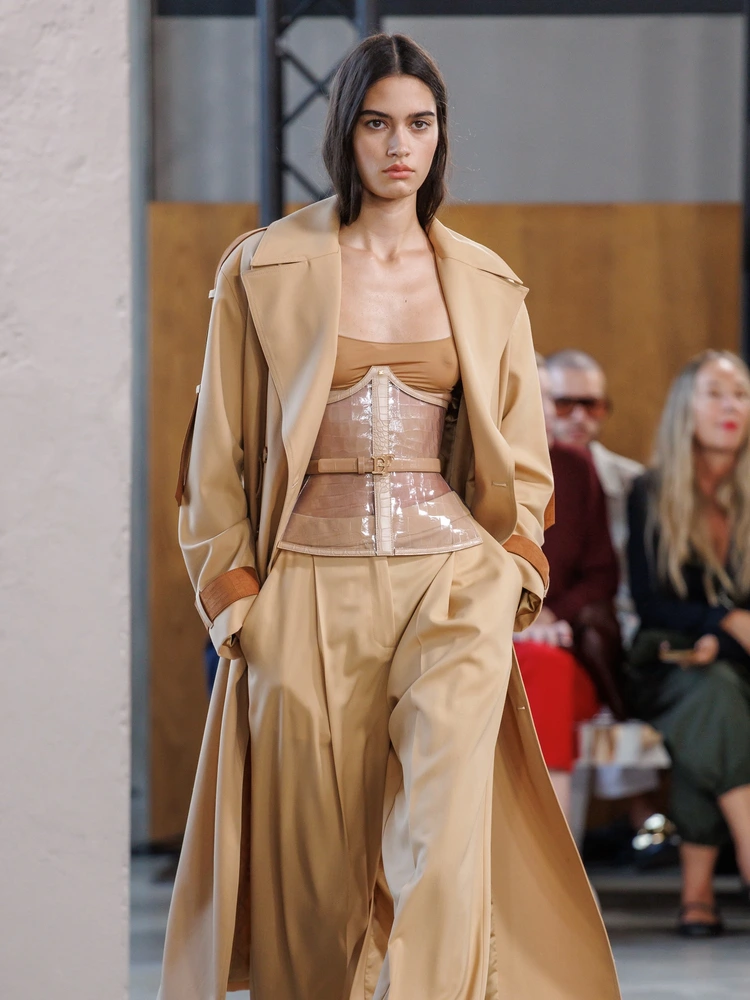
Nowhere is this more intimate than in her command of the silhouette. The corset is a Versace signature if ever there were one, whether it is cinching a swaggering black pantsuit, shaping a micro-mini, or grounding a second-skin knit. She loves a body, but she loves it even more when it has been edited for maximum effect. The waist is nipped, the shoulder is sharpened, the bust is framed, and the dress is tightened just enough to turn movement into spectacle. Her silhouette never behaves like shy flattery; it behaves like a command.
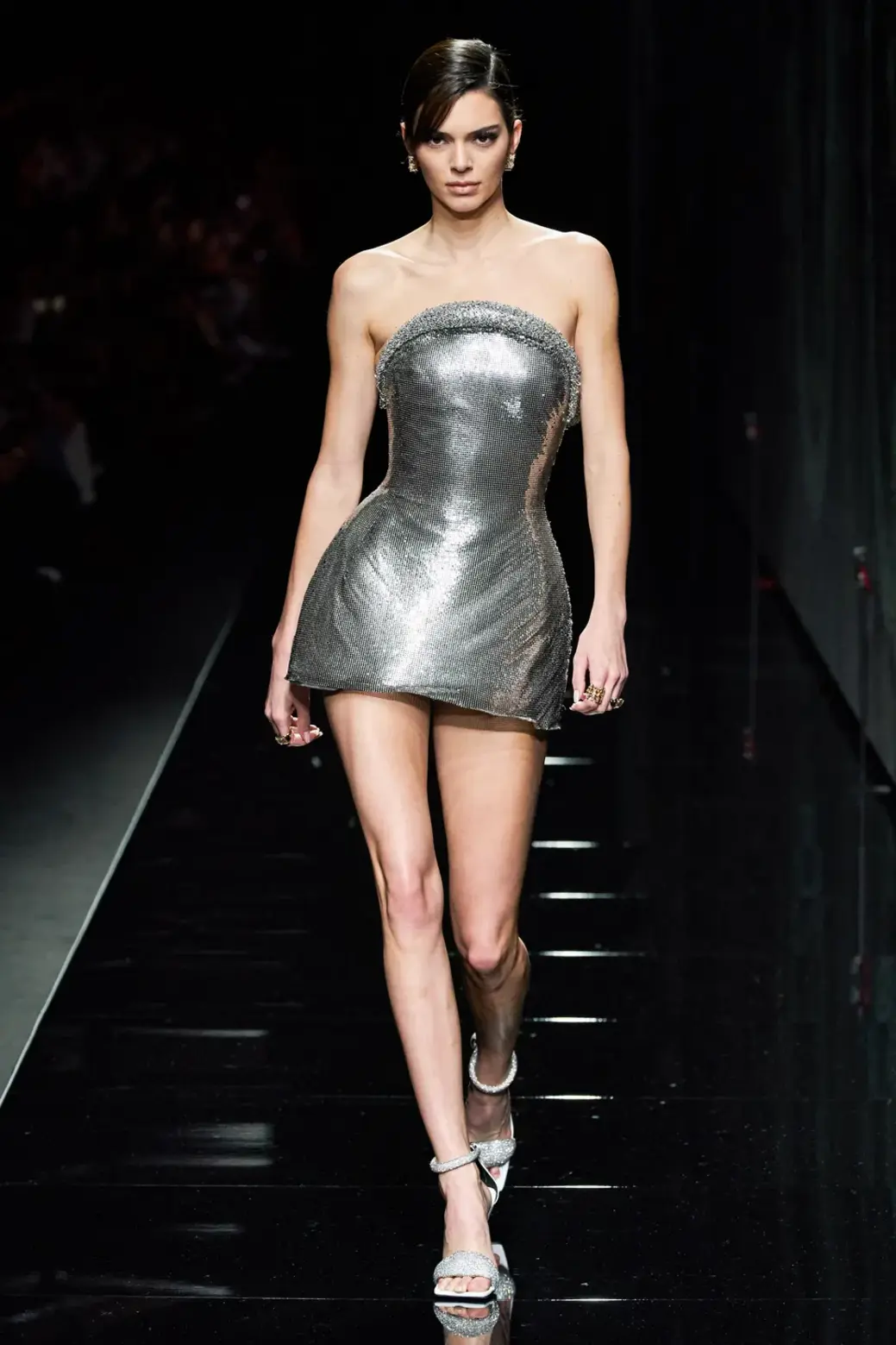
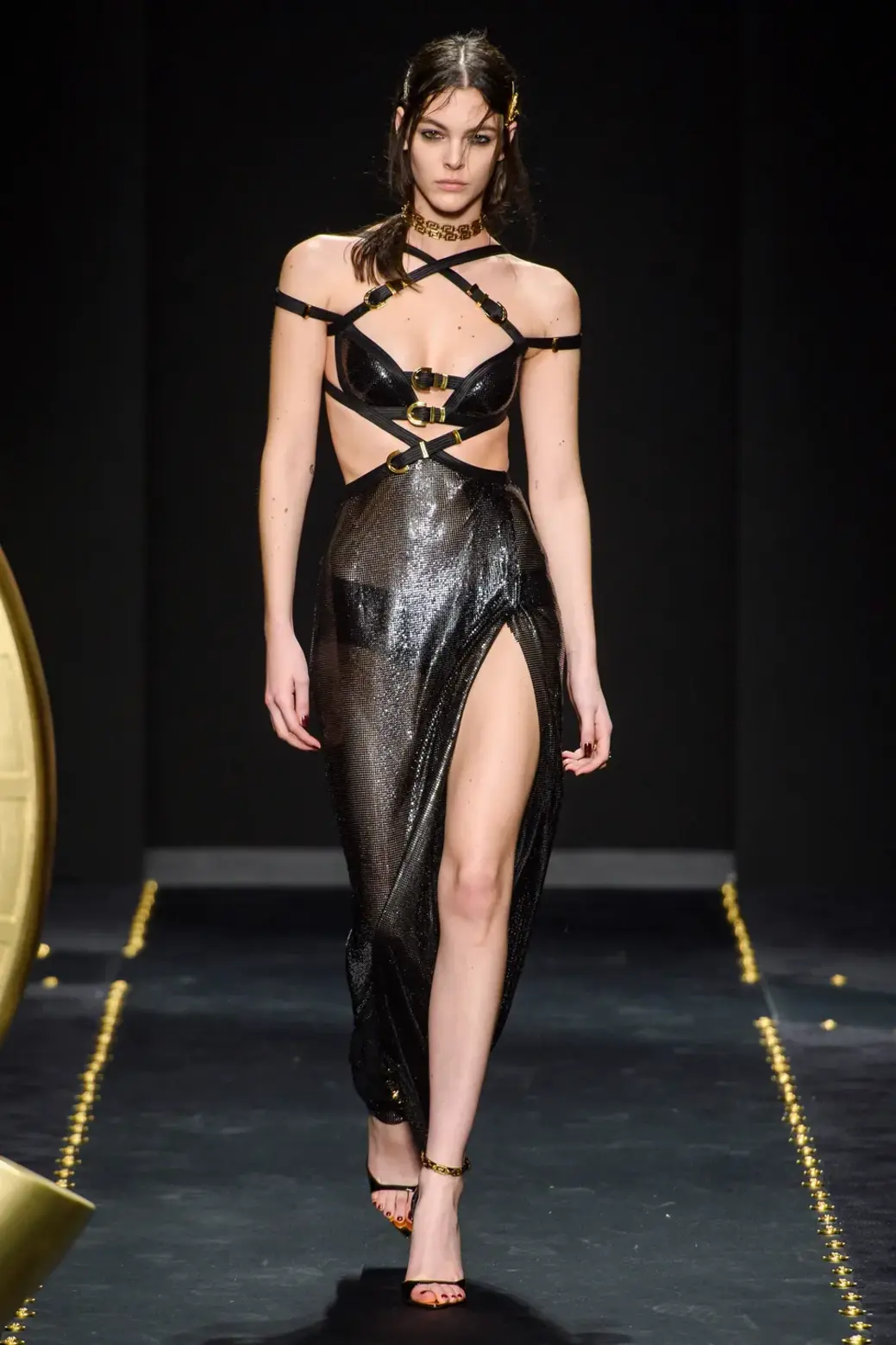
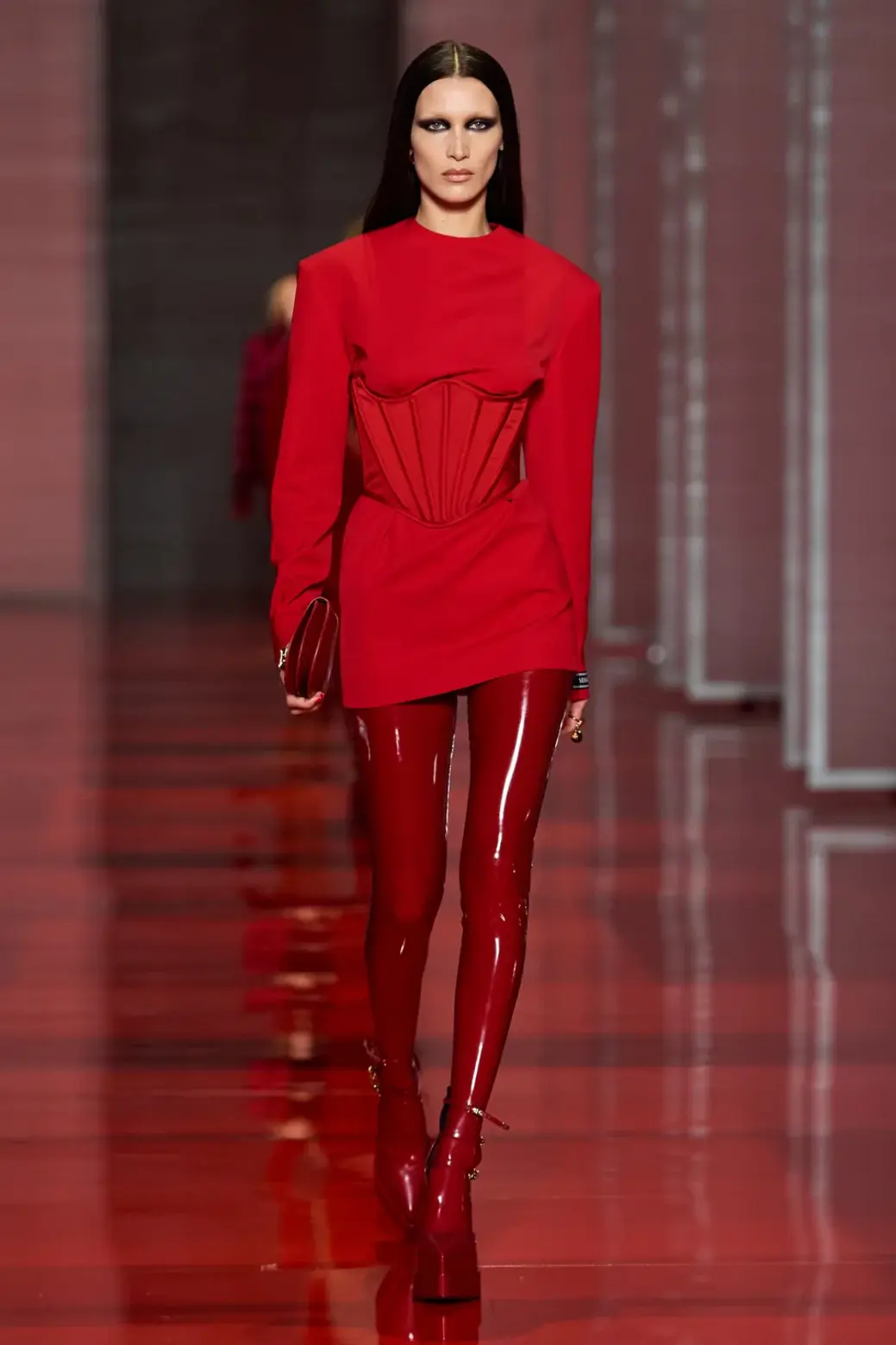
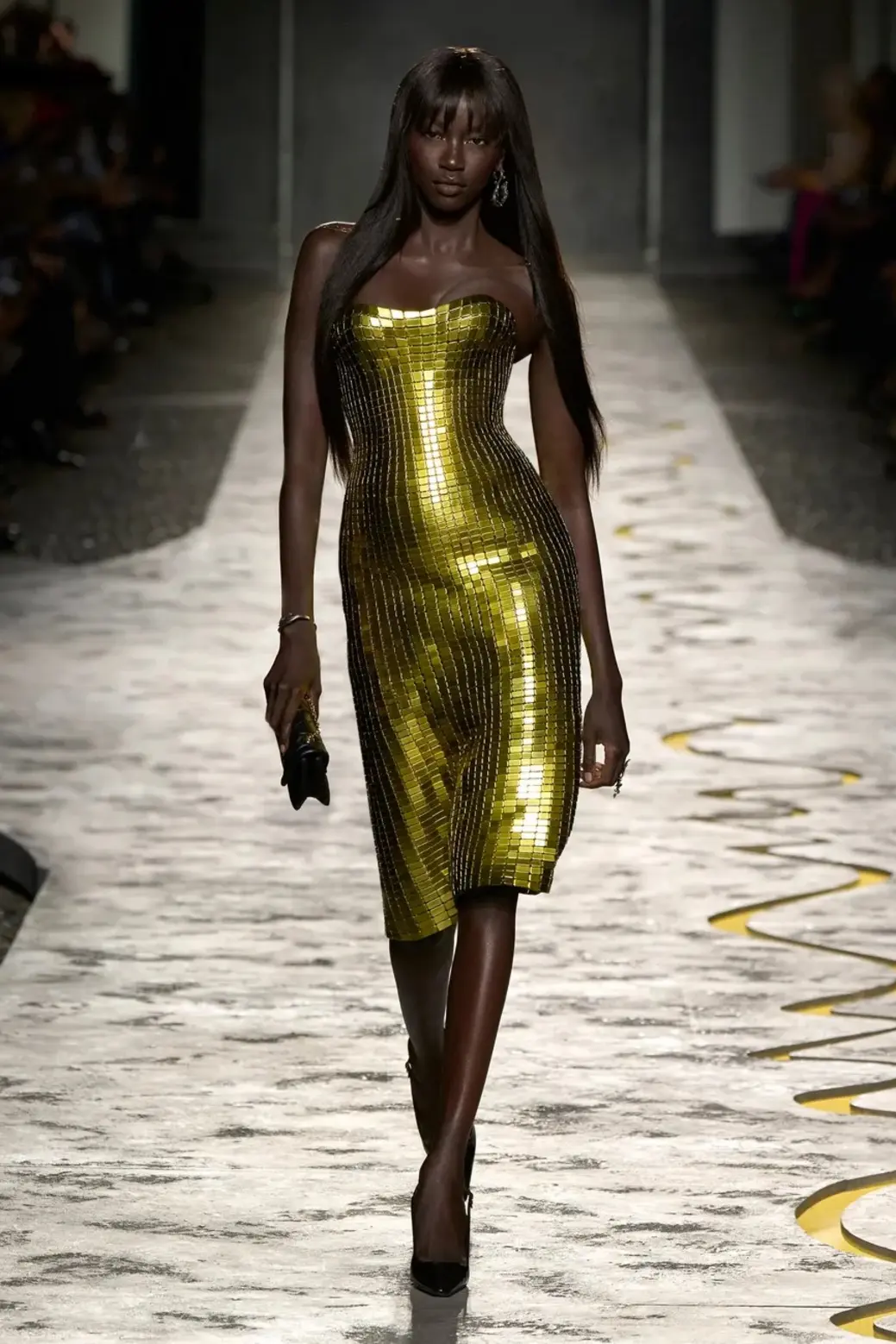
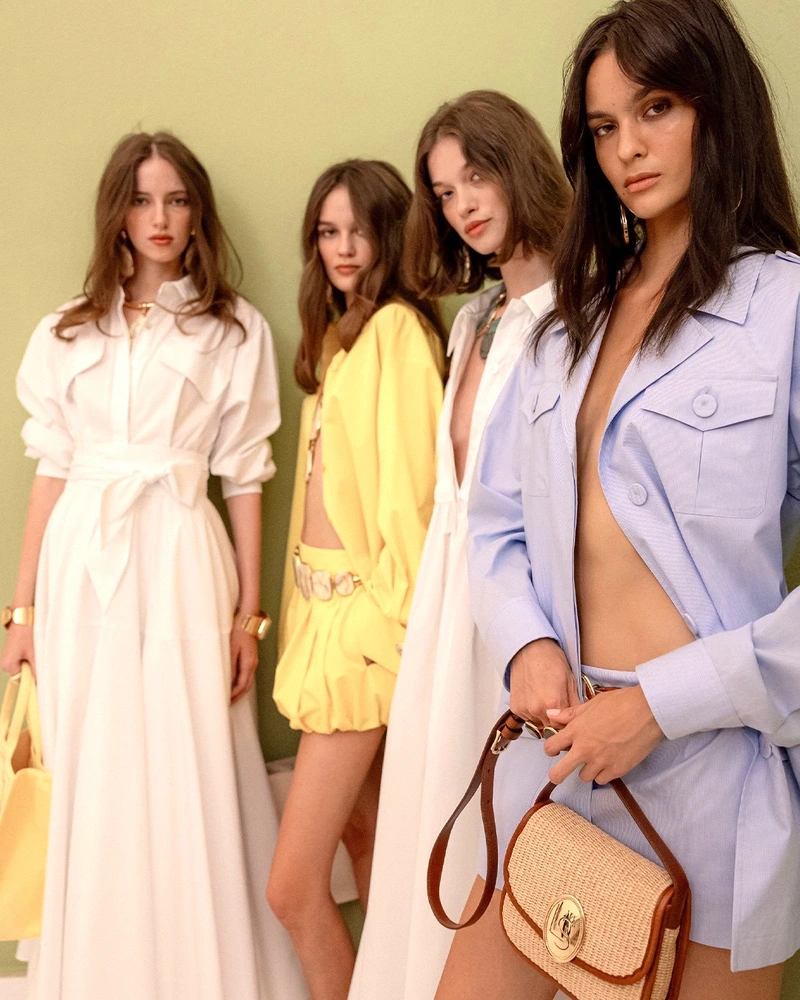
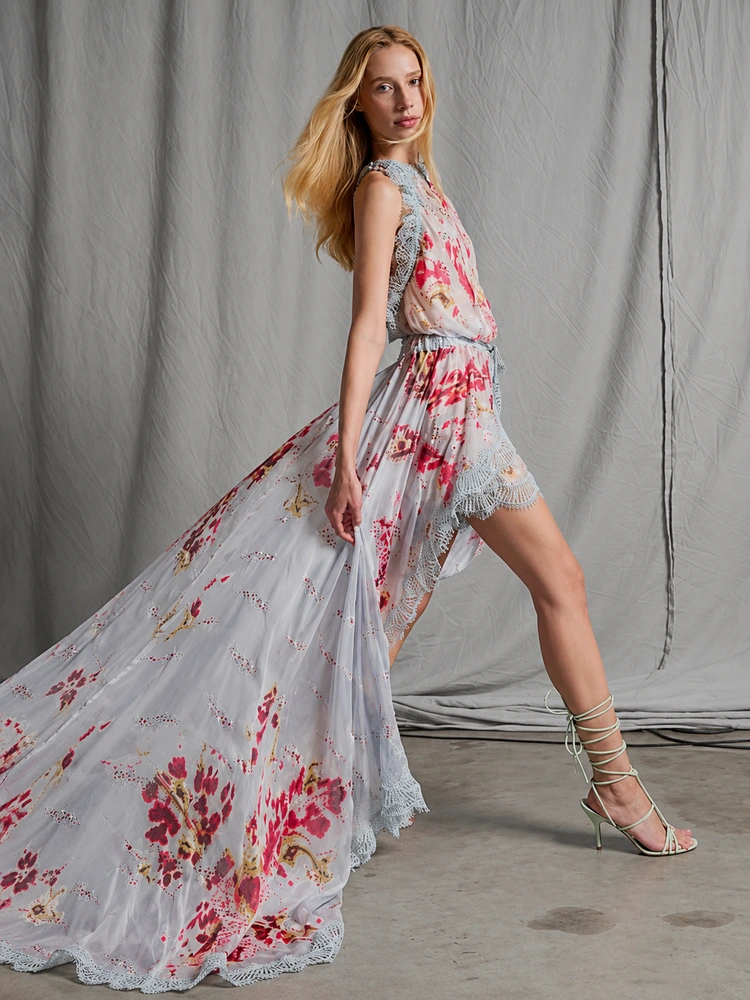
Yet, she is a genius of mutation. Her signature is not static repetition; it is a live wire that keeps shifting. By Spring 2025, Donatella Versace returned to her 1997 Versus roots, reviving clashing prints and a youthful energy that felt more sweet than sexy by her usual standards, all baby pastels and slip-dress-and-cardigan combinations. But because she is Donatella Versace, she slipped in a gold strapless dress whose famous hourglass shape was actually 3D-printed and built without seams. It is a delicious revelation: she can traffic in memory and nostalgia, but she never leaves without reminding you that the body remains the central engine and that technology can still be bent toward seduction. Even her softness has a contour; even her nostalgia has engineering.
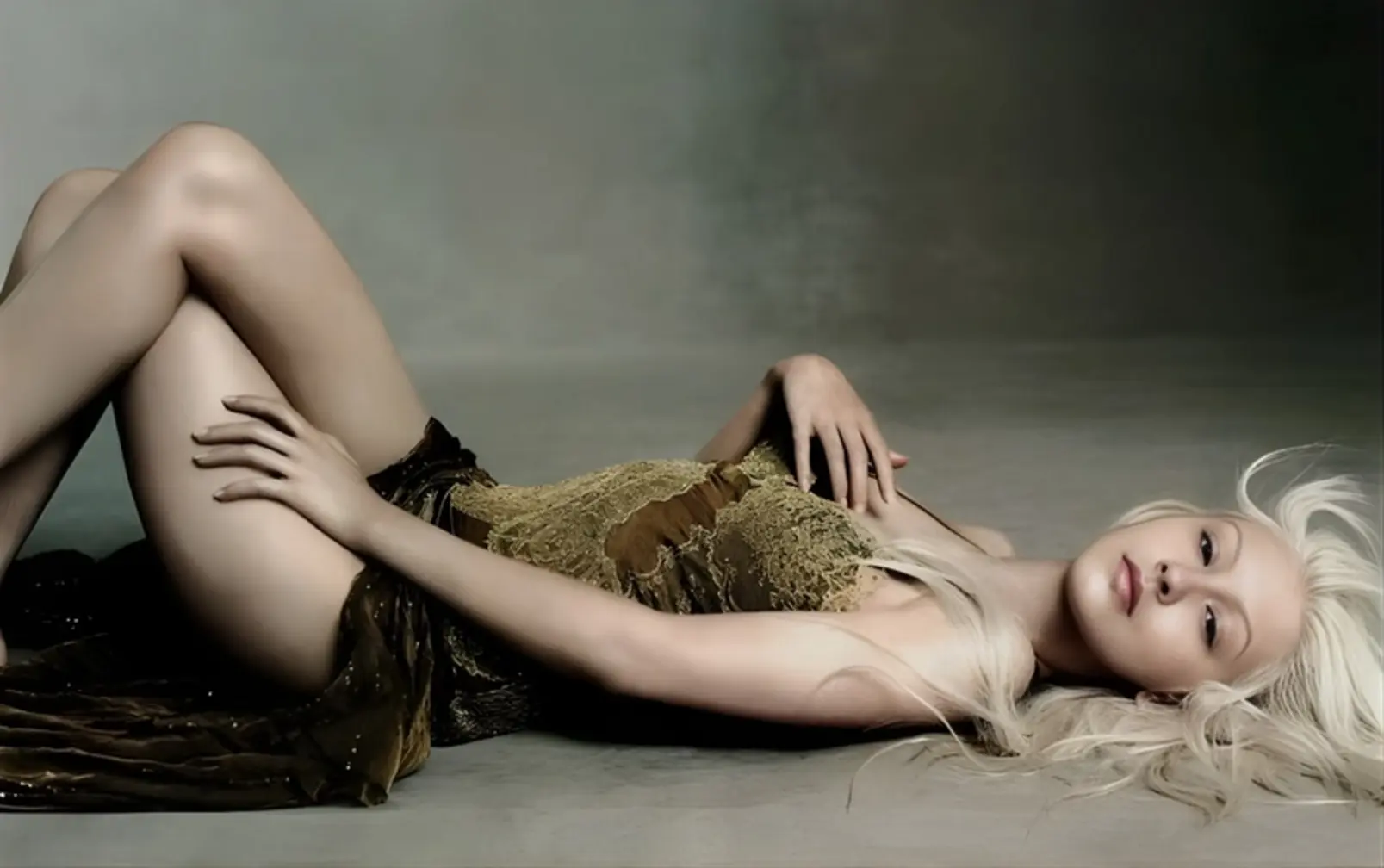
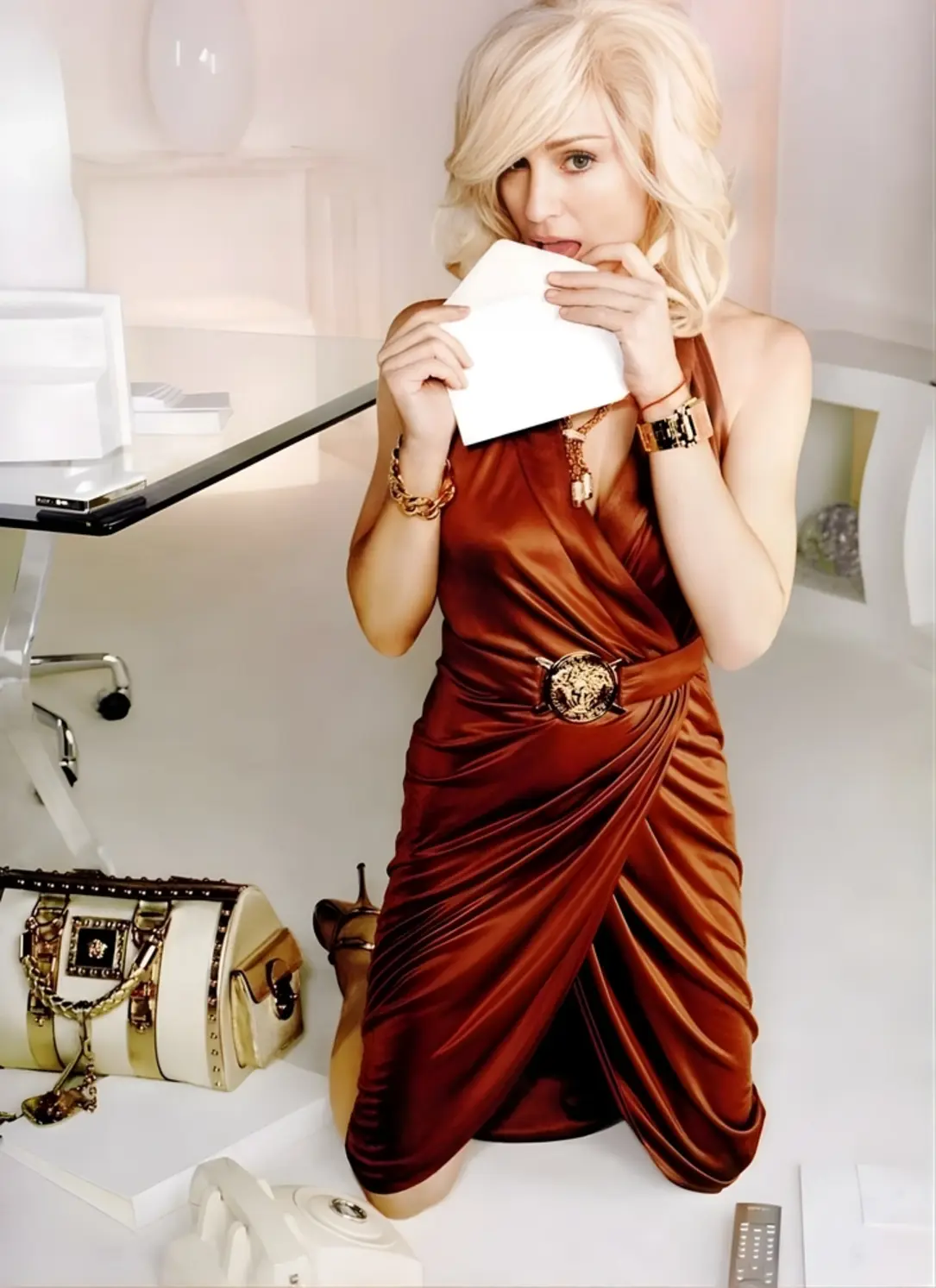
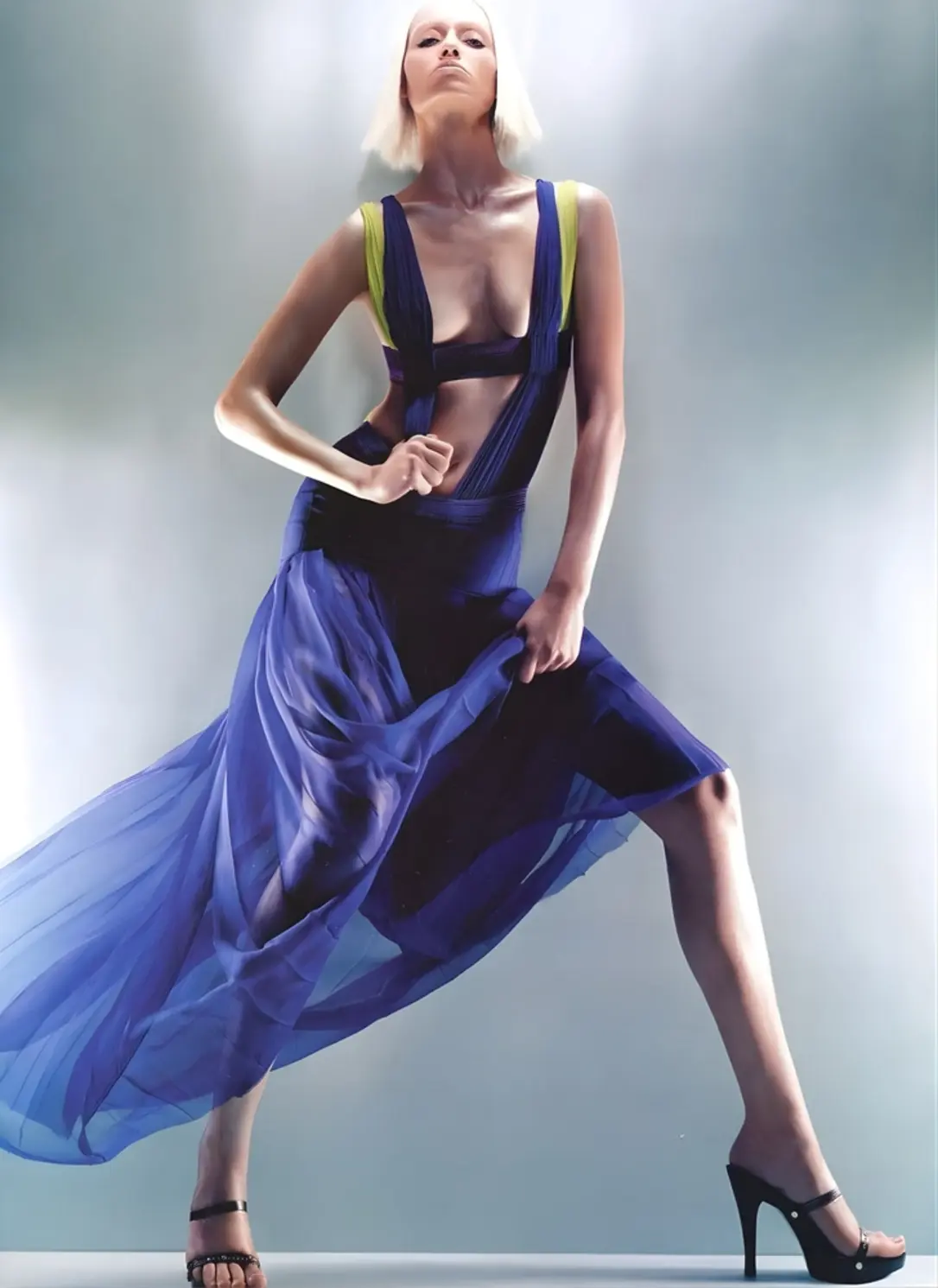
This is also why her tailoring deserves a sacred respect. She thrives in the friction between discipline and indecency. In her Los Angeles 2023 reset, she proved that a beautiful suit lands harder when the house has a dirty mind, using nipped waists and adroitly tailored lines to surf the froth between couture polish and nightclub nerve. Everything in the hand of Donatella Versace feels as though it has been drowned in the most intoxicating aphrodisiac chemicals of a rare flower that only blossoms at midnight in Italy. The beauty is so perfumed, so signature. A slit, a pin, a bustier, a corset, an asymmetric cut, or a beaded gown, in her hands, even a simple pair of pants feels like desire burning with a hunger for fashion.
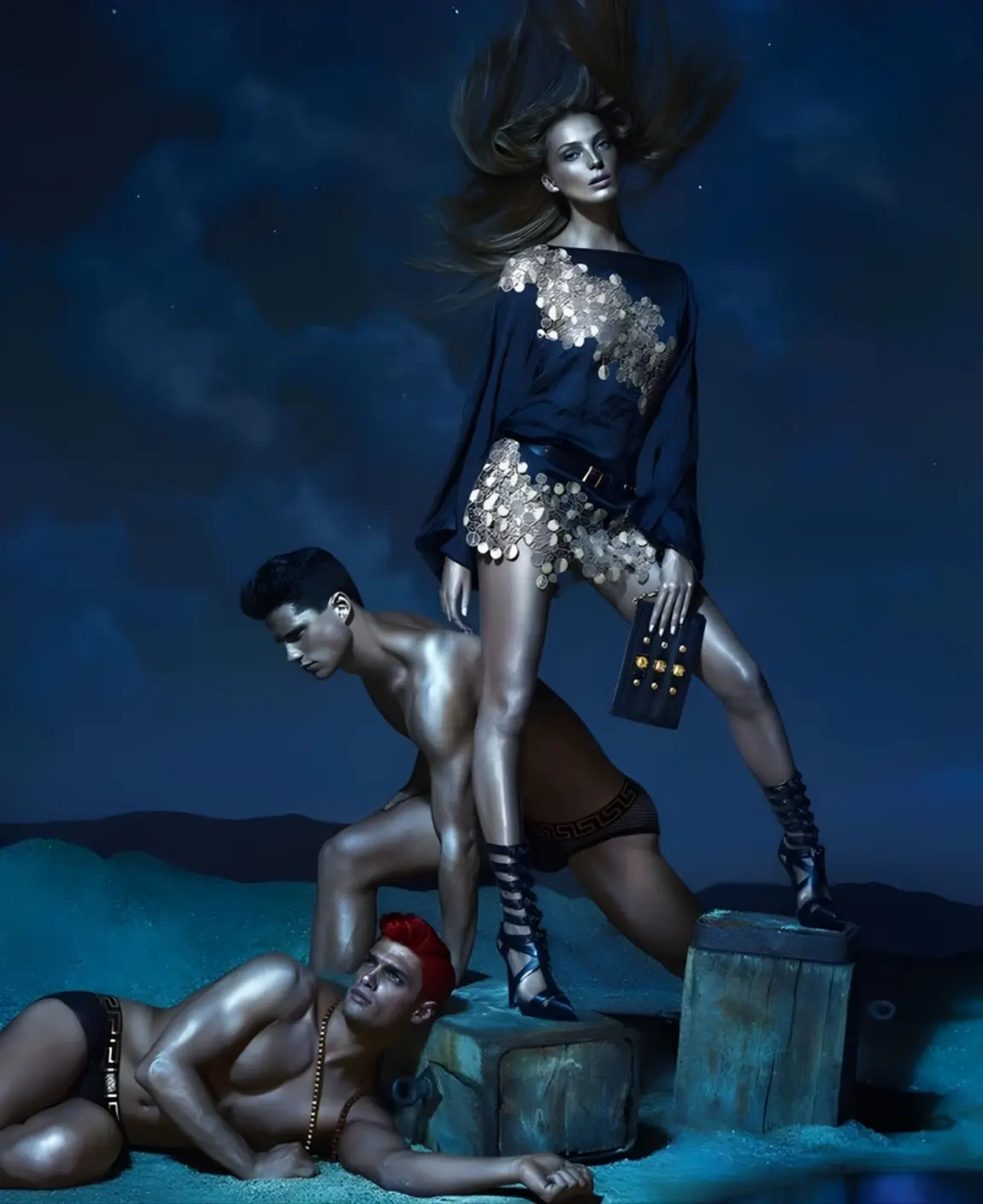
If you are a fashion lover on TikTok, you have seen the thousands of Versace runway edits where the pieces literally come to life with a vibrancy and fire that feels like a living thing. The Versace Walk itself is a signature: strong, powerful, seductive, and high-fashion. It is the bombshell we are all mesmerized by. That, finally, is the full signature of Donatella Versace. Not simply sex, though certainly sex. Not simply excess, though she does it better than anyone. Her real signature is the conversion of glamour into a power language the eye understands instantly. She makes clothes for women who do not want to disappear into good manners, ensuring that while the corporate world shifts around her, the soul of the house remains written in her unmistakable, unapologetic, and burning hand.
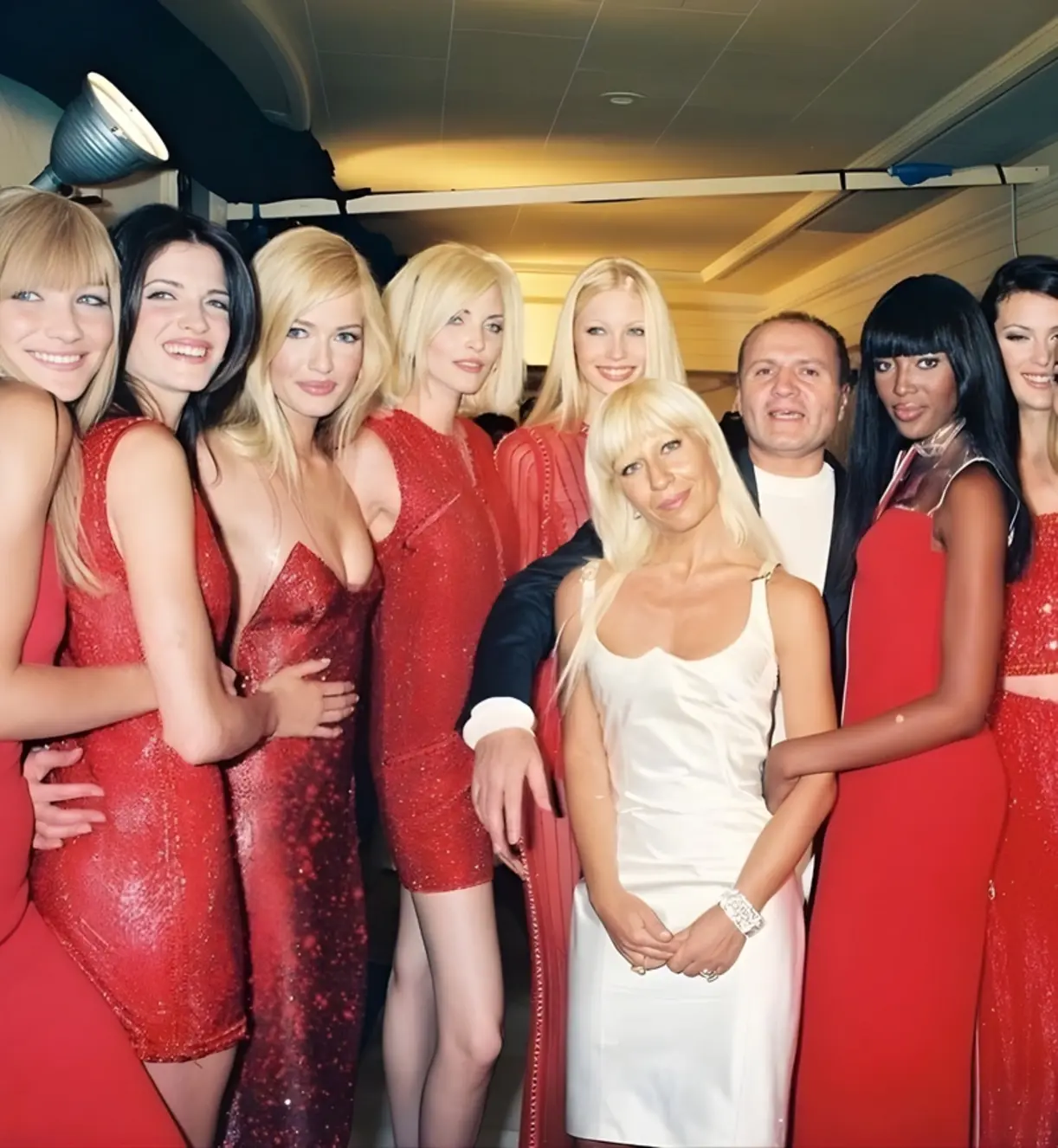
If the woman of Donatella Versace is one part of her genius, the image-making machine around that woman is the other. Donatella Versace has always understood that a fashion house like Versace cannot live only in a lookbook or on a rail. It needs faces, entrances, allegiances, and women who can carry a dress like it is carrying history back. It becomes louder, smarter, and more unforgettable when it rubs against fame, nightlife, music, and women with enough magnetism to make a dress detonate.
The supermodel is the clearest example. In her interview, Donatella Versace speaks about top models with the familiarity of someone who never treated them as hangers with cheekbones. She understood, very early, that they were part of the emotional architecture of Versace. They gave the clothes scale, speed, mythology, and a certain reckless glamour that no static brand code could ever achieve on its own.
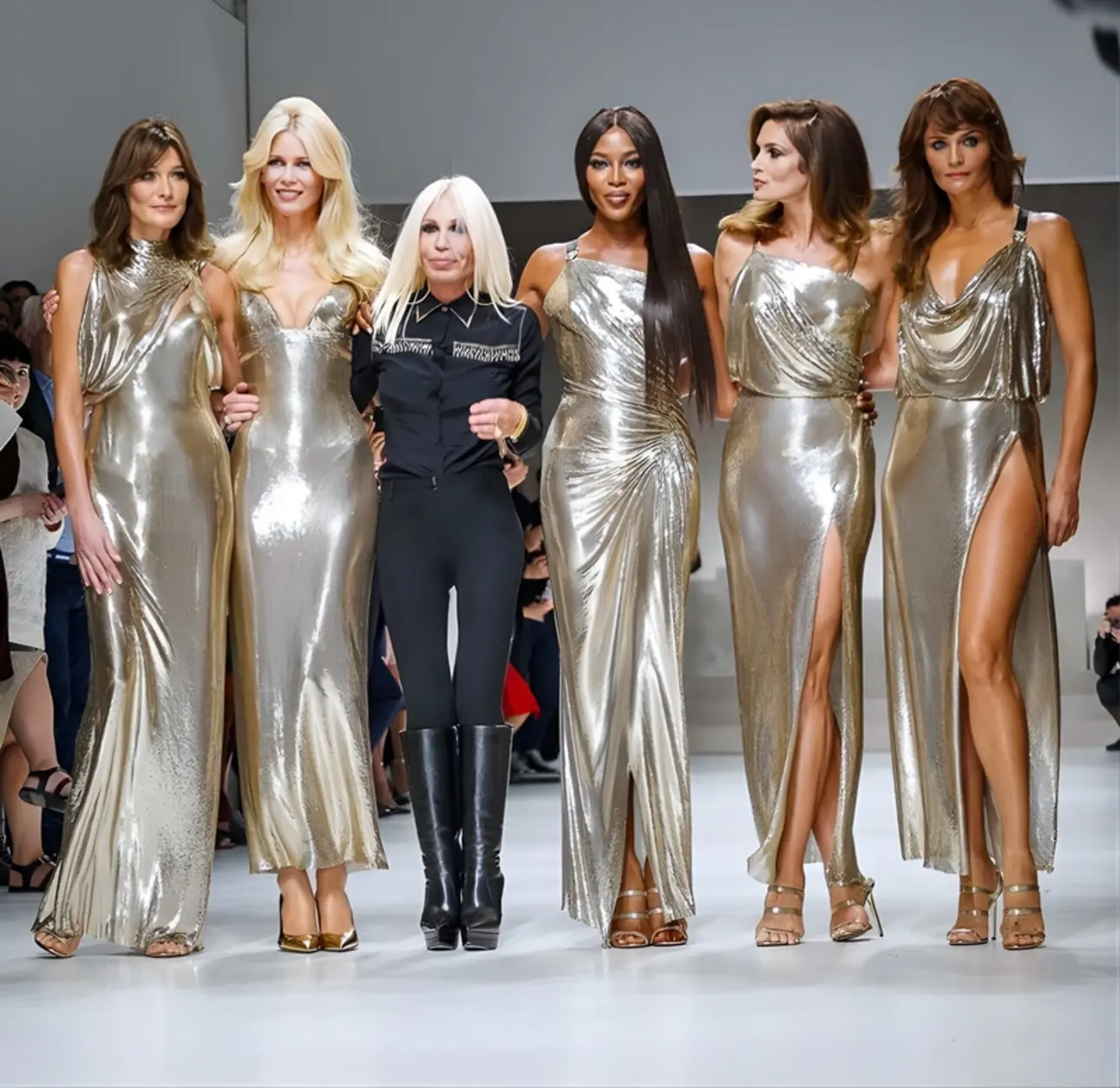
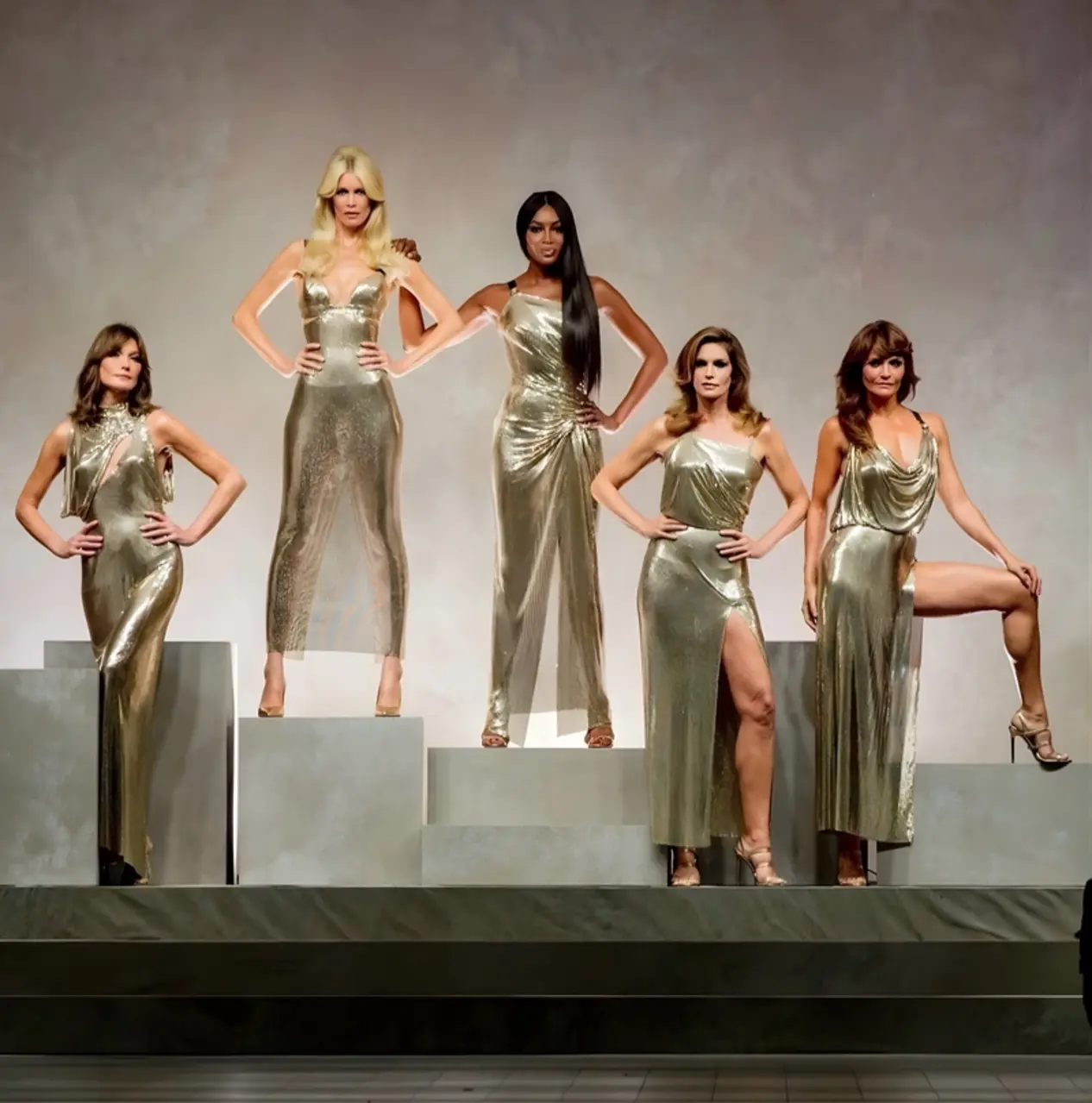
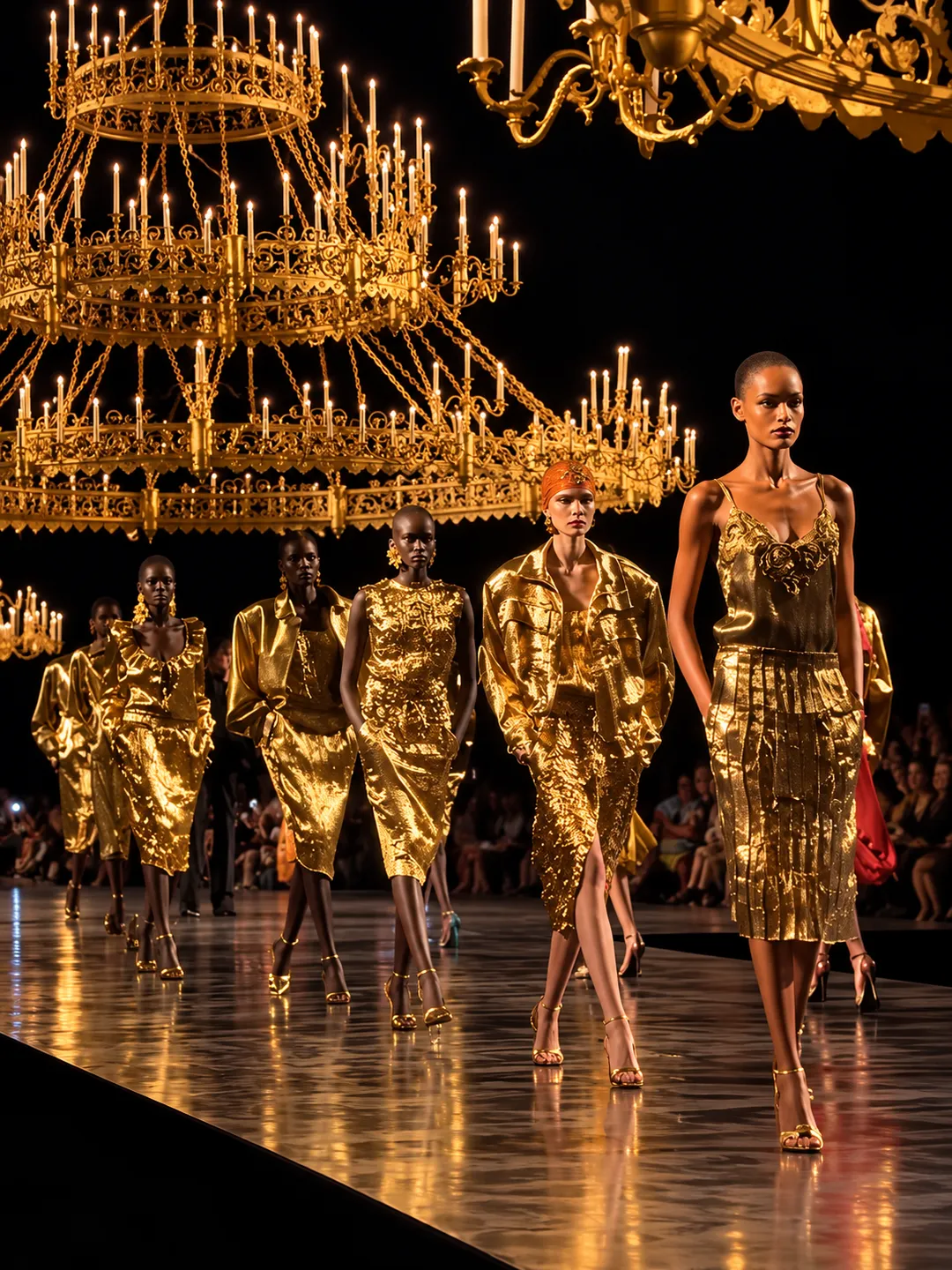
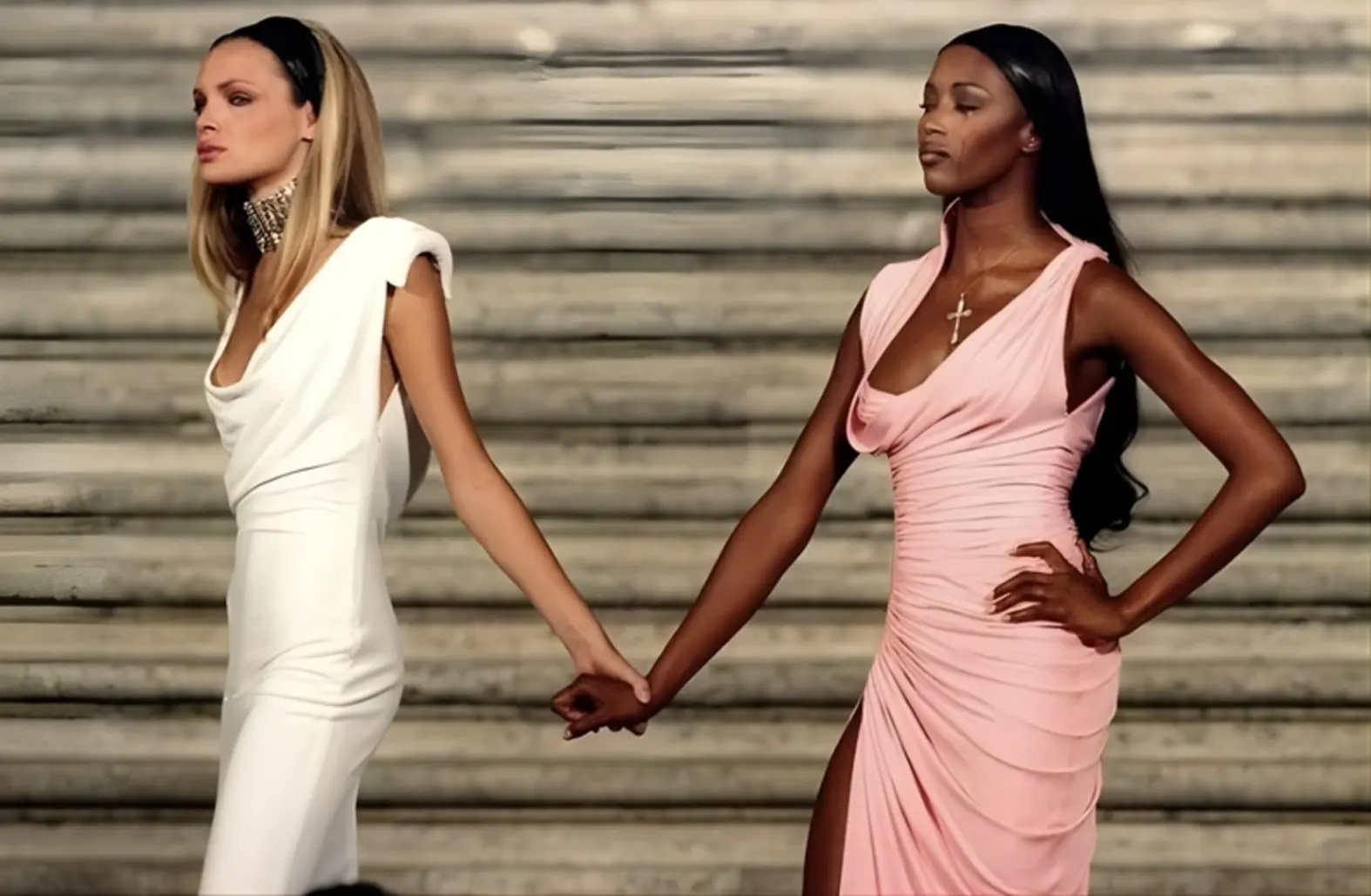
And she never lost that instinct. A show under Donatella Versace often feels like a summit of beauty with political undertones: who is visible, who is desired, who gets to symbolize force, who can still stop a fashion week dead with the angle of a shoulder and the weight of a stare. Her Spring 2018 tribute to Gianni Versace remains the most emotional and obvious example. The collection reworked butterfly prints, Medusa heads, studded leather, and safety pins from the archive, but the final act was the real masterstroke: Carla Bruni, Claudia Schiffer, Naomi Campbell, Cindy Crawford, and Helena Christensen walking together in gold lamé. It was memory, family, and public spectacle all at once, and only Donatella Versace could make it feel both elegiac and shamelessly fabulous.
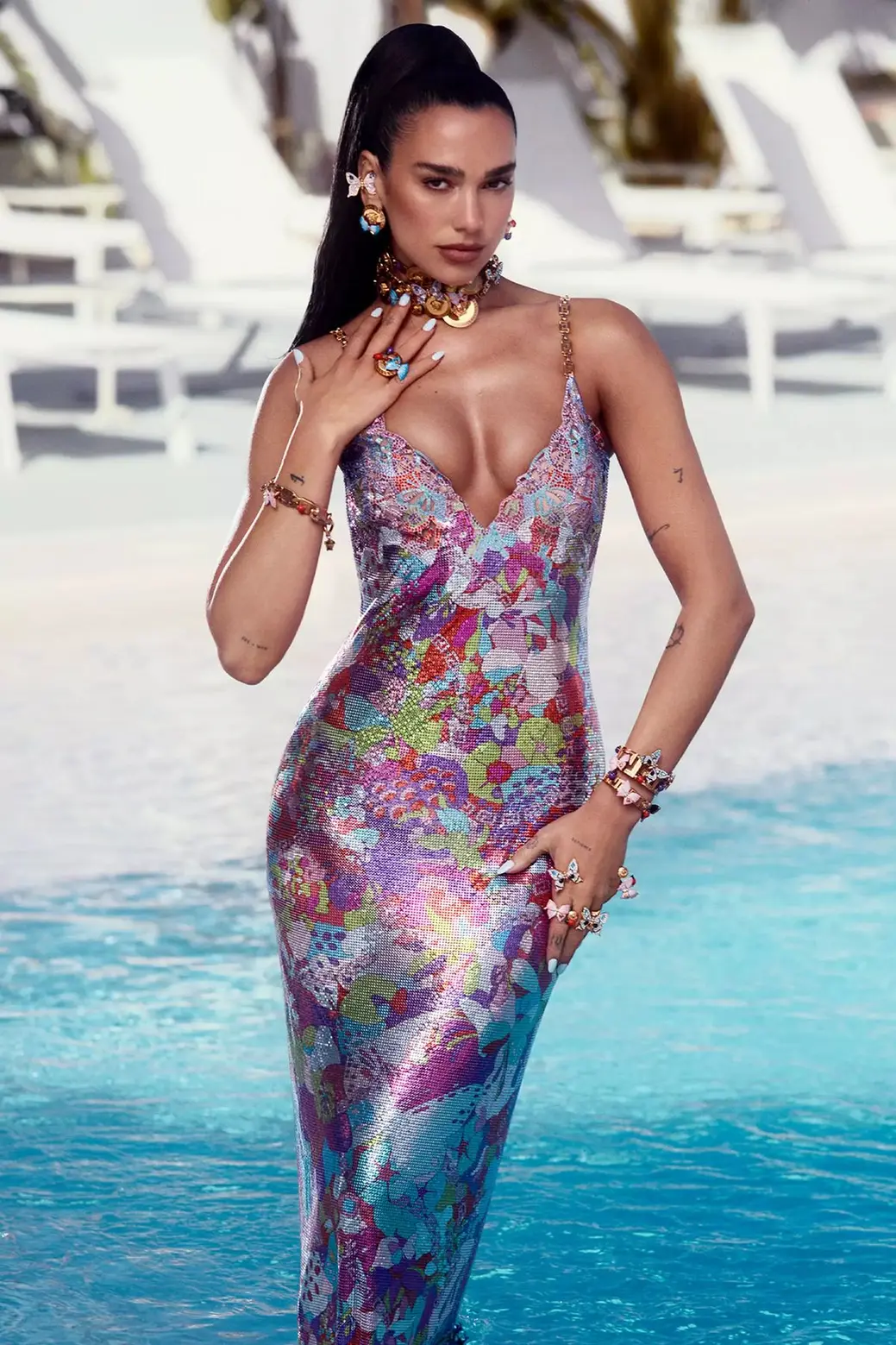
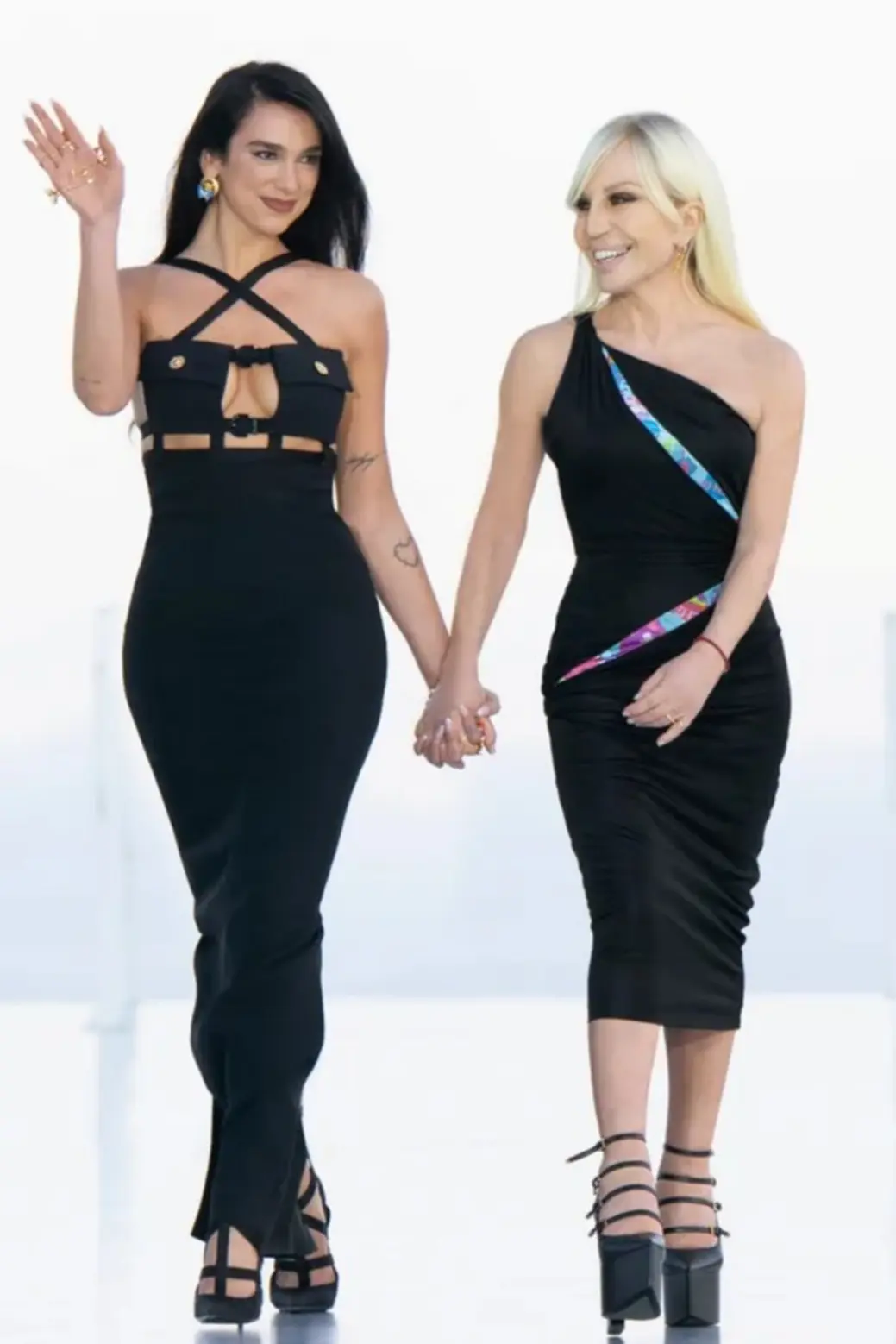
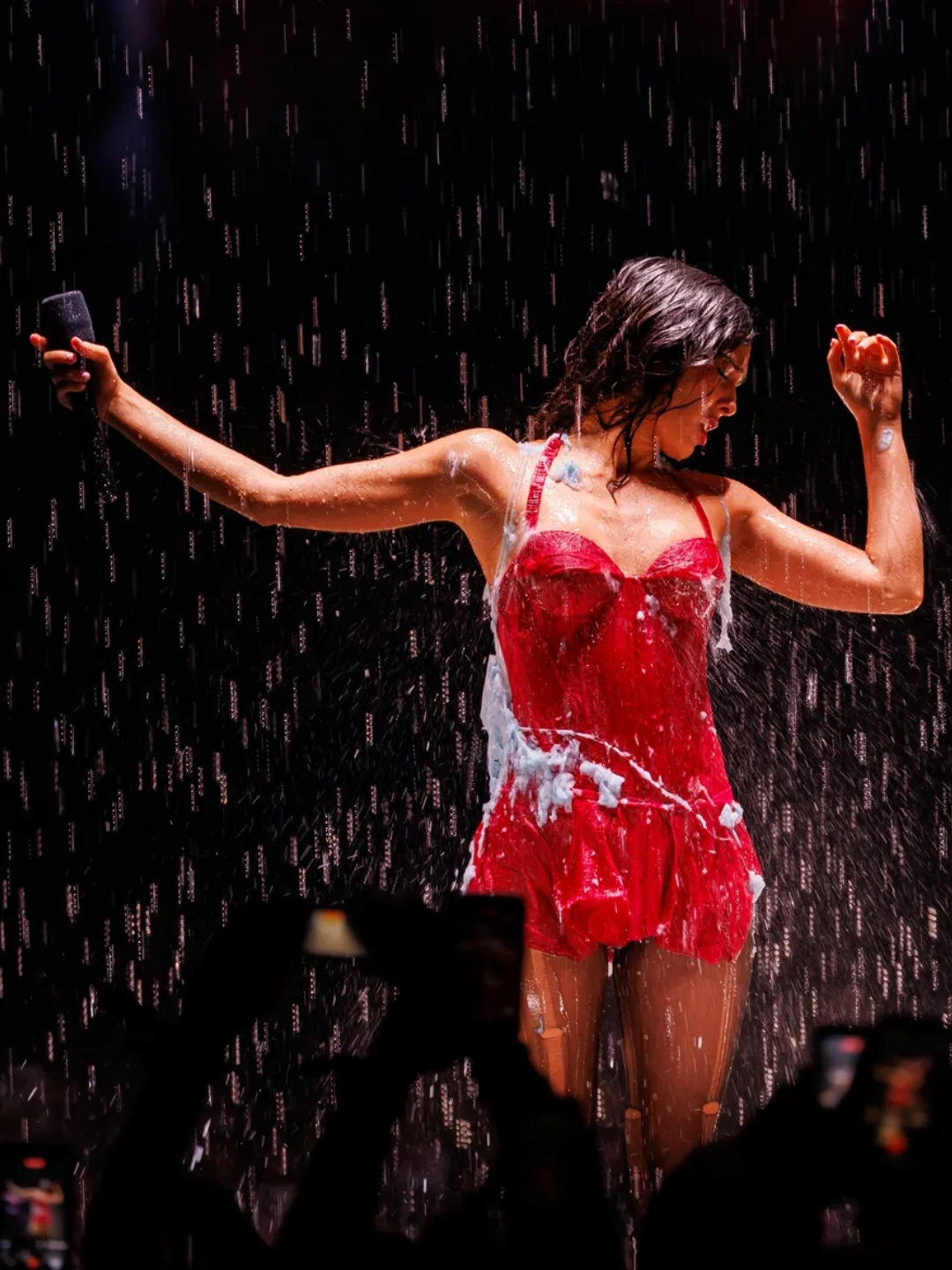
That is because the use of women by Donatella Versace is never passive. She does not just cast muses; she choreographs recognition. The Versace woman must be legible at first glance and magnetic at second glance, and the model or celebrity wearing her becomes part of that circulation of meaning. By the late 2010s and early 2020s, that system had widened beyond the old supermodel pantheon into something more generational and pop-minded. The Spring 2018 show mixed legendary figures with contemporary names like Kendall Jenner and Gigi Hadid, while the later partnership with Dua Lipa made the muse relationship fully reciprocal again. In 2023, Donatella Versace and Dua Lipa co-created La Vacanza, a pre-fall collection shown in Cannes, turning friendship, celebrity, and house image into one glossy piece of theater.
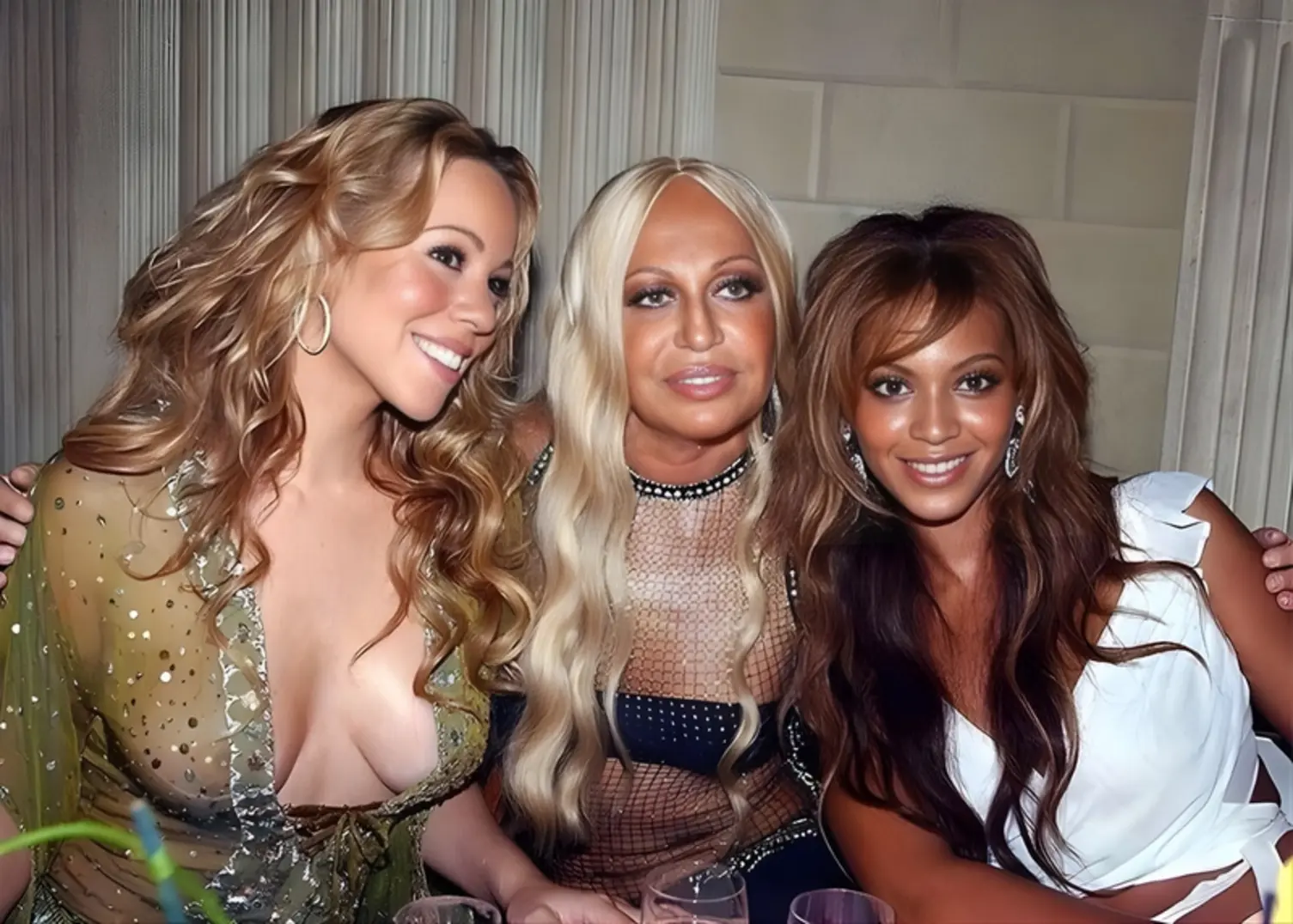
Music is part of this machinery, too, and maybe even the secret engine inside it. Vogue once called Donatella Versace fashion’s biggest music fan, and the evidence is irresistible: her long connections to Prince, Madonna, Beyoncé, Lady Gaga, and the broader pop ecosystem all suggest that Donatella Versace does not see clothes as mute luxury objects. She sees them as performers. That explains so much about the house under her watch. The clothes move like they know there is a beat somewhere. The women are styled like headliners. The mood is almost always turned up beyond ordinary life and into something with backstage heat. Even when she designs tailoring, there is often a sense that it has been through soundcheck.
And perhaps this is the deepest reason Donatella Versace still fascinates. She understands that a great fashion house is not sustained by products alone, however profitable or beautiful they may be. It is sustained by scenes. By women. By loyalties. By images that enter the bloodstream and refuse to leave. A Versace dress on the right body has always been more than a garment.
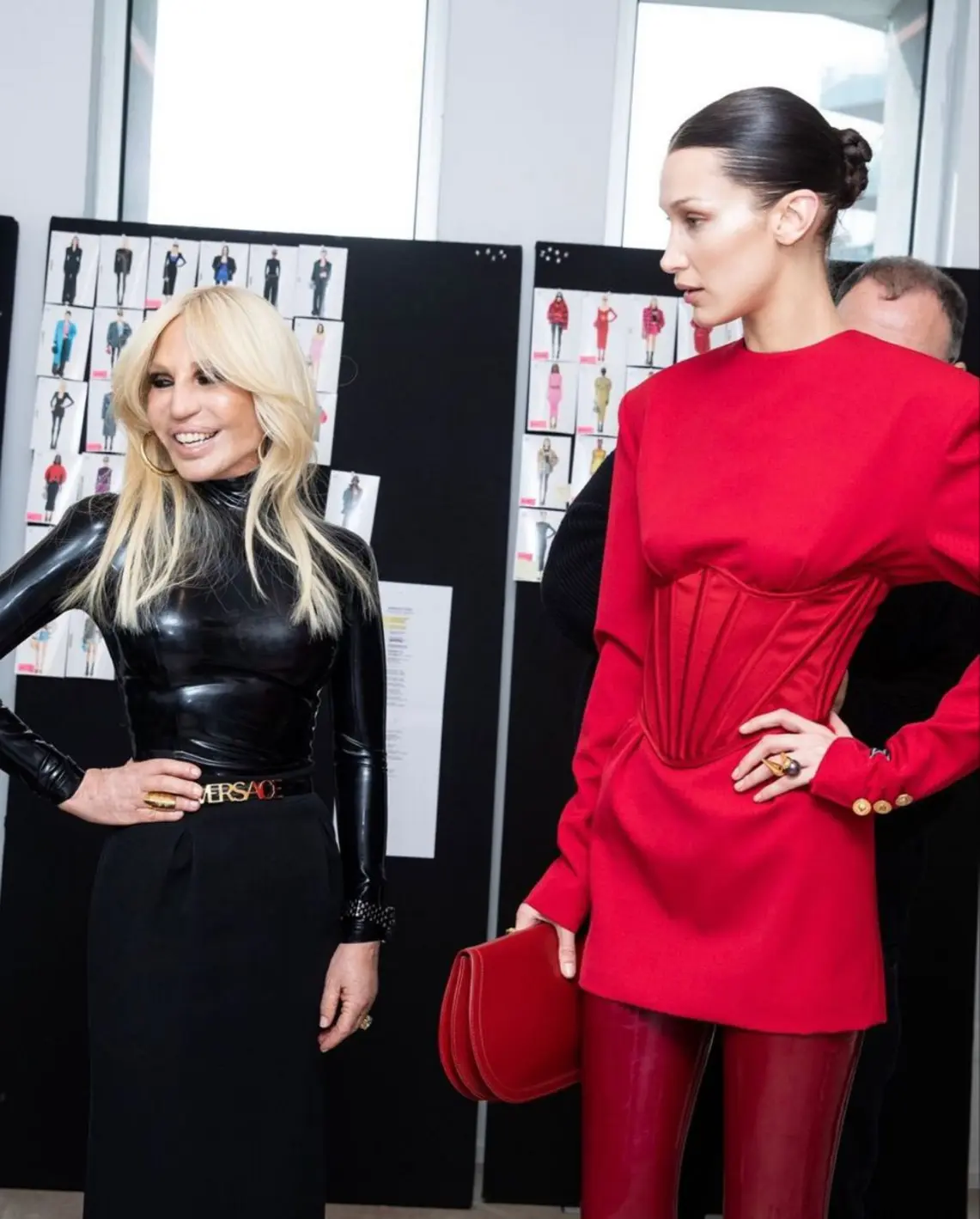
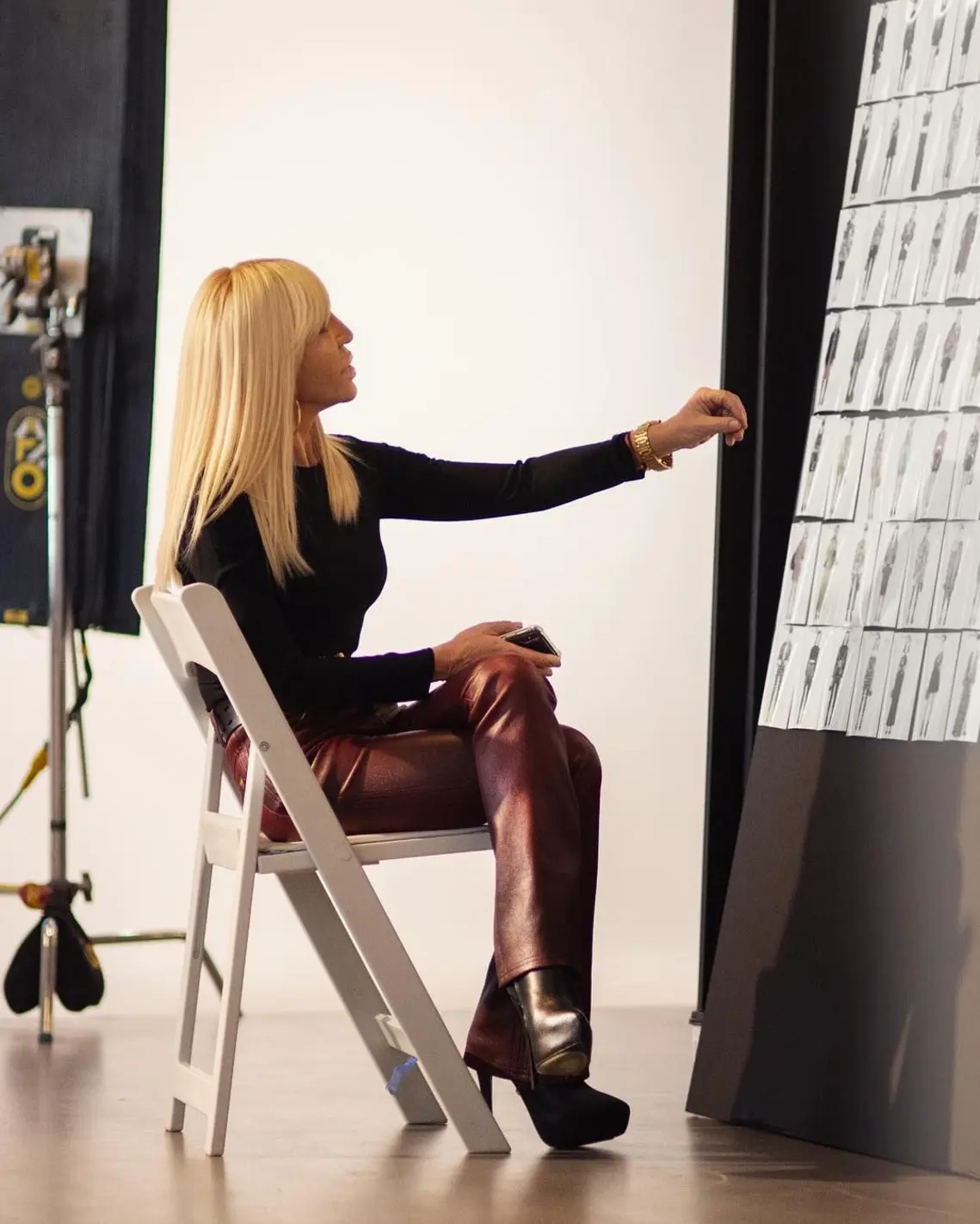
The runway acts as the initial spark of desire, yet the true empire of Donatella Versace rose from the sweat, the bass notes, and the uninhibited theatricality of everything that happened once the house lights dimmed. Her supreme achievement remains her instinctive, carnal understanding that a modern luxury house must function as a total sensory weather system. It exists as a fever dream for the world to inhabit. Under the hand of Donatella Versace, the brand evolved into a full cultural atmosphere of red carpets, search bars, hip-hop lyrics, and domestic fantasies. A dress becomes a myth. A logo transforms into a universal language of hunger and status. Under her reign, Versace exists as a complete world.
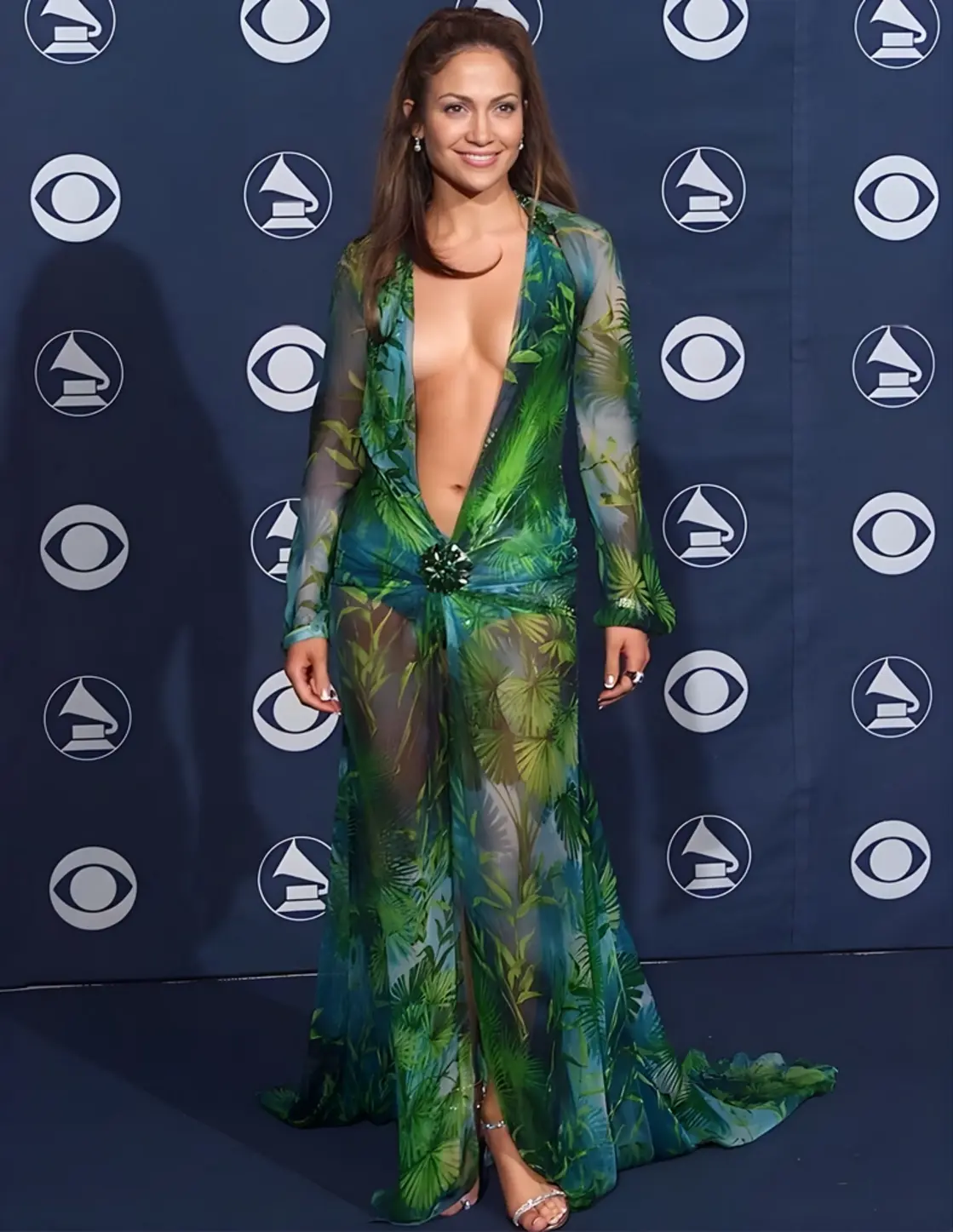
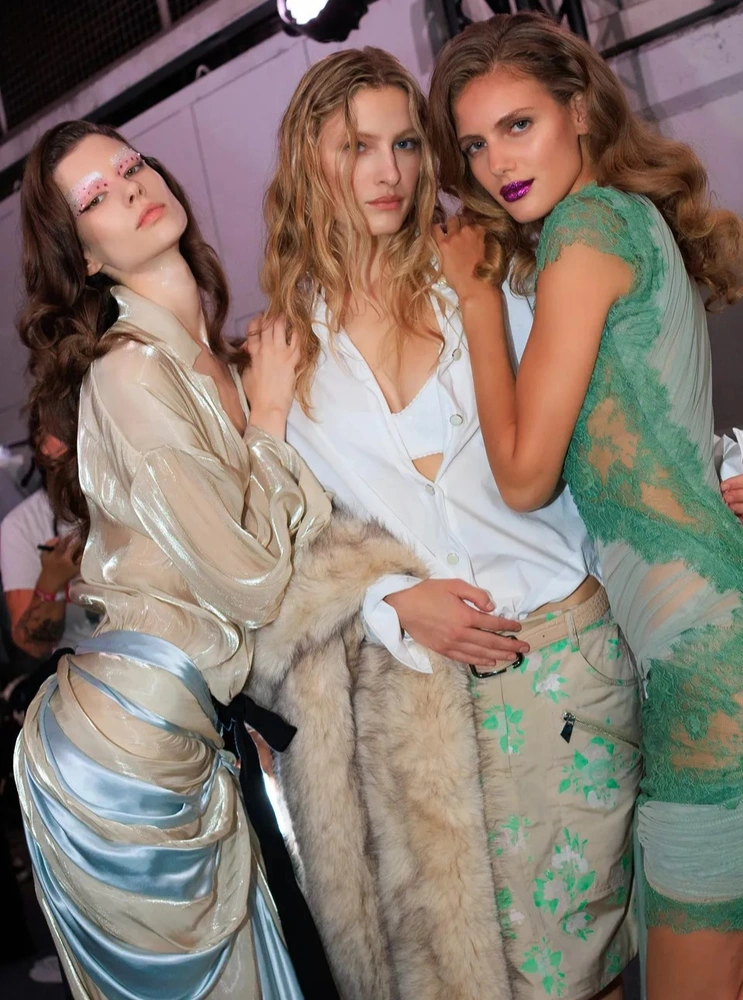
The most explosive evidence of this cultural penetration remains the Jennifer Lopez jungle dress, that plunging, green, silk-chiffon fever dream from the 2000 Grammy Awards that lives in digital folklore. The account from Google provides the ultimate receipt of her power: the dress, designed with the signature audacity of Donatella Versace, inspired such a wildly searched image that it directly birthed the creation of Google Images. This stands as fashion colliding with the literal infrastructure of the internet. Donatella Versace designed a garment so visceral, so dangerously exposed, and so globally hunted that she forced the technology of human looking to evolve. While others shape a silhouette, Donatella Versace shapes the way the species consumes visual information. This is what empire means in her hands: cultural penetration so deep that the digital world rewrites its code to keep up with her hemline.
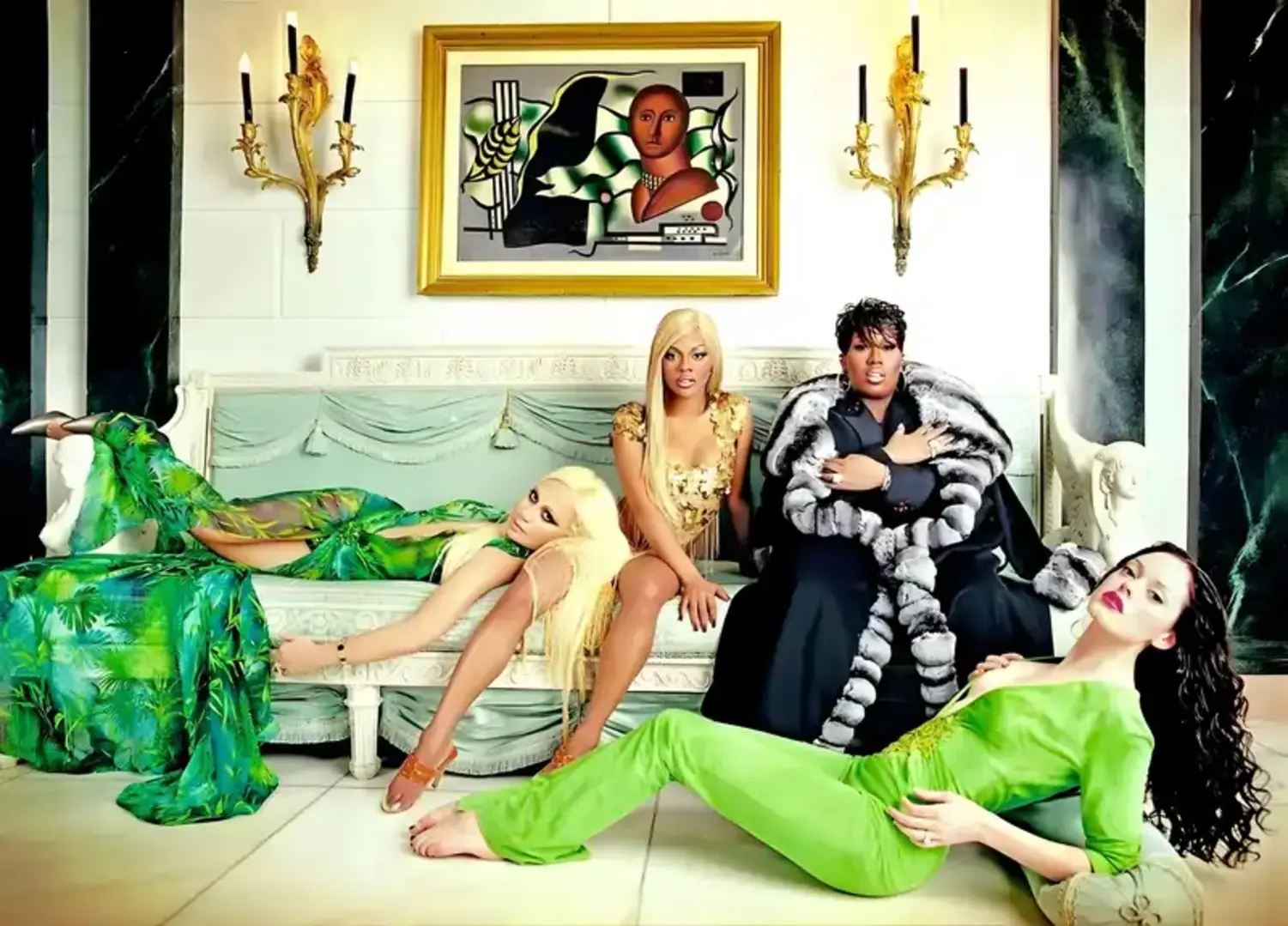
Beyond the tech giants, the Versace pulse found a passionate second heartbeat in the world of hip-hop. Donatella Versace understood, far earlier than her peers, that the house’s visual language of more-is-more bravado served as the perfect aesthetic twin for the swagger of the streets. From Missy Elliott and Lil’ Kim to the neon-drenched reign of Nicki Minaj, artists gravitated toward the Medusa hardware and baroque silks because they matched an appetite for public fantasy and unapologetic status. Hip-hop provided Donatella Versace with a new bloodstream. It pulled the house into lyrics and Black pop-cultural history, keeping the brand hotter, hornier, and more socially alive than any heritage emblem sitting on a shelf. She grasped that the Medusa looks even more lethal once it belongs to cultural desire at large.
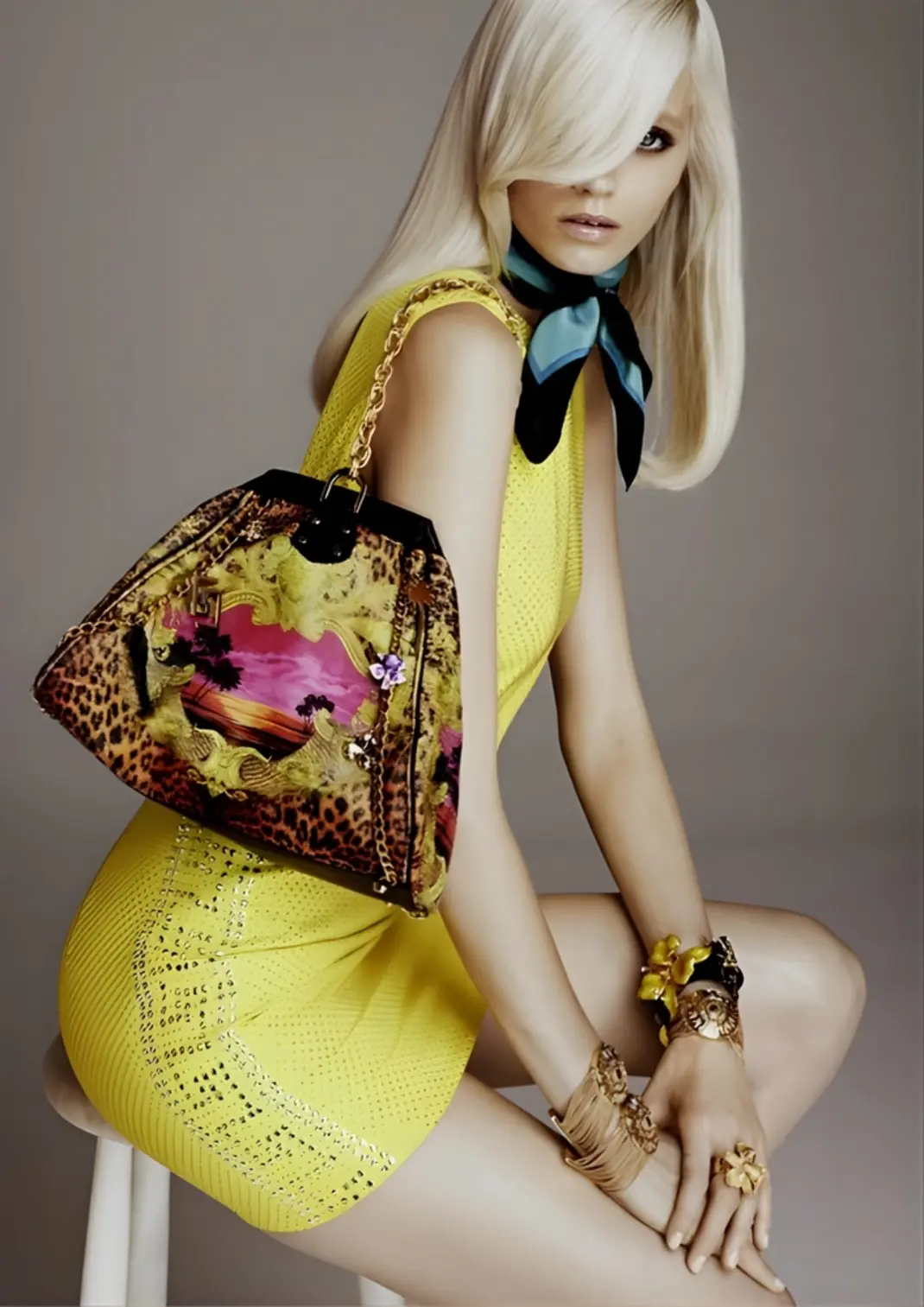
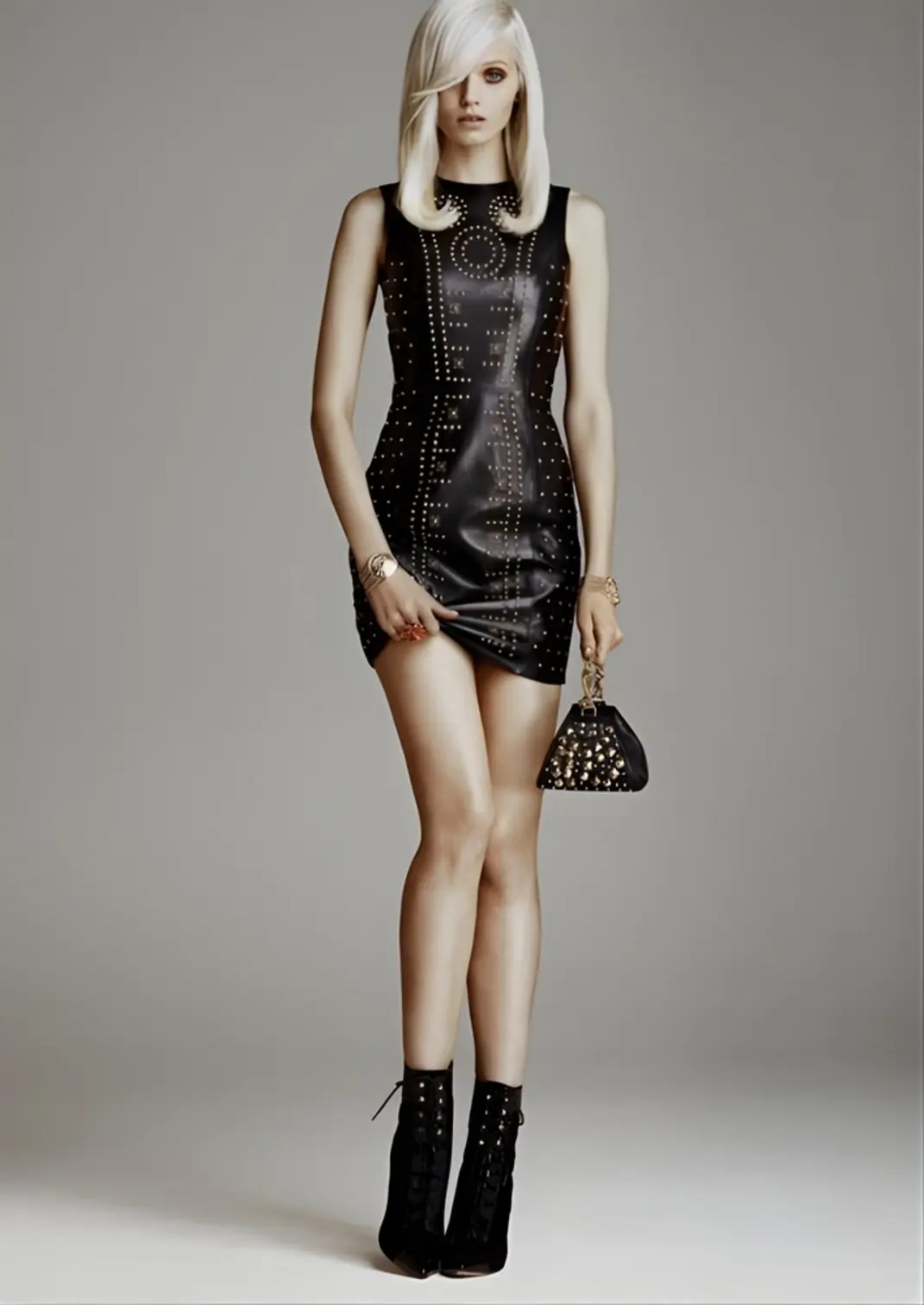
Her democratic instincts remained sharp, proving that the Donatella Versace spirit exports to the masses while keeping its intoxicating scent. The 2011 Versace for H&M collaboration served as a strategic opening of the gates, a maximalist riot dominated by the prints and cuts that made the house legendary.
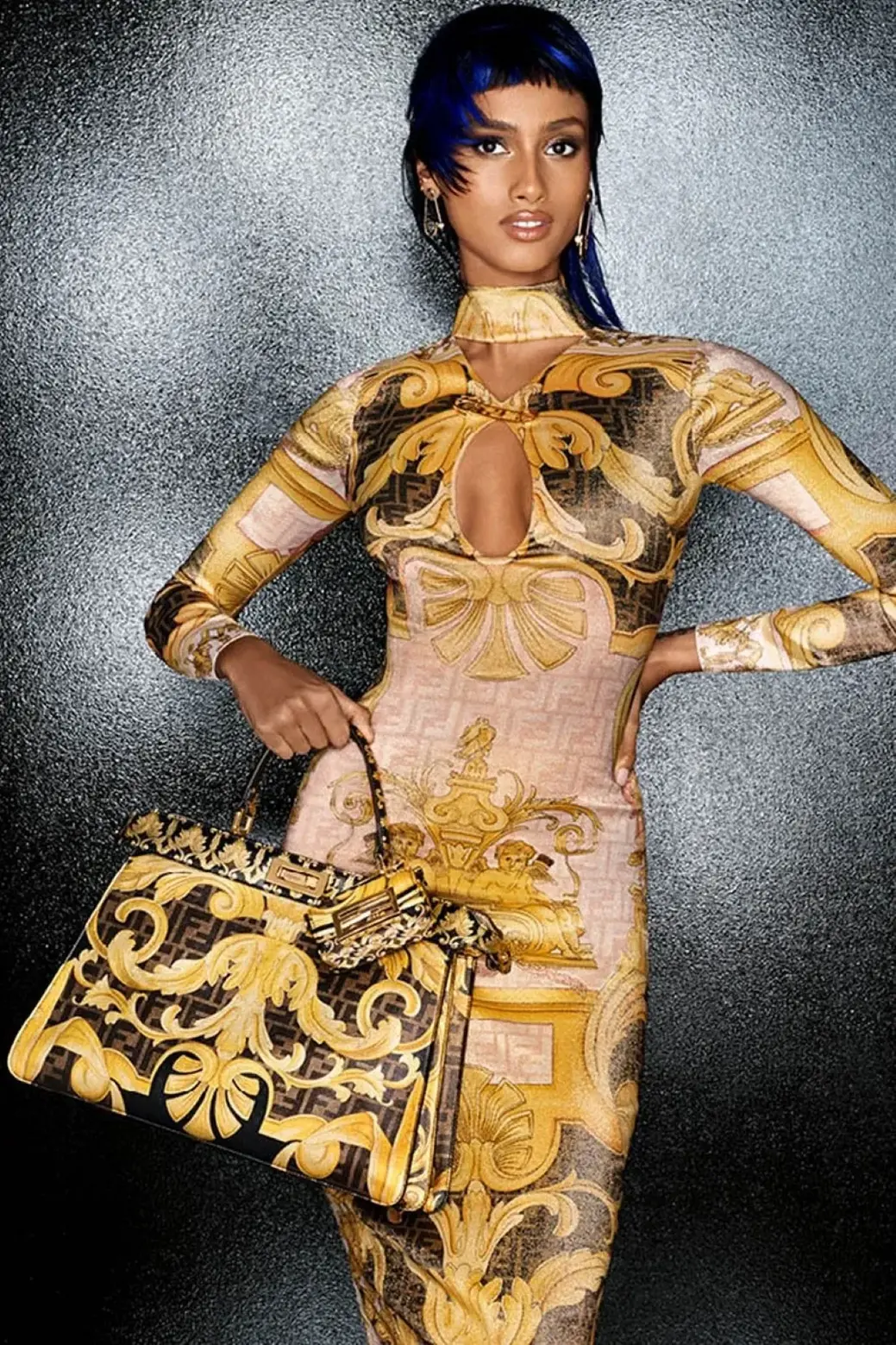
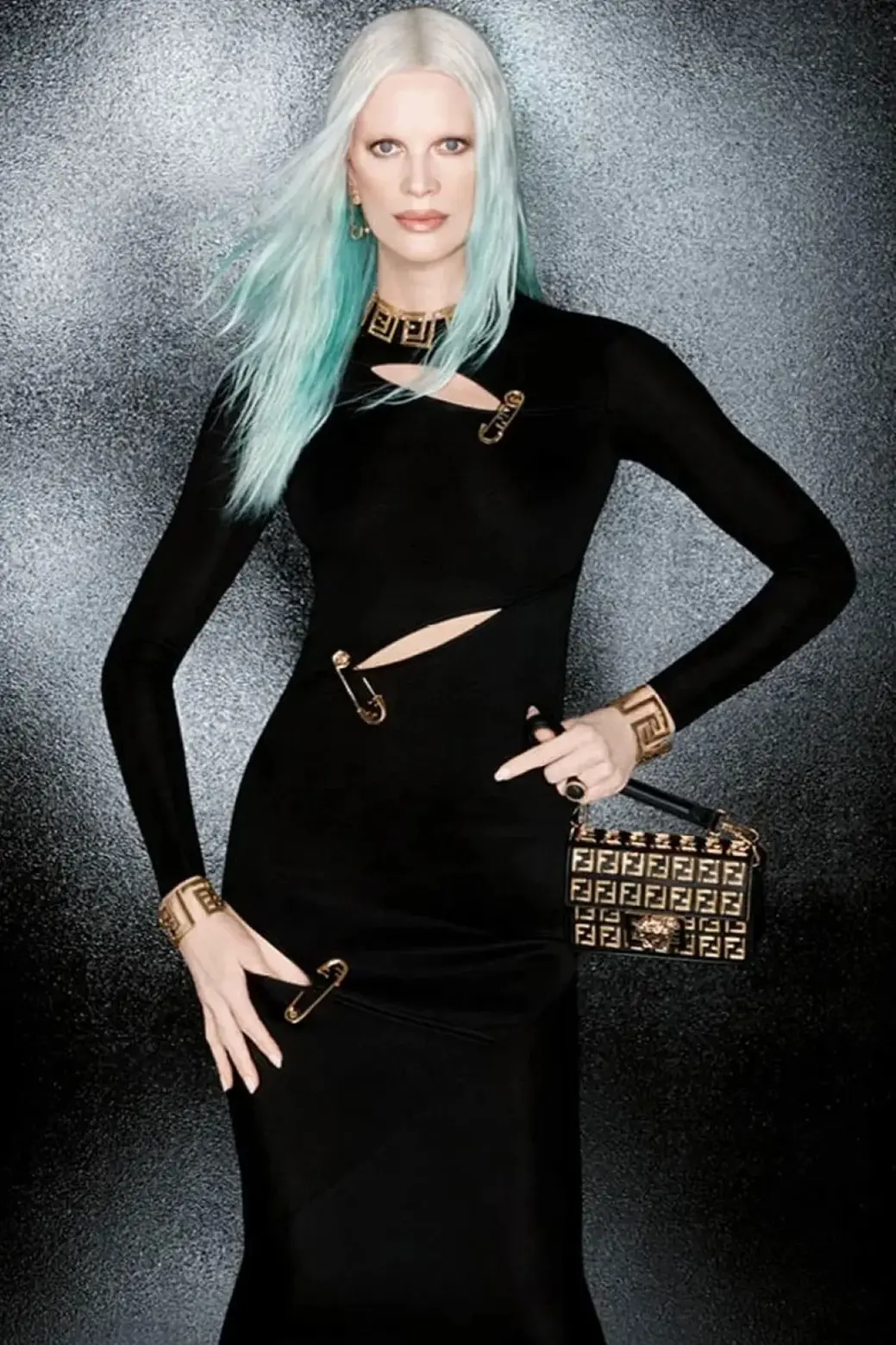
Even as a legacy figure, Donatella Versace remains the master of headline architecture, the rare gift of making fashion feel like a high-stakes event. The Fendace exchange served as the ultimate late-era flex. As official Versace sources insisted, this was a ritualistic exchange of roles, where Donatella Versace recast Fendi through her own lens of rock-and-roll glamour. It was brand theater performed at a level of supreme confidence, a knowing spectacle staged by a woman who understands that fashion loves a well-dressed shock. By this stage, she already proved her ability to design a garment; she now proves her ability to own the cultural moment.
By the later stages of her journey, the stature of Donatella Versace grew too immense to be measured by seasonal collections alone. Recognition frames her as a civic and cultural authority whose endurance carries weight far beyond the velvet ropes of the runway. When the British Fashion Council named her the 2017 Fashion Icon, the language was precise: they honored her role in maintaining the brand’s ferocious imagery while supporting the next generation of designers. This was followed by the CFDA International Award in 2018, formally cementing her as a sovereign within the American fashion system. She stands as the person through whom the industry narrates its own history.
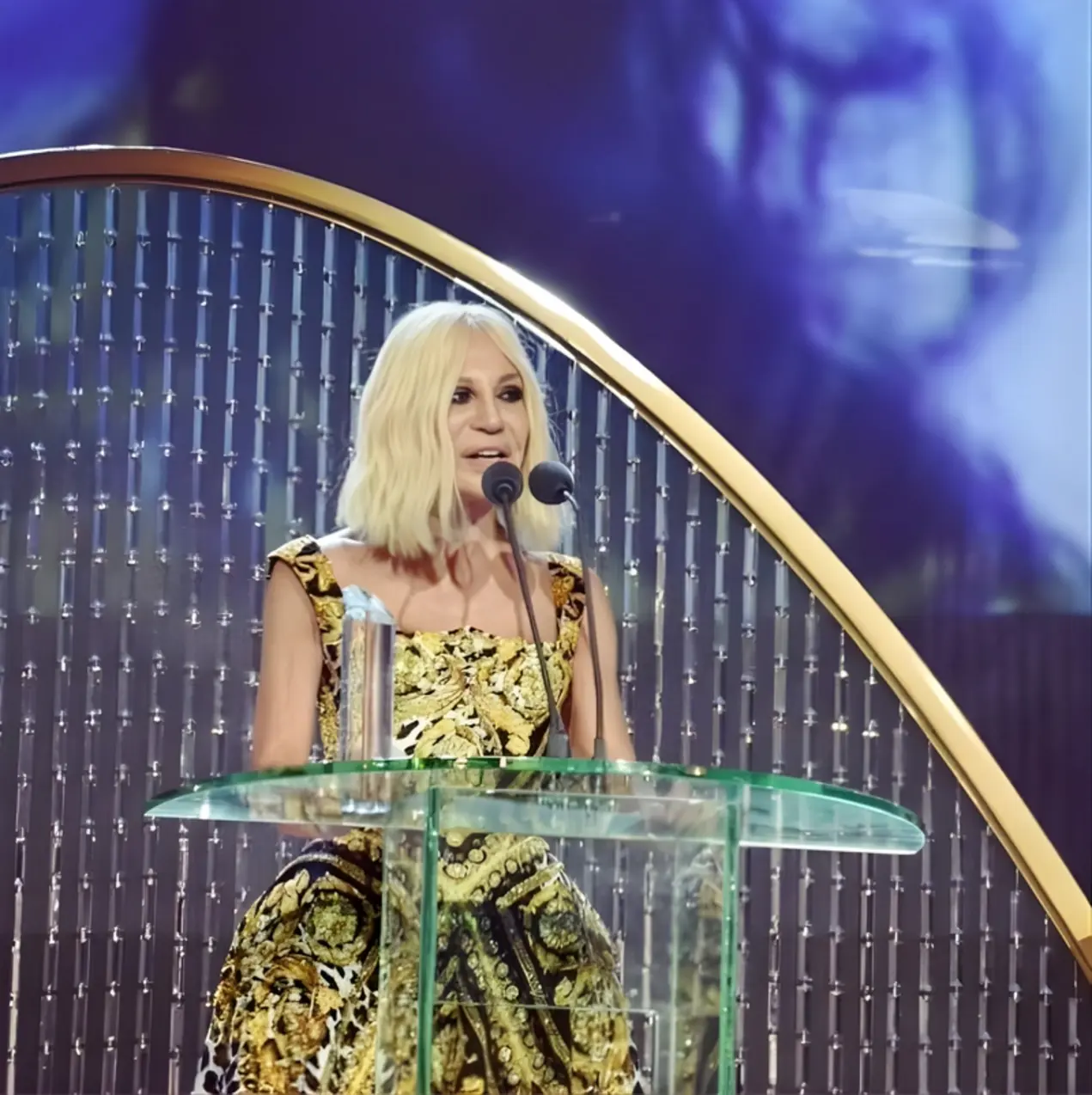
What makes this late-stage authority so compelling is how Donatella Versace pushed the brand’s moral vocabulary. She became a voice for the vulnerable and the silenced. By 2025, the CFDA bestowed upon her the Positive Change Award, acknowledging that the woman often celebrated as the high priestess of excess had become a vital force for social progress.
These awards confirm that Donatella Versace achieved the rarest honor in fashion: she earned the world’s trust. Her authority reads as aesthetic, emotional, and civic all at once. She successfully transitioned from the muse in a blizzard of grief to the guardian of the flame, and finally, to a global mentor whose voice carries the weight of intellectual minimalism and humanitarian fire.
The true brilliance of Donatella Versace reveals itself most vividly now, as the house enters its serene Prada-led chapters. While the technical responsibility for the collections transitions into new hands, the spiritual ownership of the brand remains frozen in her platinum-blonde image. She has achieved the rarest form of immortality in fashion: she has become the atmosphere itself. Even as she steps away from the drafting table, she exists as the ultimate, irreplaceable fashion symbol, a living legend whose presence provides the very oxygen the house breathes.
Her legacy acts as a magnetic north for every dreamer who believes that fashion should be a high-stakes performance of power and appetite. Long after the ledgers of 2025 are archived, the world will remember the woman who turned survival into a shimmering, beaded gown. Donatella Versace remains a singular fire that no corporate structure could ever dim, a woman who taught us that the most beautiful thing one can wear is an unapologetic claim to one's own visibility. She stays at the center of the Pantheon, the High Priestess of an empire she built from the shards of a broken world into a golden reality.
Advertisement