MENU
Close





Cairo carries many titles. "Mother of the World" is perhaps the most famous one. From the “City of a Thousand Minarets” to the Grand Egyptian Museum and Zamalek’s gallery circuit, Cairo's ancient lineage and its role as a central hub of civilization, culture, and power for millennia feels fiercely alive.
Cairo carries many titles. "Mother of the World" is perhaps the most famous one. From the “City of a Thousand Minarets” to the Grand Egyptian Museum and Zamalek’s gallery circuit, Cairo's ancient lineage and its role as a central hub of civilization, culture, and power for millennia feels fiercely alive.
April 2, 2026


Umm al-Dunya — Mother of the World, the name fits with almost intimidating ease. This is a city layered over itself for more than a thousand years, though even that number feels modest once you stand within its orbit. Ancient Egypt lingers at its edges, Islamic Cairo shaped the skyline, Coptic sanctuaries hold quiet in their stone, and contemporary life barrels through it all with raw, comic, glorious energy. Cairo carries its centuries with the confidence of a woman who has seen every trend return and still prefers her own taste.
“Cairo is jazz”, said Omar Robert Hamilton. The comparison is valid, once you recognize the friction, the sweat, the grit, the improvisation, and the beauty that comes from collision with history.
The city is threefold: Ancient, Coptic and Islamic Cairo, each with its own language of power, devotion, and survival. The miracle is that none of them has vanished into museum silence. They still breathe inside the city’s daily life, making Cairo a living, breathing, moving open-air museum.f
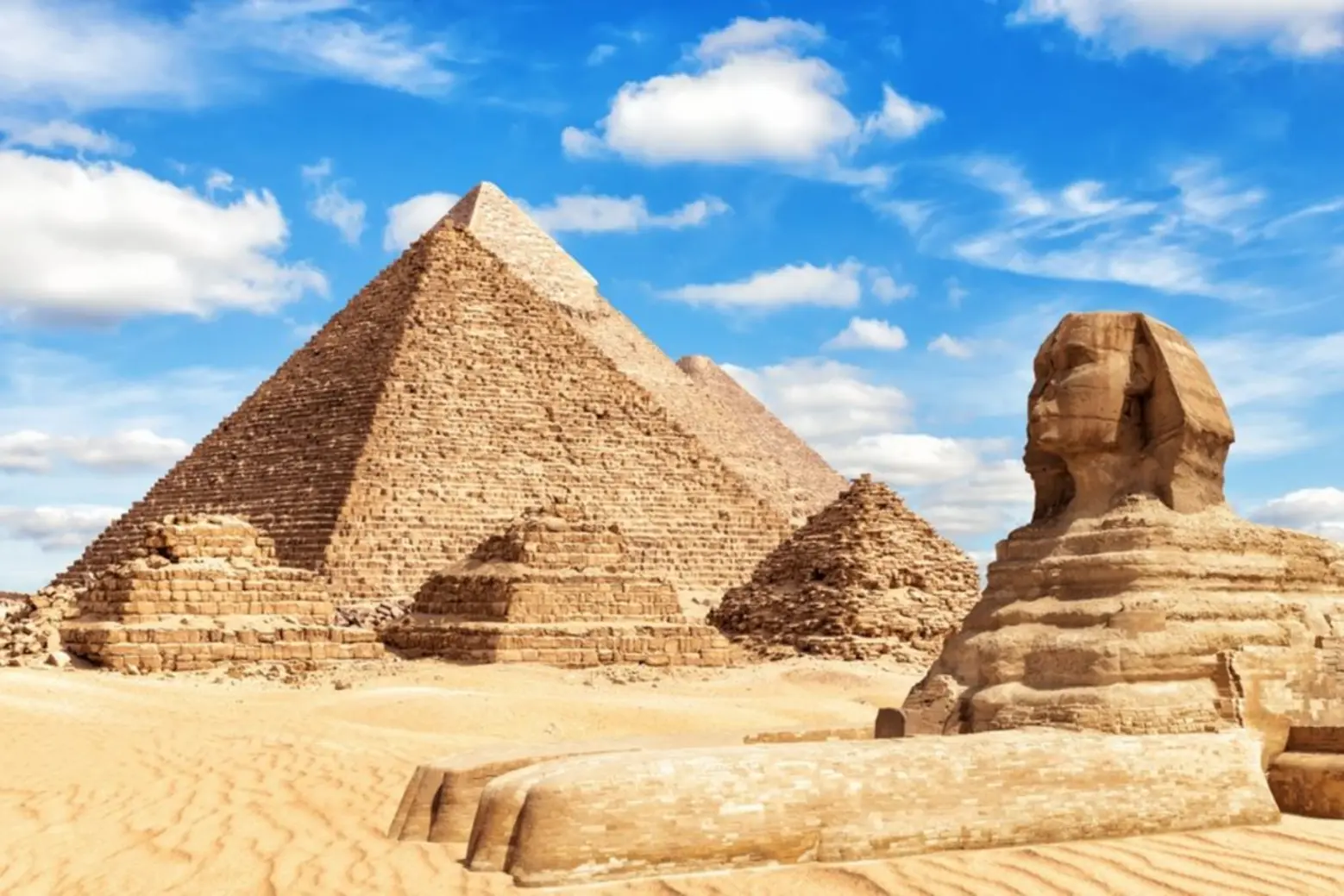
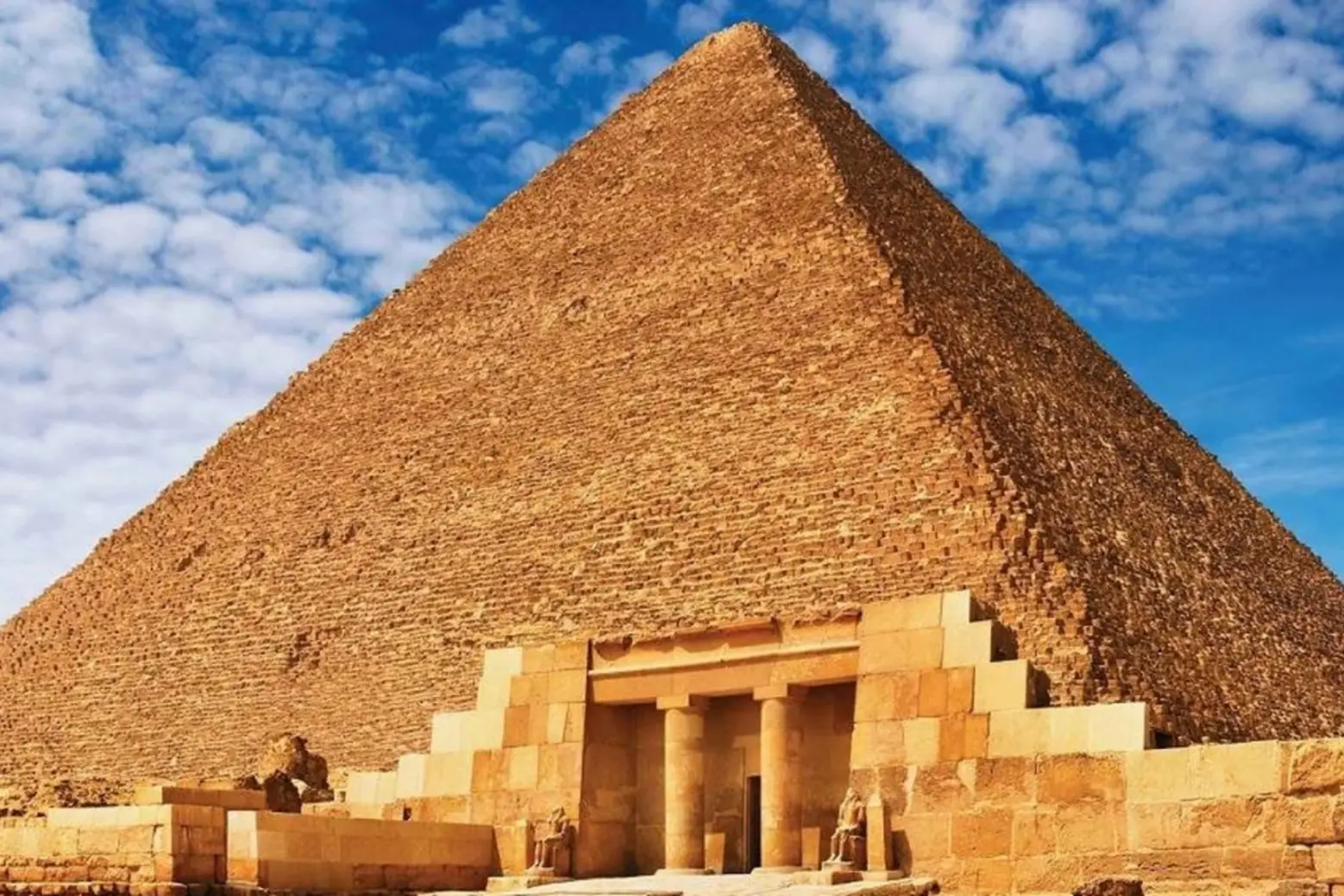
Begin with the Giza Necropolis, where the Great Pyramid of Khufu rises with the sort of authority that makes every photograph feel inadequate. You think you know the pyramids before you see them. Then you arrive, and scale becomes a spiritual experience. The only surviving Wonder of the Ancient World stands there with unnerving calm, as if time itself were simply another tourist passing through.
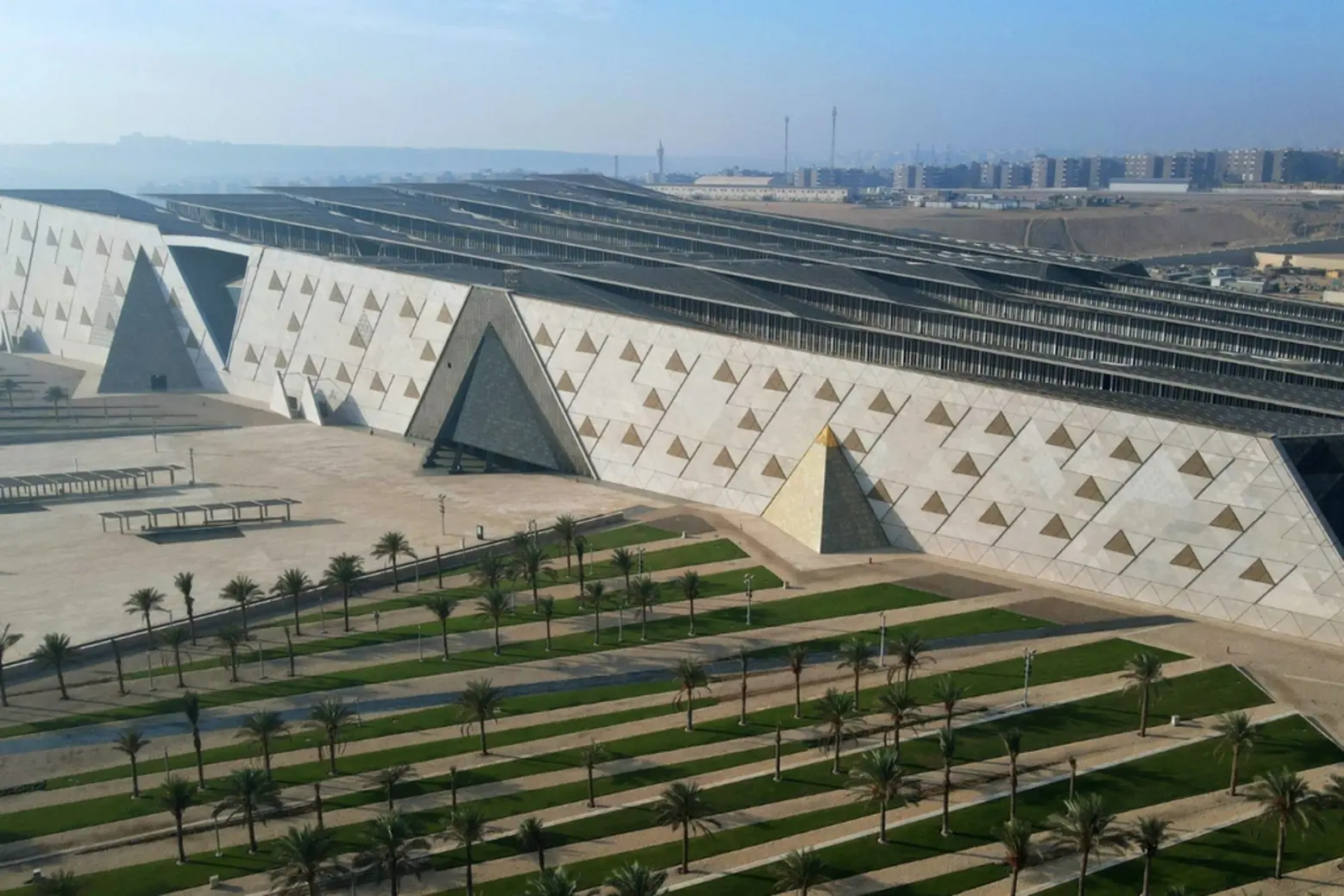
Nearby, the Grand Egyptian Museum sharpens this old-new tension. Fully open and finally uniting Tutankhamun’s treasures under one roof, it makes an empire of gold, alabaster, linen, ritual, vanity, death, and divinity feel suddenly, startlingly close. Then the mood shifts. Further south in Giza Governorate, the Mit Rahina Museum open-air museum strips away the spectacle and leaves you with something rawer: The fallen colossus of Ramses II, the ghost of ancient Memphis, and a sense that history here still lies half on the earth, half in memory.
Then there is the Cairo Citadel, built by Saladin in 1176 to guard the city from Crusaders. The fortress still possesses the visual command of a ruler surveying his kingdom. Within its walls, the Mosque of Muhammad Ali glows with alabaster softness and Ottoman grandeur. Step outside and the panorama unfolds, minarets, rooftops, haze, movement, and the strange, beautiful density of Cairo itself.
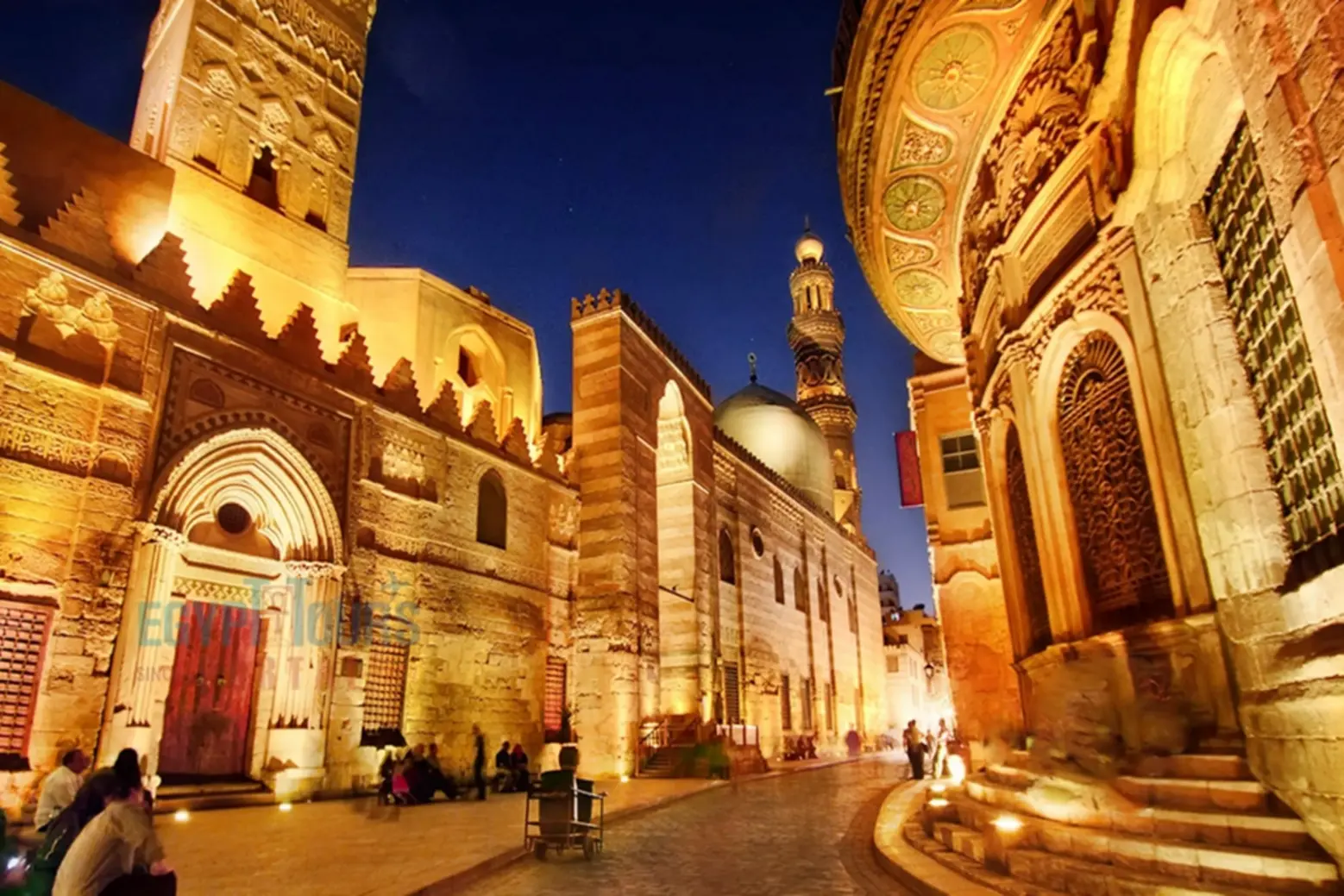
Yet Cairo’s deepest seduction often lives in the street rather than the skyline. Al-Muizz Street in Islamic Cairo has long been called an open-air museum, and the phrase feels almost too tidy for a place so alive. Medieval facades, carved doors, mosques, sabils, and domes stand shoulder to shoulder with vendors, families, and the constant theatre of the everyday.
Every great city needs a room within itself where the volume softens. In Cairo, that room is Coptic Cairo.
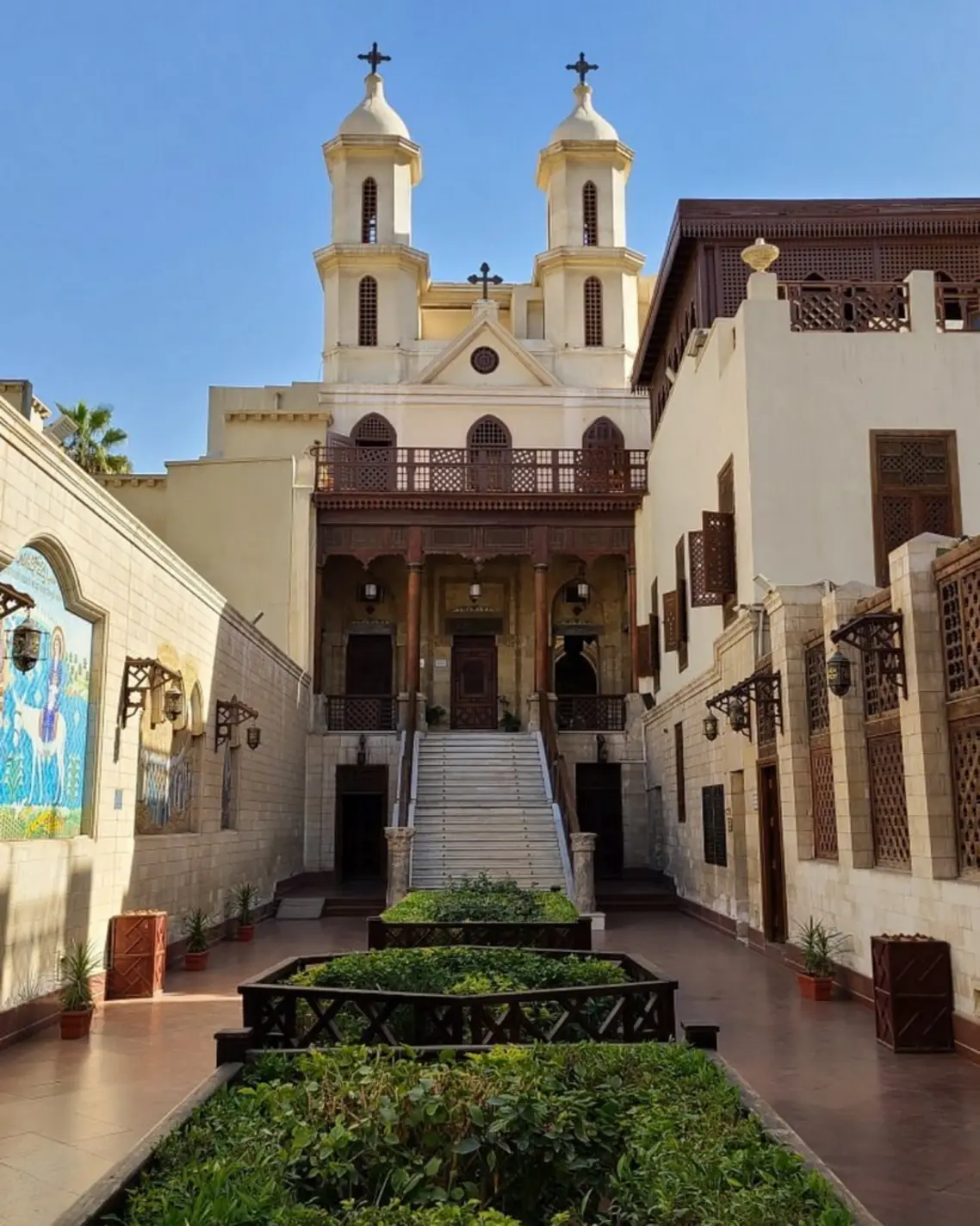
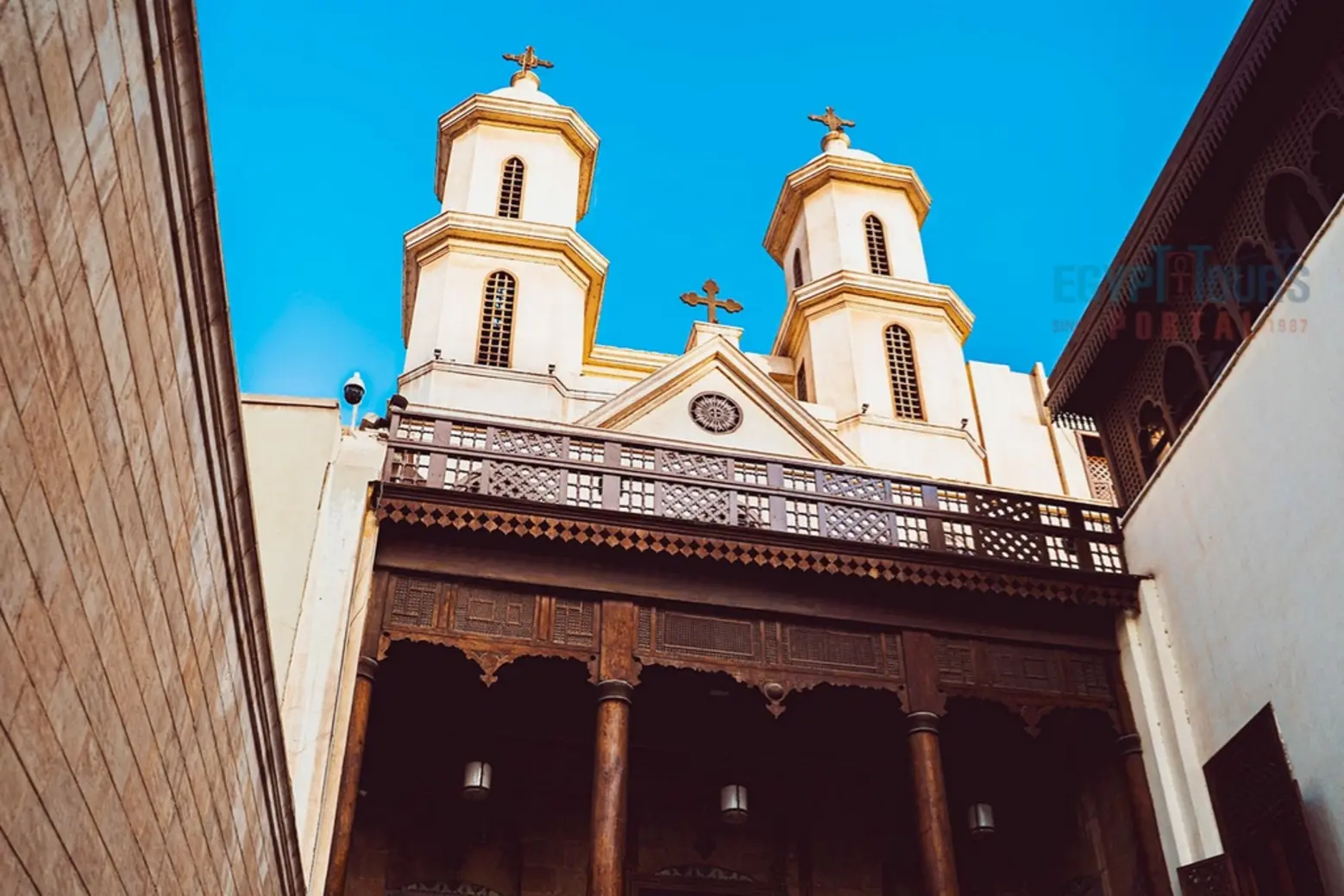
Inside this quiet, walled enclave, the city changes its posture. The Hanging Church rises above the gate of a Roman fortress, its history stacked quite literally in architecture. Faith, in Cairo, often sits on top of another faith, which itself rests on empire, which itself leans on myth. The result is less conflict than sediment: A civilisation formed by accumulation.
The Ben Ezra Synagogue holds another extraordinary thread in this tapestry. It was here that the Cairo Geniza documents were discovered, a vast archive of letters, contracts, prayers, and daily records that offered scholars a textured portrait of Jewish life in the medieval Middle East. Cairo archives devotion alongside trade, domestic worry alongside theology.
Pope Shenouda III said, “Egypt is not a country we live in, but a country that lives within us.” Few cities make that sentence feel more tangible than Cairo. People here seem to carry the city internally, as inheritance, burden, pride, irritation, soundtrack, and love affair all at once. Cairo enters the bloodstream. Even its contradictions become part of its tenderness.
Where you stay in Cairo changes the story the city tells you. Wake up beside the pyramids and Cairo feels mythic. Wake up over the Nile and it feels cinematic. Wake up in Maadi and it begins to read like a novel.
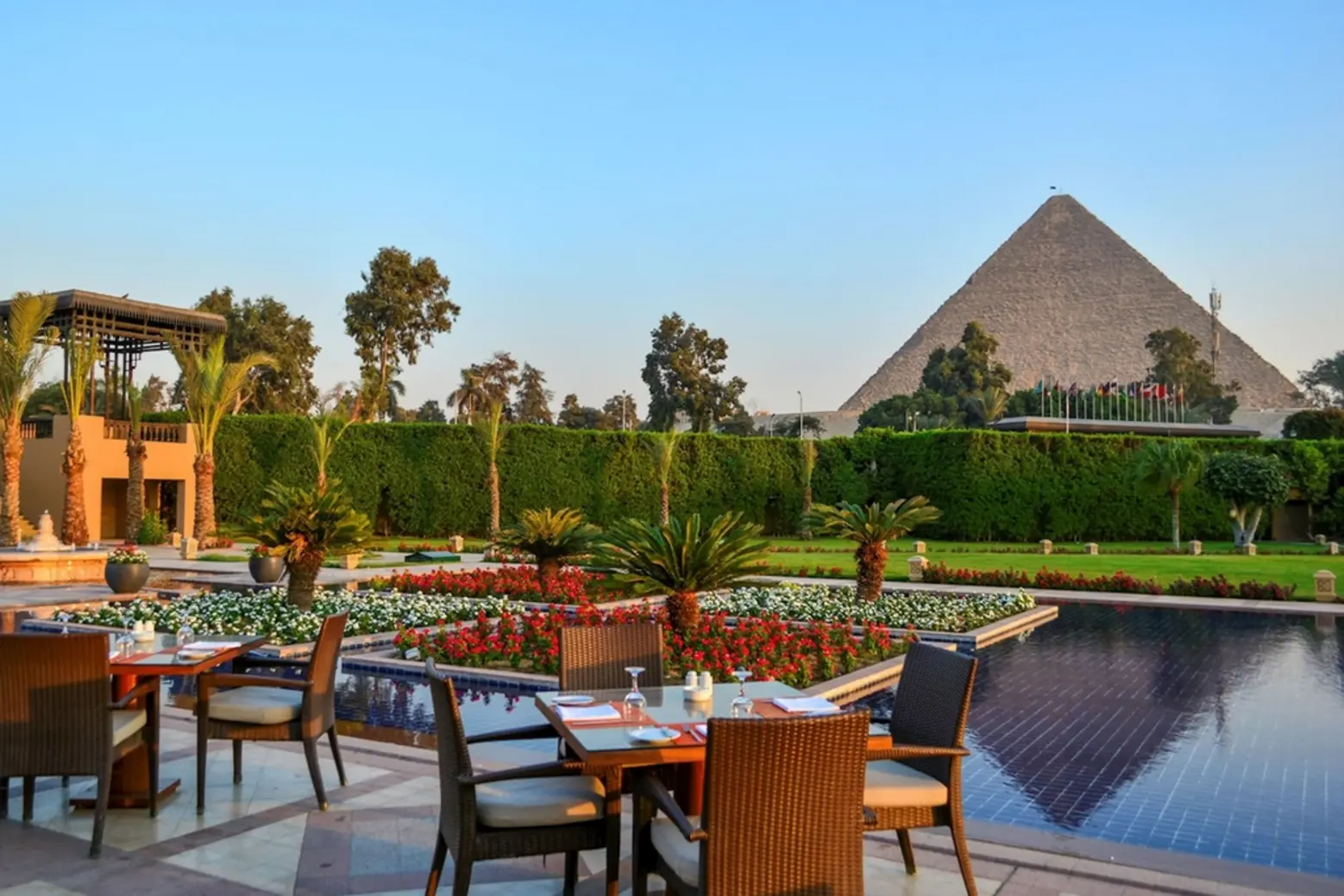
The Marriott Mena House offers one of the world’s great hotel views with almost indecent confidence: the pyramids so close they seem to belong to the property. Once a royal hunting lodge, it carries historic luxury with the sort of ease that only old glamour can manage. Mornings there arrive with a strange double vision — palm trees, polished silver, soft linen, and beyond them the geometry of eternity.
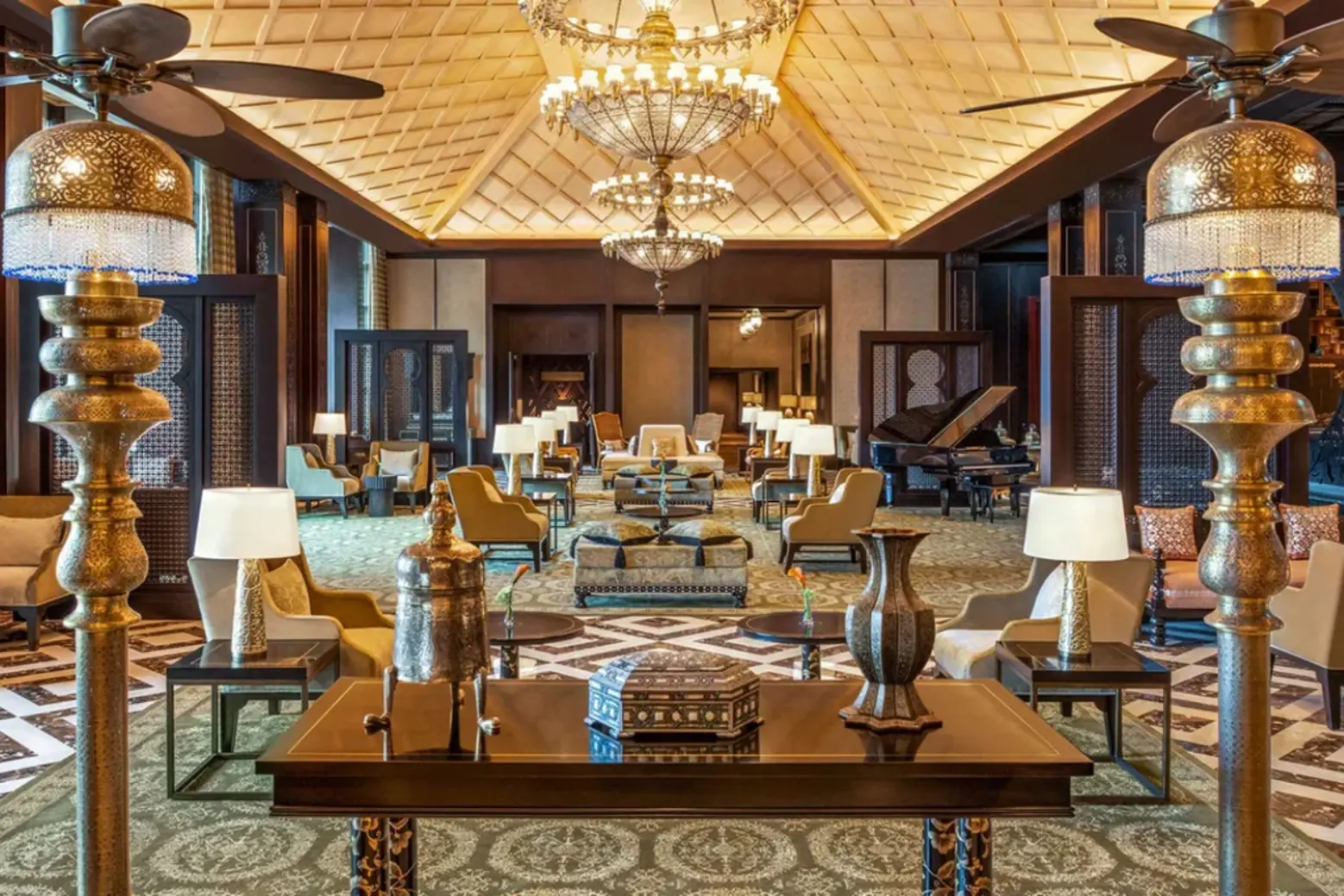
For a very different fantasy, St. Regis Cairo speaks in the language of contemporary luxury. Lavish interiors, impeccable service, butler culture, and sweeping Nile views create an atmosphere of controlled grandeur. Here Cairo feels sleek, high-gloss, and cosmopolitan, a capital with impeccable tailoring and excellent lighting.
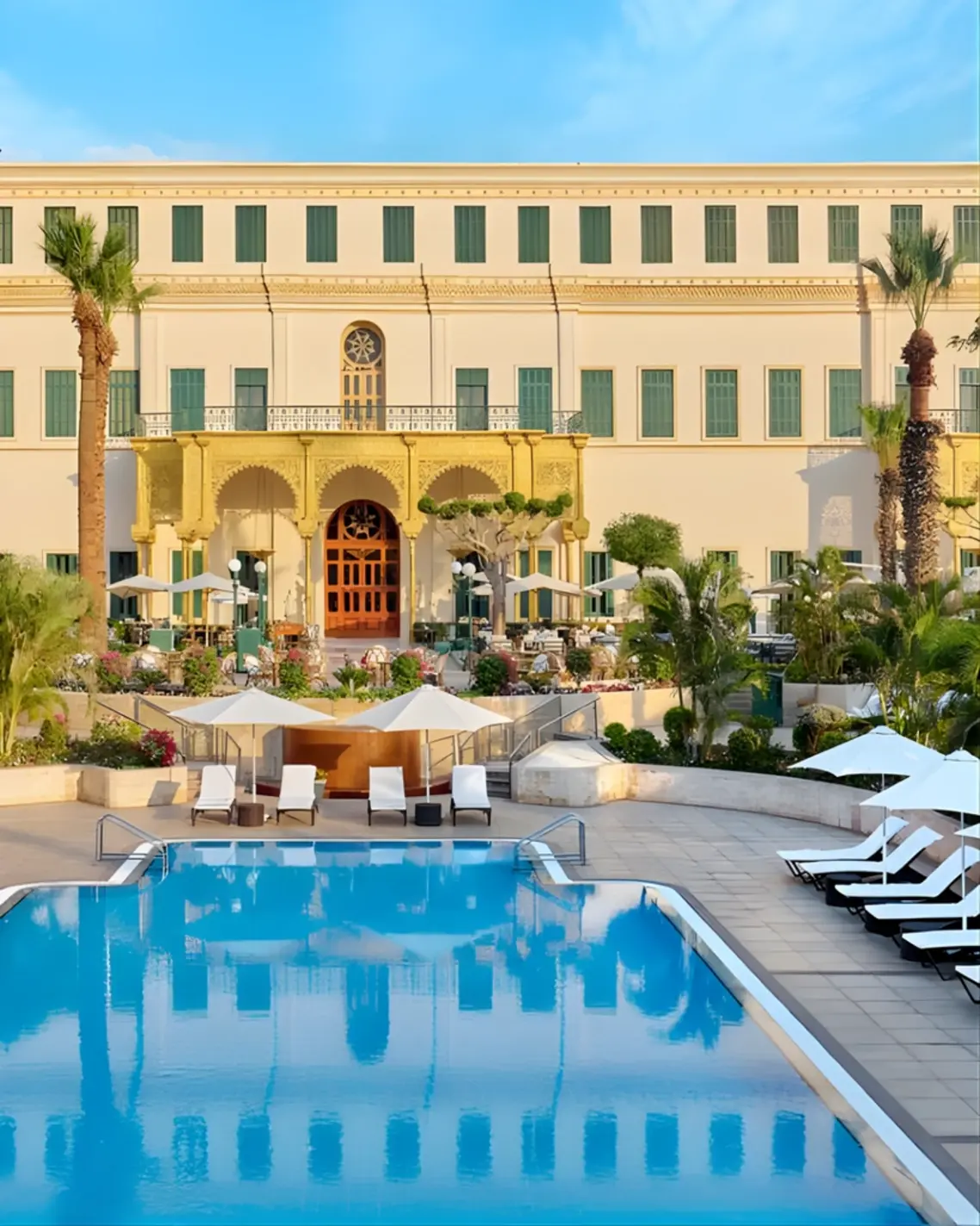
In Zamalek, the Cairo Marriott carries yet another variation of splendour. Set within the Gezirah Palace, built for the opening of the Suez Canal in 1869, it folds imperial history into riverfront elegance. The mood is palatial, almost theatrical. One can easily imagine chandeliers gossiping.
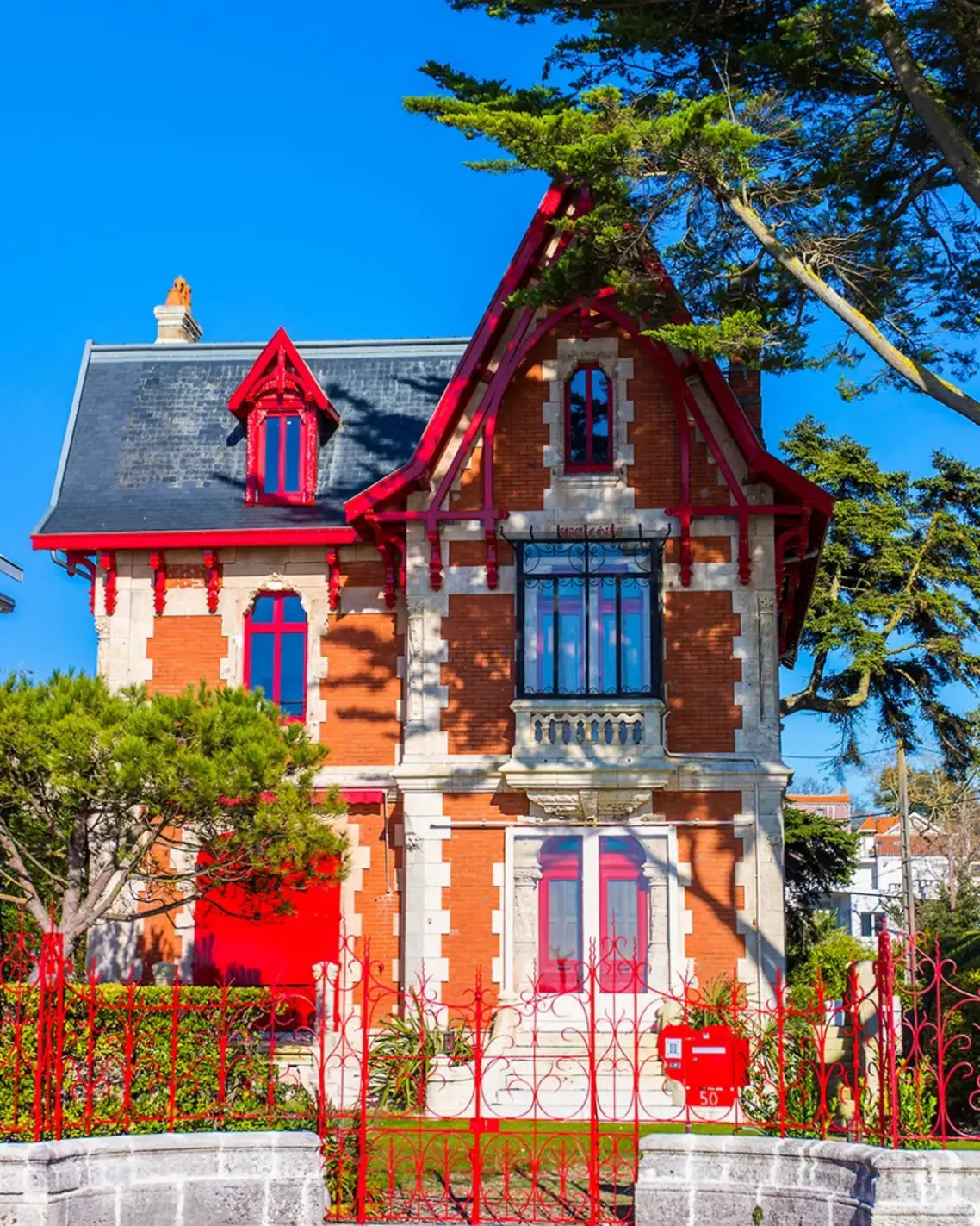
Then there is Villa Belle Epoque in leafy Maadi, where the city’s feverish grandeur gives way to something more intimate. Boutique in scale, rich with old-world character, it feels like slipping into a 1920s colonial villa that still remembers the art of slow afternoons. Cairo, for all its intensity, understands sanctuary. It simply chooses to make you earn it.
To understand Cairo, you must eat in it. Preferably more than once, and preferably with appetite strong enough to match the city’s personality.
Start with koshary, Egypt’s national dish, and start where the people do: Koshary Abou Tarek. Lentils, rice, pasta, chickpeas, fried onions, tomato sauce, heat, vinegar — it sounds almost improvised, and perhaps that is its genius. Cairo loves abundance assembled with confidence. The result is fast, loud, comforting, and entirely legendary. A bowl of koshary carries the same spirit as the city itself: many layers, one unmistakable identity.
For a more atmospheric immersion, Abou El Sid delivers old Cairene charm with deliberate seduction. The setting evokes a 1940s salon, warm and shadowed, the kind of place where time lingers at the table. Molokhia arrives silky and aromatic, garlic and coriander lifting the room. Stuffed pigeon feels both regal and deeply domestic, the sort of dish that collapses the distance between feast and memory.
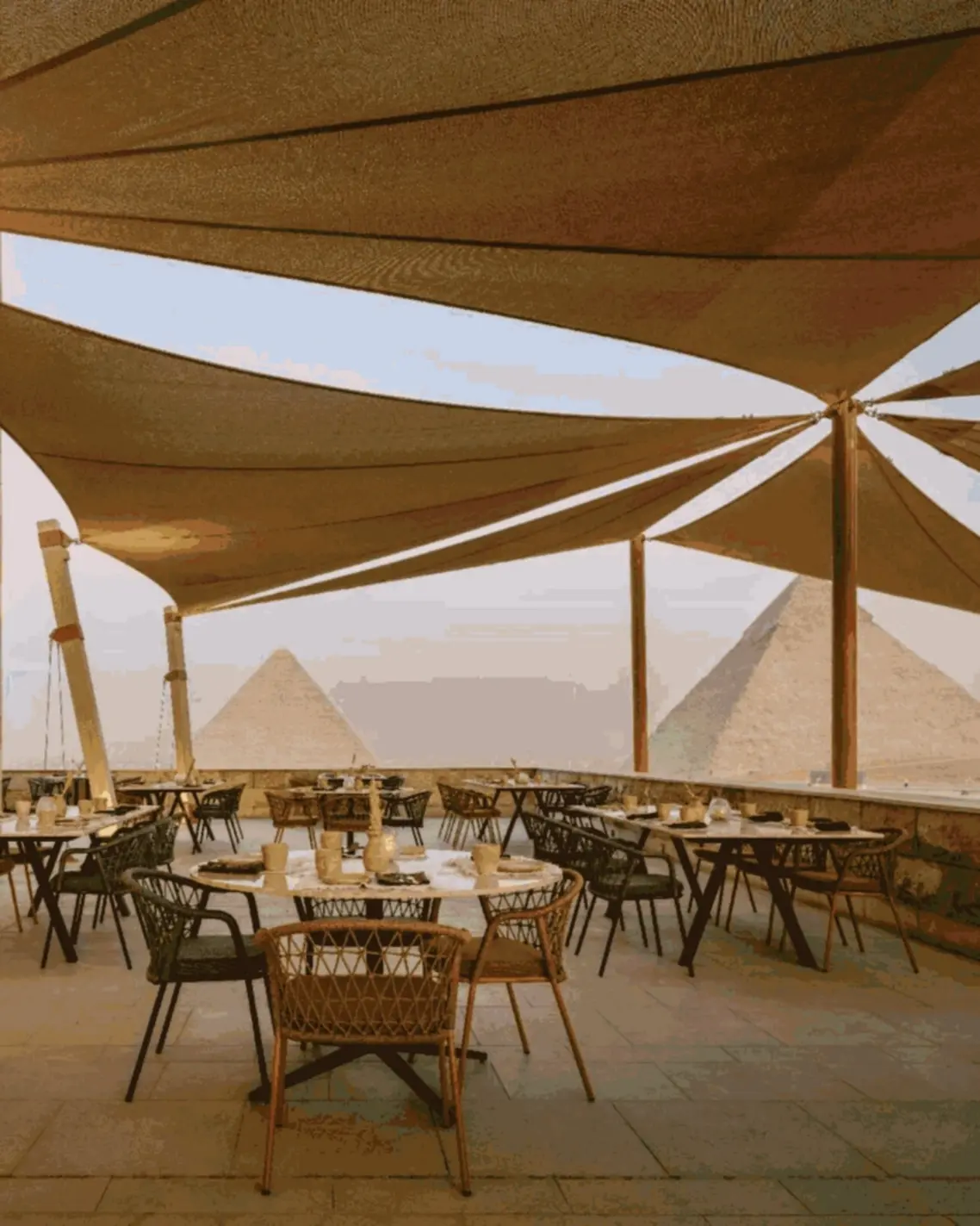
Then there is Khufu’s Restaurant, where lunch comes with an unobstructed view of the pyramids, as if history itself had agreed to join you for the meal. Cairo excels at this kind of juxtaposition. Fine dining beside antiquity. Espresso with empire. White tablecloths with one of the oldest horizons on earth.
As evening takes hold, the social life of the city shifts register. In Zamalek, rooftops and bars gather Cairo’s more contemporary rhythm. Crimson offers sunset with a side of glamour, the Nile turning bronze below. L’Aubergine leans more local, more underground, a place where the city loosens its collar and lets conversation run late.
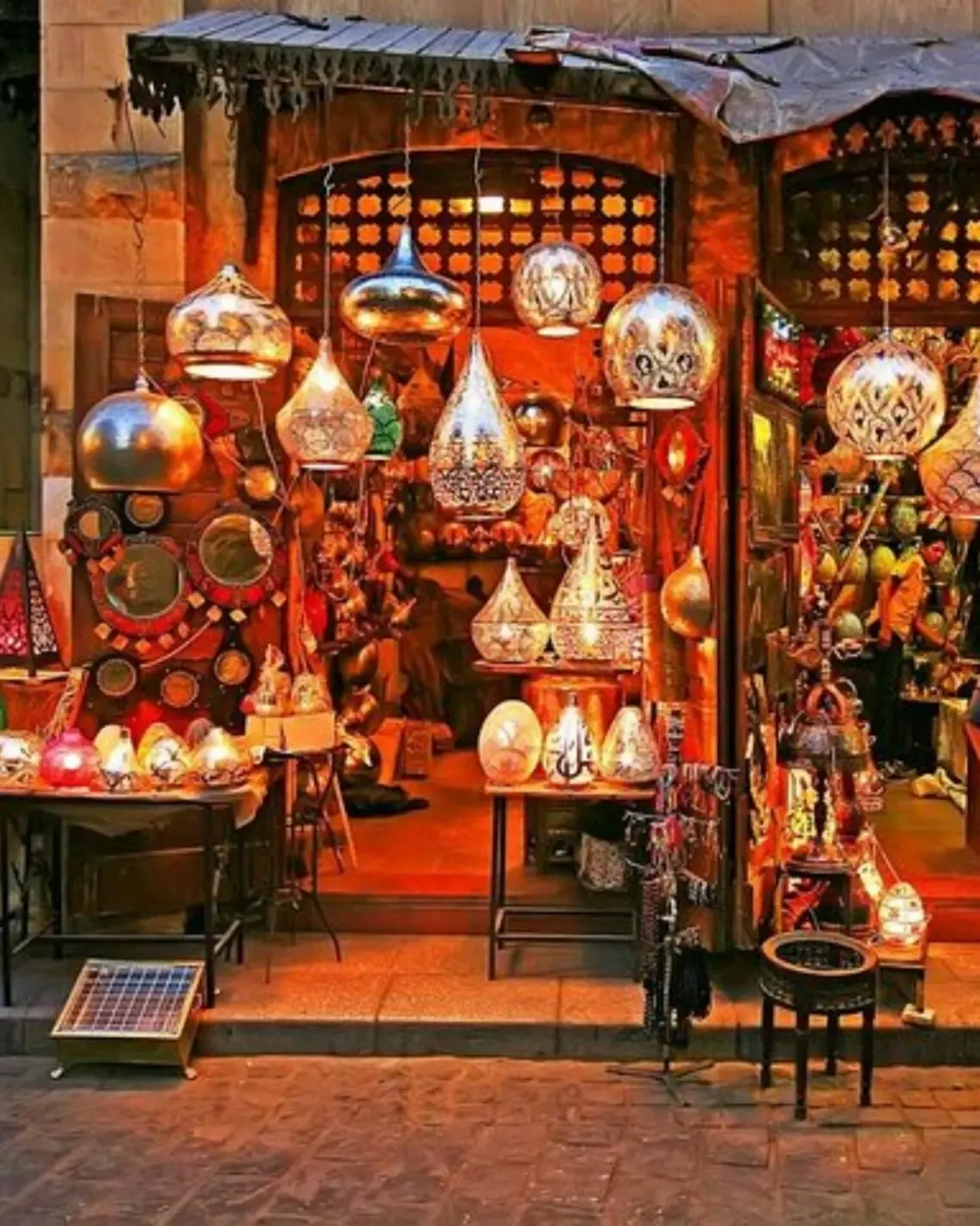
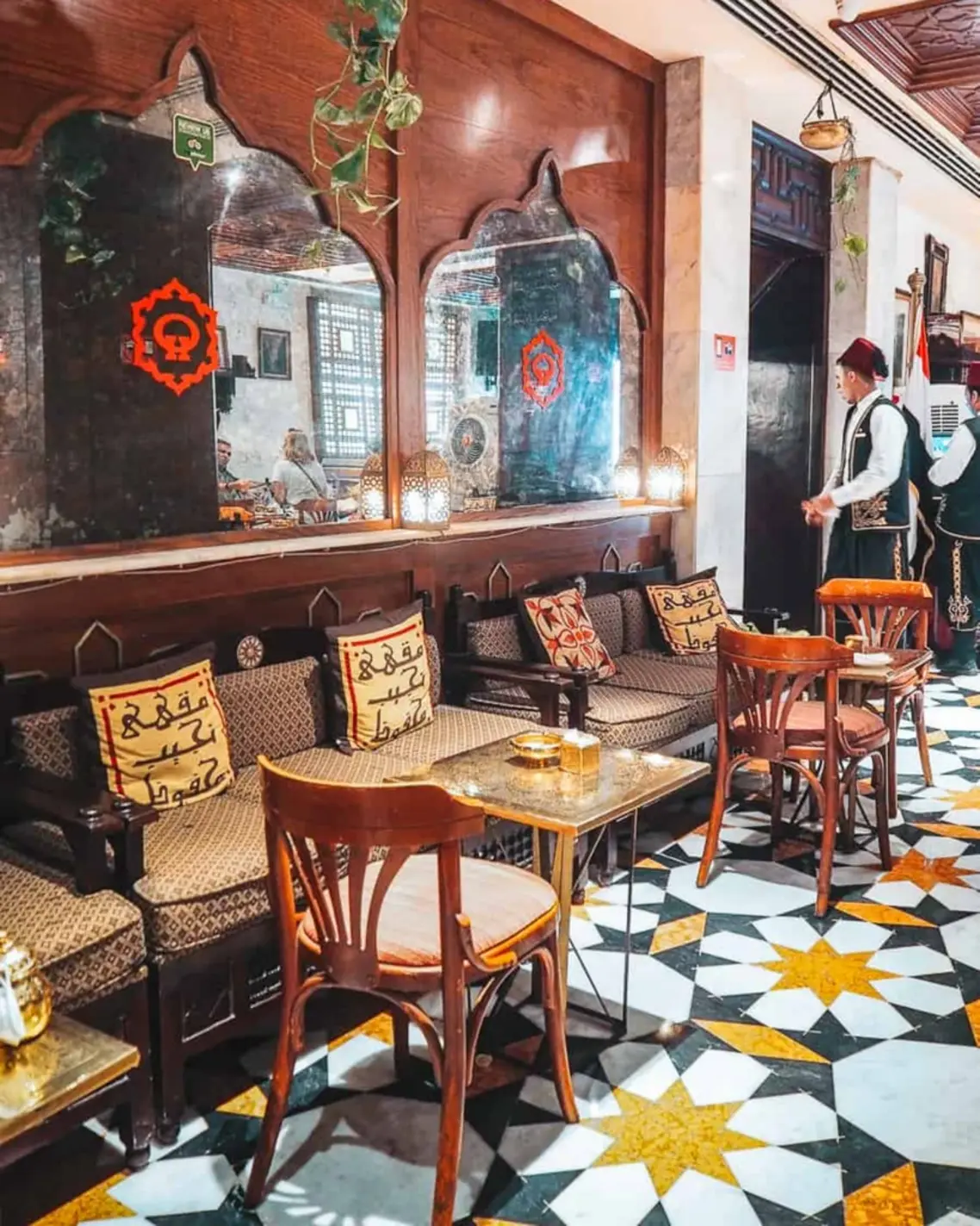
And then, naturally, there is the antique market Khan El-Khalili. Inside its glorious chaos sits the Naguib Mahfouz Cafe, perfect for mint tea and people-watching. Which is to say, perfect for Cairo. Sit long enough and the whole city seems to pass before you in fragments: perfume, bargaining, laughter, brass trays, old songs, quick glances, endless stories.
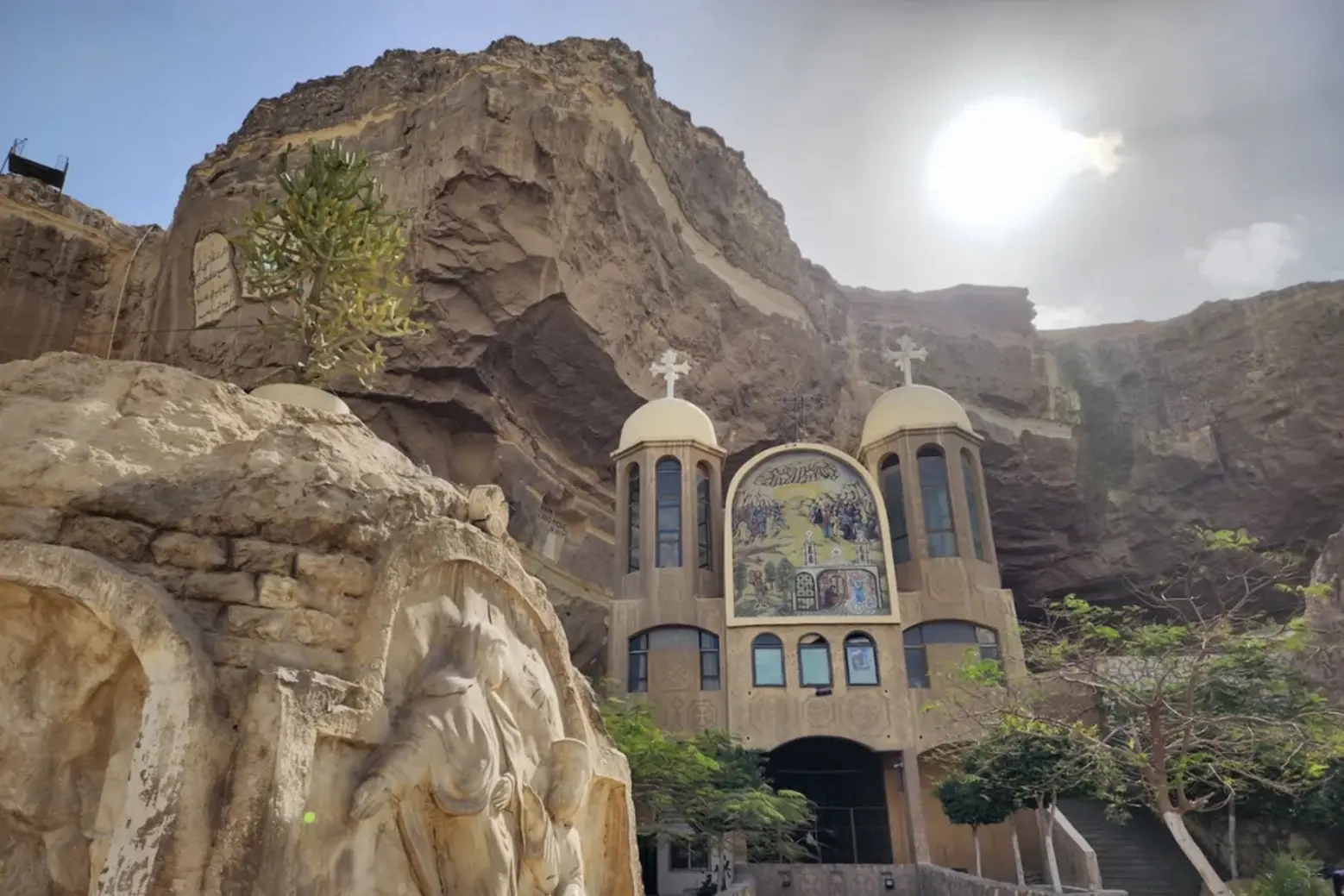
Even Cairo’s strangest truths feel like legends told over tea. Garbage City, or Manshiyat Naser, where the Zabbaleen built one of the world’s most efficient manual recycling systems, reveals the city’s extraordinary capacity for reinvention. The massive St. Simon the Tanner cave church carved into the Mokattam hills adds yet another spiritual surprise to the urban script. And who could invent the sight of Ramses II “walking” through Cairo in 2006, his 83-ton statue moving through the city like a pharaoh reclaiming his audience?
In Cairo, history remains unfinished, that civilisation still has texture, that a city can hold both grandeur and noise in the same breath and call it style.