MENU
Close






Buccellati began in Milan in 1919, when Mario Buccellati opened his first shop on Via degli Orefici. The Italian writer Gabriele D’Annunzio later described him as the “Prince of Goldsmiths,” a title that captured the founder’s ability to treat jewellery as a form of cultural memory instead of a simple display of wealth.
The house emerged during an era when European high jewellery was becoming increasingly organised around exceptional gemstones, precise symmetry and brilliant polished surfaces. Buccellati developed another hierarchy. Gold occupied the centre of the composition, while diamonds and coloured stones entered as illumination, punctuation or contrast.
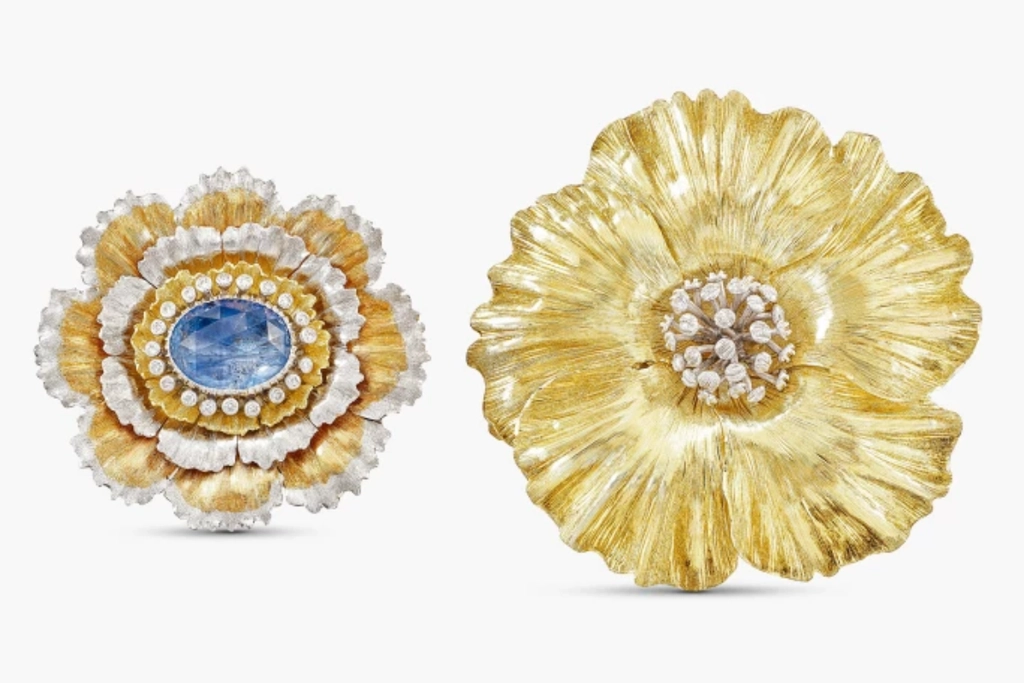
Modern luxury frequently associates perfection with an untouched, highly polished surface. Buccellati works by interrupting that perfection. Artisans cut hundreds of lines into the metal until reflected light becomes dispersed, softened and absorbed. Gold begins to resemble a textile whose fibres remain visible beneath the eye.
The burin, a sharp engraving instrument with roots in Renaissance craftsmanship, drives this transformation. Every line removes a minute amount of metal. Repetition creates texture, though the marks remain vulnerable to variations in pressure, spacing and direction. The final surface carries a controlled irregularity that mechanical finishing would struggle to reproduce.
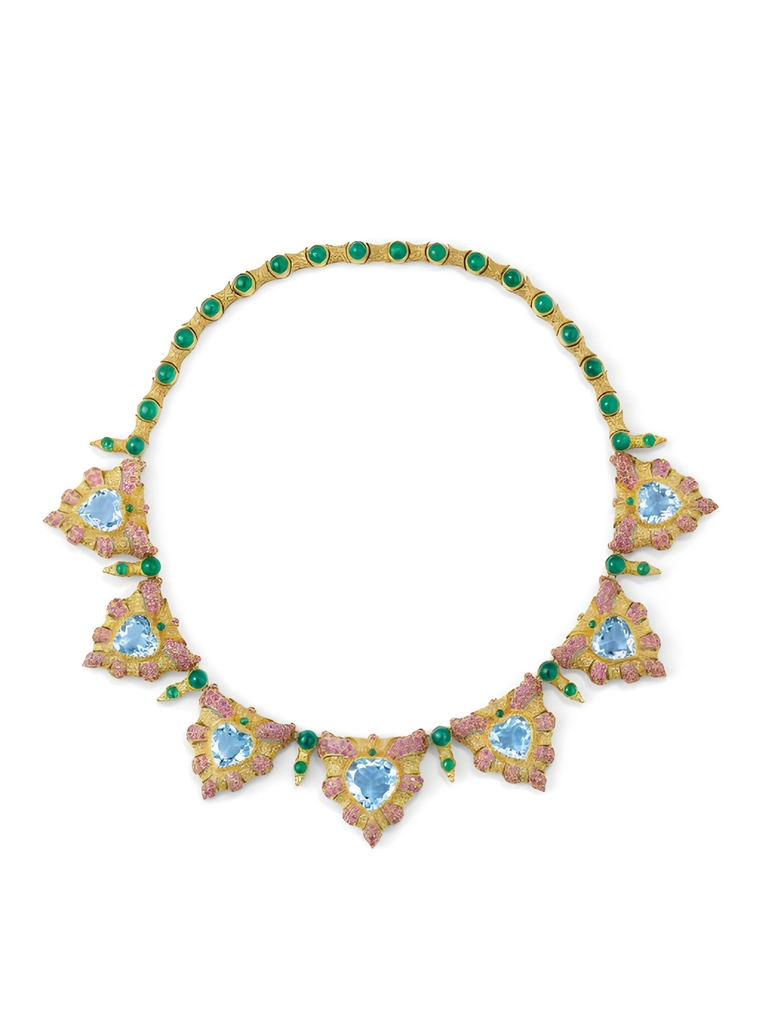
Five principal engraving techniques define the Buccellati vocabulary: rigato, telato, segrinato, ornato and modellato. The house presents these methods as foundational expressions of its style, each producing a different visual and tactile response.
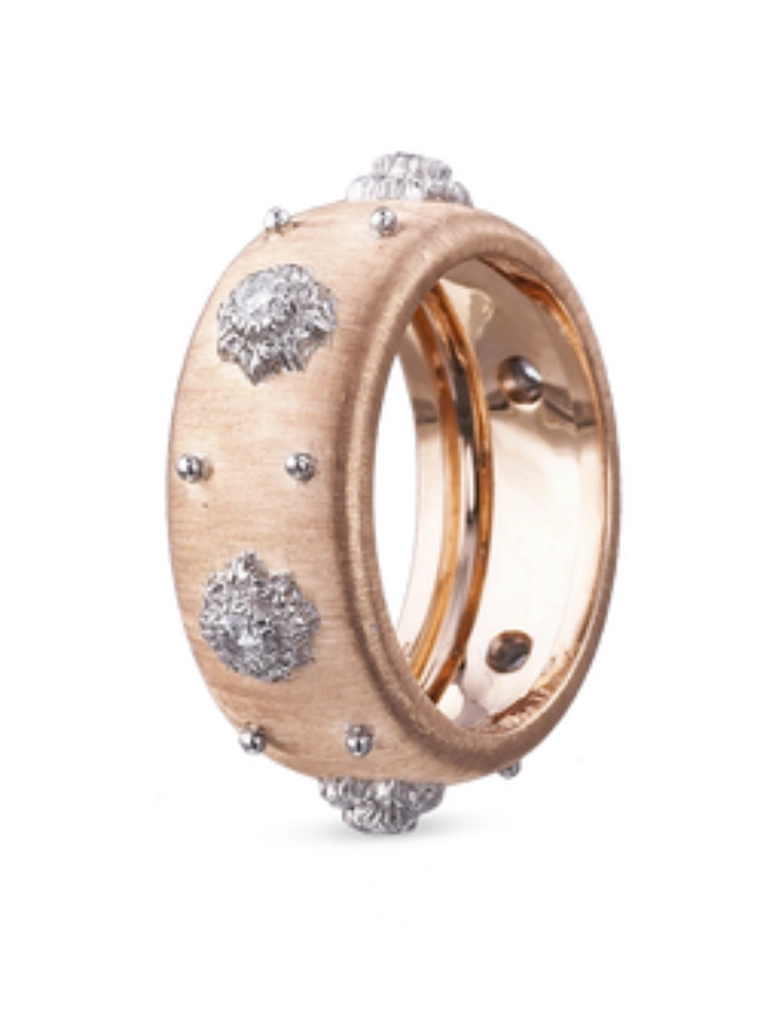
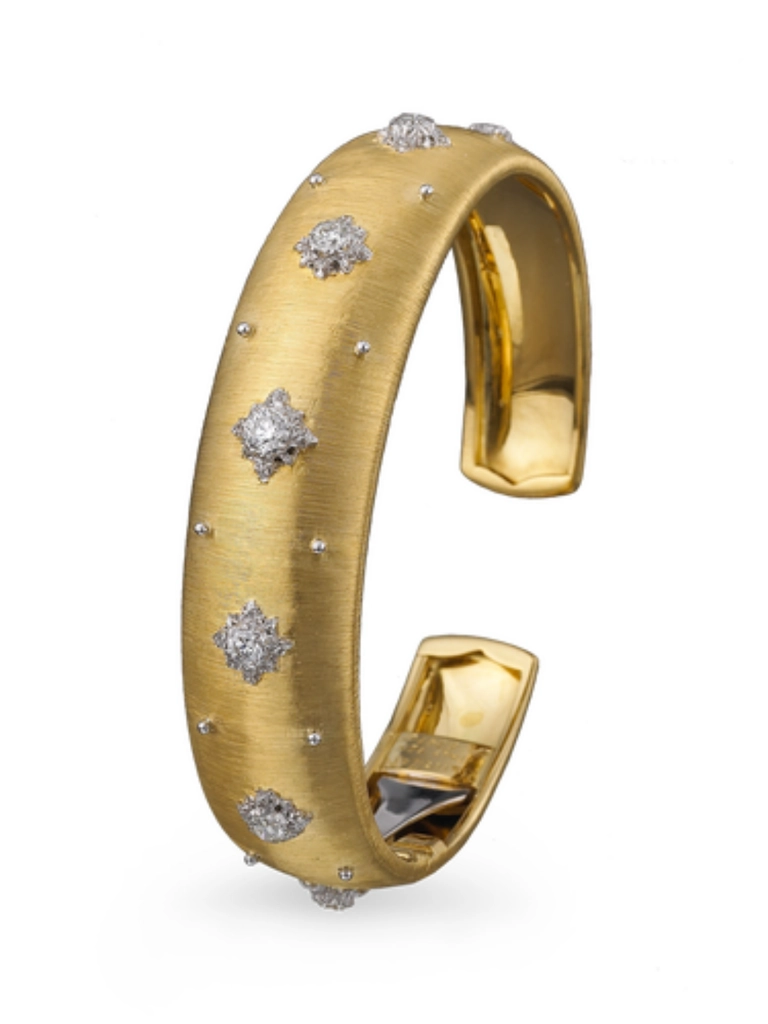
Rigato uses extremely fine parallel lines to create a soft, directional sheen. Light travels across the grooves like illumination passing over brushed silk. The technique reaches its clearest expression in the Macri collection, where the subdued gold is interrupted by polished beads and diamonds set inside tiny star-shaped rosettes.
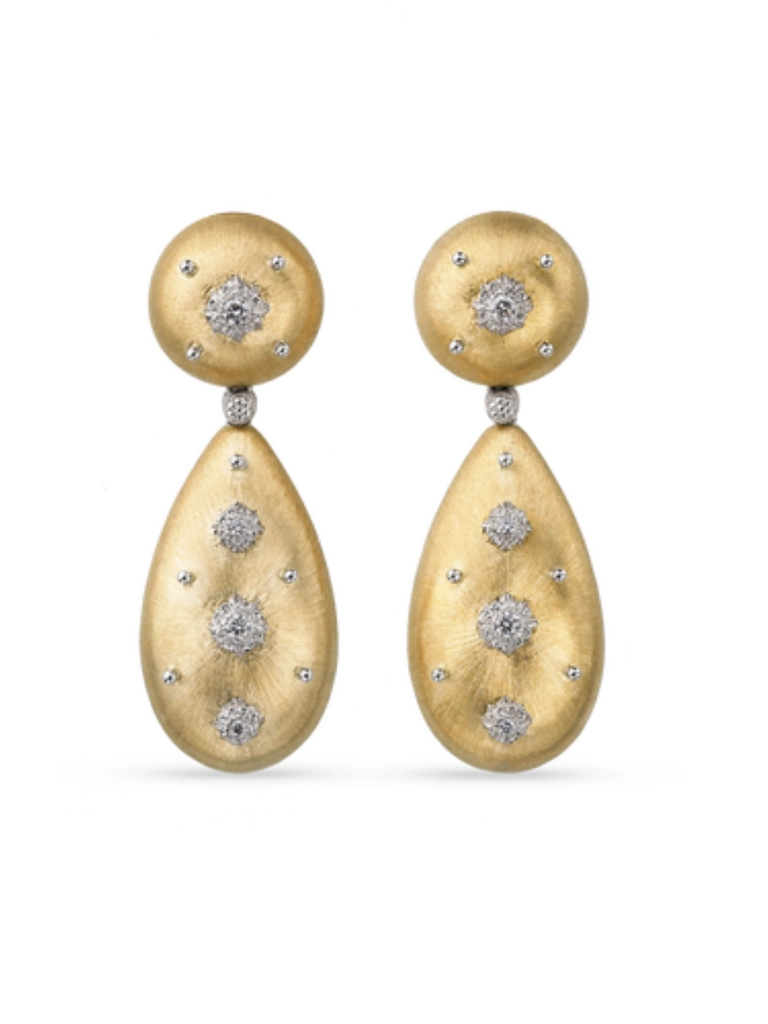
Telato introduces intersecting lines that evoke the disciplined weave of linen or canvas. Its geometry creates a quieter, denser surface, giving gold the visual logic of cloth held under tension.
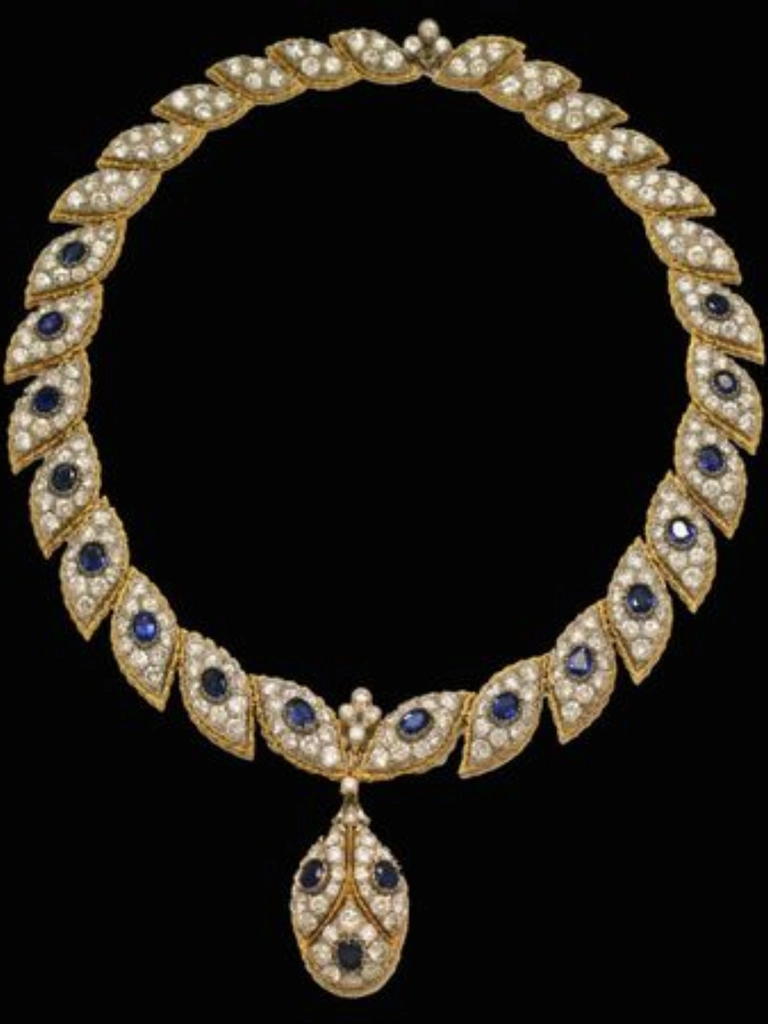
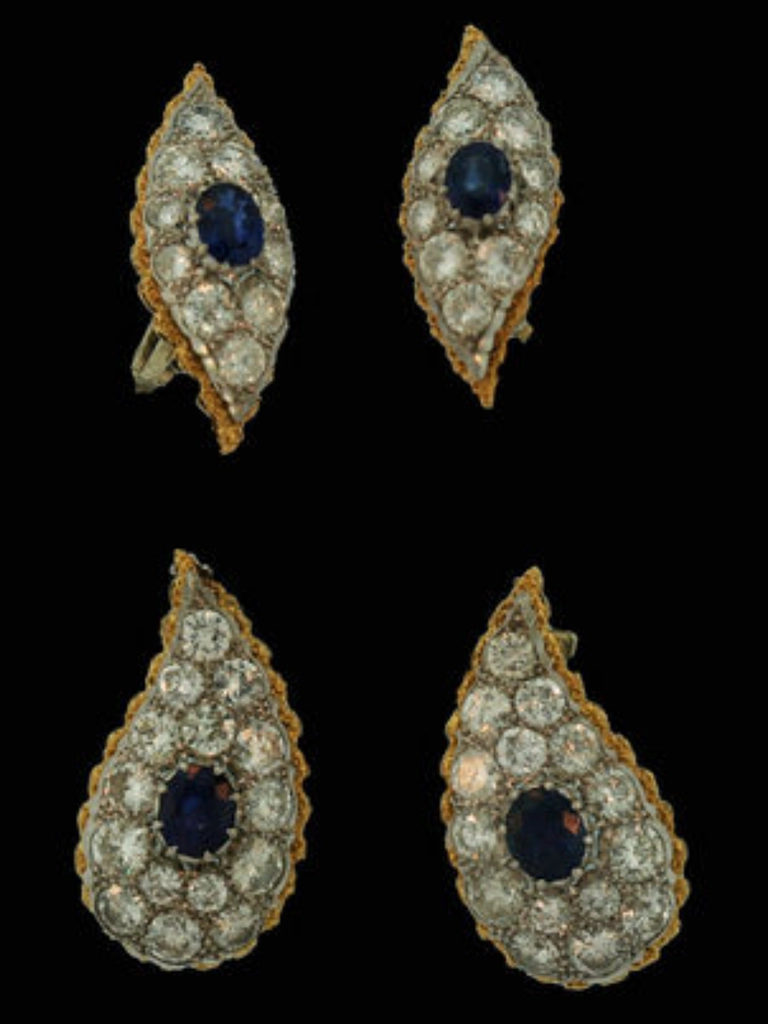
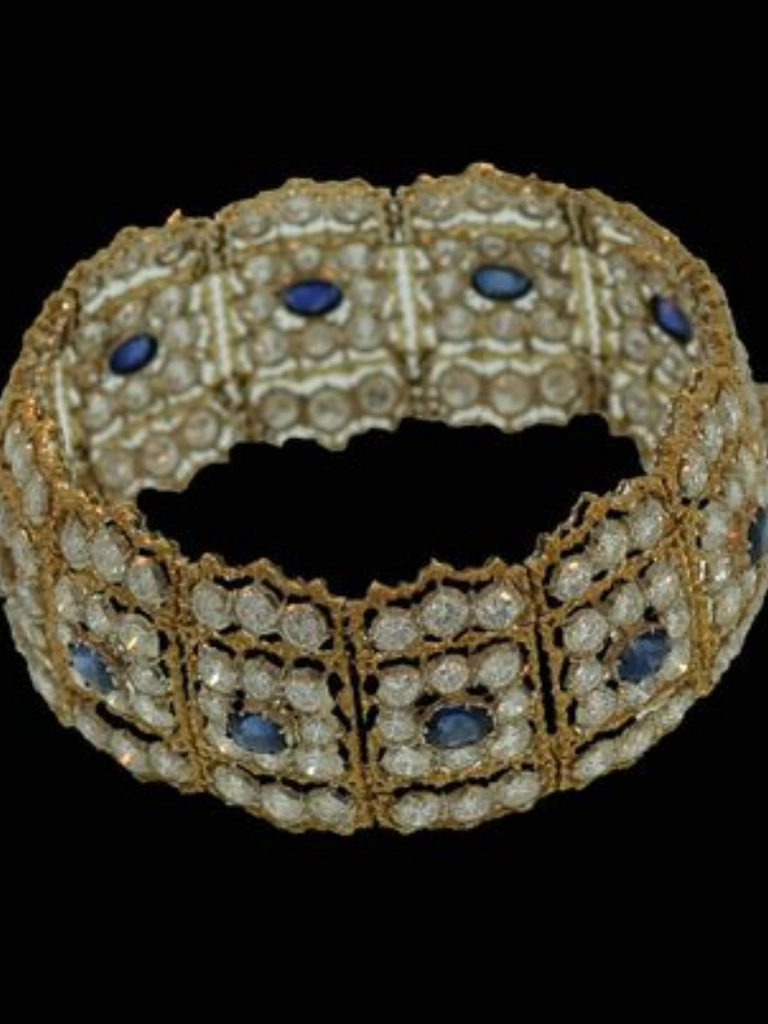
Segrinato produces a more irregular texture through overlapping cuts made in several directions. Its richness recalls velvet, bark or the soft grain of petals. On naturalistic brooches, segrinato prevents flowers and leaves from appearing polished into sterility. Their surfaces retain depth, shadow and a suggestion of organic growth.
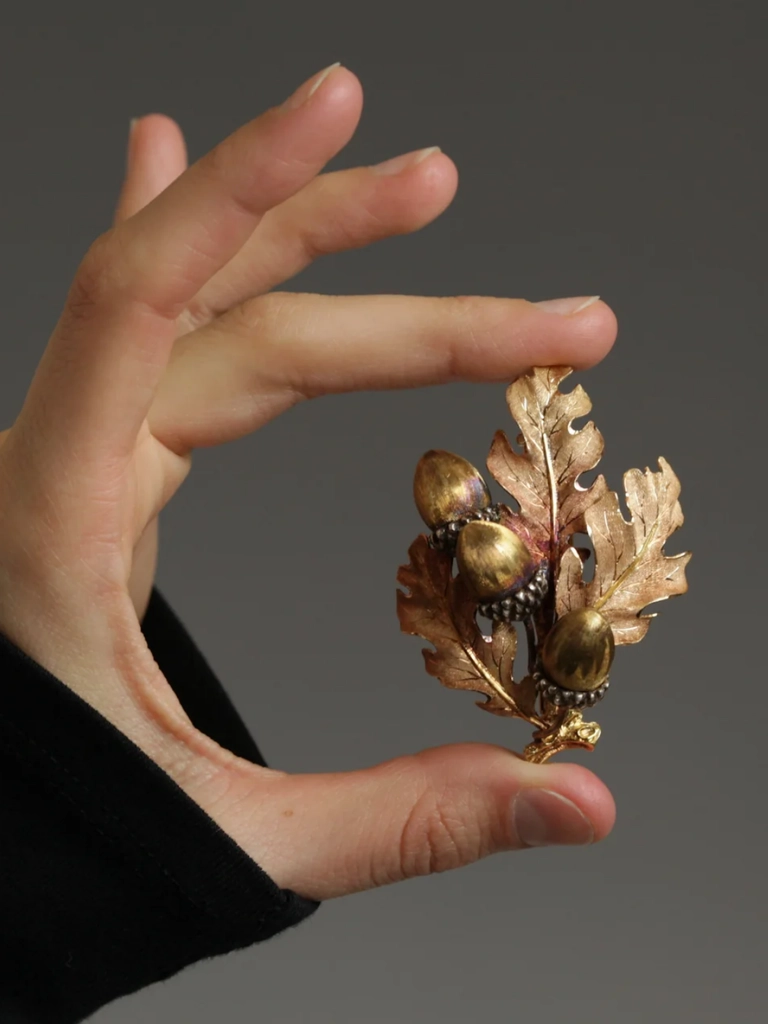
Ornato moves from texture toward decoration. Scrolls, borders and patterned motifs are engraved into the metal with a precision associated with Renaissance ornament, historical weaponry and architectural embellishment.
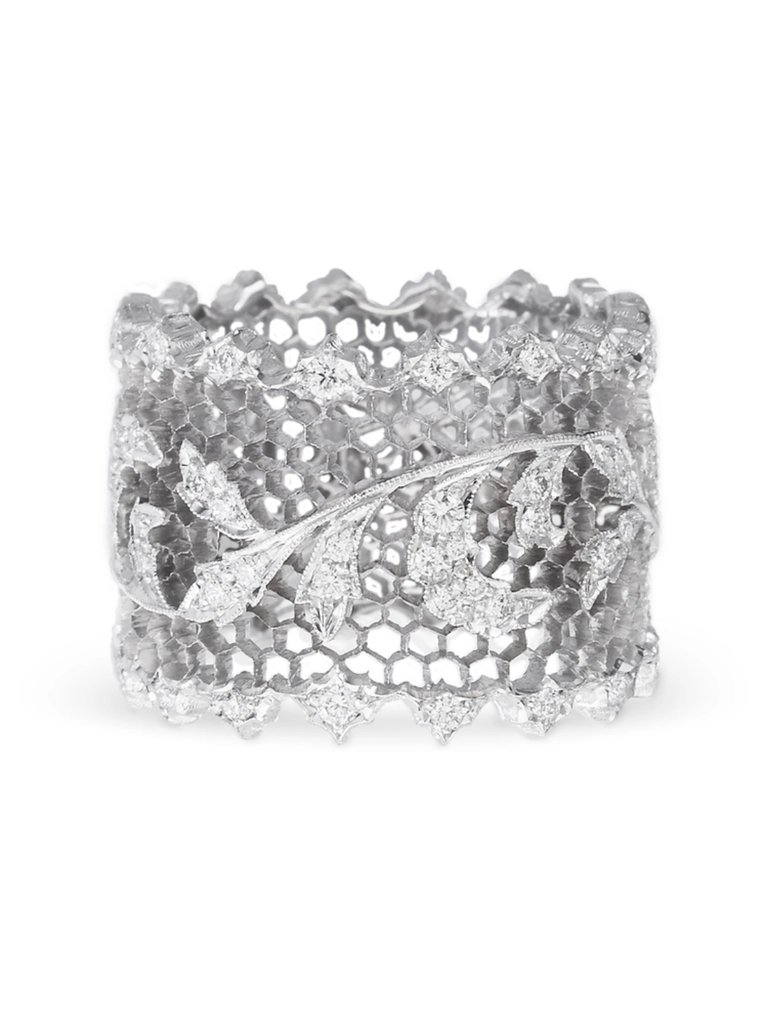
Modellato gives the metal sculptural relief. Artisans shape foliage, flowers, animals and ornamental forms through chasing and engraving, allowing a flat surface to rise into three-dimensional detail. Mario Buccellati used the method in conscious dialogue with Renaissance goldsmith-sculptors, whose objects collapsed the division between jewellery, sculpture and decorative art.
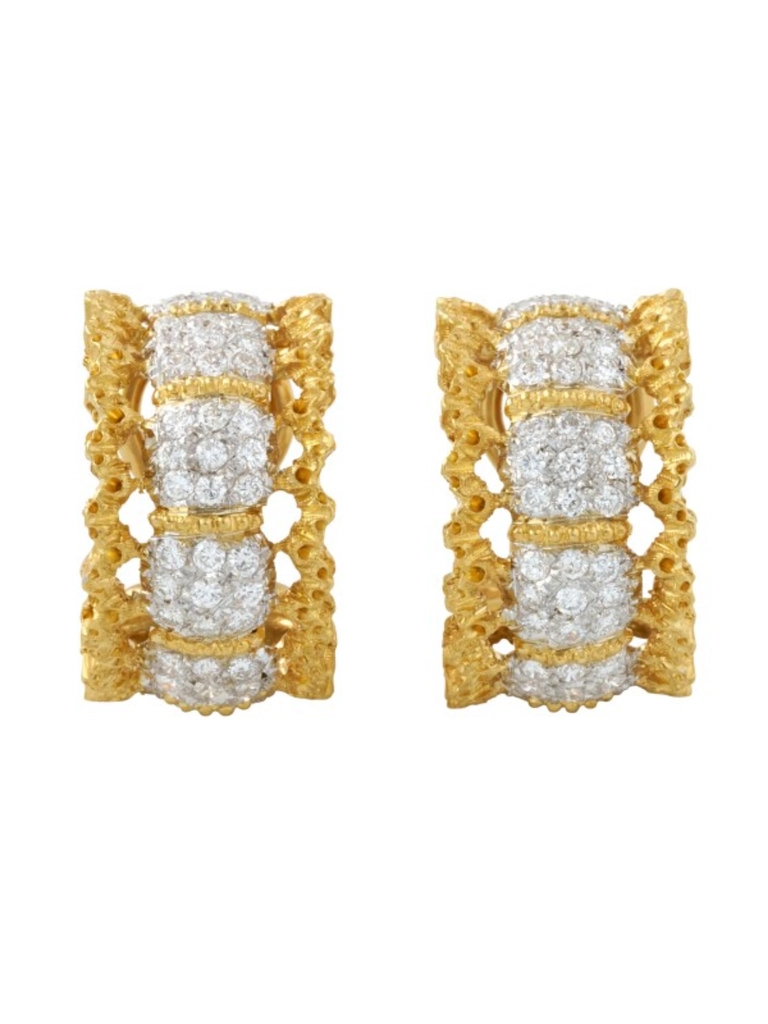
These techniques frequently coexist within one object. A leaf can contain rigato veins, segrinato surfaces and modellato edges, while diamonds appear along the structure like drops of light. The complexity survives because each technique has a separate task. Ornament never arrives as random excess.
Surface engraving establishes the Buccellati identity, though the house’s most technically theatrical achievement occurs when artisans begin removing the surface itself.
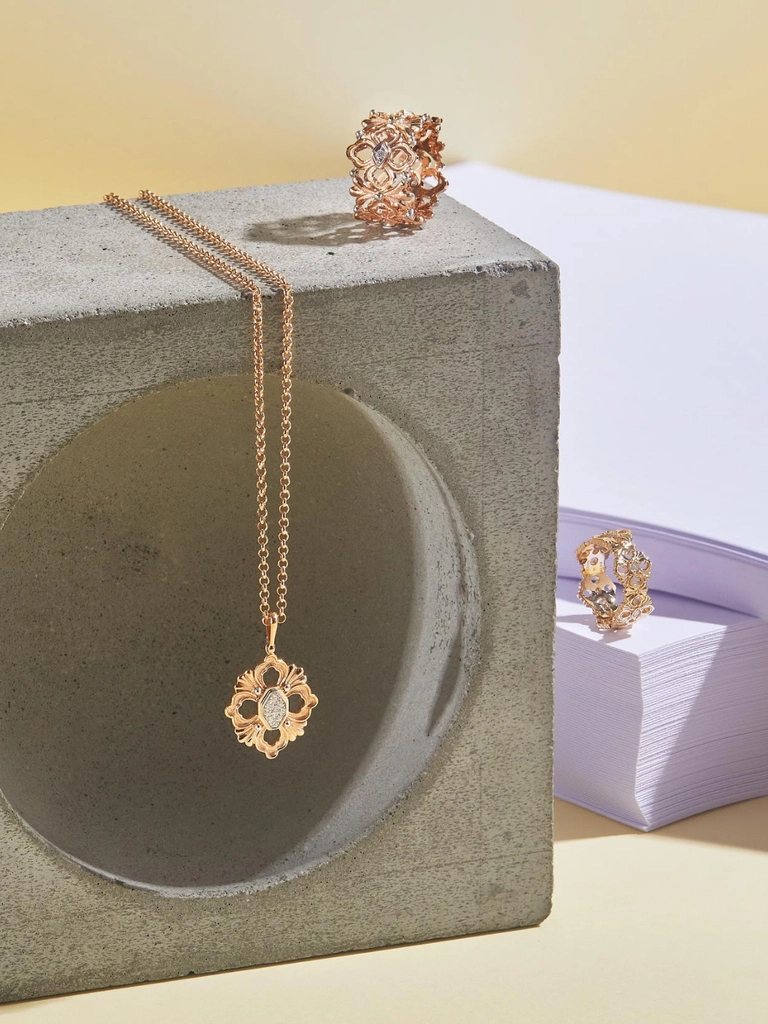
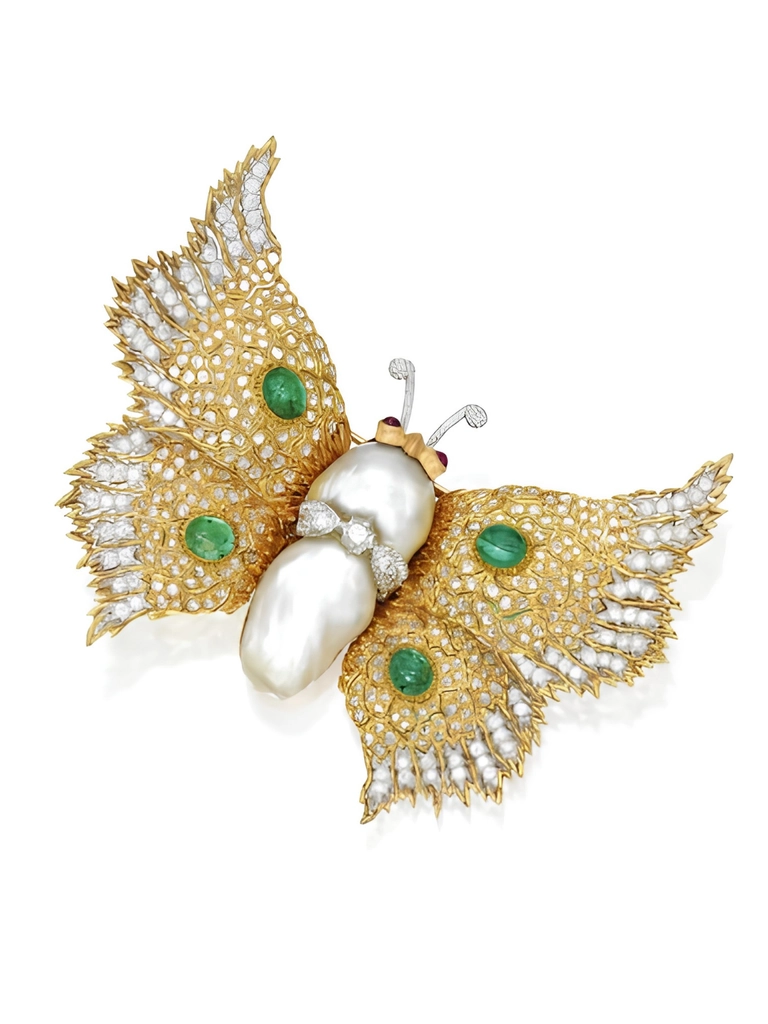
The technique commonly called Tulle, or honeycombing, transforms a thin gold plate into pierced openwork. The artisan draws a pattern across the metal, opens each cell with a hand saw and repeatedly refines the interior until rows of minute hexagons form a continuous structure. According to the house, a single plate may measure only half a millimetre thick, and completing its honeycomb can require nearly a month. Individual openings may be refined as many as five times.
The result resembles lace, though its delicacy is achieved through metal under severe technical control. Too much pressure can deform the plate. A misplaced cut can damage an entire pattern. The finished object appears almost weightless because open space occupies as much visual territory as gold.
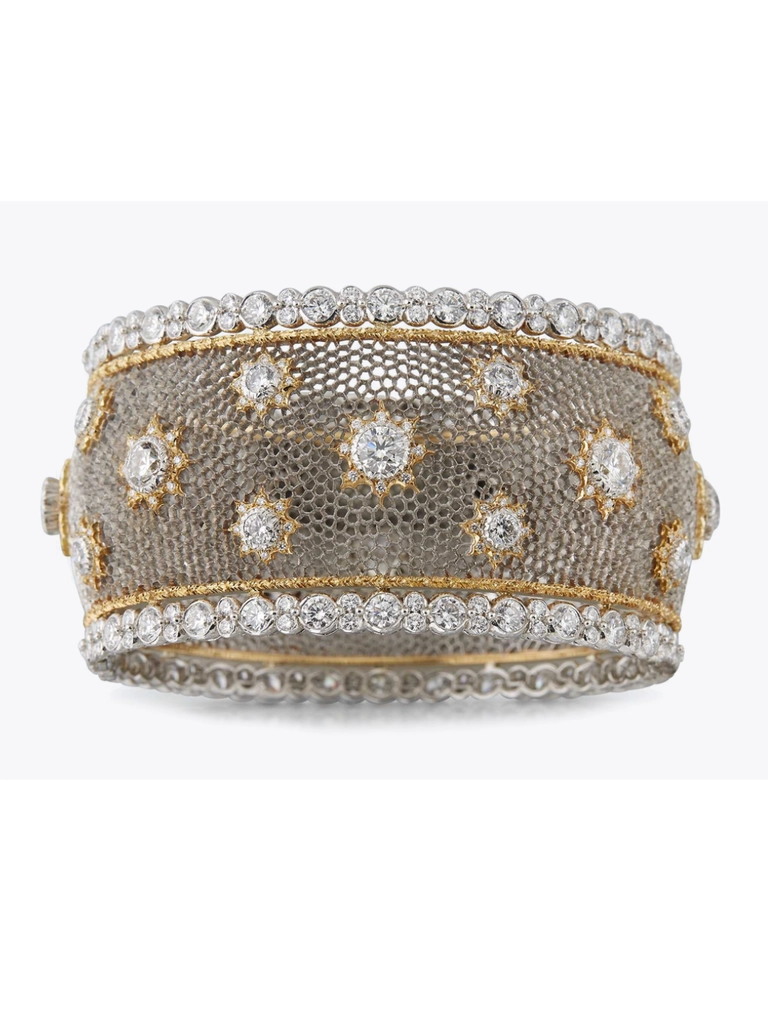
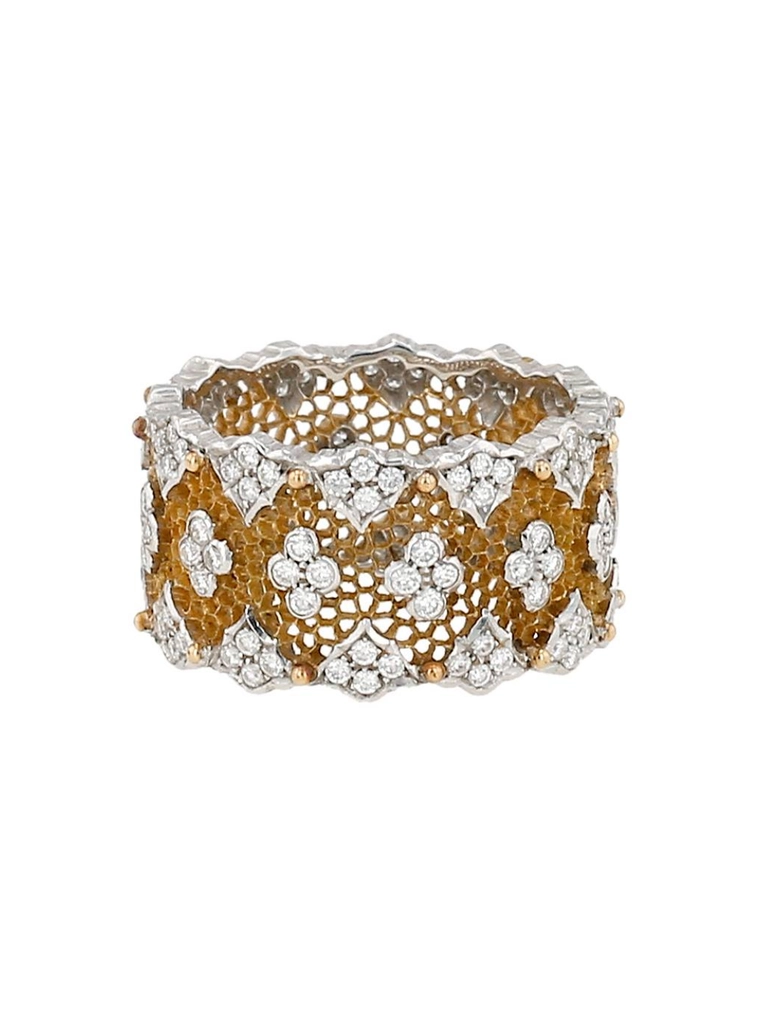
This relationship between material and absence produces the house’s most recognisable tension. Gold traditionally communicates solidity, permanence and concentrated value. Tulle makes it porous. Light enters the object, passes through it and projects the design onto the skin beneath. The wearer becomes part of the composition.
Diamonds are often distributed across this honeycomb in small quantities. Their role differs from the central stone in a conventional solitaire or parure. They glimmer from within the architecture, preserving the visual rhythm of the openwork. Rose cuts can support this subdued effect, producing a gentler glow than the aggressive scintillation of modern brilliant cuts.
Buccellati also combines yellow and white gold to sharpen structural contrast. Yellow gold supplies warmth around the border, while white gold can support diamonds or define a cooler internal pattern. The metal changes colour before the stones even begin to intervene.
Tulle therefore operates as more than decoration. It is an argument about preciousness. Value exists within the hours removed from the artisan’s life, the risks taken with every cut and the precision required to make heavy material appear almost immaterial.
Many heritage houses preserve recognisable motifs. Buccellati faced a more demanding problem: it had to preserve a system of labour.
Mario established the visual grammar, developing engraved surfaces, openwork and an Italian Renaissance revival that separated his jewellery from the dominant French tradition. His son Gianmaria assumed control of the workshops and creative direction in the 1960s, extending the house internationally while refining its technical codes. In 1979, Buccellati became the first Italian jewellery house to open a boutique on Paris’s Place Vendôme, entering the symbolic centre of French high jewellery without adopting its dominant aesthetic.
Gianmaria’s son Andrea entered the company as a teenager and trained through the workshop before assuming creative leadership. He remains the house’s honorary chairman and creative director, while his daughter Lucrezia represents the fourth generation within its design culture. Her involvement introduces the perspective of a woman who wears the jewellery and considers how historical techniques can enter contemporary life without being reduced into simplified branding.
Richemont acquired 100 percent of Buccellati Holding Italia in September 2019. The transaction placed the Milanese house inside the same luxury group as Cartier and Van Cleef & Arpels, giving it access to a far larger international structure. Andrea’s continued creative role, supported by other members of the family, became central to the preservation of its identity after the acquisition.
That continuity carries commercial value because Buccellati cannot be reproduced through design archives alone. A sketch provides proportion and pattern, while the final character depends on trained hands capable of interpreting line density, pressure, relief and negative space. Expanding such a house requires more than opening boutiques. It requires protecting a slow and highly specialised workforce inside a luxury industry driven by scale.
The Macri collection offers the clearest introduction to Buccellati because it concentrates the house’s language into a disciplined form. Gianmaria conceived it in honour of his daughter Maria Cristina, using an abbreviation of her name for the title. Its bracelets carry waves of rigato engraving interrupted by polished golden beads, small diamonds and engraved emblems.
Macri succeeds because its complexity remains controlled. From a distance, a bracelet appears calm and architectural. At close range, the surface reveals hundreds of hand-cut lines. The collection communicates luxury without needing the immediate spectacle of a large central gemstone.
Hawaii presents a more mobile vision of gold. Mario developed the original idea during the 1930s, forming tiny circles from hand-twisted gold threads and assembling them into fluid chains. The rings move independently, creating a soft metallic volume that shifts with the body. The house connects the design to Futurist experiments with motion, an influence visible in its organised instability.
Gold appears almost weightless again, though Hawaii reaches that effect through movement instead of perforation. Yellow, white and pink gold circles can intermingle inside the same piece, producing colour through metal alone.
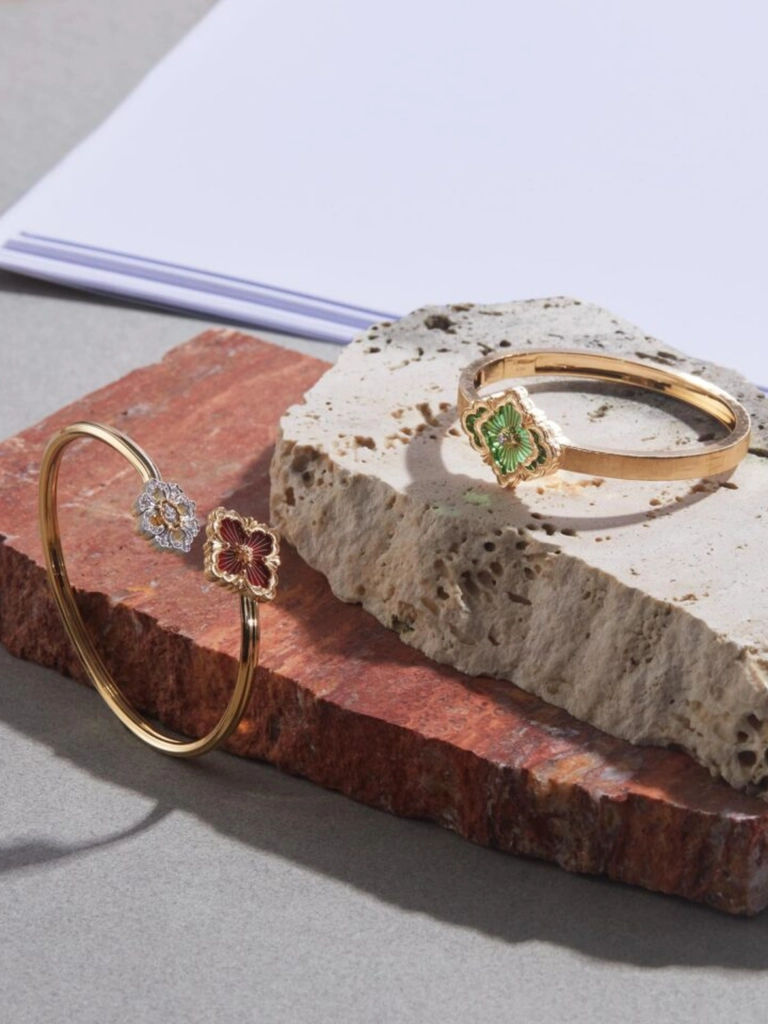
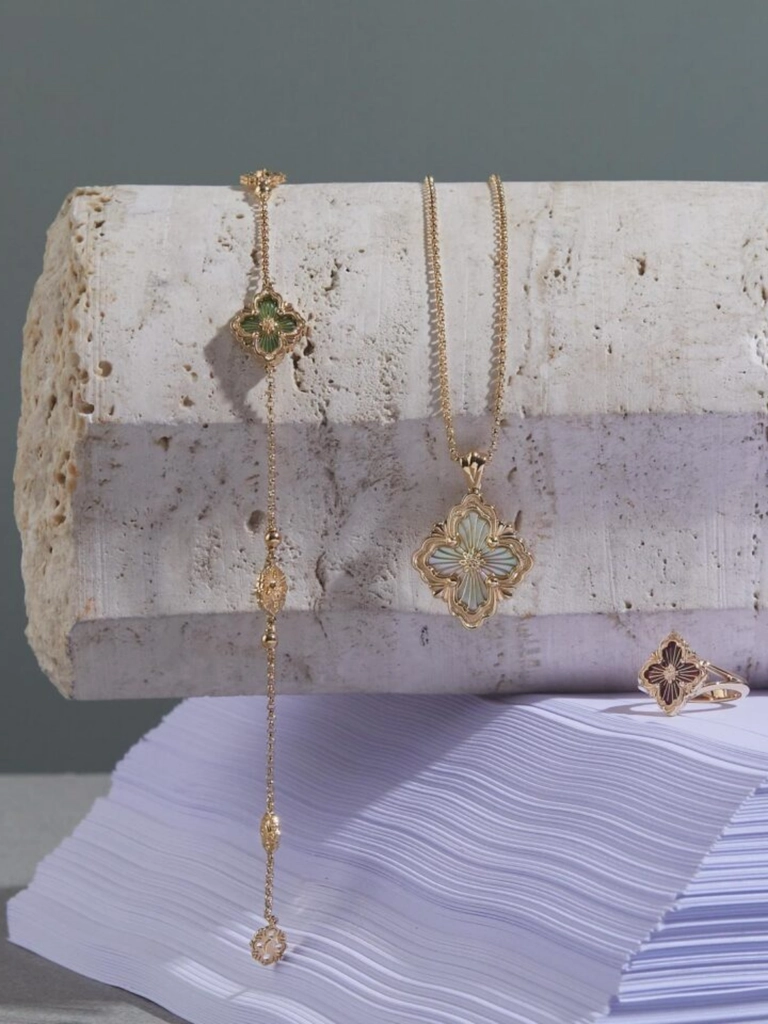
The Opera collection, launched in 2015, converts the house’s Renaissance-inspired logo into a repeatable jewellery motif. Opera Tulle places radial openwork over mother-of-pearl, onyx, coloured stones or enamel. The underlying material remains visible through the honeycomb, creating depth without a conventional enclosing bezel.
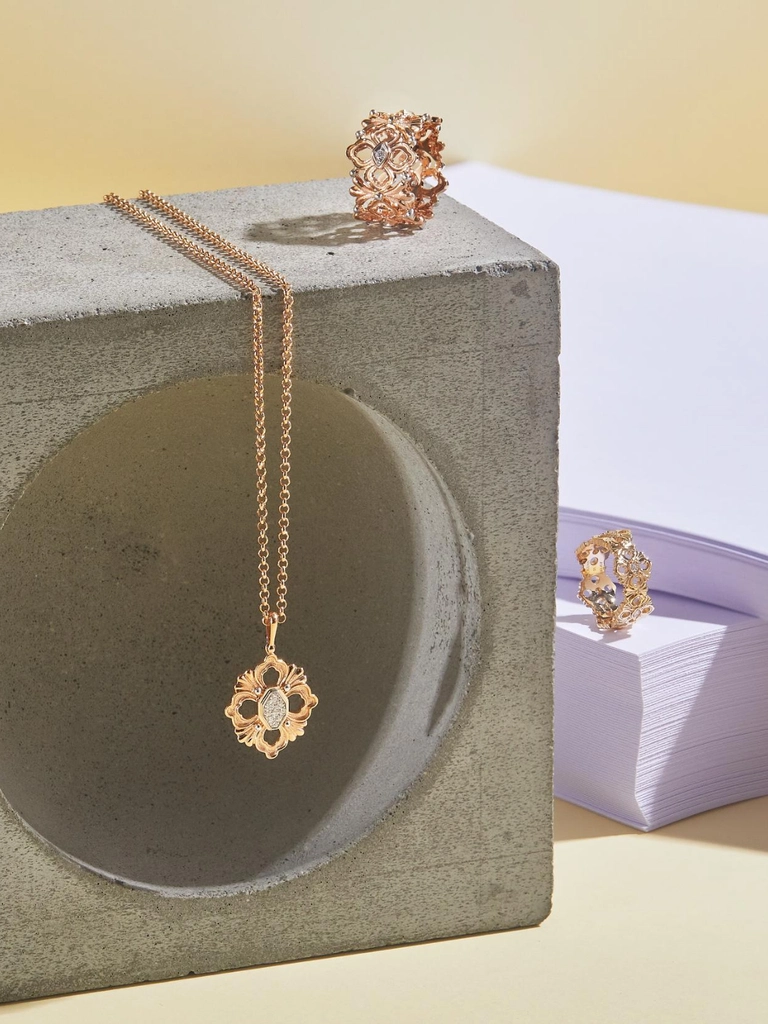
Eternelle rings carry ornament continuously around the finger. Openwork, floral patterns and diamonds proceed without a dominant front or obvious visual interruption, making the entire circumference active. The format expresses a broader Buccellati principle: decoration should inhabit the object’s structure instead of being applied to one privileged surface.
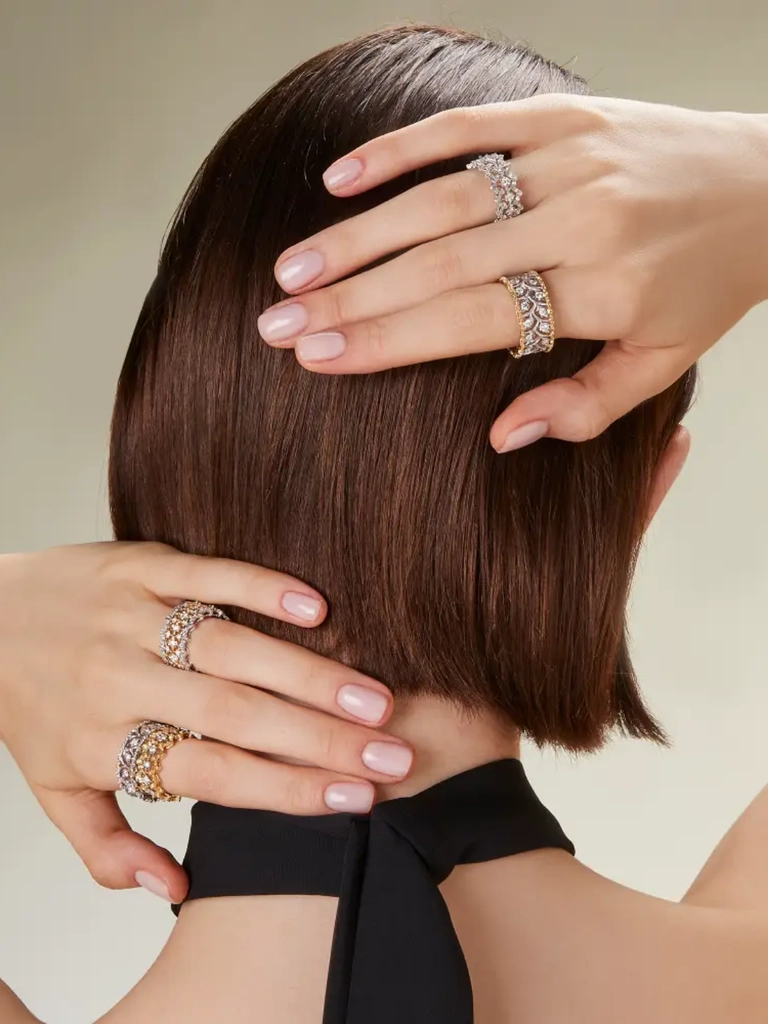
Buccellati jewels often appear as though they have survived from another century, although their age is an illusion created by contemporary hands. The matte gold, pierced architecture and engraved ornament resist the immaculate blankness of industrial luxury. Every surface has been worked, marked and complicated.
This historical atmosphere carries risk. Renaissance references, floral motifs and lace-like structures can descend into nostalgia when heritage becomes an excuse to stop designing. Buccellati avoids that failure at its strongest moments because technique remains active. The house studies how gold can behave, how light can enter it and how an object can gain volume while losing visual weight.
Buccellati’s survival proves that high jewellery can build an identity through the treatment of material itself. Stones can change, collections can expand and corporate ownership can shift, yet one principle remains unmistakable: gold enters the workshop as metal and leaves carrying the memory of lace.