MENU
Close





Dry brushing has returned through the beauty ecosystem that turned lymphatic drainage and the everything shower into cultural rituals, yet dermatologists tell a fascinatingly grounded story about what those bristles actually do.
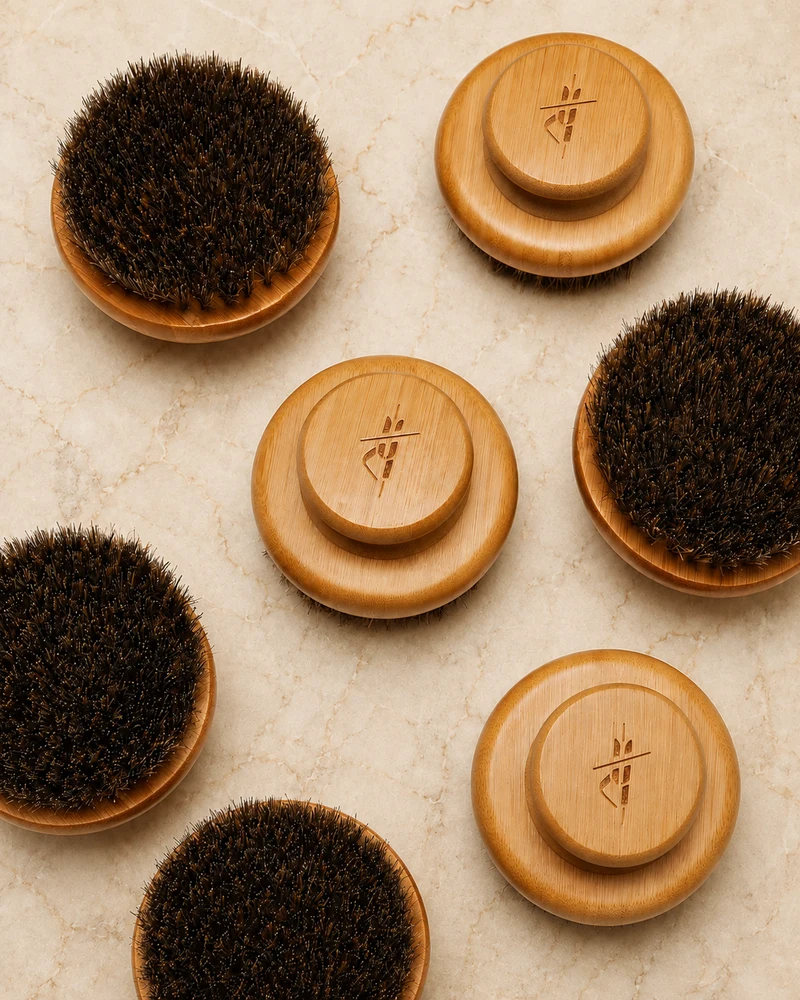
Dry brushing has returned through the beauty ecosystem that turned lymphatic drainage and the everything shower into cultural rituals, yet dermatologists tell a fascinatingly grounded story about what those bristles actually do.
August 24, 2026
Advertisement

Advertisement



Beauty loves technology, yet one of 2026’s rising body rituals begins with wood, bristles and a few minutes of friction. SpaSeekers’ 2026 Spa Trends Report found worldwide Google searches for dry brushing rose 49 percent year on year, while searches for “at-home lymphatic drainage” rose 53 percent. The proximity feels revealing. Both practices speak to a beauty culture increasingly fascinated by circulation, puffiness, tactile body care and the feeling of physically participating in one’s own treatment.
Drag a brush across dry skin and the body immediately answers with sensation, warmth and a visible flush. Surface cells loosen. The skin feels awake. Dry brushing creates instant sensory feedback before a serum has absorbed or a body cream has even been opened. The ritual therefore delivers something especially valuable in contemporary wellness: the convincing feeling that an action has occurred.
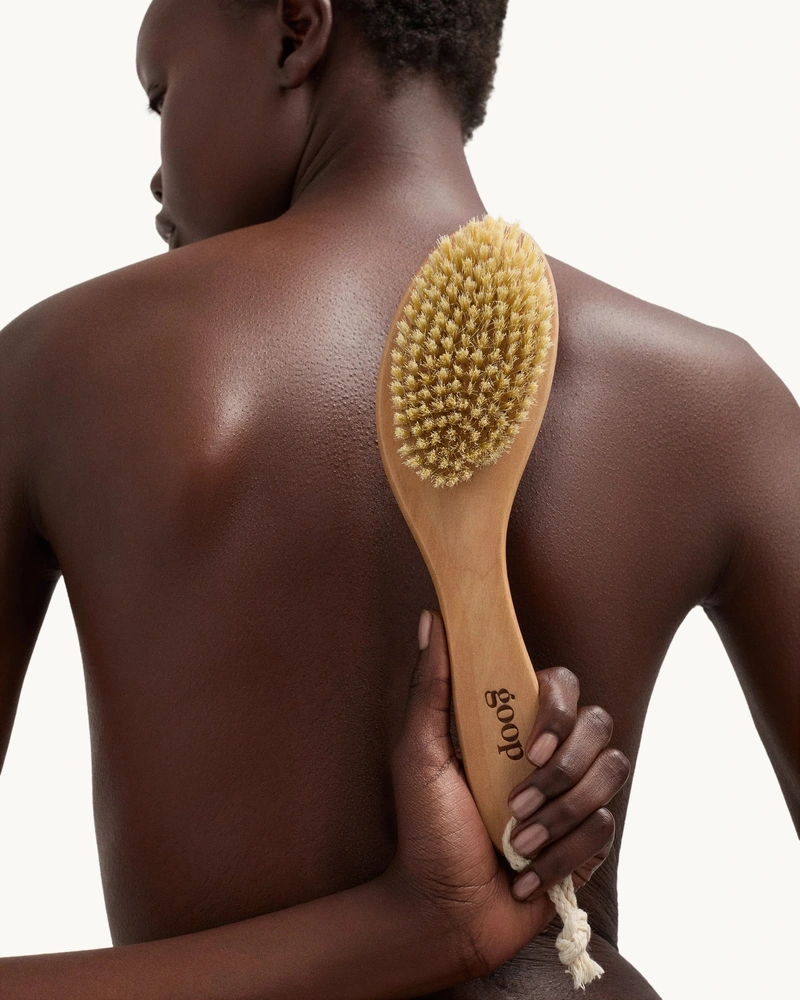
Gwyneth Paltrow has given that pre-shower moment a celebrity script. In her July 2026 Goop “Everything Shower,” Paltrow described herself as “obsessed with dry brushing” and placed whole-body brushing at the beginning of her routine, followed by hair care, body exfoliation and oil. Her Goop Beauty Ultimate Dry Brush retails for $25.
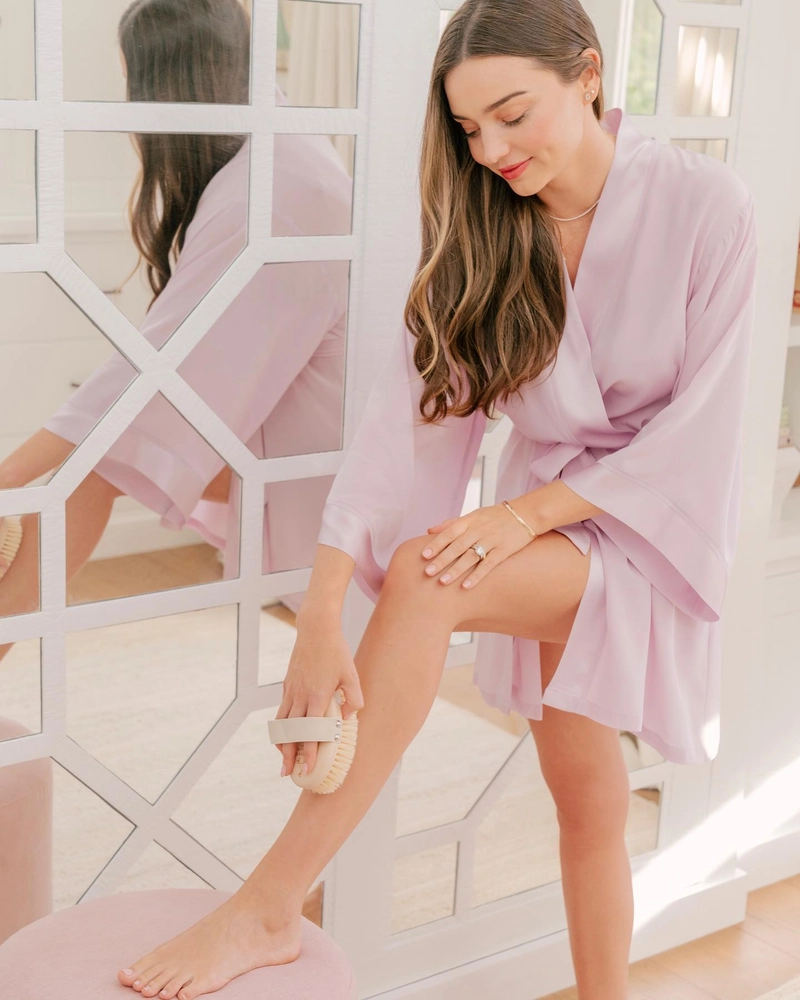
Miranda Kerr says she has practiced dry body brushing since age 21, starting around the ankles and moving upward before showering. Her KORA Organics routine presents it as a way to stimulate circulation, remove surface cells and wake up the body.
Tracee Ellis Ross has given the ritual an even quirkier purpose: in her Vogue Beauty Secrets routine, she described body brushing among the practices she uses to wake herself for 5 a.m. call times. The brush becomes almost a beauty version of an alarm clock.
The current fascination with dry brushing reaches beyond skin texture because ritual itself has become a beauty product. The everything shower, morning shed, facial massage and lymphatic routine all turn maintenance into choreography. A body brush adds resistance, sound and tactile drama to a shower routine that once centered primarily on cleansing.
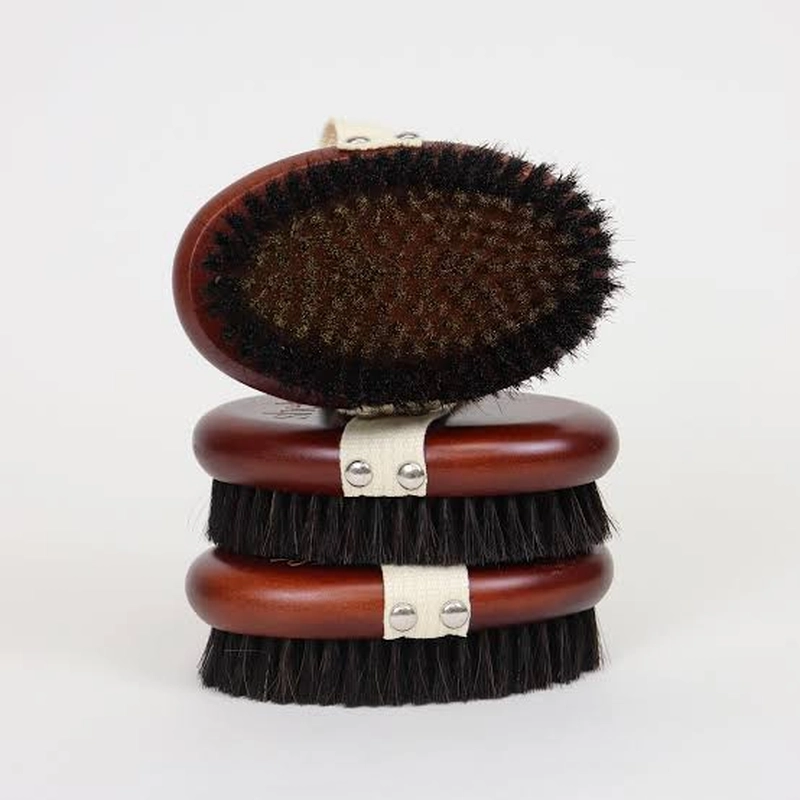
Luxury dry-brushing edit included the $69 HigherDose Supercharge Copper Body Brush, the $68 Shelter Skin Sculpting Copper Dry Brush, the $39 Joanna Czech Dry Massage Body Brush, the $26 Kate McLeod Dry Brush, and Goop’s $25 version. Wood and bristles have acquired the vocabulary of sculpting, ions, lymph, and biohacking.
The cultural question almost writes itself: How did rubbing the body with a brush become biohacking?
Board-certified dermatologist Dr. Michelle Henry, founder of Skin Aesthetics and Surgery of Manhattan, describes dry brushing as mechanical exfoliation created by friction against the stratum corneum, the outer layer of dead skin cells. She says scientific evidence supporting significant lymphatic effects from routine brushing remains sparse, while ordinary muscle movement, breathing and circulation already participate in lymph flow.
That distinction becomes crucial because beauty culture frequently places dry brushing beside manual lymphatic drainage. UCLA Health describes medical manual lymphatic drainage, or MLD, as a gentle technique with an established clinical role in conditions such as lymphedema and selected recovery settings. Trained practitioners work with superficial lymphatic structures according to anatomy and patient needs. The home body brush belongs to a different category of practice, even when both appear beneath the same “lymphatic” hashtag.
Pairing dry brushing with lymphatic drainage massage can create a fuller de-puffing and body-care ritual, with massage doing the stronger work on fluid movement and brushing supporting exfoliation and surface circulation; a practical rhythm is gentle dry brushing 1–3 times a week and lymphatic drainage massage 2–3 times a week or as tolerated.
Cleveland Clinic dermatologist Dr. Shilpi Khetarpal explains that increased surface circulation from brushing can temporarily plump the skin and soften the visible appearance of dimpling. That temporary visual shift carries enormous psychological power: a consumer brushes, looks down and sees a smoother-looking surface. The eye registers success immediately, even while the underlying architecture of cellulite follows its own biology.
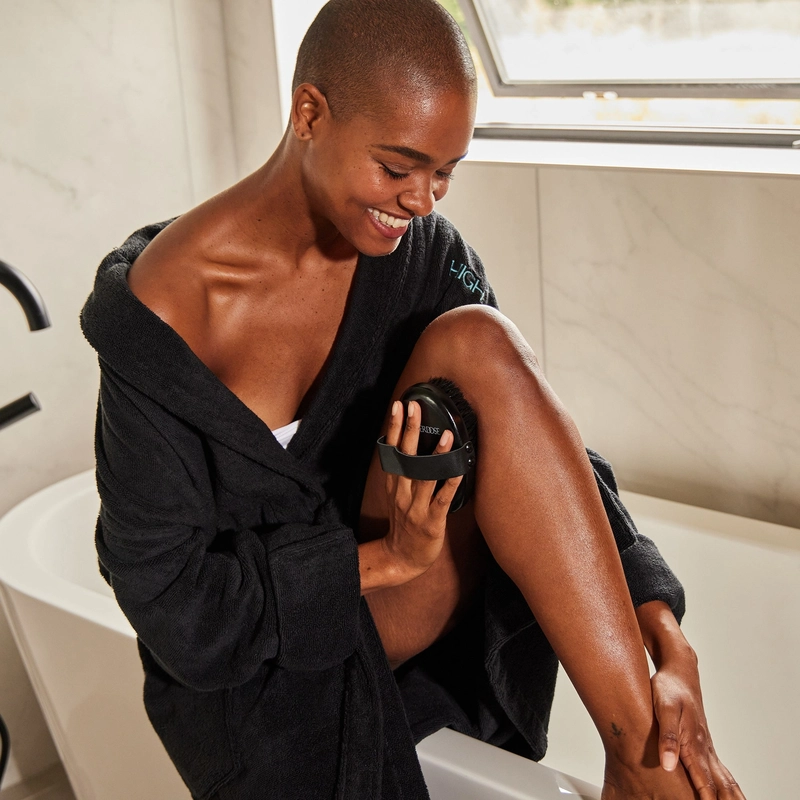
Board-certified dermatologist Dr. Arash Akhavan, founder of New York’s Dermatology & Laser Group, recommends brushing before showering and following with moisturizer to support the skin barrier. He recommends Goop’s Ultimate Dry Brush for its natural fibers and controllable handle. Dr. Lily Talakoub, founder of McLean & Potomac Dermatology and Skincare Center, emphasizes soft bristles, controlled pressure and careful frequency; she and Akhavan both recommend the Elemis Body Detox Skin Brush, which uses cactus-fiber bristles and a detachable handle.
Dr. Henry and NYU dermatologist Dr. Anna Karp explain that repeated friction can trigger inflammation and post-inflammatory hyperpigmentation in melanated skin. Consumer Reports also cited Mintel data showing reported hyperpigmentation among Black women in the United States rose from 10 percent in 2022 to 18 percent in 2024. Their guidance shifts the conversation toward gentle technique and barrier-aware exfoliation, with ingredients such as mandelic acid, lactic acid and urea available for people concerned about friction-related pigmentation.
A brush makes the body feel present. It asks the hands to participate. It turns the minutes before a shower into an intentional encounter with skin. In an era filled with complicated beauty machinery, dry brushing has become fashionable again through an ancient pleasure that still feels remarkably current: touch.
Advertisement