MENU
Close





The 2026 Venice Biennale, In Minor Keys, opened as a major art exhibition and somehow also as a live case study in institutional stress. Here, contemporary art looks less like a serene cultural forum and more like a very elegant emergency meeting.
The 2026 Venice Biennale, In Minor Keys, opened as a major art exhibition and somehow also as a live case study in institutional stress. Here, contemporary art looks less like a serene cultural forum and more like a very elegant emergency meeting.
May 18, 2026


The Venice Biennale has always enjoyed presenting itself as the high liturgy of contemporary art: Serious faces, large statements, national pavilions pretending to be above nationalism. In 2026, that performance became harder to sustain.
In Minor Keys opened on 9 May as the posthumous realization of Koyo Kouoh’s curatorial vision, after the curator’s death on 10 May 2025, almost exactly one year before the public opening. Kouoh had already set the exhibition’s title, theoretical framework, artist list, graphic identity, and exhibition architecture, so the Biennale proceeded with a team she had personally selected. The result is moving, historic, and impossible to separate from the fact that this edition has been haunted by absence from the start.
Kouoh’s late-2024 appointment marked a historic first, making her the first African woman to lead the Venice Biennale’s international exhibition. Her selection also signaled a broader curatorial shift, where the artist list reflects a near-even balance between those born in the West and those born across the Global South, underscoring a more deliberately expanded view of contemporary art’s geography.
Her death turned that milestone into something more fragile and more charged. Instead of replacing her with a new auteur, La Biennale decided to carry forward the project she had already built, relying on advisors Gabe Beckhurst Feijoo, Marie Hélène Pereira, and Rasha Salti, along with editor-in-chief Siddhartha Mitter and research assistant Rory Tsapayi. It is one of the rare cases in which the art world’s favorite phrase, “the show must go on,” sounded less like bravado and more like grief management with a press office.

The curatorial shift is visible in the makeup of the exhibition itself. The main exhibition includes 111 participants, and data analyses published ahead of the opening noted that more than 90% of them are living artists, a clear pivot from previous editions. The Venice Biennale 2024, specifically, leaned much more heavily on deceased artists in order to redress art-historical erasures. In other words, 2026 steps decisively back into the present. The Biennale even declined to award its usual Lifetime Achievement Golden Lions this year because Kouoh had not been able to finalize them before her death, which is a quietly devastating detail and, for an institution built on prizes, a notable admission that not everything can be tidied into ceremony.
Then came geopolitics, because apparently the art world had decided that formal innovation alone was too relaxing.
Russia returned to the Biennale for the first time since the 2022 invasion of Ukraine, not because Venice suddenly rediscovered innocence, but because the Biennale argued that Russia owns its pavilion and therefore had the right to participate. The decision drew immediate backlash from the European Union, which threatened to withdraw €2 million in funding, while Biennale president Pietrangelo Buttafuoco defended the move by insisting that the exhibition was “not a court” but a space for dialogue. That position may sound noble in theory. In practice, it produced protests, inspectors, and a distinctly courtroom-adjacent atmosphere.
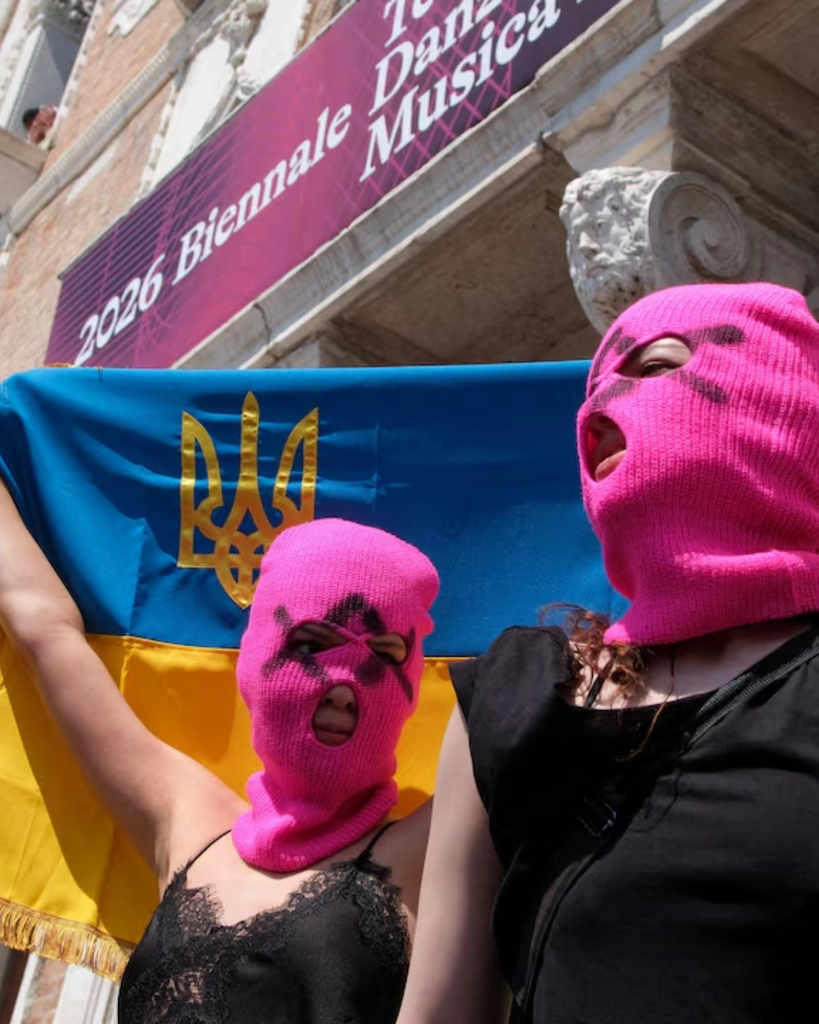
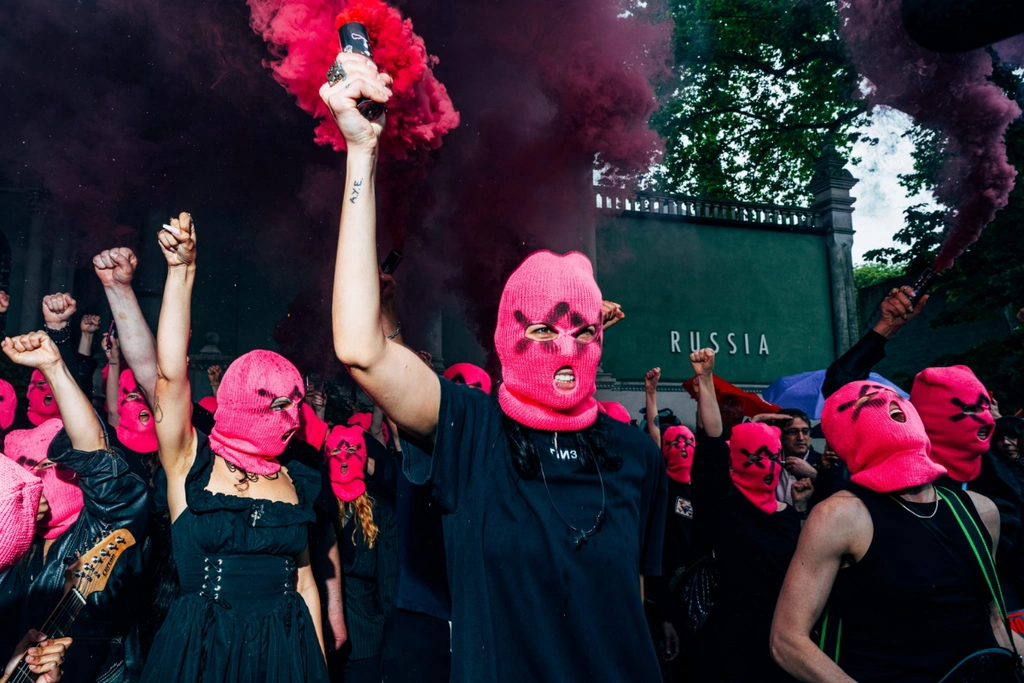
Israel’s participation triggered another front of protest. The Art Not Genocide Alliance (ANGA) organized actions against the Israeli pavilion, and on 8 May, a strike over Israel’s inclusion led roughly a dozen pavilions to close fully or partially during the preview. Around the same time, Pussy Riot and allied activists targeted the Russian pavilion with smoke flares and anti-war protest, briefly forcing it to close. If the old Biennale fantasy was that each pavilion offered a tidy national self-portrait, Venice Biennale 2026 replaced it with something more accurate: A row of buildings containing art, diplomacy, outrage, and occasionally police.
Other absences sharpened the sense of fracture. Iran withdrew just days before the Biennale opened, with organizers giving no public explanation.
South Africa, meanwhile, arrived in the most Venice way possible: By being officially absent and unofficially unavoidable. After Gabrielle Goliath’s Gaza-related project Elegy was canceled by the South African government, the country’s official pavilion was left empty, while the work went on view nearby outside the Biennale’s official framework.
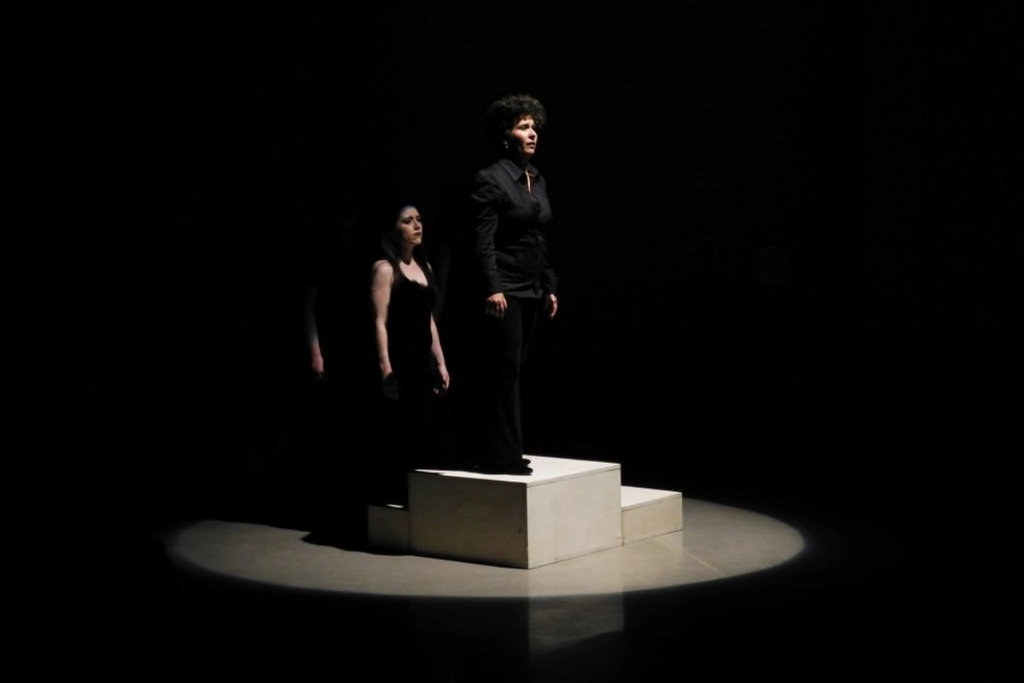
The result was perfect symbolism: The building empty, the argument alive, the institution still somehow calling this an orderly edition.
The sharpest institutional rupture came not from protesters outside but an inside job.
On 30 April, the entire five-member international jury selected by Kouoh resigned. They had previously declared they would not award prizes to artists from countries whose leaders were subject to International Criminal Court charges or arrest warrants, a position widely understood to apply to Russia and Israel. Rather than preside over an award structure they considered compromised, they walked away. At that point the Biennale did what great institutions do in a crisis: It invented a new system and hoped everyone would find the rebrand inspiring.
That rebrand arrived as the “Visitors’ Lions.” On the same day the resignations were announced, La Biennale established two public-vote awards, one for the best participant in In Minor Keys and one for the best national participation, with the ceremony postponed to 22 November. Officially, this was presented as a response to an “exceptional” geopolitical situation. Unofficially, it looked a lot like the Golden Lion system had collapsed into audience participation. Artists at the Venice Biennale reportedly claimed they did not want to win this “Visitors’ Lions” at all.
By 11 May, more than 70 artists had withdrawn from consideration in solidarity with the resigned jury, including prominent figures such as Alfredo Jaar, Walid Raad, and Alice Maher. It takes a special kind of biennial chaos to make artists boycott an award that no longer exists in its original form, but Venice managed it beautifully.
No major art event would be complete without the United States finding a way to generate its own subplot. A Hyperallergic April Fools piece from 1 April 2025 claimed that Trump had withdrawn the US from Venice via an executive order called “Restoring Blandness to American Art,” and that the pavilion would be turned into a steakhouse called Well Done. The important thing is that this was satire, and Hyperallergic labeled it as satire. The slightly less reassuring thing is that the real 2026 US pavilion story was strange enough that the joke aged unusually well.
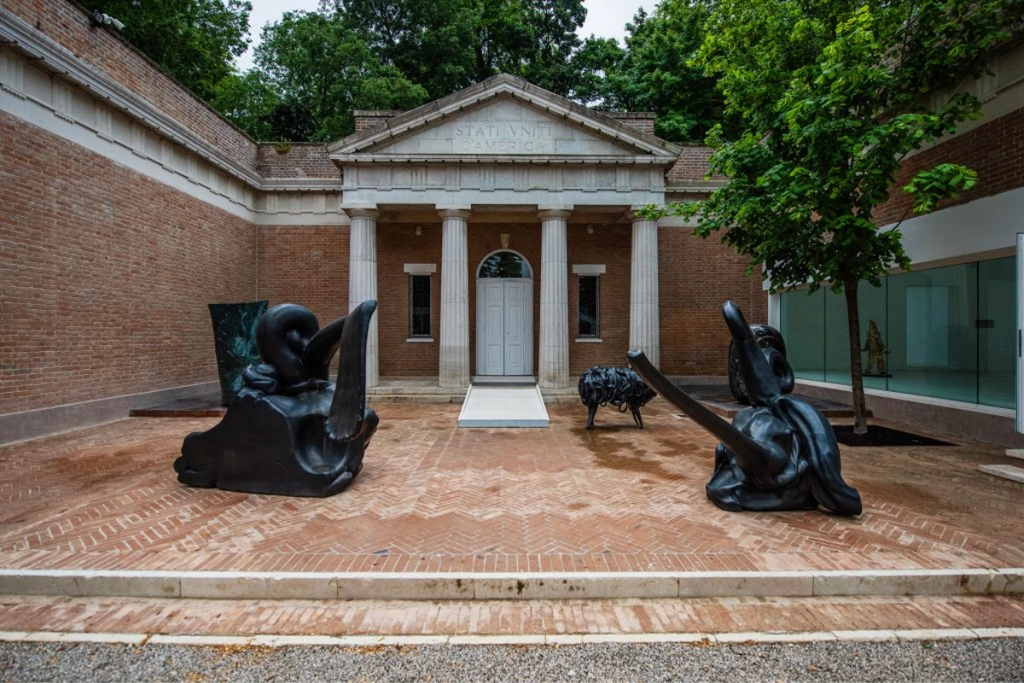
In reality, the US selection process became controversial after the State Department bypassed the traditional independent review mechanism, and later reporting described the pavilion as ending up in the hands of a commissioner with no art-world or museum experience but strong political proximity to Trump’s orbit. The artist ultimately chosen, Alma Allen, emerged after a fraught process that followed the collapse of an earlier plan and a delayed announcement during the US government shutdown. The result was not the fake steakhouse, sadly, but a real pavilion surrounded by questions about politicized cultural administration and pressure to foreground “American values.”
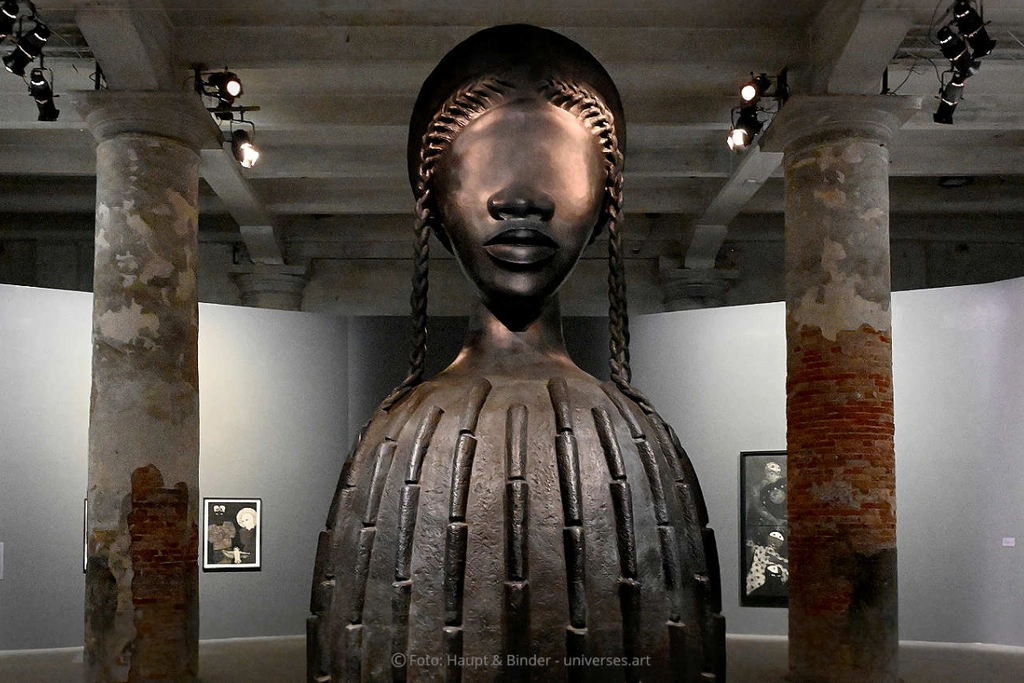
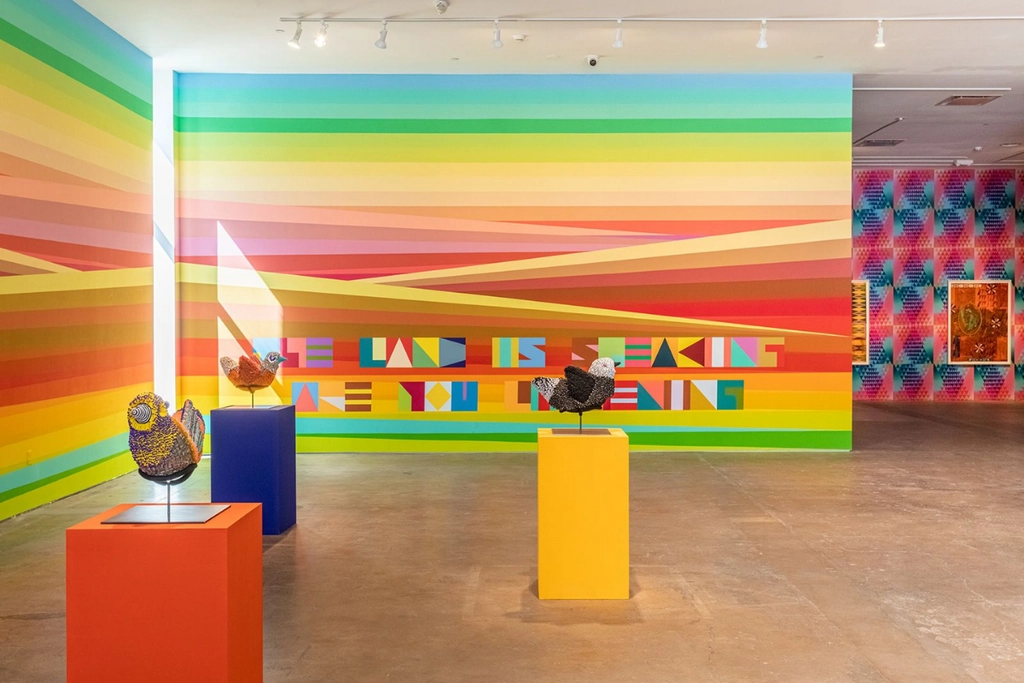
The flop of the US pavilion is quiet telling. Alma Allen's five extremely unremarkable sculptures in front of the building, along with some 20 works inside, are a stark contrast to the highly acclaimed, transformative exhibitions by Simone Leigh (2022) and Jeffrey Gibson (2024), which critically examined colonialism and empire.
“The talk around Venice that day was just how empty the US Pavilion was,” Maximiliano Durón writes. “During my visit, people came and went, not in throngs, but in ones and twos, dipping in and out quickly. They seemed to come out of sheer curiosity, but found nothing that made them stay.”
Venice, ever generous, gave the United States exactly what it seems to crave most: An international stage on which to look administratively unwell.
The bitter joke of Venice Biennale 2026 is that In Minor Keys may be one of the most emotionally serious editions in years, yet it opened inside an institutional atmosphere that felt louder, pettier, and more unstable than the exhibition itself. Koyo Kouoh’s posthumous project survives, and by many accounts it does more than survive: It offers a genuine curatorial argument about listening, continuity, and the present. But the surrounding machinery spent the opening week producing a different masterpiece, one involving resignations, protests, diplomatic outrage, public-vote prizes, empty pavilions, and satire indistinguishable from policy.
The world is going through the crisis of grief, protests, national withdrawals, jury resignations, and administrative improvisation. Art, as always, is reflective. Venice Biennale 2026 offers some of the most controversial pieces that have sparked harsh criticism and ridicule, but rising amidst the chaos, art of quality at the Venice Biennale 2026 speaks for itself.