MENU
Close





Luxury rail travel is returning as a slower, more private and more emotionally charged form of high-end travel. From La Dolce Vita Orient Express and the Venice Simplon-Orient-Express to Britannic Explorer and Dream of the Desert, a new generation of trains suggests that the journey can sometimes be more valuable than the destination itself.
Luxury rail travel is returning as a slower, more private and more emotionally charged form of high-end travel. From La Dolce Vita Orient Express and the Venice Simplon-Orient-Express to Britannic Explorer and Dream of the Desert, a new generation of trains suggests that the journey can sometimes be more valuable than the destination itself.
July 3, 2026


After years in which travel was defined by speed, airports and tightly packed itineraries, the train is returning in a different form: slower, more private and richer in experience. For high-end travellers, luxury rail travel is no longer simply a way to move from one city to another. It becomes a moving hotel, a fine-dining room, a design salon and a private compartment from which to watch the world pass by the window.
This revival is not driven by nostalgia alone. Recent travel forecasts have identified luxury train hopping as a notable trend for 2026, reflecting growing demand for longer rail journeys that feel more personal, more immersive and more deliberately paced. The wider rise of slow travel also helps explain why the train has become attractive again: it offers escape not only from crowded airports, but from the pressure to experience everything too quickly.
The greatest appeal of luxury rail travel lies in the way it reverses the usual logic of travel. An aircraft gets travellers to their destination as quickly as possible. A luxury train makes the state of being “on the way” the most memorable part of the trip.
In a beautifully appointed carriage, guests can wake up to the English countryside, have dinner while the train crosses Italy, or watch the sunset fall across the Saudi desert from an observation car. The landscape is no longer something outside the itinerary. It becomes part of the stay.
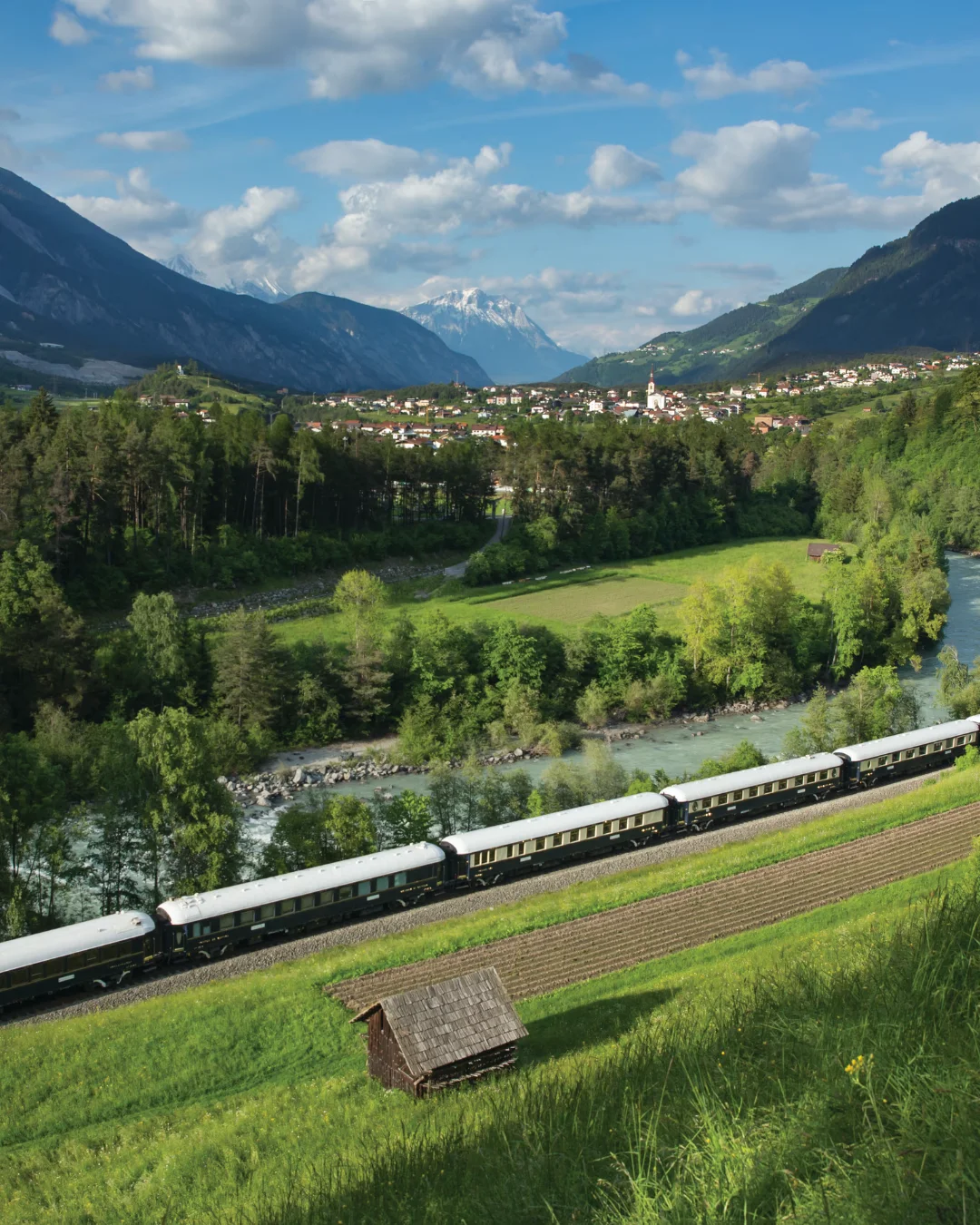
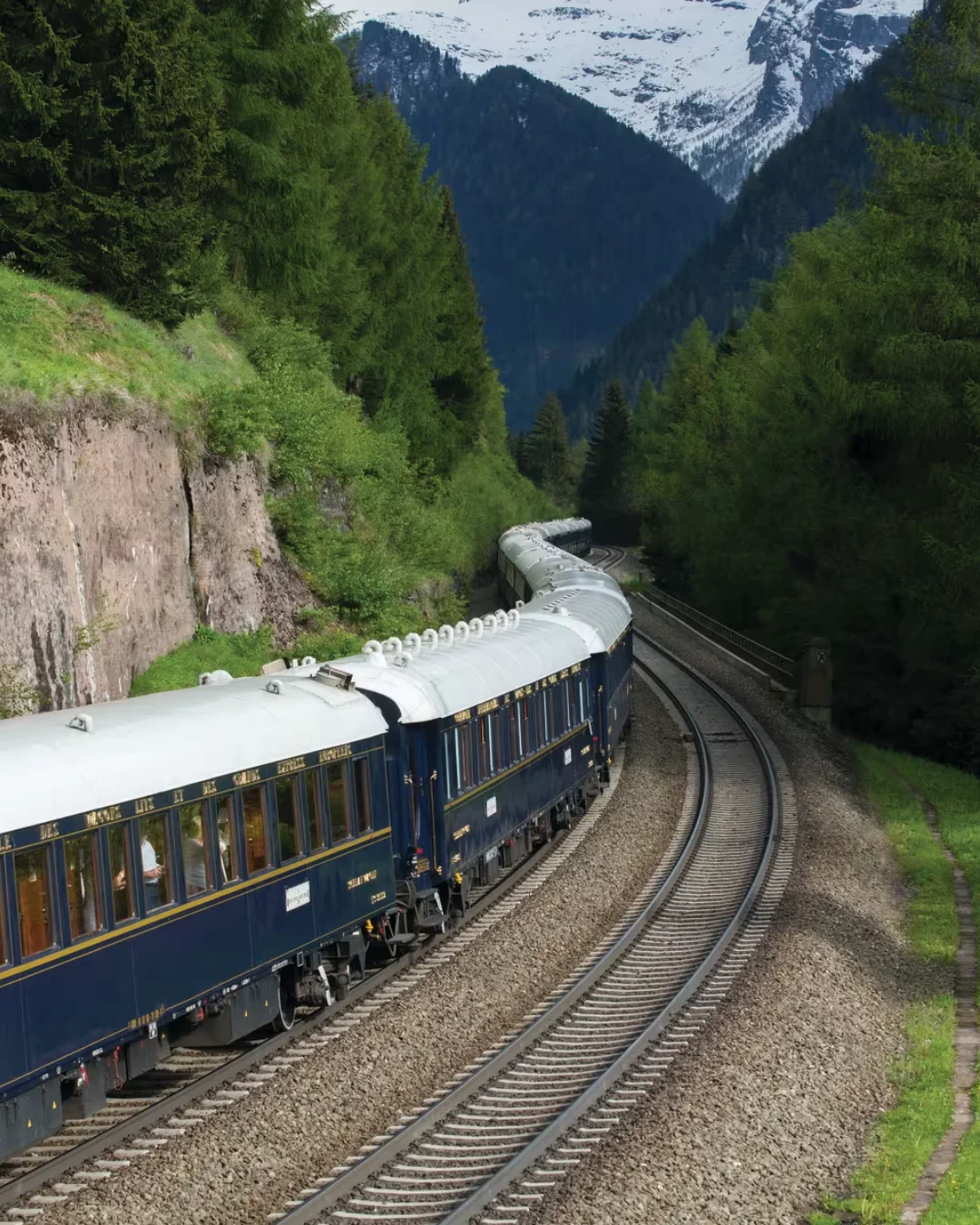
That is why many luxury trains are now designed like boutique hotels on rails. Private cabins, en-suite bathrooms, lounges, dining cars, bars, spas, observation cars and highly personalised service turn the train into a complete living environment. Luxury does not come from speed. It comes from the ability to stretch time.
At the outer edge of the luxury rail imagination stands G Train, a private train concept developed by French designer Thierry Gaugain. Described as a “palace on wheels,” the project has been estimated at around 350 million USD and imagined as a personal asset for a single owner, closer to a superyacht or private jet than a commercial train journey.
Its most distinctive feature is a smart-glass exterior that can shift from transparent to opaque, allowing passengers to enjoy panoramic views while retaining complete privacy when desired. The concept has been described as a fourteen-car, nearly 400-metre train with private suites, reception spaces, dining areas, a spa, gym and outdoor terraces that can open out from the train itself.
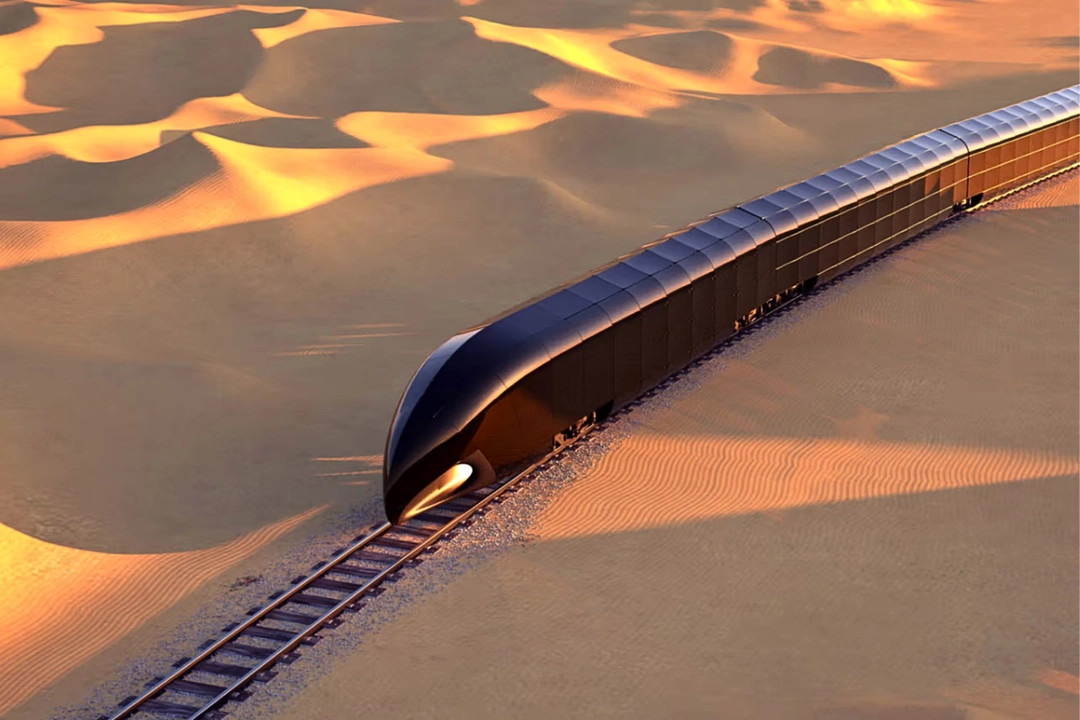
Although G Train remains a concept rather than a commercially operating service, it shows how far luxury rail travel can go. The train is no longer merely public infrastructure or nostalgic heritage. At its most extreme, it becomes a moving piece of architecture for the super-rich.
If G Train represents the future, Europe remains the place where luxury rail travel keeps its most classic charm. The Venice Simplon-Orient-Express by Belmond is one of the clearest symbols of this appeal, known for restored Art Deco carriages, polished wood, refined upholstery and the sensation of returning to the golden age of travel.
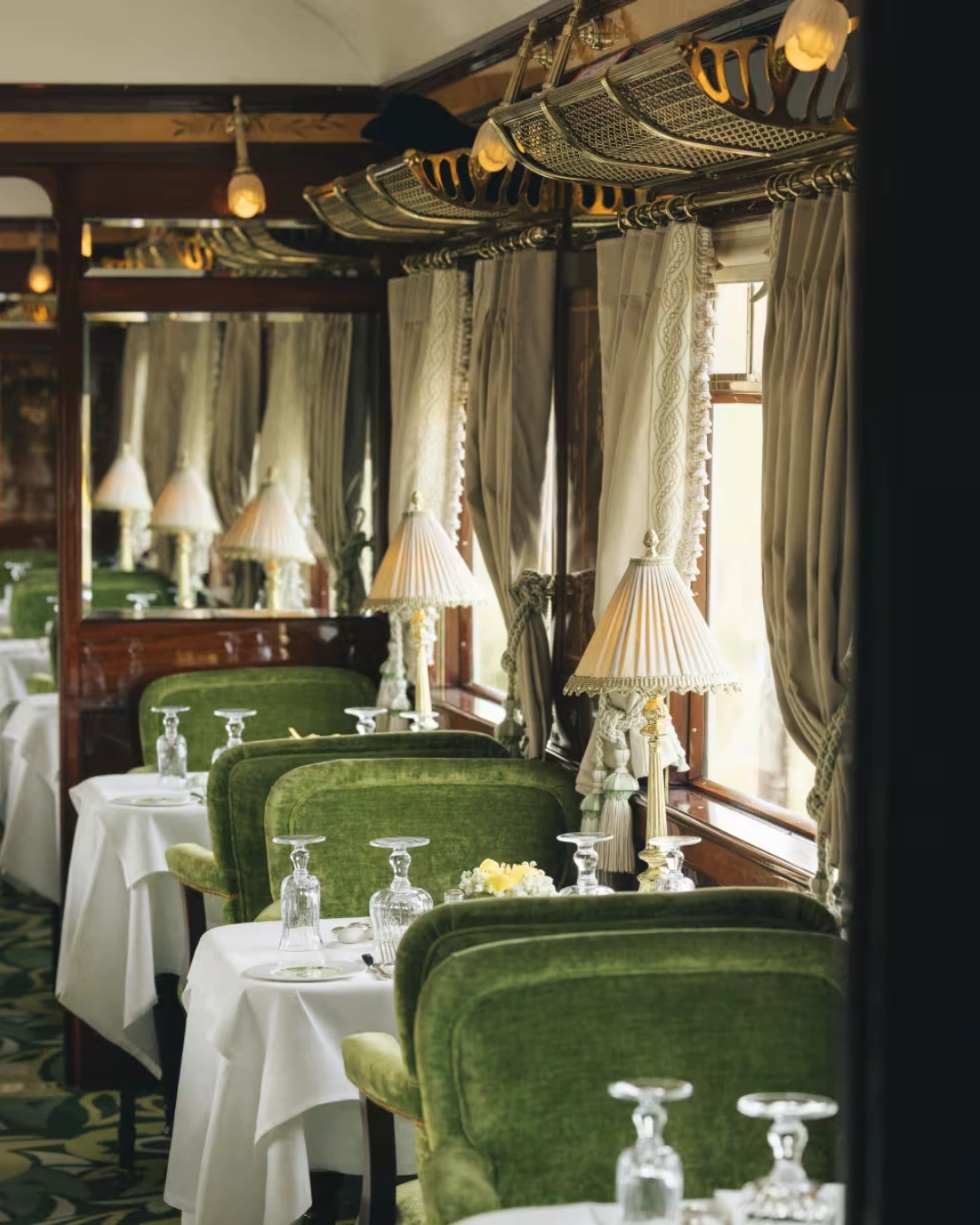
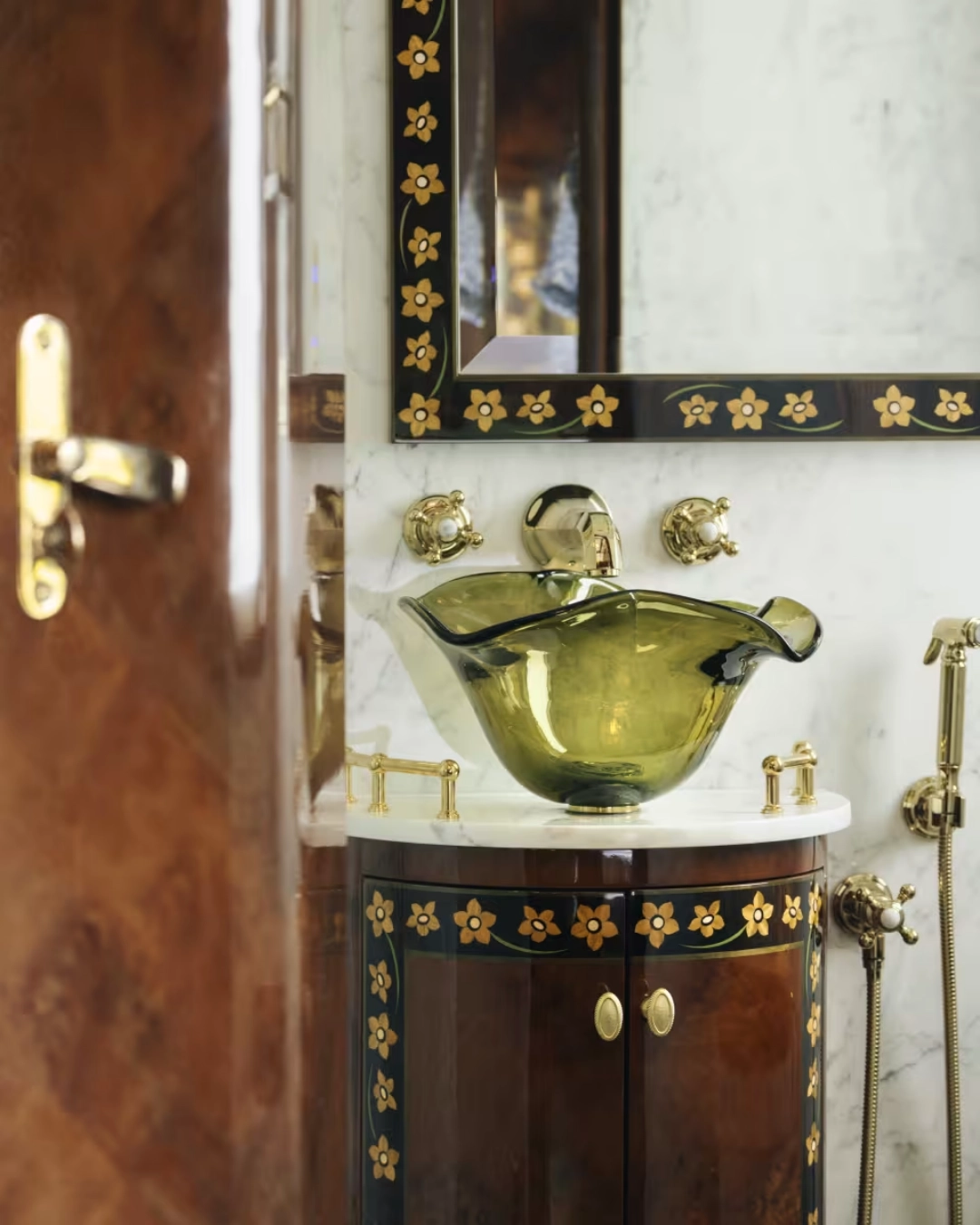
British Pullman, also part of the Belmond world, translates that spirit into shorter journeys within the United Kingdom. Instead of a long sleeper train experience, British Pullman focuses on day trips, fine dining and departures from London to heritage destinations such as Bath, York or Canterbury.
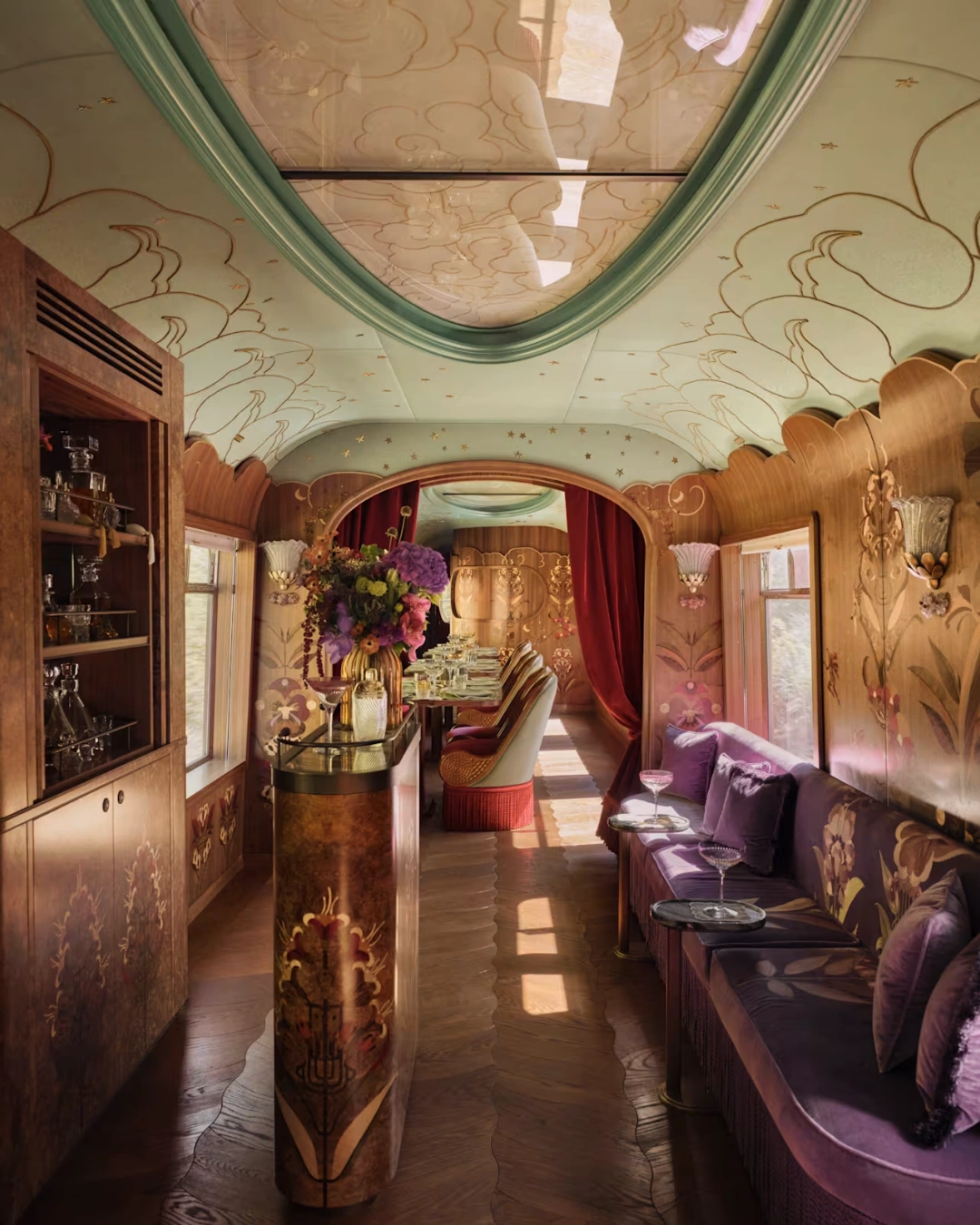
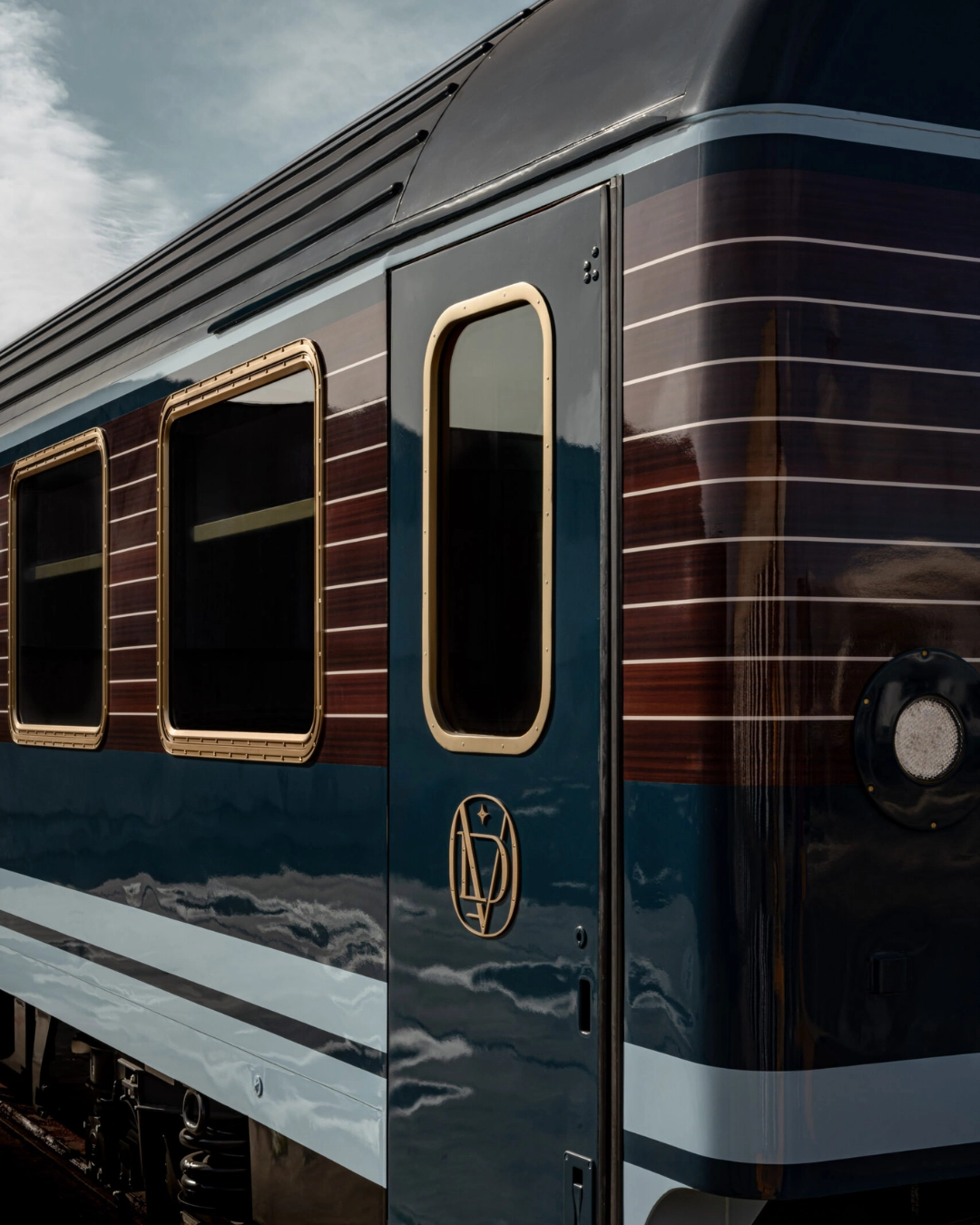
One of the most interesting new examples is La Dolce Vita Orient Express in Italy. Rather than merely reviving the memory of the Orient Express, it reinterprets that mythology through the glamour of 1960s Italy. Its official concept pays tribute to Italian heritage, culture and lifestyle, with an aesthetic inspired by mid-century Italian design.
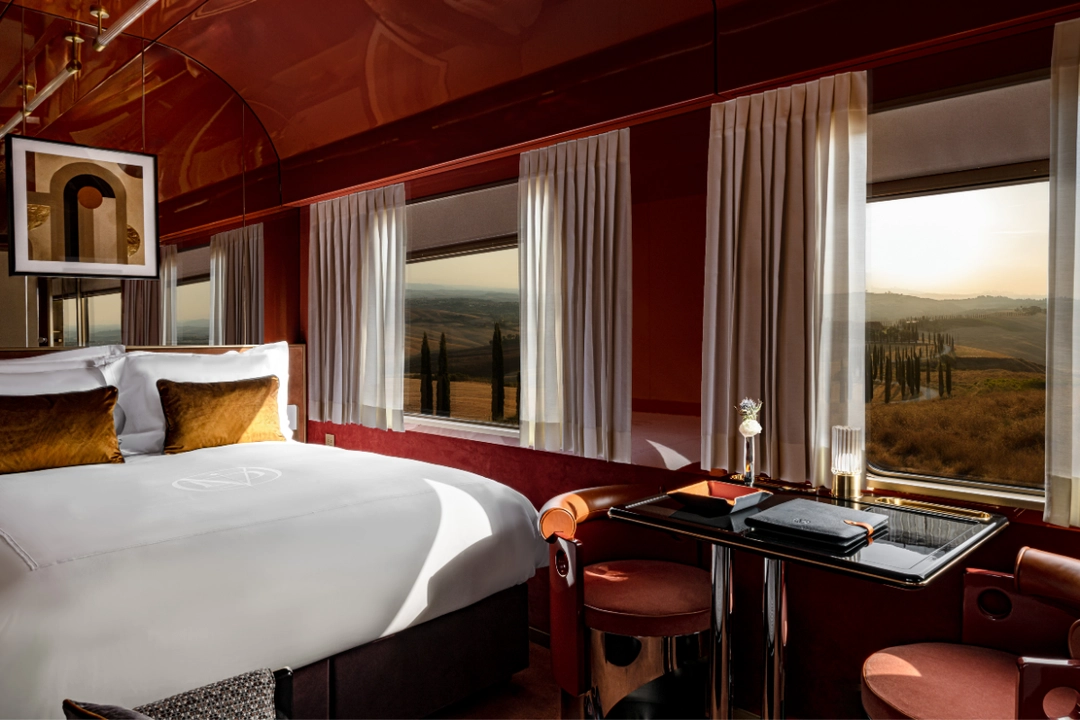
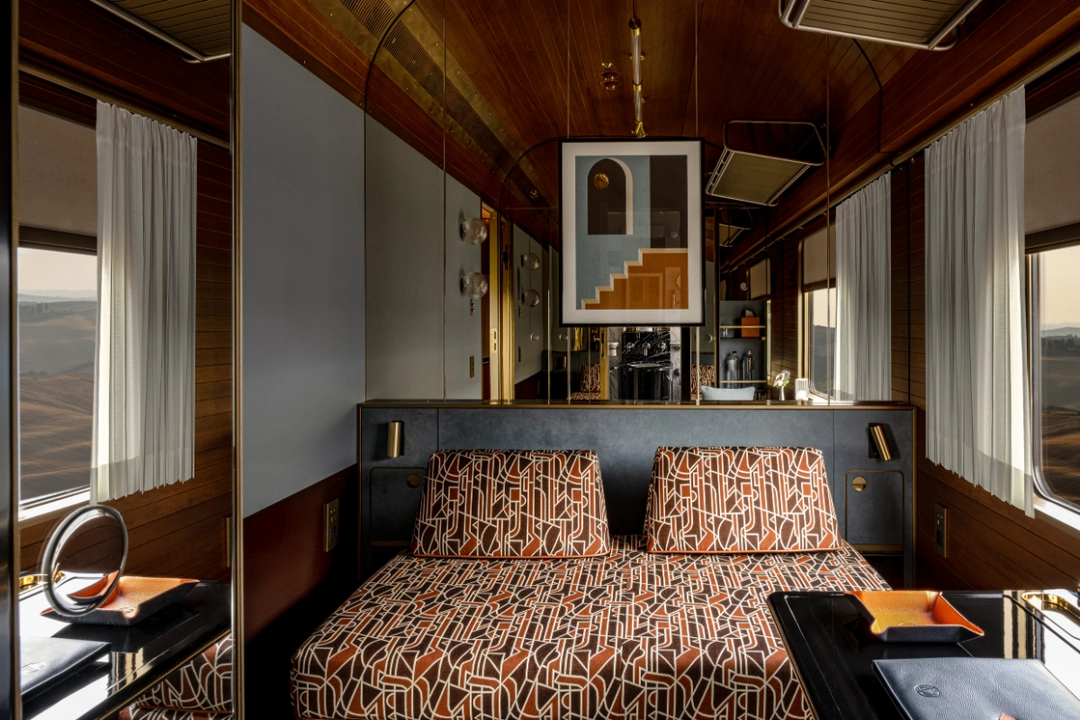
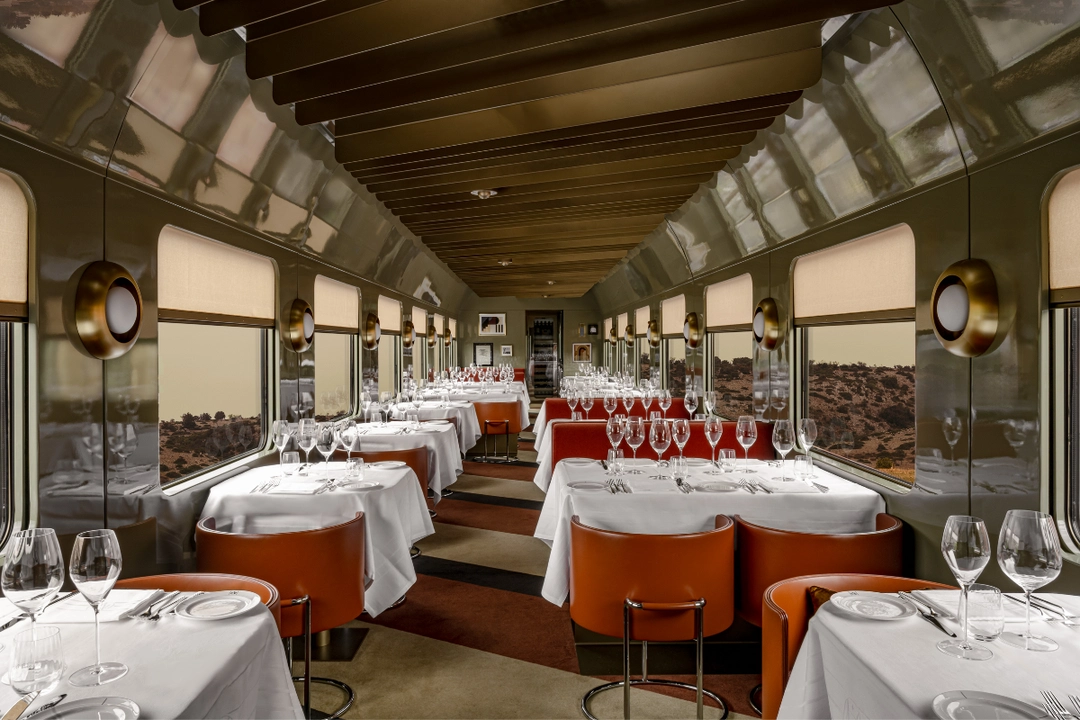
La Dolce Vita Orient Express sells more than a route. It sells an image of Italy as cinema. The carriages are remade as a moving film set, where landscape, cuisine, design and a slower rhythm of life combine to create the very idea of la dolce vita.
The revival of luxury rail is no longer limited to Europe. In the United Kingdom and Wales, Britannic Explorer, A Belmond Train, has been introduced as a new luxury sleeper train departing from London towards Cornwall, Wales, the Lake District and other scenic regions. It positions the British landscape through the lens of boutique hospitality.
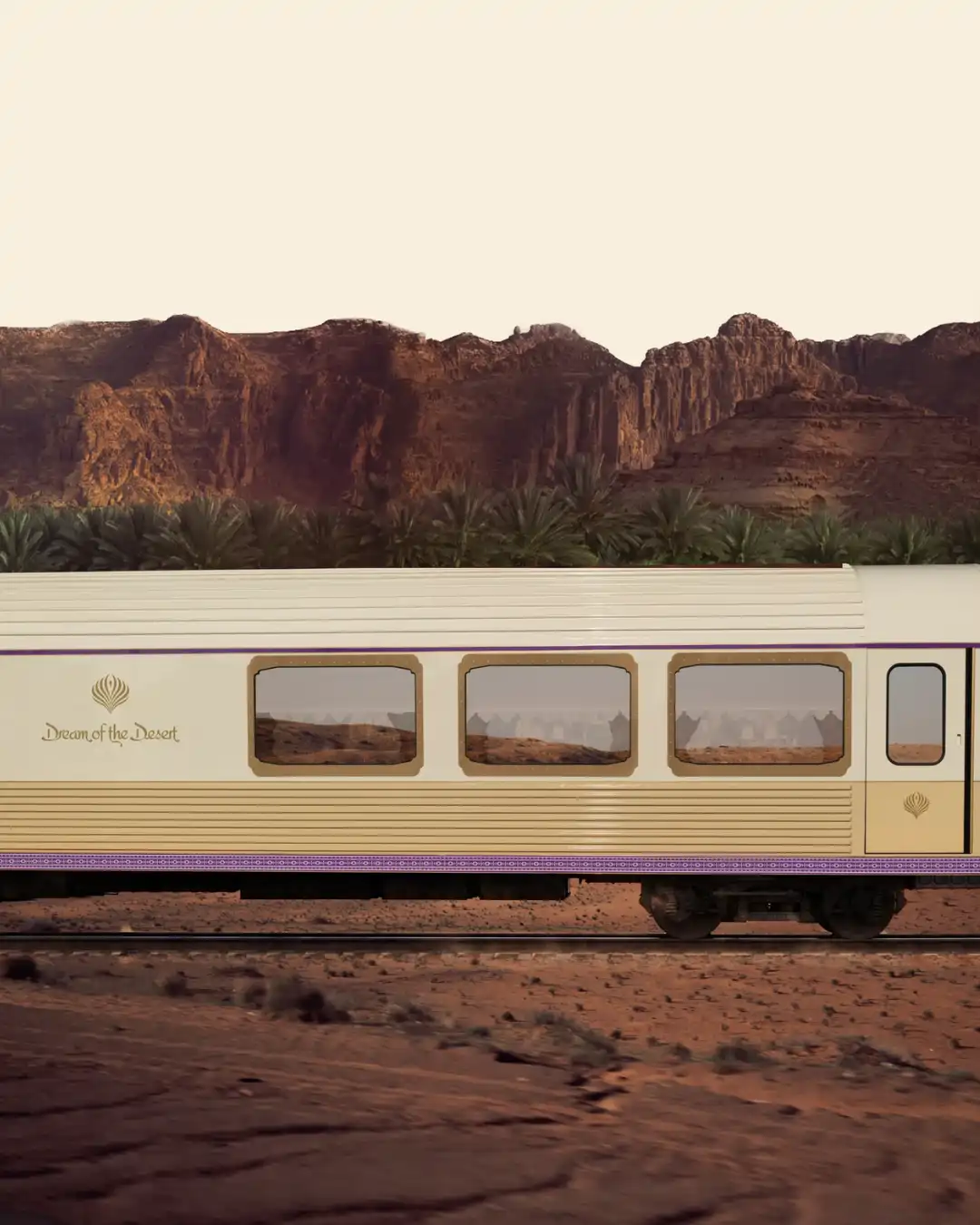
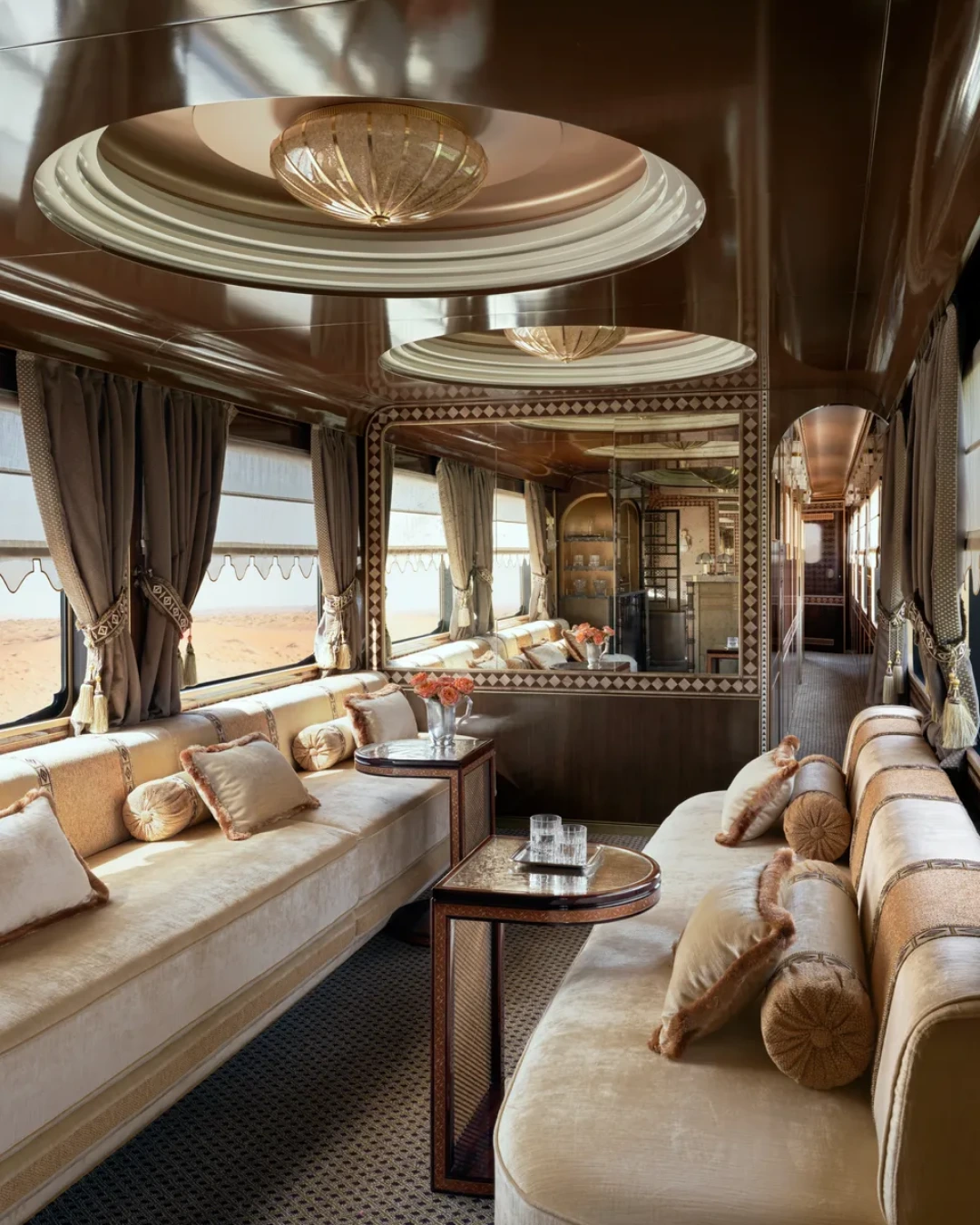
In the Middle East, Dream of the Desert is one of the most compelling new examples. Presented as Saudi Arabia’s first ultra-luxury train, it is designed to travel from Riyadh across desert landscapes, combining high-end design, local culture and immersive travel. The train has been described with fourteen carriages, thirty-three suite cabins, two restaurant cars and a lounge inspired by the majlis.
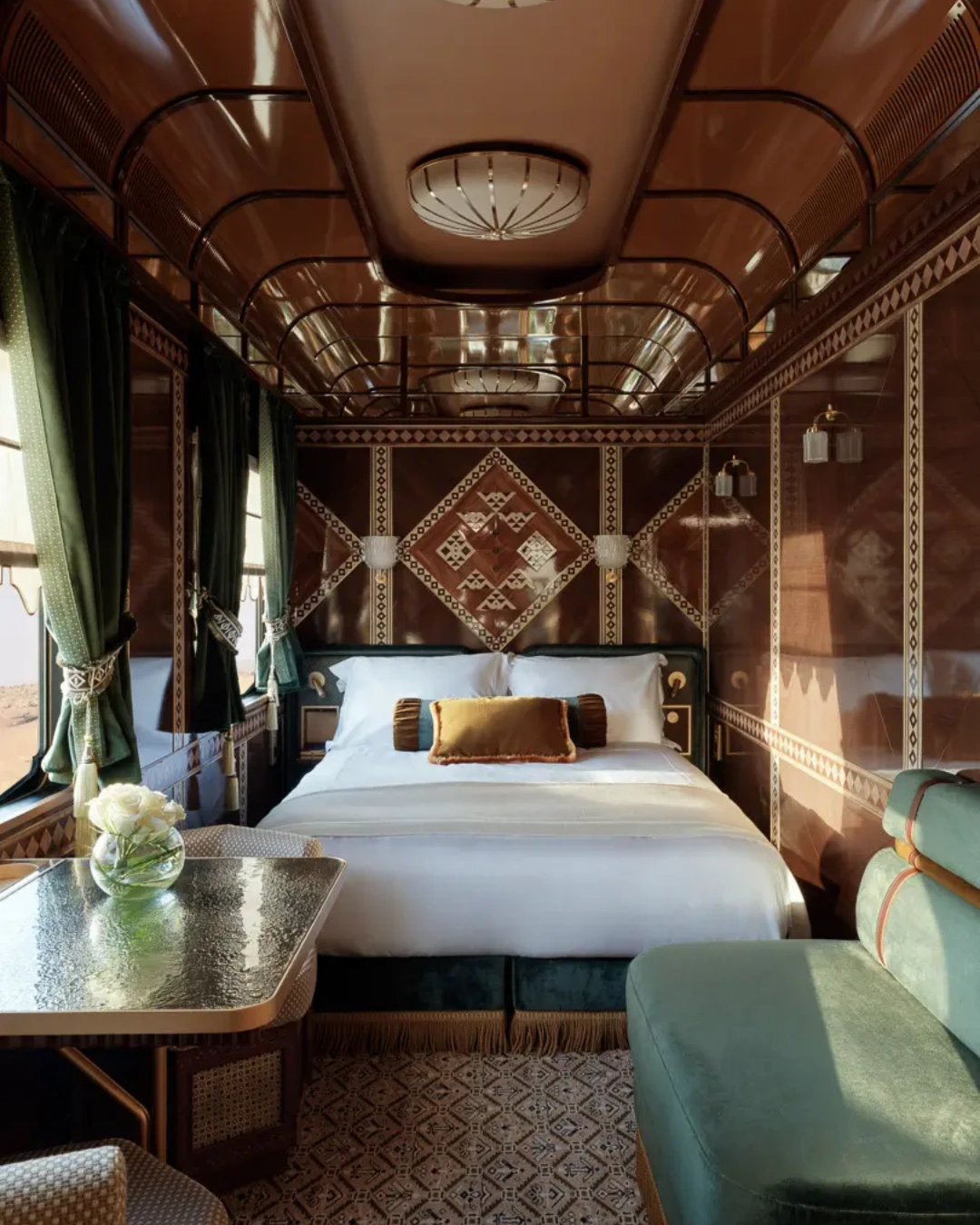
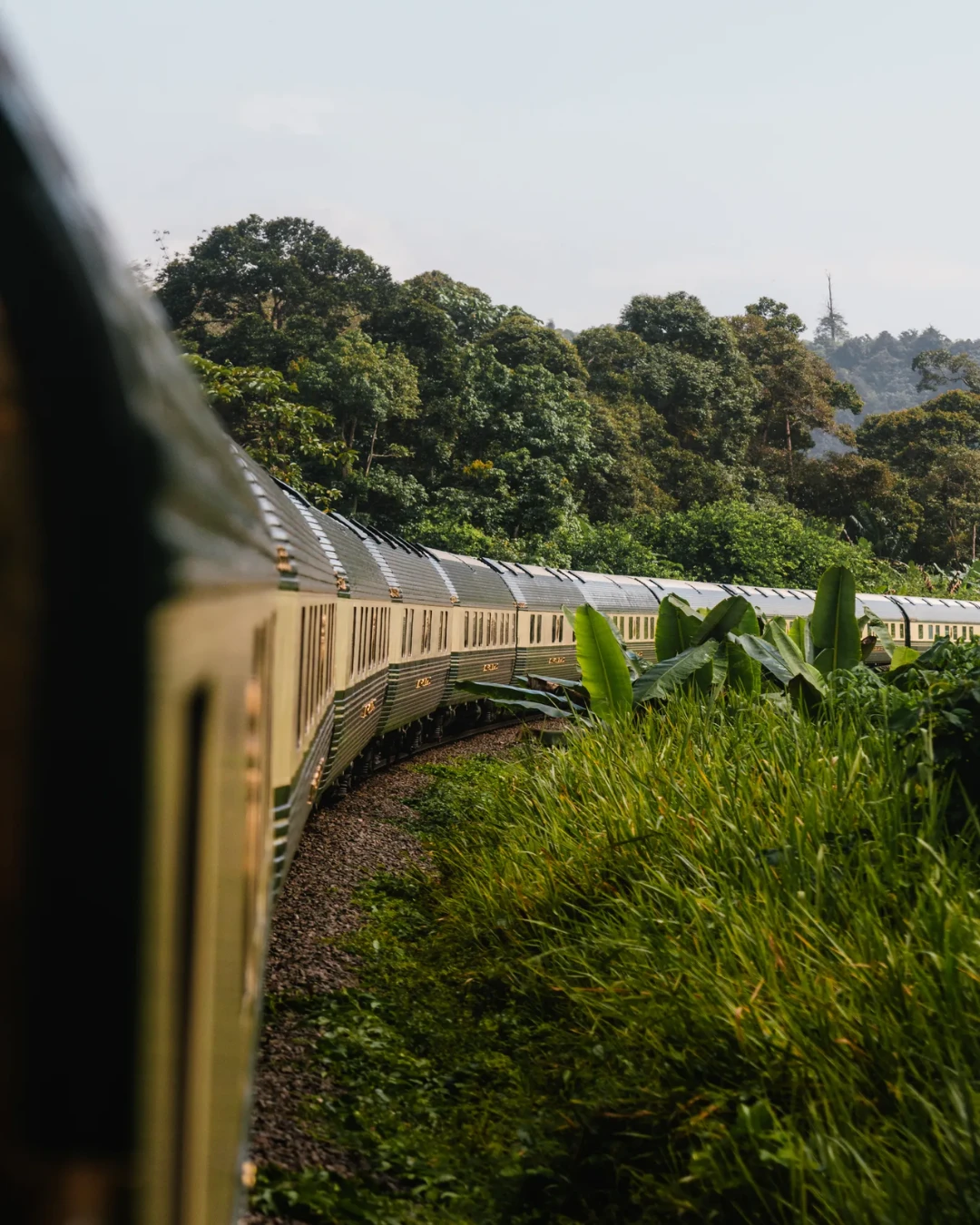
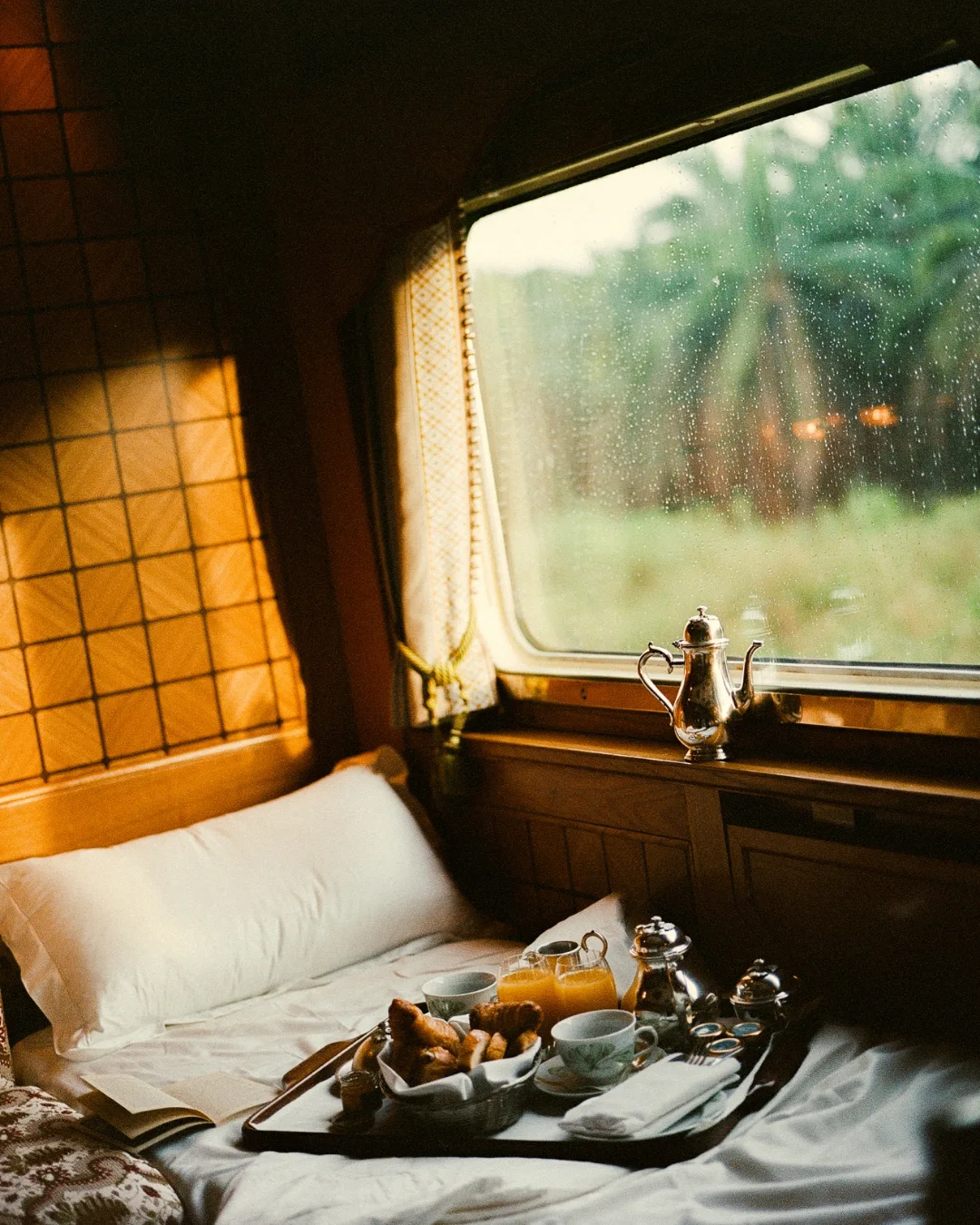
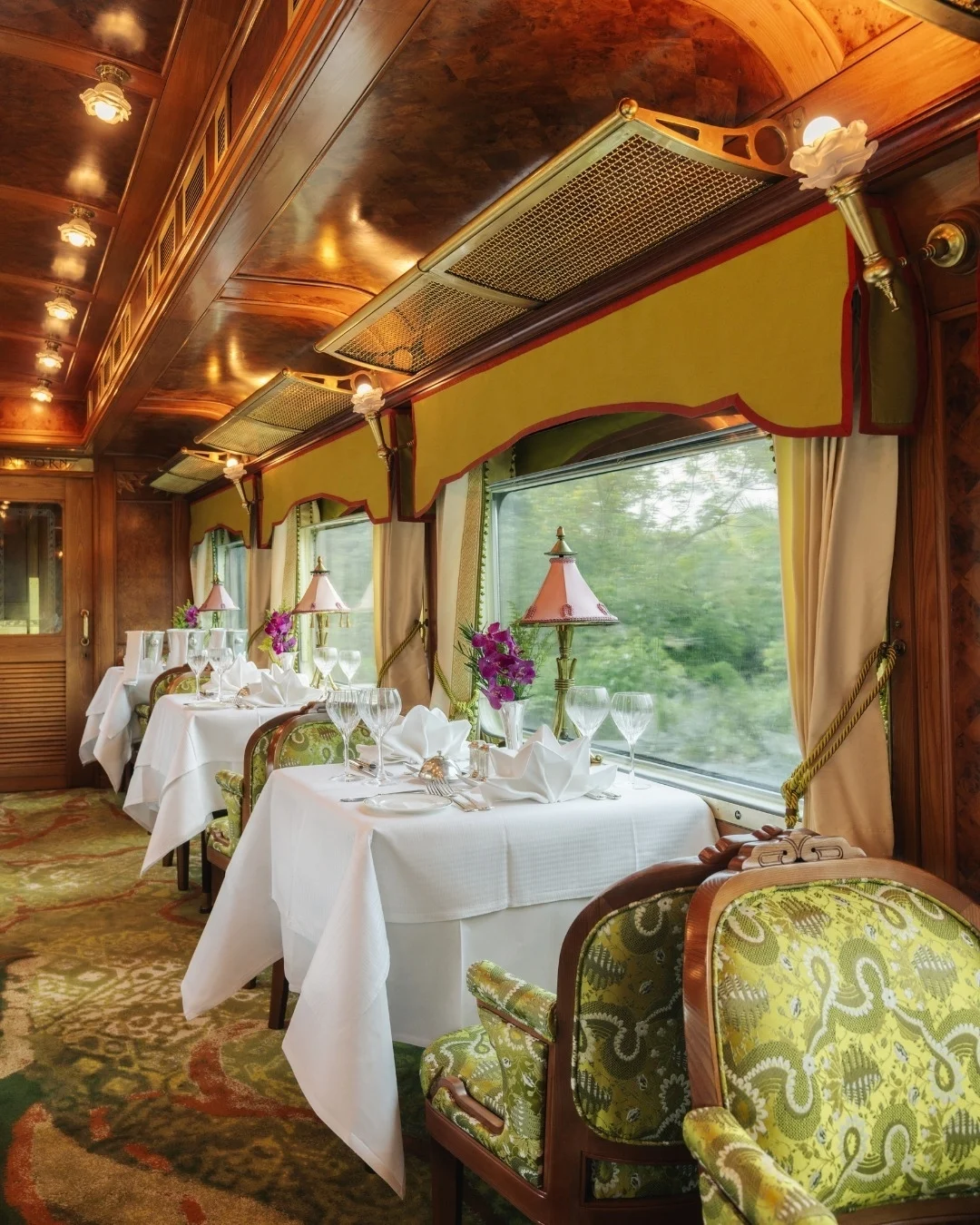
In Southeast Asia, Belmond’s Eastern & Oriental Express shows that luxury rail can move beyond the European Art Deco template into tropical climate, colour and culture. After a pause, the train returned with journeys through Singapore and Malaysia, taking guests through rainforest, heritage cities and local cultural landscapes.
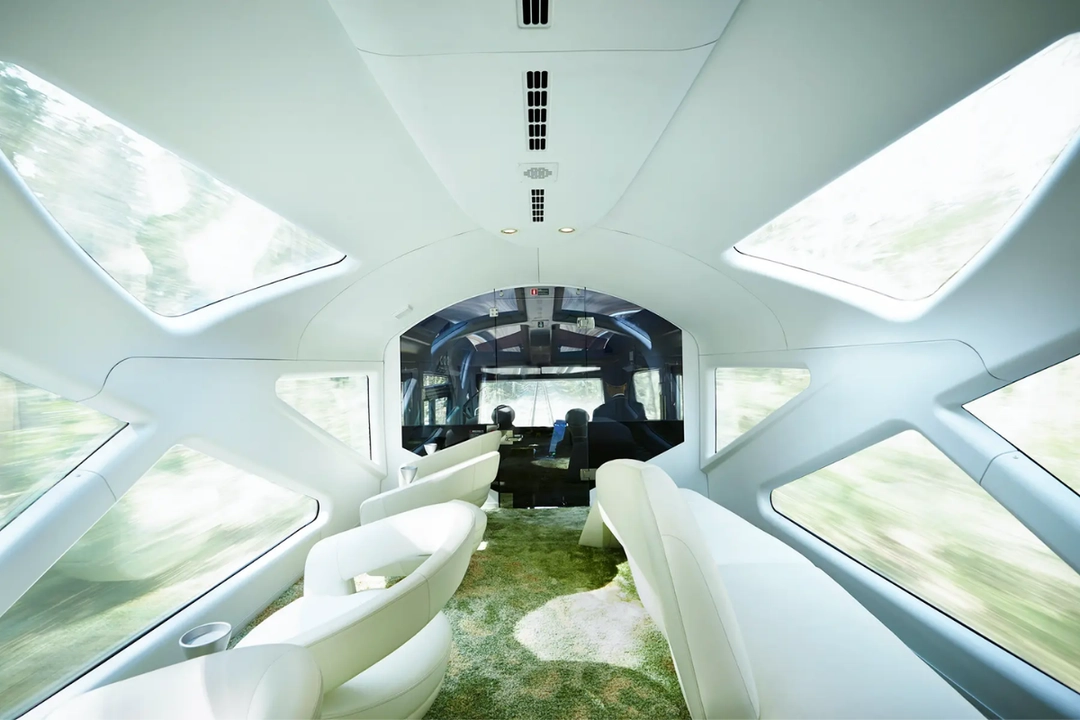
In Japan, Train Suite Shiki-Shima follows a different language: less nostalgic, more craft-led and more futuristic. Operated by JR East, the train presents Japanese nature, regional culture and refined hospitality within a highly limited luxury rail experience. It is often associated with a capacity of just thirty-four passengers, observation cars, a dining car, lounge and private suites.
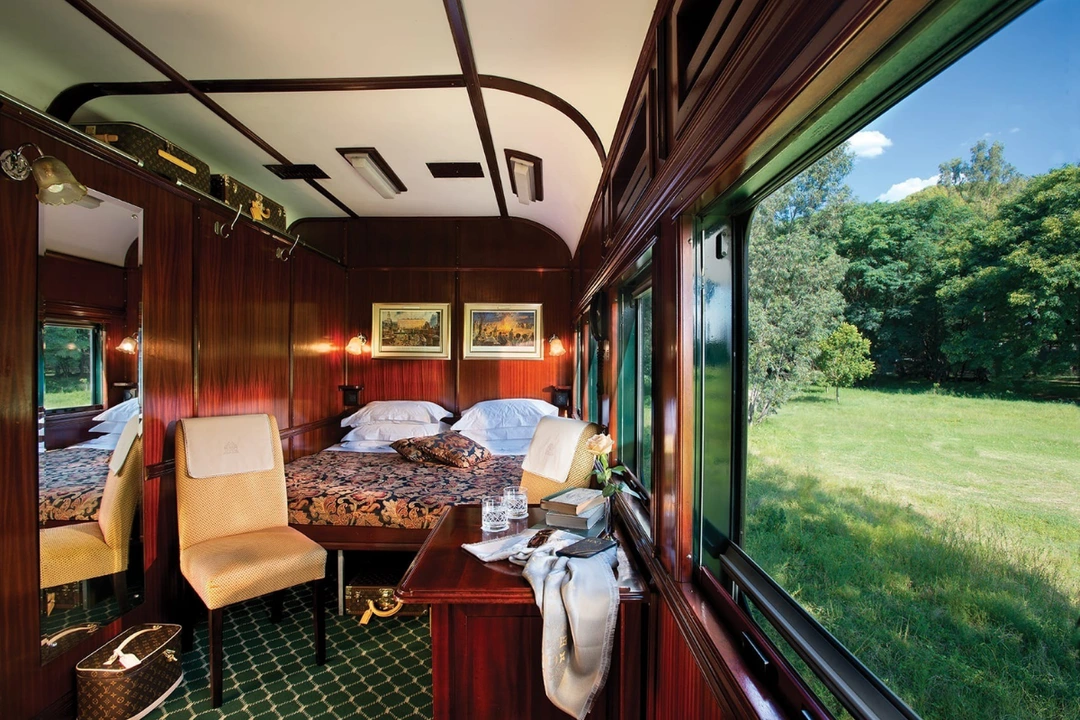
In Africa, Rovos Rail retains a special place in the luxury rail landscape. Since 1989, it has built its reputation through journeys across South Africa and neighbouring regions, combining vast landscapes, safari stops and the atmosphere of the golden age of leisure travel.
The fares below are indicative starting points only and can vary significantly depending on season, cabin category, route, availability and operator policy. Currency conversions are approximate and included to help readers compare each experience more easily.
These comparisons are imperfect by design. A five-star hotel provides a fixed room in one location. A luxury train offers a room in motion, with transport, meals, scenery, service, design and a curated itinerary folded into a single experience.
That is why the price of luxury rail can look disproportionate when compared with one night at a hotel. Guests are not paying only for accommodation. They are paying for choreography: the route, the table setting, the changing landscape, the staff, the restoration or design of the carriages and the rare feeling of moving through a destination without leaving one’s own private world.
Compared with a five-star hotel room, the price of a luxury rail journey can seem several times higher. But the comparison only tells part of the story. A hotel gives guests a fixed room. A luxury train gives them a room moving across regions, with meals, service, design, scenery and cultural programming embedded into the journey.
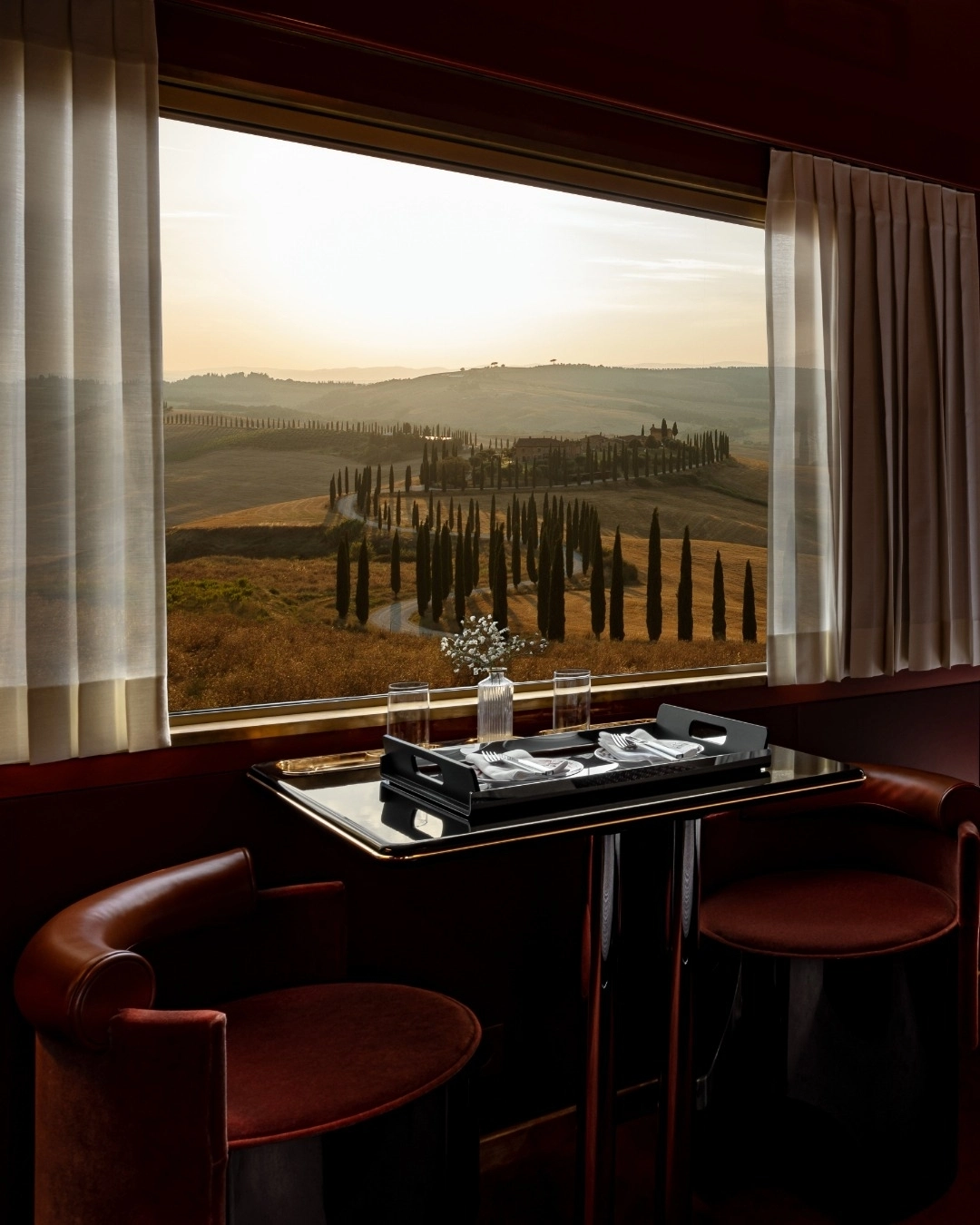
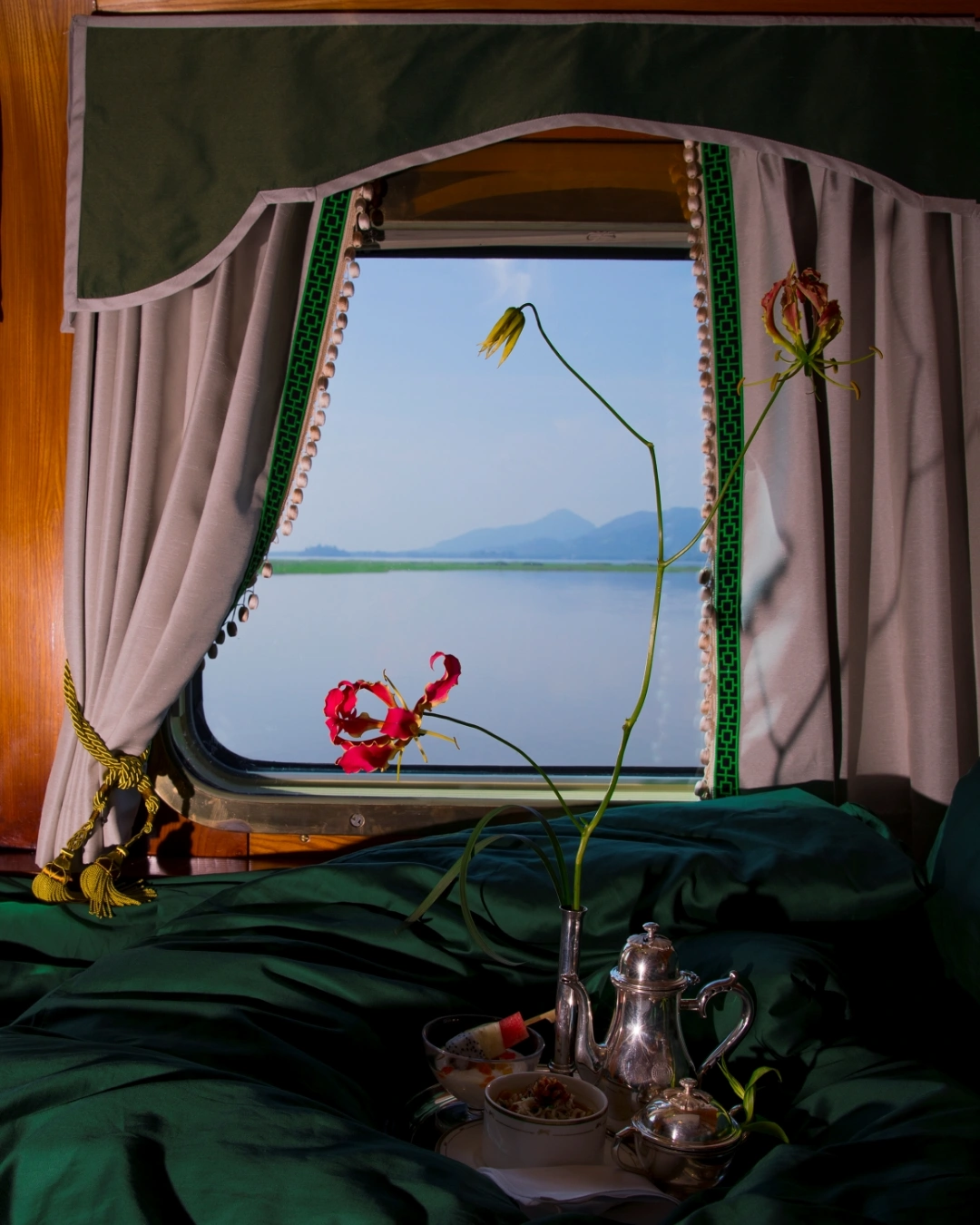
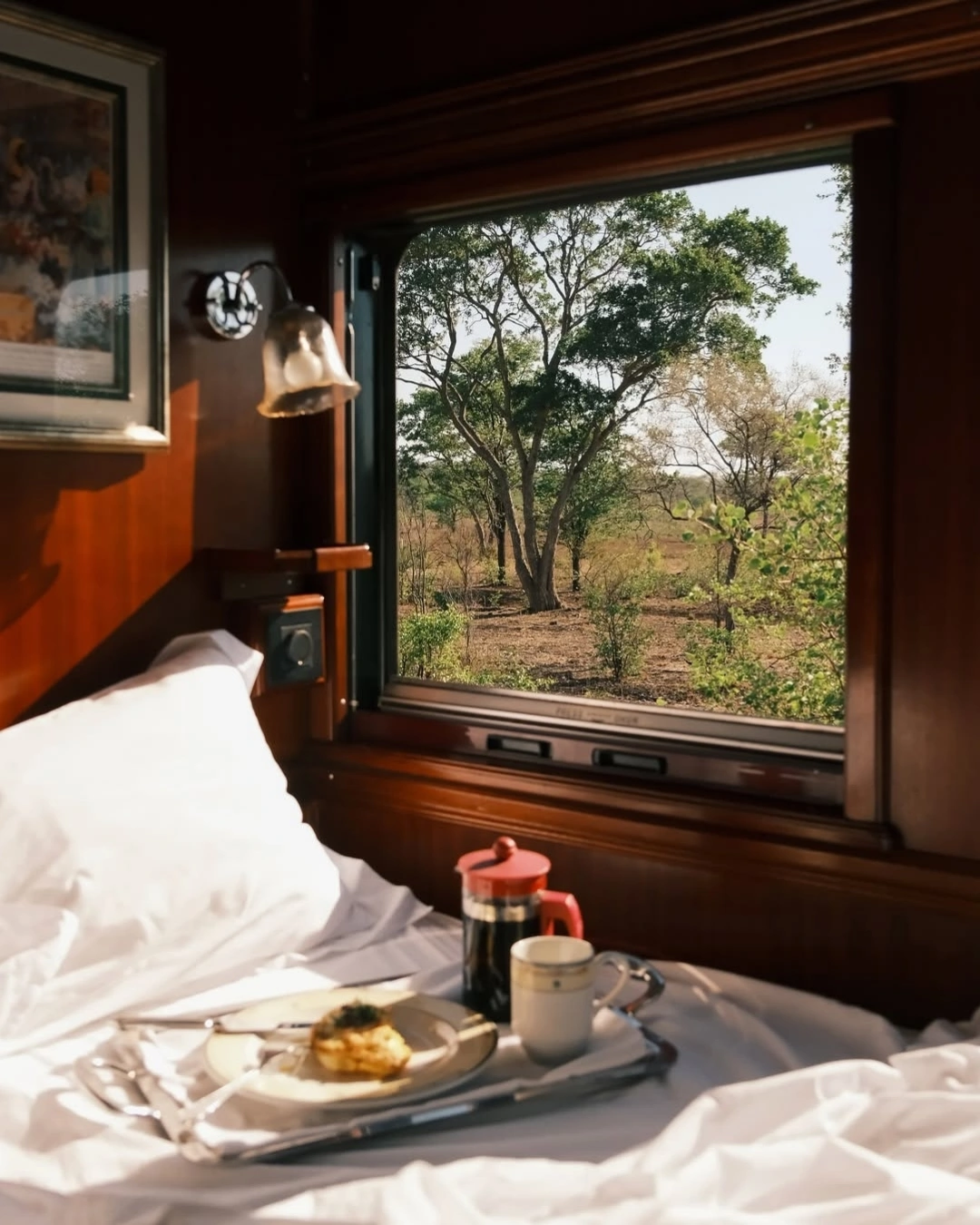
With luxury rail, travellers no longer have to choose between accommodation and transportation. The cabin is the bedroom. The dining car is the restaurant. The window is a screen showing real landscapes. Every stop becomes a chapter in the itinerary. This seamlessness is what makes high-end train travel a different kind of luxury: not speed, but time; not excess, but atmosphere.
The return of luxury rail travel reflects a deeper change in how affluent travellers define luxury. It is no longer only about expensive hotels or famous destinations. New luxury is increasingly about time, private space, slower rhythm and the feeling of being cared for throughout the journey.
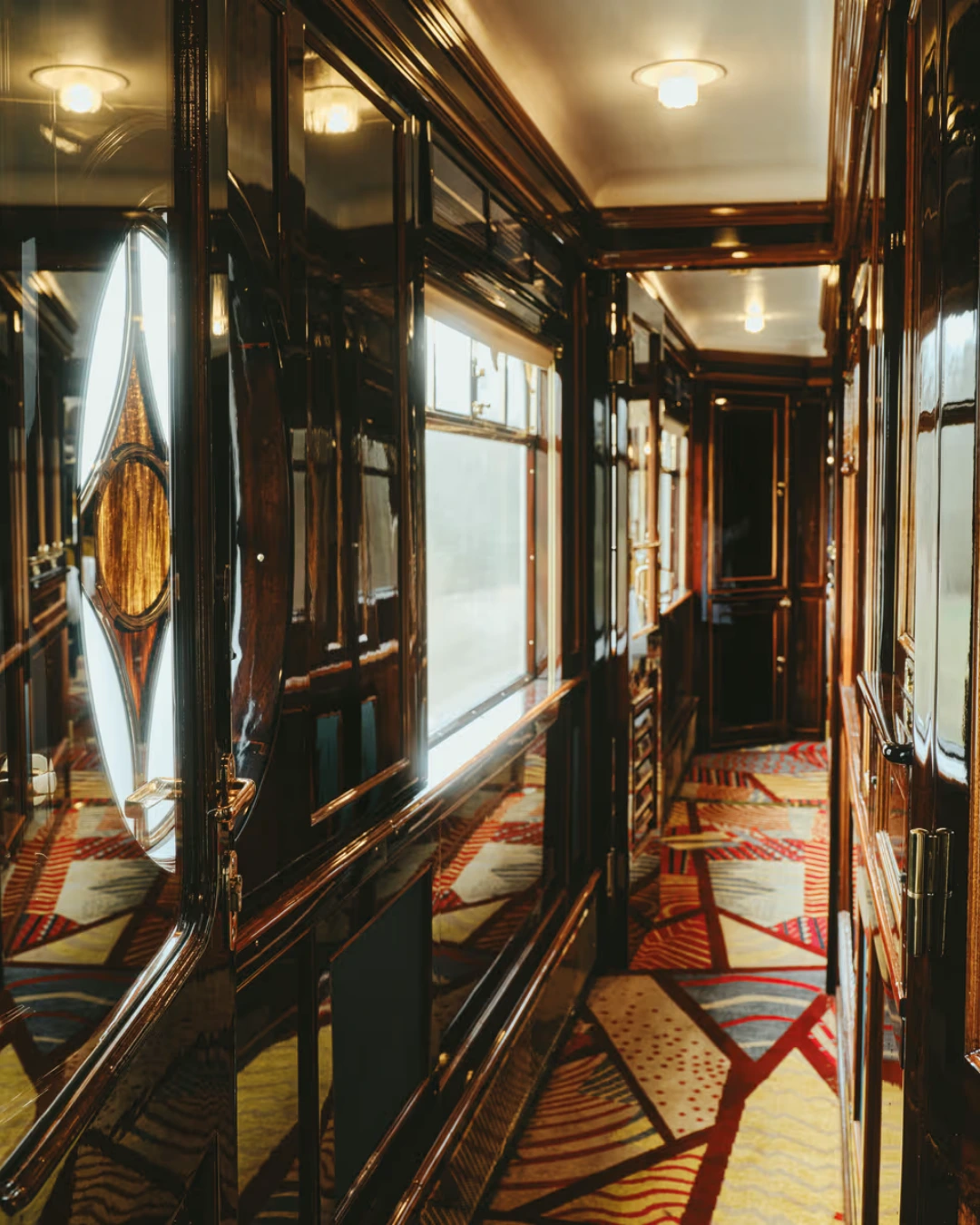
Trains answer that desire with unusual precision. They do not ask travellers to constantly repack, change hotels or pass through airport terminals. Everything moves around the guest: the room, the restaurant, the landscape, the itinerary and the service. For a generation seeking less mass-market experiences, luxury rail travel becomes almost ceremonial.
Its appeal also comes from the number of cultural layers it carries: interior design, railway history, regional cuisine, landscape, local rhythm and a cinematic sense of movement. Each train becomes a small world of its own, allowing travellers not simply to cross a country, but to pass through a carefully curated version of it.
From Thierry Gaugain’s G Train to La Dolce Vita Orient Express, the Venice Simplon-Orient-Express, , Dream of the Desert, Eastern & Oriental Express, Rovos Rail and Train Suite Shiki-Shima, luxury rail travel is entering a new chapter. It does not merely restore the beauty of the past. It expands the meaning of luxury travel in the present.
In an age when movement is becoming faster and faster, the luxury train reminds us that sometimes true exclusivity does not lie in arriving first. It lies in going slowly, looking longer and allowing the journey itself to become the memory.