MENU
Close





At Venice Biennale 2026, the fiercest arguments were not tucked into footnotes or panel talks. They were staged in the national pavilions themselves. What are your opinions?
At Venice Biennale 2026, the fiercest arguments were not tucked into footnotes or panel talks. They were staged in the national pavilions themselves. What are your opinions?
May 18, 2026


The national pavilion format has always asked viewers to pretend that art and the nation-state can still share a room without making things awkward. Venice Biennale 2026 made that fiction unusually hard to maintain. The 61st edition, In Minor Keys, opened on 9 May and runs through 22 November, with 100 national participations, yet the atmosphere around it was shaped as much by grief and institutional rupture as by art. Koyo Kouoh’s exhibition was realized after her death in 2025, the international jury resigned on 30 April, and the Golden Lions were effectively replaced by public-vote “Visitors’ Lions.” In that climate, the most controversial pavilions were not side stories. They were the story.
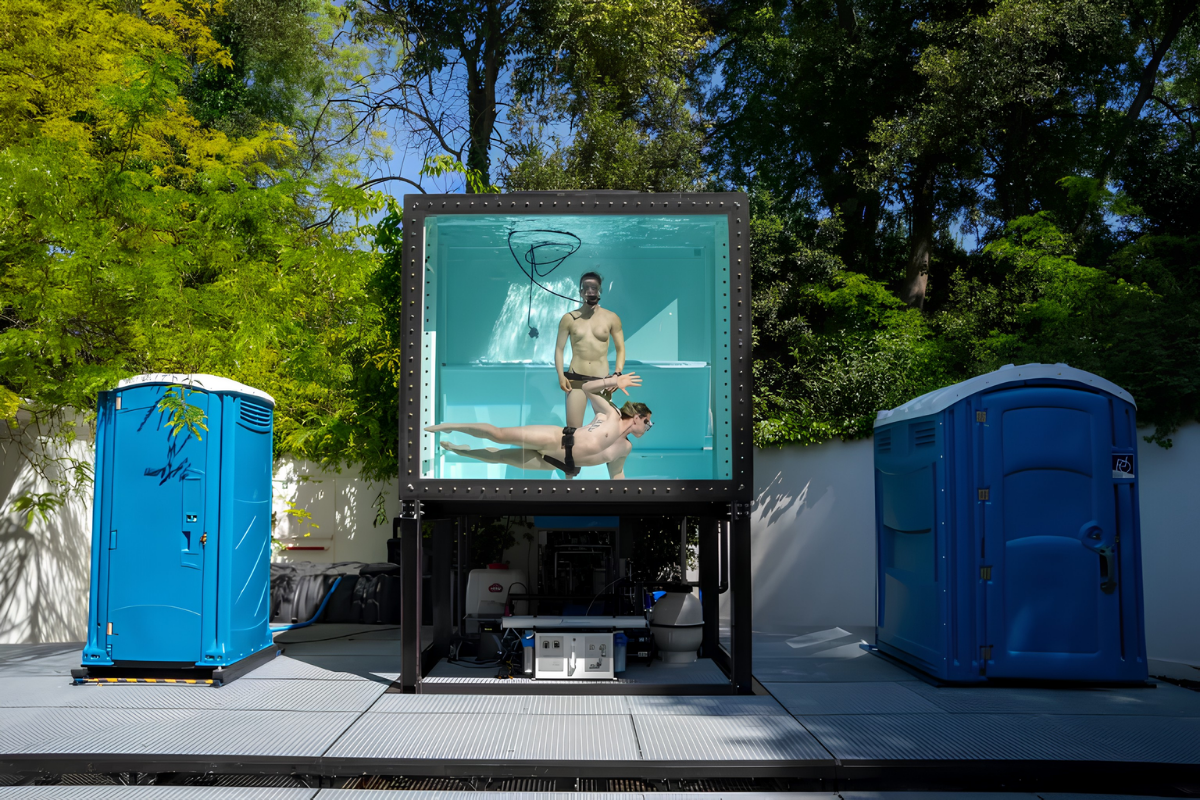
If any pavilion embodied the idea of sensory confrontation, it was Austria. Florentina Holzinger’s Seaworld Venice transformed the Austrian Pavilion into a delirious environment that felt part submerged funhouse, part purification plant, part desecrated sanctuary. La Biennale’s own framing already set the tone, with its language of rising water, managed waste, contaminated systems, and bodies folded into the architecture of the space. Subtlety was never really the point.
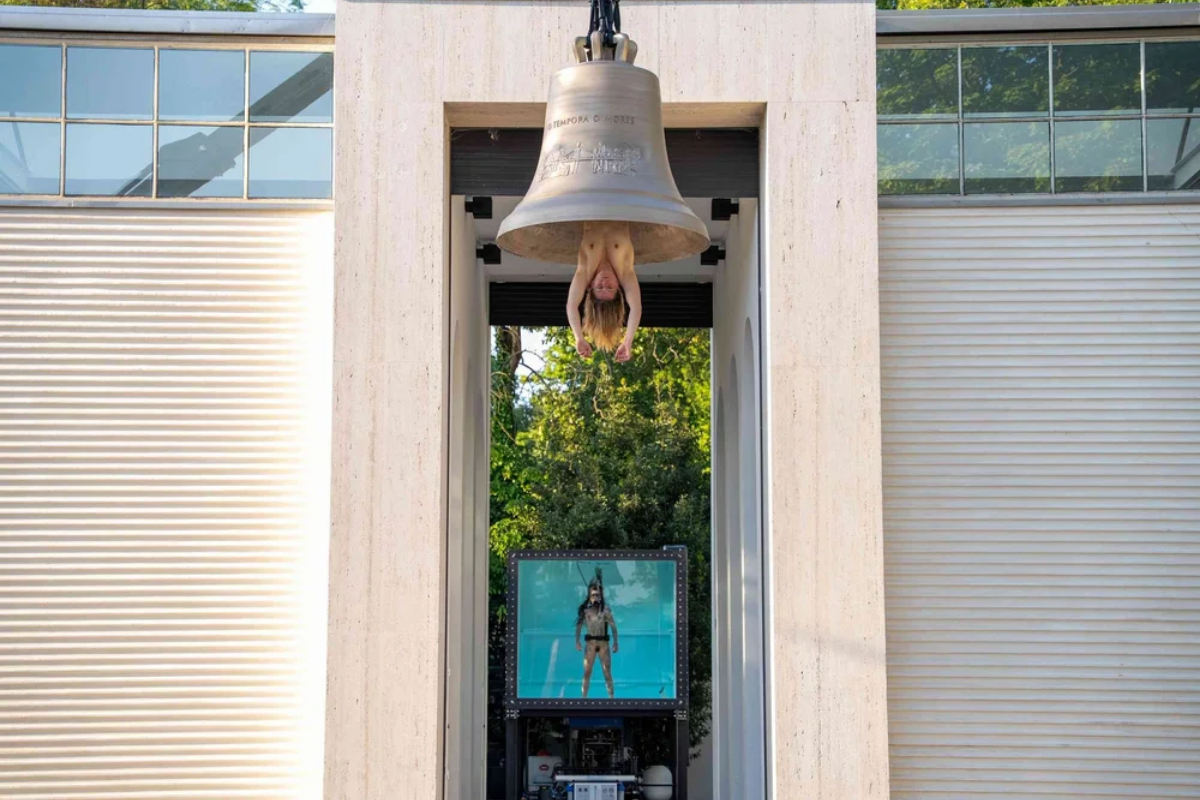
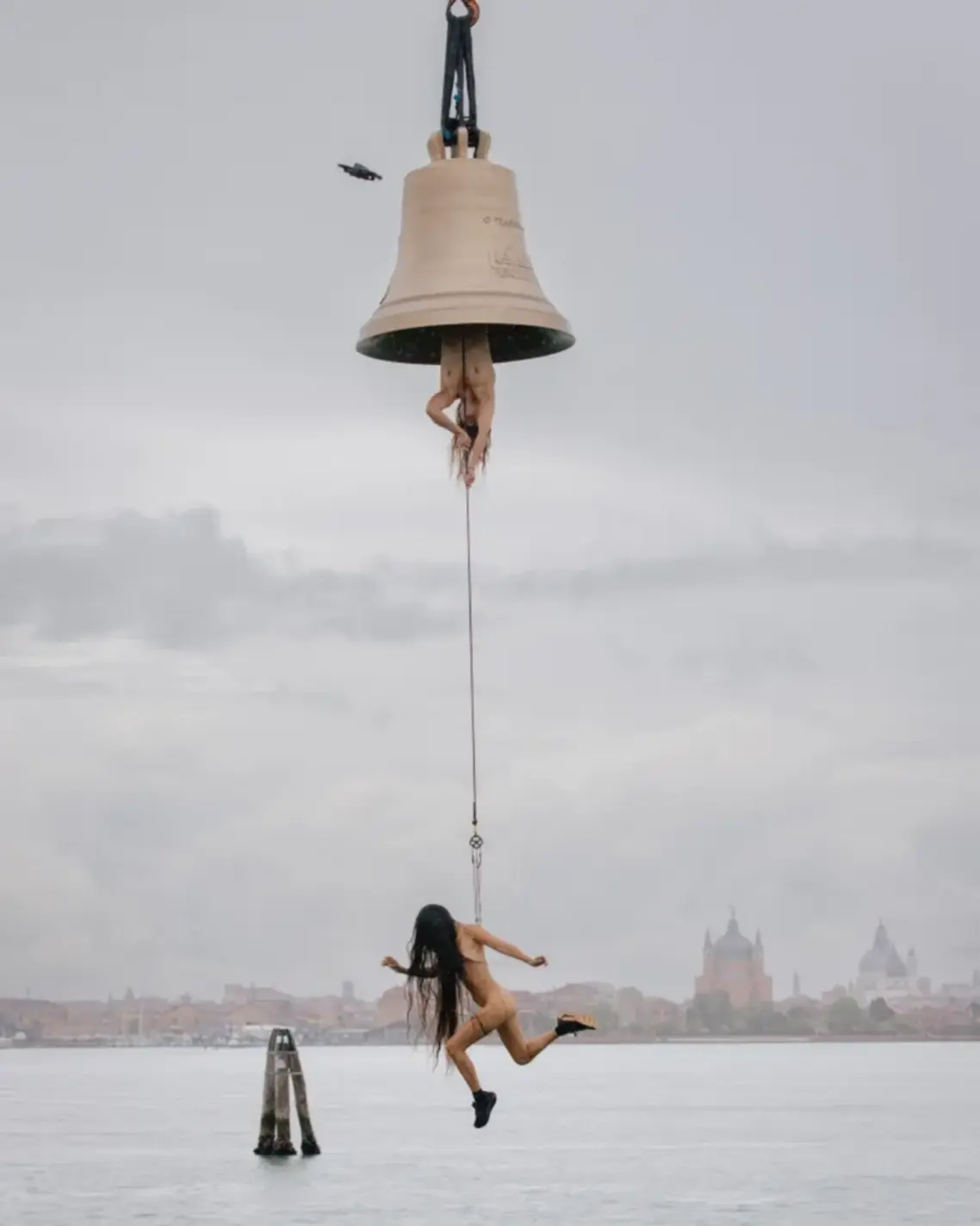
The pavilion’s most arresting image, and the one that quickly became inseparable from Venice Biennale 2026 itself, was the so-called human bell: A naked performer suspended upside down inside a historic bell, using the force of their swinging body to strike its sides and produce sound. It was a secular, bodily takeover of a sacred object, staged inside a flooded, post-apocalyptic landscape that read as a sharp critique of Venice’s own transformation into spectacle and tourist fantasy. The nudity image of the pavilion causes censorship via social media. As the result, Holzinger's pavilion has less "instagrammability" than other exhibtions.
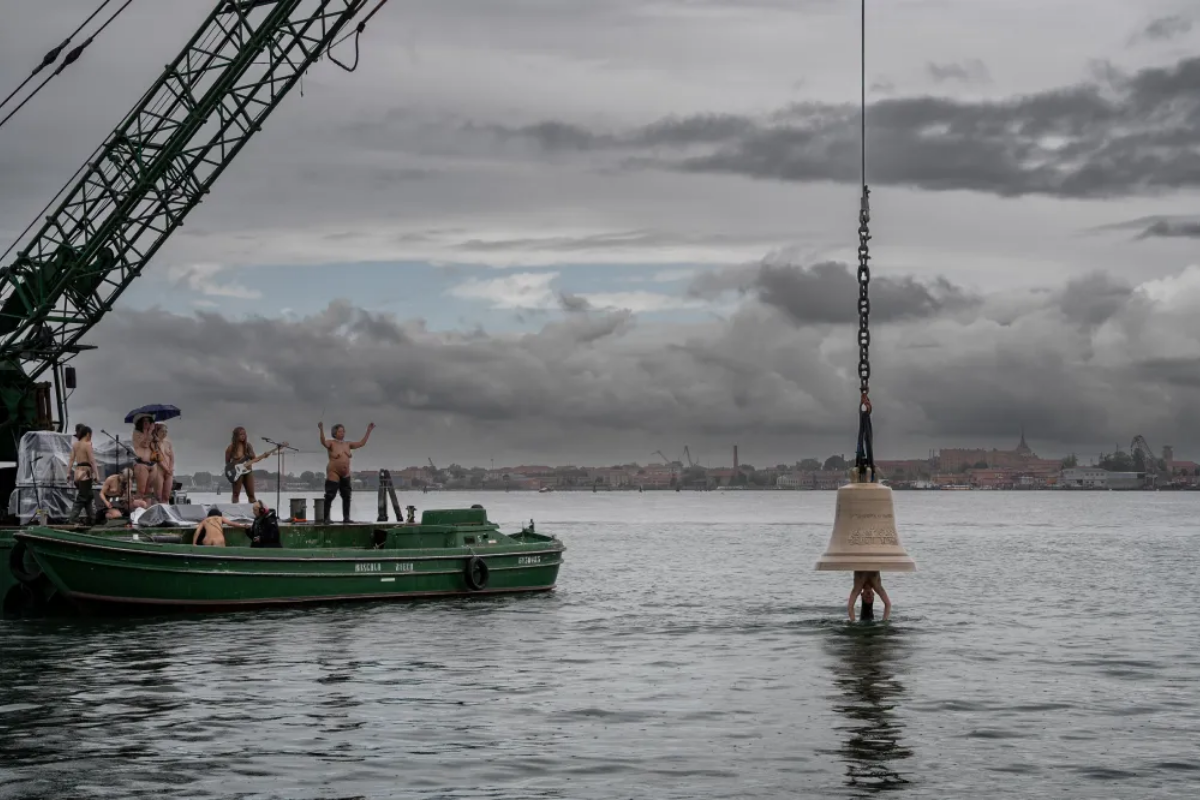
Preview reports only intensified the work’s notoriety. Holzinger’s pavilion is reported to be one of the edition’s most provocative contributions, noting that the overt nudity and extreme performance reportedly drew police attention during preview days.
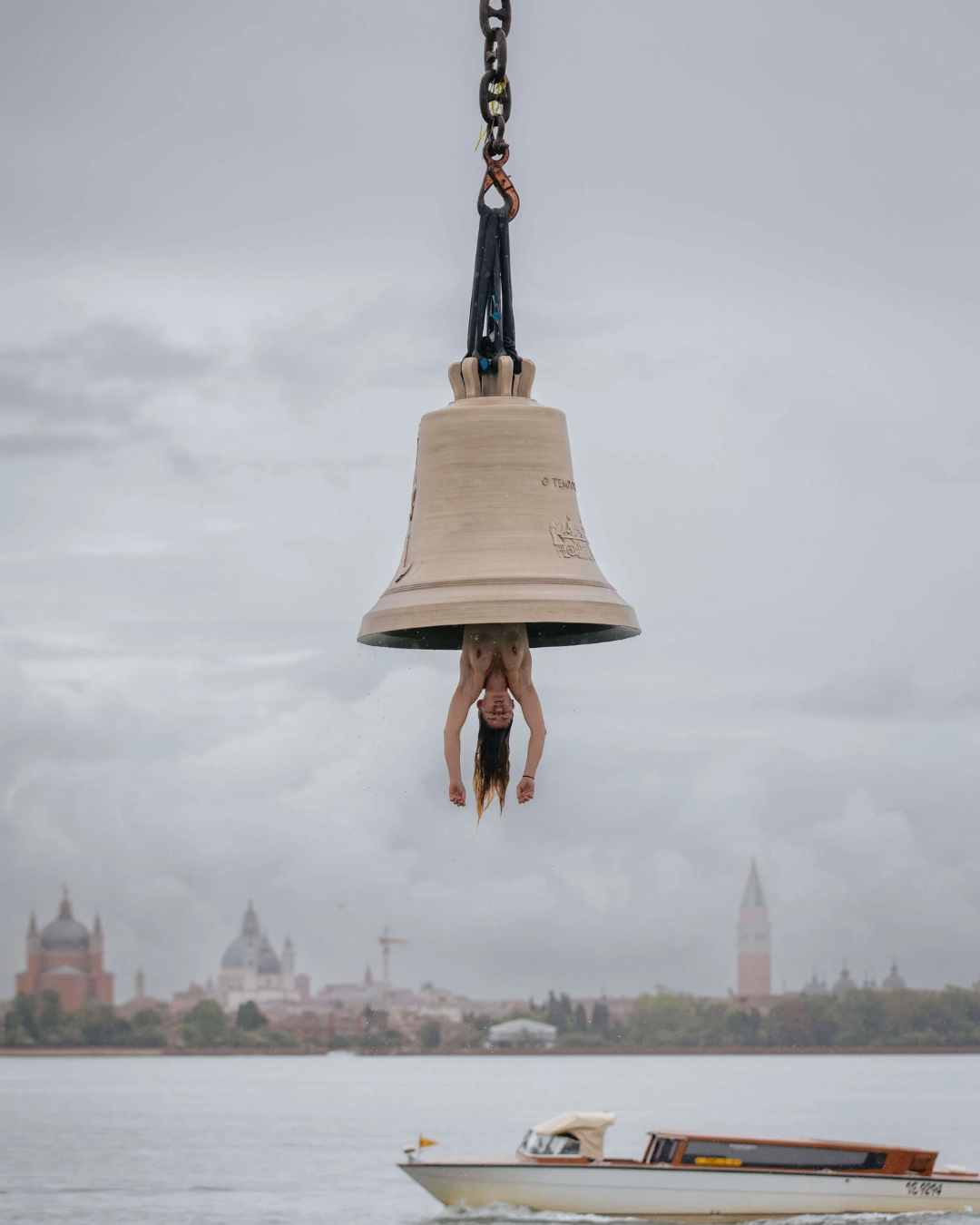
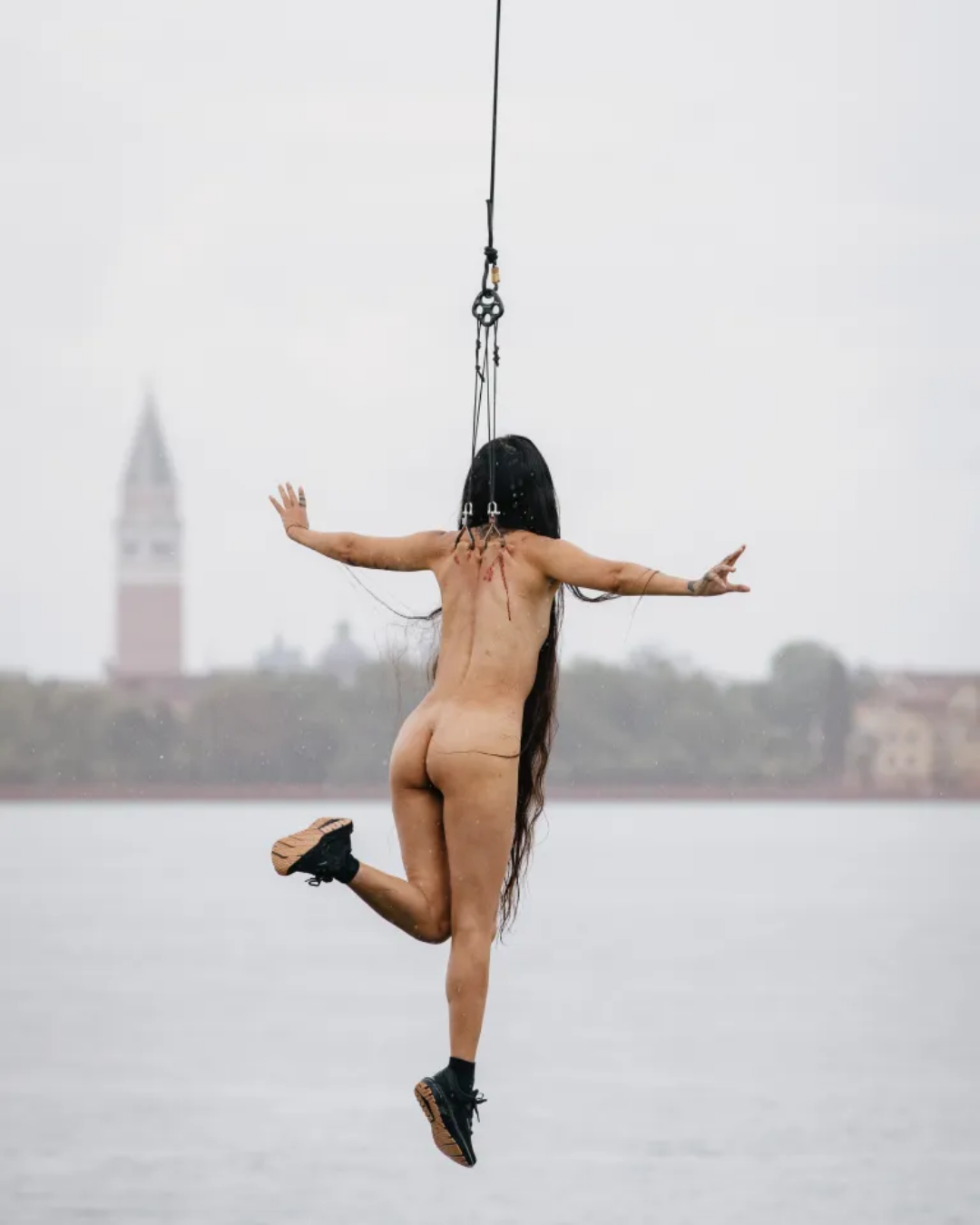
In the wider conversation around the Venice Biennale 2026, Austria became the pavilion people invoked when arguing about excess, pollution, ritual, the exposed body, and whether contemporary art still has any interest in restraint.
The most politically combustible pavilions were Russia and Israel, though for slightly different reasons. Russia’s return to the Biennale after missing 2022 and 2024 triggered immediate backlash. Reuters reported that Biennale president Pietrangelo Buttafuoco defended the readmission by insisting the Biennale was “not a court,” while AP and other outlets described the 2026 edition as the most chaotic in memory, with the jury resigning over Russia’s and Israel’s participation. In other words, Russia did not merely reopen a pavilion. It reopened the question of whether the Biennale still believes the national pavilion model can float above war, sanctions, and state violence just because it is surrounded by art-world prosecco.

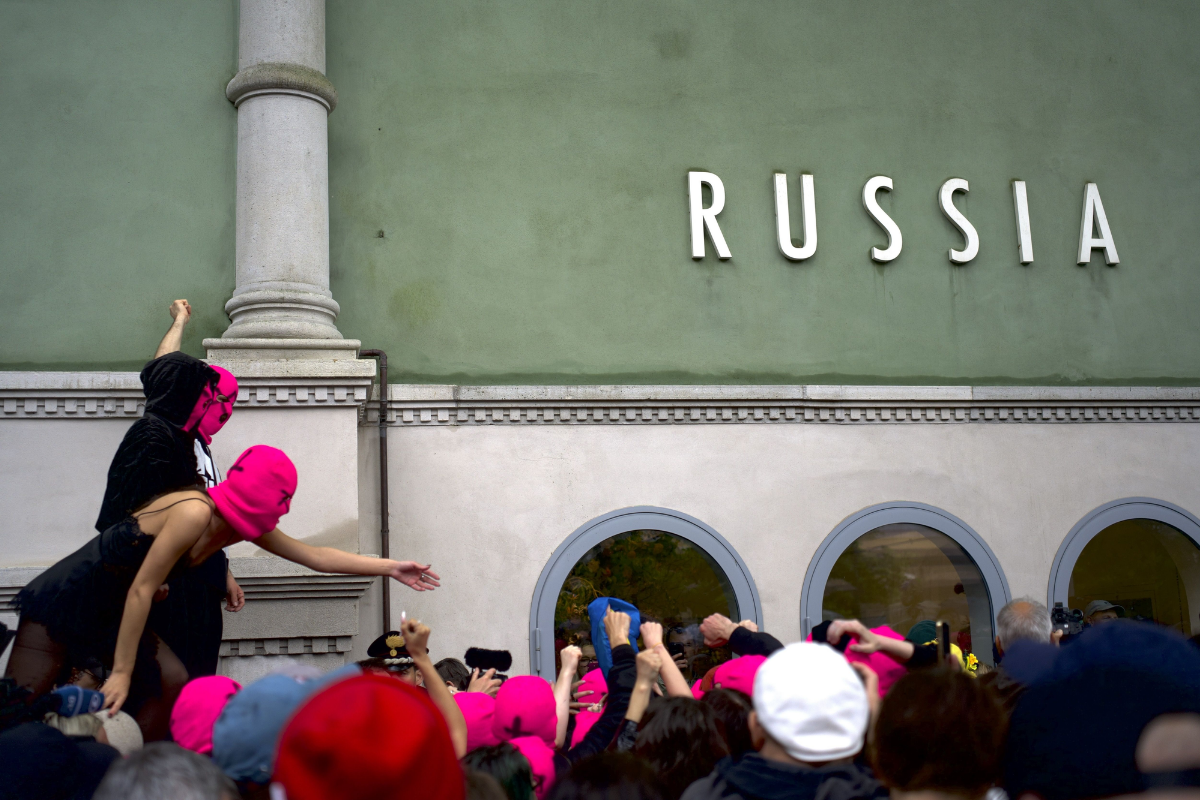
That theoretical question became literal at the Giardini. Pussy Riot, joined by activists including members of FEMEN, staged high-profile protests against the Russian Pavilion, releasing colored smoke, unfurling anti-war slogans, and forcing temporary closure. The protests framed the pavilion not as a neutral cultural venue but as an active soft-power instrument for a state conducting war. Few pavilions in recent Biennale history have looked so much like diplomatic incidents wearing exhibition badges.
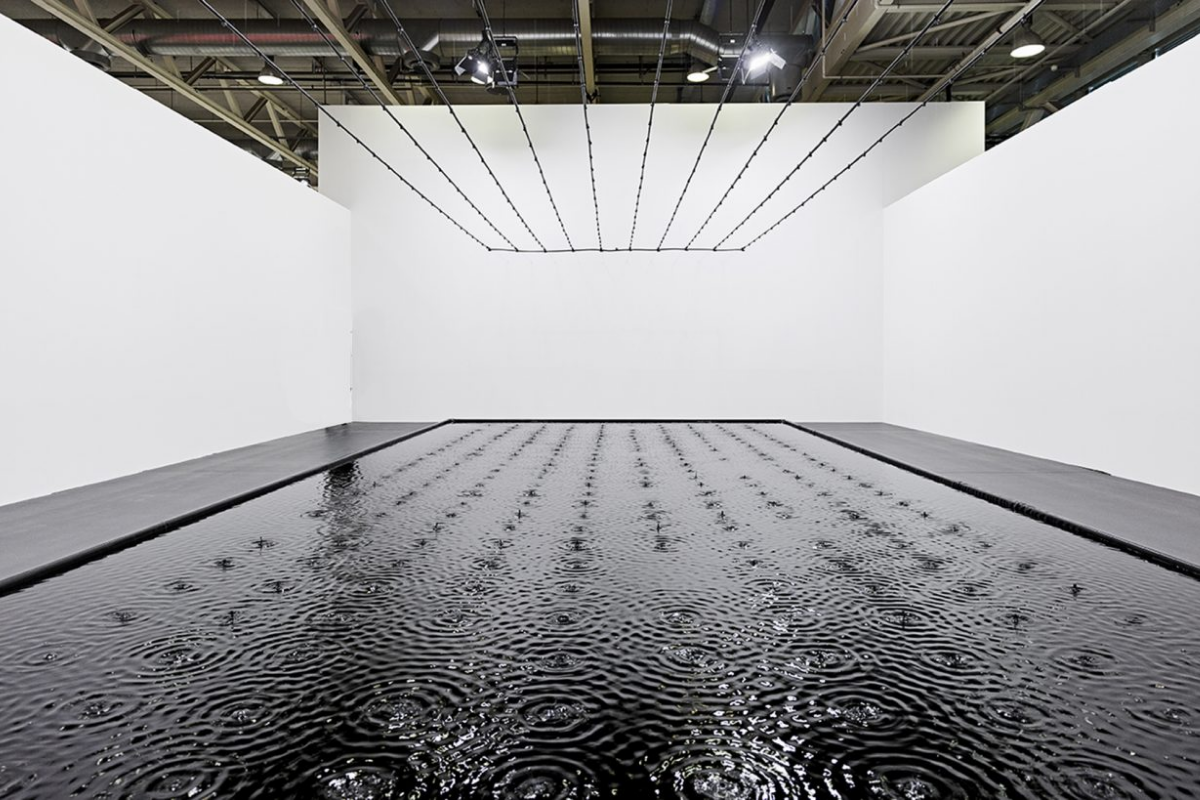
Israel’s pavilion became the other central site of confrontation. The Biennale’s official page describes Rose of Nothingness as a contemplative installation shaped by Paul Celan, black water, memory, and absence. Outside the pavilion, however, the tone was decidedly less contemplative. The Art Not Genocide Alliance (ANGA) organized protests over Israel’s participation, and on 8 May several pavilions closed fully or partially in solidarity with anti-Israel strike actions. AP likewise reported clashes and demonstrations outside the Israeli pavilion during the opening. So Israel became controversial in the classic Venice way: A work about memory and contemplation inside, a crisis over legitimacy and complicity outside, and the institution insisting these are somehow separate conversations.
Not every controversial pavilion in Venice Biennale 2026 was loud. Some were controversial because of how visibly power distorted the route by which they arrived.
The United States Pavilion, featuring Alma Allen’s Call Me the Breeze, was shadowed by an unusually opaque selection process. An earlier approved project fell apart, after which a new project with the American Arts Conservancy as sponsor was announced late in the cycle, prompting criticism that a 40-year history of open call and peer review had been bypassed. EL PAÍS pushed the story further, characterizing the process as part of a broader Trump-era cultural offensive, with rhetoric about “American values” replacing the language of diversity and independent evaluation.
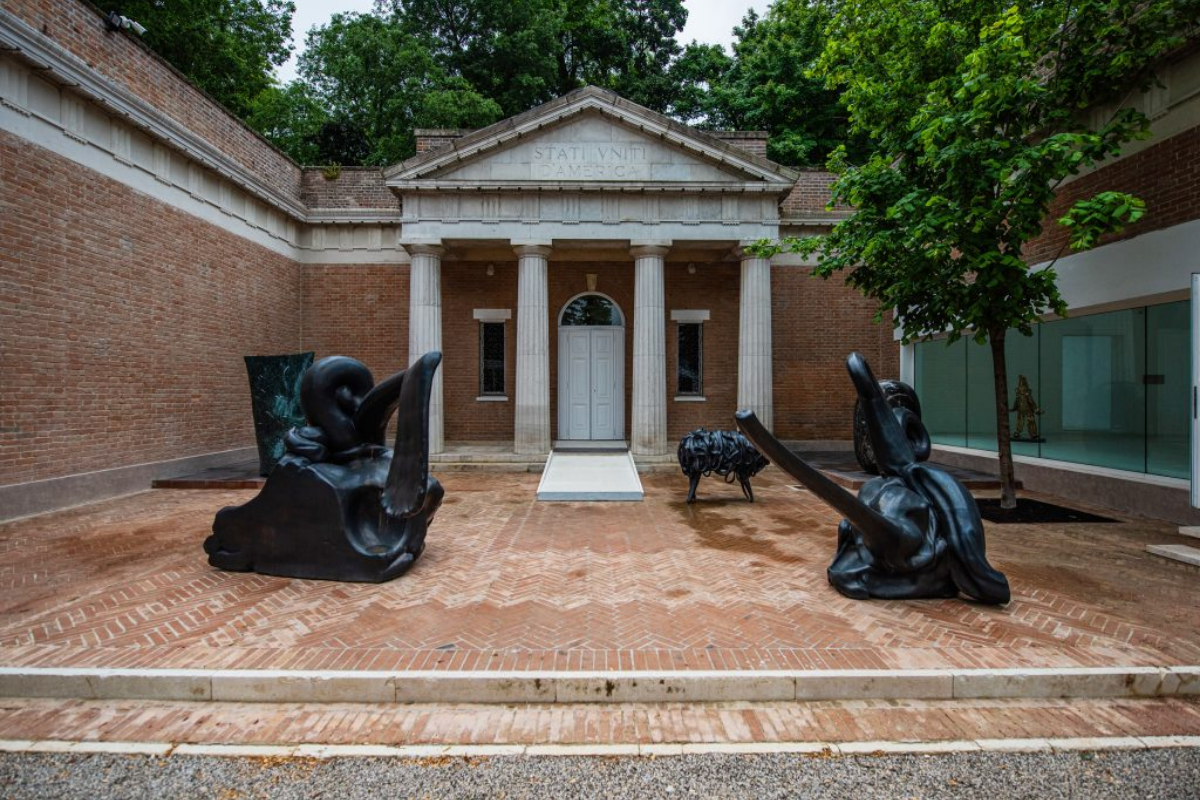
Then came the reviews, which were not especially kind. ArtNews called the presentation formally thin and politically evasive, while Hyperallergic described it as a whole lot of nothing, and Frieze called it vacuous in contrast to stronger neighboring pavilions. The pavilion, which was the result of a self-proclaimed first-world nation's insistance on “values” but appears suspicious of actual curatorial process.
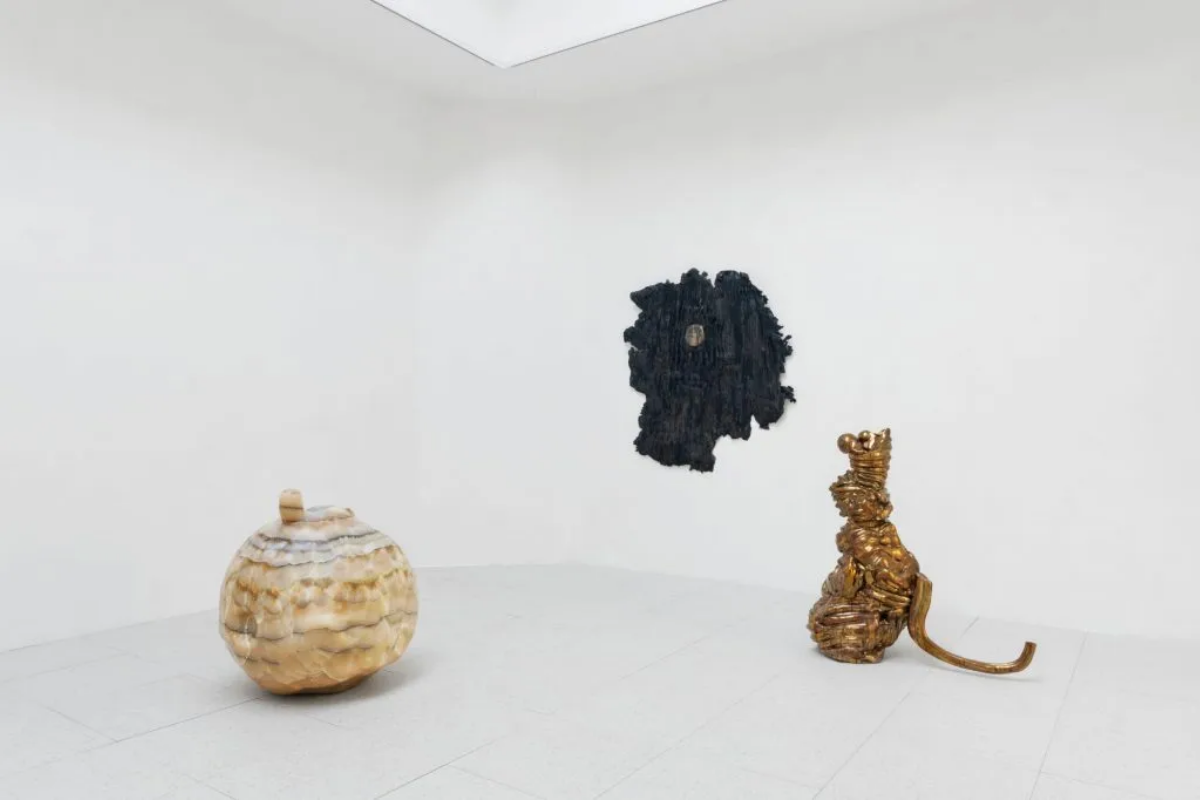
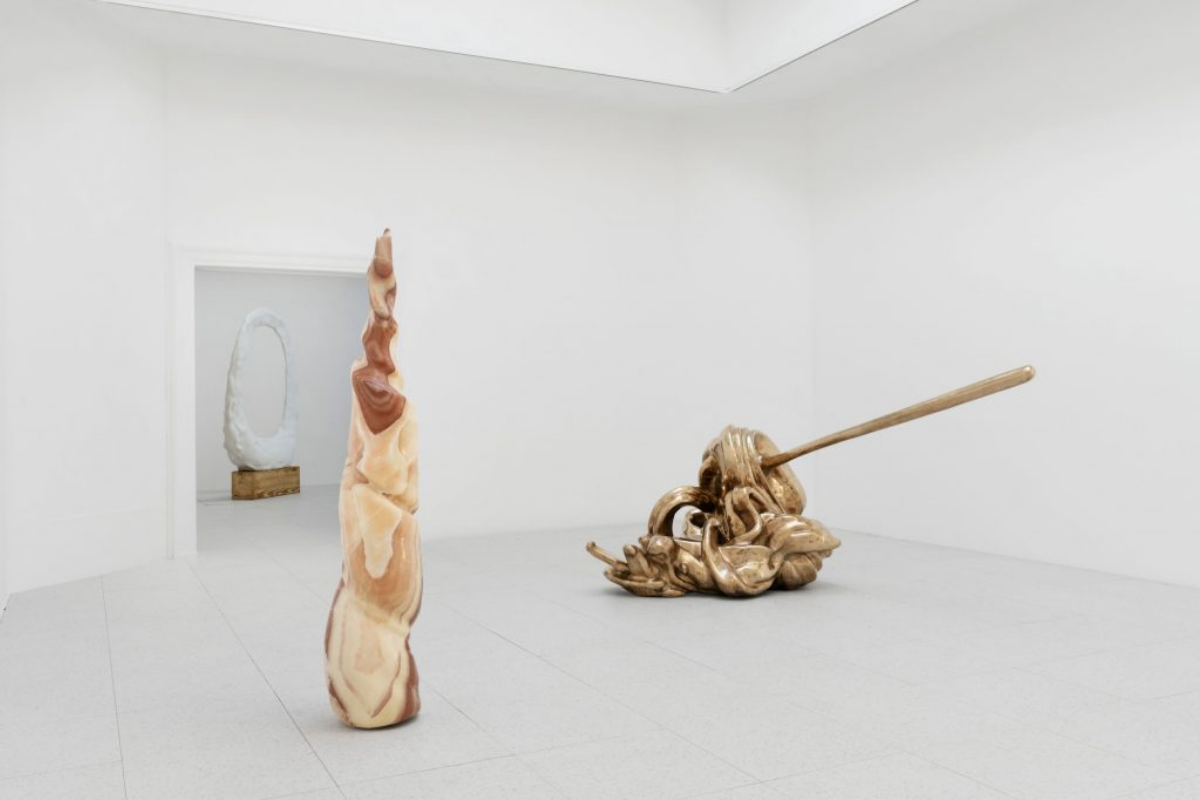
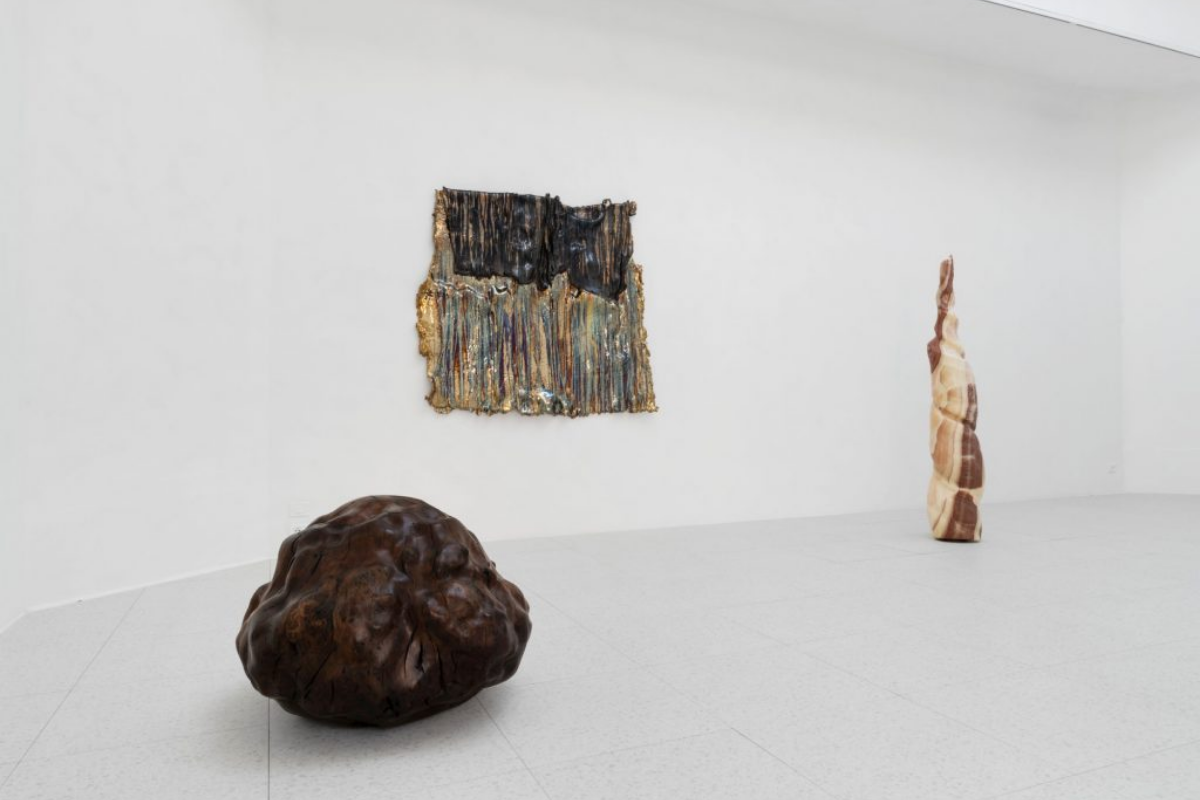
Alma Allen’s Call Me the Breeze installation view
South Africa offered a different kind of controversy, one built on absence. After artist Gabrielle Goliath had been selected to present a new iteration of Elegy, the South African government canceled the project, objecting in part to its inclusion of a suite dedicated to Palestinian poet Hiba Abu Nada. The Art Newspaper reported that the minister’s decision left the national pavilion empty, while The National later confirmed that Goliath’s work went on view independently elsewhere in Venice as the official pavilion remained blank.
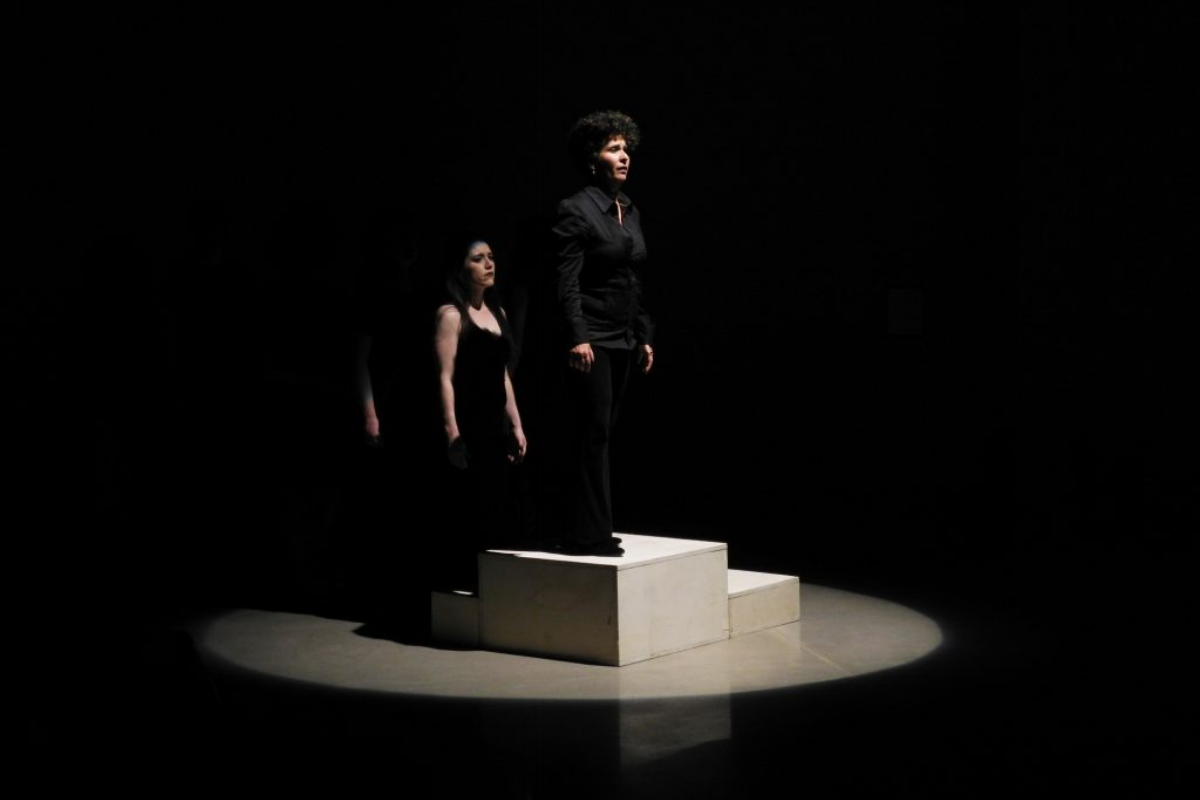
That made South Africa one of the most controversial pavilions at Venice Biennale 2026 precisely because the pavilion itself ceased to function as an exhibition and became instead a case study in censorship, cultural policy, and the state’s fear of mourning when mourning acquires a political address.
Not every pavilion was controversial because it caused scandal. Some were controversial because they made the surrounding hypocrisy harder to bear.
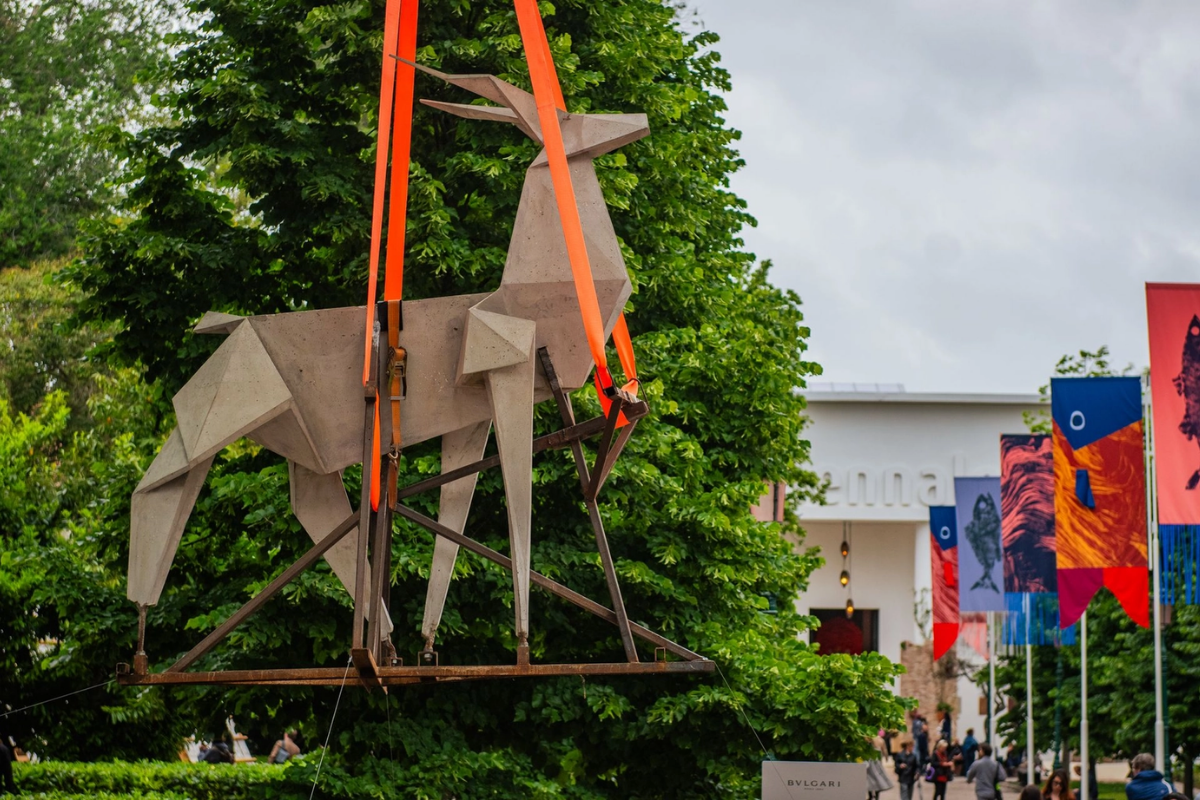
Ukraine’s Security Guarantees centered on Zhanna Kadyrova’s Origami Deer, a sculpture originally installed in Pokrovsk and later evacuated in 2024 as the front line approached. The Ukrainian Pavilion’s own materials state that the project addresses the unfulfilled security guarantees offered when Ukraine gave up its nuclear arsenal, making the pavilion a direct confrontation with international failure rather than a symbolic abstraction about conflict. In the context of Russia’s return, the work’s presence in Venice acquired an added charge: It was not merely anti-war art, but proof that the material debris of war had arrived in the same exhibition that had re-opened its doors to the aggressor’s state pavilion.
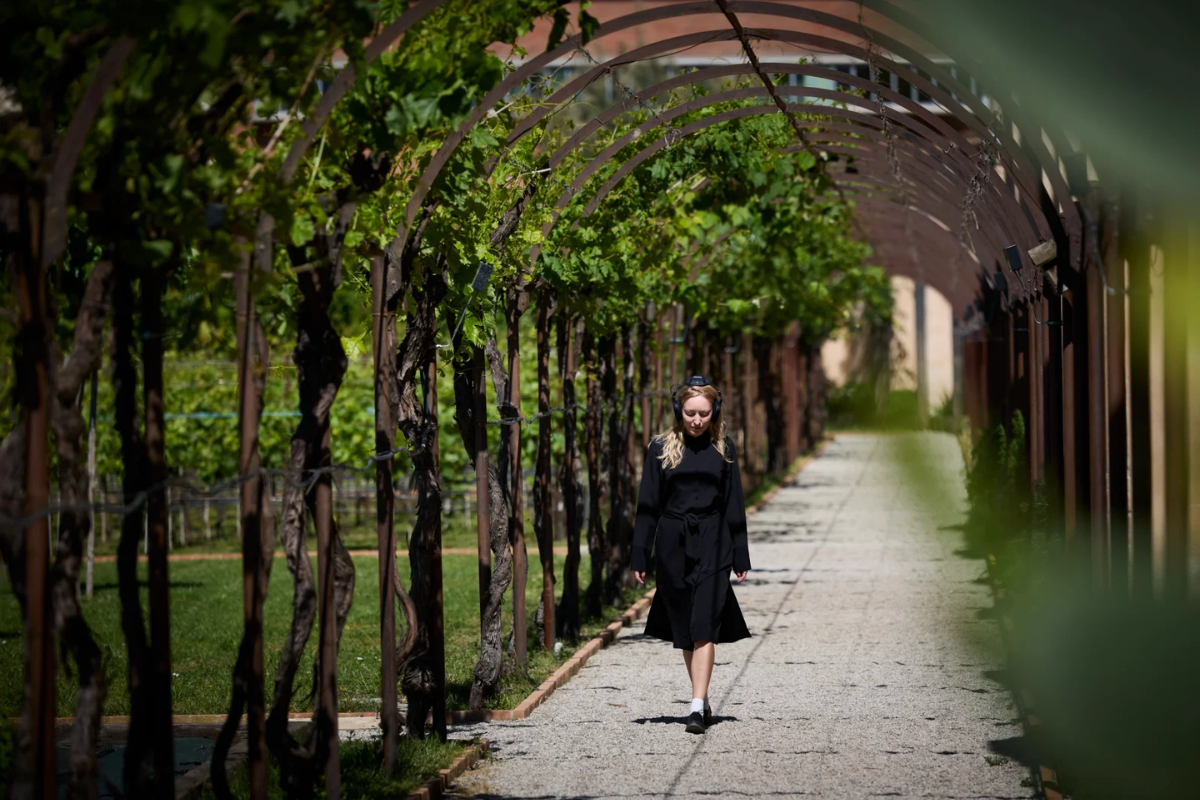
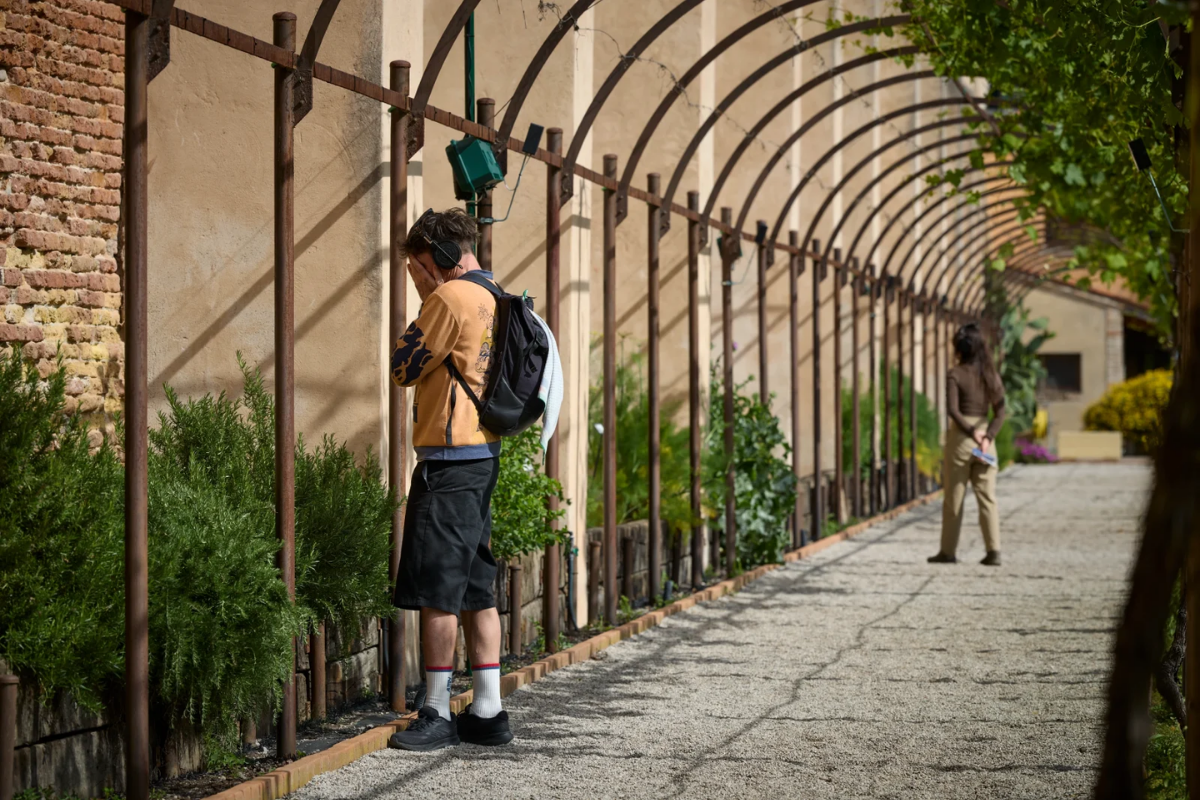
Then there was the Holy See, which became controversial almost by inversion. Officially titled The Ear is the Eye of the Soul, the pavilion is spread across two Venetian sites and built around listening, silence, Hildegard of Bingen, and a sonic composition developed with Soundwalk Collective. AP described it as spiritual respite from the Biennale’s turmoil; the Biennale’s own page calls it a “sonic prayer.” In a year when so many pavilions seemed determined to shout, the Holy See pavilion became notable for refusing to compete on volume. That should not have been controversial, but in Venice 2026 even quietitude carried ideological weight. A pavilion devoted to silence, contemplation, and communal listening inevitably looked like a rebuke to the events around it, which had by then perfected the art of institutional noise.
The most controversial pavilions at Venice Biennale 2026 were controversial for different reasons, but together they made one thing clear: The old fantasy of the pavilion as a neat cultural embassy is collapsing.