MENU
Close





From fungal composites and self-healing concrete to mass timber towers and algae-powered facades, bio-integrated design now invites nature back into the built environment as structure, technology, and partner at once.
From fungal composites and self-healing concrete to mass timber towers and algae-powered facades, bio-integrated design now invites nature back into the built environment as structure, technology, and partner at once.
April 29, 2026


The shift toward bio-integrated design marks a pivot from the Industrial Age philosophy of "nature as a resource" to a New Age philosophy of "nature as a co-author." We are moving away from static, inert boxes toward structures that exhibit biological behaviors: metabolism, regeneration, and carbon sequestration.
Among the most poetic materials in this new chapter is mycelium, the underground root network of fungi, now cultivated as a building composite. Grown on agricultural byproducts such as hemp herds, sawdust, or corn husks, mycelium acts as a biological binder, weaving loose waste into a dense, lightweight material that can be shaped, dried, and stabilized for architectural use.
What makes Mycelium Construction so compelling is the way it overturns the usual hierarchy of building. Instead of mining, melting, firing, or casting a material through high-energy industrial processes, the designer sets the conditions and lets growth perform the labor. Form, structure, and insulation emerge through cultivation. It is architecture that begins with patience rather than force.
Mycelium composites are naturally fire-retardant, tending to char rather than ignite with the volatility of many synthetic products. They offer strong thermal and acoustic performance, making them especially attractive for insulation panels, interior systems, and low-impact modular construction. Most importantly, they are compostable at the end of their life cycle, which makes them part of circular logic so rare in conventional buildings.
Projects such as the BRIX initiative in Dubai point to how this material might scale beyond the gallery prototype. Envisioned as a modular housing concept, BRIX combines mycelium with recycled plastics and local sand to create adaptable units that are lighter, cleaner, and more flexible than standard construction systems.
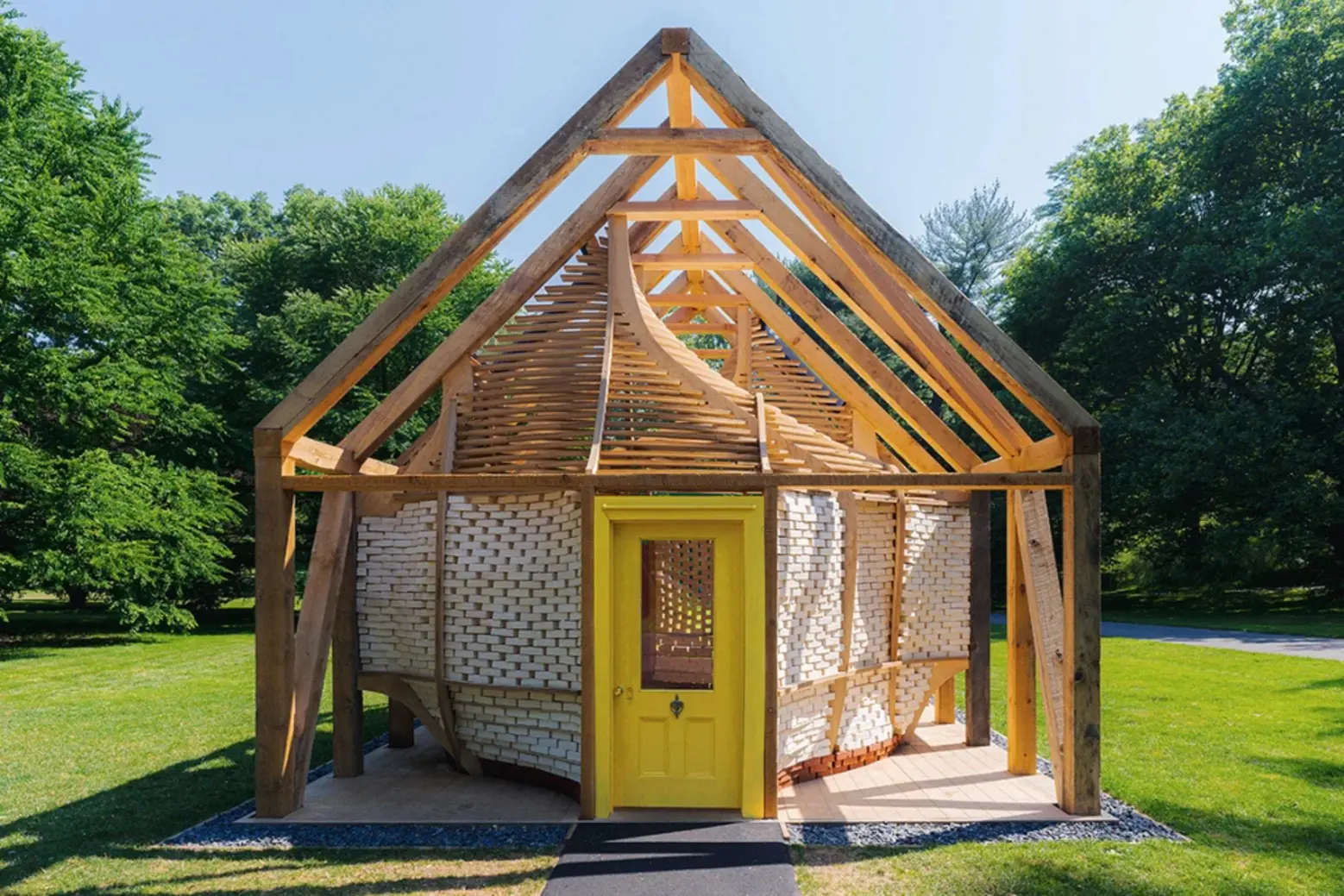
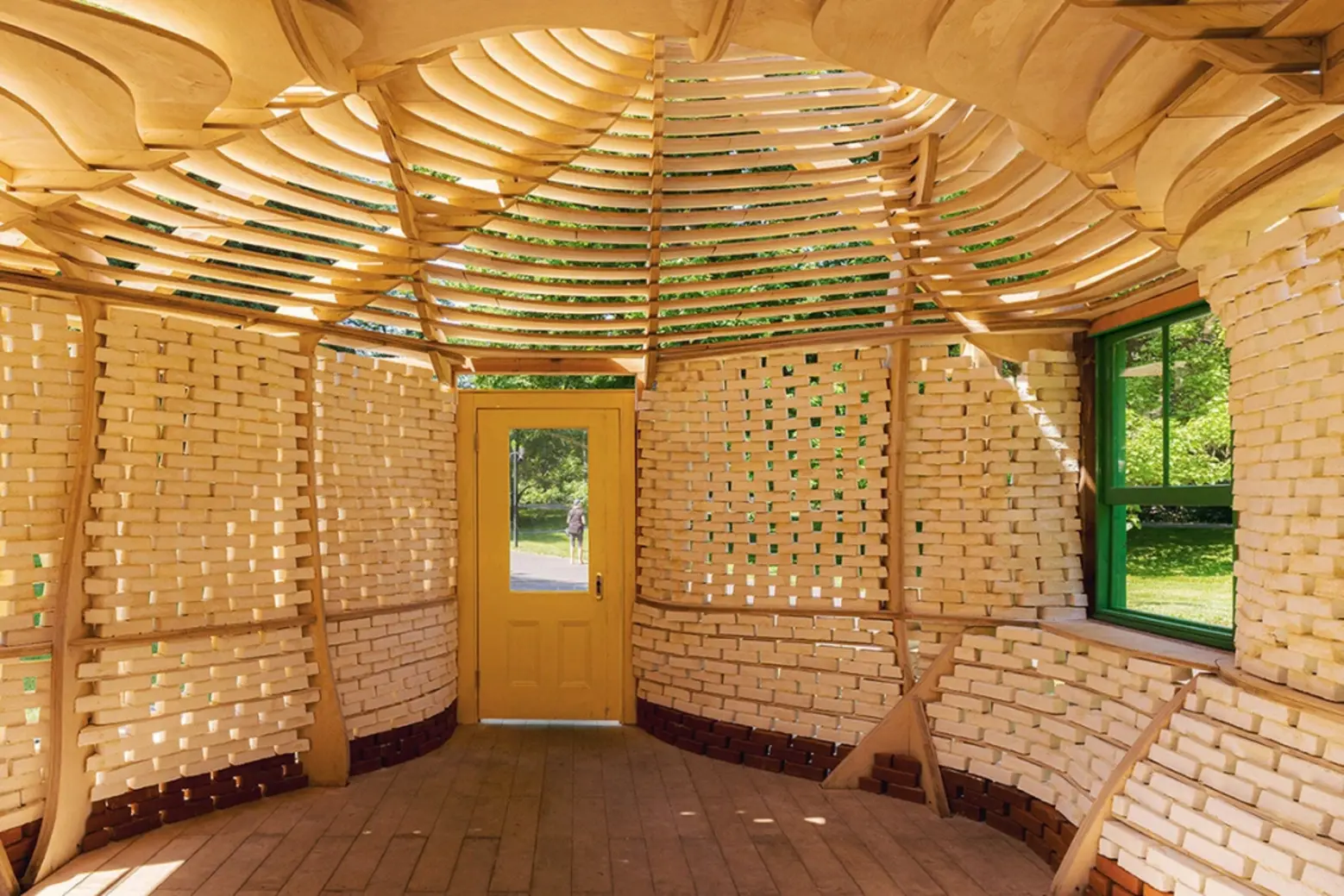
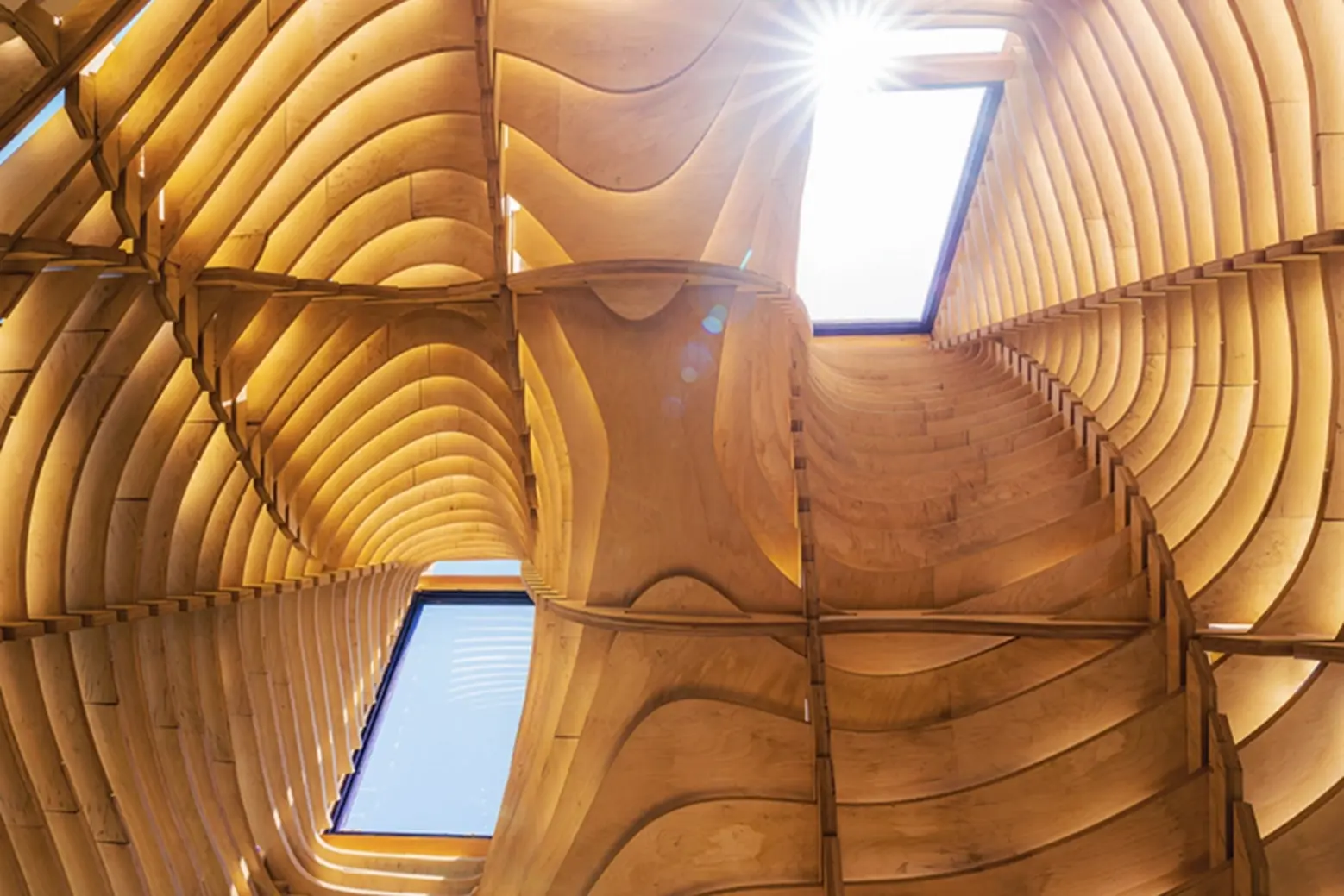
In 2024, Homegrown Wonderland pavilion by Andre Kong Studio stood tall in New York Botanical Garden’s latest exhibition. As Wonderland: Curious Nature explores the fantastical world of Lewis Carroll’s Alice’s Adventures, this installation features bricks grown from mycelium — the root structure of mushrooms. This materiality reflects the scene where Alice consumes a mushroom and grows rapidly, evoking a whimsical transformation as she outgrows the White Rabbit’s cottage.
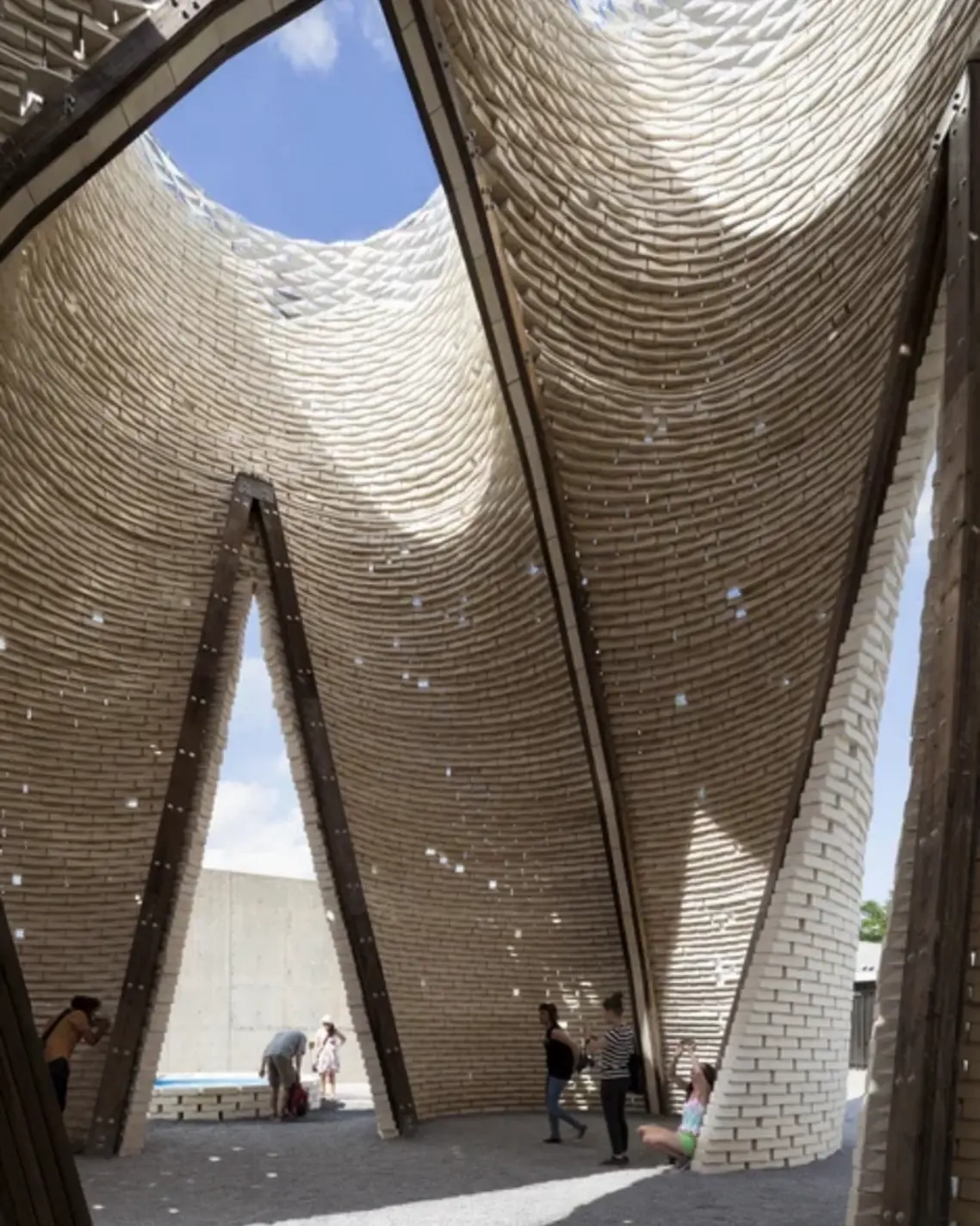
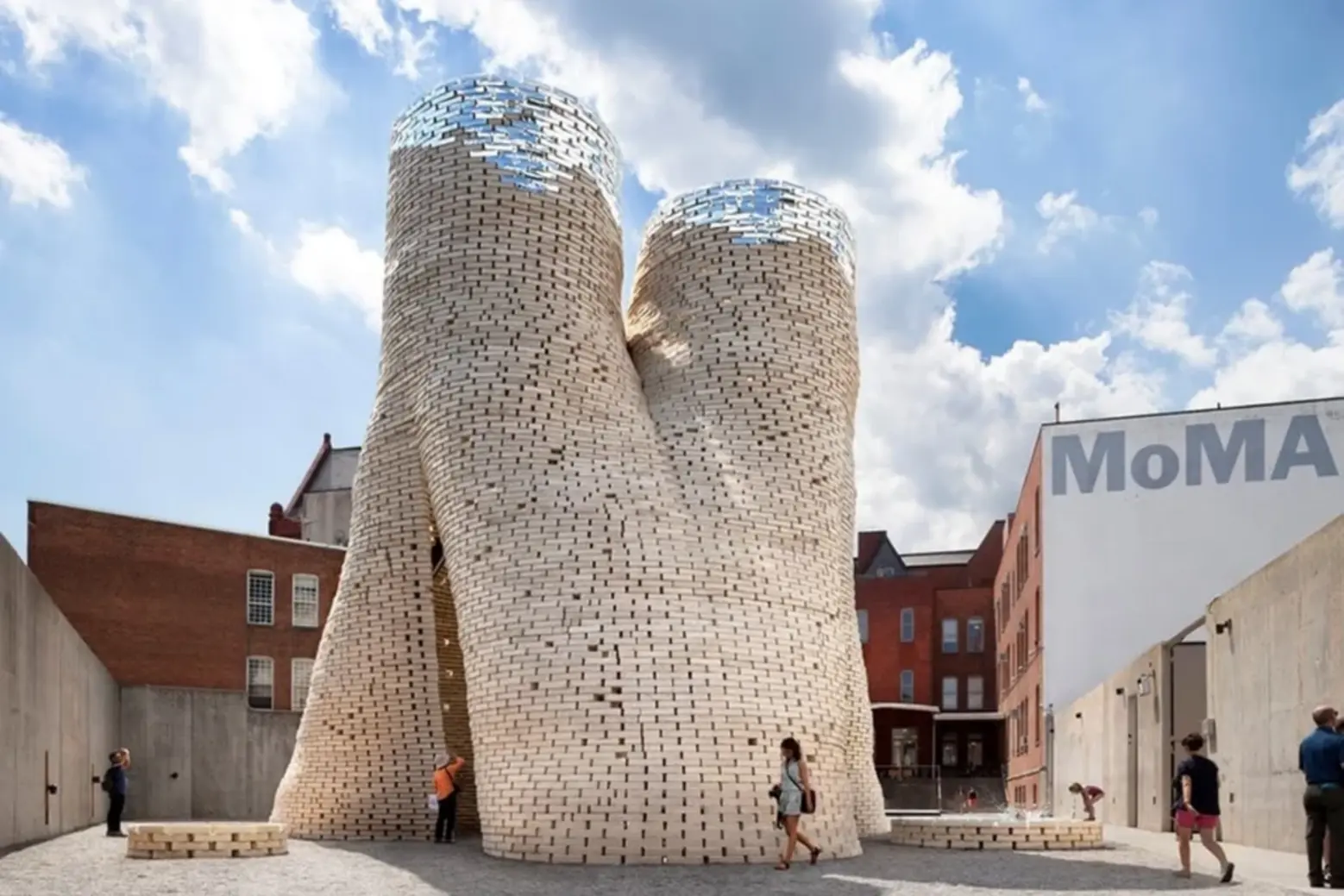
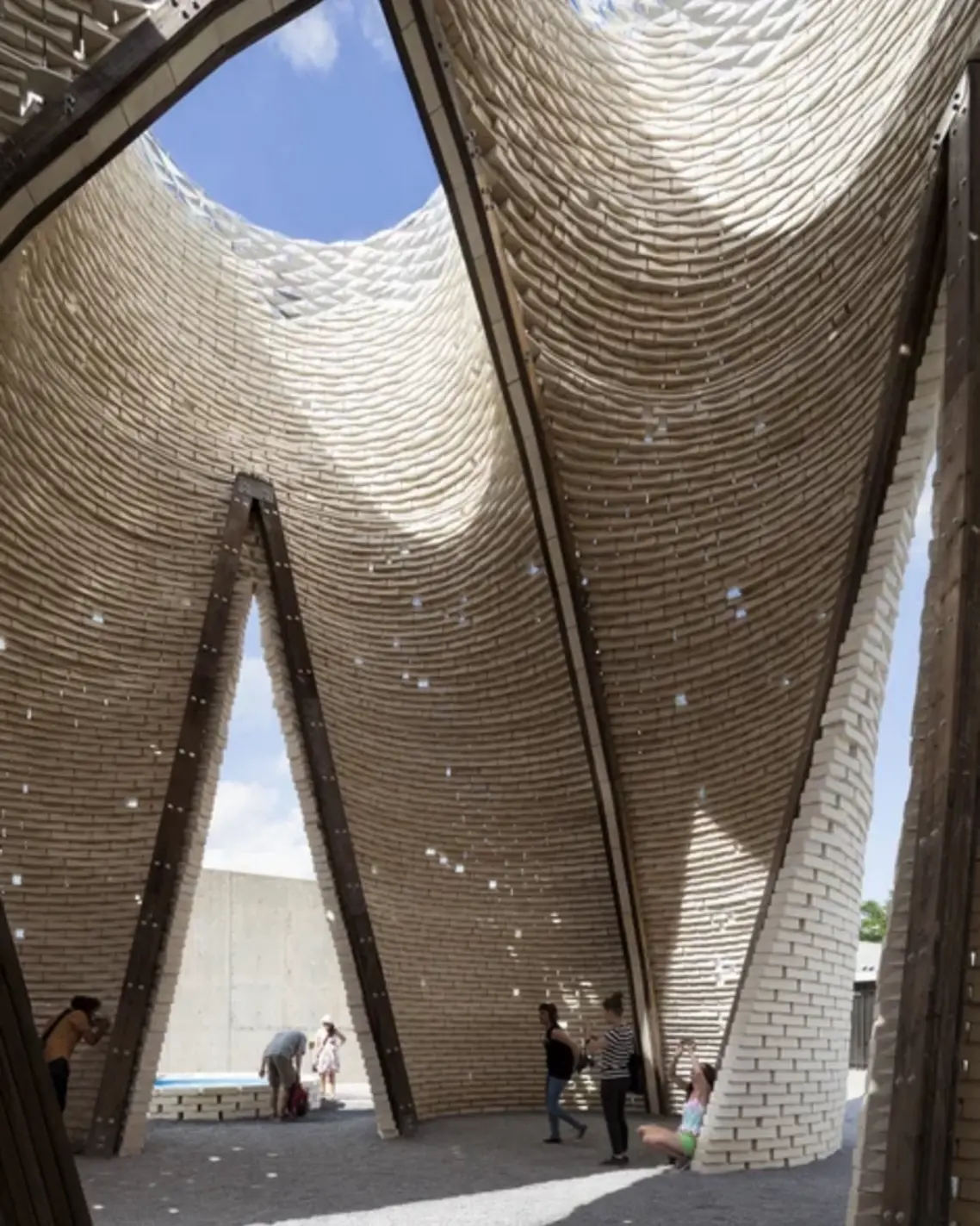
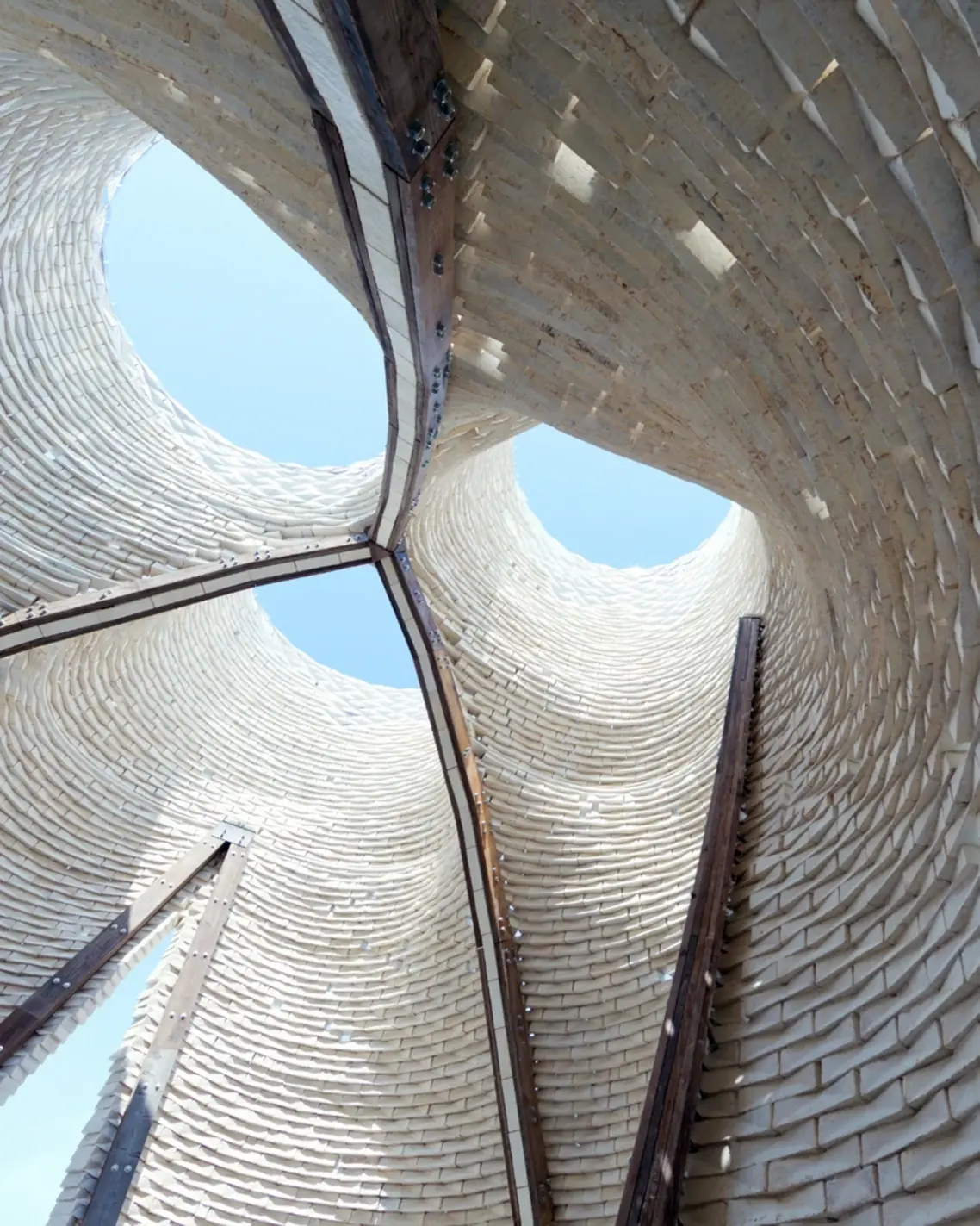
The concept of mushroom buildings is not foreign. Back in 2014, the Hy-Fi Project by The Living Studio and Ecovative Design was built in the yard of MoMA PS1. The structure was created by mycelium bricks which grew in less than a week in prismatic molds from the residue of chopped corn stalks. When constructed, the bricks formed a tower about 12 meters high. At the end of the two-month exhibition, the tower was dismantled and the bricks were taken to composters, taking advantage of their natural biodegradability.
If mycelium represents the biological imagination at its most surprising, Self-Healing Bio-Concrete may be the most quietly revolutionary. Concrete remains one of the most widely used materials on earth, and also one of the most environmentally burdensome. Its greatest structural weakness is cracking. Once water enters through those fissures and reaches the steel reinforcement inside, corrosion begins, durability drops, and the long decline of the building is set in motion.
Bio-concrete responds to that problem by treating the building almost like a body with a repair mechanism. Researchers, including teams associated with TU Delft, developed systems in which bacteria such as Bacillus pseudofirmus are embedded in the concrete mix inside protective capsules together with a nutrient source like calcium lactate. The bacteria remain dormant until moisture reaches them through a crack. Once activated, they convert the nutrients into calcite, a limestone-like substance that fills the gap and seals it before deeper damage spreads.
The beauty of this technology lies in its precision. A bridge, tunnel, retaining wall, or apartment block no longer needs to wait for visible deterioration before intervention. Repair begins at the microscopic level, where longevity is won or lost.
Extending the life of existing structures means fewer demolitions, fewer replacements, and less carbon spent on reconstruction. In the Netherlands, where the battle against water is neverending, bacterial systems have been used in bridges and canal infrastructure where persistent water exposure makes cracking especially dangerous. In Ecuador, bio-concrete applications answer the pressures of humid climates that accelerate steel corrosion. The HEALCON project has further demonstrated how such systems can seal cracks up to 0.8 millimeters wide and significantly lengthen structural lifespan.

If mycelium and bio-concrete embody the experimental frontier, mass timber is the bio-integrated technology already reshaping real skylines. Cross-Laminated Timber, or CLT, is made by layering boards in perpendicular directions and bonding them into large structural panels. This cross-grain logic gives the material a remarkable strength-to-weight ratio, allowing it to compete with steel and concrete in mid-rise and high-rise construction while remaining far lighter.
The urban significance of CLT goes well beyond engineering. Timber stores carbon absorbed during a tree’s growth, turning the building itself into a form of sequestration. Each cubic meter of CLT can lock away roughly one ton of CO2, which reframes architecture from emissions source to carbon reservoir.
There is also the emotional register of timber, something colder materials rarely deliver. In schools, homes, offices, and cultural buildings, exposed wood changes how space feels against the body. It brings grain, warmth, texture, and a degree of visual calm that many studies associate with reduced stress and stronger biophilic connection. The effect is subtle, then cumulative. A timber building often feels less like a machine for occupation and more like a habitat.
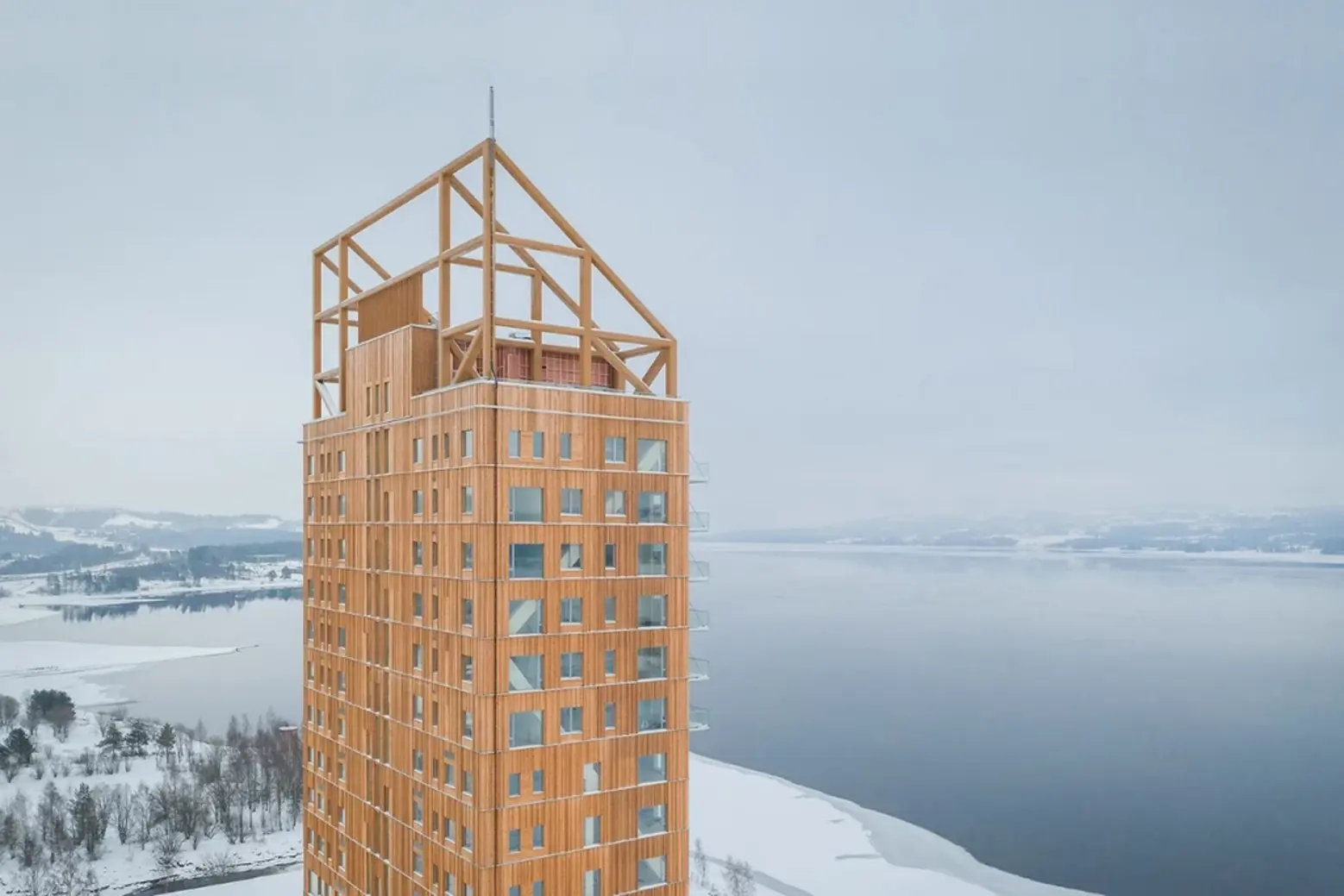
Several landmark projects have already made the case. Mjøstårnet, standing tall at 85.4-metre in Norway, has proved that timber could perform in tall-building conditions once thought reserved for heavier systems. Sara Kulturhus by White Arkiteckter in Sweden pushed the conversation further as a cultural complex that stands tall while storing thousands of tons of carbon. In the United States, Ascent MKE in Milwaukee demonstrated that mass timber could succeed in a dense urban residential context.
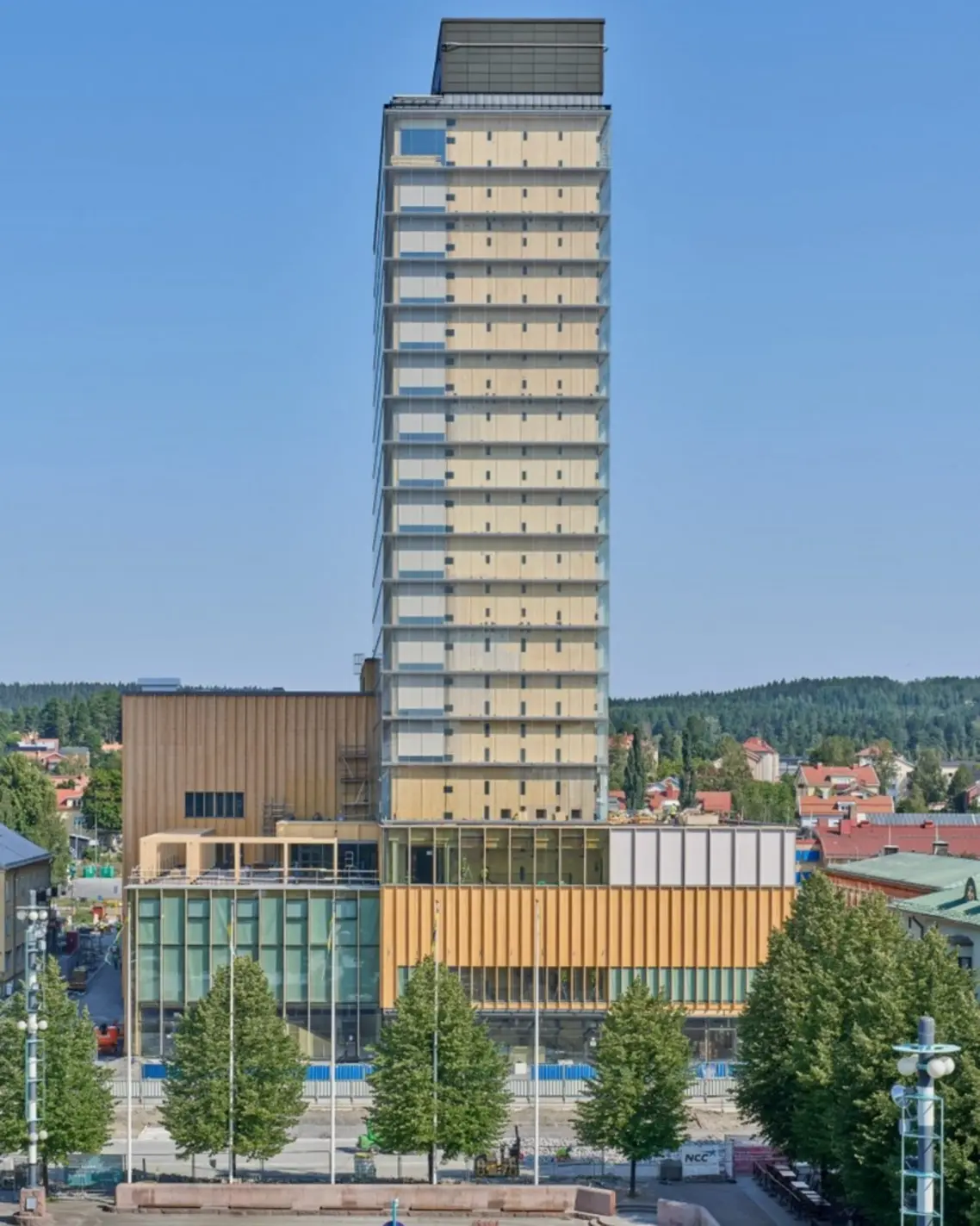
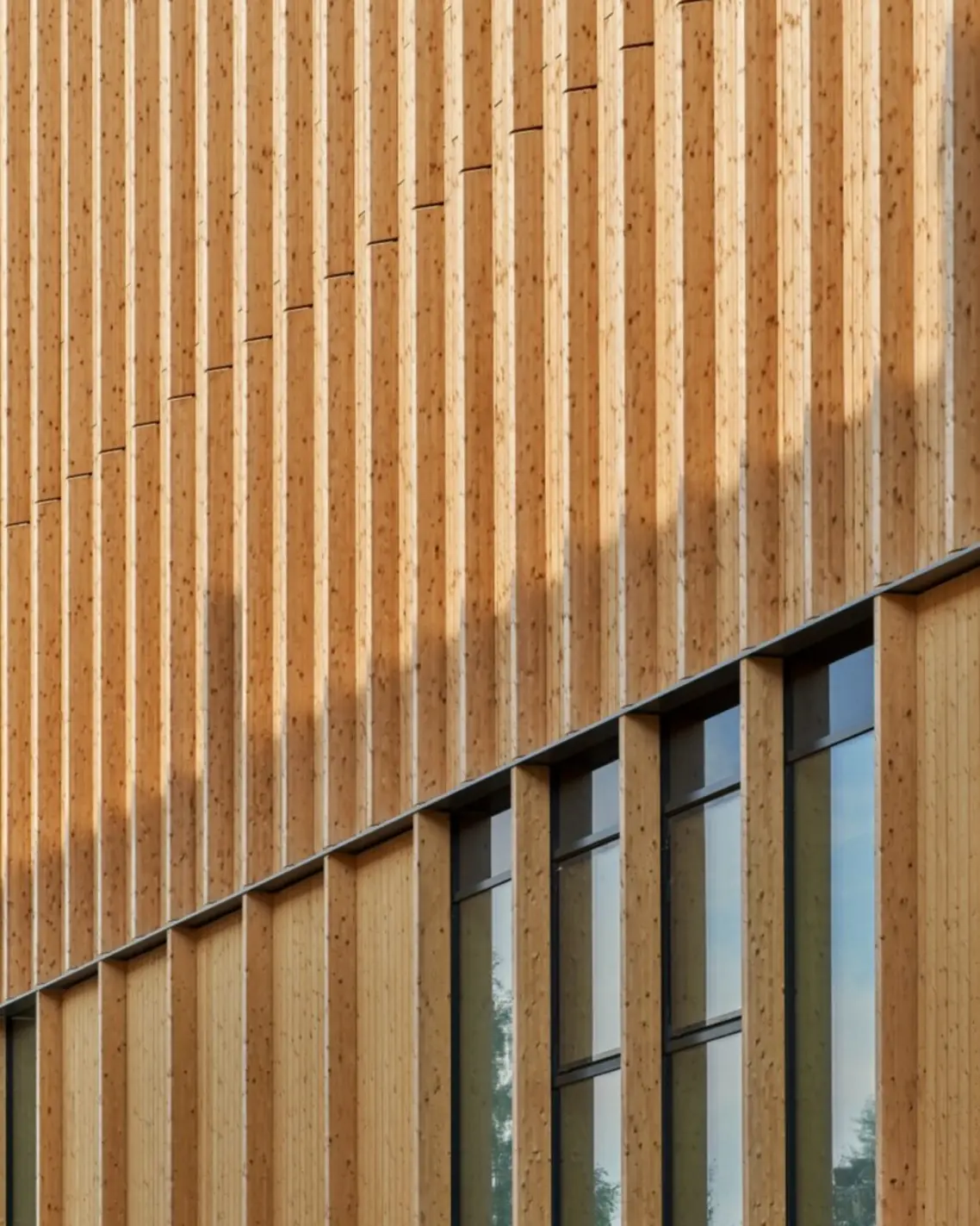
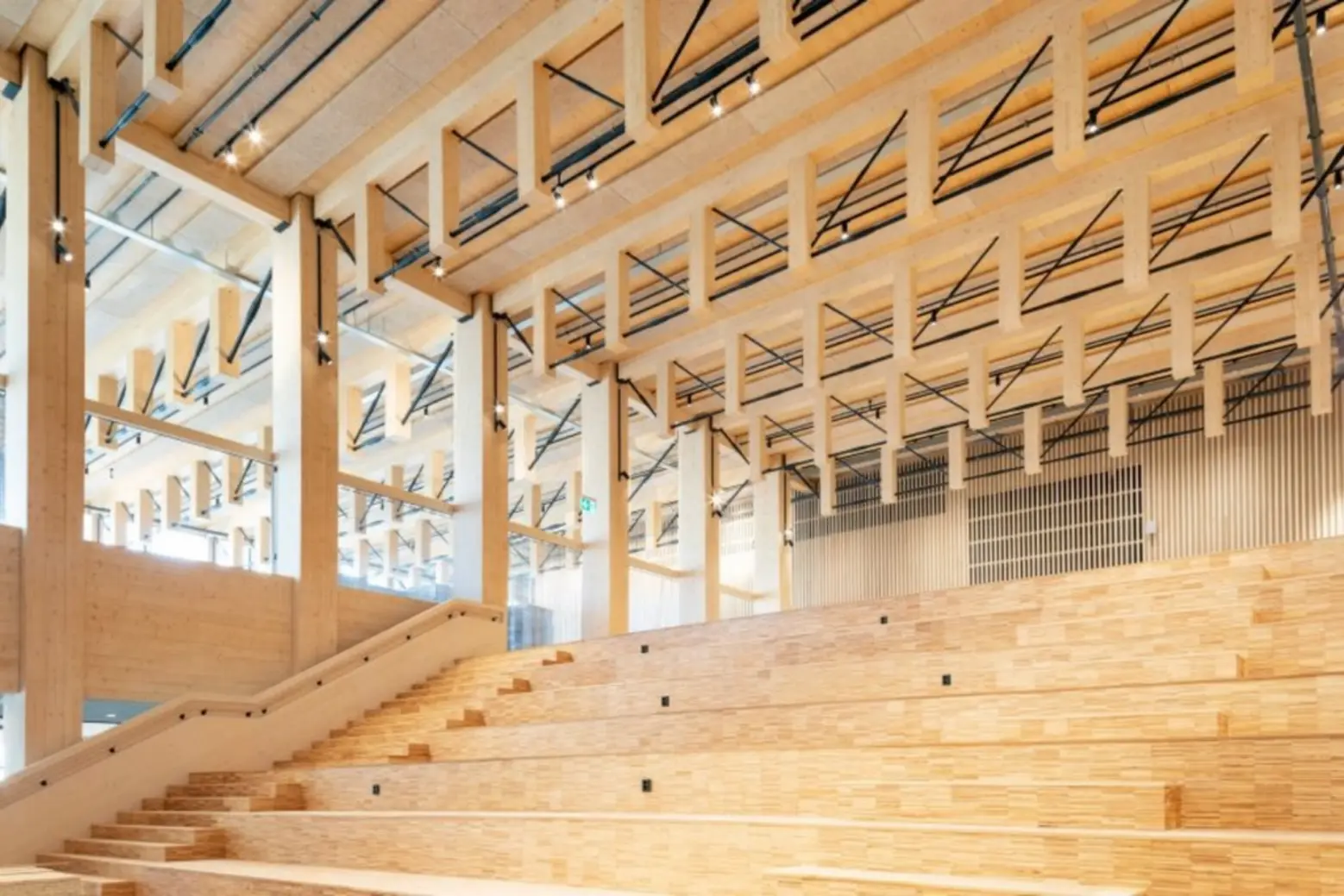
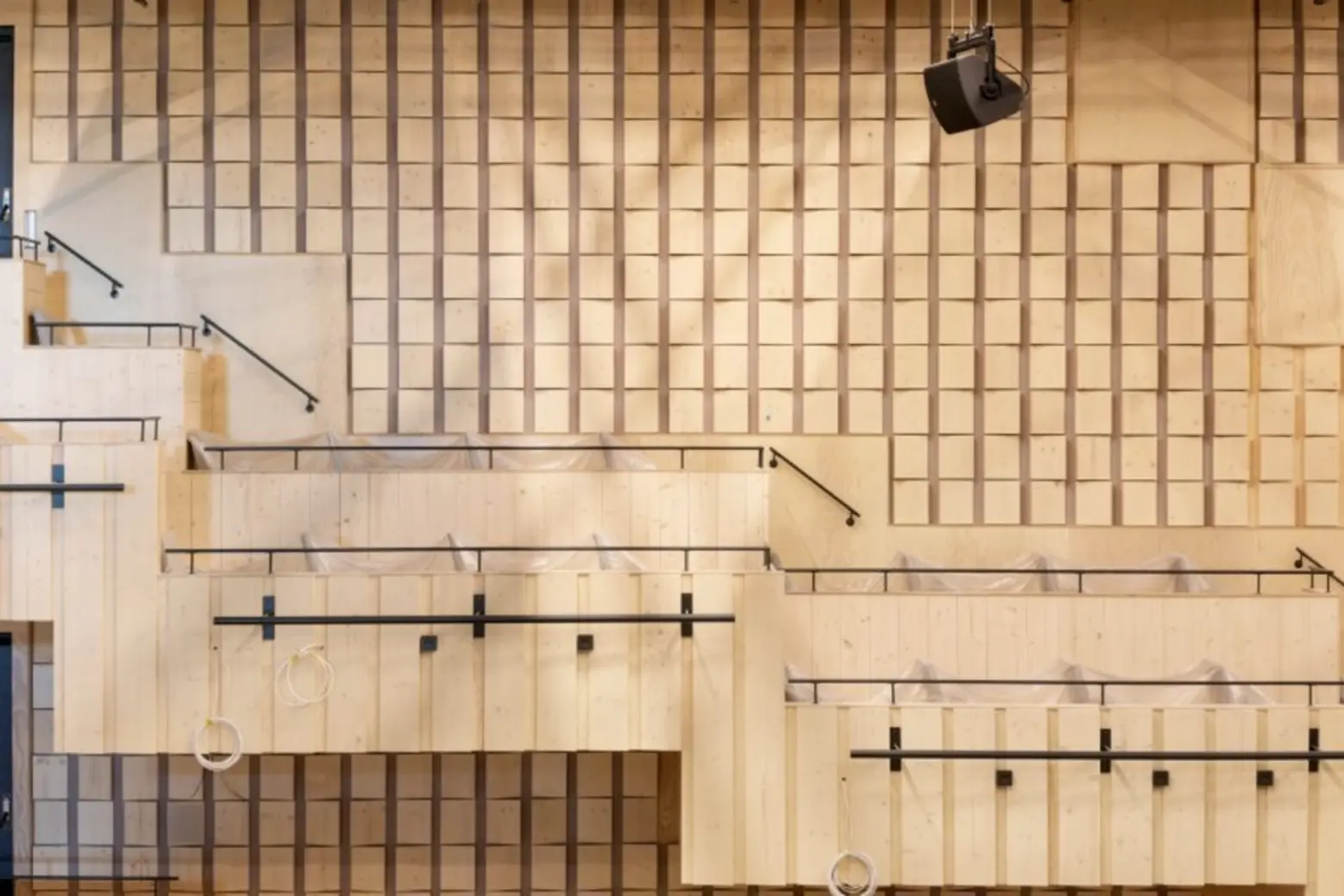
The Hive in Vancouver added yet another dimension by becoming a major seismic-force-resisting timber structure, using advanced engineering strategies to thrive in an earthquake-prone region.
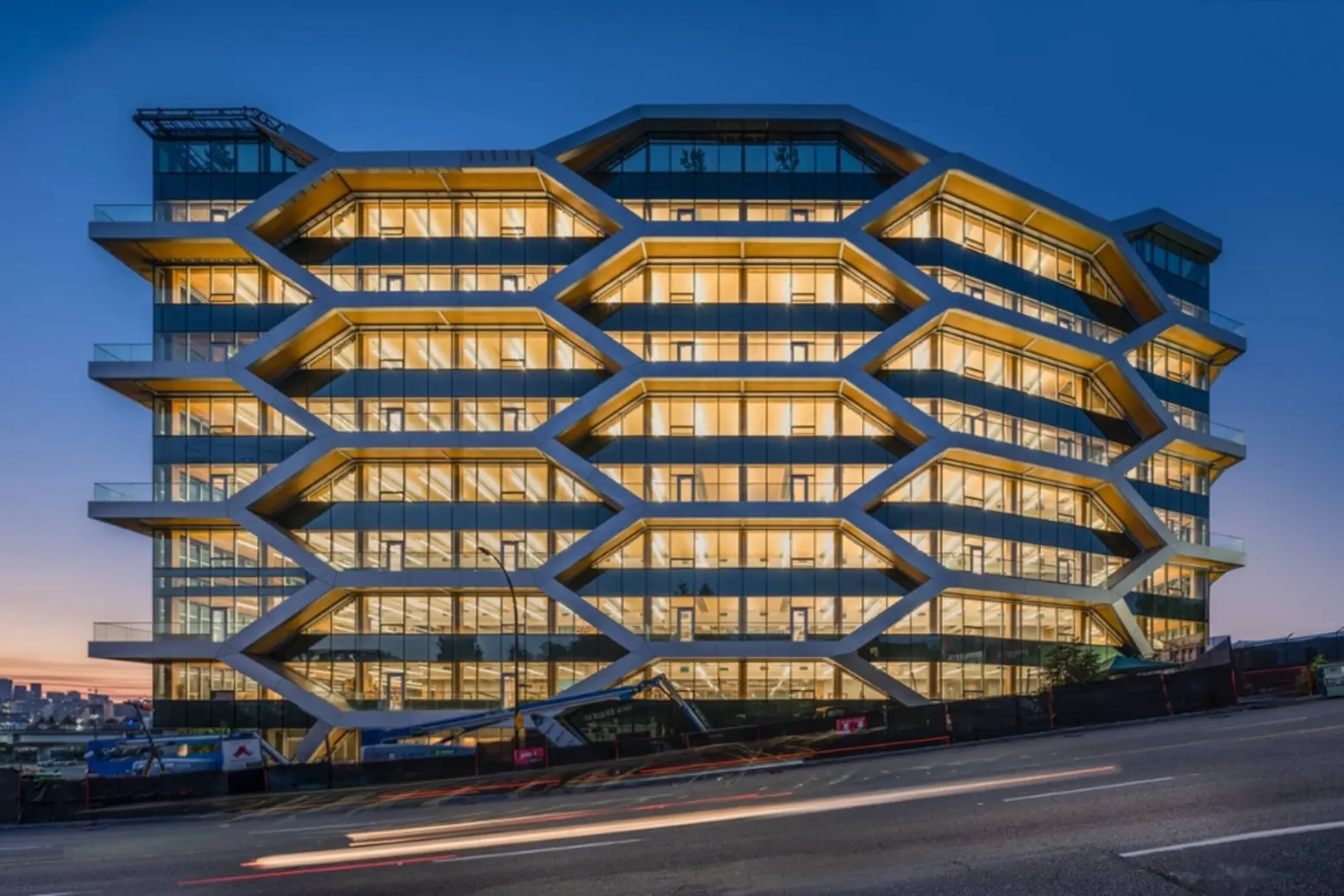
The most ambitious horizon for Bio-Integrated Design lies in systems that do more than perform structurally. They metabolize. They respond. They produce energy, regulate light, and blur the border between building and organism. This is where the built environment begins to act less like a shell and more like an ecology.
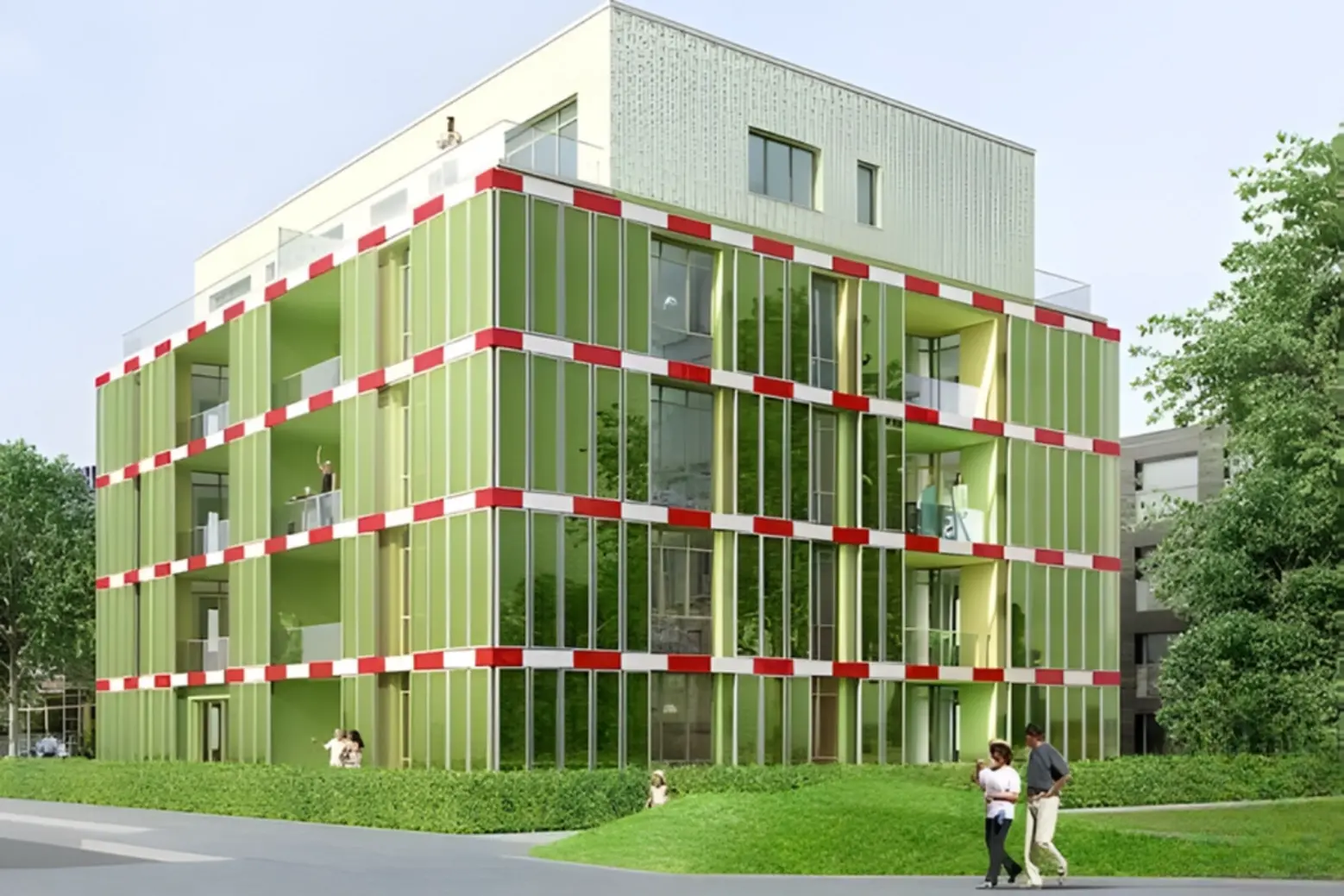
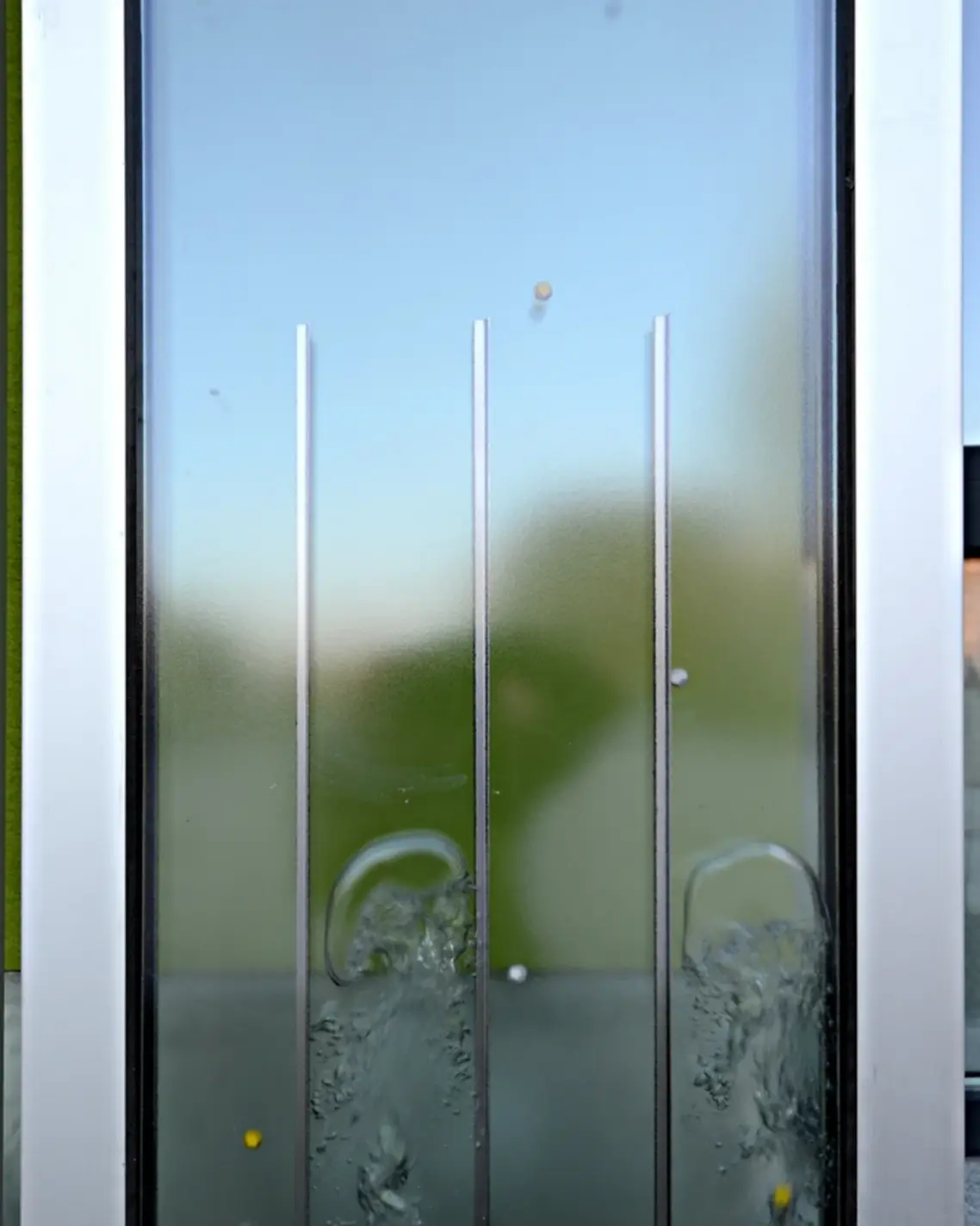
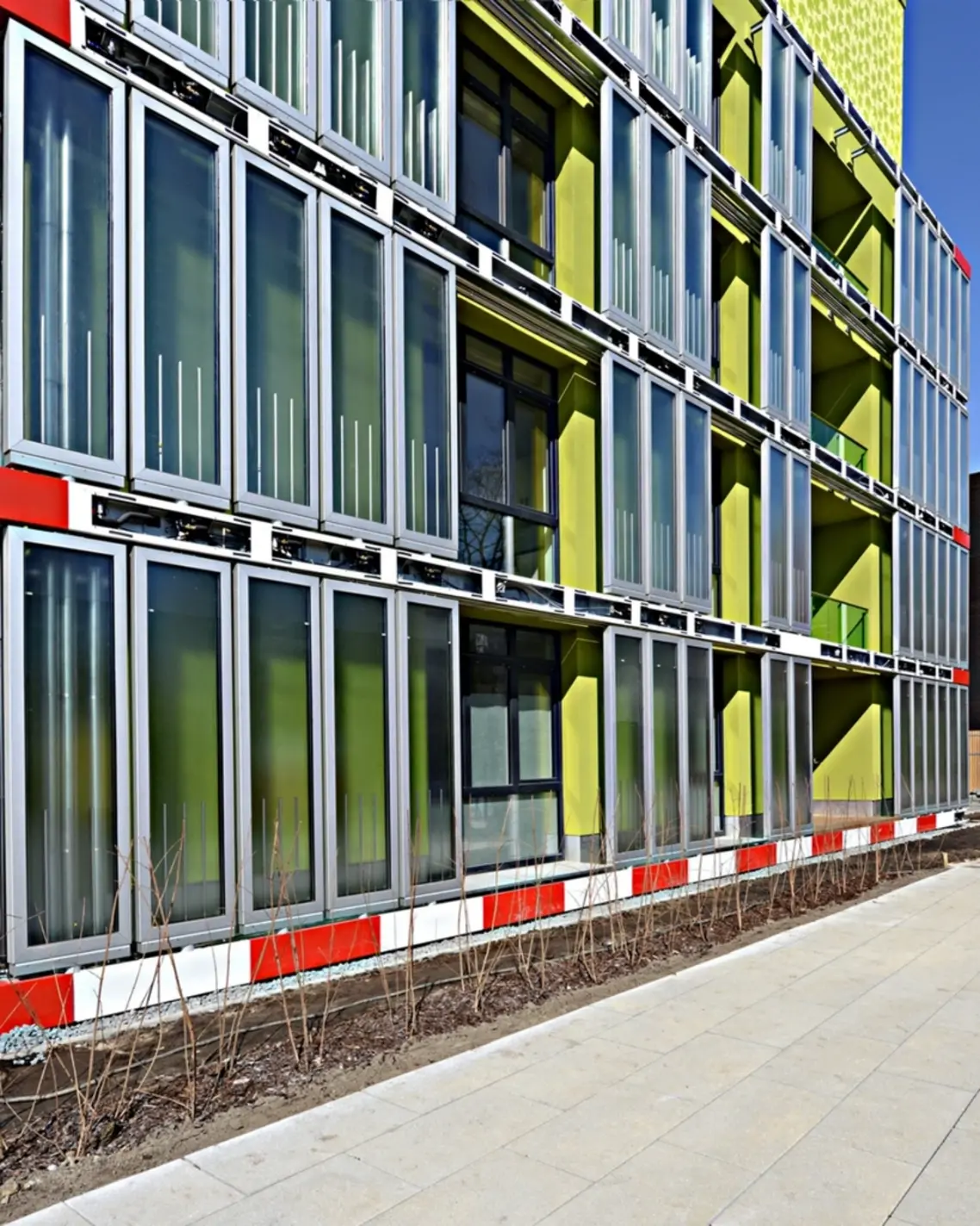
One of the clearest built examples remains the BIQ House in Hamburg, famous for its bioreactive facade. On its sun-facing surfaces, glass panels containing living microalgae capture sunlight and carbon dioxide while also providing dynamic shading. As the algae grow denser, they can be harvested and converted into biogas, allowing the facade to function simultaneously as environmental filter, climate-control device, and energy generator.
This idea is thrilling because it changes the role of architecture at the level of metabolism.
Seen together, Mycelium Construction, Self-Healing Bio-Concrete, CLT towers, and algae facades chart a broader cultural shift. These Bio-integrated designs announce the end of architecture as a discipline obsessed only with inert permanence. In its place emerges a design intelligence willing to engage growth, decay, repair, seasonality, and reciprocity. Materials are chosen not only for strength, but for their life cycle, their energy behavior, and their relationship to the living world around them.