MENU
Close





Contemporary glass design has become one of the most persuasive forces in luxury home decor, reshaping the emotional language of interiors through light, color, density, and reflection.
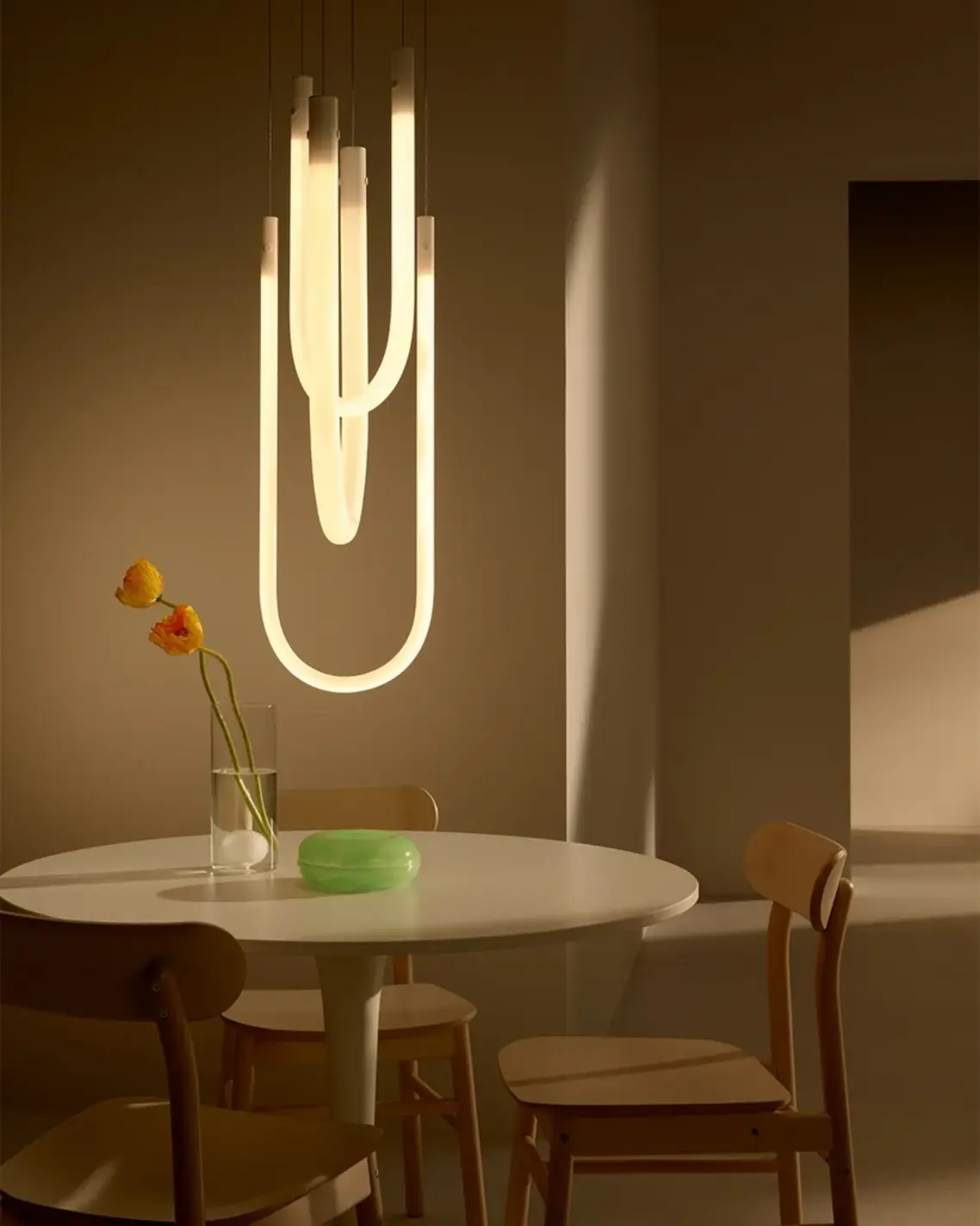
Contemporary glass design has become one of the most persuasive forces in luxury home decor, reshaping the emotional language of interiors through light, color, density, and reflection.
April 9, 2026


In seventeenth-century Venice, a glassmaker supposedly dropped copper filings into molten glass and seemed to spoil the batch. Then chance intervened. Inside that blazing mixture, the metal sparked into a luminous shimmer so dazzling it felt as though starlight had been sealed inside crystal.
From that accident came aventurine, its name drawn from the Italian all’avventura, meaning “by chance,” and with it a material forever linked to rarity, ornament, and quiet opulence.
That sense of wonder still defines glass in 2026, though its role has grown far more powerful. Contemporary glass design has moved beyond the status of polished accessory and entered the heart of luxury home decor.
The true rise of contemporary glass design begins with a change in how design itself is understood. The old hierarchy separated architecture from decoration, structure from ornament, usefulness from beauty. Today, that separation feels increasingly outdated. The best makers in contemporary glass design create objects that operate almost like miniature forms of contemporary architecture. A table, lamp, vessel, or installation can now influence how light travels, how shadow settles, how color pools, and how a room is emotionally read.
That shift explains the intense appeal of glass right now. Few materials can embody contradiction so beautifully. Glass can appear solid and liquid at once. It can feel industrial, though also strangely tender. It can carry severe geometry while still producing soft, unstable visual effects. In the context of luxury home decor, that complexity is irresistible because it gives room movement without clutter. In the language of contemporary architecture, it introduces permeability, reflection, and luminous depth.
Sabine Marcelis brings a particularly lovely kind of clarity to contemporary glass design. From her Rotterdam studio, she creates pieces in glass and resin that feel clean, calm, and quietly dazzling.
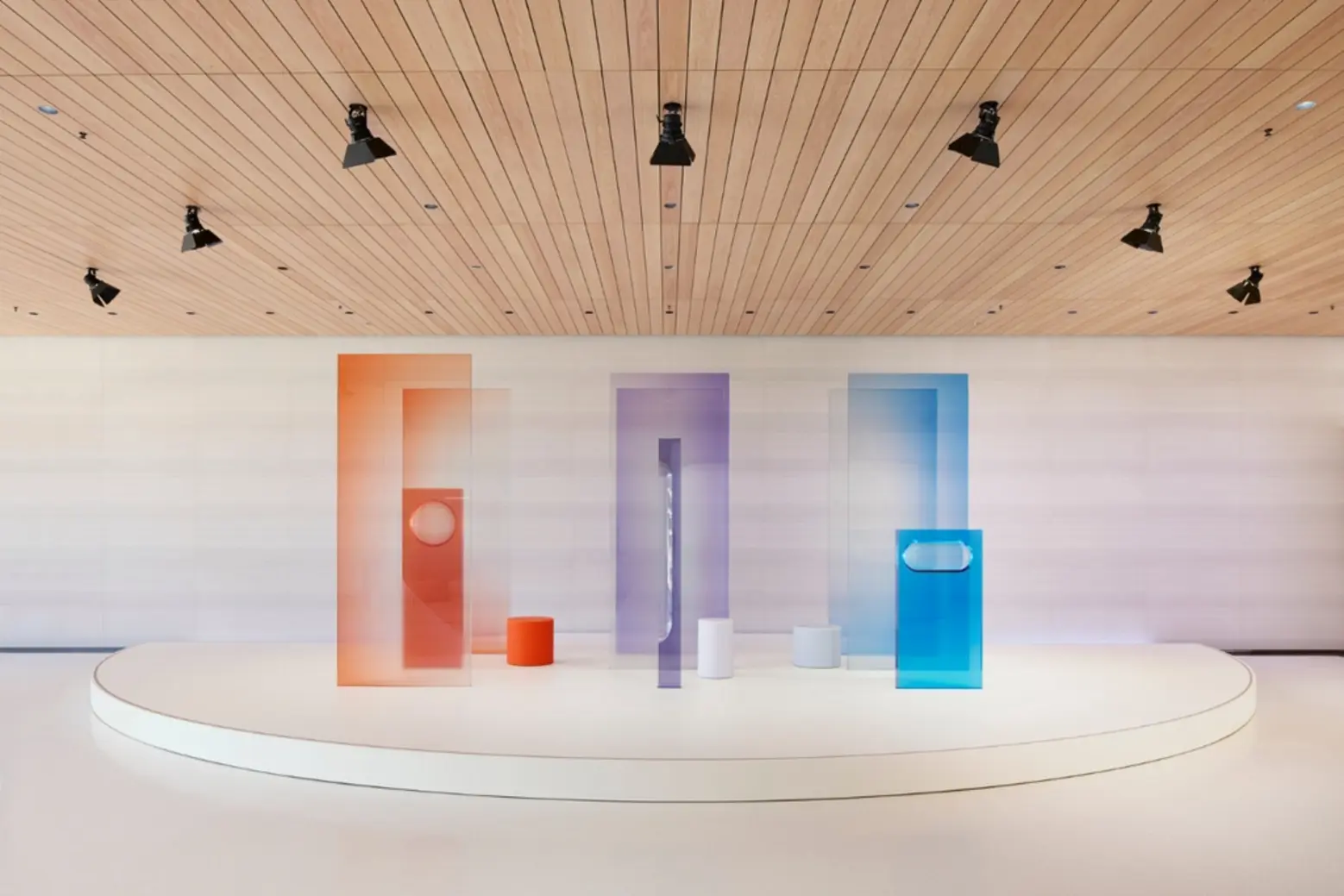
Her recent projects show just how charmingly wide her language can travel. For Apple in 2025, she transformed the idea of “Liquid Glass” into a glowing physical world of translucent resin totems and glass partitions, letting contemporary glass design slip beautifully between technology, branding, and architecture. Her evolving VARMBLIXT universe for IKEA feels warm and playful, turning lighting into a mood-setting presence with a strong identity of its own.
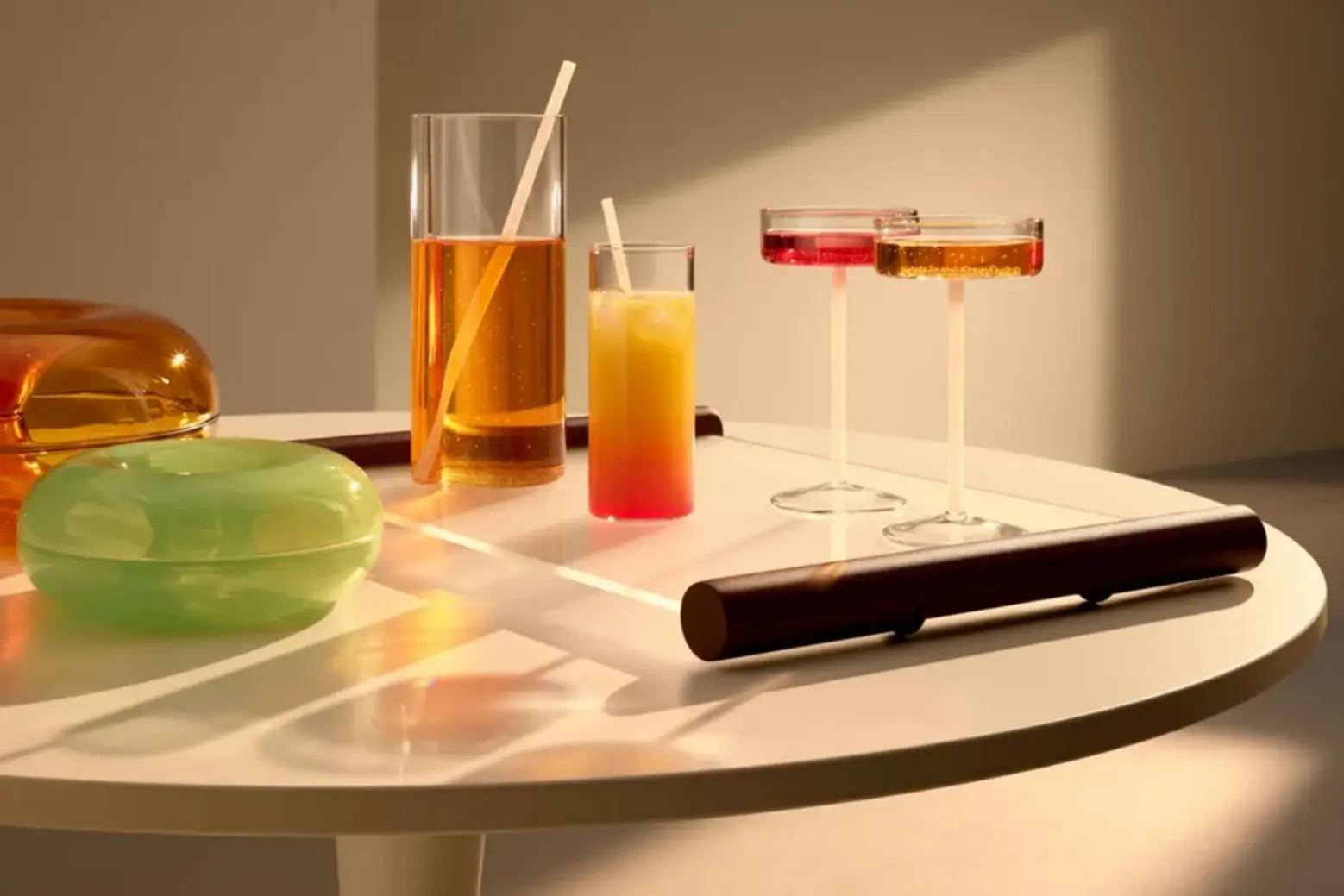
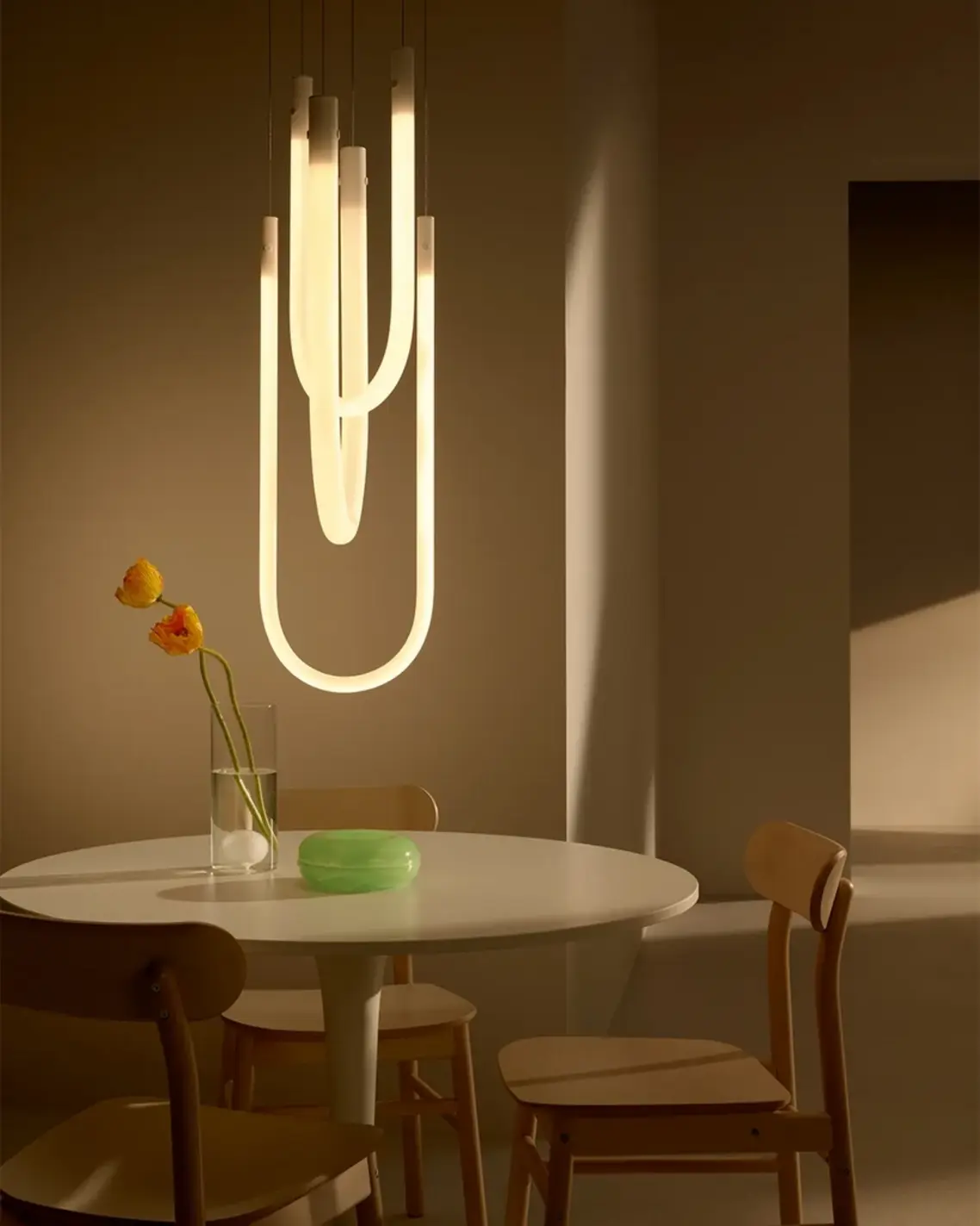
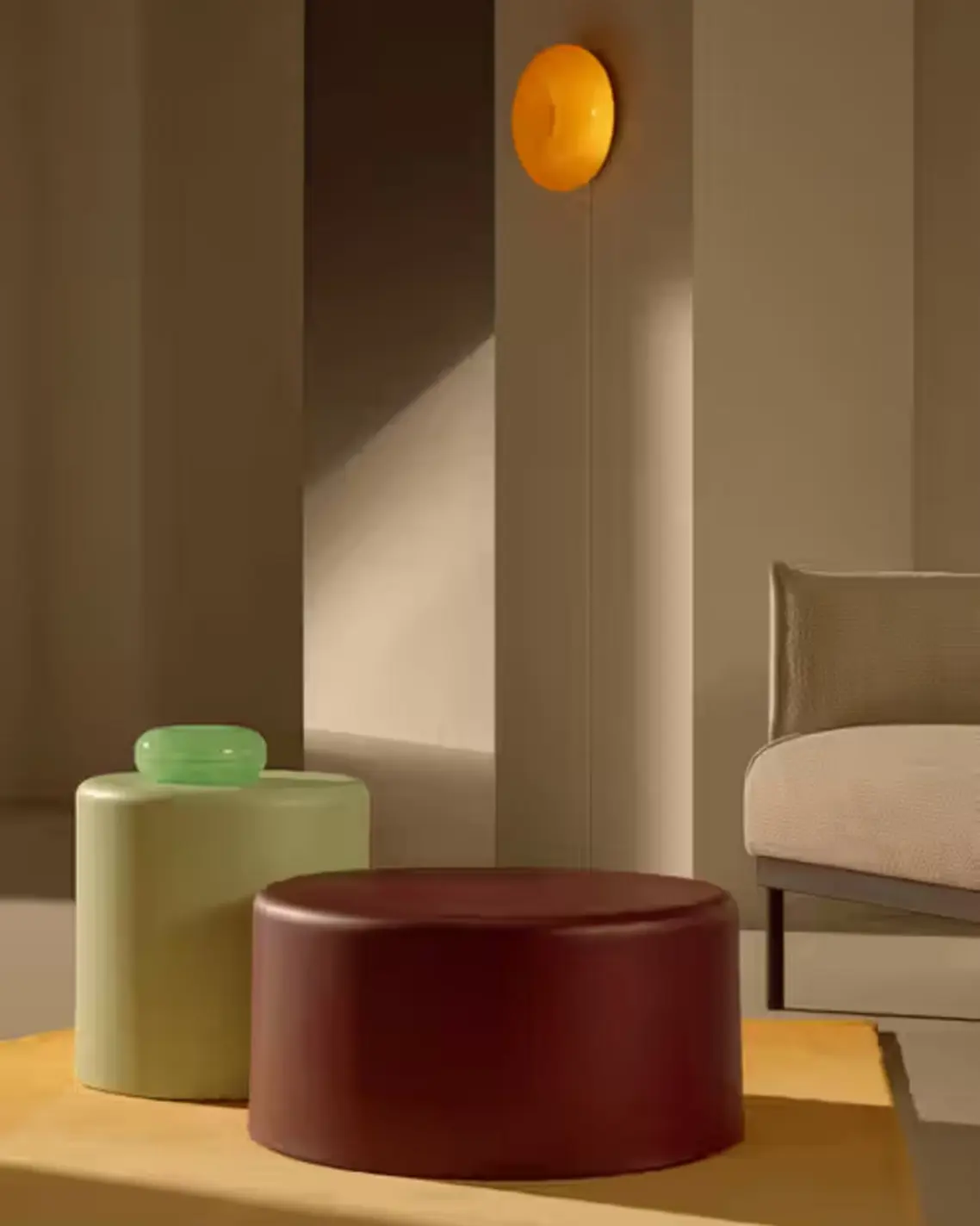
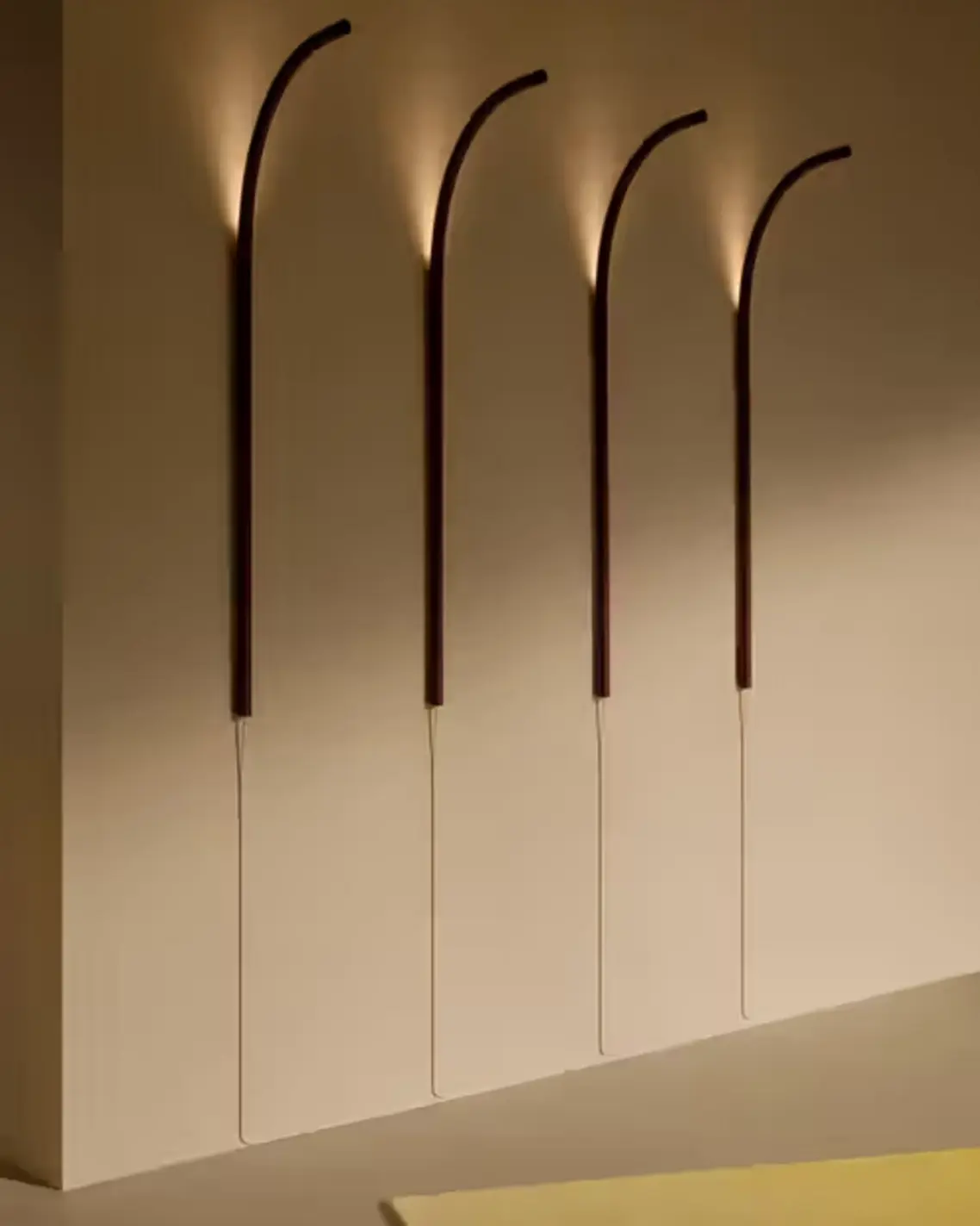
What makes Marcelis even more remarkable is that this dreamy, light-filled world also carries serious weight. Her works are held in the collections of MoMA, the Stedelijk Museum, and the National Gallery of Victoria, a rare sign of both artistic importance and broad appeal. Many designers create beautiful things for luxury home decor. Very few shape the visual language of contemporary architecture and museum culture at the same time. Sabine Marcelis does exactly that, and she does it with a kind of liquid magic that makes contemporary glass design feel sweeter, softer, and more enchanting than ever.
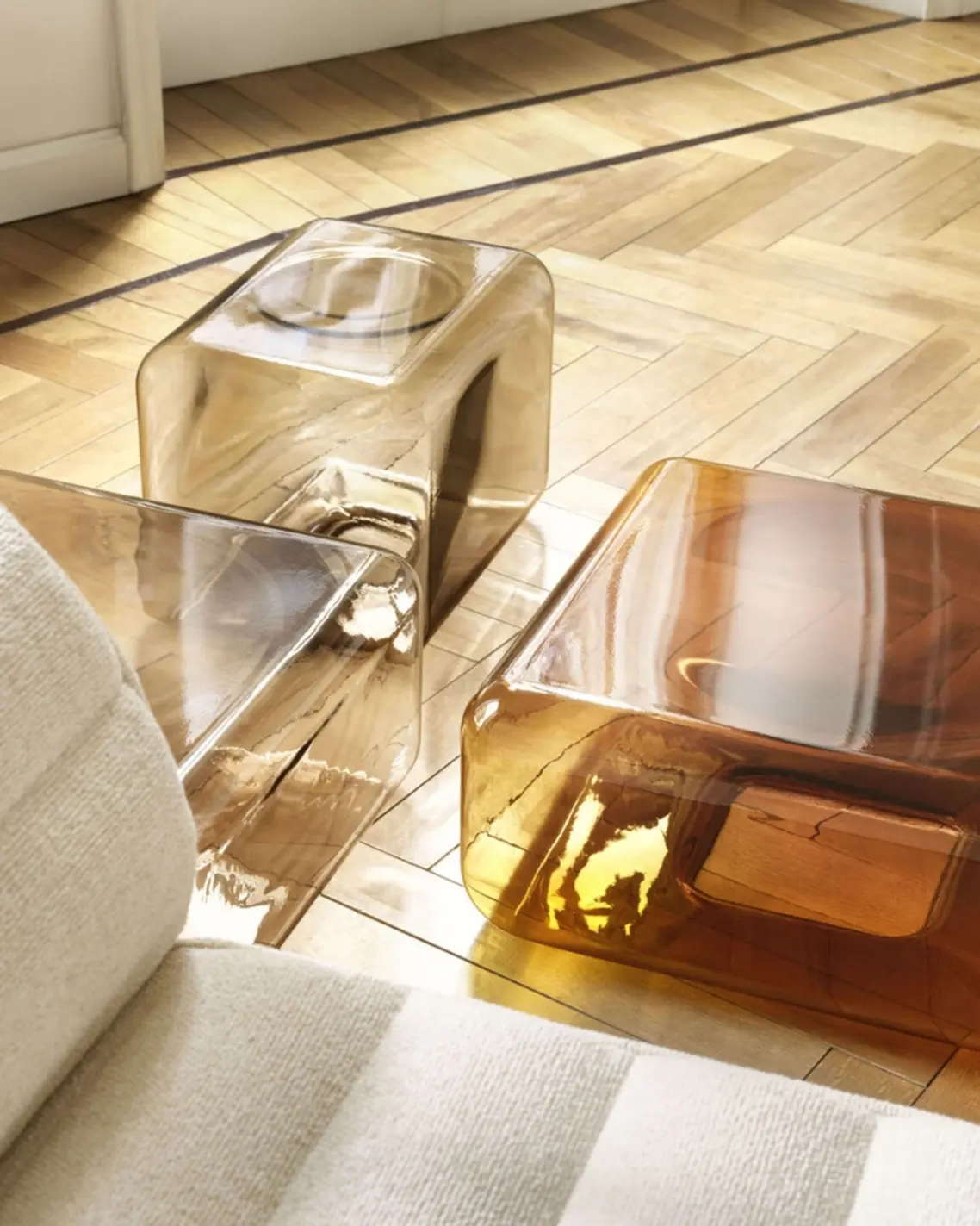
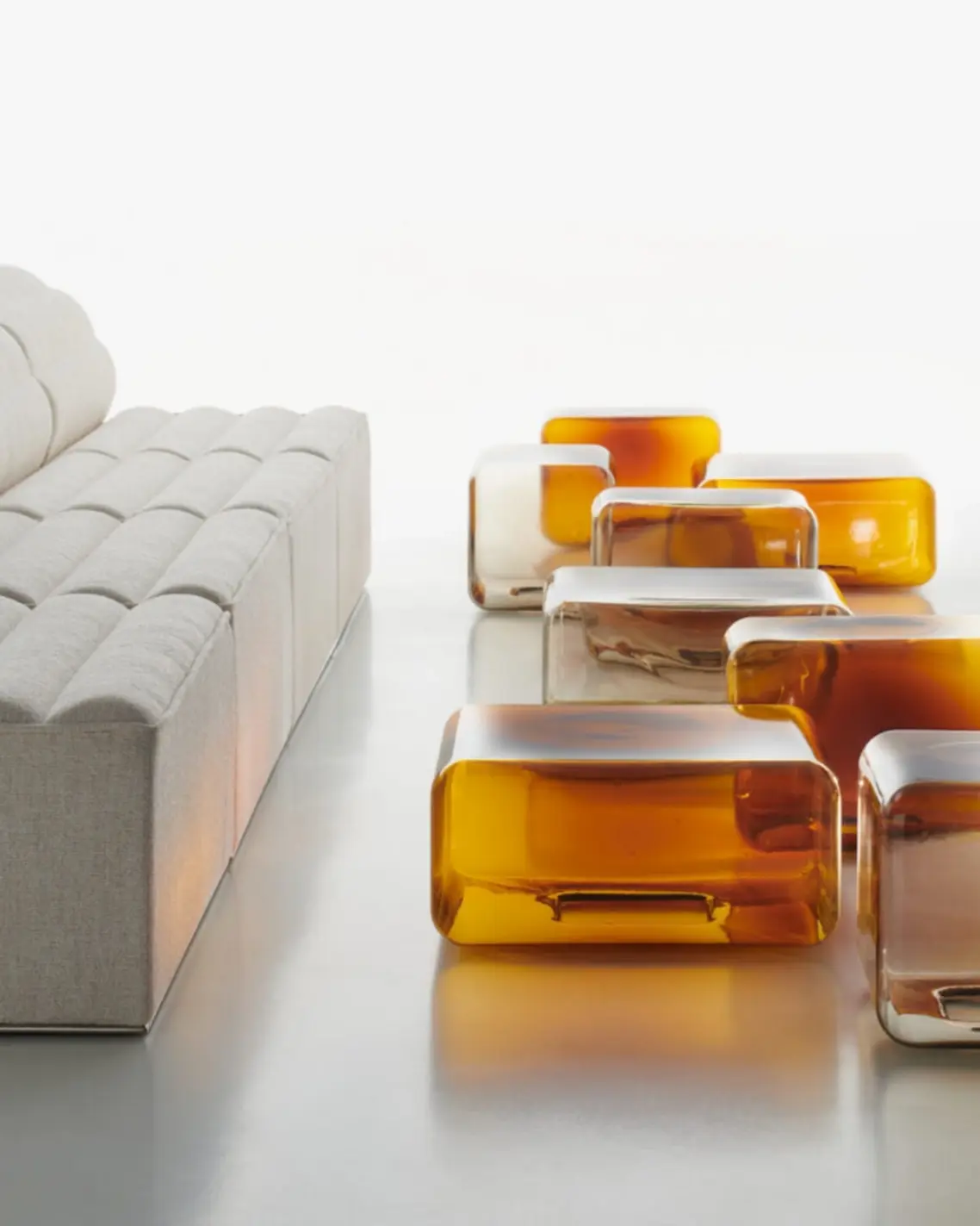
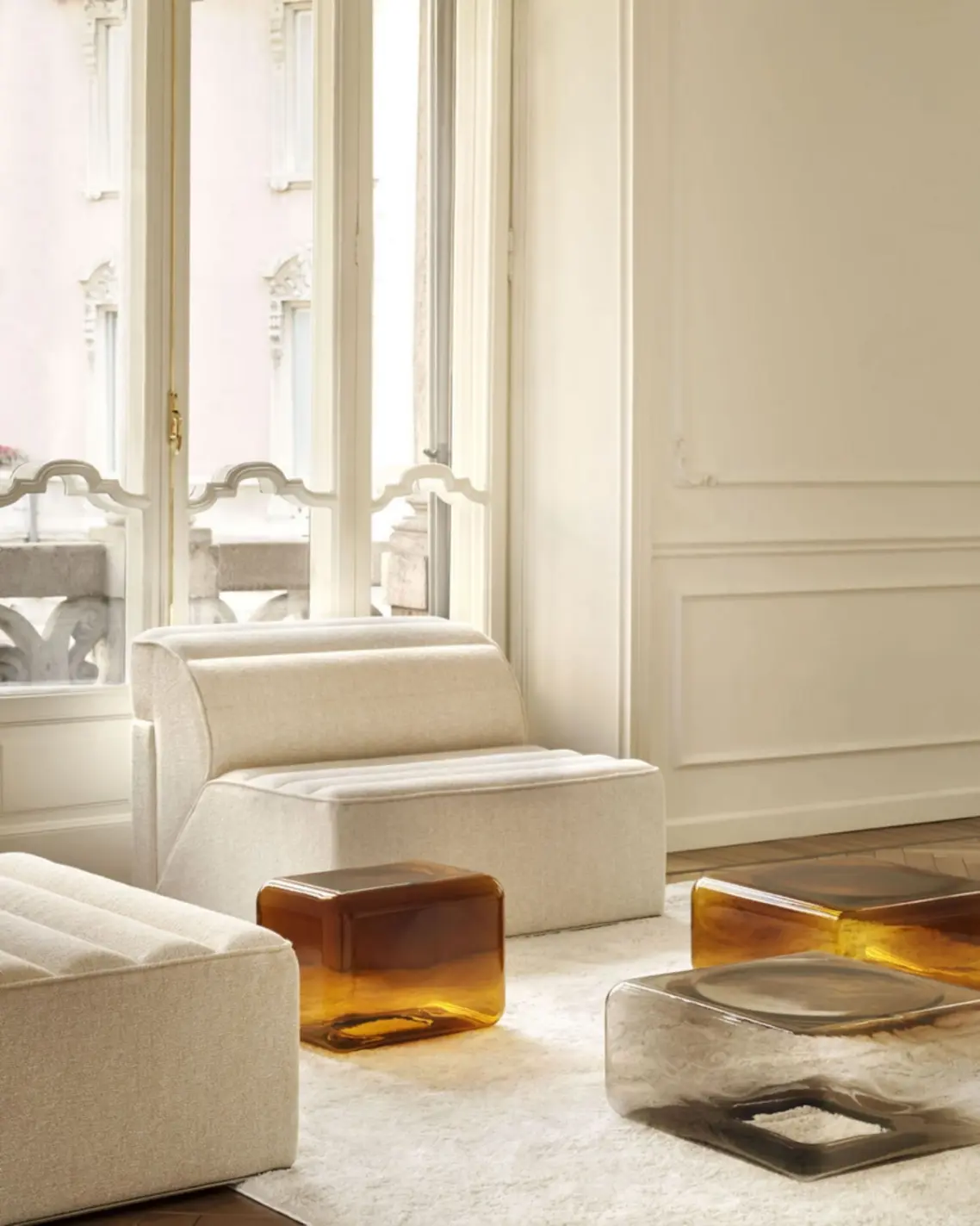
One of the loveliest things about her work is how it can trick the eye in the gentlest way. Her iconic Lokum Tables look like cubes of ginger candies for the eyes, glowing at the edges with a sugar-soft finish.
If Sabine Marcelis gives contemporary glass design its luminous coolness, Jérémie St-Onge of Verre d’Onge offers something softer, slower, and more tactile.
Rather than relying on rigid molds, he allows heat, gravity, and molten glass to shape the final silhouette. His work, unique for their matte sandblasted finish, replaces the usual shine of glass with something closer to sea glass, stone, or weathered mineral, while shades of moss green, amber, charcoal, and crevette pink read more like natural sediment than decorative color. Within luxury home decor, this aesthetic feels especially persuasive because it brings richness into a room with warmth and softness.
St-Onge’s archaeological influence gives the work another layer of depth. He looks to ancient glass and ceramic forms, drawn to their asymmetry and humanness, then refines those references into a modern visual language. That balance allows his vessels to sit beautifully within contemporary architecture. They do not feel nostalgic. They feel distilled, quiet, and perfectly suited to thoughtful interiors.
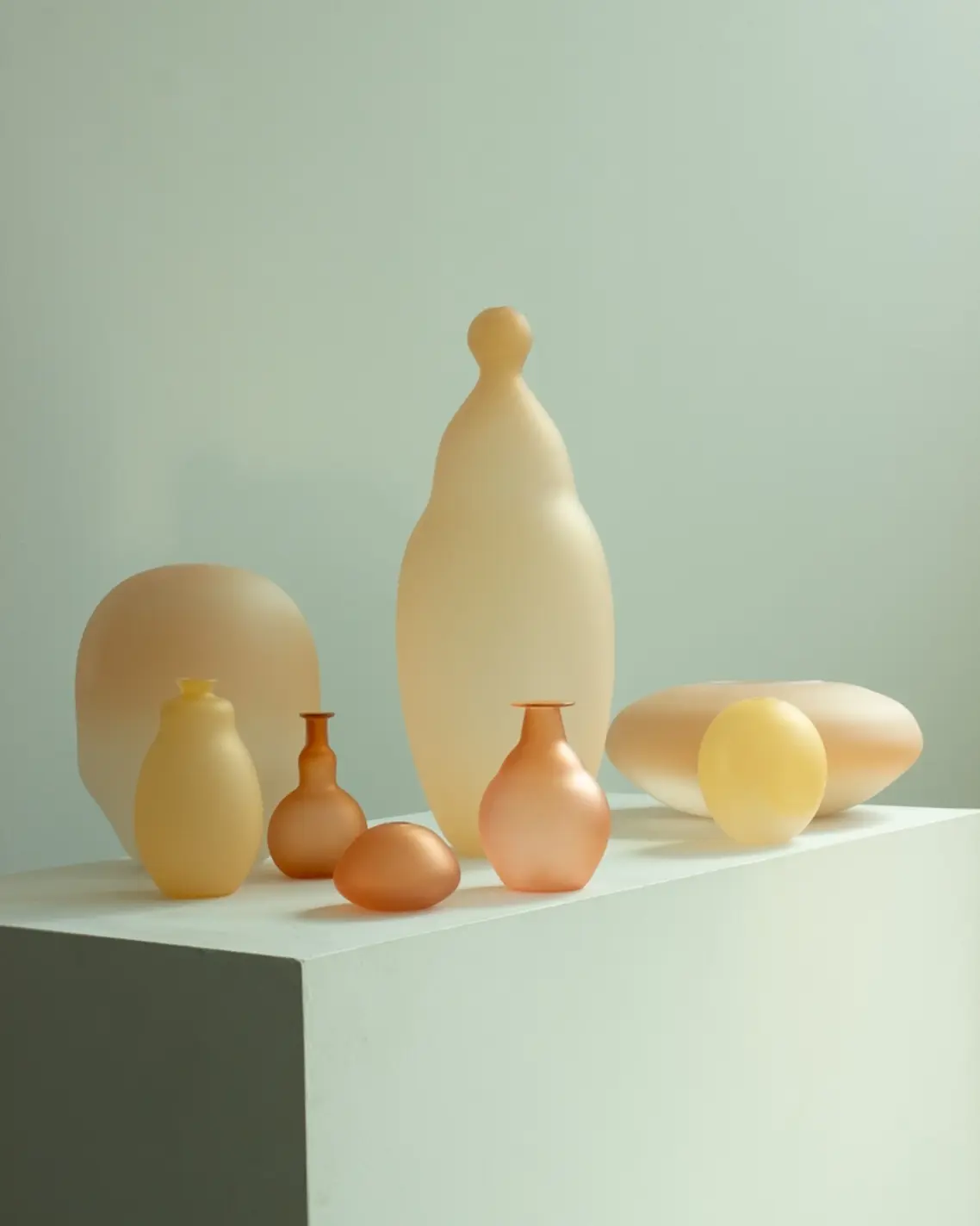
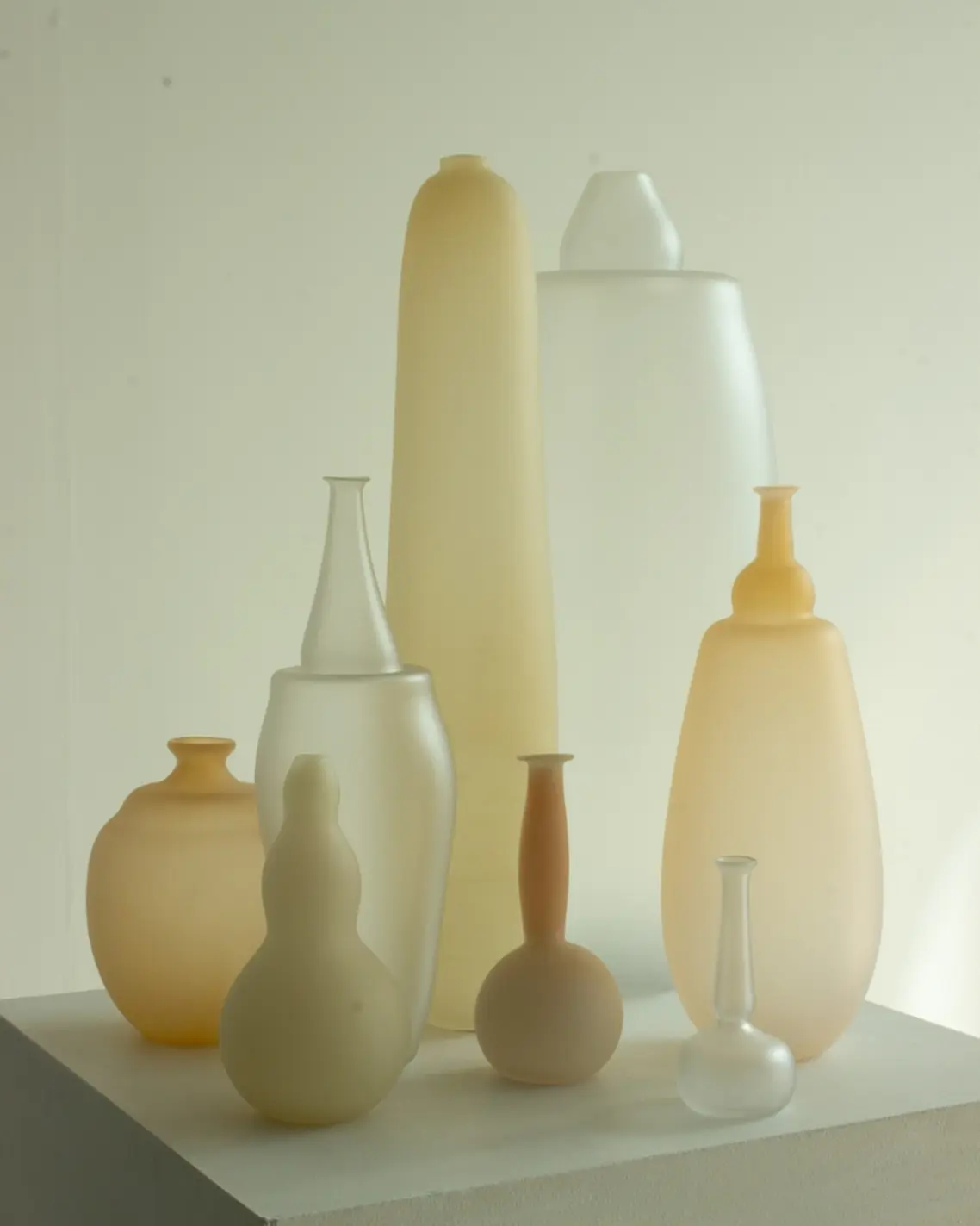
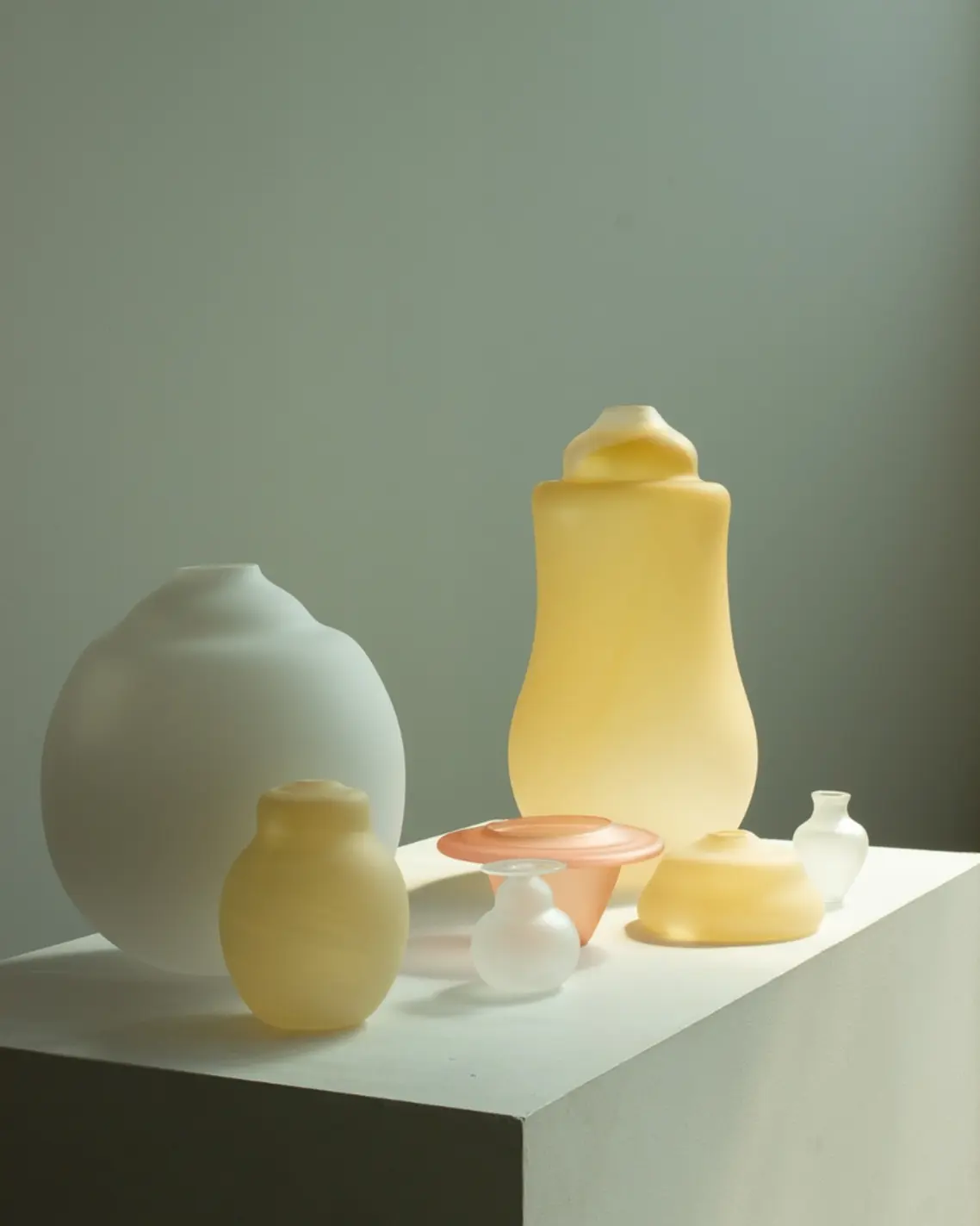
His Ensembles make that spatial intelligence even clearer. By grouping two or three vessels together, St-Onge shifts the focus from the single object to the dialogue between forms. One bottle may be lovely. A group begins to behave like a landscape. Negative space becomes active, rhythm appears across the tabletop, and contemporary glass design starts to echo contemporary architecture in miniature. For luxury home decor, that kind of subtle intelligence is what separates true collectibility from mere decoration.
Among the most compelling names in contemporary glass design, Garnier & Linker bring back density, gravity, and a certain sense of risk. The Parisian duo works with lost-wax cast glass and other ancestral techniques to create objects that feel almost geological. Guided by a subtractive philosophy, they let the material lead the form, which gives their work unusual force. Whether in alabaster, Armenian obsidian, cast glass, or Japanese cedar, their pieces do more than decorate a room. They intensify it.
Recent works show the breadth of their language. The Diatomée series turns destroyed wax molds into singular cast-glass forms. Their 2026 exhibition Against the Light paired bronze structures with translucent surfaces to study silhouette and mass, and their use of mokume-gane and obsidian shows how contemporary glass design can engage rare minerals and ancestral craft with fresh relevance.
Taken together, Sabine Marcelis, Verre d’Onge, and Garnier & Linker show just how expansive contemporary glass design has become. It is no longer a narrow decorative category. It is a sensibility, one that moves fluidly between object, atmosphere, and space. In the best interiors today, glass is no longer the finishing touch. It is the seduction itself.