MENU
Close





René Magritte built one of modern art’s most subversive careers from the calmest possible surface: a respectable suit, a tidy Brussels home, a legible painting style, and objects so ordinary they almost disappear on first glance. Then he shifted them a few inches away from common sense and made the whole visible world tremble.
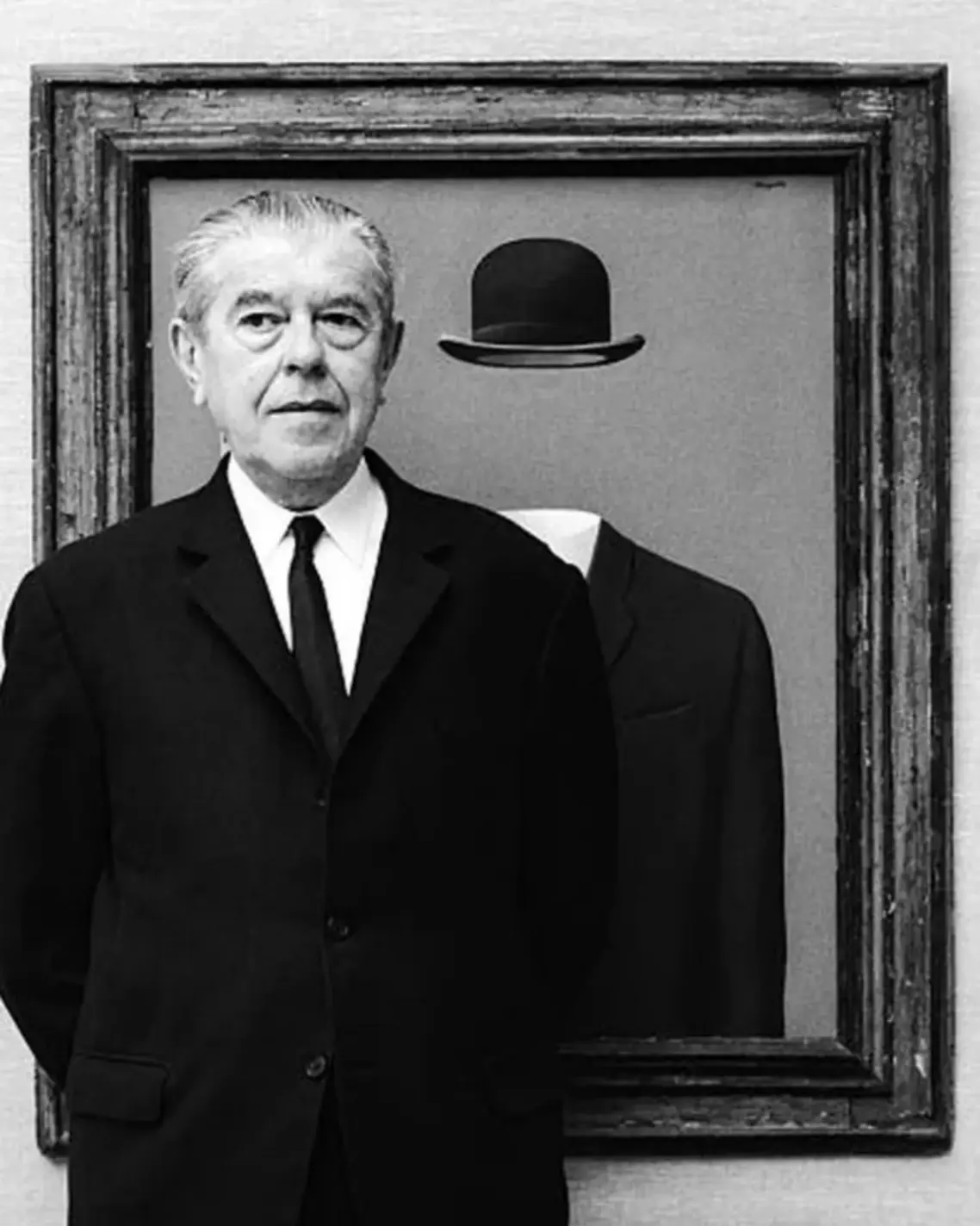
René Magritte built one of modern art’s most subversive careers from the calmest possible surface: a respectable suit, a tidy Brussels home, a legible painting style, and objects so ordinary they almost disappear on first glance. Then he shifted them a few inches away from common sense and made the whole visible world tremble.
March 22, 2026


René Magritte remains one of the rare 20th-century artists whose work feels instantly familiar and permanently elusive. The bowler hat, the hovering apple, the curtained window, the impossible sky. These images belong to mass culture now, yet they still resist full capture. Part of that power comes from the man himself. Magritte cultivated the appearance of a quiet Belgian bourgeois, living with his wife Georgette in suburban Brussels and favoring a sober public persona over avant-garde flamboyance. In Magritte’s world, mystery arrived through precision, through clarity, through the calm arrangement of things that looked perfectly understandable until the mind tried to name them.
René Magritte's route into art carried a practical cast from the beginning. After studying at the Académie Royale des Beaux-Arts in Brussels from 1916 to 1918, an education he found largely uninspiring, Magritte worked as a designer for a wallpaper factory and later as a freelance graphic artist producing advertisements. That commercial training helps explain why his paintings carry such crisp outlines, plain surfaces, and deadpan readability. They speak with the lucidity of posters, labels, diagrams, and shop signs.
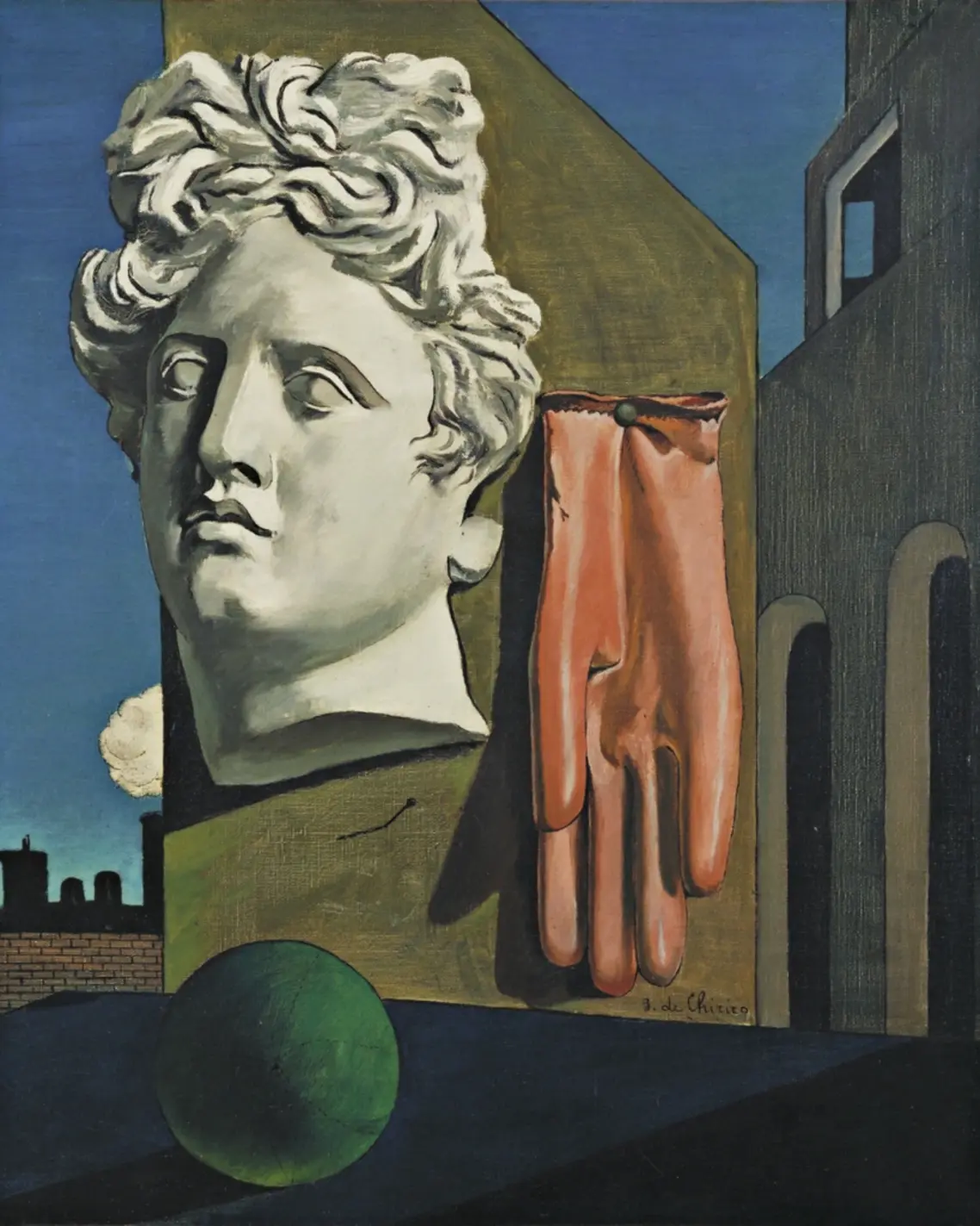
The decisive aesthetic turning point came when he encountered Giorgio de Chirico’s The Song of Love, an experience he described as one of the most moving moments of his life, the instant when his “eyes saw thought for the first time.” From there, René Magritte moved away from earlier experiments and toward the strange juxtapositions that would define him.
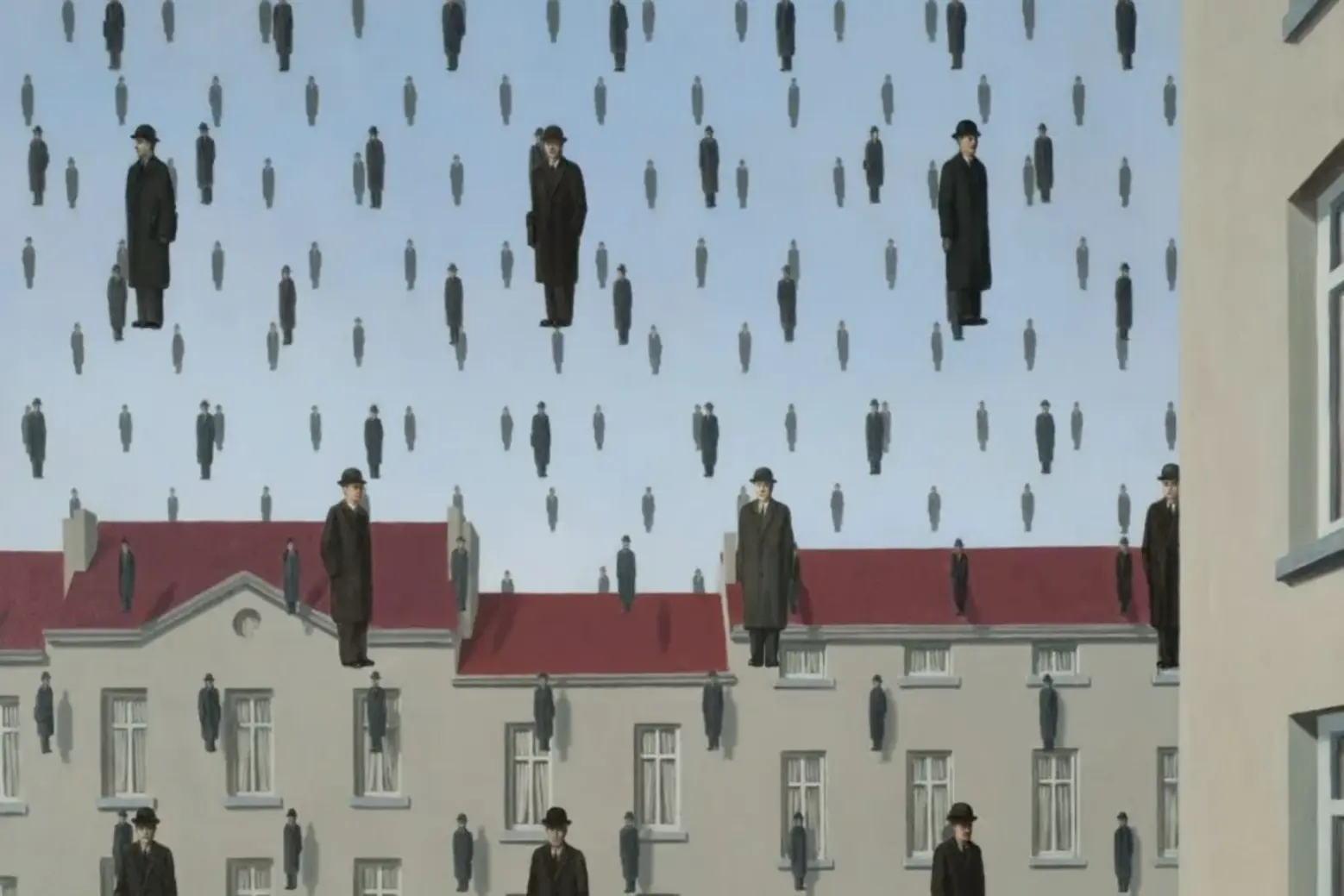
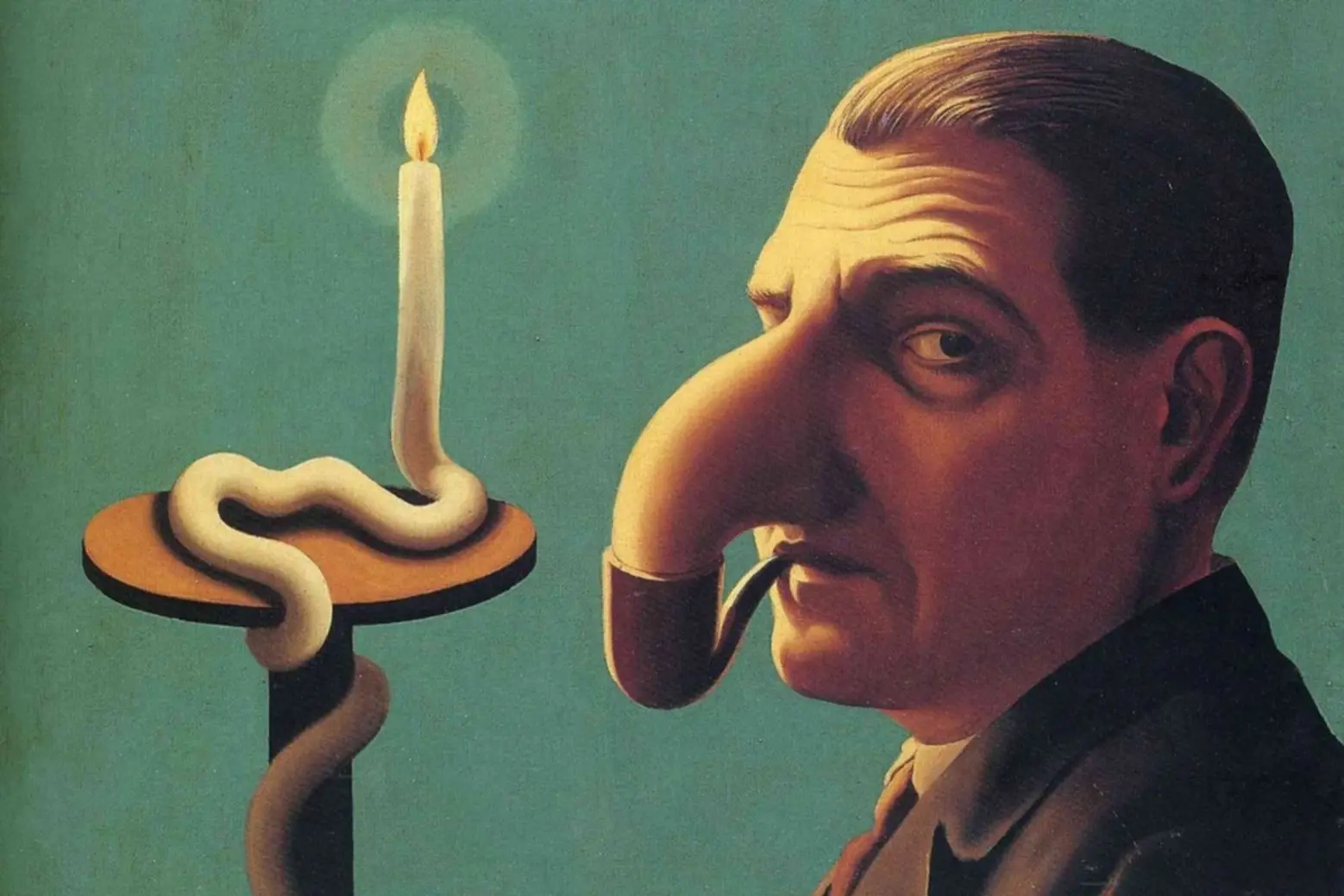
That shift brought him into Surrealism, though his place within the movement always carried a certain productive friction. In 1926 he secured a contract with a Brussels gallery, which let him paint full-time, and after a poorly received solo show he moved to a suburb of Paris in 1927. There he entered André Breton’s circle and absorbed the movement’s atmosphere, though never quite its orthodoxy. Paris gave him proximity to poets, theorists, and artists who shared his desire to rupture everyday logic, yet Magritte’s version of Surrealism already felt distinct: cooler, cleaner, more philosophical, less intoxicated by painterly excess.
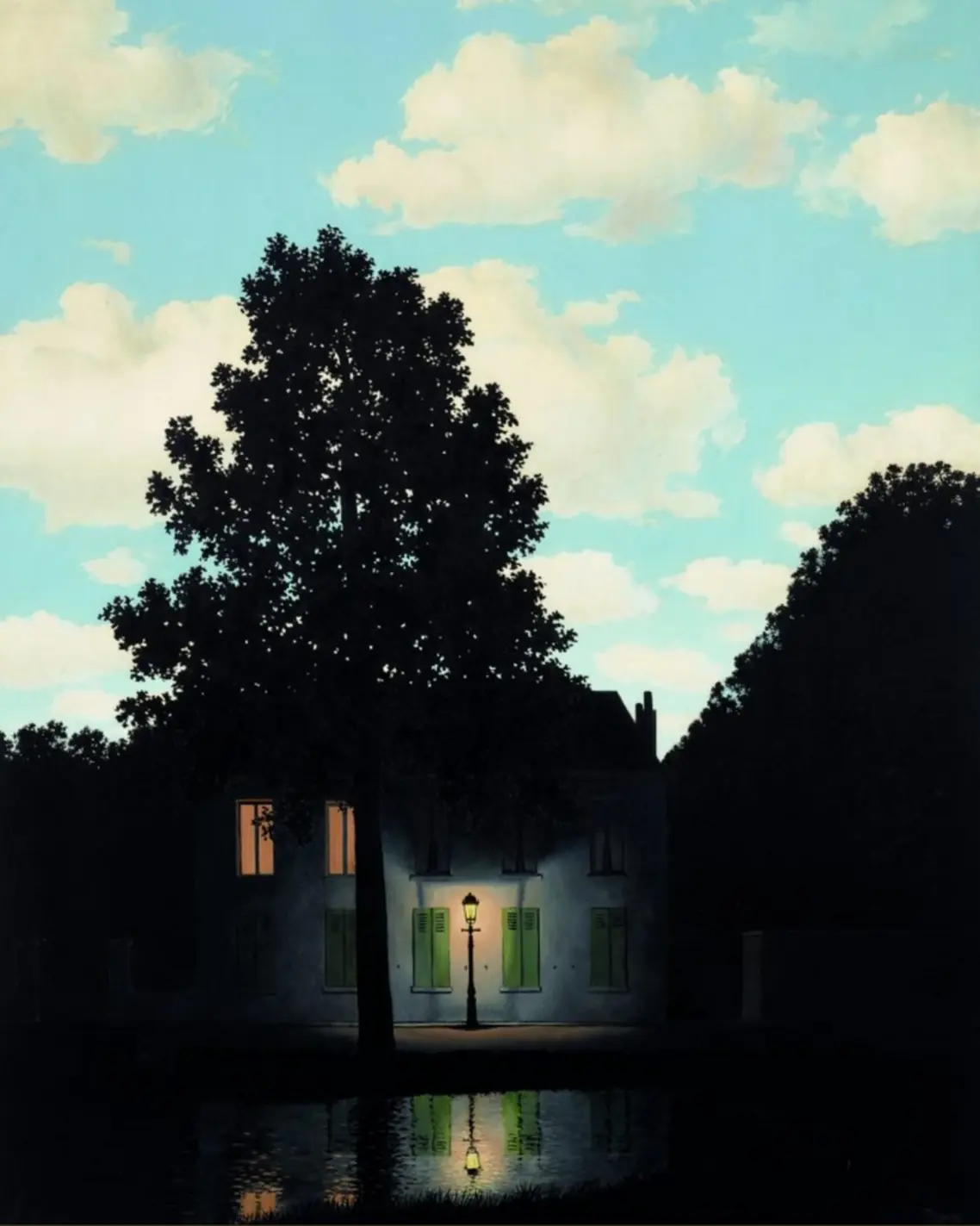
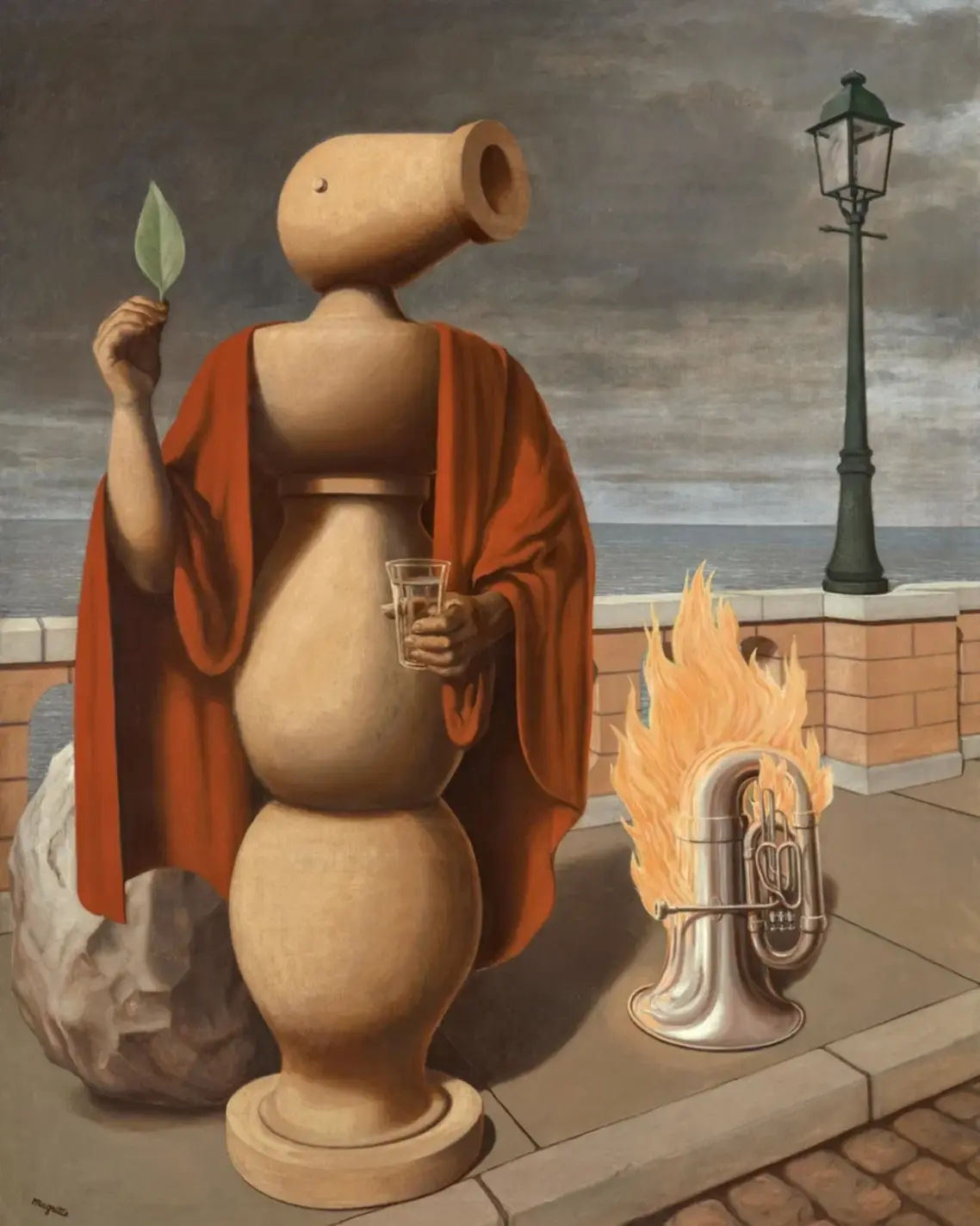
The break with Breton has become famous in its own right. After Georgette was criticized for wearing a crucifix, the Magrittes left Paris and returned to Belgium, where René Magrittewould remain based for the rest of his life apart from occasional travel. The episode says plenty about the man: He could join the avant-garde, admire it, learn from it, and still refuse its priesthood.
What separated René Magritte from many of his peers was the nature of the riddle he pursued. He disliked attempts to reduce his pictures to biography or psychoanalysis. The official Magritte Foundation notes both his resistance to psychoanalysis and his belief that art needed comments rather than explanatory decoding through the artist’s childhood. He described his pictures as “visible images which conceal nothing,” even as they “evoke mystery
This is where René Magritte’s much-discussed ordinariness becomes radical. He did not need melting clocks, monstrous hybrids, or feverish brushwork to make the world strange. He needed a pipe, an apple, a cloud, a train, a curtain, a pair of shoes, or a man in a coat. As MoMA’s 2013 exhibition catalogue put it, he set himself the task of making “everyday objects shriek out loud.”
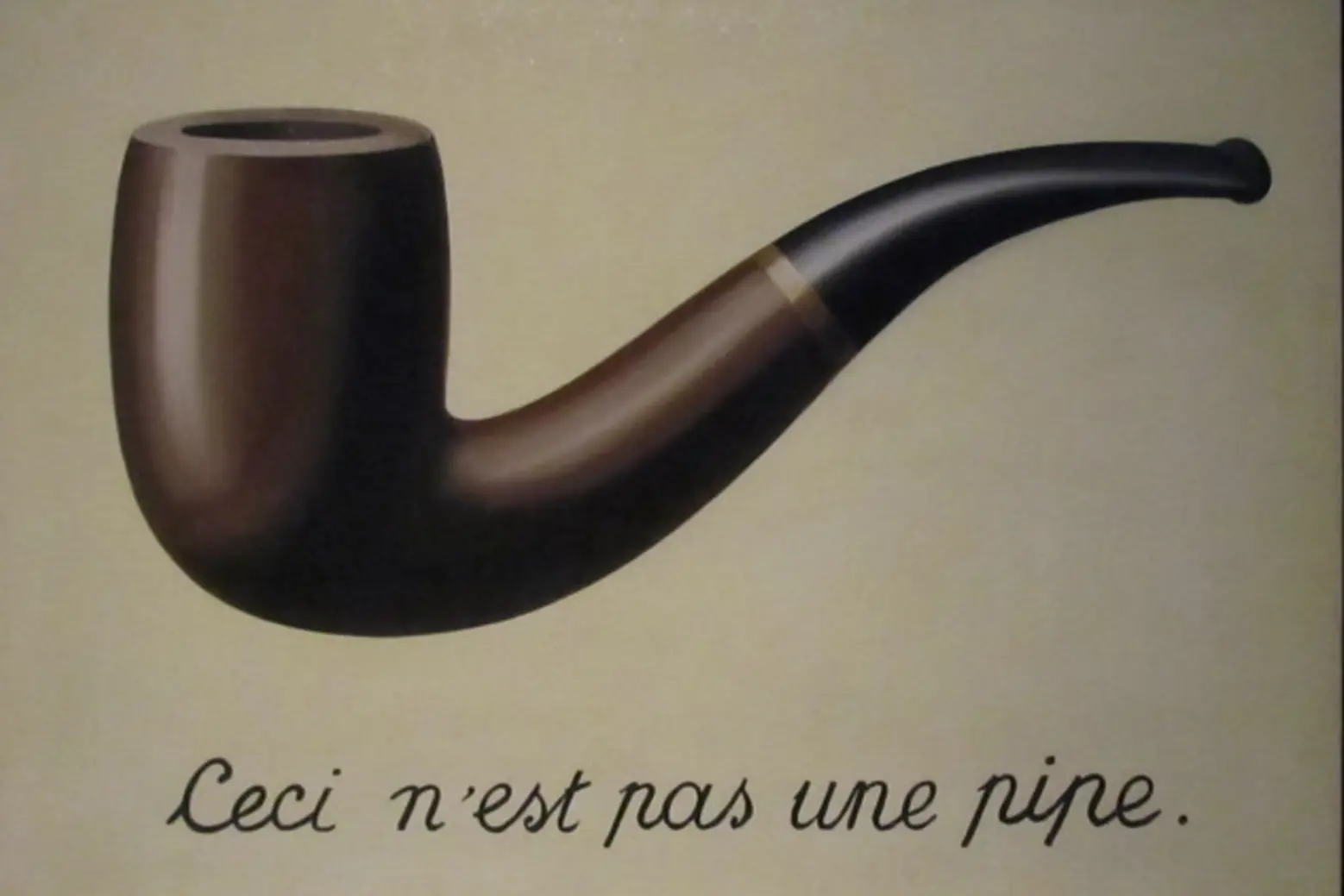
No painting states that method more efficiently than The Treachery of Images from 1929. The image looks simple: a carefully painted pipe, centered against a flat ground, with the line “Ceci n’est pas une pipe” beneath it. The force of the work lies in how quickly it moves from joke to epistemology. LACMA calls it a treatise on the impossibility of reconciling word, image, and object, and that is exactly right. The statement feels contradictory only until one accepts Magritte’s premise: the canvas offers a representation of a pipe, not the object itself. As René Magritte later asked, could anyone fill it with tobacco? The painting thus becomes a trap for lazy seeing. We say “pipe” and imagine knowledge has been secured. Magritte answers by splitting apart naming, depiction, and physical reality.
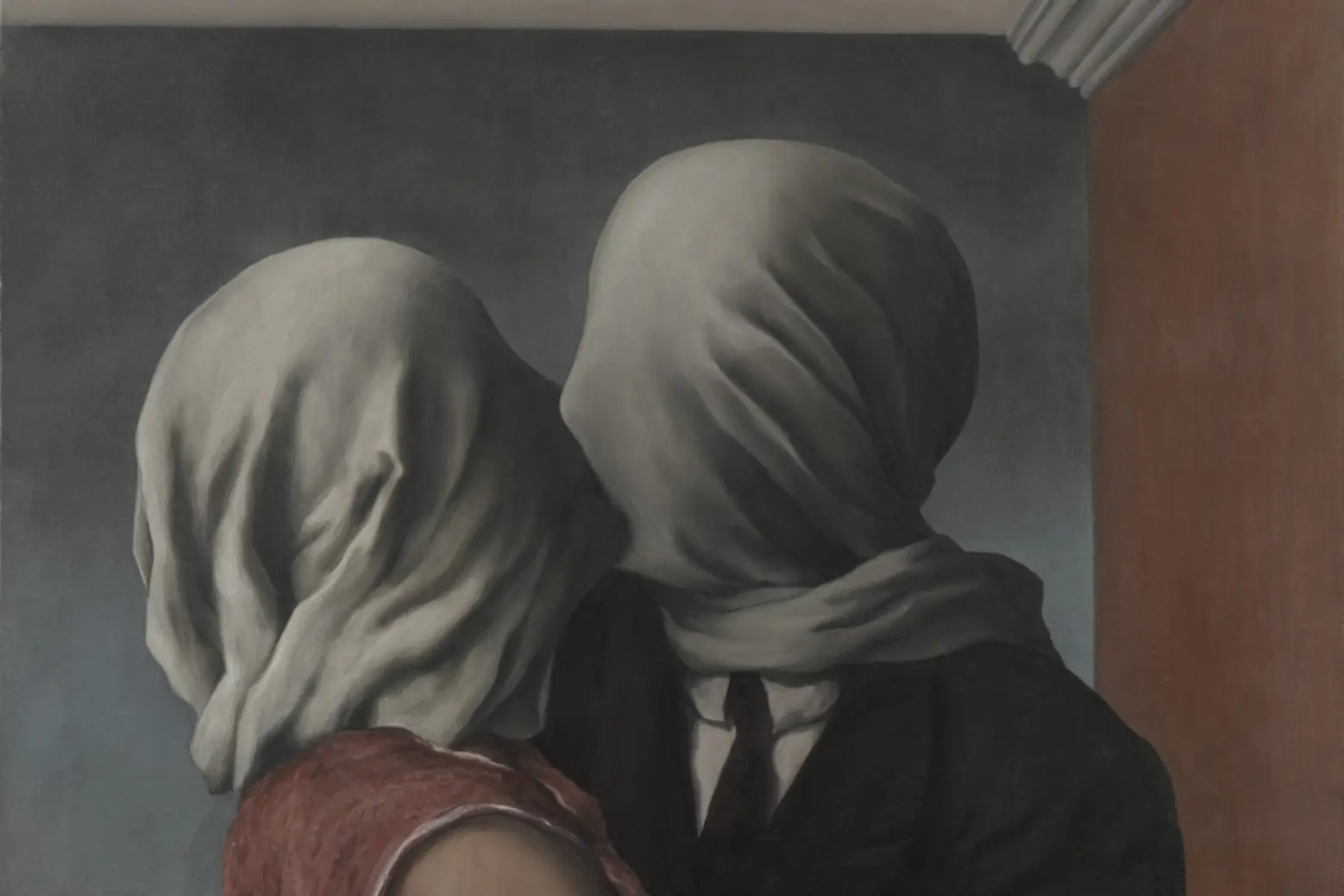
The Lovers from 1928, easily one of the most iconic kisses on canvas, stages a different kind of disturbance. Here the setting feels intimate and legible. Yet each head is wrapped in cloth, turning closeness into obstruction. The painting has inspired endless biographical readings, yet its deeper strength lies in how efficiently it converts desire into distance. Magritte makes intimacy visible while withholding the face, which is the traditional site of emotion, recognition, and reciprocity. The kiss continues, yet contact feels suspended, almost translated into a scene of permanent approach. In that sense, the work becomes less a coded confession than a visual argument about how every relationship contains an unknowable remainder.
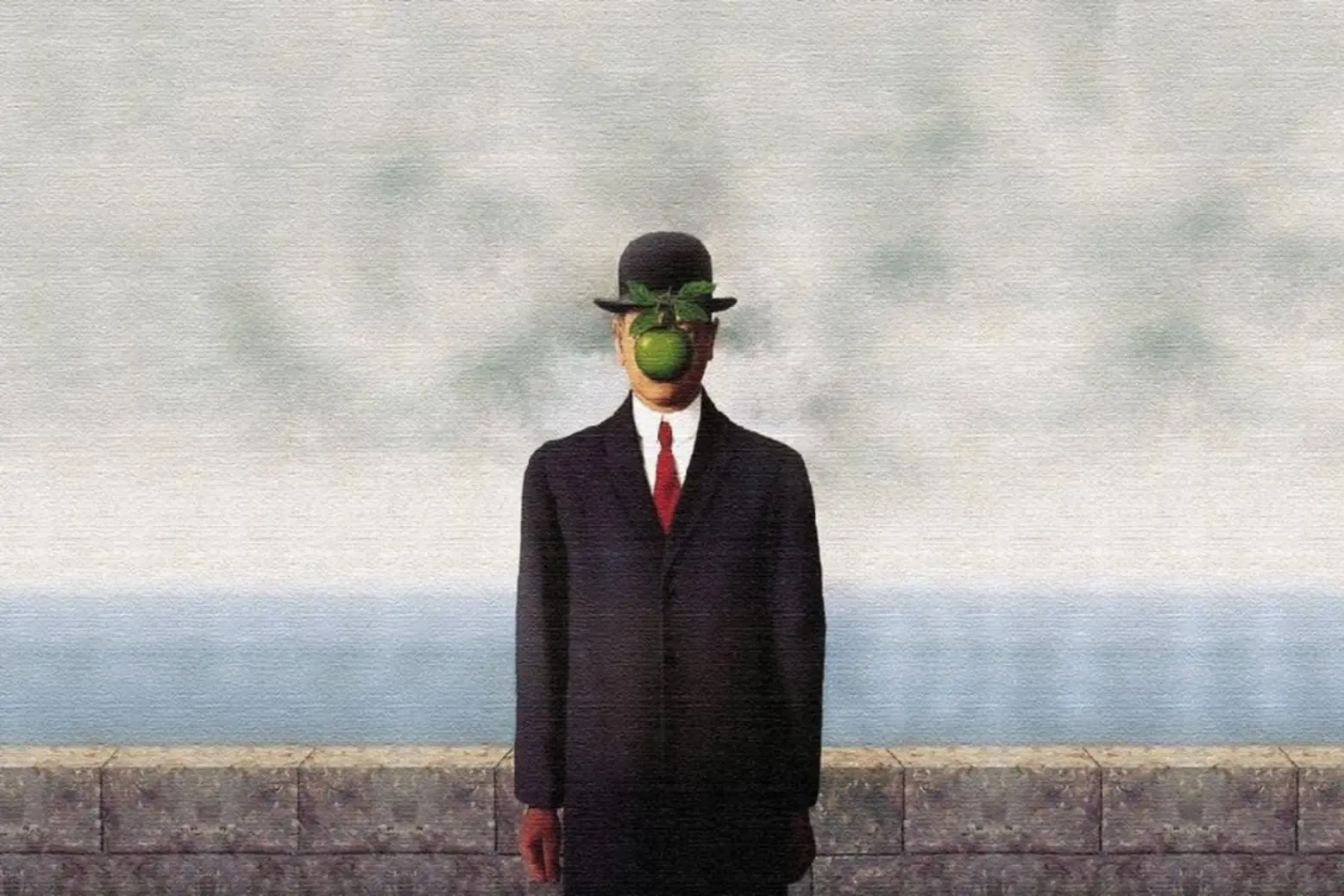
Then there is The Son of Man from 1964, perhaps the most famous Magritte image of all and one of the clearest demonstrations of his mature philosophy. The composition is almost absurdly plain: a suited man in a bowler hat stands before a low wall and sea, his face obscured by a hovering green apple. The apple blocks identity while becoming identity; the bowler hat announces bourgeois regularity while deepening anonymity; the self-portrait offers likeness while refusing access.
The biography around these works only sharpens their force. René Magritte rarely maintained the theatrical separation between studio and life that art history loves to romanticize. In Jette, the Brussels home he shared with Georgette, he painted in the domestic rooms of the house rather than in some grand atelier. That detail matters because it mirrors the art itself. Magritte’s great subject was the instability of the familiar, so it feels fitting that his masterpieces emerged from the middle of ordinary domestic life. He turned the bourgeois interior into a site of metaphysical disruption. The fireplace, doorway, table, window, and wall all carried secret voltage.
His afterlife in culture confirms how far that voltage traveled. Rene Magritte’s imagery influenced advertising and visual culture on a wide scale, from railway posters to major ad campaigns, while Brussels itself embraced the wit of his legacy by adopting the street name “Ceci n’est pas une rue” in homage to his most famous linguistic paradox.
That is why René Magritte still feels contemporary in a way many historical Surrealists do not. His art speaks directly to a visual world saturated with representations that masquerade as reality and realities that arrive only through representations.