MENU
Close





Rem Koolhaas is widely considered one of the most influential architectural thinkers of the 21st century because he builds as powerfully as he writes. Through OMA and its research counterpart AMO, he treats architecture as a way to decode the forces shaping contemporary life, from media and capital to culture and urban density.
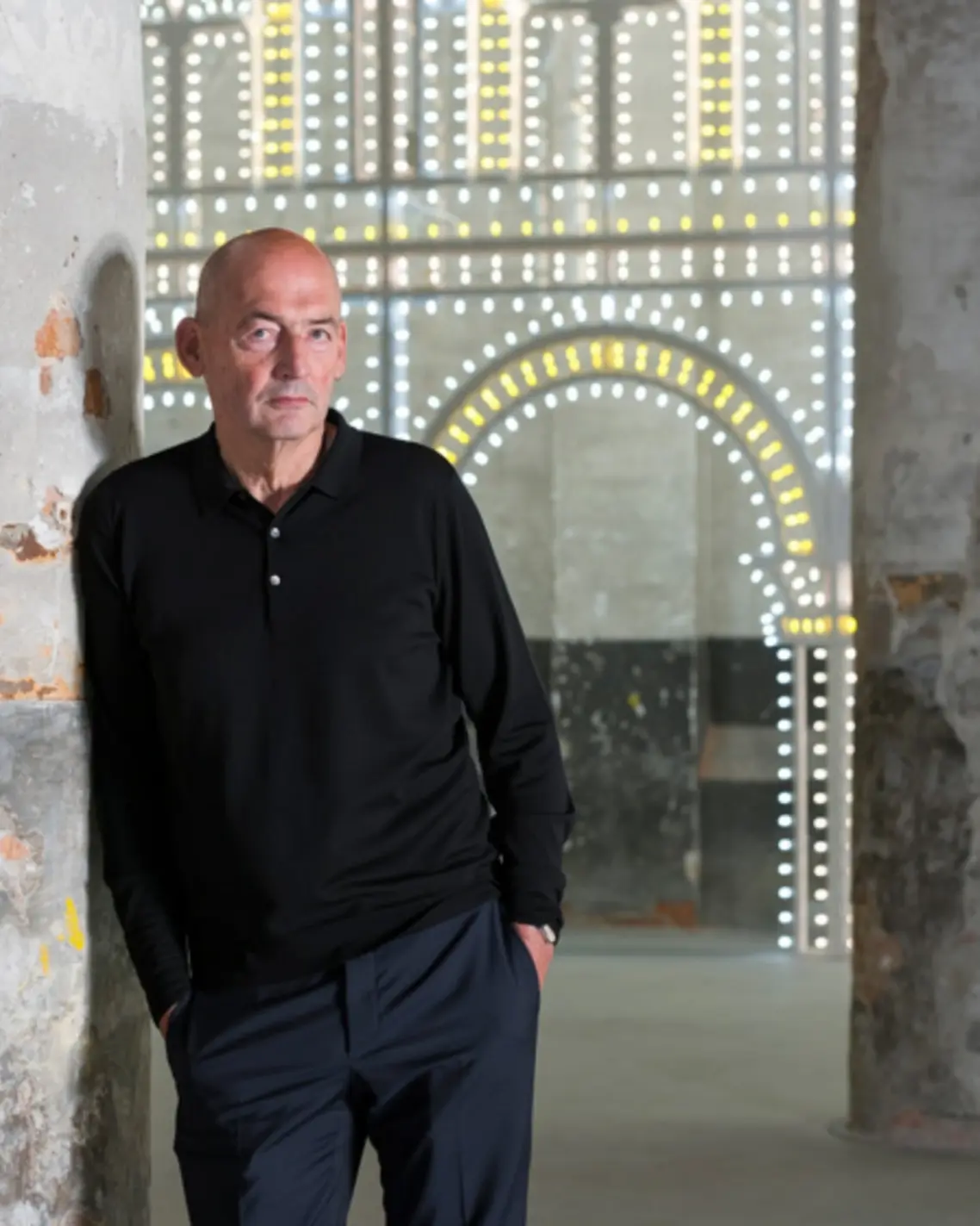
Rem Koolhaas is widely considered one of the most influential architectural thinkers of the 21st century because he builds as powerfully as he writes. Through OMA and its research counterpart AMO, he treats architecture as a way to decode the forces shaping contemporary life, from media and capital to culture and urban density.
February 3, 2026


Rem Koolhaas sits in a rare position in contemporary architecture: Influential as a builder, a writer, and a theorist at once. Born in Rotterdam in 1944, he founded OMA in 1975 and has since shaped how architects talk about cities, culture, and the forces that quietly steer daily life. His impact comes from treating architecture as a form of intelligence before it becomes a form of style, a way to map power, media, money, movement, and desire, then translating that map into space. The Pritzker Architecture Prize recognized this hybrid legacy when it named him the 2000 laureate, praising a mind “in tune with the future” and even calling him “a prophet of a new modern architecture.”
Rem Koolhaas’s architectural voice carries a writer’s instincts. Before architecture, he worked in journalism and moved through screenwriting, training his eye on narrative, sequencing, and the scripts that shape public behavior. That background helps explain a key Koolhaas obsession: program. For him, what a building does drives what it becomes, and the “story” of circulation, events, and encounters matters as much as façade. Paul Goldberger’s Pritzker laureate essay captures this directly, describing Rem Koolhaas as “profoundly interested in programs” and framing the building as a stage for public life rather than a frozen object.
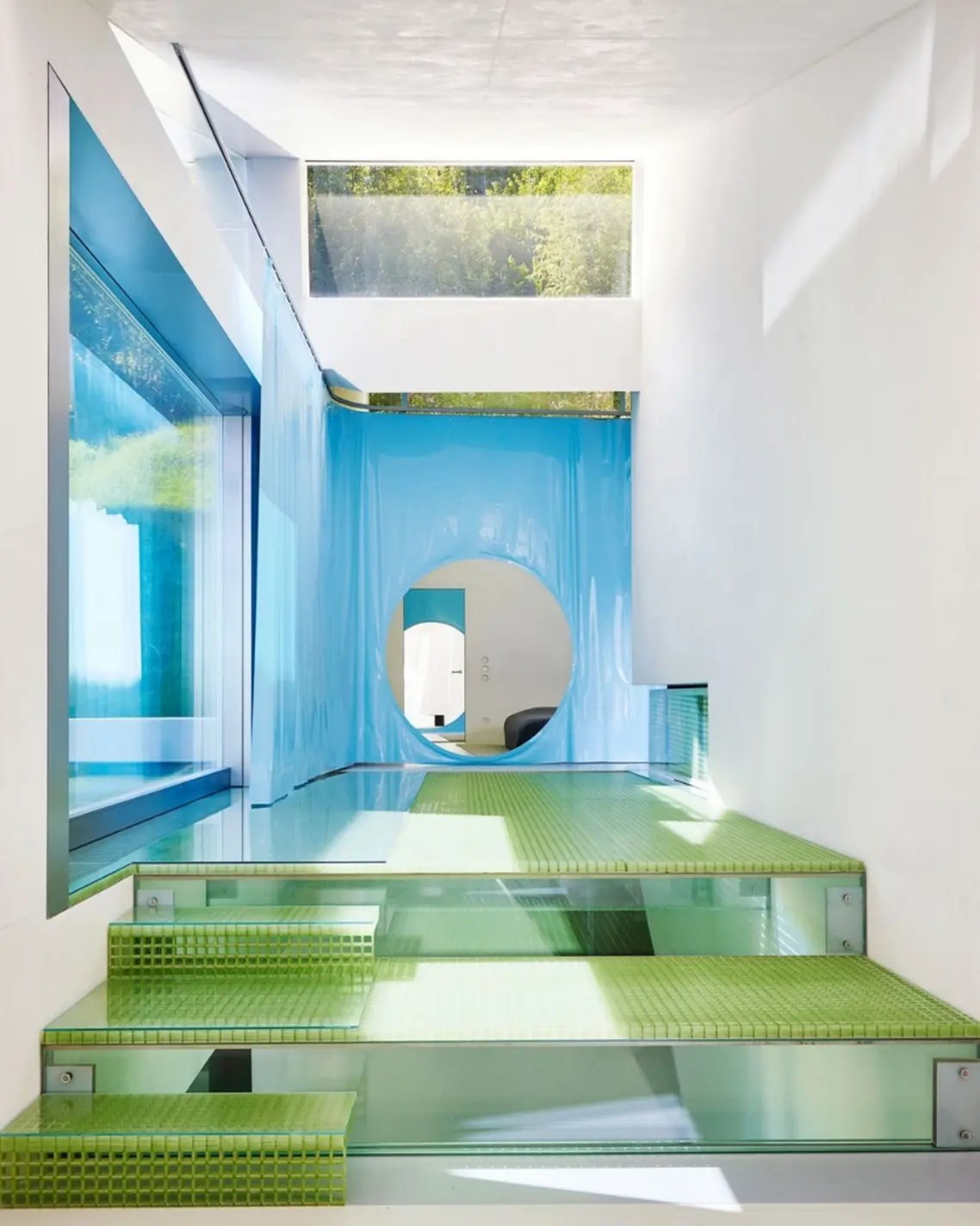
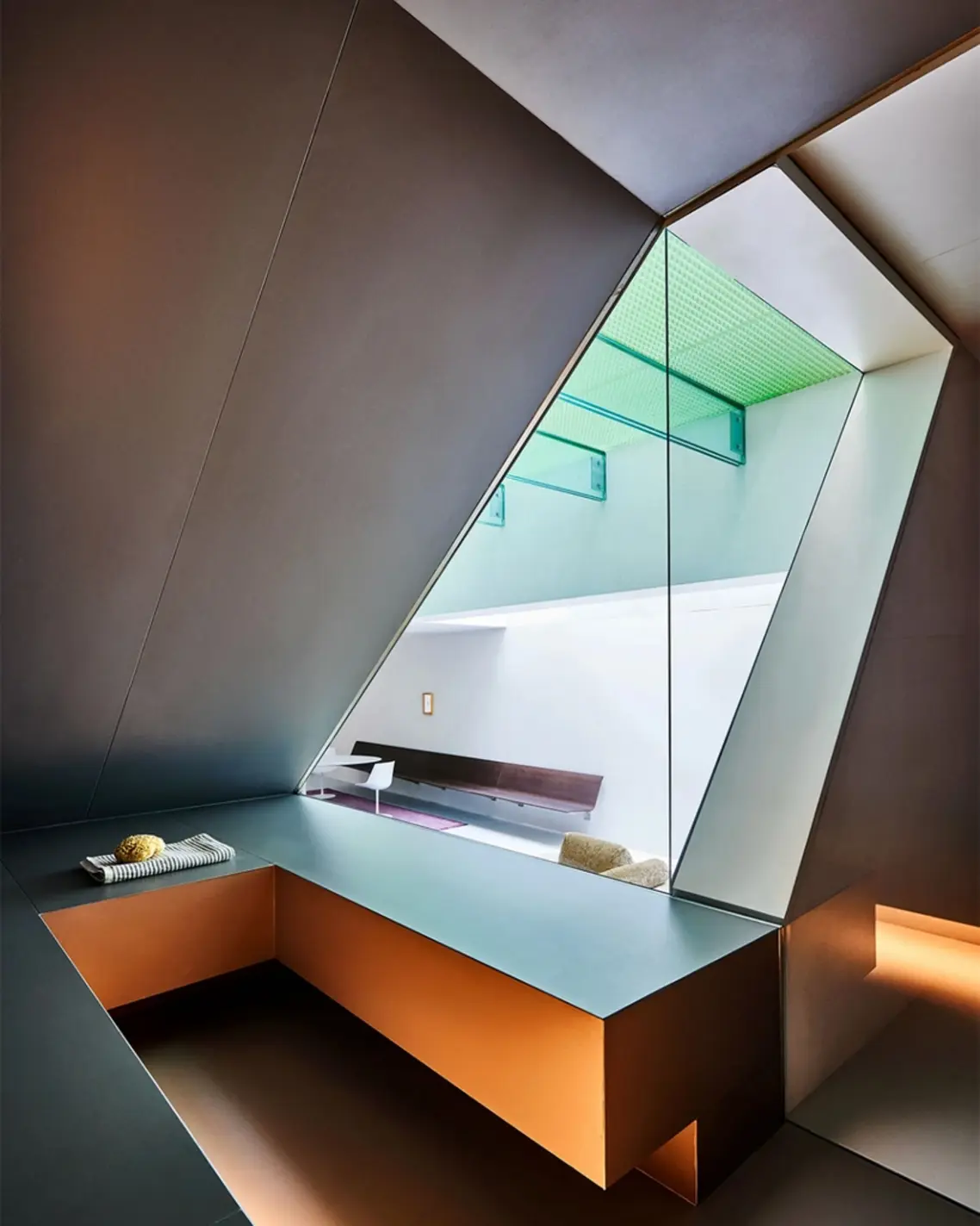
Rem Koolhaas’s influence also comes from the structure he built around himself. OMA operates as the architectural and urbanism practice, while AMO runs in parallel as a research and design studio applying architectural thinking to domains beyond building.
The origin story matters: AMO emerged around 1999 as OMA’s “mirror” research entity, helping the office develop ideas without the usual obligations of construction timelines and site constraints. In practice, that has meant AMO contributing to culture and institutions at scale, including long-running work connected to Prada and broader civic, media, and policy contexts.
This “dual-core” model explains why Koolhaas can feel present in so many conversations at once: architecture, retail, exhibitions, publishing, city-making, and the systems behind them.
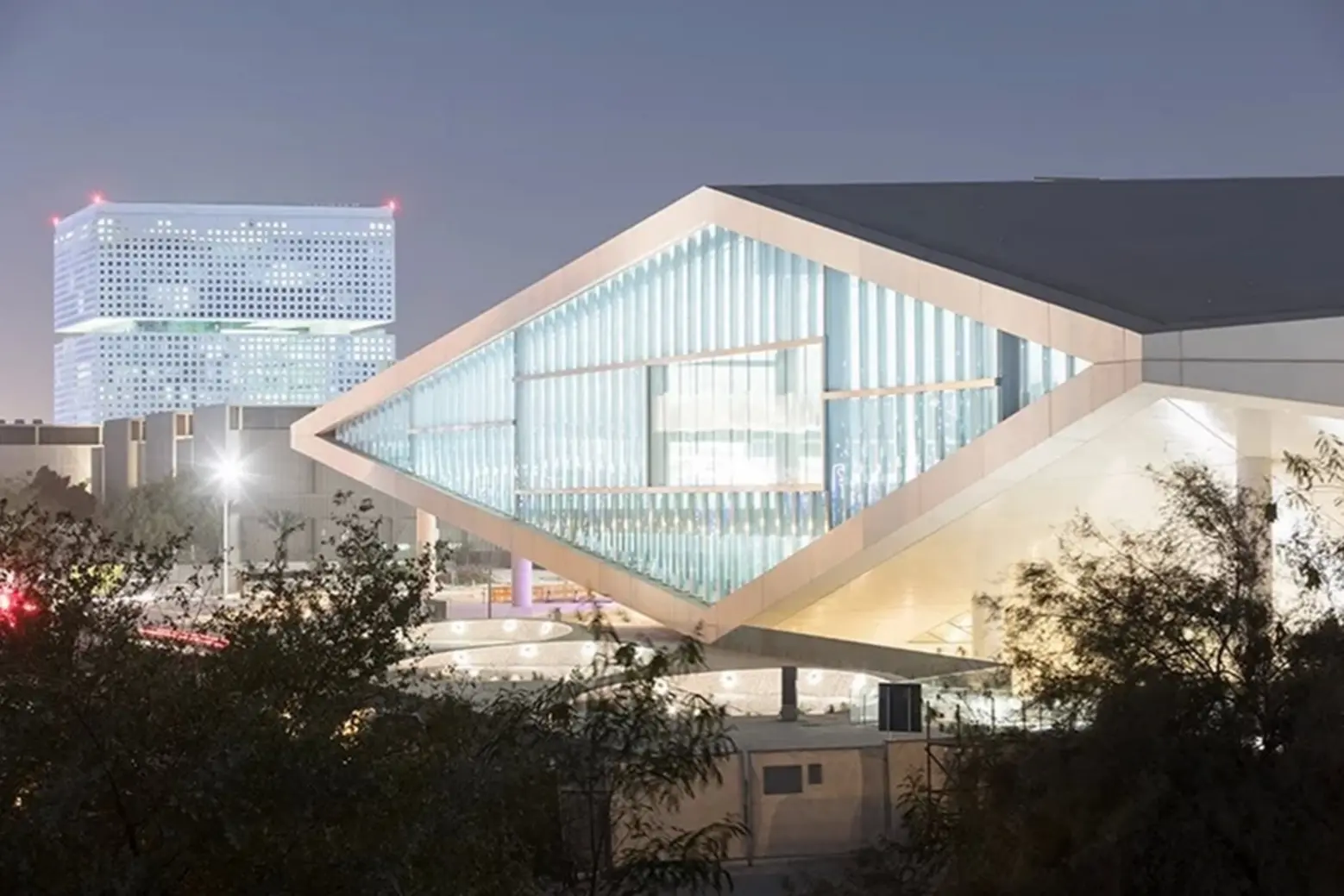
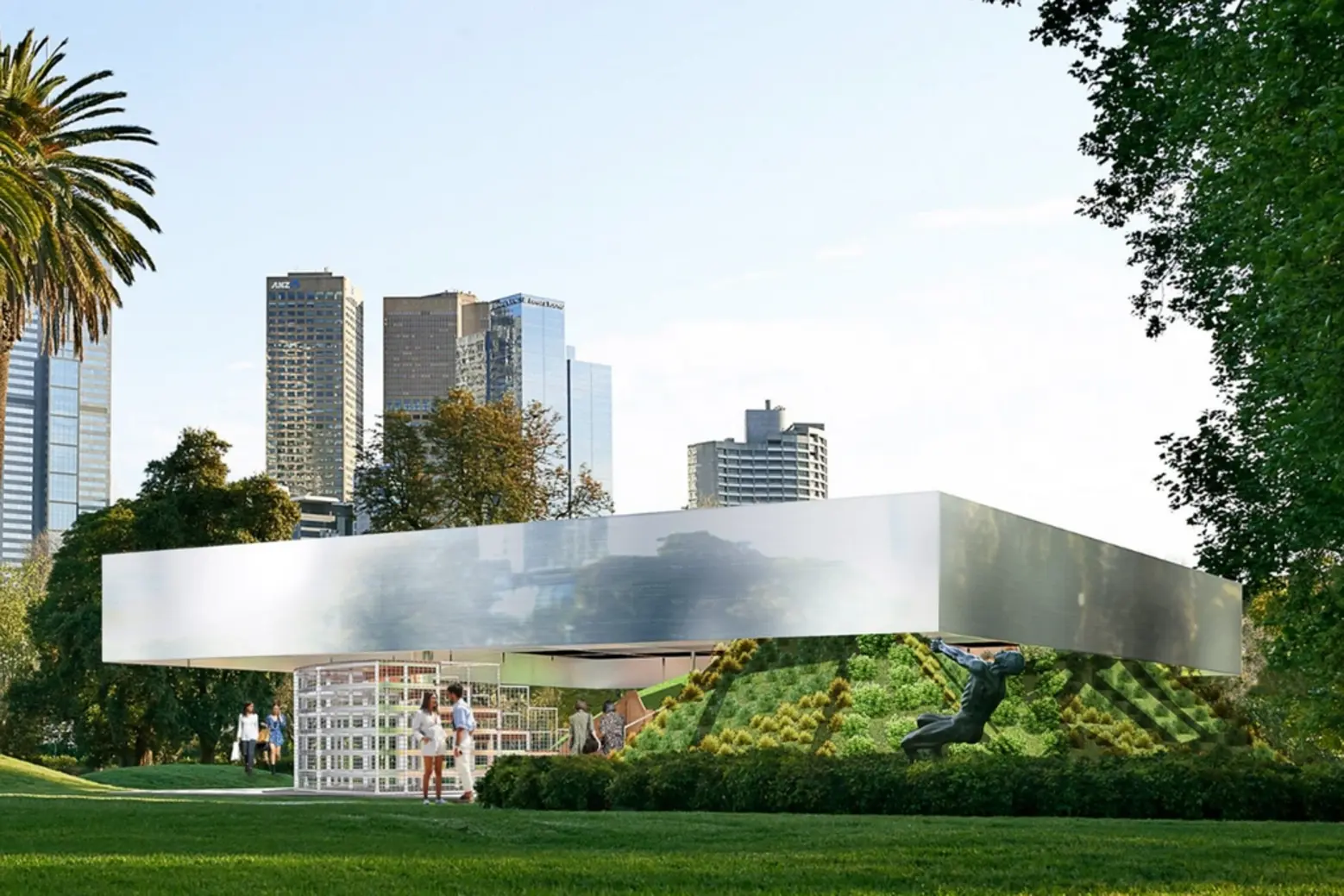
Rem Koolhaas doesn’t treat writing as a side project. He uses publishing the way other architects use concrete: as a medium for constructing arguments.
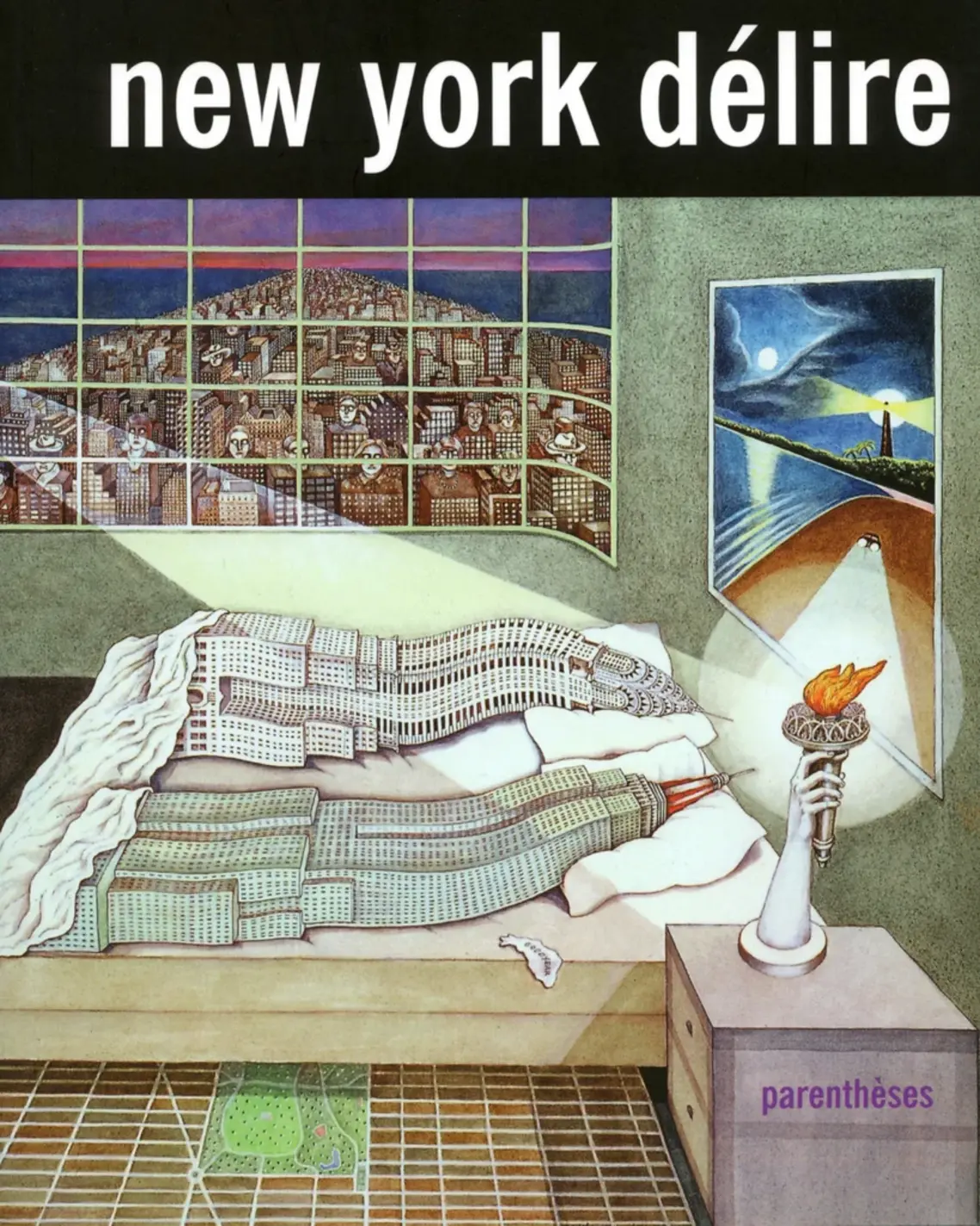
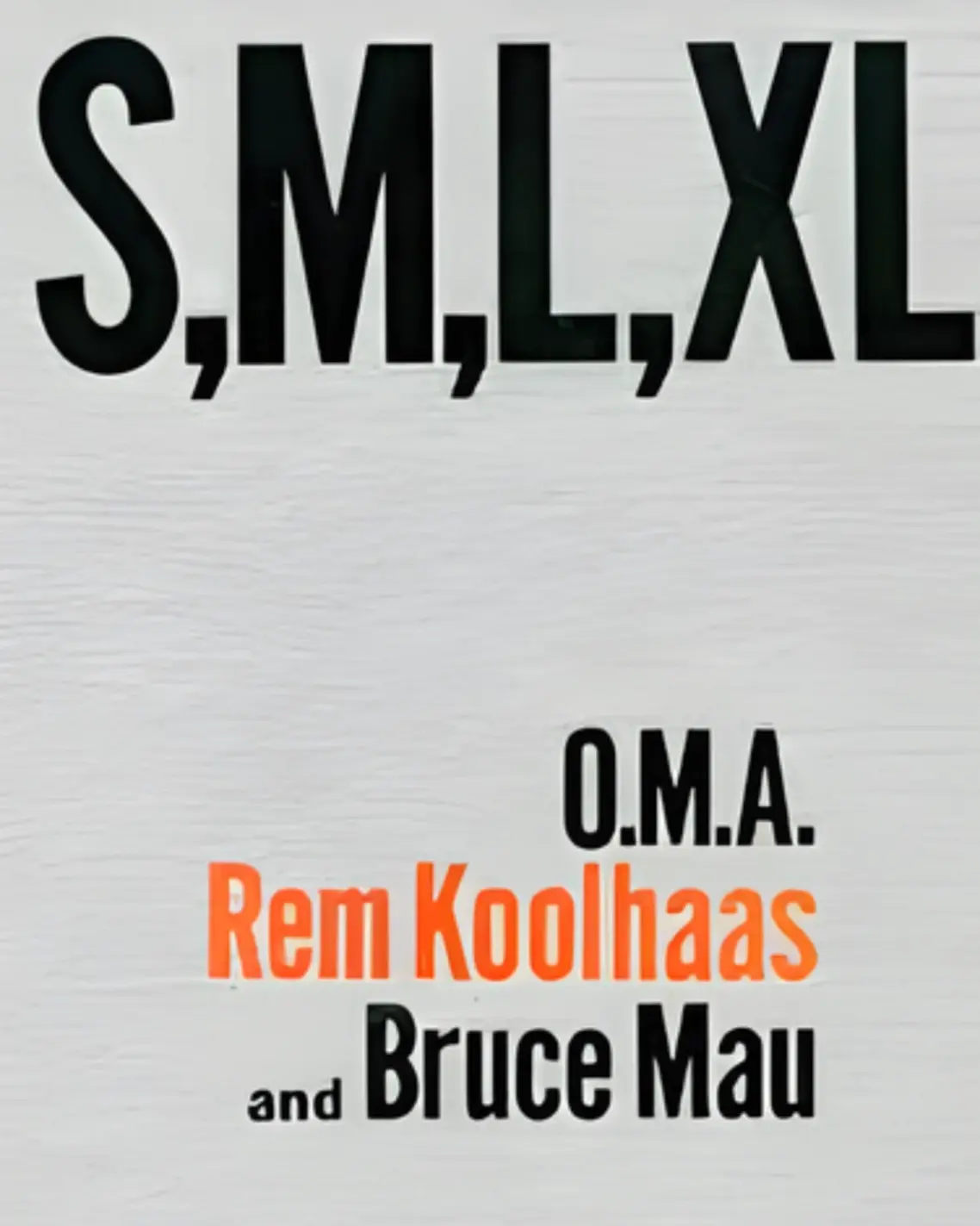
Physicality became part of the message. Contemporary coverage famously fixated on its heft, describing it as a six-pound book, and the production strain became legend inside office culture. Rem Koolhaas himself described how the effort around S,M,L,XL pushed OMA toward a financial cliff, reinforcing a recurring Koolhaas theme: ambitious cultural production has real economic consequences.
Rem Koolhaas’s most durable contribution may be conceptual: he gave architects language for modern urban life that feels sharp enough to use.
Culture of congestion is one cornerstone, a way to describe density as a generator of friction, invention, and spectacle rather than a problem to “solve.”
The Generic City is another: An argument that sameness, expansion, and reinvention have become defining urban conditions. In the Pritzker laureate essay, Goldberger quotes Rem Koolhaas describing the generic city as “the city without history… big enough for everybody… ‘superficial’, like a Hollywood studio lot.”
And then there is “Junkspace,” Koolhaas’s blunt term for the endless, climate-controlled, consumption-driven interiors of late modernity, the malls, terminals, and seamless in-between spaces that erase identity while multiplying comfort. The essay’s tone is intentionally abrasive, including lines like: “Junkspace is our punishment…” (The concept has since been republished and discussed widely as a critique of how commercial space hollows out architectural meaning.)
Taken together, these ideas share a Koolhaas signature: he observes reality with a reporter’s eye, then argues with a theorist’s nerve, even when the argument feels uncomfortable.
Unlike many peers who have a signature "look" (like Frank Gehry’s curves), Rem Koolhaas is a conceptual artist. His firm is famous for producing massive quantities of physical models and books during the design process, using them as "containers for ideas" rather than just final representations. Alongside Jean Nouvel, Koolhaas is one of the "starchitects" to reject Post-Modernism’s surface games and the wider culture of branding,
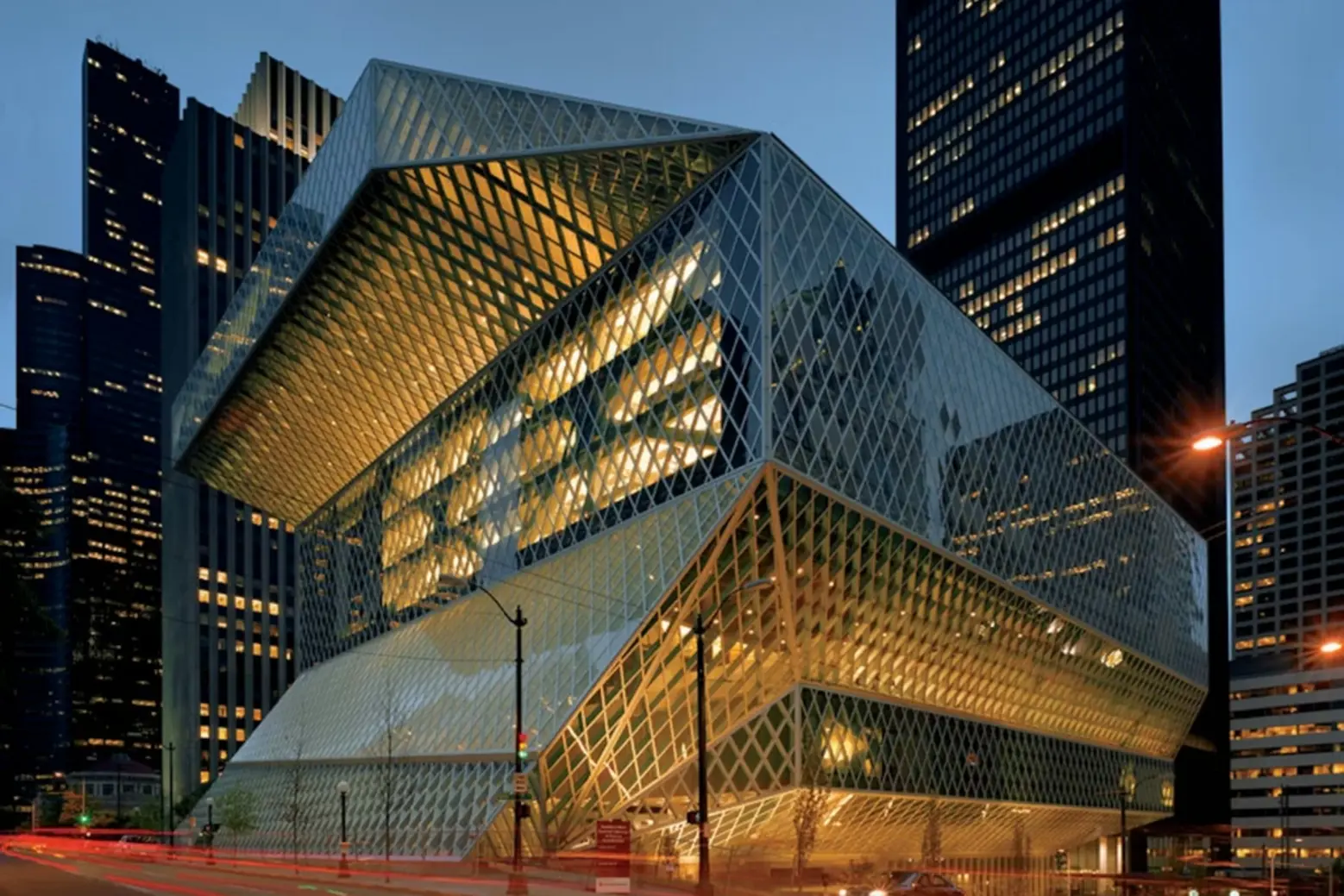
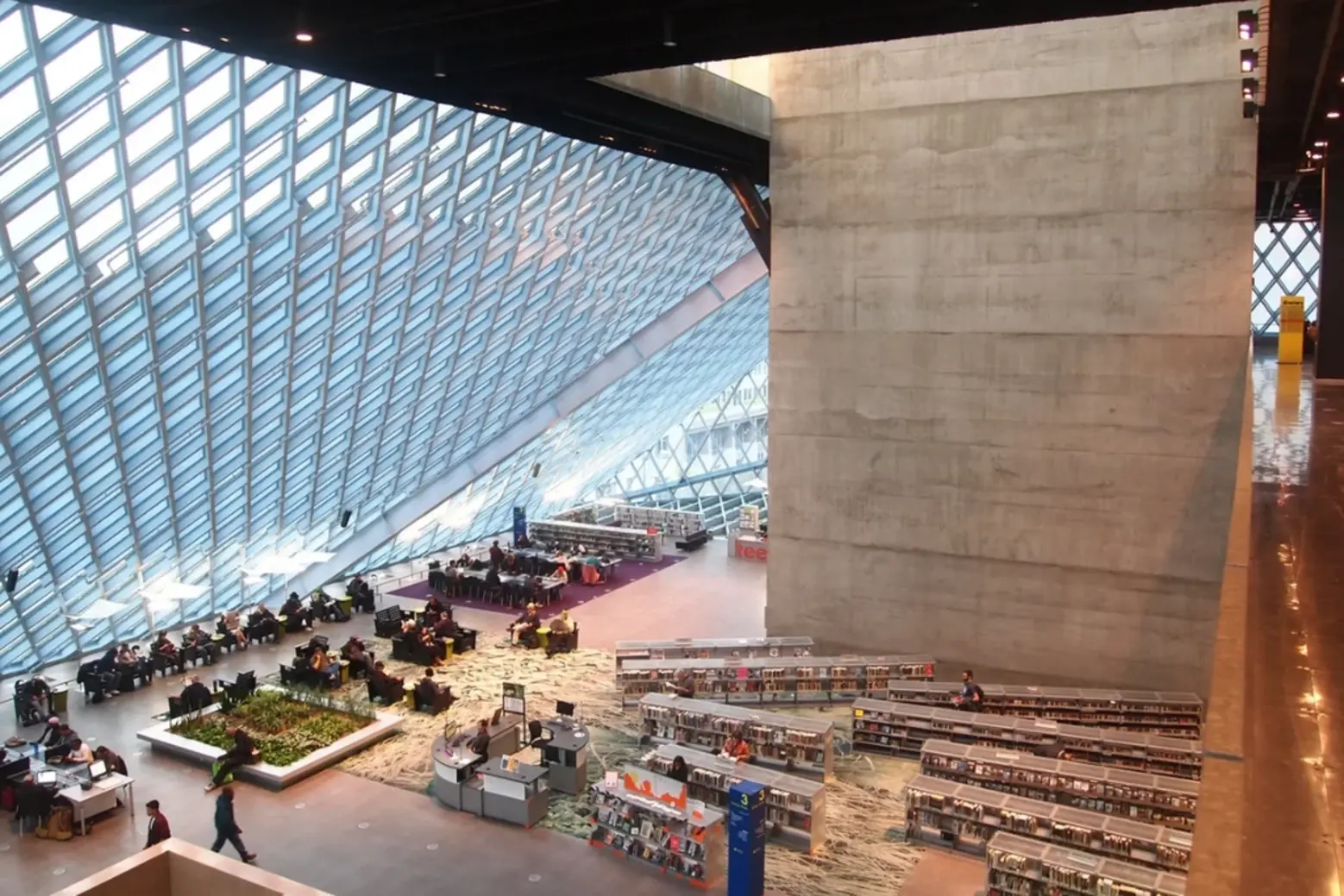
Seattle Central Library (2004)Designed around stacked platforms of program, the building turns the library into an urban machine for learning and gathering. Its “Books Spiral” concept keeps the collection continuous while organizing movement through an intense, legible section.
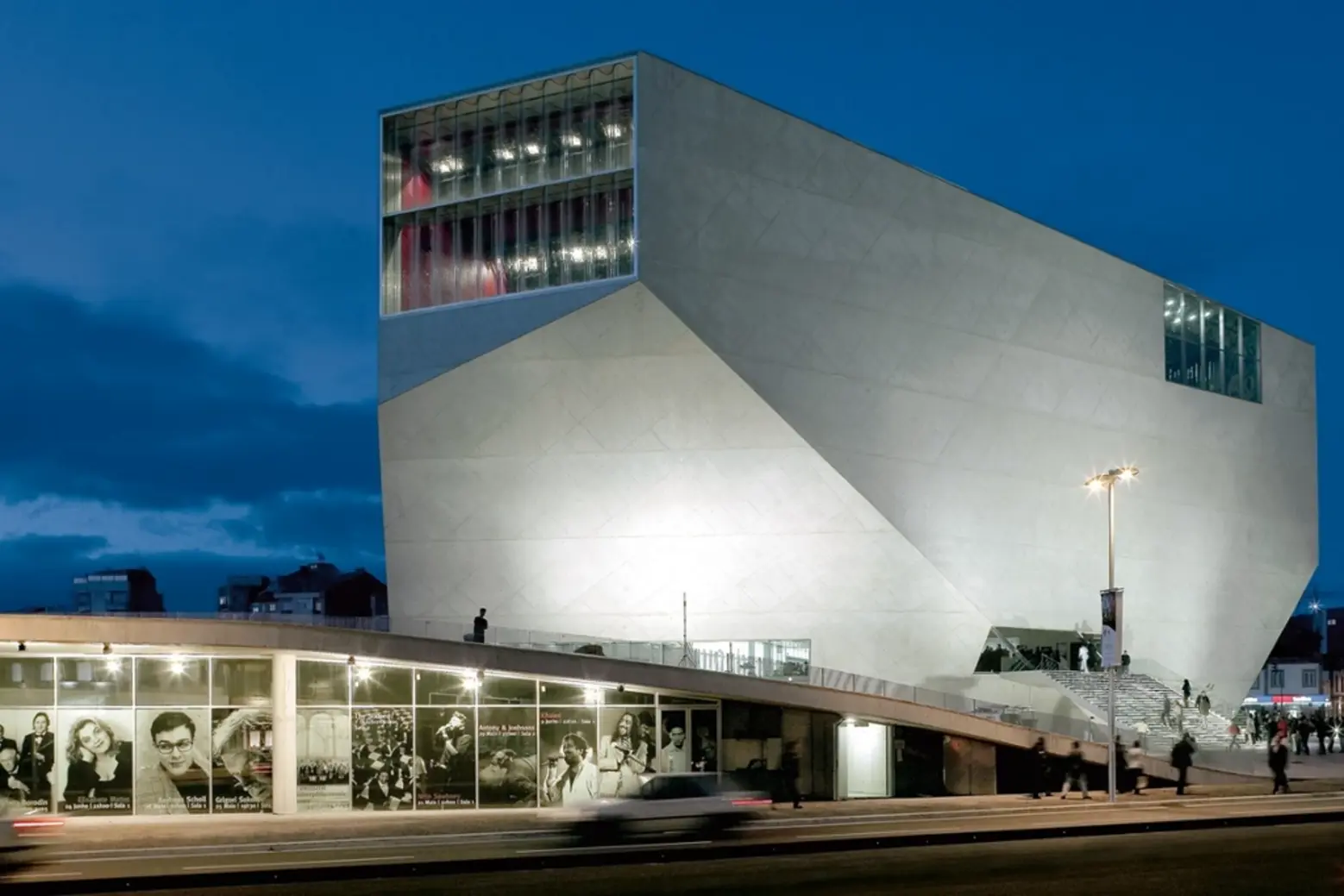
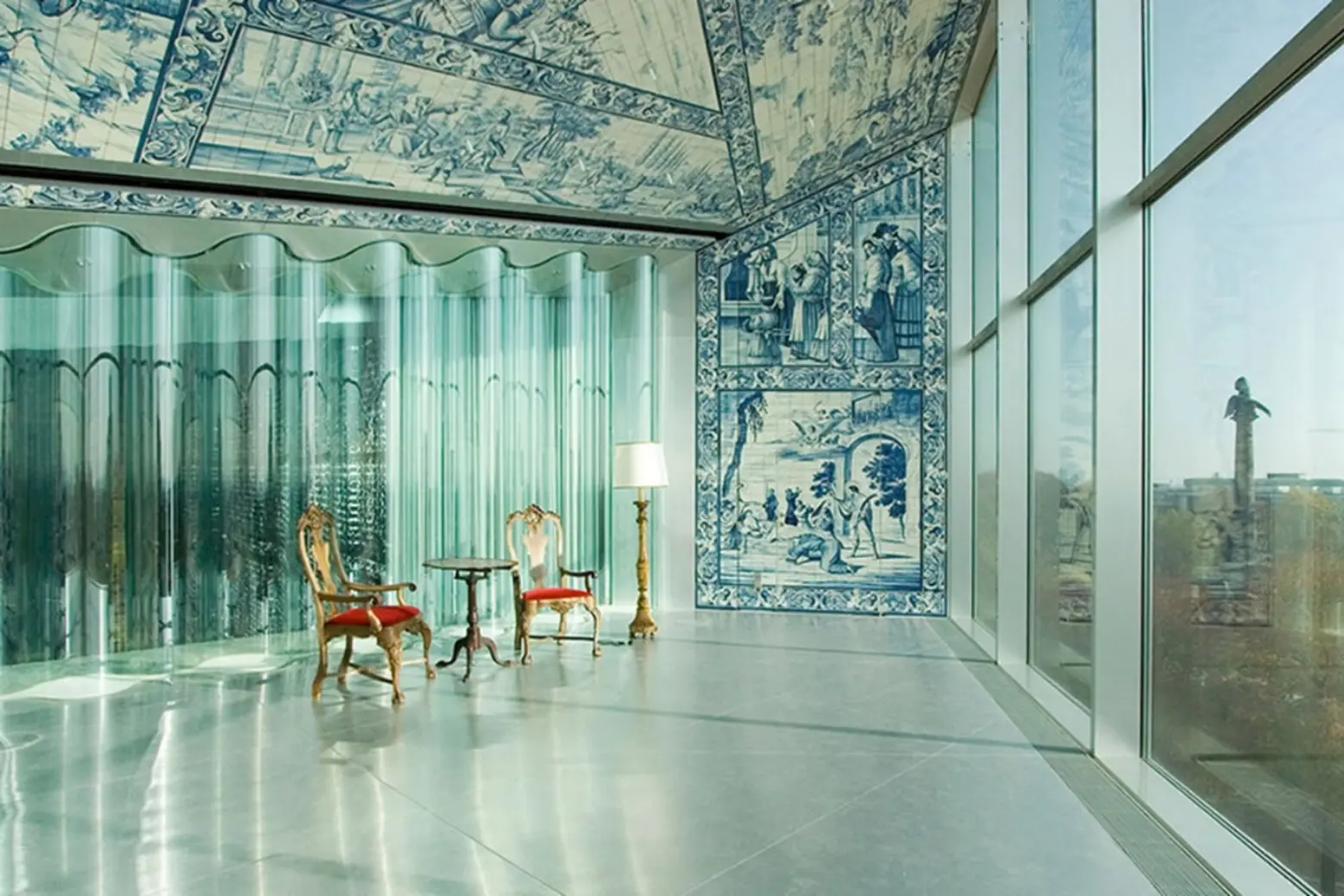
Casa da Música, Porto (2005)A faceted white-concrete volume that treats the concert hall as both a civic monument and a public room. OMA describes an interior where the main auditorium opens to the city through corrugated glass ends, turning Porto itself into a visual backdrop for performance.
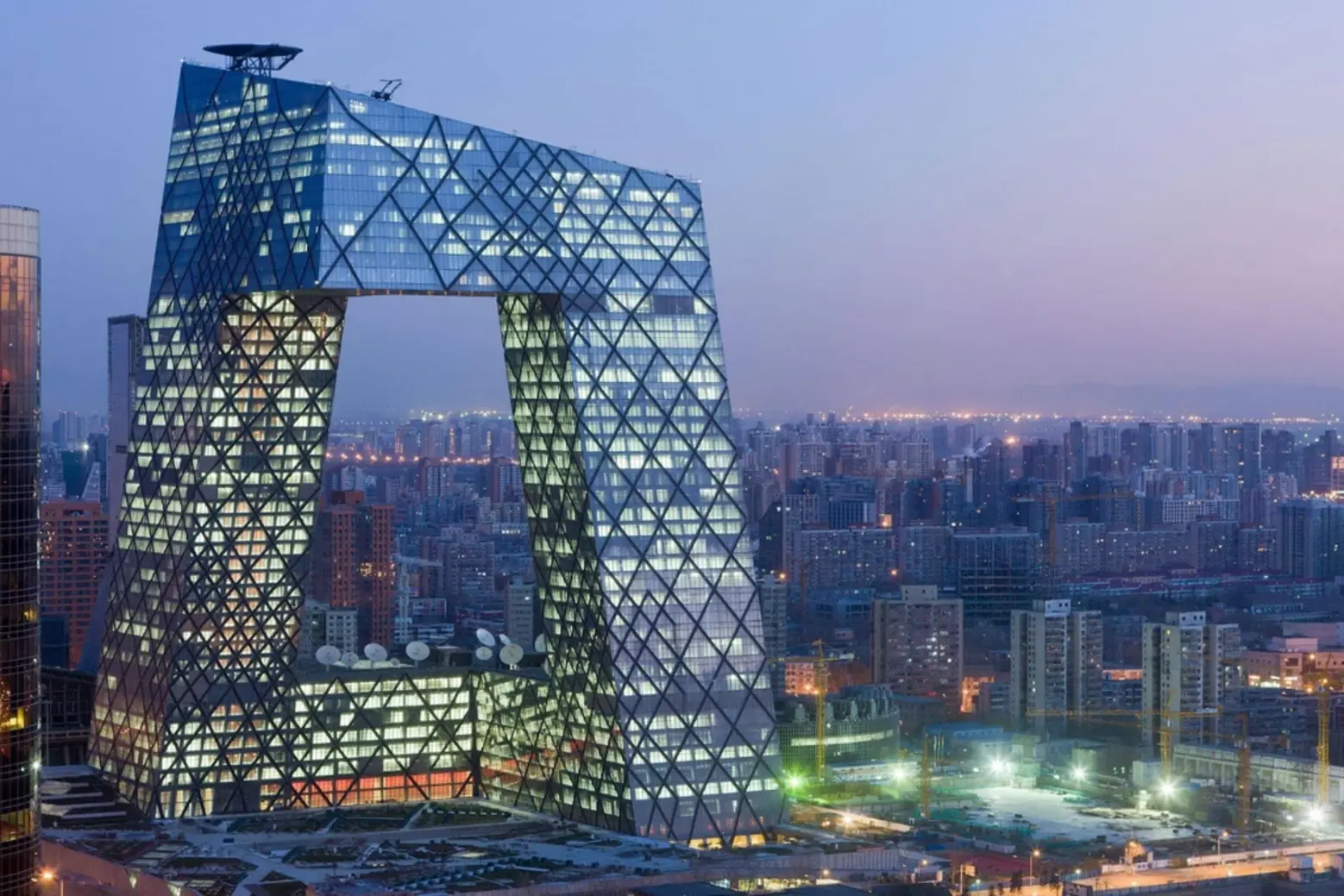
CCTV Headquarters, Beijing (completed 2012)Often summarized as a “loop,” CCTV rejects the single vertical tower in favor of a continuous form that dramatizes interdependence: production, administration, broadcast, and public presence tied into one structural statement.
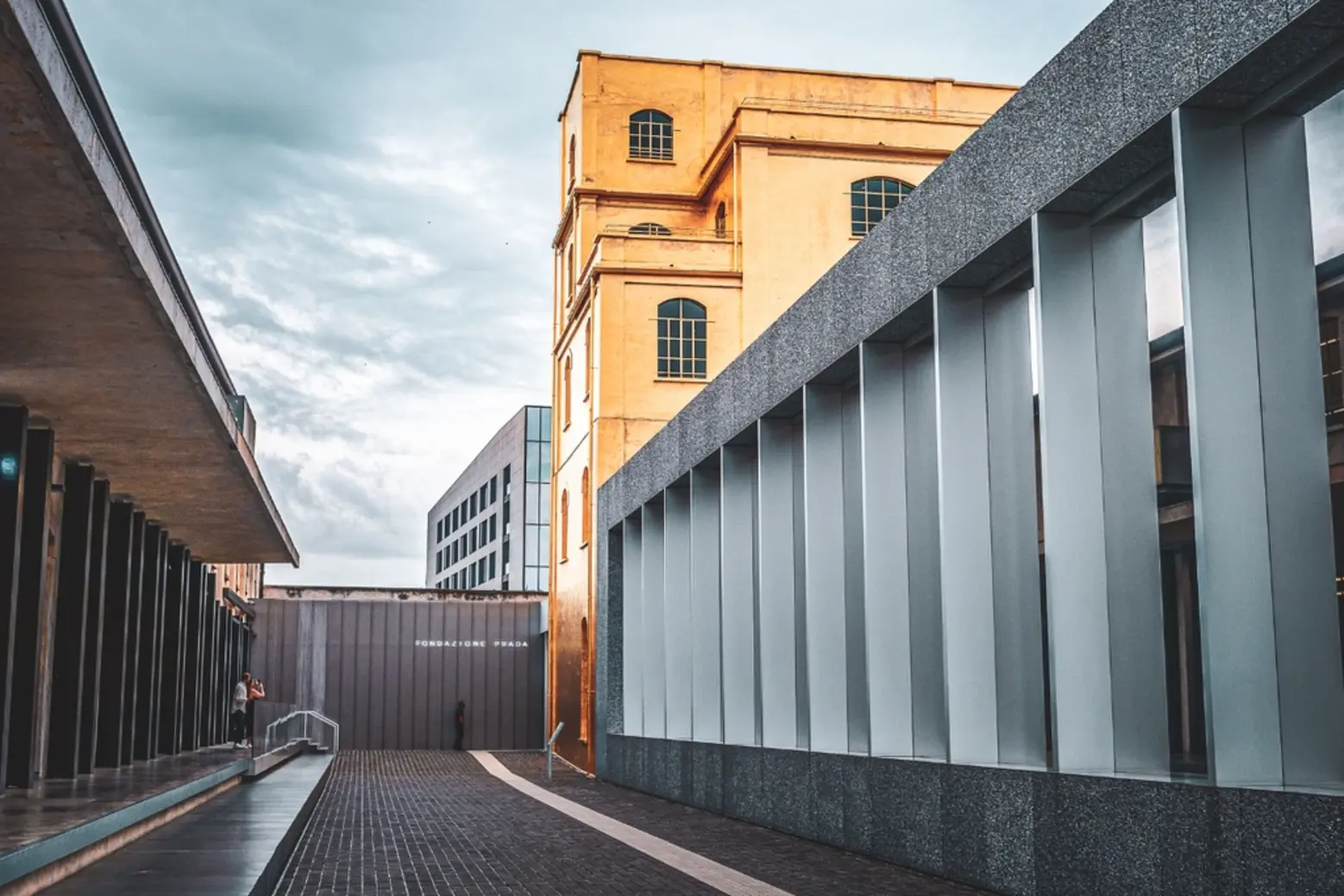
Fondazione Prada, Milan (opened 2015, expanded 2018)A cultural campus that makes one of the most iconic examples of fashion and architecture convergence. The old industrial remnants with new insertions, embracing contrast as a curatorial tool. The complex became instantly recognizable for the “Haunted House,” clad in 24-carat gold leaf, a surreal luxury gesture placed inside an art-and-industry landscape.
Rem Koolhaas remains hard to replace because his practice is less of a signature style than a system for producing thought. OMA and AMO operate like an engine that converts research into space, and converts space back into research, with publishing, exhibitions, and institutional collaborations extending the feedback loop.